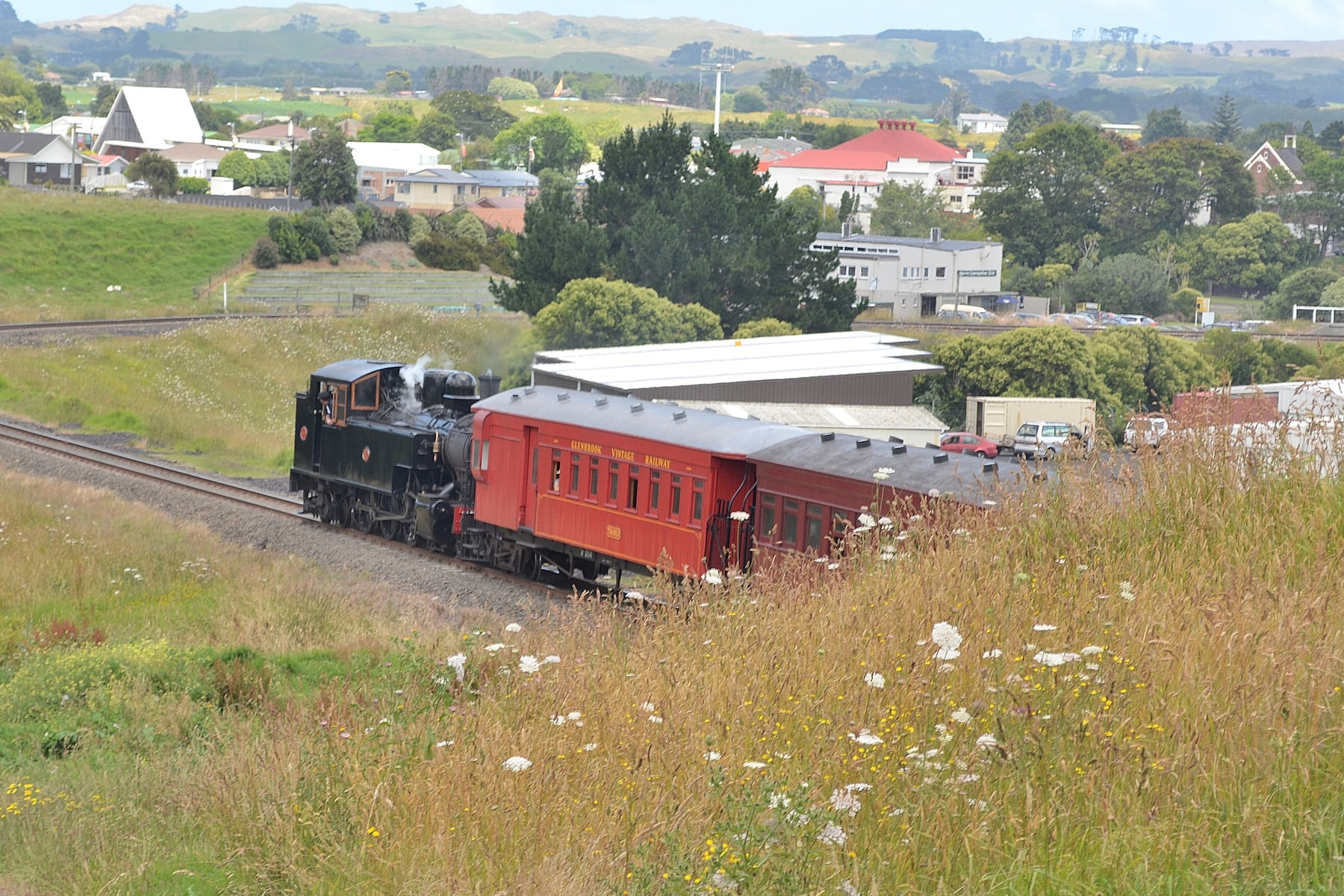
Glenbrook Vintage Railway
GPS 56 from New Zealand / Wikimedia Commons · CC BY 2.0 · cropped
- Distance7.5 km each way
- Duration70 min return
- Best seasonSelected weekends · late October to early June
Introduction
Waiuku waited forty years for its railway. The line was proposed in 1880, surveyed on a different alignment in 1883, and only authorised in 1912, when the district's own member of parliament — William Massey, who farmed at Mangere and sat for the seat that took in Waiuku — became Prime Minister. The first sod was turned at Waiuku on 19 February 1914; the branch from Paerātā opened on 5 January 1922, with all its stations serving passengers from 10 May that year. It was never profitable. Buses replaced the passenger trains on 17 July 1948, freight declined, and on 31 December 1967 the section from Glenbrook to Waiuku was closed and the gangs began lifting it.
What saved the corridor was steel. In 1966 the government announced a spur from Glenbrook to a new mill at Mission Bush, and that spur — opened on 7 October 1968 and still carrying lime, coal and export steel today — kept the first eleven kilometres of the branch alive. The abandoned tail beyond it was taken over by a trust board formed in 1970 out of Auckland's Railway Enthusiasts Society. Volunteers cut back the gorse, relaid the rail, built a depot at Pukeoware, and on 23 October 1977 ran the first public trains over four and a half kilometres to Pukeoware. Extensions followed: Fernleigh in December 1986, opened by Prime Minister David Lange, and Victoria Avenue on the edge of Waiuku at Labour Weekend 2010.
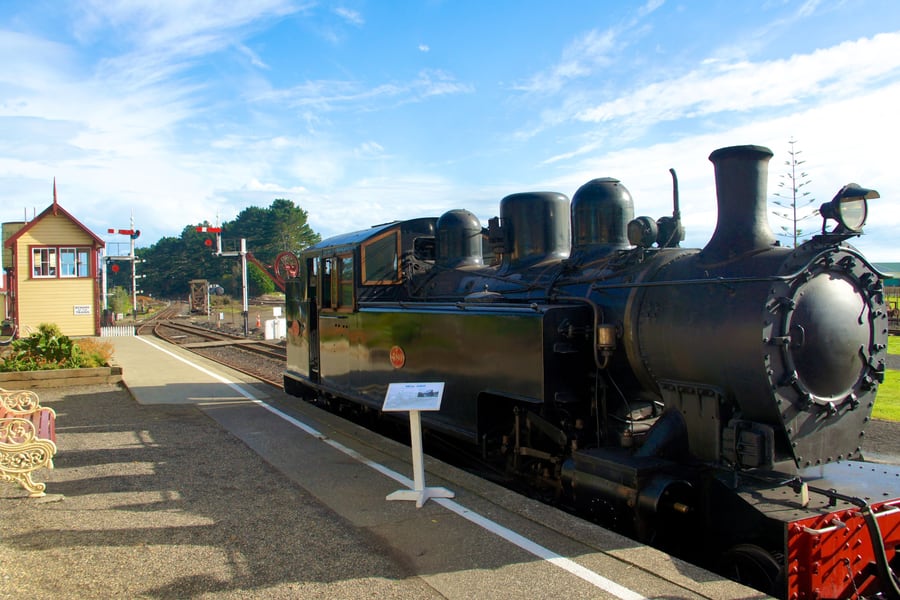
The result is 7.5 kilometres of 1,067 mm branch line, five stations, and a fleet of more than twenty working locomotives and carriages, some of them built in the 1870s. A return trip takes about seventy minutes behind a tank engine of 1910 or 1915. It runs on selected weekends between Labour Weekend in October and early June, and it is entirely the work of volunteers and a small paid staff.
The Journey
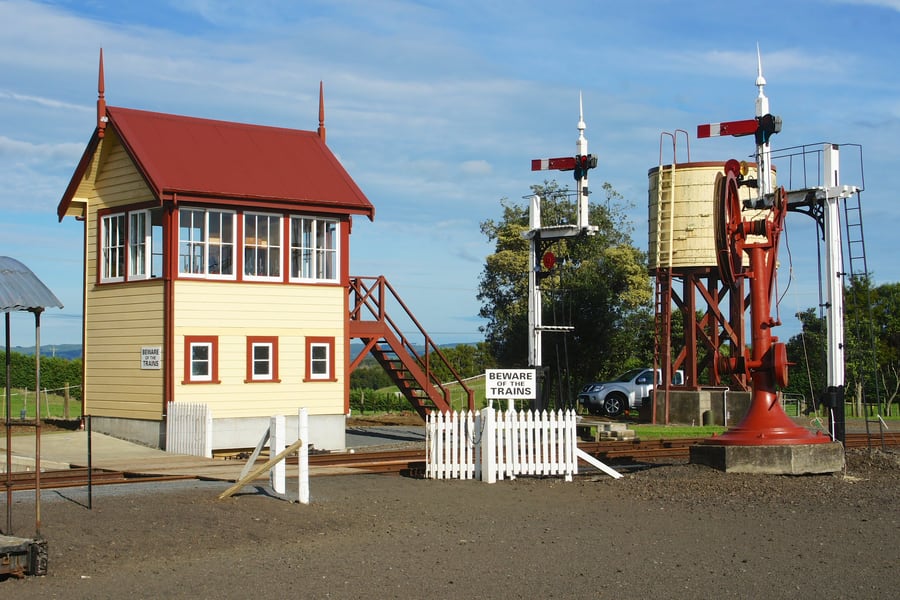
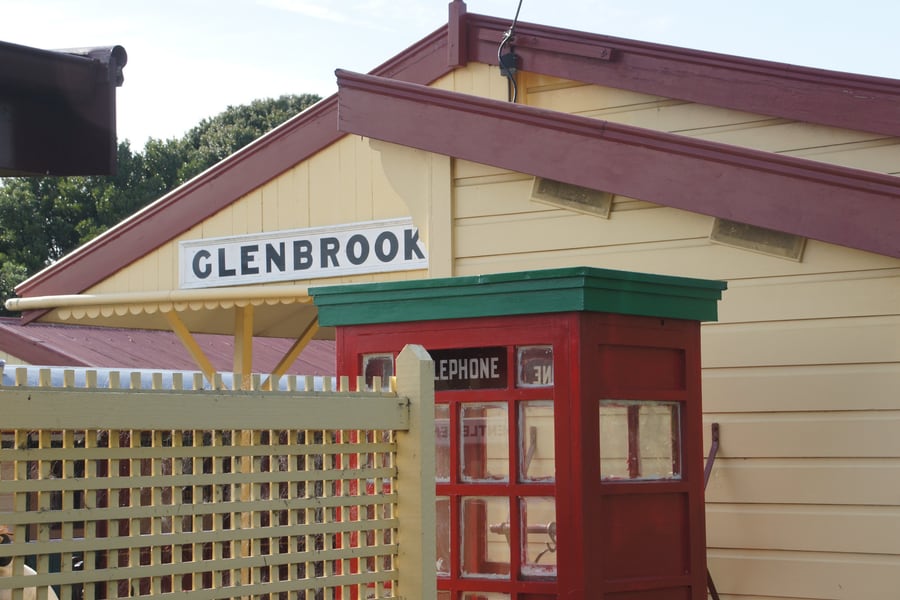
Glenbrook Station is a composite. Its terminal building is the original Glenbrook station of the Waiuku branch joined to the station building from Patumāhoe, both bought from New Zealand Railways in 1971 for twenty dollars each; the picnic shelter beside it is the old Kingsland suburban shelter, lifted out of Auckland in 2003 to make way for the double-tracking of the Western Line. Between them stand a red telephone box, a nameboard, semaphore signals, a water tank on steel legs, and the former Auckland 'B' signal box, which used to control the throat of the Auckland yards near Gladstone Road and now controls the points here. The Refreshment Rooms Café sits under the station verandah. Nothing on the site is a replica.
The train leaves from the platform and immediately drops away from the station, through farmland and a tree-lined cutting, towards the Morley Road level crossing. Just beyond it the line passes the railway's water tank and windmill beside the Waitangi Stream — the tank a working one, used to top up the locomotive on the way home. Glenbrook is about 69 metres above the sea and Waiuku about sixteen, so most of the outward run is downhill; the profile is not simple, though, and the locomotive has work to do in both directions.
Pukeoware, and the Goddard Grade
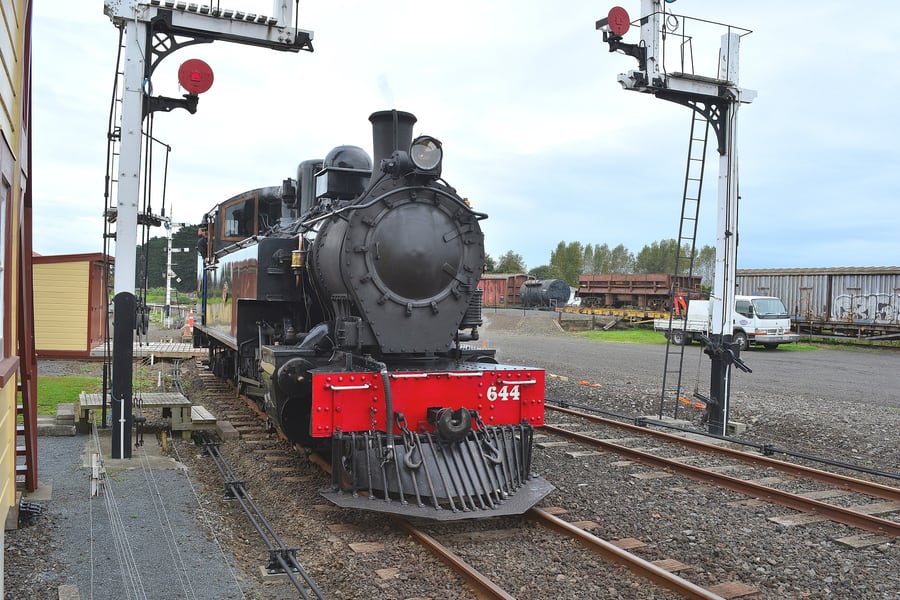
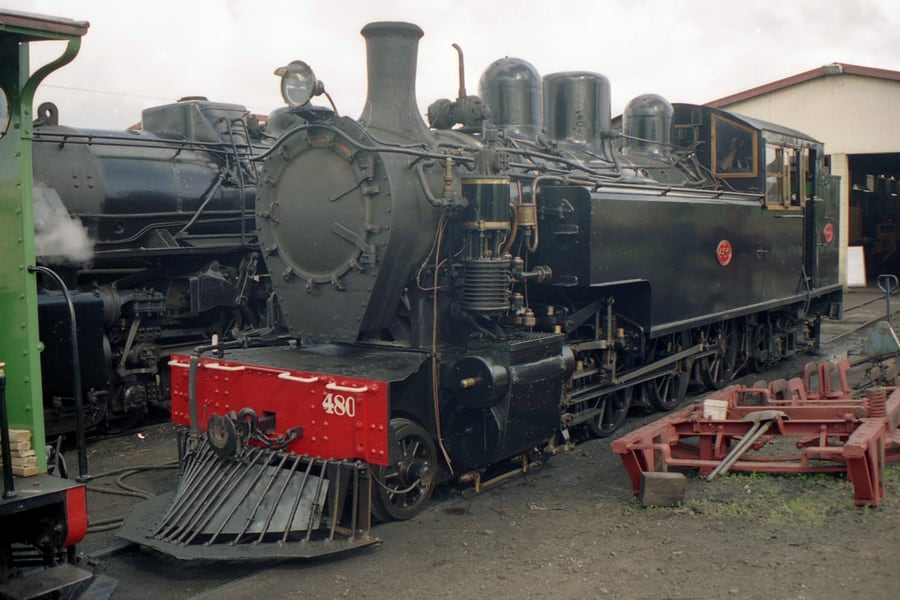
Four kilometres out the train runs through Pukeoware, which is the railway's engine room: a heavy engineering workshop, a carriage and wagon shop, three carriage sheds and a yard full of stock under overhaul or awaiting it. Boilers are lifted here with a 1937 Cowans Sheldon steam crane that can still travel under its own power, slowly. On a running day there is usually something out in the open that is not on the train — the Mallet, a stored Pacific, a diesel in pieces.
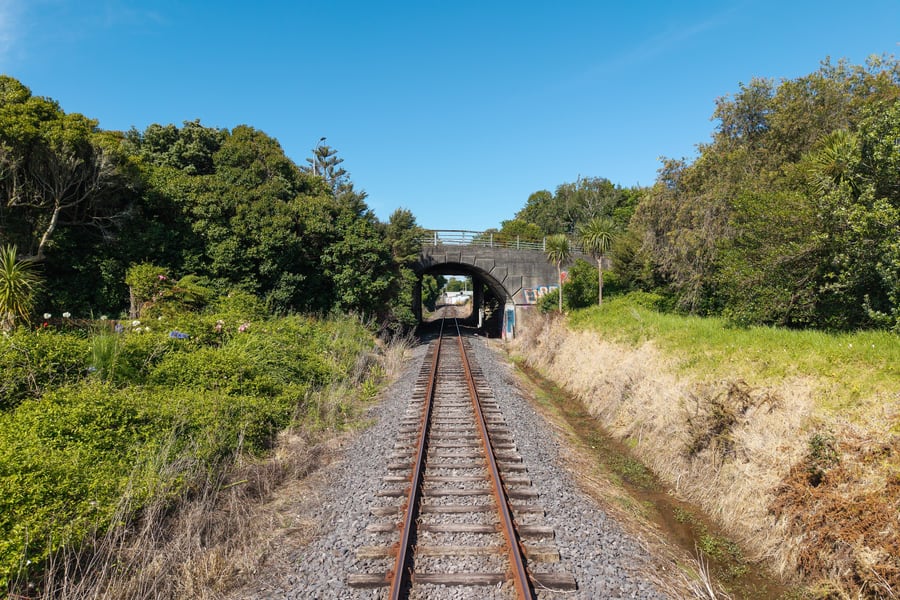
Beyond the depot the beat of the exhaust changes as the locomotive takes the Goddard Grade, at 1 in 42 the steepest pitch on the line. Then the railway crosses open country towards Waiuku, under a series of road bridges — including a concrete arch on Kitchener Road with 1921 cast into its keystone, built for the branch and never replaced — before dropping past Fernleigh, the terminus from 1986 to 2010, and swinging round the last curves into Victoria Avenue.
Victoria Avenue, and the way back
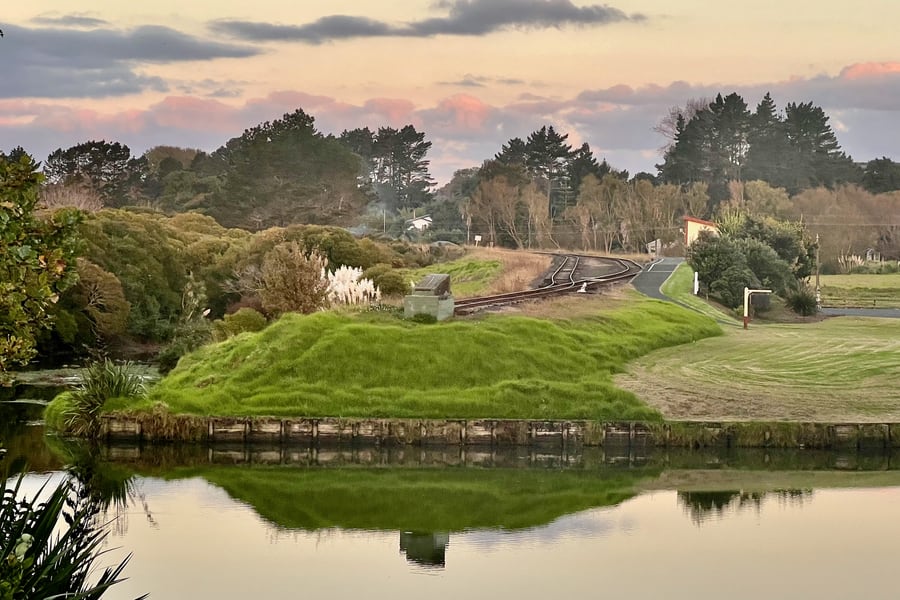
Victoria Avenue is a temporary station that has now been temporary for fifteen years. The original Waiuku station stood south of the town and became a Lions clubroom in 1991, so when the railway extended in 2010 it aimed instead at Tamakae Reserve on the Waiuku River, four hundred and fifty metres further on. That last stretch needs a new bridge, and until it is built the trains stop here, behind the Cosmopolitan Club and a short walk from Queen Street. The platform looks out over Lion's Lake.
The stop is ten minutes, long enough for the locomotive to run round its train. Coming back, the train pauses out on the line for a fifteen-minute photo stop — everyone who wants to gets off, the train pulls away, and then runs past for the cameras. The whole round trip is scheduled at seventy minutes, and there are four of them across an operating day. A return ticket lets you come back on a later train than the one you went out on, if there is room, and a day pass lets you ride all four.
Along the route
 Natalia Volna (itravelNZ) / Wikimedia Commons · CC BY 2.0 · cropped
Glenbrook Station
The terminal building is the branch's own Glenbrook station joined to the one from Patumāhoe — both bought from New Zealand Railways in 1971 for twenty dollars each. Around them: a signal box, semaphores, a water tank, a café under the verandah and the old Papakura turntable.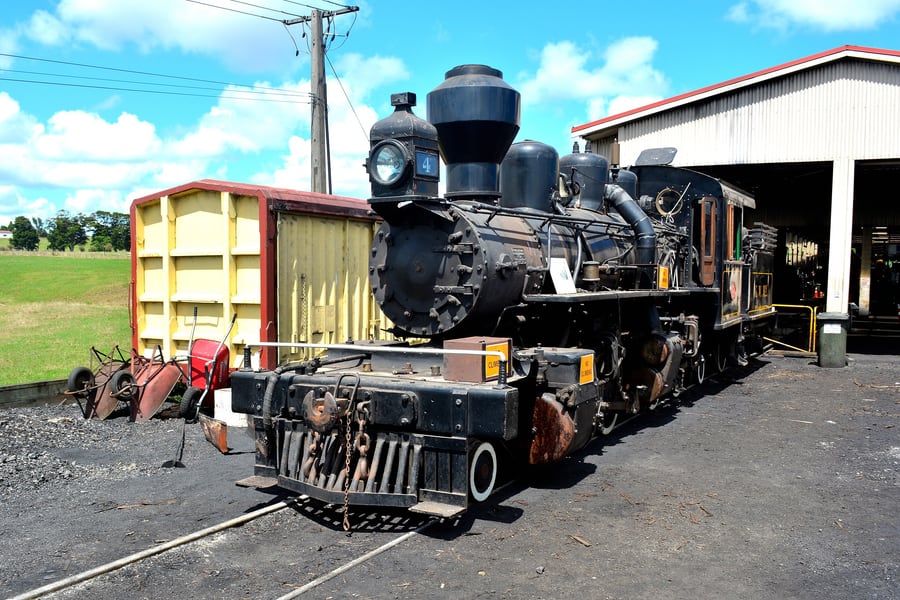 GPS 56 from New Zealand / Wikimedia Commons · CC BY 2.0 · cropped
Pukeoware, and the Goddard Grade
Four kilometres out lies the railway's engine room — a heavy engineering shop, a carriage works, three sheds and a 1937 Cowans Sheldon steam crane that lifts boilers and can still move itself. Beyond it the exhaust hardens for the 1 in 42 Goddard Grade.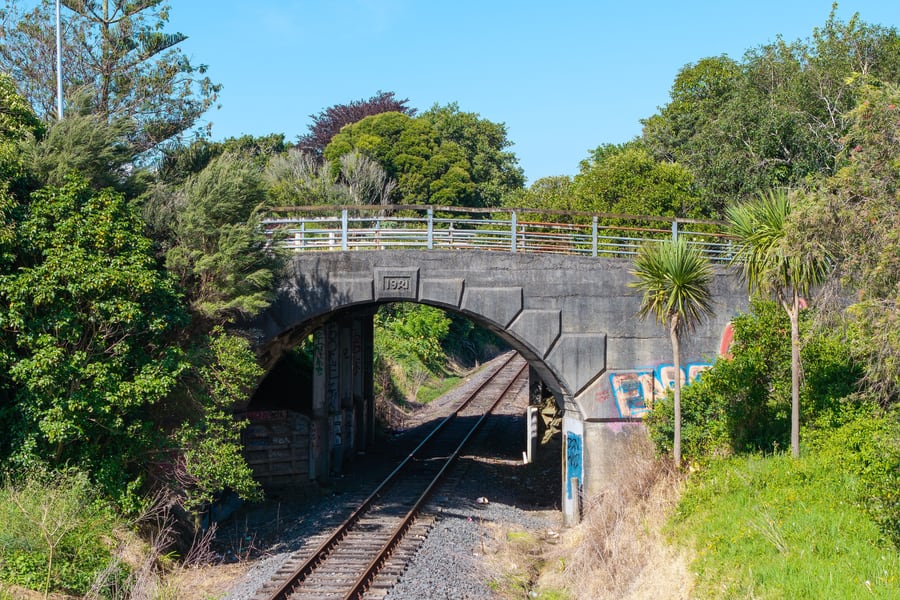 Bjankuloski06 / Wikimedia Commons · CC BY 4.0 · cropped
The 1921 arches
The road bridges over the line were built with it, and one on Kitchener Road still has 1921 cast into its keystone. A little further on the train passes Fernleigh, which was the end of the railway from 1986 until 2010.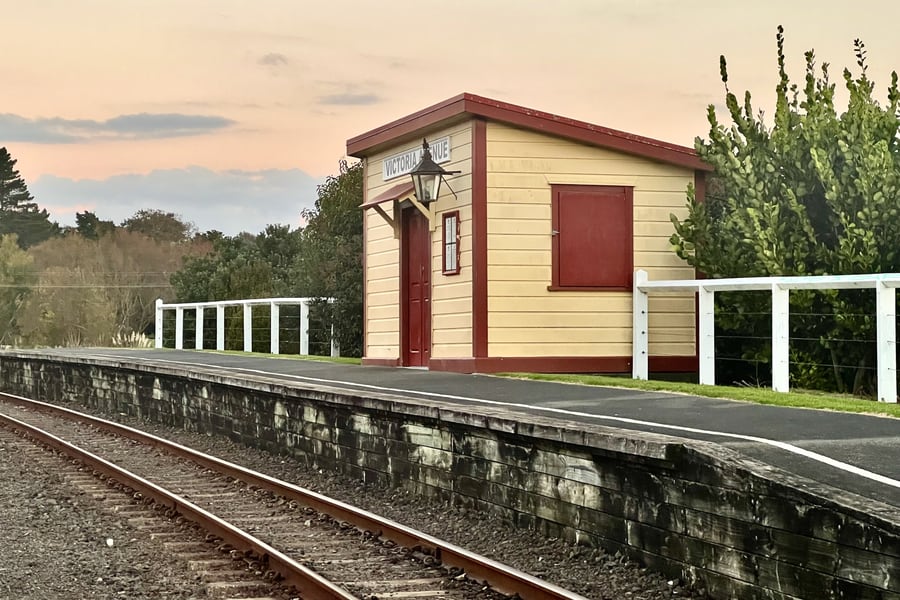 Johnragla / Wikimedia Commons · CC0 · cropped
Victoria Avenue, Waiuku
A temporary terminus that has been temporary for fifteen years, behind the Cosmopolitan Club and a short walk from Queen Street. The locomotive runs round its train here in ten minutes. The last 450 metres into Tamakae Reserve still need a bridge.A bit of history
Culture & experiences along the way
 Natalia Volna (itravelNZ) / Flickr · CC BY 2.0 · cropped
Carriages named after canoes
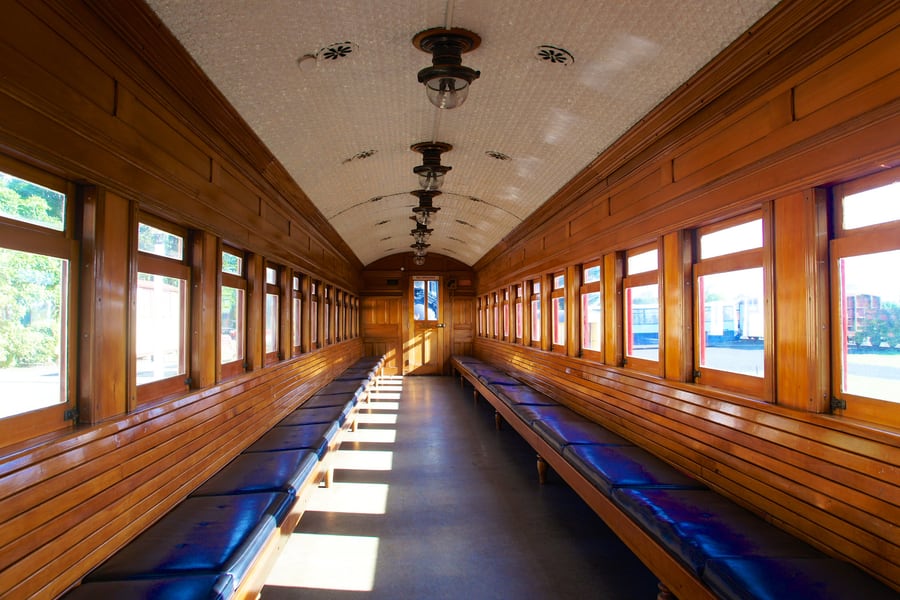
The wooden carriages are narrow-bodied NZR A-series stock with balconies at each end and seats along the walls, and they carry the names of the Māori migration canoes — Tainui, Mataatua, Aotea, Te Arawa. One vehicle is far older: C 472, a six-wheeler built in England in 1879 for Auckland's first railway.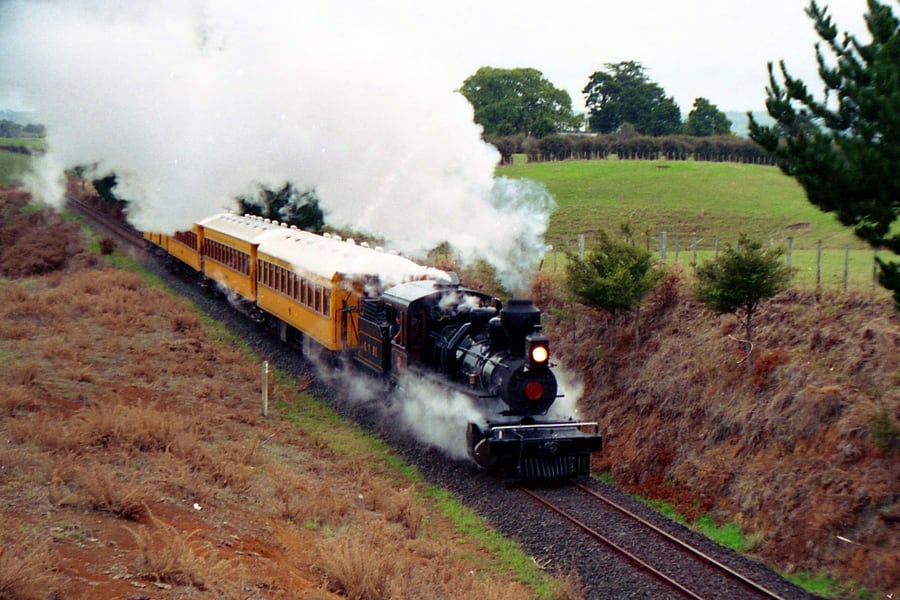 GPS 56 from New Zealand / Wikimedia Commons · CC BY 2.0 · cropped
The only Mallet in New Zealand
GVR No. 4 is a 2-4-4-2 Mallet compound, built by ALCO at Schenectady in 1912 for the Taupo Totara Timber Company's bush line, and the only Mallet in the country: two sets of cylinders, the front pair on their own swinging frame, using the steam twice. It last worked in 2001 and is now a stored exhibit.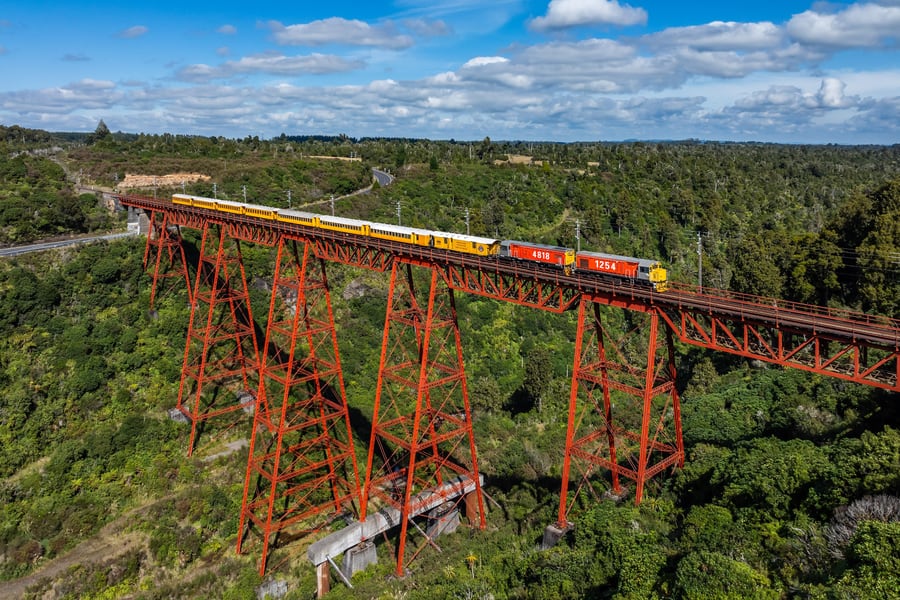 Kabelleger / Wikimedia Commons · CC BY 4.0 · cropped
The train that broke the ban
New Zealand Railways banned steam from its network after 1971. In April 1985 it was a Glenbrook locomotive that ended that: Ja 1250 "Diana", restored here, worked the first main-line steam excursion from Auckland to Wellington and back. GVR has been licensed for the national network since 2017 and still runs tours the length of the North Island.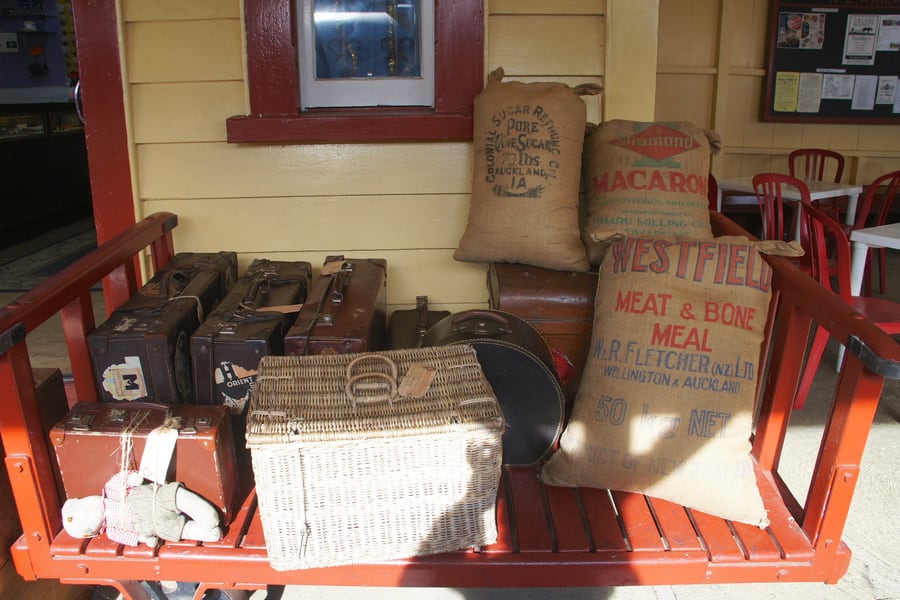 Natalia Volna (itravelNZ) / Flickr · CC BY 2.0 · cropped
The steam-age props
Glenbrook is dressed rather than merely preserved. Sacks of Colonial Sugar and Westfield meat-and-bone meal, leather suitcases and a wicker hamper sit on a barrow under the verandah; enamel advertisements, a lamp room and a bicycle wait inside. It is what a branch-line station looked like when it still did the work.Timetables
Four trains a day, on selected weekends. The board does not vary: departures from Glenbrook at 10:00, 11:30, 13:00 and 14:30, each a complete return trip of about seventy minutes. The Steam Train Experience and the First Class Experience run on the same timetable, in the same train.
| Depart Glenbrook | Victoria Avenue, Waiuku | Photo stop | Back at Glenbrook |
|---|---|---|---|
| 10:00 | 10:20–10:30 | 10:35–10:50 | 11:10 |
| 11:30 | 11:50–12:00 | 12:05–12:20 | 12:40 |
| 13:00 | 13:20–13:30 | 13:35–13:50 | 14:10 |
| 14:30 | 14:50–15:00 | 15:05–15:20 | 15:40 |
The season. The railway shuts every winter for maintenance on its locomotives, carriages, track and buildings, and reopens at Labour Weekend. These are the dates in its booking system when we read it in September 2026 — twenty-eight of them, almost all Sundays, with the long weekends taken whole:
| Period | Operating dates |
|---|---|
| October 2026 | 24, 25 and 26 — Labour Weekend, the season's reopening |
| November–December 2026 | 8 and 22 Nov · 27 and 28 Dec |
| January–February 2027 | 1, 2, 3 and 4 Jan · 10, 17 and 24 Jan · 30 and 31 Jan, 1 Feb — Auckland Anniversary |
| February–April 2027 | 28 Feb · 14 Mar · 11 Apr · 24, 25 and 26 Apr — Anzac weekend |
| May–June 2027 | 9 and 23 May · 5, 6 and 7 Jun — the season's last weekend |
First Class runs on the same dates from 25 October, one day later than the Steam Train Experience.
Good to know:
- Book online, and choose a departure. Each of the four trains is sold separately and can sell out on its own; the calendar marks a sold-out departure in red. Seating is not allocated.
- A Day Pass is bought at the station, not online — it gives unlimited trips on the day, subject to the timetable and to space.
- Special events run to their own timetables and their own fares. Day Out with Thomas comes twice a season, with two trains half-hourly and a shortened run to Fernleigh only; Christmas Lights — Trains at Night runs push-pull trips every half hour from about 6pm.
- Jigger rides operate from Glenbrook when volunteers and the day's programme allow — a motor trolley four kilometres out to the Morley Road crossing and back, and a hand jigger, which you pump yourself, inside the station yard. Tickets from the ticket office on the day.
- Getting there without a car takes two changes: the shuttle train from Papakura to Pukekohe, then Auckland Transport's 396 bus to Waiuku, alighting at the Cosmopolitan Club, whose car park opens onto the Victoria Avenue platform. Glenbrook Station itself has no bus.
Times, dates and season as of September 2026, read from the railway's own booking calendar. Confirm before travelling at gvr.org.nz (opens in a new tab).
Tickets
The railway sells its own seats, and there are two products on the same train. When we checked in September 2026 a Steam Train Experience return was NZD 27 for an adult and NZD 13 for a child aged two to fourteen, with a family ticket for two adults and two children at NZD 69 and under-twos free. A Day Pass, bought at the Glenbrook ticket office rather than online, is NZD 40 adult, NZD 18 child and NZD 98 family, and covers all four departures.
First Class is NZD 67 adult and NZD 45 child, and buys a seat in the parlour carriage at the head of the train, a dedicated host, high-tea style refreshments served at your seat and the use of the open-air observation balcony. Groups of fifteen or more paid in one lump get 10% off, and 25 or more 15%. A whole carriage — about forty seats — can be hired for the operating day from NZD 850. Special-event fares differ; check the event's own page.
Book your tickets
Steam Train Experience · adult
Return, Glenbrook to Waiuku
About seventy minutes, including the run-round at Victoria Avenue and a photo stop on the way home.
Book Tickets (opens in a new tab, on gvr.org.nz)via gvr.org.nzFamily ticket
Two adults and two children
Sold as one fare rather than four, with under-twos carried free.
Book Tickets (opens in a new tab, on gvr.org.nz)via gvr.org.nzDay Pass
Unlimited trips, bought at the station
All four departures on the day, sold at the Glenbrook ticket office rather than online.
Book Tickets (opens in a new tab, on gvr.org.nz)via gvr.org.nzFirst Class Experience
The parlour carriage, with high tea
A seat in the 1916 parlour car at the head of the train, a host, refreshments served at the seat and the open-air balcony.
Book Tickets (opens in a new tab, on gvr.org.nz)via gvr.org.nzRail Passes
No rail pass covers this railway. Interrail and Eurail are European products with no standing in New Zealand, and KiwiRail's Great Journeys brand — which has in the past sold a multi-trip Scenic Rail Pass over its long-distance trains and the Interislander ferry, though no such product appears on its site today — has nothing to do with Glenbrook. This is 7.5 kilometres of preserved branch line run by a charitable trust, and the trust sells every seat on it itself.
Two things behave a little like passes. The Day Pass is the one that matters to a visitor: bought at the Glenbrook ticket office on the day rather than online, it gives unlimited Steam Train Experience trips across the operating timetable for about one and a half times the price of a single return. With four departures between ten and half past two, and a station full of period buildings, a signal box and jiggers to fill the gaps, it is not hard to use.
The other is membership of the Railway Enthusiasts Society, the Onehunga club formed in 1958 that started this railway and still appoints its trustees. Membership costs NZD 30 a year for an adult and carries a 50% discount on Glenbrook fares, personal to the member — and it is the only route to volunteering here, because the railway requires it of every volunteer. That makes it a subscription to a preservation society rather than a travel product.
Checked against gvr.org.nz in September 2026.
Places to Visit
The train takes seventy minutes and the last one is back at Glenbrook by twenty to four, so most of the day is free — and the two ends of the line look nothing alike. Glenbrook is farmland with a steel mill in it. Waiuku, at the head of a tidal arm of the Manukau Harbour, is a town of about nine and a half thousand people with a heritage trail through it, a reserve full of nineteenth-century buildings and a black-sand surf beach eight kilometres over the ridge.
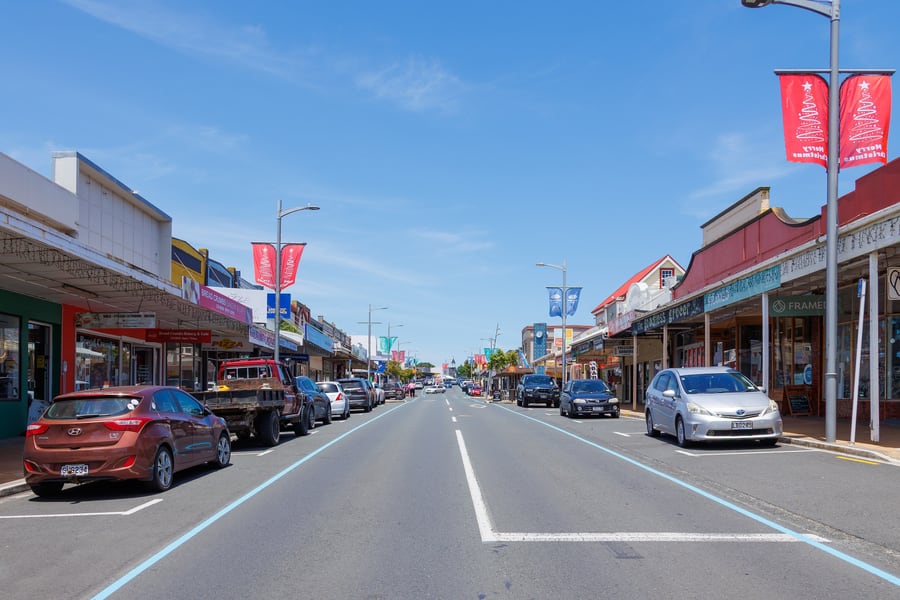
Waiuku's shape is an accident of fire. A blaze on 28 August 1916 destroyed much of the east side of Queen Street, and the town board responded by requiring every new building in the centre to be brick or masonry — which is why the main street reads as one period rather than several. The trail that links its sites starts near the Kentish Hotel and runs down to Tamakae Reserve on the riverbank, where the Waiuku Museum keeps its collection and a cluster of relocated buildings: a cottage of 1886, another of 1890, a creamery, and the lock-up of 1865 with the names of the district's constables still on the wall. At the entrance stands a carving of Tamakae, cut from swamp kauri logs uncovered during excavation at the steel mill and given to Ngāti Te Ata.
 Bjankuloski06 / Wikimedia Commons · CC BY 4.0 · cropped
Waiuku
A single long main street at the head of a tidal creek, with a clock tower on the corner and a war memorial at the top. It reads as one period because it is: a fire on 28 August 1916 took out much of the east side of Queen Street, and the town board then ruled that anything new in the centre had to be brick or masonry.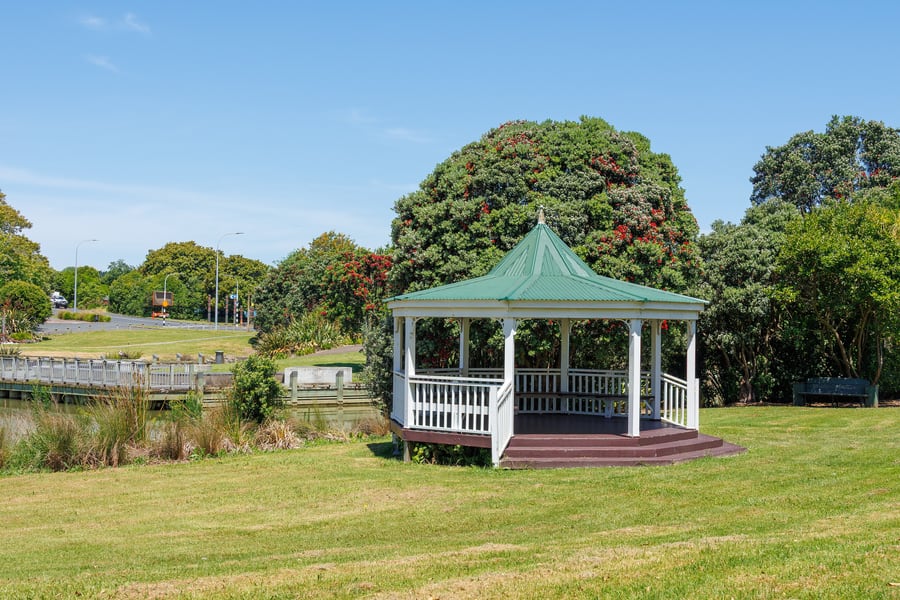 Bjankuloski06 / Wikimedia Commons · CC BY 4.0 · cropped
Tamakae Reserve
Lawn, a band rotunda and the river, and at the entrance a carving of Tamakae cut from swamp kauri logs that came out of the ground during excavation at the steel mill and were given to Ngāti Te Ata. This is where the railway means to finish: the last 450 metres from Victoria Avenue would bring trains to the old wharf.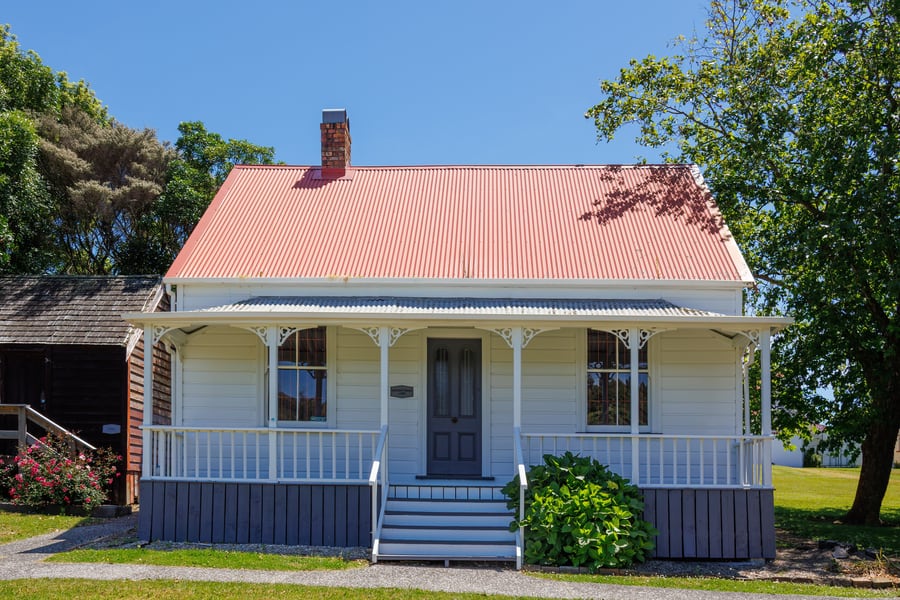 Bjankuloski06 / Wikimedia Commons · CC BY 4.0 · cropped
The Waiuku Museum village
The museum opened in 1965 and has gathered a small village around it — a cottage of 1886 now used as a craft studio, another of 1890, a creamery, a schoolroom and the district lock-up of 1865, with the names of Waiuku's constables still readable on the wall. Inside: colonial furniture, Māori taonga, scow photographs and kauri-gum tools.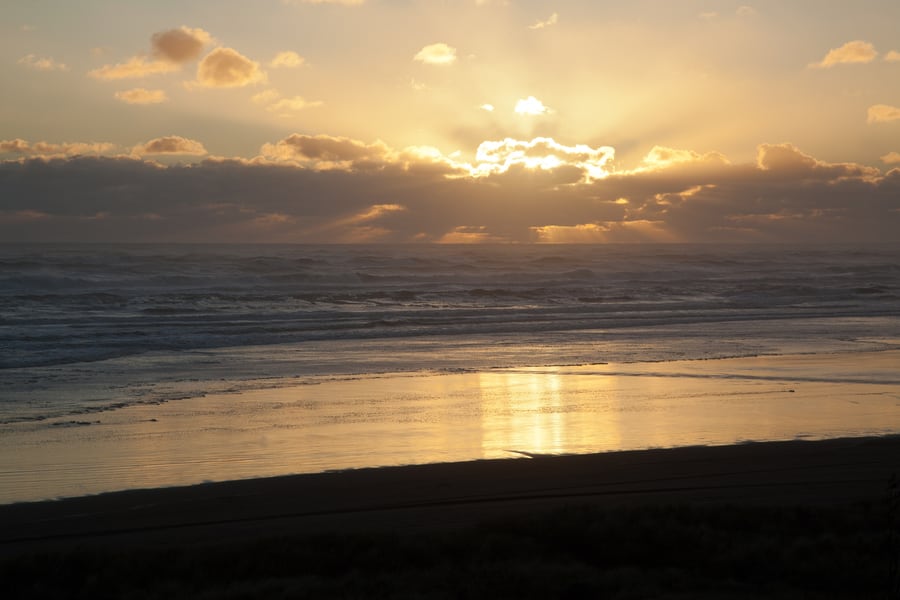 russellstreet / Wikimedia Commons · CC BY-SA 2.0 · cropped
Karioitahi Beach
A long, exposed surf beach on the Tasman, and the sand is black because it is iron: oxide weathered off Mount Taranaki and the volcanic plateau, washed down the Waikato and driven back up the coast. Paragliding schools train beginners off the cliff at the southern end. The surf club patrols weekends and holidays from Labour Weekend to autumn.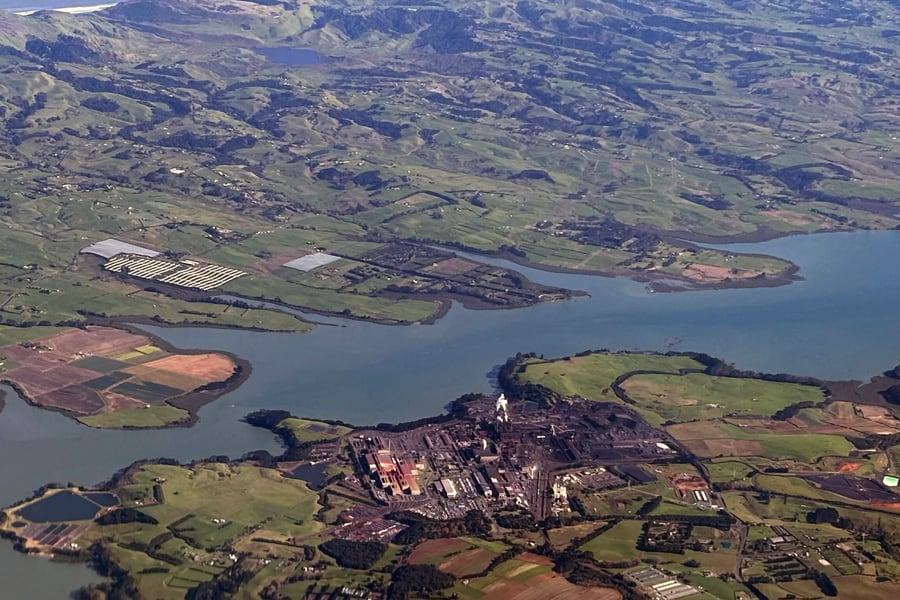 Paora / Wikimedia Commons · CC0 · cropped
The Glenbrook steel mill
The mill went up in 1968, and the spur built to reach it is what stopped the Waiuku branch being lifted entirely. It turns the same ironsand into 650,000 tonnes a year — over ninety per cent of New Zealand's steel — using rotary kilns rather than a blast furnace, and coal, lime and finished steel still move by rail every day.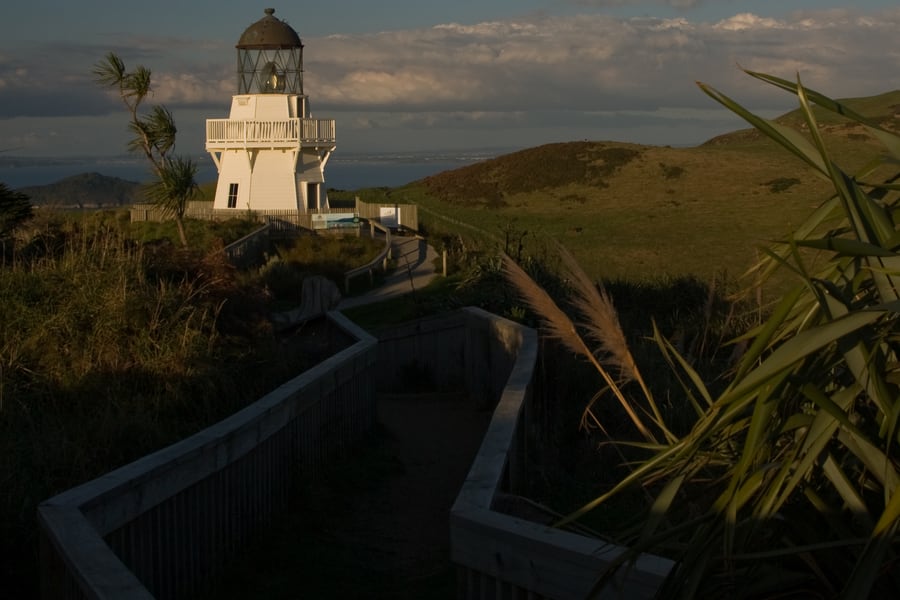 russellstreet / Wikimedia Commons · CC BY-SA 2.0 · cropped
Manukau Heads
A timber lighthouse lit in 1874, standing on the cliff at the mouth of the Manukau Harbour. Its wooden design was thought good enough to copy elsewhere in the country. It looks out over the bar where HMS Orpheus was wrecked in February 1863 with the loss of 189 lives, still New Zealand's worst maritime disaster. The drive out along the peninsula takes about fifty minutes.Where to Sleep
Glenbrook is about fifty minutes from central Auckland and forty from the airport, so almost everyone does this as a day trip, and there is nothing wrong with that. Staying over makes sense for two reasons: the long weekends are when the railway runs three days in a row, and the coast on the far side of Waiuku is worth more than an afternoon.
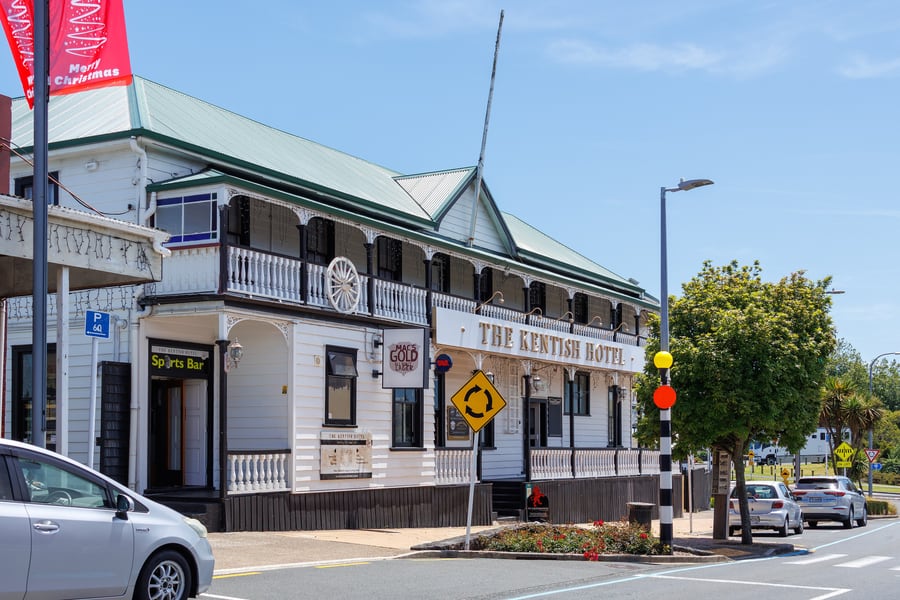
The obvious bed is the one the whole town is built around. The Kentish Hotel on Queen Street has been licensed since 1853 and has rooms upstairs — singles, twins and queens, all with shared facilities — about a fifteen-minute walk from the Victoria Avenue platform. A hundred metres up the same street there is a motel set back in two acres of garden, with self-contained units and a kitchen in every room. For the coast, a clifftop resort above Karioitahi Beach has studios, chalets and villas facing the Tasman, with a restaurant and a day spa; it is ten minutes' drive from Waiuku and the sunsets are the reason people book it. Nothing at all stands at Glenbrook itself beyond the station car park.
Where to stay
 Bjankuloski06 / Wikimedia Commons · CC BY 4.0 · cropped
The Kentish Hotel
5 Queen Street, Waiuku — a walk from Victoria Avenue
Built in 1851 by a settler from Maidstone, and licensed continuously since January 1853; the rooms are upstairs, with shared facilities.
Check Availability (opens in a new tab, on thekentishhotel.co.nz)via thekentishhotel.co.nzWaiuku Motel
100 Queen Street, in two acres of garden
Self-contained studios and apartments with full kitchens, set back off the main street and a couple of minutes from the cafés.
Check Availability (opens in a new tab, on waiukumotel.co.nz)via waiukumotel.co.nz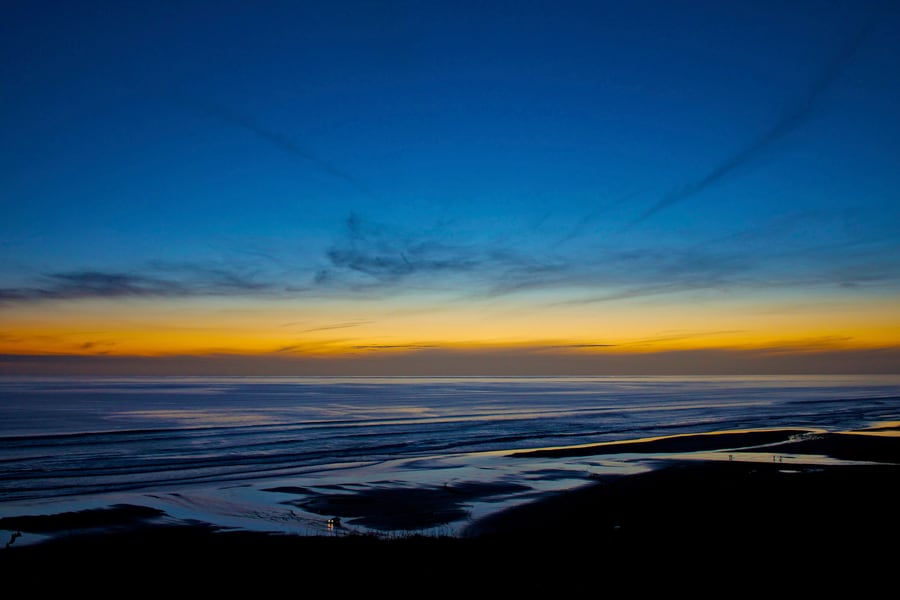 Tony Hugo / Wikimedia Commons · CC BY-SA 3.0 · cropped
Castaways Resort
685 Karioitahi Road, on the cliff above the beach
Studios, chalets and villas with private decks facing the Tasman, plus a restaurant and a day spa, ten minutes' drive from Waiuku.
Check Availability (opens in a new tab, on castaways.co.nz)via castaways.co.nzQuestions or corrections
Planning this trip and stuck on something, or spotted a time, fare or detail that has changed? Send us a message about Glenbrook Vintage Railway. We read every one, and we update this page when something has changed.