Güney Kurtalan Ekspresi
Kabelleger / David Gubler / Wikimedia Commons · CC BY-SA 4.0
- DistanceAnkara–Kurtalan · about 1,200 km
- DurationAbout 27 hours · Diyarbakır in 22½
- Best seasonSpring or autumn · five days a week
Introduction
In 1972 Barış Manço put together a band to play behind him on record and on stage, and named it Kurtalan Ekspres, after the train that ran from Haydarpaşa in Istanbul to Kurtalan, a small town at the far end of the line in Siirt province. Ahmet Güvenç, its bass player since 1976, gave the reason years later: the band toured the whole of Turkey, just as that train crossed it. "Our fates were the same."
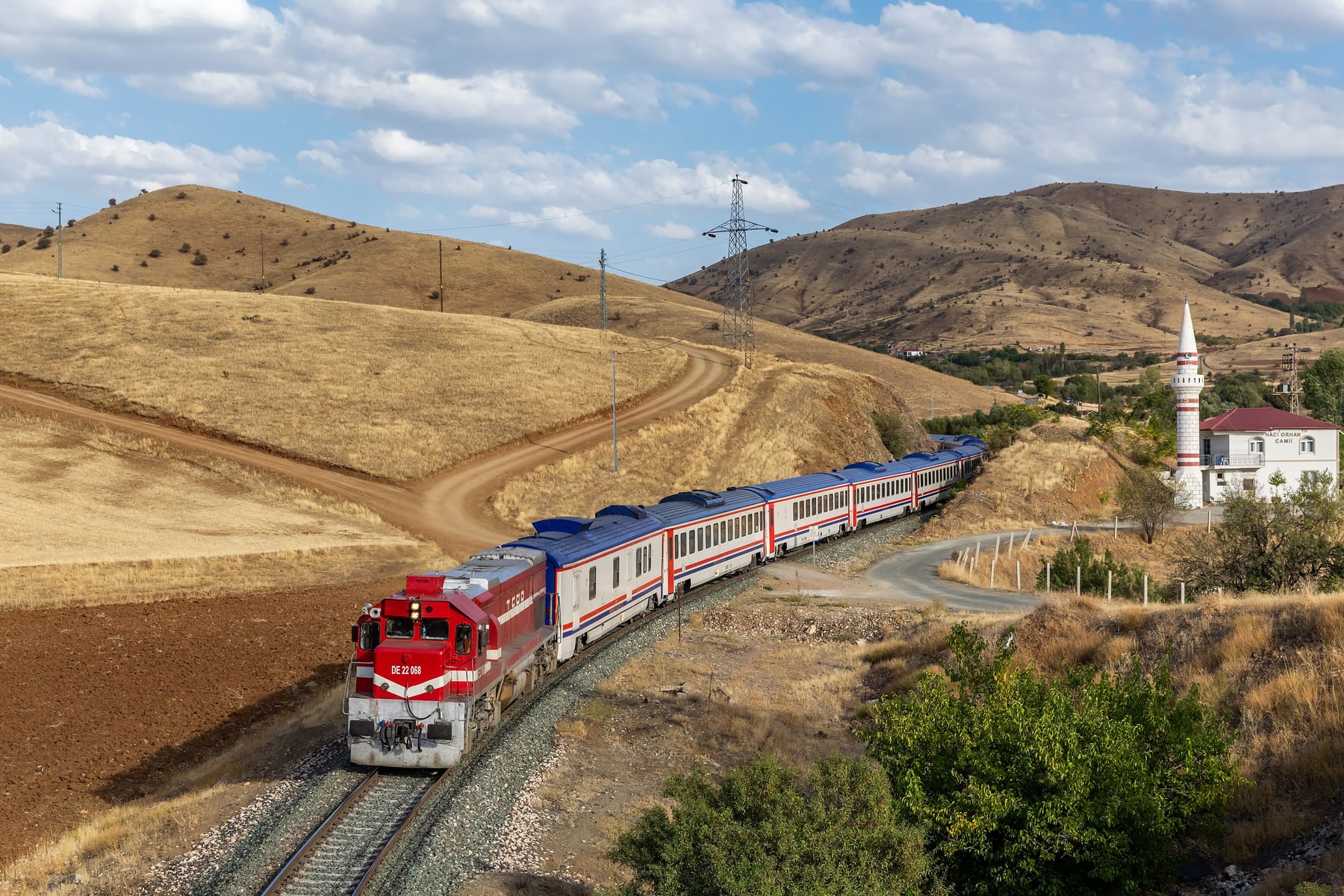
The train still runs. The Güney Kurtalan Ekspresi — the Southern Kurtalan Express, cut back to start from Ankara when the high-speed line to Istanbul was built — leaves Ankara Gar at 11:20 five days a week, with Pullman seats, couchettes, sleeping cars and a dining car, and takes about twenty-seven hours over some 1,200 kilometres. As far as Yolçatı, near Elazığ, it keeps to the Van Gölü Ekspresi's path. There it turns south, past Lake Hazar and down the valley where the Tigris begins.
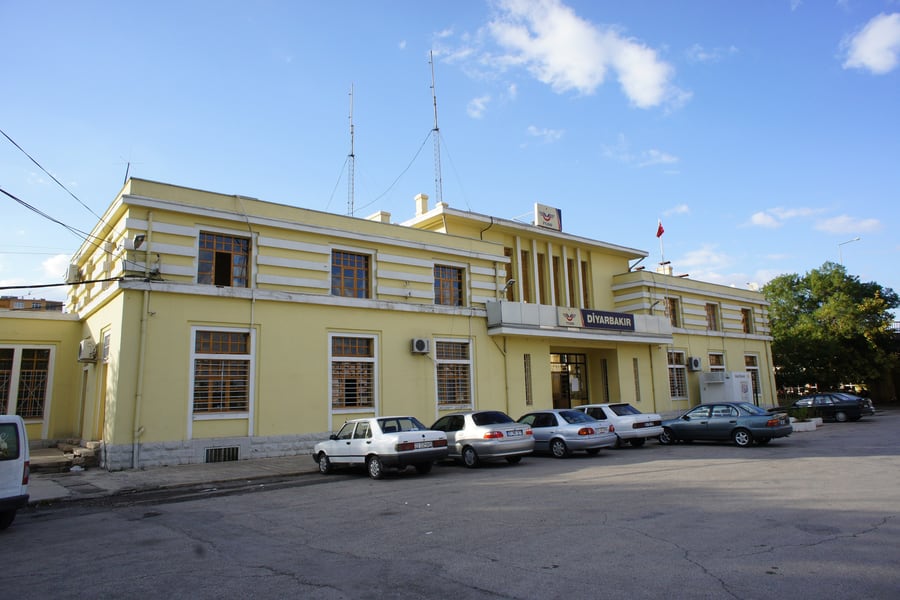
At ten to ten the next morning it is in Diyarbakır, the city known in Turkish as Kara Amid, Black Amid, for its walls: 5.8 kilometres of dark basalt above the Tigris and the Hevsel Gardens, a World Heritage Site since 2015. Most passengers get off here. The train goes on through Batman, the oil town, and reaches Kurtalan a little after two.
The Journey
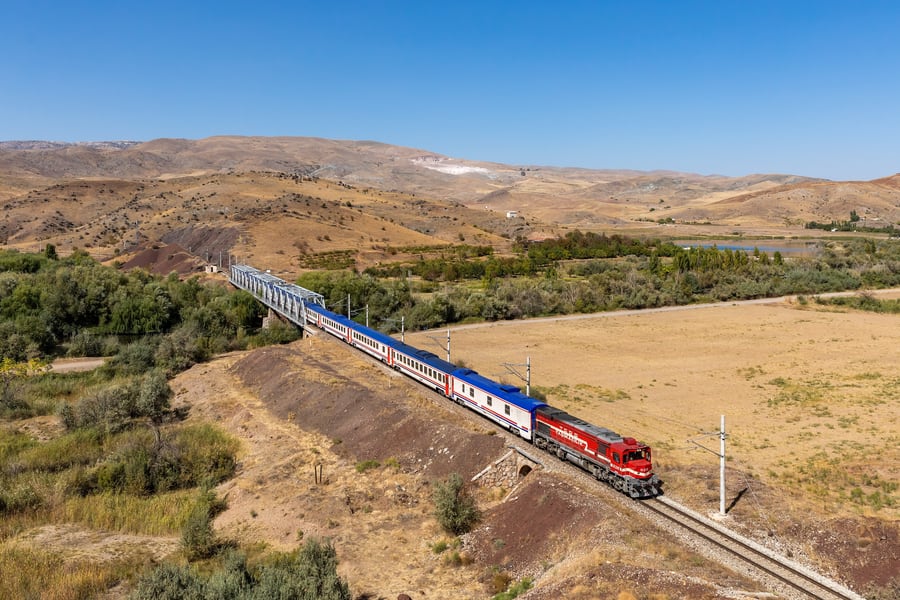
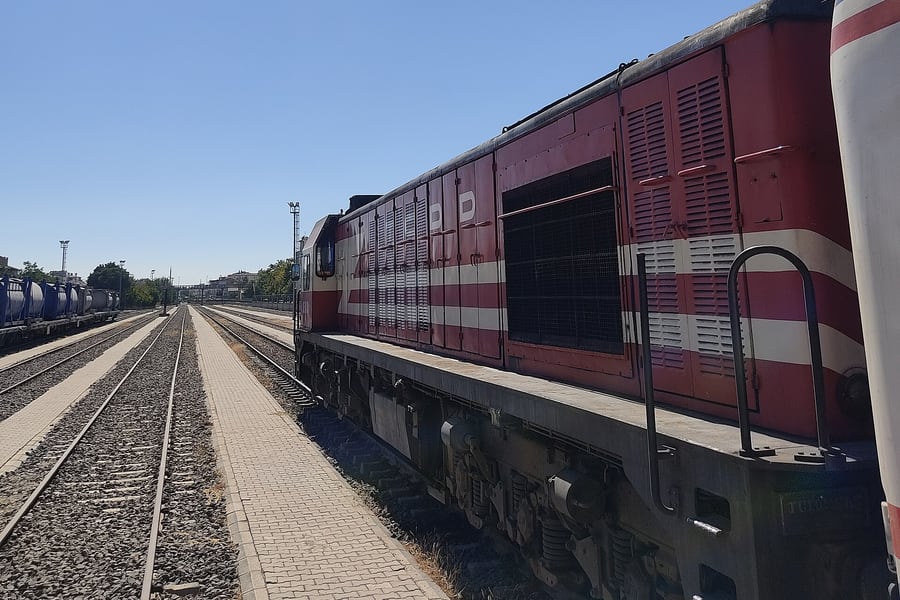
The locomotive is usually a DE 22000, one of 86 diesels built by TÜLOMSAŞ under licence from General Motors — red, with a white stripe, pulling the blue-and-white coaches the eastern sleepers share. The Pullman cars are laid out two-and-one, the couchettes sleep four to a compartment, and a sleeping-car room has two beds, a table, a small fridge and a washbasin. The dining car serves breakfast, soup, hot dishes and sandwiches.
The first day
Out of Ankara at 11:20 the train runs east to Irmak, where the line to Zonguldak leaves, and Kırıkkale, then crosses the steppe for most of the afternoon. Kayseri comes at 18:43 and Sivas at 22:29, where the train waits a little under half an hour. The night is spent crossing the plateau south to Malatya, reached at 03:22.
The second morning
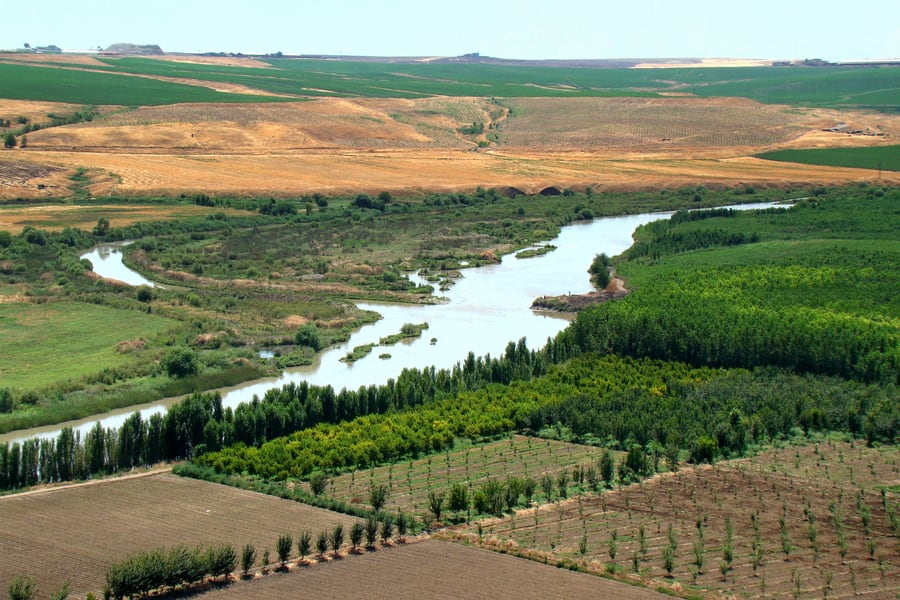
At 06:05 the train is at Yolçatı, the junction near Elazığ where the Van Gölü Ekspresi, on its days, goes east for Tatvan. This train turns south through Uluova and Kürk, and at Sivrice and Gölcük, around seven, runs along the southern shore of Lake Hazar. Beyond Gezin it drops into the valley of the Maden Çayı — the Tigris in its first miles — past the old copper town of Maden (07:48) and Ergani (08:24), and out onto the lava plateau of Diyarbakır. It stands at Diyarbakır from 09:50 to 10:12.
The last four hours cross the Tigris plain: Bismil, then Batman at 12:25, then past Beşiri to Kurtalan, 14:10. The line was begun towards Van and the Iranian border, and stopped here when the route east was moved to Elazığ. The next step is shorter: an extension of 34 kilometres to Siirt, with six tunnels, went out to tender twice in 2025.
Coming back
The westbound train leaves Kurtalan at 09:20 and Diyarbakır at 13:29, so the Tigris valley and Lake Hazar pass in the afternoon. It is at Yolçatı at 17:24, Sivas soon after one in the morning, and back in Ankara at 12:45.
Along the route
 T Lenfosit / Wikimedia Commons · CC BY-SA 4.0 · cropped
Lake Hazar
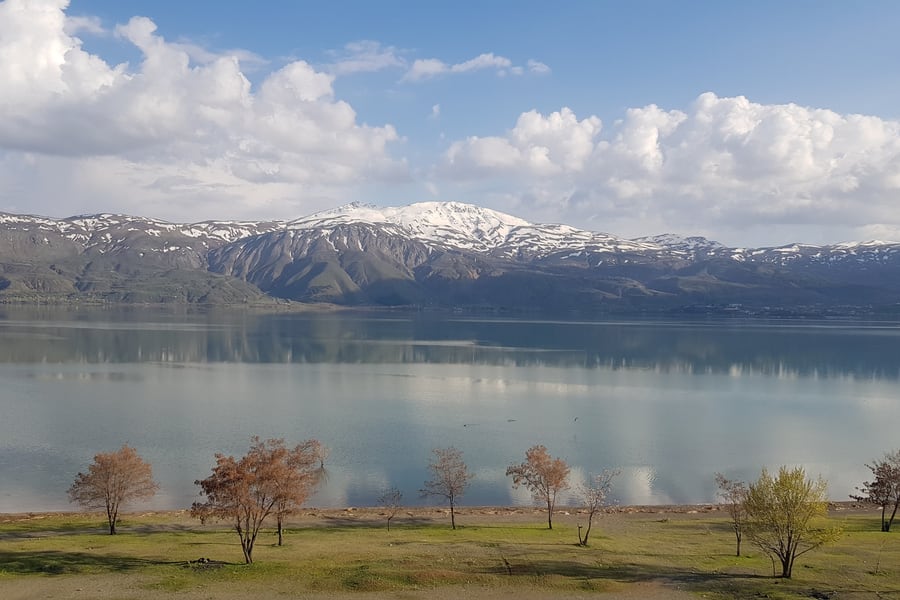
At Yolçatı the Van Gölü line goes east and this train turns south, to Sivrice and Gölcük on Lake Hazar: 20 km long, 1,248 metres up, a lake formed on the East Anatolian Fault. The railway runs along its southern shore.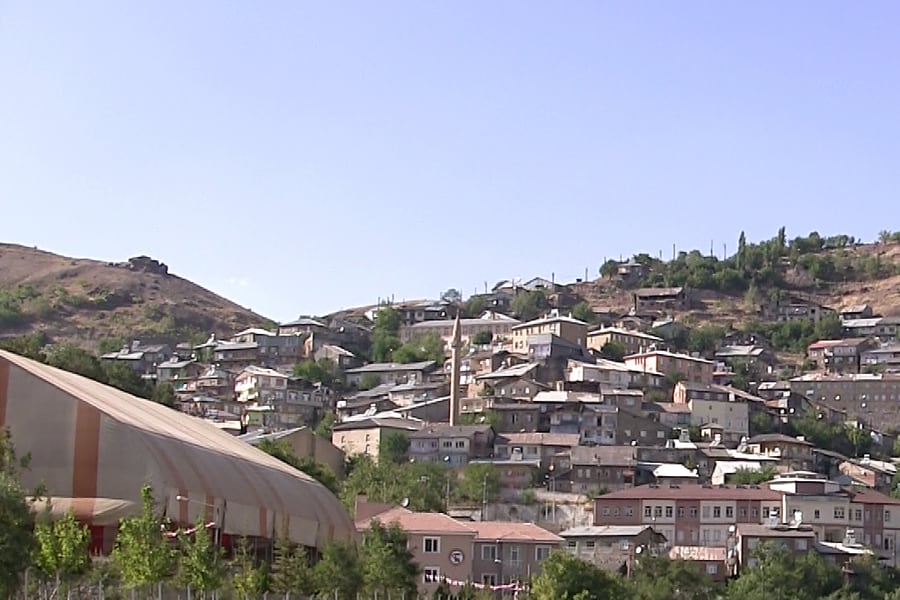 Klaus-Peter Simon / Wikimedia Commons · CC BY-SA 3.0 · cropped
Maden
Maden means mine: the copper here has been worked since antiquity, and in the 1930s the Ergani copper works swelled the town to some 30,000 people. Below it runs the Maden Çayı, the young Tigris, and the train follows it down the valley.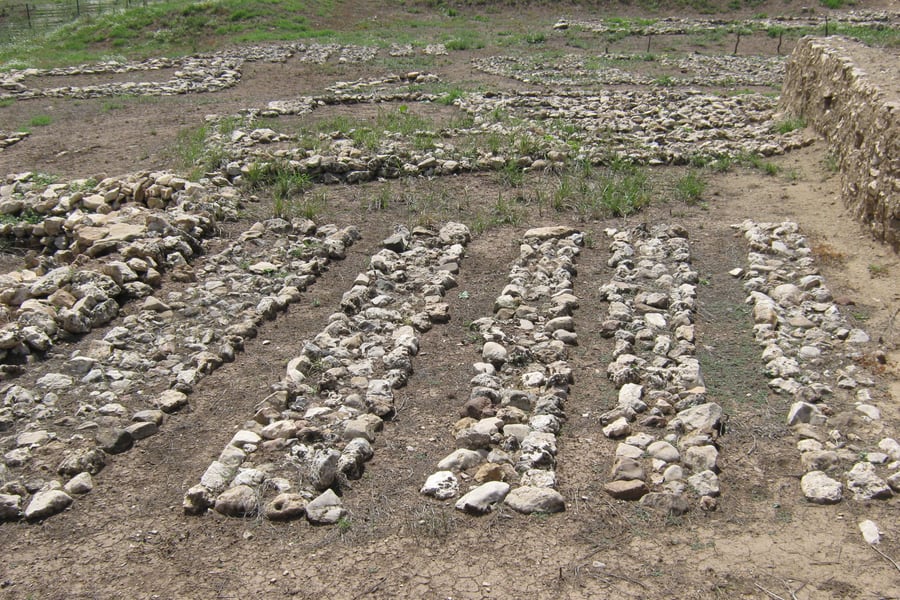 Krähenstein / Wikimedia Commons · CC BY-SA 3.0 · cropped
Ergani and Çayönü
Near Ergani lies Çayönü, a village of 8630–6800 BC and an early example of farming — possibly the place where the pig was first domesticated. Its houses stood on grills of stone footings, which kept the floors dry.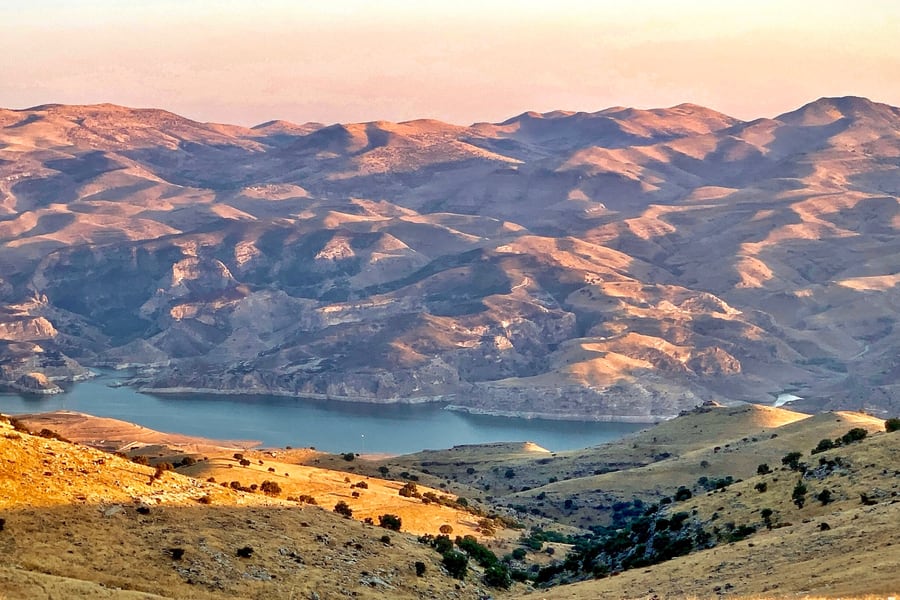 Vedatblc72 / Wikimedia Commons · CC BY-SA 4.0 · cropped
Batman and Raman Dağı
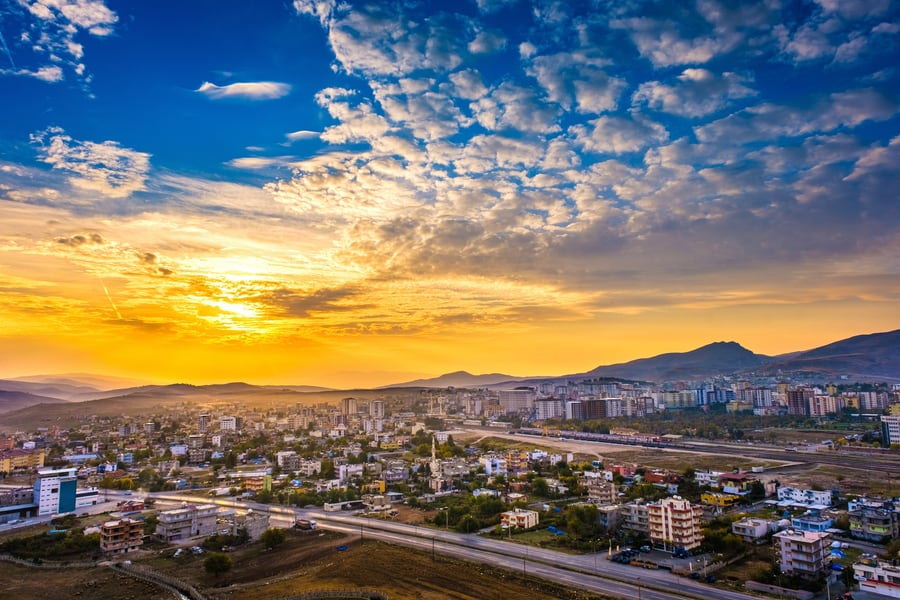
Batman was a village of about 3,000 until oil was found on Raman Dağı, the 1,288-metre mountain above it, in 1940 — the first oil struck in Turkey. The wells are still pumping, and the village is a city of some 450,000.A bit of history
Culture & experiences along the way
 E4024 / Wikimedia Commons · CC BY-SA 4.0 · cropped
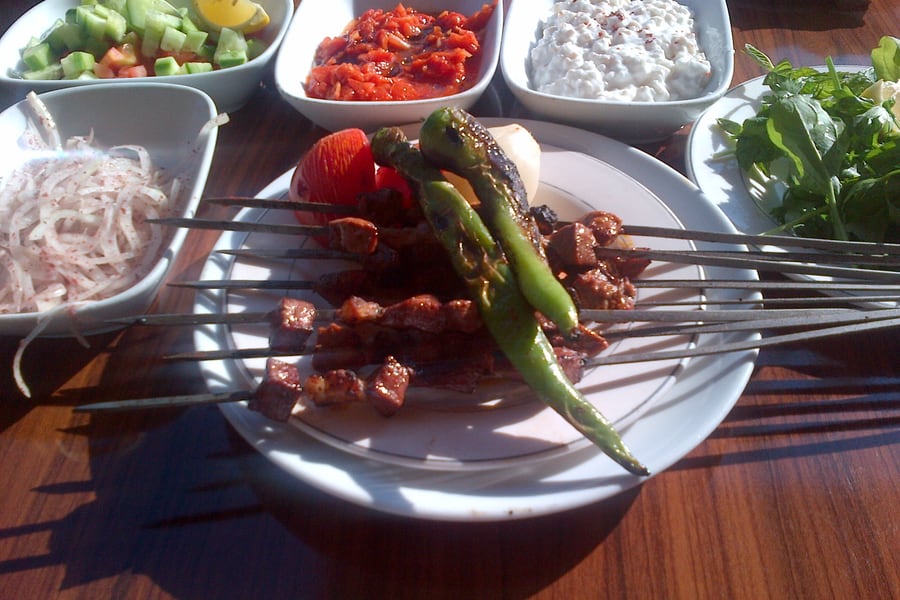
Liver at dawn
The most famous grill in Diyarbakır's kitchen is ciğer kebabı, liver cut small and threaded on skewers, and it is eaten early: the local saying has the day begin with "hade ciğer yemaya gidağ", let's go and eat liver. The eastbound train arrives in time for a late one.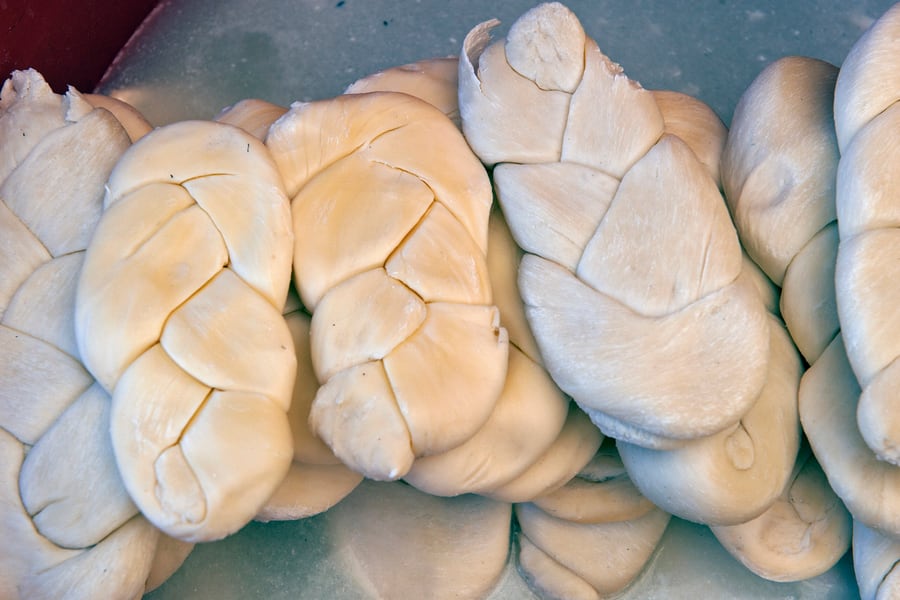 Dick Osseman / Wikimedia Commons · CC BY-SA 4.0 · cropped
Breakfast in the han
A Diyarbakır breakfast runs to more than twenty dishes: fourteen cheeses from the country around, murtuğa of flour and egg, honey in the comb, kaymak, eggs with kavurma. The city's own cheese is örgü peyniri, braided. The favourite place for it all is the Hasan Paşa Hanı, on Gazi Caddesi near the Ulu Cami.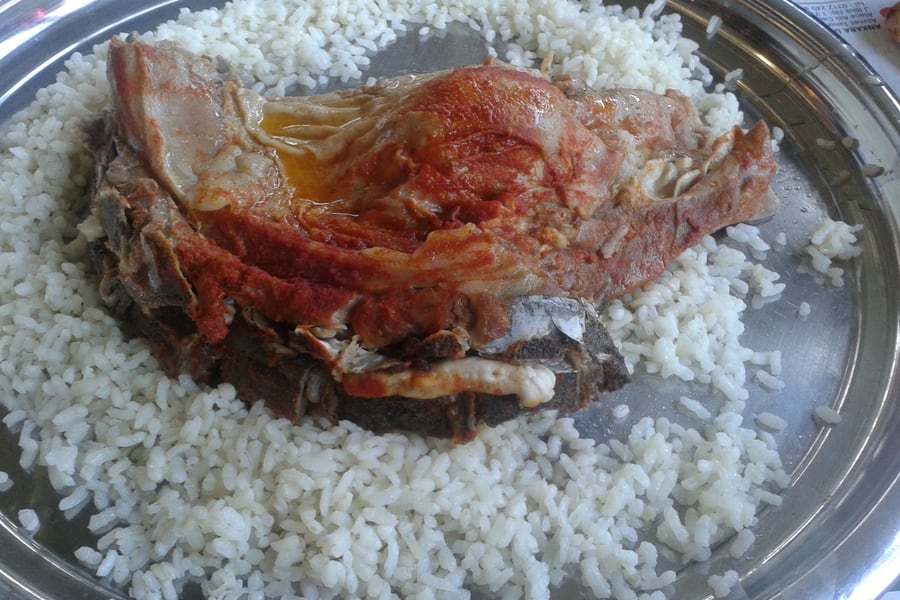 E4024 / Wikimedia Commons · CC BY-SA 4.0 · cropped
Kaburga dolması
Lamb ribs, opened into a pocket and stuffed with lamb, rice, almonds, tomato paste, butter and spices, then coated inside and out with a sauce of tomato paste, butter and parsley and cooked. It comes to the table hot, in its own broth.Timetables
One train a day in each direction, five days a week, all year. It leaves Ankara on Mondays, Wednesdays, Thursdays, Fridays and Saturdays, and Kurtalan on Mondays, Wednesdays, Fridays, Saturdays and Sundays. Times are TCDD's own, as of September 2026; the train reaches Diyarbakır and Kurtalan the day after it leaves Ankara.
Ankara → Kurtalan · train 22014
| Ankara | Kayseri | Sivas | Malatya | Yolçatı | Diyarbakır | Batman | Kurtalan |
|---|---|---|---|---|---|---|---|
| 11:20 | 18:58 | 22:53 | 03:51 | 06:07 | 09:50–10:12 | 12:30 | 14:10 |
Kurtalan → Ankara · train 52013
| Kurtalan | Batman | Diyarbakır | Yolçatı | Malatya | Sivas | Kayseri | Ankara |
|---|---|---|---|---|---|---|---|
| 09:20 | 11:05 | 13:06–13:29 | 17:40 | 20:17 | 01:23 | 05:04 | 12:45 |
That is 22 h 30 from Ankara to Diyarbakır and 26 h 50 to Kurtalan; about 27½ hours the other way.
- The Van Gölü Ekspresi keeps the same times as far as Yolçatı on the days this train does not run — from Ankara on Tuesdays and Sundays — so there is a train out of Ankara towards the east every day.
- Between Diyarbakır and Batman a regional train runs twice a day each way, every day: Diyarbakır 08:40 and 18:00, arriving Batman 10:46 and 20:06; Batman 05:30 and 15:00, arriving Diyarbakır 07:38 and 17:08.
- The Turistik Diyarbakır Ekspresi, a sleeper-only tourist train with long daytime stops, ran in the springs of 2024 and 2025, eight departures a season. It has not run in 2026, and TCDD says it is still gauging demand.
- Travel advice. In September 2026 the UK Foreign Office advises against all travel within 10 km of the border with Syria, and nowhere on this line is near it. Check your own government's advice before you go.
The timetable and live running are on TCDD Taşımacılık's Trenim Nerede page (opens in a new tab), where each station's board lists the train and its stops.
Tickets
Tickets are sold by TCDD Taşımacılık, on its booking site and app and at station ticket offices, for any stretch of the line — Ankara to Diyarbakır is the journey most people buy. There are three ways to travel: a Pullman seat, a berth in a four-person couchette, or a two-bed sleeping-car room. Ankara to Diyarbakır costs 815 TL in a seat, 1,480 TL in a couchette and 3,065 TL in a sleeper; to Kurtalan it is 880, 1,545 and 3,130 TL. Discount fares do not apply in the sleeper.
The train is on the move for a whole night, so the sleeper is the one to book: a room of your own, with two beds, a table and a washbasin. Checked in September 2026.
Book your tickets
Pullman seat
Reclining, two-and-one across the car
The cheapest way to ride, with tables between some seats and sockets at others.
Book Tickets (opens in a new tab, on tcddtasimacilik.gov.tr)via tcddtasimacilik.gov.trCouchette
Örtülü kuşet · four to a compartment
Two facing seats a side, which pull down into beds for the night.
Book Tickets (opens in a new tab, on tcddtasimacilik.gov.tr)via tcddtasimacilik.gov.trSleeper
Yataklı · two beds to a room
A private room with a table, a small fridge and a washbasin in the corner.
Book Tickets (opens in a new tab, on tcddtasimacilik.gov.tr)via tcddtasimacilik.gov.trRail Passes
A pass covers this train. Turkey is in the Interrail and Eurail area, and Interrail's table of railway companies lists TCDD Taşımacılık's main-line and night trains among what a pass includes, and excludes neither. Ask TCDD at the ticket office what a pass holder pays for a couchette or a sleeping-car room before you rely on it.
For this journey on its own a pass is not worth buying. It earns its keep on a longer trip that also takes in the Doğu Ekspresi to Kars and the high-speed lines west from Ankara to Istanbul and Konya. Checked against Interrail's railway-companies table, last updated 28 August 2026, in September 2026.
Places to Visit
Almost everything worth the journey is in Diyarbakır, and most of it is inside the walls of Sur, the old city, or on the river just below them. The station is in Yenişehir, the newer town, less than two kilometres west of the walls. Malabadi is a day out by road.
 İbrahimtrn00 / Wikimedia Commons · CC BY-SA 4.0 · cropped
The city walls
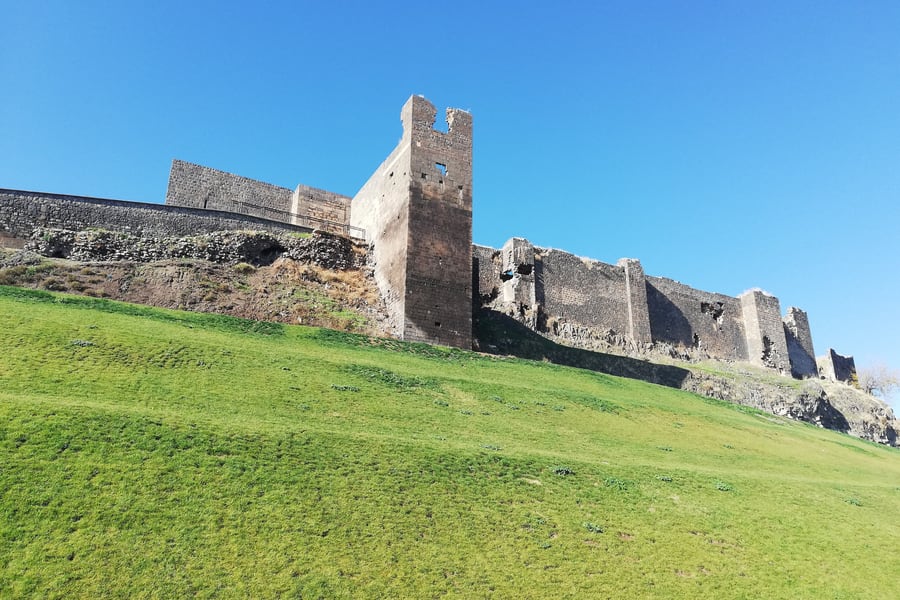
Diyarbakır's walls run 5.8 kilometres around the old city, Sur, with towers, gates, buttresses and 63 inscriptions from every period since the Romans. They are dark basalt, which is why the city was known in Turkish as Kara Amid, Black Amid. Keçi Burcu, the Goat Tower, looks down on the gardens and the Tigris. Some sections were damaged in the earthquakes of February 2023.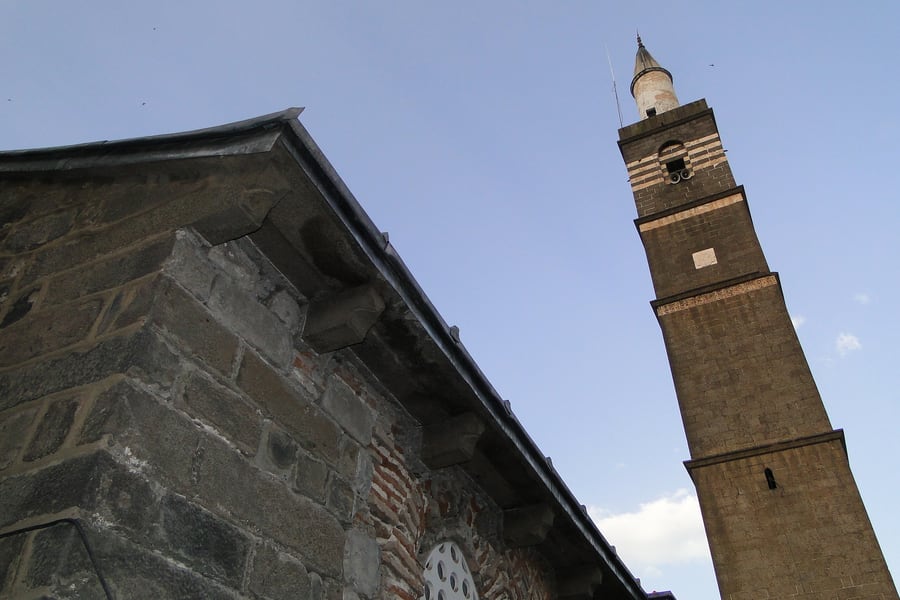 Adam Jones / Wikimedia Commons · CC BY-SA 2.0 · cropped
Ulu Cami
The Great Mosque, built in 1091–92 for the Seljuk sultan Malik-Shah over an older mosque, and one of the oldest in Anatolia. It was modelled on the Umayyad mosque of Damascus, and its courtyard façades are built with columns, capitals and friezes taken from Roman and Byzantine buildings. The minaret was rebuilt in 1839.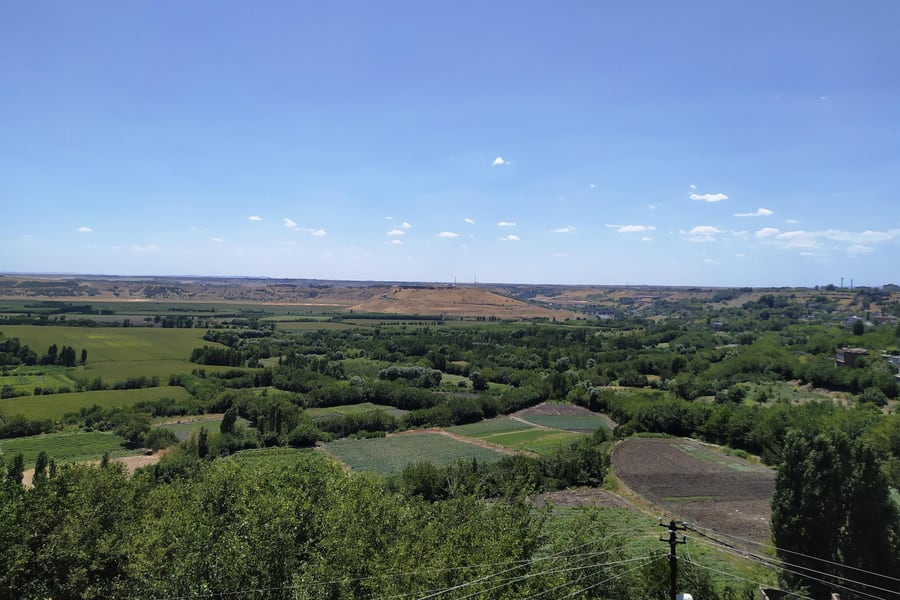 Radosław Botev / Wikimedia Commons · CC BY 3.0 pl · cropped
The Hevsel Gardens
The green strip between the walls and the Tigris, which for centuries fed the city and gave it water, and which still grows its vegetables and fruit. Gardens and walls were inscribed together as a World Heritage Site in 2015 — the view from Keçi Burcu down over the fields to the river is the one to come for.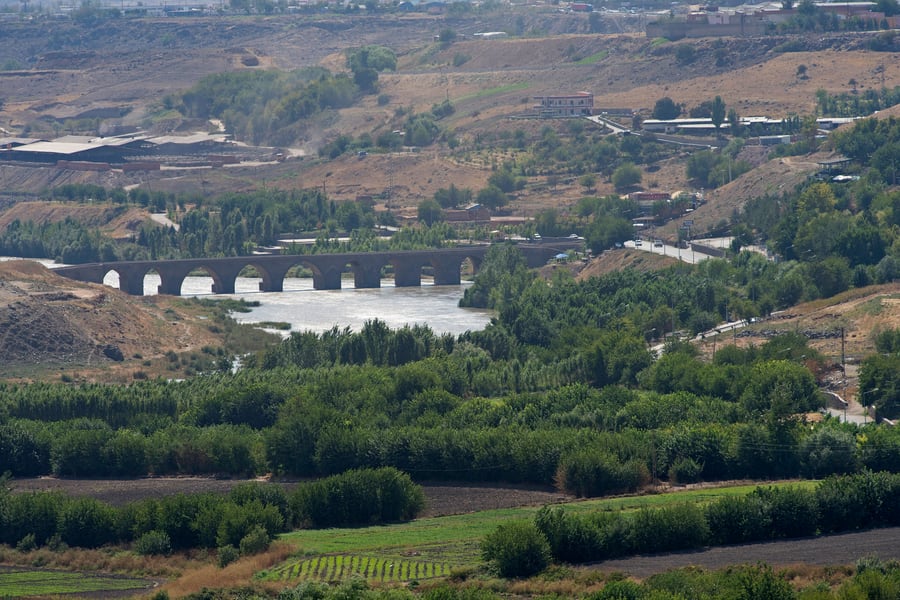 Dick Osseman / Wikimedia Commons · CC BY-SA 4.0 · cropped
The Ten-Eyed Bridge
On Gözlü Köprü, the Dicle Bridge: ten arches of black basalt, 178 metres across the Tigris, three kilometres south of the Mardin Gate. An inscription dates it to 1065, under the Kurdish Marwanid dynasty, and names its architect, Yusuf son of Ubeyd. Cars have used a new bridge a kilometre away since 2009, so it is a place to walk.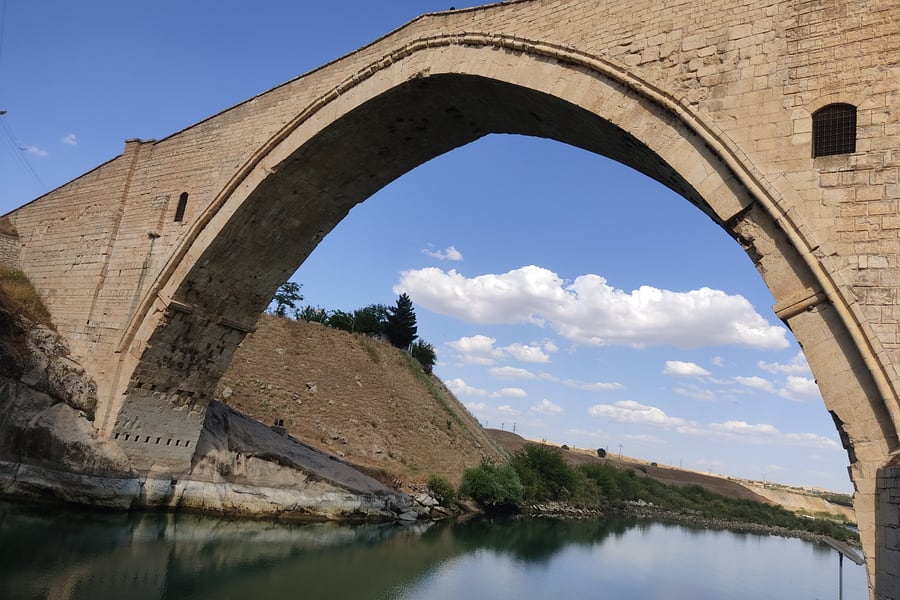 Kaya Elifnur 72 / Wikimedia Commons · CC BY-SA 4.0 · cropped
Malabadi Bridge
Over the Batman River in Silvan district, east of Diyarbakır: an Artuqid bridge begun in 1146/47 and finished around 1154, 150 metres long, with a single pointed arch of 38.6 metres, and 19 metres high. Rooms for travellers are built into the stonework either side of the span, and two carved figures stand on the western pier. It carried the road until the 1950s, and has been on Turkey's tentative World Heritage list since 2016.Where to Sleep
In Diyarbakır the choice is between the old city and the new: inside the walls of Sur for the mosques, the hans and the breakfast, or in the newer districts near the station, where the big hotels are. In Ankara, Ulus puts you a short ride from Ankara Gar for the 11:20 departure.
Where to stay
Radisson Blu Hotel, Ankara
Ankara, in Ulus by Gençlik Park
Two hundred and two rooms on İstiklal Caddesi in the old city, next to a metro station.
Check Availability (opens in a new tab, on radissonhotels.com)via radissonhotels.comRadisson Blu Hotel, Diyarbakır
Diyarbakır, in the new business district
A modern hotel near the station, with an indoor pool, a spa and a top-floor terrace.
Check Availability (opens in a new tab, on radissonhotels.com)via radissonhotels.comQuestions or corrections
Planning this trip and stuck on something, or spotted a time, fare or detail that has changed? Send us a message about Güney Kurtalan Ekspresi. We read every one, and we update this page when something has changed.