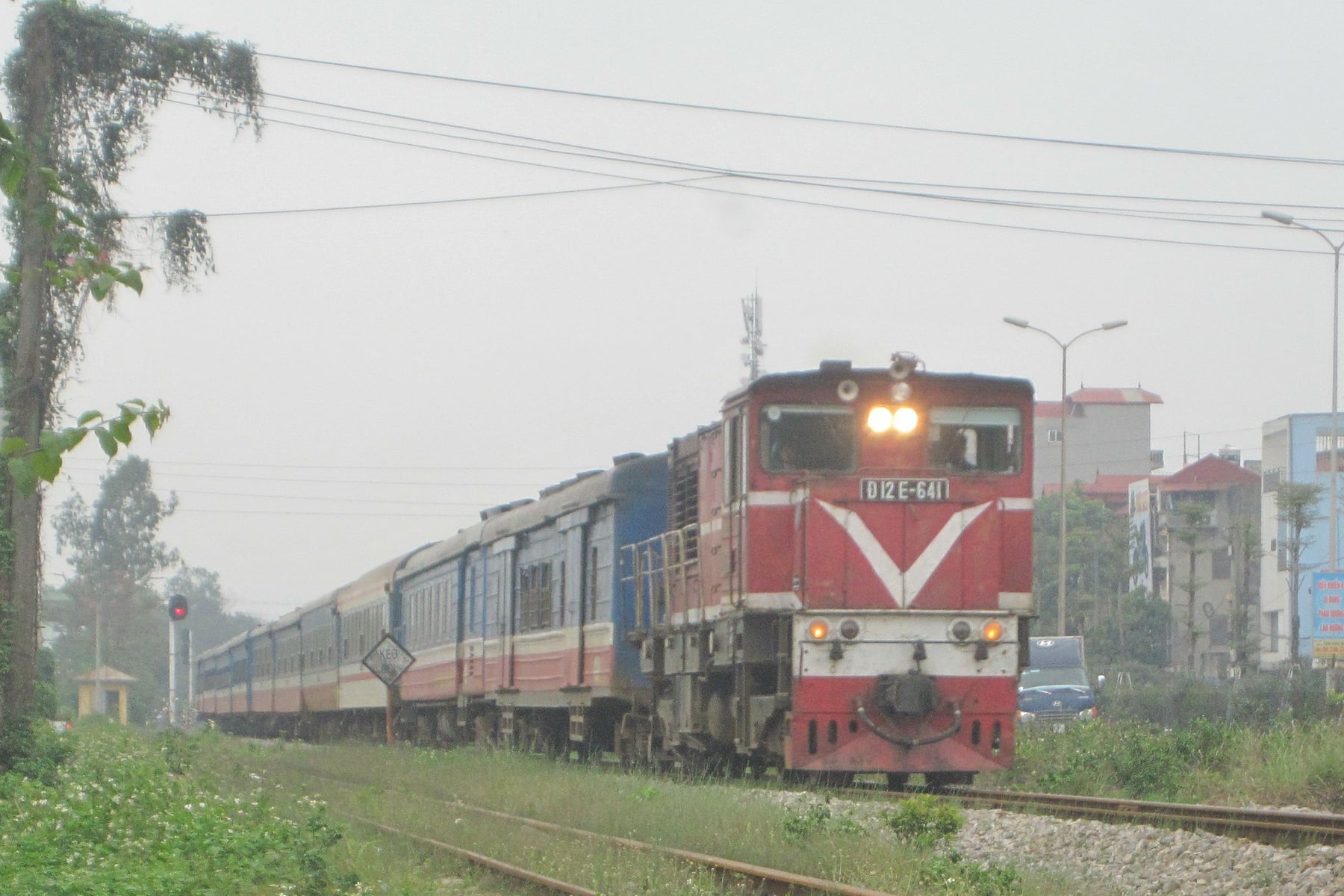
Hanoi to Hải Phòng
Anh Đức HRT / Wikimedia Commons · CC BY-SA 4.0 · 2019 · cropped
- Distance102 km
- DurationAbout 2½ to 2¾ hours
- Best seasonDaily, all year; the flamboyants flower in May
Introduction
Before the French railway climbed the Red River to Lào Cai and on to Kunming, it ran to the sea. Work began in 1901, and on 16 June 1902 the first stretch opened: 102 km of single-track metre gauge from Hanoi east across the delta to Hải Phòng, the port where the whole line to China would start. It still runs, on the same metre gauge, between the capital and the country's northern port.
Four trains a day run each way, with extras at busy weekends, and the trip takes two and a half to three hours. Since 10 May 2025 they have been the Hoa Phượng Đỏ, the Red Flamboyant trains, named for the tree that is the symbol of Hải Phòng: twenty new red coaches, two of them VIP cars fitted out in Indochine style. Czech-built D12E diesels still pull them.
It is an everyday train, not a tourist one: in its first year the Hoa Phượng Đỏ carried about 1.33 million passengers. For a visitor it is the railway way to the coast: to the old colonial city, to the beach at Đồ Sơn, and on by boat to Cát Bà and Lan Hạ Bay.
The Journey
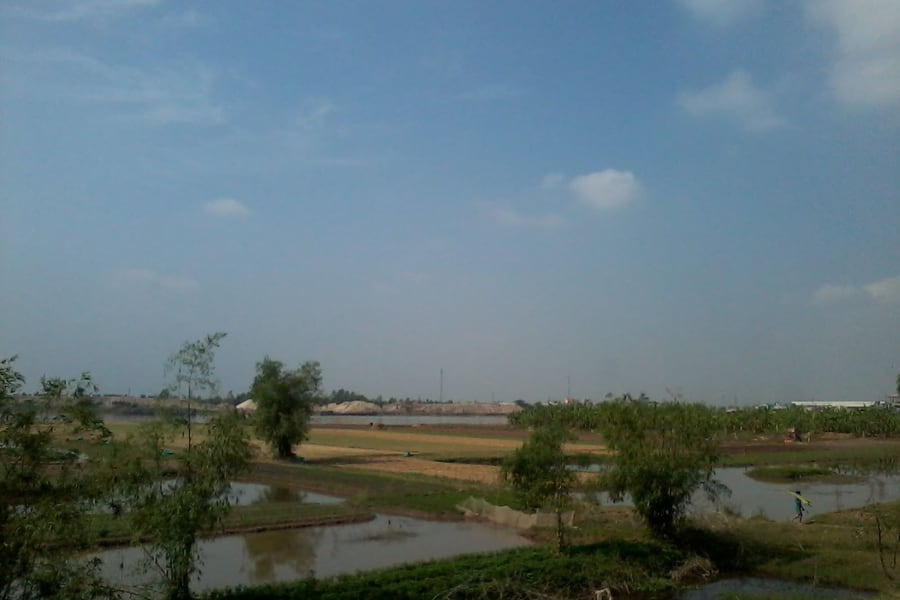
The trains leave Hà Nội station and, except the early HP1, stop two kilometres later at Long Biên, at the city end of the Long Biên Bridge. Across the Red River comes Gia Lâm, five kilometres out, and then the single track runs east into the flat country of the delta, through paddy and fishponds.
Cẩm Giàng comes at kilometre 40, and Hải Dương at 57, a little past halfway. Beyond Hải Dương the line crosses the Thái Bình River on the Phú Lương bridge, a French-era truss that carried the old Highway 5 on the same deck until a separate road bridge opened in 1996. It was bombed and brought down several times in the war and rebuilt after each.
Into Hải Phòng
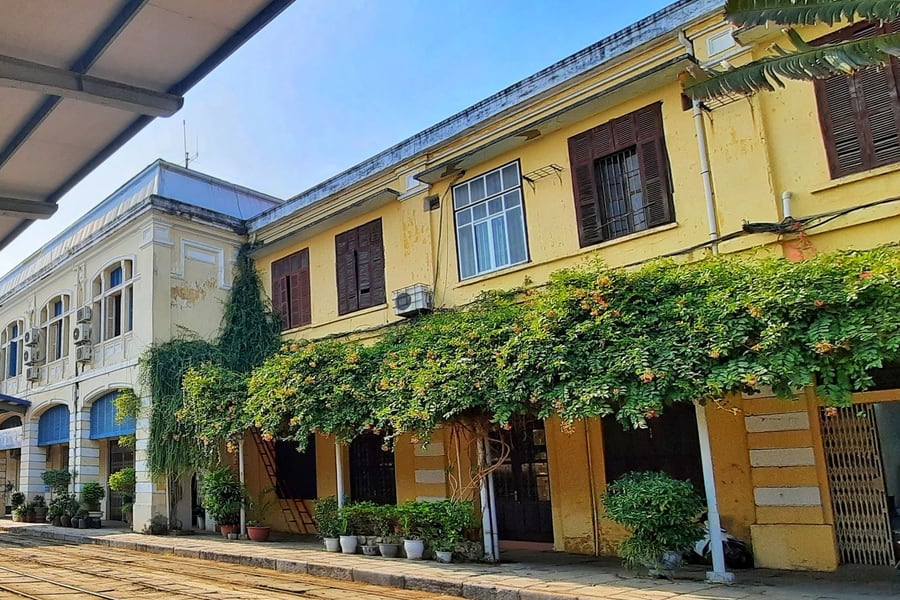
The last stretch passes Phú Thái, at kilometre 78, and Thượng Lý, on the edge of the city, before the trains run into Hải Phòng station at kilometre 102. The terminus opened with the line in 1902, and the yellow colonial building is still the station; since May 2025 it has also been an official tourist site.
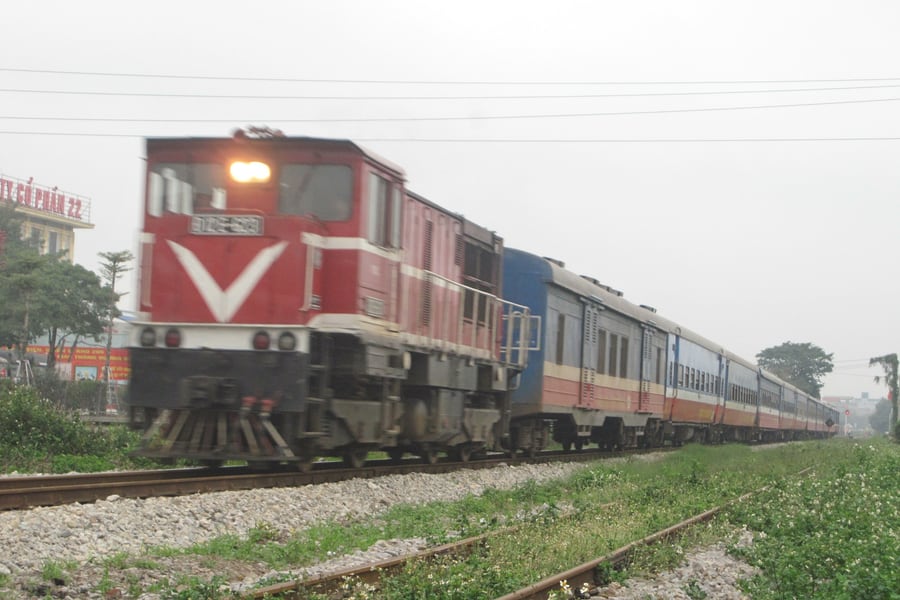
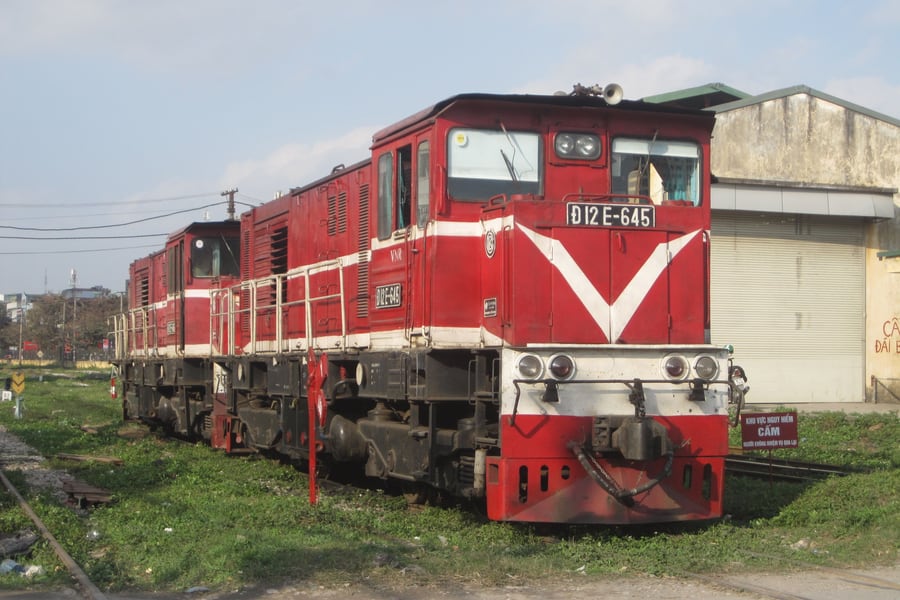
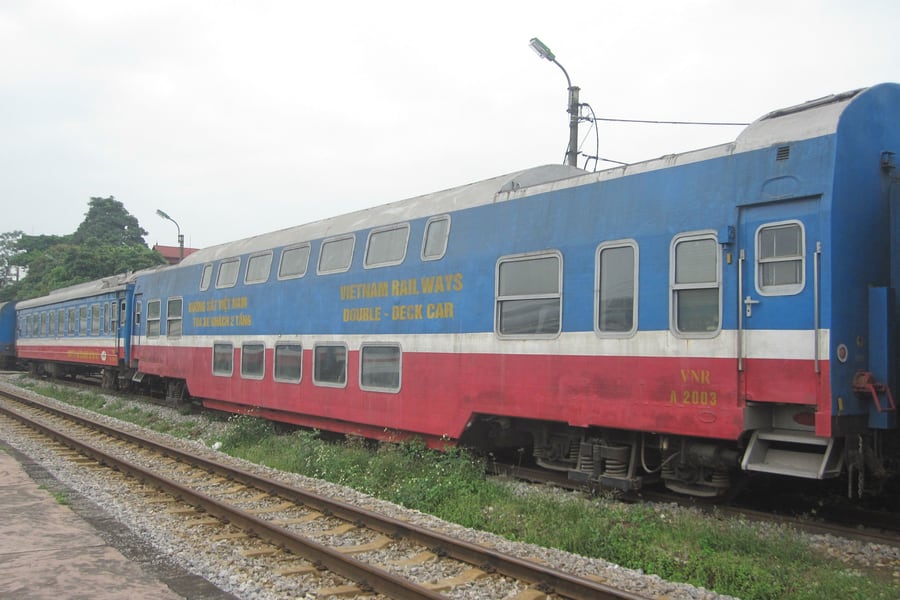
The locomotives are D12E diesels, built in Czechoslovakia and in service in Vietnam since 1986: 1,200 horsepower, a top speed of 80 km/h, and a white V across a red nose. In Vietnamese they are máy Tiệp, the Czech engines. Behind them run the Hoa Phượng Đỏ's red coaches: cars of 56 seats that turn to face the direction of travel, ordinary soft-seat cars, and the two VIP cars of 34 seats, with sofas, wood floors and a bar.
Along the route
 calflier001 / Wikimedia Commons · CC BY-SA 2.0 · 2012 · cropped
Long Biên
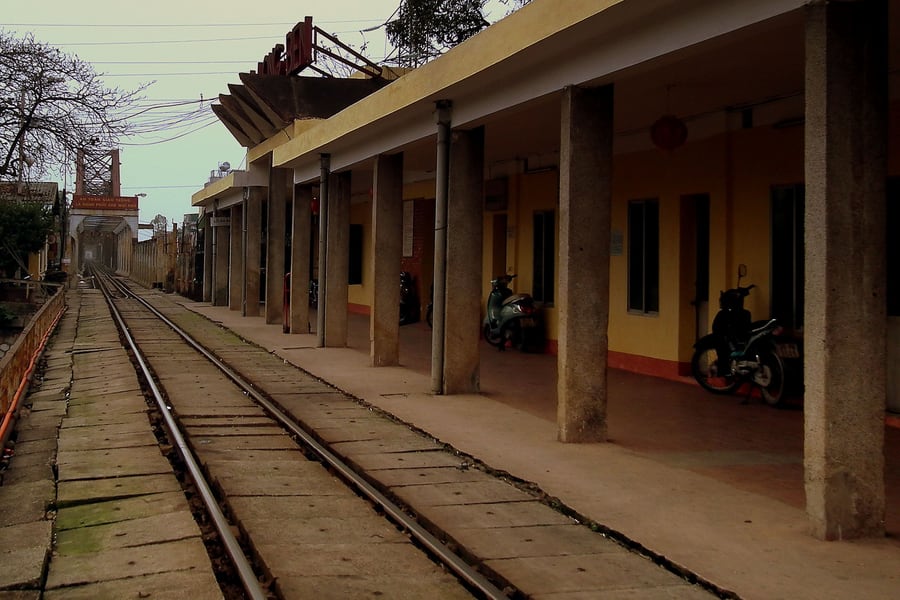
The LP trains stop at Long Biên, at the Hanoi end of the bridge of the same name, two kilometres out. The station dates from 1902 and stands a few minutes' walk from Đồng Xuân market and the Old Quarter.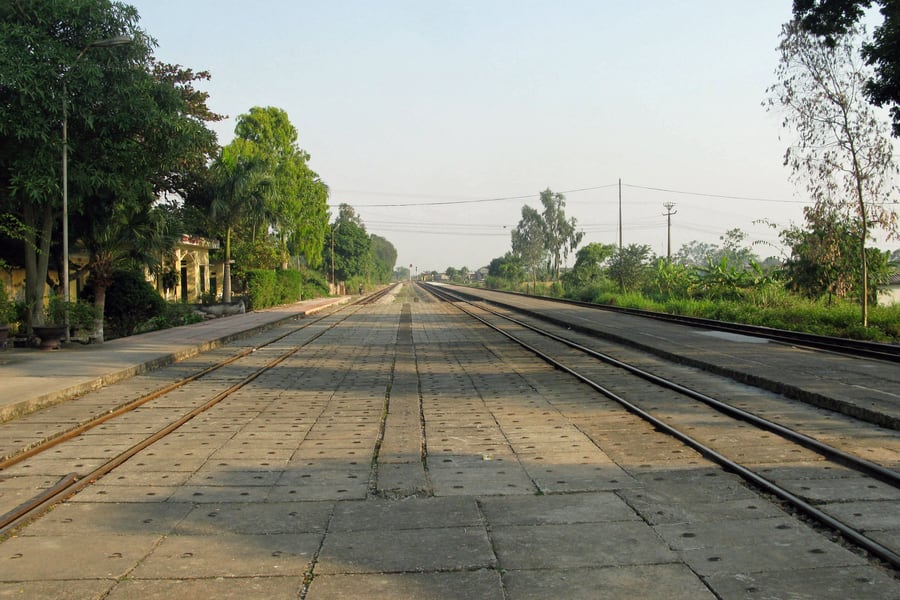 Kitayama / Wikimedia Commons · CC BY-SA 4.0 · 2015 · cropped
Cẩm Giàng
Forty kilometres out, the first stop after Gia Lâm. The LP trains and the evening HP2 call here; the morning HP1 runs straight through to Hải Dương.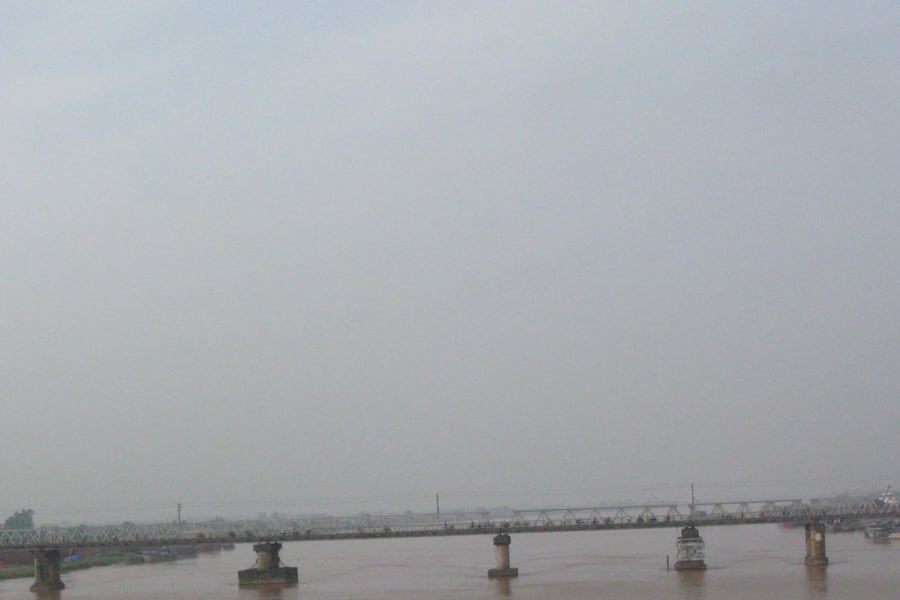 Bình Giang / Wikimedia Commons · Public domain · 2008 · cropped
Over the Thái Bình
At Hải Dương the line crosses the Thái Bình River on the Phú Lương bridge, built under the French. Until 1996 the trains shared it with the old Highway 5; bombed several times in the war, it was rebuilt each time.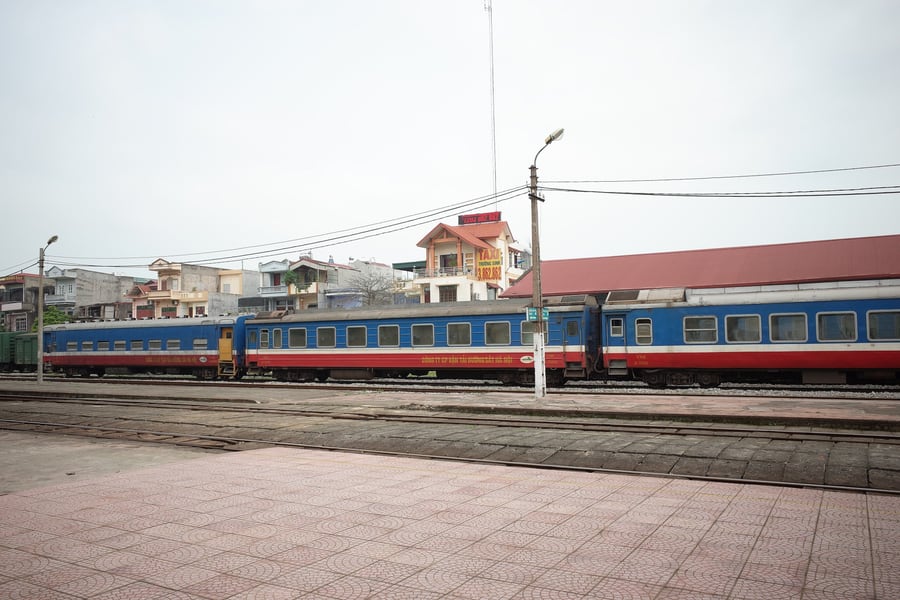 Nguoivietbao / Wikimedia Commons · CC BY-SA 4.0 · 2019 · cropped
Hải Dương
Halfway, at kilometre 57. The old provincial capital is now part of Hải Phòng city, and it is the town known for bánh đậu xanh, the mung-bean cakes eaten with green tea.A bit of history
Culture & experiences along the way
 Phương Huy / Wikimedia Commons · CC BY-SA 4.0 · 2018 · cropped
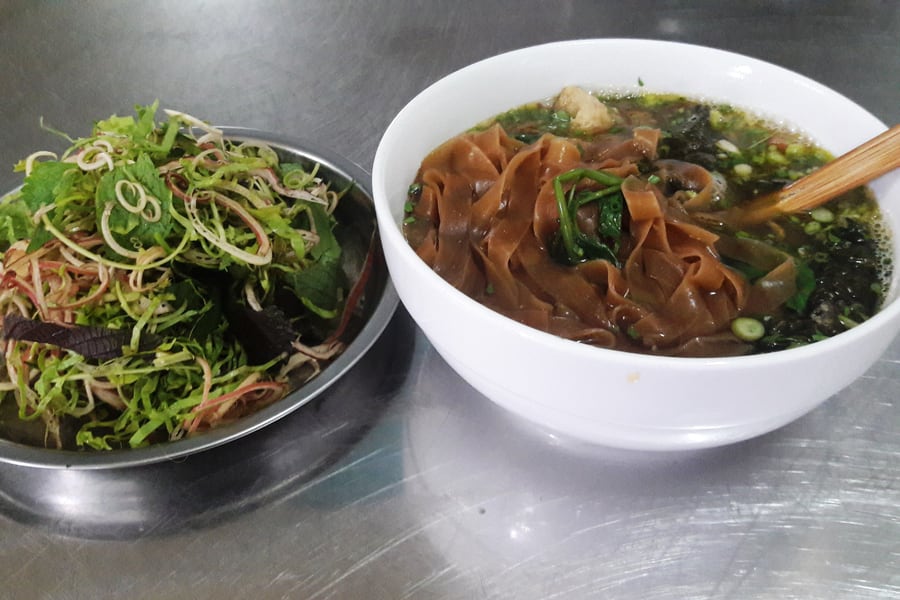
Bánh đa cua
Hải Phòng's own noodle soup: flat red rice noodles, bánh đa đỏ, in a broth made from field crabs, with the crab paste floating on top and a plate of greens on the side. Dư Hàng Kênh, in the city, is known for making the red noodles.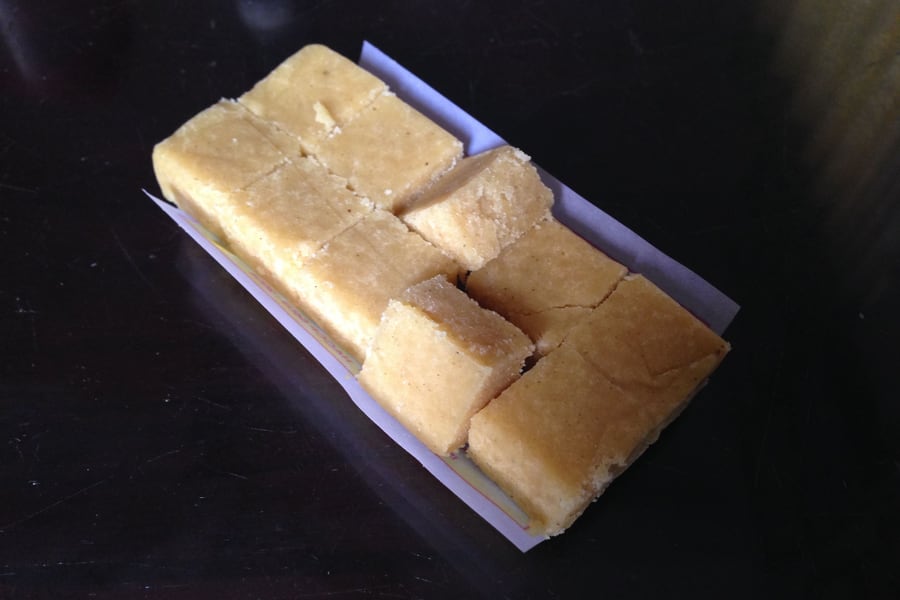 Hoangkid / Wikimedia Commons · CC BY-SA 4.0 · 2017 · cropped
Mung-bean cakes from Hải Dương
Bánh đậu xanh is mung-bean flour pounded with sugar and oil or lard, cut into small squares and wrapped in foil. It is eaten with green tea, and Hải Dương, the halfway stop, is the town best known for making it.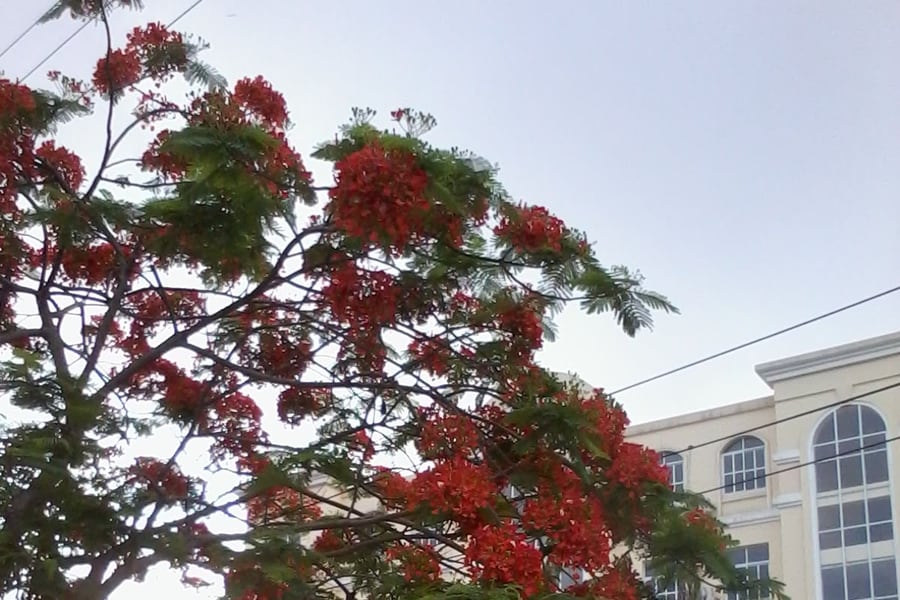 Linhhp / Wikimedia Commons · CC BY-SA 3.0 · 2012 · cropped
The Red Flamboyant Festival
The phượng, the red flamboyant tree, is the symbol of Hải Phòng, and it gave the new trains their name and their red livery. The city holds its Red Flamboyant Festival every May, running up to the anniversary of its liberation on 13 May.Timetables
Four trains run each way every day, all of them Hoa Phượng Đỏ services. The HP trains make fewer stops: the HP1 runs straight through Long Biên and Cẩm Giàng, and the HP2 skips Long Biên.
Hanoi to Hải Phòng
| Train | Hà Nội | Hải Dương | Hải Phòng |
|---|---|---|---|
| HP1 | 06:00 | 07:21 | 08:25 |
| LP3 | 09:25 | 10:59 | 12:00 |
| LP5 | 15:15 | 16:53 | 18:00 |
| LP7 | 18:10 | 19:53 | 20:55 |
Hải Phòng to Hanoi
| Train | Hải Phòng | Hải Dương | Hà Nội |
|---|---|---|---|
| LP2 | 06:05 | 07:18 | 08:49 |
| LP6 | 09:10 | 10:12 | 11:52 |
| LP8 | 15:00 | 16:03 | 17:40 |
| HP2 | 18:40 | 19:50 | 21:15 |
Vietnam Railways adds the LP9 (Hà Nội 07:15, Hải Phòng 10:07) and the LP10 (Hải Phòng 16:20, Hà Nội 19:03) at busy weekends and holidays, and lists both in its timetable until 30 December 2026. The LP trains also call at Long Biên, Gia Lâm, Cẩm Giàng, Phú Thái and Thượng Lý. Times change around Tết, the lunar new year, so check your date in Vietnam Railways' timetable (opens in a new tab) before you travel.
Timetable as of November 2026.
Tickets
Vietnam Railways sells every seat for a named train and date, online at dsvn.vn and at the stations. Fares depend on the car and the day: in November 2026 a soft seat from Hanoi to Hải Phòng cost 120,000 VND on a weekday and 150,000 VND at the weekend, a seat in the 56-seat cars 140,000 or 170,000 VND, and a place in the VIP car 300,000 or 350,000 VND.
The VIP cars have only 34 seats each, and on weekend and holiday trains they are often the first to sell out, so book those days ahead. On a weekday morning an ordinary soft seat is easy to find.
Fares checked November 2026.
Book your tickets
Soft seat, Hanoi to Hải Phòng
HP1, LP3, LP5 or LP7 · Vietnam Railways
An air-conditioned soft seat on any of the trains, bought for a named train and date from Vietnam Railways.
Book Tickets (opens in a new tab, on dsvn.vn)via dsvn.vnThe VIP car
34 seats · Hoa Phượng Đỏ trains
One of two carriages fitted out in Indochine style, with sofas and a small bar; often the first seats to sell out at weekends.
Book Tickets (opens in a new tab, on dsvn.vn)via dsvn.vnRail Passes
No rail pass covers the trains to Hải Phòng. Vietnam Railways sells each journey as a ticket for a named train and seat, online or at the station. Buy each direction on its own.
Checked November 2026.
Places to Visit
Hải Phòng is a port city with an old colonial centre, a seaside at Đồ Sơn, and the islands of Cát Bà and Lan Hạ Bay out in the gulf. The places below run from the terminus outwards.
 Akira / Wikimedia Commons · CC BY-SA 4.0 · 2020 · cropped
Hải Phòng station
The terminus opened with the line in 1902, and it is the station where the railway to Kunming began. On 21 October 1946 Hồ Chí Minh, back by sea from the Fontainebleau talks in France, left here by train for Hanoi, and the date is now the railway's own day. Since 10 May 2025 the station has been an official tourist site; this is its platform side.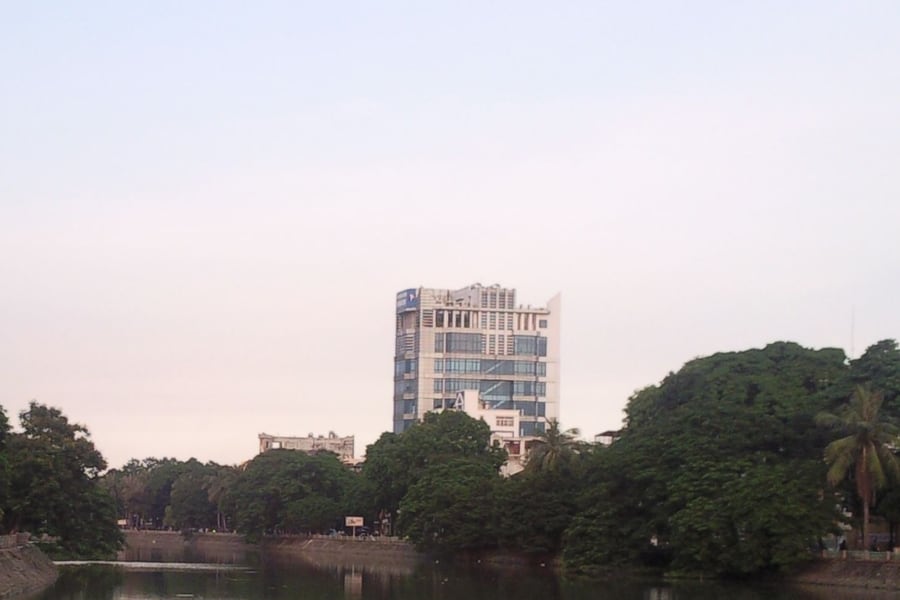 An Nguyễn Hải / Wikimedia Commons · CC BY-SA 3.0 · 2011 · cropped
Tam Bạc Lake
About two kilometres west of the station, the lake runs through the middle of the old city. It was a stretch of river, the sông Lấp, until 1985, when the Tam Kỳ dam closed it off. Beyond it the Tam Bạc River, dating from the Nguyễn dynasty and linking the Lạch Tray to the Cấm, gives its name to the old riverside street of Tam Bạc.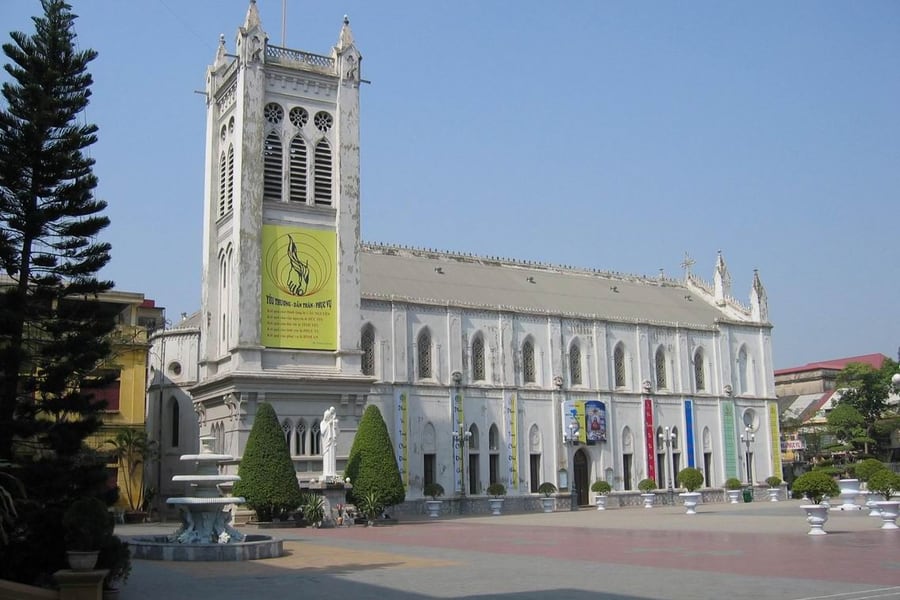 Qjafcc / Wikimedia Commons · CC BY-SA 3.0 · 2007 · cropped
Hải Phòng Cathedral
The seat of the diocese of Hải Phòng stands on Hoàng Văn Thụ street: a Gothic church 47 m long and 17 m wide, with a square bell tower 28 m high over the front. The parish began restoring it in 2000, keeping the architecture as it was.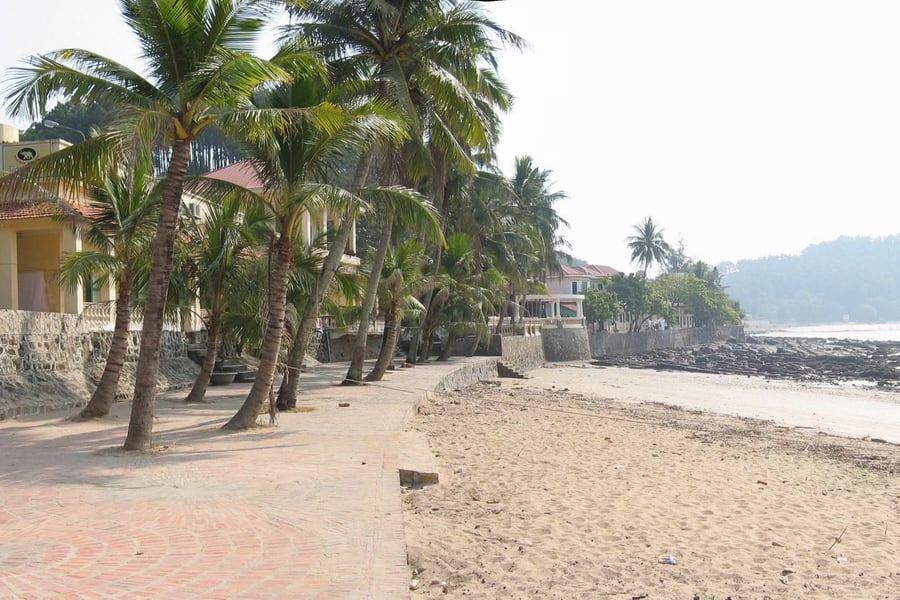 Qjafcc / Wikimedia Commons · CC BY-SA 3.0 · 2007 · cropped
Đồ Sơn
About 22 km south-east of the centre, the Rồng hills run 5 km out into the Gulf of Tonkin, with beaches between them. The French made it a resort in the early twentieth century. On the ninth day of the eighth lunar month it holds its buffalo-fighting festival, a national intangible heritage since 2020.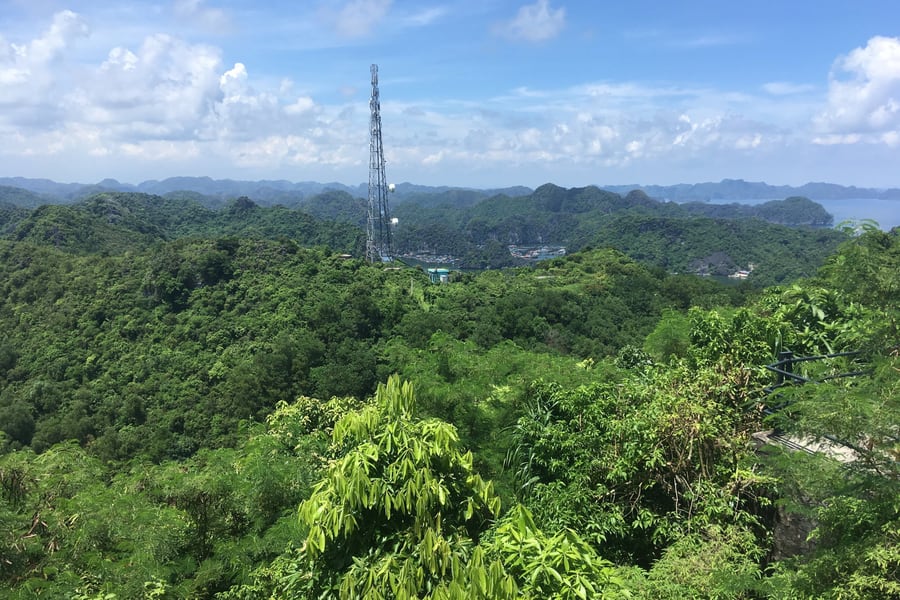 Christophe95 / Wikimedia Commons · CC BY-SA 4.0 · 2018 · cropped
Cát Bà
The largest of the 367 islands of the Cát Bà archipelago, forested limestone at the edge of Lan Hạ Bay. The archipelago has been a UNESCO Biosphere Reserve since 2004 and part of a World Heritage Site with Hạ Long Bay since 2023. Hospital Cave, a bomb-proof hospital until 1975, lies north of the town.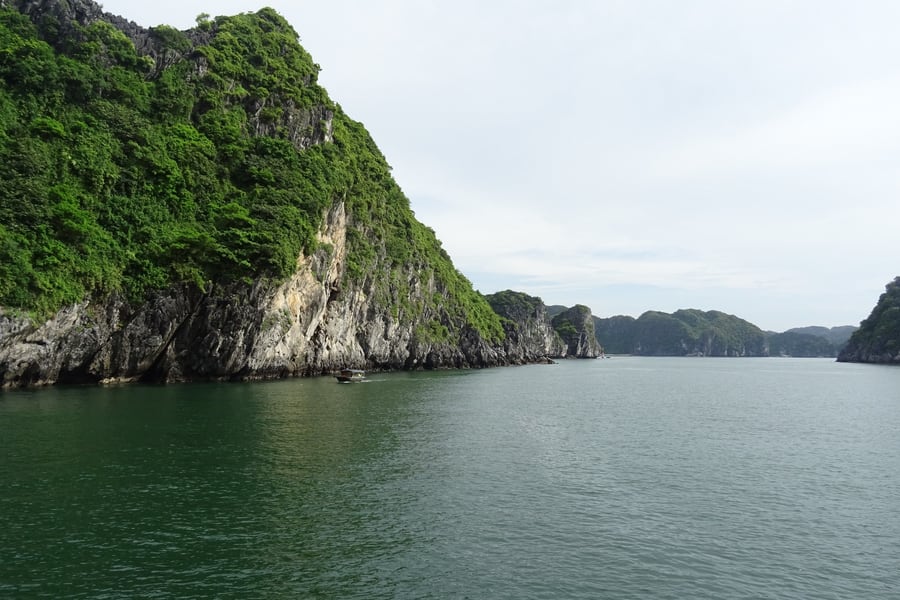 Christophe95 / Wikimedia Commons · CC BY-SA 4.0 · 2018 · cropped
Lan Hạ Bay
Over 7,000 ha of sea on the eastern side of Cát Bà, about thirty minutes by boat from the island's pier. More than 400 limestone islands close it in, and around them lie 139 small beaches. The bay lies between Cát Bà and Hạ Long Bay.Where to Sleep
The train makes Hải Phòng a day trip from Hanoi; for Cát Bà and Lan Hạ Bay, plan a night in the city or on the island. Mercure Hai Phong is on Lạch Tray Street in the city centre, about 1.5 km from the station.
Where to stay
Mercure Hai Phong
On Lạch Tray Street, in the city centre
176 rooms and 57 serviced apartments, about 1.5 km from Hải Phòng station.
Check Availability (opens in a new tab, on all.accor.com)via all.accor.comQuestions or corrections
Planning this trip and stuck on something, or spotted a time, fare or detail that has changed? Send us a message about Hanoi to Hải Phòng. We read every one, and we update this page when something has changed.