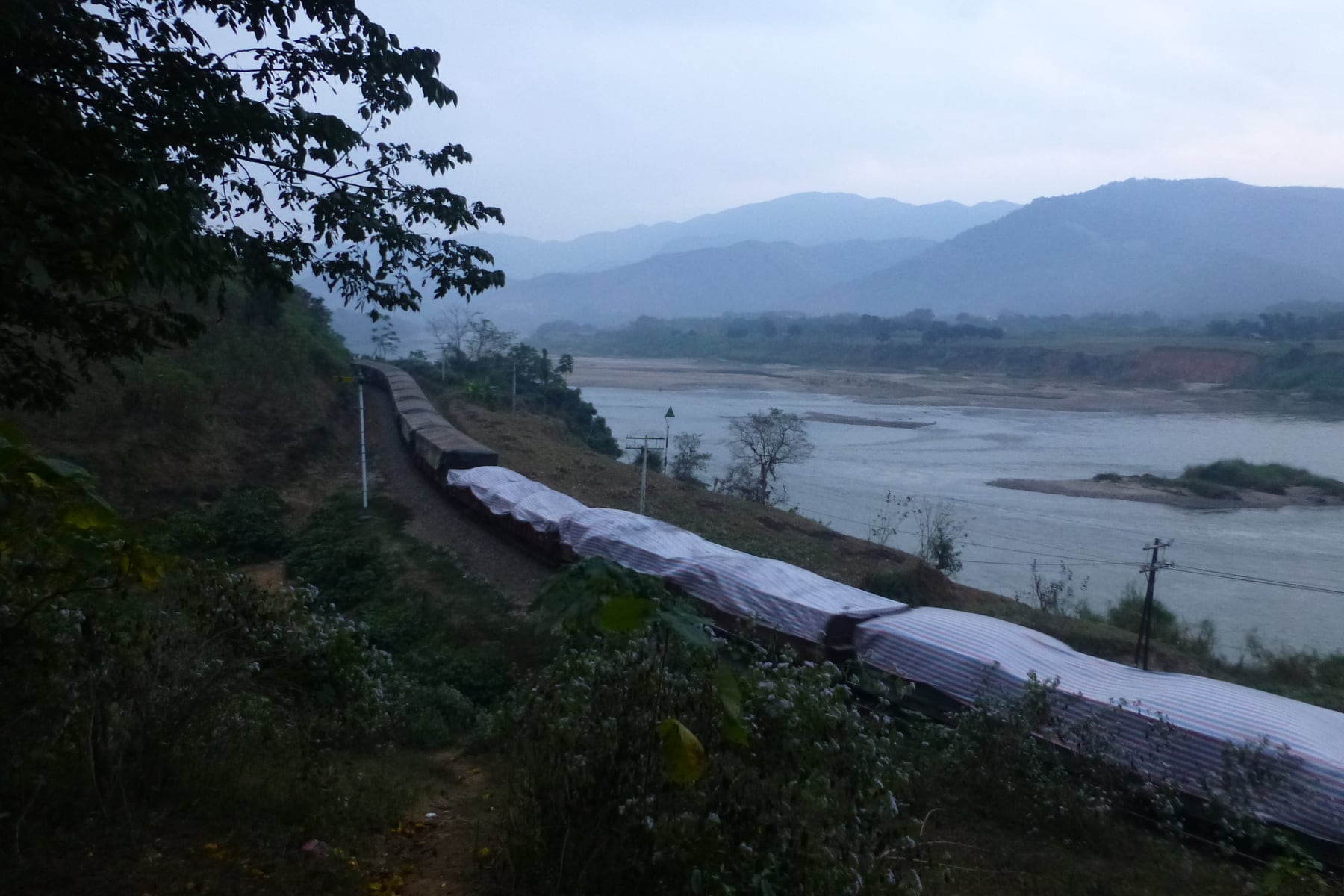
Hanoi to Lào Cai
Vmenkov / Wikimedia Commons · CC BY-SA 3.0 · 2016 · cropped
- Distance296 km
- DurationAbout 7½ to 8 hours
- Best seasonDaily, all year
Introduction
The French built one railway from the port of Haiphong to Kunming, in China's Yunnan province: 855 km of metre gauge, open throughout on 1 April 1910. Its Vietnamese line reached Lào Cai, on the border, in 1906, leaving Hanoi over the Red River on the Long Biên Bridge. Beyond the frontier the track ran on for another 466 km to Kunming.
Only one half of it still carries passengers. On the Chinese side the passenger trains ended in 2005, and China's standard-gauge line, finished to Hekou in 2014, now does that work. On the Vietnamese side the sleepers still leave Hanoi every night: since 10 October 2026 there have been three a day in each direction, and the 296 km take a little under eight hours. They stop at Lào Cai, on the river that is the frontier, with Hekou on the far bank.
That makes this the night train to Sa Pa. The trains climb the Red River valley in the dark and pull into Lào Cai at first light, an hour's drive below the town and the terraced valleys under Fansipan. Southbound there is one train by day, the SP8, which leaves Lào Cai at noon and shows the valley that the night trains pass in their sleep.
The Journey
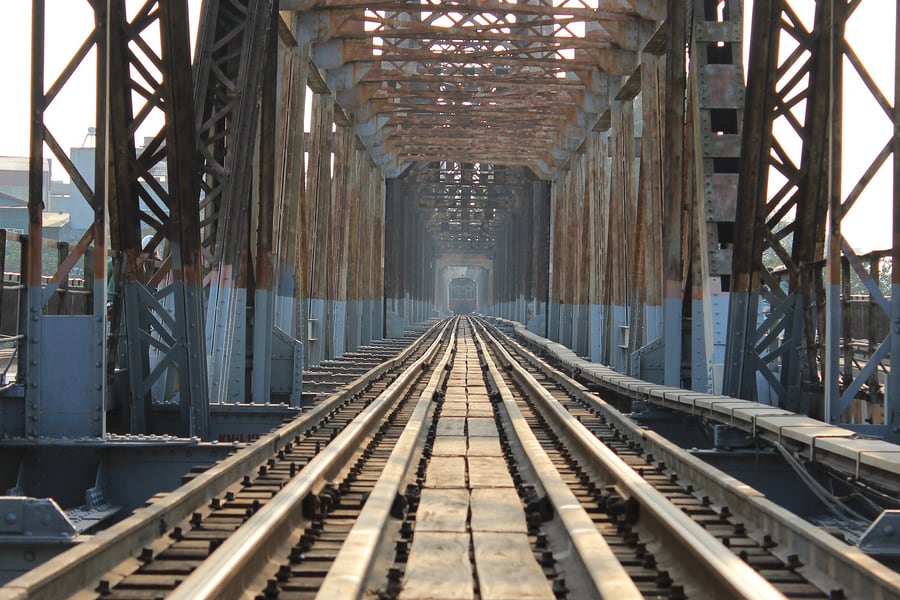
The night trains leave Hà Nội station and head straight for the Red River. The Long Biên Bridge, built between 1899 and 1902 by Daydé & Pillé of Paris and opened in 1903, carries them across: nineteen spans of steel, bombed in 1967 and again in 1972, with a single track down the middle and mopeds, bicycles and people on foot along the sides. It was the Paul Doumer Bridge until 1954.
On the east bank the trains call at Gia Lâm and Yên Viên, then Phúc Yên, before swinging north-west into the valley. The line is single-track metre gauge for its whole 296 km, built between 1898 and 1906, and since October 2026 the night trains take passengers at eight stations only. After Phúc Yên the next is Yên Bái, in the middle of the night; the daytime SP8 also stops at Phú Thọ.
Up the valley to the border
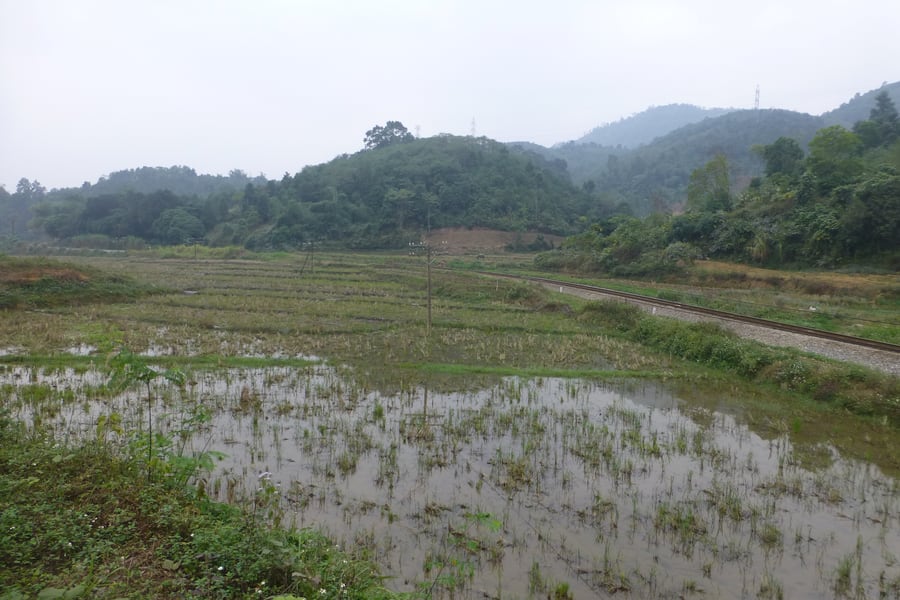
Above Yên Bái the railway keeps company with the Red River all the way to the frontier, often on a shelf just above the water, with forested hills on both sides. Bảo Hà, two stops from the end, is the station for the temple of Ông Hoàng Bảy, eight hundred metres away on the same bank. Then comes Phố Lu, and the run through paddy fields into Lào Cai, where the passenger trains end.
The rails do not. Freight still crosses the Nậm Thi into China on the metre gauge and runs the whole way to Kunming, chemical fertiliser coming south into Vietnam among it. The railway bridge at the frontier was destroyed in the 1979 war between the two countries, and cross-border trade stopped for several years.
A second railway is on its way. On 19 December 2025 work began at Lào Cai station on a standard-gauge line from Lào Cai through Hanoi to Hải Phòng, 390.9 km long and designed for 160 km/h on its main section, with completion due by 2030. Until it opens, the night trains on the old metre gauge remain the railway way up to Sa Pa.
Along the route
 Minhquangdo / Wikimedia Commons · CC BY 4.0 · 2016 · cropped
Out over the Long Biên Bridge
The trains leave Hanoi on the Long Biên Bridge, opened in 1903 and named after Paul Doumer until 1954. The single track runs down the middle, with mopeds, bicycles and walkers on either side.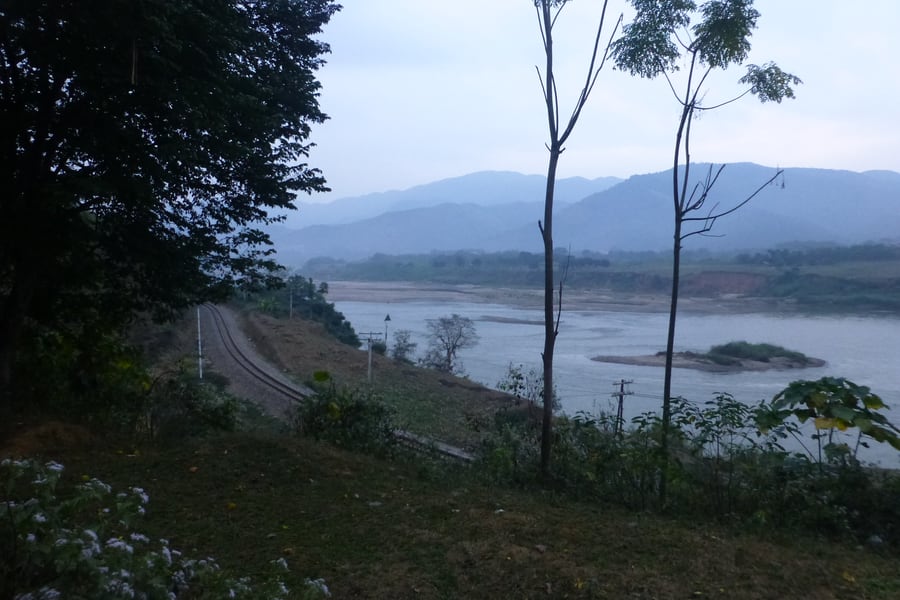 Vmenkov / Wikimedia Commons · CC BY-SA 3.0 · 2016 · cropped
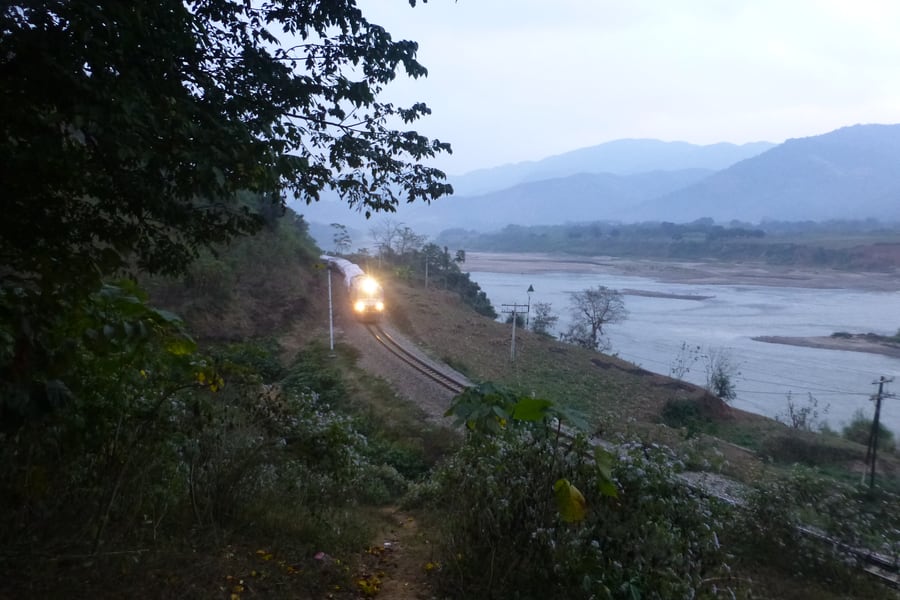
Up the Red River
Above Yên Bái the line keeps close to the Red River, here on its left bank at Kim Sơn. On the night trains this is the stretch that passes in the dark; the SP8 runs it by day.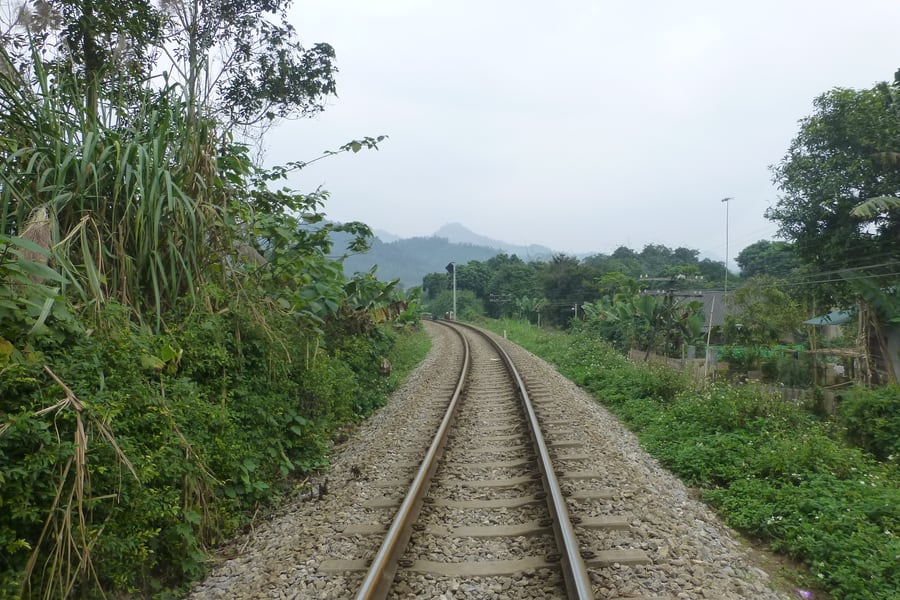 Vmenkov / Wikimedia Commons · CC BY-SA 3.0 · 2016 · cropped
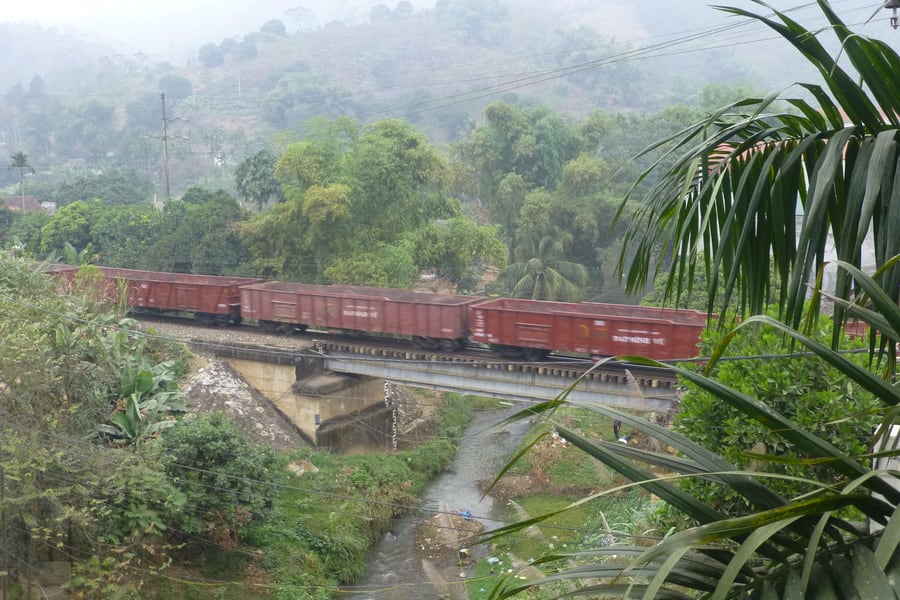
Phố Lu
The last stop before Lào Cai. The whole line is single-track metre gauge, 296 km of it, and Phố Lu is one of only eight stations where the trains now take passengers.A bit of history
Culture & experiences along the way
 David McKelvey / Wikimedia Commons · CC BY 2.0 · 2010 · cropped
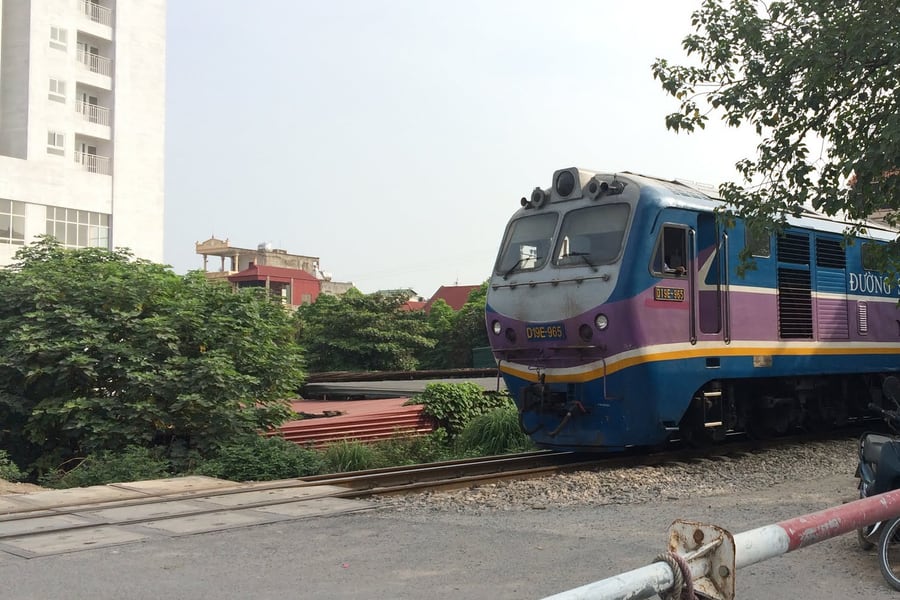
A carriage chosen by name
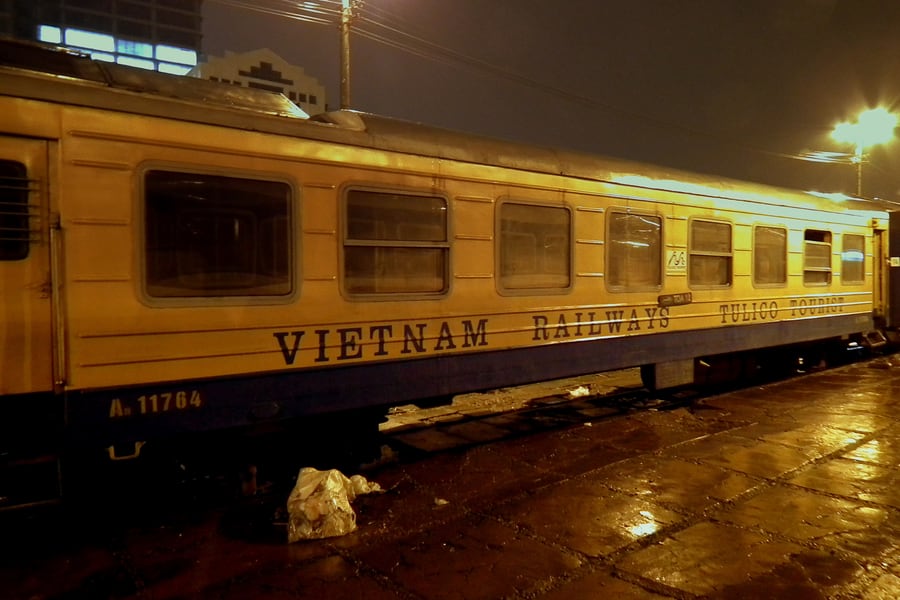
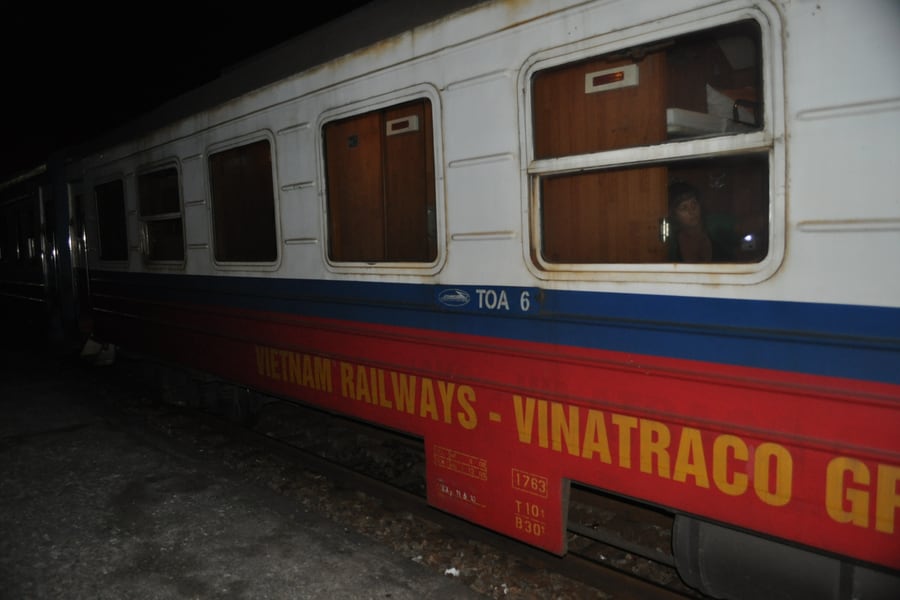
Many sleeping cars on the night trains belong to private travel companies, coupled into Vietnam Railways' trains and sold on their own: Laman, Fanxipan and NewLivitrans Express among them, with two- and four-berth cabins. This car, lettered for the Vinatraco group, stood at Lào Cai in 2010.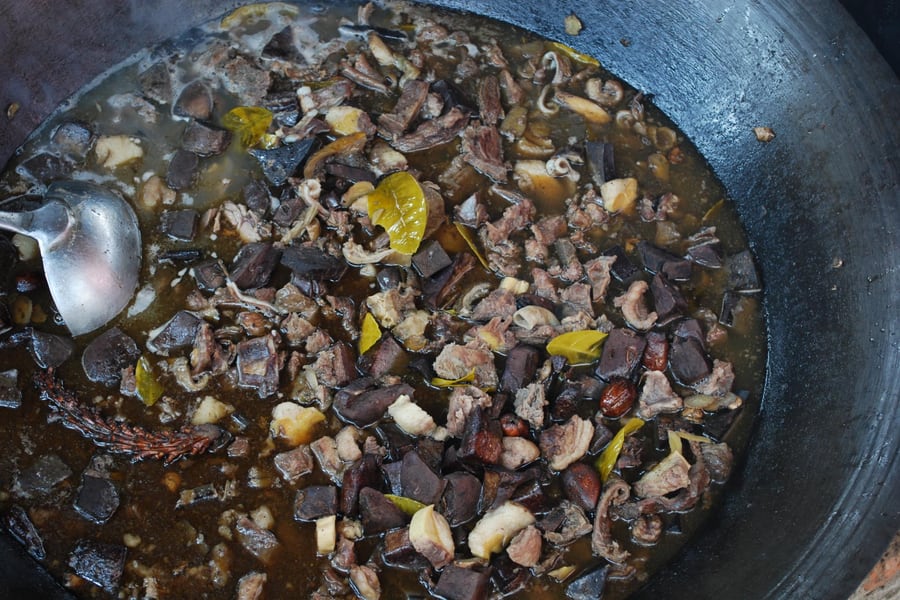 Alpha / Wikimedia Commons · CC BY-SA 2.0 · 2010 · cropped
Thắng cố at Bắc Hà market
Thắng cố is the Hmong stew of the highlands, made with horse meat and now also beef, buffalo or pork. A cook near Bắc Hà dates it there to about two hundred years ago. The town's market meets on Sundays, with corners for brocade, horses, poultry and blacksmiths, and one for food.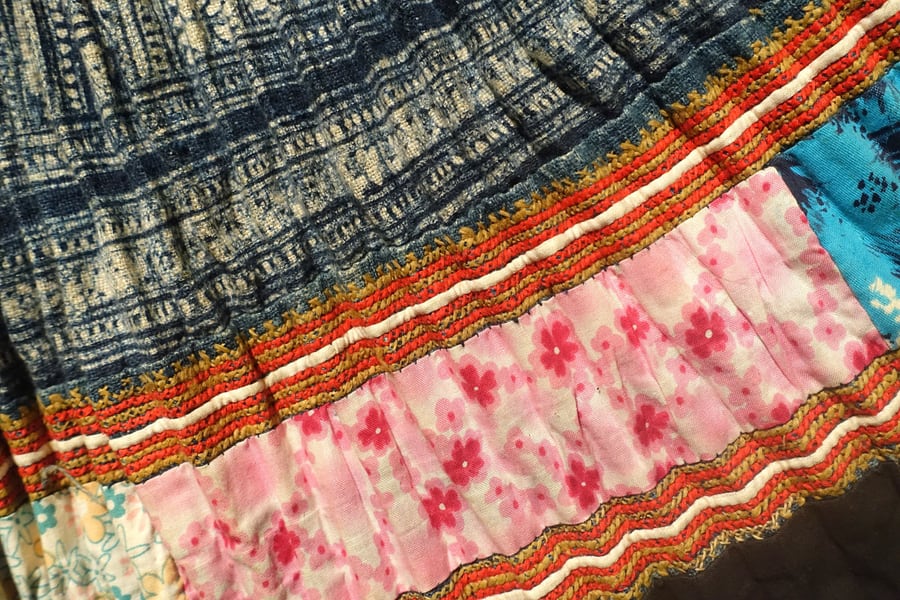 Daderot / Wikimedia Commons · CC0 · cropped
Flower Hmong batik
This Flower Hmong skirt of 1976 is sewn from three panels of hemp, most of it batik, the pattern drawn in beeswax before the cloth goes into the dye, and finished with embroidery and appliqué. It hangs in the Vietnamese Women's Museum in Hanoi, an hour well spent before the evening train.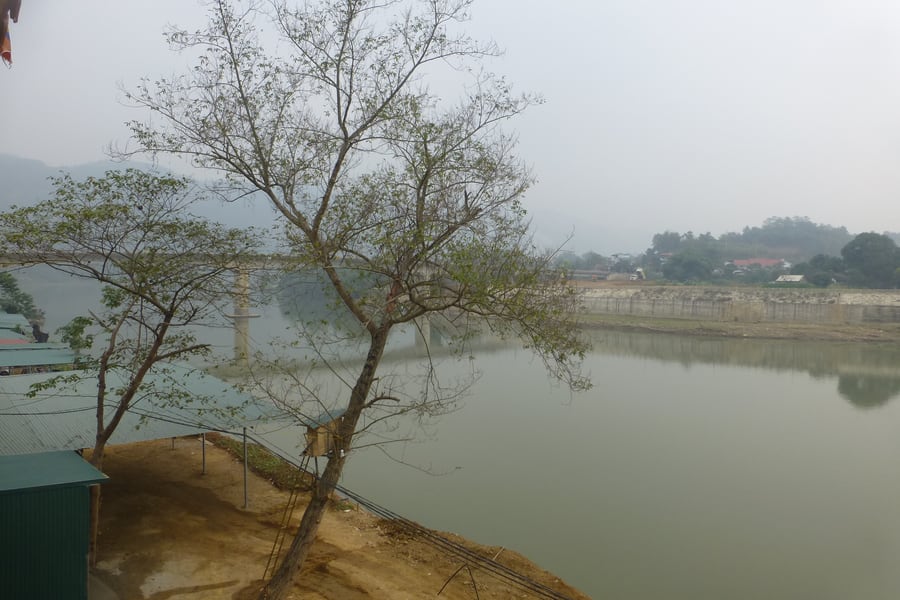 Vmenkov / Wikimedia Commons · CC BY-SA 3.0 · 2016 · cropped
The festival at Bảo Hà
The temple at Bảo Hà keeps several feast days, and the biggest is the death anniversary of Ông Hoàng Bảy on the 17th day of the seventh lunar month. The temple stands above the Red River, a short walk from the station, and this is its view upstream.Timetables
Three trains run each way every day. Five of the six travel overnight; the exception is the SP8, which leaves Lào Cai at midday and reaches Hanoi in the evening. This is the timetable Vietnam Railways has run since 10 October 2026, when it added the SP15 and SP16.
Hanoi to Lào Cai
| Train | Hà Nội | Lào Cai |
|---|---|---|
| SP15 | 21:45 | 05:20 |
| SP3 | 22:00 | 05:50 |
| SP7 | 22:40 | 06:27 |
Lào Cai to Hanoi
| Train | Lào Cai | Hà Nội |
|---|---|---|
| SP8 | 12:05 | 19:30 |
| SP16 | 21:25 | 05:15 |
| SP4 | 21:50 | 05:40 |
Between the termini the trains take passengers only at Gia Lâm, Yên Viên, Phúc Yên, Yên Bái, Bảo Hà and Phố Lu; the SP8 also calls at Phú Thọ. Times change around Tết, the lunar new year, so check the dates you want in Vietnam Railways' booking engine (opens in a new tab) before you travel.
Timetable as of October 2026; checked November 2026.
Tickets
Vietnam Railways sells every seat and berth on these trains, for a named train and date, through its booking engine at dsvn.vn and at the stations. The price depends on the train, the date and the berth, and the booking engine quotes it when you search.
Many of the sleeping cars, though, are not the railway's to sell. Private travel companies run their own carriages on the night trains, coupled into the same SP services, and sell their cabins themselves or through agents. They cost more, and offer two- and four-berth cabins with extras such as drinks and snacks.
Checked November 2026.
Book your tickets
Night train, Hanoi to Lào Cai
SP15, SP3 or SP7 · Vietnam Railways
A berth on one of the three night trains north, bought for a named train and date in Vietnam Railways' booking engine.
Book Tickets (opens in a new tab, on dsvn.vn)via dsvn.vnThe day train south
SP8 · Lào Cai to Hanoi
The one daylight run down the valley, leaving Lào Cai at 12:05 and reaching Hanoi at 19:30.
Book Tickets (opens in a new tab, on dsvn.vn)via dsvn.vnRail Passes
No rail pass covers the trains to Lào Cai. Vietnam Railways sells each journey as a ticket for a named train and berth, online or at the station, and the private carriages sell their cabins separately. Buy each direction on its own.
Checked November 2026.
Places to Visit
Almost everyone on the night train is going to Sa Pa, an hour up the mountain from Lào Cai station. The places below run from the line itself to the highlands beyond it.
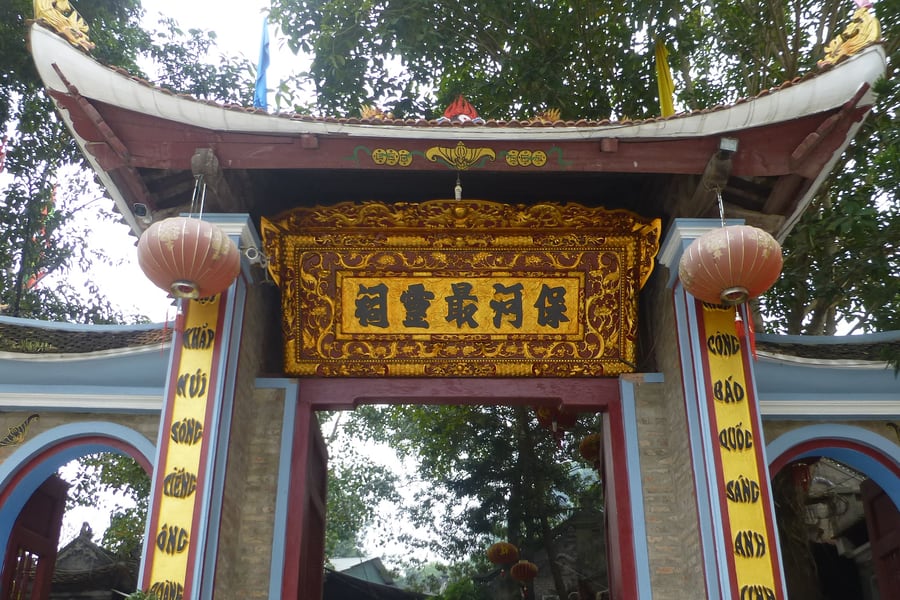 Vmenkov / Wikimedia Commons · CC BY-SA 3.0 · 2016 · cropped
Bảo Hà Temple
About 800 m from Bảo Hà station, at the foot of Đồi Cấm on the left bank of the Red River, stands the temple of Ông Hoàng Bảy, a general of the Nguyễn family sent to clear the region of bandits. Killed in battle, he was thrown into the river; his body drifted to Bảo Hà, where a local man buried it and founded the shrine. The temple dates from the end of the Lê dynasty and became a national monument in 1997.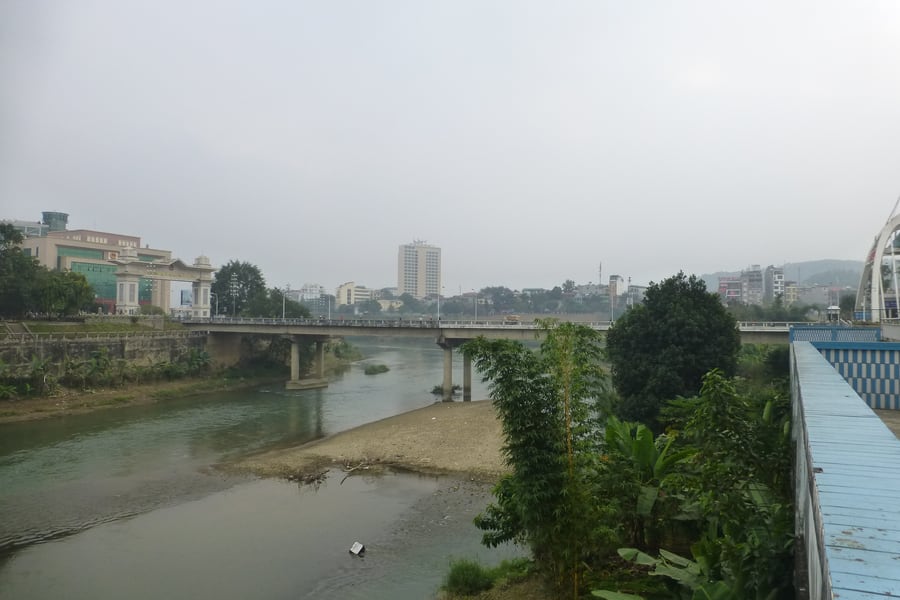 Vmenkov / Wikimedia Commons · CC BY-SA 3.0 · 2016 · cropped
Lào Cai and the border
The passenger trains stop at Lào Cai, on the Nậm Thi, the small river that marks the frontier with China. A bridge for walkers and traffic links the Vietnamese border post with the Chinese one at Hekou on the far bank, and a separate railway bridge carries freight across on the metre gauge: the only trains that still run from one country to the other on the French line.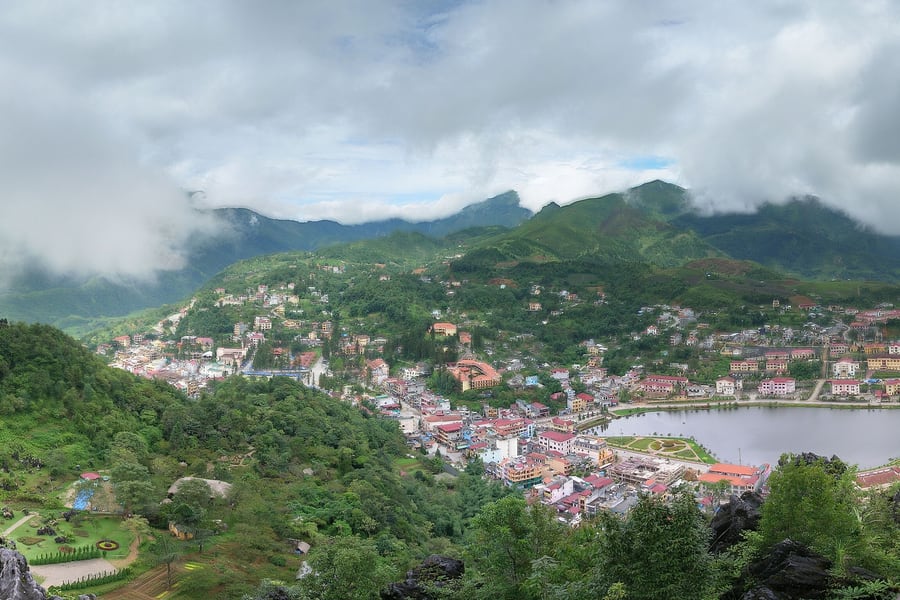 Antoine Fleury-Gobert / Wikimedia Commons · CC BY-SA 3.0 · 2009 · cropped
Sa Pa
The town everyone on the night train is heading for, about 300 km north-west of Hanoi, settled as a hill resort in colonial times and now a ward of Lào Cai province, with 22,882 people in 2025. The view here is from the Hàm Rồng hill above the centre, over the lake and the roofs to the mountains. The stone church in the middle of town was built in 1925.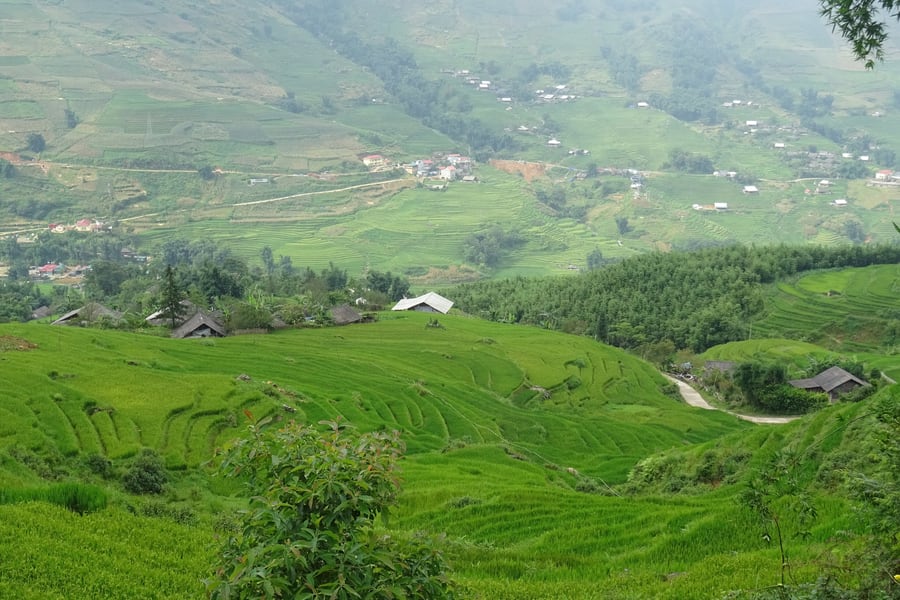 Christophe95 / Wikimedia Commons · CC BY-SA 4.0 · 2018 · cropped
The Mường Hoa valley
The valley below the town, in Tả Van commune, holds the largest and finest of Sa Pa's rice terraces, curving round the hillsides between the villages. Down on the valley floor lies the ancient rock field, a scatter of boulders carved with patterns and old characters, and the lower station of the Fansipan cable car stands in the valley too.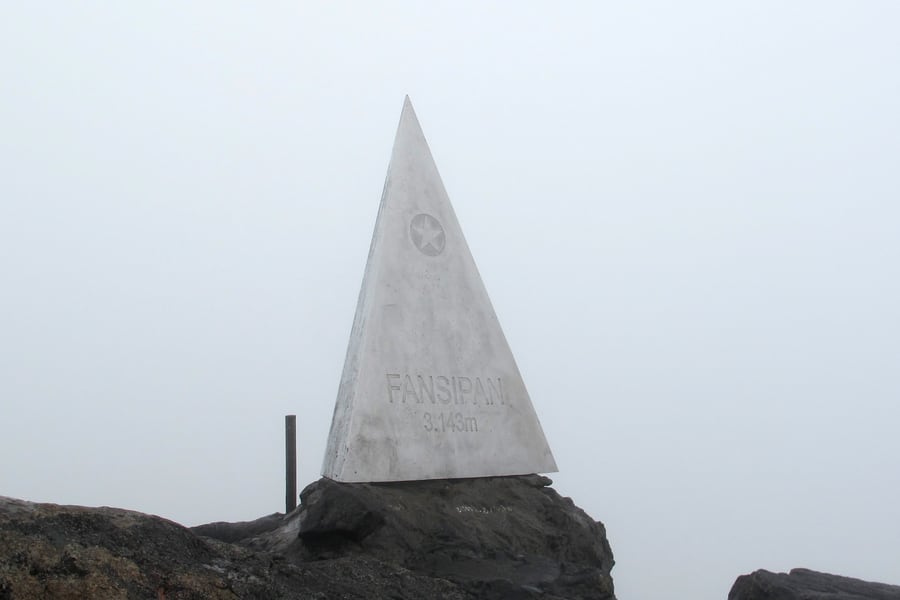 Isderion / Wikimedia Commons · CC BY-SA 3.0 DE · 2013 · cropped
Fansipan
The highest mountain on the Indochinese peninsula stands 9 km south-west of Sa Pa. It was measured at 3,143 m in 1909, the figure on the summit marker, and later at 3,147.3 m. Since 2 February 2016 a cable car has climbed from the Mường Hoa valley: 6,292.5 m long, rising 1,410 m, in about fifteen minutes.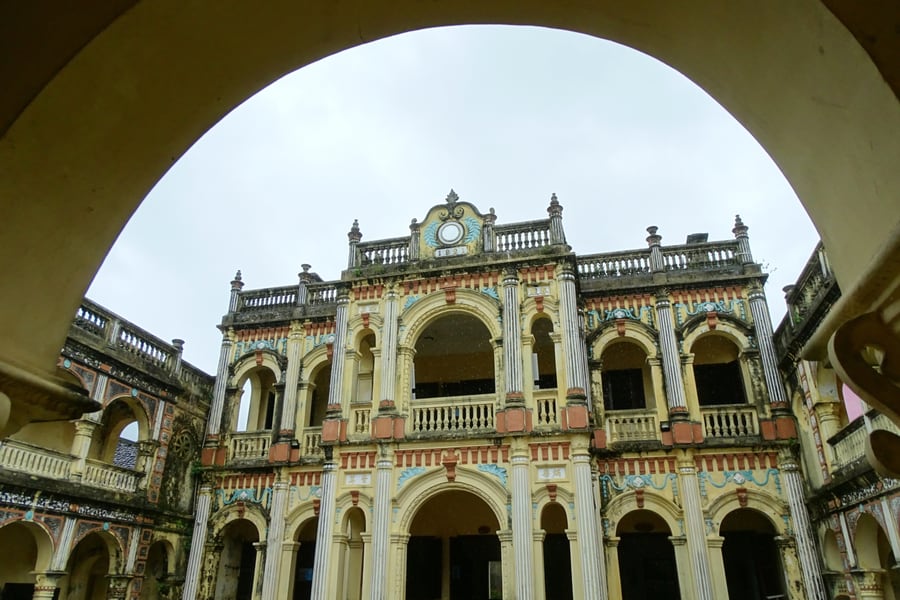 Adam Jones / Wikimedia Commons · CC BY-SA 2.0 · 2019 · cropped
Bắc Hà
About 65 km from Lào Cai, Bắc Hà is the highland market town where the Sunday market draws the surrounding villages. On the bank of the Bắc Nà river stands the palace of Hoàng Yến Chao, built from 1914 to 1921 in a mix of Asian and European styles; his family lived in it until 1950, and it has been a national monument since 1999.Where to Sleep
The night trains are the hotel on the way up: they leave Hanoi after dark and arrive at dawn, so the first bed you need off the train is in Sa Pa rather than in Lào Cai. Hotel de la Coupole is in the town centre, on Hoàng Liên Street, about an hour from Lào Cai station by shuttle bus.
Where to stay
Hotel de la Coupole
MGallery, in the centre of Sa Pa
On Hoàng Liên Street in the middle of town, about an hour from Lào Cai station by shuttle bus.
Check Availability (opens in a new tab, on hoteldelacoupole.com)via hoteldelacoupole.comQuestions or corrections
Planning this trip and stuck on something, or spotted a time, fare or detail that has changed? Send us a message about Hanoi to Lào Cai. We read every one, and we update this page when something has changed.