The Hejaz Railway to Al-Jiza
Reinhard Dietrich / Wikimedia Commons · CC BY-SA 3.0 · 2007 · cropped
- DistanceAbout 35 km
- Duration2 hr each way · a seven-hour day
- Best seasonFridays and Saturdays, spring to late autumn
Introduction
Jordan's railway is not, in law, only a railway. Article 3 of the Jordanian Hejaz Line Law No. 23 of 1952 declares the line an Islamic waqf — a religious endowment — as well as a public institution with its own legal personality, answering to the Prime Minister, and a representative of the Ministry of Awqaf and Islamic Affairs still sits on its board. That matters, because an endowment cannot simply be wound up and sold. When the government proposed in November 2019 to fold the corporation into the Ministry of Transport, the head of the Legislation and Opinion Bureau had to certify in public that the merger touched neither Article 107 of the constitution nor "the nature of the waqf", and that the line's revenues would go into a fund of their own.
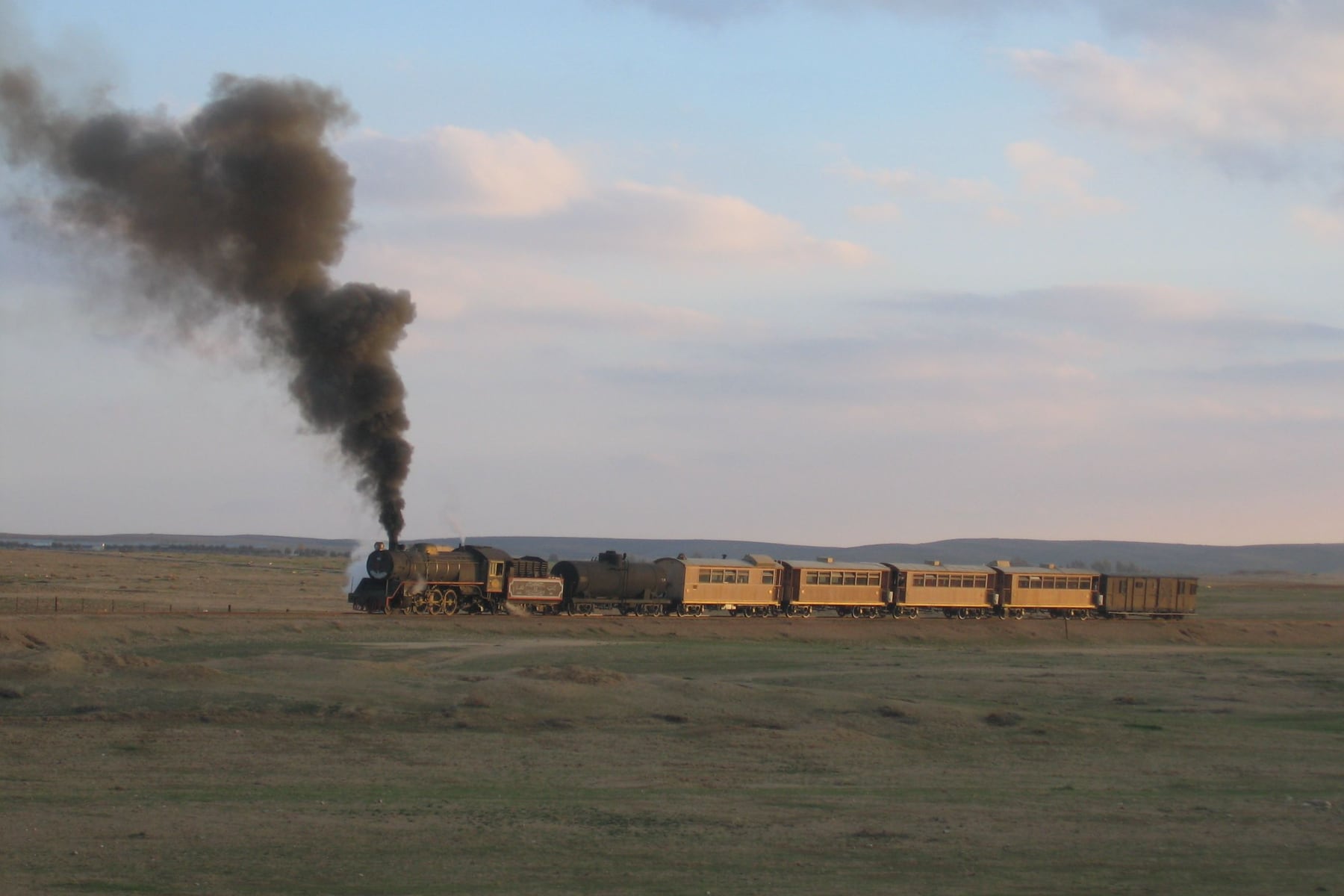
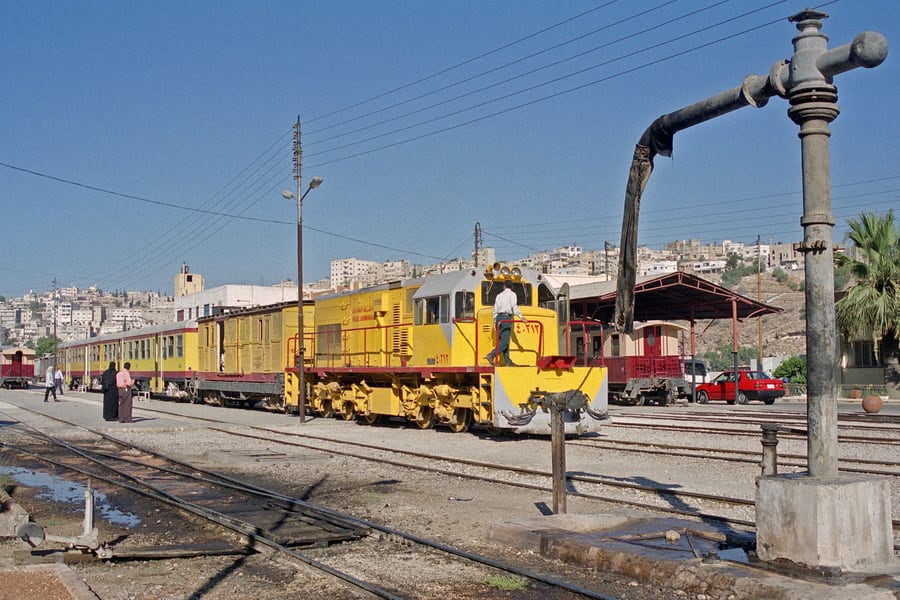
So a pilgrim railway that has carried no pilgrims since 1918 is still held in trust, and what the trust runs now is a family train. At nine o'clock on Friday and Saturday mornings a locomotive draws a rake of carriages out of Amman's 1904 station at Al-Mahatta and takes them some thirty-five kilometres south to Al-Jiza — a distance the timetable turns into two hours. Adults pay five dinars, children three, and the under-threes go free.
Between the two ends the train threads the hills of Amman on the alignment the Ottomans surveyed at the turn of the last century: over the ten-arch viaduct across Wadi Al-Rimam, and through the only railway tunnel in the country. Then the houses stop, the ground opens into wheat plain, and the line runs out to a stone station with a water tank beside it, in sight of the runways of Queen Alia International Airport.
The Journey
Out of Al-Mahatta
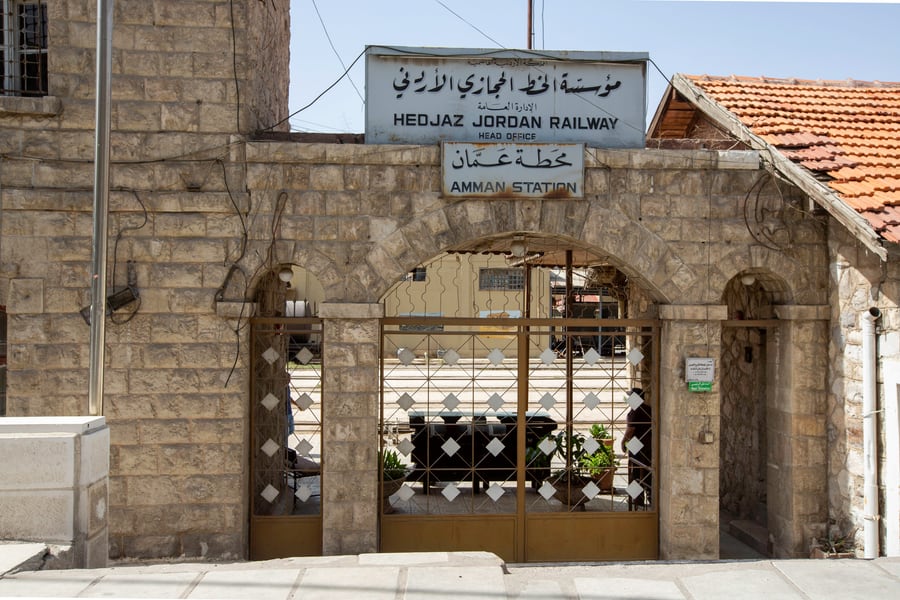
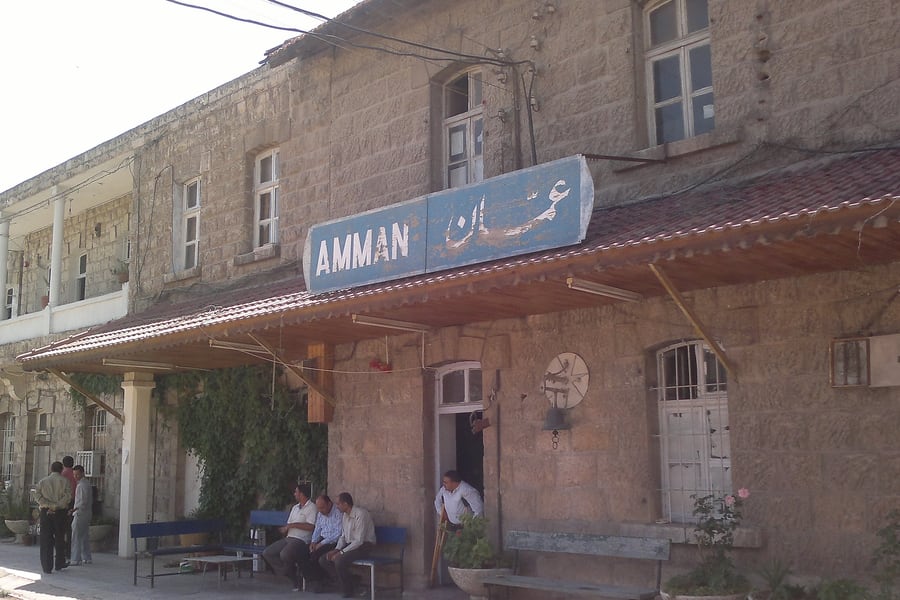
Amman station is not in the middle of Amman. It stands in Al-Mahatta — the district is named after the station, not the other way round — on King Abdullah I Street, out towards Marka, and it is the head office of the corporation as well as its only working terminus. Five sidings, a locomotive shop, a wagon shop and the administration are all on the same site, and behind them is a museum whose exhibits ran past 250 items two decades ago. One of them stands outside on the rails: the carriage that carried Abdullah I into Amman on 2 March 1921.
Departure is not a matter of walking onto a platform at the last minute. Passengers are asked to be inside the station by a quarter past eight for a nine o'clock start, which is the part of the morning where the tea, the drums and the picnic bags come out. The corporation's own figures give the scale of it: 230 passengers on one Friday train in April 2025, 521 across the two days the week before, and a target of more than fifty thousand for the season.
The viaduct and the tunnel
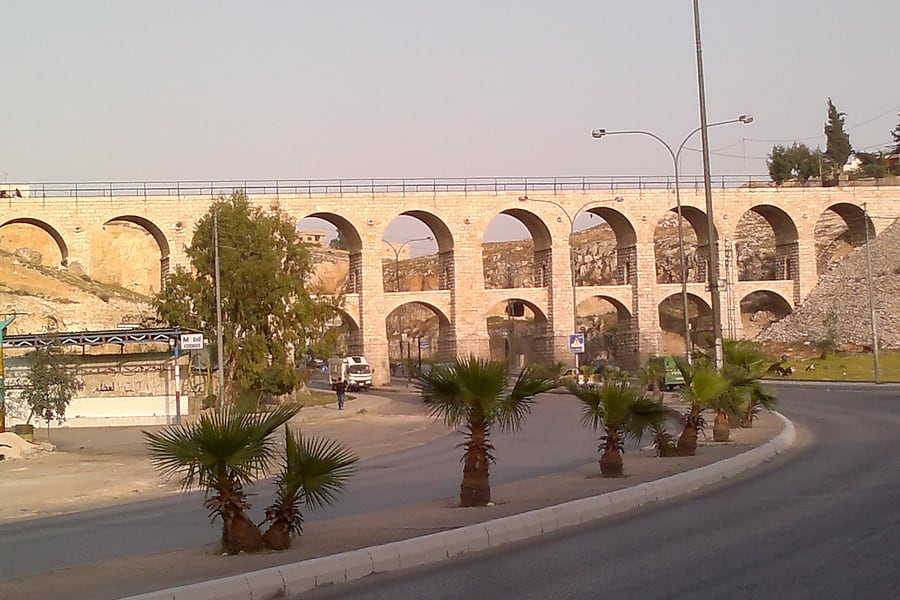
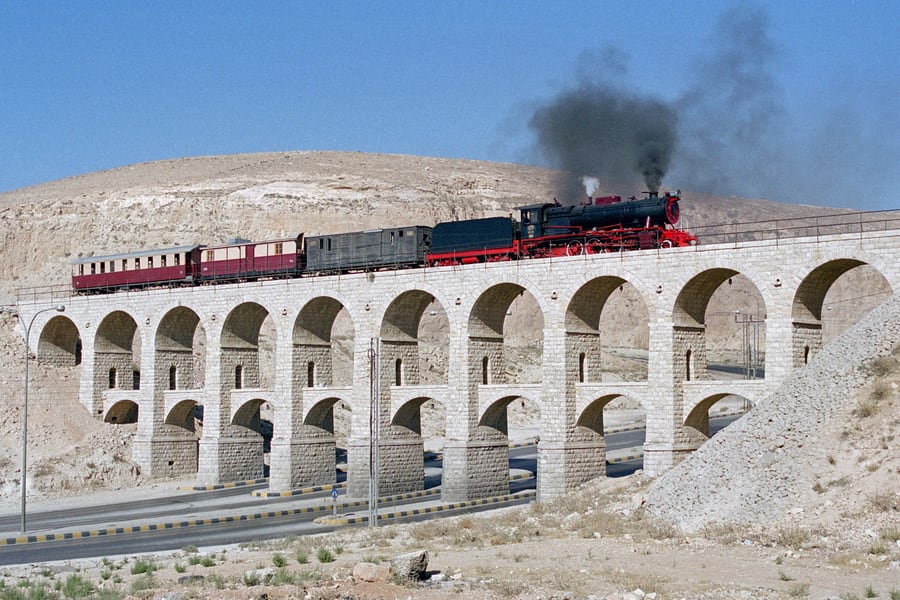
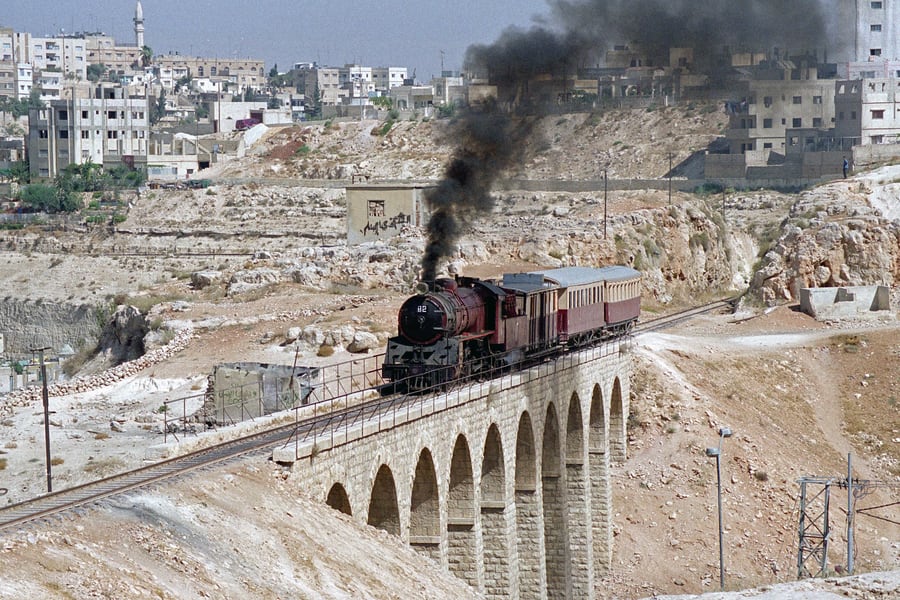
Immediately south of the station the line meets the two structures the Ottoman engineers needed to get out of Amman at all. The first is the ten-arch viaduct over Wadi Al-Rimam — Jisr al-Ashara, the bridge of ten, finished in 1904 along with the station beyond it. It is 79.41 m long, 14.5 m high and 3.8 m wide, and its longest span is 8.15 m: small numbers for one of the oldest surviving structures in the city, and a 2022 structural assessment concluded it still takes its loads with only minor maintenance needed.
The second is a tunnel about 300 m long, bored through the hills the city is built on. It is the only railway tunnel in Jordan, and the second on the whole Damascus–Medina line. Between the two the railway does something no other main line does: it goes down the middle of Amman's neighbourhoods, past house walls, yards and parked cars, with the track in the road surface, before the last of the suburbs falls away.
Across the plain to Al-Jiza
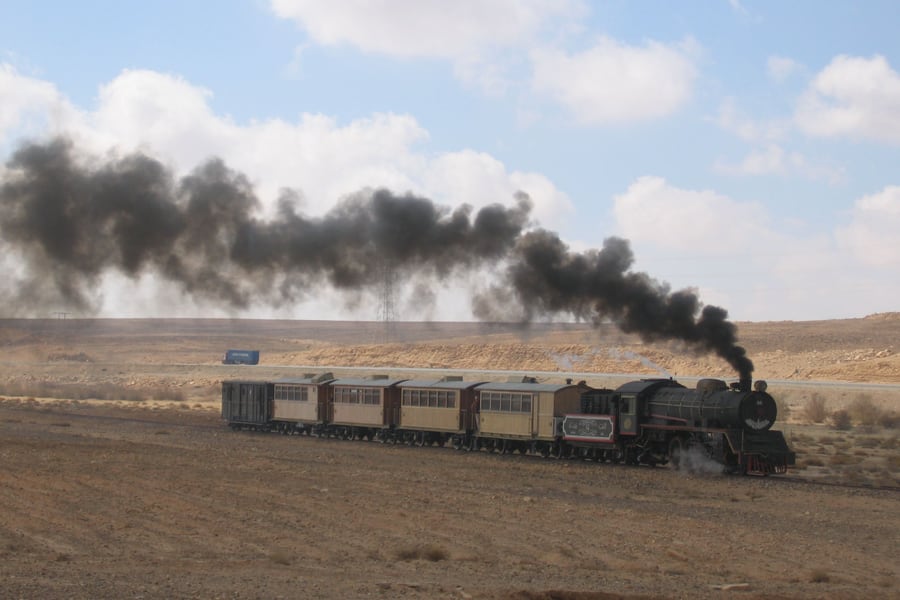
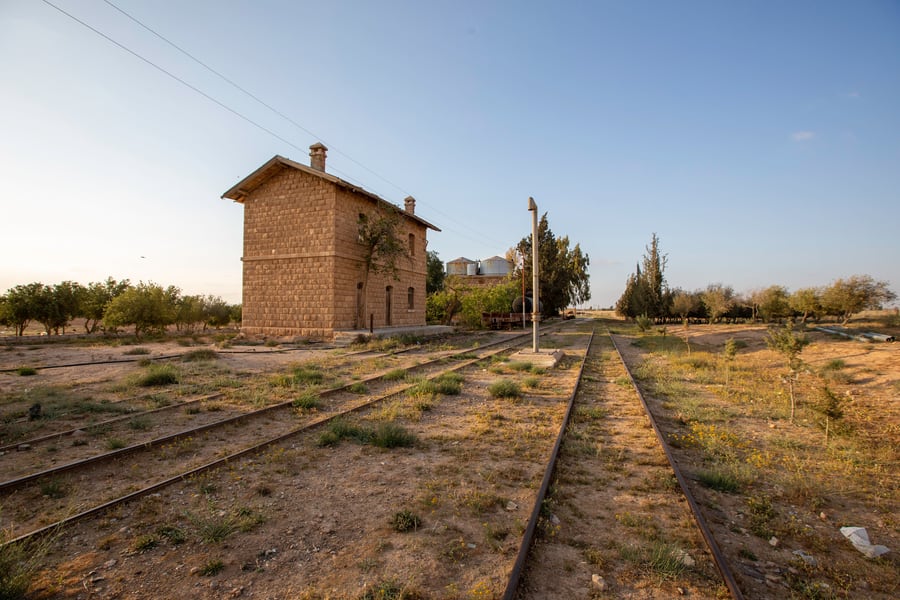
Beyond Al-Qasr station — properly Qasr al-Hiran, and now half swallowed by housing — the country changes. Green hills give way to the wheat and stubble of the Balqa plateau, and the train settles into the crawl that gives the timetable its shape: thirty-five kilometres in two hours.
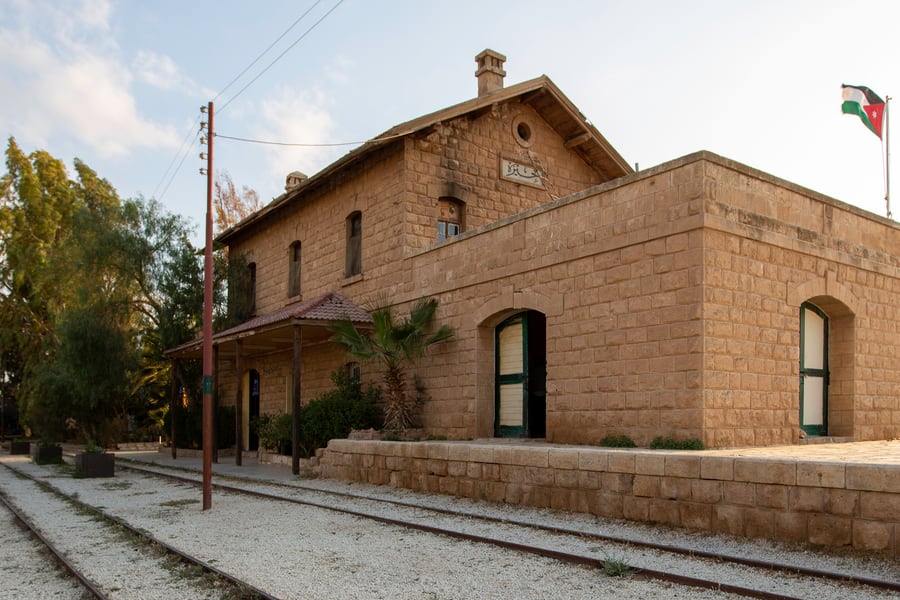
The terminus is a stone station of two floors with a masonry water tank alongside, and the corporation classes it as a second-class station distinguished by its water supply, its fortified walls and the strength of its structure. Its real name is Zīzāʾ, a large village of the Balqa that the geographer Yāqūt al-Ḥamawī recorded as a stop with a market for pilgrims and a great reservoir; the name has been worn down in modern speech to Al-Jiza. Passengers get most of three hours there before the train goes back, and the runway lights of Queen Alia International Airport are the neighbours — the station is clearly visible from the window of a descending aircraft.
What is on the front
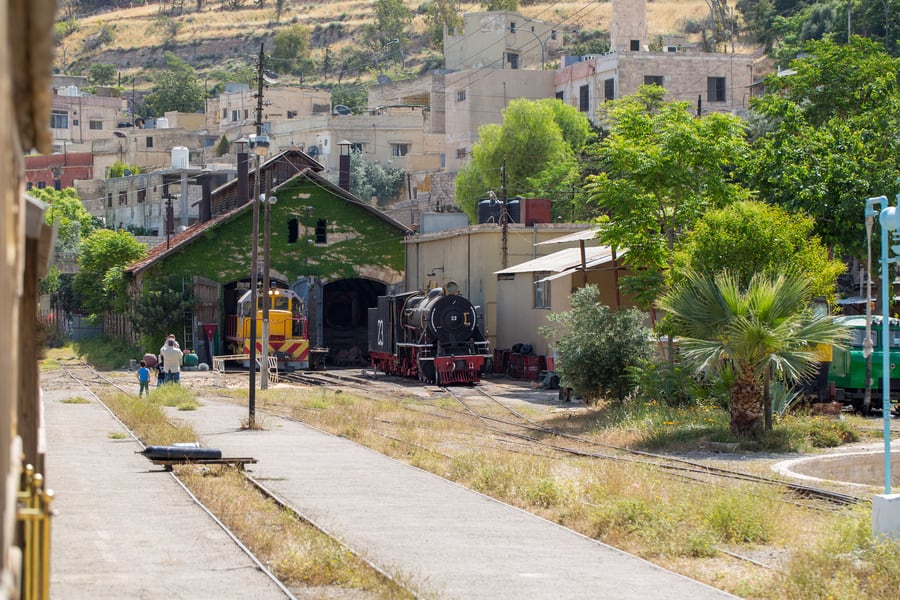
The scheduled trains are diesel-hauled, and have been for years: the corporation's diesel fleet is three A1A-A1A General Electric U10Bs delivered in 1976, in yellow. The steam engines are real and still fired, but they come out for chartered trains rather than for the Friday working — a 2-8-2 by Robert Stephenson & Hawthorns of 1951, an Arnold Jung 2-8-2 and two Belgian Haine St Pierre machines of 1955, and No. 82, a 4-6-2 Pacific built by Nippon Sharyo for Thailand that was never delivered there and finished up in Jordan instead. A group with the money for it can still have one lit, and in June 2026 the Polish embassy did exactly that, taking a steam special over the viaduct and through the tunnel.
Along the route
 Nigel Tout / Wikimedia Commons · CC BY-SA 4.0 · 2000 · cropped
The bridge and the tunnel, in the first three kilometres
The ten-arch viaduct over Wadi Al-Rimam is 79.41 m long and 14.5 m high, finished in 1904. Just beyond it the line enters the only railway tunnel in Jordan, about 300 m of it, bored through the hills the city sits on.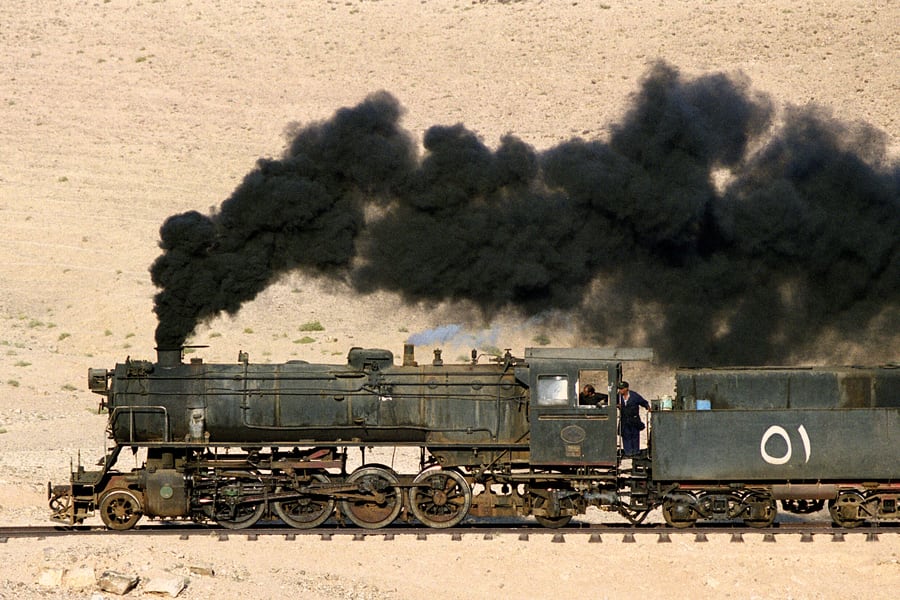 Nigel Tout / Wikimedia Commons · CC BY-SA 4.0 · 2000 · cropped
Thirty-five kilometres, two hours
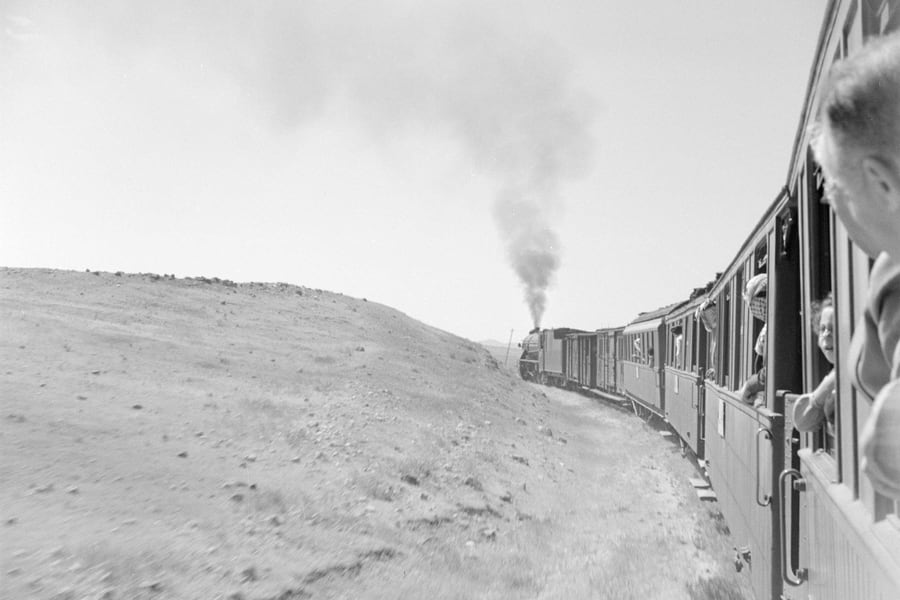
The corporation's own page says it plainly: two hours out, three at Al-Jiza, two back. The 1,050 mm Hejaz gauge and hundred-year-old alignment set the pace, and nobody pretends otherwise — the slowness is the product.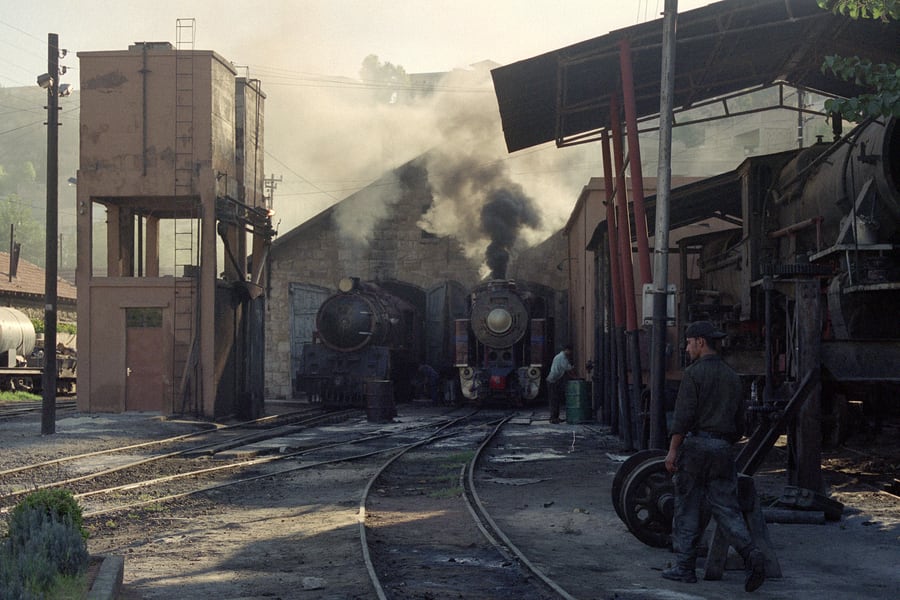 Nigel Tout / Wikimedia Commons · CC BY-SA 4.0 · 2000 · cropped
A working shed, not a museum yard
Amman has five sidings, a locomotive shop and a wagon shop on one site, and the fleet is maintained there by the corporation's own staff — which is why five steam engines built between 1951 and 1959 can still be lit for a charter.A bit of history
Culture & experiences along the way
 Freedom's Falcon / Wikimedia Commons · CC BY-SA 3.0 · cropped
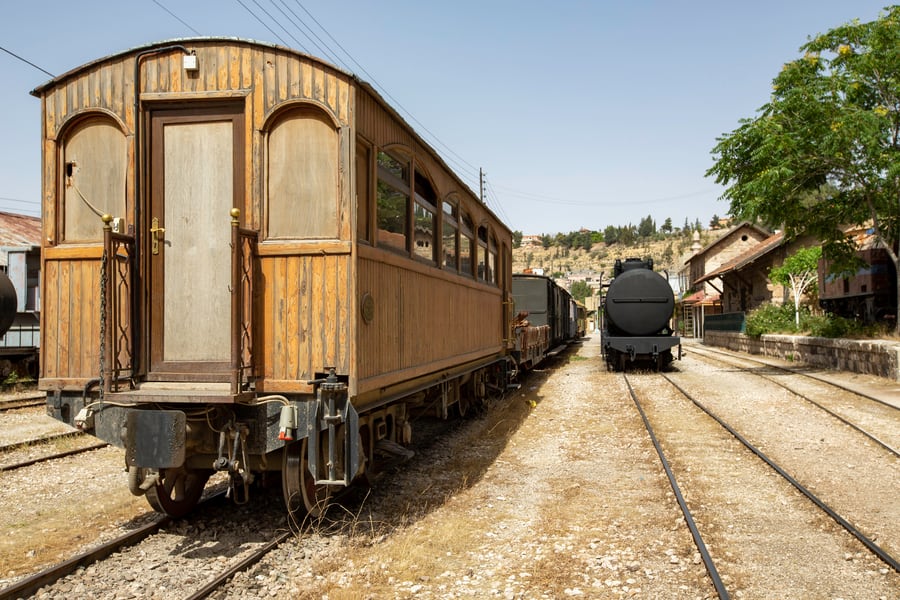
The museum, and the carriage that carried a king
The museum at Amman station had passed 250 exhibits two decades ago, and the best of them is outdoors on the rails: the carriage Abdullah I rode into Amman on 2 March 1921. The corporation's own account adds that he declared the Emirate of Transjordan from Al-Jiza station during that same journey — the station this train terminates at.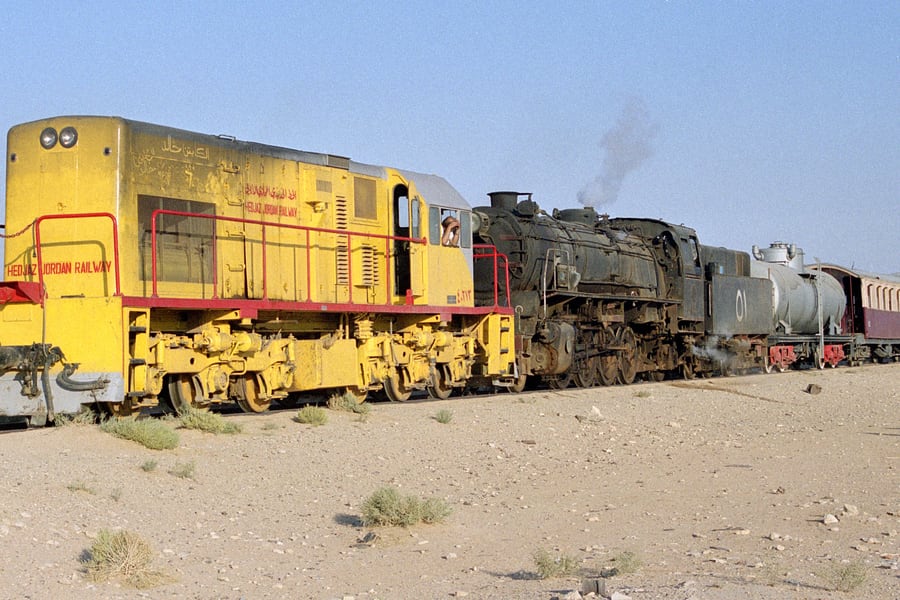 Nigel Tout / Wikimedia Commons · CC BY-SA 4.0 · 2000 · cropped
Hiring the steam
Tourist trips are chartered rather than timetabled, for groups of up to 200, at a time agreed with the corporation — and a group that wants one of the steam engines fired can have it. The Polish embassy did exactly that on 5 June 2026, taking a special over the viaduct and through the tunnel behind one of the corporation's Stephenson-built engines.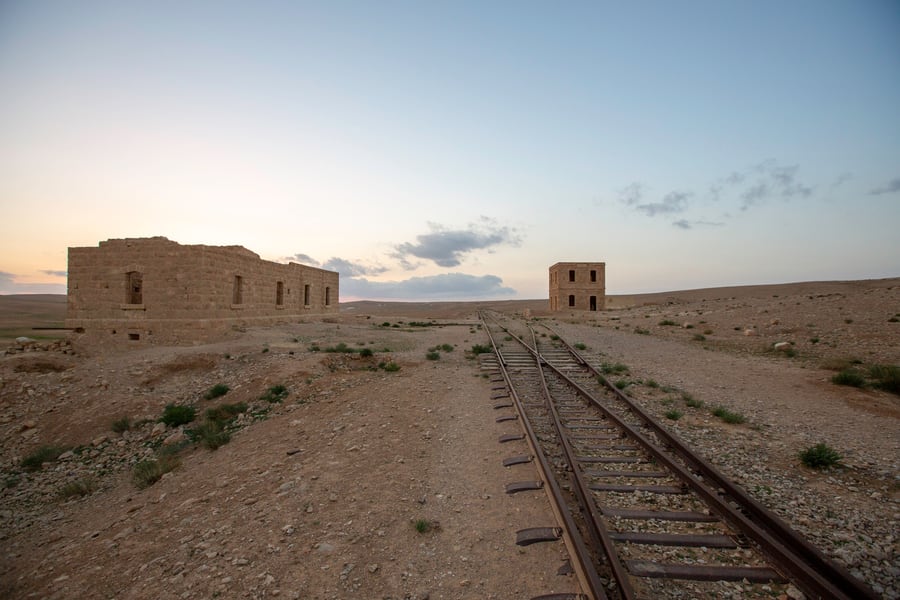 Bashar Tabbah / Wikimedia Commons · CC BY-SA 4.0 · cropped
What lies further down the line
Al-Jiza is not the end of the railway, only the end of the day out. The rails run on south through Dab'a, Khan az-Zabib and Qatrana towards Ma'an, past station buildings that have stood empty since the Arab Revolt, and the corporation has advertised occasional longer workings as far as Qatrana and Wadi Rum.Timetables
The Jordan Hejaz Railway Corporation publishes its own pattern: family trips run every Friday and Saturday, and on public holidays and religious feasts, leaving Amman station at 09:00, calling at Al-Qasr and terminating at Al-Jiza. Student trips run on weekdays over the same route and at the same hour, and take about seven hours door to door. Tourist trips are chartered rather than timetabled: the corporation runs them on request for groups, at times agreed with the group, up to a capacity of 200 passengers.
| Amman (Al-Mahatta) | Al-Qasr | Al-Jiza | |
|---|---|---|---|
| Assemble | 08:15 | ||
| Outward | 09:00 | passes | 11:00 |
| Return | 16:00 | passes | 14:00 |
That is the whole day: a quarter past eight inside the station, away at nine, two hours down, most of three hours at Al-Jiza, and back in Amman at four in the afternoon.
Season
The train does not run all year. The corporation suspends trips for the winter — the 2024 season closed with a notice on 25 November — and spends the break on the track, the stations, the carriages and the locomotives. The 2026 season reopened on Friday 1 May 2026, when the corporation announced on its Facebook page that the trips to Al-Jiza had resumed after maintenance and rehabilitation work on the line. Individual weekends are occasionally cancelled at short notice, and that too is announced on the corporation's own site: on 13 July 2026 it dropped both the Friday and the Saturday train for the week.
Two other destinations share the same fleet and the same season and are sold as separate trips, not as extensions of this one: Mafraq, for the Roman and Byzantine basalt town of Umm el-Jimal, and the tourist area at Rehab. Longer workings as far as Al-Qatraneh and Wadi Rum have also been advertised.
Times as published by the operator and confirmed against its own announcements, August 2026. Check the current programme with the Jordan Hejaz Railway Corporation (opens in a new tab) before travelling — the corporation posts each week's trips before the weekend.
Tickets
Fares are flat and there is only one class. An adult pays JD 5 for the round trip to Al-Jiza, a child of three to ten pays JD 3, and under-threes travel free. Nothing is sold online: the corporation takes bookings by telephone on 0799053015 and 0799053016, and announces each week's trips — with any cancellations — on its Facebook page, which is where the "book now" link on its own website points.
Group and tourist trips are quoted separately and arranged with the corporation's office at Al-Mahatta, open Sunday to Thursday, 08:00 to 16:00. Popular weekends fill: the corporation counted 230 passengers on a single Friday train in April 2025, so a call earlier in the week is worth making.
Book your tickets
Bashar Tabbah / Wikimedia Commons · CC BY-SA 4.0 · croppedFamily trip to Al-Jiza, adult
JD 5 return · Fridays, Saturdays and public holidays
The whole day for five dinars — assemble at Amman station by 08:15, away at 09:00, most of three hours at Al-Jiza and back in the capital at 16:00, in one class throughout, booked by telephone rather than online.
Book Tickets (opens in a new tab, on jhr.gov.jo)via jhr.gov.joBashar Tabbah / Wikimedia Commons · CC BY-SA 4.0 · 2013 · croppedChildren
JD 3 for three to ten · under three free
Children of three to ten pay three dinars and the under-threes travel free, which is the whole reason the corporation calls this a family trip rather than a train service.
Book Tickets (opens in a new tab, on jhr.gov.jo)via jhr.gov.joRail Passes
No rail pass applies here. Interrail and Eurail do not cover Jordan, and the Jordan Hejaz Railway Corporation issues no season, network or multi-trip ticket of its own — the only fare is the flat five dinars for the day.
The Jordan Pass is worth knowing about all the same, because it is what most visitors already hold and because it covers both ends of this line. It is a sightseeing and visa product rather than a transport one: bought before arrival, with a stay of at least two nights, it waives the tourist entry visa fee and prepays admission to more than forty sites. Among them are the Amman Citadel and the Roman Theatre in Amman, Qasr Al-Mushatta out by the airport near Al-Jiza, Umm ar-Rasas, and Umm el-Jimal — which is the destination of the corporation's other scheduled train, from Amman to Mafraq.
What the Jordan Pass does not include is any train, this one among them. Buy the pass for the ruins and pay the railway separately.
Pass conditions checked against jordanpass.jo, August 2026.
Places to Visit
The railway gives a visitor two fixed points and about three hours in the middle of the day at the far one. Amman's own antiquities are not at Al-Mahatta but down in the old town, a short taxi ride west; Al-Jiza's are out on the plateau, within a few minutes of the terminus, and most of them are covered by the Jordan Pass that the same visitor is likely to be carrying already.
 Dan Lundberg / Wikimedia Commons · CC BY-SA 2.0 · 2011 · cropped
Amman
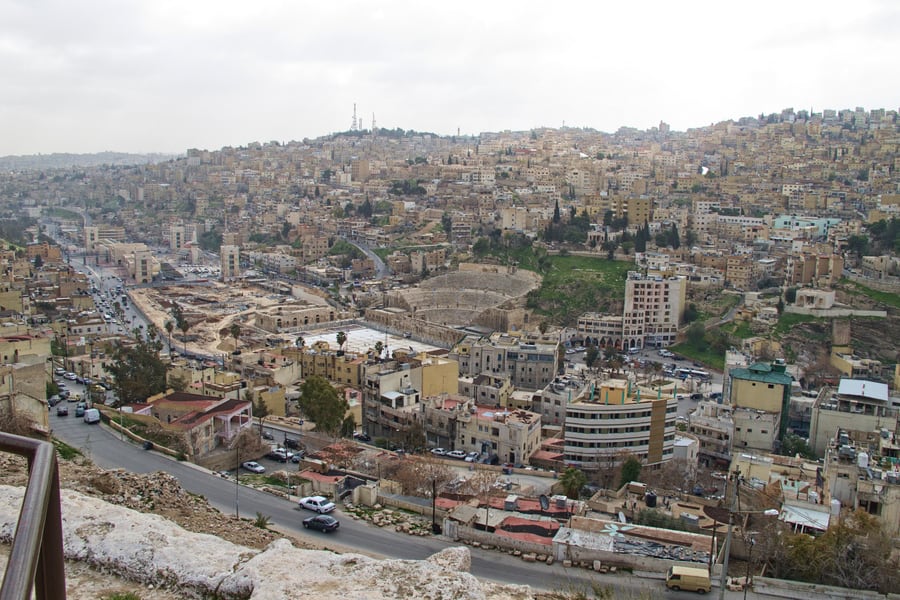
Al-Mahatta is out towards Marka, and the Amman most visitors come for is three kilometres west of it, down in the wadi the city grew out of. The Roman theatre seats 6,000, was cut into the hillside under Antoninus Pius in the second century and was deliberately faced north to keep the sun out of the audience's eyes; it still takes concerts. Above it the Citadel on Jabal al-Qal'a carries the Temple of Hercules, an Umayyad palace and the Jordan Archaeological Museum. Both are on the Jordan Pass.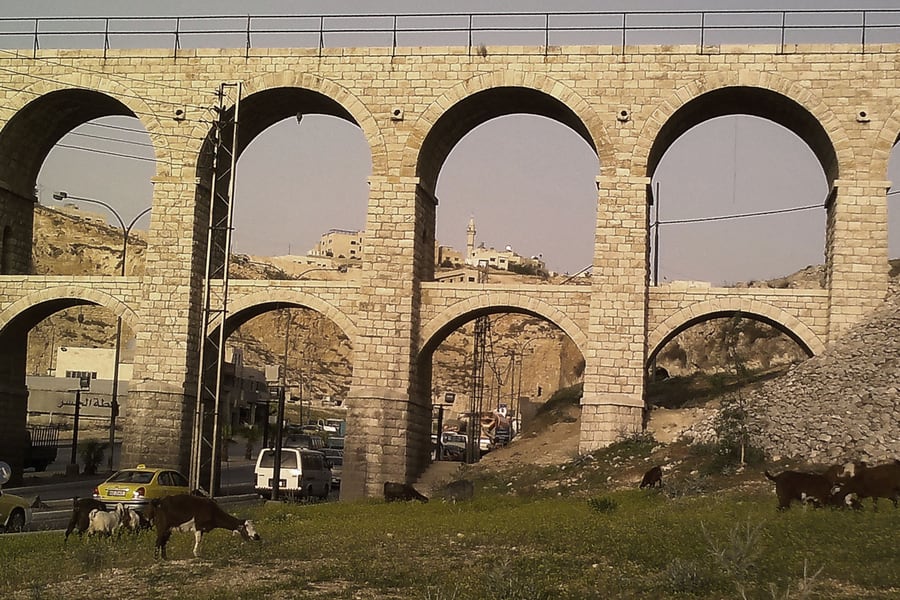 Freedom's Falcon / Wikimedia Commons · CC BY-SA 3.0 · cropped
Al-Qasr
Properly Qasr al-Hiran, and now so thoroughly built around that the station is hard to find. What is easy to find is the structure the train crosses on the way there: the ten-arch bridge over Wadi Al-Rimam, two tiers of dressed stone carrying the railway 14.5 metres above a road, among the oldest things standing in the city. A 2022 assessment found it sound, with only minor maintenance needed.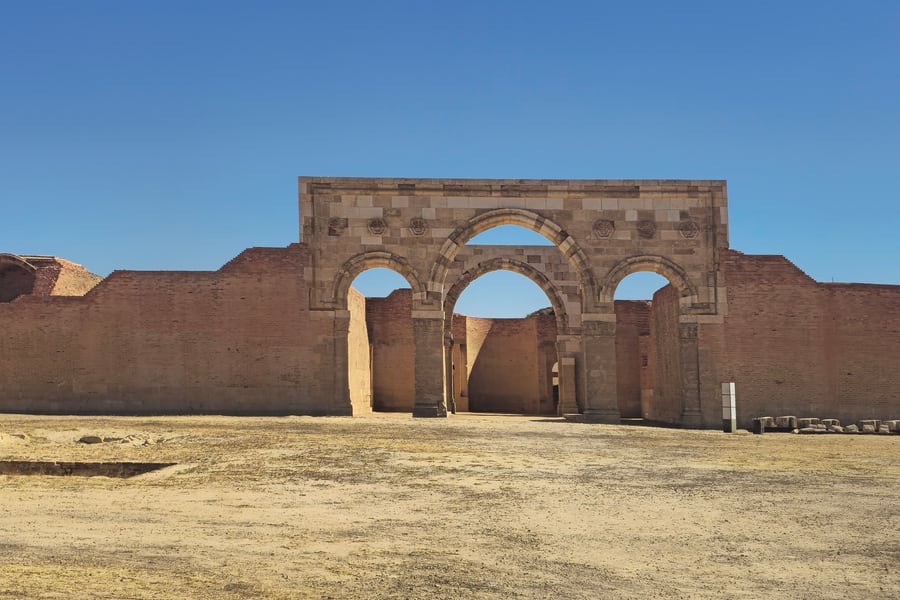 Mohammad hajeer / Wikimedia Commons · CC BY-SA 4.0 · cropped
Al-Jiza
The Umayyad palace of Mushatta stands on the plain beside Queen Alia International Airport, a short drive from the station: a square enclosure begun for the caliph al-Walid II in 743–44 and left unfinished when he was murdered. Its carved façade is not here. Sultan Abdülhamid II gave it to Kaiser Wilhelm II, it reached Berlin in 1903, and it has stood in the Pergamon Museum since 1932 — the gift of the same sultan who three years earlier had announced this railway.Where to Sleep
There is no hotel district by the station. Al-Mahatta is a working quarter out towards Marka, so the two useful choices sit at opposite ends of the day: downtown Amman, for the antiquities and an easy taxi to the 08:15 assembly, or the airport, which is effectively next door to Al-Jiza.
Where to stay
Amman Pasha Hotel
4 Al Shabsough Street, downtown Amman
The hotel's own site puts it directly next to the Roman theatre in the middle of downtown, with a 24-hour front desk, a rooftop restaurant, free Wi-Fi in the lobby and air-conditioned rooms; it quotes JD 25 for an airport pick-up and JD 20 for the drop-off.
Check Availability (opens in a new tab, on ammanpashahotel.com)via ammanpashahotel.comAmman Airport Hotel
One kilometre from the Queen Alia terminals, beside Al-Jiza
Its own site describes 304 rooms and calls it the only hotel within 25 kilometres of Queen Alia International Airport, a quarter of an hour from the capital by road and the nearest bed to the terminus of this line.
Check Availability (opens in a new tab, on ammanairporthotel.com)via ammanairporthotel.comQuestions or corrections
Planning this trip and stuck on something, or spotted a time, fare or detail that has changed? Send us a message about The Hejaz Railway to Al-Jiza. We read every one, and we update this page when something has changed.