Huế to Đà Nẵng Heritage Train
Nguyenbaotrung725 / Wikimedia Commons · CC BY 4.0 · 2026 · cropped
- Distance103 km
- DurationAbout 3 to 4 hours
- Best seasonDaily, all year; the south side of the pass is drier from November to March
Introduction
Every train between north and south Vietnam crosses the Hải Vân Pass, but most do it on the way to somewhere else. Since 26 March 2024 Vietnam Railways has run a train that does nothing else: the heritage train, Kết nối di sản miền Trung, "Connecting Central Heritage", from the old imperial capital at Huế to the coast city of Đà Nẵng, 103 km over the mountain spur that divides the country's weather.
Two trains a day run each way, morning and afternoon, with one stop: Lăng Cô, at the foot of the pass, where the train waits long enough for passengers to step down. Huế dishes are served on board, and live music plays in the VIP car.
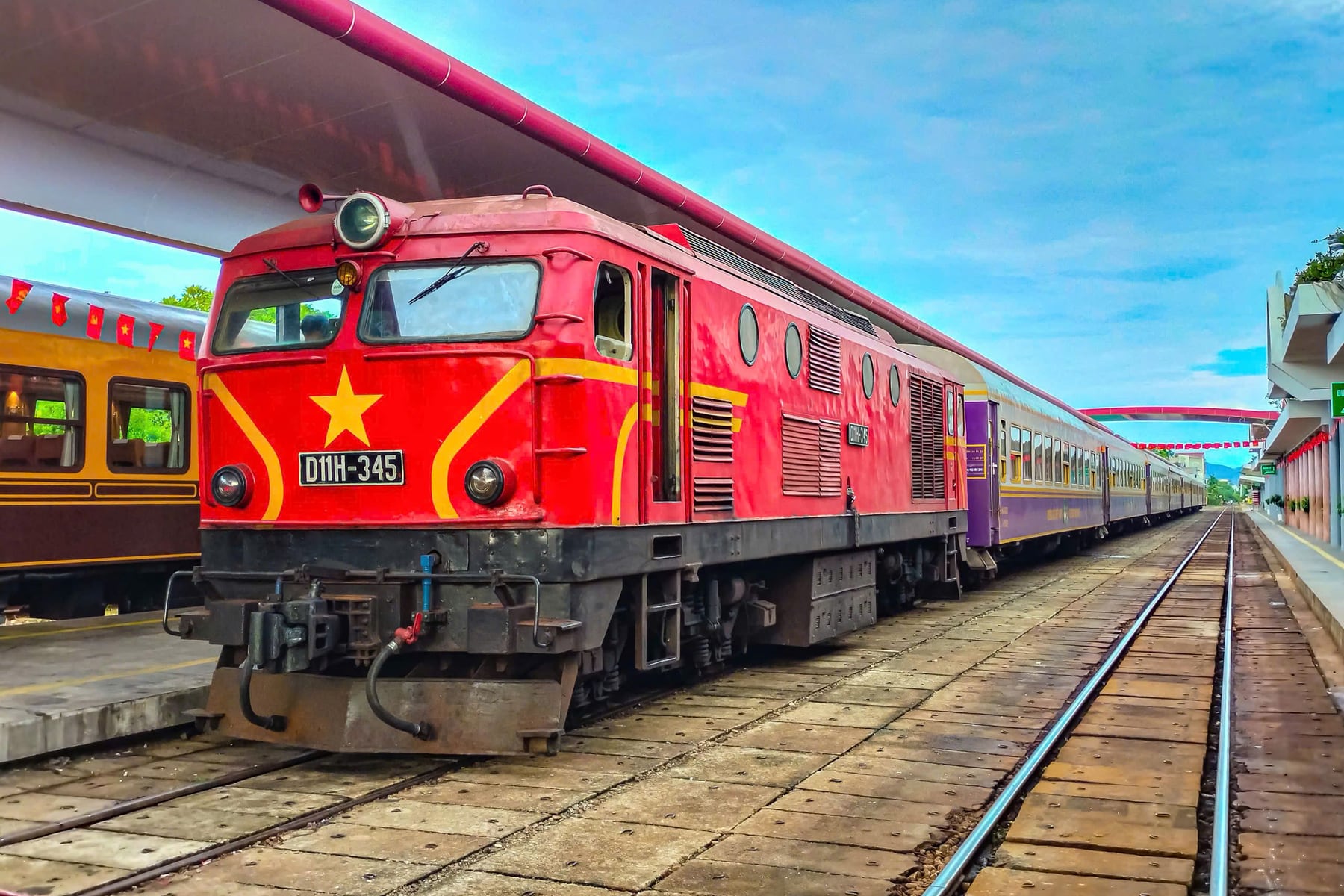
On 26 March 2026 the train came back refitted in the purple of Huế, twelve carriages long: seats that turn to face the way you are going, a community car for local makers, and a 32-seat VIP car modelled on the imperial palaces, with a counter along the windows for watching the sea below the pass.
The Journey
The heritage train leaves Huế station, built by the French in 1908, and runs south-east across the coastal plain. This is the oldest stretch of the line through the centre of Vietnam: the railway between Huế and Đà Nẵng opened on 15 December 1906, thirty years before trains ran the whole way from Hanoi to Saigon. Beyond the town the paddy fields give way to the edge of the Tam Giang–Cầu Hai lagoons, where fish pens and huts on stilts stand out in the shallow water.
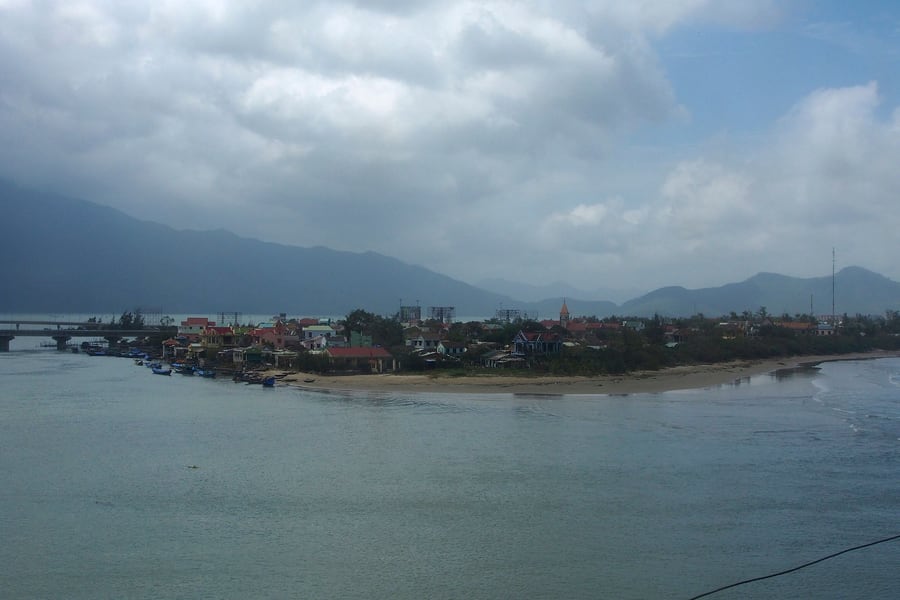
At kilometre 67 comes Lăng Cô, a fishing and beach town between the Lập An lagoon and the sea, and the train's one stop. It waits here for ten minutes on the morning train from Huế and longer on the others, nearly forty on the HĐ2, before the climb.
Over the pass
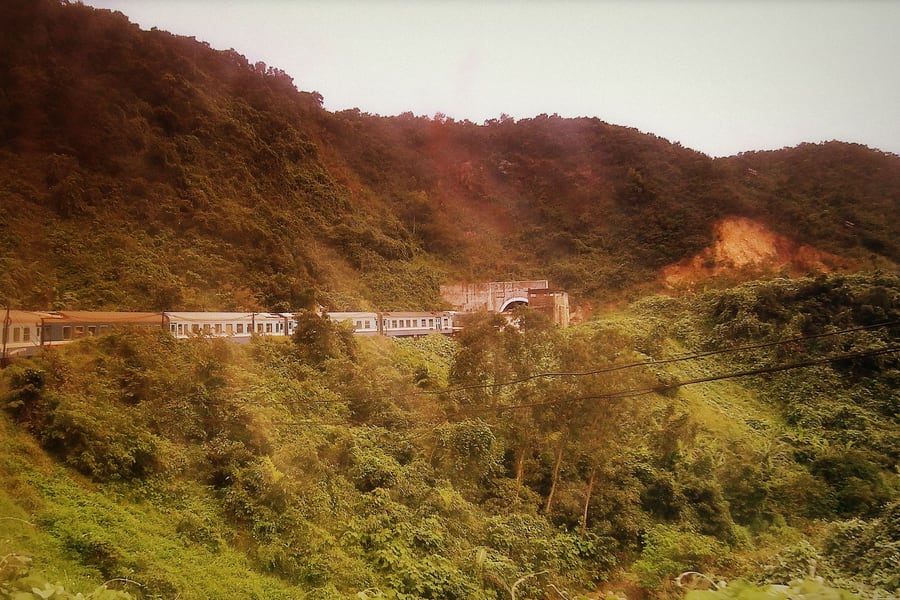
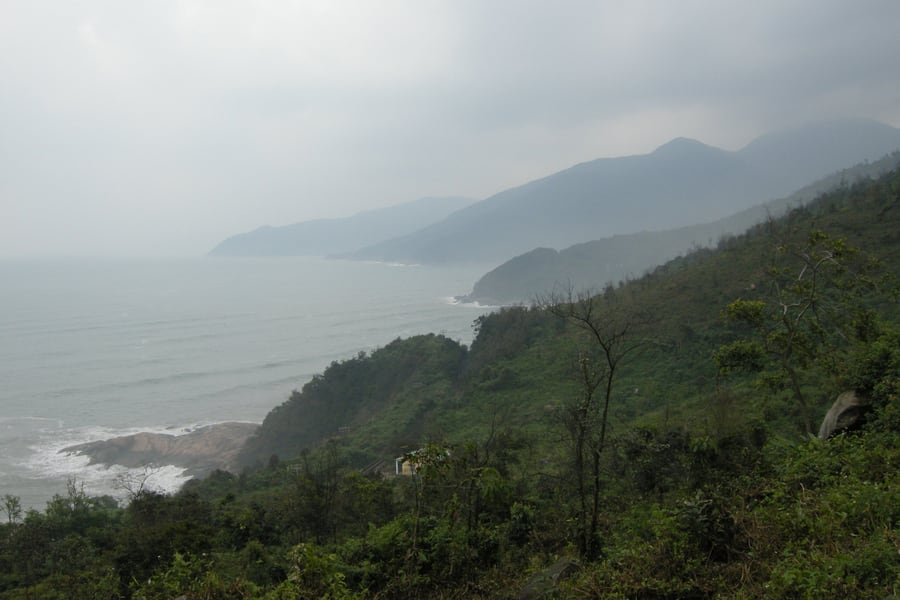
The Hải Vân Pass carries the Annamite range straight into the sea, and for centuries it was a border, between Champa and Đại Việt from 1306 until 1471. It still divides the climate: in winter the north side can be cold and wet while Đà Nẵng, on the south, is warm and dry. The road now takes a tunnel under the mountain. The railway does not: it keeps to the coast, on a shelf above the water, in and out of a string of short tunnels, with the sea below the windows. Then it drops to the bay of Đà Nẵng and ends at Đà Nẵng station, kilometre 103.
The diesels at the front vary. The photograph at the top of this page shows D11H-345 on the HĐ1 at Huế on 2 September 2026; D19E and D20E engines work the line's through trains. Behind the locomotive run the refitted coaches, purple and light grey with a bronze-yellow logo: cars of 56 seats that swing round 180 degrees, the community car, and the 32-seat VIP car.
Along the route
 Dan / Wikimedia Commons · CC BY-SA 2.0 · 2011
Along the Cầu Hai lagoon
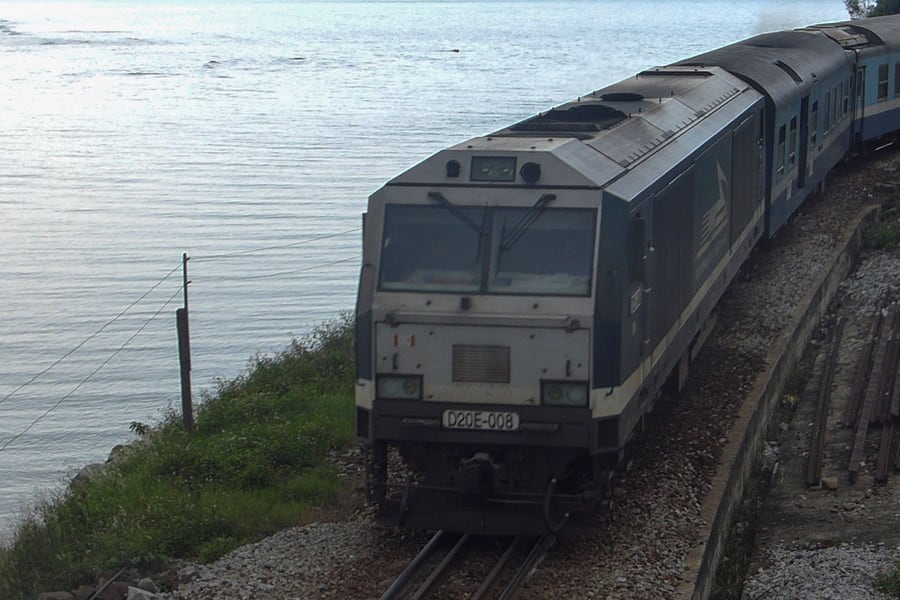
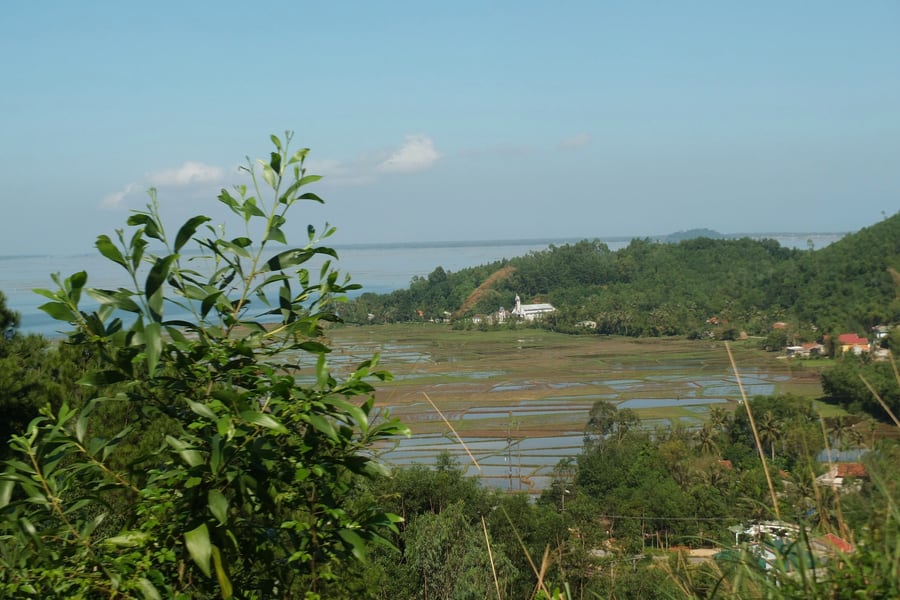
Around Cầu Hai station, 41 km out, the line runs through paddy at the edge of Cầu Hai, the largest part of the Tam Giang–Cầu Hai lagoons: about 104 km² of water, on average 1.4 m deep, open to the sea at Tư Hiền.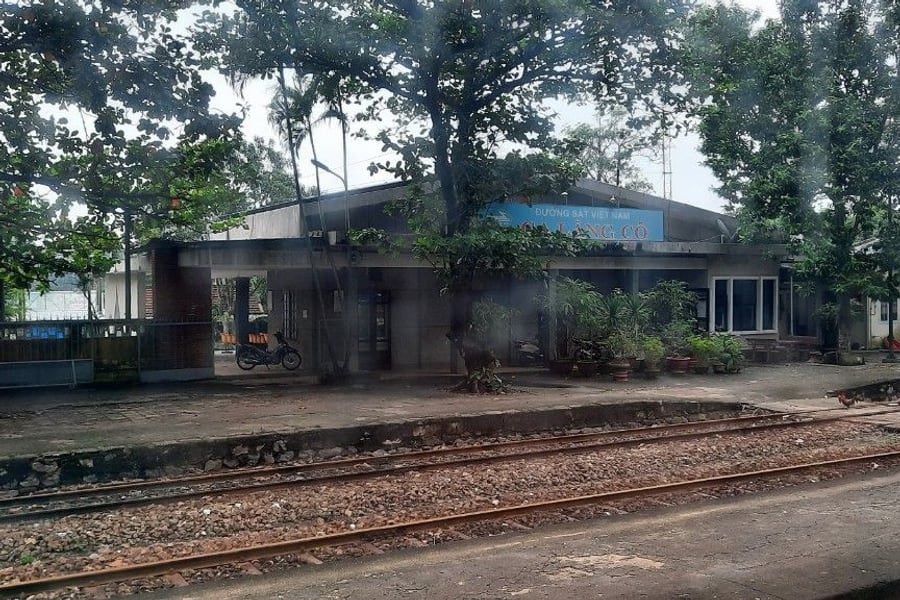 Bún bòa / Wikimedia Commons · CC BY-SA 4.0 · 2022 · cropped
Lăng Cô
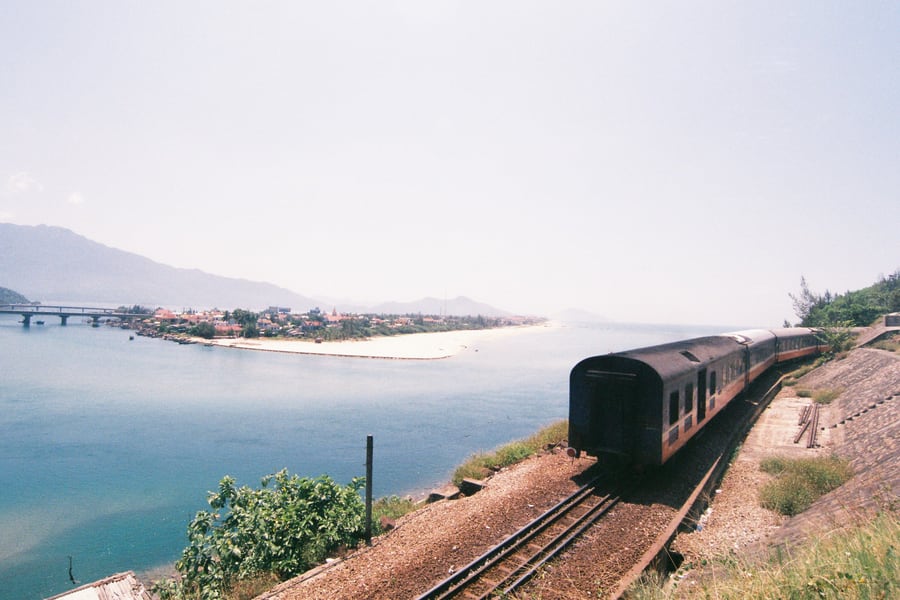
At kilometre 67, the only stop. The train stands here for between ten and nearly forty minutes, depending on the train, long enough to step down onto the platform at the foot of the pass.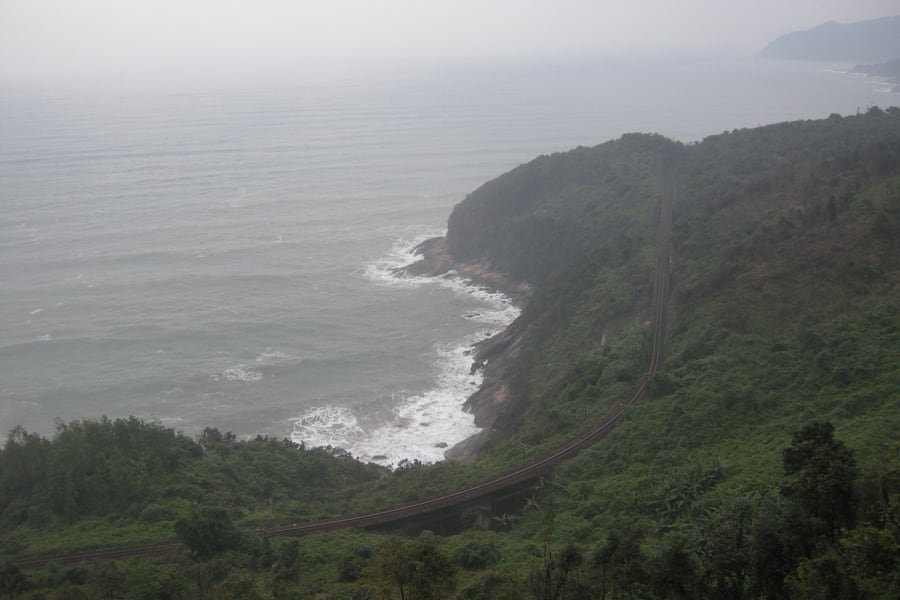 © Vyacheslav Argenberg / http://www.vascoplanet.com/ · CC BY 4.0 · 2008
Over the Hải Vân
The road goes under the mountain in a tunnel; the railway stays out on the coast, on a shelf above the sea, through a string of short tunnels. The pass once marked the border between Champa and Đại Việt.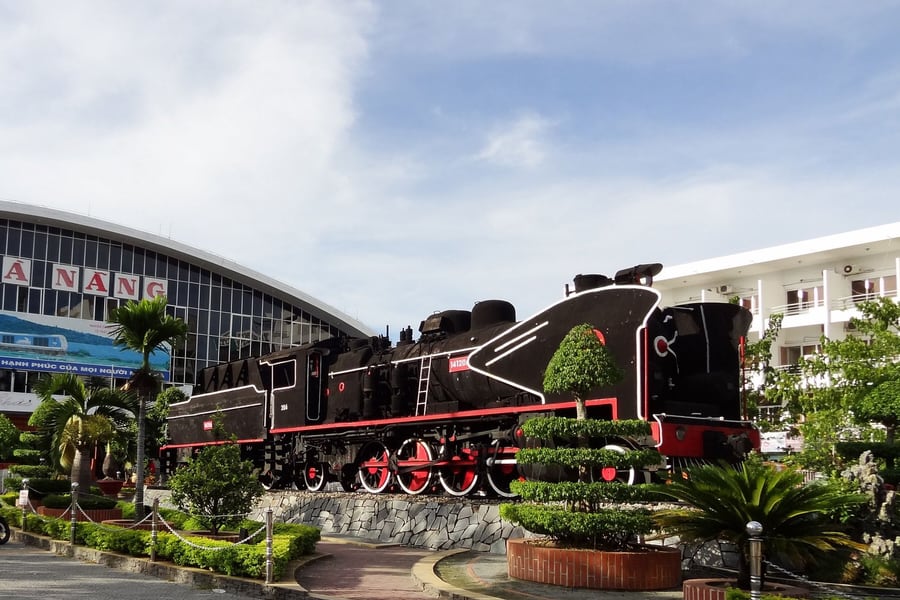 Alancrh / Wikimedia Commons · CC BY-SA 4.0 · 2013 · cropped
Đà Nẵng
The train ends at kilometre 103, at Đà Nẵng station on Hải Phòng street in Thanh Khê. A preserved steam locomotive stands in the garden in front of the station.A bit of history
Culture & experiences along the way
 Thang Nguyen / Wikimedia Commons · CC BY-SA 2.0 · 2007 · cropped
Huế cakes
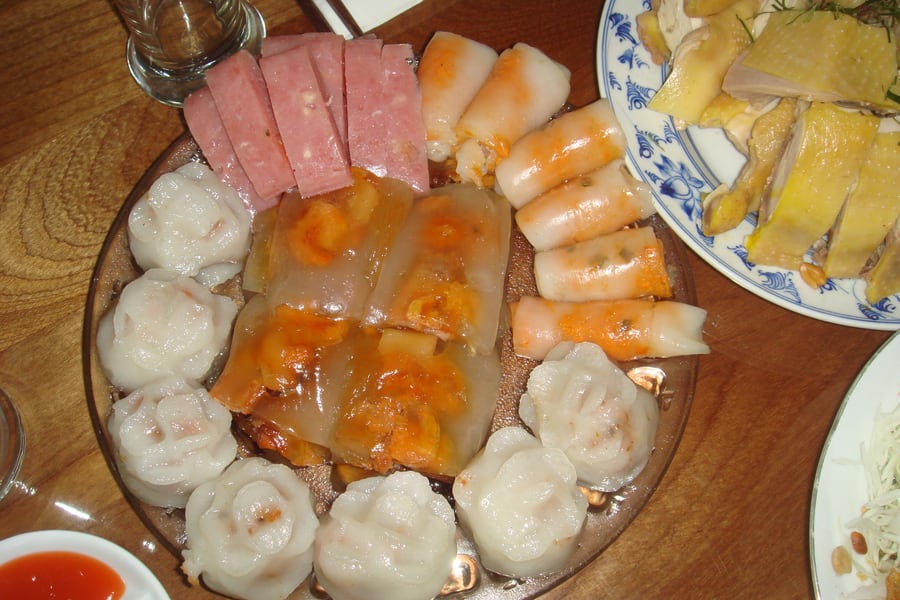
Huế is known for small rice-flour cakes: bánh bèo, steamed in little saucers and topped with dried shrimp and pork crackling; bánh bột lọc, clear tapioca parcels; and bánh ít. Huế dishes such as chả lụa and nem have been served on board since the train's first day.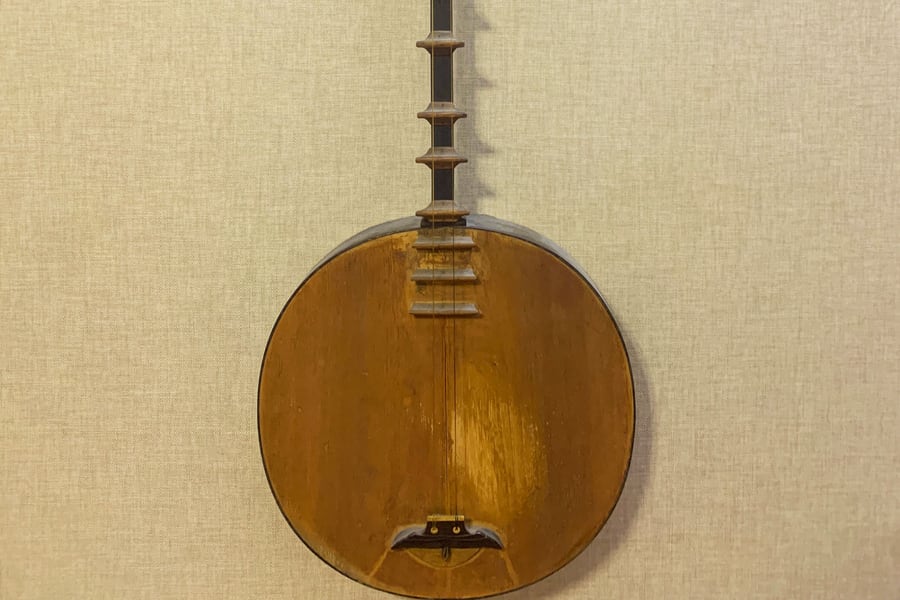 Trúc Đồng / Wikimedia Commons · CC BY-SA 4.0 · 2024 · cropped
Ca Huế
Huế's chamber music grew up under the Nguyễn lords and was played in palaces and mandarins' gardens: a small group singing to the đàn nguyệt moon lute, the đàn nhị fiddle and the đàn tranh zither. It is a national intangible heritage, and live music plays in the train's VIP car.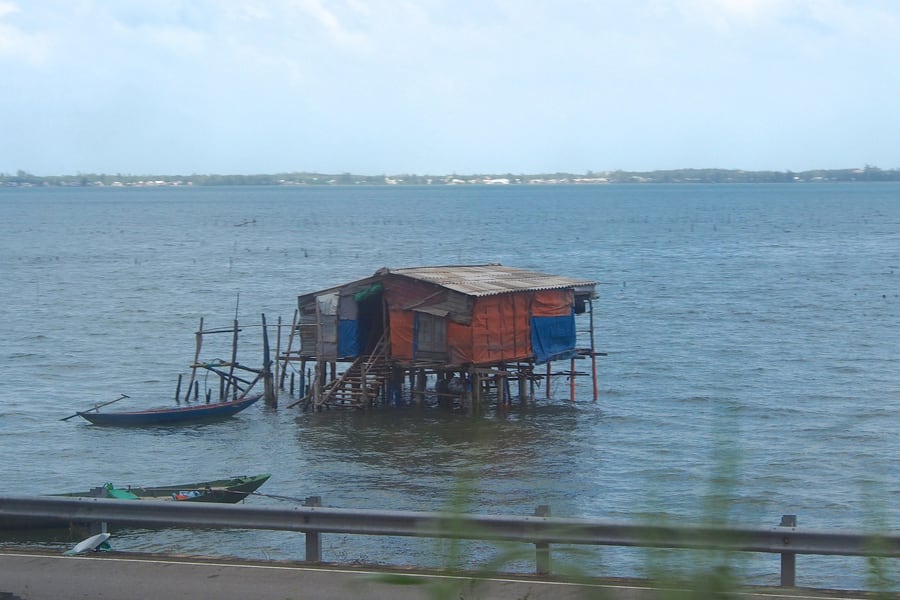 Clay Gilliland / Wikimedia Commons · CC BY-SA 2.0 · 2013 · cropped
Life on the lagoons
Between Huế and Lăng Cô the line runs beside brackish lagoons, and from the window you see fish pens, staked nets and huts on stilts out in the water. At Lập An, beside Lăng Cô, the catch is oysters, from the largest oyster beds on the bay.Timetables
Two heritage trains run each way every day, all year. Each stops only at Lăng Cô, and the stop there is long, so the times below give arrival and departure at Lăng Cô.
Huế to Đà Nẵng
| Train | Huế | Lăng Cô | Đà Nẵng |
|---|---|---|---|
| HĐ1 | 07:05 | 08:28–08:38 | 10:10 |
| HĐ3 | 14:30 | 16:19–16:42 | 18:15 |
Đà Nẵng to Huế
| Train | Đà Nẵng | Lăng Cô | Huế |
|---|---|---|---|
| HĐ2 | 07:05 | 08:36–09:14 | 11:03 |
| HĐ4 | 15:20 | 16:40–16:50 | 18:15 |
The same times are listed into February 2027. Times change around Tết, the lunar new year, so check your date in Vietnam Railways' timetable (opens in a new tab) before you travel. The pass lies between Lăng Cô and Đà Nẵng: the HĐ3 is the last over it, leaving Lăng Cô at 16:42, so in the short winter days the morning trains and the HĐ4 have the best light.
Timetable as of November 2026.
Tickets
Vietnam Railways sells every seat for a named train and date, online at dsvn.vn and at the stations. In November 2026 a seat in the 56-seat cars from Huế to Đà Nẵng cost 180,000 VND on a weekday and 210,000 VND at the weekend, and a place in the VIP car 395,000 or 460,000 VND. Lăng Cô can be bought as a destination too, from 120,000 VND.
The VIP car has only 32 seats and is the one to book ahead, especially at weekends. Vietnam Railways also lists a cheaper extra seat, ghế phụ, from 144,000 VND.
Fares checked November 2026.
Book your tickets
Soft seat, Huế to Đà Nẵng
56-seat car · HĐ1 to HĐ4
A seat that turns to face the direction of travel, bought for a named train and date from Vietnam Railways.
Book Tickets (opens in a new tab, on dsvn.vn)via dsvn.vnThe VIP car
32 seats · heritage trains
The car fitted out after Huế's imperial palaces, with a counter along the windows, coffee and live music.
Book Tickets (opens in a new tab, on dsvn.vn)via dsvn.vnRail Passes
No rail pass covers the heritage train. Vietnam Railways sells each journey as a ticket for a named train and seat, online or at the station. Buy each direction on its own.
Checked November 2026.
Places to Visit
The train joins two cities with a day's worth of sights at each end: the citadel and temples of Huế, the lagoon at Lăng Cô halfway, and Đà Nẵng's river and the Marble Mountains to the south. The places below run from Huế to Đà Nẵng.
 Yhxc57082 / Wikimedia Commons · CC BY-SA 4.0 · 2018 · cropped
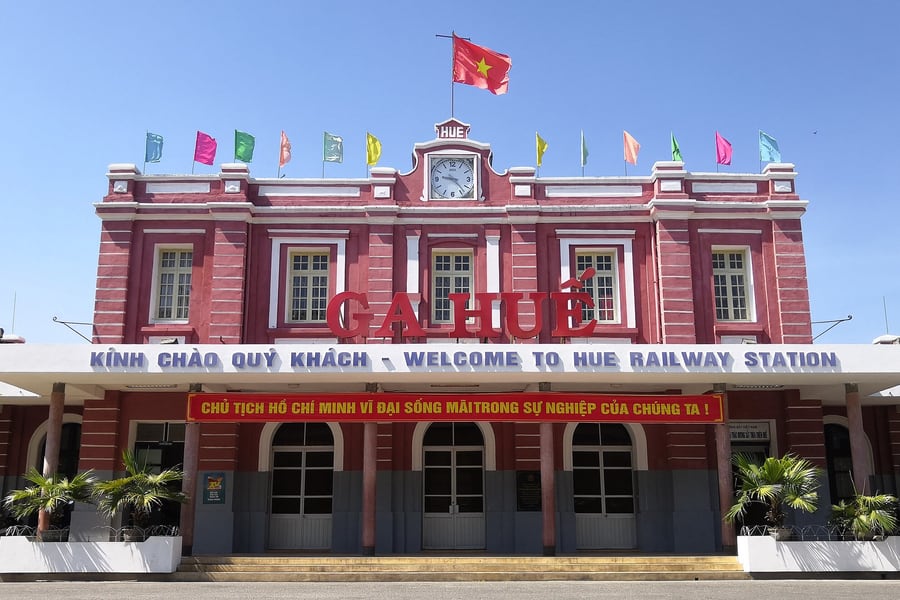
Huế station
The French built the station in 1908 under the name Ga Trường Súng, and in 1916, after his failed uprising, the young emperor Duy Tân was brought here to begin his exile to Réunion. On 26 March 2026, the day the refitted heritage train was unveiled, the station was recognised as a tourist destination in its own right.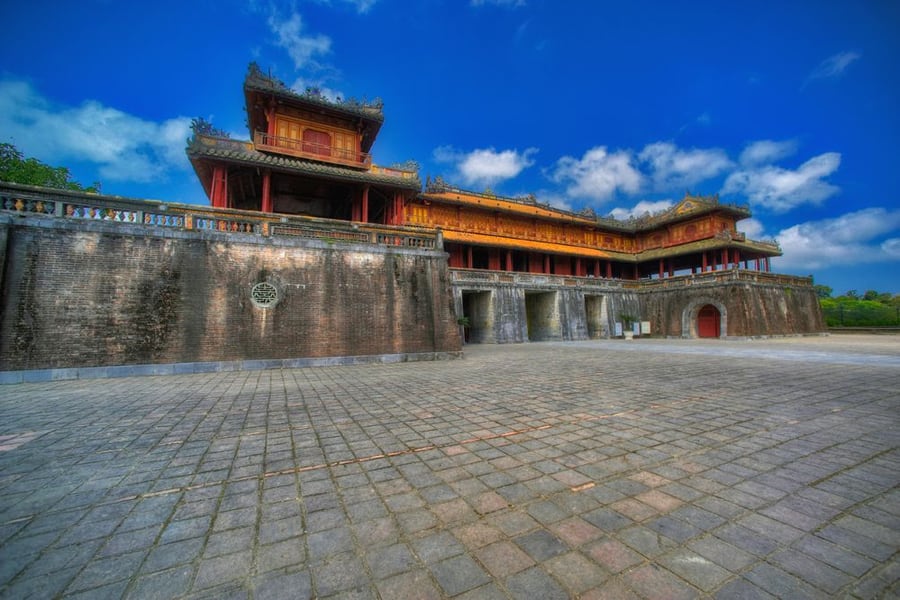 Aleksey Gnilenkov / Wikimedia Commons · CC BY 2.0 · 2011 · cropped
The Meridian Gate
Ngọ Môn, the main gate of the Imperial City inside Huế's citadel, built in 1833 under the emperor Minh Mạng. It has five entrances, the central one once kept for the monarch alone, and on top the Five-Phoenix Pavilion, from which the emperor watched parades and ceremonies.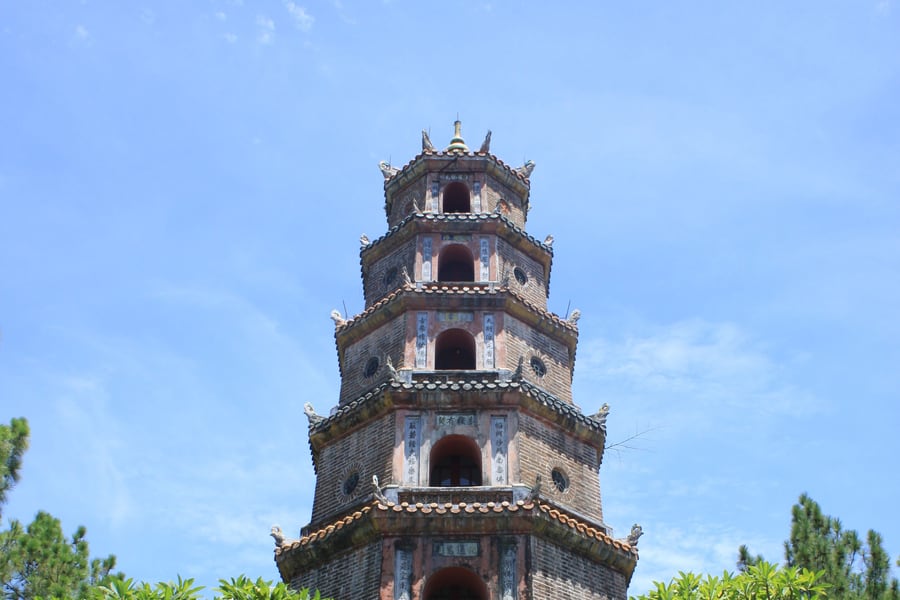 Lưu Ly / Wikimedia Commons · Public domain · 2008 · cropped
Thiên Mụ
The temple of the Celestial Lady stands on Hà Khê hill on the north bank of the Perfume River, about 5 km from the citadel. The lord Nguyễn Hoàng founded it in 1601, and its seven-storey Phước Duyên tower is taken as the unofficial symbol of Huế.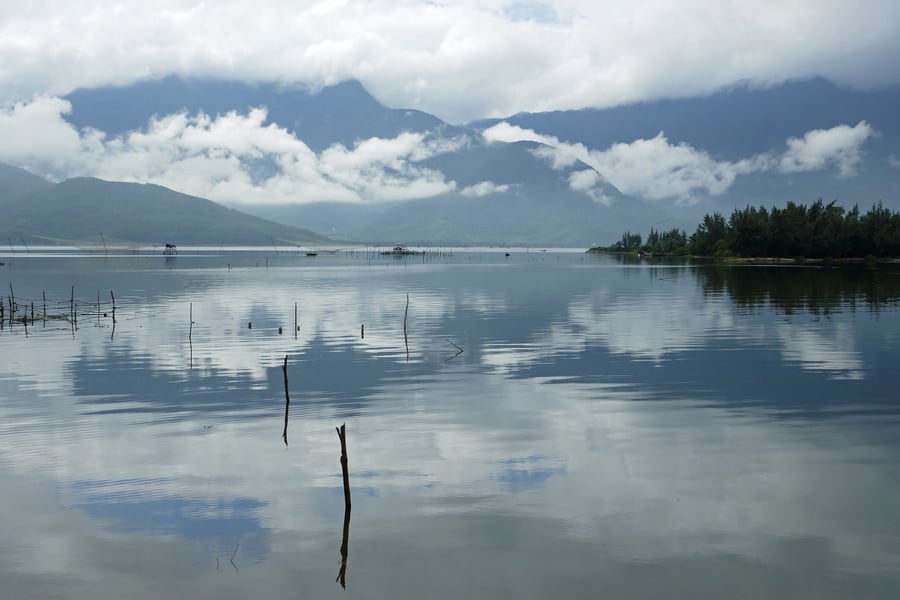 Ji-Elle / Wikimedia Commons · CC BY-SA 4.0 · 2017
Lập An lagoon
A brackish lagoon of about 1,647 ha beside the Phú Gia pass on Lăng Cô bay, at the foot of the Hải Vân and Bạch Mã mountains. Fishing is its living, oysters above all: these are the largest oyster beds on the bay, and the lagoon is part of the plan for the Lăng Cô–Cảnh Dương tourist area.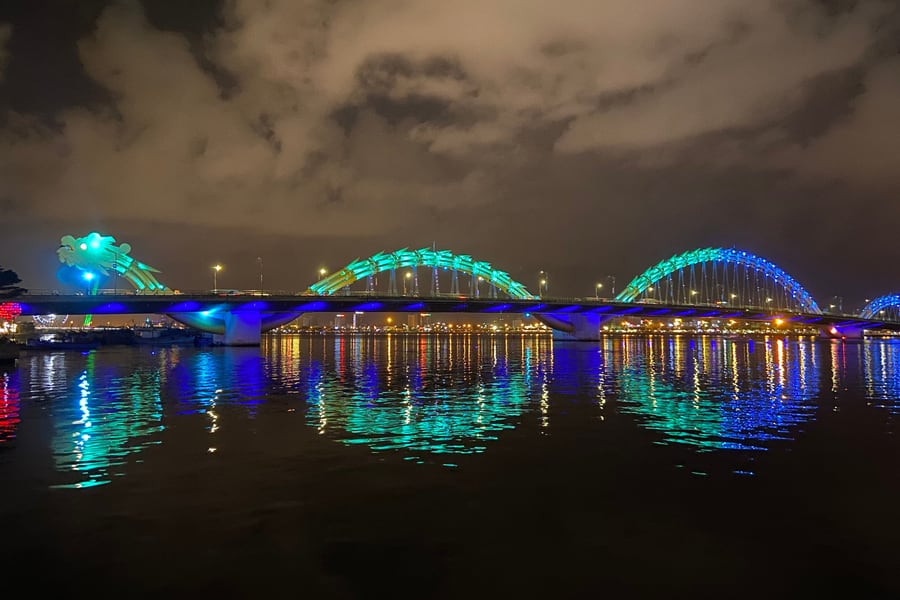 Kuroczynski / Wikimedia Commons · CC BY-SA 4.0 · 2020 · cropped
The Dragon Bridge
A steel bridge in the shape of a dragon, 666 m long, across the Hàn River in the centre of Đà Nẵng. It opened on 29 March 2013, the anniversary of the city's liberation, and on Saturday and Sunday nights at 21:00 the dragon's head breathes fire and then water.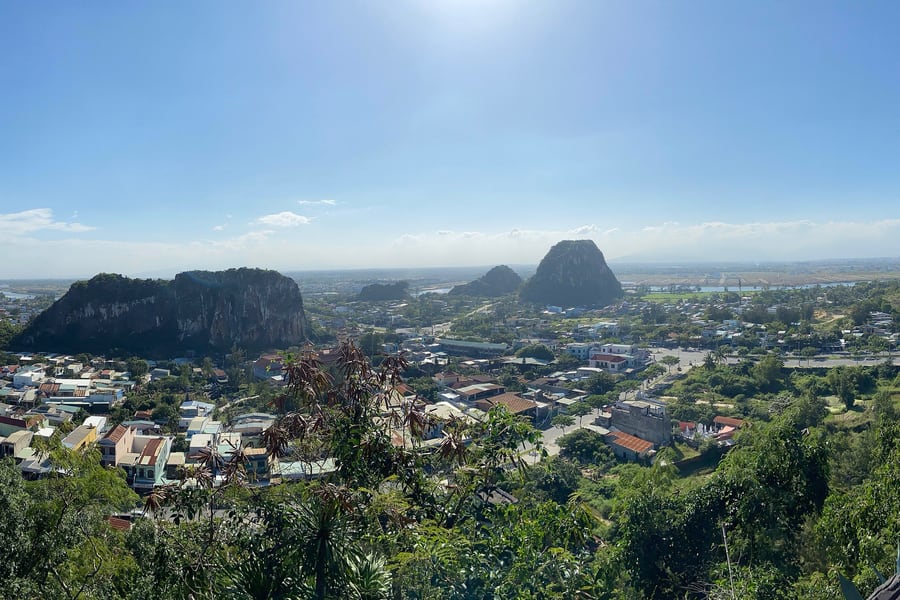 Kuroczynski / Wikimedia Commons · CC BY-SA 4.0 · 2020 · cropped
The Marble Mountains
Ngũ Hành Sơn, five marble and limestone hills each named for one of the five elements, riddled with caves and Buddhist sanctuaries. Thủy Sơn, the water mountain, is the one visitors climb, by a stairway of 156 steps. The villages below carve stone, and the hills became a special national relic in 2019.Where to Sleep
The morning trains make the ride an easy day out from either city, and the afternoon trains bring you back by evening. To start from Huế, stay a night by the Perfume River: the Saigon Morin, open since 1901, faces the Trường Tiền bridge, about ten minutes from the station.
Where to stay
Saigon Morin
On the Perfume River, in the centre of Huế
Opened in 1901 and facing the Trường Tiền bridge, with 180 rooms, about ten minutes from Huế station.
Check Availability (opens in a new tab, on morinhotel.com.vn)via morinhotel.com.vnQuestions or corrections
Planning this trip and stuck on something, or spotted a time, fare or detail that has changed? Send us a message about Huế to Đà Nẵng Heritage Train. We read every one, and we update this page when something has changed.