The Inlandsbanan
Jamten72 / Wikimedia Commons · CC BY-SA 3.0
- DistanceMora–Gällivare · about 1,070 km (full line 1,288 km)
- DurationTwo days, summer only
- Best seasonMid-June to mid-August
Introduction
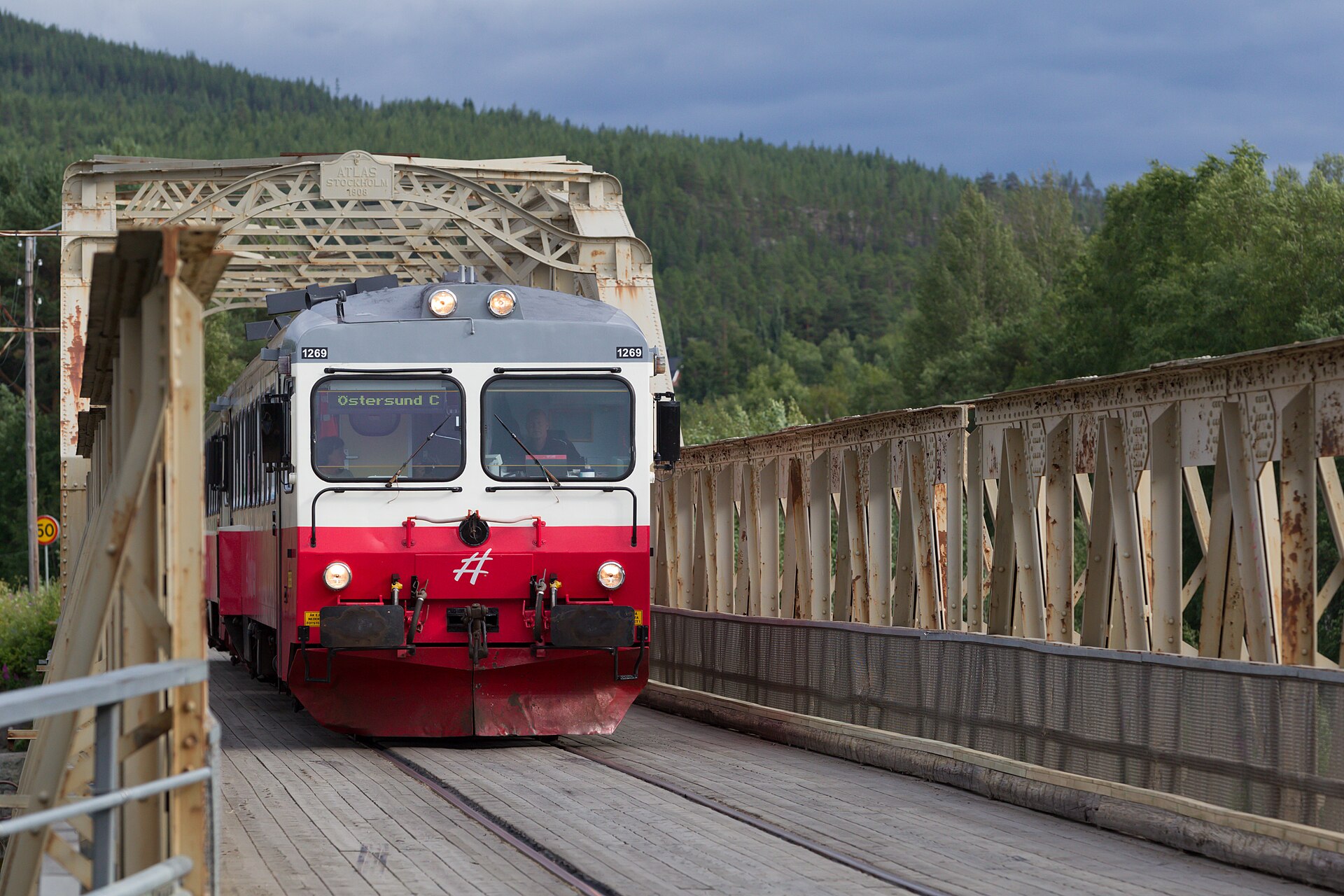
The Inlandsbanan — the Inland Line — is one of the great slow railways of the world. It runs 1,288 kilometres up the empty middle of Sweden, from the lake country of Dalarna to the mines of Lapland, through a landscape of forest, bog, river and fell where the single track is often the only thing made by people for miles in any direction.
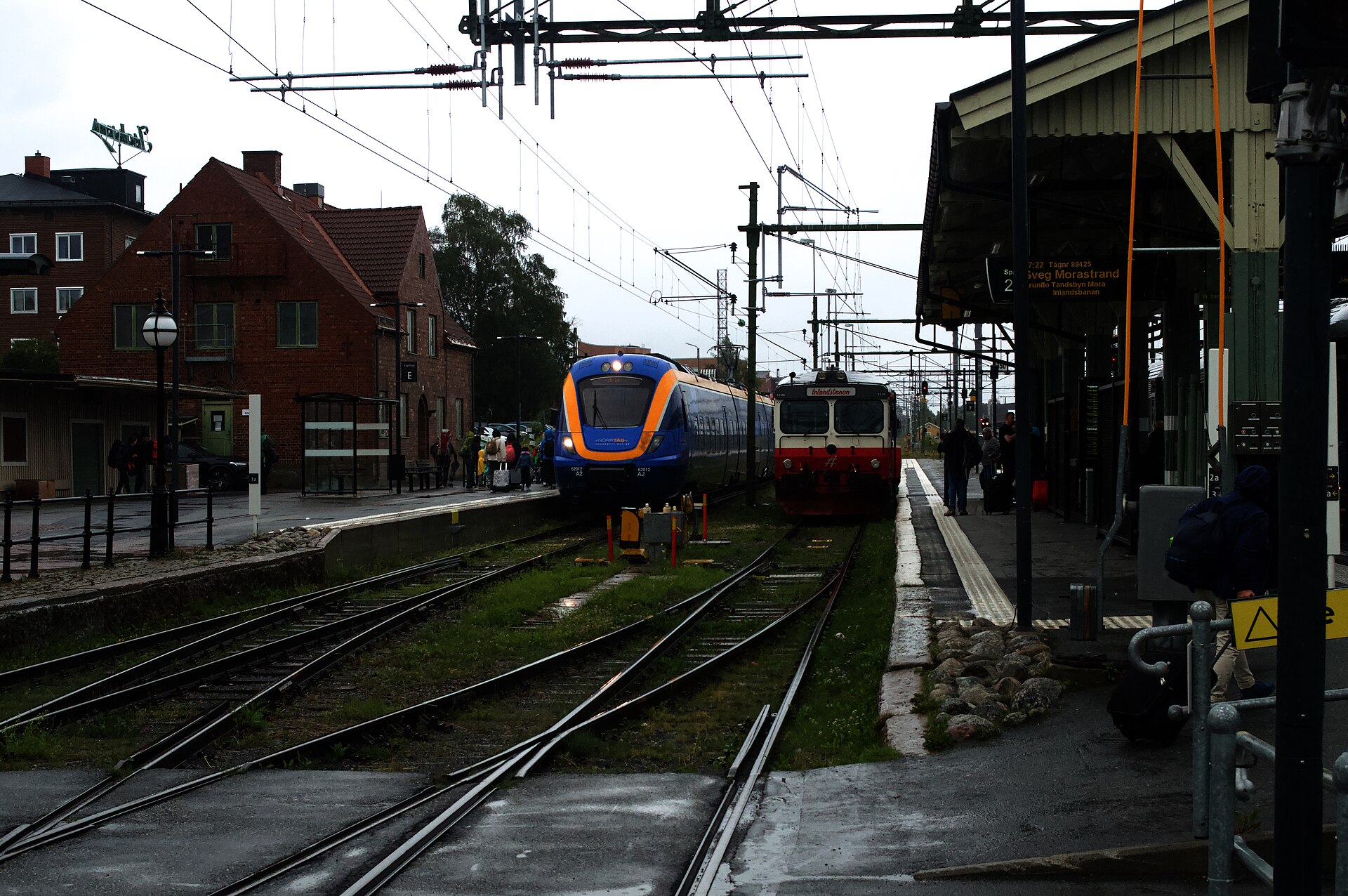
It was built the hard way, between 1908 and 1937, to open up the interior — and it very nearly died. As roads and the coastal main line took its traffic, the line was run down, and by 1992 through services had stopped altogether. What saved it was tourism: today the northern half is run each summer by Inlandsbanan AB as a heritage tourist railway, a little red railcar ambling up the line from mid-June to mid-August.
That is exactly how to ride it — slowly. There is no luxury express here; the joy is in the pace. The train stops for coffee and lunch, halts at waterfalls and viewpoints, pauses to let you photograph the Arctic Circle marker, and slows for the moose that stand on the track. The full run takes two days, with a night in the island city of Östersund halfway, and by the end you have crossed the Arctic Circle and travelled the length of a country most people only see from the coast.
The Journey
The tourist line runs between Mora and Gällivare, with Östersund as its hub and natural halfway halt — so the classic trip is done in two days, one section each day, with a night in Östersund in between.
The southern day begins at Mora, on the shore of Lake Siljan in Dalarna, and heads north through deep forest and along wild rivers, climbing steadily out of the lake country and into Jämtland. By early afternoon the railcar rolls into Östersund, a cheerful wooden town on the great lake Storsjön, looking across the water to the island of Frösön — a good place to eat, sleep, and watch the long northern evening.
The northern day is the epic one: Östersund to Gällivare, some 746 kilometres in a single long, magnificent day. The country empties out mile by mile — Vilhelmina, Storuman, Sorsele, the old railway town of Arvidsjaur — until the forest gives way to the fells and marshes of Lapland. North of Jokkmokk the train slows and stops at a painted line in the wilderness: the Arctic Circle, where everyone gets out for photographs before the railcar carries on to Gällivare, a mining town under the Lapland sky.
A few things worth knowing about the run:
- It follows the Inland Line, 1,288 km from Kristinehamn to Gällivare; the summer tourist trains run the northern part, Mora–Östersund–Gällivare.
- The full trip takes two days, with an overnight at Östersund; there is one railcar a day on each section.
- Trains run only in summer — roughly mid-June to mid-August.
- The timetable is deliberately slow, with meal stops, coffee stops and sightseeing halts — including the Arctic Circle — built in.
This is a journey to savour rather than rush. Many riders break it further still — a day in Östersund, a night in Arvidsjaur, a side-trip to the Sami town of Jokkmokk — and turn the two-day line into a leisurely week in the Swedish north.
Along the route
larsjuh / Wikimedia Commons · CC BY 2.0A thousand kilometres of wilderness
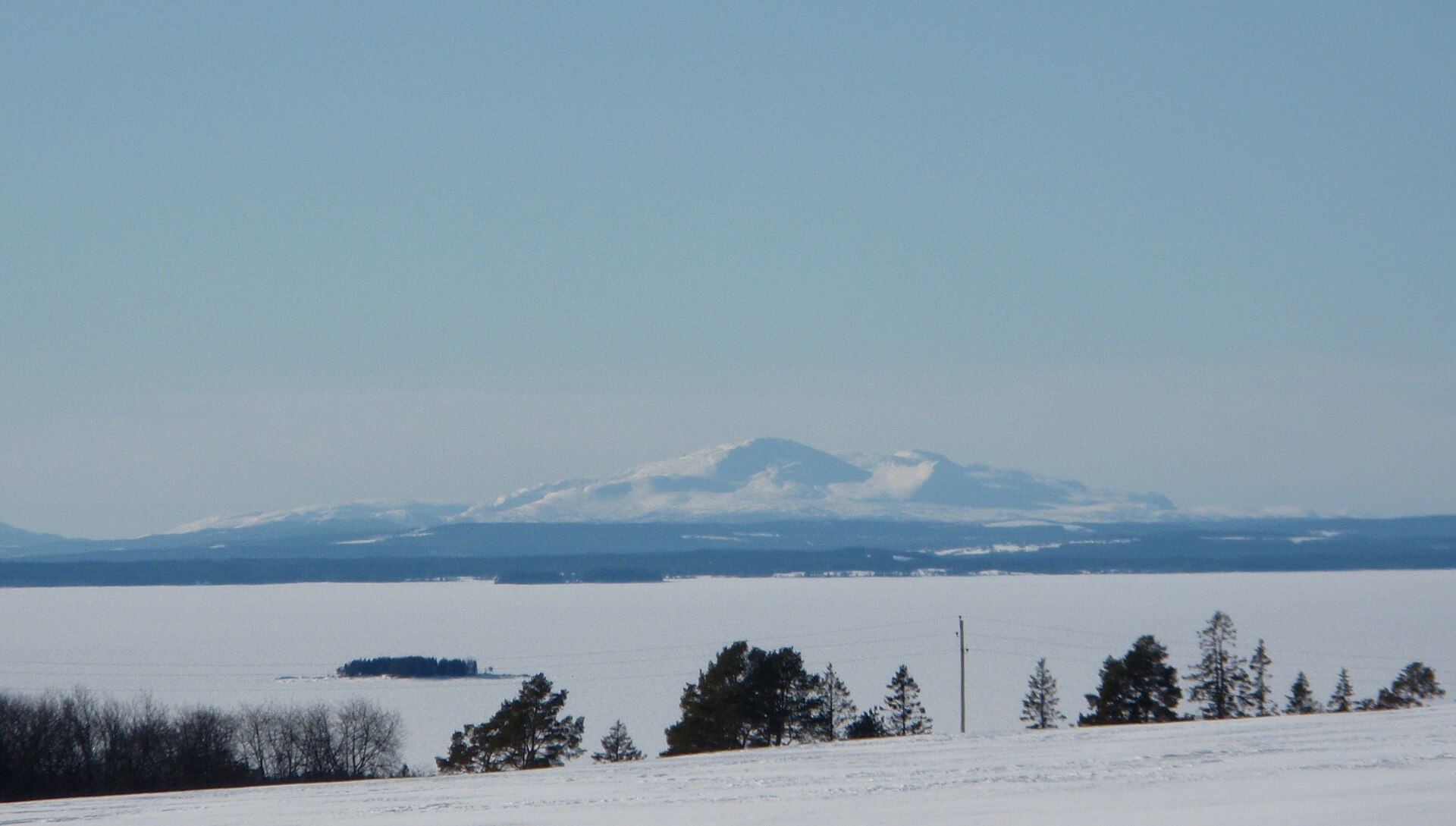
The Inlandsbanan runs 1,288 km up the roadless middle of Sweden — forest and bog and rushing rivers, elk and reindeer, and long stretches where the single track is the only sign of people. There is no faster way to feel the size of the Swedish north.Caddy69 / Wikimedia Commons · CC BY-SA 4.0Across the Arctic Circle
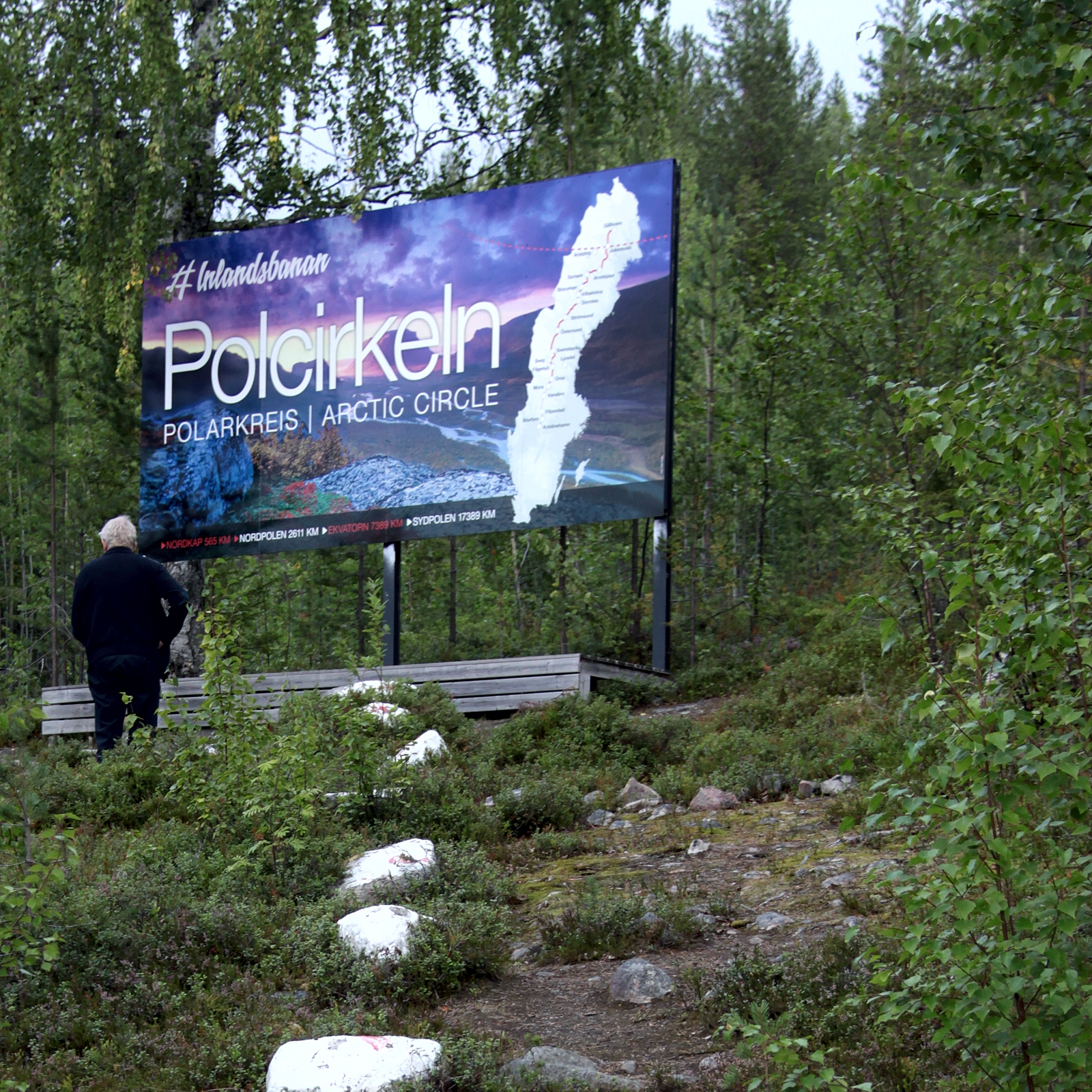
Somewhere north of Jokkmokk the train stops in the middle of the forest, at a painted line and a sign: the Polcirkeln. Everyone piles out for photographs, one foot in the south and one in the land of the midnight sun.larsjuh / Wikimedia Commons · CC BY 2.0A line that refused to die
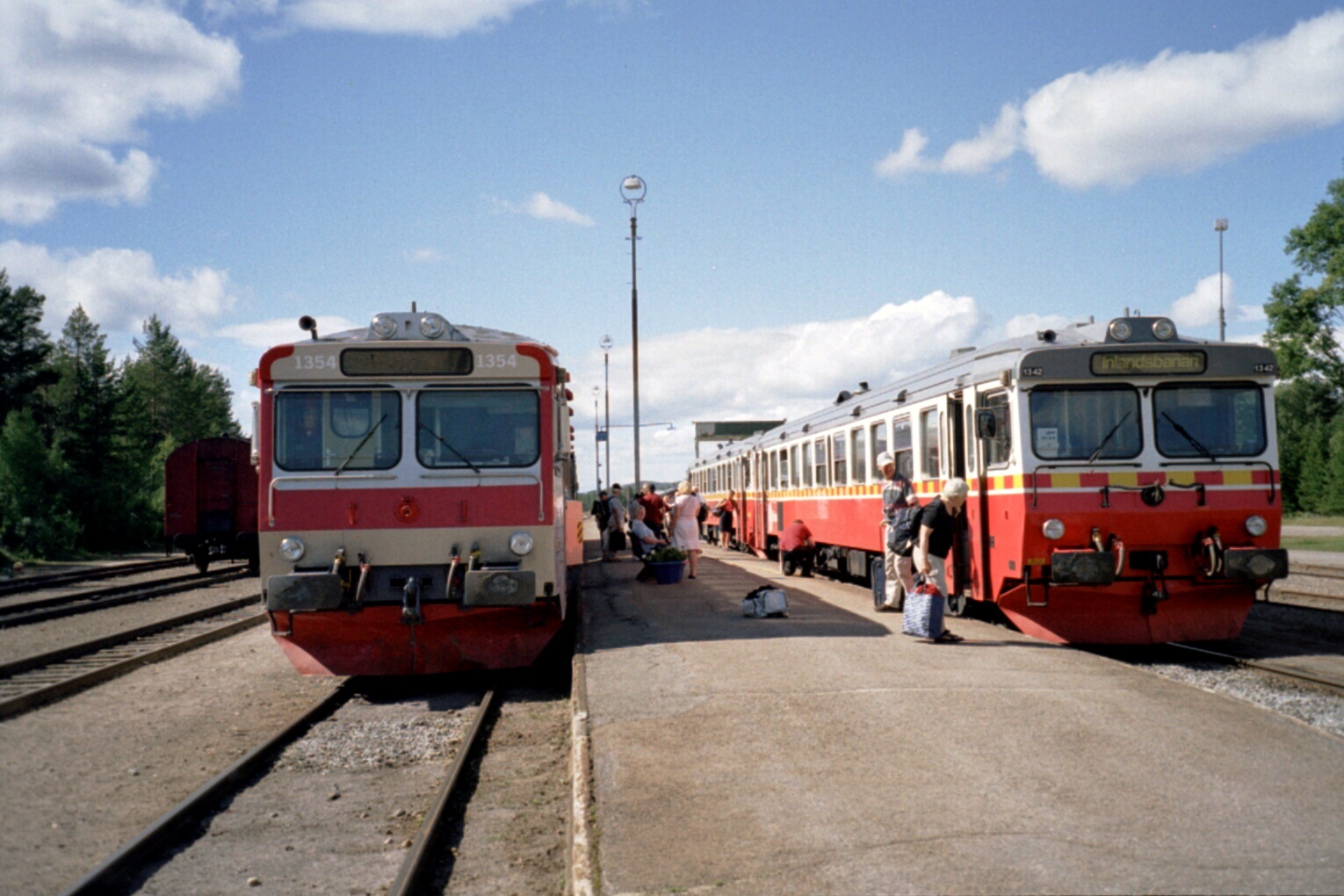
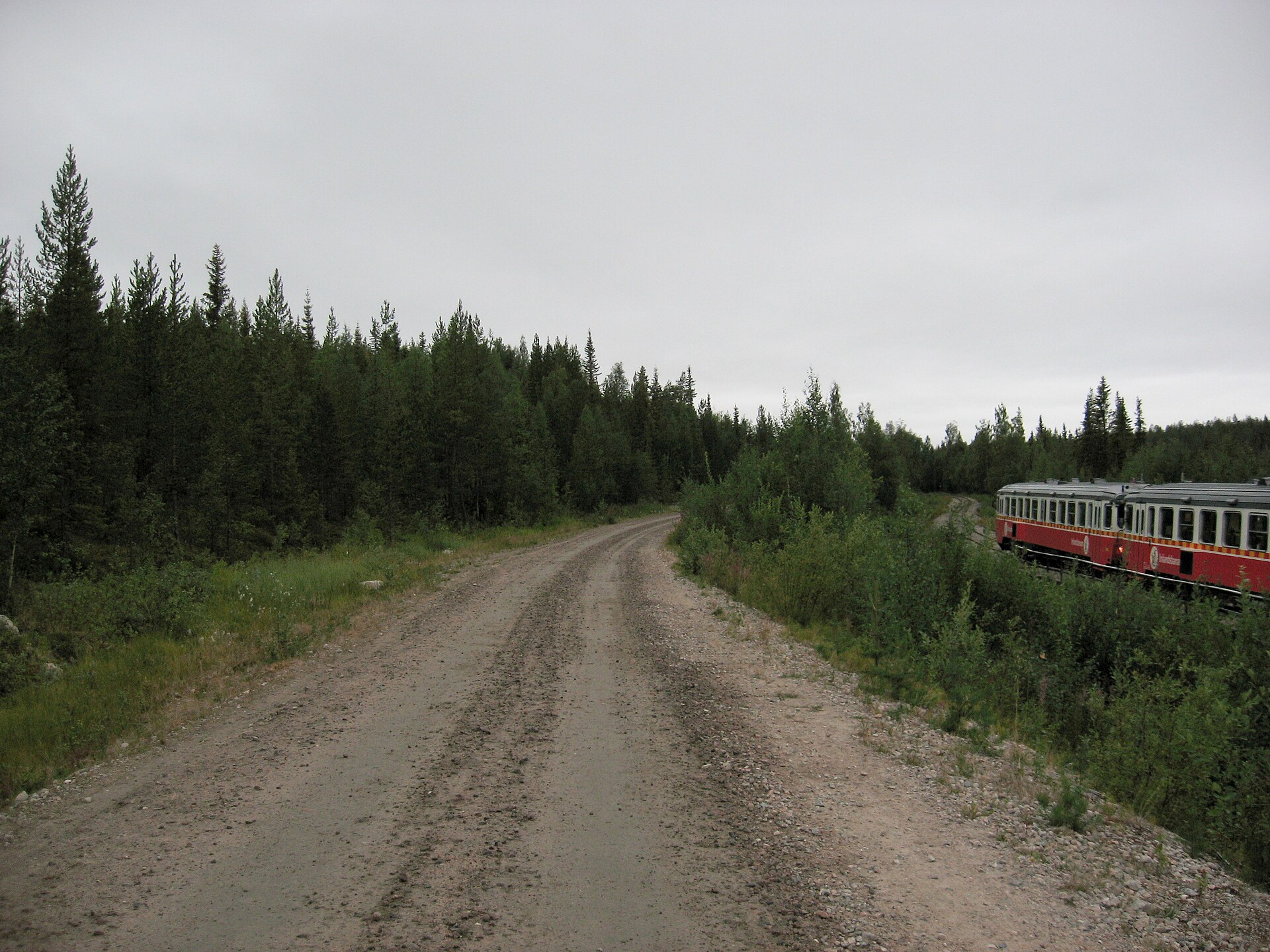
Finished in 1937 and all but abandoned by 1992, the Inland Line was saved as a summer tourist railway and survives on its own slow terms — one little railcar a day each way, from mid-June to mid-August.A bit of history
Culture & experiences along the way
Ankara / Wikimedia Commons · CC BY 2.5Aboard the little red railcar
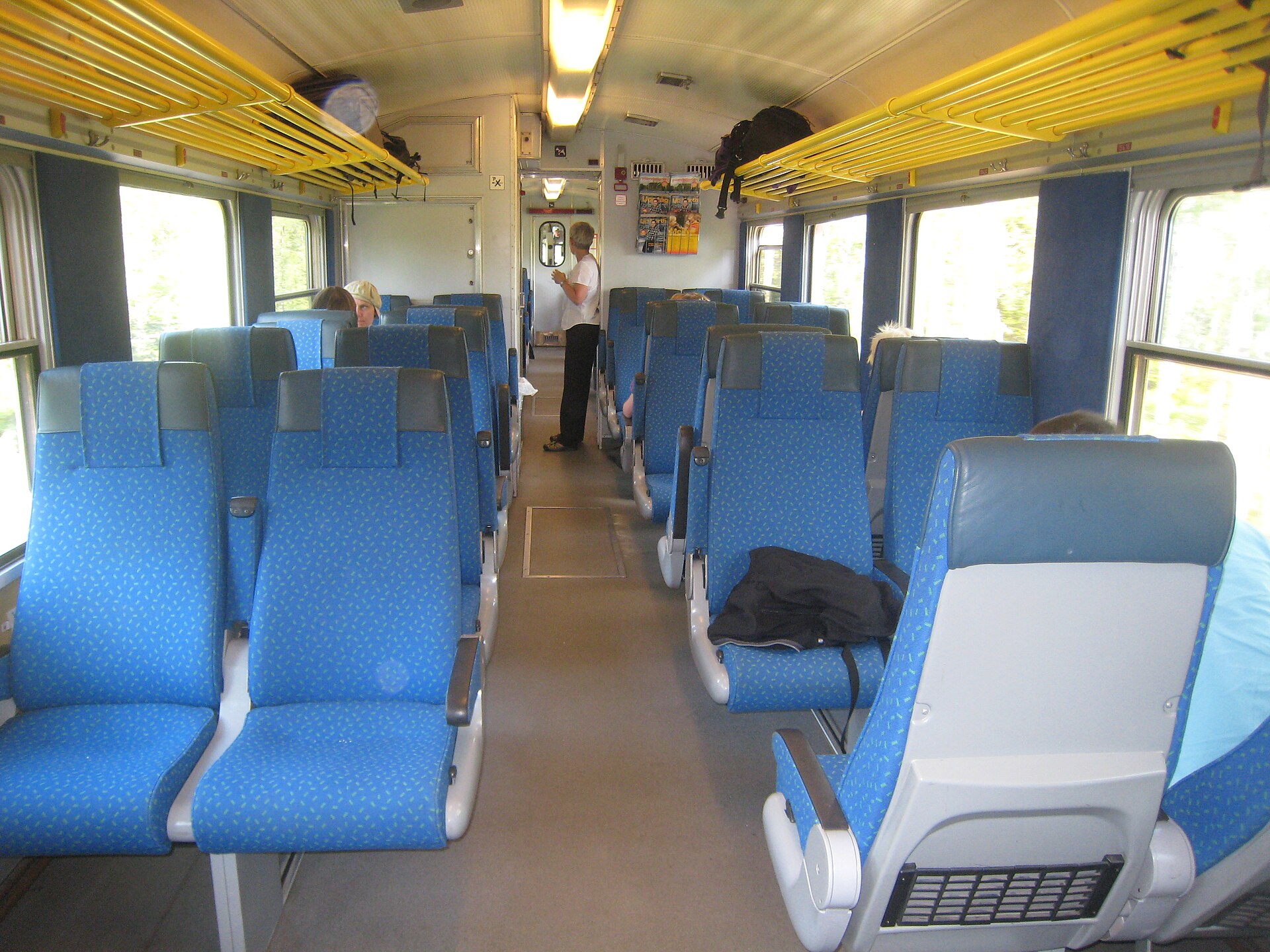
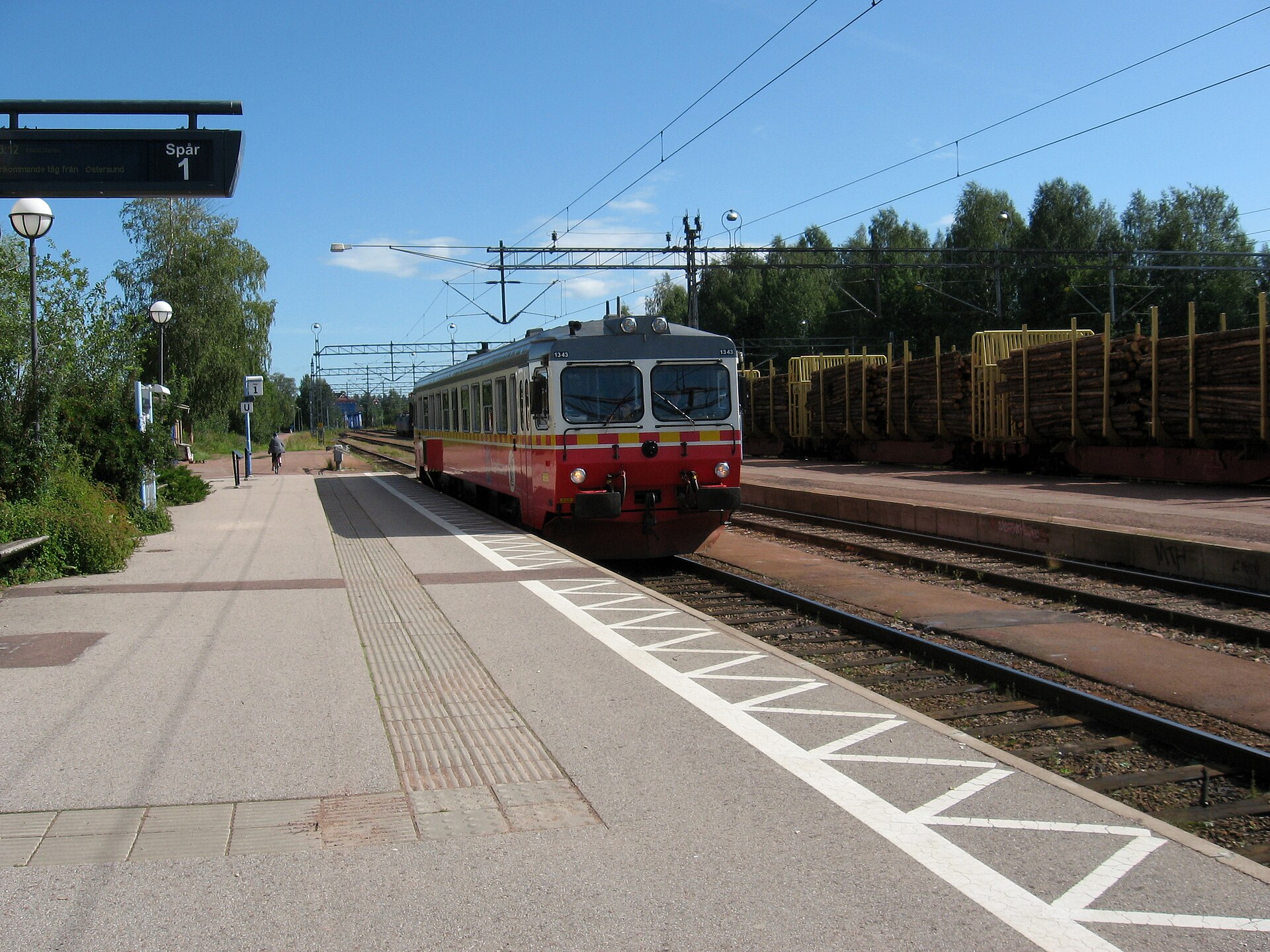
The trains are simple Y1 diesel railcars, and that is the charm — bright, unhurried, with big windows and a driver who doubles as your guide. This is not a luxury express; it is a slow, friendly ramble through the wilderness, and it stops whenever there is something worth seeing.Wikimedia Commons · CC BY 2.5Coffee, waterfalls and moose stops
The timetable is built around the scenery. The railcar pauses for coffee and lunch, halts at waterfalls and viewpoints, and slows or stops when a moose is standing on the line — which happens more than you would think. Half the pleasure is how often you get off.Andreaze / Wikimedia Commons · Public domainÖstersund, the island city
The line's hub and natural overnight stop is Östersund, on the shore of the great lake Storsjön — a relaxed town of wooden houses looking across the water to the island of Frösön and the fells beyond. It is where the two-day journey breaks, and a fine place to spend a summer evening.Timetables
The Inlandsbanan runs only in summer, and there is just one train a day on each section, so the timetable matters — plan around it. In 2026 the tourist trains run daily from 15 June to 12 August, and the published times (from the operator) are:
| Section | Depart | Arrive |
|---|---|---|
| Östersund → Gällivare | 07:34 | 21:39 |
| Gällivare → Östersund | 08:00 | 22:01 |
| Östersund → Mora | 07:07 | 12:36 |
| Mora → Östersund | 13:52 | 20:13 |
(Operator timetable, as of summer 2026 — always confirm before travelling, as dates and times change each year.)
So the classic two-day trip is Mora → Östersund one afternoon (about 5½ hours), a night in Östersund, then the long Östersund → Gällivare day (about 14 hours) — or the same in reverse. These are not fast trains: the northern section covers 746 km in a full day precisely because it stops so often, for meals, coffee, viewpoints and the Arctic Circle photo halt (reached around 20:00 northbound, mid-morning southbound).
The southern stretch, Kristinehamn–Mora, is run by a separate operator (TÅGAB) and connects the line to the national network at Mora.
Because there is only one train a day and it is popular in high summer, book ahead. Full, current timetables and booking are on the operator's site — see the Tickets section below.
Tickets
The line is run by Inlandsbanan AB, and tickets are booked directly with them:
- Online, at inlandsbanan.se (opens in a new tab), which has an English site with the full summer timetable and booking.
- By phone, on +46 (0)771-53 53 53, or by email to boka@inlandsbanan.se.
- At staffed stations along the line in season.
There are two main ways to pay:
- Single-journey tickets for each section (Mora–Östersund, Östersund–Gällivare), if you just want to ride part of the line or make the two-day trip point to point.
- The Inlandsbanan Card, a rail pass giving unlimited travel along the line over a set period (14 days). If you plan to break the journey — a night here, a side-trip there — the card is much better value and lets you get on and off as you please.
Because there is only one train a day on each section and seats are limited, reserve ahead for high summer. Fares change year to year, so we don't quote a figure here — the current prices, the season's exact dates and the full timetable are all on the operator's site above.
Book your tickets
Inlandsbanan · single journeys
Book each section (Mora–Östersund–Gällivare)
Ride the whole line over two summer days, or hop a single section, booked with the operator Inlandsbanan AB. Trains run daily from mid-June to mid-August, one each way per section, with meal and sightseeing stops built into the timetable.
Book Tickets (opens in a new tab, on Inlandsbanan AB)via Inlandsbanan ABThe Inlandsbanan Card
A rail pass for the line
The Inlandsbanan Card is a rail pass giving unlimited travel along the line over a set period (14 days), so you can break the journey as often as you like — the best-value way to take your time from Dalarna to Lapland.
Book Tickets (opens in a new tab, on Inlandsbanan AB)via Inlandsbanan ABRail Passes
Interrail passes are valid. Interrail's table of railway companies lists Inlandsbanan as included in Sweden, and its Sweden page calls the line fully included. Inlandsbanan charges a seat reservation of SEK 50 per stretch on top of any valid rail pass.
The line also sells its own pass, the Inlandsbanan Card: SEK 2,545 for 14 days of unlimited travel on the line, with seat reservations again SEK 50 a stretch. Two children up to 15 travel free with it, and travellers aged 16–25 and students get 25% off.
Which pass to buy depends on the rest of the trip. For the line on its own, weigh the Inlandsbanan Card against single tickets for the sections you want; the card pays when you break the journey often. An Interrail Pass pays when you also need trains to reach Mora and to leave from Gällivare.
Checked October 2026 against interrail.com (opens in a new tab), Interrail's Sweden page (opens in a new tab) and Inlandsbanan's prices (opens in a new tab).
Places to Visit
The Inlandsbanan is a journey through places most visitors never reach, and the stops along it are half the point.
Mora, at the southern end, sits on Lake Siljan in the heart of Dalarna — the folk province of red cottages, painted Dala horses and Midsummer poles. It is the finish of the Vasaloppet, the world's oldest and largest cross-country ski race, and a pretty lakeside town to begin from.
Östersund, the hub, stands on the shore of Storsjön, Sweden's fifth-largest lake — said, like Loch Ness, to have its own monster. It is a relaxed town of wooden streets and waterfront, with the open-air Jamtli museum and the island of Frösön, and it makes the natural overnight halfway.
North of Östersund the line runs deep into Lapland and Sápmi, the land of the Sami. Arvidsjaur keeps its old wooden church-town of Sami cottages; Jokkmokk, just above the Arctic Circle, is the cultural capital of the Swedish Sami and hosts a famous winter market each February, with the excellent Ájtte museum of Sami life and mountain nature. Near the line lie some of Europe's last great wildernesses — the national parks of Sarek and Muddus, part of the Laponia World Heritage Site — and the mighty Storforsen rapids.
At the northern end, Gällivare is a mining town on the edge of the mountains, a jumping-off point for Laponia and, by the connecting Iron Ore Line, for Kiruna, Abisko and the far north.
 Arild Vågen / Wikimedia Commons · CC BY-SA 4.0 · cropped
Lake Siljan
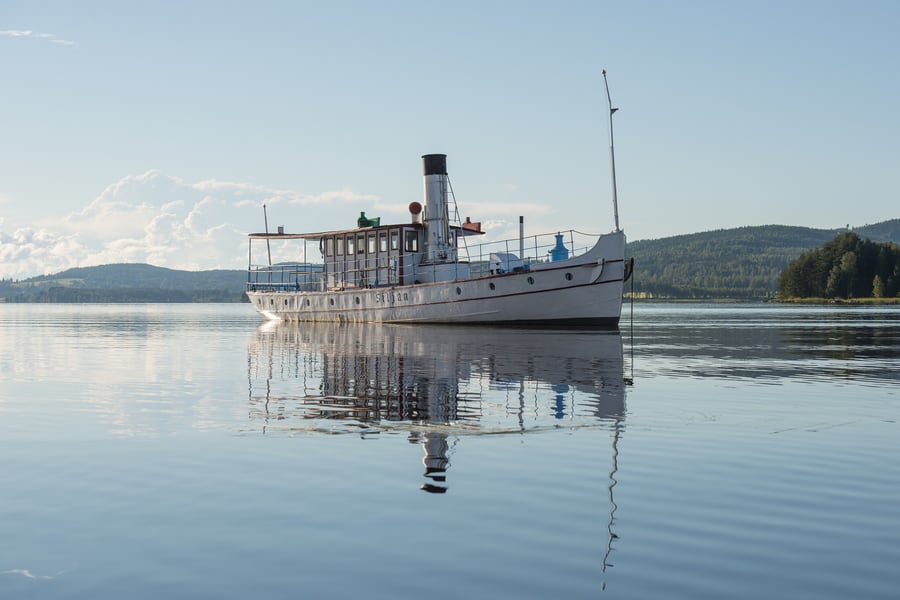
Sweden's seventh-largest lake sits in the scar of a meteorite impact 377 million years ago — the Siljan Ring, whose original crater was some 52 km across, the largest known in Europe outside Russia. The strike folded up fossil-rich Cambrian and Silurian rock that would otherwise have eroded away long ago. Mora is the biggest town on the shore, and the lake runs 134 metres deep at its deepest.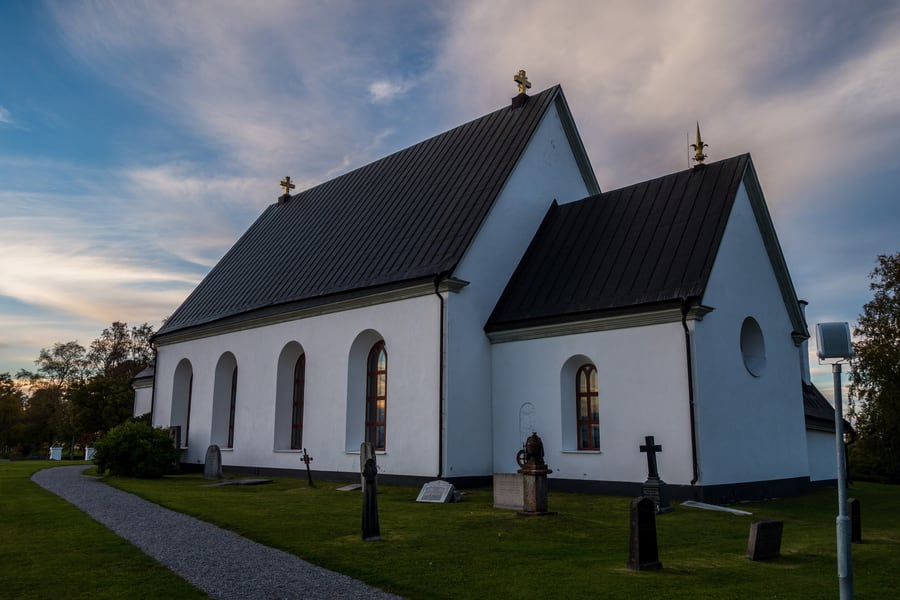 Andreaze / Wikimedia Commons · CC BY-SA 4.0 · cropped
Frösö church
Out on Frösön — Freyr's island, the largest in Storsjön and the old regional centre of Jämtland — this stone church went up in the 1200s and was remodelled in the 1700s. A lightning-conductor job set it alight in 1898 and left little but the walls, though every fixture was carried out. Its 13th-century reliquary marks it as a pilgrim stop on St Olav's Way. The shingled bell tower dates from 1754.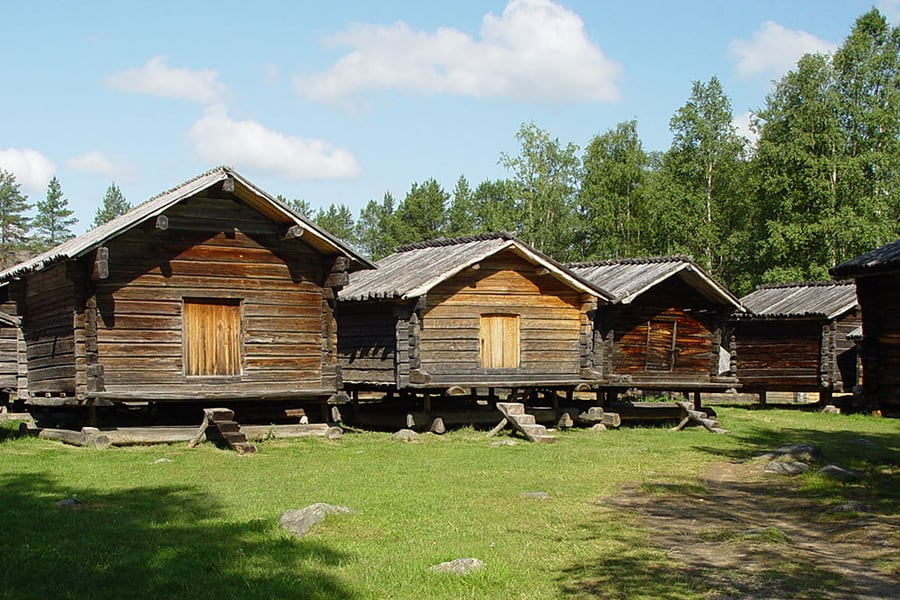 Jürgen Howaldt / Wikimedia Commons · CC BY-SA 2.0 DE · cropped
Lappstaden
A Sámi church-town: about thirty timber kåtor and fifty storehouses, with roots to 1606, when Arvidsjaur was made a market and assembly place and a church begun. It moved to this site in 1826. Nobody has ever lived here permanently — the huts were for people who had travelled days to reach a church festival, and they are still privately owned and still used twice a year. Listed as a building monument in 1976.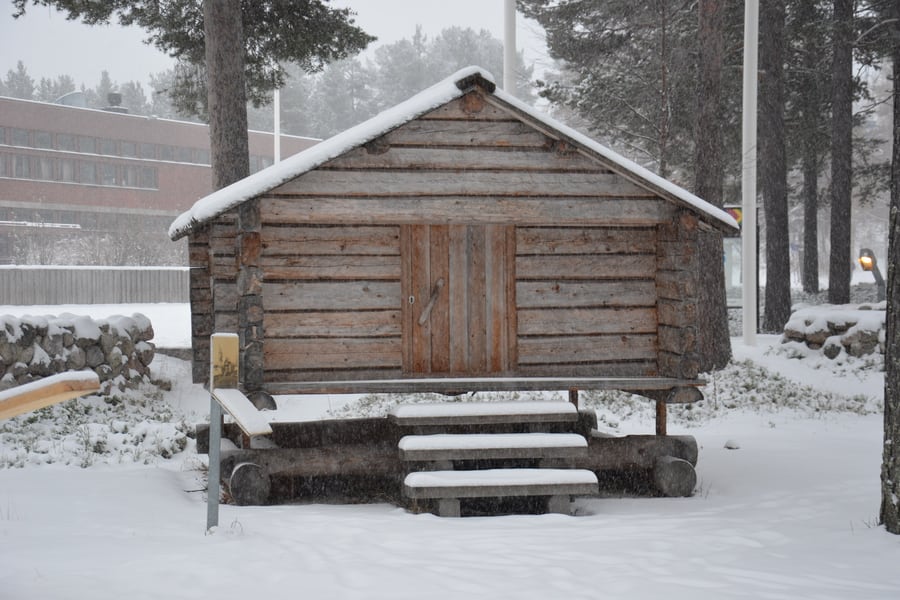 Bengt Oberger / Wikimedia Commons · CC BY-SA 3.0 · cropped
Jokkmokk's winter market
Held every year since 1605, on the first Thursday in February, when thousands come for the trading, concerts and exhibitions that make it the great social fixture of the Swedish Sápmi. It can hit −40°C — Jokkmokk is the coldest municipal seat in the country. The town also holds the Ájtte museum of Sámi life and mountain nature, and an office of Sweden's Sámi Parliament.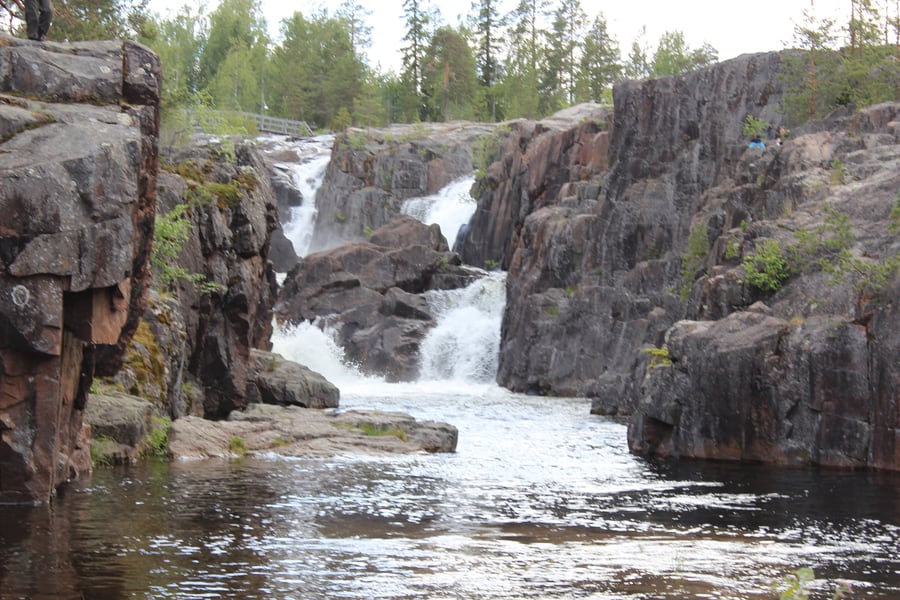 Tetopa / Wikimedia Commons · CC BY-SA 4.0 · cropped
Storforsen
One of Europe's most voluminous rapids, on the Pite River: an average 187 cubic metres a second, rising to about 870 at midsummer, and 1,200 in the flood year of 1995. The water falls 82 metres over five kilometres. Loggers once floated timber down it; the rock channels beside the main torrent, cut and then abandoned, are dry enough to walk into when the river is low.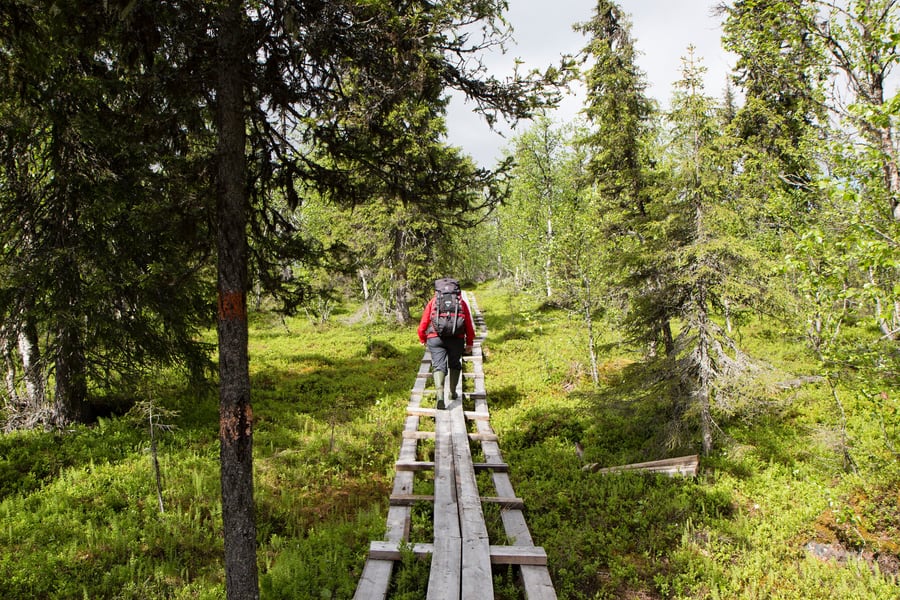 Laponiatjuottjudus (Laponia management) / Wikimedia Commons · CC BY-SA 4.0 · cropped
Muddus
Old-growth forest, wide bogs and deep ravines across 493 km², protected since 1942 and part of the Laponian area, inscribed by UNESCO in 1996 as the largest unmodified natural area still worked by an indigenous people — the reindeer-herding Sámi. Somewhere in here stands Sweden's oldest known pine, reckoned at 710 years or more; it was already a mature tree when it survived a forest fire in 1413.Where to Sleep
Because the Inlandsbanan is a two-day journey with only one train a day, where you sleep is part of the plan — and the natural stop is Östersund, halfway up the line.
In Östersund, aim for the waterfront: there are comfortable hotels along and near the harbour, looking across Storsjön to Frösön, all within easy reach of the station. It is a proper town with restaurants and a good dinner scene, and the long light of a Jämtland summer evening makes the lakeside the place to be.
If you want to slow the journey further — and the line rewards it — there is simple, characterful lodging at the smaller stops. Arvidsjaur and Sorsele have modest hotels and guesthouses; Jokkmokk has places to stay near the Ájtte museum and makes a fine base for a day in Sápmi; and at the ends of the line, Mora offers lakeside hotels in Dalarna and Gällivare has practical hotels for onward travel into Lapland.
Wherever you break the trip, book your bed and your train together in high summer — both fill up, and in these small northern towns the choice is limited. As with all our journeys, we keep this to the shape of the trip rather than specific bookings: decide where you want to spend your nights along the line, and reserve the railcar and the room to match.
Questions or corrections
Planning this trip and stuck on something, or spotted a time, fare or detail that has changed? Send us a message about The Inlandsbanan. We read every one, and we update this page when something has changed.