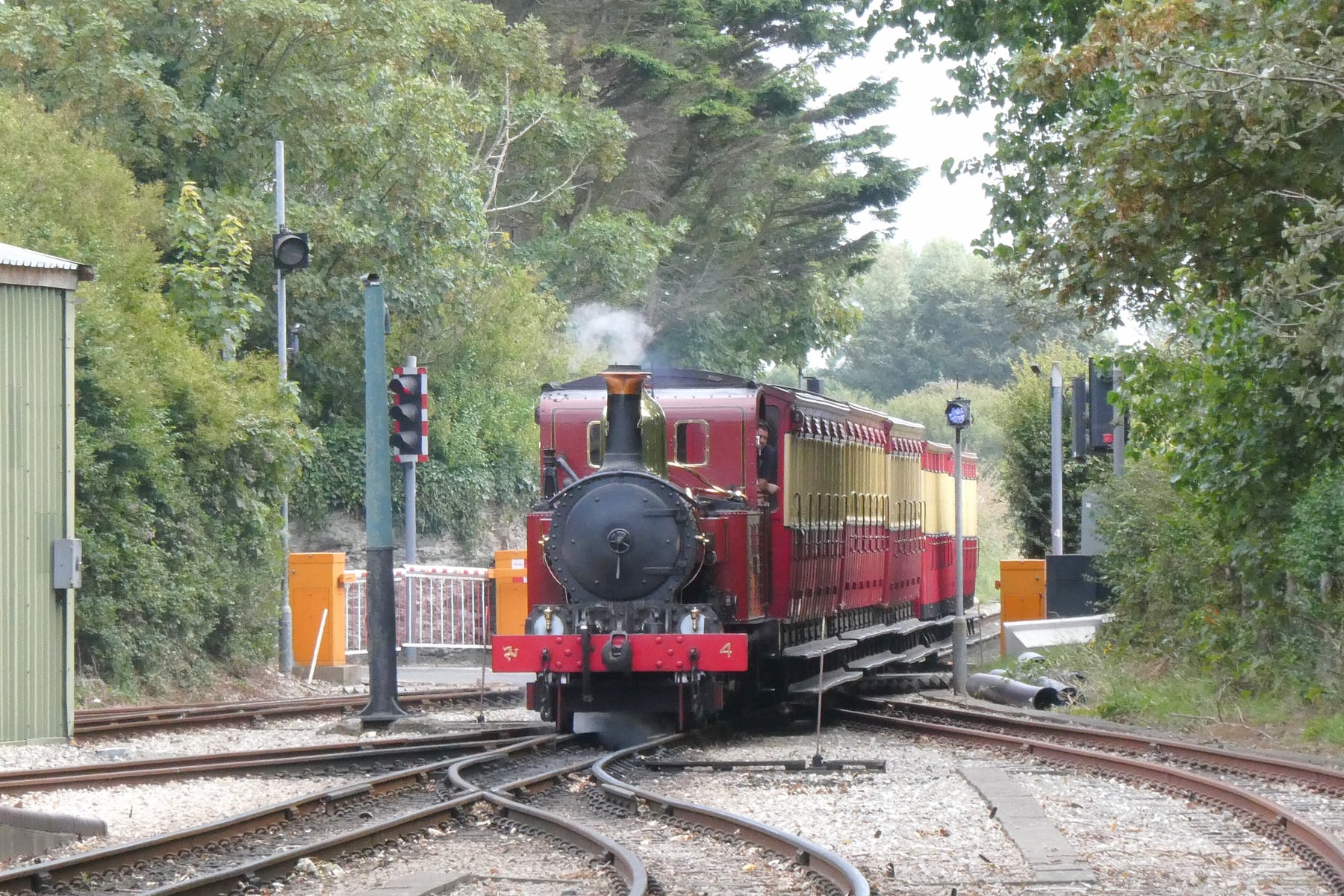
The Isle of Man Steam Railway
Gareth James / Geograph · CC BY-SA 2.0
- Distance15½ miles (25 km) · 3 ft narrow gauge
- DurationAbout 1 hour end to end
- Best seasonLate March to 1 November · every day from June to September
Introduction
The Isle of Man Steam Railway runs 15½ miles across the south of the island, from the capital, Douglas, to the seaside village of Port Erin. The line opened on 1 August 1874 and is the last of a narrow-gauge network that once reached Peel, Ramsey and the mines at Foxdale, more than 46 miles in all. The rest closed after 1968; this one survived, and the island's government has run it since 1978.
What makes it remarkable is how little has changed. The track is 3 ft gauge, and the trains are still hauled by Victorian tank engines built in Manchester by Beyer, Peacock, pulling wooden carriages in red and cream, some more than 150 years old. The oldest engine in service, Loch, was delivered in 1874 for the opening of this very line. A trip from end to end takes about an hour.
On the way the train climbs out of Douglas to its first sight of the sea, calls at the old capital, Castletown, under the walls of Castle Rushen, and crosses farmland to the west coast, where Bradda Head stands over the terminus. The Isle of Man is a self-governing Crown Dependency in the Irish Sea, not part of the United Kingdom, and ferries sail to Douglas from Heysham and Liverpool. The railway runs from late March to the beginning of November.
The Journey
Trains leave from Douglas station on Banks Hill, a short walk from the Sea Terminal where the ferries come in. The station once served three lines and is still a large complex for a railway of this size.
Douglas to Castletown
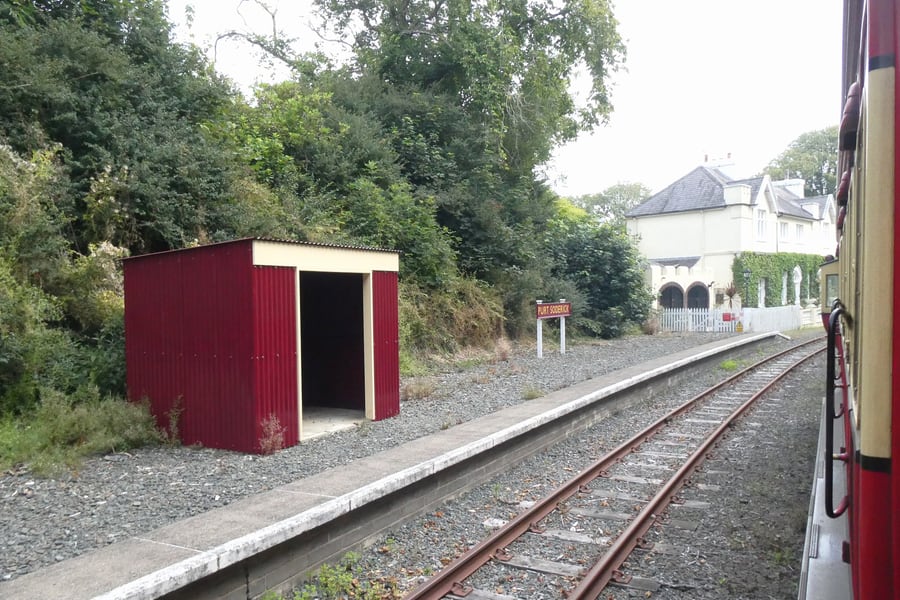
The line crosses the River Douglas and immediately climbs Nunnery Bank, two and a half miles at 1 in 65, through a wide rock cutting and out past the edge of town. The sea comes into view at Keristal, just before Port Soderick, whose station served a beach resort that has since gone. The train runs through Crogga Woods and reaches the summit of the line, 209 feet up, before dropping into Santon, a request stop and the best-preserved intermediate station on the line. From there it descends at 1 in 60 towards Ballasalla, with sea cliffs to the east, then crosses flatter ground past Ronaldsway Halt, a few hundred yards from the island's airport, to Castletown.
Castletown to Port Erin
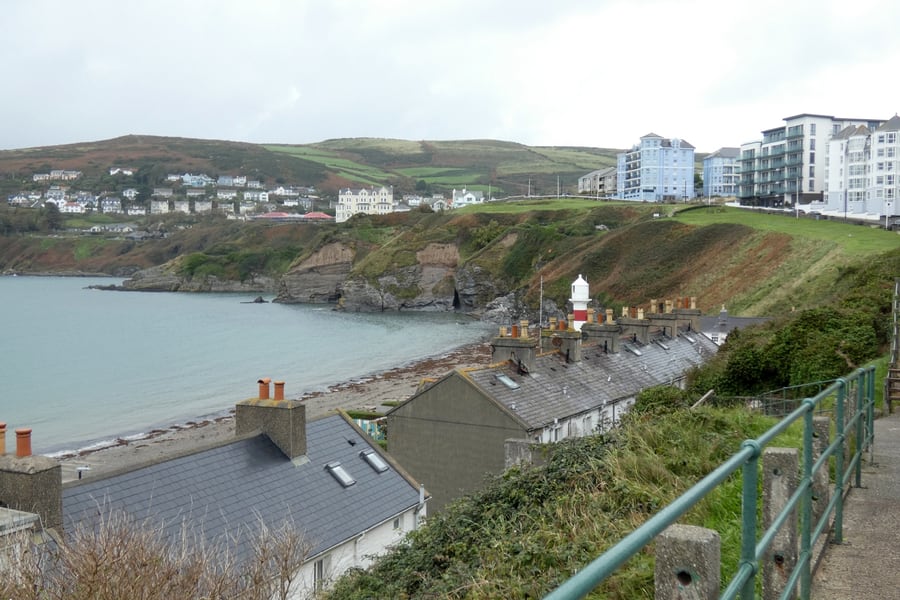
Beyond Castletown the railway crosses the Silver Burn and turns north-west through open farmland, calling on request at Ballabeg and then at Colby. After the request stop at Colby Level it reaches Port St Mary, and on the last stretch Bradda Head and Milner's Tower appear ahead. Port Erin station sits in the village, with a café and the railway museum next door.
The trains
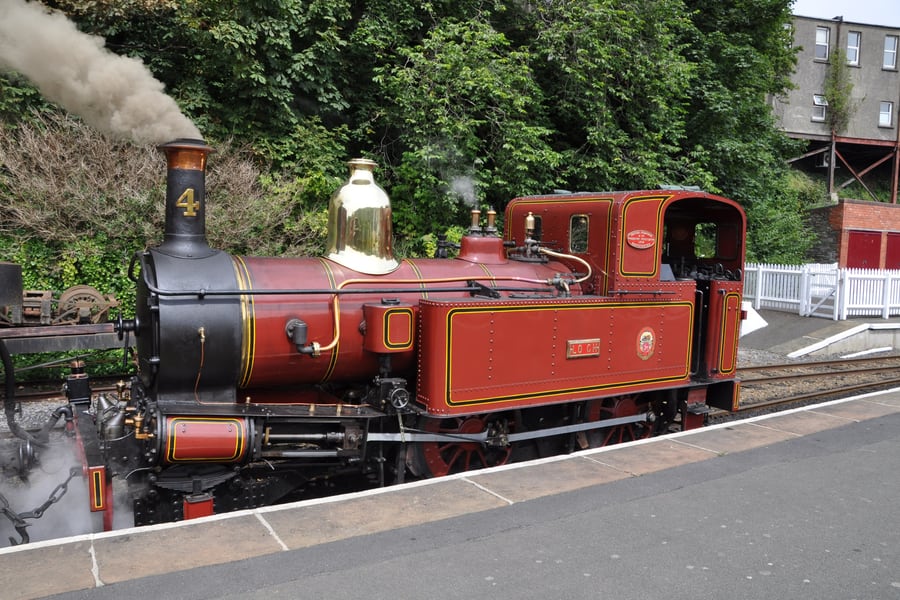
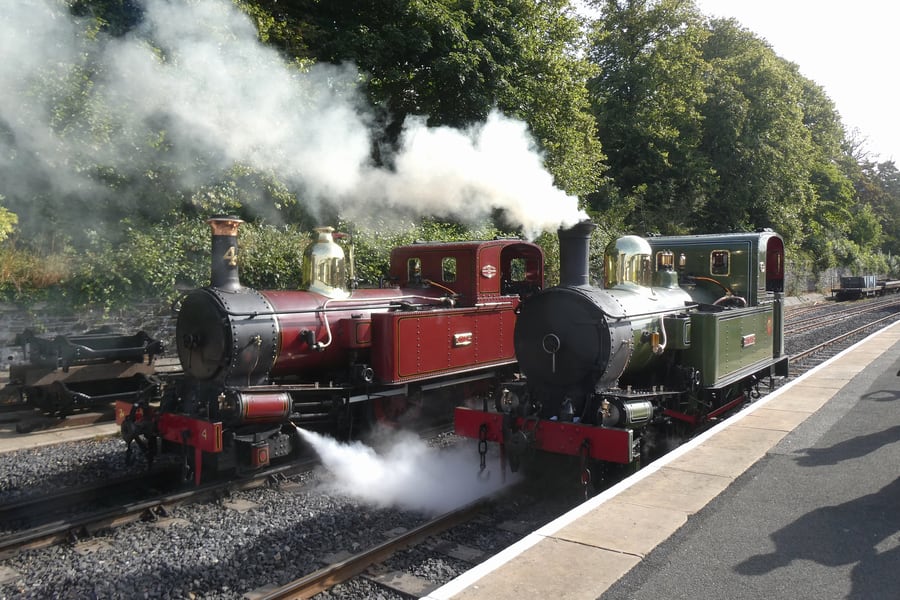
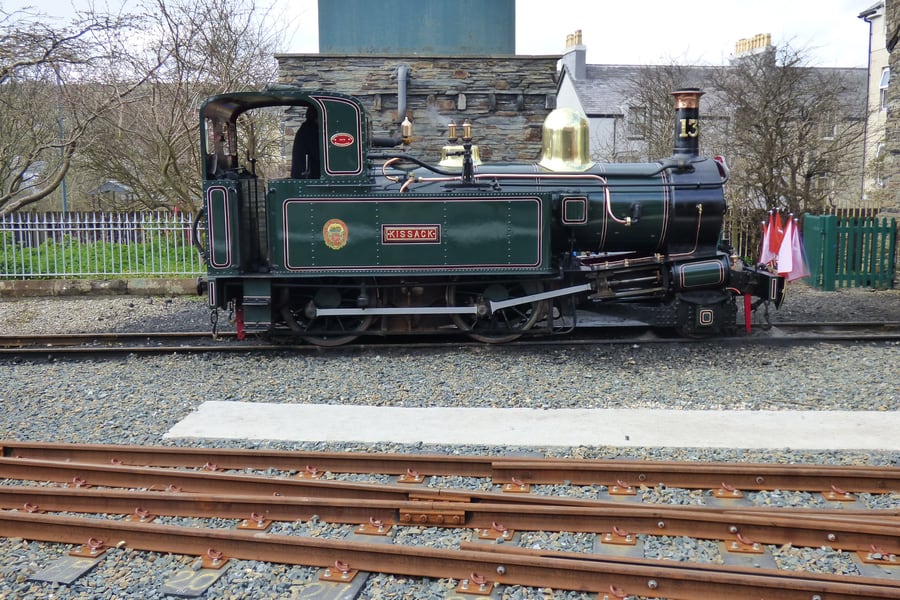
The railway owned sixteen steam engines, all but one built by Beyer, Peacock & Company of Manchester between 1873 and 1926, all but one of them 2-4-0 tank engines. Four were in traffic at the last count: No. 4 Loch of 1874, No. 11 Maitland, No. 13 Kissack, painted holly green since 2016, and Caledonia, an 0-6-0 tank built in Glasgow for the Manx Northern Railway. Others are under overhaul, and Sutherland, the railway's first engine, is in the museum at Port Erin. On selected dates the Dining Car, a saloon of 1905 restored in 2013, runs in the train.
Along the route
 Gareth James / Geograph · CC BY-SA 2.0
Nunnery Bank and Port Soderick
Leaving Douglas the train climbs Nunnery Bank, two and a half miles at 1 in 65 through a deep rock cutting. The sea first appears at Keristal, just before Port Soderick station, once the stop for a busy beach resort.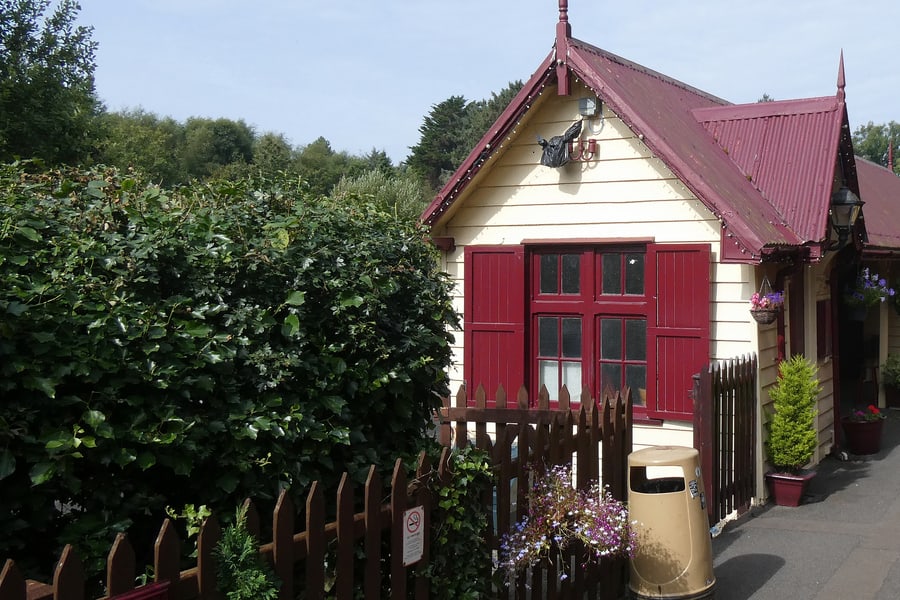 Gareth James / Geograph · CC BY-SA 2.0
Santon
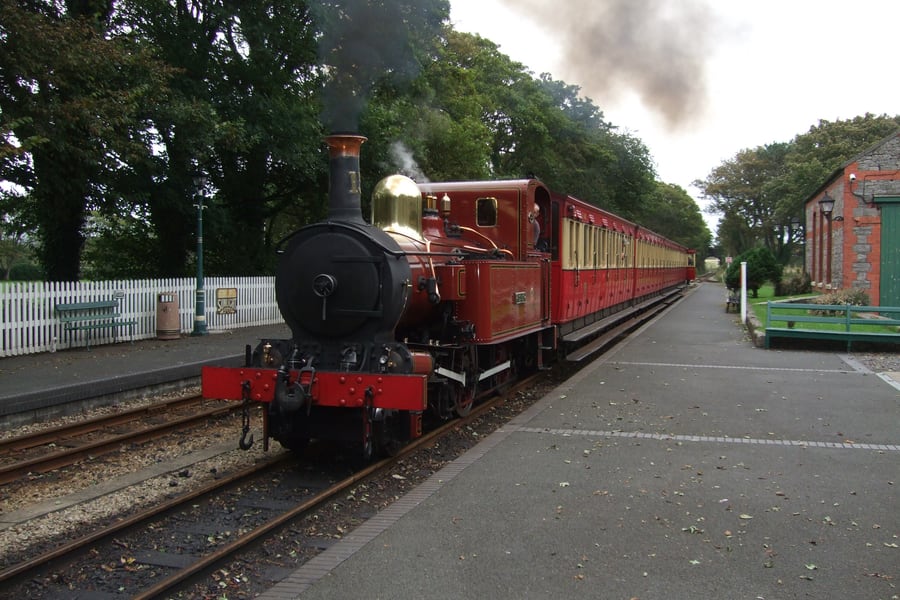
Past the line's summit, 209 feet up, the train reaches Santon, a request stop and the only intermediate station still substantially as it was built. From here it drops at 1 in 60 towards Ballasalla.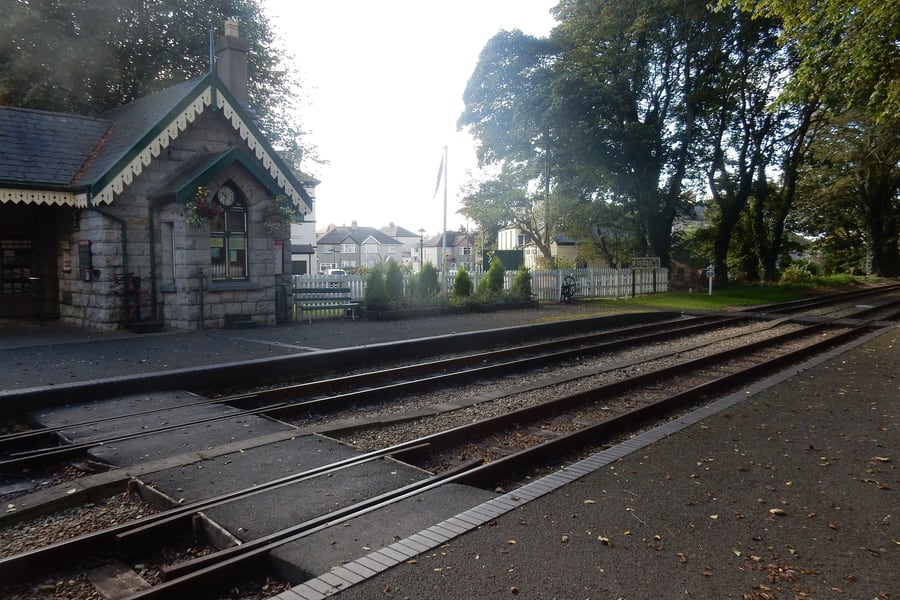 Stephen Darlington / Geograph · CC BY-SA 2.0
Castletown
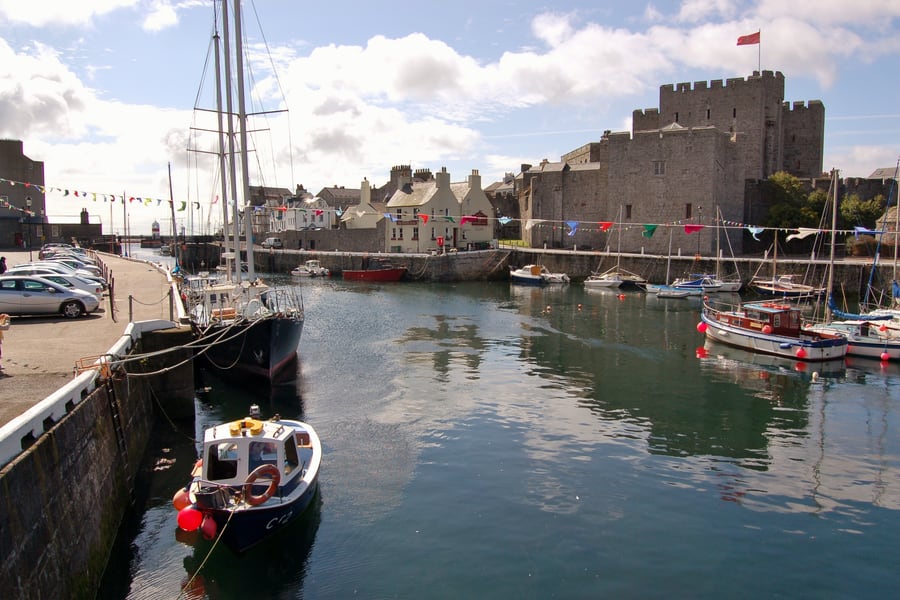
The railway was first meant to end at Castletown, the island's old capital. Its stone station, a few minutes' walk from Castle Rushen and the harbour, is 37 minutes out of Douglas.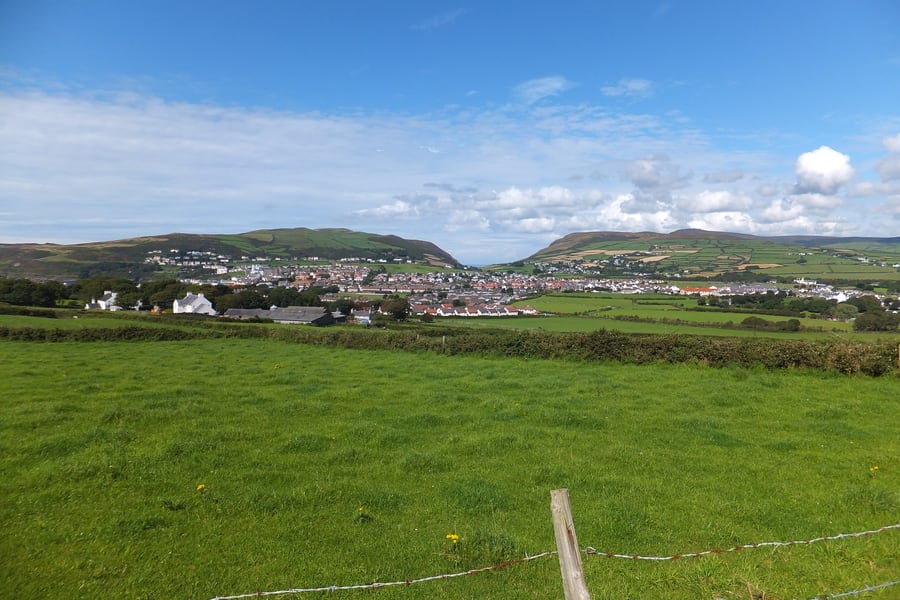 Richard Hoare / Geograph · CC BY-SA 2.0
Towards Bradda Head
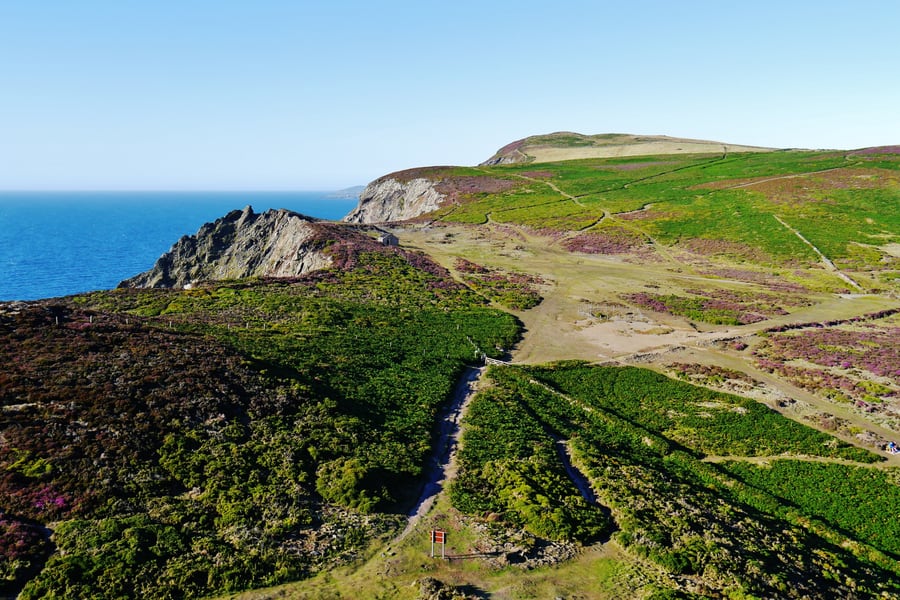
After Colby and Port St Mary the line crosses farmland to the west coast. Bradda Head and the key-shaped Milner's Tower rise above Port Erin ahead of the train as it runs into the terminus.A bit of history
Culture & experiences along the way
 Dr Neil Clifton / Geograph · CC BY-SA 2.0
Engines from Manchester
All but one of the railway's sixteen steam engines came from Beyer, Peacock of Manchester, between 1873 and 1926. The trains still run behind them: Loch of 1874, Maitland, Kissack in holly green, and Caledonia, the odd one out, built in Glasgow for the Manx Northern.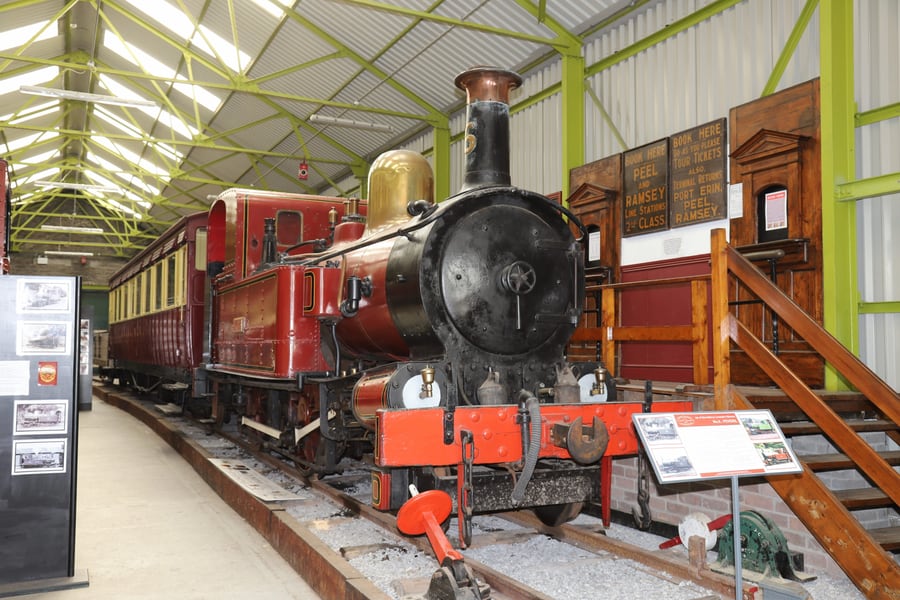 Herbert Ortner / Wikimedia Commons · CC BY 4.0
The railway museum
Fifty yards from Port Erin station, the railway museum is free and open whenever the trains run. It keeps the line's first engine, Sutherland of 1873, Peveril of 1875, and the Royal Coach used by Queen Elizabeth II and the Queen Mother on their visit in 1963.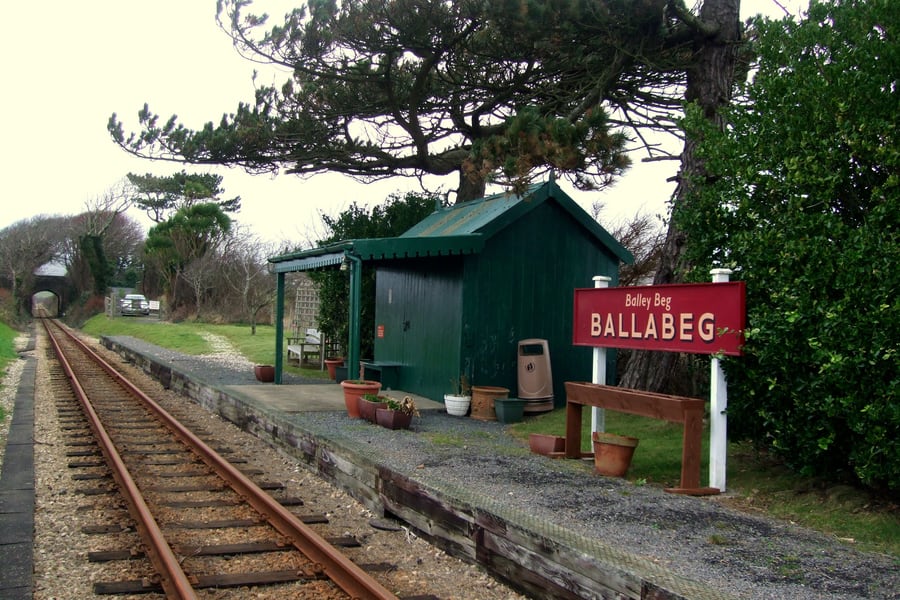 Richard Hoare / Geograph · CC BY-SA 2.0
Hail the train
Santon, Ronaldsway Halt, Colby Level and Ballabeg are request stops. To board, give the driver a clear hand signal as the train comes in; to get off, tell the guard when you board. Ballabeg's little shelter is also the stop for the Southern 100 road races each July.Timetables
The 2026 season ran from 19 March to 1 November. In March the trains ran Thursday to Sunday; from April they ran most days, with some Tuesdays and Wednesdays off in spring and October; from June to September they ran every day. The 2027 dates have not been published yet, and the pattern below is the 2026 timetable.
On most days the railway works Timetable R, four trains each way, one hour end to end:
| Douglas | Castletown | Port Erin | Port Erin | Castletown | Douglas | |
|---|---|---|---|---|---|---|
| 09:50 | 10:27 | 10:50 | 10:00 | 10:27 | 11:05 | |
| 11:50 | 12:27 | 12:50 | 12:00 | 12:27 | 13:05 | |
| 13:50 | 14:27 | 14:50 | 14:00 | 14:27 | 15:05 | |
| 15:50 | 16:27 | 16:50 | 16:00 | 16:27 | 17:05 |
Good to know:
- Busier days. On some summer Saturdays and other busy days Timetable S runs six trains each way, leaving Douglas at 09:50, 11:20, 12:50, 14:30, 16:00 and 17:30, and Port Erin at 10:00, 11:30, 13:00, 14:45, 16:15 and 17:45. On selected Fridays in July and August an evening train leaves Douglas at 19:00 and returns from Port Erin at 21:15.
- Request stops. Santon, Ronaldsway Halt, Colby Level and Ballabeg are request stops: give the driver a clear hand signal to board, and tell the guard where you want to get off.
- Seats are not reserved. At a main station, arrive at least 15 minutes before the train.
Times as of November 2026, from the operator's 2026 timetable. Check your date on iombusandrail.im (opens in a new tab), where each day is marked with its timetable letter.
Tickets
Tickets are bought on the day, at the station or on the train; there is no pre-booking except for groups of twenty or more. A single from Douglas to Port Erin costs £9 and a return £17; Douglas to Castletown is £7 single and £13 return. Children aged 5 to 15 pay half, and under-5s travel free with a paying adult.
A Go Explore card gives unlimited travel on the island's scheduled buses and trains for 1, 3, 5 or 7 days, and is the better buy if you will also ride the electric railway. The Dining Car is booked separately by email. Fares checked November 2026 on iombusandrail.im (opens in a new tab); pounds sterling, one adult.
Book your tickets
Douglas to Port Erin, return
Adult · bought on the day · any train back
The whole line and back, paid for at the station or on board on the day you travel.
Book Tickets (opens in a new tab, on iombusandrail.im)via iombusandrail.imGo Explore
Unlimited bus and rail · 1, 3, 5 or 7 days
A day or multi-day pass for every scheduled bus and train on the island, including this railway.
Book Tickets (opens in a new tab, on iombusandrail.im)via iombusandrail.imThe Dining Car
Pre-booked · on selected dates
Lunches and evening trains in a 1905 saloon restored in 2013, booked by email with the railway.
Book Tickets (opens in a new tab, on iombusandrail.im)via iombusandrail.imRail Passes
No international rail pass is valid on the Isle of Man Steam Railway. Interrail's table of railway companies lists no Isle of Man operator, and BritRail's conditions exclude steam and heritage railways, and ships, so the ferry is not covered either.
The island has its own pass instead. Go Explore covers every scheduled bus and train on the island, this railway included, for 1, 3, 5 or 7 consecutive days. An Interrail or BritRail pass can still get you to Heysham or Liverpool for the boat.
For this journey, buy the island's own ticket. A Go Explore pass pays if you will spend more than a day riding the island's railways and buses.
Checked November 2026 against interrail.com (opens in a new tab), britrail.com (opens in a new tab) and iombusandrail.im (opens in a new tab).
Places to Visit
The south of the island is small enough to see by train. Castletown, the old capital, has the castle and the island's first parliament house a few streets apart; Ballasalla has its abbey; and the line ends among the harbours and headlands of the south-west.
 Northerner / Wikimedia Commons · CC BY-SA 4.0
Castle Rushen
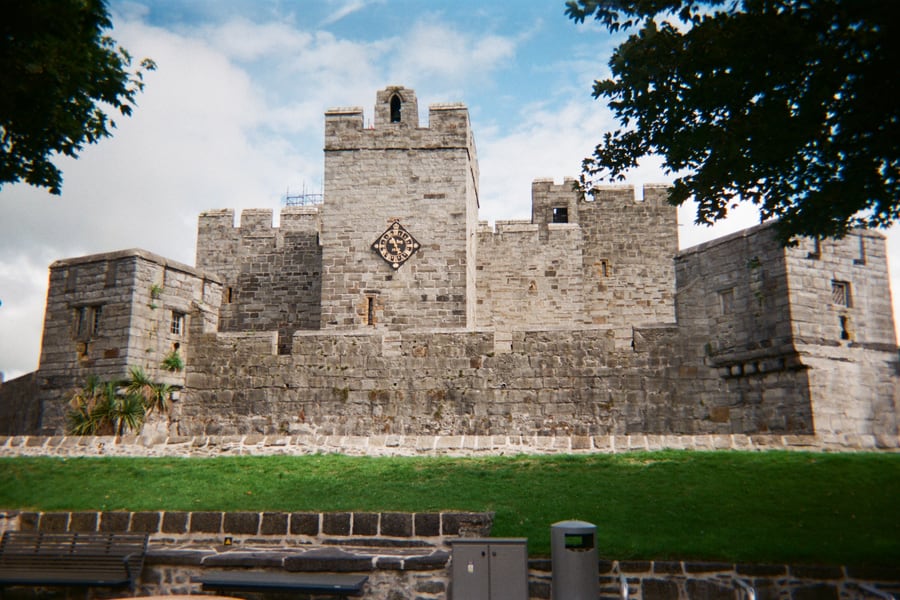
Successive rulers of Man enlarged this limestone castle from the 13th to the 16th century, around a square keep guarding the mouth of the Silver Burn; the last King of Man died here in 1265. Its outer wall is 25 feet high, the tallest tower 80 feet, and the old clock still works. It is a museum today.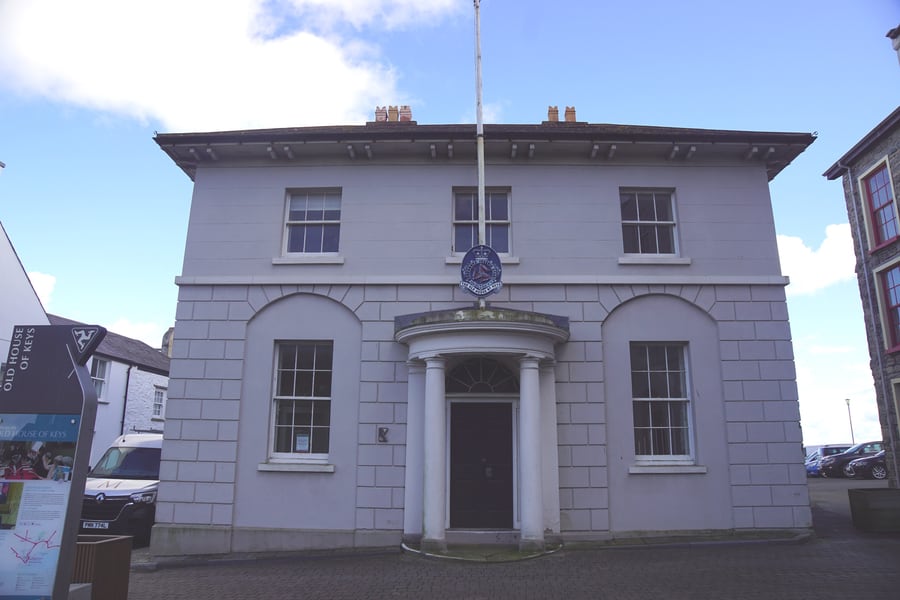 Otter / Wikimedia Commons · CC BY-SA 4.0
The Old House of Keys
Across the street from the castle, this was the meeting place of the House of Keys, the lower house of Tynwald, from 1821 until the parliament moved to Douglas in 1874. It later became a bank. Manx National Heritage restored it to its appearance in 1866 and opened it as a museum in 2001.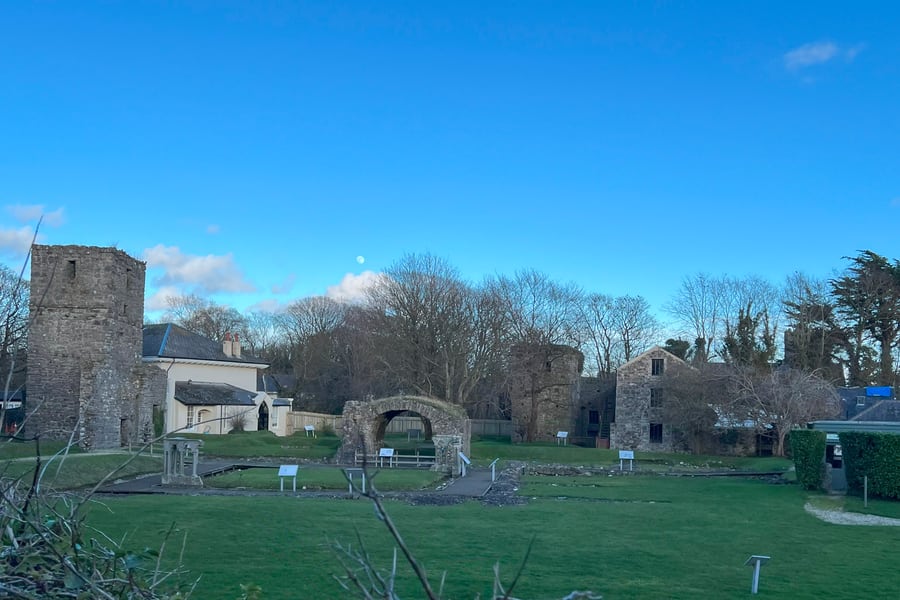 Otter / Wikimedia Commons · CC BY-SA 4.0
Rushen Abbey
Monks from Furness founded this abbey on the Silver Burn in 1134; it became Cistercian in 1147 and was dissolved in the 16th century. Early railway tourists came for strawberries and cream in its gardens. Today the restored ruins are reached through a museum of monastic life, open from spring to autumn.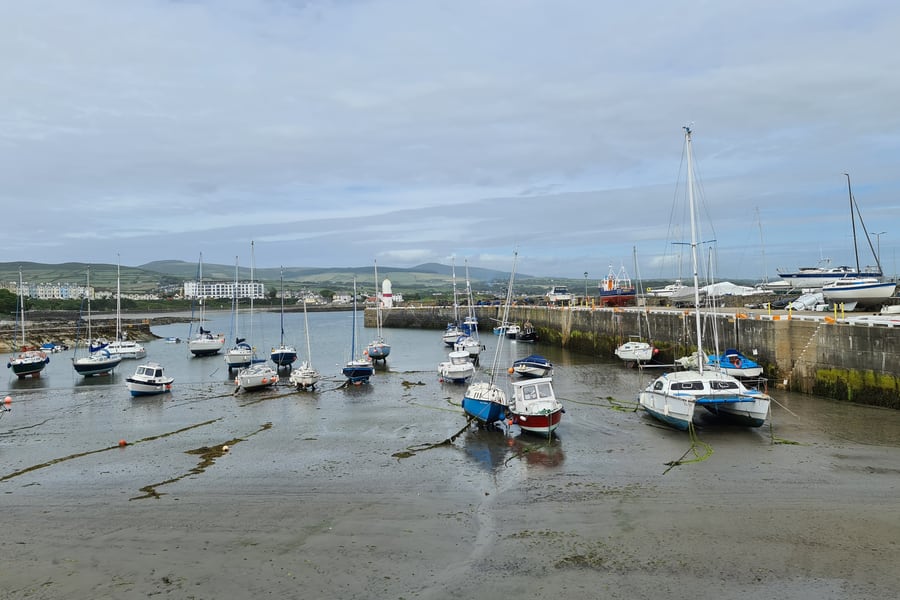 Chris Morgan / Geograph · CC BY-SA 2.0
Port St Mary
A fishing and trading village named after a lost chapel above Chapel Bay. Its inner harbour, with a pier of 1812, dries out at half tide; the Alfred Pier of 1882 made an outer harbour usable at any state of the tide, the only one on the island. A lifeboat has been stationed here since 1896.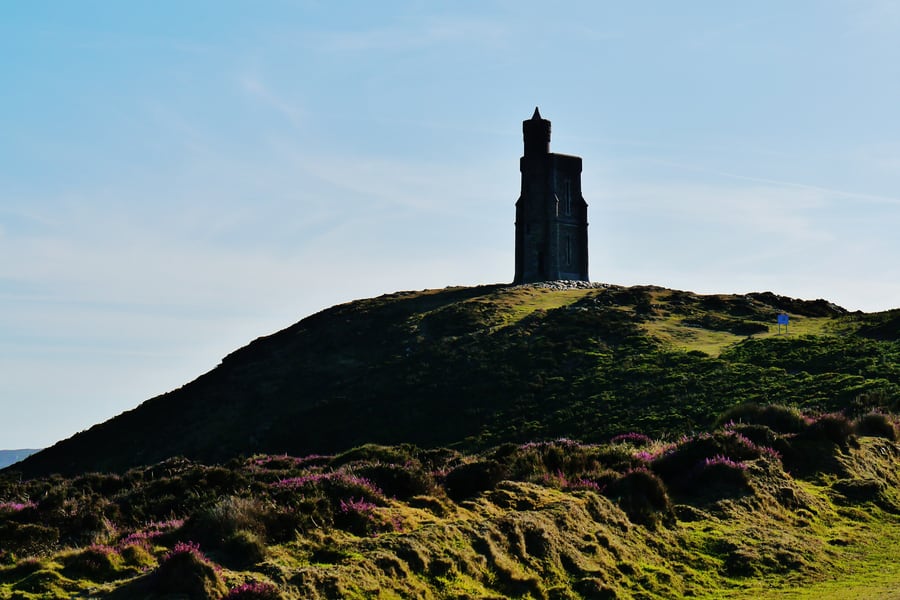 Zairon / Wikimedia Commons · CC BY 4.0
Bradda Head and Milner's Tower
The headland on the north side of Port Erin bay rises to 382 feet. Milner's Tower was built on top in 1871 for William Milner, a maker of fire-resistant safes, in the shape of a key and lock seen from above. The coastal path climbs to it through Bradda Glen; the view reaches the Mourne Mountains on a clear day.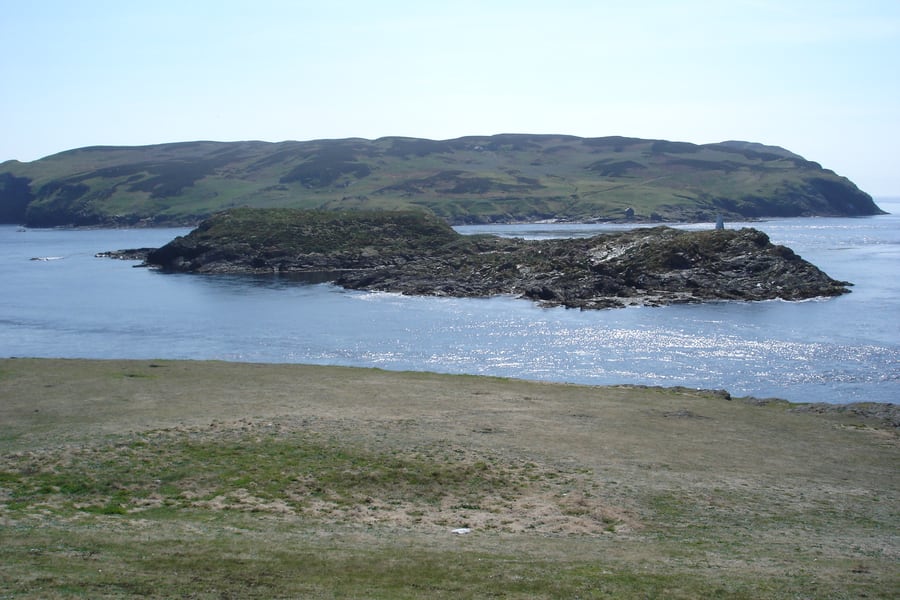 John Willo / Geograph · CC BY-SA 2.0
The Calf of Man
Across the narrow Calf Sound lies a 618-acre island with two seasonal residents and a bird observatory that has run since 1959. Manx National Heritage owns it and the Manx Wildlife Trust looks after it. Boats cross from Port Erin and Port St Mary.Where to Sleep
Douglas has the most hotels and the ferries, and the first train leaves from there. Port Erin is quieter and has the sunsets over the bay; the Falcon's Nest stands on the road down from the station.
Where to stay
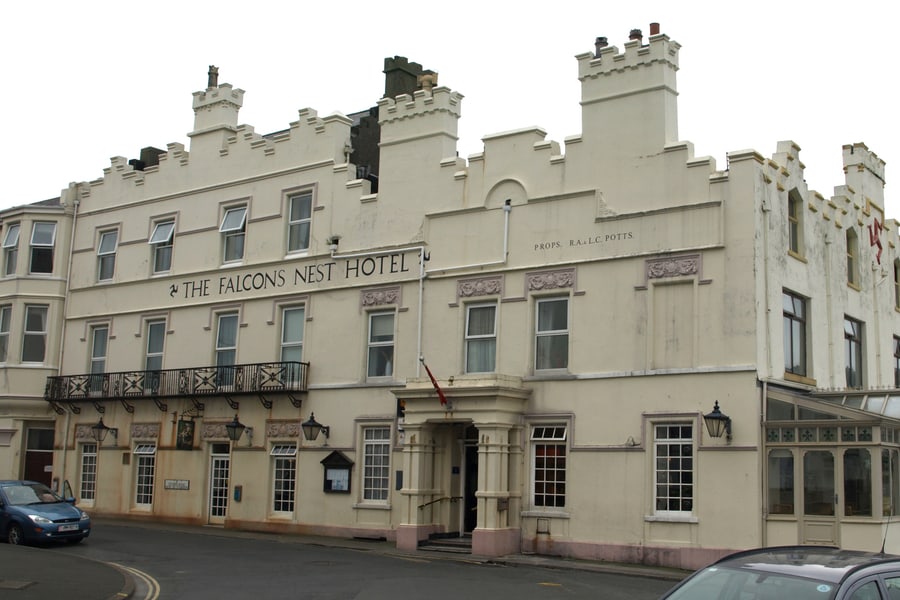 Andrew Abbott / Geograph · CC BY-SA 2.0 · cropped
The Falcon's Nest Hotel
Port Erin · on Station Road
A Victorian hotel at the start of the promenade, looking across the bay to Milner's Tower, a short walk from the terminus.
Check Availability (opens in a new tab, on thenest.im)via thenest.im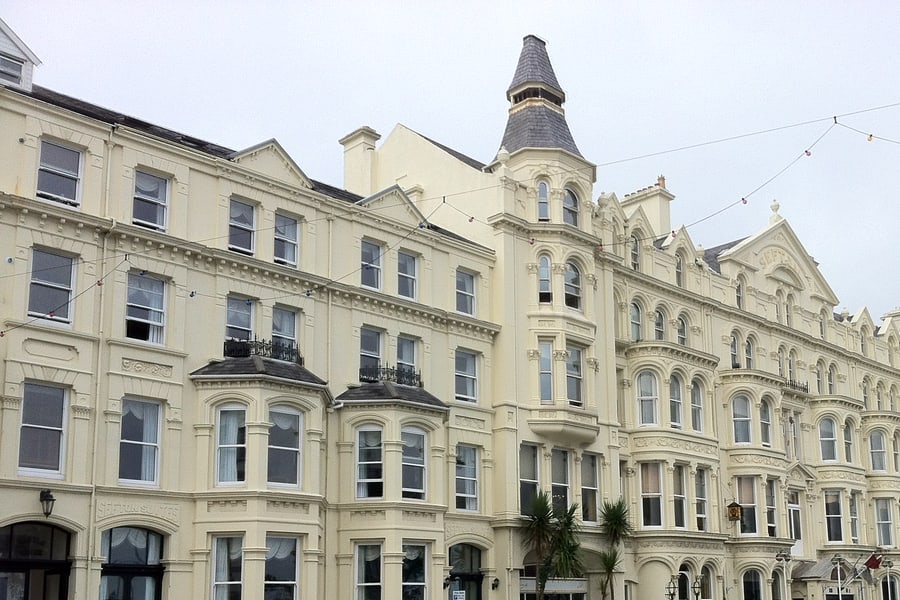 Andrew Abbott / Geograph · CC BY-SA 2.0 · cropped
The Sefton Hotel
Douglas · on Harris Promenade
A hotel on the seafront promenade in the island's capital, beside the Gaiety Theatre.
Check Availability (opens in a new tab, on seftonhotel.co.im)via seftonhotel.co.imQuestions or corrections
Planning this trip and stuck on something, or spotted a time, fare or detail that has changed? Send us a message about The Isle of Man Steam Railway. We read every one, and we update this page when something has changed.