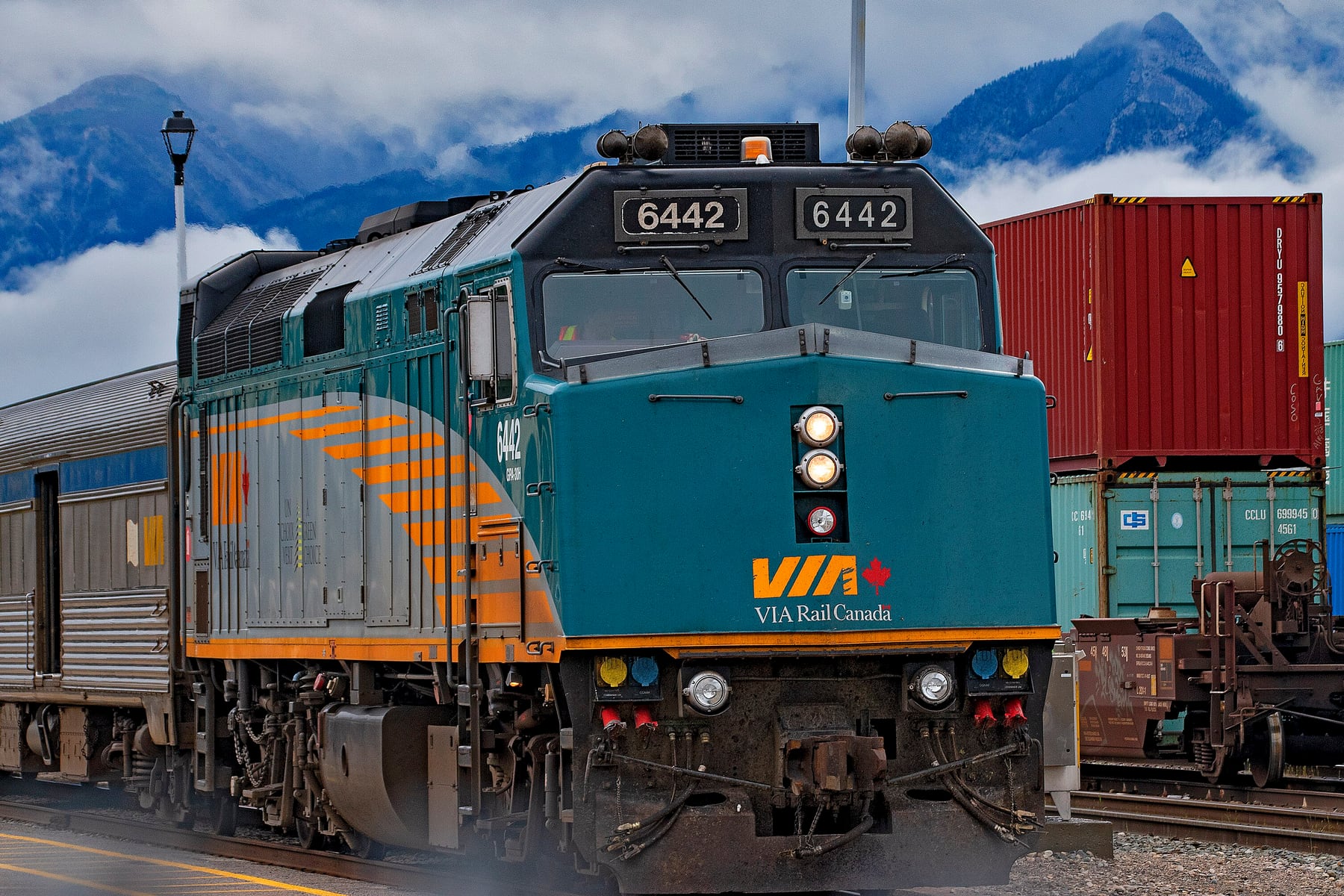
Jasper to Prince Rupert
Ron Cogswell / Wikimedia Commons · CC BY 2.0 · cropped
- Distance1,177 km
- Duration2 days
- Best seasonAll year · 3 departures a week
Introduction
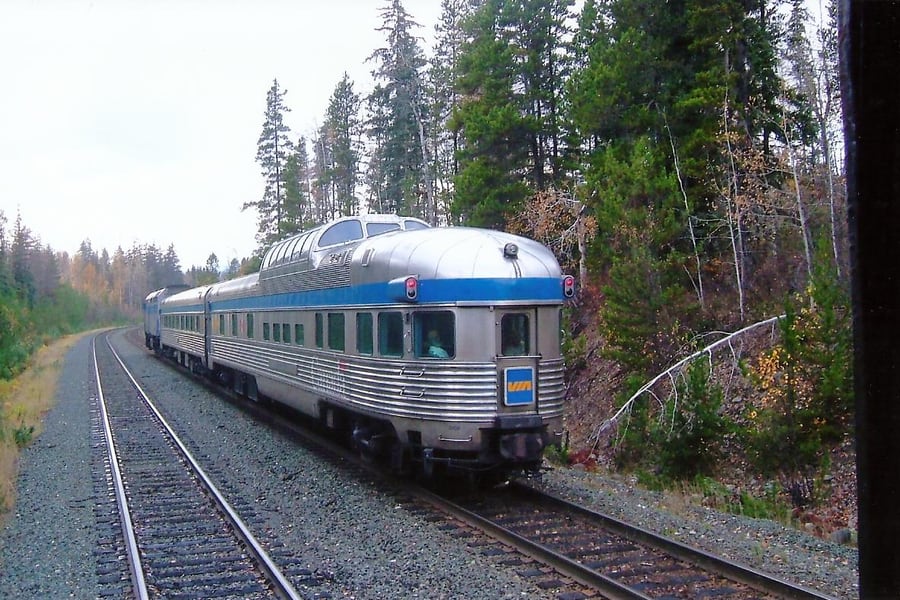
This train refuses to run in the dark. It leaves Jasper at 10:45, reaches Prince George at 17:08, and stops — not at a platform for a crew change, but for the night. Everybody gets off, finds a hotel in the city and pays for it themselves, and at 08:00 the next morning the train sets out again for the coast. 1,177 km, 1 day 10 hours 40 minutes on the clock, and roughly twelve of those hours spent standing still in Prince George so that the scenery can be seen. VIA's own schedule data marks Prince George as the point where the journey splits in two.
That was a decision, not an accident. By the late 1980s the Jasper–Prince Rupert service was carrying 26,000 passengers a year against losses of $6.6 million — a subsidy of around $480 a head — and closing it was on the table. What VIA proposed instead, after consulting the towns along the line, was to stop running through the night and rebuild the timetable around daylight. The idea was shelved in 1993 and finally introduced in 1996. The train that survived is the one that admits what it is really for.
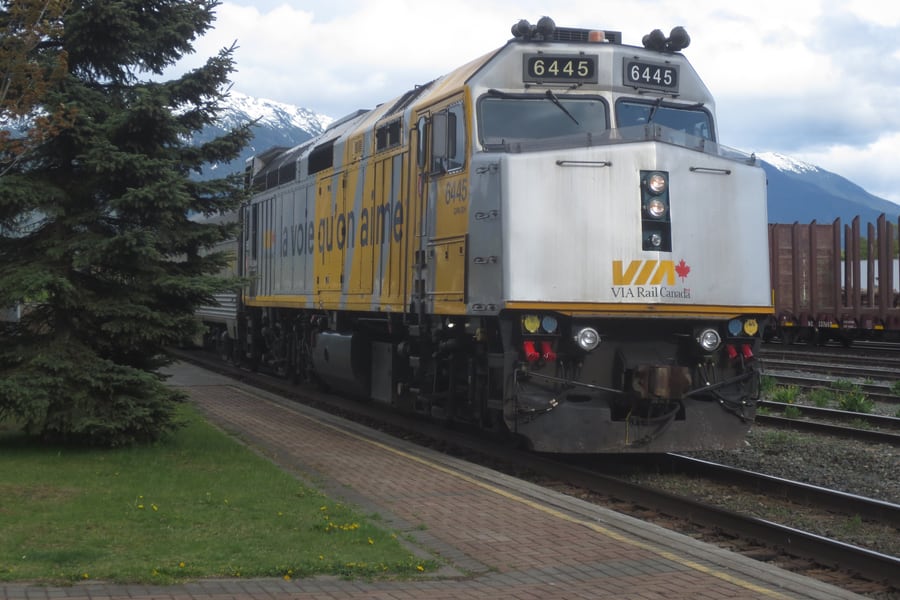
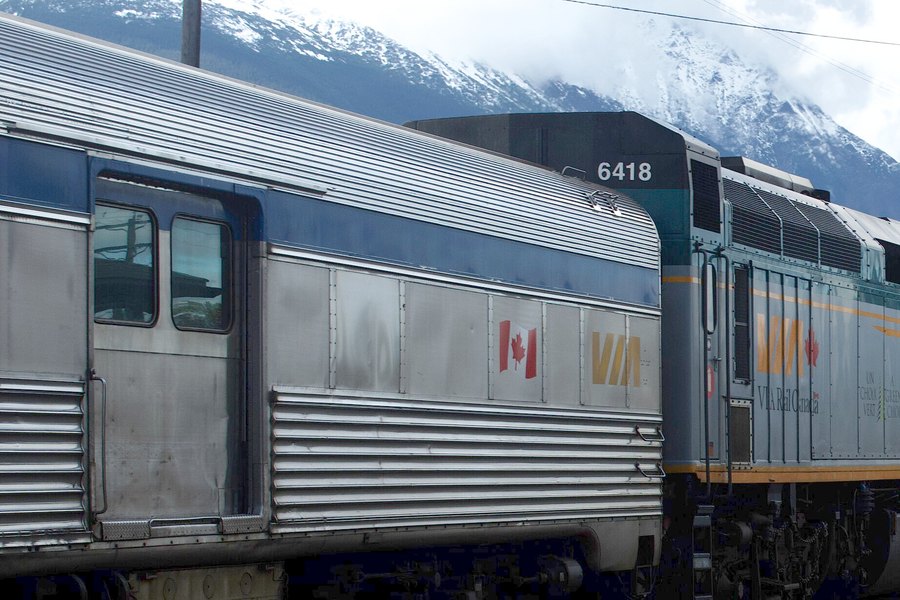
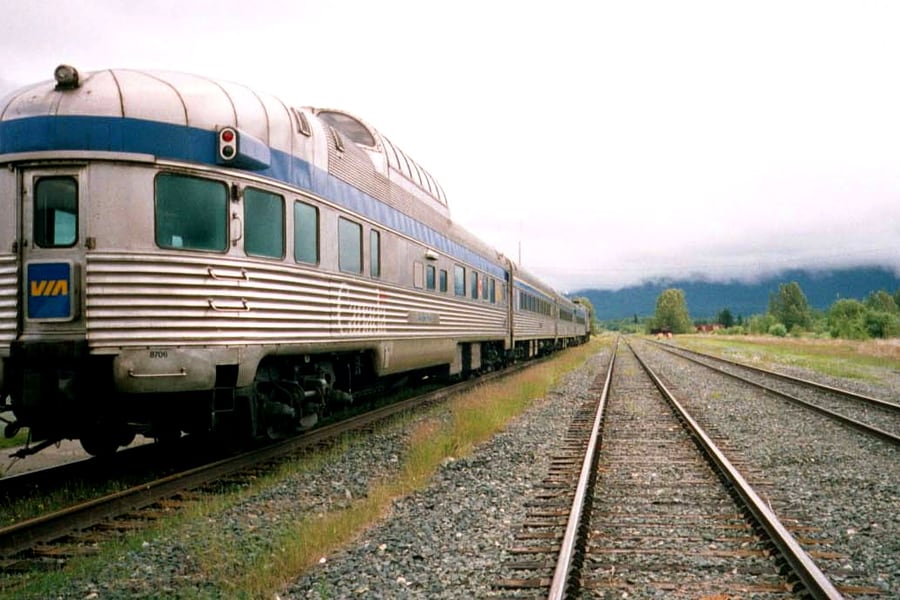
Long known as the Skeena, though VIA now calls it plainly the Jasper–Prince Rupert train, it runs three times a week in each direction, all year, in Economy class only. It crosses the Rockies at the easiest pass on the continent, follows the Fraser to Prince George, and spends its second day working down the river the Tsimshian call water of the clouds to a port on the edge of Alaska.
The Journey
The first seventeen miles out of Jasper do the hardest work of the whole trip and you would barely know it. At mile 17.6 the train crosses Yellowhead Pass, and four things happen at once: the Alberta–British Columbia boundary, the continental divide, the change from Mountain to Pacific time, and the highest point on the route — all at 1,131 m. That is remarkably low for a Rocky Mountain crossing, and deliberately so. The Grand Trunk Pacific took Sandford Fleming's original survey line and built to standards nobody else could afford, with the result that Yellowhead has the gentlest gradients of any railway crossing of the continental divide in North America. A century later the freight railway that inherited it is still collecting the dividend.
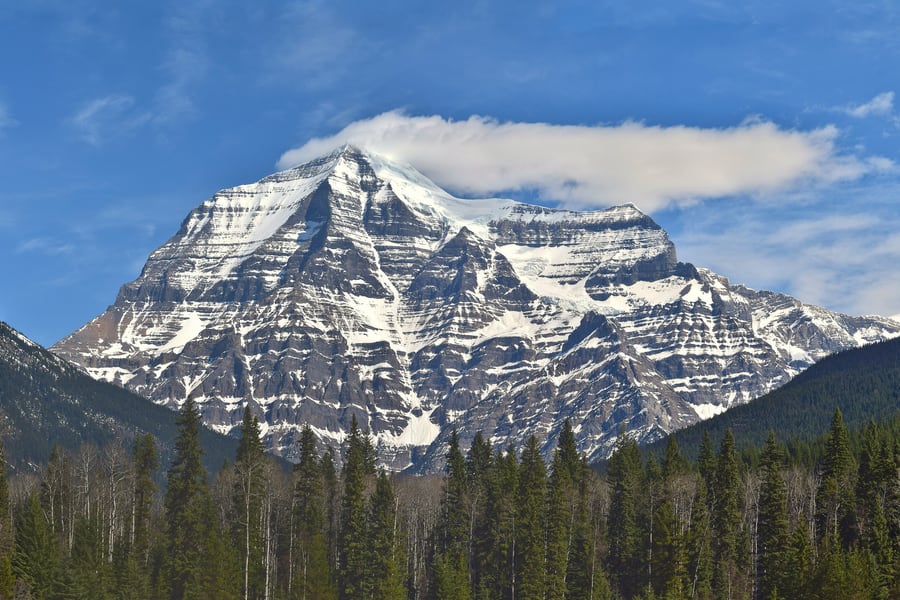
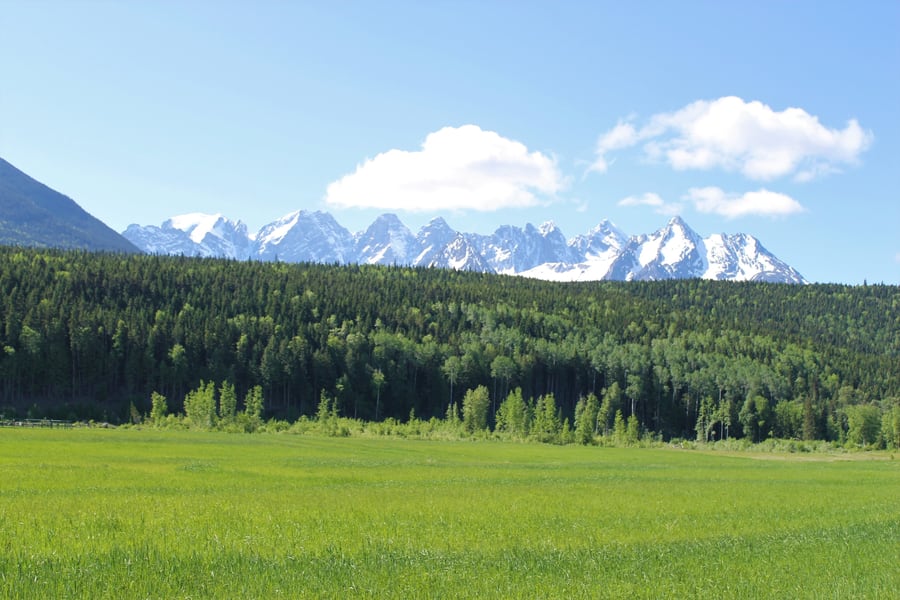
Past the summit the Miette flows east and everything else flows west. Moose Lake fills the valley for eight miles, the Fraser reappears at Red Pass, and then, off to the south, Mount Robson — 3,954 m, the highest thing in the Canadian Rockies, banded like masonry. At Tête Jaune Cache the railway enters the Rocky Mountain Trench, a trough so straight it looks surveyed, with the Rockies on one side and the Cariboo Mountains on the other.
Down the Fraser
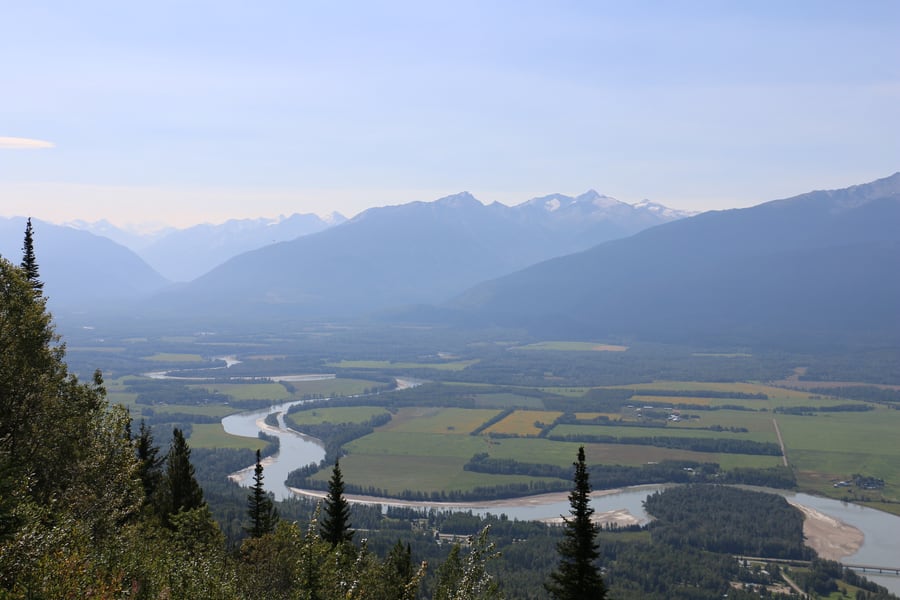
From here to Prince George the train and the river keep company for the rest of the afternoon, and the river grows as you watch. The Raush River Bridge at mile 32.7 is 315 m, the second longest on the route. McBride, a divisional point since 1913, still has its 1919 station. Then the settlements begin to thin: Crescent Spur, Loos, Dome Creek, Penny, Longworth, Hutton, Sinclair Mills — sawmill towns whose mills shut long ago, most of them barely reached by road, and most of them now request stops where the train halts only if somebody has asked.
At mile 99.1 comes the oddest piece of engineering on the line. Hansard Bridge carries the railway over the Fraser and doubles as a public road, with a signal operator working from a cabin on the bridge itself to decide who goes next. A few miles on, the track leaves the mountains behind and runs in past sawmill yards to Prince George, over a railway bridge more than 800 m long.
And there it stops. There is no sleeping accommodation on this train and the station closes for the night — it opens only 07:00 to 11:00, and only on the three mornings a train leaves. Prince George is a city of 76,000 with an evening to fill, which is the arrangement, and it is worth understanding before you book rather than after.
The second day
Away at 08:00, the train swings west along the Nechako, following it for more than 80 km through Vanderhoof — the geographic centre of British Columbia — and Fort Fraser, a mile from where the last spike of the Grand Trunk Pacific went in on 7 April 1914. Then Fraser Lake, Endako, and the lakes country around Burns Lake, before the line picks up the Bulkley and crosses it eleven times on the way to Smithers.
Smithers is the crew-change point and gets a booked ten minutes, which is enough to step down and look at Hudson Bay Mountain standing 2,560 m over the town with the Kathlyn Glacier on its flank. VIA's own route guide calls it one of the best views of a glacier from any passenger train in Canada, and for once that is not marketing.
The river of mists
Below Smithers the valley tightens. Three tunnels take the train past the Bulkley Canyon, the eastern one at 630 m the longest on the route, with the river churning below. At Hazelton the Bulkley joins the Skeena — water of the clouds in Tsimshian, river of mists in Gitksan — and from there the railway is pinned to the bank for the last three hours.
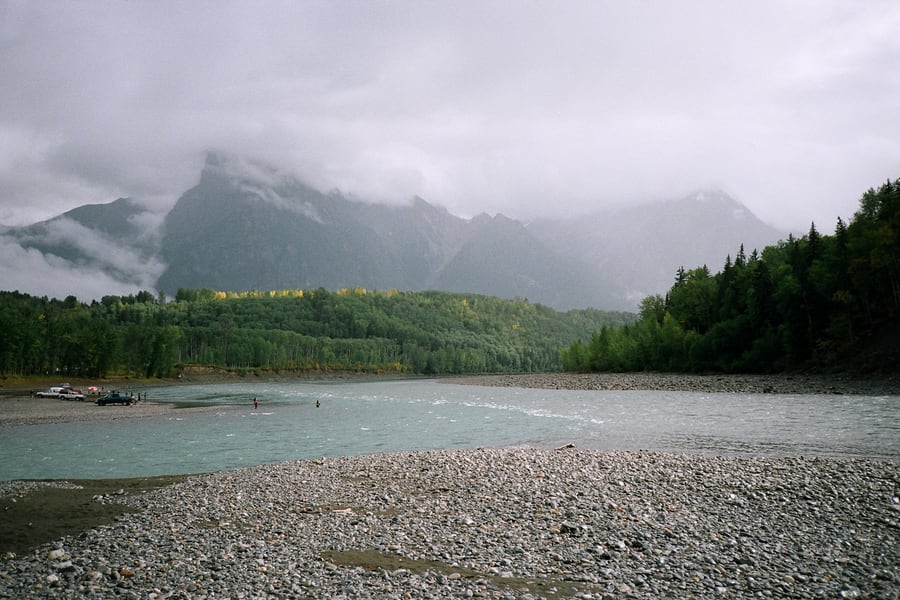
This is the stretch the daylight timetable was written for. The Seeley Gulch Bridge stands 59 m high, the Skeena Crossing Bridge 50 m. The Seven Sisters run along the south side for sixteen miles. Between miles 40 and 60 waterfalls come down to the track, and in spring the avalanche snow is still lying beside the rails. At Kitselas Canyon four tunnels take the line through in quick succession while the river breaks up over rock below.
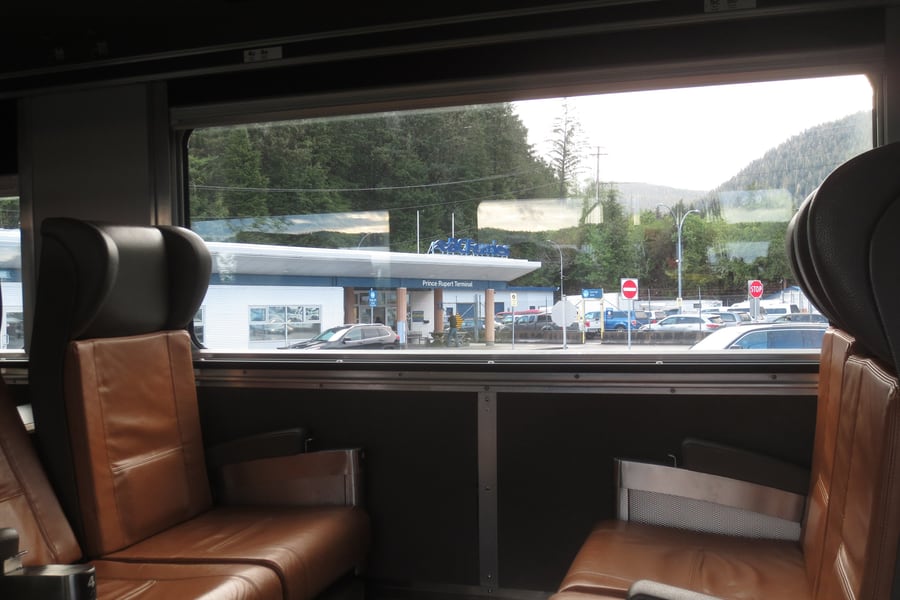
Past Terrace the Skeena widens into tidal water and the last of the mountains fall away. Kwinitsa's original station is gone from here — it stands in Prince Rupert now, as a museum. The train crosses onto Kaien Island, runs past the grain and coal terminals on Ridley Island, and stops at 20:25 beside the ferry berths. There is no station building: VIA's stop is an unstaffed one inside the BC Ferries terminal, which is either an anticlimax or exactly the right ending, depending on whether you are getting off or carrying on to Haida Gwaii.
Along the route
 Frank Kovalchek / Wikimedia Commons · CC BY 2.0 · cropped
Over the easiest pass in the Rockies
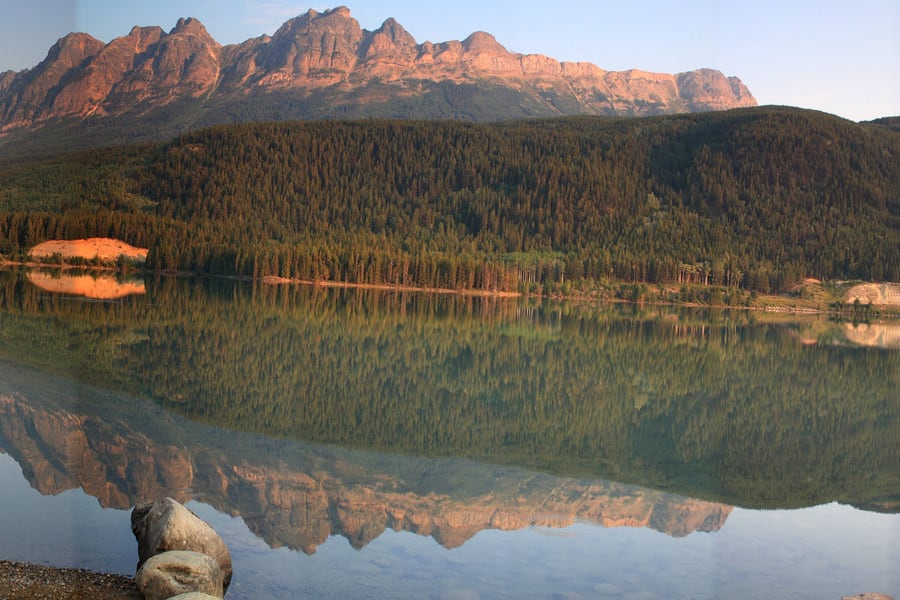
Seventeen miles out of Jasper the train crests Yellowhead Pass at 1,131 m — provincial boundary, continental divide and the change from Mountain to Pacific time at once — then runs four miles along Yellowhead Lake. No crossing of the divide in North America has gentler gradients.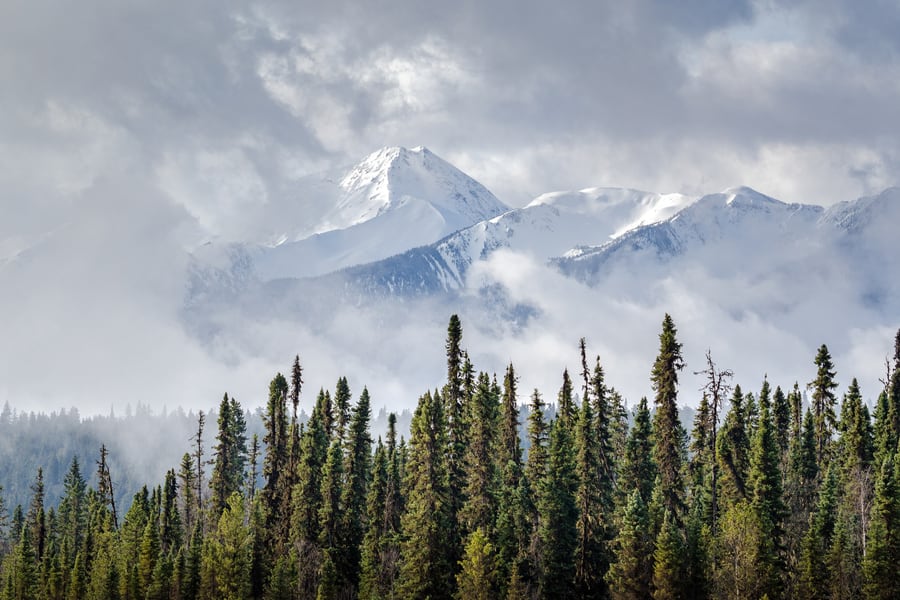 Jakub Fryš / Wikimedia Commons · CC BY-SA 4.0 · cropped
Down the Fraser to Prince George
The afternoon follows the Fraser through the Rocky Mountain Trench, past McBride and a string of settlements the sawmills left long ago. At Hansard the railway bridge doubles as a public road, worked by a signal operator in a cabin on the bridge itself.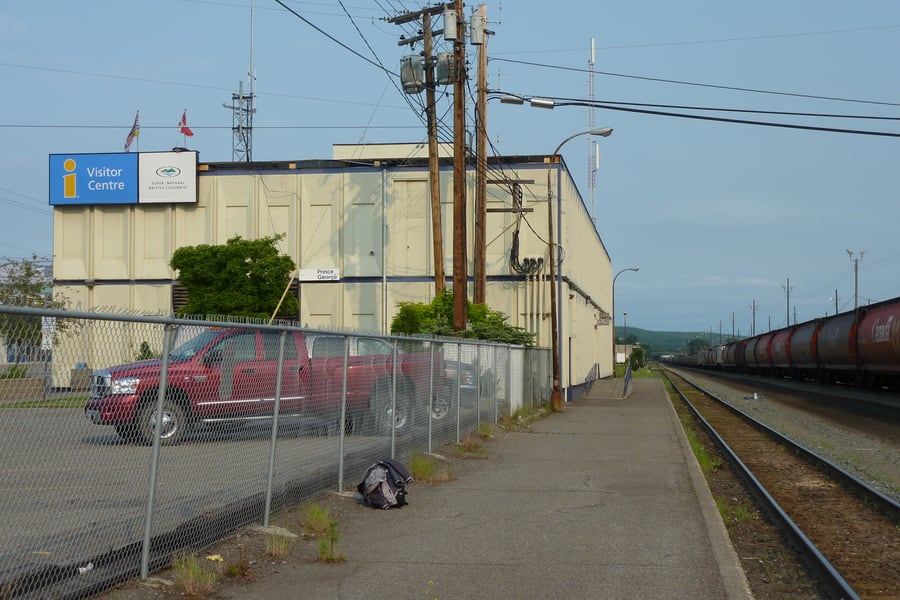 Nils Öberg / Wikimedia Commons · CC BY-SA 3.0 · cropped
A night off the train
The train reaches Prince George at 17:08 and goes no further. There is no sleeping accommodation aboard and the station shuts for the night, so everyone walks off and finds a bed in the city. VIA's own schedule data marks Prince George as the split.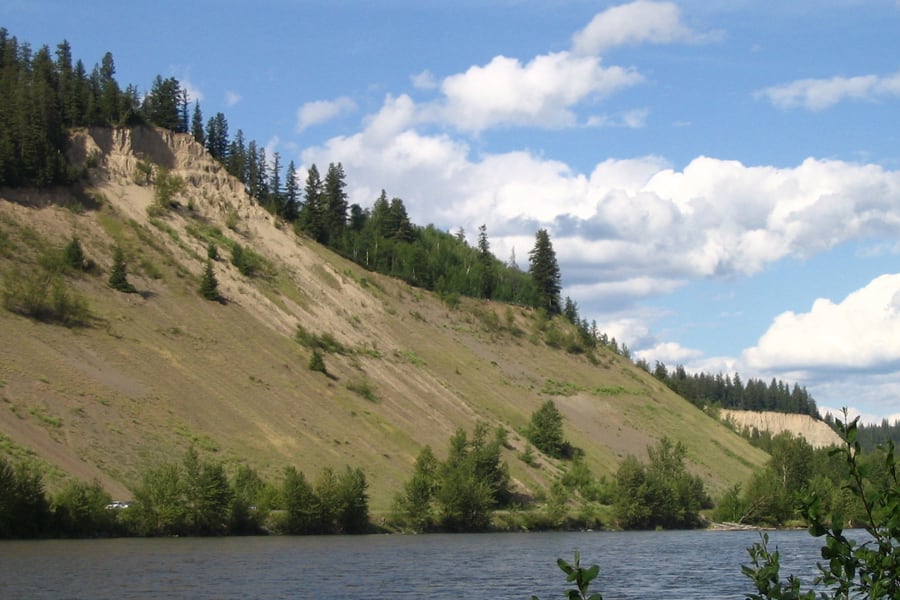 RadRafe / Wikimedia Commons · public domain · cropped
The Nechako and the lakes
Away at 08:00, the second morning follows the Nechako for more than 80 km through Vanderhoof — the geographic centre of British Columbia — and Fort Fraser, then into the lakes country around Burns Lake. Further west the line crosses the Bulkley eleven times.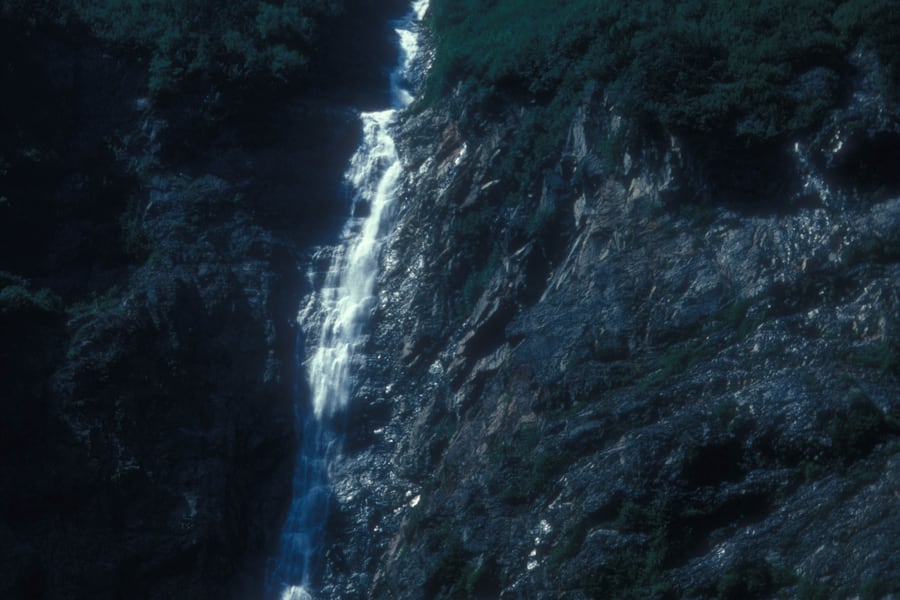 Jerrye and Roy Klotz / Wikimedia Commons · CC BY-SA 3.0 · cropped
Glacier, canyon, tunnels
At Smithers the Kathlyn Glacier and Twin Falls hang off Hudson Bay Mountain — VIA calls it one of the best glacier views from any passenger train in Canada. Beyond, three tunnels take the line past the Bulkley Canyon.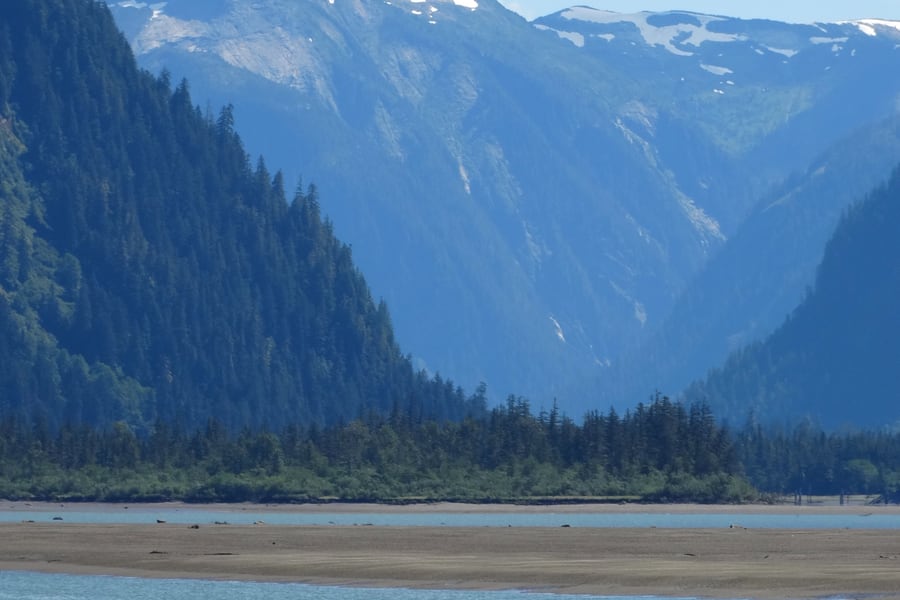 Adam Jones / Wikimedia Commons · CC BY-SA 3.0 · cropped
Pinned to the Skeena
From Hazelton the line is pinned to the Skeena for three hours, through the four close tunnels of Kitselas Canyon and out into tidal water. Waterfalls come down to the track for twenty miles, and in spring avalanche snow still lies beside the rails.A bit of history
Culture & experiences along the way
 Murray Foubister / Wikimedia Commons · CC BY-SA 2.0 · cropped
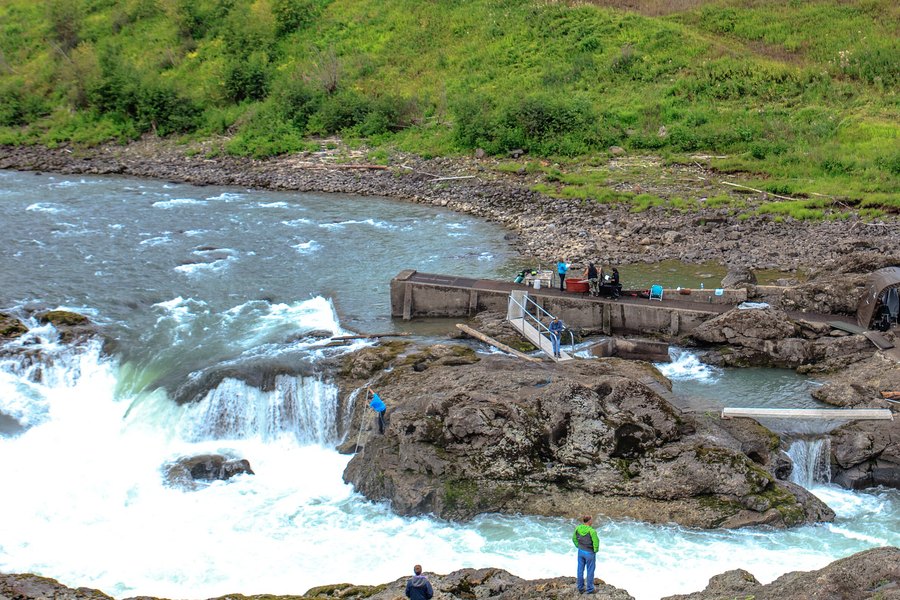
The dip-net fishery at Witset
Where the Bulkley narrows into a rock canyon, Wet'suwet'en families take salmon with long-handled dip nets from platforms bolted to the rock, as they have on this site for something like five thousand years. The village was called Moricetown until it took back the name Witset in 2018.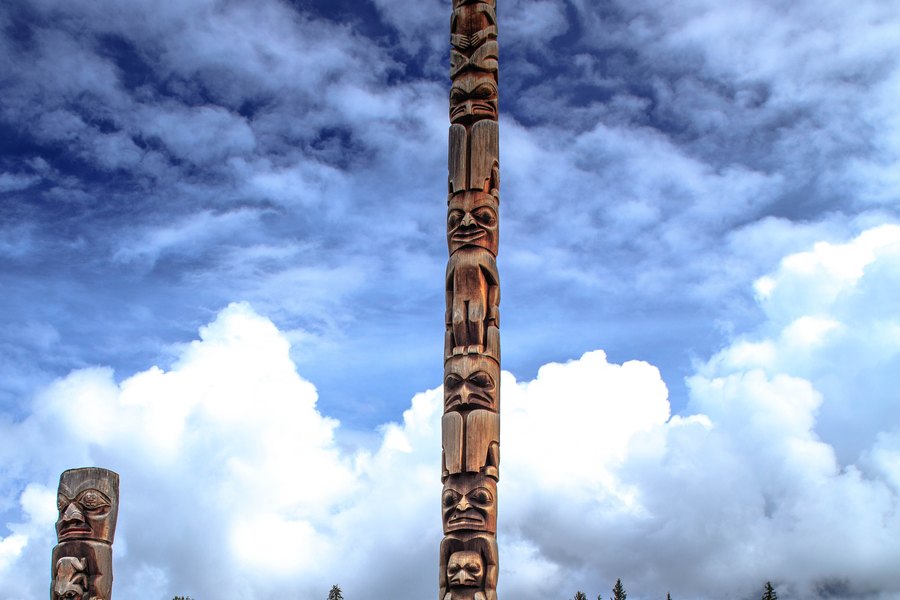 Murray Foubister / Wikimedia Commons · CC BY-SA 2.0 · cropped
The poles at Kitwanga
Gitwangak, which the railway timetable calls Kitwanga, keeps a line of cedar poles above the Skeena at mile 73, on the south side of the track. They carry clan crests — a record of a family's standing and its inherited history, rather than anything religious.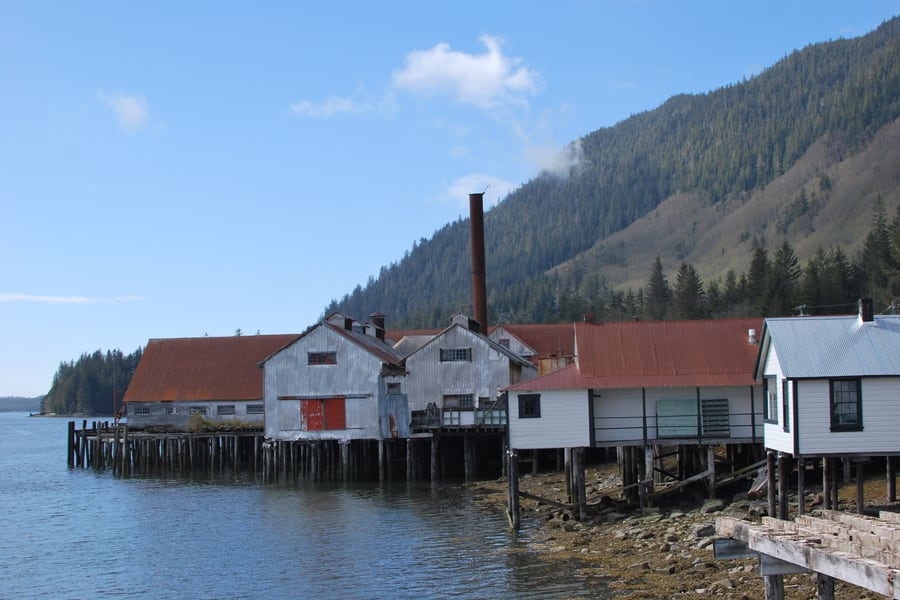 Karen Neoh / Wikimedia Commons · CC BY 2.0 · cropped
The oldest cannery on the coast
North Pacific Cannery at Port Edward, mile 81.9, is a village of buildings on stilts over the Skeena and the longest-running cannery in Canada. It is a national historic site now, open through the summer, and the train passes the whole length of it.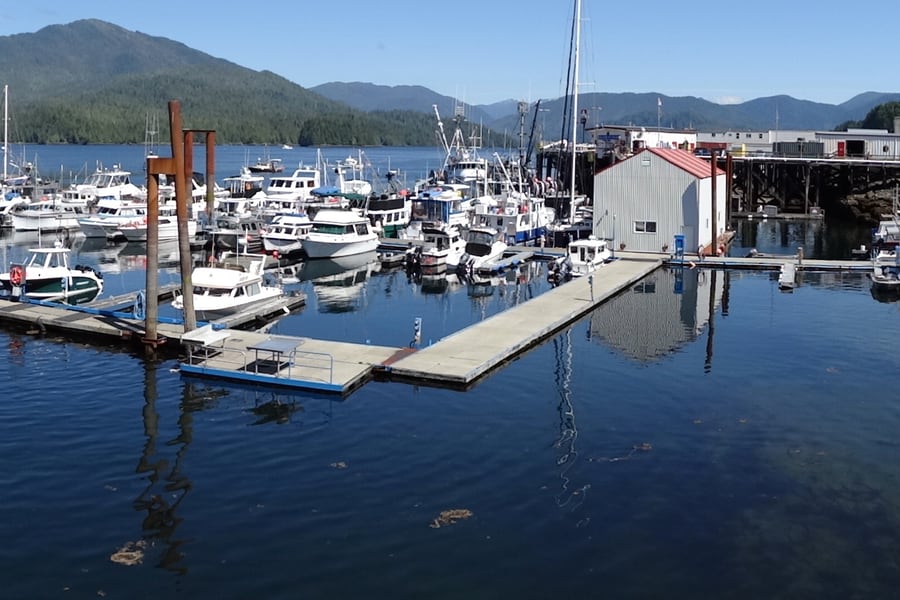 Adam Jones / Wikimedia Commons · CC BY-SA 3.0 · cropped
Cow Bay
Prince Rupert's old waterfront quarter and still a working fishing harbour, its floats packed with seiners and gillnetters. VIA's own guide to the town sends visitors here and along 2nd and 3rd Streets for the shops and the restaurants.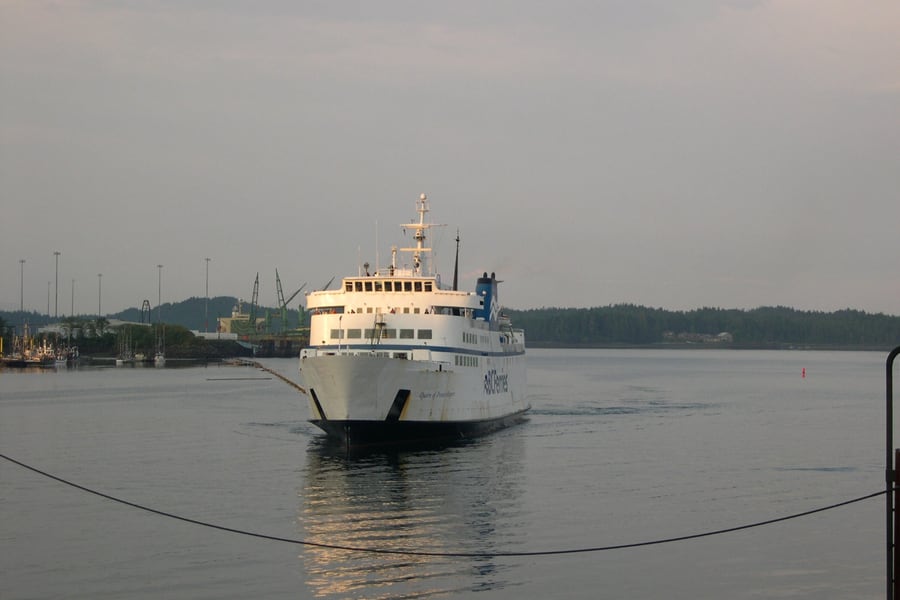 upyernoz / Wikimedia Commons · CC BY 2.0 · cropped
Where the rails meet the ferries
There is no station building here. VIA's Prince Rupert stop is unstaffed and sits inside the BC Ferries terminal on Park Avenue, so you step off the train into the departure hall for Haida Gwaii and Port Hardy — and, on the Alaska Marine Highway, the Alaskan panhandle.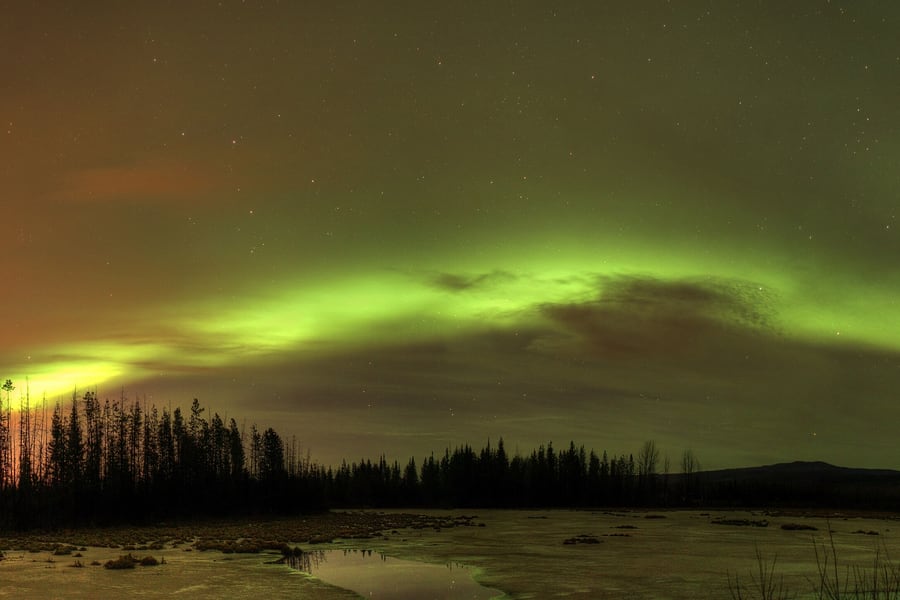 Mike Hochachka / Wikimedia Commons · CC BY-SA 4.0 · cropped
A winter night in Prince George
The overnight leaves you just short of 54 degrees north with a whole evening to spend. In midwinter it is dark by five, and on a clear night the aurora reaches this far south — a real argument for riding the line in January rather than July.Timetables
The train runs three times a week in each direction, all year — there is no summer timetable and no winter one, just a single board. Westbound is train 5, leaving Jasper on Wednesdays, Fridays and Sundays at 10:45. Eastbound is train 6, leaving Prince Rupert on the same three days at 08:00.
Both directions break the journey at Prince George, where the train stands overnight and passengers find their own accommodation. Westbound takes 1 day 10 hours 40 minutes; eastbound is shorter, at 1 day 8 hours, and that is a real difference in running time rather than a trick of the clocks. Times below are local: Jasper is on Mountain time, everything from Yellowhead Pass west is on Pacific.
| Station | Westbound · train 5 | Eastbound · train 6 |
|---|---|---|
| Jasper (MT) | dep 10:45 · day 1 | arr 17:00 · day 2 |
| McBride | 12:44 · day 1 | 12:18 · day 2 |
| Dome Creek | 14:32 · day 1 | 10:33 · day 2 |
| Prince George | arr 17:08 · day 1 | arr 20:29 · day 1 |
| Prince George | dep 08:00 · day 2 | dep 08:15 · day 2 |
| Vanderhoof | 09:55 · day 2 | 18:35 · day 1 |
| Burns Lake | 11:58 · day 2 | 16:32 · day 1 |
| Smithers | 14:10 / 14:20 · day 2 | 14:14 / 14:24 · day 1 |
| New Hazelton | 15:37 · day 2 | 12:30 · day 1 |
| Kitwanga | 16:27 · day 2 | 11:48 · day 1 |
| Terrace | 18:00 / 18:05 · day 2 | 10:20 / 10:25 · day 1 |
| Prince Rupert | arr 20:25 · day 2 | dep 08:00 · day 1 |
Good to know:
- The overnight is not optional and it is not included. There is no sleeping accommodation on this train. Book a Prince George hotel for the night between your two travelling days, and treat it as part of the cost of the trip.
- Prince George station keeps the train's hours, not the city's. It opens 07:00–11:00 on Mondays, Thursdays and Saturdays only — the three mornings a train leaves — and is shut on Tuesdays, Wednesdays, Fridays and Sundays. It is closed when you arrive the previous evening.
- Prince Rupert is the same story. The stop is unstaffed, inside the BC Ferries terminal, and open 19:00–23:00 on the arrival evenings and 06:00–10:00 on the departure mornings. There is no left-luggage and no overnight baggage facility.
- Most intermediate calls are request stops — Loos, Penny, Longworth, Hutton, Sinclair Mills, Dorreen, Pacific, Usk and a dozen more. Tell the crew, or arrange it when you book.
- Smithers gets ten minutes in both directions, because the locomotive engineers change over there. Terrace gets five. Nothing else on the line is long enough to leave the platform.
- Connections. At Jasper the train meets The Canadian for Toronto and Vancouver. At Prince Rupert you walk off into the ferry terminal for Haida Gwaii and Port Hardy, and for the Alaska Marine Highway north to the panhandle.
Times as of September 2026, from VIA Rail's published schedule, which carries no seasonal variation. Confirm before travelling on viarail.ca (opens in a new tab).
Tickets
Economy is the only class sold. Sampling VIA's booking engine in September 2026 for one adult one-way, Jasper to Prince Rupert came out at CA$170 in October, CA$161 in mid-January and CA$196 in July — a narrow spread, and cheap for two days of travel. A mid-September date was already sold out; book weeks ahead, not days.
The useful discovery is that breaking the journey costs nothing. Jasper to Prince George is CA$78, Prince George to Prince Rupert CA$91 — CA$169 for the pair against CA$170 booked through. Take extra nights in Prince George and the fare will not punish you. No ticket covers the hotel. Fares checked September 2026 at reservia.viarail.ca (opens in a new tab); Canadian dollars, per person, before taxes.
Book your tickets
Jasper to Prince Rupert
The whole run, Economy class
One ticket covering both days; the hotel night in Prince George is yours to book and pay for.
Book Tickets (opens in a new tab, on viarail.ca)via viarail.caJasper to Prince George
The first day only · 7 h 23 m
Yellowhead Pass, Mount Robson and the upper Fraser, ending where the train stops for the night anyway.
Book Tickets (opens in a new tab, on viarail.ca)via viarail.caPrince George to Prince Rupert
The second day only · 12 h 25 m
The Nechako, the lakes, the Bulkley canyon and the whole run down the Skeena to the coast.
Book Tickets (opens in a new tab, on viarail.ca)via viarail.caRail Passes
No rail pass covers this journey, and none is worth chasing. Interrail and Eurail do not apply in Canada at all, and VIA Rail's own products stop a long way short of British Columbia.
VIA currently sells exactly two discount cards. The Corridor Discount Card takes 25% off Economy fares between Québec City and Windsor, on a named list of trains, for CA$79. The Southwestern Ontario Discount Card takes 30% off between Toronto and Windsor, Sarnia or Niagara, for CA$69. Both run 16 one-way segments, both are valid Mondays to Thursdays and Saturdays only, and both are restricted to the Economy fare in Economy class. Neither travel zone reaches west of Windsor, Ontario — some 3,000 km short of Jasper.
The old Canrailpass, which once did cover the whole network, is gone. VIA's own /canrailpass address now redirects into the discount-card pages, and the page that used to describe the system pass reads simply that there are no discount cards available at the moment beyond the two above.
So the fare in the tickets section is the fare. The only real saving on this line is a structural one, and it is not a pass: buying the two days separately costs a dollar less than booking through, which means a stopover in Prince George is free. VIA's regular concessions — youth, student, senior over 65, and the Discount Tuesday sales — do apply here, and are the better place to look.
Pass conditions checked September 2026 on viarail.ca (opens in a new tab).
Places to Visit
The stops on this line are not sights arranged along a scenic route — they are the towns that exist because the Grand Trunk Pacific put a station there, and most of them still do the work the railway gave them. Two are worth building a trip around. Prince George you will see whether you like it or not, so the question is only what you do with the evening. Prince Rupert rewards a couple of days: the museum, the cannery down the line at Port Edward, boats out to the Khutzeymateen grizzly sanctuary, and ferries leaving for places most visitors never reach.
 Ron Reiring / Wikimedia Commons · CC BY 2.0 · cropped
Jasper
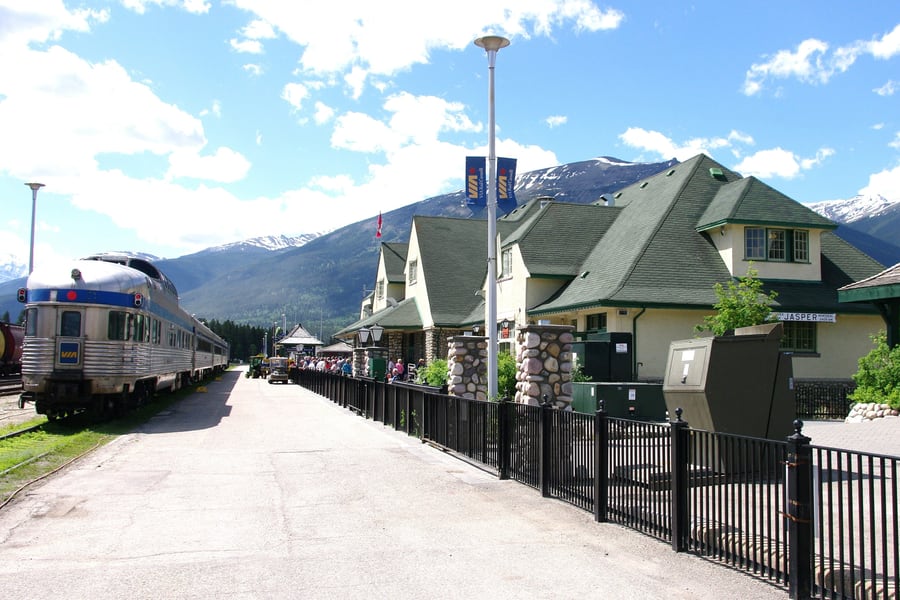
The train leaves from a station Parks Canada has protected since 1992: built in 1925 to a design from Canadian National's architectural office in Winnipeg and put up by the railway's own Western Division crews, in an Arts and Crafts idiom bent to fit a national park — cobblestone chimneys, cobblestone wainscot, exposed rafter ends, a steep irregular roof. It is still the working station, and The Canadian calls here too.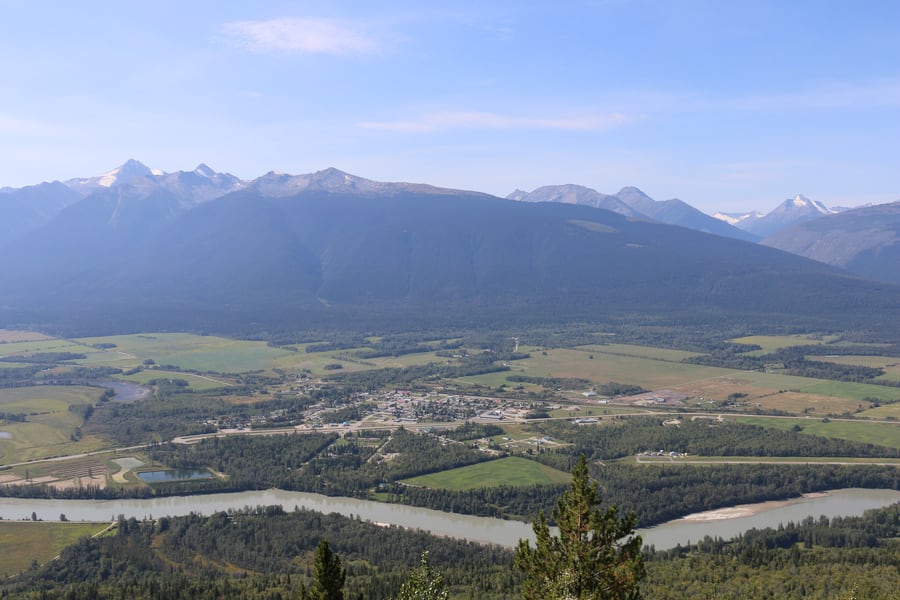 The Interior / Wikimedia Commons · CC BY-SA 4.0 · cropped
McBride
A village in the Robson Valley, established as a railway divisional point in 1913 and incorporated in 1932. Its station of 1919 survives, and VIA's own guide calls it a reminder of the elegant railway architecture once common along this line. The Rockies stand to the north, the Cariboo Mountains to the south, and the Fraser runs between them.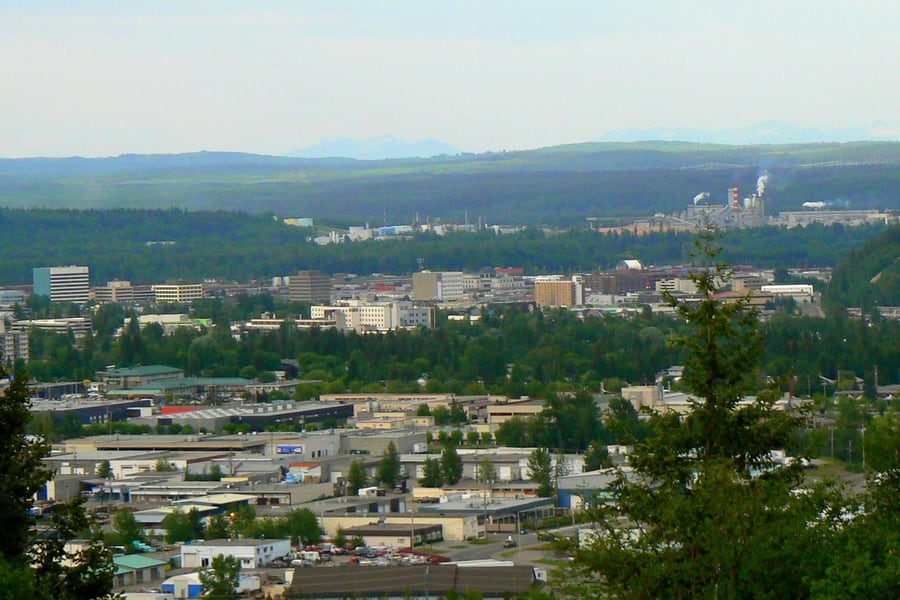 Iranianson / Wikimedia Commons · CC BY-SA 3.0 · cropped
Prince George
Where everybody sleeps. Seventy-six thousand people at the confluence of the Fraser and the Nechako, the largest city in northern British Columbia and a genuine crossroads — university, hospitals, three pulp mills and a railway bridge over 800 m long at the east edge of town. The station sits two blocks north of the centre.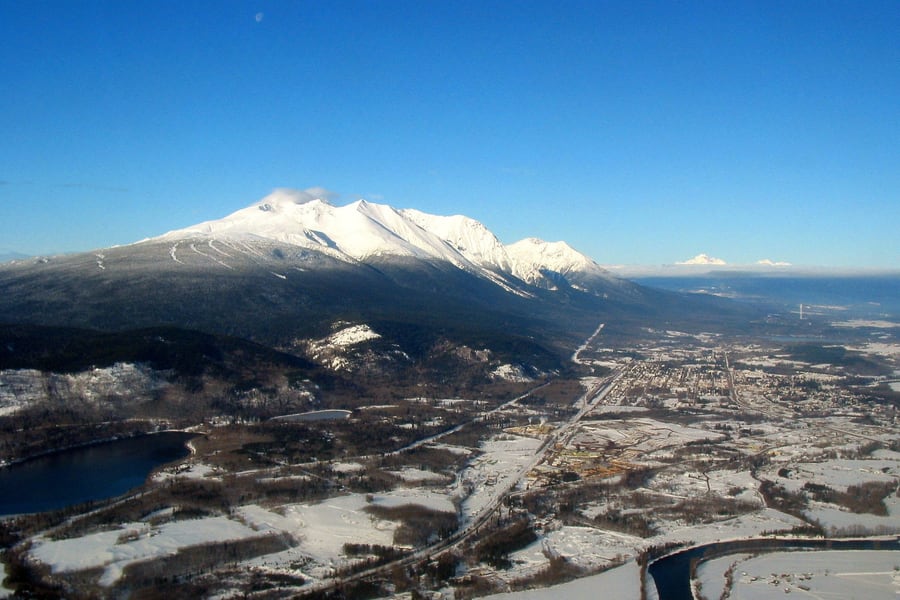 Shawn from Airdrie / Wikimedia Commons · CC BY-SA 2.0 · cropped
Smithers
Founded by the railway in 1913 and now a town of about 5,400, roughly halfway between Prince George and Prince Rupert. It sits under the 2,560 m Hudson Bay Mountain and kept the station it was given in 1918. The train stands ten minutes while the locomotive engineers change over — long enough to get off and look up.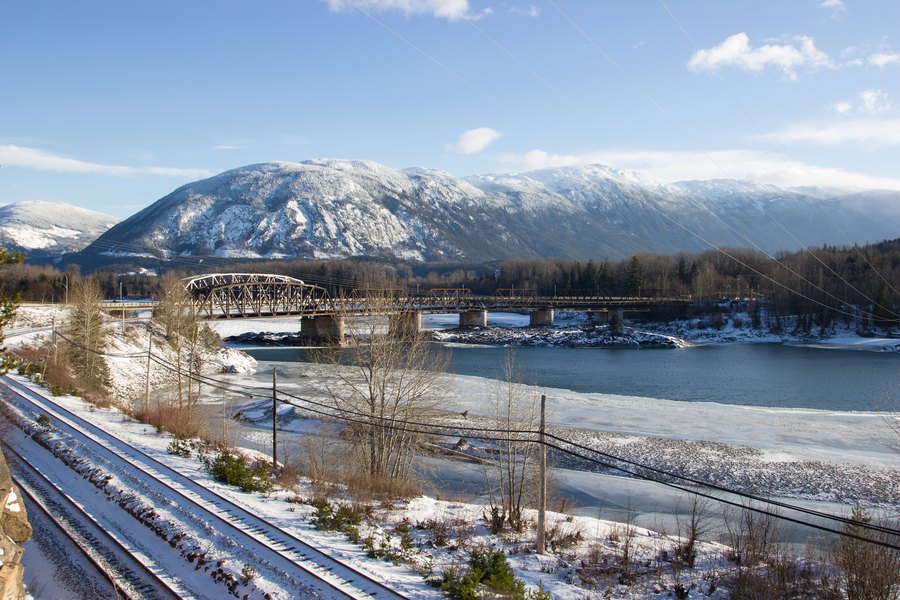 Benjamin Davidson / Wikimedia Commons · CC BY-SA 2.0 · cropped
Terrace
The service centre for the whole northwest, on the Skeena where the valley finally opens out, with a branch line running 62 km south to Kitimat. The train pauses five minutes. Just upstream are the four tunnels of Kitselas Canyon, and a few miles back at Usk a two-car reaction ferry still crosses the Skeena on the pull of the current alone.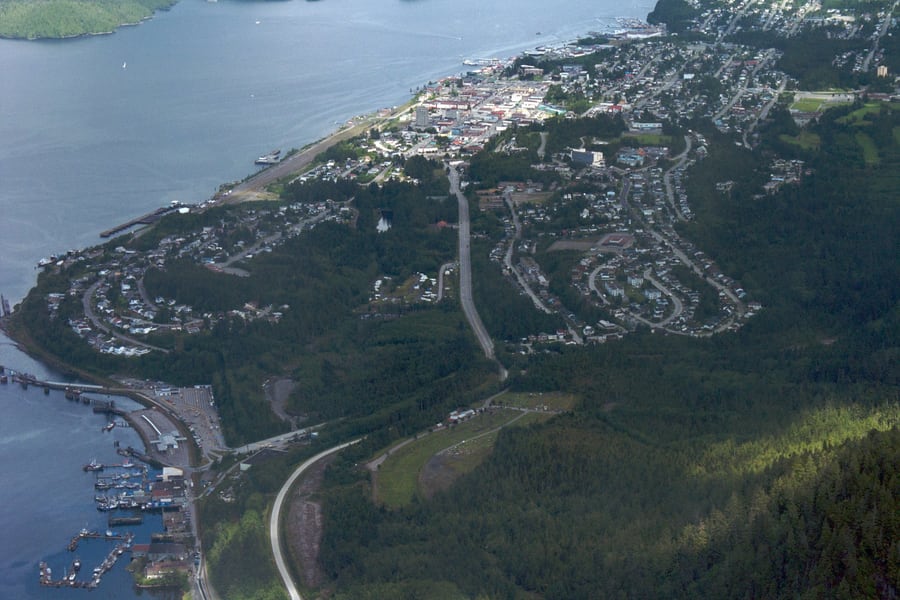 Sam Beebe / Wikimedia Commons · CC BY 2.0 · cropped
Prince Rupert
Twelve thousand people on Kaien Island, and the end of the rail line. The town exists because Charles Melville Hays wanted the shortest crossing from North America to Asia and had a terminus built where almost nobody lived. Three thousand people lived here in 1909; the port he was really after only began to grow into the job in the early 2000s. Jakub Fryš / Wikimedia Commons · CC BY-SA 4.0 · cropped
Dome Creek and the flag stops
Between McBride and Prince George the train calls at Crescent Spur, Loos, Dome Creek, Penny, Longworth, Hutton and Sinclair Mills — places whose sawmills closed decades ago and which the road network barely reaches. Penny, once a busy mill settlement, is among the remotest points on the whole line. These are request stops: ask the crew, or arrange it when you book, and the train will stop.Where to Sleep
Prince George is the one booking you cannot skip. The train stops there for the night in both directions and carries no sleeping accommodation, so a hotel bed is part of the journey rather than an extra. VIA's own station page has quietly acknowledged this for years by listing local hotels among its notes. Book it at the same time as the ticket — the city is not large, and three trains a week arrive at once.
Jasper is the other end of the same problem. The town lost a great deal of its accommodation in the wildfire of July 2024 and is still rebuilding, so rooms are tighter than they used to be and worth securing early. Prince Rupert has more choice than its size suggests, most of it within reach of the ferry terminal where the train comes in.
Where to stay
Whistler's Inn
Jasper · in the middle of town
At 105 Miette Avenue, with two restaurants and the Whistle Stop Pub downstairs.
Check Availability (opens in a new tab, on whistlersinn.com)via whistlersinn.comCoast Prince George Hotel
Prince George · for the compulsory night
Downtown at 770 Brunswick Street, with an indoor pool, a fitness room and two restaurants on site.
Check Availability (opens in a new tab, on coasthotels.com)via coasthotels.comThe Crest Hotel
Prince Rupert · above the harbour
A hundred rooms on the waterfront bluff at 222 1st Avenue West, open since 1961 and owned today by the Gitxaała Nation.
Check Availability (opens in a new tab, on cresthotel.ca)via cresthotel.caQuestions or corrections
Planning this trip and stuck on something, or spotted a time, fare or detail that has changed? Send us a message about Jasper to Prince Rupert. We read every one, and we update this page when something has changed.