The Jingzhang Railway to Badaling
N509FZ / Wikimedia Commons · CC BY-SA 4.0 · 2022
- Distance78.3 km, Nankou to Yanqing and Shacheng
- Duration44 min, Nankou to Badaling
- Best seasonLate March to mid-April, for the blossom
Introduction
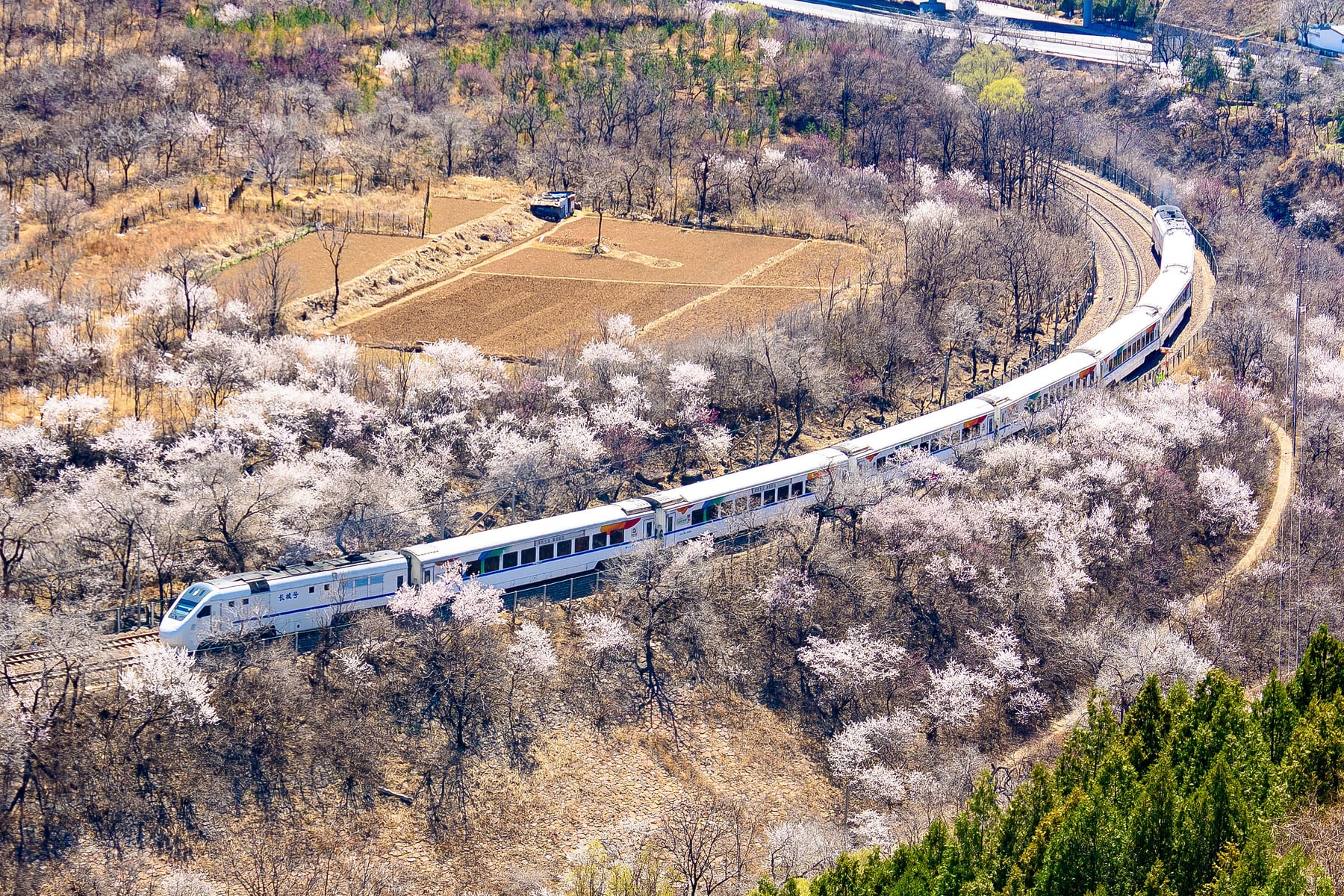
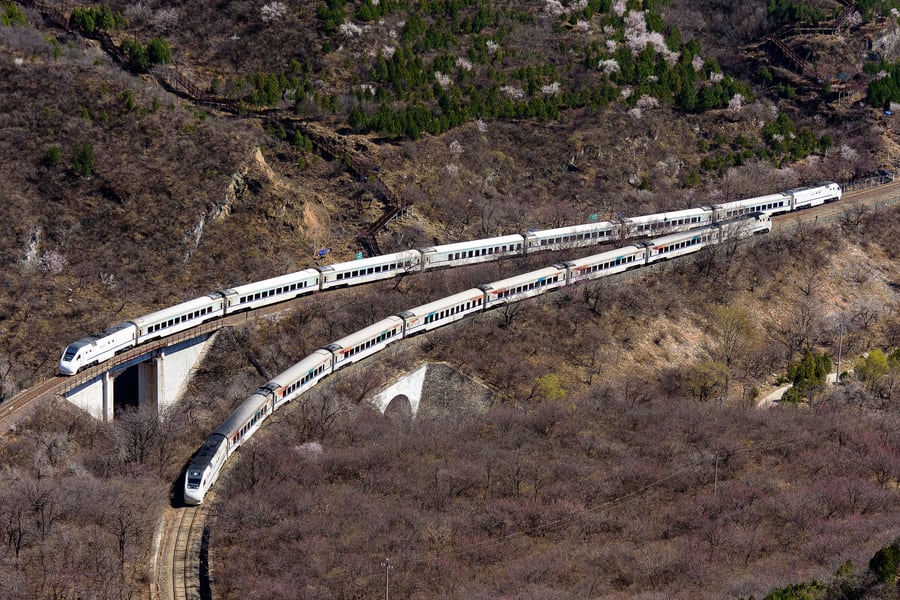
In 1905 the Qing government decided that the railway from Beijing to Zhangjiakou would be built without foreign engineers and without foreign money. The man it gave the job to, Zhan Tianyou, had studied civil engineering at Yale, and the problem he faced was the Guangou: a narrow valley climbing from Nankou to the Great Wall at Badaling, too steep for a direct line. He laid the track up it in the shape of the character 人 — a zig-zag at Qinglongqiao, where trains run in, stop and climb on in the other direction — and finished the line in September 1909, two years early and under budget. It was the first railway in China designed and built by Chinese engineers.
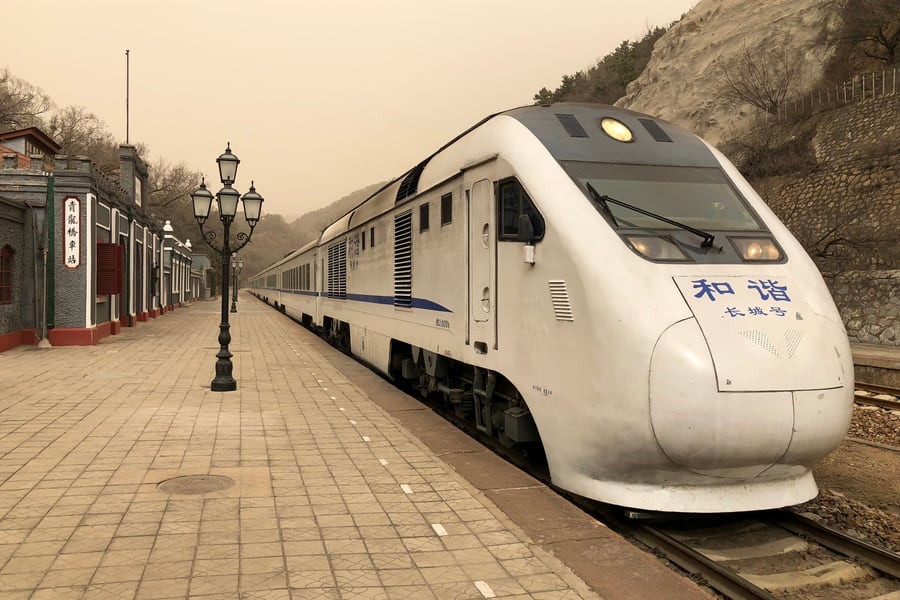
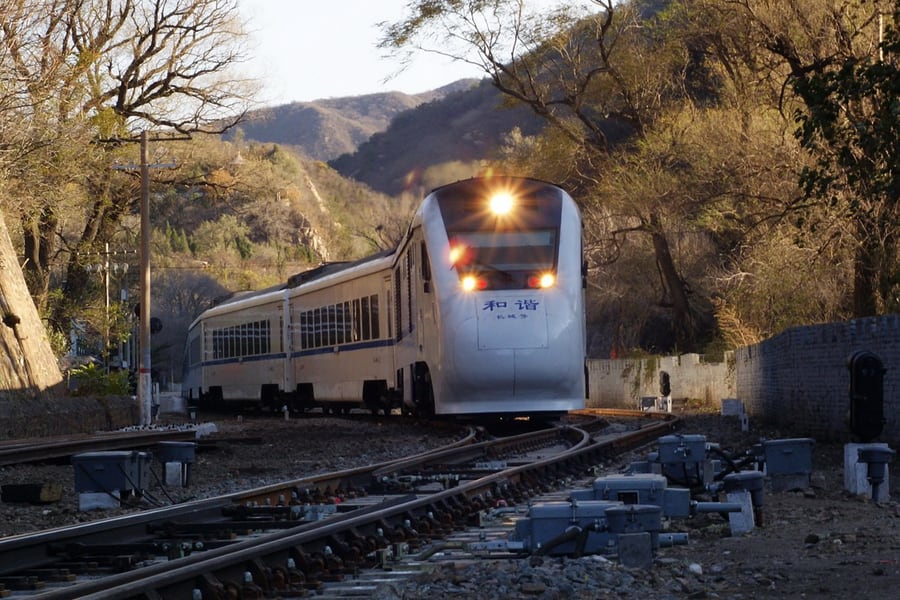
The zig-zag still carries passengers. Beijing's S2 suburban line runs its NDJ3 "Great Wall" diesel trains up the Guangou two or three times a day from Nankou, for ¥5 to Badaling, and since 2018 they have been the only trains in the valley. At Qinglongqiao the doors stay shut while the train reverses beside Zhan's 1908 station, his statue and his grave.
Since 2019 a second railway has run underneath. The high-speed line's twelve-kilometre tunnel passes beneath the point of the 人, and the People's Daily described the result as the character 大: the 1909 line on top, the 2019 one crossing under. The best day out uses both: up the zig-zag in the morning, then back to Beijing North in about thirty-five minutes from a station 102 metres underground.
The Journey
Nankou and the Guangou
The S2 starts at Nankou, at the mouth of the Guangou. It used to run in from Huangtudian in the city, but since 25 October 2025 the southern section has been closed for rebuilding as part of the Beijing Northeast Ring, and Nankou is the start. The first train up, S201, leaves at 09:03.
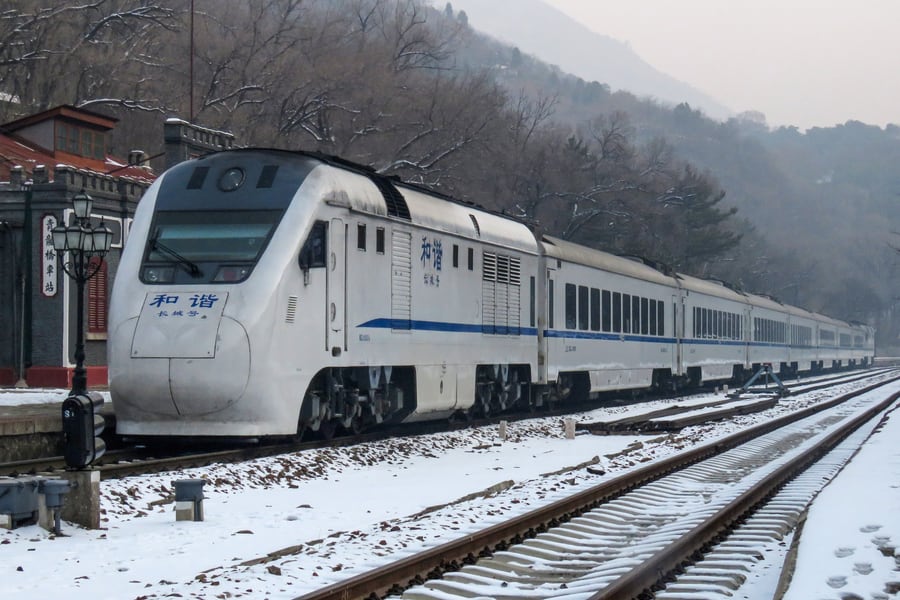
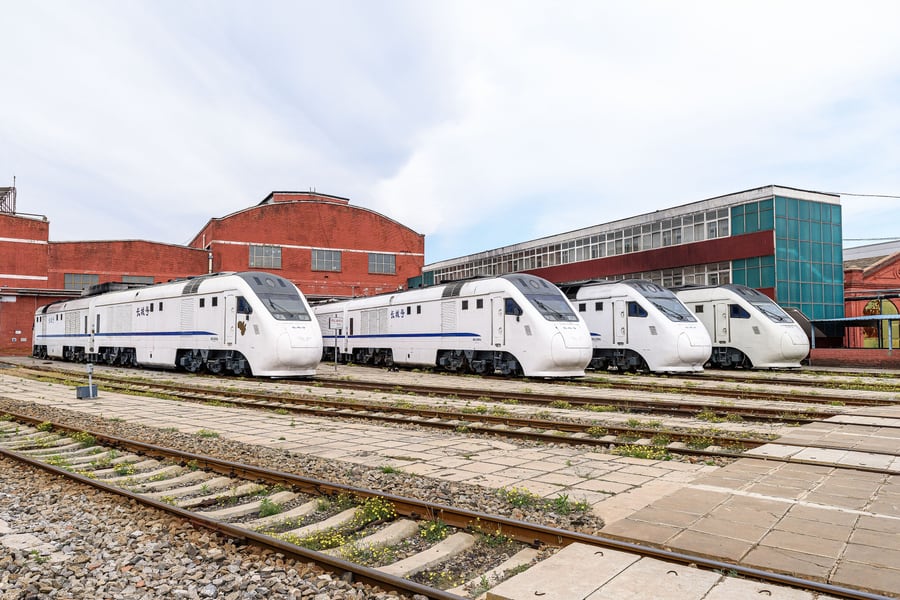
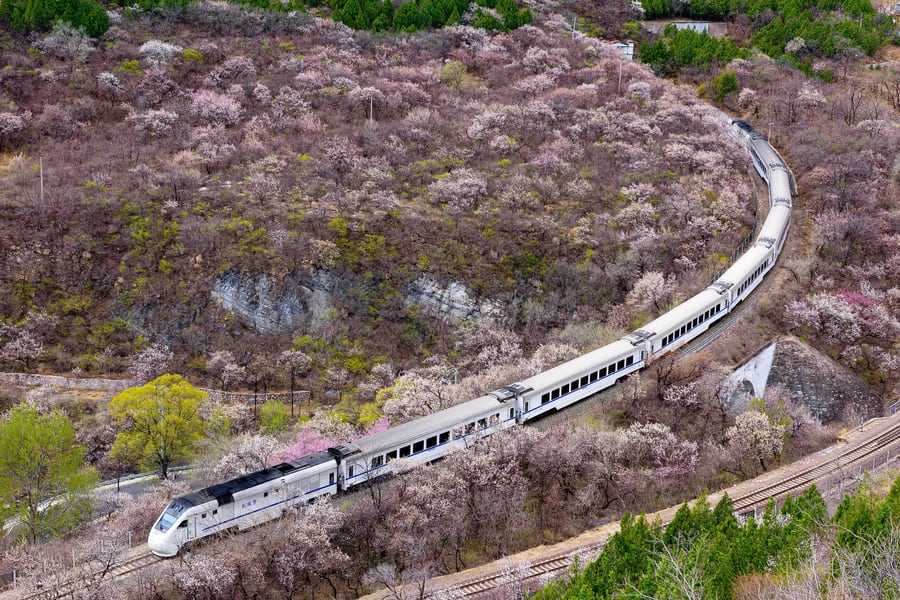
The train is an NDJ3, which the line's signwriting names the Great Wall (长城号): a diesel multiple unit with a power car at each end and seven carriages between them, one of them a dining car. The S2 has used them since it opened for the 2008 Olympics. The line beyond Changping is mostly single track and unelectrified, and the Guangou section is protected as national heritage. Since 2018 no other trains have run through it.
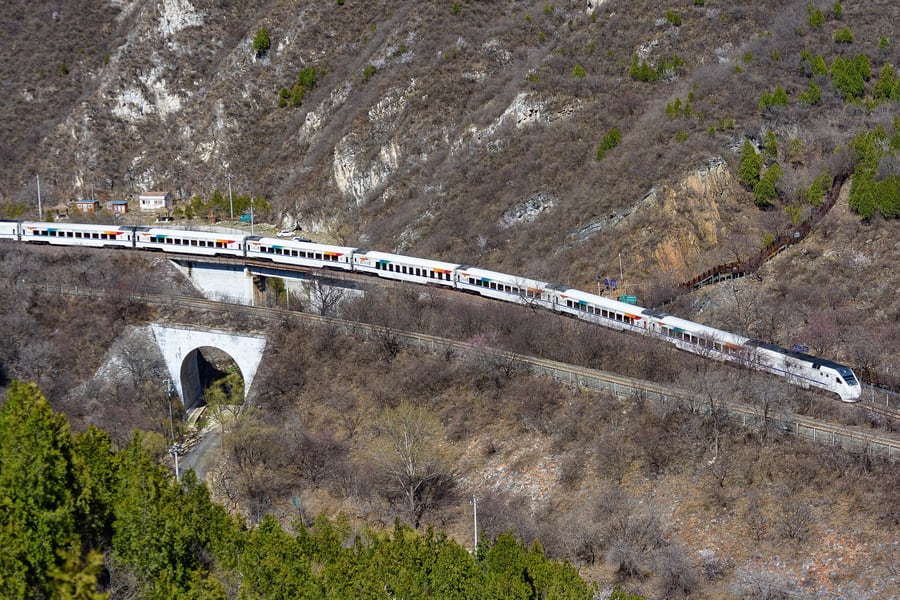
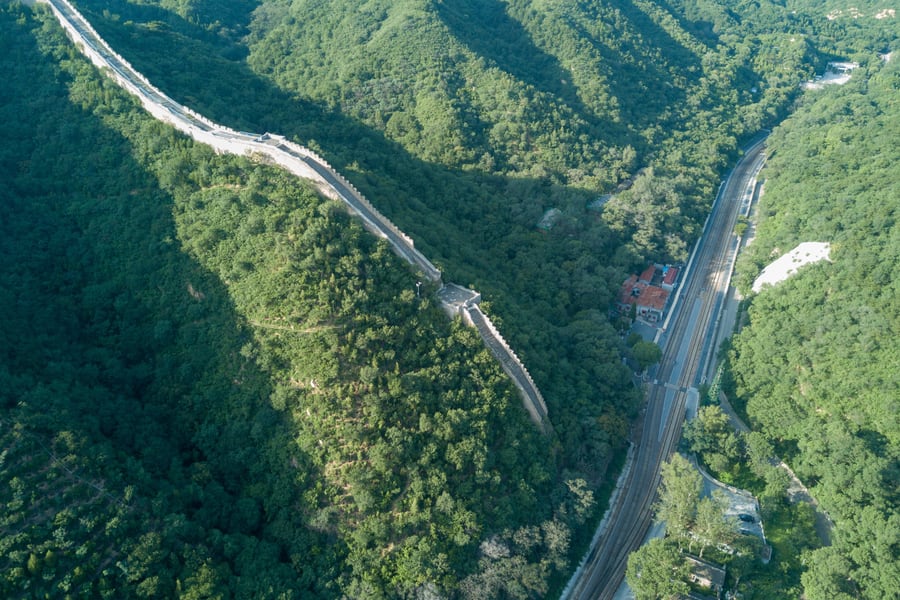
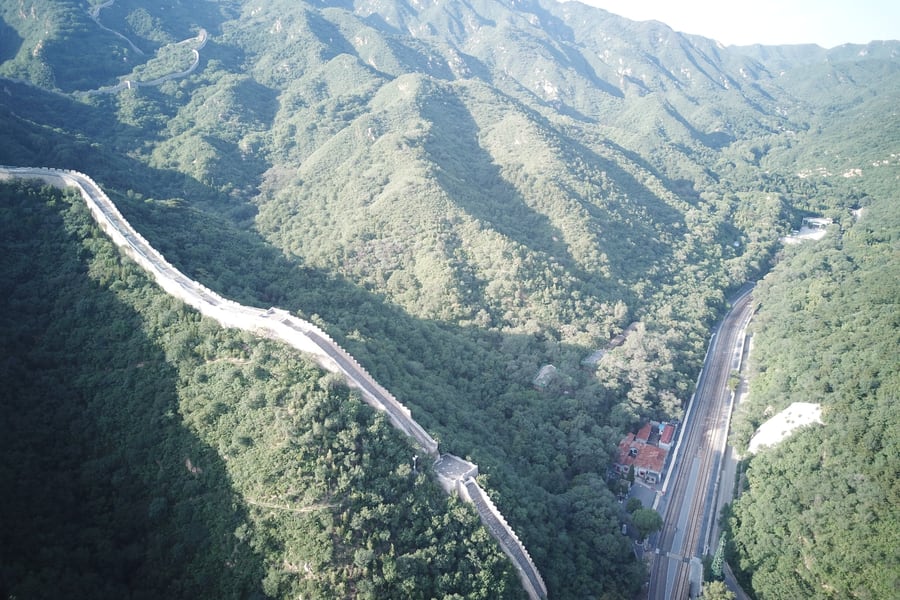
Above Nankou the valley narrows at Juyongguan, where the Ming Great Wall comes down both slopes to a fortified pass and the Yuan-dynasty Cloud Platform stands in the middle. The S2 runs straight through without stopping, over stone bridges and through the short Juyongguan tunnel, climbing all the way.
The zig-zag
At Qinglongqiao the gradient is 33 in 1,000 even with the zig-zag. Northbound trains run into Qinglongqiao West, stop, and set off in the other direction up the next leg; southbound trains reverse at the 1908 station itself, beside Zhan Tianyou's statue and grave. Neither is a passenger stop and the doors stay closed. The milestones and gradient posts on the platform are the originals, lettered in Suzhou numerals.
Badaling and on to Yanqing
From the zig-zag the line goes through Zhan's Badaling tunnel, 1,090.5 metres, and arrives at Badaling station at 09:47 — 44 minutes from Nankou. The station opened for passengers in 1979; the Wall is a walk from the platform. The train goes on over the short Kangzhuang–Yanqing branch to Yanqing, 10:13. On Fridays to Mondays one train, the S287, goes the other way at Kangzhuang and runs into Hebei to Shacheng.
The line underneath
The Beijing–Zhangjiakou high-speed railway opened on 30 December 2019, for the 2022 Winter Olympics, and cut Beijing to Zhangjiakou from over three hours to 47 minutes. Its 12-kilometre tunnel under the Badaling ridge crosses beneath the zig-zag, and inside it is Badaling Great Wall station: its deepest track is 102 metres below ground and the escalators rise 62 metres to the surface.
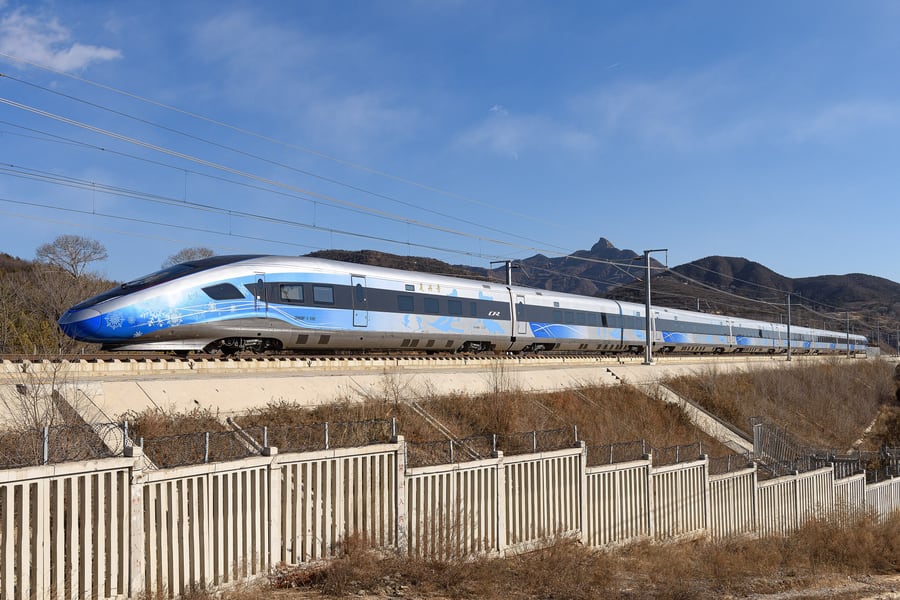
Some trains are worked by the CR400BF-C, the Smart Fuxing, built for this line. They drive themselves between stations with a driver in the cab to supervise — according to the People's Daily the first time automatic driving was used in service at 350 km/h. Set 5162 still wears the snowflake livery it was given for the Olympics.
Along the route
 N509FZ / Wikimedia Commons · CC BY-SA 4.0 · 2026 · cropped
Nankou, the foot of the climb
Zhan Tianyou moved his office to Nankou to run the hardest section, and the line's workshops grew up here. Since October 2025 the S2 starts here too, and its NDJ3 diesel sets are kept at Nankou depot.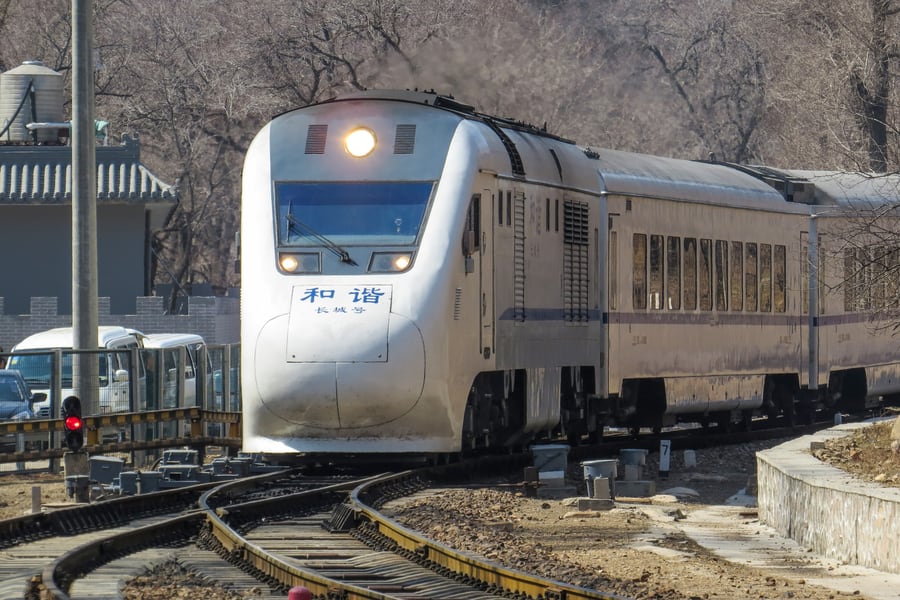 N509FZ / Wikimedia Commons · CC BY-SA 4.0 · 2017 · cropped
The zig-zag at Qinglongqiao
Even with the zig-zag the line climbs at 33 in 1,000. Up trains run into Qinglongqiao West and reverse; down trains reverse at Qinglongqiao itself. Either way the train stops, then sets off in the other direction on the next leg of the climb.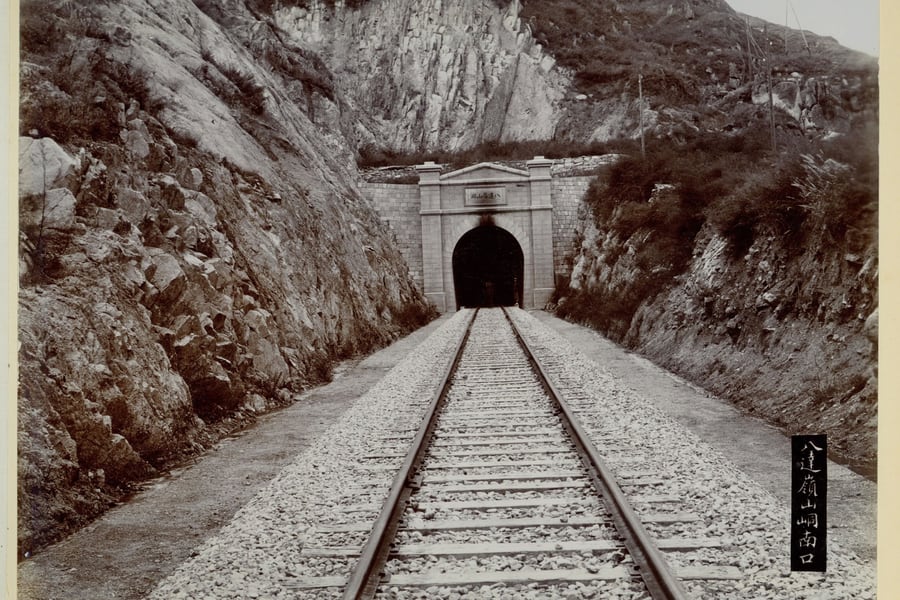 Tan Jingtang / Wikimedia Commons · Public domain · c. 1909 · cropped
The Badaling tunnel
The zig-zag cut the summit tunnel from 1,800 metres to 1,090.5. Zhan sank two shafts from the hilltop so his crews could dig from four more faces, and the bore was through on 22 May 1908. This is its south portal when the line was new.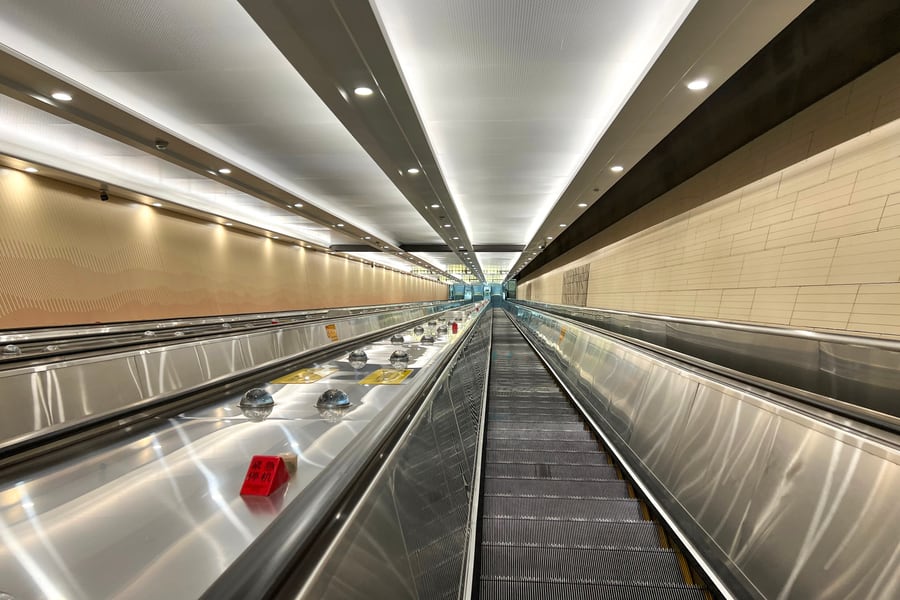 N509FZ / Wikimedia Commons · CC BY-SA 4.0 · 2022 · cropped
102 metres down
Badaling Great Wall station sits in the new high-speed tunnel, its deepest track 102 metres below ground and the escalators lifting 62 metres. Ticket gates open 25 minutes before departure and close 12 minutes before it.A bit of history
Culture & experiences along the way
 N509FZ / Wikimedia Commons · CC BY-SA 4.0 · 2025 · cropped
The train to spring
From mid-March the mountain peach comes out along the S2, and for about twenty days from late March the whole valley is white and pink. At Qinglongqiao and Badaling, higher up, it flowers about a week later. Beijing calls this the train to spring, and the Qingming holiday is when everyone rides it.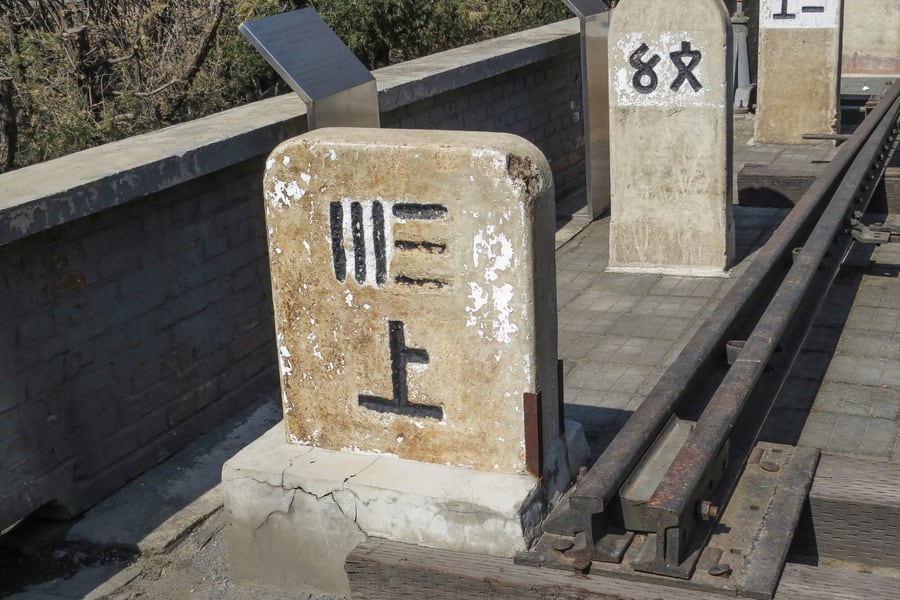 N509FZ / Wikimedia Commons · CC BY-SA 4.0 · 2017 · cropped
Distances in Suzhou numerals
The 1909 line was marked out in Suzhou numerals, the counting figures of Chinese shopkeepers. Milestones stood every 180 zhang, and gradient posts read 上 for up or 下 for down, with the slope beside it. Qinglongqiao still keeps a row of them on its platform.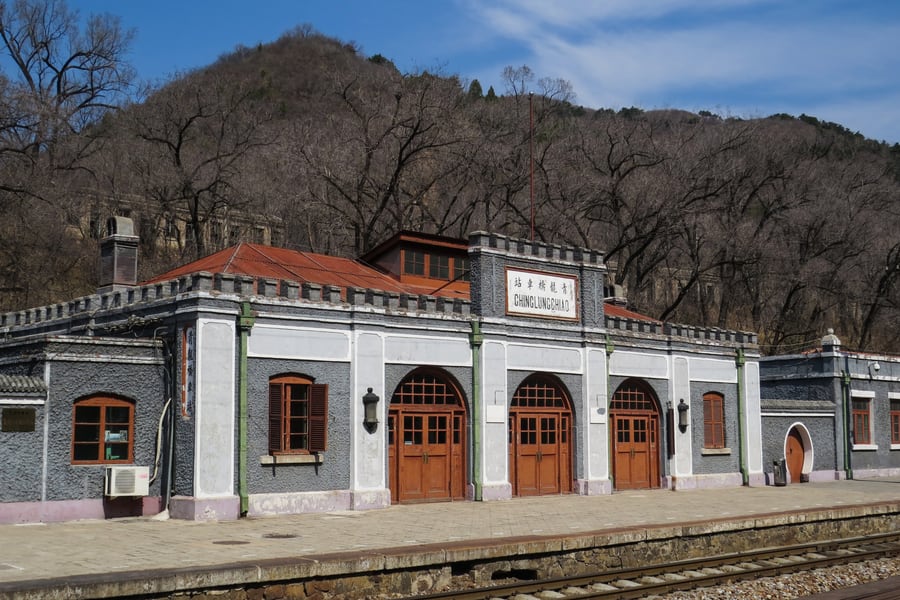 N509FZ / Wikimedia Commons · CC BY-SA 4.0 · 2017 · cropped
Zhan Tianyou's grave
Qinglongqiao's 1908 building still stands, under a nameboard written for it that autumn. Beside it is a three-metre bronze of Zhan Tianyou, put up by China's engineers in 1922, and since 1982 he and his wife have been buried behind it. Down trains reverse right beside all three.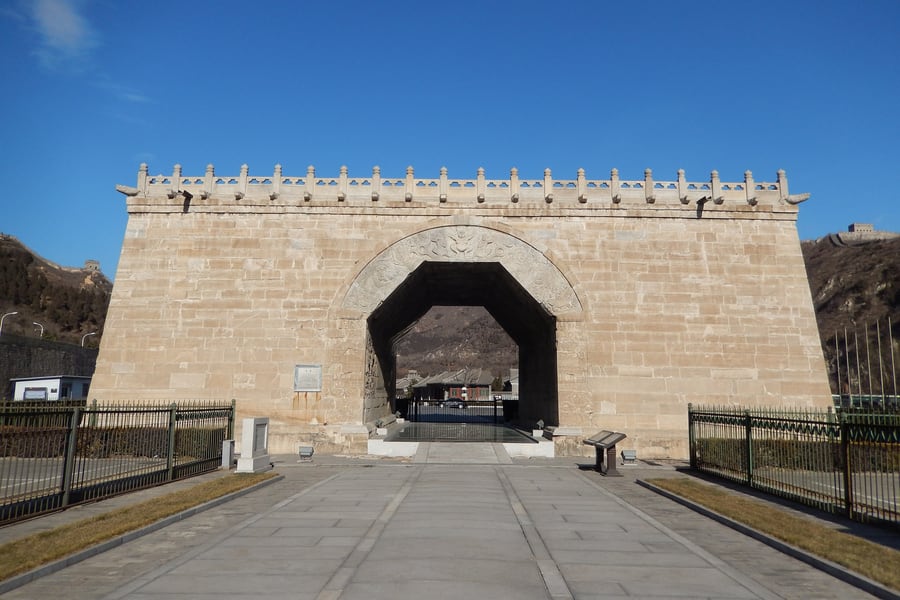 BabelStone / Wikimedia Commons · CC BY-SA 3.0 · 2013 · cropped
Six scripts at the Cloud Platform
At Juyongguan the line passes a marble gateway built in 1342–45 as the base of three white stupas. Inside the arch are carved Buddhist guardians and two dharani sutras in six scripts — Lanydza, Tibetan, ʼPhags-pa, Old Uyghur, Chinese and Tangut.Timetables
Two railways reach Badaling, and they use different stations: the S2 calls at Badaling on the 1909 line, and the high-speed trains at Badaling Great Wall, underground on the east side of the scenic area. All times below are as of October 2026.
S2 over the zig-zag — Friday to Monday and public holidays
The operator's timetable since 25 October 2025, when the line was cut back to start at Nankou.
| Train | Nankou | Badaling | Yanqing |
|---|---|---|---|
| S201 | 09:03 | 09:47 / 09:58 | 10:13 |
| S287 | 10:28 | 11:11 / 11:14 | — (Kangzhuang 11:26, Shacheng 12:17) |
| S205 | 18:49 | 19:31 / 19:39 | 19:54 |
| Train | Yanqing | Badaling | Nankou |
|---|---|---|---|
| S202 | 06:44 | does not stop | 07:40 |
| S288 | — (Shacheng 12:32, Kangzhuang 13:15) | 13:29 / 13:32 | 14:15 |
| S206 | 16:26 | 16:41 / 16:45 | 17:28 |
S2 — Tuesday to Thursday
Two pairs only: S201 and S205 up, S202 and S206 down, at the same times as above.
The S2 is not on 12306. Changes are posted on the operator's WeChat account, 北京市郊铁路, and in summer 2026 the S205 and S206 were cancelled at short notice on several rain-warning days.
Getting to Nankou. No train runs from central Beijing to Nankou. The operator lists buses from Nankou station to Deshengmen West (883), Huilongguan metro (887), Pingguoyuan metro (920), and several routes to the Changping metro line.
High-speed — Beijing North and Qinghe to Badaling Great Wall
A selection of departures from Beijing North on Monday 12 October 2026, from 12306. Most also call at Qinghe, and further trains run from Qinghe only. The pattern changes by day of the week — there are fewer on a Wednesday.
| Train | Beijing North | Badaling Great Wall |
|---|---|---|
| G7831 | 07:29 | 08:04 |
| D6703 | 07:47 | 08:18 |
| G7881 | 08:52 | 09:30 |
| D6705 | 11:47 | 12:24 |
| D6649 | 14:43 | 15:20 |
| G7845 | 19:22 | 20:02 |
| Train | Badaling Great Wall | Beijing North |
|---|---|---|
| D6704 | 10:44 | 11:20 |
| D6648 | 13:42 | 14:18 |
| D6650 | 17:02 | 17:38 |
| D6708 | 17:32 | 18:02 |
| D6654 | 21:13 | 21:43 |
At Badaling Great Wall, ticket checks open 25 minutes before departure and close 12 minutes before it, because of the distance from the gates down to the platforms.
Times are published by the operators: Beijing Municipal Commission of Transport · S2 (opens in a new tab) and China Railway · 12306 (opens in a new tab).
Tickets
The S2 is priced like the Beijing metro, by distance: ¥5 from Nankou to Badaling, ¥7 to Yanqing. There is nothing to book and no seat number. You tap in at the gate with a Beijing transport card or the Yikatong app's ride code, and the line does not check ID. Expect full trains in blossom season, above all over the Qingming holiday.
The high-speed trains are sold on 12306, in your name against your passport: from ¥25 second class on a D train or ¥31 on a G from Beijing North to Badaling Great Wall. The S2 goes back no further than Nankou, so the quickest return to the city is the high-speed train from the underground station.
Book your tickets
 David / Wikimedia Commons · CC BY 3.0 · 2008 · cropped
S2 · Nankou to Badaling
¥5, no booking and no seat number
Tap in with a Beijing transport card or the Yikatong app's ride code, as on the metro; Nankou to Yanqing is ¥7, and the Hebei stretch to Shacheng is priced separately.
Book Tickets (opens in a new tab, on jtw.beijing.gov.cn)via jtw.beijing.gov.cn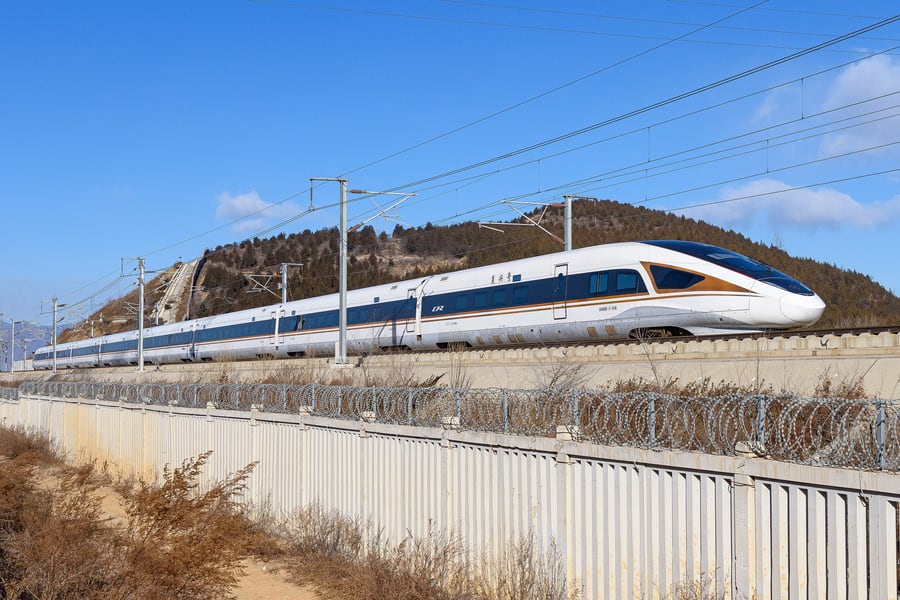 N509FZ / Wikimedia Commons · CC BY-SA 4.0 · 2025 · cropped
High-speed · Beijing North to Badaling Great Wall
Second class ¥25 on a D train, ¥31 on a G
Sold on 12306 against your passport, in second, first (¥40 / ¥50) and, on the G trains, business class at ¥94.
Book Tickets (opens in a new tab, on 12306.cn)via 12306.cnRail Passes
No rail pass covers either railway. Interrail and Eurail are European passes and do not reach China, and the high-speed seats are sold one journey at a time on 12306. The S2 is part of Beijing's city transport and is paid like the metro, at ¥5 to Badaling — there is nothing for a pass to save.
Checked in October 2026.
Places to Visit
Juyongguan and Badaling are on the line itself; the S2 passes through the first without stopping and calls at the second. The memorial hall is at Badaling, and the Ming Tombs are in Changping district, the same district as Nankou.
 G41rn8 / Wikimedia Commons · CC BY-SA 4.0 · 2006 · cropped
Juyongguan
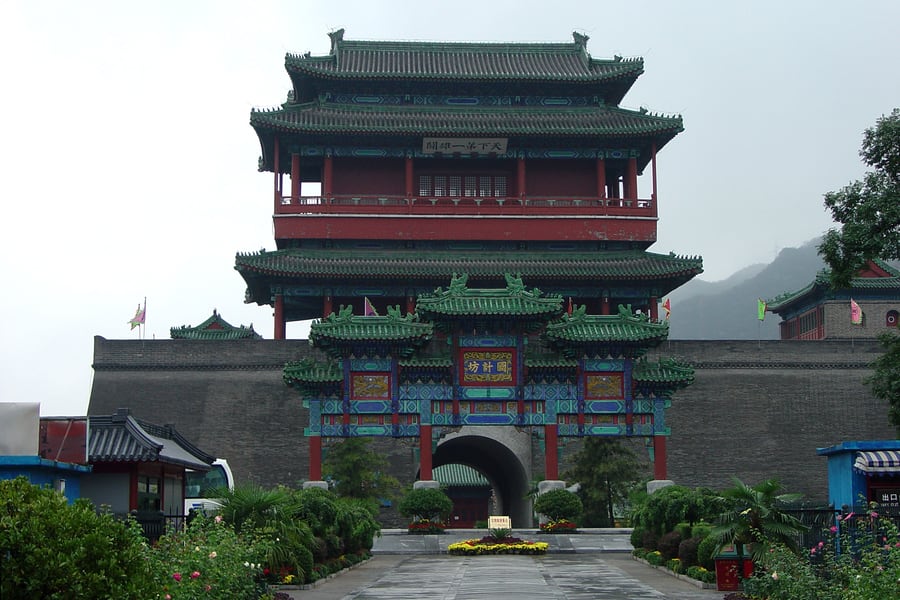
The Guangou is eighteen kilometres long, and Juyongguan holds the middle of it — one of the Ming dynasty's three inner passes on the road from Mongolia to Beijing, with walls climbing both sides of the valley. Inside the fortress is the Cloud Platform of 1342. The S2 runs straight through the pass without stopping.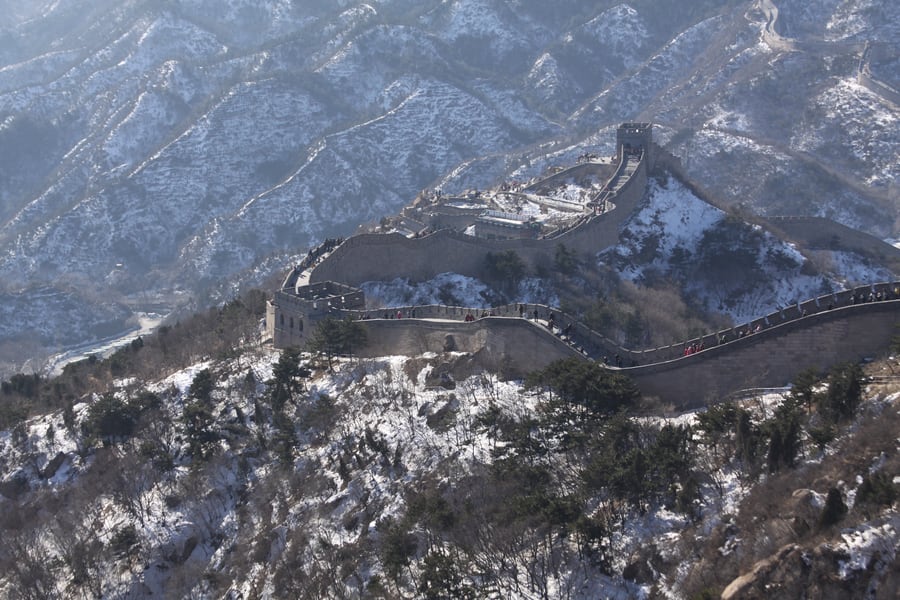 Taty2007 / Wikimedia Commons · CC BY-SA 3.0 · 2012 · cropped
Badaling
The pass fort was built in 1504 to guard Juyongguan from the north, and its west gate still carries the inscription 北门锁钥, the lock and key of the northern gate. In 1957 this became the first stretch of the Wall opened to visitors. The highest point, Beibalou, is about 1,015 metres up. Tickets are sold by name in advance or at the gate.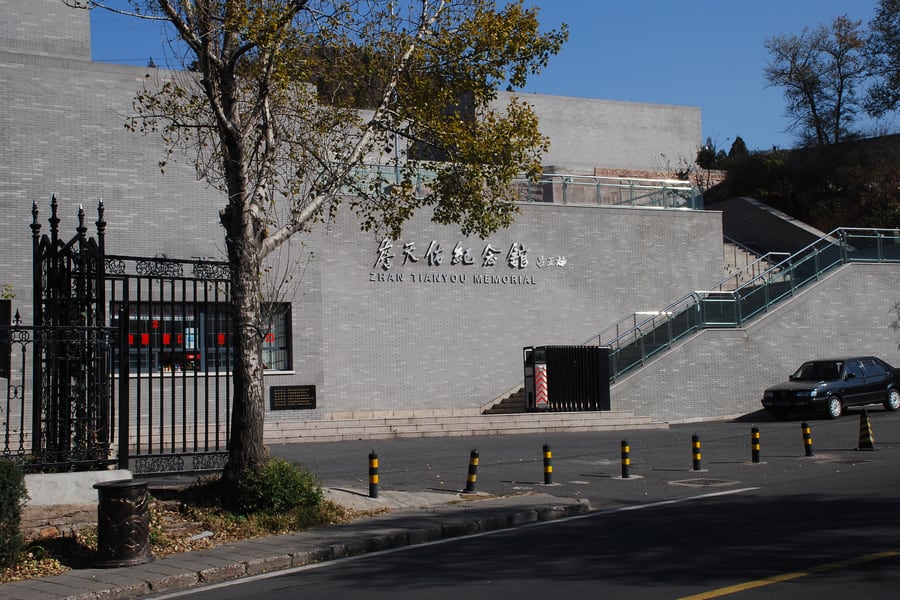 高晶 / Wikimedia Commons · Public domain · cropped
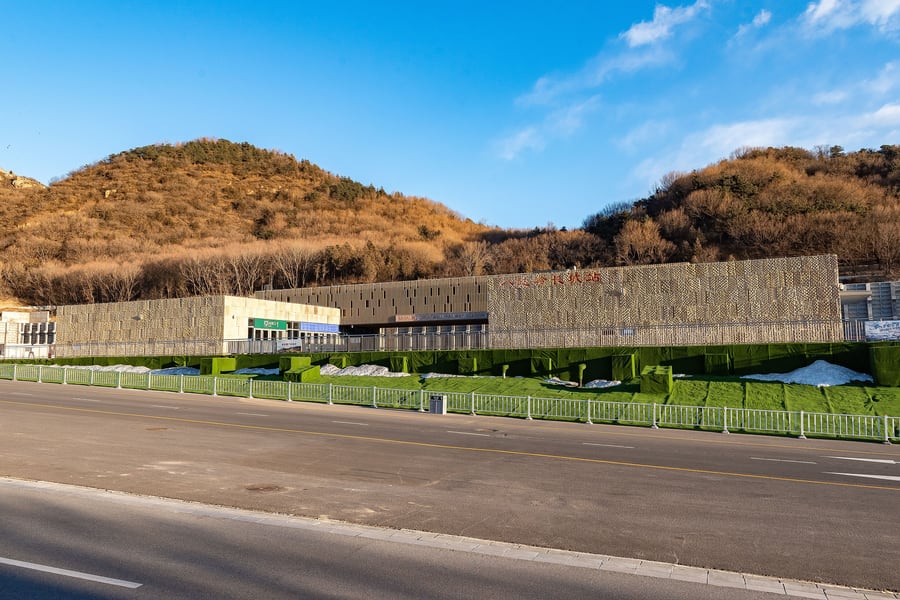
Zhan Tianyou Memorial Hall
The railway ministry first set up a display about Zhan at Qinglongqiao station in 1962. The memorial hall at Badaling followed on 6 November 1987 and is now run by the China Railway Museum as a national third-grade museum. Its subject is the railway rather than the Wall: the line, the zig-zag and the man who built them.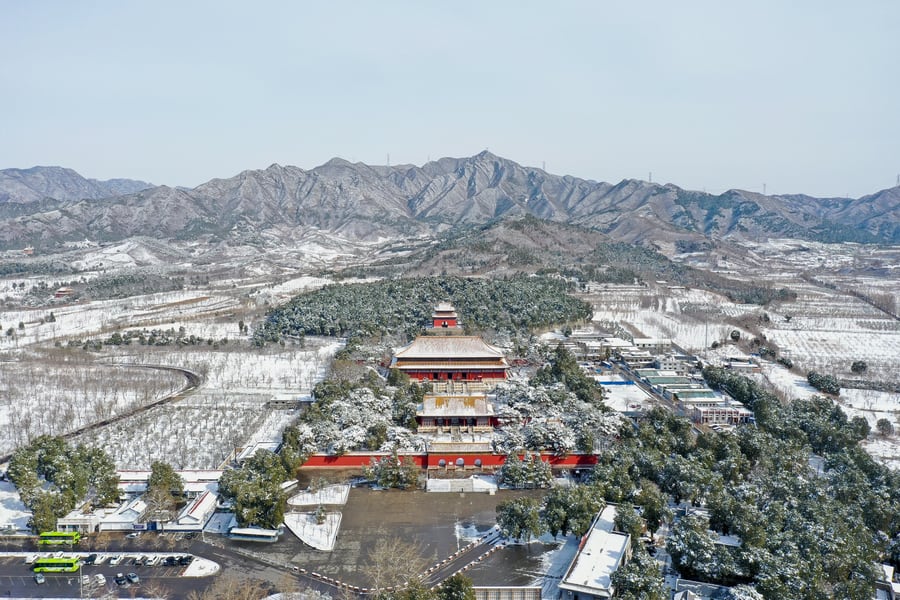 Charlie fong / Wikimedia Commons · CC BY-SA 4.0 · 2022 · cropped
The Ming Tombs
Thirteen Ming emperors are buried in one valley 42 kilometres north-northwest of central Beijing, in the same district as Nankou. The Yongle emperor chose the site after building the Forbidden City, and his tomb, Changling, is the largest. A seven-kilometre Spirit Way lined with stone animals leads in. UNESCO listed the tombs in 2003.Where to Sleep
This is a day out from Beijing: the first S2 leaves Nankou at 09:03, and the high-speed trains have you back at Beijing North in about thirty-five minutes. The bed to book is in the city; the house below is on its west side.
Where to stay
Shangri-La Beijing
On the west side of the city
The hotel's own site counts 670 rooms and suites across a Garden Wing and a Valley Wing, seven bars and restaurants, and a garden of more than 3,000 square metres it calls the Mini Summer Palace.
Check Availability (opens in a new tab, on shangri-la.com)via shangri-la.comQuestions or corrections
Planning this trip and stuck on something, or spotted a time, fare or detail that has changed? Send us a message about The Jingzhang Railway to Badaling. We read every one, and we update this page when something has changed.