Jungle Railway
Slleong / Wikimedia Commons · CC0
- Distance527.7 km (Gemas–Tumpat)
- DurationThe best part of a day
- Best seasonMar–Sep (drier)
Introduction
Its official name is the East Coast railway line, which is one of the more misleading things Malaysian Railways ever wrote down. The line runs 527.7 kilometres from Gemas, in the middle of the peninsula, to Tumpat, up near the Thai border — and it spends almost all of that distance in the deep interior, nowhere near a coast. It touches the sea at the very last station and nowhere else.
So everyone calls it the Jungle Railway instead, which is exactly right.
It was built the hard way, in pieces, between 1910 and 1931 — the Bahau–Gemas section opened on 4 April 1910, and the last connection was made on 5 September 1931. Single track, metre gauge, driven through rainforest, over rivers, past limestone towers that stand straight up out of the ground, and through country that in many places still has no road at all.
Which is the reason to ride it. This is not a heritage operation or a tourist attraction. It is a working railway that functions as a village bus: the train stops where people need it to stop, and they climb aboard with baskets of durian and rambutan and vegetables to sell at the next platform market, and get off again in what looks to a visitor like the middle of nowhere and is in fact somebody's home. For a lot of these communities the railway is not charm. It's the connection.
You can do it in a night on the sleeper, or hop down it in daylight — Jerantut for the oldest rainforest on earth, Kuala Lipis for faded colonial shophouses, Gua Musang for the great limestone tower over the town. It costs a handful of ringgit. It is one of the last genuinely unglamorous great train journeys, and it is all the better for it.
The Journey
The line begins at Gemas, a junction town in Negeri Sembilan where the busy west-coast main line — the one with the fast electric trains to Kuala Lumpur — throws off a single track to the north-east and, more or less immediately, disappears into the trees.
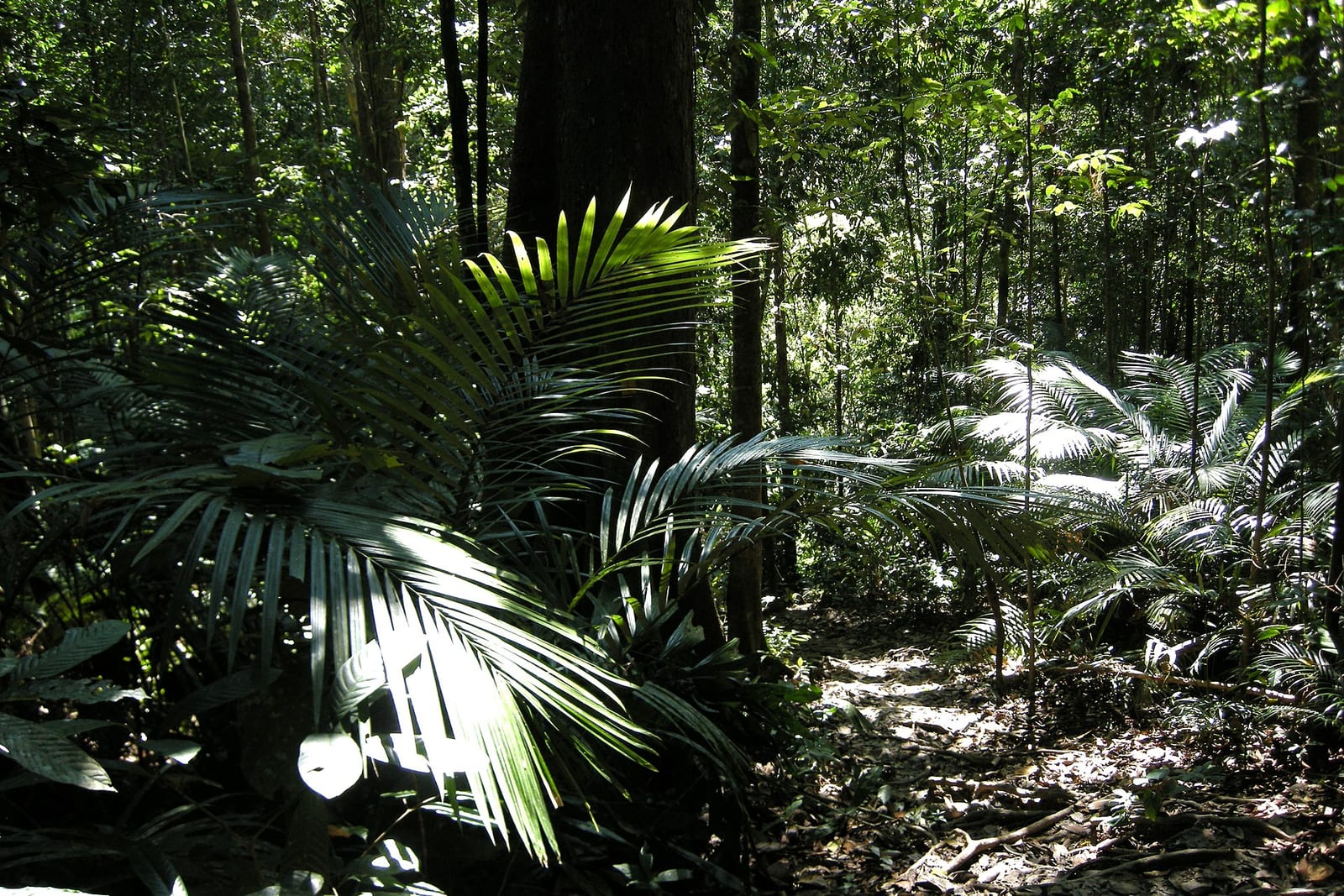
The first stretch north is plantation country: rubber and oil palm in ruled rows, then, as the line climbs into Pahang, the ordered rows give way to something far older and far messier. The train runs to Jerantut, which is the gateway to Taman Negara — a tropical rainforest usually reckoned at around 130 million years old, never glaciated and never cleared, older than the Amazon by an order of magnitude that is hard to hold in your head. The line skirts its western edge for hours.
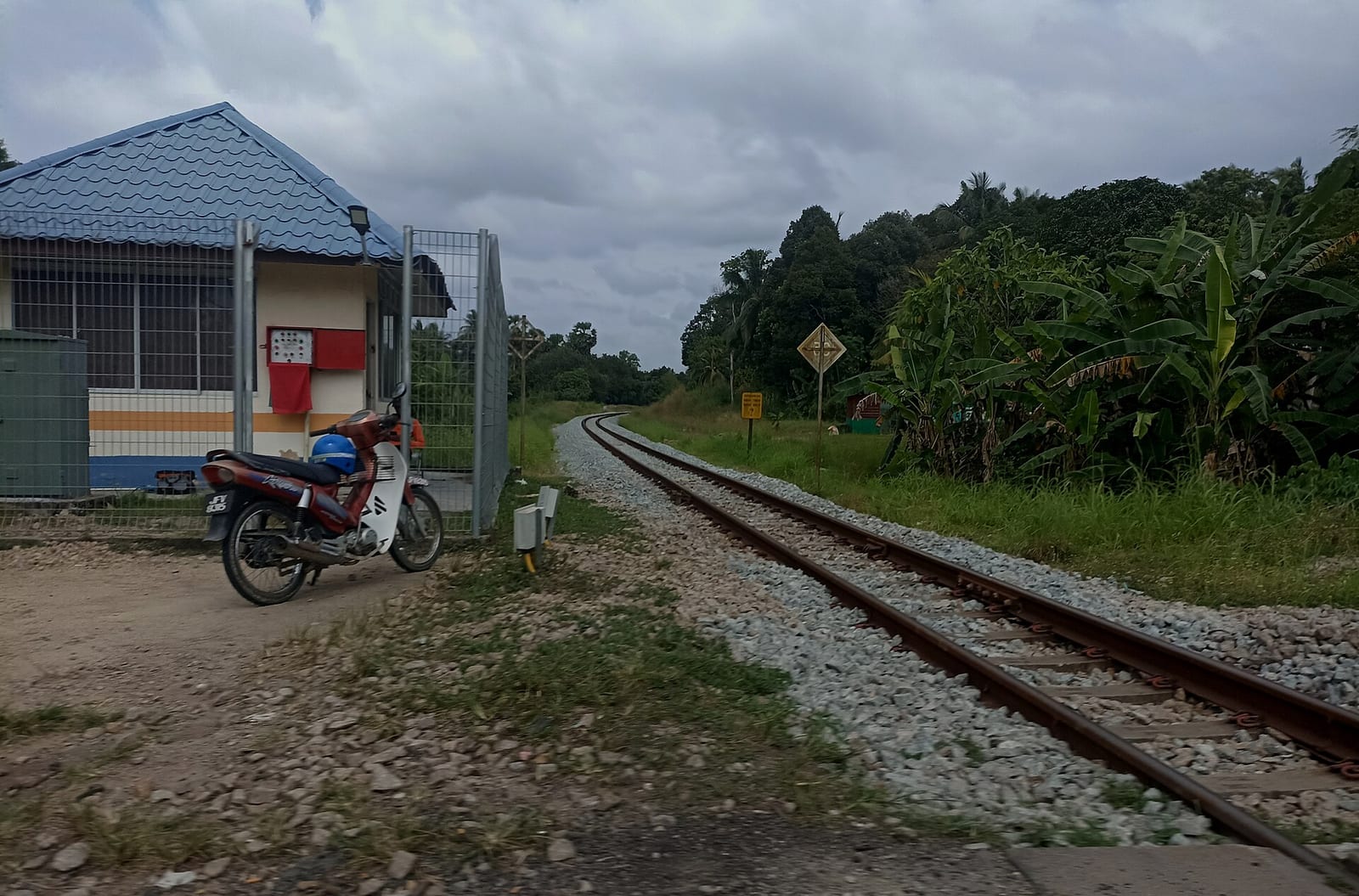
Kuala Lipis comes next, and it is worth stopping. It was the colonial capital of Pahang until 1955, and it still has the shophouses, the bungalows on the hill and the slightly stunned air of a town that used to matter more. Then the line follows river valleys north into Kelantan, and the country gets wilder: forest to the windows, rivers the colour of tea, and the occasional cleared patch with a wooden house on stilts and a motorbike leaning against it.
Gua Musang is the landmark. A vast limestone tower rises straight out of the town beside the tracks, riddled with caves — gua means cave — and the train pulls in beneath it. The platform turns into a market for as long as the train is standing: fruit piled on the concrete, fried things in bags, drinks with a straw through the top. People who got on two stops back with baskets are selling out of them here.
That is the thing to understand about this railway. The romance is not the scenery, pleasant as it is. It's that the train is still doing a job. It stops at halts with no platform and no name you'd recognise, and somebody steps down into the trees and walks off, and the train moves on. There is no road to where they're going. This is it.
North of Kuala Krai the forest thins into the paddy fields and small towns of Kelantan, the most conservative and most Malay of the states, and after all those hours in the interior the train finally reaches the coast — at Tumpat, the last station, about as far north-east as Malaysia goes.
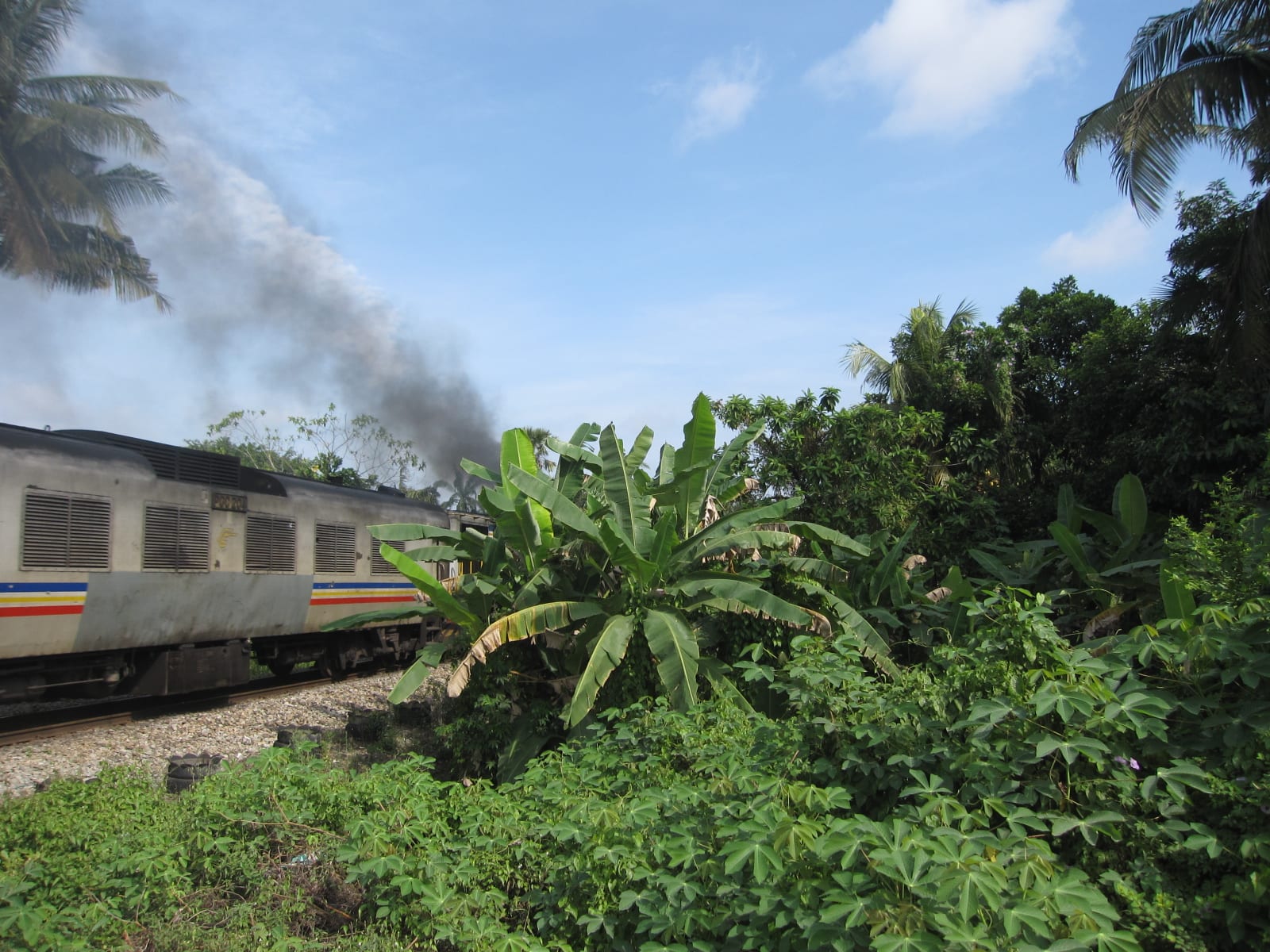
It used to be famously, gloriously slow: 50 to 60 kph, all day. Since the Class 61 units arrived on 12 April 2021 the shuttles manage nearer 100, which is better for the people who actually need to get somewhere, and a small, unmournable loss for the rest of us.
Along the route
Paul Farr / Wikimedia Commons · Public domainA railway that is still a bus
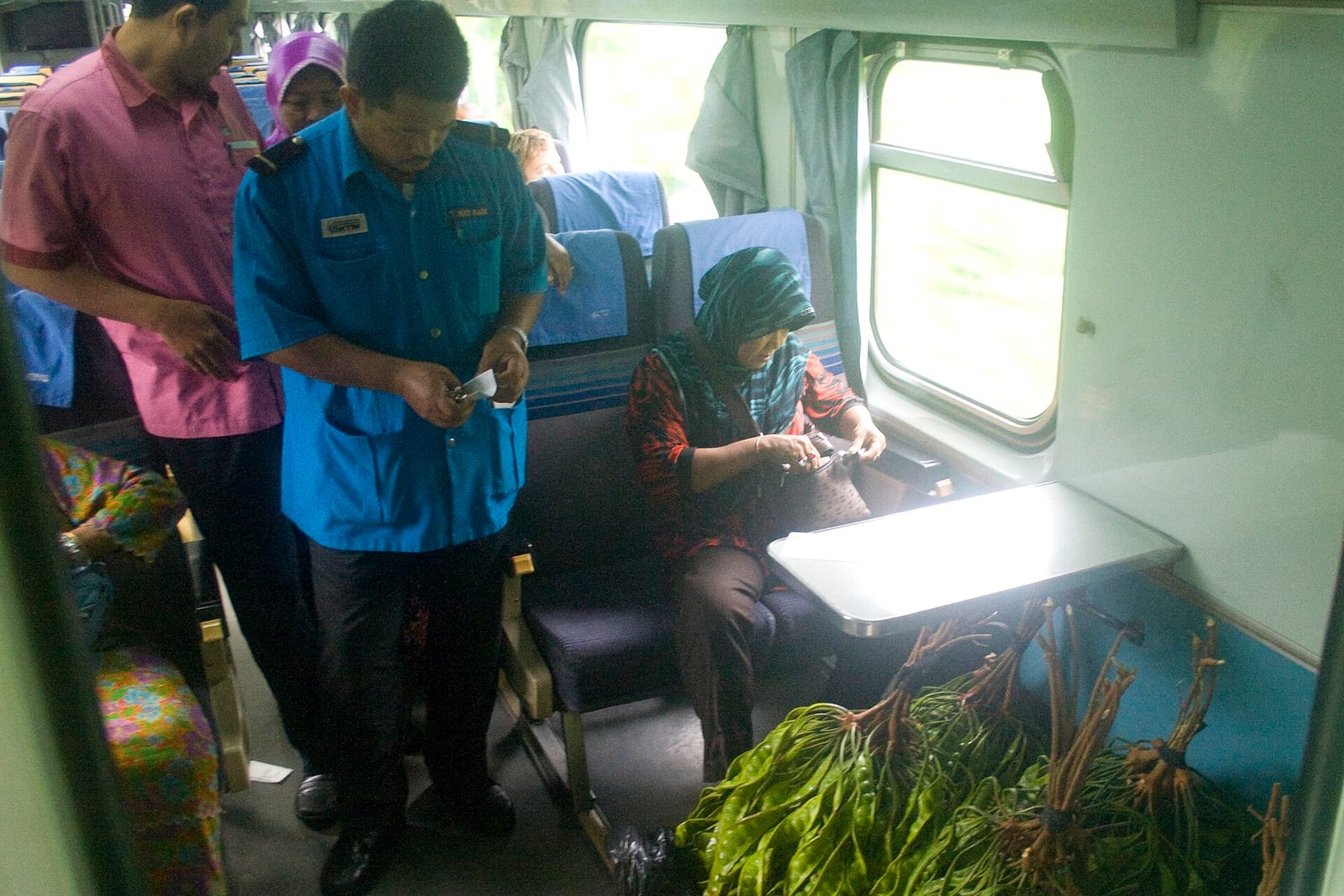
This is the point of it. The train stops wherever people need it to, and they get on with baskets of durian, rambutan and vegetables to sell at the next platform market. For villages with no road, the railway is not nostalgia — it is the connection.Slleong / Wikimedia Commons · CC0The karst at Gua Musang
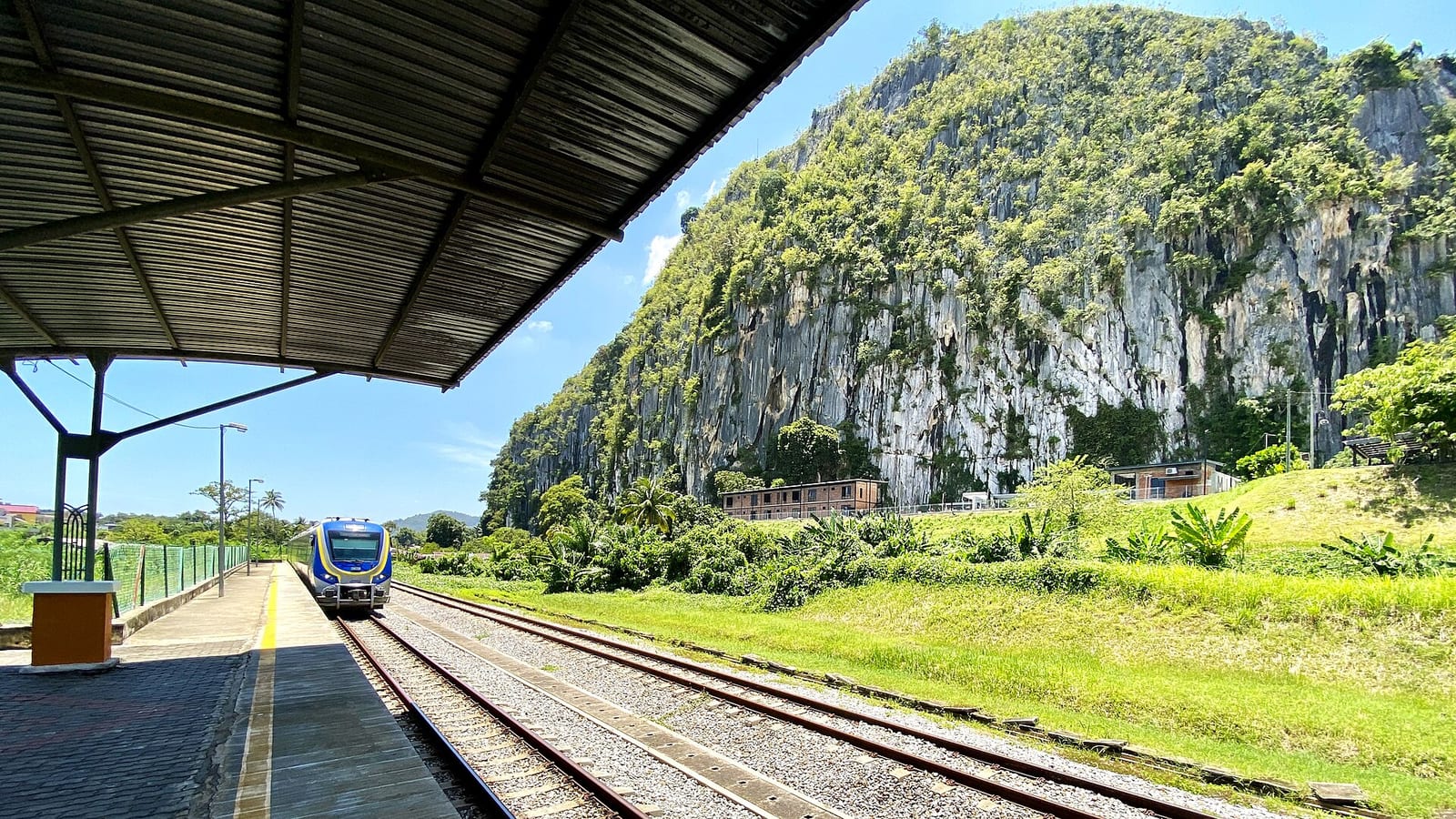
The line's landmark: a sheer limestone tower standing straight up out of the town, riddled with caves — gua means cave. The train runs along beneath it, and the whole interior is scattered with these things.© Vyacheslav Argenberg / http://www.vascoplanet.com/ · CC BY 4.0The oldest rainforest on earth
The middle of the line runs along the edge of Taman Negara, a forest usually reckoned at around 130 million years old — never glaciated, never cleared, older than the Amazon. Jerantut is the way in.A bit of history
Culture & experiences along the way
Slleong / Wikimedia Commons · CC0The platform markets
At the bigger stops the platform becomes a market for as long as the train is there — fruit, fried things, drinks in plastic bags with a straw. Buy something. It's the best catering on the line and it's how the line pays for itself.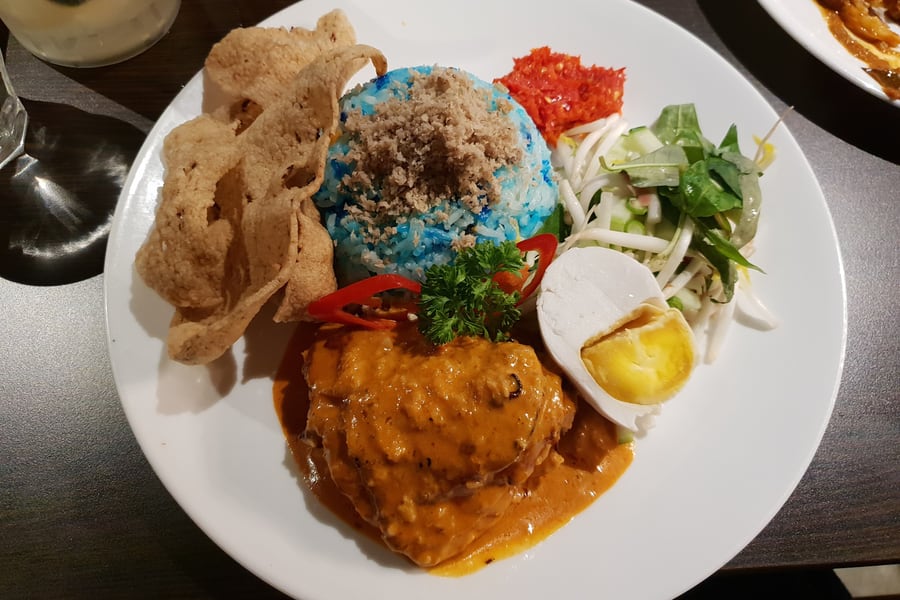 Misaochan2 / Wikimedia Commons · CC BY-SA 4.0 · cropped
Nasi kerabu, and why the rice is blue
Kelantan's own plate of food, and the line runs into the middle of it. The rice is cooked with bunga telang, butterfly-pea petals, which turn it a startling blue; around it go grated coconut, a heap of raw herbs, salted egg, crackers and budu, the fermented anchovy sauce the east coast puts on everything.AyyanD / Wikimedia Commons · CC BY-SA 4.0Slow, then less slow
The line was famously unhurried — 50 to 60 kph. Since the Class 61 units arrived on 12 April 2021 the shuttles manage around 100, which is progress, and a small loss. The overnight sleeper is still the classic way to do it.Timetables
The Jungle Railway is an ordinary KTM service, and there are two ways to ride it — and getting the choice right decides whether you actually see the jungle.
| Detail | What to expect |
|---|---|
| Line | Gemas ⇄ Tumpat · 527.7 km · single track · metre gauge |
| Overnight | Ekspres Rakyat Timuran — the long-distance sleeper, through to/from JB Sentral |
| By day | Shuttle Timuran — local trains, stopping everywhere |
| Speed | ~100 kph since the Class 61 units arrived (12 April 2021) |
| Key stops | Jerantut, Kuala Lipis, Gua Musang, Kuala Krai |
Real anchor (2026): the overnight Ekspres Rakyat Timuran (Train 27) leaves Tumpat around 20:30 and reaches Gemas about 07:44 the next morning; the northbound sleeper likewise departs after dark and arrives Tumpat around midday. A new timetable from 1 January 2026 raised combined Timuran + Shuttle services to about 16 trips a day on the line.
Good to know:
- Daylight is the whole point. The sleeper is the classic, but if you sleep through the interior you have missed the railway — ride the daytime shuttles in stages if you want the scenery.
- It is not the East Coast, whatever the sign says. Don't expect sea until Tumpat.
- The monsoon matters. The north-east monsoon (roughly November–February) floods the interior and Kelantan and has closed this line before; March–September is the drier, safer window.
- Check the timetable for your date — KTM's schedules shift and the shuttle pattern is not intuitive.
Times as of the 2026 timetable. Confirm current schedules with the operator — see the Tickets section below.
Tickets
Tickets come from KTM, online or at the station, and cost a handful of ringgit — this is one of the cheapest great train journeys anywhere. The Ekspres Rakyat Timuran is the overnight long-distance train with sleeping berths, and the berth costs very little more than a seat, so book it. The Shuttle Timur day trains stop everywhere, and hopping between Jerantut, Kuala Lipis and Gua Musang over a couple of days is the better trip.
Book ahead for the sleeper, and well ahead around Hari Raya. Bring ringgit in small notes, because the platform markets are cash and they are the best food on the line, and bring water for the long daylight hops — these are basic trains, not tourist stock. ⚠️ Flooding closes this line: if you are travelling between November and February, have a plan B.
Book your tickets
Ekspres Rakyat Timuran
The overnight sleeper
The long-distance service down the whole line to JB Sentral, with sleeping berths — the classic way to ride the Jungle Railway, and very cheap. Sold by KTM; berths go early in holiday season.
Book Tickets (opens in a new tab, on KTM (Keretapi Tanah Melayu))via KTM (Keretapi Tanah Melayu)Shuttle Timur
Day trains, hop by hop
The local shuttles that stop everywhere — the way to see the line in daylight and get off at Gua Musang, Kuala Lipis or Jerantut. Faster since the Class 61 units arrived in 2021, and still absurdly cheap.
Book Tickets (opens in a new tab, on KTM (Keretapi Tanah Melayu))via KTM (Keretapi Tanah Melayu)Rail Passes
No rail pass covers the Jungle Railway. Interrail and Eurail are European schemes, and Malaysia is not among the 33 countries in Interrail's list of covered railway companies. KTM sells each journey as a ticket, online or at the station, for a handful of ringgit, so a pass would have little to save.
Checked October 2026 against Interrail's list of railway companies (opens in a new tab).
Places to Visit
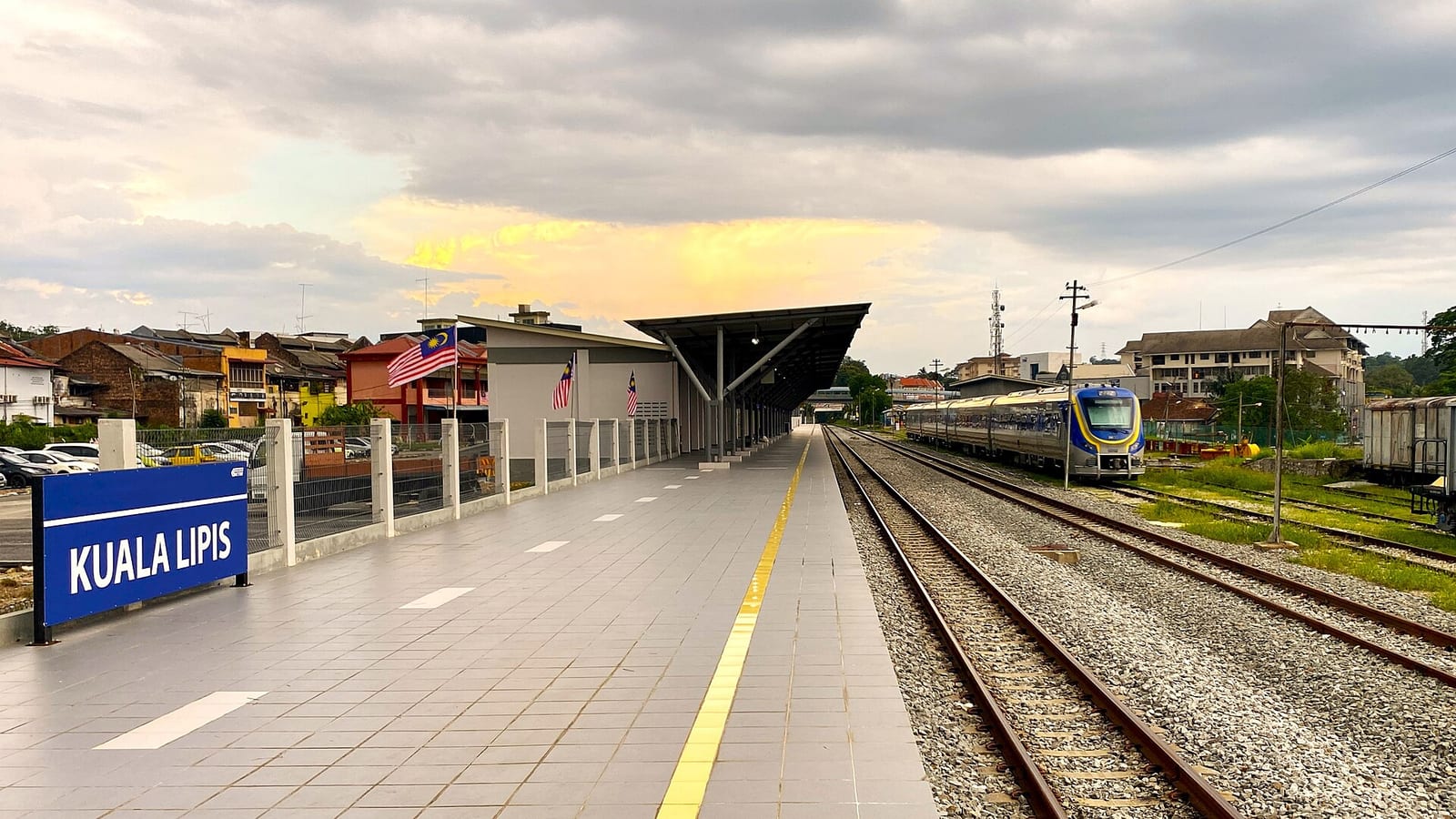
The line's stops are its attractions — and most of them see very few foreign visitors. Two of them get no card here. Gemas, at the southern end, is a junction rather than a destination: it is where the interior line leaves the west-coast main line, and where you change from fast electric Malaysia to slow jungle Malaysia. Kuala Krai is a river town in Kelantan, and the point where the forest begins giving way to paddy.
Everything else on this list is a reason to get off. Ride the line in stages if you have the days for it — the trains are cheap enough that breaking the journey costs almost nothing, and the towns in the middle of the peninsula are the part of Malaysia that the coasts never show you.
 © Vyacheslav Argenberg / http://www.vascoplanet.com/ · CC BY 4.0 · cropped
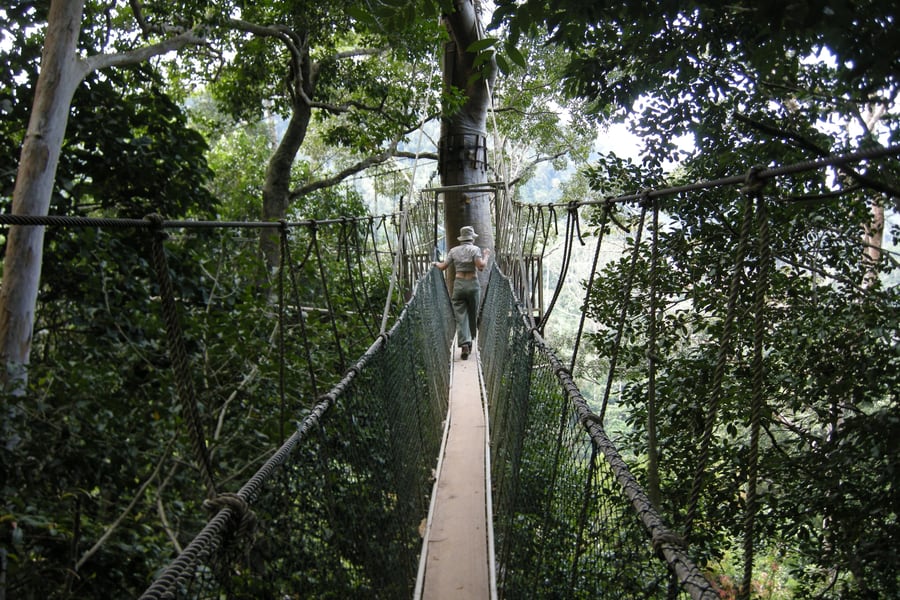
Jerantut and Taman Negara
Jerantut is the gateway, and the way in is a bus to the Kuala Tembeling jetty and then two and a half hours upriver by longboat. What waits is 4,343 square kilometres of forest never glaciated and never cleared, gazetted in 1938–39 as the King George V National Park. The canopy walkway runs 530 metres over six spans strung forty metres up in the crowns, four people to a span. Gunung Tahan, 2,187 m, is the peninsula's roof.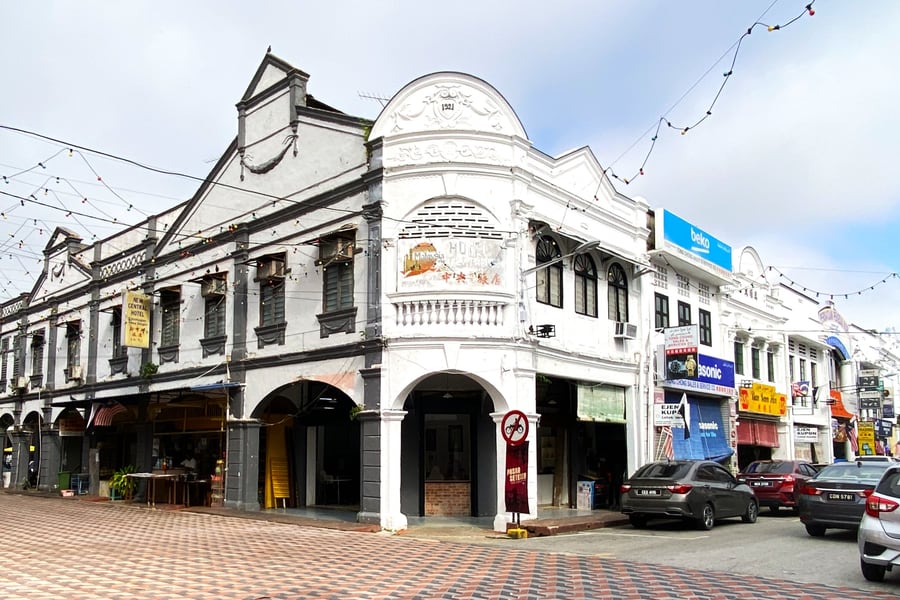 Slleong / Wikimedia Commons · CC0 · cropped
Kuala Lipis
Pahang was governed from here from 1898 until August 1955, when the capital moved to Kuantan and Kuala Lipis quietly stopped mattering. The railway arrived in 1924 and the town boomed on it: the district offices, the Clifford School and the Pahang Club all date from those years, and the British Resident's hilltop bungalow is now a hotel and museum. The shophouse rows are the reward — barely altered, and almost nobody looking at them.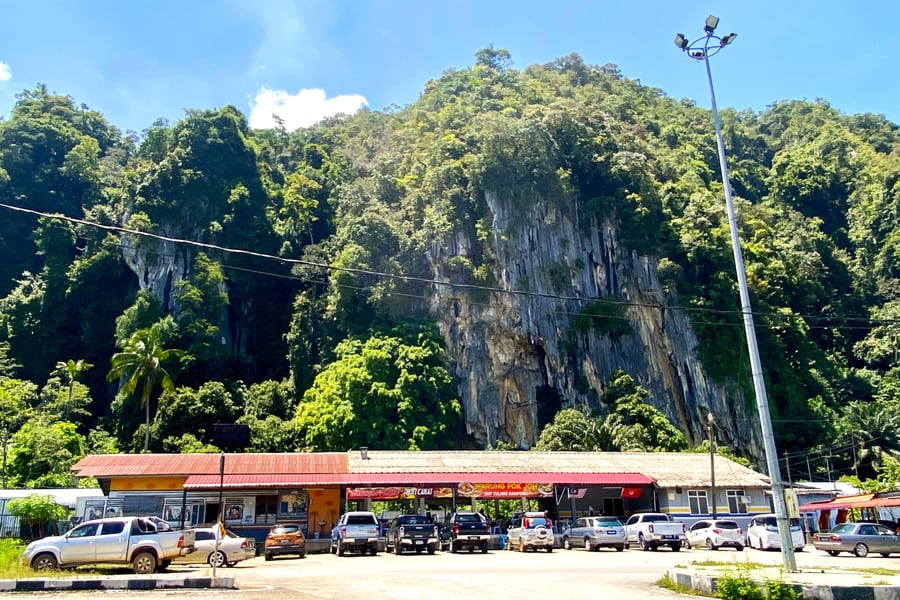 Slleong / Wikimedia Commons · CC0 · cropped
Gua Musang
Gua is cave and musang is the palm civet, and the name comes from a story about civets luring villagers into the hill. The hill is the point: a limestone massif standing straight up behind the old station, honeycombed with caves and visible from every street in the town. You can climb it, with a guide and a certain amount of nerve. The whole southern half of Kelantan is scattered with towers like it.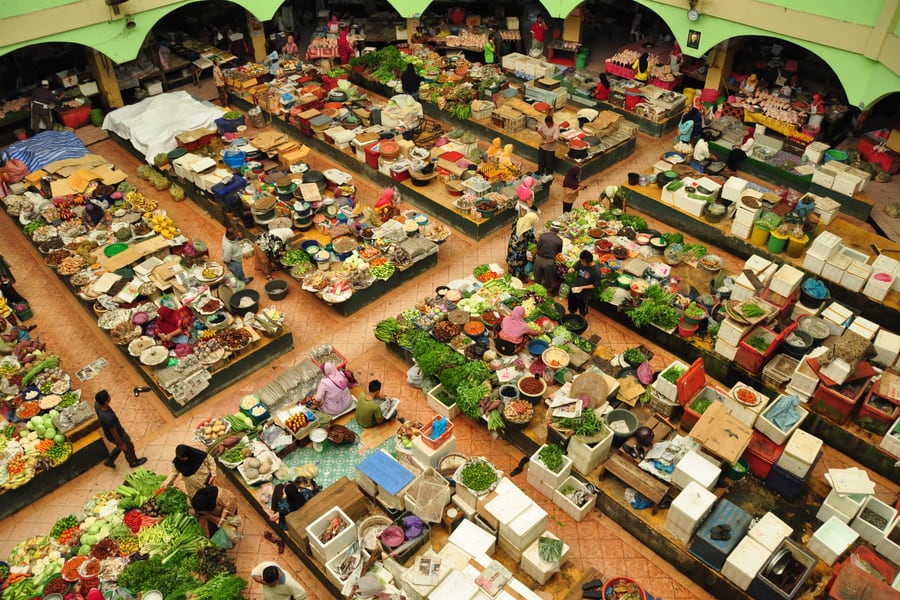 Marufish / Wikimedia Commons · CC BY-SA 2.0 · cropped
Pasar Besar Siti Khadijah
Kota Bharu's central market opened in 1985 as Pasar Besar Buluh Kubu and was renamed in 1997 after Siti Khadijah, the Prophet's wife and a successful trader in her own right — a deliberate nod to the women who run almost every stall in it. Four octagonal storeys, the wet market on the ground floor and tiered galleries looking down on it. Locals call the place Pasar Wanita, the women's market.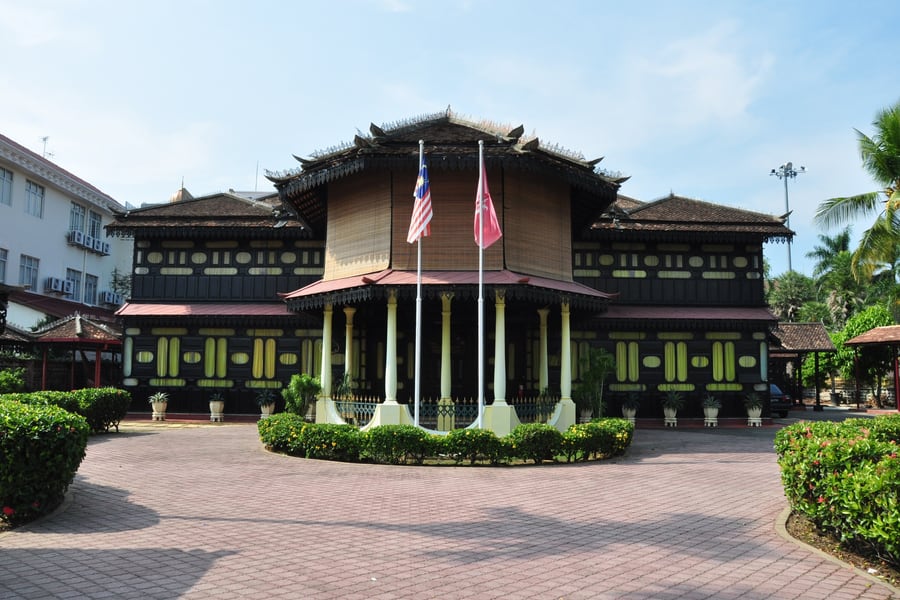 CK Tan / Wikimedia Commons · CC BY 3.0 · cropped
Istana Jahar
Kelantan is the most Malay of the states, and the museum quarter behind the padang is where it shows. Istana Jahar was built in 1855 by Sultan Muhammad II for his grandson, and takes its name from a jahar tree that once grew in the grounds. It is now the Museum of Royal Traditions and Customs, and its pentagonal porte-cochère carries the balcony from which the royal family watched ceremonies in the square below.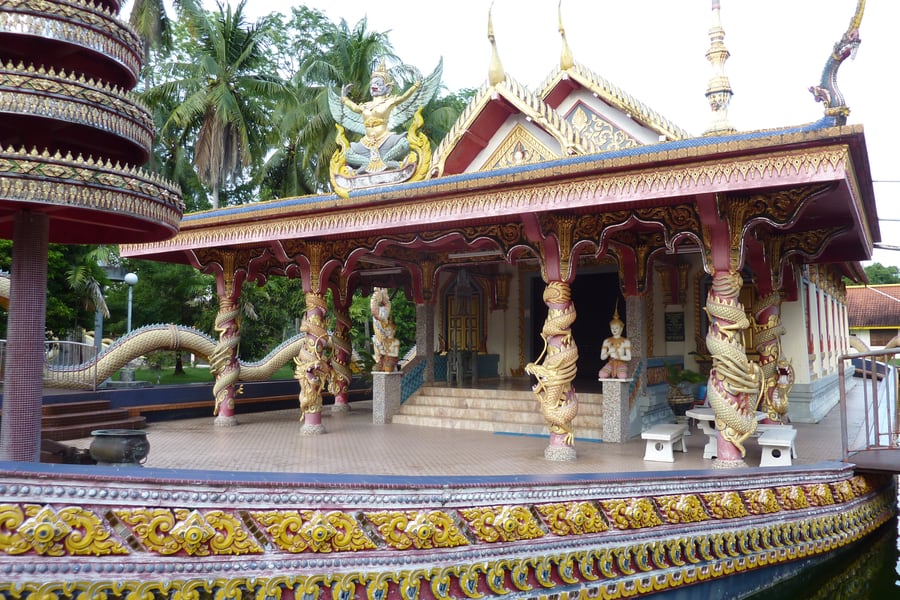 Photo Dharma / Wikimedia Commons · CC BY 2.0 · cropped
Tumpat
The northern terminus is the only point where the East Coast line touches the sea, and the surprise is what stands inland of it: twenty-five Thai Buddhist temples in one small district. Wat Photivihan has a reclining Buddha forty metres long, built between 1975 and 1979 and the largest in Southeast Asia until Myanmar overtook it. Wat Mai Suwankhiri answers with a sixty-metre dragon boat, a dragon curling at each end.Where to Sleep
On the train, there is one good option and it barely costs more than the bad one.
- A berth on the Ekspres Rakyat Timuran — the overnight sleeper's sleeping berths are cheap, curtained and perfectly comfortable. Take one. The alternative is a seat all night, which people do, and which you needn't.
Off the train, this is not a route with resorts — and that's the appeal.
- Kuala Lipis — the best overnight stop on the line: modest hotels in old shophouses, a town that repays a wander, and the sense of somewhere that used to be the centre of things. The obvious place to break a daylight run.
- Jerantut — functional guesthouses, and the staging post for Taman Negara. Most people sleep here one night and then head into the park, where the accommodation runs from floating chalets to a proper jungle lodge.
- Gua Musang — simple hotels under the limestone tower. Fine for a night, and worth it to see the platform market at dawn.
- Kota Bharu — near the northern end: the biggest choice of rooms on the eastern half of the route, and a good place to finish.
Timing matters more here than almost anywhere else on this site. The north-east monsoon runs roughly November to February and it lands hardest on exactly this part of Malaysia — Kelantan floods, and the railway has closed because of it. March to September is drier and much safer for a trip built around this line.
And note that Kelantan is a conservative state: dress modestly, especially around Kota Bharu and Tumpat, and expect a genuinely warm welcome for doing so.
Questions or corrections
Planning this trip and stuck on something, or spotted a time, fare or detail that has changed? Send us a message about Jungle Railway. We read every one, and we update this page when something has changed.