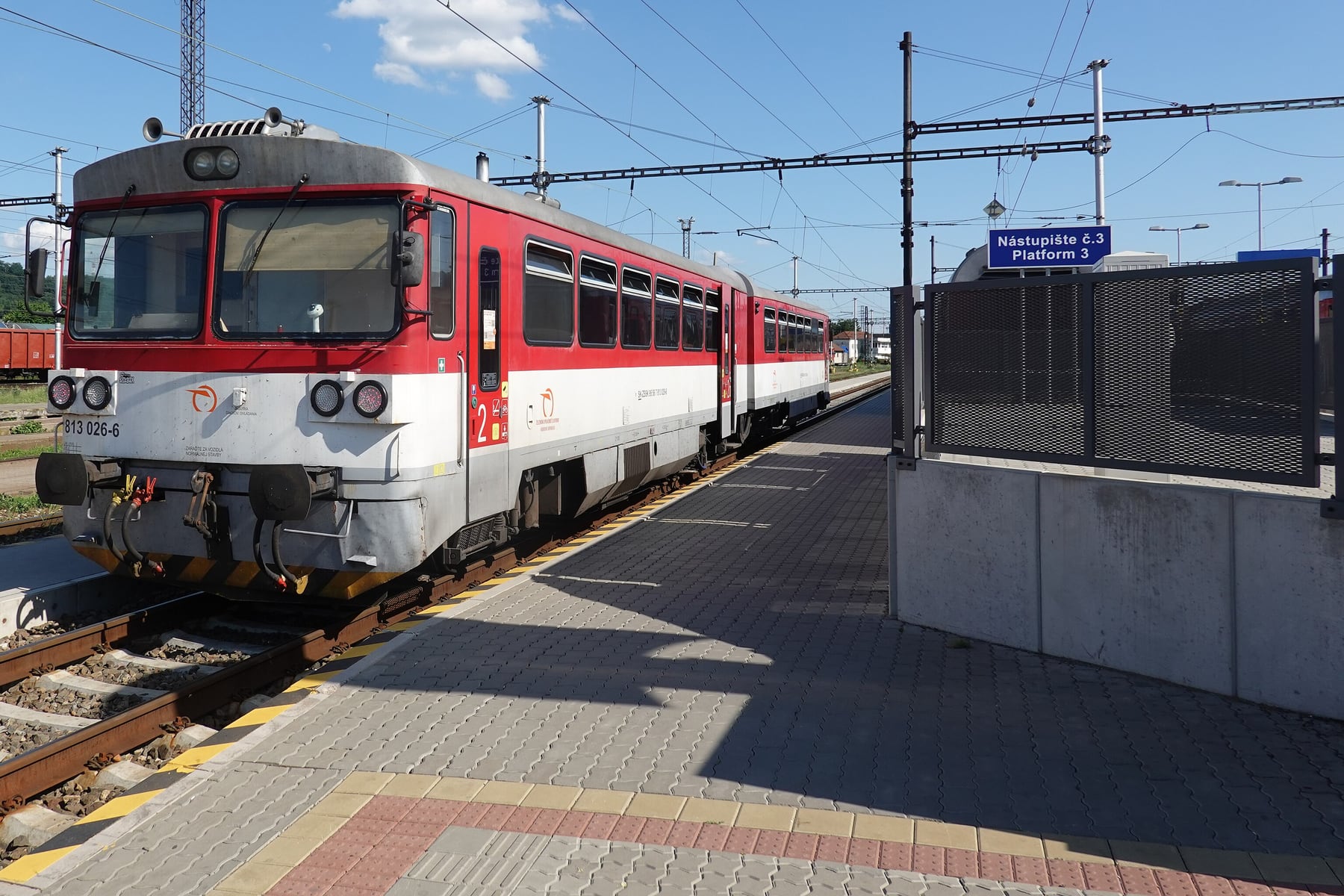
Košice to Mukachevo
Smiley.toerist / Wikimedia Commons · CC BY-SA 4.0 · 2026 · cropped
- DistanceAbout 150 km, Košice to Mukachevo
- Duration4 hr 14 min to 4 hr 52 min
- Best seasonTwice daily each way, all year
Introduction
Ukraine's railway is broad gauge and its western neighbours' is standard, so crossing between them usually means changing trains or changing bogies. The Zakarpatia does neither. It is a two-car Slovak railbus that leaves Košice twice each morning, crosses into Ukraine at Chop, and keeps going on standard-gauge track laid beside the broad gauge all the way to Mukachevo — about 150 kilometres and a little over four hours, for €12.20.
The scenery is quiet: the hills east of Košice, the vineyards of the Slovak Tokaj, the Bodrog, the flat country where Slovakia, Hungary and Ukraine meet. What makes the ride is the crossing. The ten kilometres between Čierna nad Tisou and Chop take about an hour, and on the far side the clocks go forward, the signs change alphabet, and the train runs on past yards where broad and standard gauge lie side by side.
It first ran in June 2019, stopped with the full-scale invasion, and came back on 11 December 2022. The train that works it is an elderly class 813 railbus — the Bageta to Slovak railwaymen — and it is often full.
The Journey
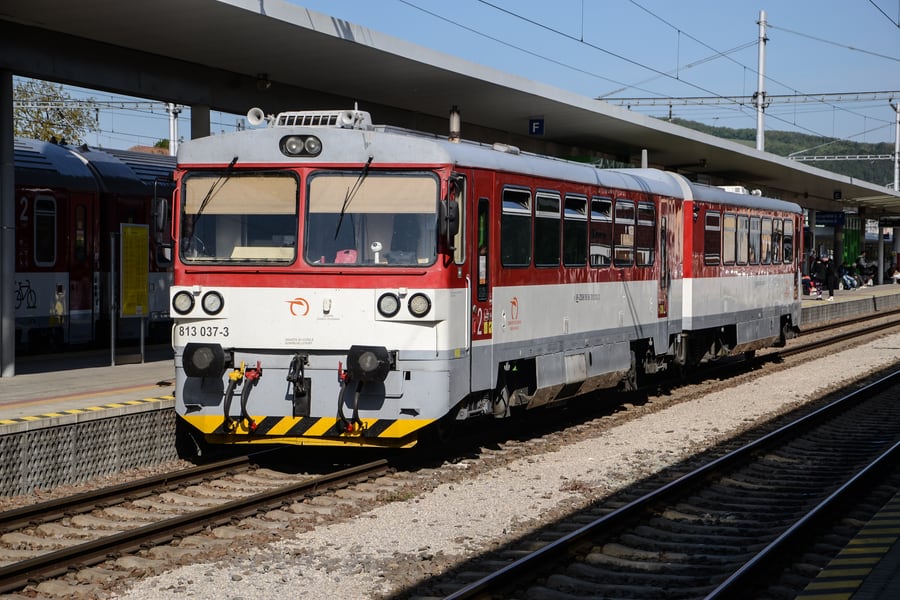
At Košice the Zakarpatia is easy to miss among the long red-and-white Bratislava expresses: two short cars and a destination board that says Mukačevo. The class 813 is a Czechoslovak railbus built at Studenka between 1975 and 1985 and modernised at Zvolen in the 2000s, with a top speed of 90 km/h and seats for 83. It is not a fast train, and it is not trying to be.
The Slovak side
The line out is line 190, 98.7 kilometres from Košice to Čierna nad Tisou, electrified and worked hard by freight. It runs east through Nižná and Vyšná Myšľa and over the shoulder of the Slanské vrchy at Slanec, then on through Kalša to Michaľany, where the country opens out. The Zakarpatia stops at none of them.
At Slovenské Nové Mesto, across the border from Hungary's Sátoraljaújhely, the line enters the Slovak share of the Tokaj wine region. It crosses the Bodrog at Streda nad Bodrogom and runs on across the flats to Čierna nad Tisou, a small town with an enormous railway — more than 900 tracks where broad-gauge freight from Ukraine is transferred into Europe, billed as the largest land port in Central Europe. This is the train's only Slovak call.
Across the line
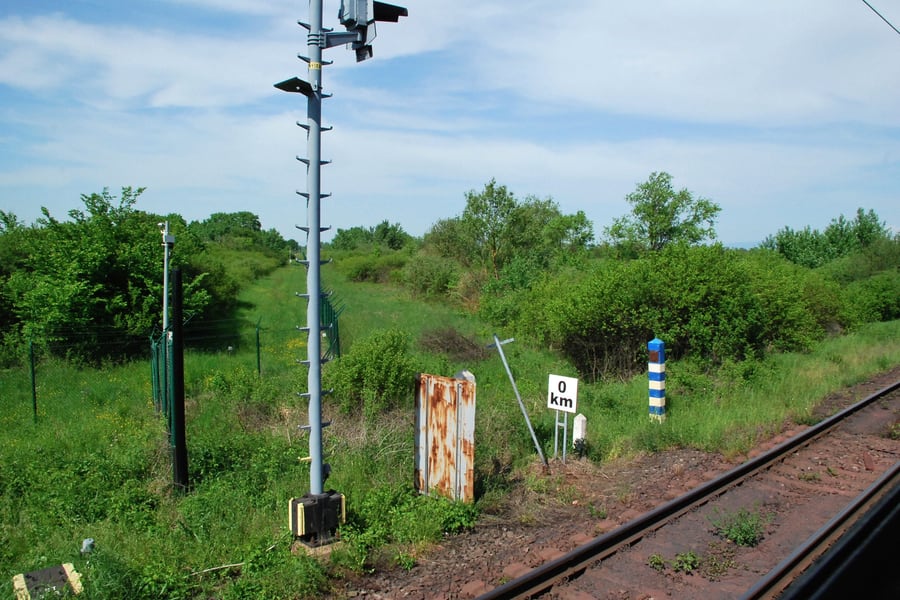
From Čierna it is about ten kilometres to Chop, and they take about an hour: Slovak exit control, the frontier post at kilometre 0.0 in a meadow of scrub, then Ukrainian entry control and customs. Ukraine is an hour ahead, so on the morning train the clock at Chop reads exactly two hours after the one at Čierna. Chop is the hinge of the whole corridor. Broad, standard and four-rail dual-gauge tracks lie next to each other, and there is a shed where carriages crossing between the two systems have their bogies exchanged. The train waits here for half an hour or more.
On to Mukachevo
The last 42 kilometres follow the main line north-east across the Zakarpattia plain. Between Chop and Batiovo the track was laid with four rails, broad and standard gauge together, so that freight from Slovakia could keep running to Romania, and the standard-gauge path carries on to Mukachevo. There the Zakarpatia does not use the main station but a standard-gauge platform in another part of it, Mukachevo-Zakhidna, built in 2018 for the first trains to Hungary. The old town and Palanok Castle are a short ride away.
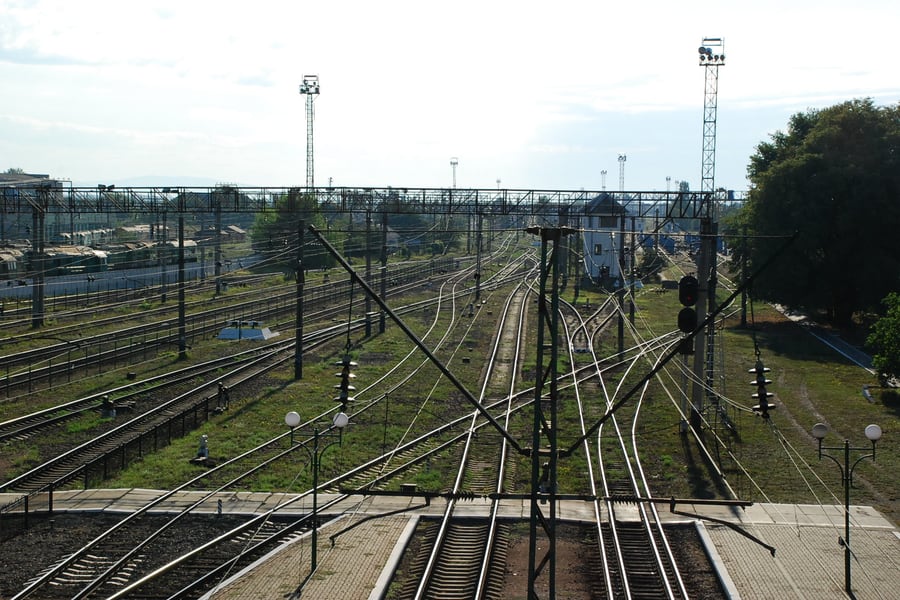
Along the route
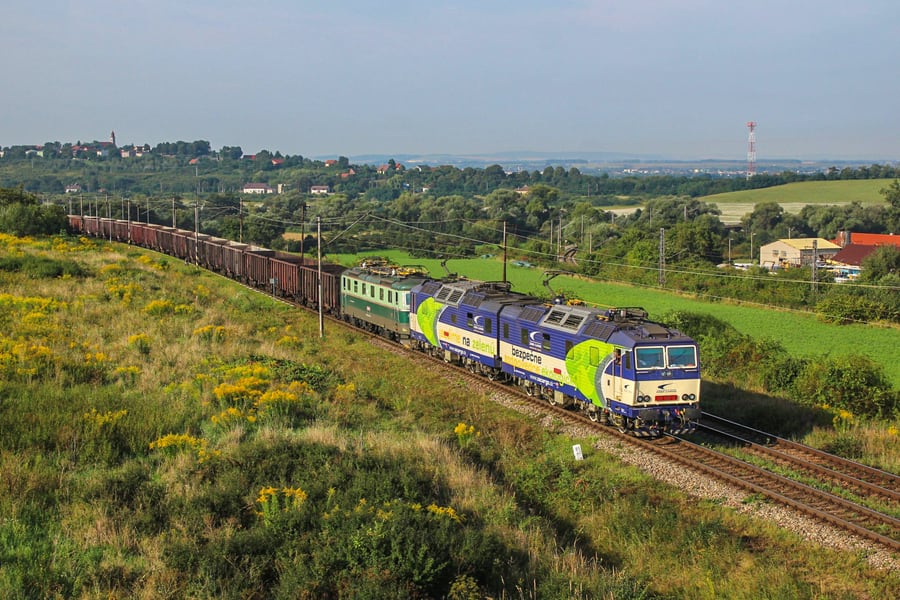
 Smiley.toerist / Wikimedia Commons · CC BY-SA 4.0 · 2026 · cropped
Out of Košice
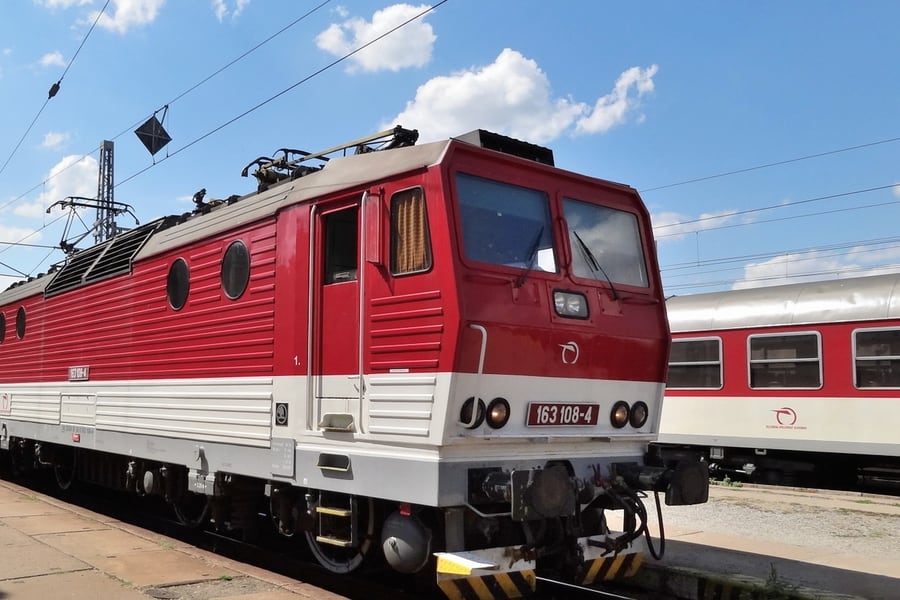
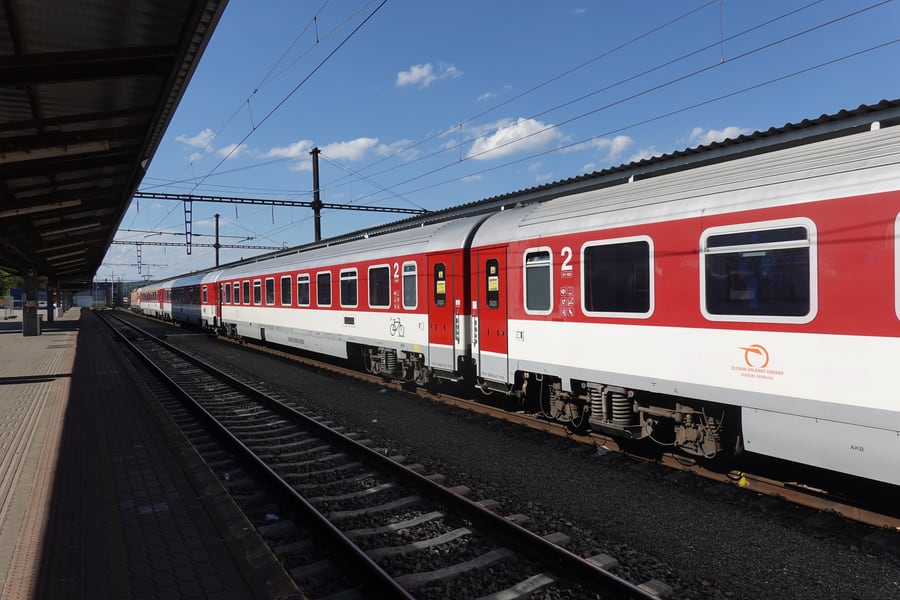
Slovakia's second city, and the Zakarpatia leaves it from a platform shared with the Bratislava expresses — 05:46 or 10:46, two cars, often full.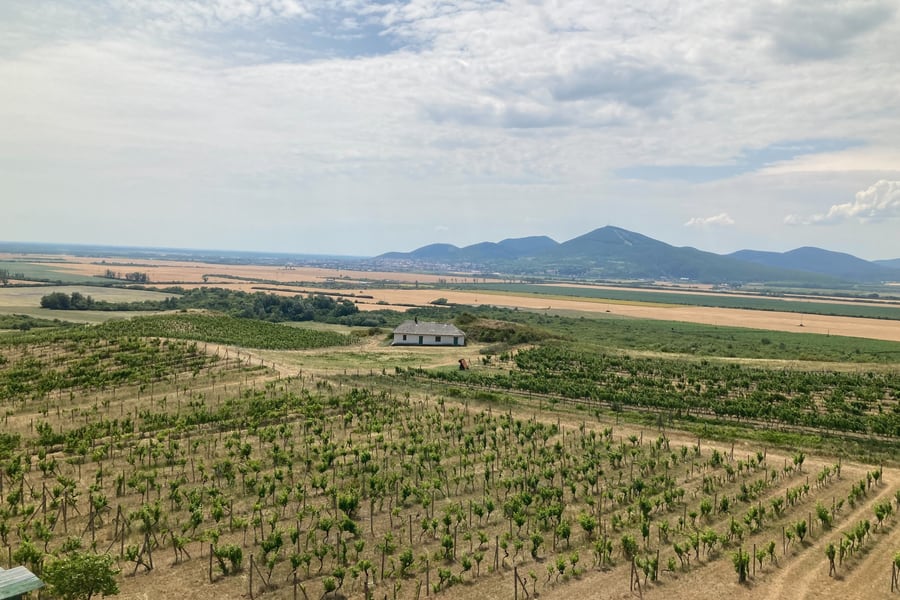 Newklear007 / Wikimedia Commons · CC BY-SA 4.0 · 2022 · cropped
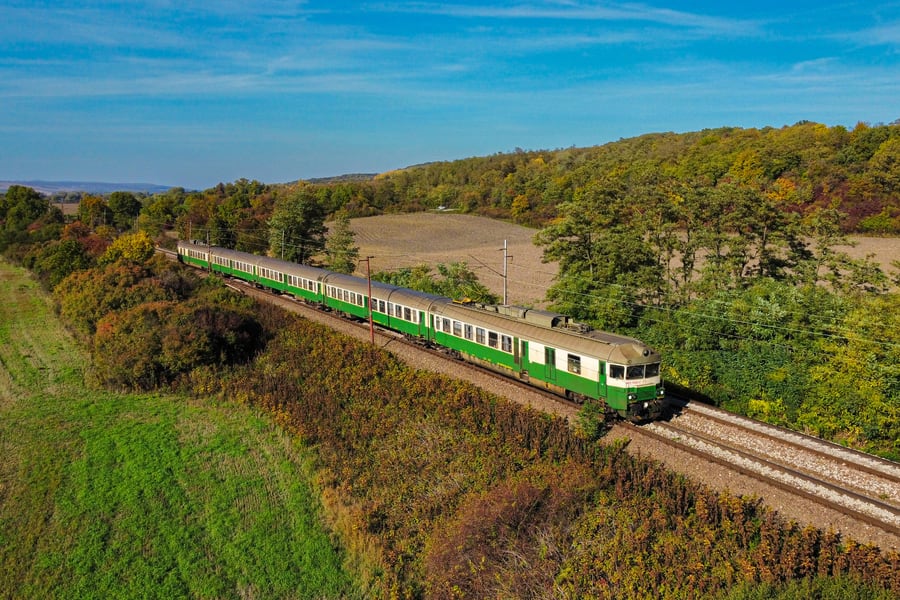
Through the Tokaj hills
Past Slovenské Nové Mesto the line runs through the Slovak share of the Tokaj wine region, vineyards on the slopes, then crosses the Bodrog at Streda.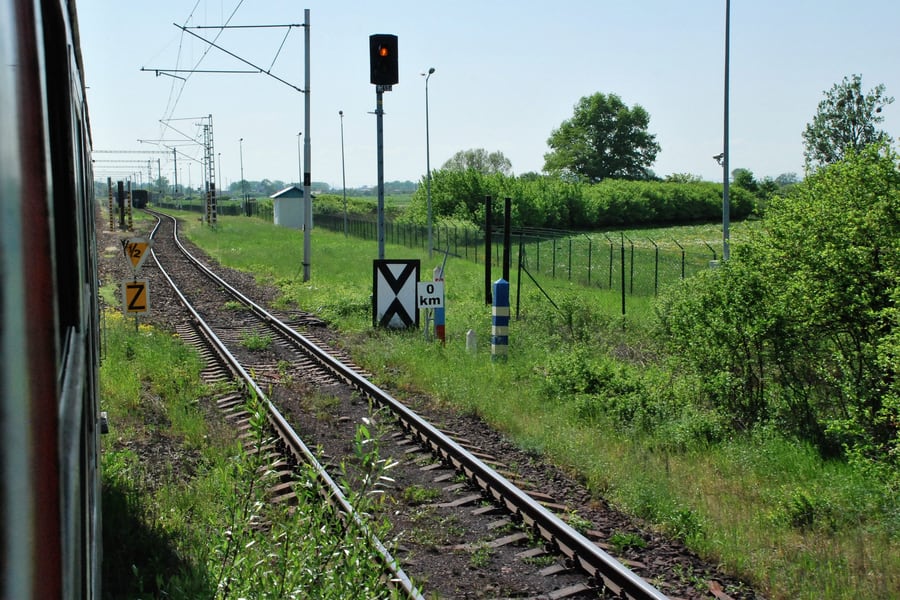 Kamil Korecz / Wikimedia Commons · CC BY-SA 4.0 · 2013 · cropped
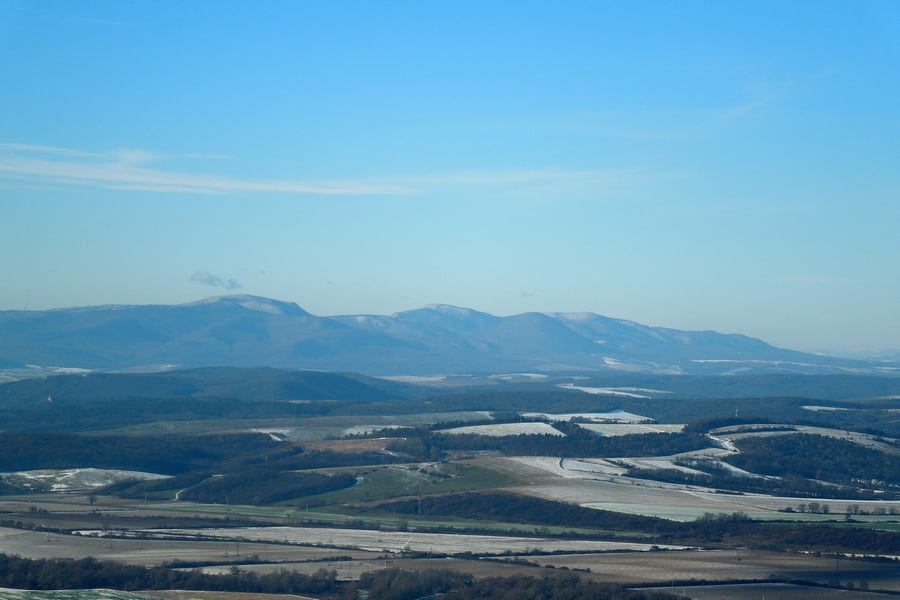
Over the frontier
Čierna nad Tisou, then ten kilometres to Chop that take about an hour: passports, customs, and a signal at kilometre zero where Schengen stops.A bit of history
Culture & experiences along the way
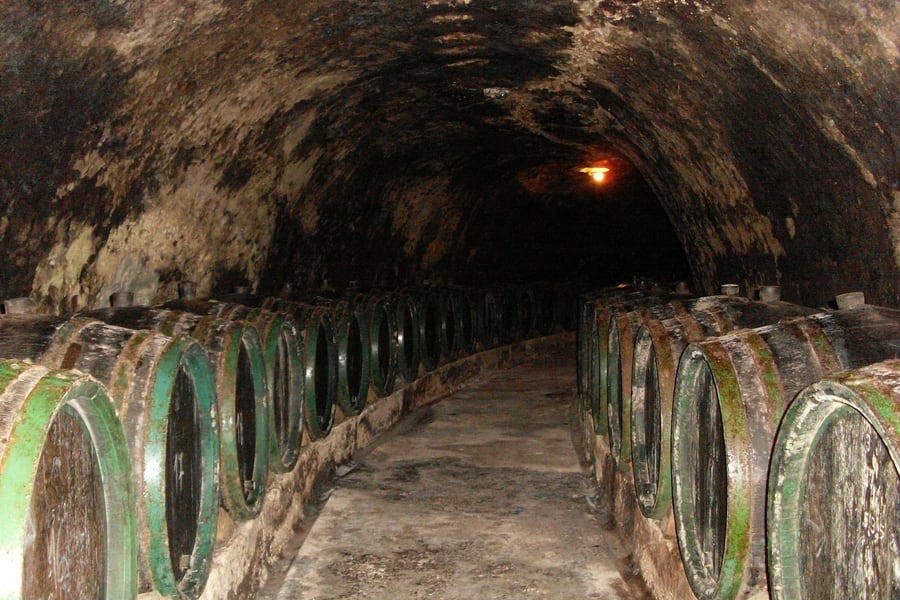 Slavo O. / Wikimedia Commons · Public domain · 2008
Tokaj, underground
The Slovak Tokaj is seven villages and 908 hectares, and its wine matures in cellars dug into the hillsides — long vaulted tunnels, cool and damp, the casks stacked along both walls. Viničky and Malá Tŕňa are the villages to taste in, a local train from Čierna nad Tisou.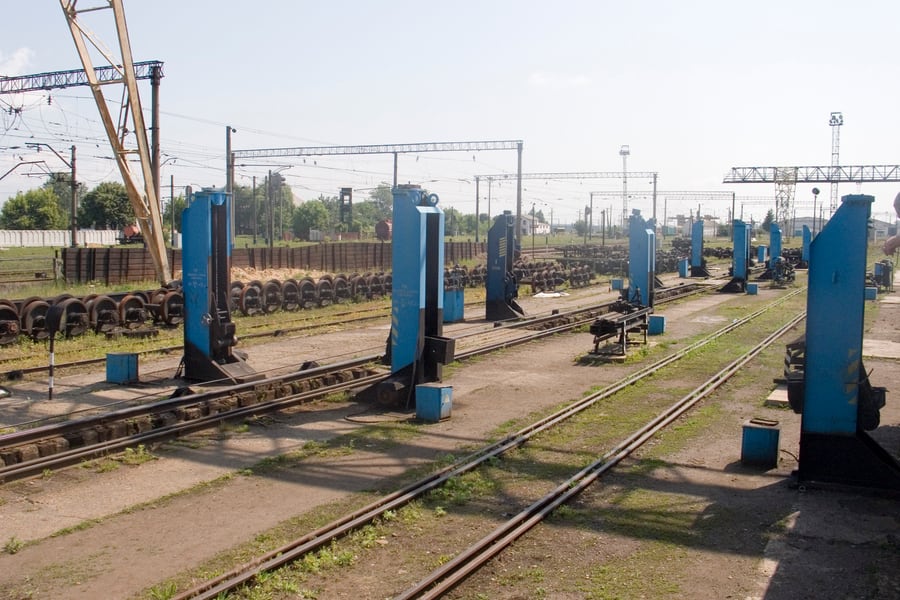 Maxim75 / Wikimedia Commons · CC BY-SA 4.0 · cropped
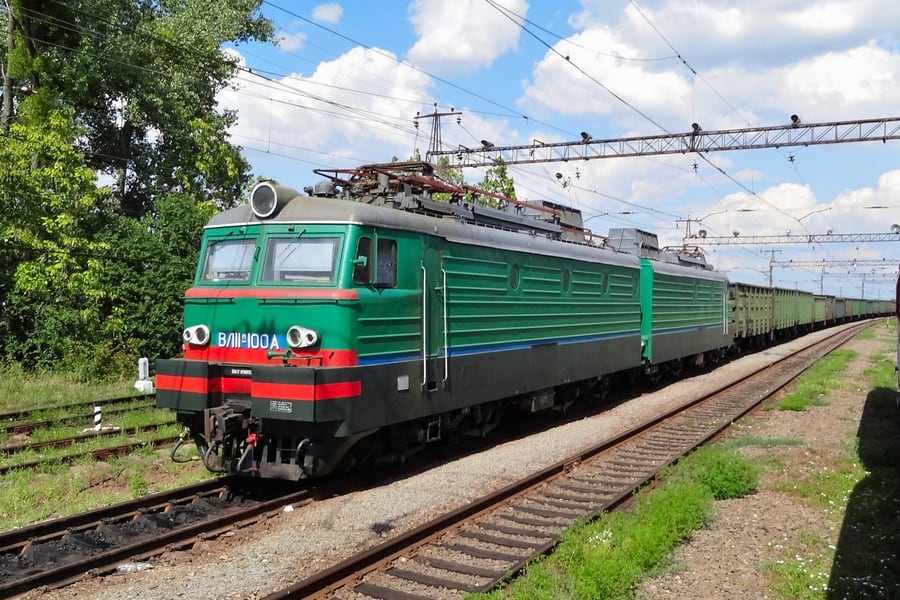
Two gauges, one yard
Ukraine runs on 1,520 mm and Slovakia on 1,435 mm. Carriages crossing between the two have their bogies exchanged in the yard at Chop; the Zakarpatia avoids it by staying on a standard-gauge track that runs on past Chop all the way to Mukachevo.Timetables
Two trains a day each way, every day of the year, both named Zakarpatia and both run by the Slovak operator ZSSK. Times are local: Slovak time at Košice and Čierna, Ukrainian time at Chop and Mukachevo, which is one hour ahead. Read from Ukrainian Railways' station boards and ZSSK's published timetable in September 2026.
| Train | Košice | Čierna nad Tisou | Chop | Mukachevo |
|---|---|---|---|---|
| R 960 | 05:46 | 07:10 – 07:12 | 09:12 – 09:42 | 11:00 |
| R 962 | 10:46 | 12:13 – 12:15 | 14:20 – 14:57 | 16:07 |
| Train | Mukachevo | Chop | Košice |
|---|---|---|---|
| R 963 | 12:00 | 13:11 – 13:41 | 15:18 |
| R 965 | 18:57 | 20:10 – 20:50 | 22:49 |
Both return trains also call at Čierna nad Tisou; R 965 waits there for over an hour, from 20:14 to 21:28 Slovak time, which is why it is the slowest of the four.
Work at Chop
Chop station is being rebuilt, and on several runs of dates in August and September 2026 all four trains were cut back to terminate at Chop, with passengers for Mukachevo sent on by Ukrainian domestic trains. ZSSK announces each one on its news page — check before you travel.
Through from Bratislava
Since 1 September 2026 a second pair runs through from the Slovak capital to Chop, but not on to Mukachevo: R 964 leaves Bratislava at 11:27 and Košice at 17:46, reaching Chop at 21:31; R 961 leaves Chop at 09:59 and reaches Bratislava at 19:44.
Live times are on Ukrainian Railways' timetable (opens in a new tab) and ZSSK's journey planner (opens in a new tab).
Tickets
The Zakarpatia is a Slovak train, so its fares are set by ZSSK and quoted in euro: €12.20 from Košice to Mukachevo, €6.10 under 16, with shorter fares from Čierna nad Tisou and to Chop. Buy from ZSSK ahead of the day: the ticket is issued in the passenger's name, and the train is small and often full.
Everyone crosses a Schengen frontier here, so carry a passport and allow for the controls at Čierna and Chop. The return journey from Mukachevo starts from the standard-gauge platform in another part of the station, not the main building — give yourself time to find it.
Book your tickets
Košice to Mukachevo
The whole run on the Zakarpatia
The through fare from ZSSK, the Slovak operator that runs the train, €12.20 for an adult and €6.10 under 16.
Book Tickets (opens in a new tab, on zssk.sk)via zssk.skČierna nad Tisou to Mukachevo
Joining at the border
For a traveller already at the frontier, €8.20 for an adult and €4.10 under 16, or €7.00 as far as Chop.
Book Tickets (opens in a new tab, on zssk.sk)via zssk.skUkrainian Railways timetable
Onward trains from Chop and Mukachevo
The station boards this page's Ukrainian times were read from, and the connections deeper into Ukraine.
Book Tickets (opens in a new tab, on uz.gov.ua)via uz.gov.uaRail Passes
An Interrail or Eurail pass covers the Slovak half only. ZSSK's Rýchlik trains are included in Slovakia, so a pass holder is covered from Košice to Čierna nad Tisou — but Ukraine is not in the pass network, and the fare from the frontier onward has to be bought separately. Checked on Interrail's railway-companies table, last updated 28 August 2026.
For this journey alone a pass is not worth buying: the whole through fare is €12.20. It earns its place only if the Zakarpatia is the last leg of a longer trip across Slovakia, in which case buy the Čierna nad Tisou to Mukachevo ticket for €8.20 and let the pass carry you to the border.
Places to Visit
Two old towns, one at each end, and a wine region in between. Košice's cathedral and theatre stand on its main street; Mukachevo's castle and monastery each have a hill of their own. The Tokaj villages are a detour — a local train from Čierna nad Tisou, not a stop on the Zakarpatia.
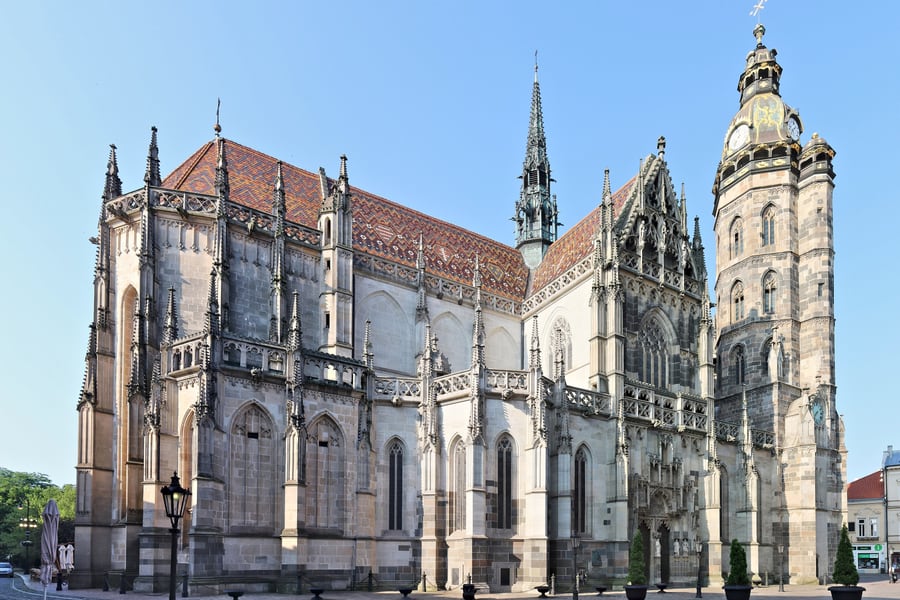 Ingo Mehling / Wikimedia Commons · CC BY-SA 3.0 · 2019 · cropped
St Elisabeth Cathedral, Košice
The largest church in Slovakia and one of the easternmost Gothic cathedrals in Europe, 60 metres long with a north tower of 59. It stands in the middle of Hlavná, the old town's main street, begun on the site of an earlier church recorded in 1283. Gothic building went on here for well over a century.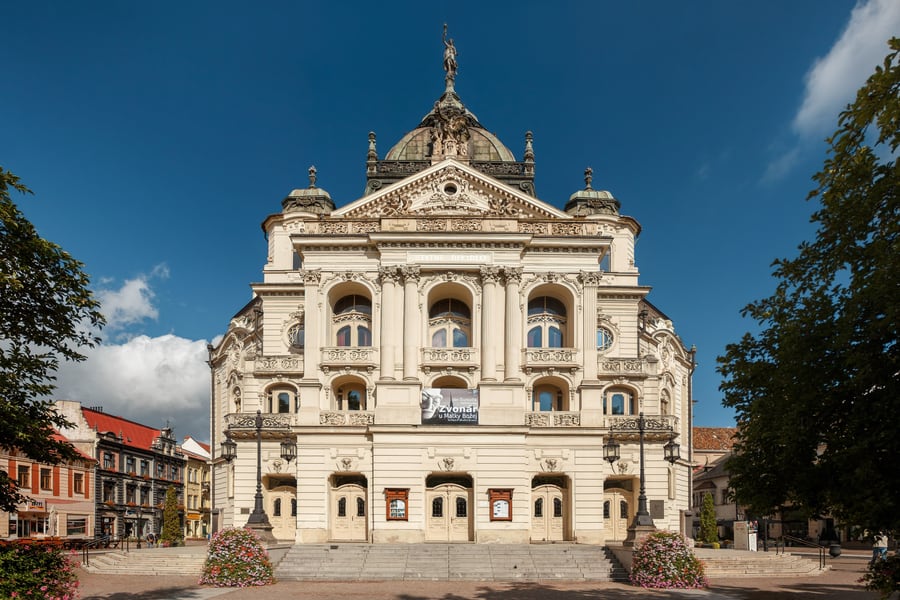 Lynx1211 / Wikimedia Commons · CC BY-SA 4.0 · 2017 · cropped
The State Theatre, Košice
A few steps north of the cathedral on the same street, the neo-baroque theatre was built to Adolf Lang's design and finished in 1899. It still stages opera, ballet and drama, and the singing fountain in front of it plays to the square.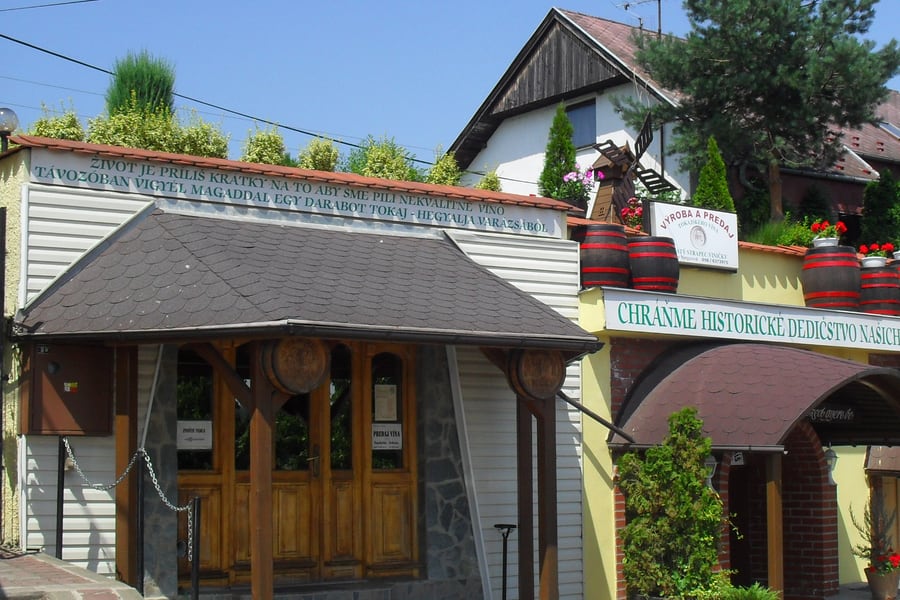 Szeder László / Wikimedia Commons · CC BY-SA 4.0 · 2010 · cropped
The Slovak Tokaj
The part of the Tokaj wine region that the Treaty of Trianon left in Czechoslovakia — seven villages, 908 hectares, and the smallest of Slovakia's wine regions. Viničky, a short local-train ride from Čierna nad Tisou, is a street of cellar doors built into the hillside, barrels on the roofs.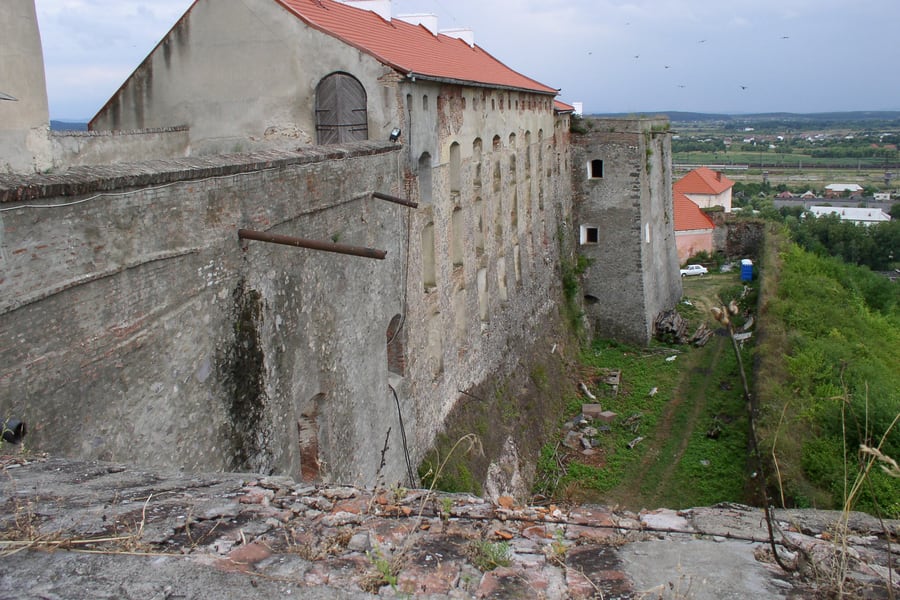 Alex Zelenko / Wikimedia Commons · CC BY-SA 4.0 · 2006 · cropped
Palanok Castle, Mukachevo
On a former volcanic hill 68 metres above the town, and the reason most people come to Mukachevo. The castle is in three parts — high, middle and low — and the walls look west over the plain the train has just crossed.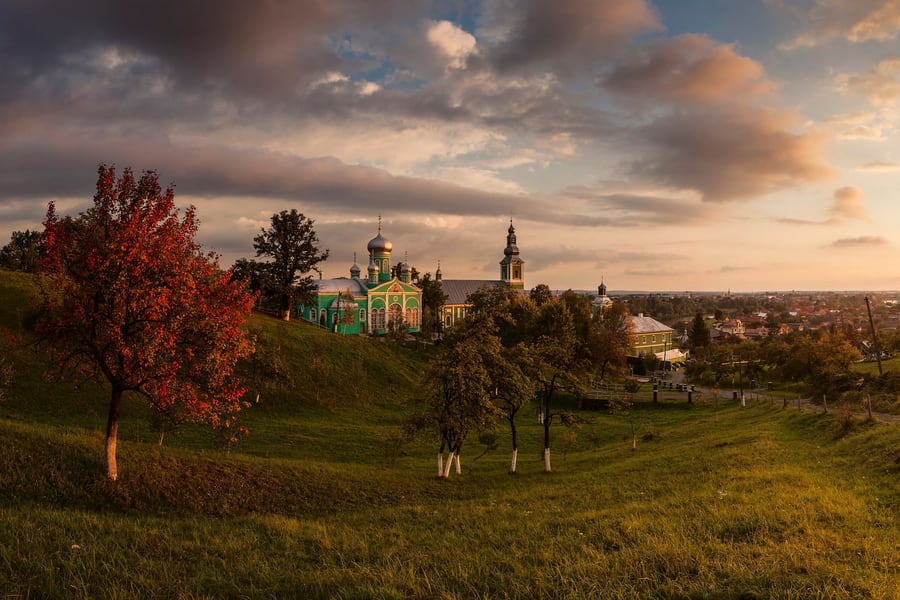 Moahim / Wikimedia Commons · CC BY-SA 4.0 · 2014 · cropped
St Nicholas Monastery, Mukachevo
On Monk's Hill across the Latorica, where a monastery is recorded from 1360. The stone buildings went up in 1766–1772 and the green-domed St Nicholas church in 1798–1804. It passed to the Orthodox Church in 1946–47 and has been a convent since.Where to Sleep
With a train at 05:46, a night in Košice is almost a requirement for the early crossing. At the far end Mukachevo is small enough that anywhere in the centre is close to both the castle and the station.
Ukraine is under martial law, and a curfew applies. Its hours are set by each regional military administration and change with the security situation. The evening train back to Košice leaves Mukachevo at 18:57, well clear of it, but check the current hours in Zakarpattia before arriving.
Where to stay
Boutique Hotel Bristol
Orlia 3, Košice
In the old town a street back from Hlavná, with its own spa, the Rímske kúpele, in the building.
Check Availability (opens in a new tab, on hotelbristol.sk)via hotelbristol.skHotel Star
The central square, Mukachevo
Sixty-two rooms in an Art Nouveau building once owned by the Schönborn counts, looking across the square to the town hall.
Check Availability (opens in a new tab, on hotelstar.ua)via hotelstar.uaQuestions or corrections
Planning this trip and stuck on something, or spotted a time, fare or detail that has changed? Send us a message about Košice to Mukachevo. We read every one, and we update this page when something has changed.