The Lhasa–Shigatse Railway
Mondo79 / Wikimedia Commons · CC BY 2.0 · 2016 · cropped
- Distance248 km, Lhasa to Shigatse
- Duration2 h 04, non-stop
- Best seasonMay to October
Introduction
Until 2014 there were two ways between Lhasa and Shigatse, Tibet's two largest cities: the road, and the air. The bus took more than six hours, and a flight cost more than most people who lived there could pay. The Lhasa–Shigatse railway — 拉日铁路, Lārì Tiělù — opened on 16 August 2014, a 253-kilometre spur of the Qinghai–Tibet line running west up the valley of the Yarlung Tsangpo. In its first ten years it carried more than 14 million passengers.
It is not a record-breaker. The line stays between 3,600 and 4,000 metres, well below the passes on the way into Tibet, and it was built to be ordinary transport. What sets it apart is the train. Since 19 May 2025 every passenger service has been a Fuxing, making it the first line in Tibet to run nothing else, and the Fuxing in question is the CR200JS-G: a set built for the two railways out of Lhasa, with a diesel power car at one end and an electric one at the other. Only three have been built. Three trains a day each way run non-stop in about two hours, for ¥64 in second class.
A foreign visitor needs two permits for this ride, and both are arranged through a licensed agency as part of a guided tour. The Tickets section says which.
The Journey
Lhasa and the junction at Xierong
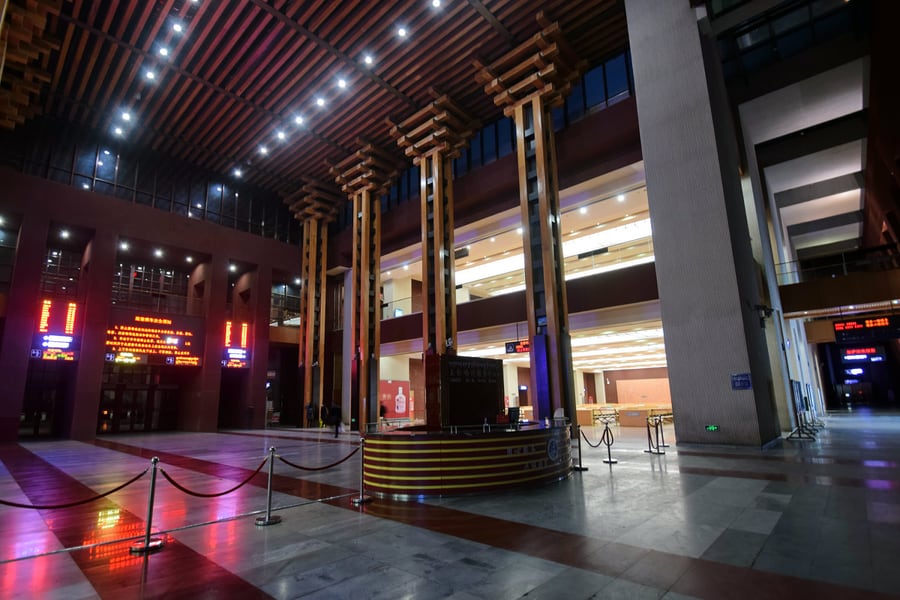
The trains leave from Lhasa station, 3,641 metres up, which the Shigatse line shares with the Qinghai–Tibet Railway. The first departure, C885, goes at 08:40. Thirty-three kilometres out, at Xierong, the Lhasa–Nyingchi line turns off to the east. The overhead wires go with it: beyond Xierong the Shigatse line is not electrified, which is the reason its trains carry a diesel end.
Up the Yarlung Tsangpo
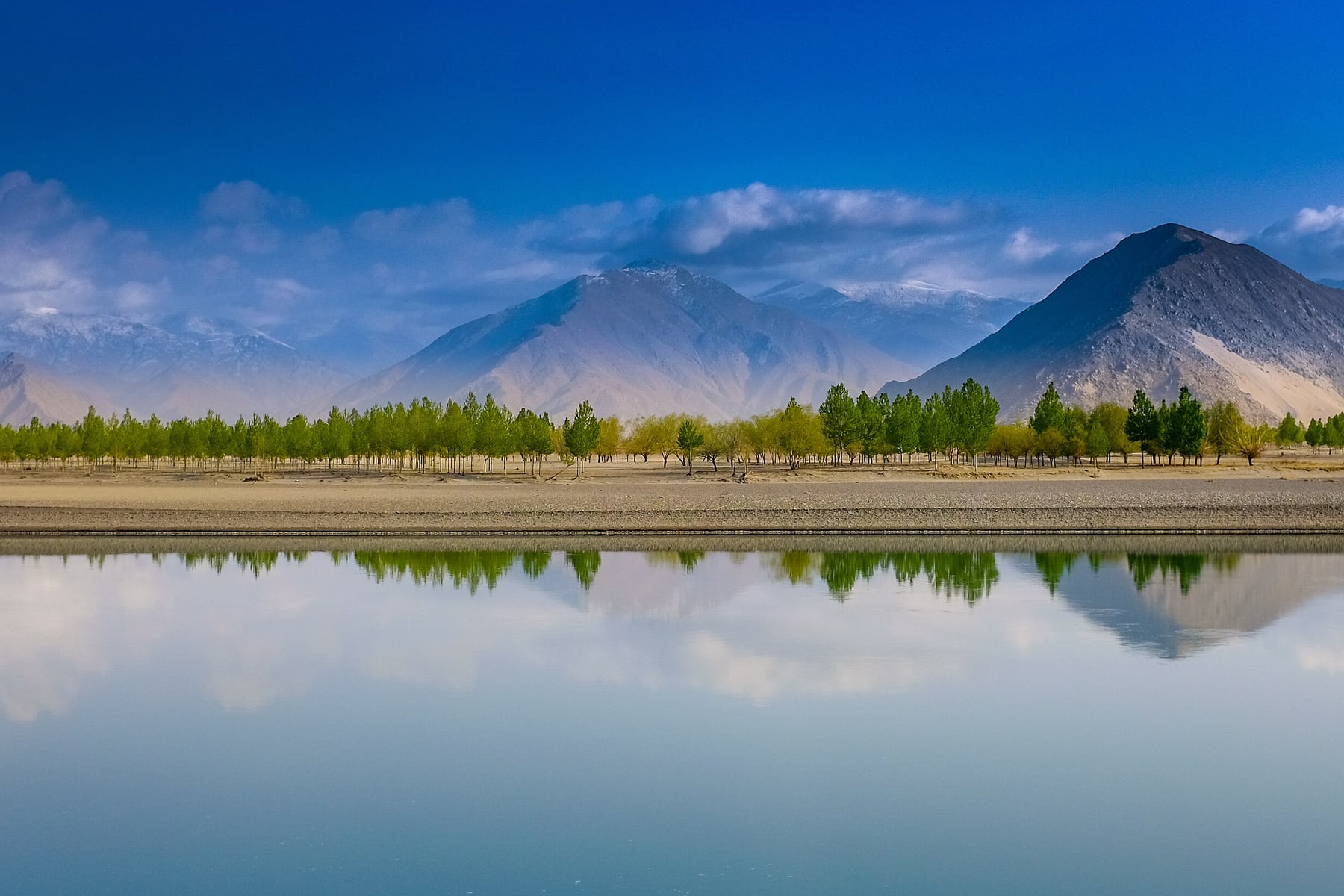
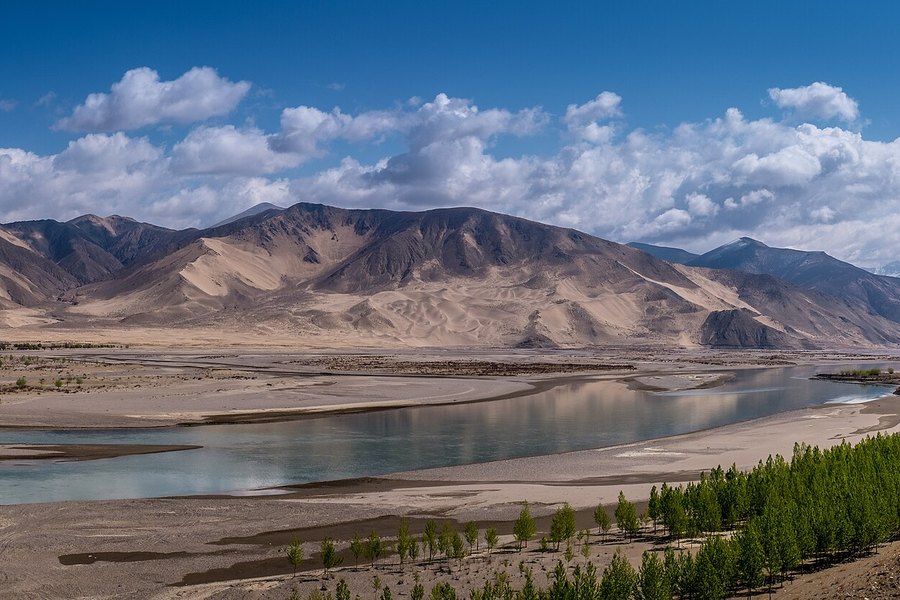
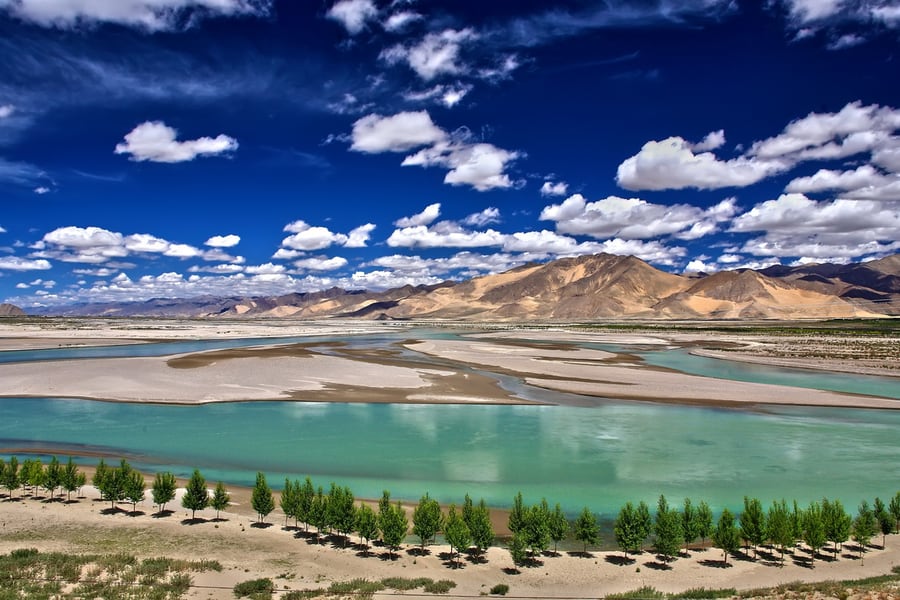
From Qüxü, 3,592 metres, the railway runs west up the valley of the Yarlung Tsangpo — the river that becomes the Brahmaputra in India — past Nyêmo at 3,731 metres and Rinbung at 3,835. In places the valley opens out into braided channels and sandbanks lined with planted trees; in others it closes in. There are 96 bridges and 29 tunnels, and together they make up 45.8 per cent of the line. The longest tunnel, Zongga No. 1, is 10,415 metres. The line is single track, built for 120 km/h, and nowhere steeper than 12.5 in 1,000.
No train calls at the stations in between. The Fuxing runs Lhasa to Shigatse without a stop.
The train
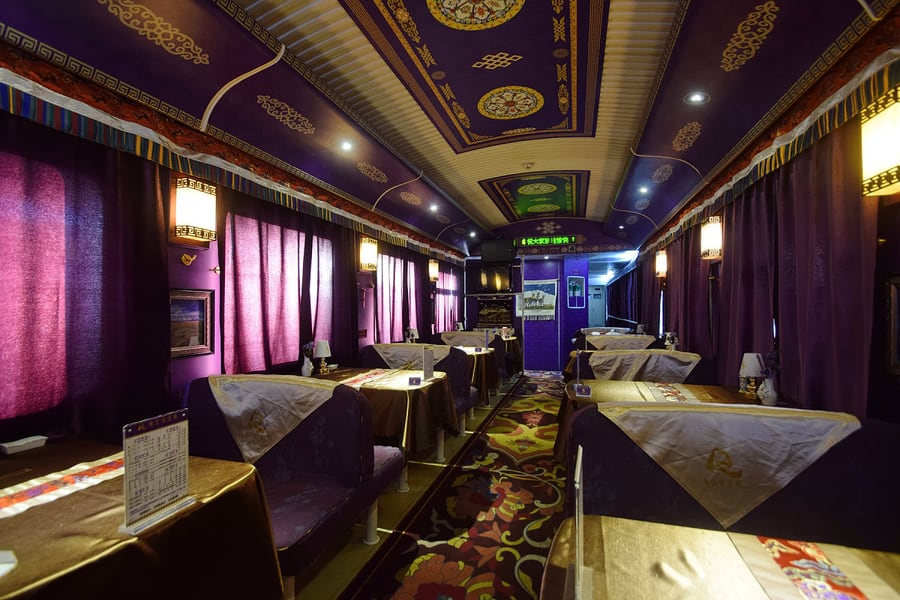
When the line opened there were two trains a day each way: coaches, with a Tibetan-decorated dining car, hauled by plateau versions of the HXN3 diesel built in Dalian. Their run through the Zongga tunnel was the longest any diesel in China had hauled a train underground. Fuxing sets joined them later, and the last of the coach trains, the Z8801 to Z8804, ran in May 2025.
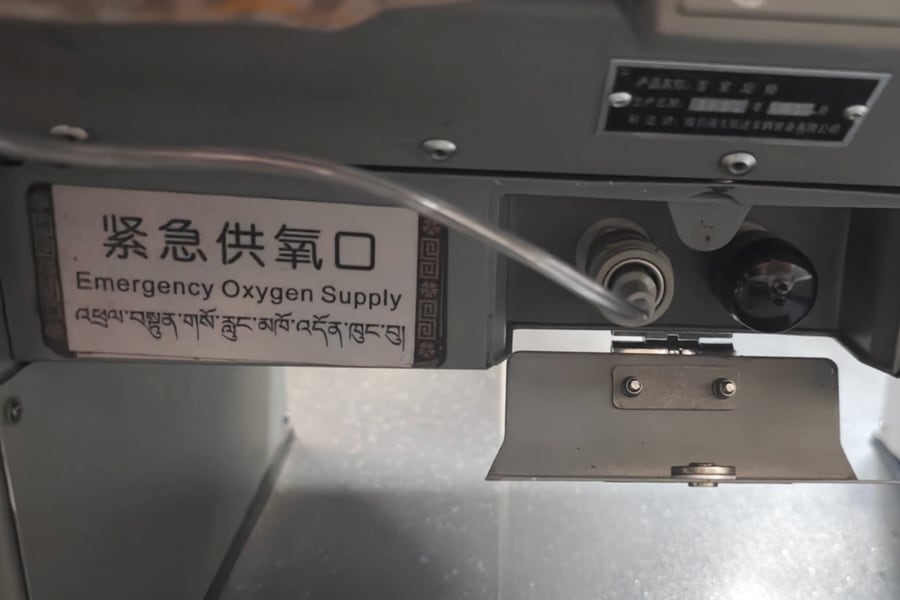
The CR200JS-G that replaced them is a Fuxing built for Tibet. At one end is an HXD1D-J electric power car. At the other are two FXN3-J diesel units coupled together, one with a cab and one without, and their 12V265B engines are rated for work up to 5,100 metres. Between them are nine cars: six second class, one first, one shared by first and business, and one part second class, part dining car. The business seats are single, angled in a herringbone. Like every Fuxing on the plateau, the train carries an oxygen supply.
Shigatse
Shigatse station is at kilometre 248. The line goes on another three kilometres to a freight yard, Shigatse West. The city is about 3,860 metres up, where the Nyang river meets the Yarlung Tsangpo, and Tashilhunpo Monastery stands on a hill in the middle of it.
Along the route
 Coolmanjackey / Wikimedia Commons · CC BY-SA 3.0 · 2013 · cropped
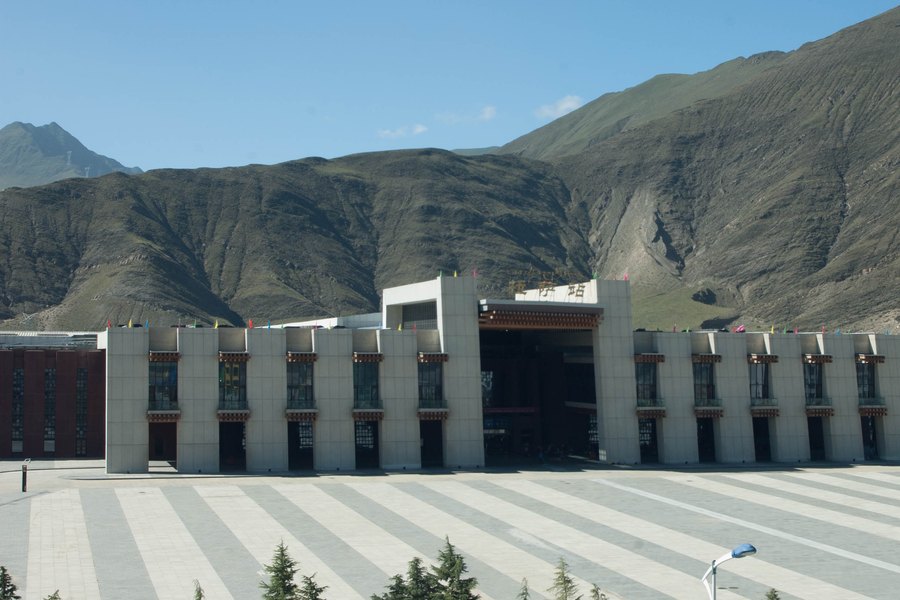
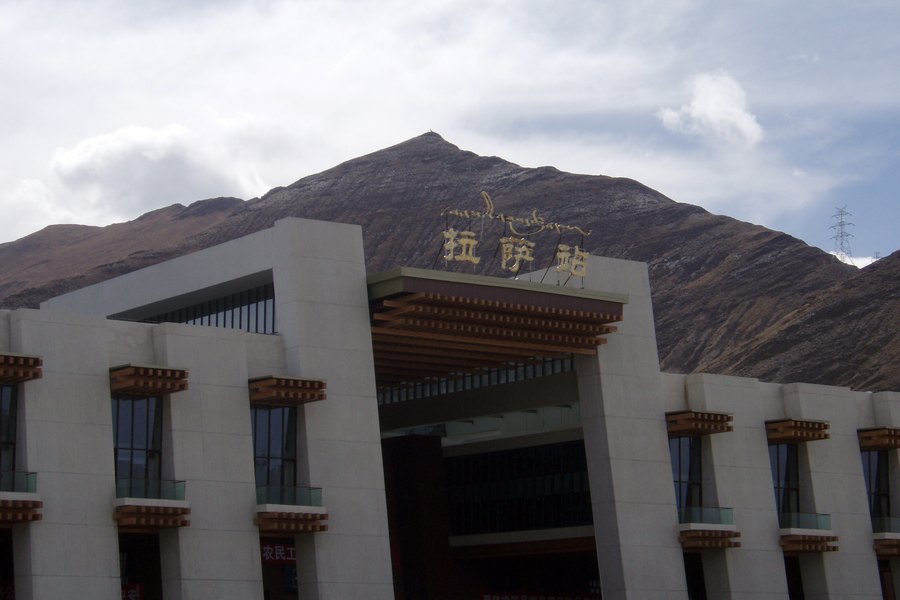
Lhasa, kilometre 0
The Shigatse trains start from the Qinghai–Tibet Railway's terminus, 3,641 metres up. The wires run only as far as Xierong, 33 kilometres out, where the Lhasa–Nyingchi line turns east; beyond it the line has no wires.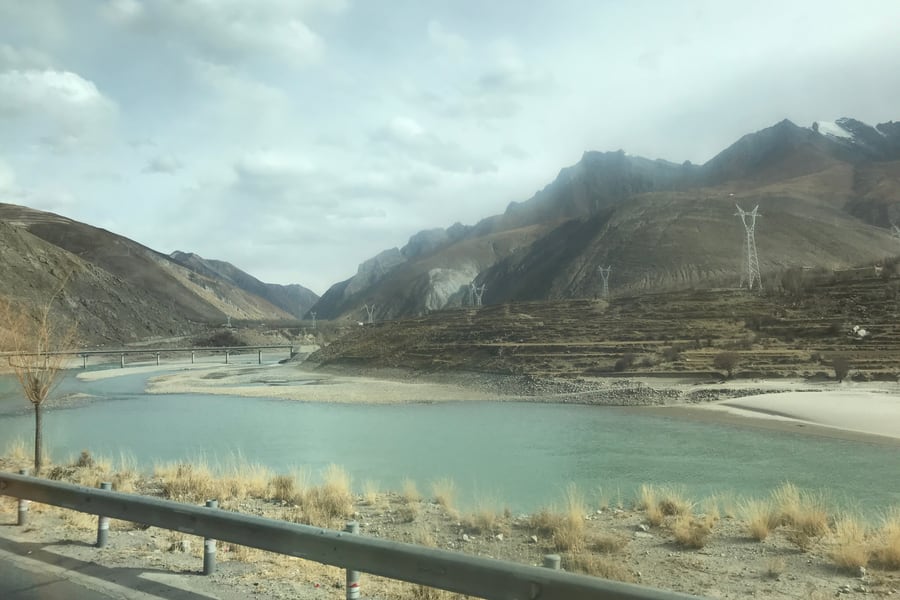 Esiymbro / Wikimedia Commons · CC BY-SA 4.0 · 2018 · cropped
Nyêmo, kilometre 103
Halfway along, the line is in the Yarlung Tsangpo valley at 3,731 metres. Nyêmo has a station, but no passenger train stops there: the Fuxing runs from Lhasa to Shigatse without a stop.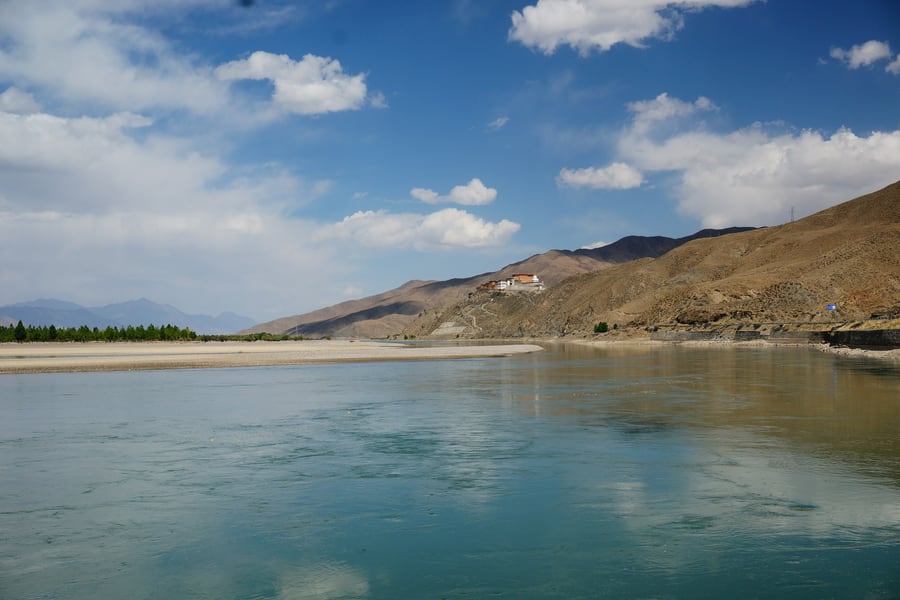 Andrew and Annemarie / Wikimedia Commons · CC BY-SA 2.0 · 2014 · cropped
Almost half bridge and tunnel
Ninety-six bridges and 29 tunnels make up 45.8 per cent of the line. The longest, Zongga No. 1, runs for 10,415 metres, and when the line opened no diesel in China had hauled a train further underground.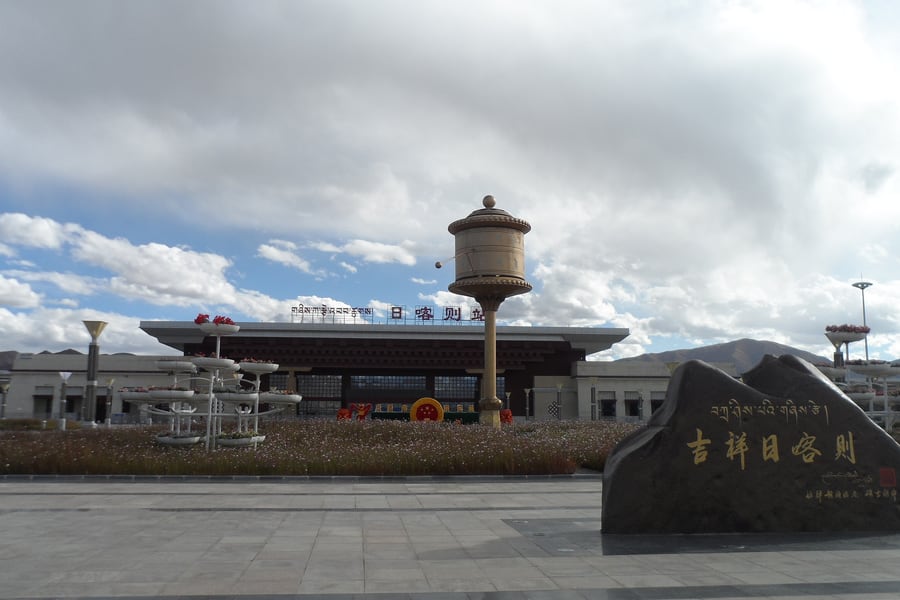 钉钉 / Wikimedia Commons · CC BY-SA 4.0 · 2019 · cropped
Shigatse, kilometre 248
The station serves Tibet's second city, about 3,860 metres up. The line carries on three kilometres to a freight yard. The stone outside reads 吉祥日喀则, auspicious Shigatse.A bit of history
Culture & experiences along the way
 Jpatokal / Wikimedia Commons · CC BY-SA 4.0 · 2018 · cropped
Tsampa and butter tea
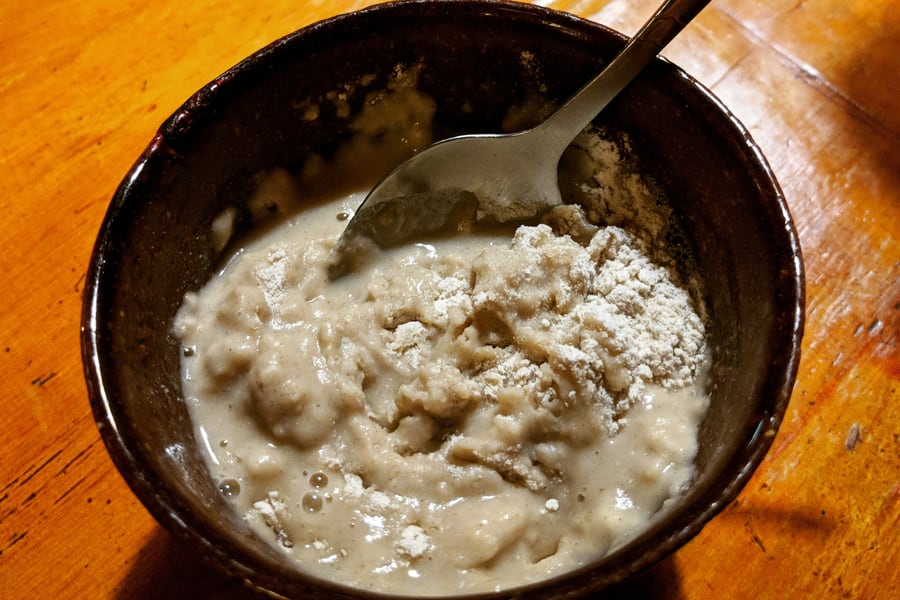
Tsampa is roasted barley flour, and it needs no cooking. Leave some butter tea in the bowl, add a spoonful of flour and knead it by hand into a dumpling. It is the everyday staple of Tibet, and pinches are thrown into the air as an offering at the New Year.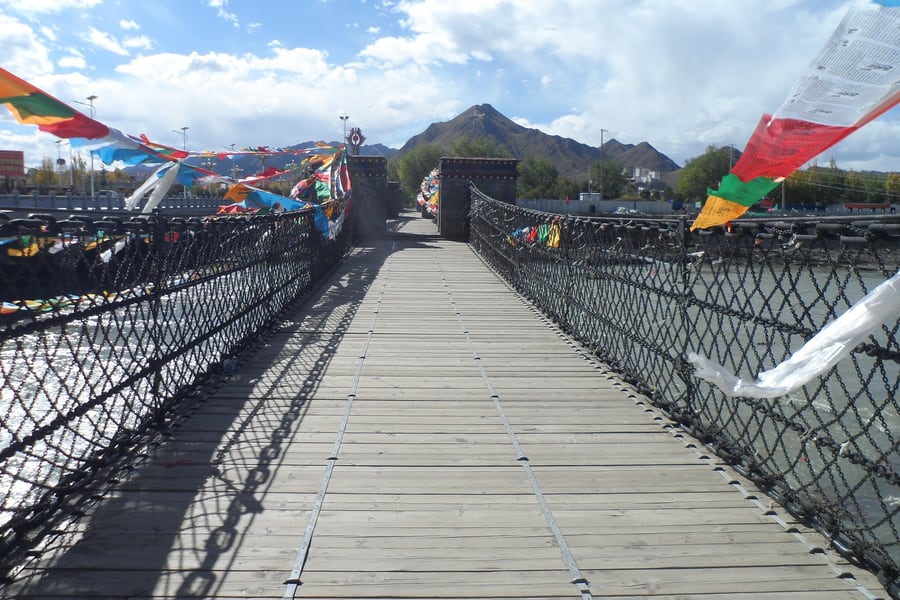 钉钉 / Wikimedia Commons · CC BY-SA 4.0 · 2019 · cropped
Prayer flags over the river
The footbridge over the Yarlung Tsangpo at Shigatse is strung with prayer flags. They come in sets of five colours — blue for sky, white for wind, red for fire, green for water and yellow for earth — and are woodblock-printed with prayers and images.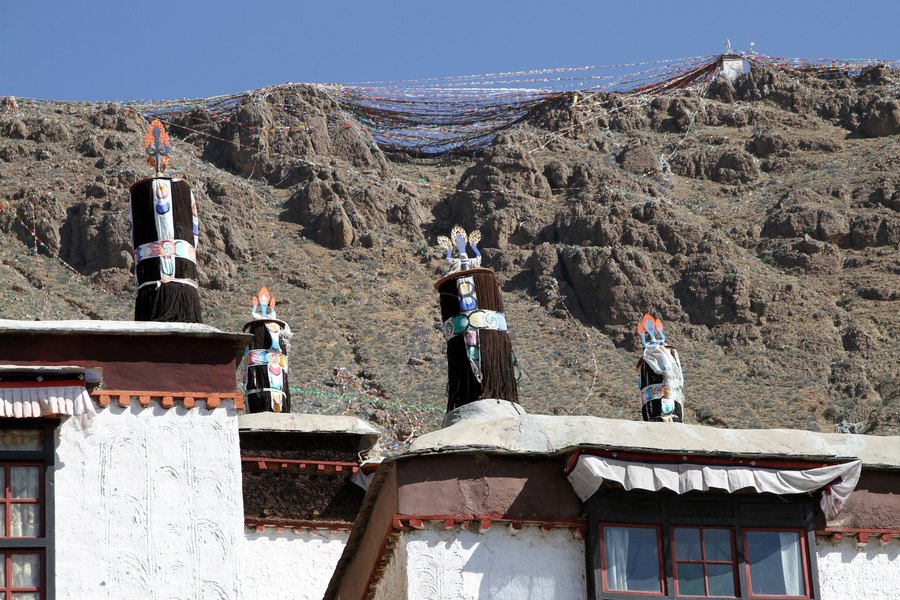 Gerd Eichmann / Wikimedia Commons · CC BY-SA 4.0 · 2014 · cropped
The walk round Tashilhunpo
A kora is a pilgrimage made by walking around a sacred place. At Tashilhunpo pilgrims walk the lingkhor, the path outside the monastery walls. Above it, the hillside is hung with prayer flags.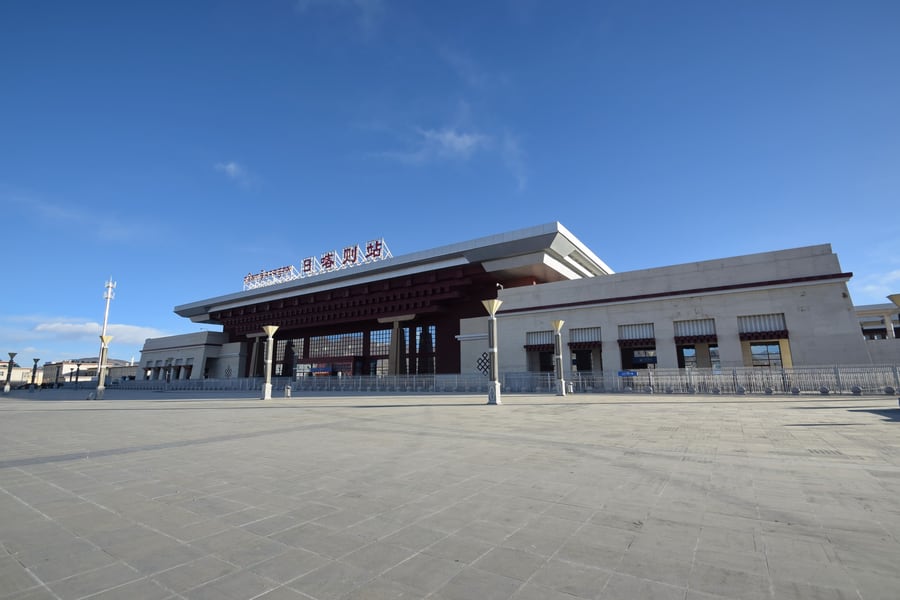 Baycrest / Wikimedia Commons · CC BY-SA 2.5 · 2017 · cropped
Two scripts on every sign
Station names here are written in Tibetan as well as Chinese. Tradition credits the Tibetan script to Thonmi Sambhota, a minister of King Songtsen Gampo, who based it on an Indian script in the seventh century. Announcements on the train are made in both languages.Timetables
Three Fuxing trains run each way every day, all non-stop. Times are from 12306 for Wednesday 14 and Saturday 17 October 2026, and were the same on both days — as of October 2026.
| Train | Lhasa | Shigatse |
|---|---|---|
| C885 | 08:40 | 10:44 |
| C887 | 13:40 | 15:44 |
| C883 | 17:00 | 19:17 |
| Train | Shigatse | Lhasa |
|---|---|---|
| C886 | 11:05 | 13:09 |
| C888 | 16:05 | 18:09 |
| C884 | 19:37 | 21:41 |
The morning train out and the afternoon train back make a day trip with about five hours in Shigatse. When the line went all-Fuxing in May 2025 the railway also added peak-time trains, C921 to C924; none was on sale for mid-October 2026.
12306 sells only about two weeks ahead, so later dates could not be checked. Times are published by the operator: China Railway · 12306 (opens in a new tab).
Tickets
The permits come first. A foreign visitor cannot travel in Tibet independently: the Tibet Travel Permit is issued only through a licensed Tibetan agency, for a guided tour, and has to be shown to board a train into Tibet. Shigatse also needs an Aliens' Travel Permit, which the guide arranges in Lhasa. Every place on the itinerary is fixed in advance, so put the train in it when you book the tour.
The fare is the same on all three trains: ¥64 second class, ¥103 first and ¥225 business, on 12306 against your passport. These are discounted fares, about 70 per cent of the published price.
Book your tickets
 Fanghong / Wikimedia Commons · CC BY 2.5 · 2007 · cropped
Fuxing · Lhasa to Shigatse
¥64 second class, ¥103 first, ¥225 business
Sold on 12306 against your passport, at the same fare on all three trains each way.
Book Tickets (opens in a new tab, on 12306.cn)via 12306.cnRail Passes
No rail pass covers this line. Interrail and Eurail are European passes and do not reach China, and China Railway sells its seats one journey at a time on 12306. At ¥64 in second class there would be little for a pass to save.
Checked in October 2026.
Places to Visit
Tashilhunpo is in Shigatse itself and Shalu a short drive south of it. Gyantse and Yamdrok Lake are on the road between Lhasa and Shigatse rather than on the railway, so a tour that drives one way and takes the train the other sees both.
 Mongol / Wikimedia Commons · CC BY-SA 3.0 · 2002 · cropped
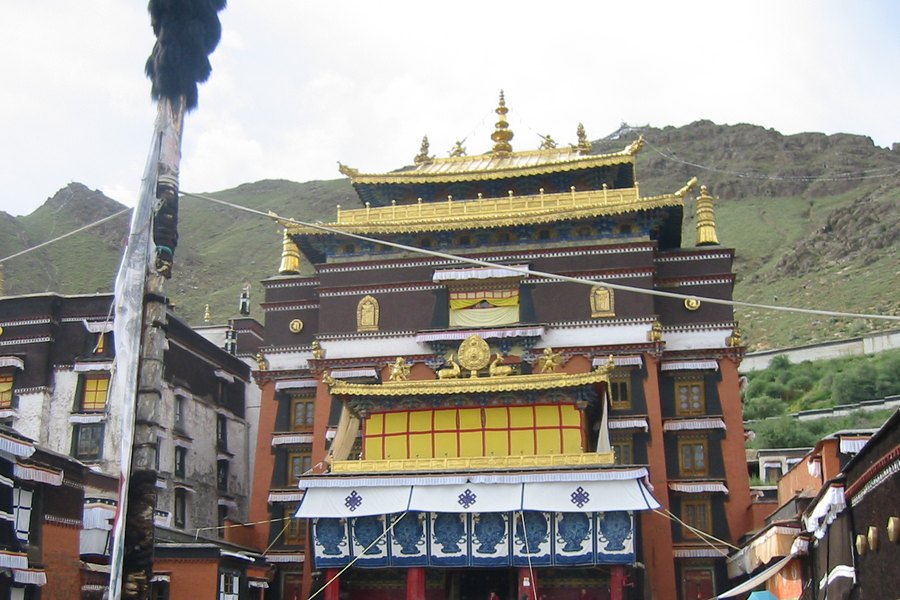
Tashilhunpo Monastery
Gendun Drup, later named the first Dalai Lama, founded the monastery in 1447 on a hill in the middle of Shigatse, and it has been the seat of the Panchen Lamas since the fourth of them enlarged it. Its name means a heap of glory. Inside sits a bronze Maitreya, 26.2 metres tall, said to be the largest in the world.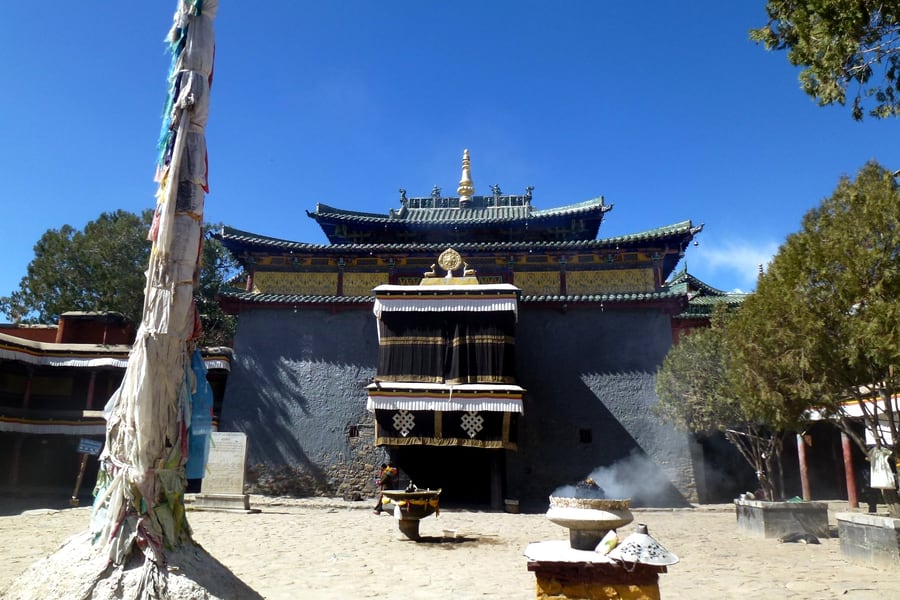 Hiroki Ogawa / Wikimedia Commons · CC BY 3.0 · cropped
Shalu Monastery
Founded in 1040 by Chetsun Sherab Jungnay, Shalu was the first of the great monasteries built by the noble families of Tsang, and for centuries a centre of learning. Its murals were long counted the oldest and most beautiful in Tibet, and it became an important centre of the Sakya tradition. A restoration began in 2009.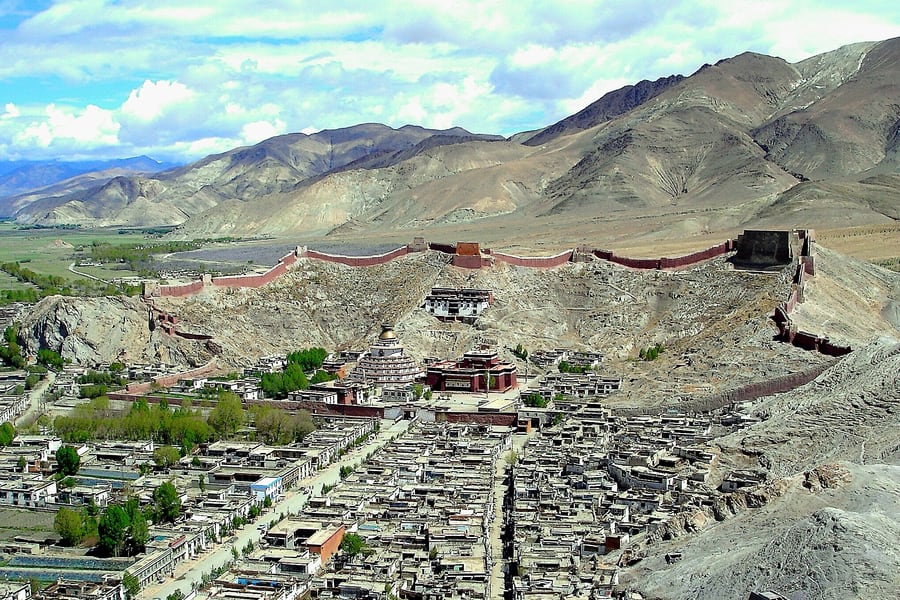 Ondřej Žváček / Wikimedia Commons · CC BY 2.5 · 2006 · cropped
Gyantse
Once the third town of Tibet, Gyantse sits in the Nyang valley at 3,977 metres beneath its hilltop fort of 1390. Below it, Prince Rabten Kunzang Phak began the main temple of Pelkor Chöde in 1418 and built the Kumbum in 1427–37, a stepped stupa of 108 chapels, believed to be the largest of its kind in Tibet.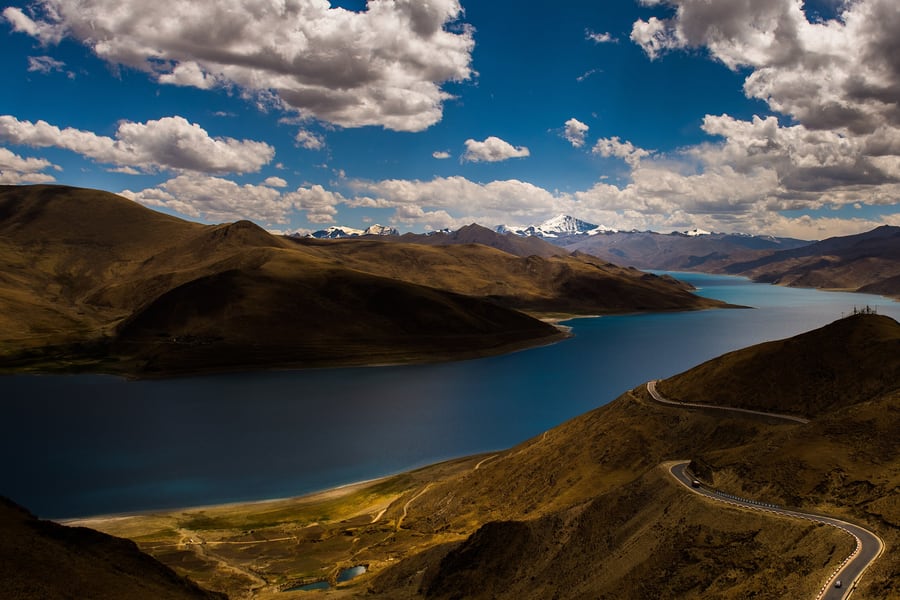 Bolun Yan / Wikimedia Commons · CC0 · 2015 · cropped
Yamdrok Lake
One of the three largest lakes in Tibet, Yamdrok is over 72 kilometres long and the name means turquoise. It lies about 100 kilometres from Lhasa and 90 from Gyantse, and is one of four lakes Tibetans hold especially sacred. Samding Monastery, on a peninsula in the lake, is the only Tibetan monastery headed by a female reincarnation. The lake freezes in winter.Where to Sleep
The morning train gives you a day in Shigatse and the evening one brings you back, but the monastery and the town deserve a night. The hotel below is in the city centre; ask your agency for it when you book the tour.
Where to stay
Hilton Shigatse
In Sangzhuzi district, the city centre
The hotel's own page puts it two kilometres from Tashilhunpo Monastery, with a pillarless ballroom among 12,000 square feet of event space.
Check Availability (opens in a new tab, on hilton.com)via hilton.comQuestions or corrections
Planning this trip and stuck on something, or spotted a time, fare or detail that has changed? Send us a message about The Lhasa–Shigatse Railway. We read every one, and we update this page when something has changed.