The Lillafüred Forest Railway
Random photos 1989 / Wikimedia Commons · CC0 · cropped
- Distance14 km · 760 mm gauge
- DurationAbout 1 hour 5 minutes end to end
- Best seasonAll year; daily in summer, weekends only from January to early April
Introduction
The two tunnels that make this ride were not dug for the railway. They were dug to get it out of a hotel's way.
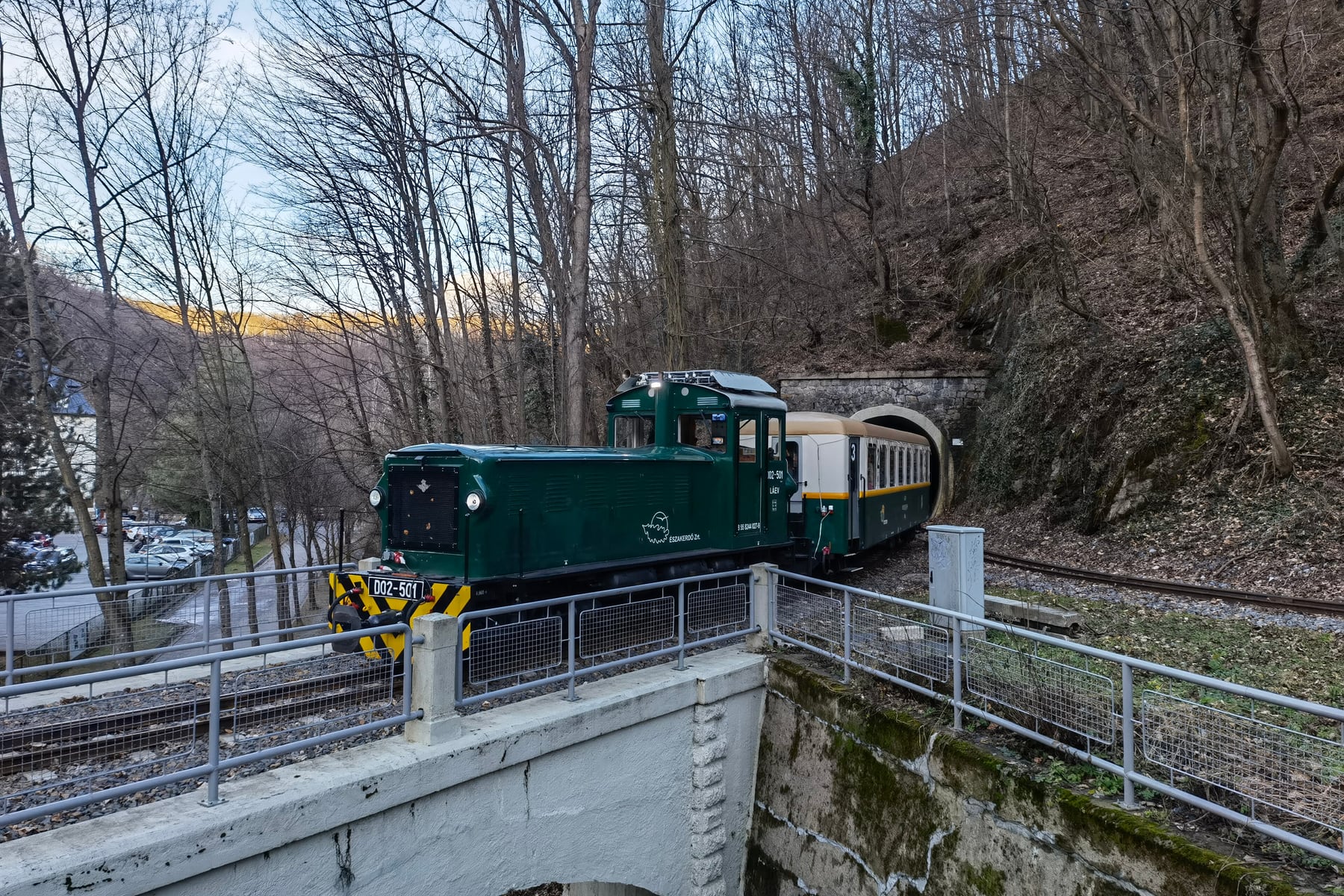
The line was built in nine months in 1920 to bring timber down out of the Bükk hills to Miskolc, and its first passengers, in 1923, sat on benches in open wagons. Then the state decided to build a palace hotel at Lillafüred, on a crag above Lake Hámori. Between 1925 and 1929 the hillside was reshaped around it: the spoil became terraced hanging gardens, the Szinva stream was sent over the rock as a new waterfall, the mouth of the Anna Cave was moved, and in 1927 the railway's halt was shifted south, with a tunnel at each end of the new Lillafüred station and an underpass up to the hotel. By 1929 the line was carrying some 300,000 passengers a year and had a new name, the Lillafüred State Forest Railway — LÁEV.
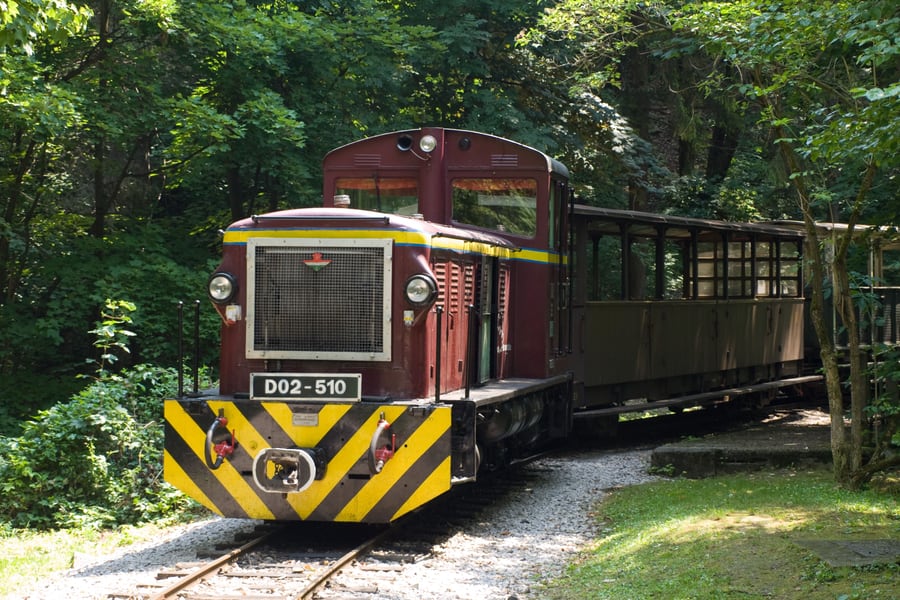
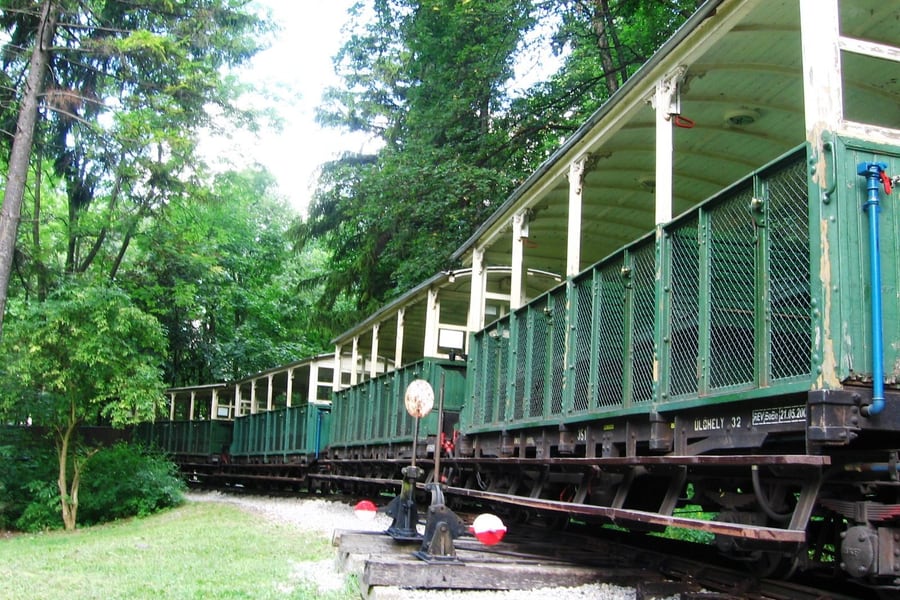
It still runs, on 760 mm gauge, 14 kilometres from the edge of a Miskolc housing estate to the woods at Garadna, in a little over an hour. Mk48 diesels, a class found all over Hungary's narrow gauge, pull open coaches of 1925 and 1928 as well as closed ones, and one of the engines was rebuilt in 2010 as a hybrid. Freight ended in 1990; the forestry company Északerdő now runs the line for the people going to the lake, the caves and the castle.
The Journey
The trains start at Miskolc-Dorottya utca, a small terminus in Diósgyőr beside a housing estate and the stop on tram line 1 named for the railway. For the first three kilometres the line runs between gardens, the Diósgyőr tower blocks and the hills to the north, past Majláth, where the railway keeps its yard and its last steam engine stands on a plinth. Beyond Papírgyár, the paper mill, the branch to Mahóca turns off — it carries only special trains now — and the main line goes into the forest of the Szinva valley.
Bridges, rock and the hotel
This is the stretch the line was hard to build. The first engineers asked to plan it declined because of the ground, and the forest engineer Ferenc Modrovich took the line across the Mély-völgy ravine on a concrete viaduct, 64 metres long, standing above the treetops. The track then threads cliffs and narrows above the stream to the passing loop at Puskaporos, where the two trains of a busy day cross, and dives into the first tunnel.
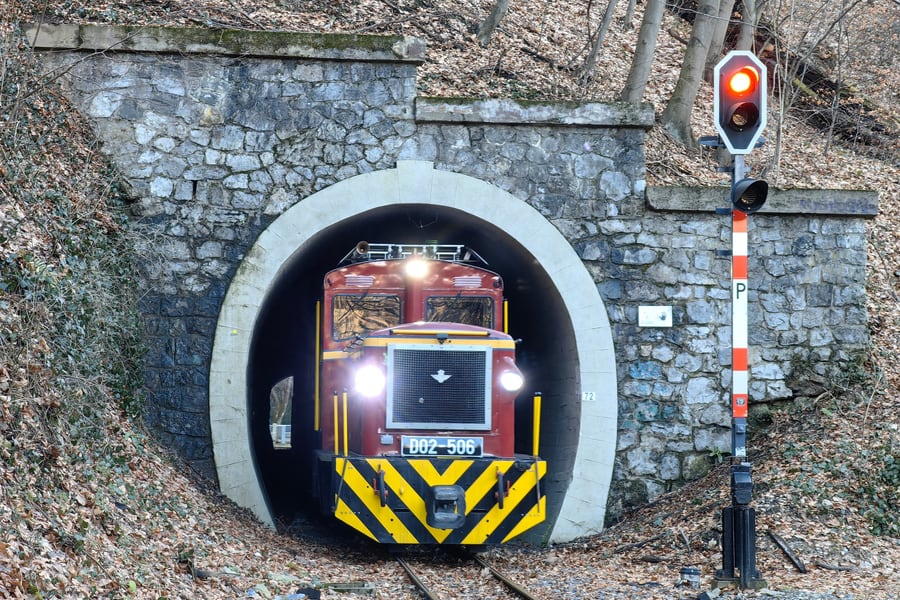
It comes out at Lillafüred, where everything is the work of the late 1920s. The station sits opposite the Palace Hotel, with an underpass up to it, and between its two tunnels — 112 and 120 metres — the train waits about seven minutes. This is where most passengers get off, for the hanging gardens, the waterfall, the caves and the lake.
Lake Hámori and the Garadna valley
Out of the second tunnel the line runs along the shore of Lake Hámori, the reservoir dammed around 1815 to drive the ironworks, and crosses the Görbe híd, the curved bridge. The halt at Fazola-kohó is named for Frigyes Fazola's blast furnace of 1813, and the one at Pisztrángtelep for the trout farm laid out in 1932; it was added when the line was rebuilt from 2020. The valley closes in, and the track ends at Garadna, a clearing in the woods 25 minutes from Lillafüred.
Between the termini and Lillafüred, trains stop only if someone is getting on or off. Tell the crew in good time if you want one of the small halts.
The locomotives and coaches
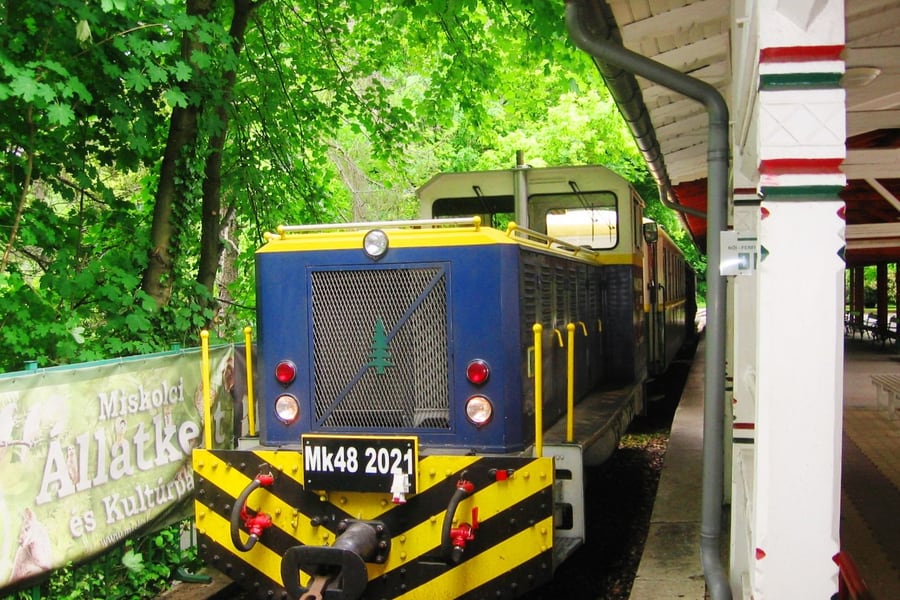
Most trains are worked by Mk48 diesels in brown, red, green or blue. One, D02-508, came new from the factory in 1961 and still runs. The blue Mk48 2021 was built by the BoBo company in 2010 from a scrapped Mk48 as a diesel-electric hybrid, and others of the fleet have since been rebuilt the same way. Two small C-50 diesels work the Mahóca specials. Behind them are open coaches from 1925 and 1928 and closed ones, including four Bax coaches that came from the Budapest Children's Railway in 1991.
That link runs both ways. In 1929 the line bought two Ganz railcars for the hotel trade; in 1948–49 the Communist Party had them sent to the new Pioneer Railway in Budapest. They came back years later in poor condition, and one, A02-602, has since returned to Budapest for good: it has run on the Children's Railway as a heritage train since 1990.
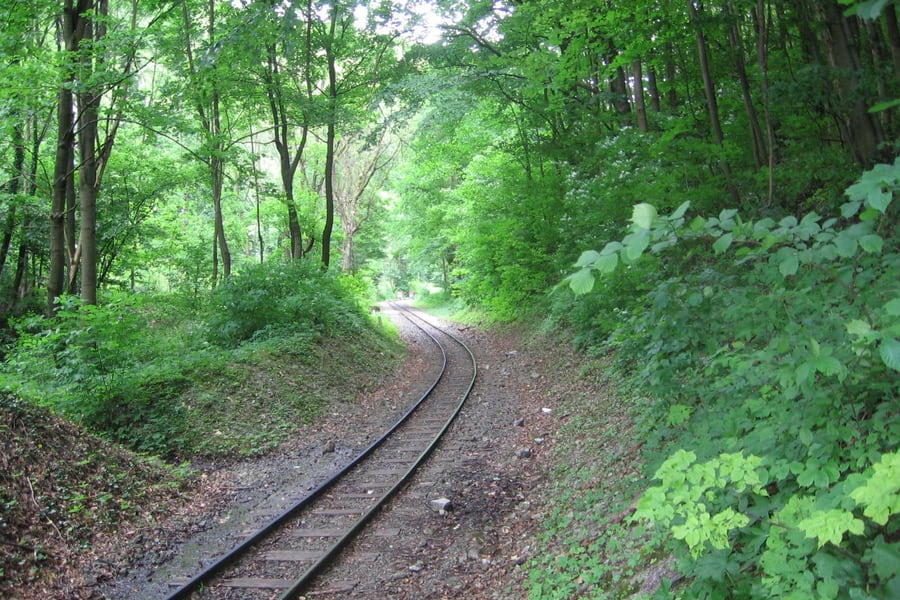
Along the route
 Michał Derela / Wikimedia Commons · CC BY-SA 4.0 · cropped
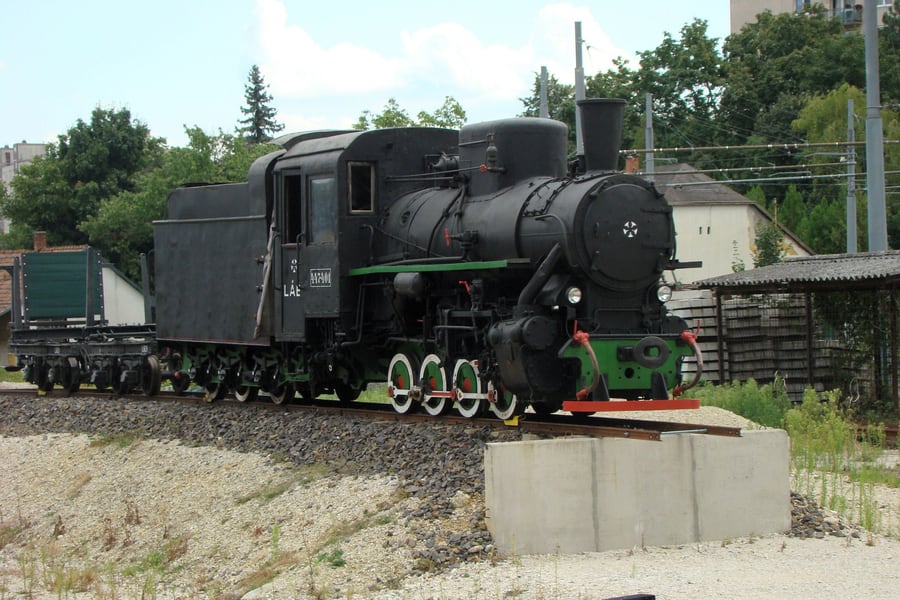
Lilla at Majláth
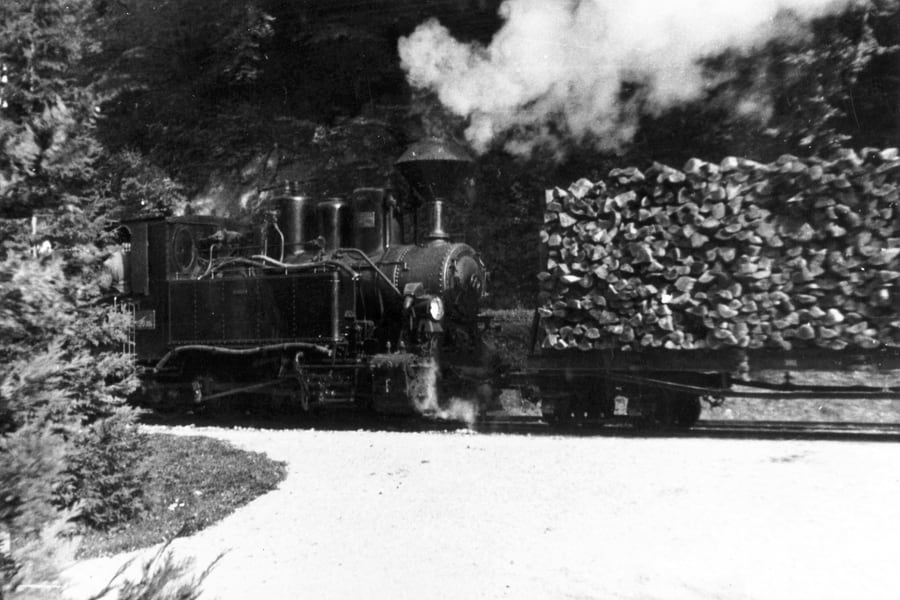
The line's yard is at Majláth, and its last steam engine stands there on a plinth: Kv-4 No. 447,401, Lilla, built in 1954. It worked the line until steam ended in 1972 and ran heritage trains again from 2000 to 2008.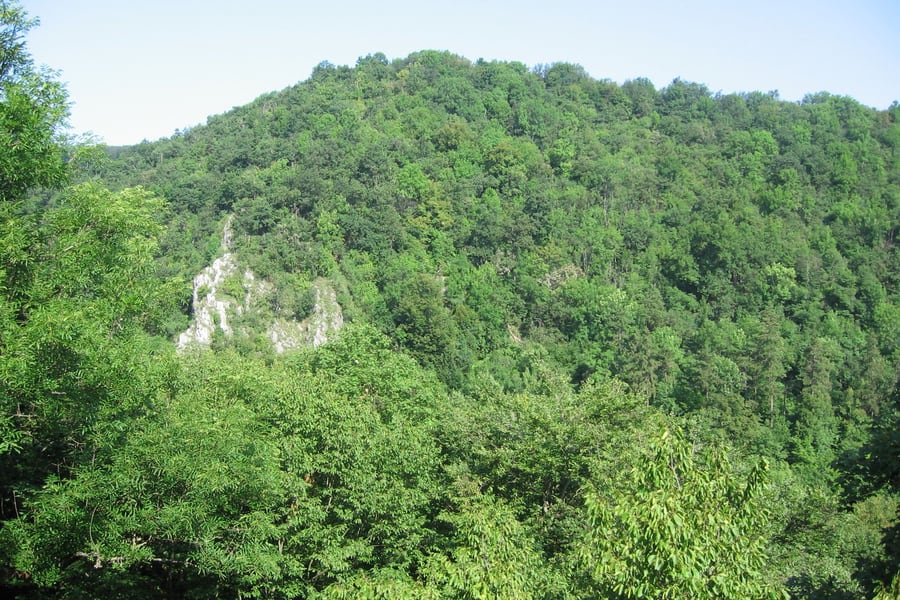 Debrecenivalaki / Wikimedia Commons · CC0 · cropped
The Mély-völgy viaduct
The first engineers turned the job down over this ravine. The forest engineer Ferenc Modrovich crossed it on a concrete viaduct 64 metres long and 25 high, on three piers, load-tested with a steam engine on 12 January 1921.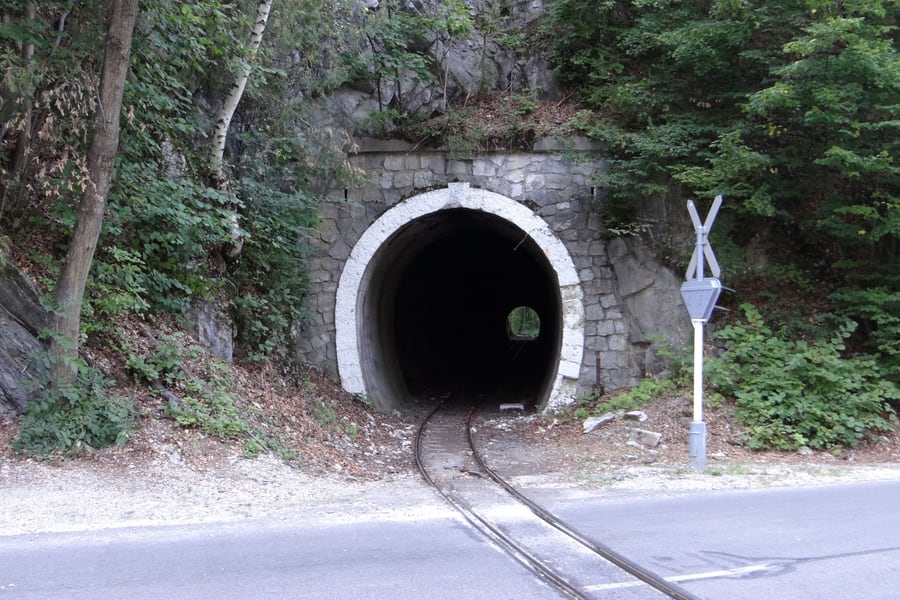 Szalax / Wikimedia Commons · CC BY-SA 3.0 · cropped
Two tunnels for a hotel
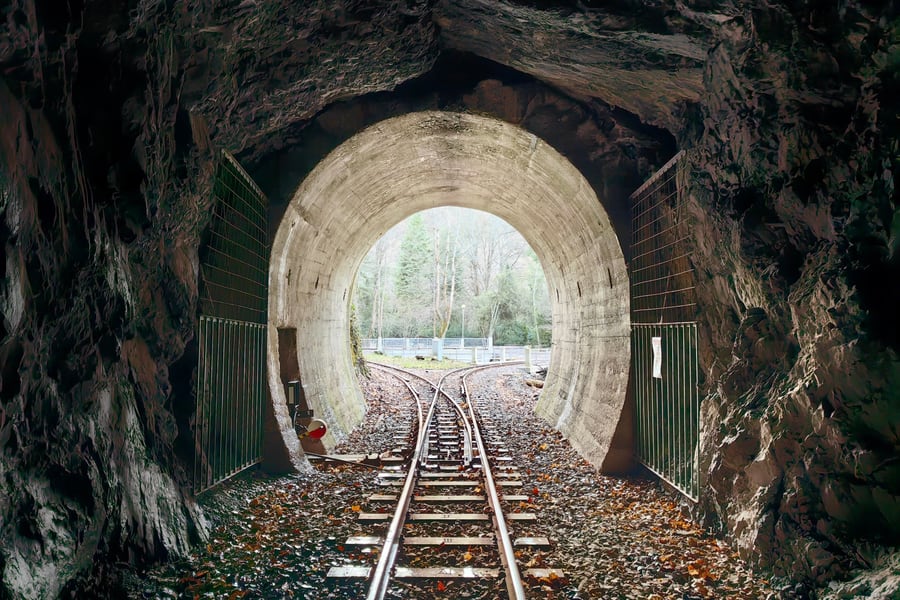
In 1927 the track was moved for the Palace Hotel. The halt became Lillafüred station, further south, with a tunnel at each end, 112 and 120 metres long, and an underpass up to the hotel.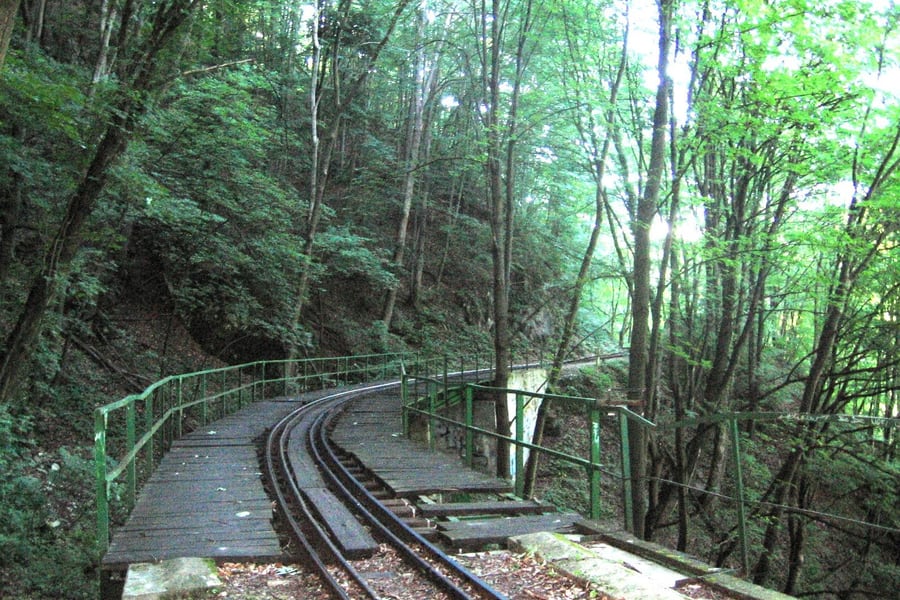 Debrecenivalaki / Wikimedia Commons · CC0 · cropped
The curved bridge
Past Lillafüred the line follows the shore of Lake Hámori into the Garadna valley and crosses the Görbe híd, the curved bridge, which with the Mély-völgy viaduct is one of the two longest bridges on the line.A bit of history
Culture & experiences along the way
 Anne19 / Wikimedia Commons · CC BY-SA 3.0
Herman Ottó's Pele house
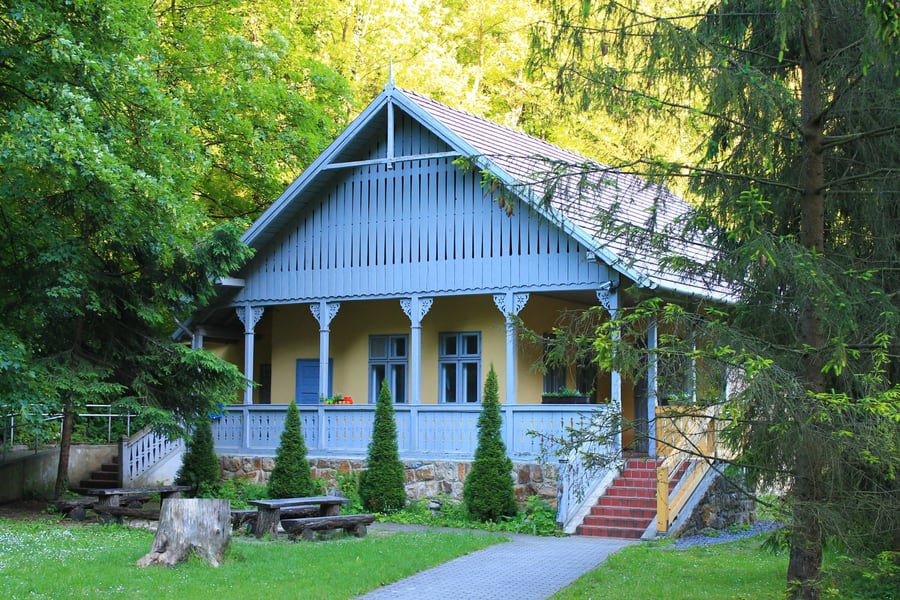
Ottó Herman (1835–1914), zoologist and ethnographer, is called the father of the birds in Hungary. He built this house at Lillafüred in 1890 and called it the Pele house. It is now the Herman Ottó Memorial House.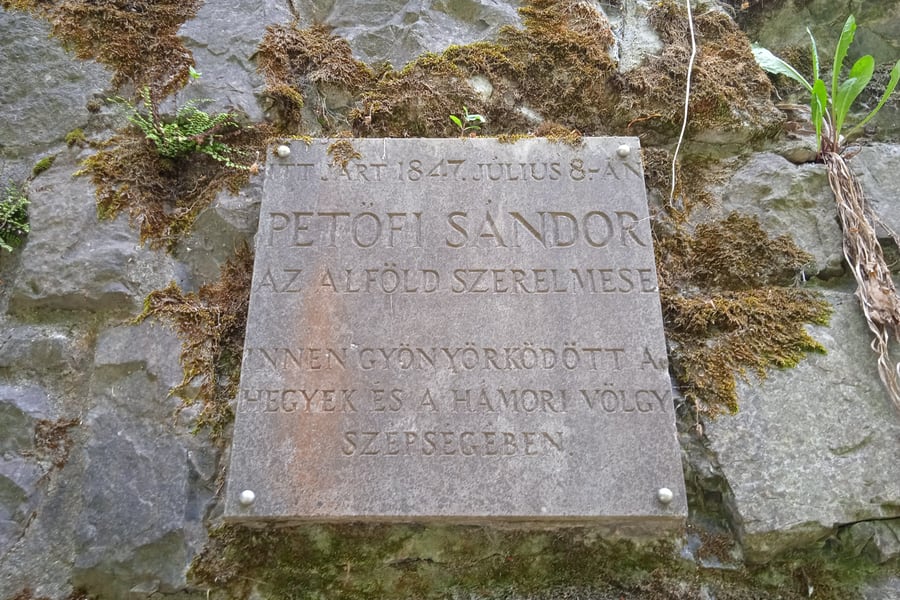 Szenti Tamás / Wikimedia Commons · CC BY-SA 4.0 · cropped
The valley the poets named
Ferenc Kazinczy came in 1846 and called the valley the Hungarian Tempe. Sándor Petőfi followed on 8 July 1847; a plaque in the rock marks where he stood. In 1933 Attila József wrote his poem Óda at the hotel's writers' week, and Éva Varga's statue of him stands by the waterfall.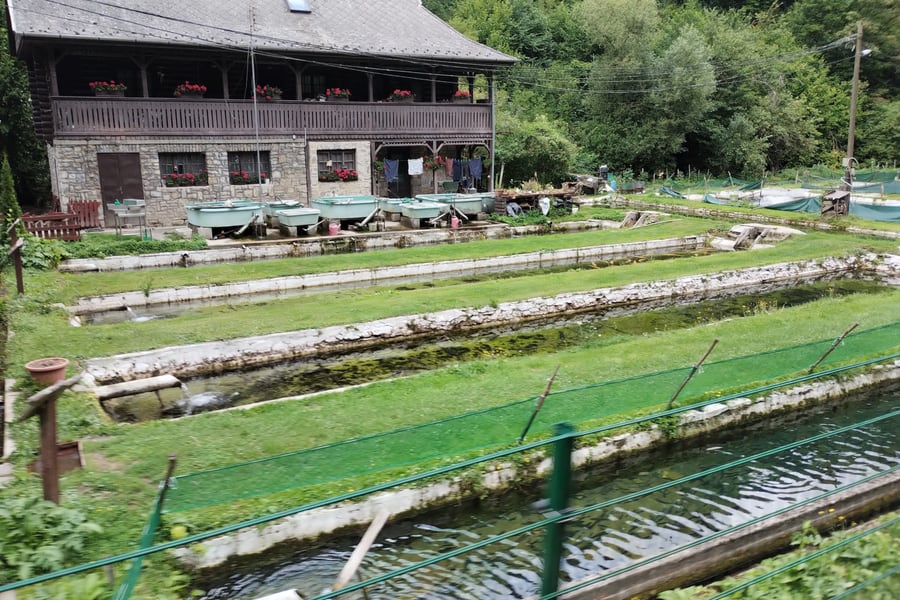 Michał Derela / Wikimedia Commons · CC BY-SA 4.0 · cropped
The trout farm of 1932
Most of Lake Hámori's trout had died, so in 1932 a trout farm was laid out in the Garadna valley — an idea Ottó Herman had put forward in 1906. The train stops beside its ponds at Pisztrángtelep, the trout farm.Timetables
The LÁEV runs all year, but its timetable changed more than a dozen times in 2026, with the seasons and the holidays. In summer there are trains every day, and at weekends extra shuttles between Lillafüred and Garadna; in winter the line runs at weekends only. Every train calls at Lillafüred, where it waits about seven minutes, and the smaller halts are request stops. There is nothing to book: buy at the ticket office at Dorottya utca or Lillafüred and board. Groups of 20 or more must register a working day ahead.
Autumn — 14 September to 1 November 2026
To Garadna:
| Miskolc-Dorottya utca | Lillafüred | Garadna |
|---|---|---|
| 09:30 ¹ | 10:03 | 10:35 |
| 11:00 | 11:33 | 12:05 |
| 12:30 ¹ | 13:03 | 13:35 |
| 14:00 | 14:33 | 15:05 |
| 15:30 ² | 16:03 | 16:35 |
Back to Miskolc:
| Garadna | Lillafüred | Miskolc-Dorottya utca |
|---|---|---|
| 10:55 ¹ | 11:25 | 11:58 |
| 12:25 | 12:55 | 13:28 |
| 13:55 ¹ | 14:25 | 14:58 |
| 15:25 | 15:55 | 16:28 |
| 16:55 ² | 17:25 | 17:58 |
¹ Weekends and holidays only, but daily from 23 October. ² Weekends and holidays only, until 24 October. No trains run on Mondays from 14 September to 19 October, and from 23 to 30 October every day keeps the weekend timetable.
High summer — 4 July to 23 August 2026
To Garadna:
| Miskolc-Dorottya utca | Lillafüred | Garadna |
|---|---|---|
| 09:00 | 09:40 | 10:05 |
| 09:45 ³ | 10:25 | 10:50 |
| 10:30 | 11:10 | 11:35 |
| — | 11:55 ³ | 12:20 |
| 12:00 | 12:40 | 13:05 |
| …from Miskolc every 90 minutes; at weekends a Lillafüred shuttle in between… | ||
| 16:30 | 17:10 | 17:35 |
| — | 17:55 ³ | 18:20 |
Back to Miskolc:
| Garadna | Lillafüred | Miskolc-Dorottya utca |
|---|---|---|
| 10:25 | 10:55 | 11:28 |
| 11:10 ³ | 11:35 | — |
| 11:55 | 12:25 | 12:58 |
| …every 90 minutes to Miskolc; at weekends a shuttle to Lillafüred in between… | ||
| 17:55 | 18:25 | 18:58 |
| 18:40 ³ | 19:10 | 19:43 |
³ Weekends and holidays only (and on 8, 20 and 21 August). A dash: the train starts or ends at Lillafüred.
Winter — weekends only
From 5 January to 2 April 2026 the line ran on Saturdays and Sundays only: four trains from Miskolc at 09:30, 11:00, 12:30 and 14:00, and four back from Garadna, the last at 15:15. The timetable from 2 November 2026 had not been published when this page was checked, so look it up before you go.
As of October 2026, from Északerdő's own timetables — the current one is on the LÁEV website (opens in a new tab), and every season's is listed at eszakerdo.hu (opens in a new tab).
Getting to the start
Dorottya utca is on tram line 1 from Miskolc-Tiszai, the main railway station; get off at the stop named for the railway, LÁEV – Lillafüredi kisvasút. Bus 1 from the station goes there too, to the Diósgyőri gimnázium stop.
Tickets
Tickets are sold at the ticket offices at Dorottya utca and Lillafüred, which take cards as well as forints. There is one fare for any distance: a single covers a journey between any two stations without a break, and a return is simply two singles, usable in either direction. Every ticket is valid only on the day it is bought, so if you plan to get off at the caves or the furnace and carry on, the day ticket is the one to buy.
Children from 3 to 14 pay reduced fares, and under-threes ride free. Bicycles and dogs need their own ticket, 1,500 Ft each way; dogs must be muzzled and leashed. Special trains, such as the Mahóca branch excursions, have their own prices. From the operator's fare table, valid from 1 March 2026.
Book your tickets
Single or return, any distance
2,600 Ft single · 5,200 Ft return · children 3–14 1,900 Ft
One fare for any trip on the line, valid on the day bought; a return is two singles in either direction.
Book Tickets (opens in a new tab, on LÁEV)via LÁEVDay ticket
7,350 Ft · 5,250 Ft for children 3–14
As many rides as you like on the day bought, for getting off at the caves, the furnace and the trout farm.
Book Tickets (opens in a new tab, on LÁEV)via LÁEVFamily day ticket
Up to two adults and four children
Unlimited rides for the family on the day bought.
Book Tickets (opens in a new tab, on LÁEV)via LÁEVRail Passes
No rail pass covers the LÁEV. Interrail's table of railway companies lists MÁV, GySEV, RegioJet and the international carriers for Hungary, and no forest railway. Everyone pays the operator's fare.
A pass still gets you to Miskolc. MÁV's trains to Miskolc-Tiszai are covered by an Interrail Hungary Pass or a Global Pass; regional and Interregional trains need no reservation, and InterCity trains need one. From the station, tram line 1 runs to Dorottya utca, outside the pass.
For this trip alone a pass is not worth buying. It pays only if Miskolc is one stop on a longer journey through Hungary or beyond.
Checked October 2026 against Interrail's table of railway companies (opens in a new tab) and the LÁEV's fares (opens in a new tab).
Places to Visit
The line is short, and nearly everything worth getting off for is close to one of its stations: a royal castle at the Miskolc end, the hotel's gardens, waterfall, caves and lake at Lillafüred, and the ironworks that made the valley at Fazola-kohó.
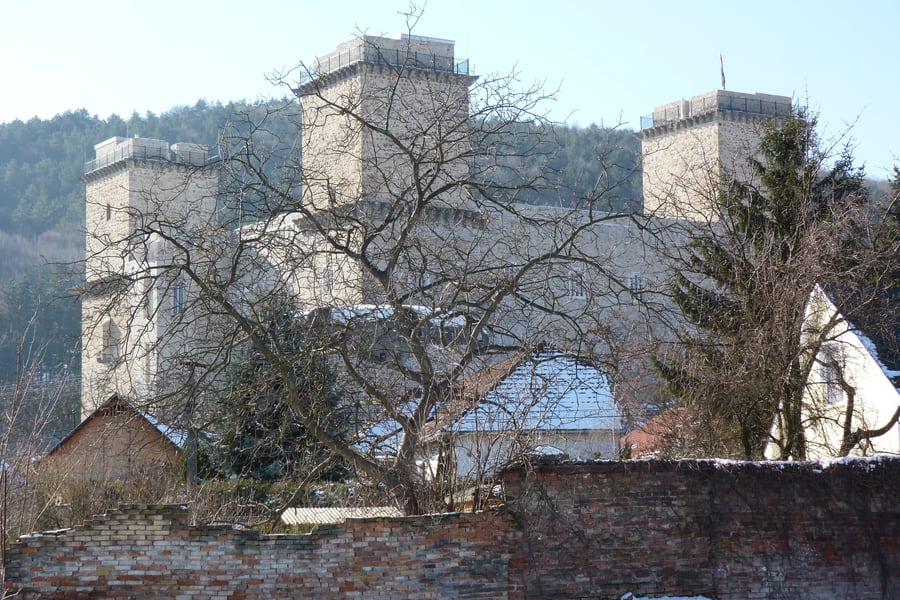 Derzsi Elekes Andor / Wikimedia Commons · CC BY-SA 4.0 · cropped
Diósgyőr Castle
A castle stood here before the Mongol invasion of 1241–42; the Gothic one that replaced it had its best years under Louis the Great (1342–1382), who rebuilt it round a courtyard with a tower at each corner and a Knights' Hall 25 metres long. It then became the wedding gift of Hungary's queens until the Ottoman wars. A ruin by 1700, it was restored in 2014.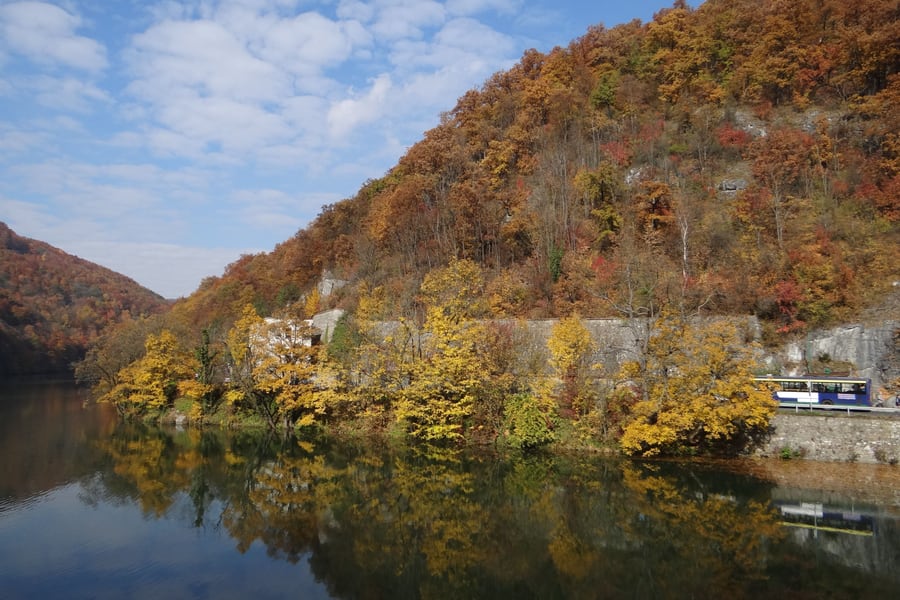 Szalax / Wikimedia Commons · CC BY-SA 3.0 · cropped
Lake Hámori
A lake made for iron. Frigyes Fazola dammed the meeting of the Garadna and Szinva streams to power the new ironworks at Újmassa; the clay-cored dam was finished by about 1815. It averages nine metres deep, more than Lake Balaton, and has been a place for rowing boats since the 1900s. The train runs along its shore beyond Lillafüred.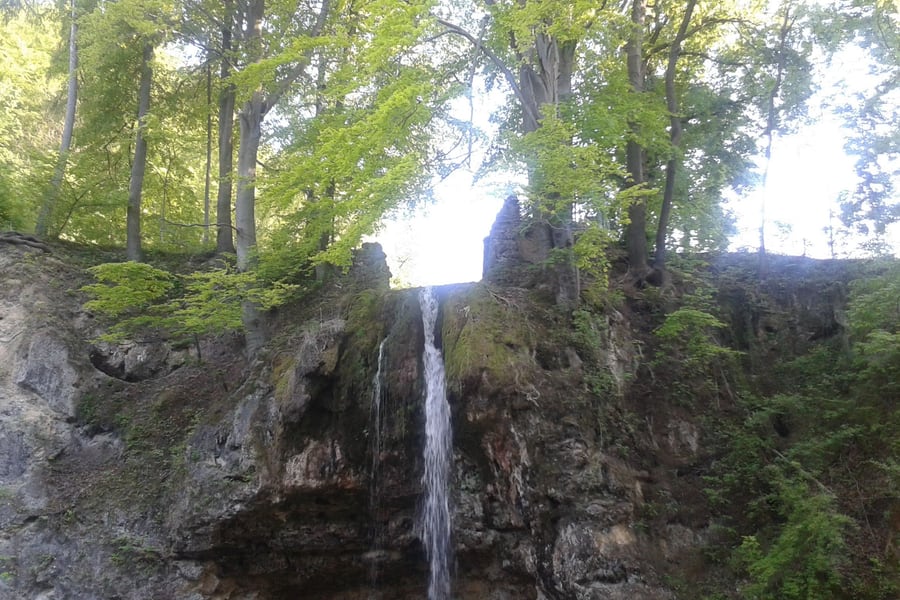 Gabson730 / Wikimedia Commons · CC BY-SA 3.0 · cropped
The Szinva waterfall
At twenty metres, Hungary's highest vertical waterfall, and an artificial one. When the Palace Hotel went up in 1925–29 the Szinva was turned away from the lake and sent over the hillside through the hotel's new terraced hanging gardens. It is fed by the overflow of the springs that supply Miskolc with water; in dry months water is pumped up from the lake.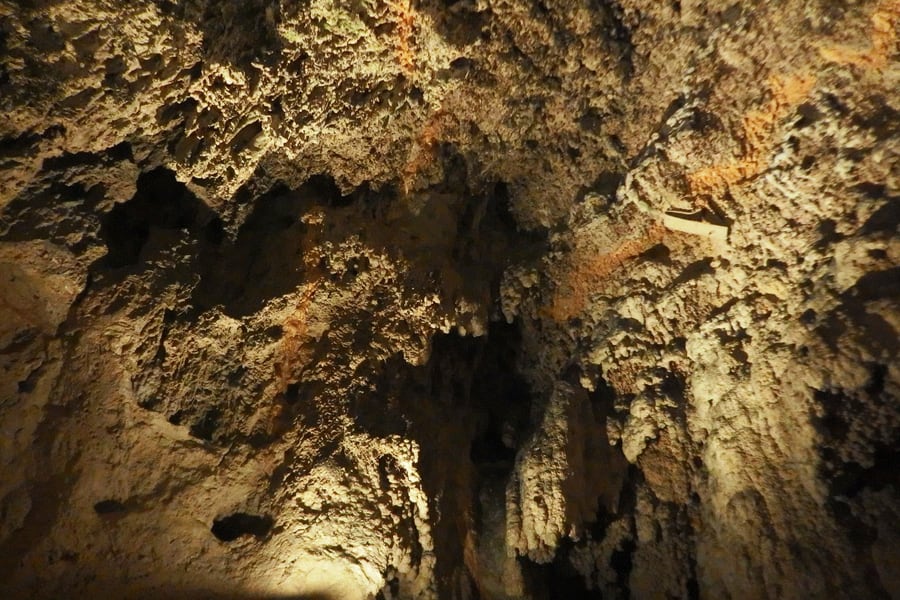 Palickap / Wikimedia Commons · CC BY-SA 4.0 · cropped
The Anna Cave
A cave in tufa, the porous limestone laid down by the Szinva's own spring water over the last 150,000 to 200,000 years and still forming. Its passages run 570 metres, of which 208 are shown on a half-hour guided tour, past the fossil imprints of plants. The spring inside supplies much of Miskolc's drinking water. It stays at 10 °C all year.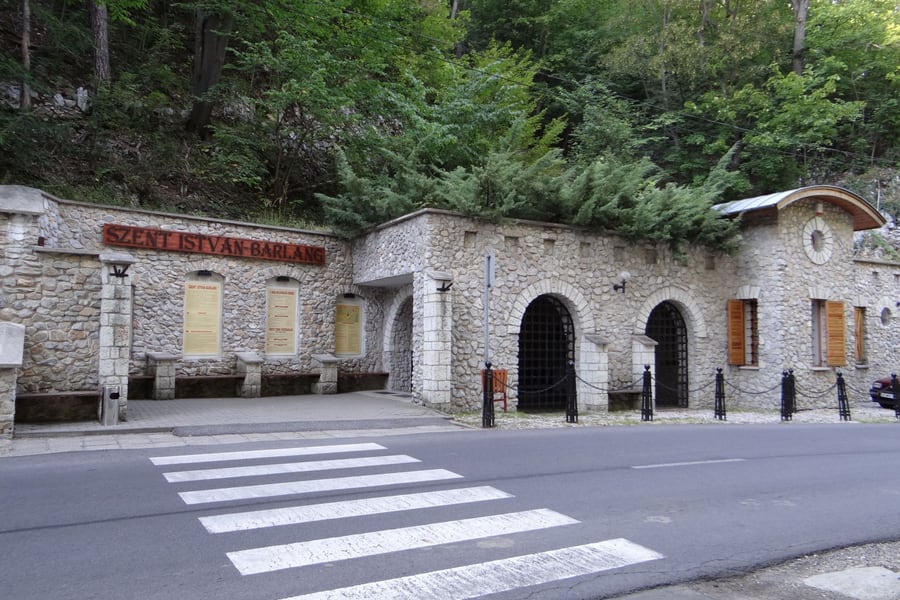 Szalax / Wikimedia Commons · CC BY-SA 3.0 · cropped
The Szent István Cave
Tradition says it was found in 1913, when a dog fell through its only natural opening. Of 1,514 metres of passages, 170 are open on a half-hour guided tour through dripstone halls. The air is so clean and damp that one chamber, the Black Room, has been used since 1988 for treating breathing complaints.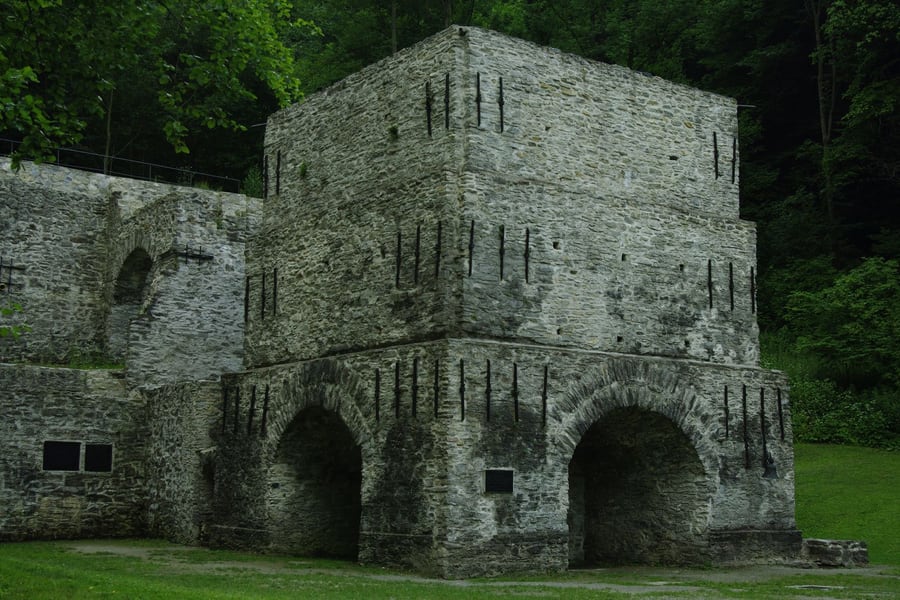 krokophoto / Wikimedia Commons · CC BY-SA 2.5 HU · cropped
The Újmassa blast furnace
Frigyes Fazola built this charcoal-fired furnace in 1813, and it worked until 1866, when iron-making moved down the valley to Diósgyőr. Of rough stone on four corner piers, 11.4 metres high, it is one of the most important industrial monuments in Hungary and rare in Europe. The Massa Museum beside it tells the story of the valley's iron.Where to Sleep
Stay in Miskolc, where the main-line trains arrive, or up at Lillafüred in the hotel the railway was moved for.
Where to stay
 Honza Groh (Jagro) / Wikimedia Commons · CC BY-SA 3.0 · cropped
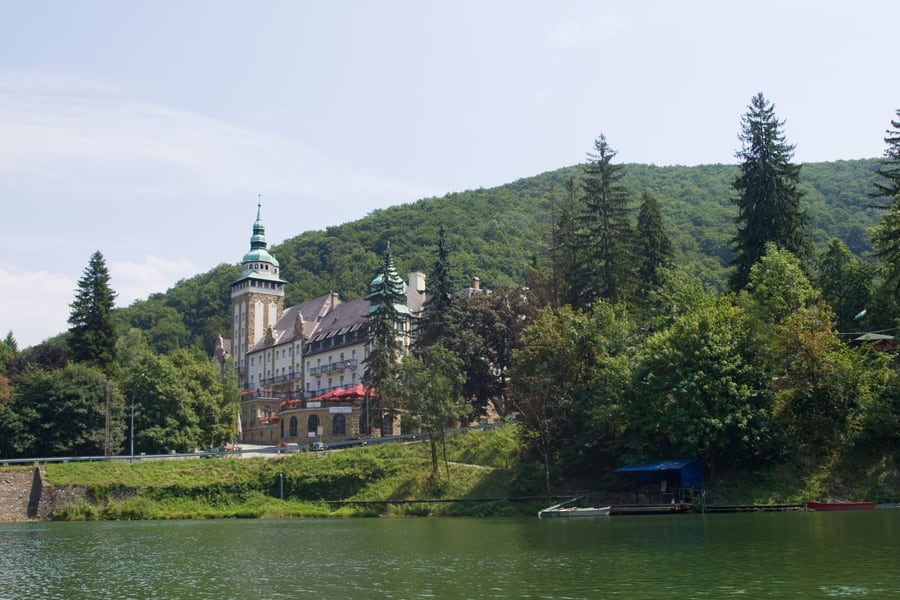
Hotel Palota
The Palace Hotel at Lillafüred
Built by the state in 1925–29 to Kálmán Lux's neo-Renaissance design, on Lake Hámori above the hanging gardens, with Lillafüred station below it.
Check Availability (opens in a new tab, on hotelpalota.hu)via hotelpalota.huCity Hotel Miskolc
In the centre of Miskolc
The Palace Hotel's sister hotel in the centre of Miskolc, with 37 rooms, for a night before or after the ride.
Check Availability (opens in a new tab, on cityhotelmiskolc.hu)via cityhotelmiskolc.huQuestions or corrections
Planning this trip and stuck on something, or spotted a time, fare or detail that has changed? Send us a message about The Lillafüred Forest Railway. We read every one, and we update this page when something has changed.