The Mak Itam
Janniba Arifah / Wikimedia Commons · CC BY 4.0 · cropped
- DistanceSawahlunto, West Sumatra · the 155 km Ombilin line
- DurationA half-day at Sawahlunto
- Best seasonDry season (May–September); the heritage train runs Sundays
Introduction
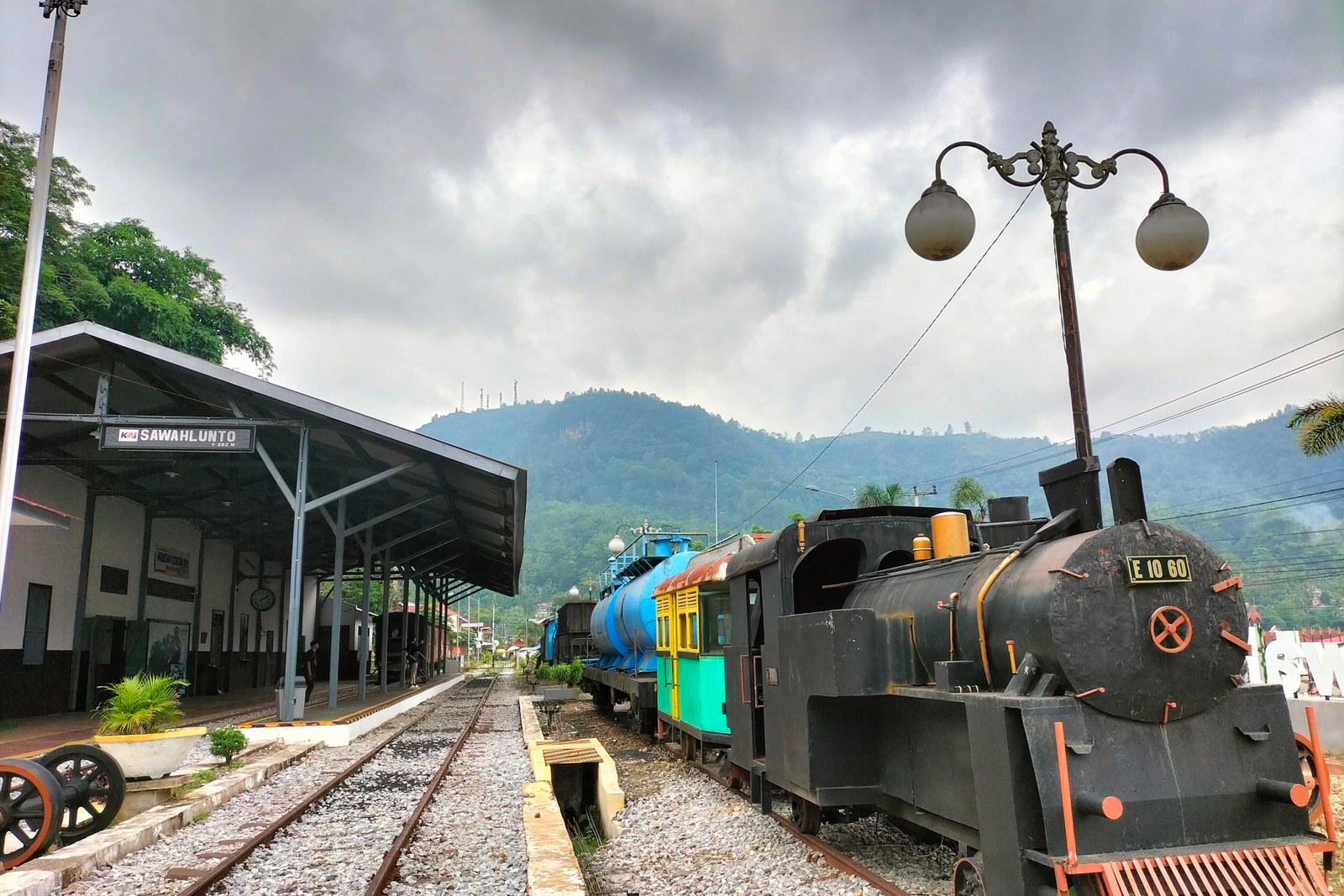
Almost every great Indonesian train journey is on Java. This one is not. It is on Sumatra, in the cool green highlands of the west, and it is unlike anything else in the country: a wood-and-coal steam locomotive, nicknamed Mak Itam — "black uncle" in the local Minangkabau tongue — that still fires up in the old Dutch coal town of Sawahlunto.
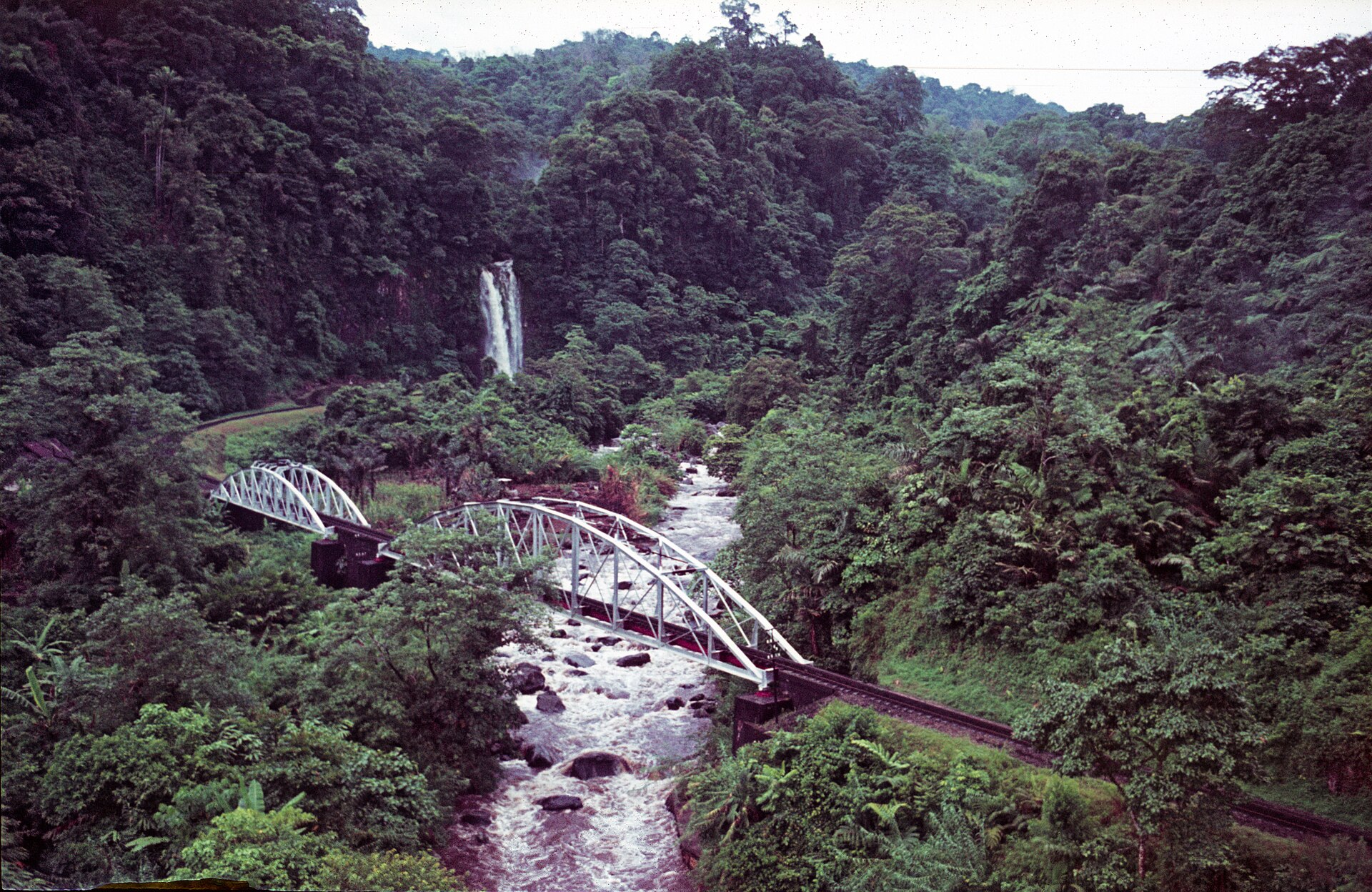
Mak Itam is the last survivor of one of the world's most extraordinary lost railways. To bring coal down from the Ombilin mines to the sea, Dutch engineers built a line up from the coast at Padang and through the Anai Valley on 35 kilometres of rack — a toothed third rail that a cog on the locomotive grips to haul it up grades as steep as 1 in 14. For most of a century, black E-class cog engines like this one climbed the gorges with their loads of coal, through jungle and past waterfalls, over a mountain summit and down into the mining bowl of Sawahlunto.
The mines are quiet now, and the coal trains have stopped. What remains is a UNESCO World Heritage landscape — the mine, the town, the railway and the port that shipped the coal — and, at the centre of it, a single black locomotive that occasionally steams again on the short surviving stretch of track. This is not a slick tourist railway; it is a fragile, moving relic in a town that has turned its whole hard history into a museum. But for anyone who loves trains, or wants to see the side of Indonesia the guidebooks miss, Sawahlunto and its black uncle are worth the long trip to Sumatra.
The Journey
To understand Sawahlunto, start with the coal. In the mid-nineteenth century a Dutch mining engineer found rich seams in the hills of West Sumatra, and from 1888 the colonial government opened the Ombilin mine to work them. Coal, though, is heavy and the sea is far, so between 1891 and 1894 they built a railway to carry it — up from the port at Padang, through the Anai Valley, over a summit at Padang Panjang, past Lake Singkarak and down at last to the pithead at Sawahlunto.
It was a mountain railway of the boldest kind. The Anai Valley climb was too steep for ordinary adhesion, so the engineers laid a Riggenbach rack — a ladder-like toothed rail down the middle of the track — for some 35 kilometres, with gradients reaching 1 in 14. To work it they ordered special locomotives: the E10 class, squat black 0-10-0 rack tank engines built by Esslingen in Germany, the Swiss Locomotive Works, and later Nippon Sharyo in Japan, with an extra set of cylinders driving the cog. Thirty-nine were built over half a century. In the Minangkabau highlands they earned an affectionate name — Mak Itam, "black uncle" — and for generations they hauled Ombilin coal down to the steamers waiting at Emmahaven, the port now called Teluk Bayur.
The men who dug the coal did not come freely. The mine ran on the labour of some twenty thousand convicts, shipped in from across the Indies and known locally as the Orang Rantai — the "chained people", who worked the seams in irons for a few cents a day. Their story is written frankly into the museums of Sawahlunto today, and it is part of why this is such an unusual heritage site: it does not pretend the coal came cheaply.
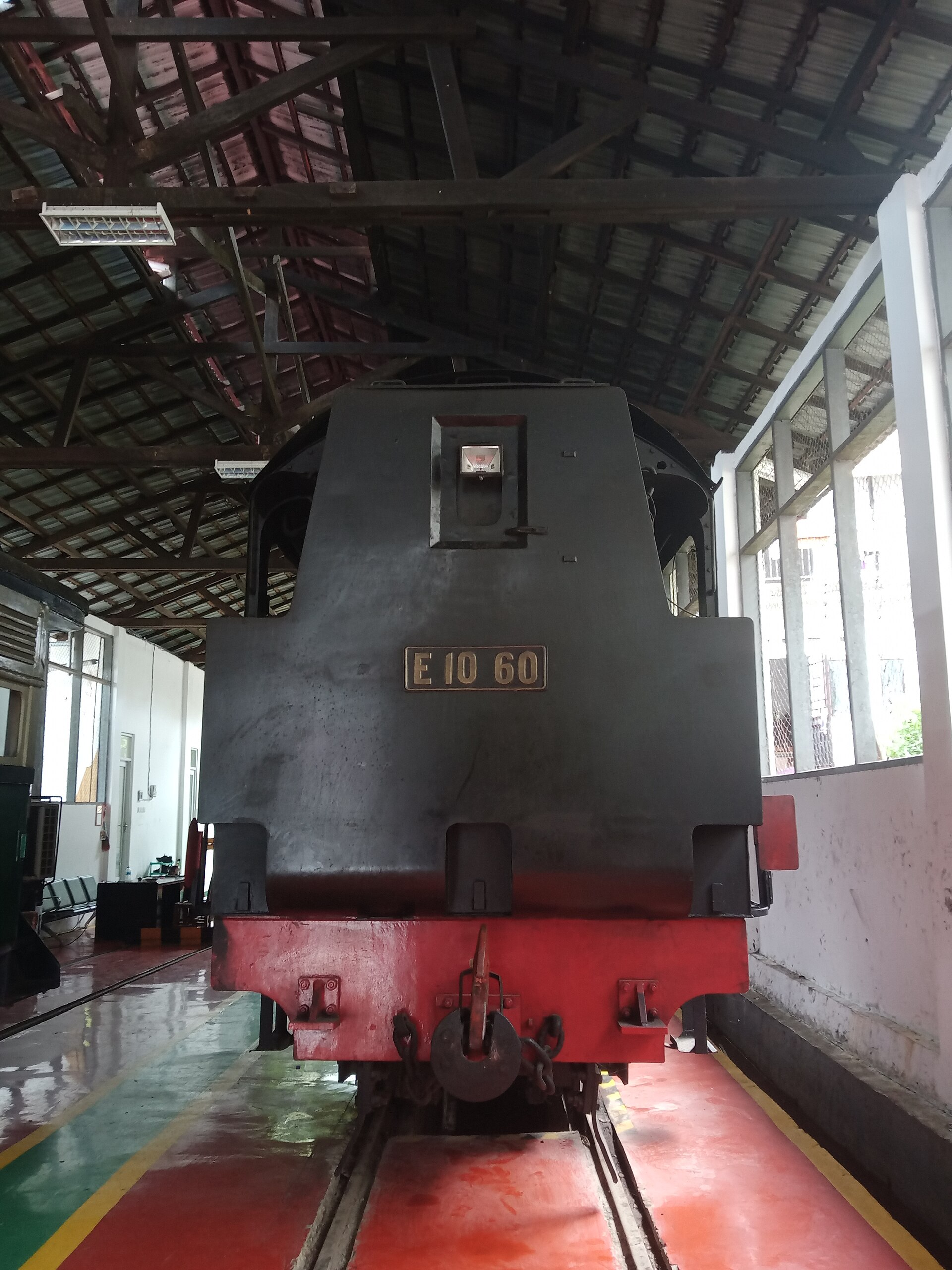
The line worked into the 1980s, then faded as the coal ran down; the last of it closed when the mine finally shut in 2003, and the rack sections through the Anai Valley — the spectacular heart of the journey — have carried no trains for years. What survives is a short stub at Sawahlunto, from the town down to Muaro Kalaban, a few kilometres of the old line. On this the town keeps its steam alive. E1060, one of the black rack engines, was fetched back from a museum on Java, patched up, and now — on a good day — raises steam again to trundle visitors down to Muaro Kalaban and back. It is a modest ride on a fraction of a once-mighty line. But when the whistle blows and the black uncle moves off between the green hills, you are watching the last living breath of a railway that once climbed a mountain full of coal.
Along the route
Syurida / Wikimedia Commons · CC BY-SA 4.0Mak Itam, the black uncle
Mak Itam — black uncle in Minangkabau — is a genuine rack steam locomotive, one of a class built in Germany, Switzerland and Japan to climb the grades of West Sumatra. The survivor was rescued from a museum on Java and brought home, and is the last working steam on a great lost rack railway.Frank Stamford / Wikimedia Commons · CC BY 2.0A railway carved for coal
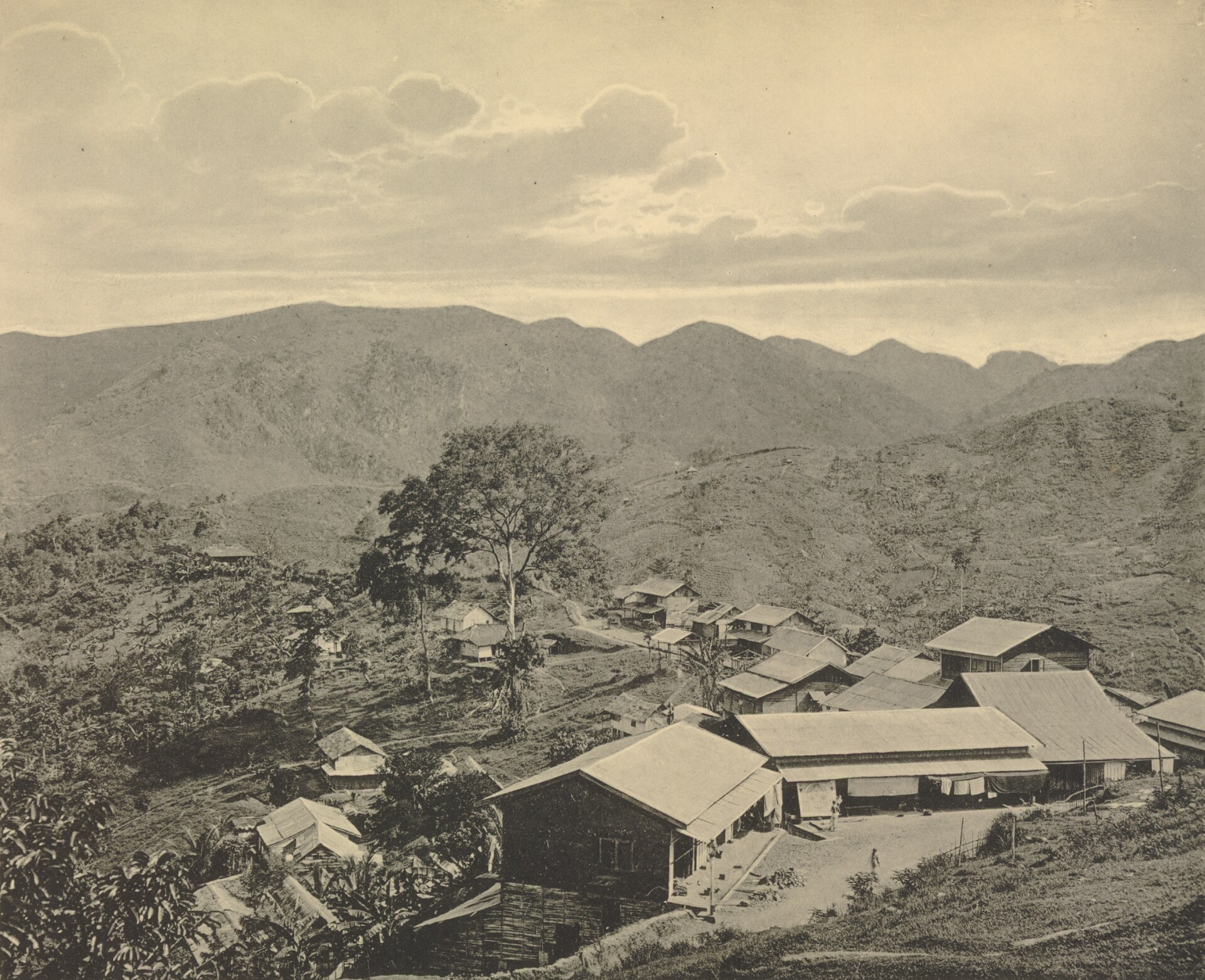
The line exists because of what lay under Sawahlunto: the Ombilin coalfield. From 1891 Dutch engineers drove a railway up from Padang through the Anai Valley on 35 kilometres of rack. Mine, town, railway and port are now inscribed by UNESCO.Government of Sawahlunto city / Wikimedia Commons · Public domainThe town the mine built
Sawahlunto is unlike anywhere in Indonesia: a small Dutch coal town in a steep green bowl, its streets and shafts now a living museum — including the hard story of the Orang Rantai, the chained people shipped in to dig the coal.A bit of history
Culture & experiences along the way
Uni Riska / Wikimedia Commons · CC BY-SA 4.0The Sunday steam train
When it runs, the Mak Itam heritage train makes a single short Sunday round trip, Sawahlunto to Muaro Kalaban and back — a few kilometres of the old line at walking pace, cheap and wonderfully informal. But parts for a century-old rack engine are scarce, so on many days a diesel in vintage livery stands in. Ask locally before counting on steam.D.W. Fisher-Freberg / Wikimedia Commons · CC BY-SA 3.0Down the mine, into the museums
Even on a day with no train, Sawahlunto rewards a visit. The Railway Museum fills the 1894 station with locomotives and photographs; the Mbah Suro tunnel takes you underground into a real coal gallery; and the Goedang Ransum museum, in the mine's old kitchen, shows how thousands of labourers were housed and fed — engineering, empire and human cost.Official Website of West Sumatra Province · Public domainInto the Minangkabau highlands
Sawahlunto sits in the heart of the Minangkabau highlands, and the old railway pointed straight at their finest scenery. Even where the trains no longer run, you can follow the route by road: the shimmering Lake Singkarak, the waterfalls of the Anai Valley, the market town of Bukittinggi, and everywhere the horned rooflines of Minangkabau houses.Timetables
Be honest with yourself before you plan around this train: the Mak Itam heritage service is an informal, occasional operation, not a scheduled railway. When it runs, it runs like this:
| Service | Days | Departs | Route |
|---|---|---|---|
| Mak Itam heritage train | Sundays (when operating) | around 10:00 | Sawahlunto → Muaro Kalaban and back |
The round trip covers only the surviving ~4 kilometres of line between Sawahlunto and Muaro Kalaban, takes well under an hour, and costs a token fare — around Rp 50,000 per person at the last report. One coach, a few dozen seats.
A few important cautions:
- It is unreliable. Keeping a century-old rack locomotive in steam is hard; parts are scarce. The service has stopped and restarted more than once, and on many running days a diesel locomotive dressed in vintage livery hauls the train while the historic E1060 stays in the shed as a static exhibit. If seeing (or riding behind) the real steam engine matters to you, ask locally first — through the Sawahlunto tourism office or KAI Wisata — and treat any steam day as a bonus.
- You cannot ride the famous rack sections. The spectacular climb through the Anai Valley and the run along Lake Singkarak — the scenery that made this line legendary — no longer carry passenger trains. The stretch beyond Muaro Kalaban toward Padang Panjang has been closed since 2014. What you ride today is the short town end only.
- There is no through train to Sawahlunto. To reach it you travel to Padang (which has an airport with rail links) and continue by road into the highlands.
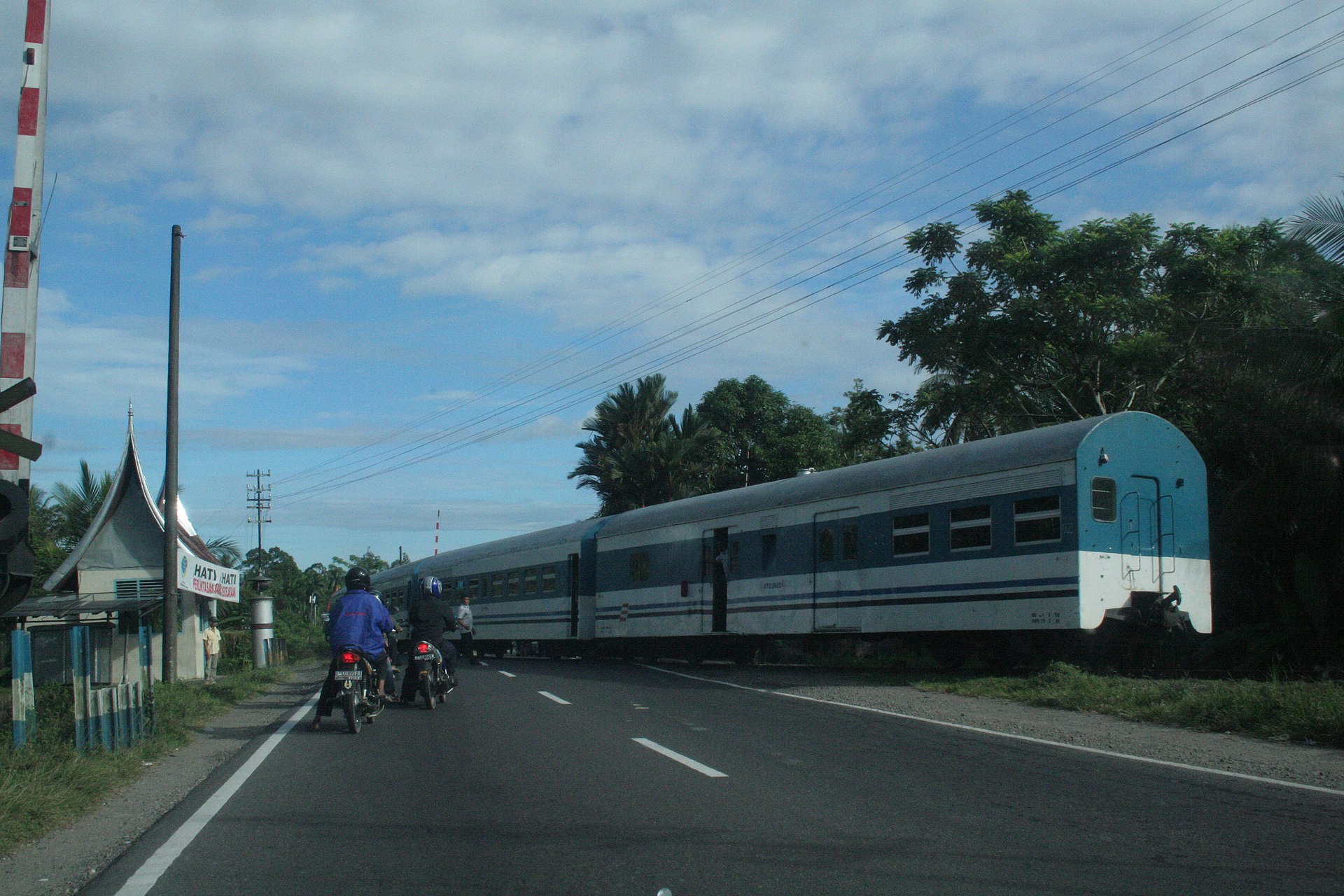
For context, West Sumatra does still run regular trains around Padang — the Minangkabau Express airport link, the Pariaman Express up the coast, and the Lembah Anai railbus — which are useful for getting into the region even though none reach Sawahlunto itself.
Details as of the 2026 season and subject to change. The heritage train's operation is weather- and maintenance-dependent; always confirm locally before travelling.
Tickets
The Mak Itam heritage train is run jointly by KAI Wisata (the tourism arm of Indonesia's national railway) and the Sawahlunto city government, and it is very much a local operation. There is no online booking: tickets are bought on the day, at the station, for a token fare, and the best way to confirm whether a train — and especially the steam locomotive — will actually run is to contact the Sawahlunto tourism office or the museum in advance.
Sawahlunto's museums (the Railway Museum in the old station, the Mbah Suro mine tunnel, and the Goedang Ransum museum) are open most days and charge only small entry fees, so a visit is rewarding even without a train.
Getting there is the bigger planning job. Fly or take the train to Padang, then continue by road — roughly three hours — up into the highlands to Sawahlunto, ideally combined with the other Minangkabau sights of Bukittinggi, Lake Singkarak and the Anai Valley. Below, KAI Heritage's site for the museum-railway network and KAI's main site for the regular West Sumatran services that help you reach the region.
Book your tickets
The Mak Itam heritage train
Sawahlunto to Muaro Kalaban, when it runs
The short heritage ride down the old Ombilin line, run by KAI Wisata and the Sawahlunto city government — typically a single Sunday round trip for a token fare, bought on the spot. It is an informal, weather- and maintenance-dependent operation; confirm locally before you travel, and don't assume the steam locomotive itself will be running.
Book Tickets (opens in a new tab, on KAI Wisata · Sawahlunto)via KAI Wisata · SawahluntoGetting to West Sumatra by rail
KAI's Padang-area services
There is no through train to Sawahlunto any more, but KAI runs regular services around Padang — the Minangkabau Express airport train, the Pariaman Express up the coast, and the Lembah Anai railbus — which, with a road connection, get you into the highlands. Live times and tickets are on KAI's site and the Access by KAI app.
Book Tickets (opens in a new tab, on Kereta Api Indonesia (KAI))via Kereta Api Indonesia (KAI)Rail Passes
No rail pass covers the Mak Itam. Interrail and Eurail are European schemes, and Indonesia is not among the 33 countries in Interrail's list of covered railway companies. The heritage train is a local operation, paid for at the station on the day.
Checked October 2026 against Interrail's list of railway companies (opens in a new tab).
Places to Visit
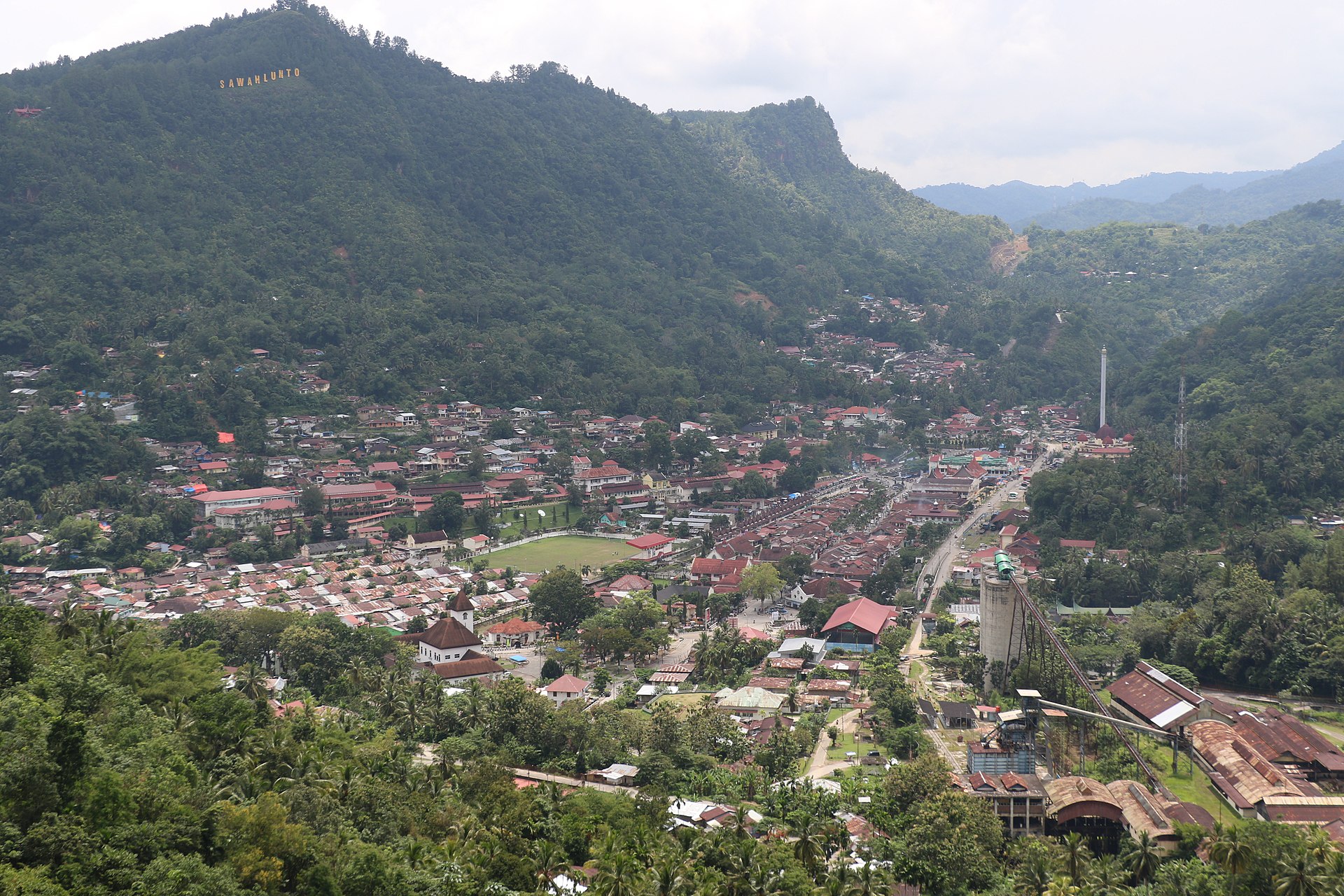
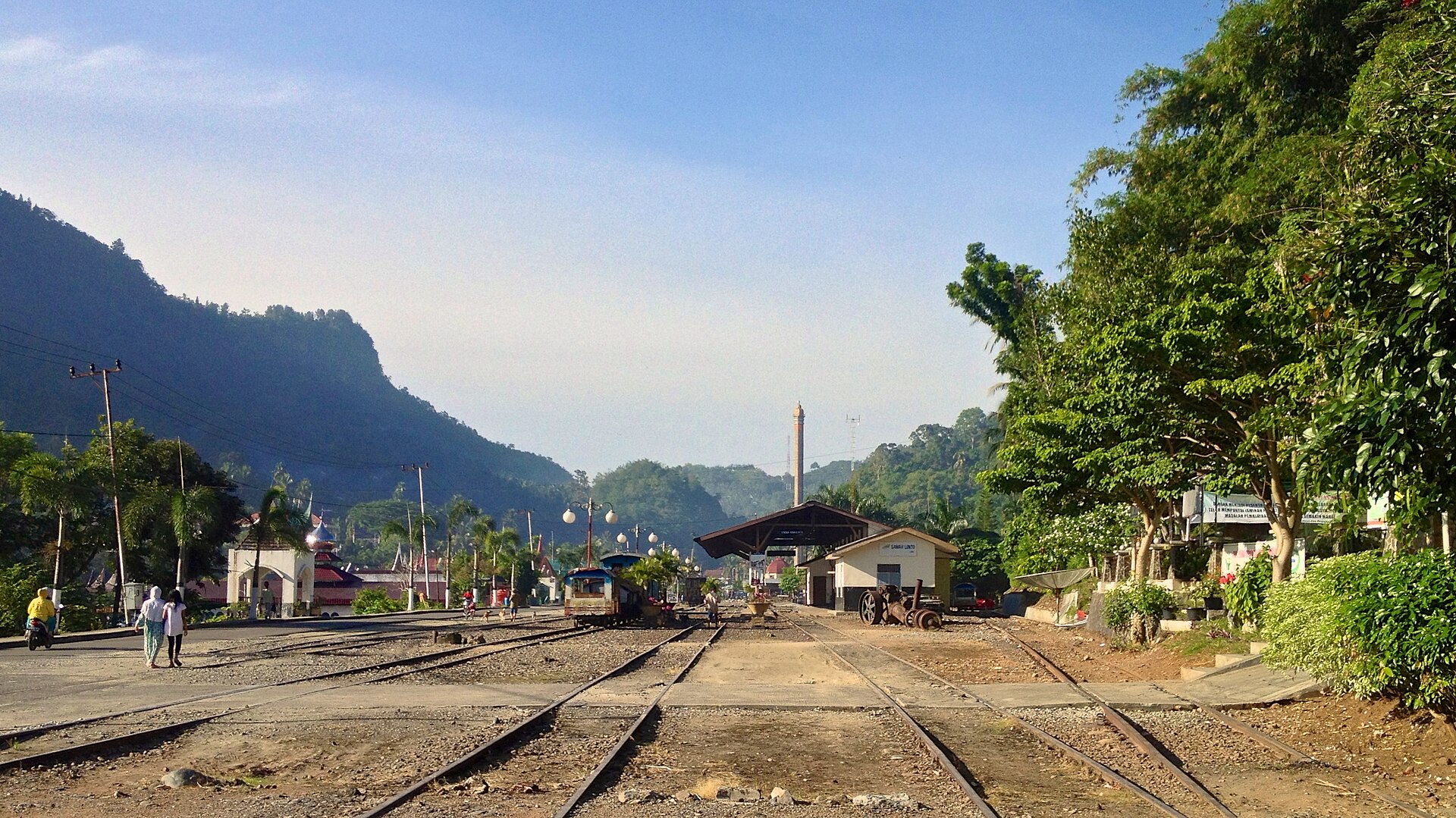
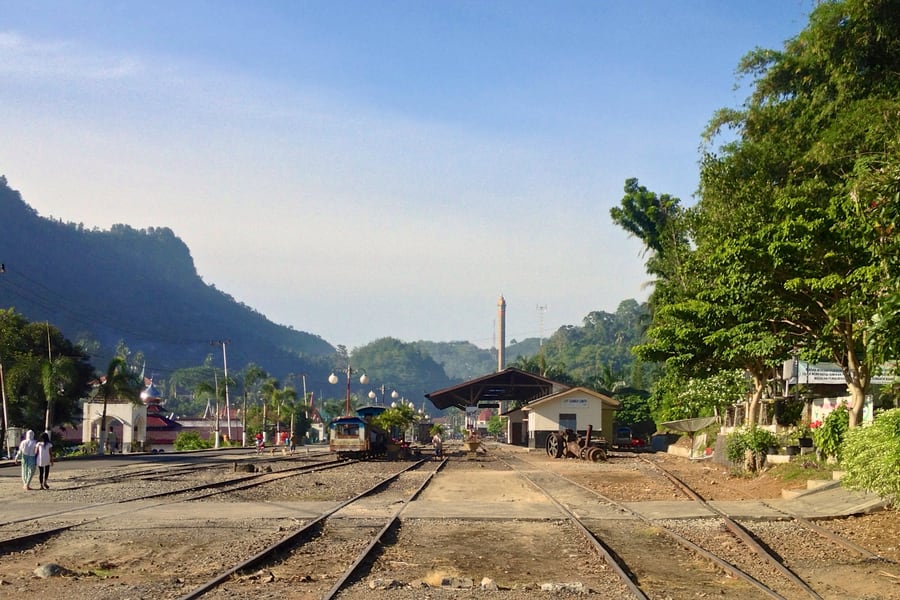
Sawahlunto is the destination, and it is a remarkable one — a Dutch colonial coal town preserved almost whole in a steep green bowl, presented now as a living UNESCO World Heritage site. Give it a full day; the mine museums alone will take most of one. Do climb to the hillside viewpoint while you are there, for the classic look down over the red roofs, the mine headframe and the "SAWAHLUNTO" sign on the slope.
Beyond the town, the old railway pointed straight at the finest scenery in West Sumatra, and you can still follow it by road.
 fitri agung / Wikimedia Commons · CC BY 2.0 · cropped
Sawahlunto
A Dutch colonial coal town in a steep green bowl, laid out from 1882 after coal was found here, and preserved almost whole — European streets and villas, shafts, workshops and the railway. By 1920 the Ombilin field was returning 4.6 million gulden a year; by 1980 the town had shrunk to 13,561 people and was close to dead. UNESCO inscribed the whole mining landscape in 2019, and the place has lived off that ever since.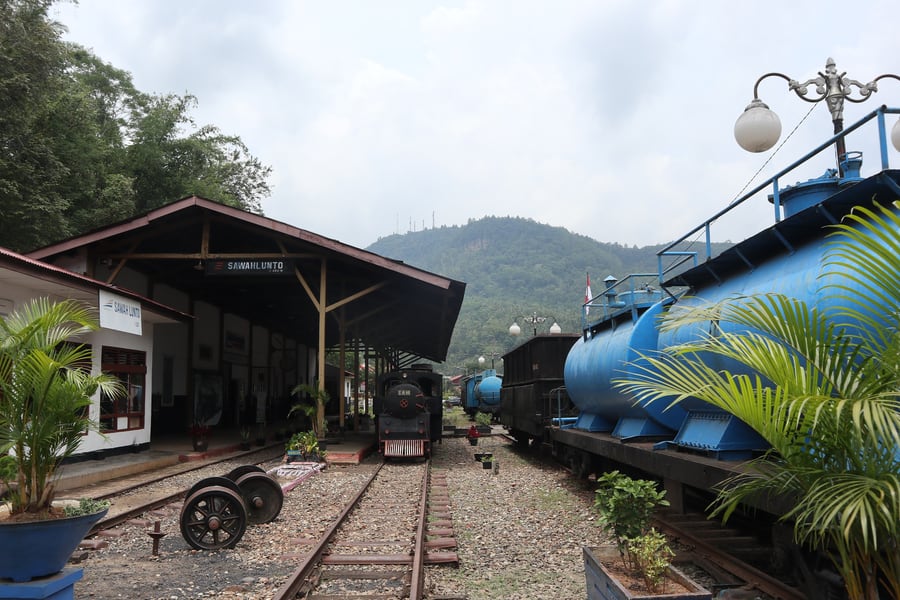 Panda Kotmel / Wikimedia Commons · CC BY-SA 4.0 · cropped
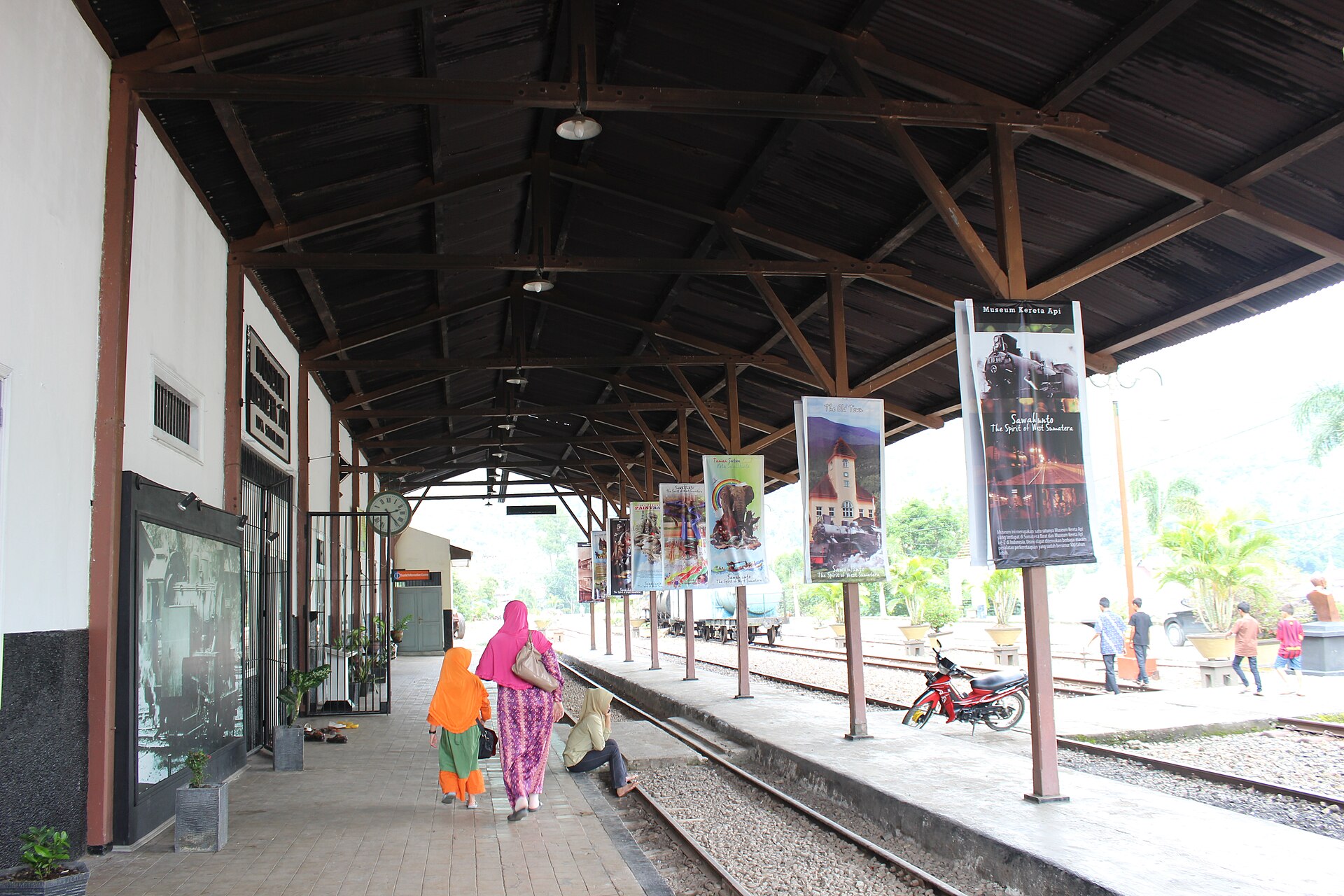
The Railway Museum
The line reached Sawahlunto on 1 February 1894, and the station at the end of it became a museum in 2005 — one of only a handful of railway museums in Indonesia. Locomotives, signals, coal wagons and photographs of the line in its working days stand under the trainshed and out along the tracks, with the green walls of the bowl closing in behind. The Mak Itam itself lives here between runs.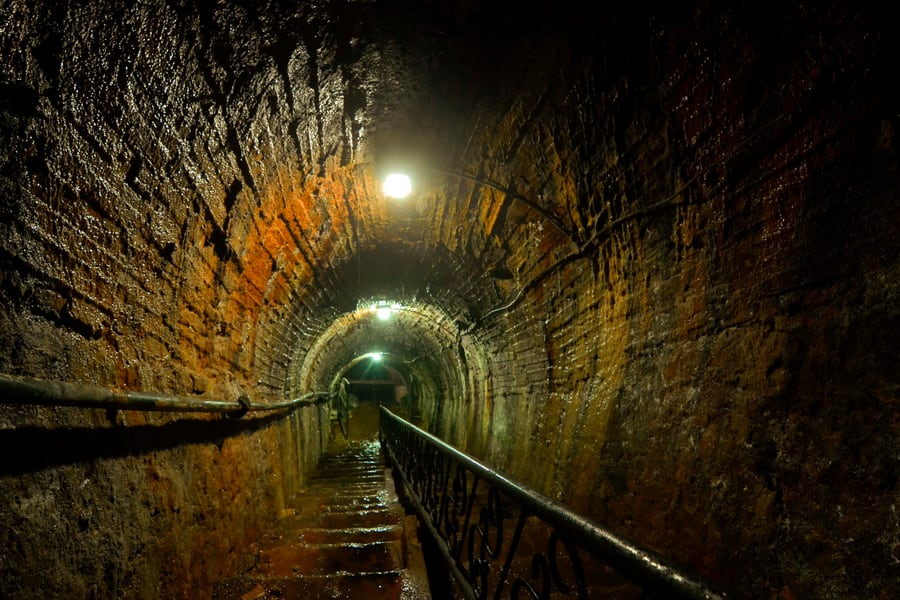 Government of Sawahlunto / Wikimedia Commons · Public domain · cropped
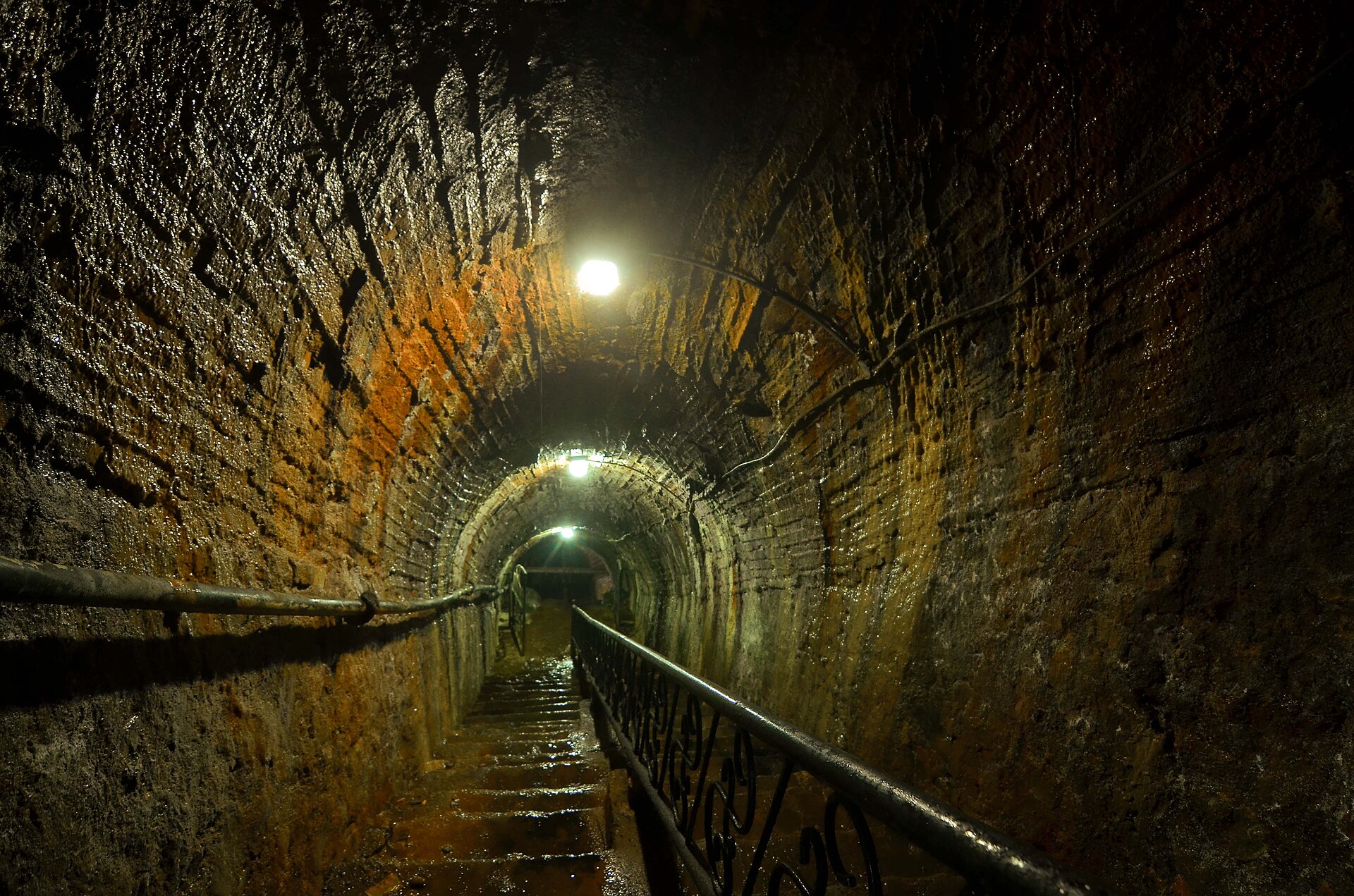
Lubang Mbah Suro
A genuine mine gallery reopened for visitors — brick-lined, dripping, and lit just enough. It was cut in 1898 as the Soegar tunnel, abandoned before 1930, then restored over six months in 2007 and opened as a museum the year after; 186 metres of it can be walked, in boots and a helmet they hand you at the door. It is named for Mbah Soero, the foreman who ran the gang. Nothing else here brings the work home so directly.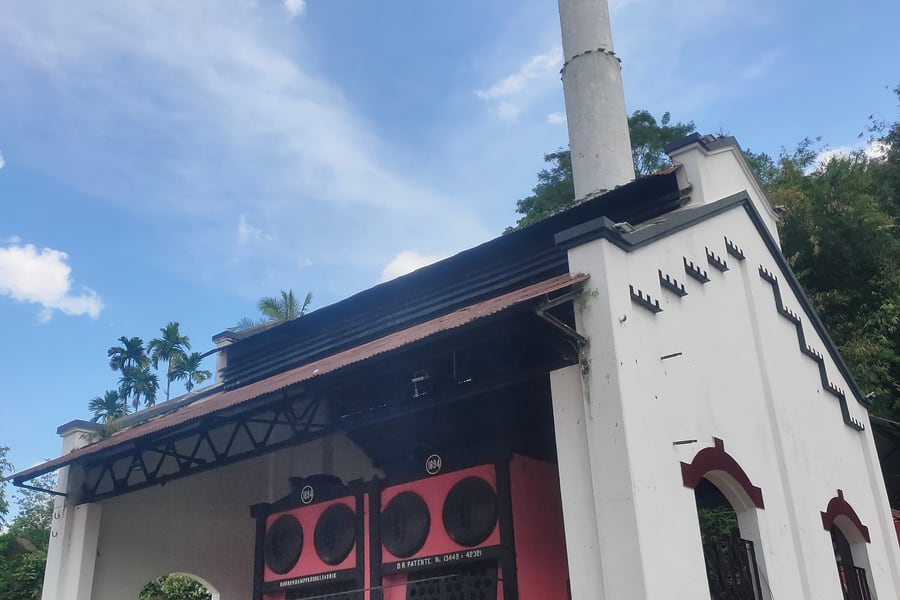 Triwahyuni.o / Wikimedia Commons · CC BY-SA 4.0 · cropped
Goedang Ransum
The vast central kitchen and store that fed the mine, built in 1918 and a museum since 2005, its steam boilers and tall chimney still standing. It tells the human story rather than the industrial one — above all that of the Orang Rantai, the "chained people": some 20,000 convicts shipped in from prisons across the Indies, paid 18 cents a day in 1908 against a free contract worker's 32, and beaten if they refused to work.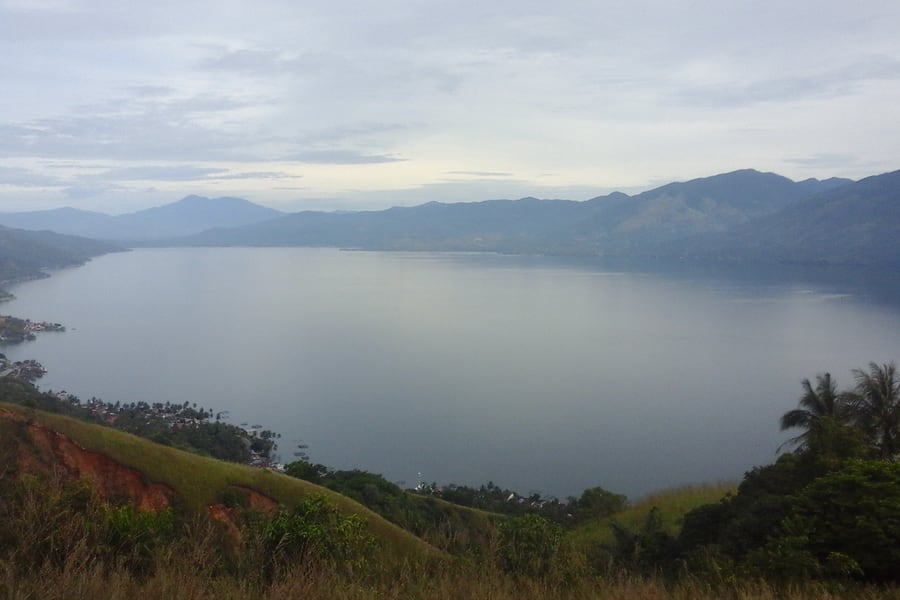 Andrika Dwi Nanda / Wikimedia Commons · CC BY-SA 3.0 · cropped
Lake Singkarak
A broad blue lake ringed by mountains, on the route the coal trains once took west. It is far deeper than it looks — 107.8 square kilometres, 21 kilometres long, and 268 metres deep at the deepest point. The bilih, a small silver fish found in no other water on earth, is netted here and fried whole by the roadside. The old railway ran along the shore, and the road that replaced it gives you much the same view.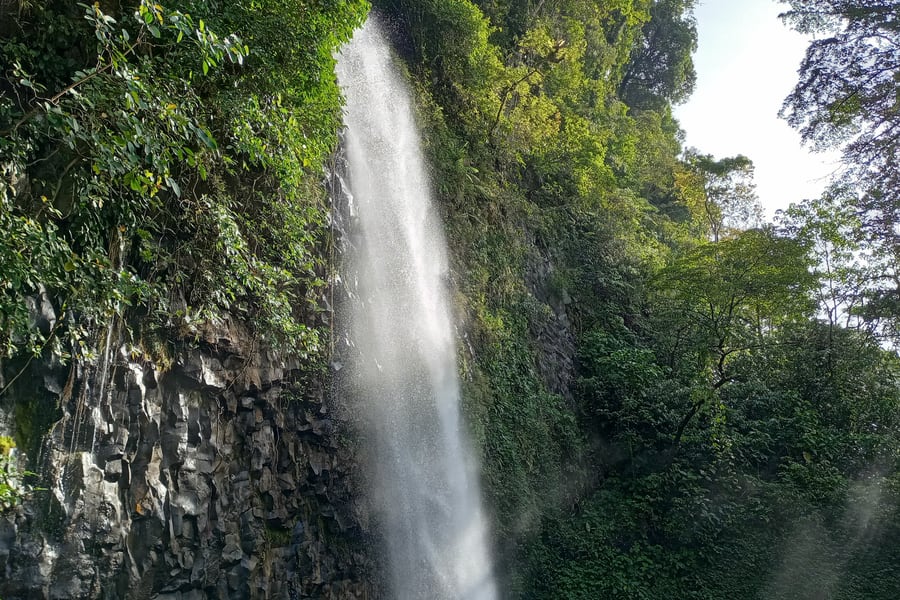 Astari28 / Wikimedia Commons · CC BY-SA 4.0 · cropped
The Anai Valley
West of Singkarak the line dropped through the Anai gorge on Riggenbach rack — some 35 km of toothed rail at gradients reaching one in fourteen, the most dramatic thing the Ombilin railway ever did. You cannot ride it today; that section closed in 2014. But the road runs beside it, and a 35-metre waterfall still drops onto the verge at the foot of Mount Singgalang, within sight of the old alignment.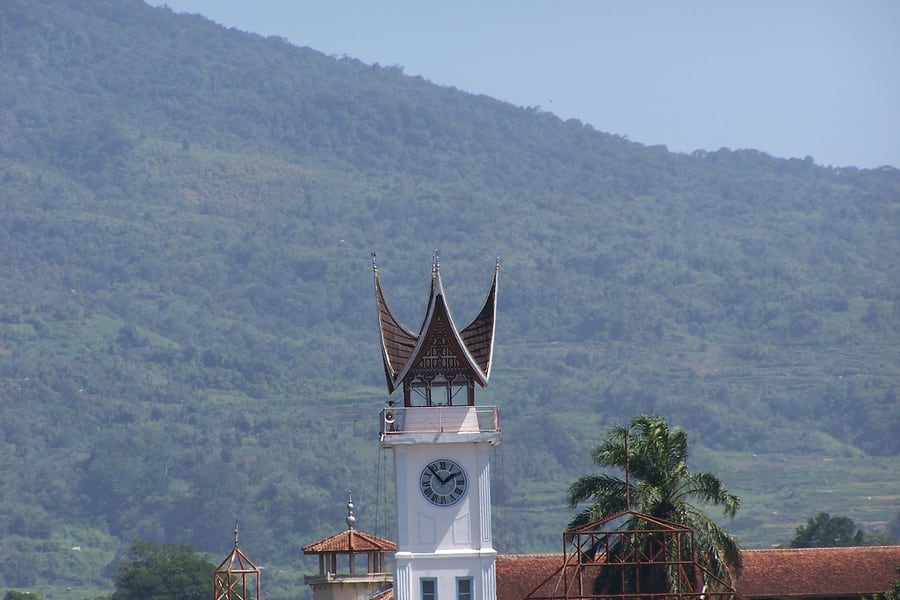 Hanafiannoy / Wikimedia Commons · Public domain · cropped
Bukittinggi
An hour or so north, in cool air beneath the volcanoes, and the most distinctive town in West Sumatra. Jam Gadang, the big clock tower, was a 1926 gift from Queen Wilhelmina to the local controleur; its faces use IIII rather than IV, and its roof has been in turn a rooster, a Japanese pagoda and finally a horned Minangkabau roof. Below the town the Sianok canyon cuts a deep green gorge across the plateau.Where to Sleep
Sawahlunto itself is small, and its accommodation is modest but characterful. The town has turned several of its historic buildings to new use, and the most memorable places to stay are the heritage guesthouses and homestays in the old colonial quarter — simple, friendly, and steps from the station and the mine museums. There are a few basic hotels for the rest; this is a place you come for the history, not for luxury.
Many travellers, though, base themselves in the wider Minangkabau highlands and visit Sawahlunto on a day trip. Bukittinggi, the region's main tourist town, has by far the widest choice — from backpacker guesthouses near the clock tower to comfortable mid-range hotels with views over the Sianok canyon — and makes an excellent base for the whole highland circuit of lakes, valleys and villages.
At the coast, Padang — your likely arrival point — has the full range of city and business hotels, useful for a night on the way in or out. Wherever you stay, book ahead around Indonesian public holidays and the long Idul Fitri season, when the highlands fill with domestic visitors; and if you are timing your trip around a possible run of the Mak Itam, aim for a Sunday and confirm the train locally before you commit.
Questions or corrections
Planning this trip and stuck on something, or spotted a time, fare or detail that has changed? Send us a message about The Mak Itam. We read every one, and we update this page when something has changed.