The Manx Electric Railway
Vouliagmeni / Wikimedia Commons · CC0
- Distance17½ miles (28 km) · 3 ft gauge
- Duration1 hour 15 minutes end to end
- Best seasonMid-March to 1 November · every day from late April to mid-September
Introduction
The Manx Electric Railway runs 17½ miles up the east coast of the Isle of Man, from Derby Castle at the northern end of the promenade in Douglas, through Laxey, to Ramsey. It was built in stages between 1893 and 1899 and has been electric from the first day, its cars drawing current from an overhead wire. The whole trip takes an hour and a quarter.
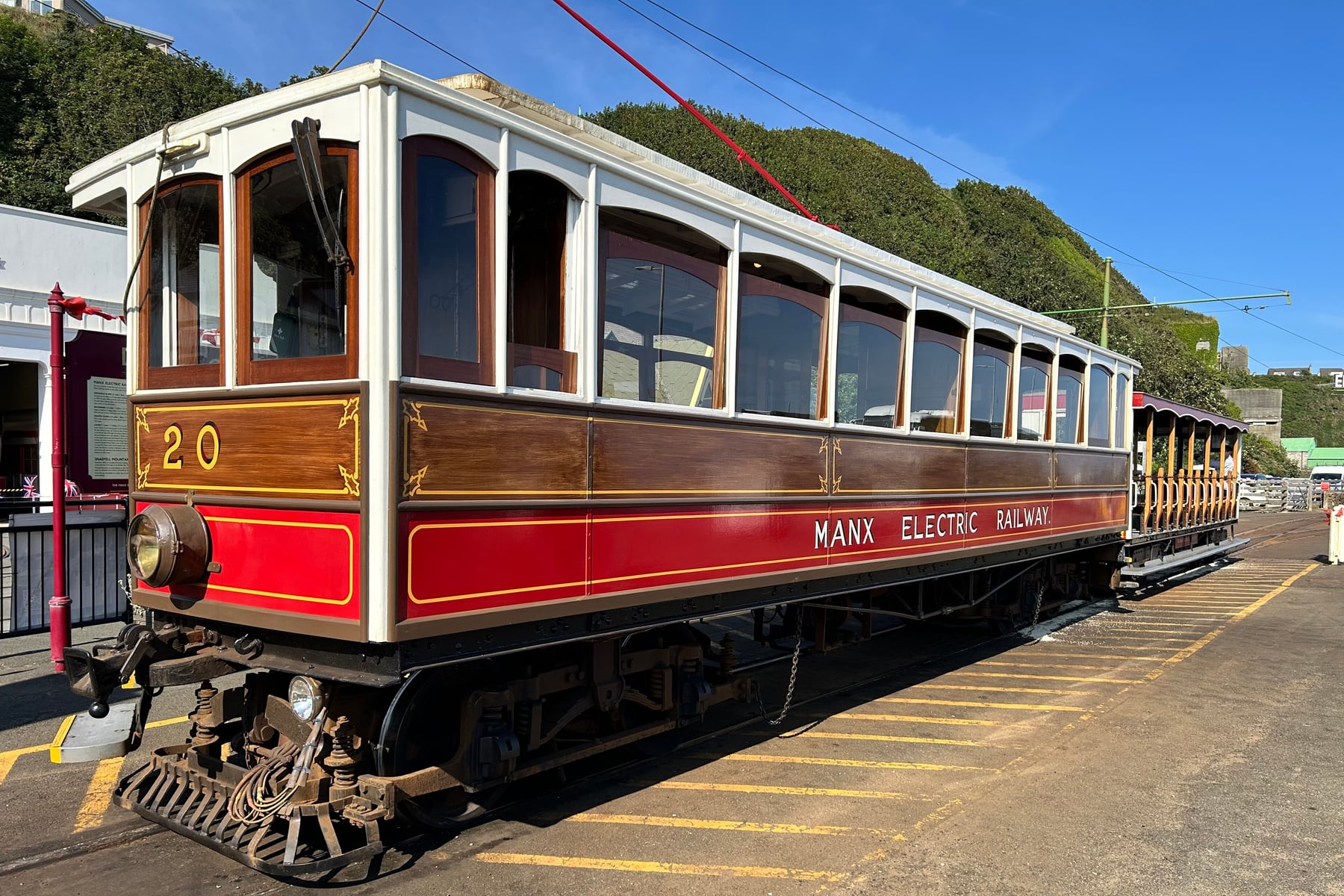
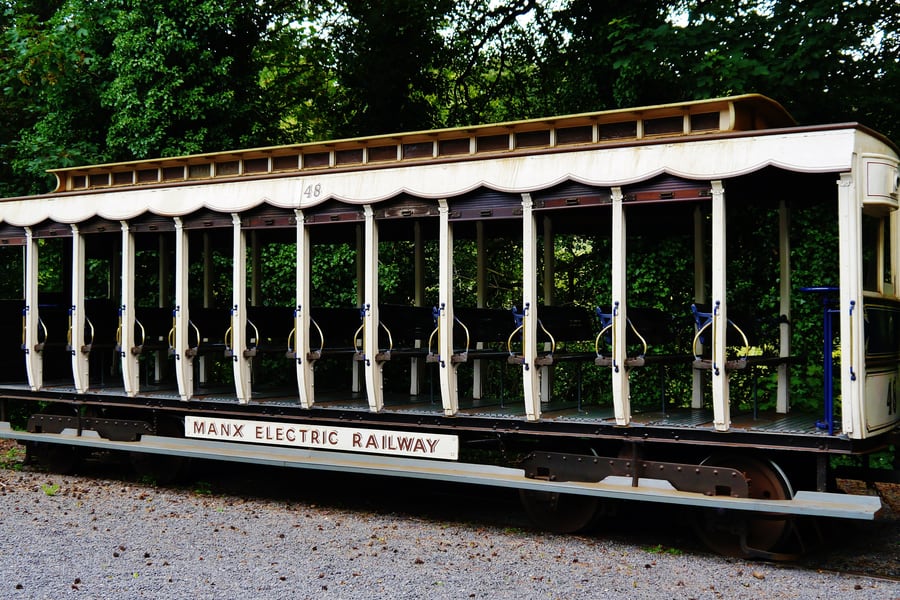
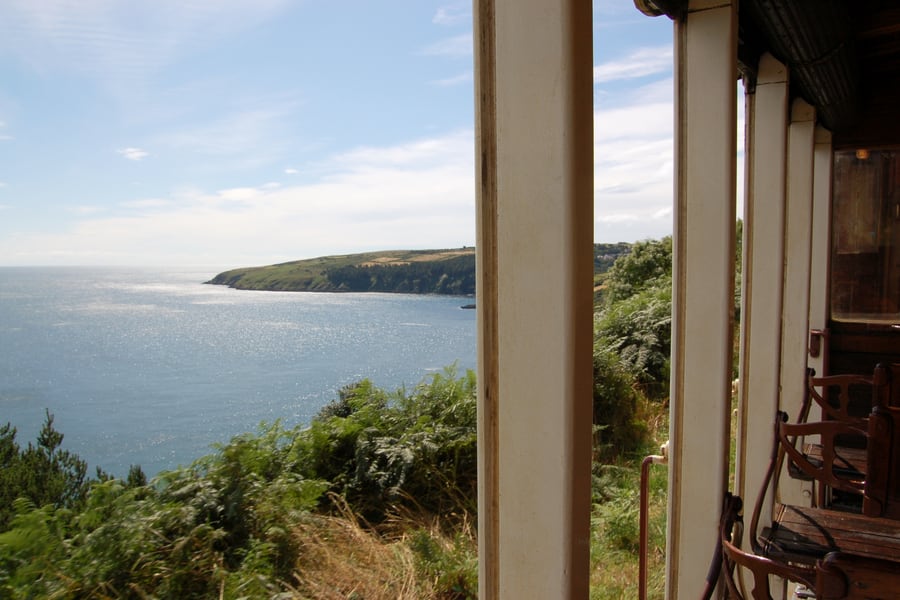
What makes it worth the ride is the cars. Almost all of them were built before 1910 for this line, and two of the three that opened it in 1893, cars 1 and 2, still carry passengers: the oldest electric trams working on their original line anywhere. Most journeys are a closed motor car pulling an open trailer, with a motorman at the front and a conductor on board.
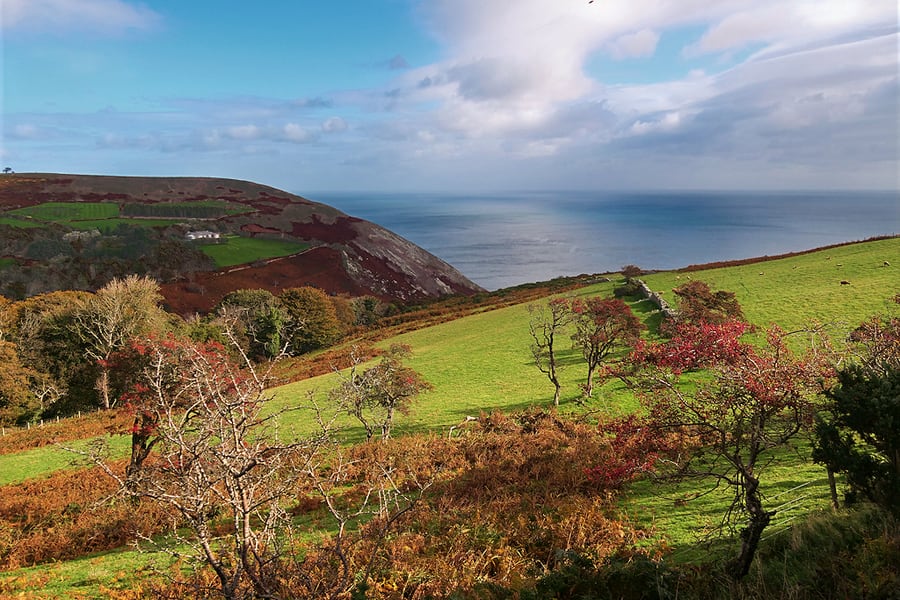
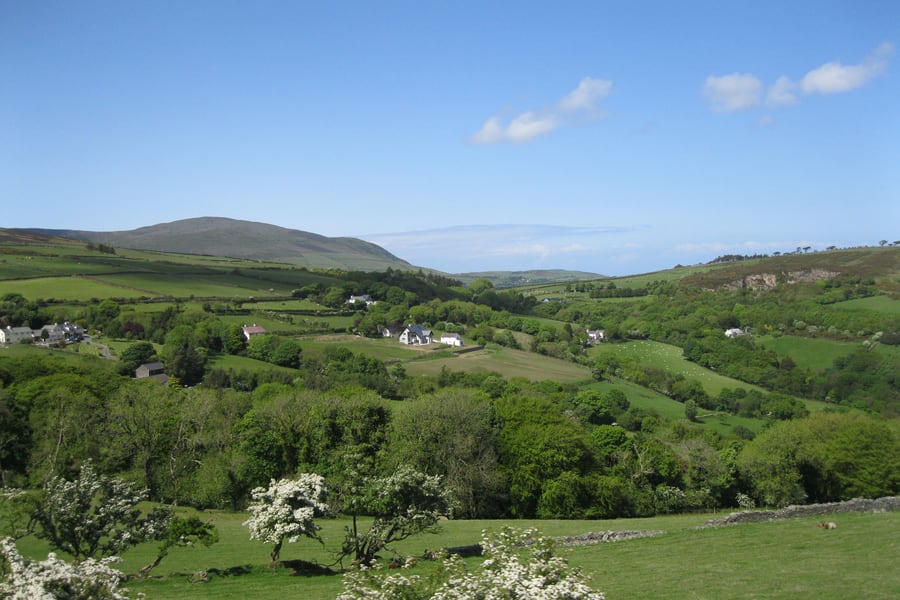
Out of Douglas the line runs on its own track beside the coast road, then across fields, past wooded glens and along the cliff tops above the Irish Sea. At Laxey it meets the Snaefell Mountain Railway. The Isle of Man is a self-governing Crown Dependency, not part of the United Kingdom, and ferries sail to Douglas from Heysham and Liverpool. The railway runs from mid-March to the beginning of November.
The Journey
The cars leave from Derby Castle, at the far end of the promenade from the town centre, where the horse trams of the Douglas Bay Horse Tramway end their run along the seafront. The depot is here too. Leaving Douglas, the line rounds Onchan Head, above Douglas Bay, then runs beside the coast road on its own double track, with many level crossings, to Groudle Glen.
Beyond Groudle the line crosses open farmland to Baldrine and South Cape, then drops into Laxey, where the mountain cars wait across the platform for the climb to Snaefell. Many people change here, and a few cars from Douglas go no further.
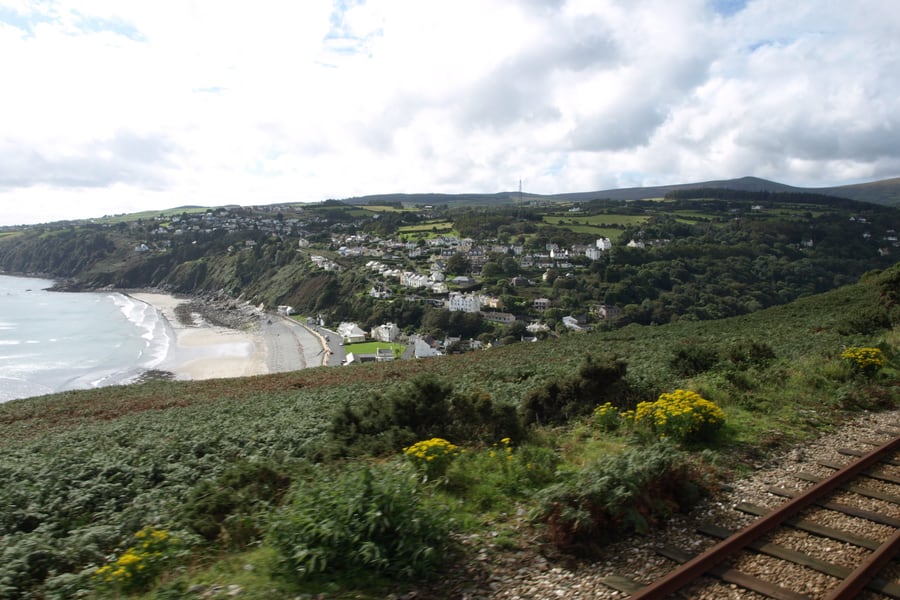
North of Laxey the line is quieter and the scenery better. It runs high along the cliffs, with the sea below on the right, past Dhoon Glen and Ballaglass Glen, then crosses the fields of Maughold parish and drops down past Ballure into Ramsey, by the town centre.
There are more than fifty stopping places on the way, most of them request stops, and some known only by the number of the nearest pole: the poles run from 1 at Derby Castle to 903 at Ramsey.
The cars
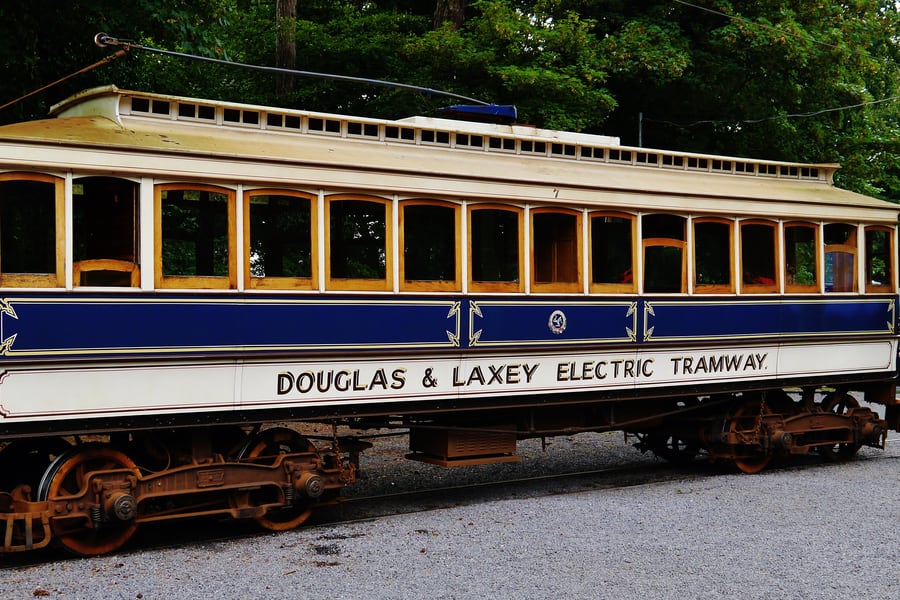
The cars are a collection of their own. The 1893 cars 1 and 2 are short, boxy saloons, built before anyone had settled what an electric tram should look like. The tunnel cars of 1894 and the winter saloons of 1899 are longer, and the open cars, with bench seats and no sides, run in good weather. The railway also keeps trailer 59, the saloon in which King Edward VII and Queen Alexandra rode from Douglas to Ramsey in 1902.
Along the route
 Neil Theasby / Geograph · CC BY-SA 2.0
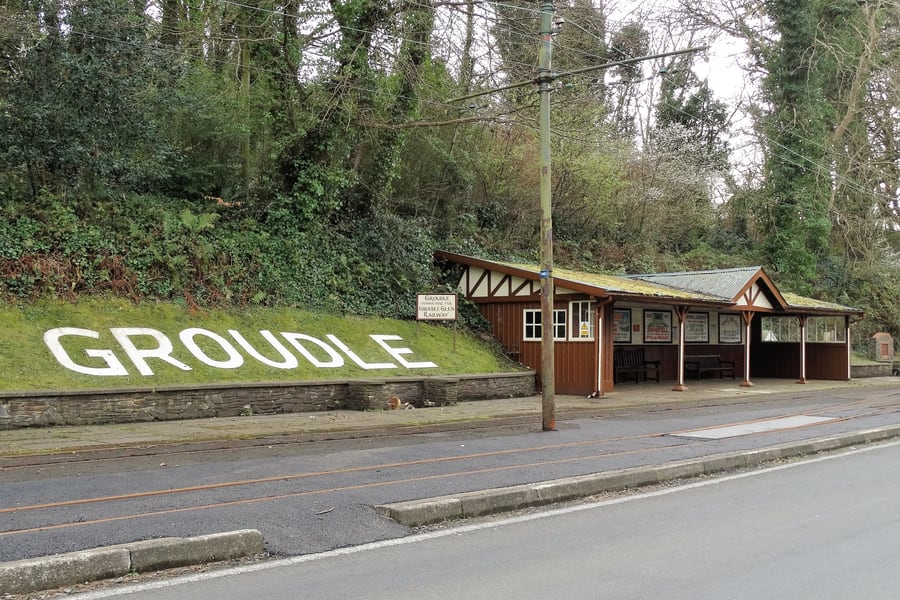
Groudle
The first stop that feels like the country. The line reached Groudle Glen on its opening day in 1893, and the halt by the road still serves the glen and its narrow-gauge steam railway down to the sea.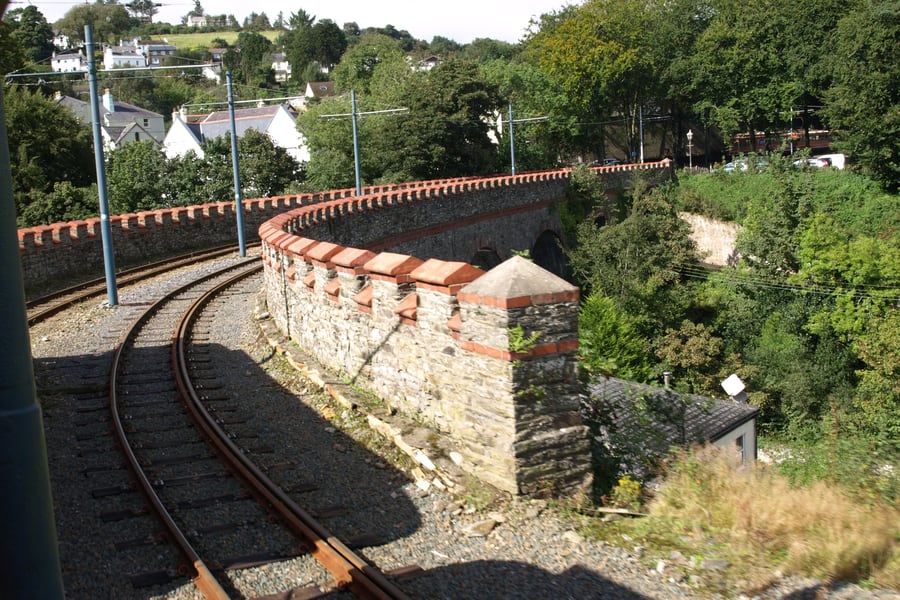 Andrew Abbott / Geograph · CC BY-SA 2.0
Into Laxey
The line curves into Laxey on a stone embankment above the village. At the station the Snaefell cars wait on their own wider track, and many passengers change here for the summit.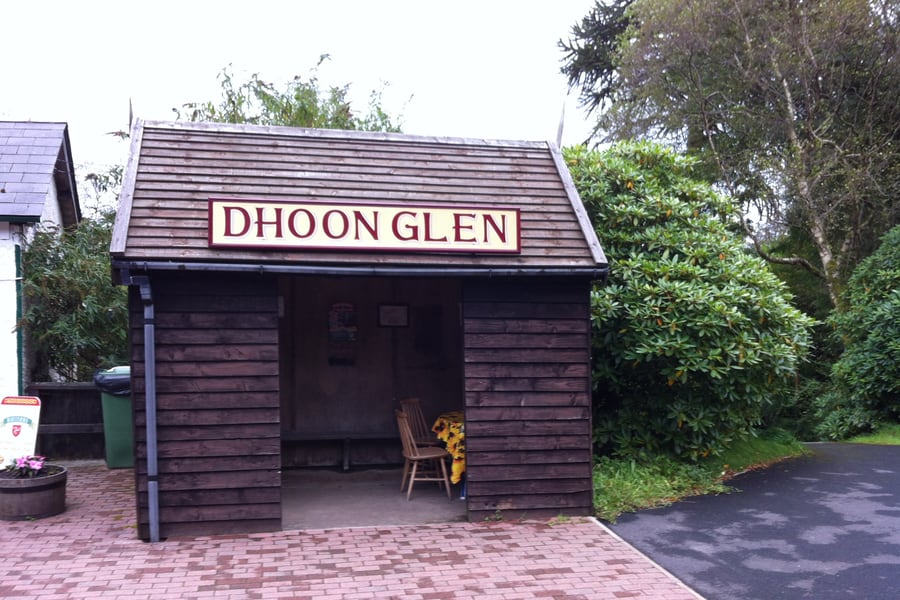 Andrew Abbott / Geograph · CC BY-SA 2.0
Dhoon Glen
North of Laxey the halts get smaller. At Dhoon Glen a wooden shelter stands at the top of the path down one of the island's steepest glens, past one of its highest waterfalls, to the shore.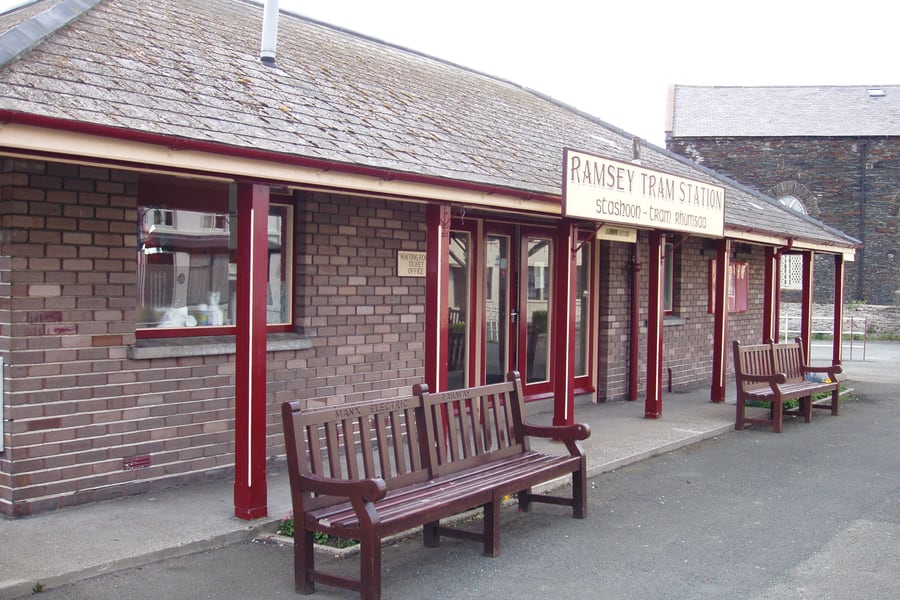 Gregory J Kingsley / Wikimedia Commons · CC BY-SA 3.0
Ramsey
The cars end their run at the brick Ramsey tram station on Albert Street, in the middle of the town, an hour and a quarter after leaving Douglas.A bit of history
Culture & experiences along the way
 Phil Sangwell / Flickr · CC BY 2.0
Ride an 1893 car
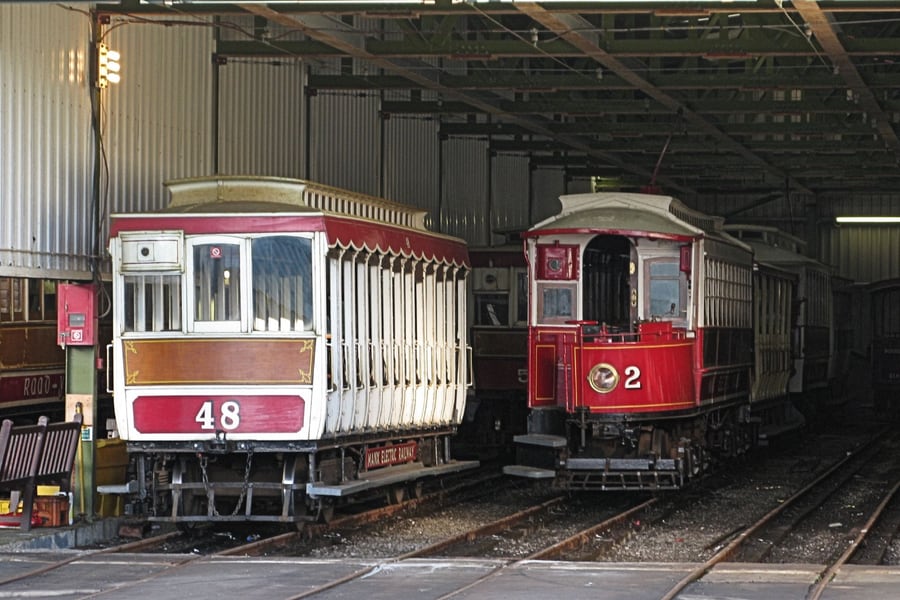
Cars 1 and 2 opened the line in 1893 and still carry passengers, the oldest electric trams working on their original line. On Timetable D days the 11:40 from Derby Castle and the 13:40 back from Ramsey are worked by one of them or by one of the open cars, 16, 32 or 33.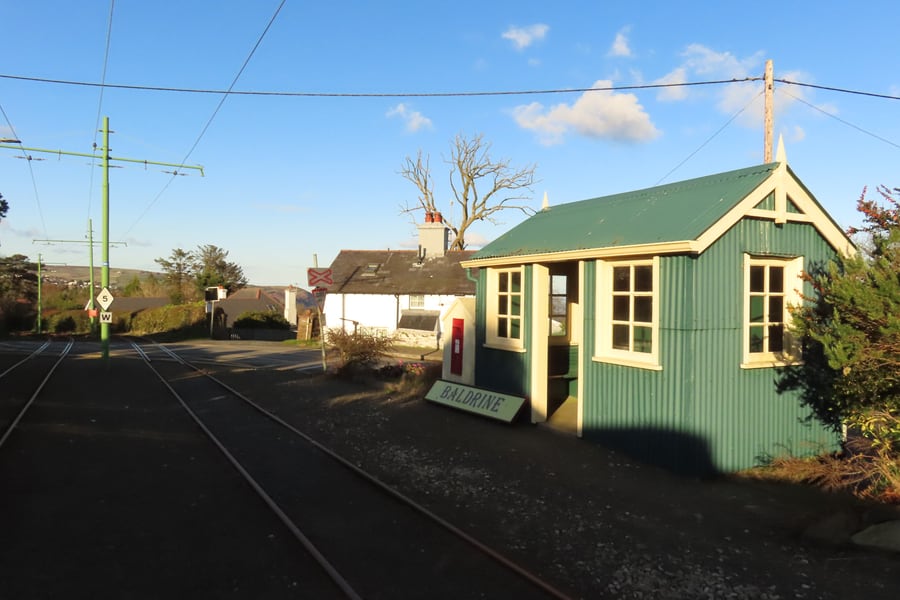 Colin Park / Geograph · CC BY-SA 2.0
Flag it down
Most of the line's stops are request stops, many with nothing but a shelter or a pole number. To board, give the motorman a clear signal, like flagging down a bus; to get off, tell the conductor your stop when you get on.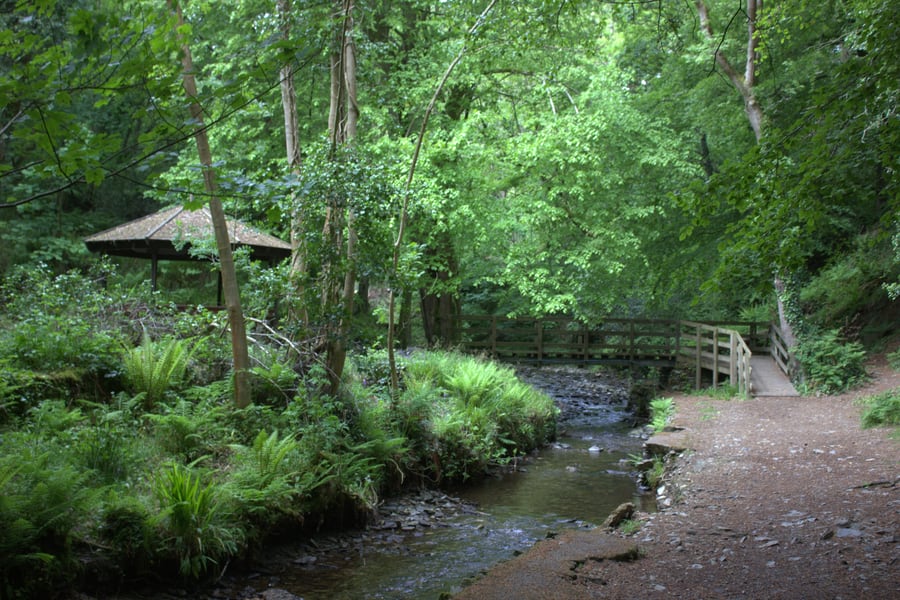 Robert Eva / Geograph · CC BY-SA 2.0
The Groudle shuttle
On Wednesday evenings in July and August, extra cars run from Douglas to Groudle to meet the evening trains of the Groudle Glen Railway, a 2 ft steam line of 1896 run by volunteers, down the glen to Sea Lion Rocks.Timetables
The 2026 season ran from 17 March to 1 November. Cars ran every day from late April to mid-September; before and after that they had a few days off, mostly Mondays, and in October there was no service on Mondays or Fridays. The 2027 dates have not been published yet, and the times below are the 2026 timetable.
On most spring and autumn days the railway works Timetable C, with eight cars each way over the whole line. Douglas to Ramsey takes 1 hour 15 minutes, with Laxey 30 minutes out of Douglas:
| Derby Castle → Ramsey | Ramsey → Derby Castle |
|---|---|
| 09:40, at Ramsey 10:55 | 11:10, at Douglas 12:25 |
| 10:10, 10:40 | 11:40, 12:40 |
| 11:40, 12:40, 13:40 | 13:40, 14:40, 15:10 |
| 14:10 | 15:40 |
| 15:10, at Ramsey 16:25 | 16:40, at Douglas 17:55 |
Good to know:
- Summer. On most days from June to mid-September, and at weekends in May, Timetable D adds extra cars between Douglas and Laxey and a later car to Ramsey at 15:40. Its 11:40 from Derby Castle and 13:40 back from Ramsey are worked by one of the oldest cars or an open car.
- Quieter days. In March and late October Timetable B runs six cars each way, the first leaving Derby Castle at 09:40 and the last leaving Ramsey at 16:40.
- TT fortnight. From 25 May to 4 June Timetable F runs cars all day, the last leaving Derby Castle for Ramsey at 19:40.
- Request stops. Wave clearly to the motorman to board at a halt, and tell the conductor where you want to get off.
Times as of November 2026, from the operator's 2026 timetable. Check your date on iombusandrail.im (opens in a new tab), where each day is marked with its timetable letter.
Tickets
Tickets are bought on the day for the journey you are making; there is no pre-booking except for groups of twenty or more. A return from Douglas to Ramsey costs £17 and a single £9; Douglas to Laxey is £13 return and £7 single. Children aged 5 to 15 pay half, and under-5s travel free with a paying adult. Bikes go for £3 a trip when there is room.
A Go Explore card covers the Manx Electric, the mountain line and every scheduled bus and train on the island for 1, 3, 5 or 7 days, from £22 for a day; a one-day ticket can also be bought on board. Fares checked November 2026 on iombusandrail.im (opens in a new tab); pounds sterling, one adult.
Book your tickets
Douglas to Ramsey, return
Adult · bought on the day
The whole line and back, paid for on the day you travel.
Book Tickets (opens in a new tab, on iombusandrail.im)via iombusandrail.imGo Explore
Unlimited bus and rail · 1, 3, 5 or 7 days
A pass for every scheduled bus and train on the island, the Manx Electric and the mountain line included.
Book Tickets (opens in a new tab, on iombusandrail.im)via iombusandrail.imRail Passes
No international rail pass is valid on the Manx Electric Railway. Interrail's table of railway companies lists no Isle of Man operator, and BritRail's conditions exclude heritage and tourist railways, and ships, so the ferry is not covered either.
The island has its own pass instead. Go Explore covers every scheduled bus and train on the island, this railway and the Snaefell Mountain Railway included, for 1, 3, 5 or 7 consecutive days, and also the horse trams, the Groudle Glen Railway and the Great Laxey Mine Railway. An Interrail or BritRail pass can still get you to Heysham or Liverpool for the boat.
For a day on the line, a one-day Go Explore is worth it. At £22 it costs a little more than a Douglas–Ramsey return, and it adds the climb up Snaefell from Laxey and the bus back if you want one.
Checked November 2026 against interrail.eu (opens in a new tab), britrail.com (opens in a new tab) and iombusandrail.im (opens in a new tab).
Places to Visit
The line is built for getting off. Most of its glens have a halt at the top of the path, Laxey has the wheel a few minutes' walk from the station, and at the northern end Ramsey is a town worth an afternoon before the car back.
 Robert Eva / Geograph · CC BY-SA 2.0
The Groudle Glen Railway
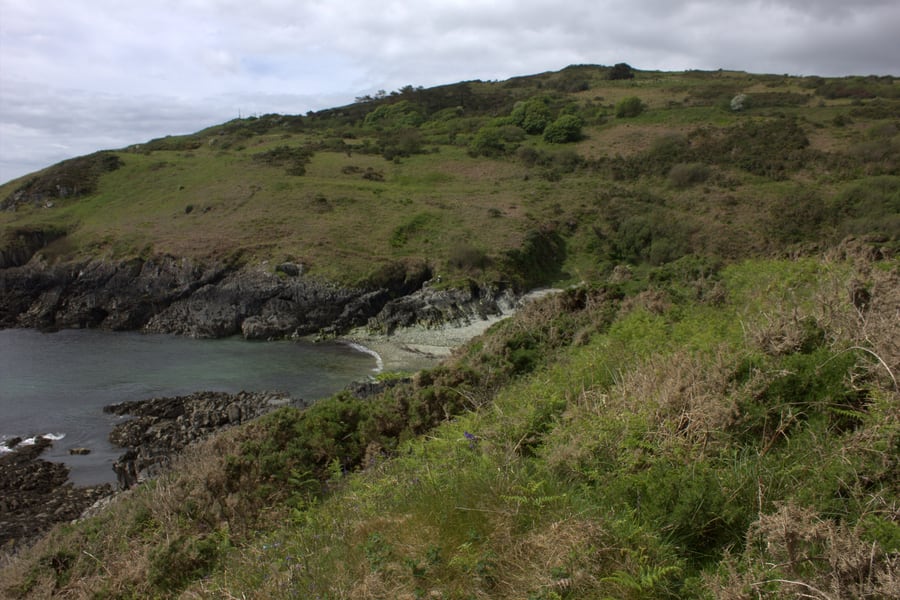
A 2 ft gauge line opened in 1896 to carry visitors from the top of the glen to a zoo at Sea Lion Rocks on the cliffs. The zoo is long gone; volunteers began restoring the line in 1982 and reopened it in 1986. Its small steam engines run on Sundays from May to October, to a tea room at Sea Lion Rocks. The Manx Electric's Groudle halt is the stop for it.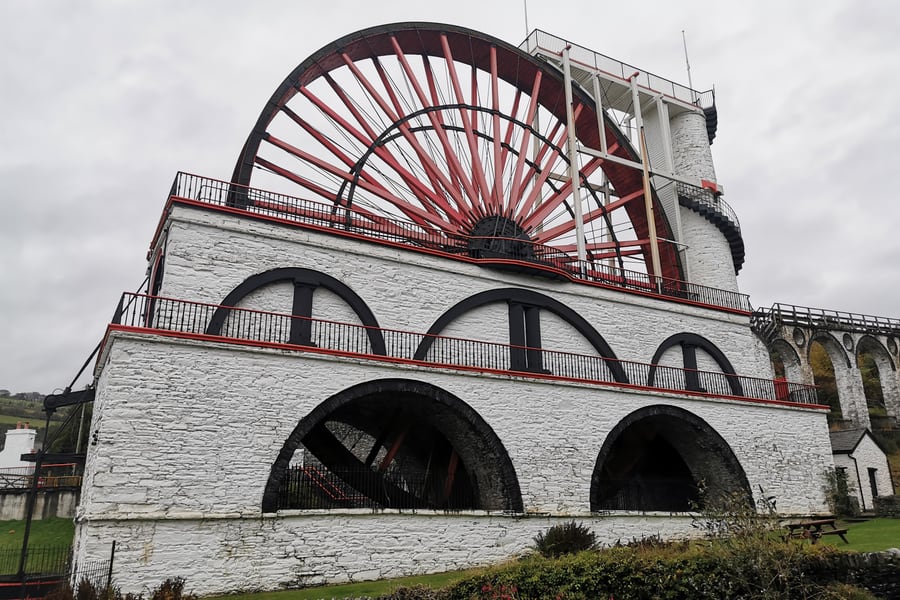 Frank Schuengel / Wikimedia Commons · CC BY-SA 4.0
The Laxey Wheel
Built in 1854 to pump water out of the Great Laxey Mine, the Lady Isabella is 72 feet 6 inches across and the largest original working waterwheel to survive anywhere. Manx National Heritage looks after it as part of a trail round the old mine workings. It also appears on the island's £20 note.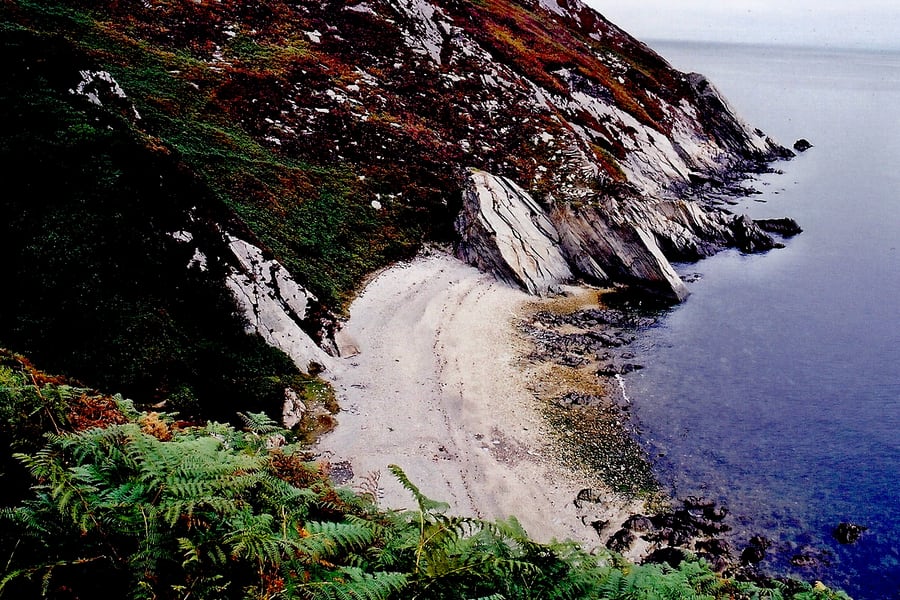 Joseph Mischyshyn / Geograph · CC BY-SA 2.0
Dhoon Glen
One of the steepest glens on the island runs for over half a mile through woods of ash, elm and alder down to the shore. Halfway down, the Inneen Vooar, the Big Girl, falls more than 40 metres in two drops. It is 190 steps down and the same back up, and there is a café at the head of the glen.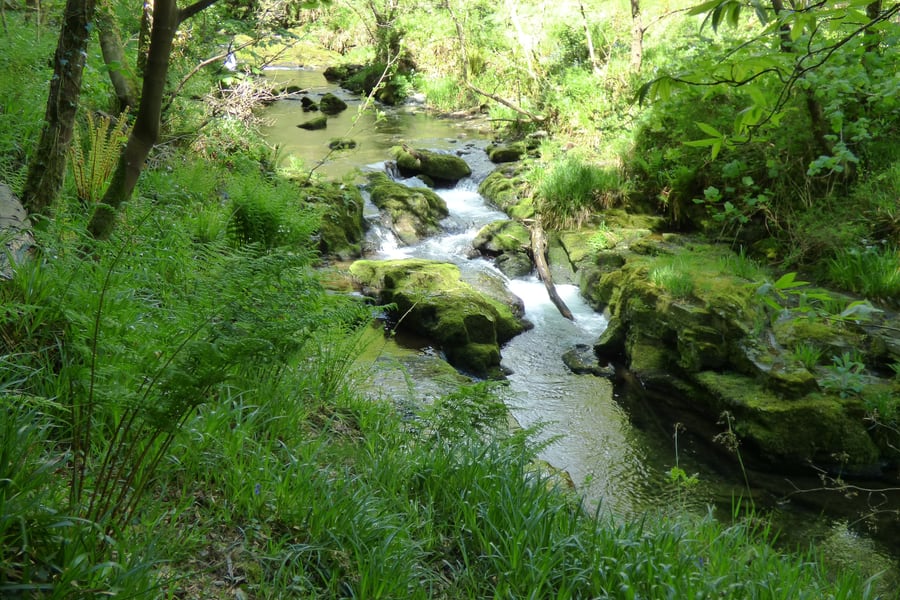 Dr Neil Clifton / Geograph · CC BY-SA 2.0
Ballaglass Glen
The River Cornaa runs over grey flagstone through this small national glen, under oak, beech and larch. It is known for its bluebells in spring, and the ruins of a corn mill and the stone casing of an old mine wheel are still in the woods. It has its own halt on the line.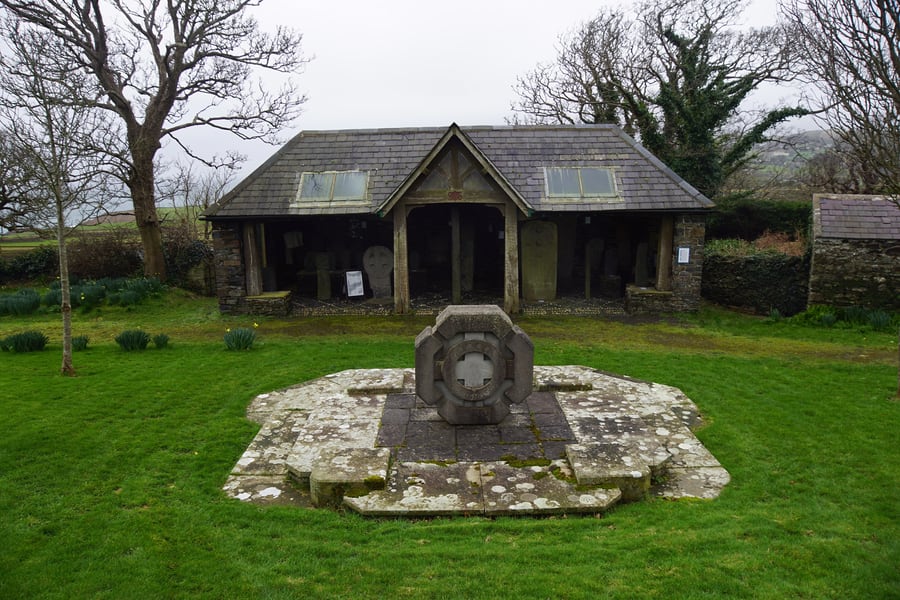 Otter / Wikimedia Commons · CC BY-SA 4.0
Maughold churchyard
The churchyard stands on the site of an early monastery, with the ruins of four keeills. Its cross house holds 38 carved stones, the largest collection of any parish on the island, and the church keeps a parish cross bearing the earliest carved three legs of Man. Ballajora is the stop for Maughold village.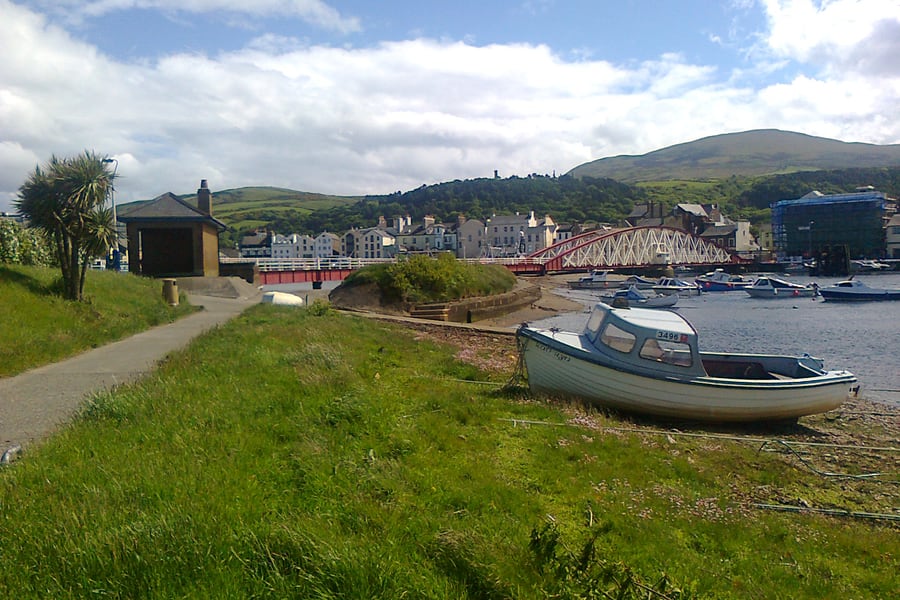 manxdeemster / Geograph · CC BY-SA 2.0
Ramsey
The island's largest town after Douglas takes its name from the Old Norse for wild garlic river. It has one of the island's biggest harbours, the Queen's Pier, now under restoration, and the nickname Royal Ramsey, after visits by Queen Victoria in 1847 and Edward VII in 1902.Where to Sleep
Douglas has the most hotels and the ferry terminal, and the cars leave from the far end of its promenade. Ramsey, at the other end of the line, is quieter and makes a good base for the north of the island.
Where to stay
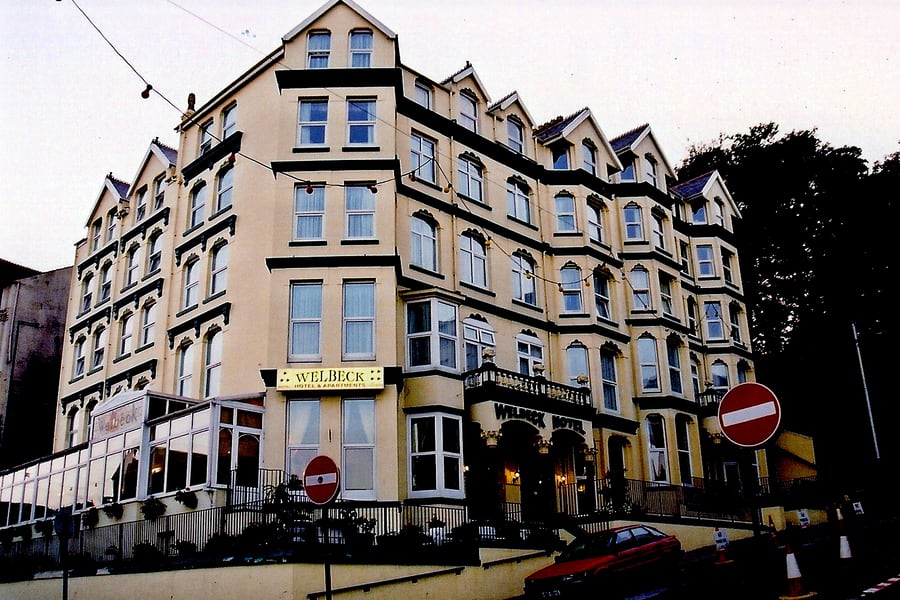 Joseph Mischyshyn / Geograph · CC BY-SA 2.0 · cropped
The Welbeck Hotel
Douglas · just off Central Promenade
A hotel with rooms and holiday apartments on Mona Drive, just off the seafront in Douglas, along the promenade from Derby Castle.
Check Availability (opens in a new tab, on welbeckhotel.com)via welbeckhotel.com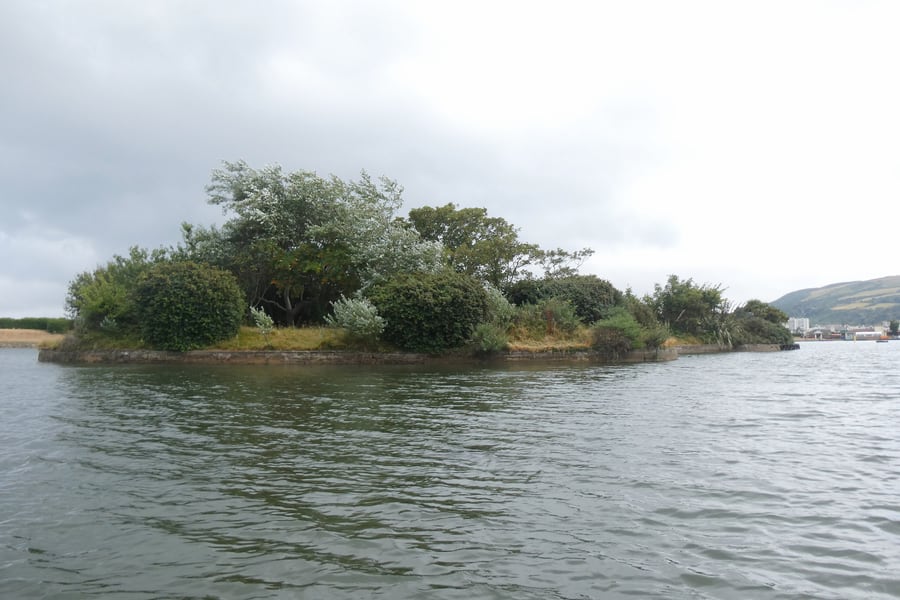 Gareth James / Geograph · CC BY-SA 2.0
Ramsey Park Hotel
Ramsey · above Mooragh Lake
A 60-bedroom hotel on Park Road in Ramsey, above Mooragh Lake and close to the sea.
Check Availability (opens in a new tab, on ramseyparkhotel.com)via ramseyparkhotel.comQuestions or corrections
Planning this trip and stuck on something, or spotted a time, fare or detail that has changed? Send us a message about The Manx Electric Railway. We read every one, and we update this page when something has changed.