The Maria Fumaça
Halley Pacheco de Oliveira / Wikimedia Commons · CC BY-SA 3.0 · 2013
- Distance12.8 km · São João del-Rei to Tiradentes
- DurationAbout 40 minutes each way
- Best seasonFridays, Saturdays and Sundays
Introduction
The gauge that made this railway obsolete is the reason its trains still run. In 1879 the Estrada de Ferro Oeste de Minas chose a track of 762 millimetres, two and a half feet, and grew on it to a network of more than 700 kilometres across Minas Gerais. No other railway in Brazil used that gauge, so as the network shrank its locomotives and coaches could not be sent anywhere else, and no modern stock was ever built to replace them. What was scrapped on other lines kept working here.
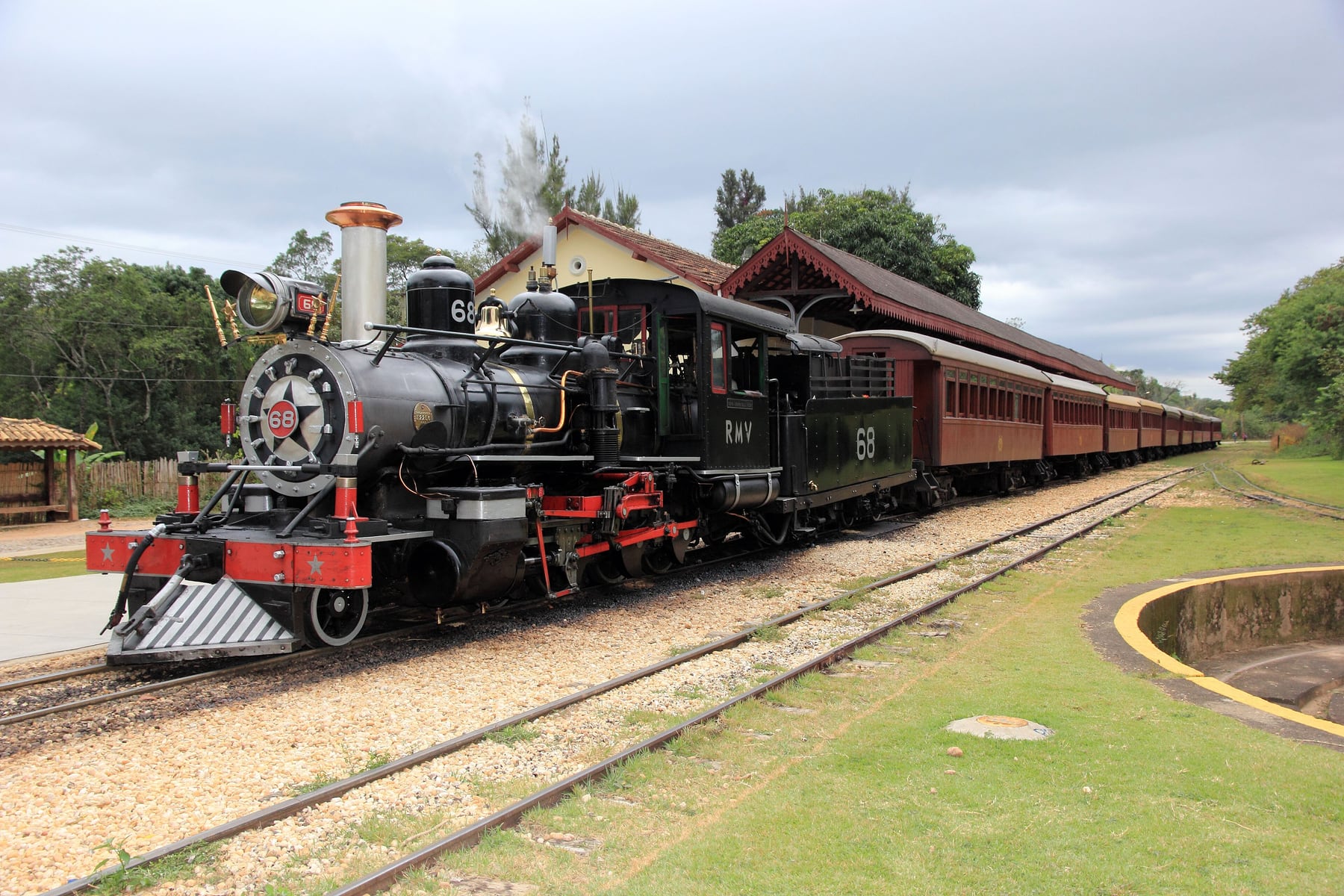
Commercial traffic ended late in 1982 and the rest of the network was lifted in 1983 and 1984. The 12.8 kilometres between São João del-Rei and Tiradentes were kept for visitors, and with them three American steam engines picked to stay in service: nos. 41 and 42, Baldwin "Ten Wheelers" of 1912, and no. 68, a Baldwin "Consolidation" of 1919. The operator says the stretch has carried passengers without interruption since Emperor Pedro II opened it on 28 August 1881.
The ride takes about forty minutes each way, along the Rio das Mortes under the quartzite wall of the Serra de São José, between two towns of the eighteenth-century gold rush. Since 1 October 2026 the train has been run by the ABPF, the Brazilian railway preservation association, whose members do the work as volunteers.
The Journey
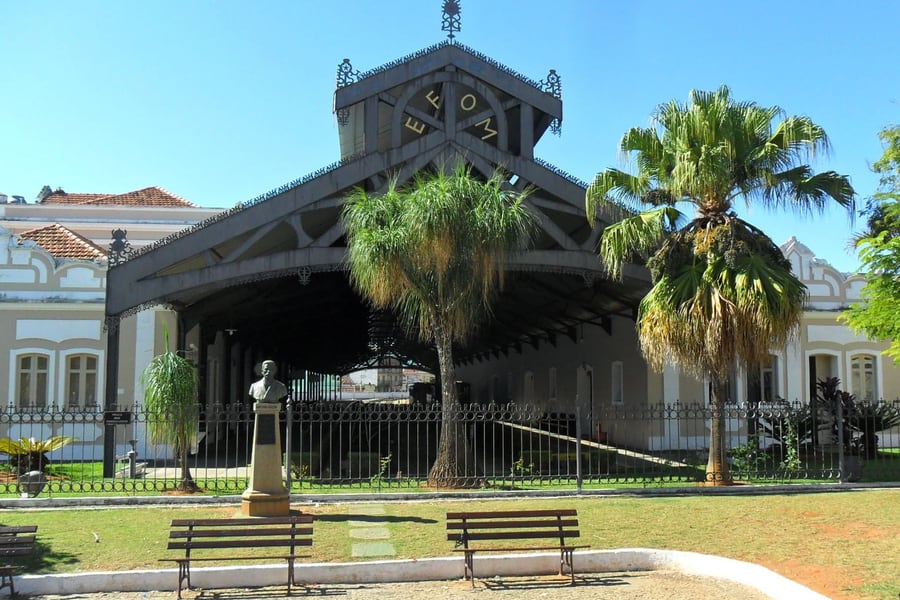
Trains leave from beneath the iron train shed of São João del-Rei, opened in 1881 and enlarged in 1920, with the railway museum and the roundhouse beside the platforms. The whole complex, the line to Tiradentes and the stations of Chagas Dória and Tiradentes were listed by IPHAN, the national heritage institute, in 1989.
The line
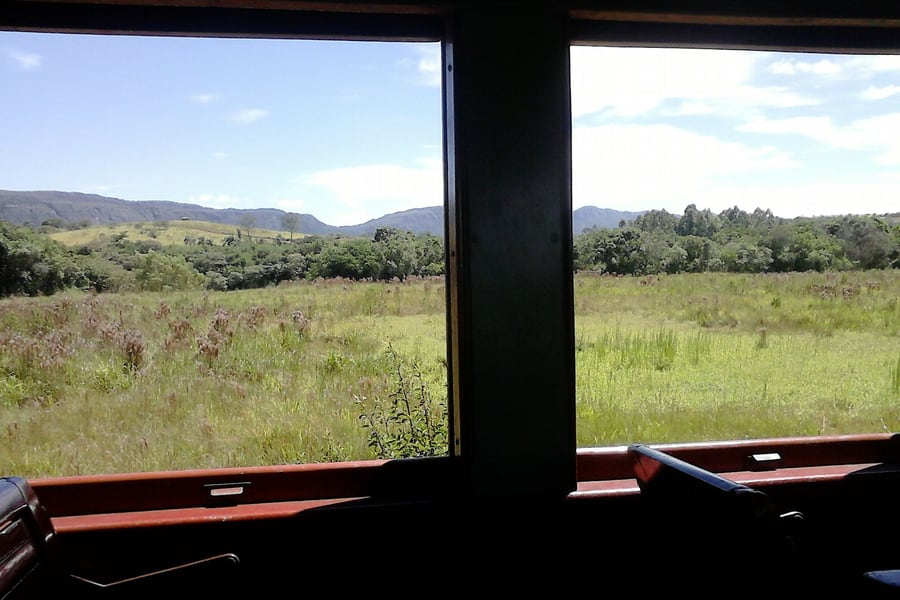
The first stretch runs through town, over level crossings, to the halt at Chagas Dória. Then the train is in open country: for much of the way it follows the Rio das Mortes, past old farms, streams and pasture, with the Serra de São José ahead. The longest bridge on the line, 57 metres over the Rio Elvas, marks the boundary between the two municipalities. Film crews have long used the line as a set, for Os Saltimbancos Trapalhões, Hilda Furacão and Os Maias among others.
The engines
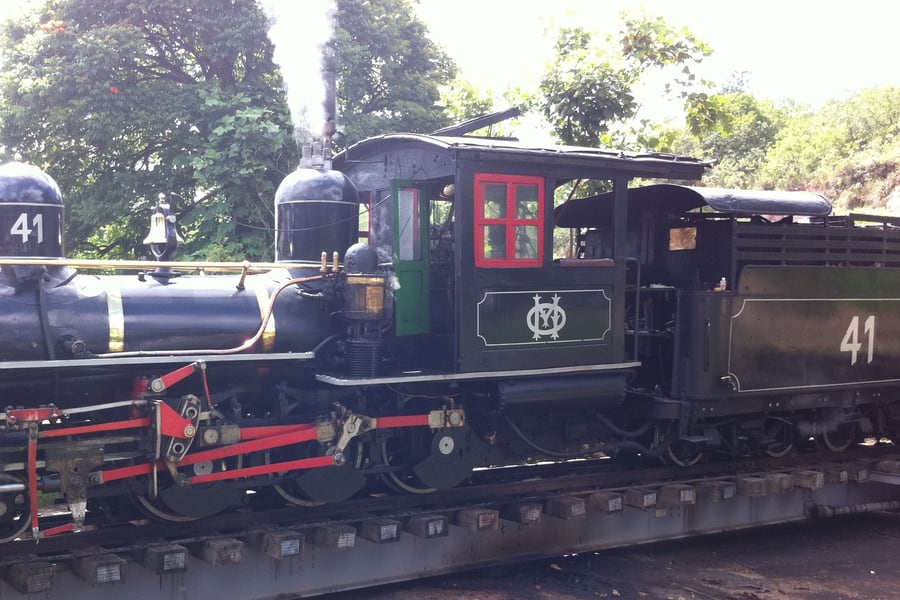
Three steam locomotives work the trains, all built by Baldwin in Philadelphia for the Oeste de Minas. Nos. 41 and 42 are "Ten Wheelers", 4-6-0s from one order of July 1912, and neither has ever been withdrawn. No. 68, a 2-8-0 "Consolidation" of September 1919, was the only one of its type the railway bought; it stood on display in the roundhouse from 1991 to 1998 and has worked again since 1999. In their last commercial years all three hauled limestone and gypsum to the cement works at Barroso, and cement back for the building of the Itaipu dam.
The coaches
The nine wooden coaches date from the 1910s to the 1930s: some from Harlan and Hollingsworth in the United States, some built in Rio de Janeiro between 1913 and 1919, and the rest in the railway's own workshops. They come in three classes, and the view is the same from all of them: first has upholstered armchairs, second varnished wooden seats with armrests, and third plain slatted benches, with the railway's OM monogram cast into the luggage-rack brackets.
Along the route
 Py4nf / Wikimedia Commons · CC BY-SA 4.0 · 2015 · cropped
São João del-Rei station
Opened by Emperor Pedro II on 28 August 1881 and enlarged in 1920, under an iron train shed with the letters EFOM in its gable. The railway museum and the roundhouse stand beside the platforms.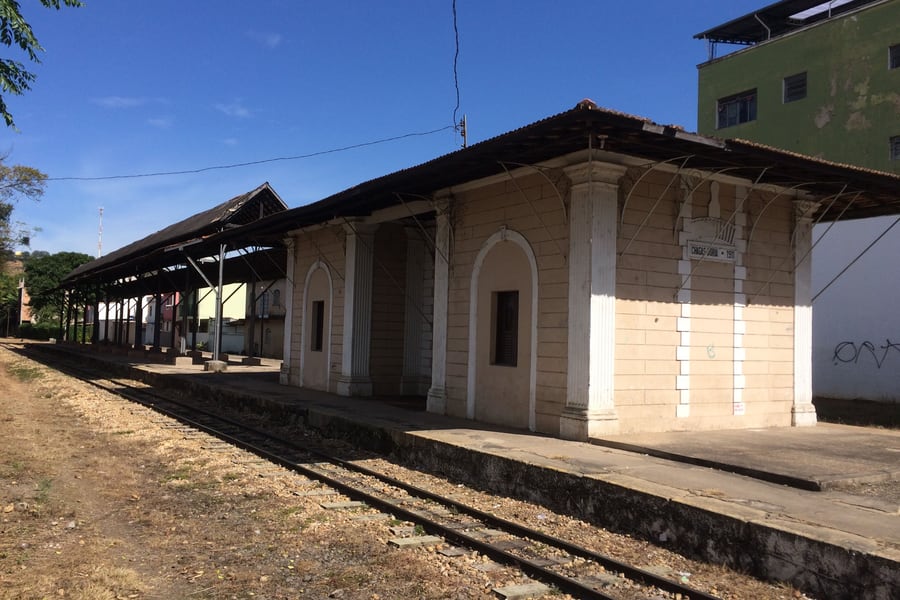 Lisses hk / Wikimedia Commons · CC BY-SA 4.0 · 2015 · cropped
Chagas Dória
The one intermediate station, a small arcaded building on the east side of São João del-Rei, listed by IPHAN in 1989 with the rest of the line. Beyond it the train leaves the town for open country.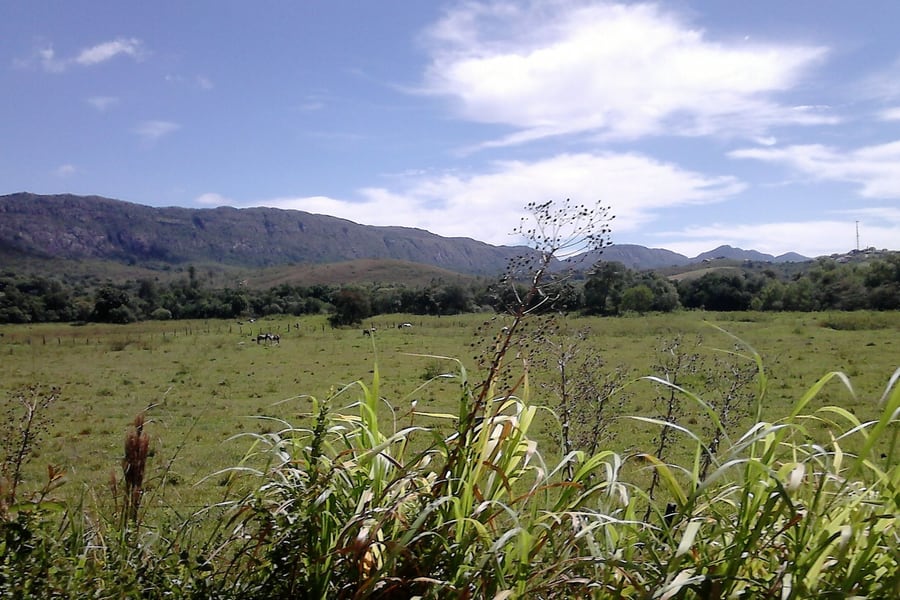 Wagner Tamanaha / Wikimedia Commons · CC BY-SA 2.0 · 2014 · cropped
The Rio das Mortes plain
For much of the way the line follows the Rio das Mortes through farmland, with the Serra de São José ahead. The longest bridge, 57 metres over the Rio Elvas, marks the boundary between the two municipalities.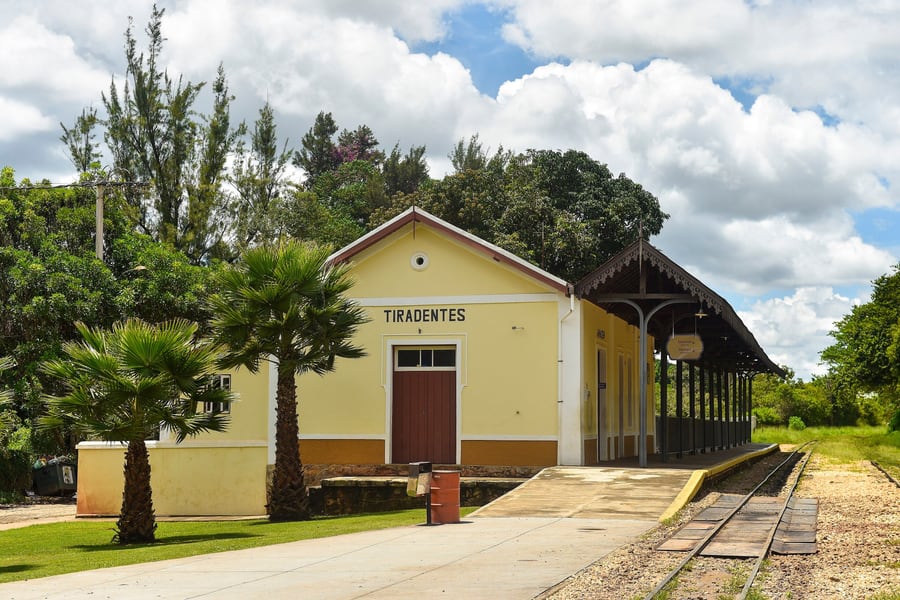 Pedro Vilela / MTur / Wikimedia Commons · Public domain
Tiradentes station
The eastern terminus, opened on the same day in 1881 as São José d'El-Rey, the town's old name. Engines are turned on the turntable beside the platform before the run back.A bit of history
Culture & experiences along the way
 Pedro Vilela / MTur / Wikimedia Commons · Public domain
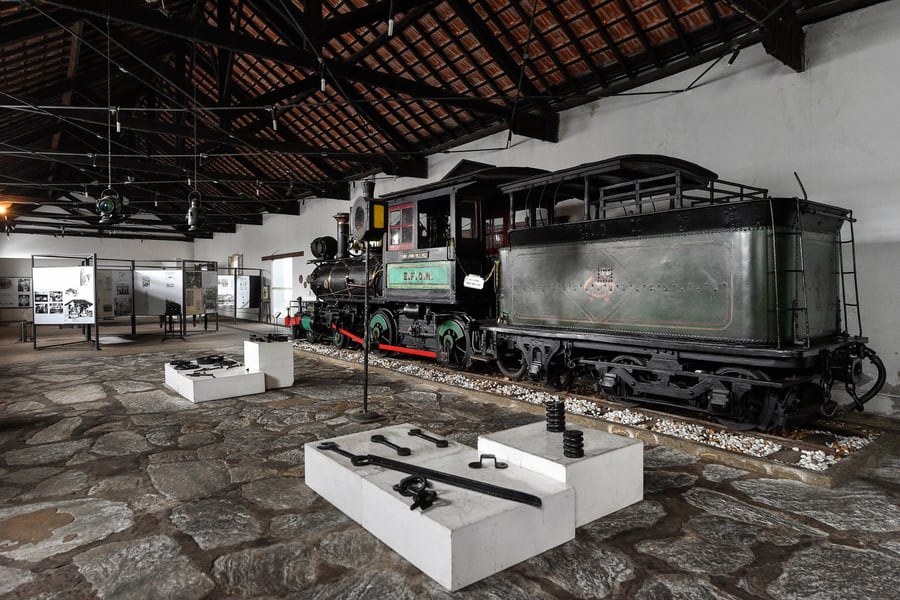
The railway museum and roundhouse
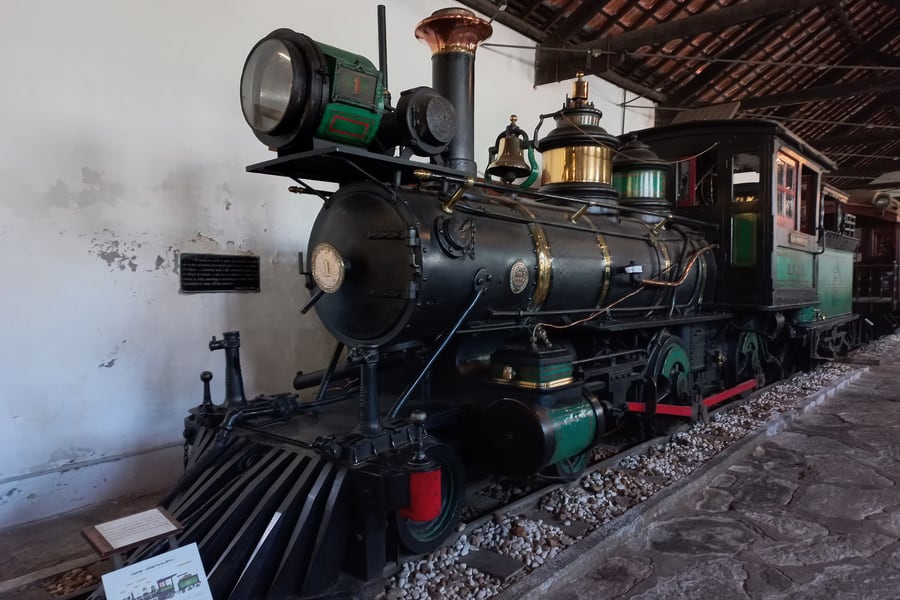
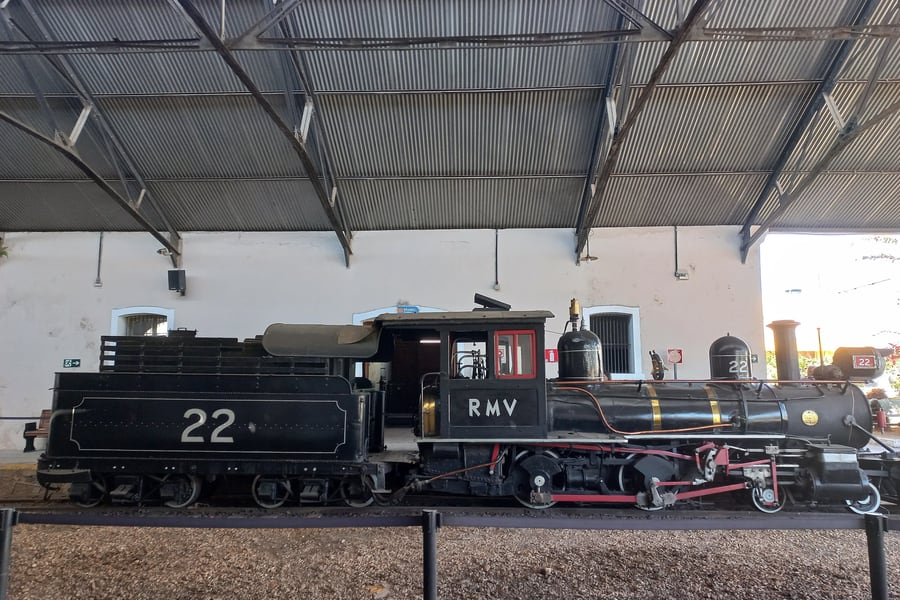
Opened in 1981 for the railway's centenary, the museum beside São João del-Rei station keeps telegraphs, clocks, bells and the first locomotive. In the roundhouse, rebuilt in the 1980s, seven 762 mm and three metre-gauge steam engines stand fanned around the turntable, with a funeral car of 1927.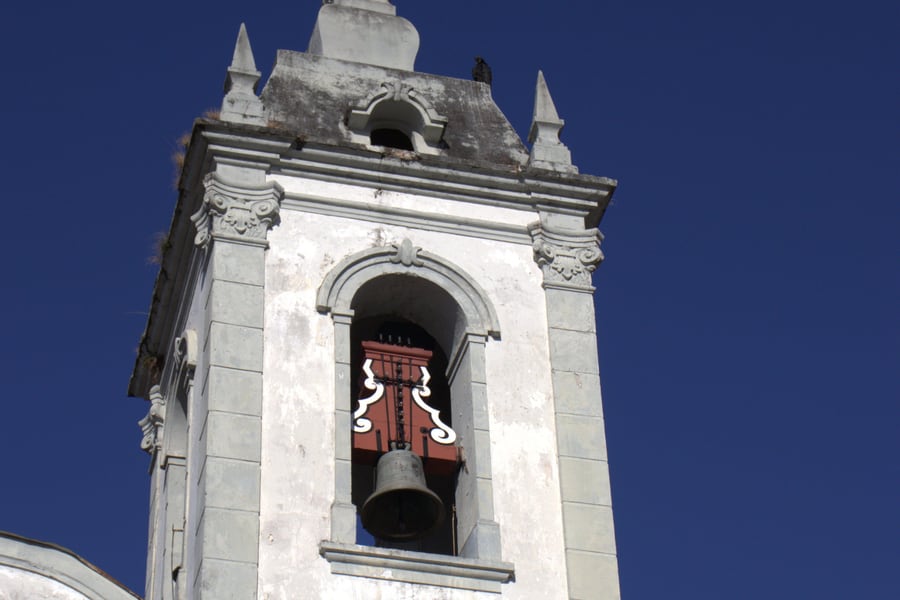 SouDiana / Wikimedia Commons · CC BY-SA 4.0 · cropped
The language of the bells
São João del-Rei is called "the town where the bells speak": its church bells ring coded peals that announce services, feasts and events in the town. The bell-ringing of Minas Gerais was registered as Brazilian intangible heritage by IPHAN in 2009, with São João del-Rei and Tiradentes among the towns named.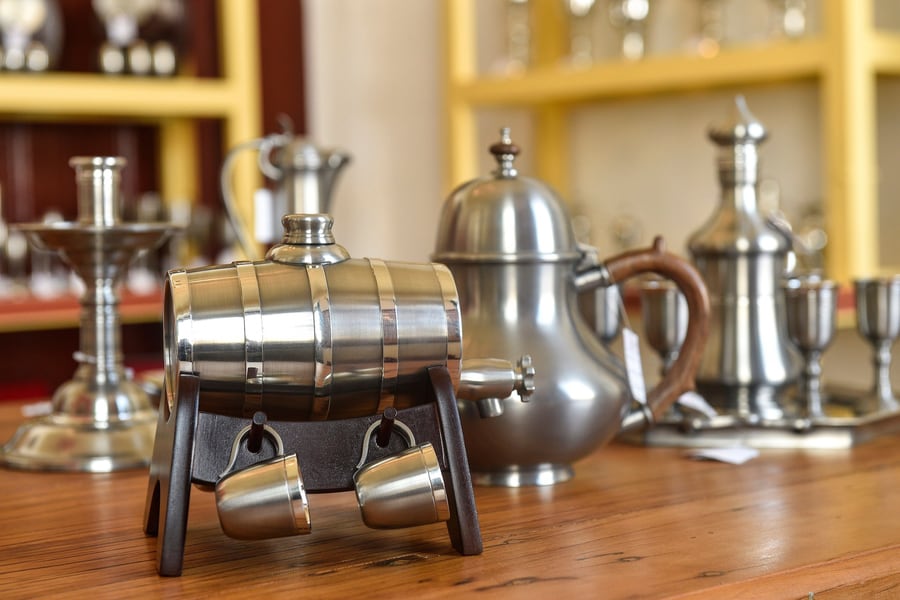 Pedro Vilela / MTur / Wikimedia Commons · Public domain
São João del-Rei pewter
The town's pewter workshops trace back to John Somers, who revived the craft here in the 1960s and 1970s after years studying pewter recovered from two ships wrecked off Brazil in 1648 and 1668. His shop on Avenida Leite de Castro keeps that collection as a museum.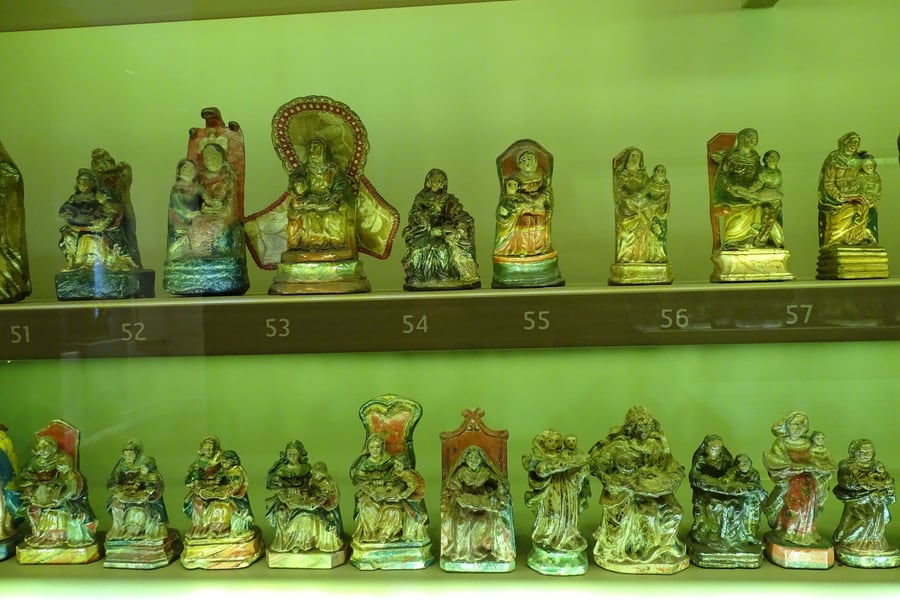 Paulo SP / Wikimedia Commons · CC BY-SA 4.0 · 2023 · cropped
Museu de Sant'Ana
Tiradentes' old public jail of about 1730 now holds 291 images of Saint Anne, patron of miners, from the seventeenth to the nineteenth century, in every style from folk carving to erudite sculpture. Collected over 40 years by Angela Gutierrez, the museum opened in 2014.Timetables
The train runs on Fridays, Saturdays and Sundays, from both ends of the line. Each trip takes about forty minutes, and each direction is a separate one-way ticket. The times below are the operator's, read on efom.org.br in November 2026; arrivals are about forty minutes after departure.
Fridays and Saturdays
| Departs São João del-Rei | Arrives Tiradentes | Departs Tiradentes | Arrives São João del-Rei |
|---|---|---|---|
| 10:00 | about 10:40 | 11:30 | about 12:10 |
| 14:00 | about 14:40 | 15:30 | about 16:10 |
Sundays
Only the first pair runs: 10:00 from São João del-Rei and 11:30 from Tiradentes, so a round trip on a Sunday leaves less than an hour in Tiradentes.
Holidays have their own timetable, published separately; ask the operator at efom@abpf.com.br. See efom.org.br (opens in a new tab) for the current departures.
Tickets
One-way fares are R$ 110 in first class, R$ 90 in second and R$ 80 in third, in either direction; a round trip is two tickets. Seats are not reserved within a car. Students, people aged 60 or over and people with disabilities pay R$ 73, 63 or 58: the discount does not apply to the R$ 36 boarding fee; under-fives ride free on a lap.
Buy online through AppTicket, which adds a service fee, or at the station ticket offices on running days. Residents of the two towns pay R$ 40 in third class at the station only. Fares from the operator, valid to 30 November 2026.
Book your tickets
First class, one way
R$ 110 · upholstered seats
Individual upholstered armchairs in a wood-panelled car, either direction, on one departure.
Book Tickets (opens in a new tab, on appticket.com.br)via appticket.com.brSecond class, one way
R$ 90 · varnished wooden seats
Individual seats of varnished wooden slats with armrests, either direction, on one departure.
Book Tickets (opens in a new tab, on appticket.com.br)via appticket.com.brThird class, one way
R$ 80 · wooden benches
Plain slatted wooden benches, the seat closest to what an ordinary passenger once had.
Book Tickets (opens in a new tab, on appticket.com.br)via appticket.com.brHalf fare, one way
R$ 73 · R$ 63 · R$ 58 by class
For students, people aged 60 or over and people with disabilities, with documents shown at purchase and boarding.
Book Tickets (opens in a new tab, on efom.org.br)via efom.org.brRail Passes
No rail pass covers the Maria Fumaça. Interrail and Eurail are European schemes, and Brazil is not among the countries in Interrail's list of covered railway companies. The operator sells only its own one-way tickets for each departure.
Checked November 2026 against Interrail's list of railway companies (opens in a new tab), updated 21 October 2026.
Places to Visit
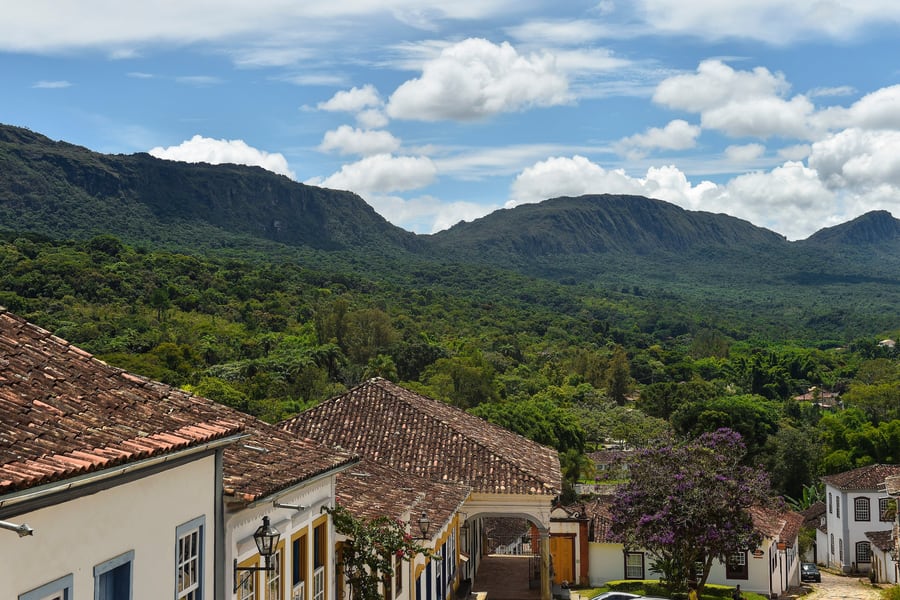
The train joins two towns of the gold rush, and both reward a day of their own: São João del-Rei with its churches, bridges and railway museum, and Tiradentes with its colonial streets under the Serra de São José.
 Pedro Vilela / MTur / Wikimedia Commons · Public domain
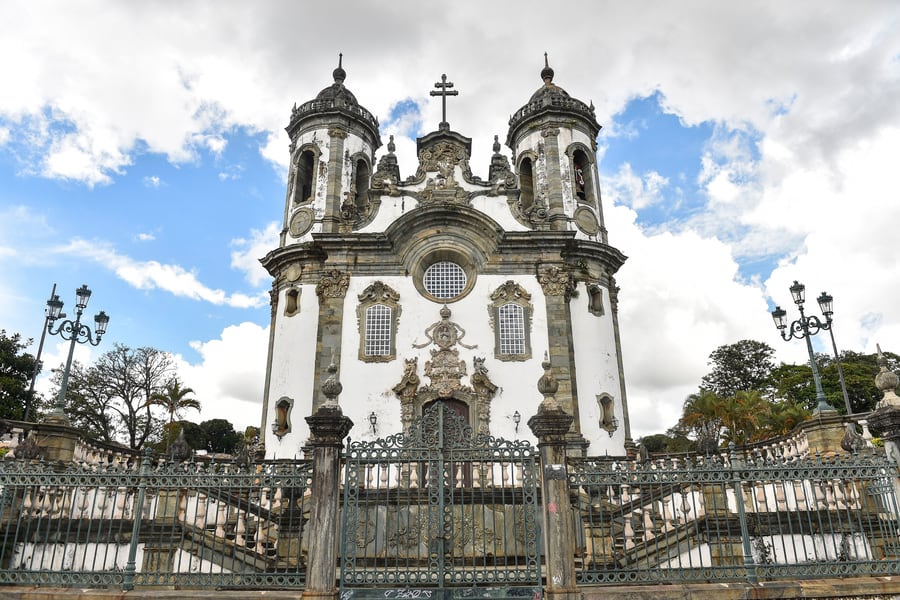
São Francisco de Assis, São João del-Rei
The church of the Third Order of St Francis, begun in 1774 to a design by Aleijadinho that the builder Francisco de Lima Cerqueira altered as he went. Its curved nave walls are Rococo, the two altars of the chancel arch are held to be Aleijadinho's own, and it stands behind a wide stone forecourt with a balustrade. IPHAN lists it with all its contents.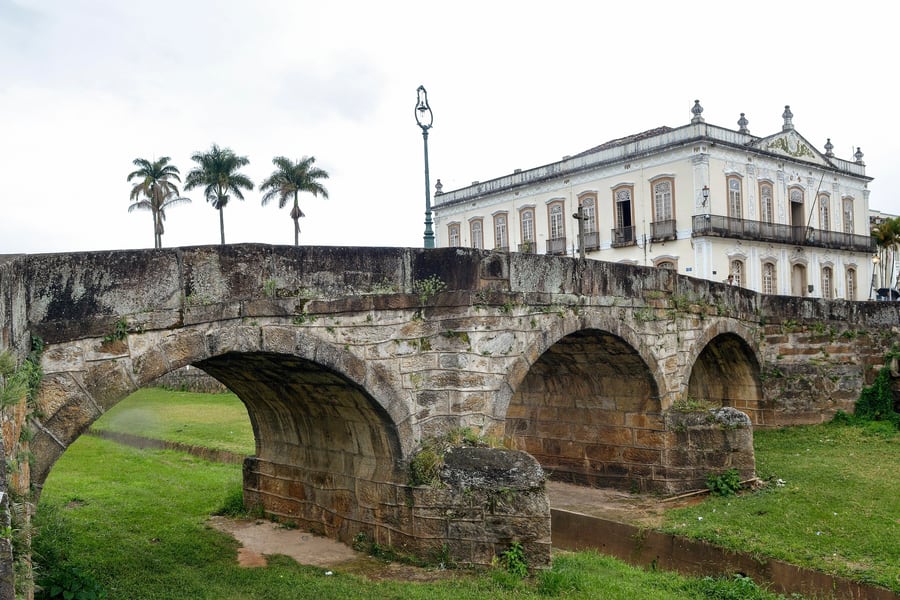 Pedro Vilela / MTur / Wikimedia Commons · Public domain
Ponte da Cadeia, São João del-Rei
A colonial bridge of dressed stone arches in the centre of town, named for the old Casa da Cadeia, the jail and council house it once led to. It belongs to the same eighteenth-century programme of public works as the Rosário and Misericórdia bridges, and unlike others it has stayed in view, with most of its original form.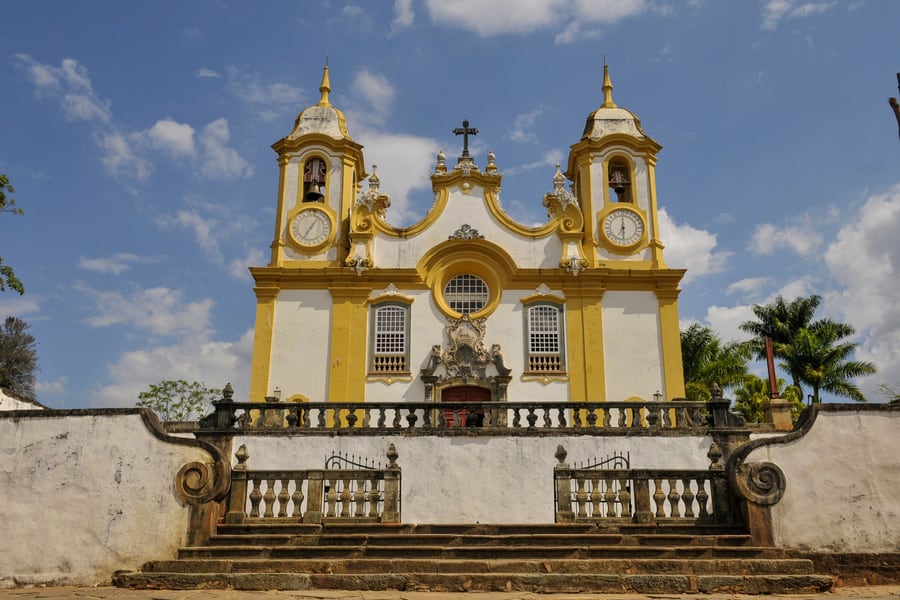 Pedro Vilela / MTur / Wikimedia Commons · Public domain
Matriz de Santo Antônio, Tiradentes
The oldest and principal church of Tiradentes, begun around 1710 and enlarged through the eighteenth century. Its Rococo front of 1807–1810 was ordered from Aleijadinho, whose carved stone doorway rises to the round window. The tower clocks of 1788 still run, and the soapstone sundial of 1785 in front is one of the town's emblems.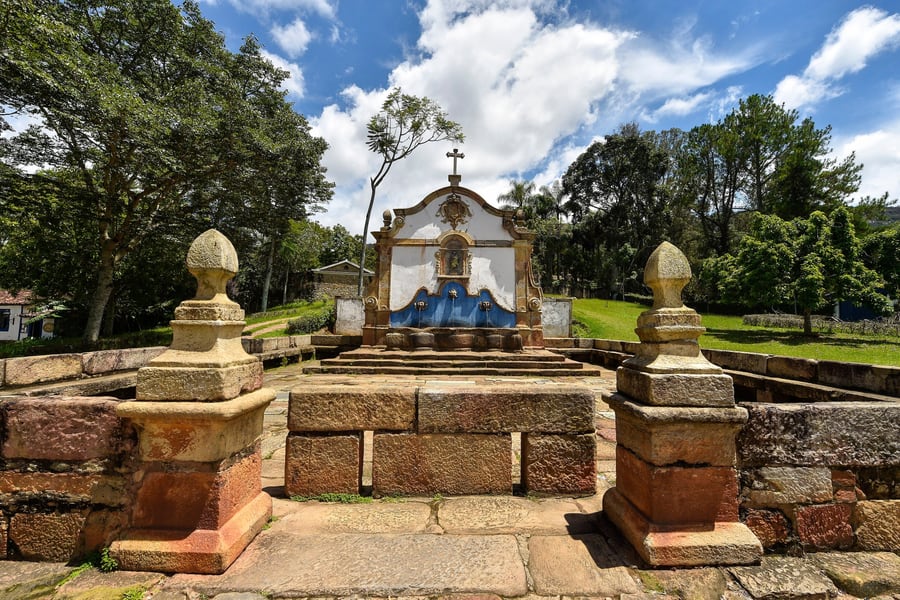 Pedro Vilela / MTur / Wikimedia Commons · Public domain
Chafariz de São José, Tiradentes
A quartzite public fountain dated 1749 above its central mask, fed from the Bosque da Mãe d'Água woods behind it at the foot of the Serra de São José. Three carved masks spout into a Baroque basin under a niche with a terracotta St Joseph. Until the late twentieth century it supplied the town with water and was its public laundry.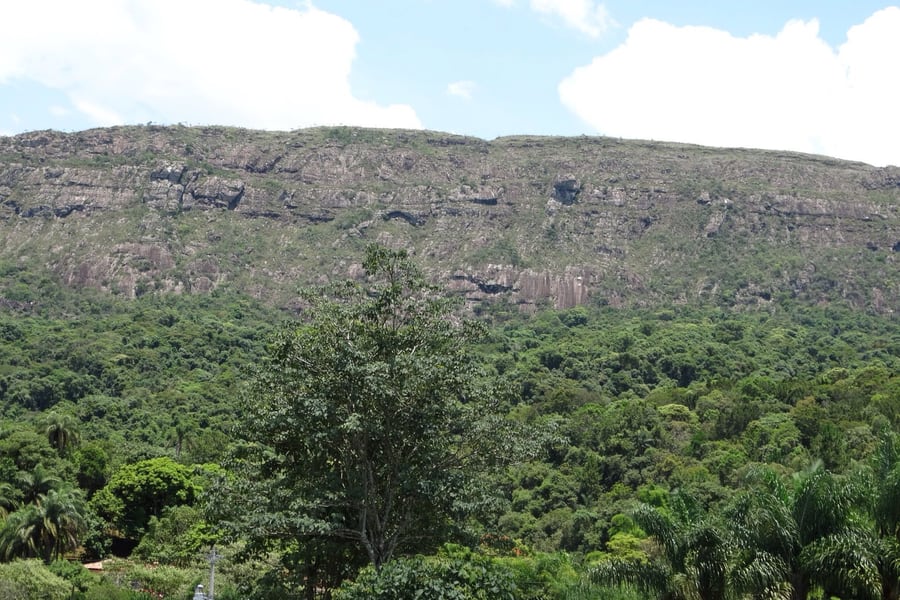 Eduardo Vieira Neto / Wikimedia Commons · CC BY-SA 3.0 · cropped
Serra de São José
The quartzite ridge that rises behind Tiradentes and runs north-east to south-west, 1,300 to 1,430 metres at its highest points, with Atlantic forest on its slopes and rocky grassland on top. Part of it is a state wildlife refuge of about 3,700 hectares created in 2004 for its dragonflies, and its western edge is cut by waterfalls and springs.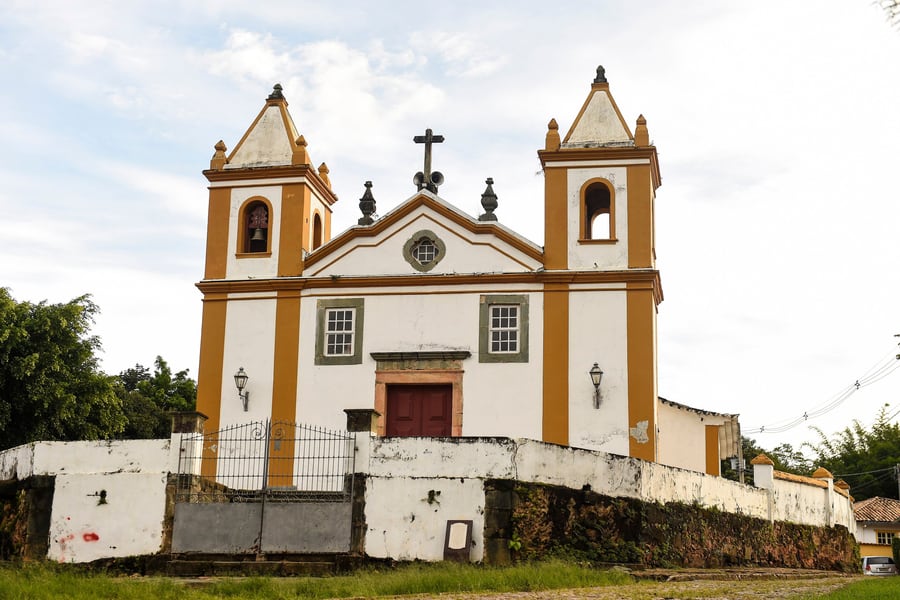 Pedro Vilela / MTur / Wikimedia Commons · Public domain
Bichinho
The village of Vitoriano Veloso, known as Bichinho, about 9 km from Prados and settled in the gold rush of the eighteenth century. Its church of Nossa Senhora da Penha was built between 1732 and 1771, and the village is known for handmade furniture, embroidery, rugs and carving. It is named for a freed slave who joined the Inconfidência Mineira.Where to Sleep
Tiradentes, the smaller of the two towns, is where the first pousada opened in its historic centre in 1972; São João del-Rei is the larger town, at the departure end of the line.
Where to stay
Solar da Ponte
In the historic centre of Tiradentes
The first pousada in Tiradentes, open since 1972 on the Largo das Mercês, with 18 rooms.
Check Availability (opens in a new tab, on solardaponte.com.br)via solardaponte.com.brHotel Lenheiros
In the centre of São João del-Rei
A hotel with its own pizzeria, on Avenida Presidente Tancredo Neves in the centre of town.
Check Availability (opens in a new tab, on hotellenheiros.com.br)via hotellenheiros.com.brQuestions or corrections
Planning this trip and stuck on something, or spotted a time, fare or detail that has changed? Send us a message about The Maria Fumaça. We read every one, and we update this page when something has changed.