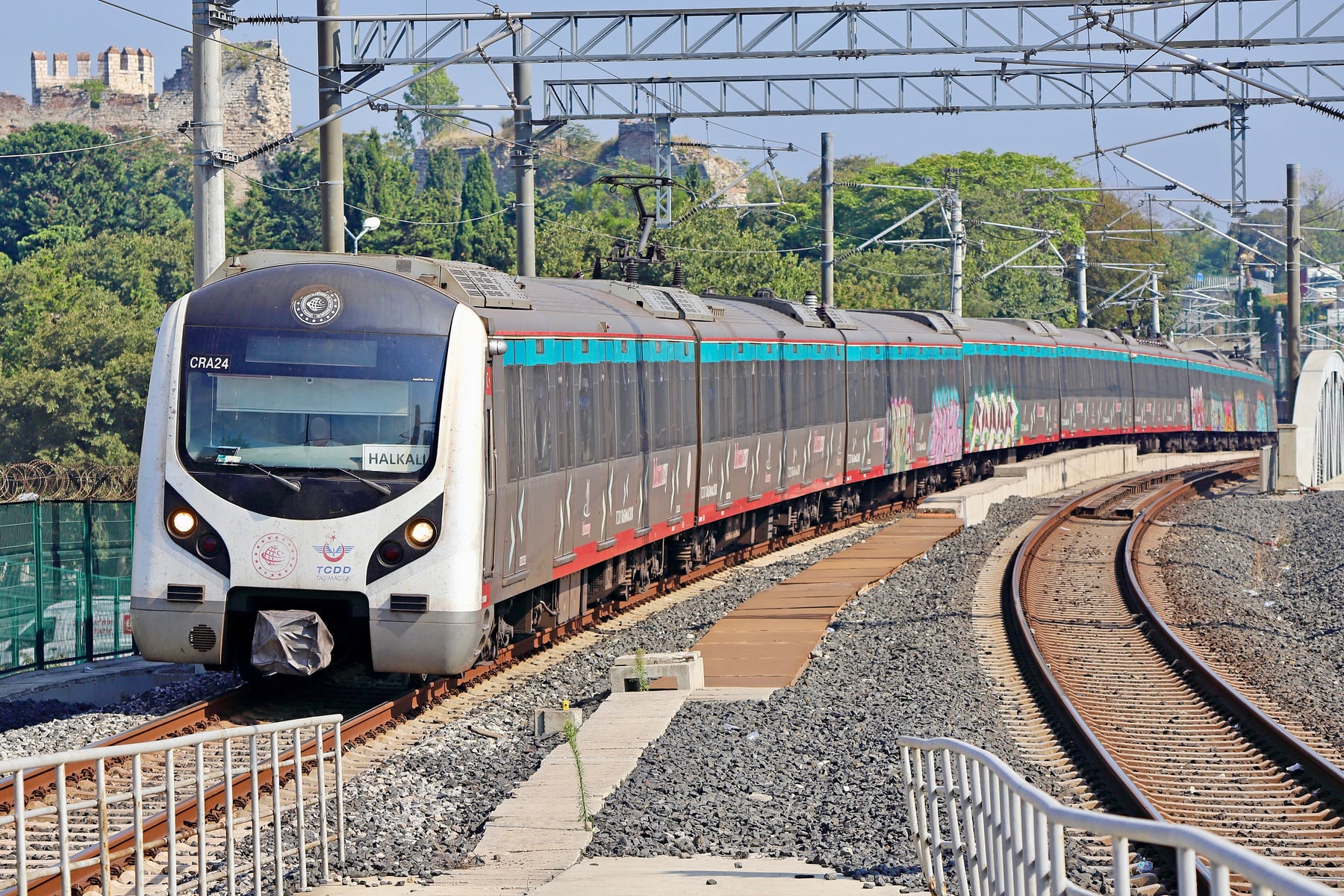
Marmaray
Painjet / Wikimedia Commons · CC BY-SA 4.0
- DistanceHalkalı–Gebze · 75.7 km, 43 stations
- Duration1 h 48 min end to end · 4 min under the strait
- Best seasonAll year · every 15 minutes, 06:00–23:00
Introduction
In November 2005, the men digging the European end of a railway tunnel under the Bosphorus, at Yenikapı, found a harbour. It was the Harbour of Theodosius, built in the late fourth century as Constantinople's main port for trade, used until the eleventh, then silted up, turned to fields and built over. The Istanbul Archaeological Museums dug the site until 2013 and brought up 37 ships of the fifth to the eleventh centuries — the largest group of medieval wrecks ever found in one place, among them the first Byzantine galleys ever excavated — and with them the oldest evidence of settlement in the city, from around 6000 BC. The railway waited: the project opened four years late, largely because of what its station site turned out to hold.
What it was building is the Marmaray, a 76.6-kilometre commuter line from Halkalı in Europe to Gebze in Asia. Two old suburban railways, one along each shore of the Sea of Marmara, were rebuilt with a third track and joined under the strait — the first standard-gauge rail link between the two continents, since every earlier one ran through Russia on its broad gauge. The tunnel opened on 29 October 2013; the whole line, on 12 March 2019.
It is a working railway, not an excursion: a card at the turnstile, a train every quarter of an hour, 43 stations. But between Sirkeci and Üsküdar it runs 60 metres below sea level, and the crossing from one continent to the other takes four minutes.
The Journey
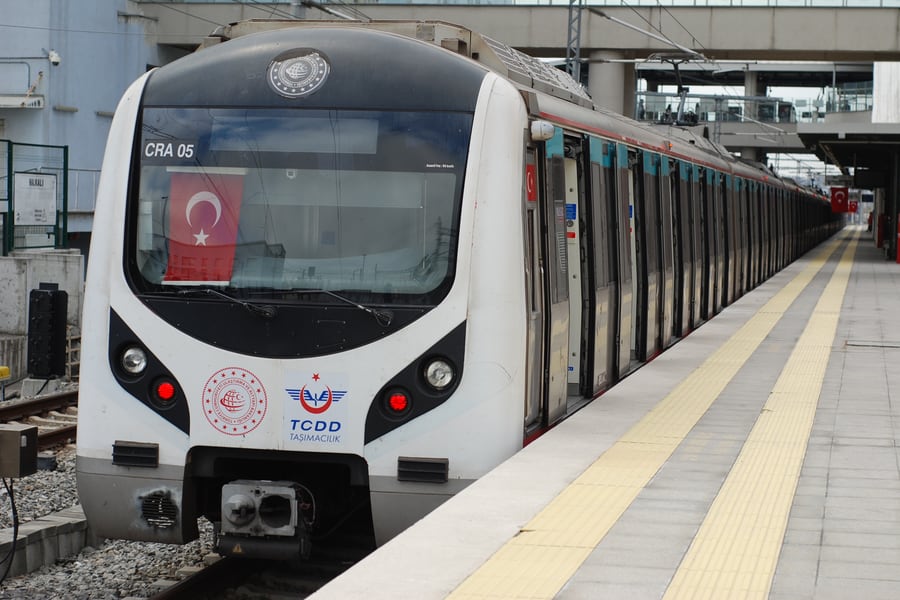
The trains are E32000s, built by Hyundai Rotem with its Turkish partner Eurotem for this line alone: 440 cars in five- and ten-car sets, walk-through from one end to the other, good for 105 km/h. The line was designed for 75,000 passengers an hour in each direction.
From Halkalı the line runs east towards the old city along the Sea of Marmara, on the route of the first railway out of Istanbul — the fifteen kilometres to Halkalı were laid in 1870–71, before the extension to Sirkeci — through Yeşilköy, Ataköy and Bakırköy. At Kazlıçeşme it drops into the tunnel, and the next stretch is 13.6 kilometres underground: Yenikapı, then Sirkeci beneath the Orient Express terminus, then the strait.
The crossing is an immersed tube: eleven concrete-and-steel sections, the largest 135 metres long and up to 18,000 tonnes, sunk to the seabed, joined and covered with earth. The deepest point is 60.46 metres below sea level, under 55 metres of water. The North Anatolian Fault lies about 18 km away, so the ground was grouted 24 metres down to stop it liquefying, each section is watertight on its own, and floodgates at the joints can close. Four minutes after Sirkeci the train is at Üsküdar.
It surfaces at Ayrılıkçeşmesi and joins the railway of 1873 along the Asian shore — Söğütlüçeşme, Bostancı, Kartal, Pendik, Tuzla — to Gebze, over the boundary in Kocaeli province.
Sharing the tube
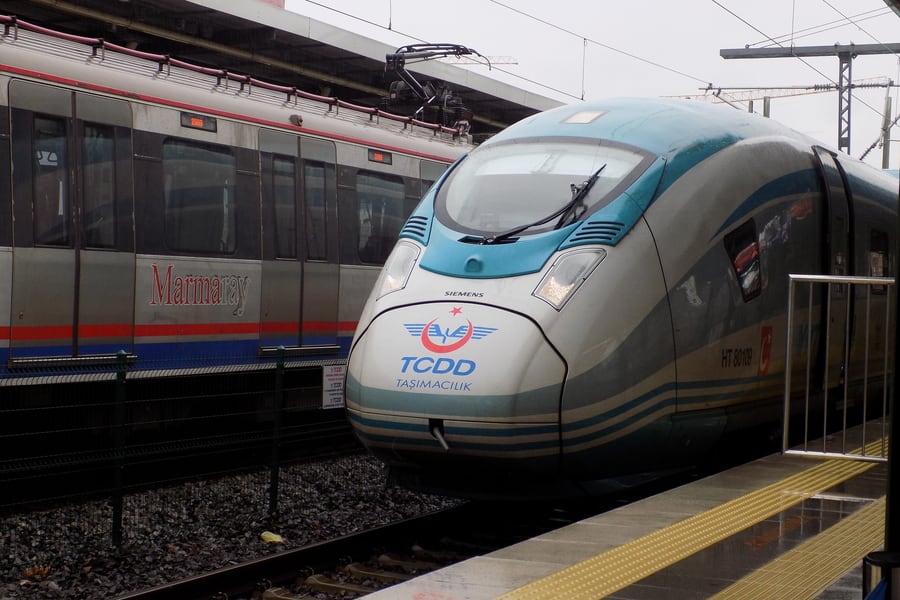
The Marmaray is not the only traffic in the tunnel. Three high-speed trains a day each way now run through it between Halkalı and Ankara or Karaman, passing Sirkeci and Üsküdar without stopping, and on 7 November 2019 the first freight train from China to Europe came through — a journey from China to Turkey cut from a month to twelve days.
Along the route
 Carole Raddato / Wikimedia Commons · CC BY-SA 2.0 · cropped
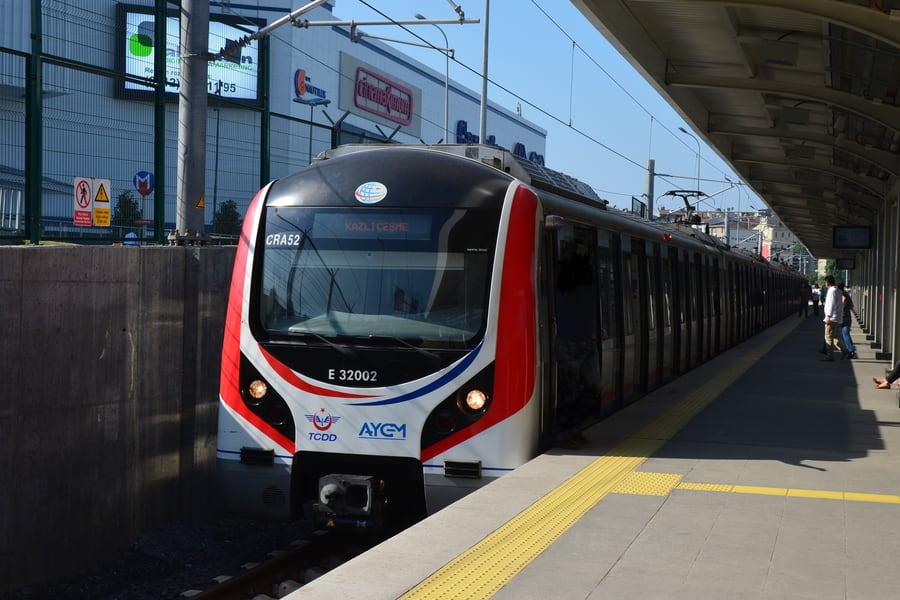
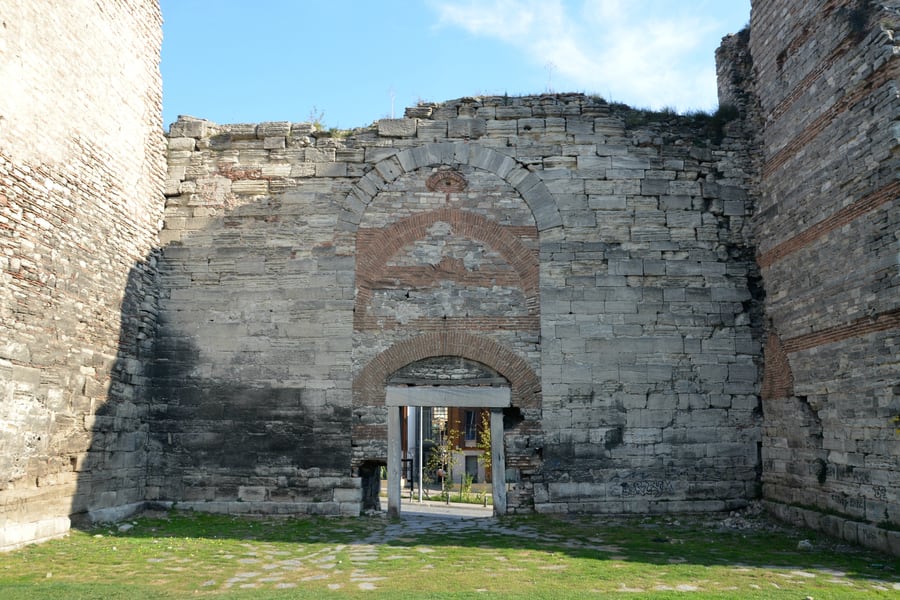
Kazlıçeşme
Named for a sixteenth-century fountain carved with a goose. This is where the train leaves the old shore line and goes underground, by the land walls of Constantinople: from here to Ayrılıkçeşmesi, 13.6 km of the line is in tunnel.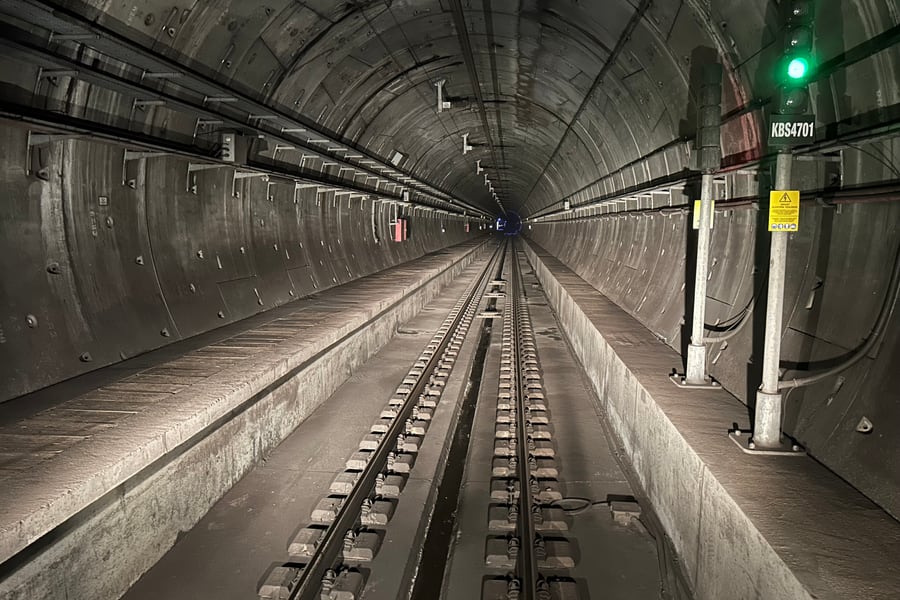 Kayra / Wikimedia Commons · CC BY 4.0 · cropped
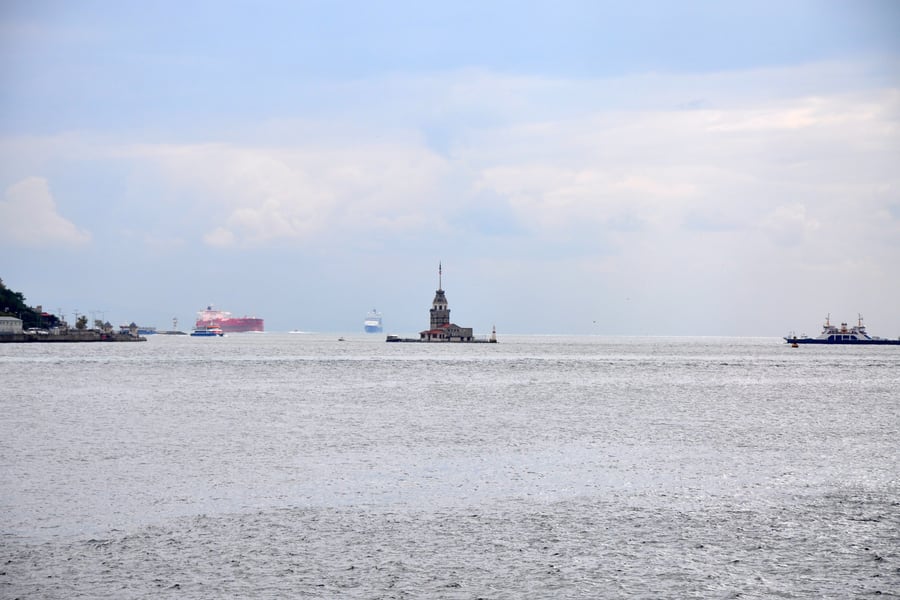
Under the Bosphorus
Between Sirkeci and Üsküdar the train runs through an immersed tube 1,387 metres long, sunk in eleven sections of up to 18,000 tonnes and laid 60 metres below sea level. The crossing from one continent to the other takes four minutes.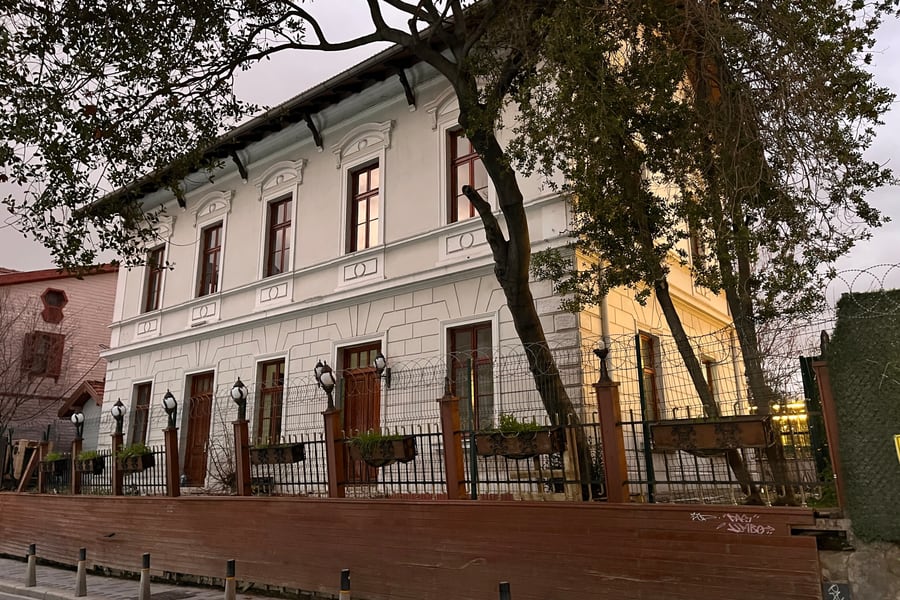 Sadrettin / Wikimedia Commons · CC BY-SA 4.0 · cropped
Yeşilköy
San Stefano until 1926, where the Russian army halted in 1878 and the treaty ending that war was signed. The railway here is some of the oldest in the city — the first fifteen kilometres out of Istanbul, to Halkalı, were laid in 1870–71.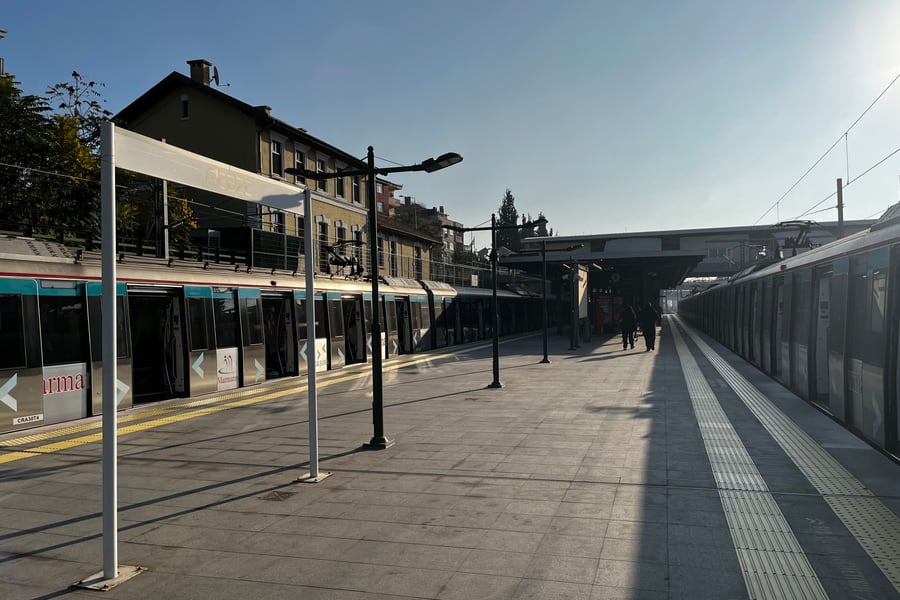 Kurmanbek / Wikimedia Commons · CC BY-SA 4.0 · cropped
Gebze
The end of the line, across the boundary in Kocaeli province. The railway through here was built in 1873 as the line to İzmit, and it still runs on: high-speed trains for Ankara stop at Gebze on their way east.A bit of history
Culture & experiences along the way
 Moonik / Wikimedia Commons · CC BY-SA 3.0 · cropped
The same strait, by vapur
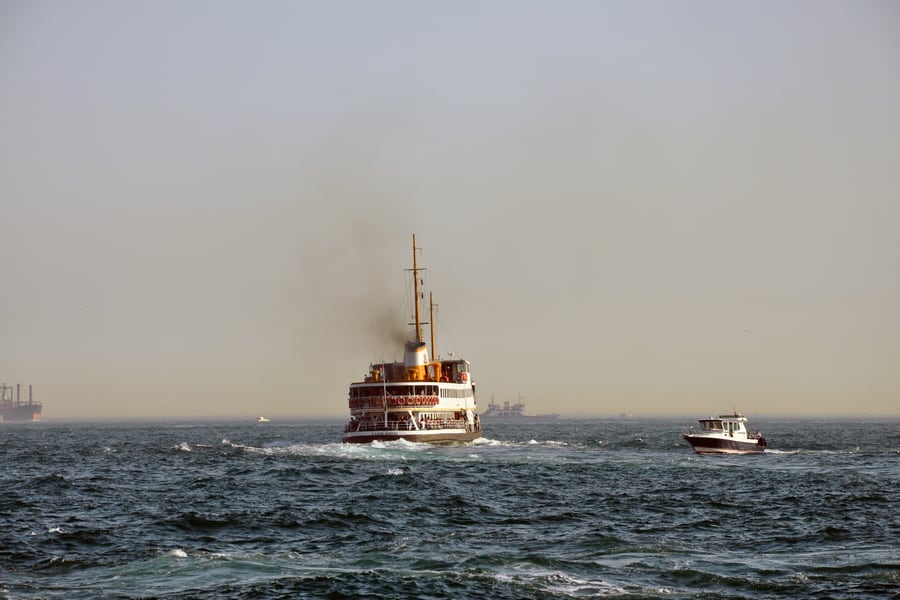
The Üsküdar exit comes up by the ferry landing, so cross back on the surface. Şehir Hatları, founded in 1851 as the Şirket-i Hayriye, runs the white city ferries from 53 piers; until the first bridge opened in 1973, boats were the only way from one side to the other.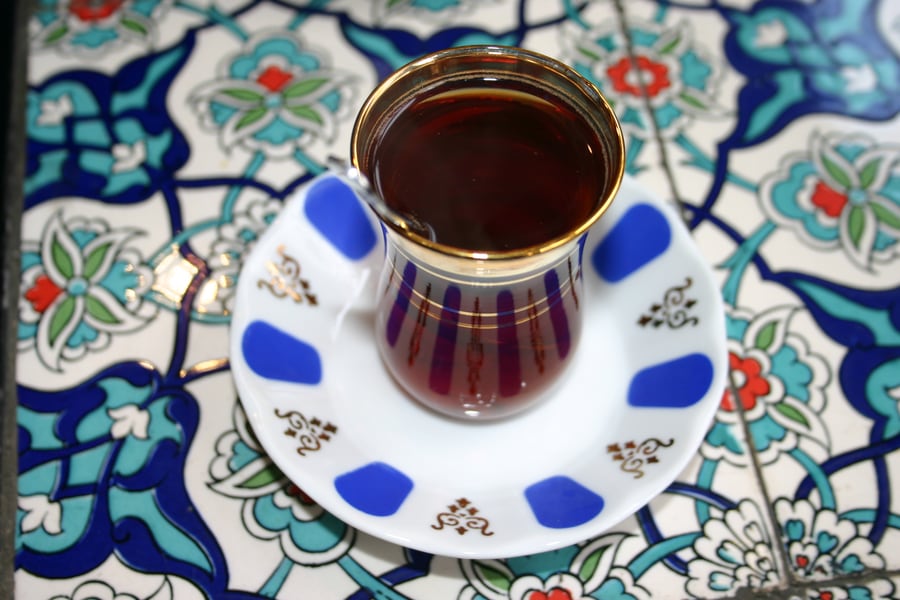 Bertil Videt / Wikimedia Commons · CC BY 2.5 · cropped
Çay in a thin-waisted glass
Turks drink more tea per head than anyone — over three kilograms a year, almost four glasses a day — and most of it is grown in Rize, on the Black Sea. It comes in the small glass called ince belli, thin-waisted, and people sip it all day long in tea houses and tea gardens.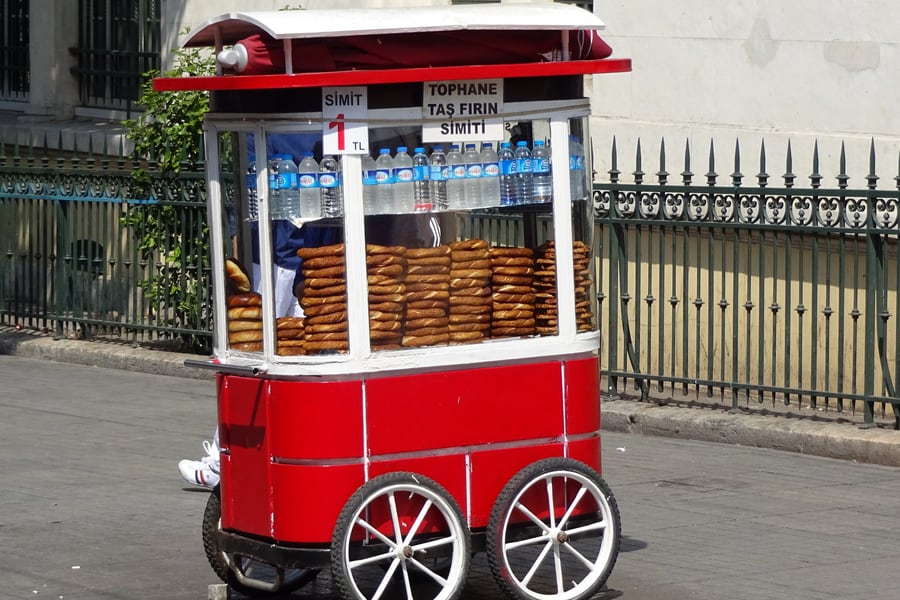 Benreis / Wikimedia Commons · CC BY-SA 4.0 · cropped
Simit from the trolley
The sesame ring has been baked in Istanbul since 1525, and in 1593 its weight and price were standardised in Üsküdar. It is sold on the street from glass-sided trolleys, fresh through the day, and eaten the traditional way: with tea.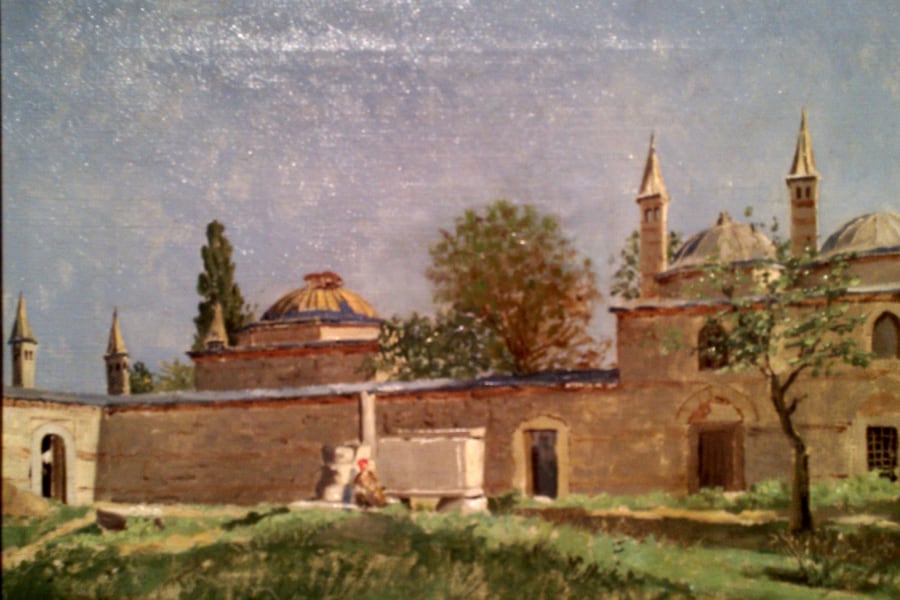 Osman Hamdi Bey, photographed by Tatiana Matlina / Wikimedia Commons · CC BY-SA 3.0 · cropped
Osman Hamdi Bey's Gebze
The painter who became the first curator of the Archaeology Museum, in 1881, knew the far end of this line well: his father's house was at Eskihisar, by Gebze. His small oil of the town's Çoban Mustafa Paşa complex is in the Pera Museum's collection.Timetables
Trains run every 15 minutes from end to end, from about six in the morning until eleven at night. Between Ataköy and Pendik extra trains run in between, so the busiest middle of the line — including the crossing — has a train about every seven or eight minutes. There is nothing to reserve: you walk on. Times below are TCDD's own, as of September 2026.
Halkalı → Gebze
| Halkalı | Bakırköy | Yenikapı | Sirkeci | Üsküdar | Ayrılıkçeşmesi | Bostancı | Pendik | Gebze |
|---|---|---|---|---|---|---|---|---|
| 05:58 | 06:19 | 06:30 | 06:33 | 06:37 | 06:41 | 06:55 | 07:19 | 07:46 |
| 06:13 | 06:34 | 06:45 | 06:48 | 06:52 | 06:56 | 07:10 | 07:34 | 08:01 |
| 06:28 | 06:49 | 07:00 | 07:03 | 07:07 | 07:11 | 07:25 | 07:49 | 08:16 |
| …every 15 minutes… | ||||||||
| 22:43 | 23:04 | 23:15 | 23:18 | 23:22 | 23:26 | 23:40 | 00:04 | 00:31 |
| 22:58 | 23:19 | 23:30 | 23:33 | 23:37 | 23:41 | 23:55 | 00:19 | 00:46 |
Gebze → Halkalı
| Gebze | Pendik | Bostancı | Ayrılıkçeşmesi | Üsküdar | Sirkeci | Yenikapı | Bakırköy | Halkalı |
|---|---|---|---|---|---|---|---|---|
| 06:05 | 06:31 | 06:55 | 07:10 | 07:14 | 07:18 | 07:21 | 07:32 | 07:53 |
| 06:20 | 06:46 | 07:10 | 07:25 | 07:29 | 07:33 | 07:36 | 07:47 | 08:08 |
| 06:35 | 07:01 | 07:25 | 07:40 | 07:44 | 07:48 | 07:51 | 08:02 | 08:23 |
| …every 15 minutes… | ||||||||
| 22:35 | 23:01 | 23:25 | 23:40 | 23:44 | 23:48 | 23:51 | 00:02 | 00:23 |
| 22:50 | 23:16 | 23:40 | 23:55 | 23:59 | 00:03 | 00:06 | 00:17 | 00:38 |
The whole run takes 1 hour 48 minutes, and the crossing itself — Sirkeci to Üsküdar — four. TCDD's timetable also lists two later trains each way — 23:28 and 23:58 from Halkalı, 23:20 and 23:50 from Gebze — that do not run every day.
The operator's own times, and a station-to-station journey planner, are on TCDD Taşımacılık's Marmaray pages (opens in a new tab).
Tickets
There are no tickets to book. You pay at the turnstile with an Istanbulkart, the city's transport card, or a Türkiye Kart; a single-use Marmaray card is sold for the whole line, with no refund if you ride less of it. The fare depends on how many stations you travel. The turnstile takes the highest fare possible from your station, and at your destination a refund machine by the exit gives back the difference — so touch your card on it before you leave, or pay for the whole line.
Since February 2026 the fare runs from 34 TL for up to seven stations to 74.70 TL for the full 36–43, end to end. One card can pay for several people, but only one refund is made per card — see TCDD's fare and card rules (opens in a new tab). Fares checked in September 2026.
Book your tickets
The whole line
Halkalı to Gebze, 36–43 stations
Taken from your card at the entry turnstile; a shorter ride gets the difference back at the exit.
viaUnder the strait only
Sirkeci to Üsküdar, 1–7 stations
The shortest fare band, which covers the crossing itself and the stations either side.
viaRail Passes
A pass does not cover the Marmaray. Turkey is in the Interrail and Eurail area, but Interrail's table of railway companies lists Marmaray trains among the trains a pass excludes on TCDD Taşımacılık, and its Türkiye page says so directly: passes are not valid on Marmaray trains. The whole line costs 74.70 TL on an Istanbulkart, so buy the card.
A pass earns its keep on the long trains out of Istanbul: the high-speed lines to Ankara and Konya, and the night trains east except the Turistik Doğu Ekspresi, which the table also excludes. Several of the Ankara trains leave from Halkalı and run through the Marmaray tunnel themselves; those are YHT trains, which a pass covers. Checked against Interrail's railway-companies table, last updated 28 August 2026, and its Türkiye page, in September 2026.
Places to Visit
The Marmaray links the sights on either side of the water, and most of what follows is a short walk from a station exit: the land walls near Kazlıçeşme, the museums above Sirkeci, the mosque by the landing at Üsküdar. Gebze, at the far end, is a separate trip, a little over an hour from Sirkeci.
 Laima Gūtmane / Wikimedia Commons · CC BY-SA 3.0 · cropped
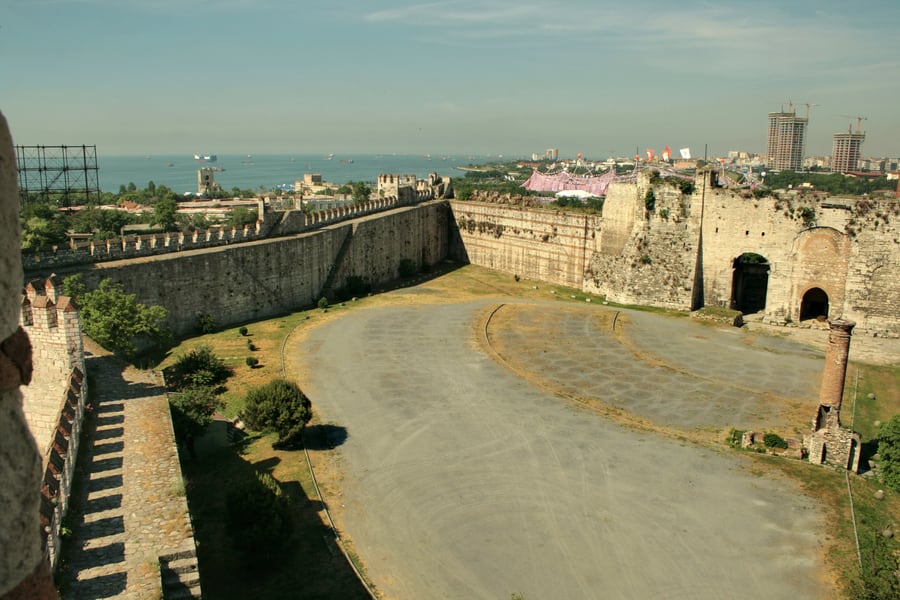
Yedikule
The Fortress of the Seven Towers, where the land walls meet the Sea of Marmara, a short way east of Kazlıçeşme. Mehmed II built it in 1458 around the Golden Gate of Theodosius; it held the treasury, then became the state prison — the young Sultan Osman II was killed here in 1622 — and has been a museum since 1895.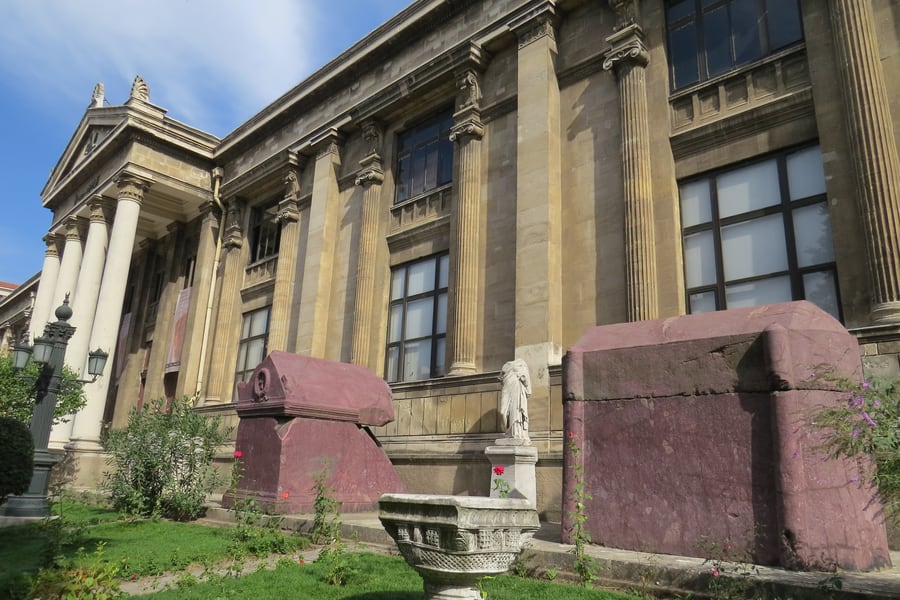 David Berkowitz / Wikimedia Commons · CC BY 2.0 · cropped
Istanbul Archaeology Museums
Up the hill from Sirkeci, by Gülhane Park: the Imperial Museum of 1869, whose first curator was the painter Osman Hamdi Bey, and which now holds more than a million objects. It also keeps what the Marmaray dig brought up at Yenikapı, and selected finds from the harbour are on show in its permanent galleries.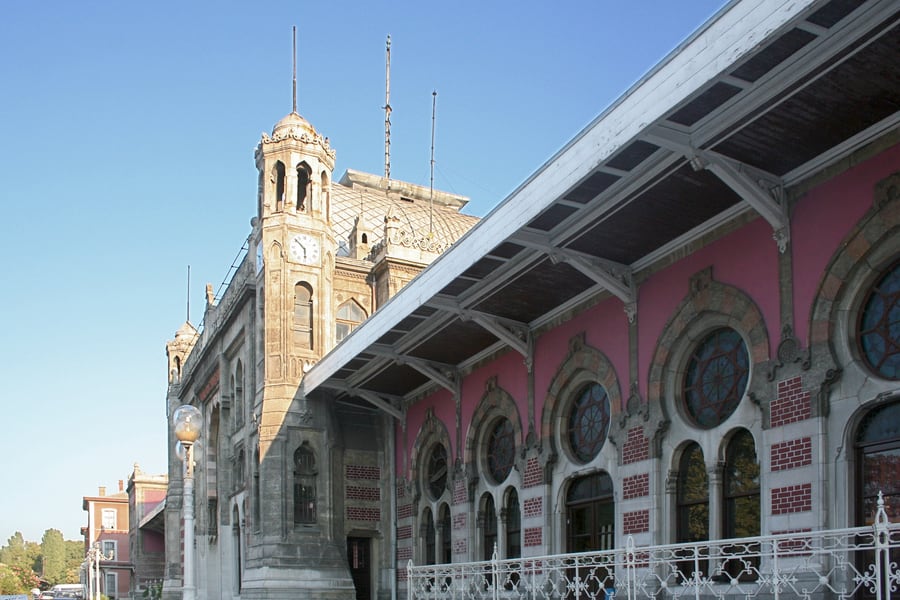 Nérostrateur, Yamavu and Sir James / Wikimedia Commons · CC BY 2.5 · cropped
Sirkeci station
August Jasmund's terminal of 1890, built for the Orient Express, stands above the Marmaray platforms. Its own trains stopped in 2013; since February 2024 it has been back in use as the terminus of the Sirkeci–Kazlıçeşme line, which runs along the old shore route the Marmaray replaced.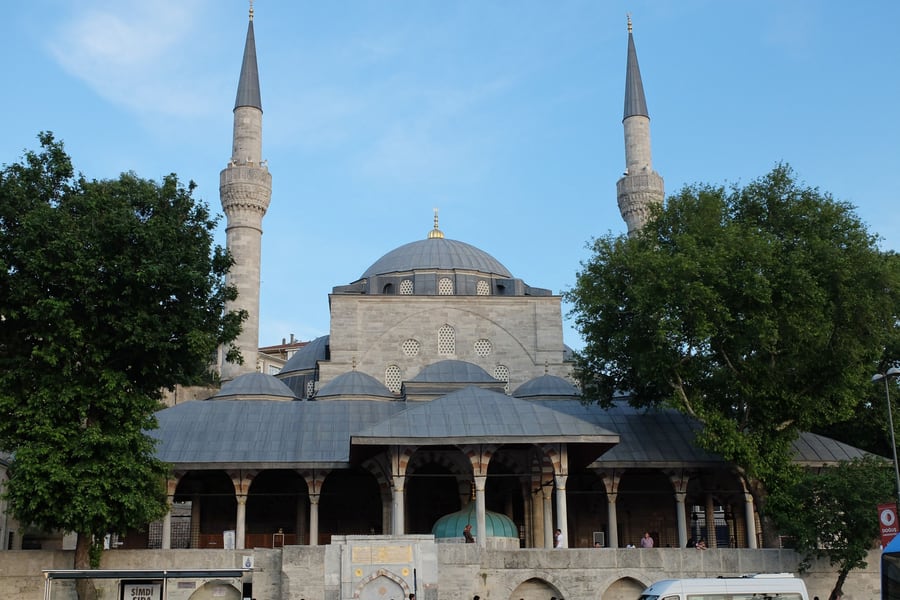 R Prazeres / Wikimedia Commons · CC BY-SA 4.0 · cropped
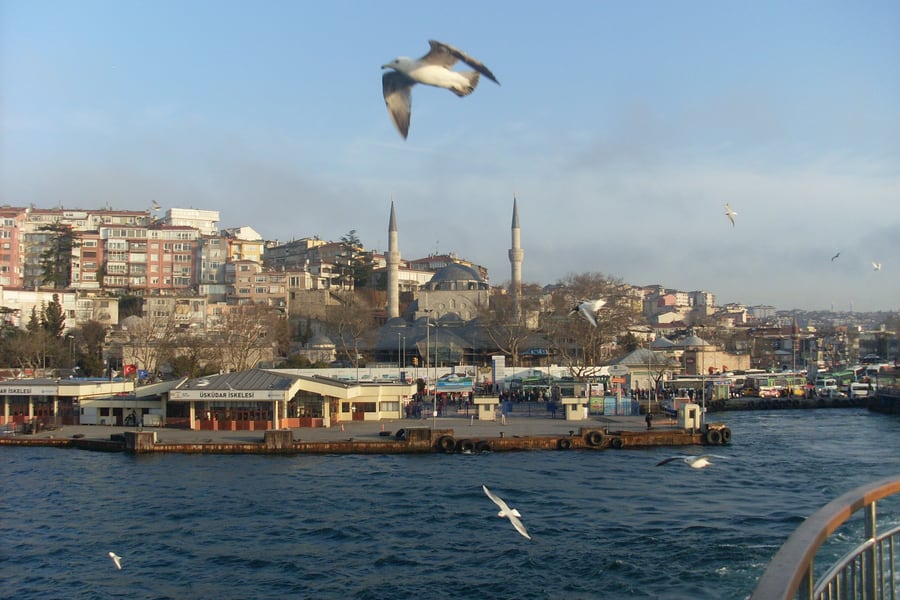
Mihrimah Sultan Mosque, Üsküdar
The İskele Camii, the Jetty Mosque, by the ferry landing and the station exit. Sinan built it in 1543–48 for Süleyman's daughter Mihrimah, on a raised platform with a broad double portico; before the coast road it stood at the water's edge. One minaret still carries a carved sundial.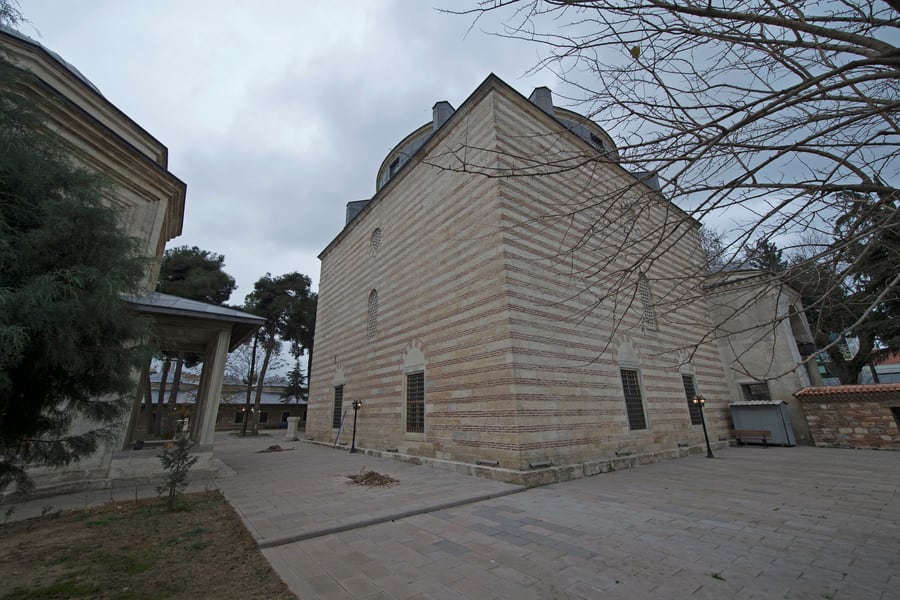 Dick Osseman / Wikimedia Commons · CC BY-SA 4.0 · cropped
Çoban Mustafa Paşa complex, Gebze
In the centre of Gebze, a sixteenth-century külliye built for Çoban Mustafa Paşa, husband of Süleyman's sister Hafsa Sultan, and possibly by Sinan: mosque, tomb, medrese, soup kitchen and caravanserai, on the road east for caravans, pilgrims and armies. The mosque reopened in 2015 after restoration.Where to Sleep
The line crosses the whole city, so the question is which side to wake up on. On the European side the historic peninsula around Sirkeci puts you on top of the station and within walking distance of the museums; on the Asian side Üsküdar has the Marmaray and the ferries leaving from the same waterfront.
Either works for the other: from Sirkeci to Üsküdar is one stop and four minutes.
Where to stay
Legacy Ottoman Hotel
Sirkeci, on Hamidiye Caddesi
An office building of 1911 on the historic peninsula, a short walk up from the station, with a rooftop restaurant over the Golden Horn.
Check Availability (opens in a new tab, on legacyottomanhotel.com)via legacyottomanhotel.comA11 Hotel Bosphorus
Üsküdar, on the waterfront
On Paşa Limanı Caddesi by the water, with rooms looking over the Bosphorus, on bed-and-breakfast terms.
Check Availability (opens in a new tab, on a11hotel.com)via a11hotel.comQuestions or corrections
Planning this trip and stuck on something, or spotted a time, fare or detail that has changed? Send us a message about Marmaray. We read every one, and we update this page when something has changed.