Minsk Children's Railway
A.Savin, Wikipedia · Free Art License · 2010 · cropped
- Distance3.79 km of main line, 4.5 km of track in all
- DurationOut from Zaslonovo to Sosnovy Bor and back
- Best seasonJune to August, when trains run five days a week
Introduction
Everything on this railway is real except the size. The locomotives are diesels, the signals are automatic, the coaches are numbered and the tickets are checked — and the conductors, the train chief, the station duty officer, the dispatcher, the assistant driver and the driver are schoolchildren. Pupils from the fifth to the seventh grades join the Young Railwayman club, study the railway from October to April, and then work the line through the summer as their practical training.
It is one of the children's railways that the Soviet Union built in its city parks, the first of them at Tbilisi in 1935, and it opened on 9 July 1955. The track is 750 mm gauge and 4.5 kilometres long in all, running through Chelyuskintsev Park in Minsk to a platform in the forest park called Sosnovy Bor. Belarusian Railway runs it as a working railway and a school at once, and the public rides it from May to September for 12 roubles.
The Journey
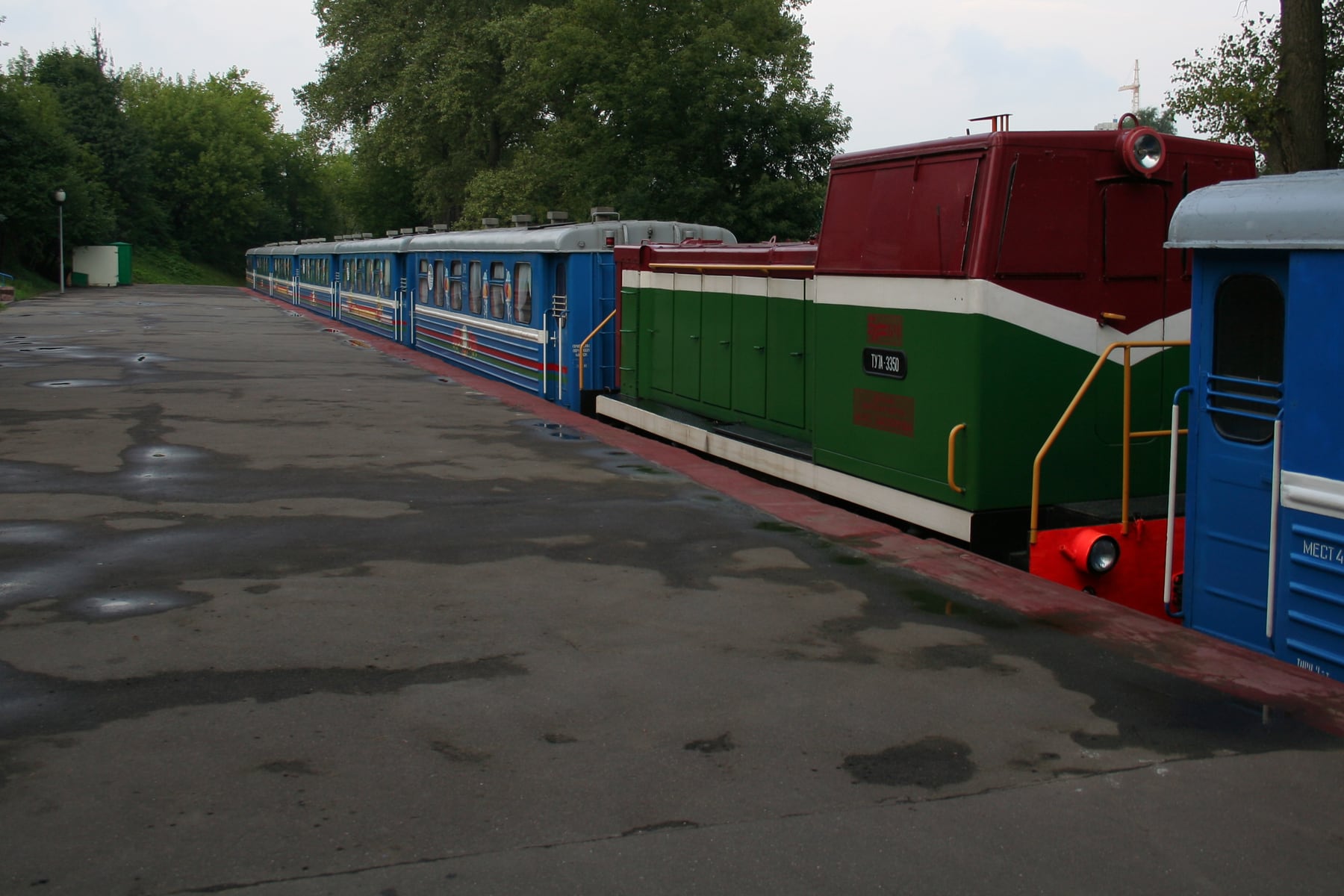
The train leaves from Zaslonovo, on Nezavisimosti Avenue between the metro stations Park Chaliuskintsau and Maskouskaya. The station building of 1954 is a listed historic monument, and its waiting hall was refitted in 2020 in the manner of the 1950s, with carved wooden benches, restored chandeliers, a model railway and a window onto the work of the station's duty officer and the dispatcher. The ticket office is here, and so is the platform: the train is the Stolichny Express, a narrow-gauge diesel and a rake of blue PV51 coaches.
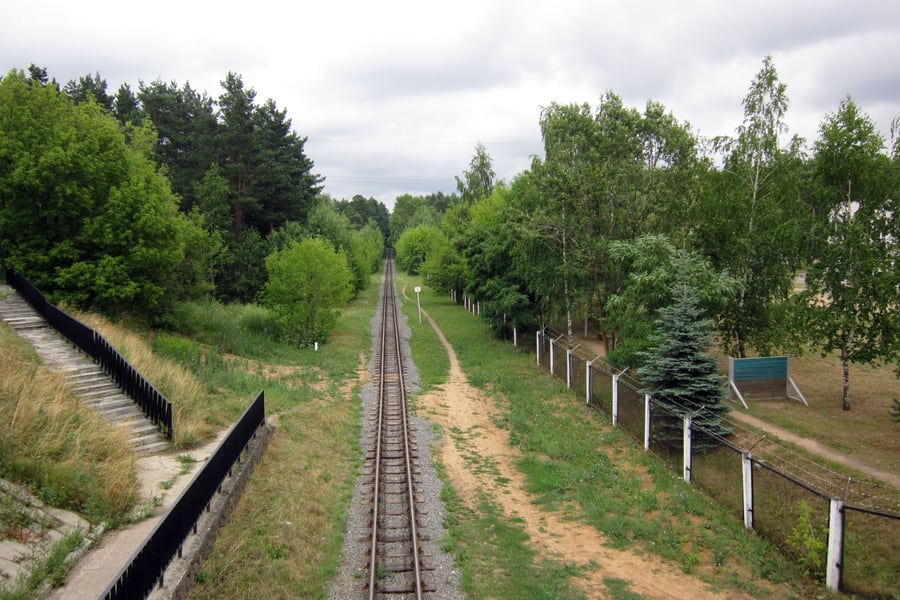
The line is single track, and the main line is 3.79 kilometres from end to end. It runs through the trees to Pionerskaya, the technical station, where the signal panel stands and the locomotives and coaches are serviced. When two trains run they pass here; the line has had automatic block signalling since 23 July 1987, and electric interlocking at the stations. Beyond Pionerskaya the woods close in to Sosnovy Bor, a platform and a shelter in the forest park, where passengers can get off for a walk before the train heads back. There are four level crossings on the way.
The trains
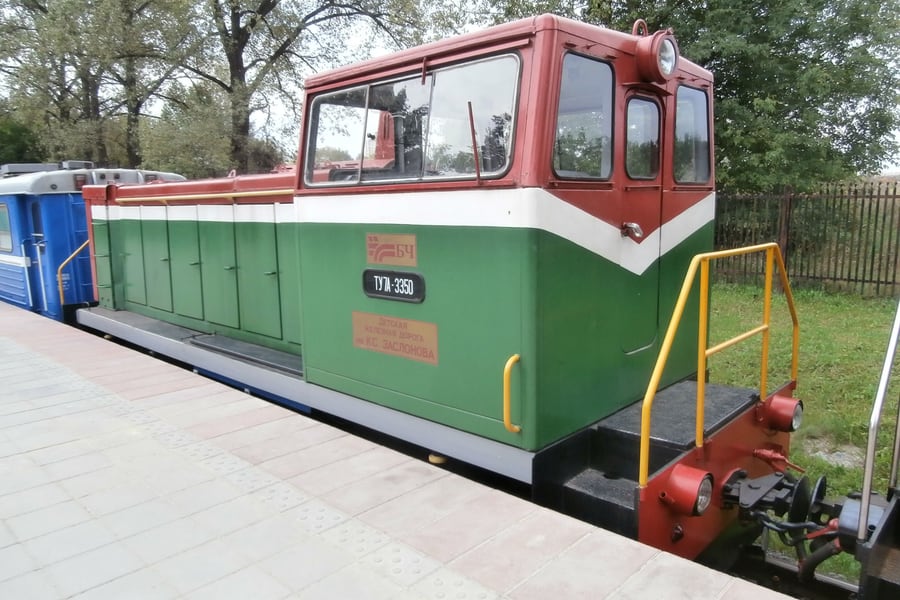
There are two diesels, TU7A-2782, delivered in 1987, and TU7A-3350, bought in 2008, both built for 750 mm gauge and both overhauled at the Lida depot in 2013–14. The ten coaches are of the PV51 series; one carries a diesel generator for lighting and heating, and all of them have a public-address system for music and commentary on the way.
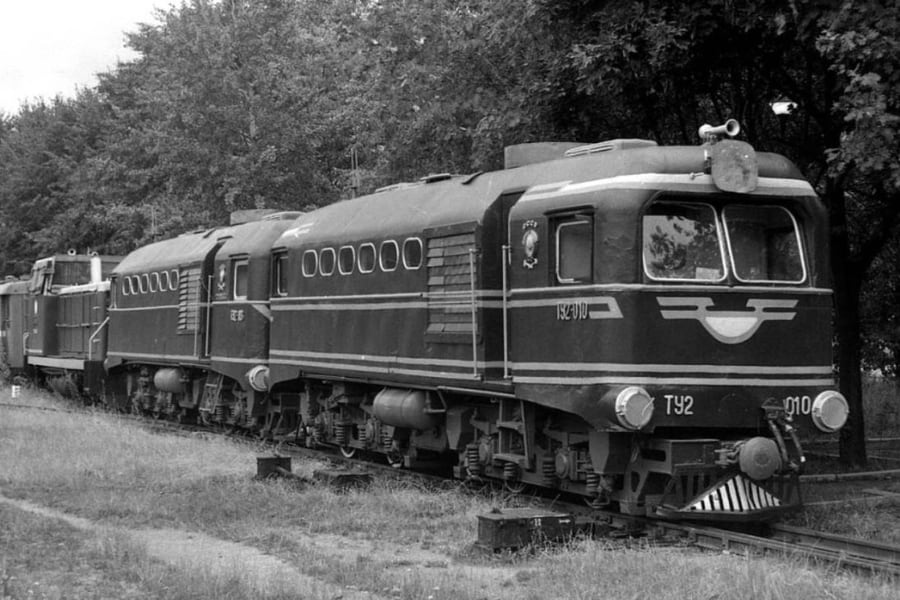
They are the line's fourth generation of motive power. It opened in 1955 behind steam engine 159-232, sent from Estonia, with six coaches built at the Stowbtsy depot; a Polish-built Kp4 and Pafawag coaches replaced them in 1963. The first diesel, TU2-010, came in 1967 and a second, TU2-113, in 1969, and when the reserve Kp4 was written off in 1975 the line's steam era ended. In 2013–14 the track was rebuilt with new rails and sleepers, and some of the rails taken out were more than a hundred years old, rolled at the Demidov works in Nizhny Tagil. Pieces with their maker's marks are kept in the railway's history hall.
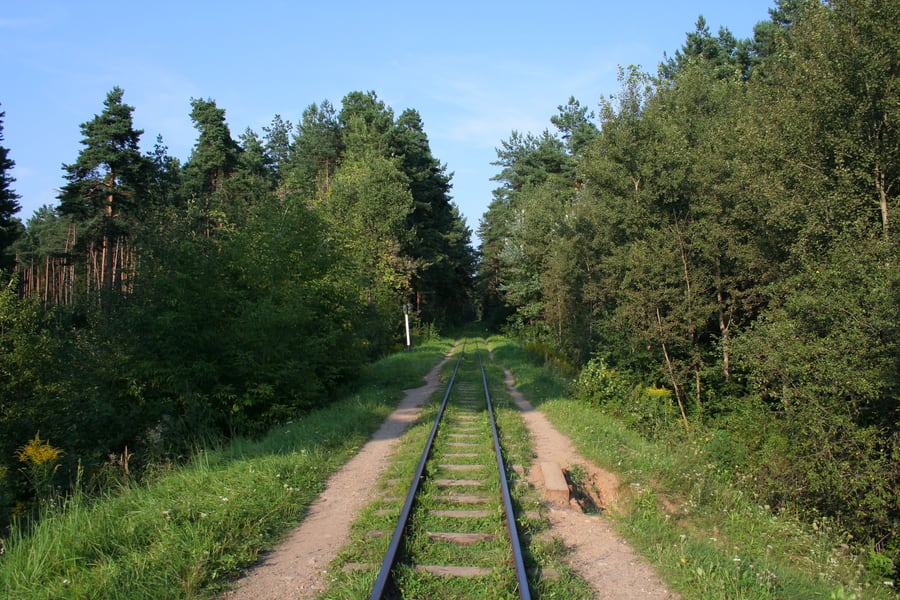
Along the route
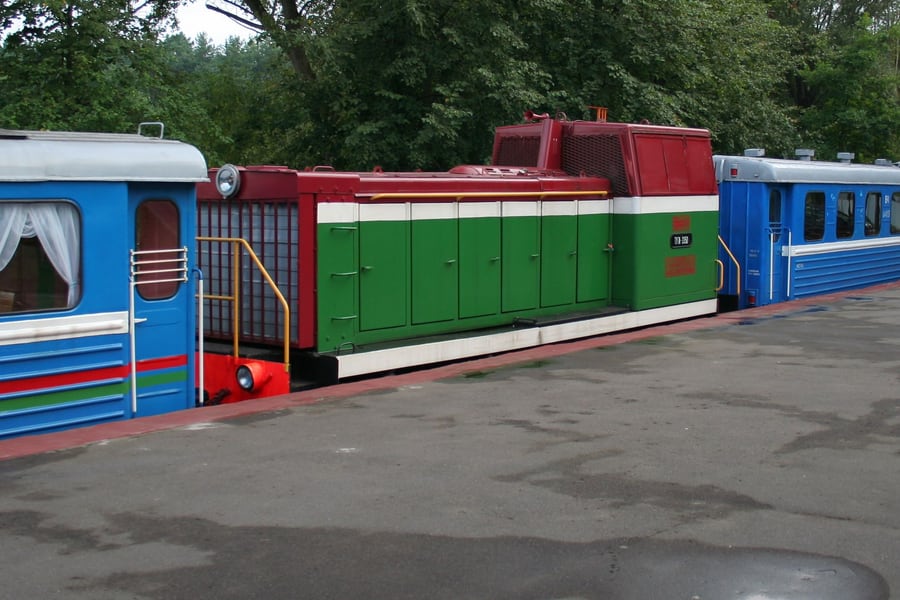 A.Savin, Wikipedia · Free Art License · 2010 · cropped
Zaslonovo
The terminus on Nezavisimosti Avenue, opened in 1955 as Park Kultury and renamed in 1971 for the partisan commander Konstantin Zaslonov. Its waiting hall was refitted in the style of the 1950s in 2020, with a working model railway.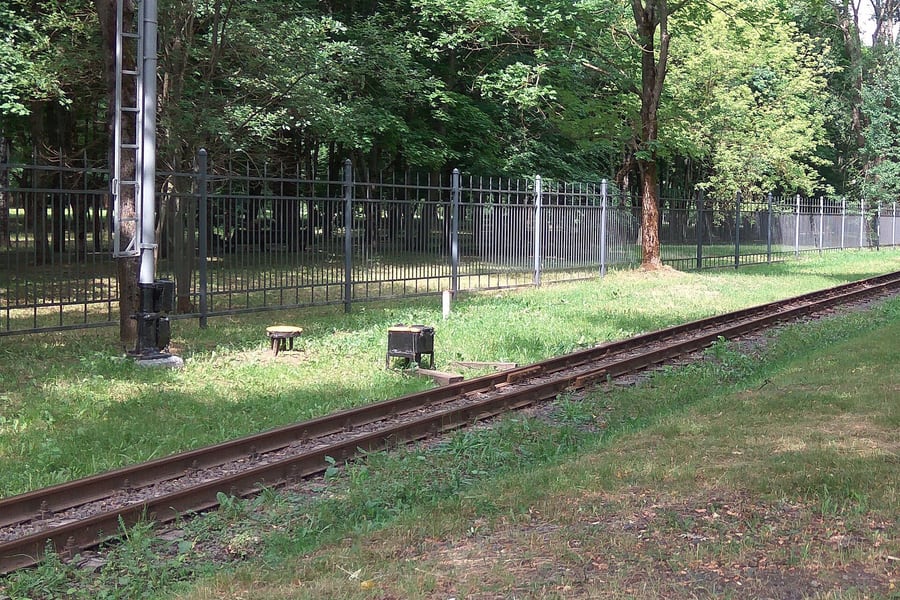 Чаховіч Уладзіслаў / Wikimedia Commons · CC BY-SA 3.0 · 2018 · cropped
Pionerskaya and the signals
The technical station, where the line's signal panel stands and the trains are serviced. Automatic block signalling arrived on 23 July 1987, and from then two trains could run at once, passing at Pionerskaya.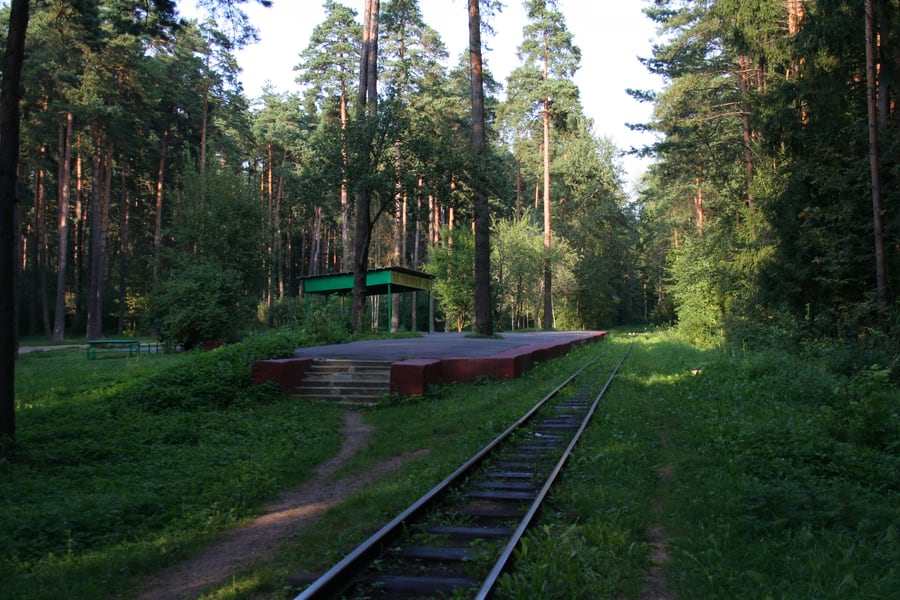 A.Savin, Wikipedia · Free Art License · 2010 · cropped
Sosnovy Bor
The far end, a platform and a shelter in the forest park. Its wooden station burnt down in 1980. Passengers can step off here for a walk among the pines before the train goes back.A bit of history
Culture & experiences along the way
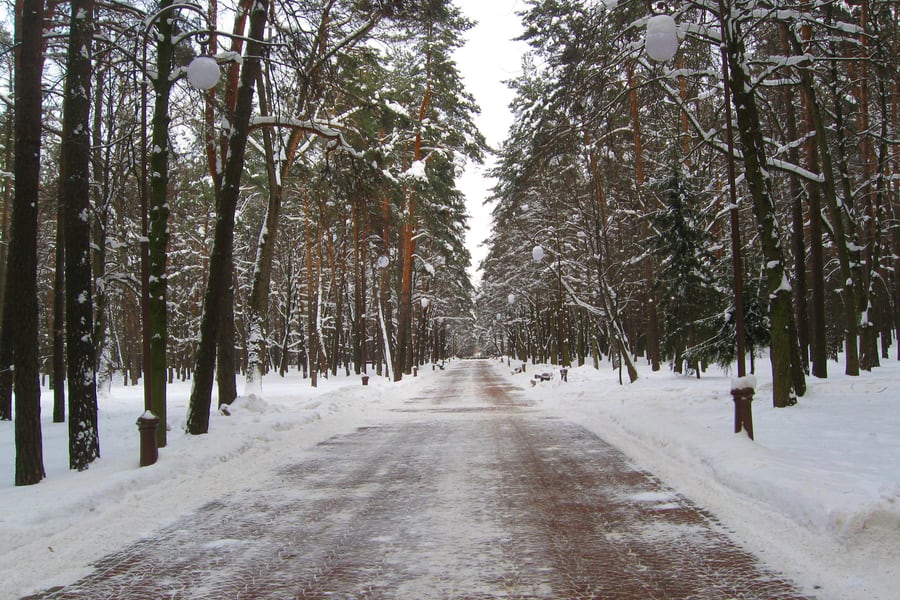 Оксана Кирсанова / Wikimedia Commons · CC BY-SA 3.0 · 2012 · cropped
The New Year Express
In the winter school holidays the railway runs a decorated train to Sosnovy Bor, where Ded Moroz and Snegurochka, the Russian and Belarusian Father Frost and his granddaughter, host a show on a clearing in the snow. The whole outing lasts an hour and twenty minutes.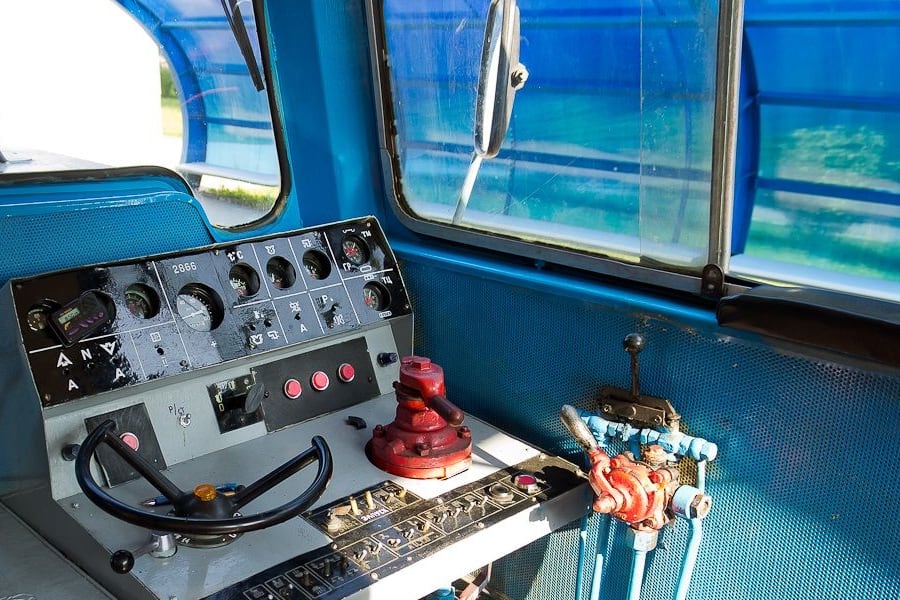 Kiselyov Danya / Wikimedia Commons · CC BY 3.0 · 2013 · cropped
A turn at the controls
In Zaslonovo's waiting hall stands a train-driving simulator: a driver's desk with real controls, and screens for windows that show a stretch of actual railway. It is open to anyone, whatever their age, for 2 roubles, beside a fully automatic model railway.Timetables
The railway runs a summer season from 1 May to mid-September, when the young railwaymen do their practical training, and a short winter season over the New Year school holidays. It does not run on Mondays and Tuesdays. The 2026 summer season, its 71st, ran to this pattern:
| When | Days | Trains |
|---|---|---|
| May | Weekends and holidays: 1–3, 9–10, 16–17, 23–24 and 30–31 May | 15 trips, 11:00 to 16:58 |
| June to August | Wednesday, Thursday and Friday | 11:00 to 13:36 |
| June to August | Saturday and Sunday | 11:00 to 16:51 |
| September | 5, 6, 12 and 13 September | 11:00 to 16:51 |
Every trip runs Zaslonovo – Pionerskaya – Sosnovy Bor and back. There are no seat reservations on the summer train, and the first departure of the day is at 11:00; groups book ahead by phone on +375 17 379-65-75, Wednesday to Sunday, 10:00 to 17:00.
The New Year Express ran from 24 December 2025 to 7 January 2026, with two to four trips a day at 11:00, 12:40, 14:20 and 16:00, each outing lasting an hour and twenty minutes with the show at Sosnovy Bor. The 2026–27 dates had not been announced when this page was checked.
As of November 2026; the 2027 summer dates are not yet published. Each season is announced on Belarusian Railway's children's railway page (opens in a new tab).
Tickets
A ticket cost 12 Belarusian roubles in 2026, the same at any age, from the cash desk at Zaslonovo on running days or online through bycard.by and 24afisha.by. It is good for one trip on the day it is sold, in any coach and any seat. Children under one ride free without a seat of their own, as do disabled children under 18 and the person with them. Tickets are not refunded unless the railway cannot run the train.
The New Year Express is sold separately, with numbered seats: 35 roubles at any age in 2025–26, at Zaslonovo from mid-December and online for three of its coaches. The operator's pages are in Russian and Belarusian only.
Book your tickets
Summer ticket
12 roubles, any age
One trip on the day of sale, from the cash desk at Zaslonovo or online through bycard.by and 24afisha.by.
Book Tickets (opens in a new tab, on minsk.rw.by)via minsk.rw.byNew Year Express
35 roubles, any age, in 2025–26
The winter train with the show at Sosnovy Bor, sold at Zaslonovo from mid-December.
Book Tickets (opens in a new tab, on minsk.rw.by)via minsk.rw.byRail Passes
No rail pass covers this ride. The children's railway sells its own tickets, separately from Belarusian Railway's main-line network, and there is no Belarusian pass sold to visitors.
At 12 roubles a trip there is nothing for a pass to save. Buy the ticket at Zaslonovo on the day, or online through bycard.by or 24afisha.by.
Checked in November 2026.
Places to Visit
The railway sits between two of Minsk's green spaces, the park it runs through and the botanical garden beside it, and both are worth the afternoon. Nezavisimosti Avenue then leads back towards the centre, past the city's oldest park to the red-brick church on Independence Square.
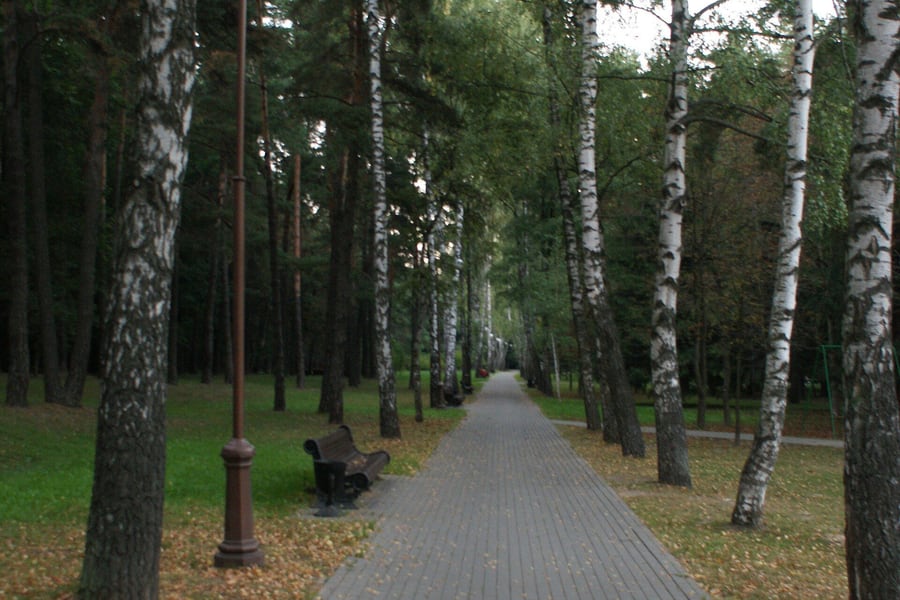 Хомелка / Wikimedia Commons · CC BY-SA 3.0 · 2013 · cropped
Chelyuskintsev Park
The railway's own park, opened in May 1932 on the old Komarovka woods as the city's central park of culture and rest, and named in 1934 for the members of the Chelyuskin expedition. It covers 78 hectares of woodland walks, with rides, a summer stage and a war grave in its north-eastern corner, and the metro station Park Chaliuskintsau is beside it.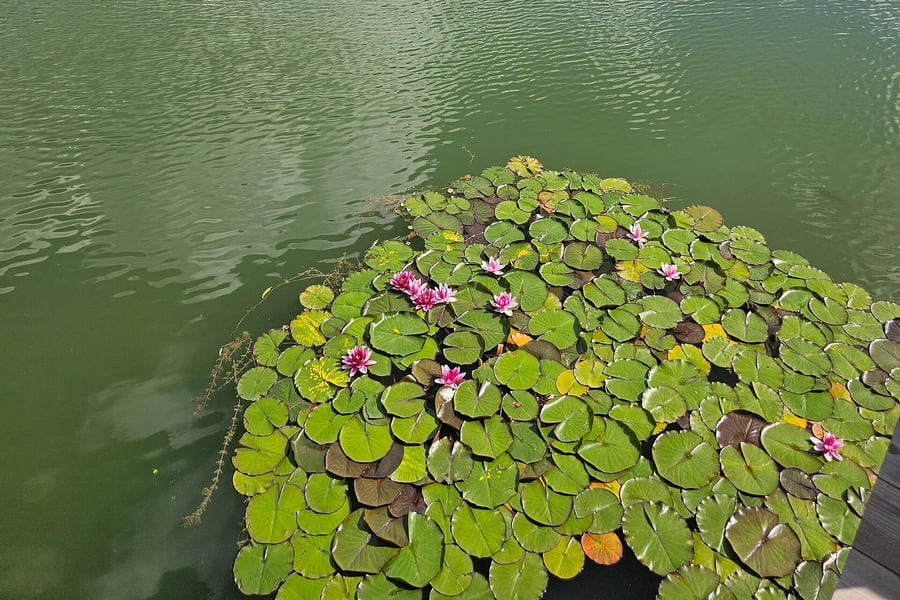 Tess Mattew / Wikimedia Commons · CC BY-SA 4.0 · 2026 · cropped
The Central Botanical Garden
Next door to the park, founded in 1932 and run by the National Academy of Sciences. At about 100 hectares and more than 10,000 kinds of plant it is among the largest botanical gardens in Europe. Its exhibition greenhouse, opened in 2007, means it no longer closes from November to April.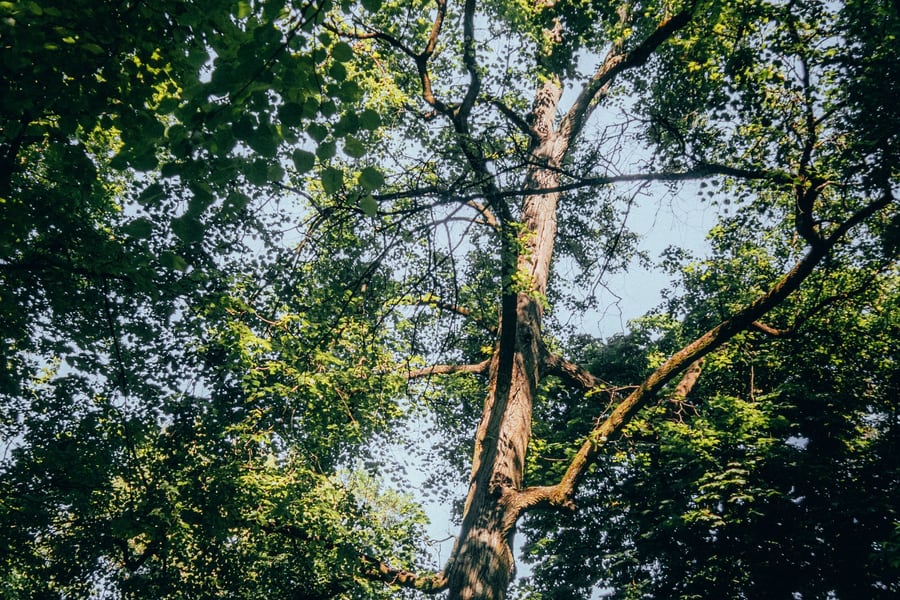 Darkcloud8 / Wikimedia Commons · CC BY-SA 4.0 · 2021 · cropped
Gorky Park
Down the same avenue towards the centre, the city's oldest park: laid out in 1805 by Minsk's first governor as the Governor's Garden, and the first public park in what is now Belarus. It took Maxim Gorky's name in 1936 and became a children's park in 1960. A lime tree from the Governor's Garden still stands in it.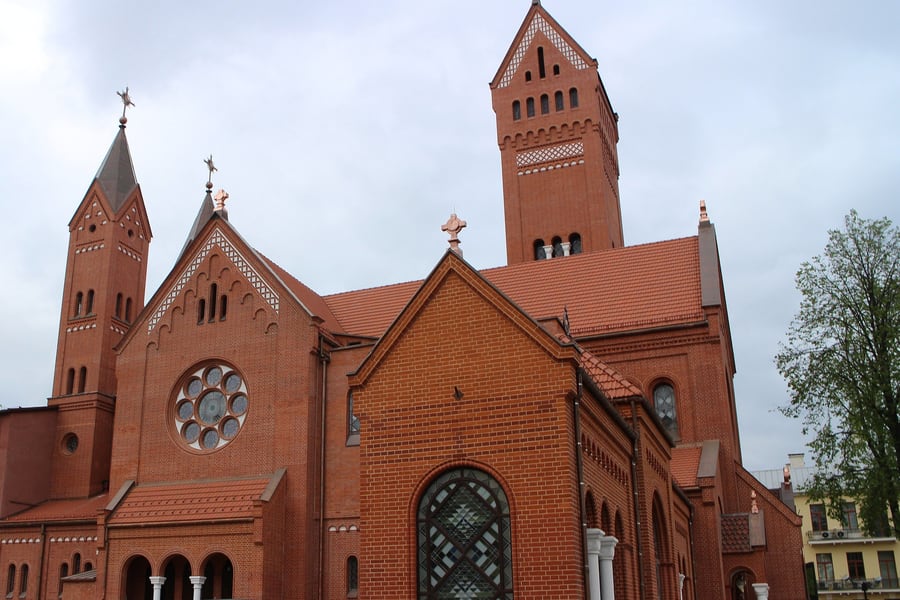 Suicasmo / Wikimedia Commons · CC BY-SA 4.0 · 2019 · cropped
The Red Church
The Church of Saints Simon and Helena on Independence Square, built in red brick from 1905 and consecrated on 20 September 1910. Its founder, Edward Woyniłłowicz, named it for two of his children who died young. Closed in 1932, it served as a theatre and a film studio, and was returned to the Catholic Church in 1990.Where to Sleep
The children's railway is a half-day in Minsk rather than a journey between cities, so the place to stay is anywhere in the centre with the metro to hand. The hotel below is on Nezavisimosti Avenue, the same street as Zaslonovo station.
Where to stay
Hotel Minsk
Prospekt Nezavisimosti 11
A large hotel of 252 rooms on the same avenue as Zaslonovo station, nearer the city centre.
Check Availability (opens in a new tab, on hotelminsk.by)via hotelminsk.byQuestions or corrections
Planning this trip and stuck on something, or spotted a time, fare or detail that has changed? Send us a message about Minsk Children's Railway. We read every one, and we update this page when something has changed.