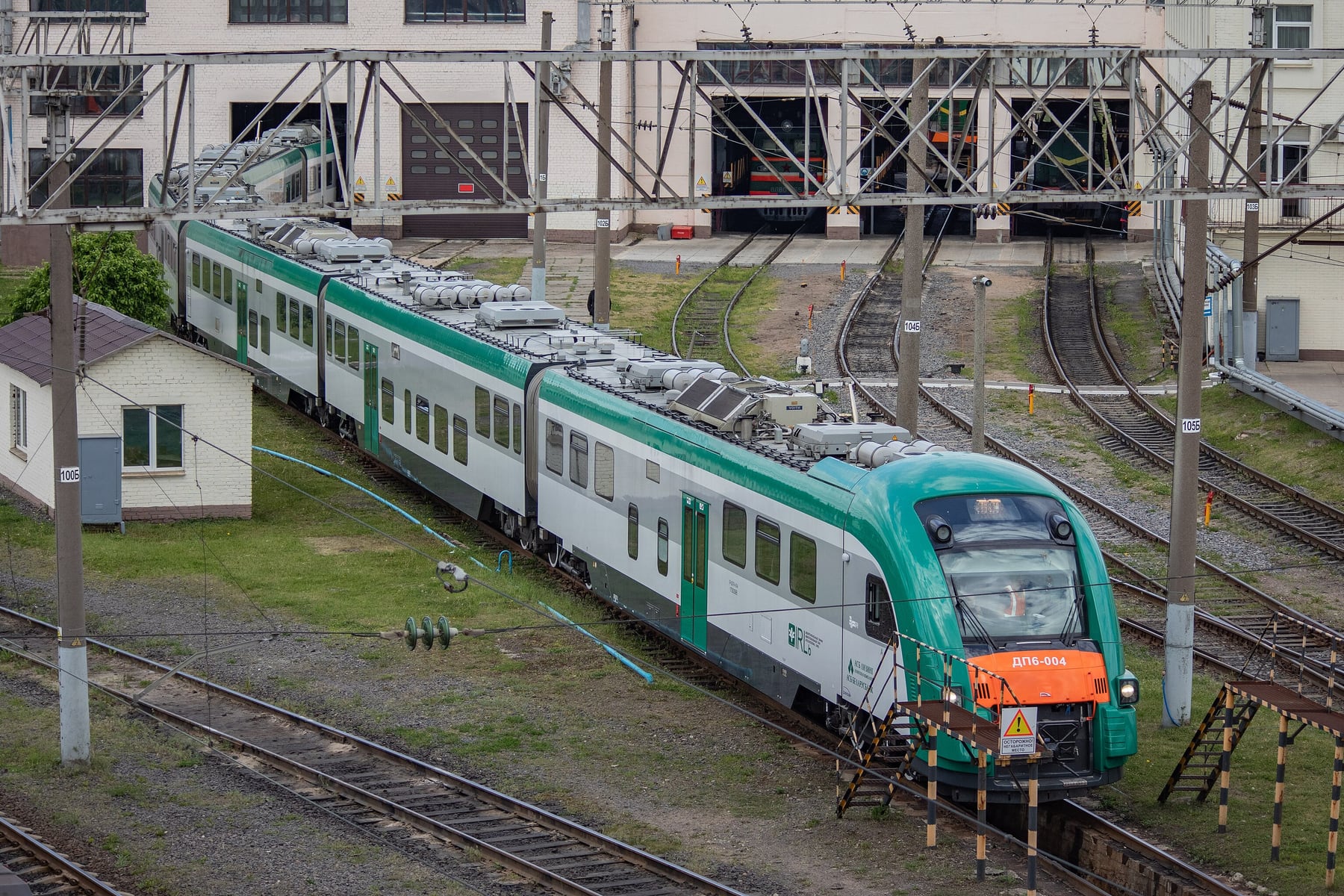
Minsk to Vitebsk
Homoatrox / Wikimedia Commons · CC BY-SA 3.0 · 2021 · cropped
- DistanceAbout 297 km by way of Orsha
- Duration3 h 16 min non-stop on Fridays to Sundays; 3 h 38 min to 4 h 33 min on the other day trains
- Best seasonMay to September · long light evenings for the walk from the station to the river
Introduction
Vitebsk is where Marc Chagall grew up, in a brick house his father built on Pokrovskaya Street, and where he came back after the revolution to open a school of art. It opened on 28 January 1919; by the end of October Kazimir Malevich had arrived to teach there, and for a little over a year a provincial city on the Western Dvina was one of the places modern art was being worked out. The school's building still stands, and so does the house.
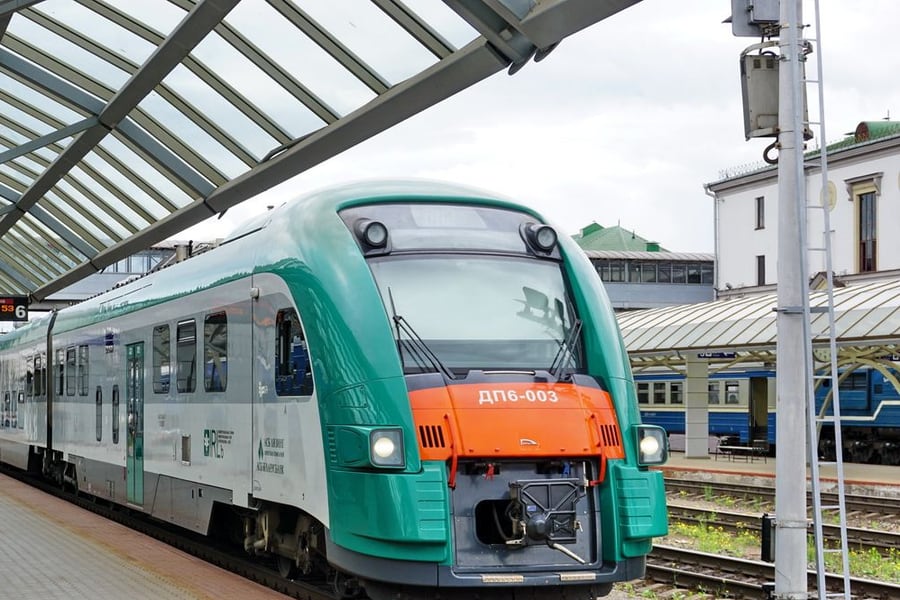
The way there from Minsk is about three hundred kilometres: east across the Berezina at Barysaw, past Talachyn, to the junction at Orsha on the Dnieper, then north for the last eighty. The Berezina and Talachyn both belong to the winter of 1812, and Vitebsk to the summer before it, when Napoleon spent a fortnight in the governor's palace. The fast trains are six-car Pesa DP6 diesel units from Bydgoszcz, and on Fridays to Sundays one of them runs the whole way without stopping, in three hours sixteen minutes.
The Journey
The departure is from Minsk-Passazhirsky, and the first hour is the city's eastern edge and the towns beyond it — Smalyavichy, then Zhodzina. The line here is the main road east to Smolensk and Moscow, under the wires all the way to Orsha, and the country either side is the Belarusian norm: birch and pine, open fields, villages of wooden houses with painted window frames.
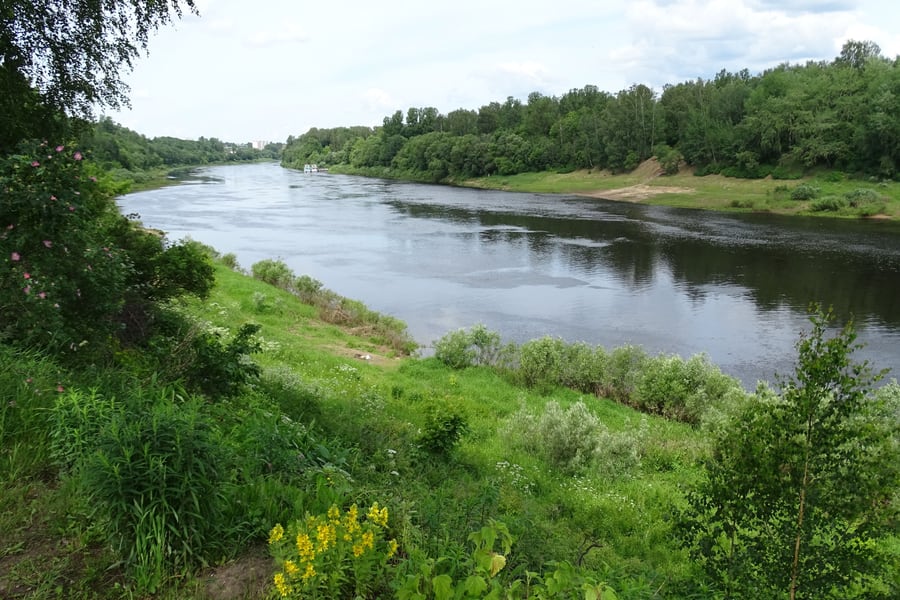
At Barysaw the train crosses the Berezina, a broad, quiet river between willow banks that is famous for one week. In late November 1812 what was left of the Grande Armée reached it in retreat from Moscow and crossed at Studzianka, north of the town, on two bridges that Eblé's pontoniers built working waist-deep in the freezing water. Napoleon reached the river on 26 November and crossed on the 27th; on the morning of the 29th the last bridge was burnt behind the rearguard. Barysaw itself keeps a red-and-white brick cathedral, consecrated in 1874.
Krupki to Orsha
Beyond Barysaw the stops thin out. Krupki and Talachyn get a minute each; Talachyn is where Napoleon himself arrived on 10 November that year, a fortnight before the river. Then comes Orsha, two hundred and sixteen kilometres from Minsk, on the Dnieper where the Arshytsa joins it — first named in the chronicle under 1067, and today one of the biggest railway junctions in the country, where the lines to Moscow, Mogilev and Vitebsk divide. The DP6 stands for two minutes and leaves the Moscow main line behind.
North to the Dvina
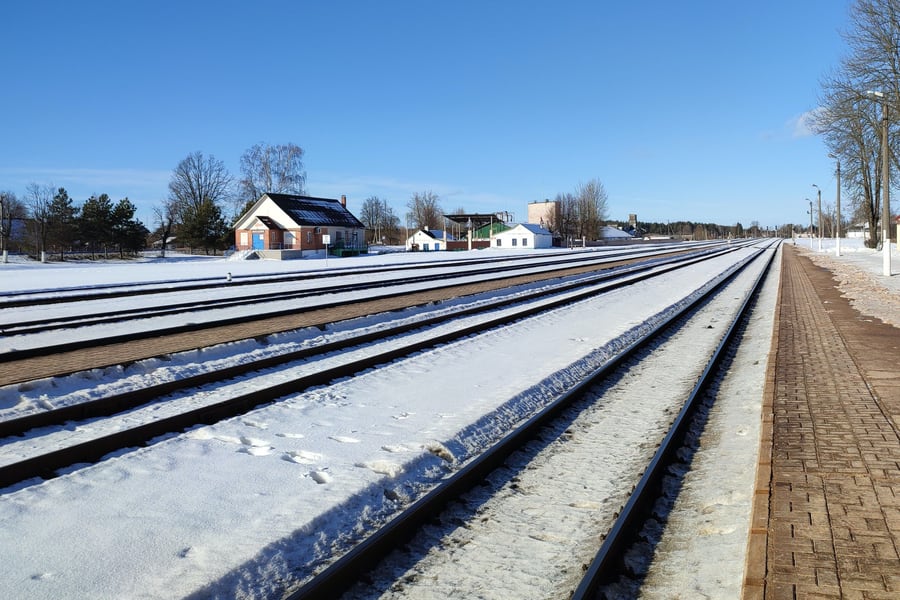
The last stretch runs north through Bahushewsk, about eighty kilometres in all. Vitebsk station is a building of 1952, raised in place of the first one of 1866, which was destroyed in the war. The old town lies along the Western Dvina: the white-towered Town Hall of 1775, the Governor's Palace where Napoleon lodged from 16 July to 1 August 1812, and the brick house on Pokrovskaya Street where Chagall grew up.
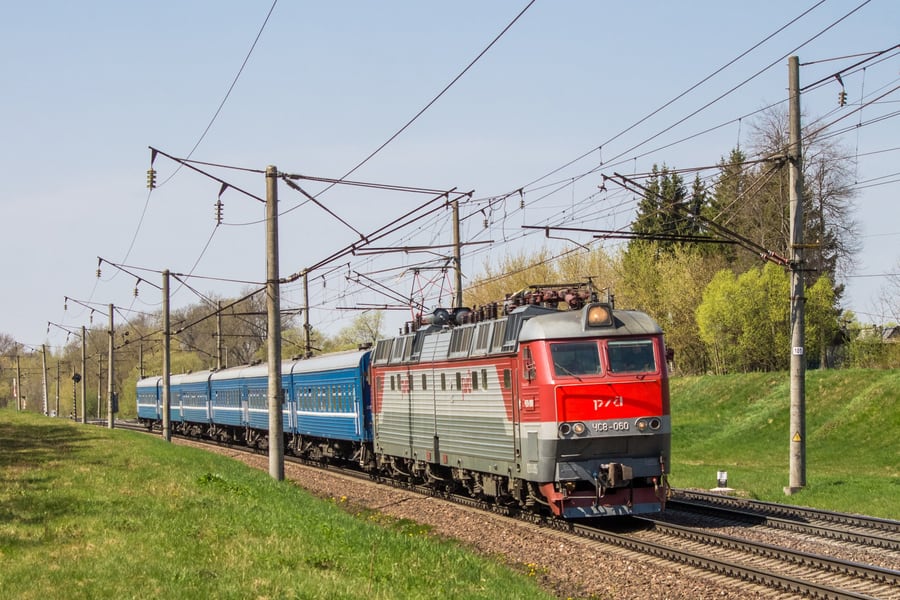
The train itself is worth a look. Belarusian Railway took delivery of its first DP6, built by Pesa Bydgoszcz in Poland, on 5 July 2019: six low-floor cars, 311 seats including 25 in first class, a design speed of 140 km/h, a socket at every seat and space for bicycles and pushchairs. They work all three business-class pairs on this route. In February 2026 they were briefly taken off in hard frost and replaced by locomotive-hauled coaches; they were back from 16–17 February.
Along the route
 Стэльмах Аляксандр Мікалаевіч / Wikimedia Commons · CC BY-SA 3.0 · 2013 · cropped
Barysaw and the Berezina
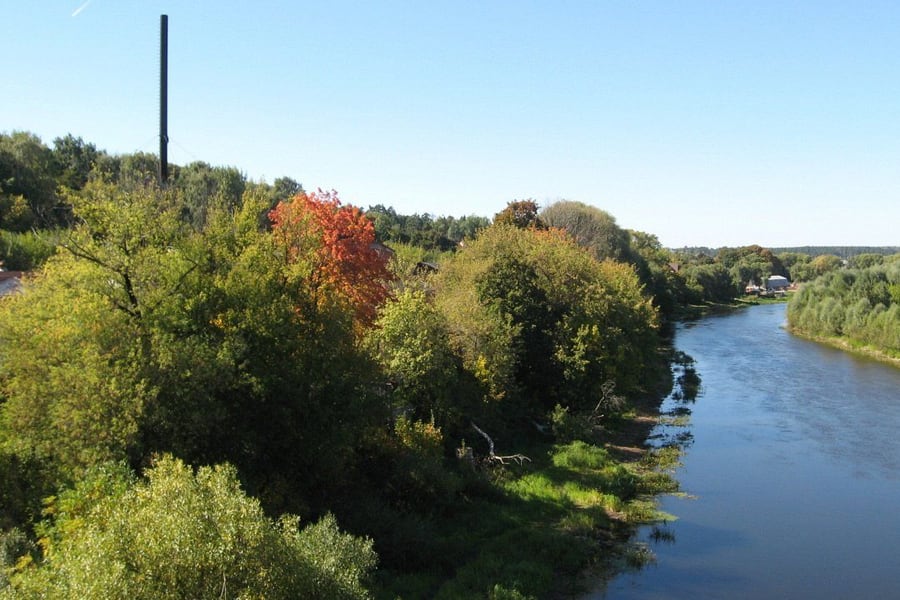
An hour out of Minsk the train crosses the Berezina at Barysaw. Upstream at Studzianka, on 26–29 November 1812, Napoleon's retreating army crossed on two bridges built by pontoniers standing in the icy river.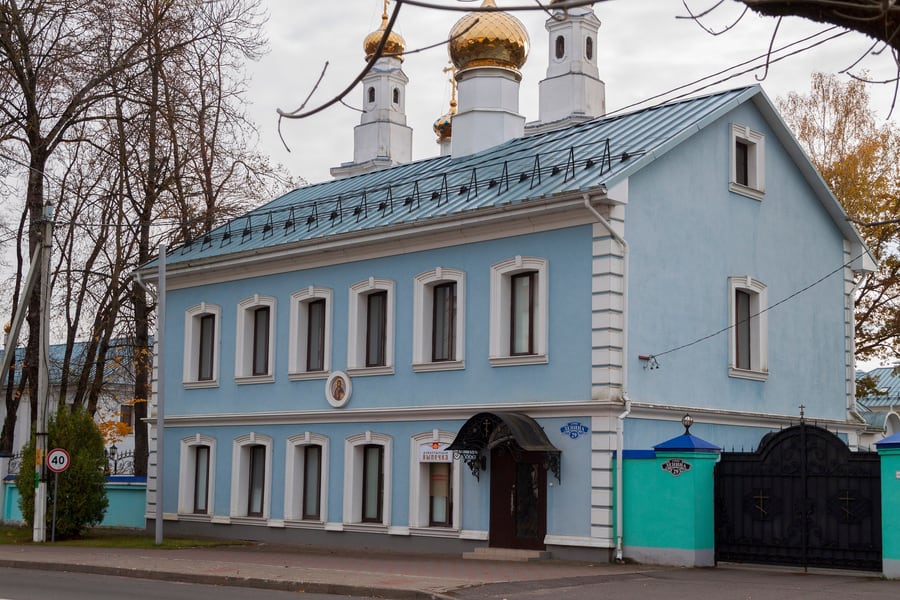 Muscidæ / Wikimedia Commons · CC BY 4.0 · 2026 · cropped
Talachyn
A small town where Napoleon arrived on 10 November 1812, a fortnight before the Berezina. Its former Basilian monastery — the house of 1779 and the Pokrova church, dated 1604 — is an Orthodox monastery today.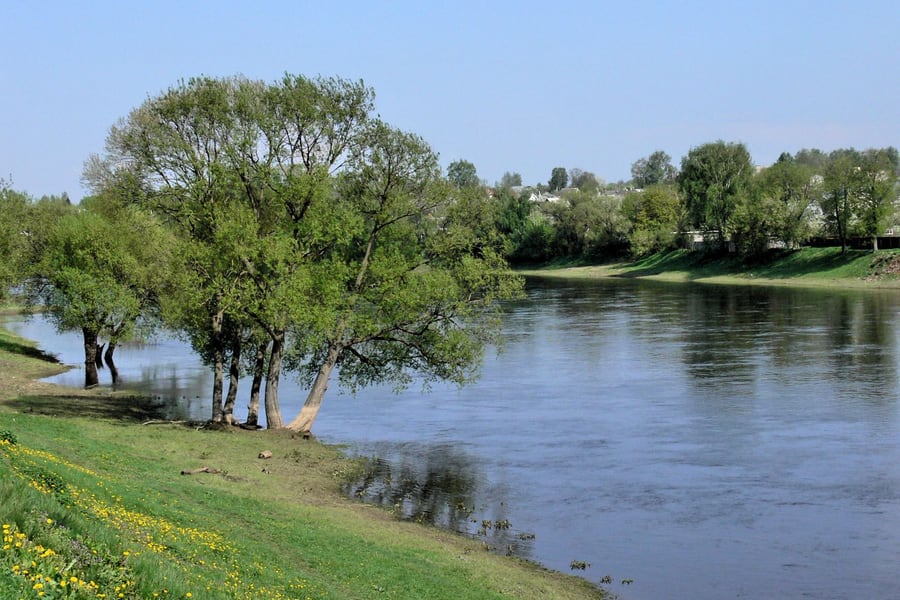 Frantishak / Wikimedia Commons · CC BY-SA 3.0 · 2010 · cropped
Orsha, and the turn north
Orsha stands where the Arshytsa meets the Dnieper, first named in 1067, and is one of the biggest junctions in the country. The train calls for two minutes, then leaves the Moscow main line and heads north for Vitebsk.A bit of history
Culture & experiences along the way
 Adam Jones / Wikimedia Commons · CC BY-SA 2.0 · 2016 · cropped
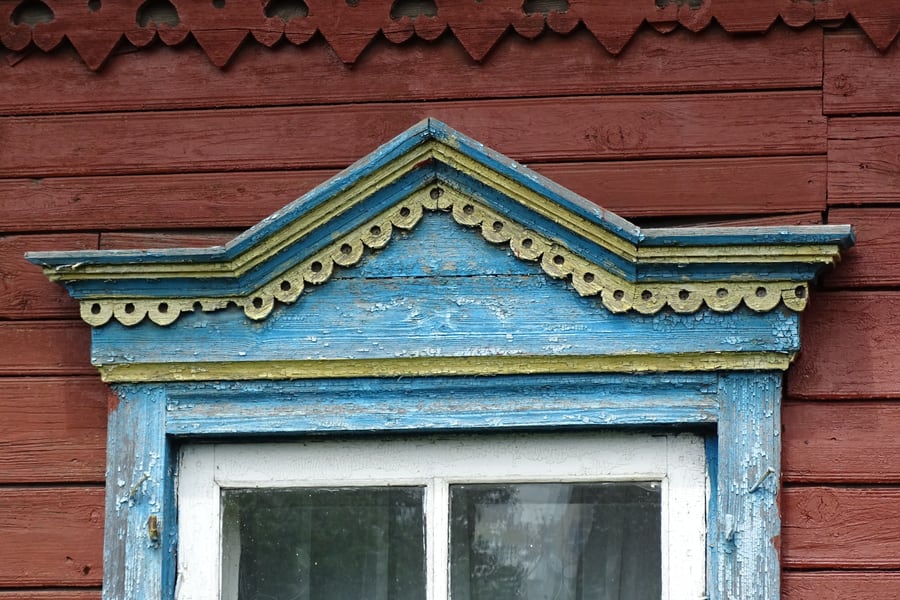
Carved window frames
Look up at the wooden houses in Vitebsk's older streets and many wear nalichniki — carved, fretted window surrounds, painted to stand out against dark planking, a scalloped pediment over the top and a cornice of cut-out shapes — folk carpentry in plain sight, on houses people still live in. Tess Mattew / Wikimedia Commons · CC BY-SA 4.0 · 2021 · cropped
Bliny, rolled and filled
Thin pancakes, cooked one at a time in a hot pan and rolled round a filling — curd cheese, meat, mushrooms, or simply butter and sour cream. Bliny are an everyday dish rather than a treat, and they travel well in a bag on a three-hour train.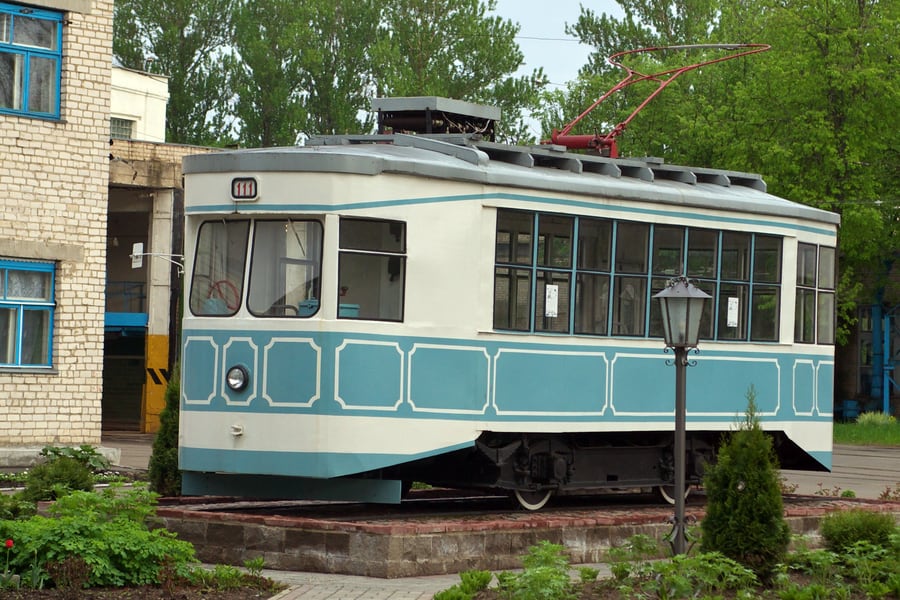 Serge Serebro, Vitebsk Popular News / Wikimedia Commons · CC BY-SA 3.0 · 2010 · cropped
The oldest tram in Belarus
Vitebsk's trams have run since 30 June 1898, the first in what is now Belarus. Seven routes cross the city today, and a car of the original Kh series stands on a plinth at the depot gates, put there for the system's 110th anniversary in 2008.Timetables
Between four and eight trains a day leave Minsk for Vitebsk, depending on the day of the week. Up to three are the business-class DP6 diesel units; the rest are long-distance trains with sleeping cars, some of them running through from Brest or Grodno, and two leave late enough to arrive in the small hours or at breakfast. The departures below are those the operator sold for Saturday 28 November 2026.
| Depart Minsk-Passazhirsky | Arrive Vitebsk | Journey | Train |
|---|---|---|---|
| 08:01 | 11:49 | 3 h 48 | 712Б, business class — 7 stops |
| 15:01 | 18:17 | 3 h 16 | 704Б, business class — non-stop |
| 18:54 | 22:57 | 4 h 03 | 052Б, Brest to St Petersburg |
| 19:08 | 23:41 | 4 h 33 | 680Б, from Grodno, seats and berths |
| 19:49 | 23:27 | 3 h 38 | 714Б, business class |
| 23:10 | 07:34 | 8 h 24 | 625Б, overnight, sleeping cars |
712Б and 714Б run every day; 704Б runs Fridays to Sundays only, and it is the one to aim for — the only train of the day that runs from Minsk to Vitebsk without a single stop. Two more appear on some days: 670, at 17:36 on Wednesdays, Fridays and Sundays, arriving 22:42; and 634Ь from Grodno, late on Friday and Sunday evenings.
Back from Vitebsk on Sunday 29 November the business-class trains left at 06:32 (703Б, Minsk 10:02), 15:33 (713Б, 19:06) and 18:59 (711Б, 22:43); the economy-class 623Б left at 13:59 and reached Minsk at 18:20.
Every seat and berth is reserved, so a ticket is for one named train. The timetable printed here runs to 12 December 2026; a new one starts on 13 December, and the portal had loaded only part of it when this page was checked.
As of November 2026. Live times and availability: Belarusian Railway's passenger portal (opens in a new tab).
Tickets
Belarusian Railway sells this journey through its own portal at pass.rw.by, quoting every fare
in Belarusian roubles with euro, dollar and Russian rouble equivalents alongside. Seats and berths are
numbered and reserved, so a ticket is for one named train, and the portal is in Russian and
Belarusian only — its /en addresses do not lead to an English version.
Fares are low. A standard seat on a business-class DP6 was 28.11 roubles for 27 November 2026, about eight and a half euros for the whole ride, with a few seats at 38.92 and 56.23. The evening train from Grodno was cheaper still: 11.73 for a seat, 18.05 for an open platskart berth and 25.01 for a berth in a four-berth kupe.
Book your tickets
Business-class seat
Standard seat · 28.11 roubles
The fare on the DP6 diesel units, which work the three fastest pairs of trains each day.
Book Tickets (opens in a new tab, on pass.rw.by)via pass.rw.byBusiness-class, the dearer seats
38.92 roubles, or 56.23 beside the cycle spaces
The same units sell a few seats at each of two higher prices.
Book Tickets (opens in a new tab, on pass.rw.by)via pass.rw.byEconomy-class seats and berths
Seat 11.73 · platskart 18.05 · kupe 25.01 roubles
The evening train from Grodno sells a seat, an open berth or a compartment berth for less than a DP6 seat.
Book Tickets (opens in a new tab, on pass.rw.by)via pass.rw.byRail Passes
No rail pass covers this journey. Belarus is not among the countries in the Interrail and Eurail network, and there is no Belarusian pass sold to visitors.
It is no great loss. A seat on the fastest train costs about eight and a half euros, and a berth on the overnight service not much more, so a pass would never pay for itself here. Buy each journey as a separate ticket from pass.rw.by (opens in a new tab).
Pass coverage checked against interrail.eu in November 2026.
Places to Visit
Three of the five are in Vitebsk itself: the Town Hall, the house where Chagall grew up, and the palace where Napoleon spent the second half of July 1812. The other two are at stops on the way and make a reason to break the journey — Orsha, where the Jesuit collegium has been restored, and Barysaw, where the cathedral is the landmark of the town.
 Globustut / Wikimedia Commons · CC BY 4.0 · 2005 · cropped
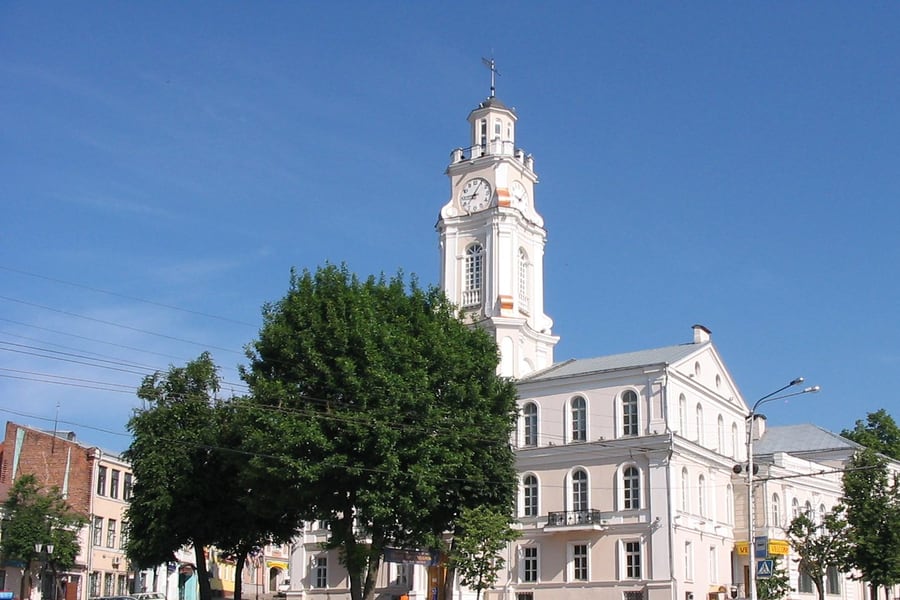
Vitebsk Town Hall
A white clock tower over a long baroque front. The first town hall went up in 1597, when Vitebsk received Magdeburg rights; the present building dates from 1775, two storeys with the tower over the middle, and the third storey was added in 1911. It houses the regional museum of local history.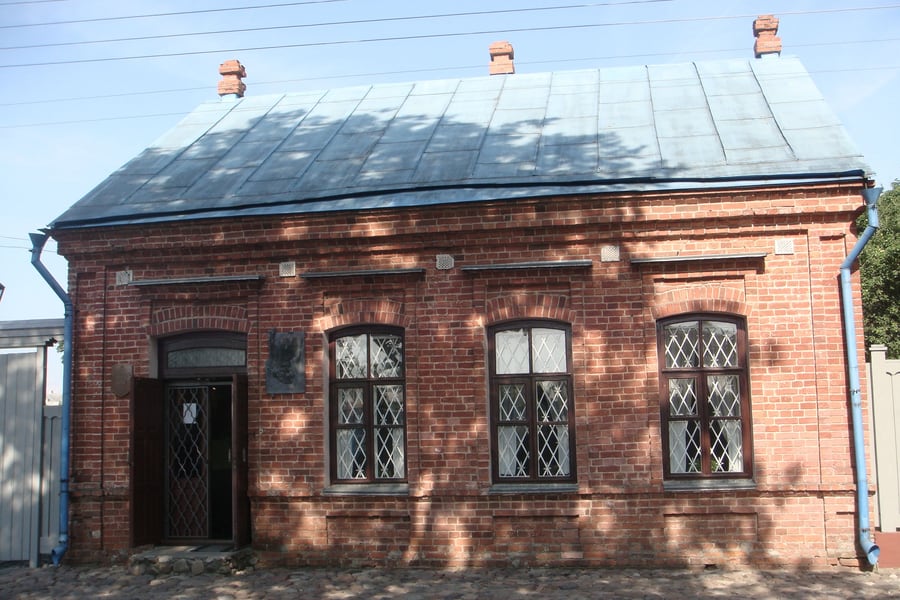 Lumaca / Wikimedia Commons · CC BY-SA 4.0 · 2012 · cropped
The Chagall house on Pokrovskaya Street
A single-storey brick house at Pokrovskaya 11, built by the painter's father in the early 1900s, where Marc Chagall spent his youth. It opened as a memorial museum in 1997. In 1919 Chagall founded the city's People's Art School, and Kazimir Malevich arrived to teach there that October; its building now holds a museum of the school.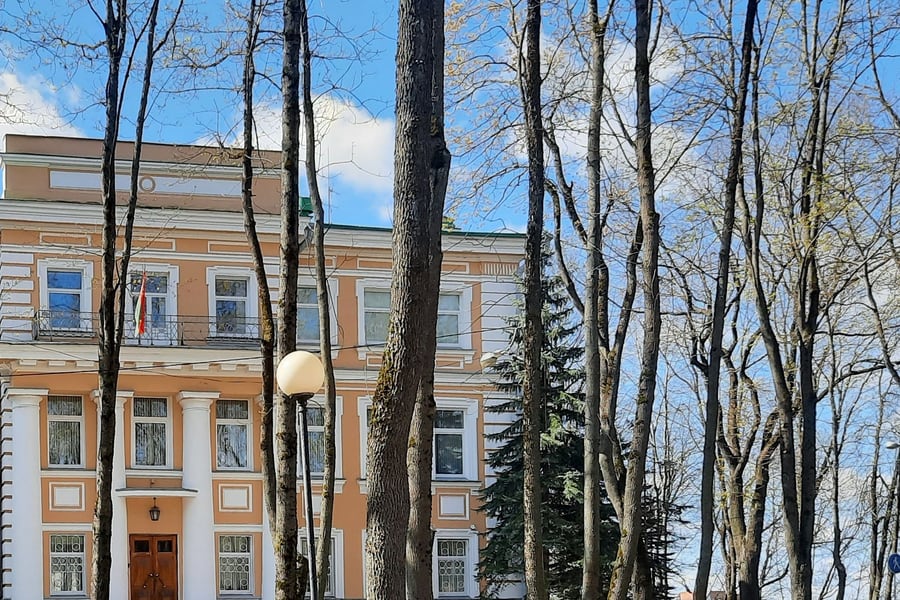 Zelyoniy.anton / Wikimedia Commons · CC BY-SA 4.0 · 2021 · cropped
The Governor's Palace
Built in 1772 as a town house for the Kudinovich family and remodelled by the provincial architect Fyodor Sankovsky as the governor's residence. Napoleon lodged here from 16 July to 1 August 1812, on the way to Moscow. It lost its interiors in the Second World War; in 2023 it was given over to culture, with a gallery and exhibition hall planned.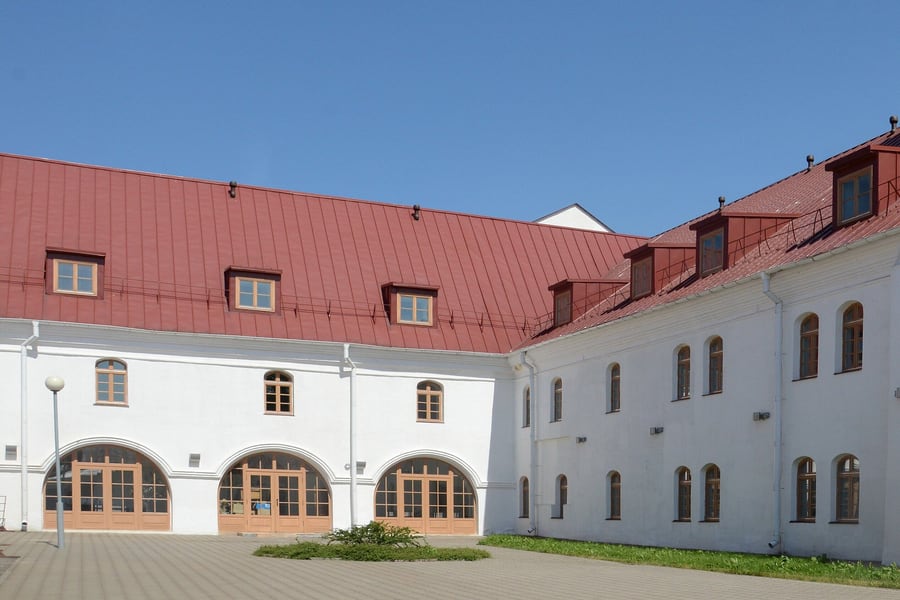 Tess Mattew / Wikimedia Commons · CC BY-SA 4.0 · 2014 · cropped
The Jesuit collegium, Orsha
A Jesuit mission was founded at Orsha in 1590 and became a collegium about 1615; the collegium building was finished by 1803, and in 1820 the order was banned in the Russian Empire. The buildings served as a prison until the late 1980s and were restored in 2007–08; in 2014 they held a library, an art gallery and a house of crafts.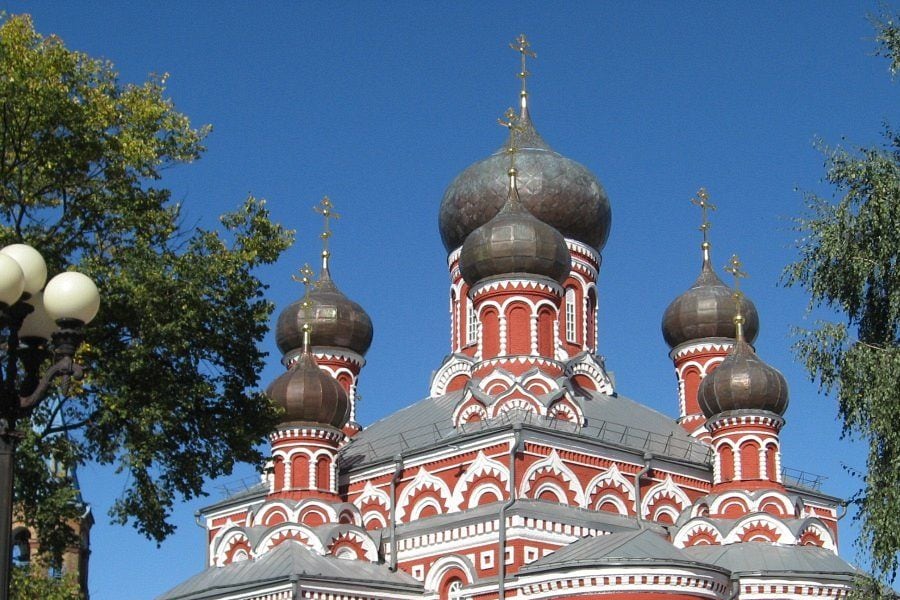 Стэльмах Аляксандр Мікалаевіч / Wikimedia Commons · CC BY-SA 3.0 · 2013 · cropped
The Resurrection Cathedral, Barysaw
Red brick picked out in white, nine cupolas over three apses, consecrated on 20 October 1874 to Pyotr Merkulov's design in the Russian revival manner. It was closed in 1937, reopened during the war and returned to the faithful in 1945. The three-tier, tent-roofed bell tower in front of it was added in 1907, in the same style.Where to Sleep
The fast trains arrive in Vitebsk at midday or late in the evening, so a night at the far end is the natural way to do this journey. In Minsk the station is in the centre, and the hotel below is ten minutes' walk from it.
Where to stay
Hotel Minsk
Central Minsk, Prospekt Nezavisimosti 11
A large hotel of 252 rooms on the main avenue, about ten minutes' walk from the station.
Check Availability (opens in a new tab, on hotelminsk.by)via hotelminsk.byVitebsk Hotel
Vitebsk, Ulitsa Zamkovaya 5
A 196-room hotel on Zamkovaya Street, which it describes as close to both the railway and the bus station.
Check Availability (opens in a new tab, on hotel-vitebsk.by)via hotel-vitebsk.byQuestions or corrections
Planning this trip and stuck on something, or spotted a time, fare or detail that has changed? Send us a message about Minsk to Vitebsk. We read every one, and we update this page when something has changed.