Nampula to Cuamba
Matthias Hille / Wikimedia Commons · CC BY-SA 4.0 · 2018 · cropped
- Distance341 km, Nampula to Cuamba
- Duration10 hr 30 min
- Best seasonTwice a week each way, all year
Introduction
Two mornings a week a train leaves Nampula at five o'clock and reaches Cuamba at half past three in the afternoon: 341 kilometres in ten and a half hours, an average of thirty-two kilometres an hour. It costs 320 meticais in económica and 835 in executiva, and it is one of the very few ways to move between northern Mozambique's largest inland city and the province next door. The passengers are traders, students and families with sacks and baskets; the operator's own tariff prices a small basket at 60 meticais and a large one at 195, which tells you what the train is for as plainly as anything on this page.
The line under it was a long time coming. Construction began at the coast in 1915, reached Monapo — ninety kilometres — in 1924, stalled for want of money, got as far as Mutivasse by 1932, and only arrived at the place then called Nova Freixo, today's Cuamba, in 1950. Thirty-five years for 538 kilometres. It was destroyed by RENAMO in 1984 and rebuilt from November 2005, and the coal railway that now runs from Moatize to the sea shares the same track for much of this journey. What you ride is therefore both an everyday bus-substitute and the oldest working part of Mozambique's northern corridor.
The Journey
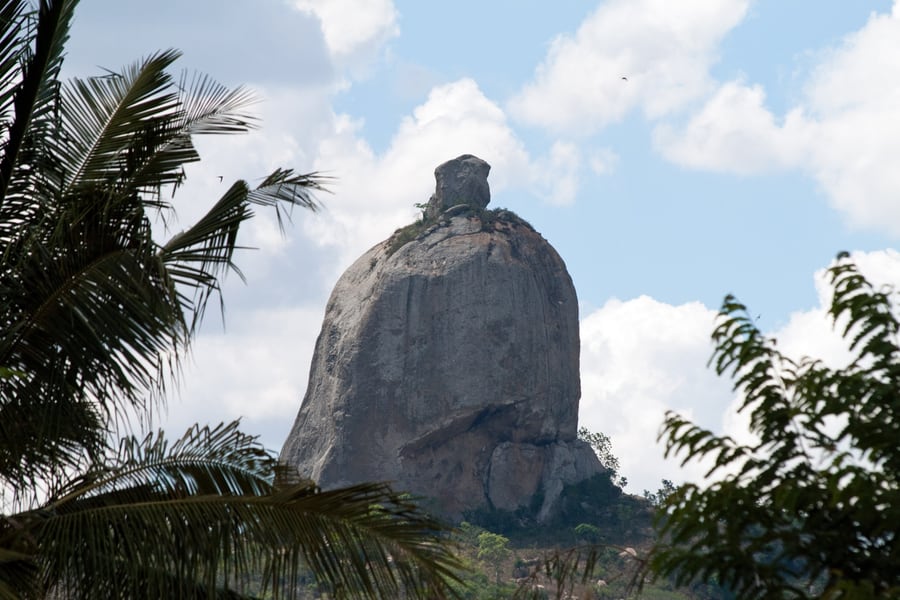
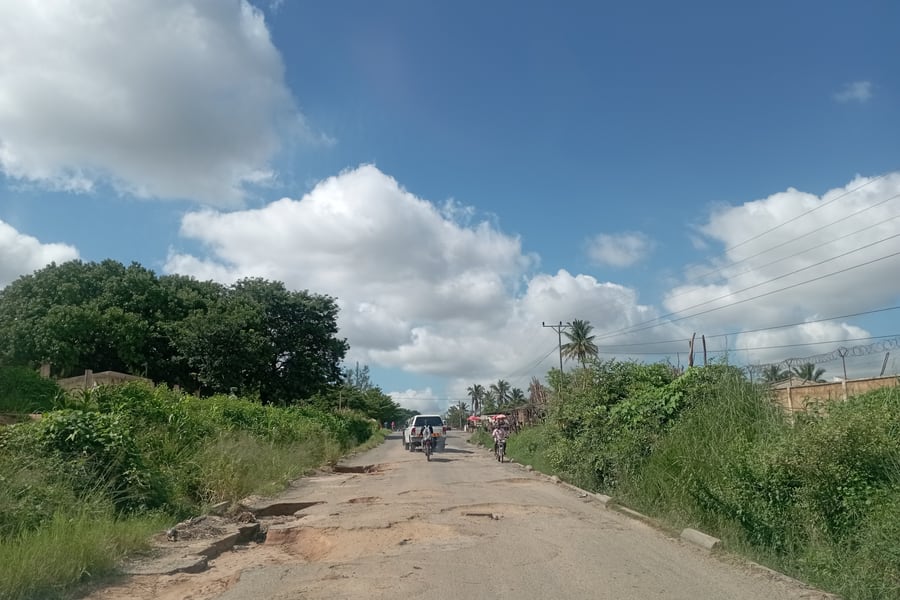
Nampula stands at kilometre 192 of the Nacala line, halfway between the ocean and the Malawi border, and it is the third-largest city in Mozambique — some 743,000 people on a plain broken by granite domes. The train leaves in the dark. By the time there is enough light to see out of the window the city is behind and the first of those domes is standing over the scrub.
Rapale to Ribáuè
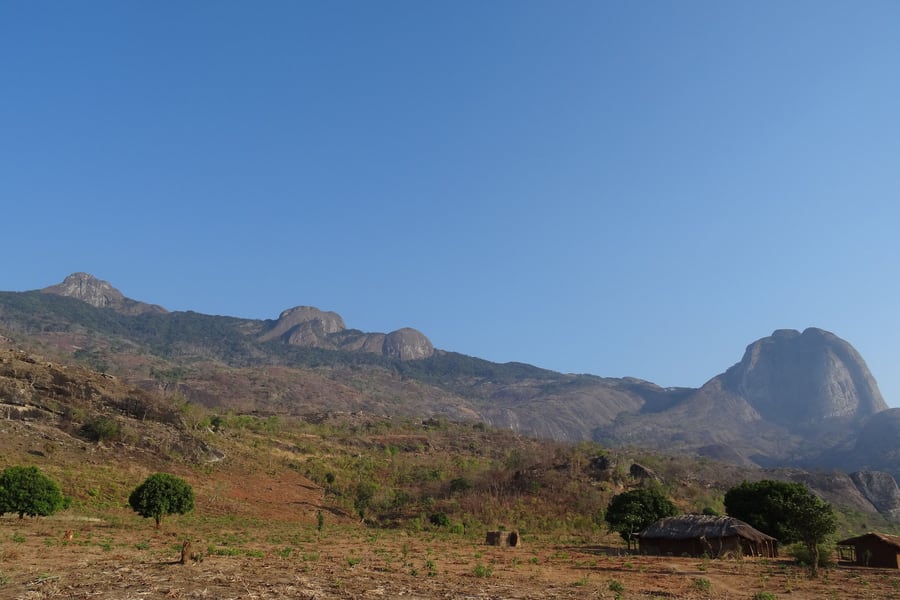
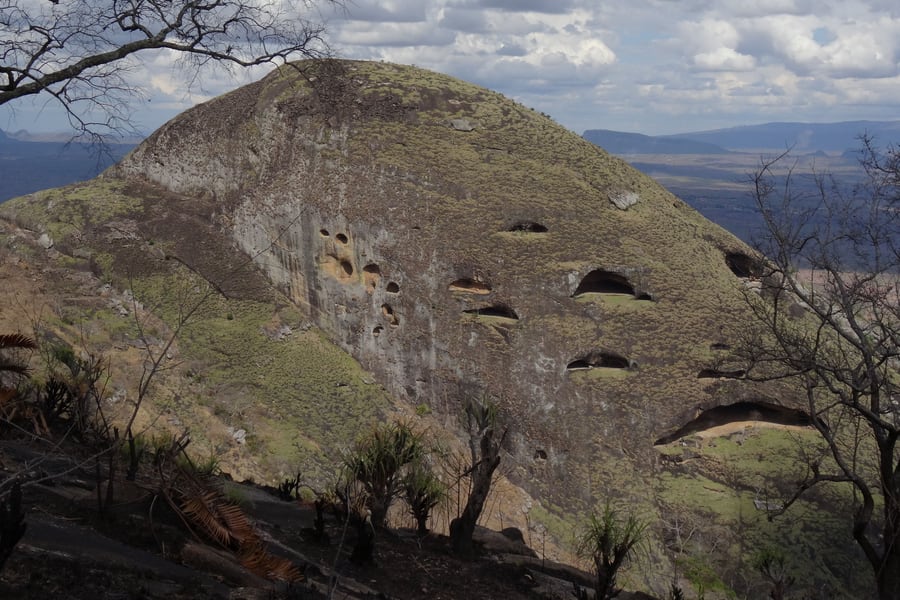
The stations come at fifteen to twenty kilometre intervals — Rapale, Mutivaze, Caramaja, Namina, Murrula, Caiaia — through miombo woodland and maize gardens, with rock rising out of the flat every few minutes. At kilometre 315 the line reaches Ribáuè, and the best of the scenery is here: the Serra de Ribáuè, two granite inselbergs separated by a valley about three kilometres wide, the western summit 1,777 metres and the eastern one called Mount M'pàluwé. Dry miombo covers the middle slopes, the tops are bare rock, and there are pockets of Afromontane forest in between. It is one of a chain of granite islands running south-east through Nampula and Zambézia towards Mount Namuli.
Iapala, Malema and the long gap
Past Outeiro and Iapala the railway crosses its emptiest stretch: 39 kilometres with no station at all, the longest gap on the line, before Riane and Namecuna. Malema, at kilometre 429, is the largest place between the two ends — a district town living on sorghum, maize, groundnuts and onions, and the province of Nampula gives way to Niassa a little west of it. Then Tui, the two Nacatas, Mutuali, Lúrio and Murissa.
Into Cuamba
Cuamba arrives at kilometre 533, ten and a half hours out. Until independence it was called Nova Freixo, and that is the name under which it appears in the agreements that made it a junction: this is where Malawi's railways joined the Nacala line, by the 101-kilometre link from Nkaya that President Hastings Banda inaugurated on 4 July 1970. Two more routes leave from here — north-west up the 262-kilometre branch to Lichinga, and west to Entre-Lagos on the Malawi frontier — and both carry passenger trains of their own, so Cuamba is the one place on this railway where a traveller has a choice of direction.
What runs it
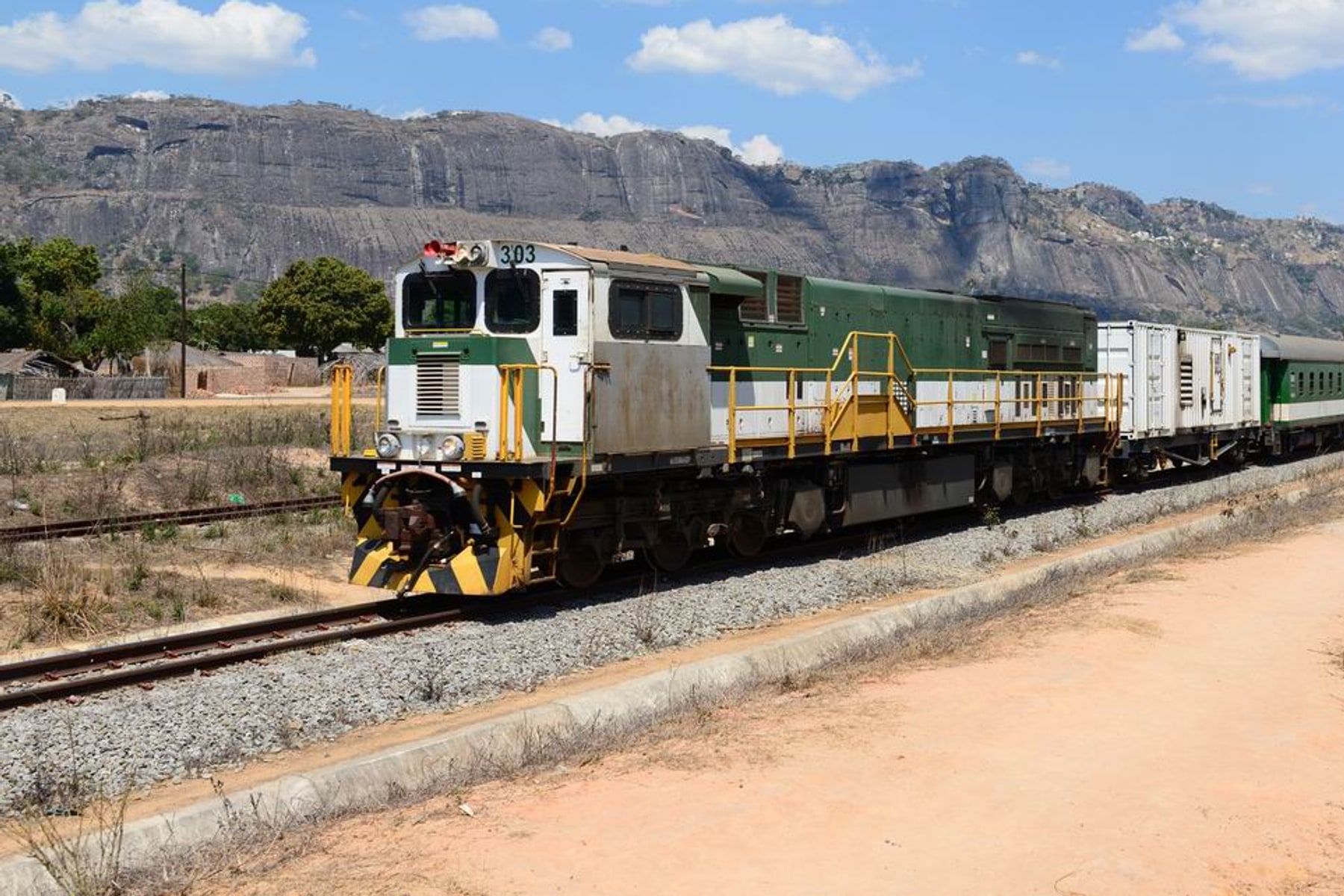
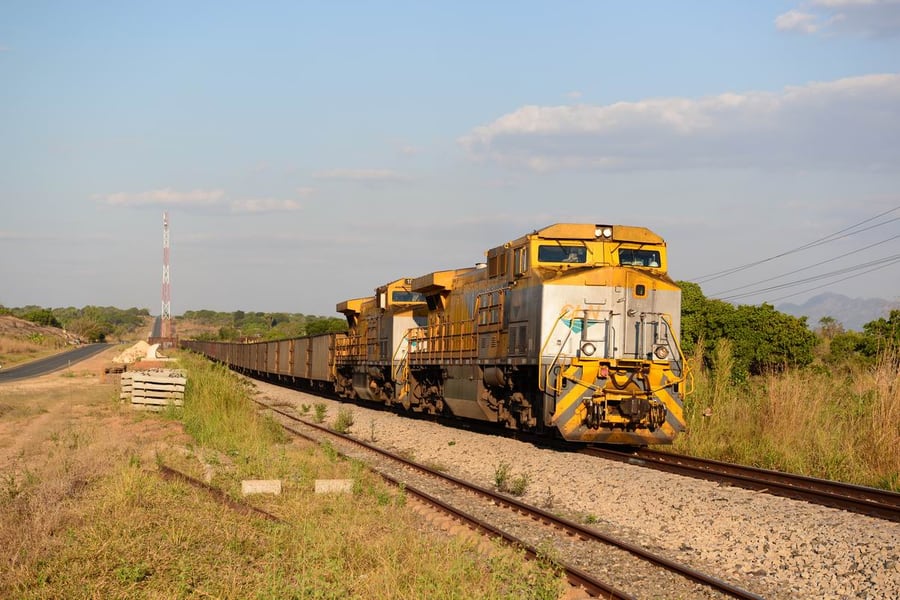
This is a mixed train and it looks like one: a diesel locomotive, a covered luggage wagon or a container flat, and then the coaches. The engine at the head of this page is number 303, in the corridor's green and white. On the same track behind it runs the heavy traffic of the Nacala Logistics Corridor — the 912-kilometre coal railway from Moatize, which crosses Malawi, re-enters Mozambique at Entre-Lagos and uses every metre of the Nampula–Cuamba section on its way to the terminal at Nacala-a-Velha. Coal trains of four locomotives and a very long rake of hoppers pass this journey between Rapale and Mutivaze.
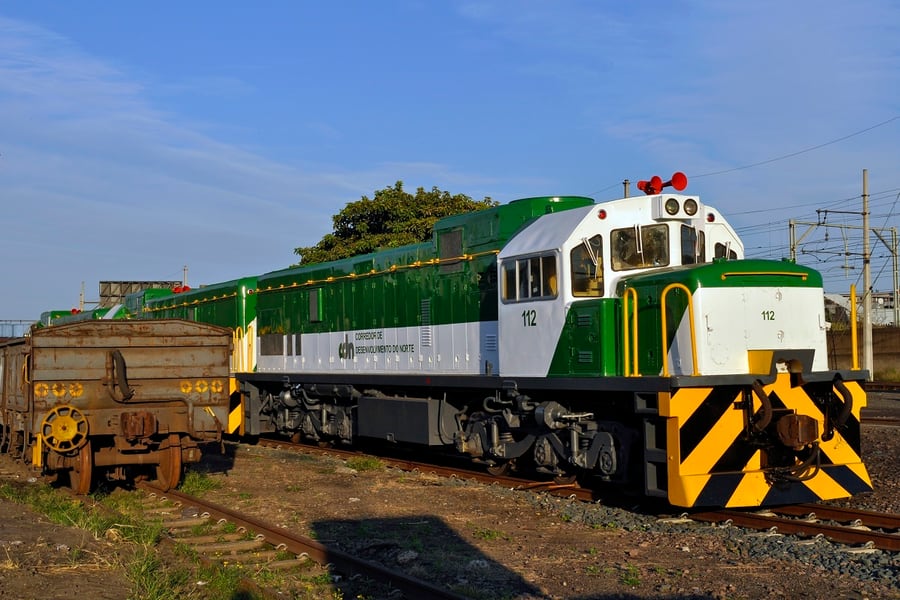
Older machines survive as well. The corridor took over a batch of Class 33 diesels from South Africa — General Electric U20Cs built for the South African Railways — and one of them, number 112, still wears the green and white down at Nacala.
There are two classes. Económica seats 88 to a carriage, three and three; executiva seats 56, two and two. Neither is air-conditioned, and on a ten-and-a-half-hour run in the dry season the difference between them is mostly elbow room.
Along the route
 David Santaolalla / Wikimedia Commons · CC BY 2.0 · 2009 · cropped
Out of Nampula at five
The train leaves in the dark from kilometre 192 of the line, and the first light shows a plain of maize gardens and miombo with granite domes standing out of it.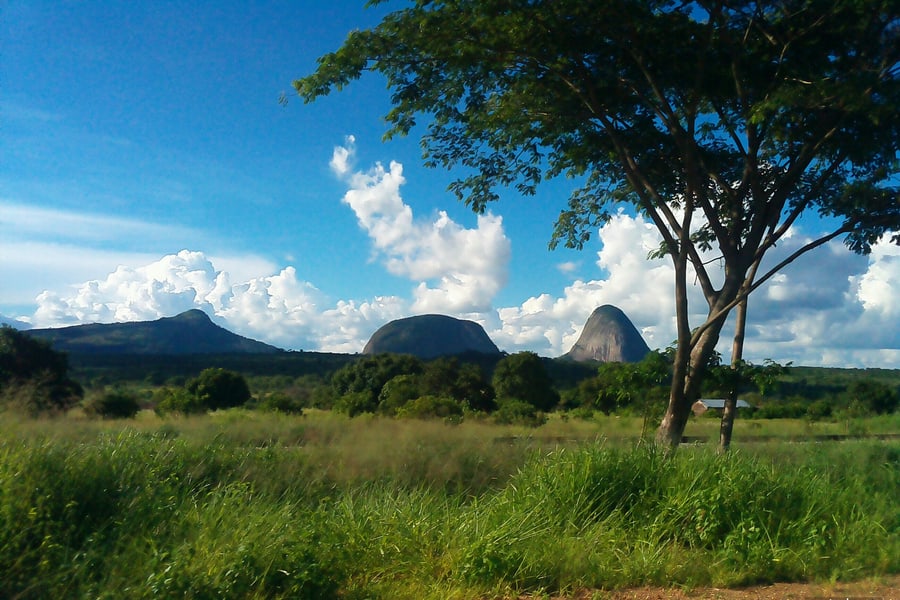 Hugo Oosterkamp / Wikimedia Commons · CC BY-SA 3.0 · 2016 · cropped
Along the Serra de Ribáuè
Kilometre 315, and the best of the scenery: two granite inselbergs split by a valley three kilometres wide, bare rock on top and miombo below.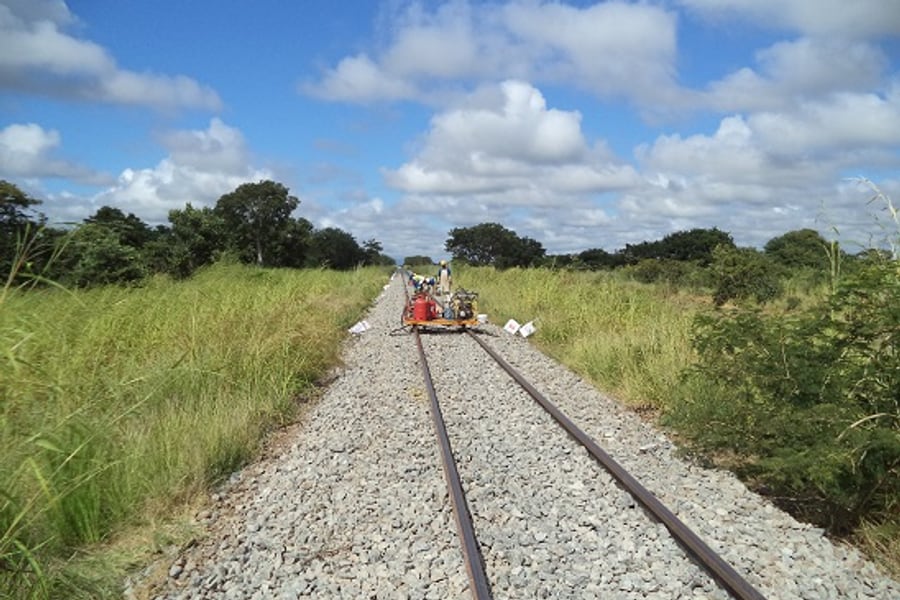 Paulobe / Wikimedia Commons · CC BY-SA 4.0 · 2014 · cropped
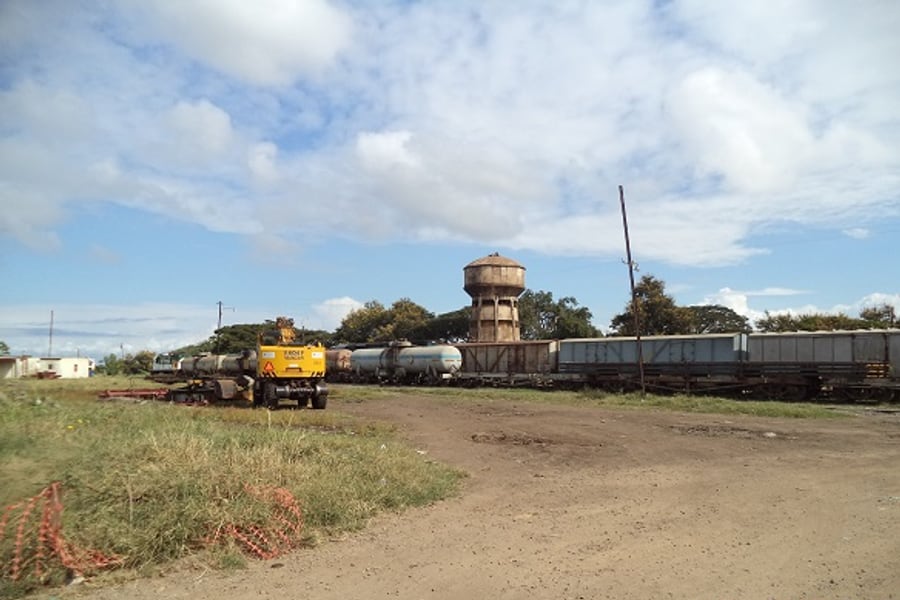
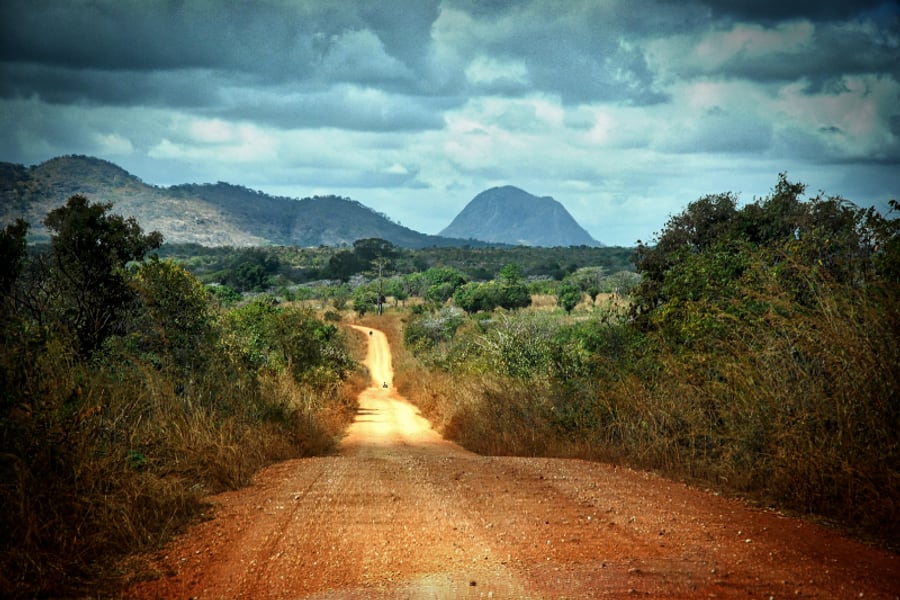
Into Cuamba at half past three
Past Malema the line crosses into Niassa and runs the last hundred kilometres through Mutuali and Murissa to the junction, ten and a half hours out.A bit of history
Culture & experiences along the way
 Matthias Hille / Wikimedia Commons · CC BY 4.0 · 2018 · cropped
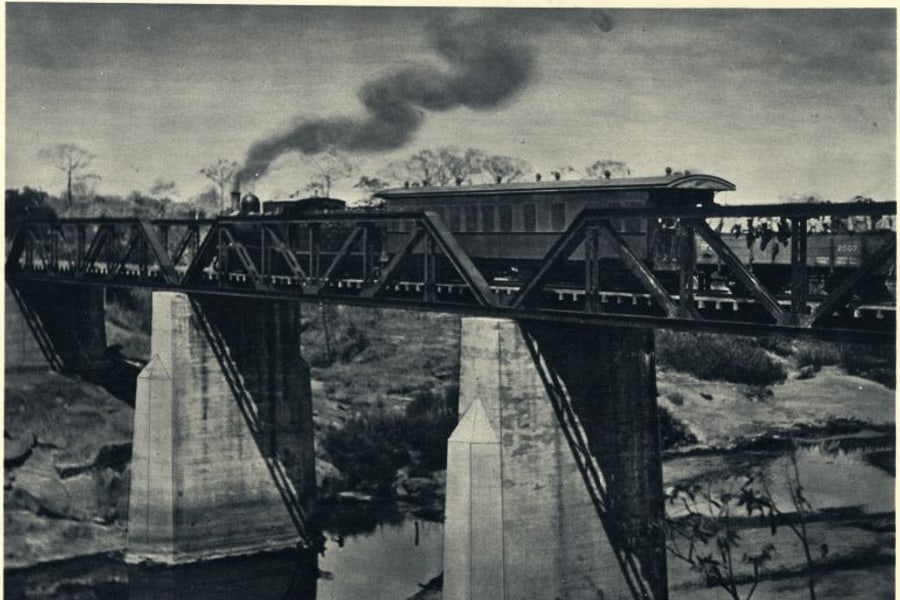
The coal railway on the same rails
Every metre of this journey is also part of the 912-kilometre corridor from the Moatize coalfield to the sea, which leaves Mozambique at Entre-Lagos, crosses Malawi and comes back at Cuamba. Loaded trains run four locomotives to a rake, and they have priority over the passengers.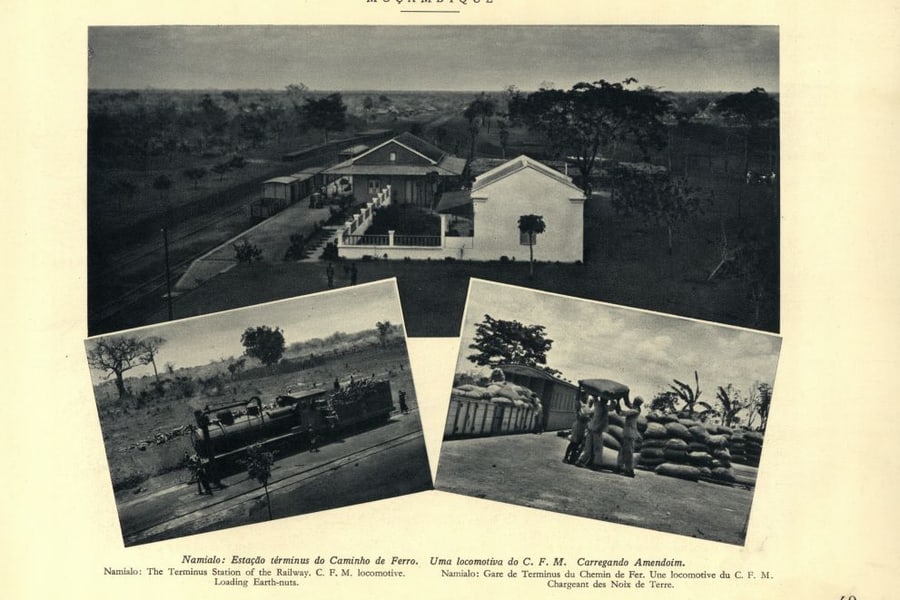 H. Graumann / I. Piedade Pó · Public domain · 1920s · cropped
What goes in the luggage wagon
You may keep 25 kilograms with you at your seat. Anything heavier is booked into the luggage wagon and charged by the piece — 60 meticais for a small basket, 130 for a sack, 195 for a large basket. Motorcycles, furniture and packaged food are accepted; firearms, gas cylinders, cattle and coffins are not. Sacks have gone down this line since the 1920s, when Namialo was the railhead and the load was groundnuts.Timetables
Nacala Logistics publishes one calendar for the whole northern network, and the Nampula–Cuamba train appears on it as a pair of workings, one in each direction, twice a week. There are no intermediate times in the operator's calendar — only the departure, the arrival and the days.
Nampula to Cuamba — Tuesdays and Saturdays
| Station | Departs | Arrives |
|---|---|---|
| Nampula | 05:00 | — |
| Cuamba | — | 15:30 |
Cuamba to Nampula — Wednesdays and Sundays
| Station | Departs | Arrives |
|---|---|---|
| Cuamba | 05:00 | — |
| Nampula | — | 15:30 |
Ten hours and thirty minutes for 341 kilometres, in both directions. The train runs all year; there is no seasonal timetable, and nothing on the other four days of the week.
The rest of the network
The same calendar carries three other routes, and they matter here because Cuamba is a junction and Nampula is the connection to the coast:
| Route | Days | Departs | Arrives |
|---|---|---|---|
| Nampula–Nacala | Thursdays and Sundays | 06:30 | 13:00 |
| Nacala–Nampula | Mondays and Fridays | 06:30 | 13:00 |
| Cuamba–Lichinga | Tuesdays and Saturdays | 06:30 | 16:30 |
| Lichinga–Cuamba | Wednesdays and Sundays | 06:30 | 16:30 |
| Cuamba–Entre-Lagos | Wednesdays | 08:00 | 11:00 |
| Entre-Lagos–Cuamba | Wednesdays | 08:00 | 11:00 |
Planning around it
One connection works and one does not. Arrive at Cuamba on a Tuesday afternoon and the train west to Entre-Lagos, on the Malawi frontier, leaves at 08:00 the following morning — the only onward working you can reach after a single night. Lichinga you cannot reach at all without a long wait: its train leaves Cuamba at 06:30 on Tuesdays and Saturdays, nine hours before this one arrives, so the next departure is three or four days later.
Coming home, the earliest return is the 05:00 the next morning: Tuesday's arrival connects into Wednesday's train back, and Saturday's into Sunday's. Anything else means waiting for the following pair.
As of September 2026, from the travel calendar published on nacalalogistics.com (opens in a new tab).
Tickets
Tickets are sold at the station, in cash, on named days only — and that is the part of this journey most likely to catch a visitor out. For the Tuesday and Saturday train out of Nampula the window opens on Mondays and Fridays, 07h–12h, at Nampula station. For the Wednesday and Sunday train back, the Cuamba window opens Tuesdays and Saturdays, 07h–12h and 14h–17h. There is no booking online and no reservation; the fare is the same in both directions.
Anything heavier than 25 kilograms of hand baggage is despatched separately, at the goods platform, which keeps its own hours and its own tariff by the piece. Turn up on a day the window is shut and there is nothing to be done: the next selling day is the next departure but one.
Book your tickets
Single, classe económica
Eighty-eight seats a carriage, three and three
The operator's published fare for all 341 kilometres, sold in cash at the station window.
Book Tickets (opens in a new tab, on nacalalogistics.com)via nacalalogistics.comSingle, classe executiva
Fifty-six seats a carriage, two and two
The same train and the same ten and a half hours, with room to put an elbow down.
Book Tickets (opens in a new tab, on nacalalogistics.com)via nacalalogistics.comBaggage, by the piece
Despatched at the goods platform, not carried to the seat
A small basket is 60 meticais, a sack 130 and a large basket 195, on the operator's own tariff.
Book Tickets (opens in a new tab, on nacalalogistics.com)via nacalalogistics.comRail Passes
No rail pass covers this journey, and none covers Mozambique. Interrail's Global Pass is a European product — its own page describes it as travel "in 33 countries" — and every One Country Pass on offer is European too, from Austria to Türkiye. Mozambique appears nowhere on either list. Nor does Nacala Logistics sell a network ticket of its own: its calendar prices each route separately, end to end, and that is the only ticket there is.
Nothing is lost by it. A pass exists to make many expensive journeys cheap, and this is one cheap journey that runs twice a week. The whole 341 kilometres costs 320 meticais in económica and 835 in executiva, bought in cash at the station window, and no product could improve on that.
Checked against interrail.com's Global Pass and One Country Pass pages, September 2026.
Places to Visit
This is a journey between two working towns rather than two sights, and most of what is worth stopping for is either at one end of it or standing over the middle of it in granite. Nampula is a regional capital of three-quarters of a million people and the base for everything in northern Mozambique; Cuamba is a junction town where three railways meet; and between them the Serra de Ribáuè rises 1,777 metres out of a plain that is otherwise flat.
Everything below is reachable on foot or by a short taxi ride from a station on this journey.
 Lino Victor Mpaque / Wikimedia Commons · CC BY-SA 4.0 · 2022 · cropped
Nampula
The third-largest city in Mozambique, about 743,000 people, 200 kilometres inland and the centre for the whole north of the country — the airport, the provincial hospital, the National Ethnology Museum and the markets that fill the train with traders. It is a low-built city of wide bairros on a plain ringed by rock outcrops, and that plain is the landscape the railway spends its first three hours crossing.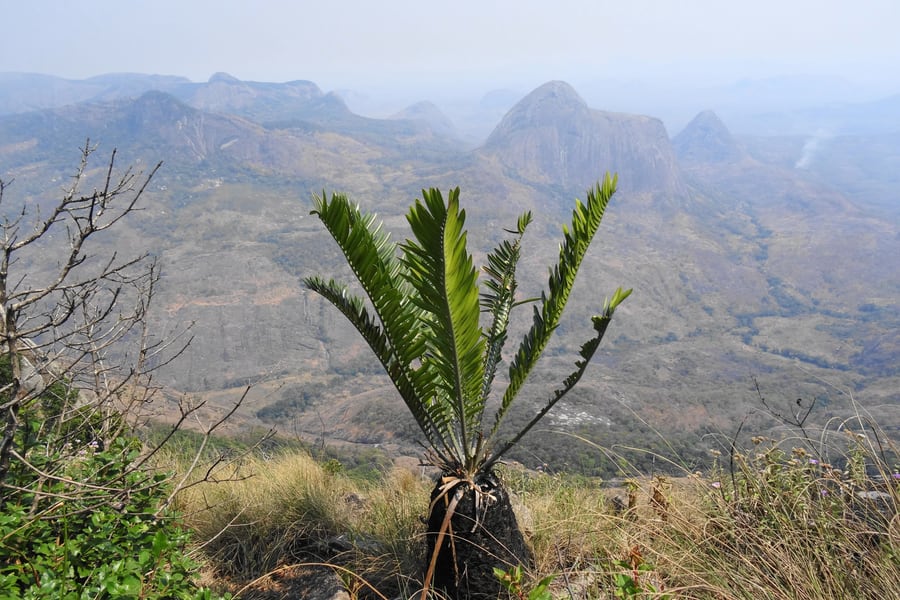 Ton Rulkens / Wikimedia Commons · CC BY-SA 2.0 · 2013 · cropped
The Serra de Ribáuè
Two granite inselbergs above the town of Ribáuè, at kilometre 315: the western summit 1,777 metres, the eastern one Mount M'pàluwé, and a valley about three kilometres wide between them. Dry miombo on the middle slopes, bare granite on top, Afromontane forest and cycad stands in the folds. It is one of the northern "sky islands", a chain that runs on to Mount Namuli and Mount Mabu.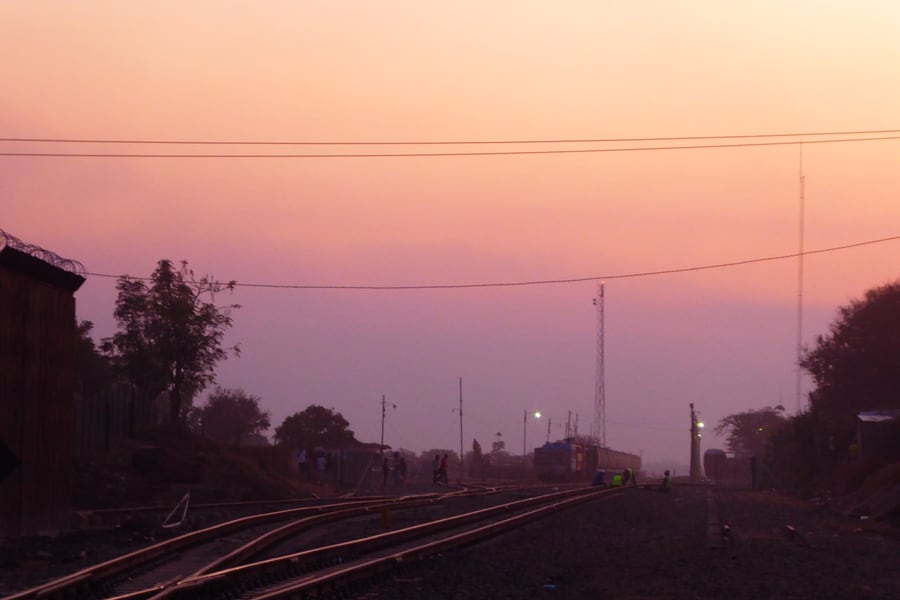 Cornelius Kibelka / Wikimedia Commons · CC BY-SA 2.0 · 2017 · cropped
Cuamba
A junction town in Niassa province, called Nova Freixo until independence, where three railways meet: the line in from Nampula, the 262-kilometre branch north-west to Lichinga, and the route west to Entre-Lagos and the Malawi frontier. It is the only place on this railway where a traveller has a choice of direction, and the reason anybody plans a night here.Where to Sleep
The timetable decides this for you. The train reaches Cuamba at half past three in the afternoon and the return leaves at five the next morning, so a night in Cuamba is not a choice but the shortest possible turnaround — and if you miss it, the next one is three or four days away.
Nampula has the only hotels on this route with any presence of their own: a handful of mid-range city hotels in the centre, within a short taxi ride of the station, and a few guesthouses. Cuamba has small guesthouses and lodges, none of which publishes a website; they are booked by telephone or on arrival, and the town has been used to travellers arriving by train since 1950. Neither station has anything at the platform itself.
Where to stay
Hotel Milénio
Avenida 25 de Setembro, central Nampula
In the middle of Nampula and three kilometres from the airport, with a restaurant, a gym and conference rooms.
Check Availability (opens in a new tab, on hotelmilenio.co.mz)via hotelmilenio.co.mzQuestions or corrections
Planning this trip and stuck on something, or spotted a time, fare or detail that has changed? Send us a message about Nampula to Cuamba. We read every one, and we update this page when something has changed.