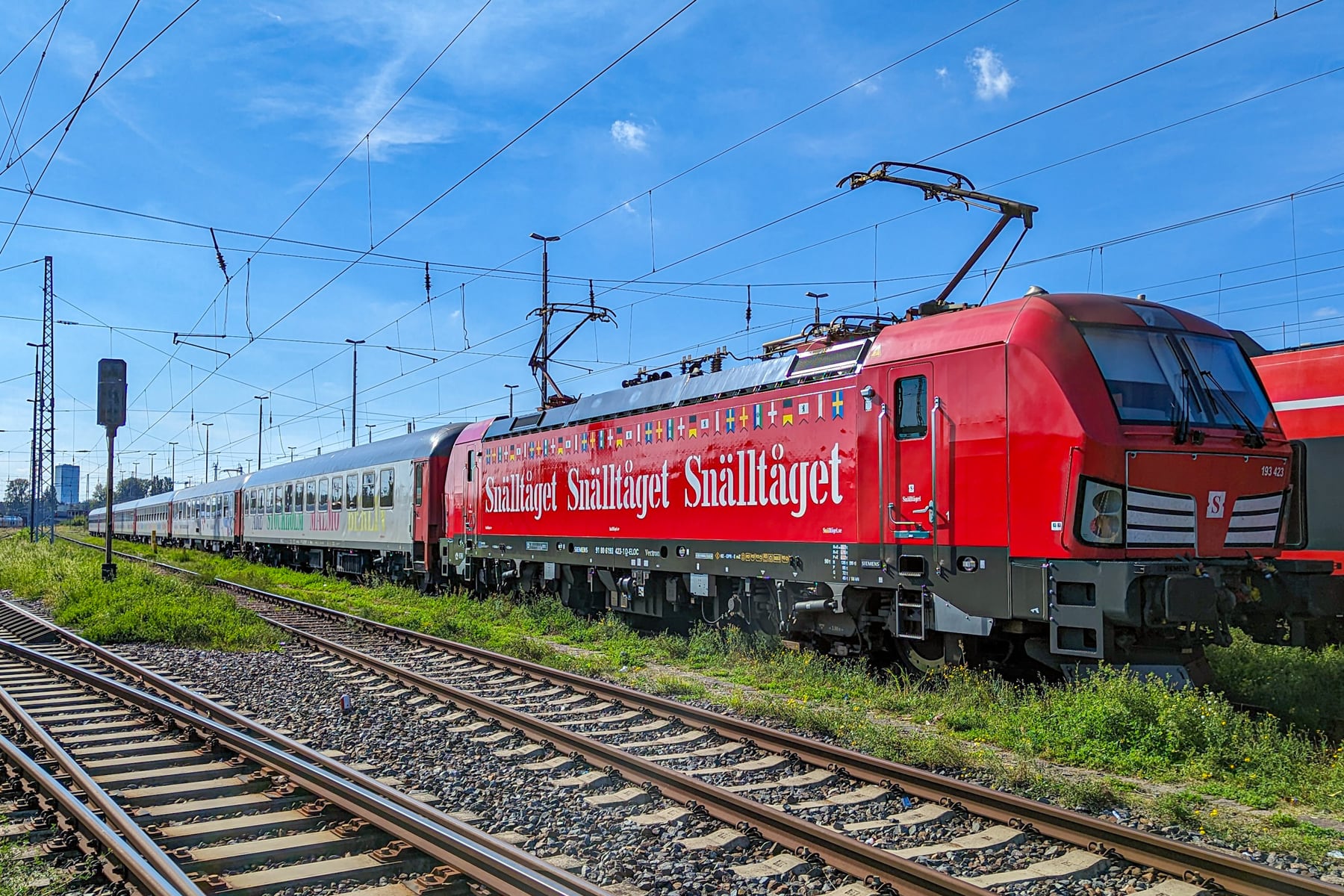
Night Train to Berlin
Bvcmz248.5 / Wikimedia Commons · CC0 · 2025 · cropped
- DistanceSweden · Denmark · Germany
- Duration16 hr 10 min overnight
- Best seasonAfter Easter to early January
Introduction
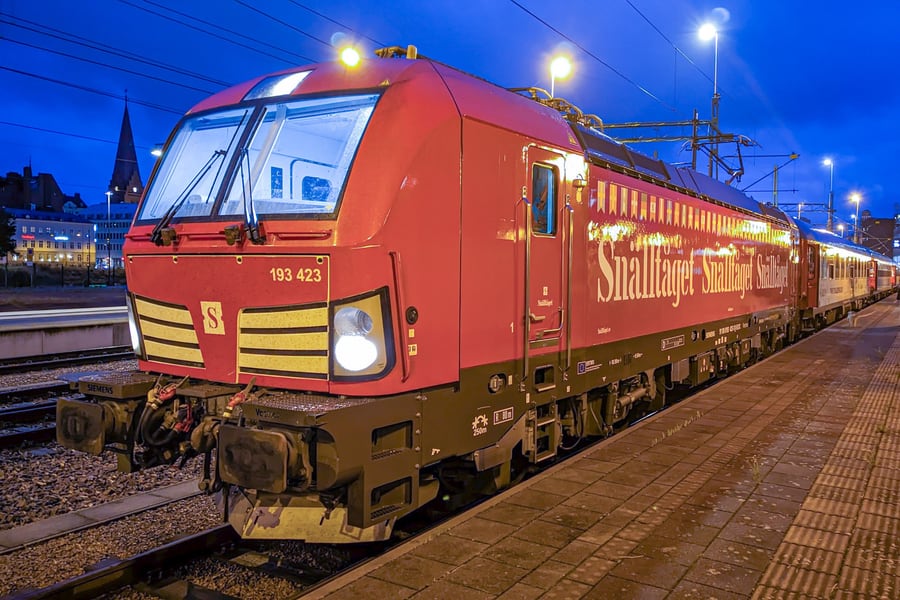
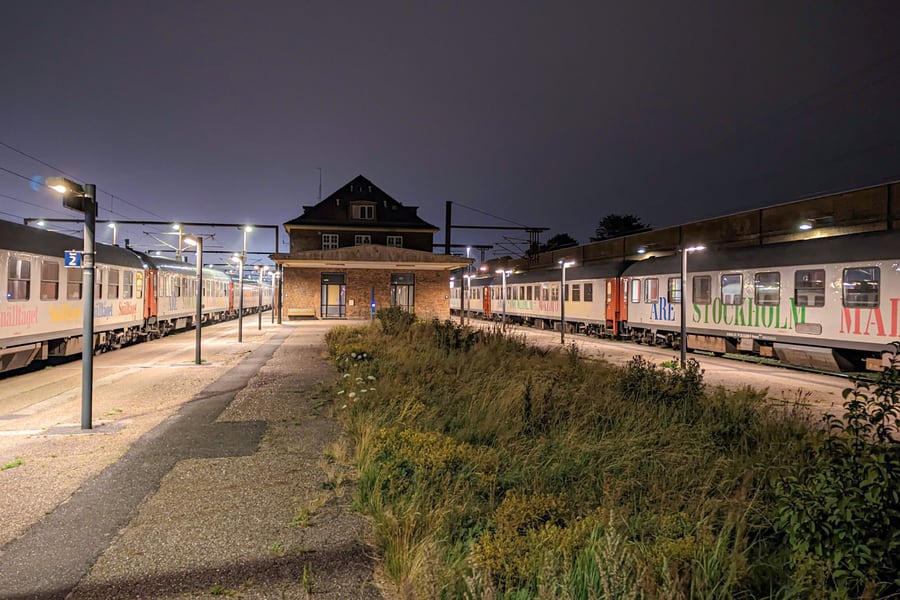
At 16:25 a red Vectron locomotive pulls out of Stockholm Central with a row of couchette cars, and sixteen hours later the same carriages stand at the platform in Berlin Hauptbahnhof. In between they run the length of southern Sweden, cross the Öresund to Denmark, go under and over the Great Belt, and reach Hamburg at five in the morning.
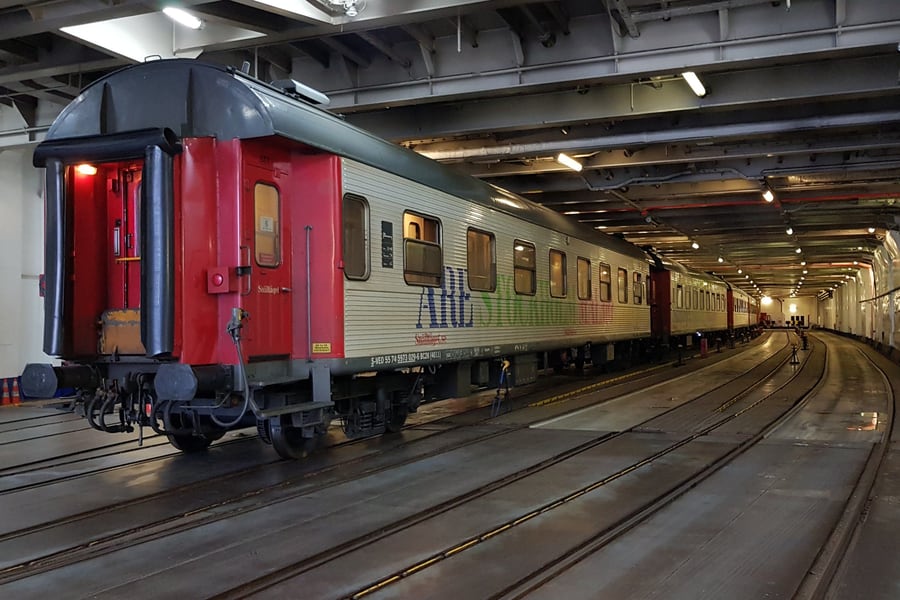
The train belongs to Snälltåget, a private operator owned by Transdev. It is an open-access company: it owns no track and has no state contract, and it runs the trains it can sell. It ran its first train in 2007, sent its summer night train on to Berlin in 2012, and until 2019 took the carriages across the Baltic on the train ferry from Trelleborg to Sassnitz. When that ferry stopped in 2020, the train was rerouted by land through Denmark.
It is not the only sleeper on the route: a EuroNight also runs between Stockholm and Berlin. Snälltåget's offers seats, six-berth couchettes and private compartments, and carries a restaurant car between Malmö and Stockholm.
The Journey
The locomotive is a Siemens Vectron, class 193, in Snälltåget's red with the name painted three times along each side; the company has run its own since September 2016. Behind it come couchette cars, among them the Bvcmz type bought from Germany in 2019, which once ran on Deutsche Bahn's CityNightLine. Each compartment has six berths, three to a side, which passengers make up themselves with the pillows, sheets and duvets left in the compartment.
Through Sweden by daylight
The first five and a half hours are the Southern Main Line, in the evening light for much of the year: south from Stockholm through Södertälje to Norrköping and Linköping, then up into the forests and lakes of Småland at Nässjö and Alvesta, and down into Skåne at Hässleholm, Lund and Malmö, reached at 21:55. Between Malmö and Stockholm the train carries Krogen, the restaurant car; south of Malmö there is a kiosk instead, selling drinks, snacks and the breakfast bags ordered in advance.
The two crossings
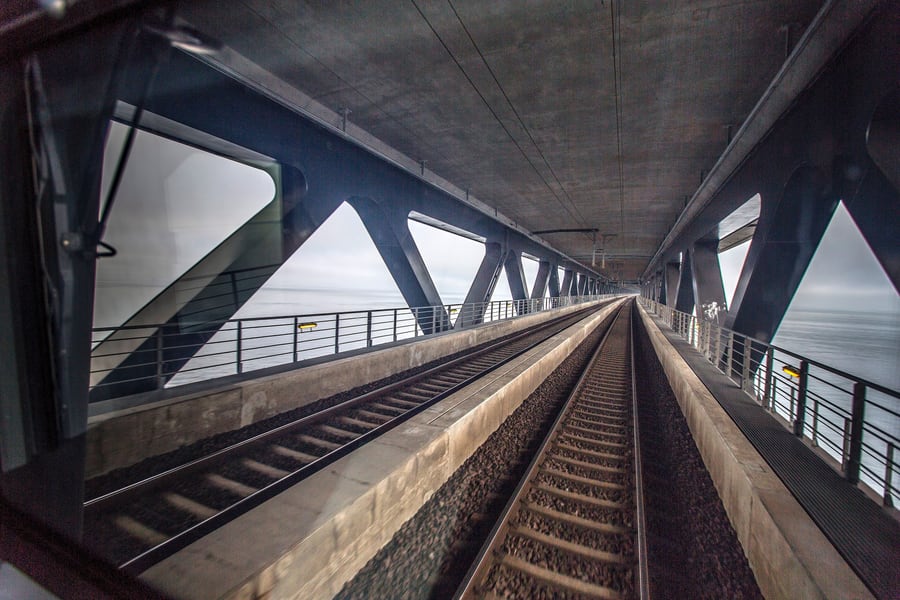
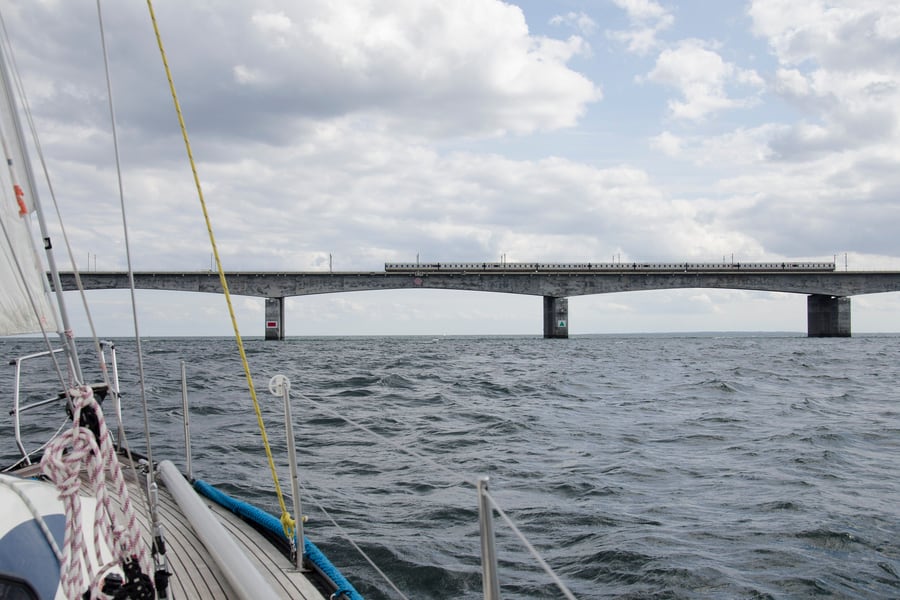
From Malmö the train takes the Öresund Bridge, opened on 1 July 2000, on its lower deck beneath the motorway, and stops at København Syd at 22:32. It does not call at Copenhagen Central. Across Zealand it reaches the Great Belt, where it runs through the East Tunnel, 8 kilometres under the sea, to the island of Sprogø, and over the 6.6-kilometre West Bridge to Funen — a fixed link opened to trains on 1 June 1997, which replaced the ferries that had crossed here since 1883.
Jutland, the border and Hamburg
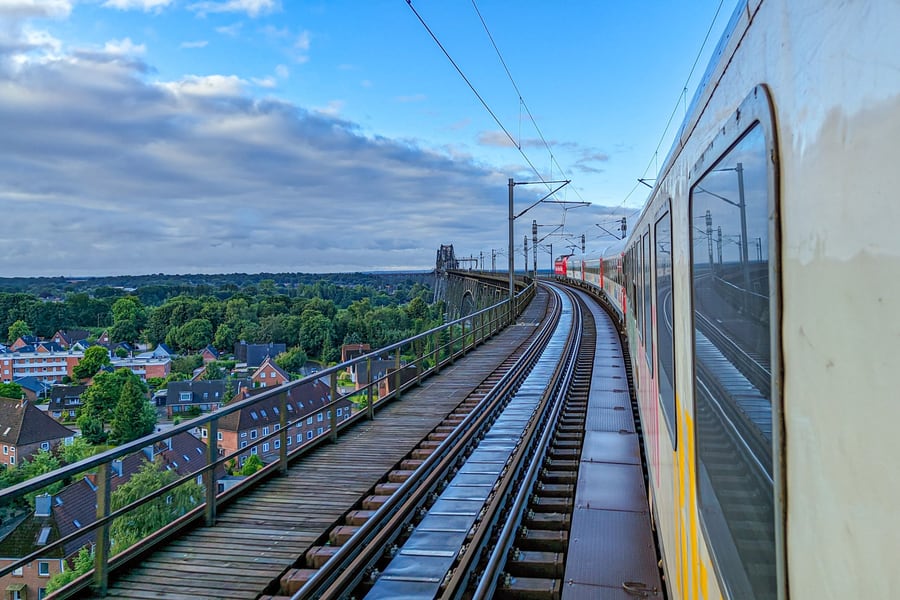
The night is spent crossing Funen and Jutland to Padborg, the Danish border station, where the locomotive is changed in the small hours. Border police check documents on this route, which is why every passenger, children included, must carry a passport or an EU national identity card. In Schleswig-Holstein the line loops round on itself to climb onto the Rendsburg High Bridge, 42 metres above the Kiel Canal, and comes down to Hamburg Hauptbahnhof at 05:06. The last three and a half hours run east across the plain to Berlin, arriving at 08:35; in the autumn of 2026 the Friday departures carry on to Dresden, at 11:00.
The other sleeper, to the Alps
Snälltåget runs a second night train, from Malmö to the Austrian Alps, and it is a holiday train rather than an everyday one. It leaves Malmö on Friday afternoons, crosses Denmark by Odense and Kolding to Hamburg, and runs through the night to Austria: St. Johann im Pongau at 10:16, then Zell am See, Kitzbühel and Innsbruck at 13:02, coming back on the Saturday a week later. In the 2026/27 winter it runs from 18 December to 14 March, with buses on to the ski resorts; in summer 2026 it ran on the Fridays of July, by way of Munich and Salzburg. Berths and compartments are normally sold as returns.
Along the route
 Marhu103 / Wikimedia Commons · CC BY-SA 4.0 · 2018 · cropped
The train on the ferry
Until 2019 the couchettes were shunted aboard Stena Line's train ferry at Trelleborg and shipped to Sassnitz on Rügen. Stena suspended the route on 14 March 2020 and closed it for good, and the train now goes round by land, through Denmark.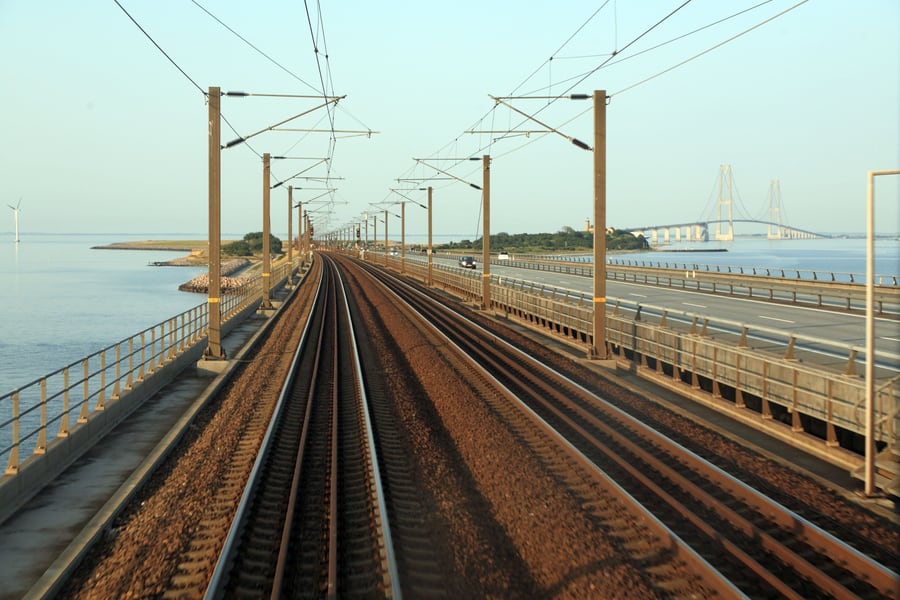 Falk2 / Wikimedia Commons · CC BY-SA 3.0 · 2013 · cropped
Under and over the Great Belt
Between Zealand and Funen the train runs 8 km under the sea in the East Tunnel to the island of Sprogø, then 6.6 km over the West Bridge. Trains have crossed this way since June 1997; the suspension bridge beside it carries only the road.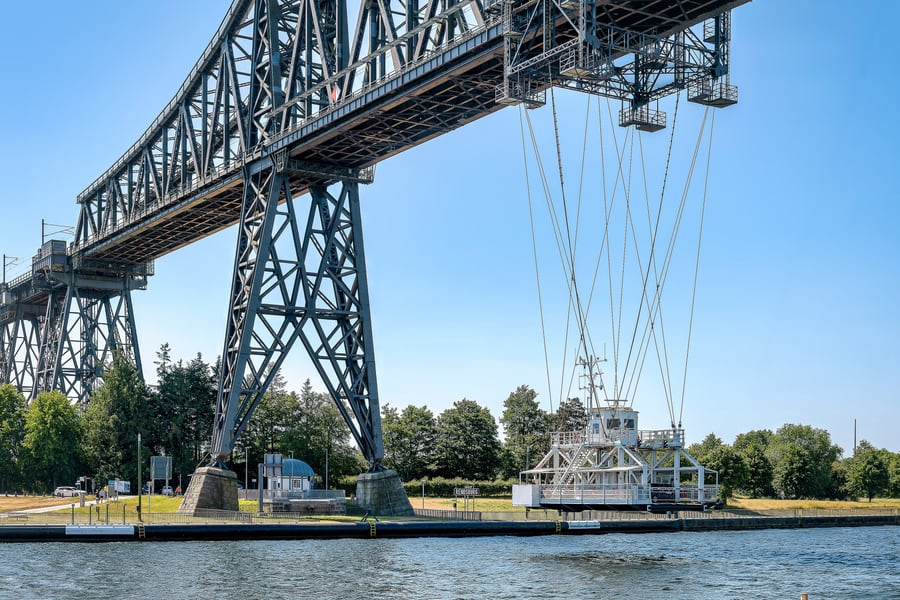 Rolf Kranz / Wikimedia Commons · CC BY-SA 4.0 · 2023 · cropped
The Rendsburg loop
To clear the Kiel Canal the railway climbs onto a steel viaduct 2.5 km long, built in 1911–13, crossing 42 m above the water after a full loop on the north bank. Beneath it hangs a transporter bridge, its gondola back in service since March 2022.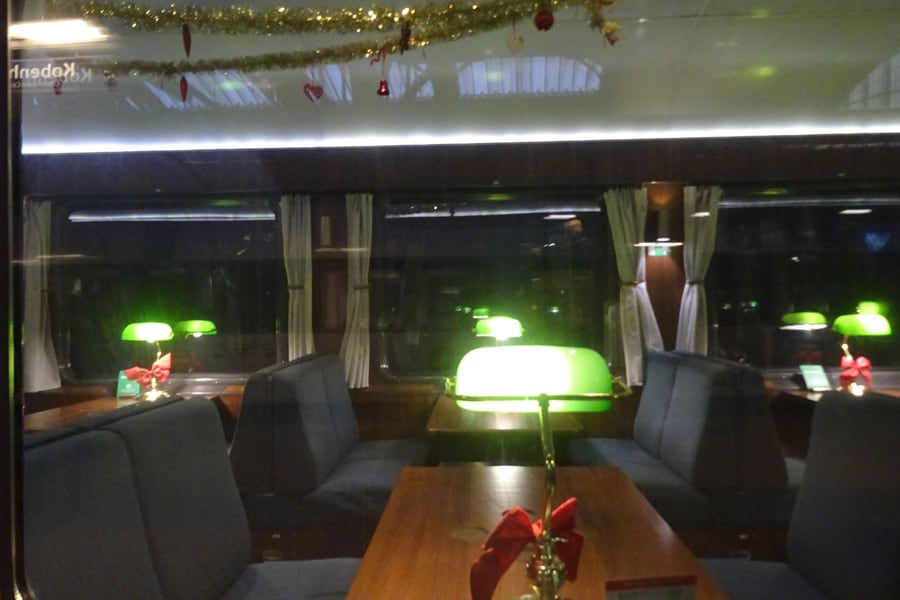 Leif Jørgensen / Wikimedia Commons · CC BY-SA 4.0 · 2025 · cropped
Krogen
Between Malmö and Stockholm the train carries Krogen, Snälltåget's restaurant car, with green-shaded table lamps and tables that can be booked ahead. Here it is dressed for Christmas on a Copenhagen–Stockholm working in November 2025.A bit of history
Culture & experiences along the way
 Maria Eklind / Wikimedia Commons · CC BY-SA 2.0 · cropped
Cinnamon buns and fika
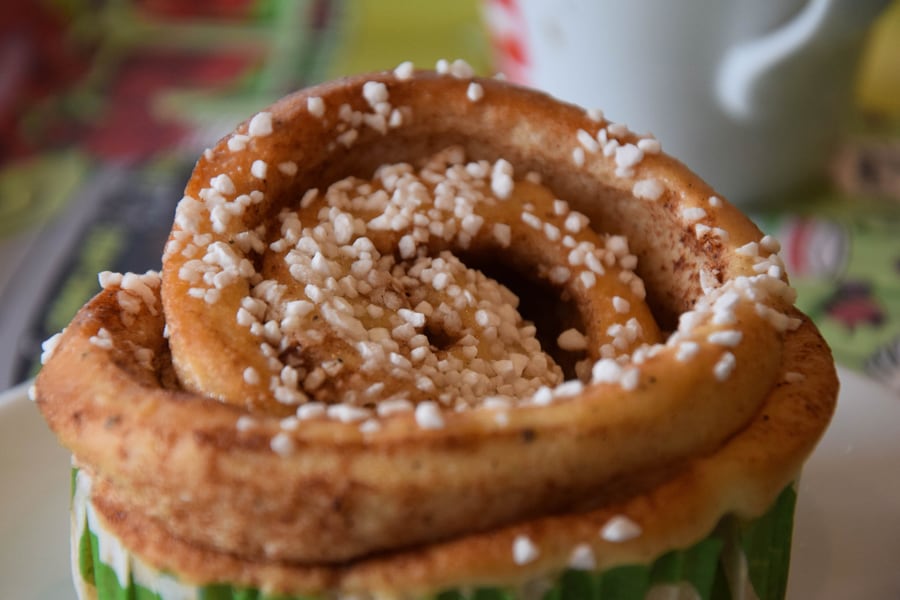
The Swedish kanelbulle took its modern form after the First World War: a yeast bun rolled with butter, sugar and cinnamon, usually with cardamom in the dough and pearl sugar on top. It belongs to fika, the coffee break, and 4 October has been Kanelbullens dag since 1999.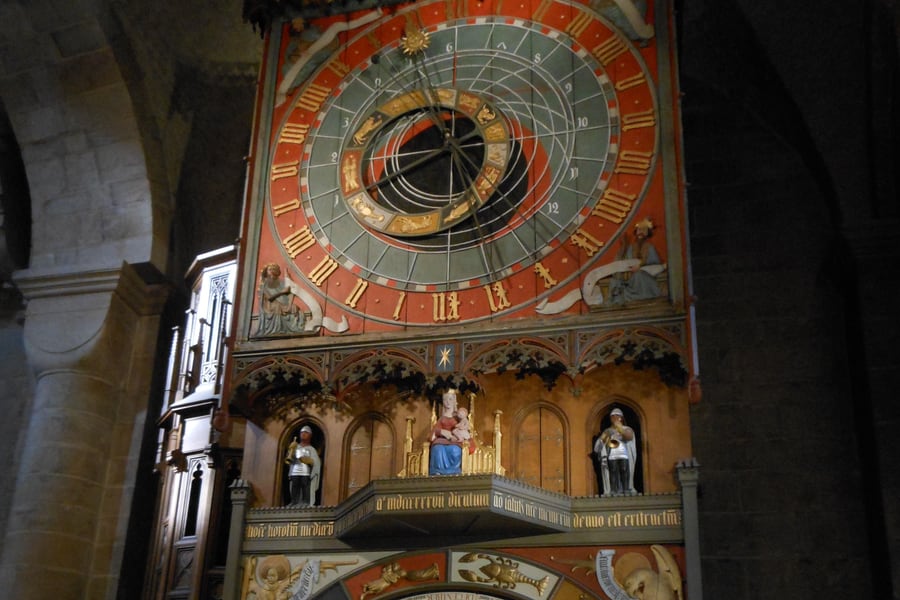 LeJC / Wikimedia Commons · CC BY-SA 3.0 · 2013 · cropped
The clock that plays
Lund Cathedral's astronomical clock was probably made around 1423–25 and restored between 1909 and 1923. Twice a day two heralds raise their trumpets, the Three Kings parade past the Virgin and Child, and a small organ plays In dulci jubilo.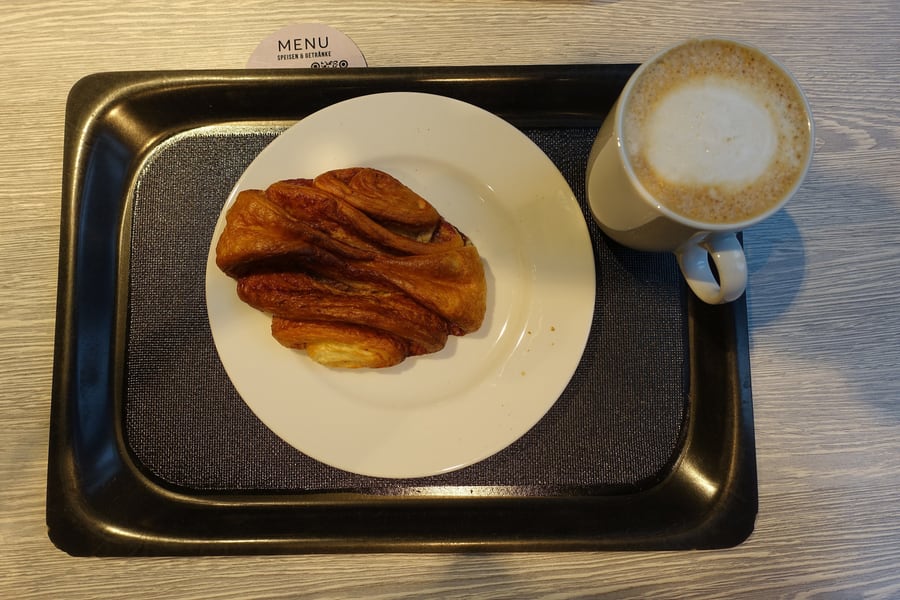 Wikiolo / Wikimedia Commons · CC BY-SA 4.0 · 2023 · cropped
Hamburg's breakfast pastry
The Franzbrötchen is laminated yeast dough rolled with sugar and cinnamon, then squashed in the middle so the filling caramelises as it bakes. In 1825 a Hamburg baker advertised Franzschbrod made to the recipe of the French baker in Altona. It is eaten for breakfast or with coffee. Berlinuno / Wikimedia Commons · CC BY-SA 4.0 · 2013 · cropped
Currywurst
Herta Heuwer is credited with the first currywurst, sold from her stand in Charlottenburg in 1949: fried sausage under a sauce of tomato, curry powder and spices that she registered as Chillup in 1951. It is sold at snack stands across the city, with chips or a roll.Timetables
The train runs on set days through the autumn and around Christmas and New Year, pauses after 7 January, and returns after Easter. Every seat and berth is reserved. The times below are Snälltåget's own 2026 timetable, which it marks as preliminary because track work can move them, read in October 2026.
Stockholm to Berlin
| Stockholm C | Norrköping | Linköping | Nässjö | Lund | Malmö | København Syd | Hamburg Hbf | Berlin Hbf |
|---|---|---|---|---|---|---|---|---|
| 16:25 | 17:53 | 18:20 | 19:15 | 21:15 | 21:55 | 22:32 | 05:06 | 08:35 |
The train also calls at Södertälje Syd, Alvesta, Hässleholm and Eslöv. On Fridays until 11 December it runs on to Dresden, arriving at 11:00.
Berlin to Stockholm
| Berlin Hbf | Hamburg Hbf | København Syd | Malmö | Lund | Nässjö | Linköping | Norrköping | Stockholm C |
|---|---|---|---|---|---|---|---|---|
| 21:09 | 23:59 | 06:03 | 06:30 | 08:28 | 10:25 | 11:21 | 11:48 | 13:17 |
On Sundays until 6 December it starts from Dresden at 18:40.
Days of running
| From Sweden | From Germany | |
|---|---|---|
| 2 November – 11 December | Wednesday to Friday, and Sunday | Monday, Thursday, Friday and Sunday |
| Christmas and New Year | 13–16, 20–21 and 27–28 December; 3–6 January | 13–17, 21–22 and 28–29 December; 4–7 January |
Times are published by the operator: Snälltåget · Night train to Berlin (opens in a new tab).
Tickets
There are three ways to travel: a seat, from 399 SEK between Malmö and Berlin and 499 SEK from Stockholm; a berth in a shared six-berth compartment; or a private compartment for your own party of up to six. From 2 November to 17 December a private compartment on a flexible ticket costs 1,499 SEK for two between Malmö and Berlin, or 1,999 SEK from Stockholm. Berth prices vary by date and are shown when booking.
Tickets are booked on snalltaget.se. A breakfast bag costs 99 SEK ordered in advance, 109 on board. Checked against Snälltåget, October 2026.
Book your tickets
A seat to Berlin
From 399 SEK from Malmö · 499 SEK from Stockholm
A seat in an open saloon or a six-seat compartment, the cheapest way through the night.
Book Tickets (opens in a new tab, on snalltaget.se)via snalltaget.seA private compartment
From 1,499 SEK for two, Malmö–Berlin
A six-berth compartment for your own party, with bed linen, at the November–December price.
Book Tickets (opens in a new tab, on snalltaget.se)via snalltaget.seRail Passes
A pass gets you on, but a reservation is still to pay, and it is not small.
Interrail's table of the companies a pass is valid with — checked in October 2026, when it carried a last updated 21 October 2026 stamp — lists Snälltåget's night train under Germany and Denmark as covered by a Global Pass, with a reservation compulsory, and not by those countries' One Country Passes. Snälltåget's own page agrees: the whole journey must fall within the pass's validity, and on a Flexi pass the night counts as one travel day. A Germany pass covers only the part of the trip inside Germany; a Sweden pass covers Sweden, and in 2026 the run to Copenhagen too.
Pass holders book on snalltaget.se. Stockholm–Berlin costs 199 SEK for a seat, 499 SEK for a berth or 1,999 SEK for a private compartment in the low season, and 399, 849 and 3,499 SEK in the high season. A private compartment normally needs four pass holders. Against a full seat fare of 499 SEK, a pass is worth carrying only as part of a longer trip across Europe.
Prices and conditions read on interrail.com (opens in a new tab) and snalltaget.se (opens in a new tab) in October 2026.
Places to Visit
The times below are taken from the 16:25 from Stockholm, which is at Norrköping by 17:53, Lund by 21:15, Hamburg by 05:06 and Berlin by 08:35.
They come in the order the railway meets them: the old town the train leaves from, the mill district of Norrköping, the Romanesque cathedral at Lund, the warehouse quarter of Hamburg's port, and at the end of the line the museums on the Spree.
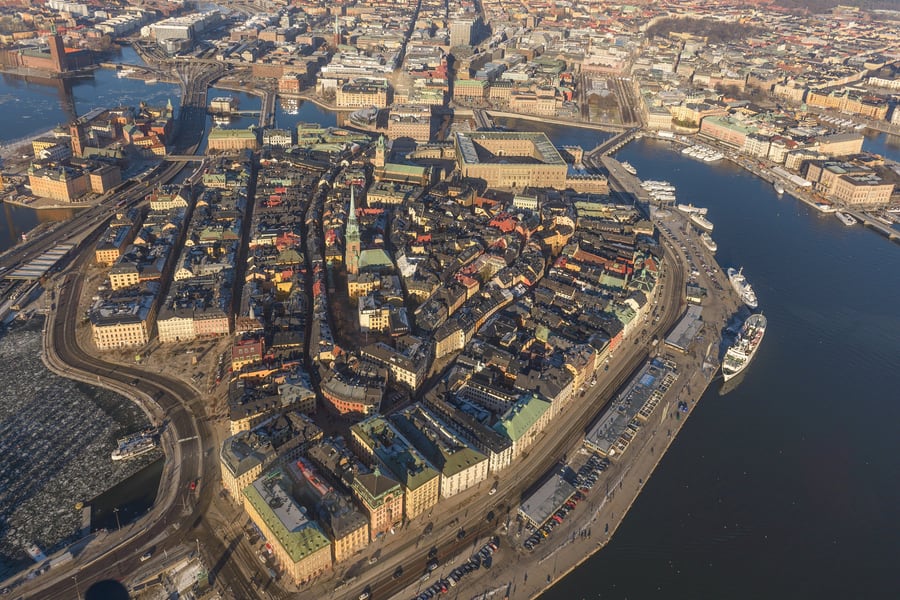 Arild Vågen / Wikimedia Commons · CC BY-SA 3.0 · 2013 · cropped
Gamla stan
Stockholm's old town fills the island of Stadsholmen and its islets: medieval alleys and cobbled streets that date back to the 13th century, built under a strong North German influence. Stortorget, the square at its centre, is ringed by old merchants' houses, and the Royal Palace, the work of Nicodemus Tessin and Carl Hårleman, stands within it.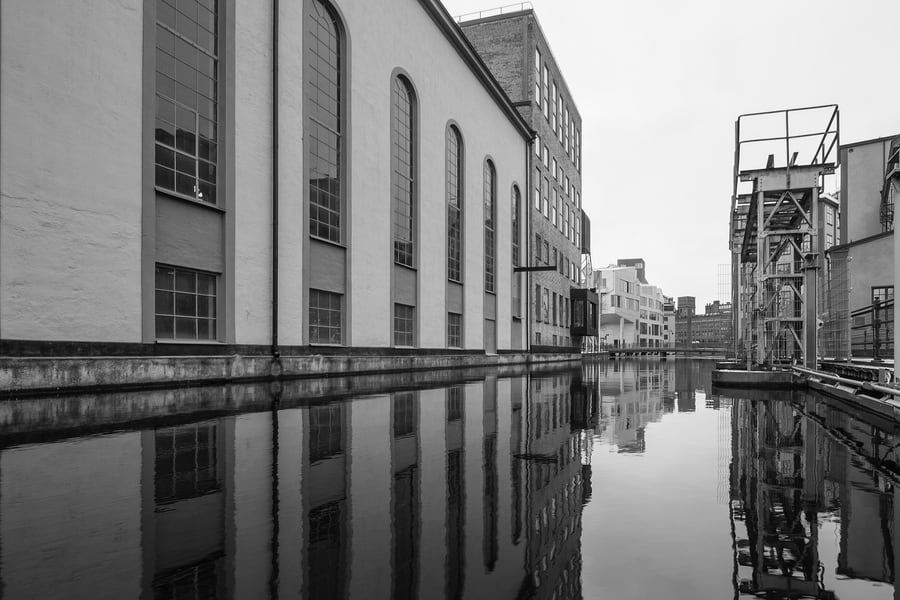 Arild Vågen / Wikimedia Commons · CC BY-SA 4.0 · 2017 · cropped
Norrköping's industrial landscape
Water power from the falls of the Motala ström built Norrköping into a textile town, and in the 17th century it was Sweden's second city. In 1950 its 54 factories employed 6,600 people; by 1970 ten were left. The mill buildings still line the river, which has a walkway along both banks.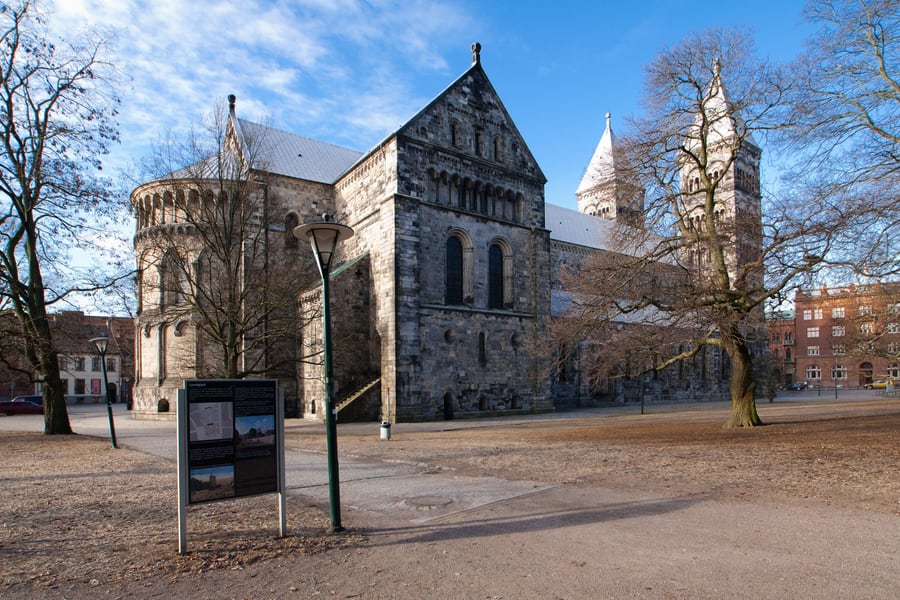 Francois Polito / Wikimedia Commons · CC BY-SA 3.0 · cropped
Lund Cathedral
Built when Lund belonged to Denmark, as the seat of an archbishop for all the Nordic countries, the cathedral had its main altar consecrated in 1145 and is one of the oldest stone buildings still in use in Sweden. It has been called the most powerful Romanesque building in the north, and in its crypt stand two carved figures known as the giant Finn and his wife.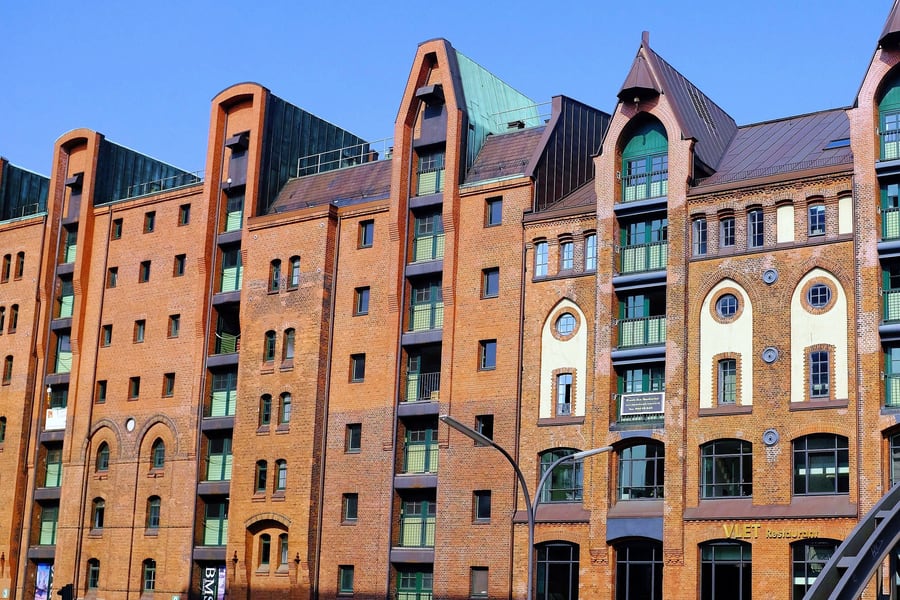 Spyrosdrakopoulos / Wikimedia Commons · CC BY-SA 4.0 · 2014 · cropped
The Speicherstadt
Built between 1883 and 1927 as a free port where goods could change hands without paying customs, the Speicherstadt is the largest warehouse district in the world standing on timber piles. Its brick warehouses run for 1.5 km along canals in the port, and with the Kontorhaus District it became a UNESCO World Heritage Site in 2015.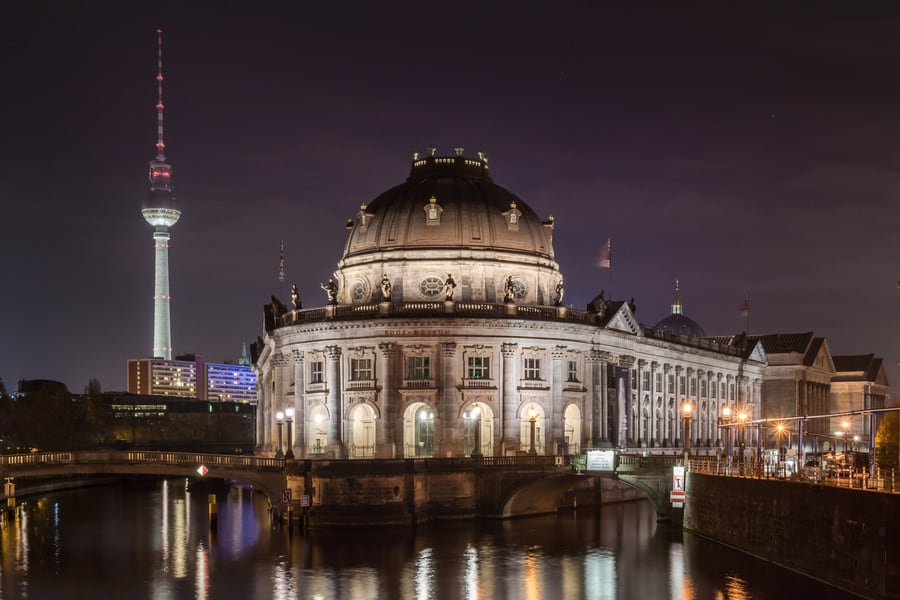 Mathias Krumbholz / Wikimedia Commons · CC BY-SA 3.0 · 2012 · cropped
Museum Island
Five museums built between 1830 and 1930 fill the northern tip of the island in the Spree, a UNESCO World Heritage Site since 1999. At its point stands the Bode-Museum, built from 1898 to 1904 to Ernst von Ihne's design, which reopened in 2006 with its sculpture collection, Byzantine art and coin cabinet.Where to Sleep
The train leaves Stockholm at 16:25 and the northbound one arrives at 13:17, so a night in the capital at either end is the natural addition. Everything described is what the house says about itself on its own site, read in October 2026. No price, grade or star count appears here, because none has been verified.
Where to stay
 Arild Vågen / Wikimedia Commons · CC BY-SA 4.0 · 2018 · cropped
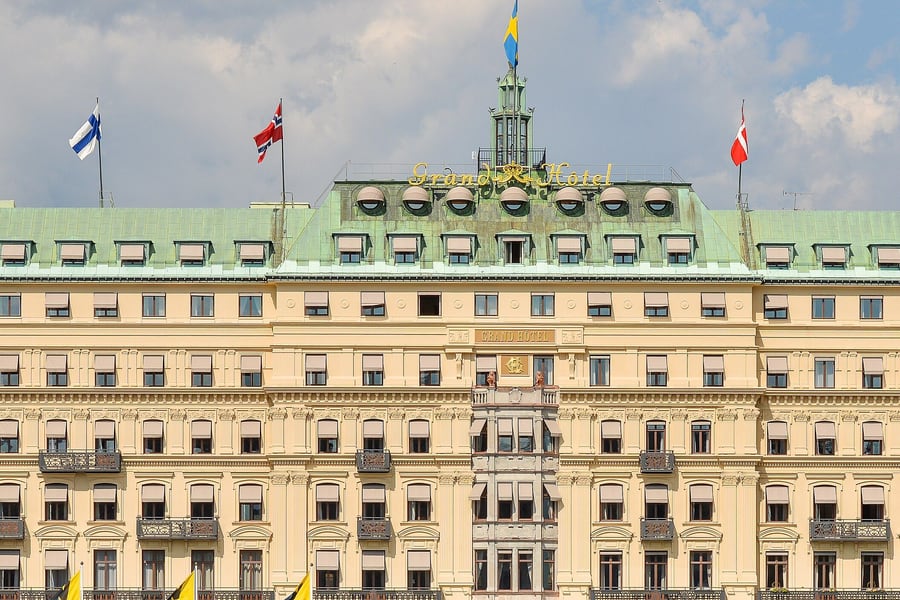
Grand Hôtel
Södra Blasieholmshamnen 8, Stockholm
On the waterfront since 1874, looking across to the Royal Palace and Gamla stan.
Check Availability (opens in a new tab, on grandhotel.se)via grandhotel.seQuestions or corrections
Planning this trip and stuck on something, or spotted a time, fare or detail that has changed? Send us a message about Night Train to Berlin. We read every one, and we update this page when something has changed.