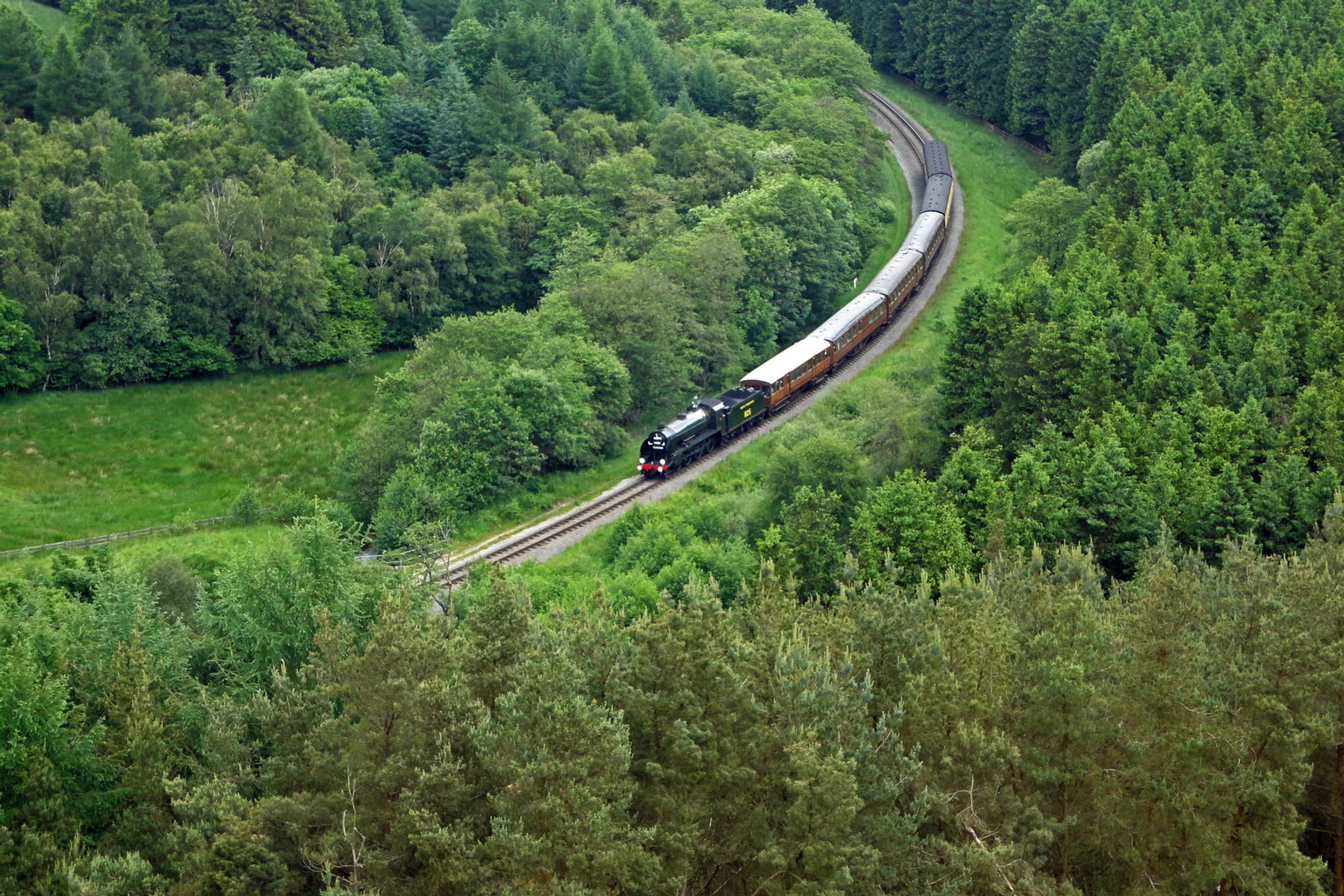
The North Yorkshire Moors Railway
Scott Robinson / Wikimedia Commons · CC BY-SA 2.0 · cropped
- Distance24 miles, Pickering to Whitby
- DurationAbout 1 h 50 min
- Best seasonLate March to 1 November · daily in summer
Introduction
The North Yorkshire Moors Railway runs 24 miles from the market town of Pickering to the harbour at Whitby, straight across the North York Moors National Park. Most trains are hauled by steam, the rest by heritage diesels.
George Stephenson surveyed the route, and the Whitby & Pickering Railway opened in 1836 with horses pulling the coaches; steam arrived in 1847. Today's trains climb out of Pickering through the deep, wooded gorge of Newtondale, cross open moor at Fen Bog and drop through Goathland, the station that played Hogsmeade in the first Harry Potter film, to the engine sheds at Grosmont. From there they run over the national network down the Esk valley to Whitby.
British Rail closed the line in 1965. Volunteers bought the 18 miles from Pickering to Grosmont and reopened them in 1973, and since 2007 the railway's own trains have run through to the sea. It is run by a charity and staffed largely by volunteers, and a Day Rover ticket lets you get off at any station and catch a later train on.
The Journey
Trains leave Pickering from a station restored to its look of the 1930s, under an overall roof put back in 2011 to the design G. T. Andrews built for it in 1847. North of the town the line enters Newton Dale, a narrow, steep-sided valley cut by meltwater at the end of the last ice age, and follows Pickering Beck up through the forest.
Through Newton Dale
Levisham station, kept as a North Eastern Railway country station of about 1912, stands in the dale nearly two miles from the village it is named after. Further up, Newtondale Halt is a request stop in Cropton Forest with no road at all: you reach it by train, on foot or by mountain bike. The dale opens out at Fen Bog, a deep moorland bog that the first builders crossed on a bed of timber and sheep fleeces.
Goathland and Grosmont
Goathland has changed little since it was built in 1865 and is restored to about 1922. It was Aidensfield in ITV's Heartbeat and Hogsmeade in Harry Potter and the Philosopher's Stone. From there the line descends to Grosmont, where the railway keeps its engine sheds, and where the original tunnel of the 1830s, built for horse-drawn coaches and now a footpath, stands beside the one the trains use today. Bridge 42, carrying every train over the Murk Esk, has stood since about 1846.
Down the Esk to Whitby
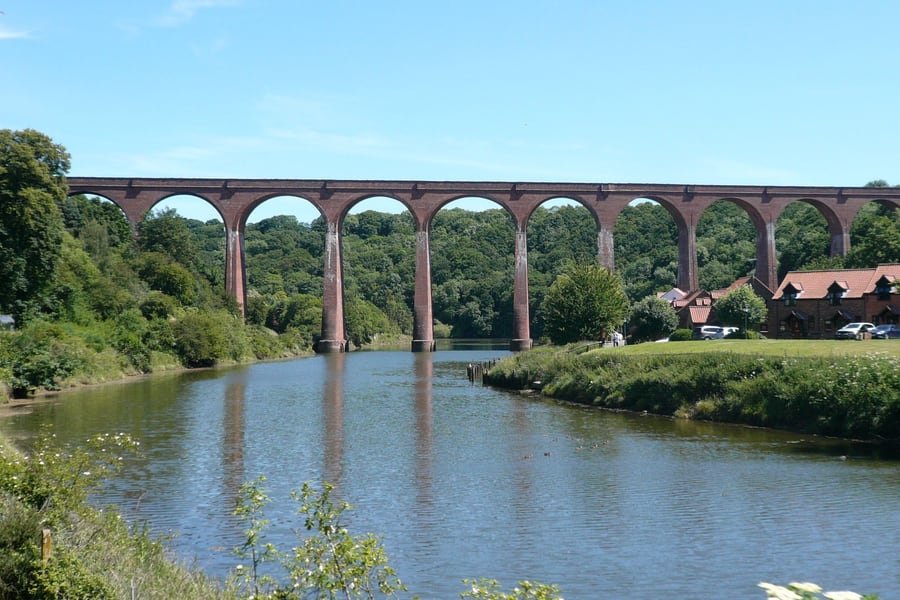
At Grosmont the heritage line meets Network Rail's Esk Valley Line. NYMR trains continue over it for the last six miles, following the river past Sleights and under the thirteen brick arches of Larpool Viaduct into Whitby, the old whaling port where James Cook learned his trade.
The trains
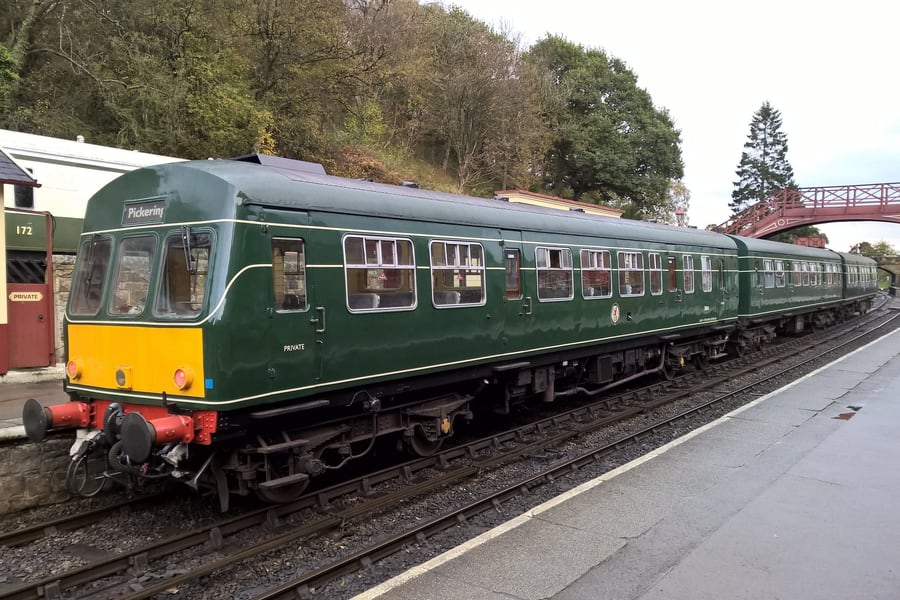
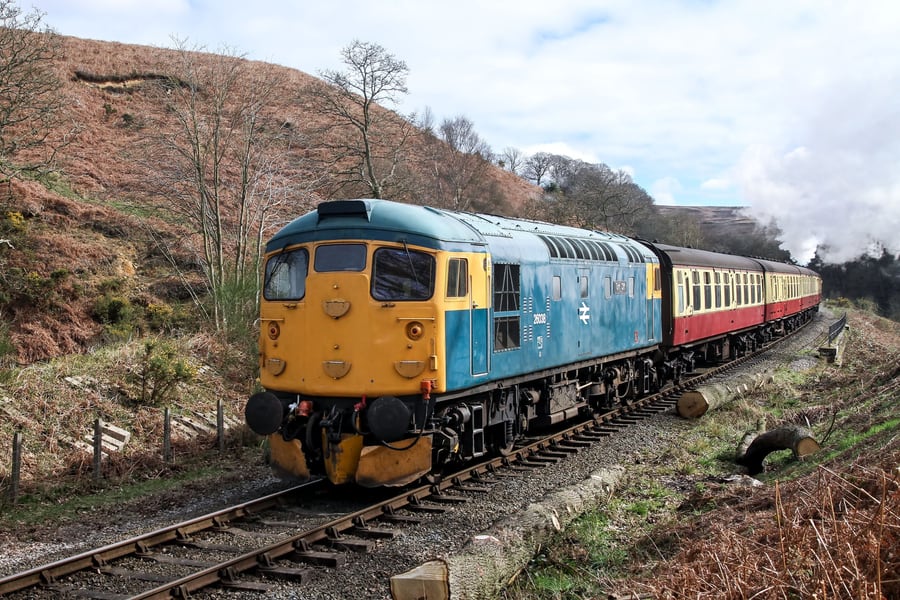
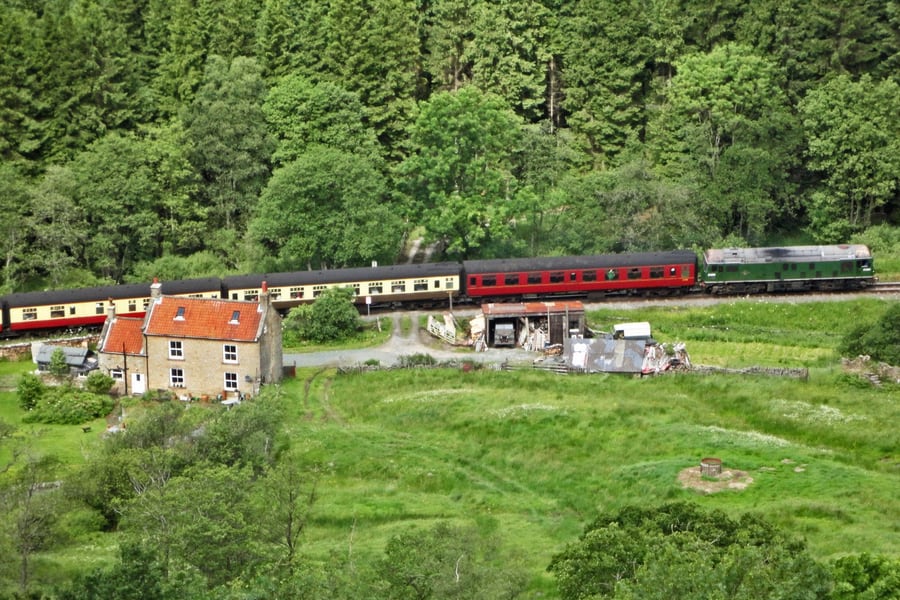
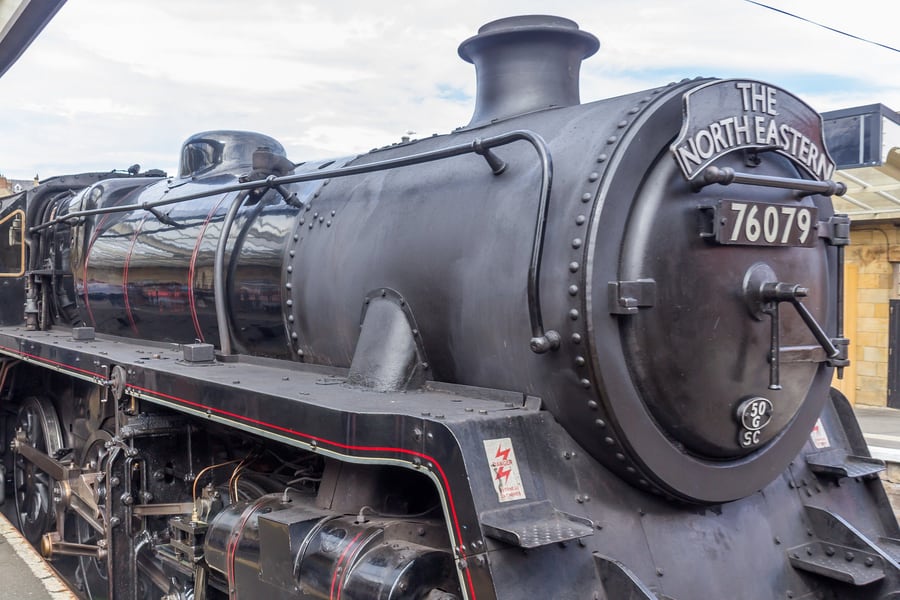
The railway's fleet mixes steam and heritage diesel. It includes Southern Railway S15 No. 825, LNER Q6 No. 63395, the Lambton Collieries tank engine No. 29 and a green Class 101 diesel unit called Daisy. Visiting engines come for galas and special weekends. See also the Settle–Carlisle Railway, the other long scenic line across the north of England on this site.
Along the route
 Scott Robinson / Wikimedia Commons · CC BY-SA 2.0 · cropped
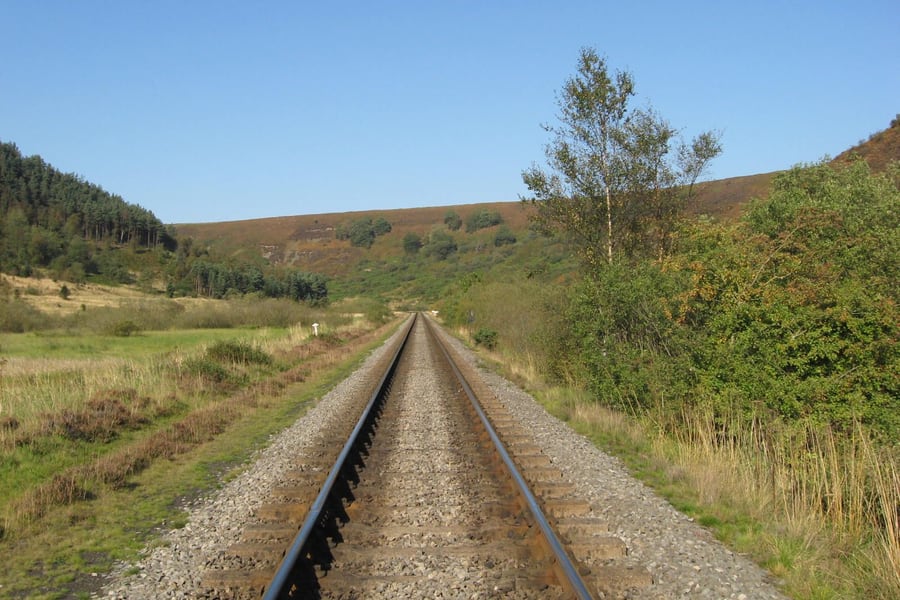
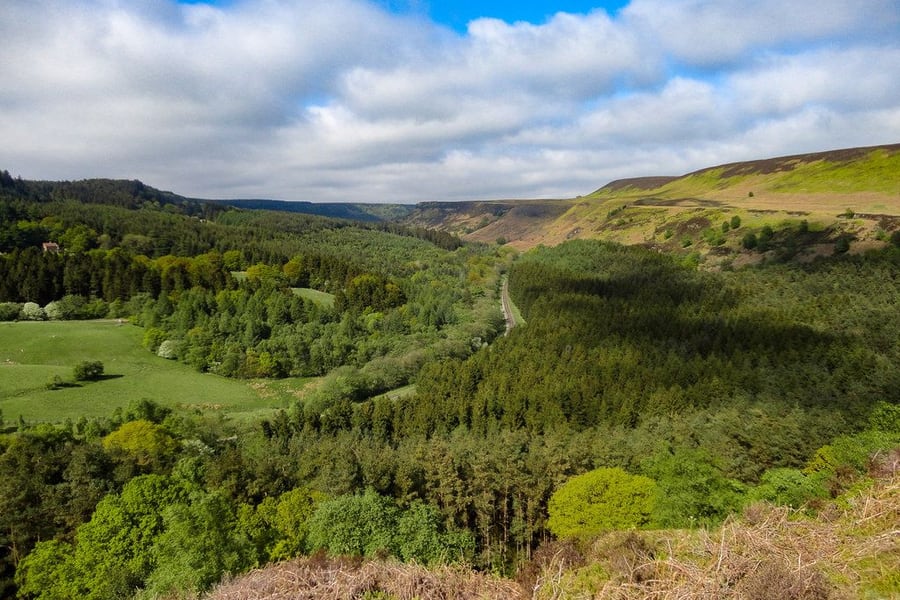
Newton Dale
A deep, twisting gorge cut by meltwater at the end of the last ice age. Newtondale Halt, a request stop in Cropton Forest, has no road: you reach it by train, on foot or by mountain bike, and forest walks of several lengths start there.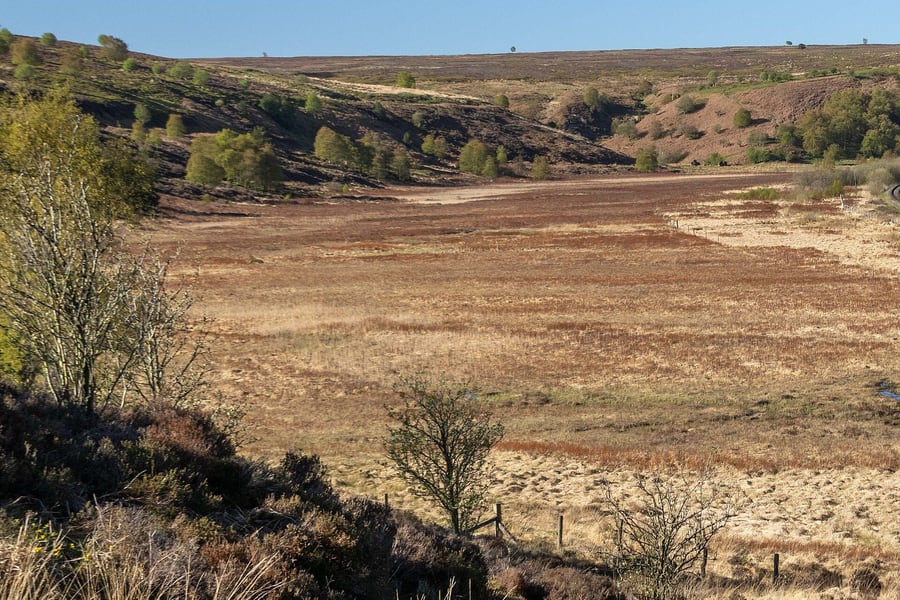 Peter McDermott / Wikimedia Commons · CC BY-SA 2.0 · cropped
Fen Bog
The first builders floated the line across this deep bog on a bed of timber and sheep fleeces. It is now a Yorkshire Wildlife Trust reserve, where heath spotted orchids flower and merlins pass through, right beside the track.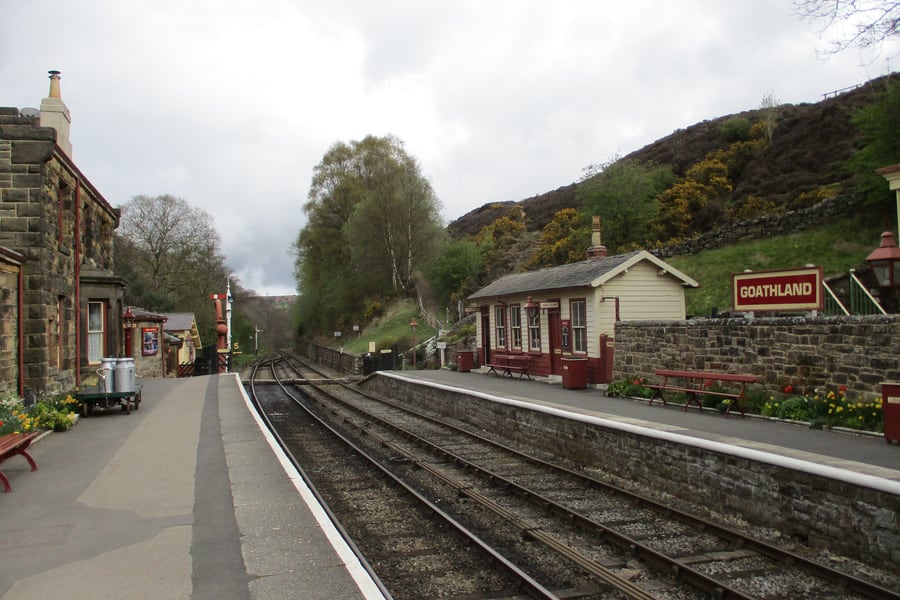 Martin Dawes / Wikimedia Commons · CC BY-SA 2.0 · cropped
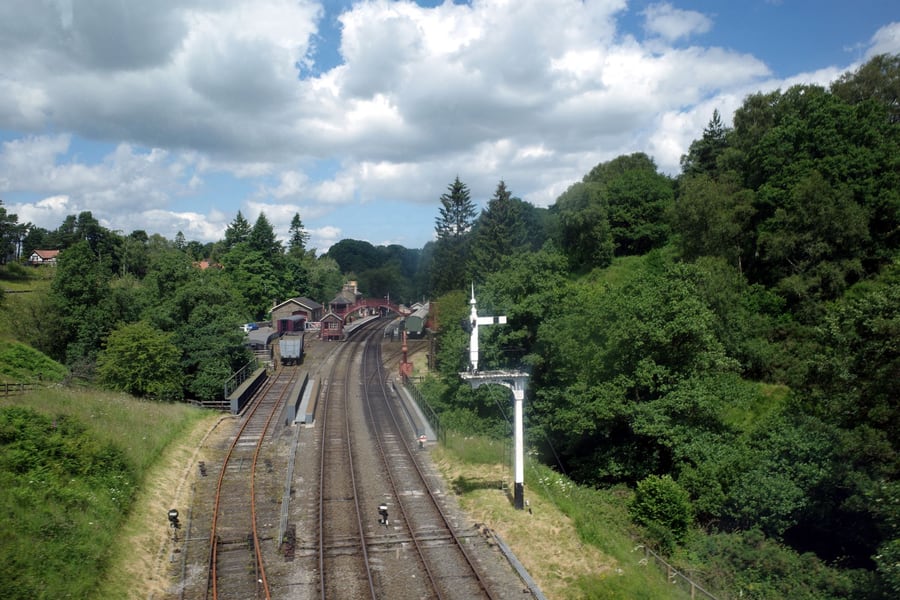
Goathland station
Almost unchanged since 1865 and restored to about 1922, the station has been Hogsmeade in the first Harry Potter film and Aidensfield in ITV's Heartbeat. Its tea room is in the old goods warehouse.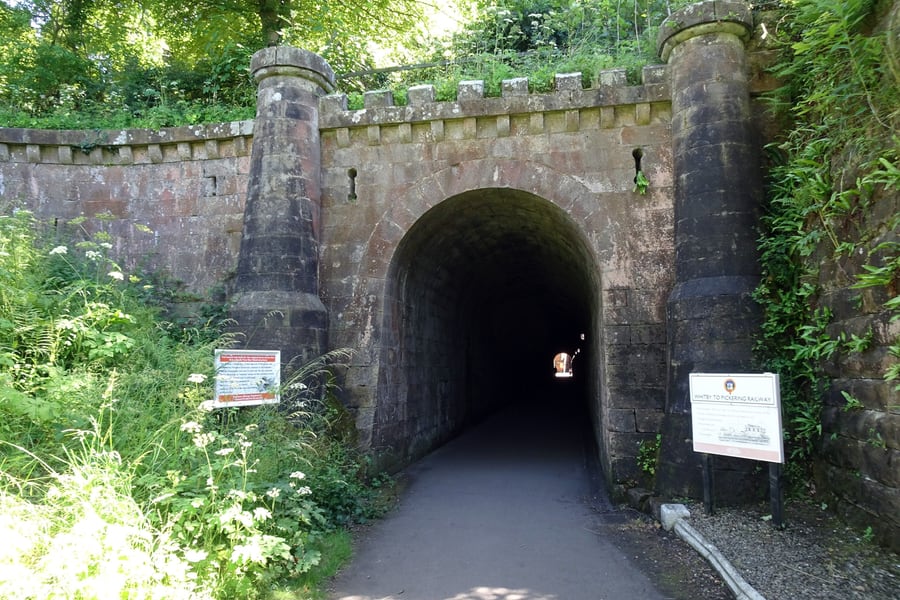 Spudgun67 / Wikimedia Commons · CC BY-SA 4.0 · cropped
Grosmont tunnel
Beside the tunnel the trains use is Stephenson's original, opened in 1835 for horse-drawn coaches, with a castellated portal. It is believed to be one of the oldest railway tunnels in England and is now a footpath.A bit of history
Culture & experiences along the way
 Michael Garlick / Wikimedia Commons · CC BY-SA 2.0 · cropped
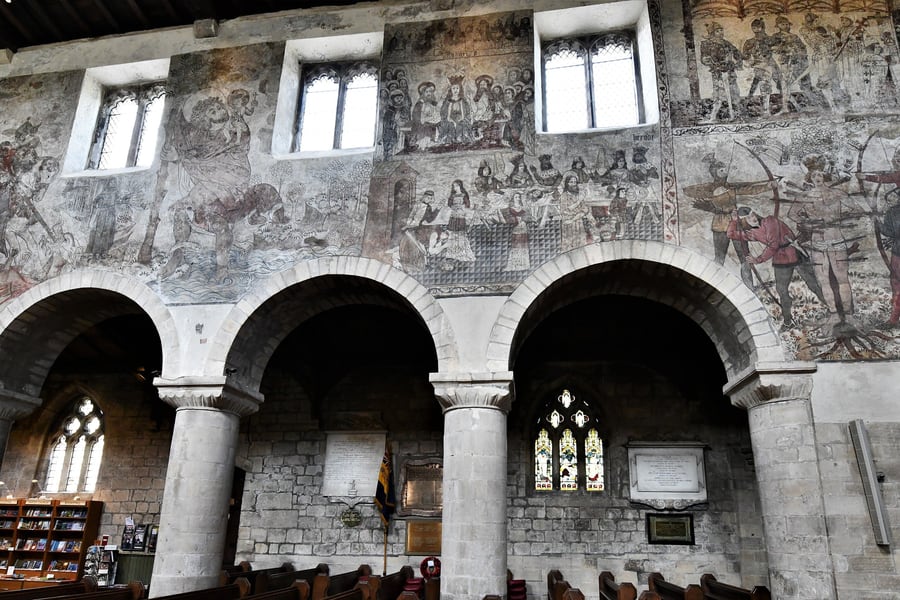
The Pickering wall paintings
The nave of Pickering's parish church is covered in murals of about 1450: St George and the dragon, St Christopher, the beheading of John the Baptist, the murder of Thomas Becket. Whitewashed at the Reformation, found in 1852 and hidden again by a vicar who disliked them, they were finally uncovered in 1876.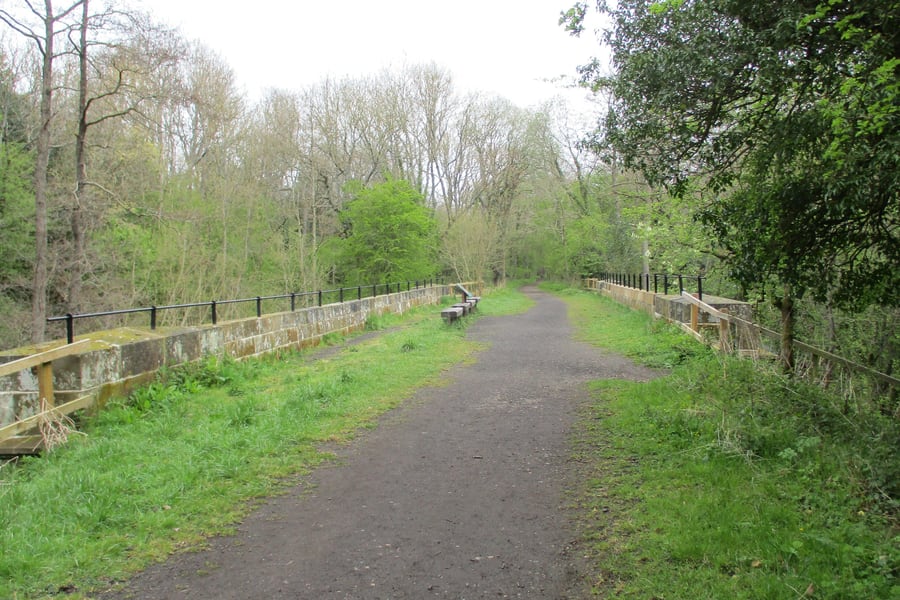 Martin Dawes / Wikimedia Commons · CC BY-SA 2.0 · cropped
Walk the Rail Trail
Between Goathland and Grosmont the original 1836 route is a 3½-mile footpath, through the hamlet of Beck Hole, where coaches were once hauled up a rope-worked incline. Walk it downhill to Grosmont and take the steam train back up.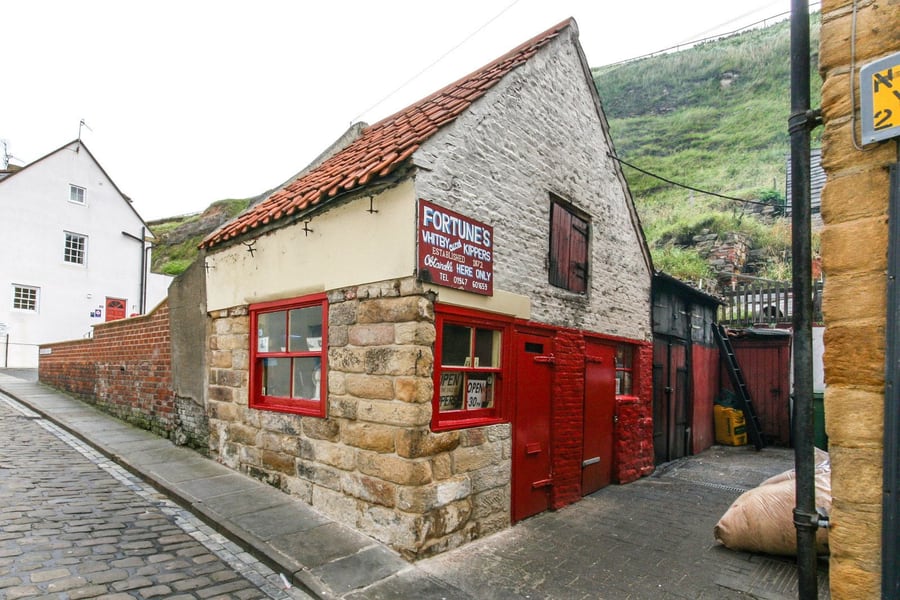 Kim Fyson / Wikimedia Commons · CC BY-SA 2.0
Kippers at Fortune's
On Henrietta Street, just past the 199 steps, Fortune's has smoked herring in the same smokehouse since William Fortune founded it in 1872, and the same family still runs it. The shop takes cash only and shuts early when the day's kippers sell out.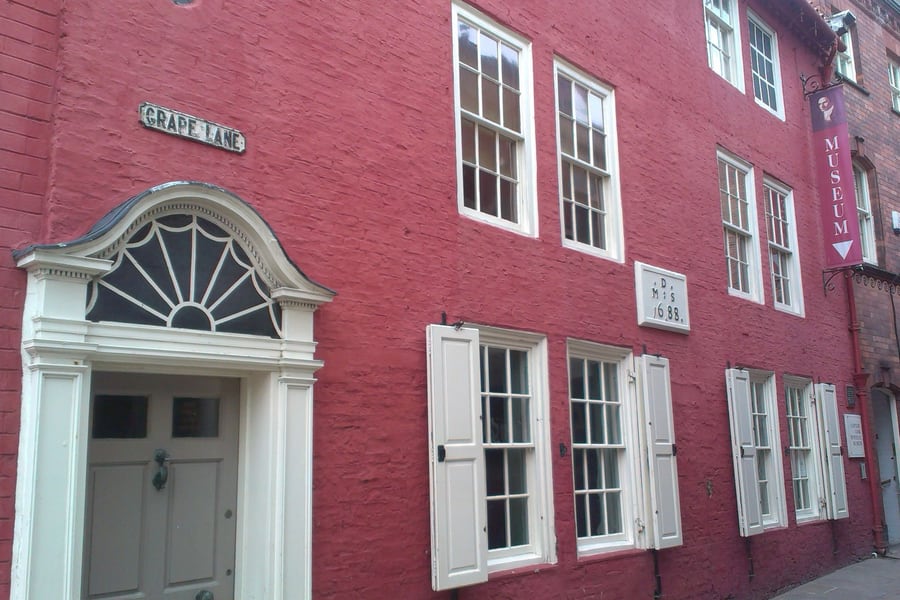 aude / Wikimedia Commons · CC BY-SA 3.0 · cropped
Captain Cook Memorial Museum
James Cook learned his seamanship in Whitby, and the 17th-century house in Grape Lane where he lodged as an apprentice is now a museum of his voyages to the Pacific, the South Atlantic and the Arctic. It opens daily from February to the start of November.Timetables
In 2026 the railway runs Saturday to Wednesday from 28 March to 15 July and from 12 September to 1 November, and every day from 18 July to 9 September. Trains run at intervals from 09:20 until after 18:00. Pickering to Whitby takes about 1 hour 50 minutes, and about 1 hour 5 minutes to Grosmont, where some trains end.
Mondays to Wednesdays and Saturdays in October (the Red timetable)
| Pickering | Levisham | Goathland | Grosmont | Whitby |
|---|---|---|---|---|
| 09:20 | 09:40 | 10:10 | 10:25 | 11:10 |
| 10:55 | 11:20 | 11:50 | 12:10 | — |
| 12:00 | 12:20 | 12:55 | 13:10 | 13:50 |
| 14:10 | 14:30 | 15:00 | 15:20 | — |
| 15:10 | 15:30 | 16:05 | 16:20 | 16:55 |
| 16:15 | 16:35 | 17:05 | 17:20 | — |
| Whitby | Grosmont | Goathland | Levisham | Pickering |
|---|---|---|---|---|
| 10:00 | 10:35 | 10:50 | 11:20 | 11:40 |
| — | 12:35 | 12:55 | 13:25 | 13:50 |
| 12:35 | 13:30 | 13:55 | 14:30 | 14:50 |
| 14:10 | 14:40 | 15:05 | 15:30 | 15:55 |
| — | 16:40 | 17:05 | 17:30 | 17:50 |
| 17:10 | 17:45 | 18:00 | 18:25 | 18:50 |
Good to know:
- Sundays (the Pink timetable) run fewer trains to Whitby: one through train leaves Pickering at 10:00 and reaches Whitby at 11:50, and one leaves Whitby at 14:15 for Pickering (16:05). Trains between Pickering and Grosmont leave Pickering at 09:30, 10:00, 12:15, 13:15 and 16:25.
- Grosmont–Whitby only. On the Red timetable an extra train leaves Grosmont at 09:15 for Whitby (09:45).
- Newtondale Halt, between Levisham and Goathland, is a request stop.
- Steam or diesel. Most trains are steam-hauled; some are booked for a heritage diesel for all or part of the trip, and a diesel may stand in for steam at short notice.
- Event days. Gala weekends and visiting-engine days run their own timetables, and on North Yorkshire Pullman dining days the 12:35 from Grosmont and the 14:10 from Pickering run as the dining train, not as ordinary services.
- Getting there. Pickering has no main-line station. Whitby does: Northern's Esk Valley trains run from Middlesbrough in about an hour and a half; there were six on the Tuesday sampled.
Times as of October 2026, from the railway's July–November 2026 timetable and its online calendar; Northern times from the National Rail journey planner for Tuesday 13 October. At Grosmont the times are arrivals towards Whitby and departures towards Pickering. Check your date on nymr.co.uk (opens in a new tab).
Tickets
The railway sells its own tickets, online, at its booking offices or on the train. The usual choice is the Day Rover, which lets you hop on and off between Pickering and Whitby all day: £48.95 for an adult and £12 for a child aged 4 to 15, or £38.50 and £9.50 during school holidays. Book online more than four days ahead and the fare drops by 10 %; online and phone bookings add a £1.50 fee. In 2026 each paying adult takes one child free.
For a short hop, a return between neighbouring stations costs £14.95, two stations £24.95 and three £34.95. Under-4s travel free on a lap and dogs pay £3. Fares checked October 2026 on nymr.co.uk (opens in a new tab); pounds sterling.
Book your tickets
Day Rover, Pickering to Whitby
All day · hop on and off
Unlimited travel on the whole line for a day; £48.95 outside school holidays, less when booked ahead online.
Book Tickets (opens in a new tab, on nymr.co.uk)via nymr.co.ukShort journey return
Between neighbouring stations
A return between two stations next to each other on the line, such as Pickering and Levisham.
Book Tickets (opens in a new tab, on nymr.co.uk)via nymr.co.ukRail Passes
No rail pass is valid on the North Yorkshire Moors Railway. Interrail's table of railway companies for Great Britain does not list it, and BritRail's conditions exclude privately owned, steam, heritage and tourist railways. You buy the railway's own ticket.
A pass can still get you to Whitby. Both cover Northern, whose Esk Valley trains from Middlesbrough run into Whitby and also call at Grosmont, where they share the station with the heritage line.
For this journey alone, a pass is not worth buying. A Day Rover costs £48.95, and a pass pays only if the moors are one day of a longer trip around Britain.
Checked October 2026 against interrail.com (opens in a new tab) and britrail.com (opens in a new tab).
Places to Visit
A Day Rover makes the line easy to break up: get off, walk for an hour or two and catch a later train on. The places below run from south to north, from Pickering to Whitby.
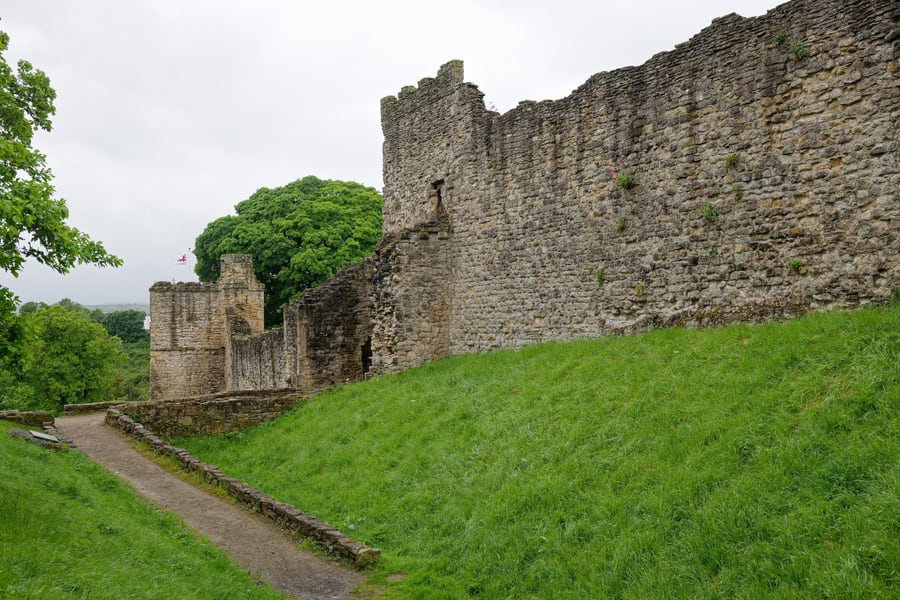 Tilman2007 / Wikimedia Commons · CC BY-SA 4.0
Pickering and its castle
A market town on the edge of the moors. Its castle was begun by William the Conqueror in 1069–70 as an earth-and-timber motte and bailey and rebuilt in stone; Richard II was held prisoner here in 1399 after he was deposed. Largely spared by the Wars of the Roses and the Civil War, it is now in the care of English Heritage and opens daily.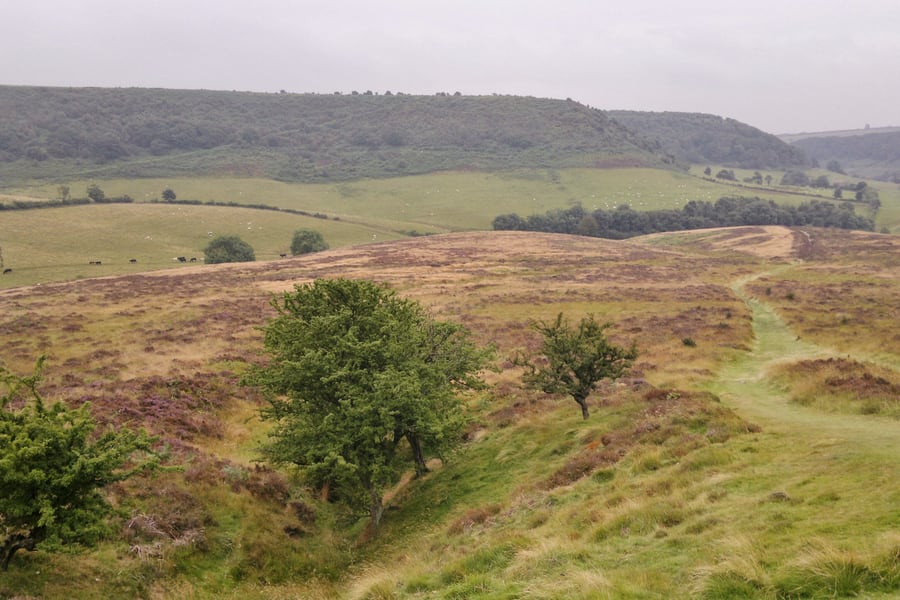 Chris Morgan / Wikimedia Commons · CC BY-SA 2.0 · cropped
Levisham and the Hole of Horcum
Levisham station is nearly two miles from its village. Upstream of the village, in the valley of Levisham Beck, is the Hole of Horcum, a hollow 400 feet deep and three-quarters of a mile across, carved by springs eating away the hillside. Legend says Wade the giant scooped it out to throw at his wife.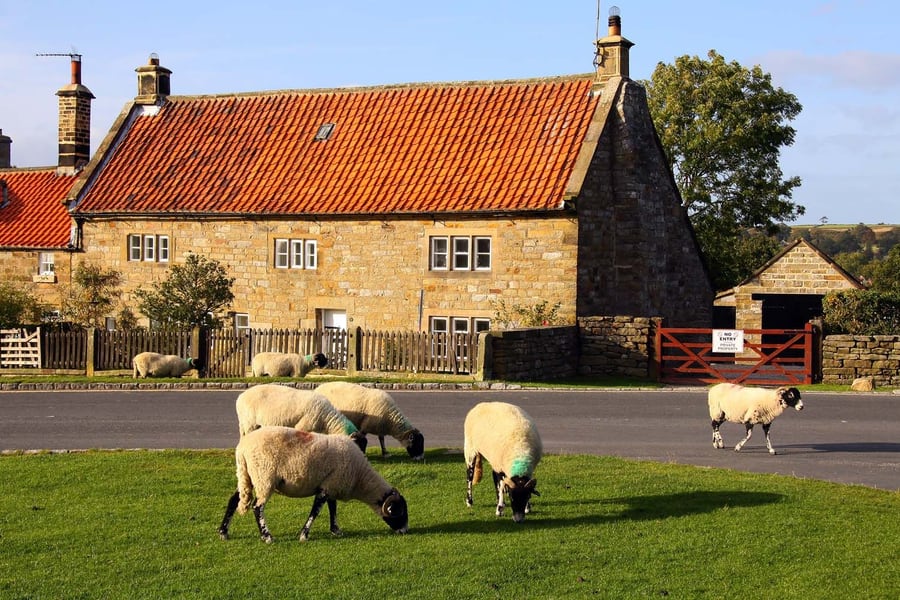 Steve Daniels / Wikimedia Commons · CC BY-SA 2.0 · cropped
Goathland
A moorland village almost 500 feet up, where black-faced sheep graze the green and the moor by a common right that the Duchy of Lancaster's tenants have held for centuries. Just outside the village is Mallyan Spout, at 70 feet the tallest waterfall in the North York Moors. In the 19th century Goathland was a small spa.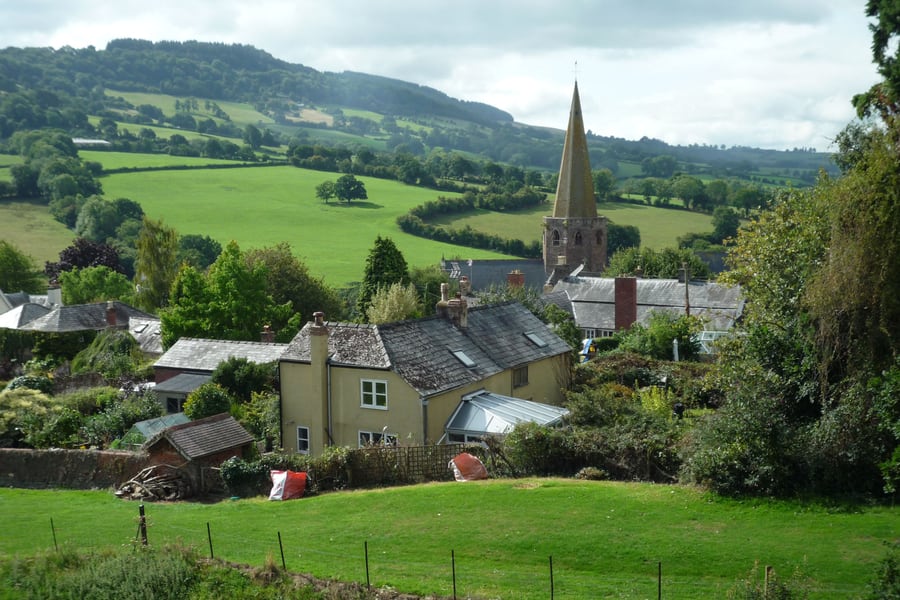 Fabian Musto / Wikimedia Commons · CC BY-SA 2.0 · cropped
Grosmont
Grosmont grew up in the 1830s around the railway and the ironstone mines, and for its first years was simply called Tunnel. The NYMR's engine sheds are here, just south of the tunnel, and the running shed is usually open at one end so you can see engines resting between turns or under light repair. Long before, a priory of the Grandmontine order, one of three in England, stood by the Esk here.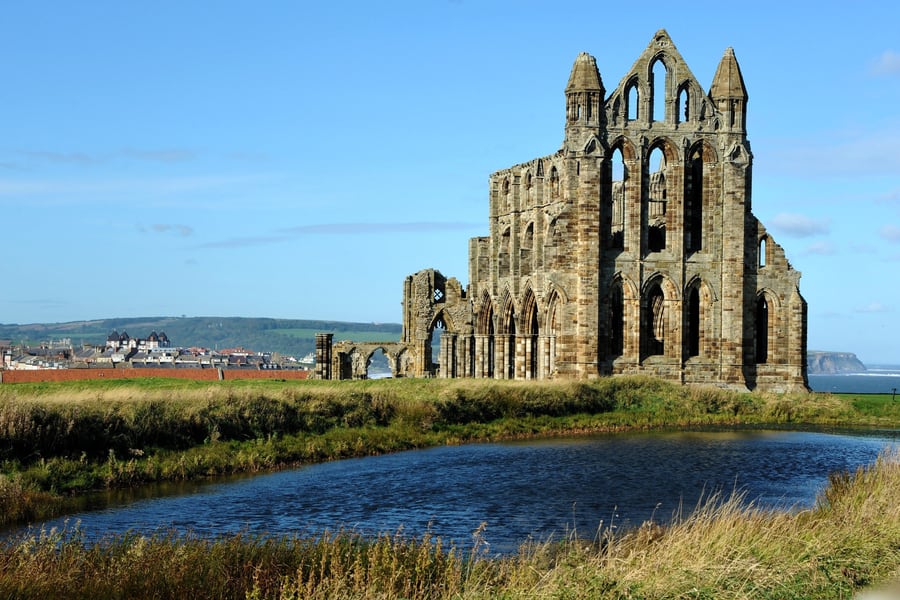 Geir Hval (www.MacWhale.eu) / Wikimedia Commons · CC BY-SA 4.0
Whitby Abbey
King Oswy of Northumbria founded a monastery here in 657 under the abbess Hilda; the Synod of Whitby met in it in 664, and the poet Cædmon lived there. The Gothic ruins of the later Benedictine abbey crown the headland, and in Bram Stoker's Dracula the count comes ashore below them and runs up the 199 steps.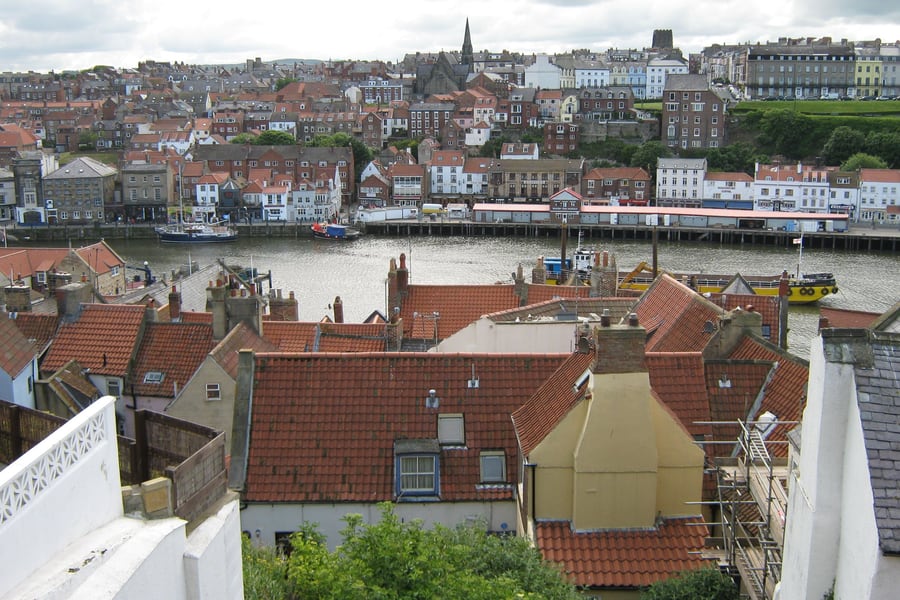 Xandar / Wikimedia Commons · CC BY-SA 3.0 · cropped
Whitby
A fishing port in a steep valley at the mouth of the Esk, with red roofs down both banks and a swing bridge between them. Whitby sent out herring and whaling fleets, built Cook's Endeavour, and in Victorian times carved jet from the cliffs into mourning jewellery; a handful of shops still sell it.Where to Sleep
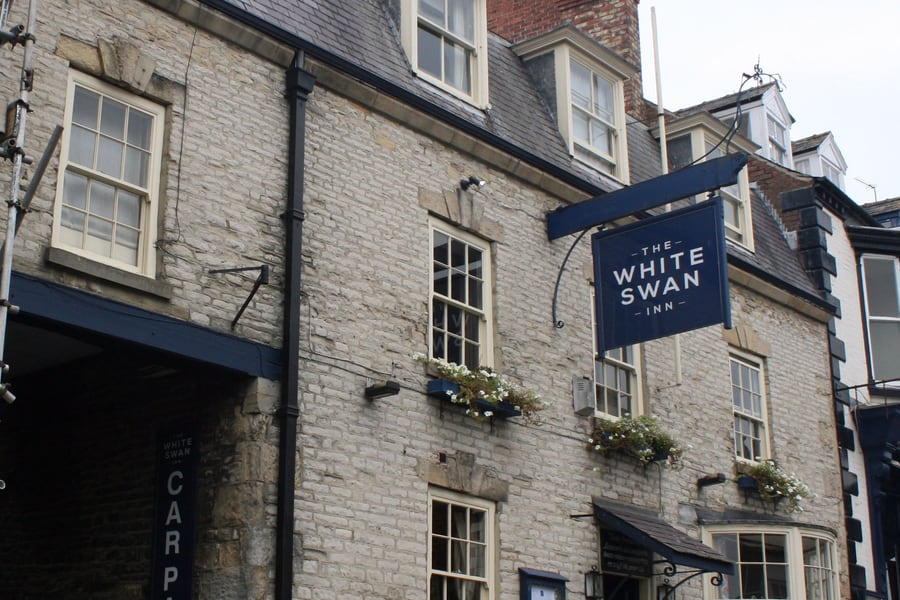
Two inns for a night on the moors. The White Swan stands on the market place in Pickering, at the southern end of the line, and the Mallyan Spout Hotel, with its valley-view rooms, is in Goathland.
Where to stay
 Jo and Steve Turner / Wikimedia Commons · CC BY-SA 2.0 · cropped
The White Swan
Pickering · on the market place
An inn in the middle of Pickering with rooms and a restaurant, run by one family since 1983.
Check Availability (opens in a new tab, on white-swan.co.uk)via white-swan.co.uk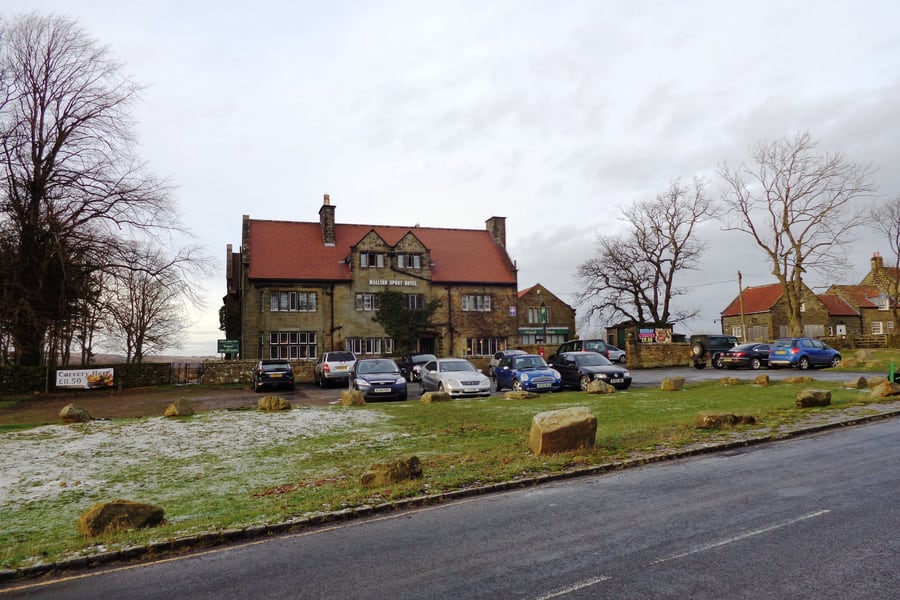 Bill Henderson / Wikimedia Commons · CC BY-SA 2.0 · cropped
The Mallyan Spout Hotel
Goathland · the village's largest hotel
Named after the nearby waterfall, with valley-view suites and its own restaurant.
Check Availability (opens in a new tab, on mallyanspout.co.uk)via mallyanspout.co.ukQuestions or corrections
Planning this trip and stuck on something, or spotted a time, fare or detail that has changed? Send us a message about The North Yorkshire Moors Railway. We read every one, and we update this page when something has changed.