Northern Explorer
Johnragla / Wikimedia Commons · CC BY-SA 3.0 · cropped
- Distance681 km
- Duration~10h 40m
- Best seasonYear-round
Introduction
The Northern Explorer is one train a day, three days a week in each direction, and it is the only passenger service left that crosses the North Island of New Zealand end to end. It runs the full 681 kilometres of the North Island Main Trunk between Auckland and Wellington in a single daylight run — ten hours forty southbound, eleven hours five coming back — and it spends the middle of that day on the volcanic plateau, in country with three active volcanoes on the skyline and very little else.
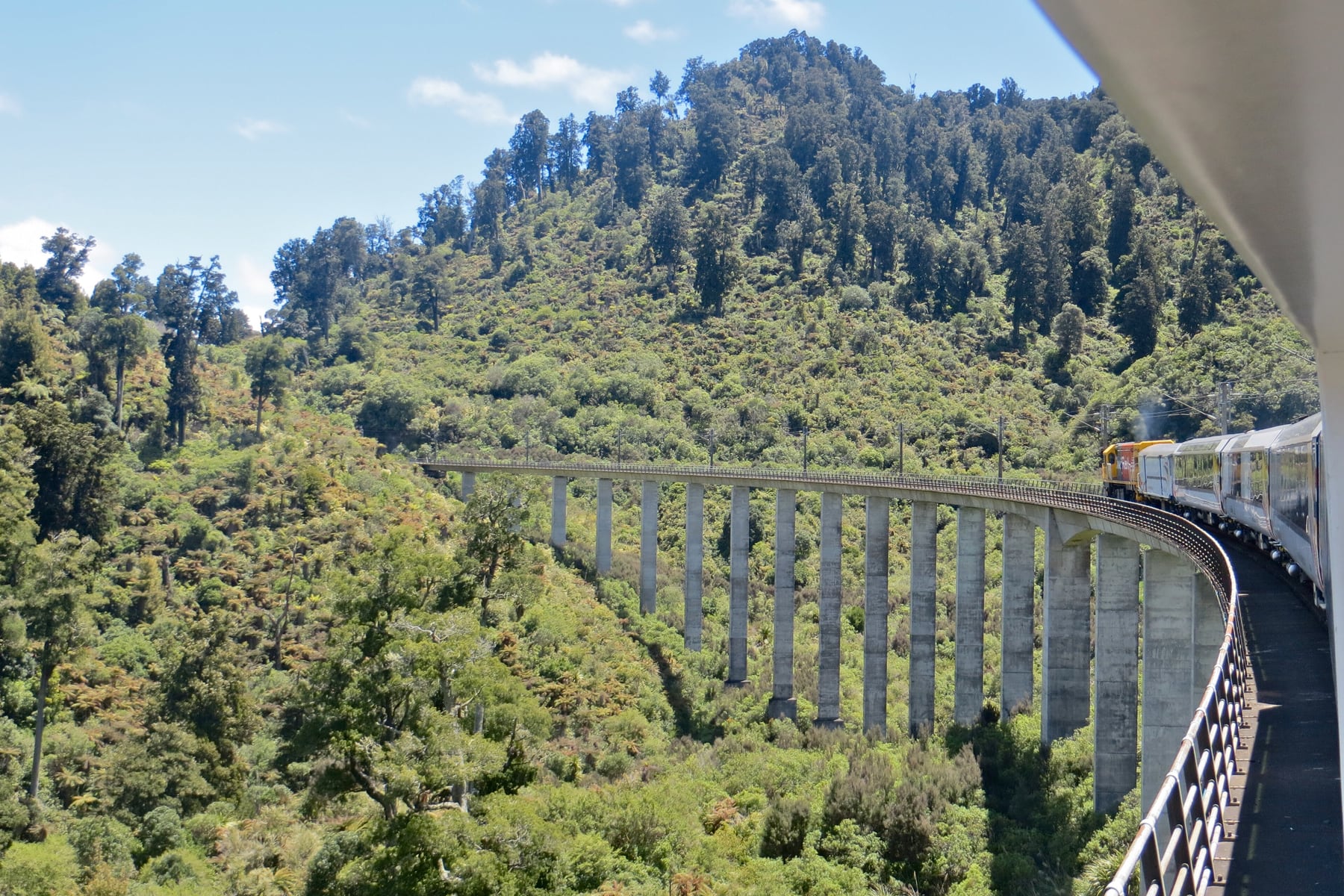
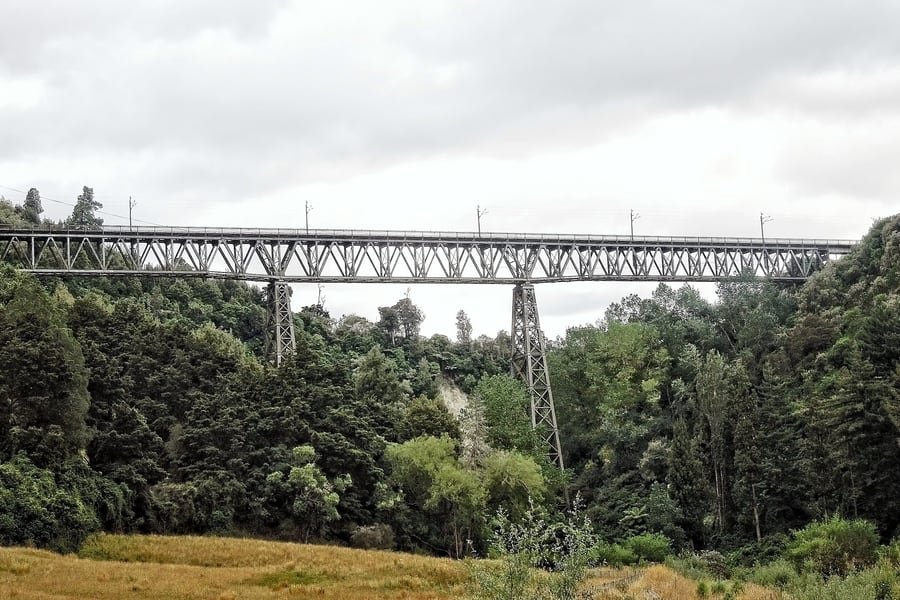
The line that gets it up there is the reason to go. Between Raurimu and National Park the land rises too steeply for a railway, and the direct climb would have been 1 in 24. In 1898 a surveyor working under the Public Works Department engineer Robert Holmes solved it with the Raurimu Spiral: a horseshoe curve, two short tunnels and a complete circle stacked into one hillside, so that a train gains 139 metres at a workable 1 in 52 and passes over track it used minutes earlier. The masterstroke is that it needs no viaducts at all, only the contours — and that there is nowhere you can stand and see the whole of it. Beyond it the railway crosses the ravines running off Ruapehu on spindly steel and concrete: the Makatote Viaduct is 79 metres high, and was the tallest in the country when it opened.
None of this came easily. Construction of the central section began in 1885 and it was twenty-three years before the two railheads met; the last spike went in on 6 November 1908, at Manganui-o-te-Ao, where an obelisk still stands beside the line. Before it, Auckland to Wellington meant days of coastal sailing. After it, a day — which is still exactly what this train takes.
The Journey
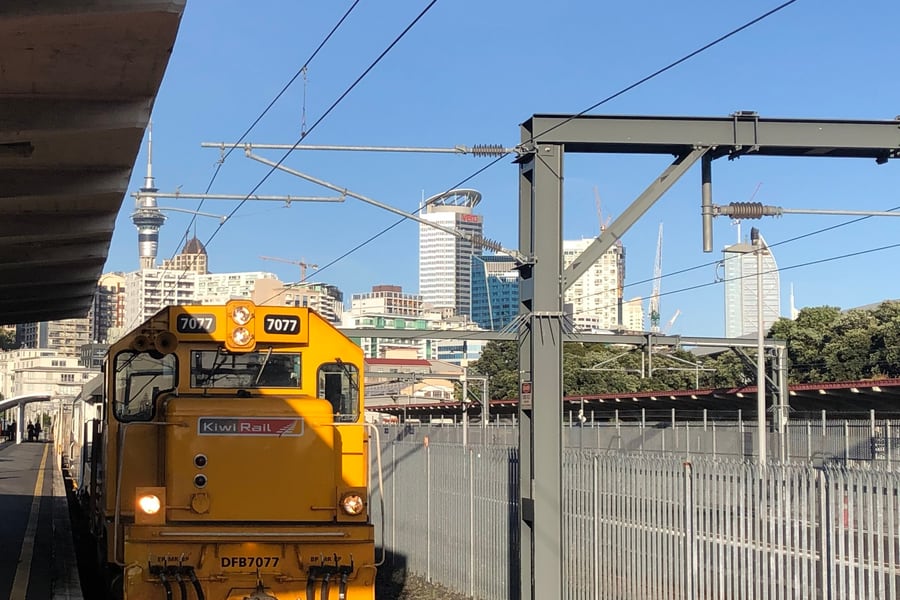
Southbound departures leave from Auckland Strand, which is not the city's main station and is easy to get wrong. The Strand is a single revived platform on Beach Road — Platform 7 of the grand 1930s Auckland Station, brought back for the 2011 Rugby World Cup after the city moved its trains to Britomart in 2003. It gained a ticket office made from shipping containers in 2015, and in 2023 the 1908 signal building designed by George Troup — the architect New Zealand nicknamed Gingerbread George — was restored as its station building. Check-in opens at 06:45 and closes twenty minutes before departure, and every wheeled bag has to go in the van.
The first two hours are the easy part. The train slips out past the Ōrākei Basin, an extinct volcanic crater, then runs south across the Waikato — dairy country, flat and green — to Hamilton Frankton. South of Hamilton the hills close in and the line enters the King Country, the territory Ngāti Maniapoto held closed to European settlement until 1883. Otorohanga comes mid-morning, and is where you get off for the Waitomo caves; the railway reaching Ōtorohanga in 1887 is what made those caves visitable at all.
The plateau
After Taumarunui the climb begins, and the Raurimu Spiral takes the train through its horseshoe, its two tunnels — the Lower Spiral Tunnel is 384 metres, the Upper only 96 — and its full circle, crossing 23 metres above the tunnel it has just come out of. Some of the curves are 150-metre radius, which is why the flanges squeal.
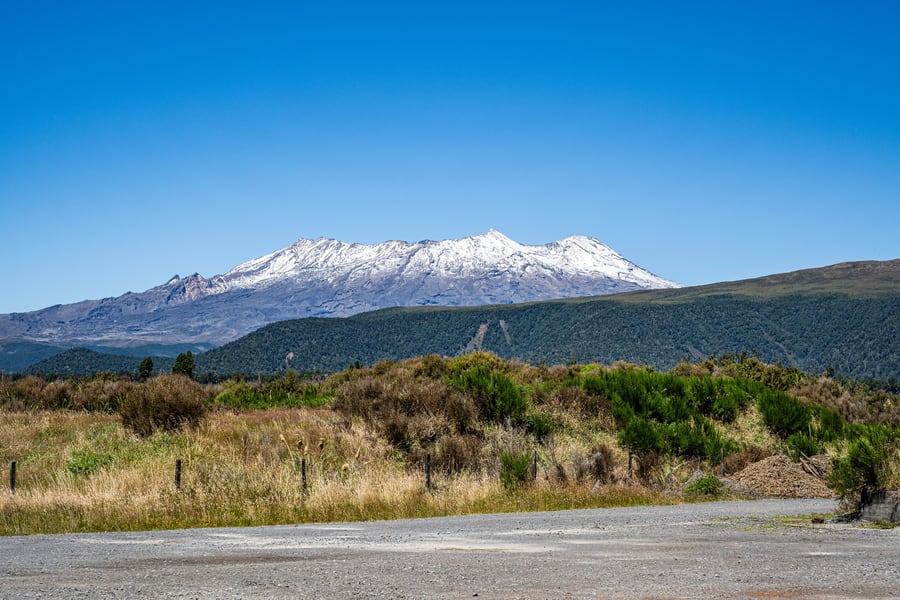
On the plateau the train is at its best and the open-air viewing carriage earns its keep. The line skirts the southern edge of Tongariro National Park with the cone of Ngauruhoe to the east and the broad mass of Ruapehu, 2,797 metres, filling the sky to the south. Between Waimarino National Park and Ohakune come the plateau viaducts — Manganui-o-te-Ao, Makatote, and the curved 1987 Hapuawhenua, 51 metres high and 414 metres long, with its 1908 predecessor still standing alongside it as part of the Old Coach Road trail.
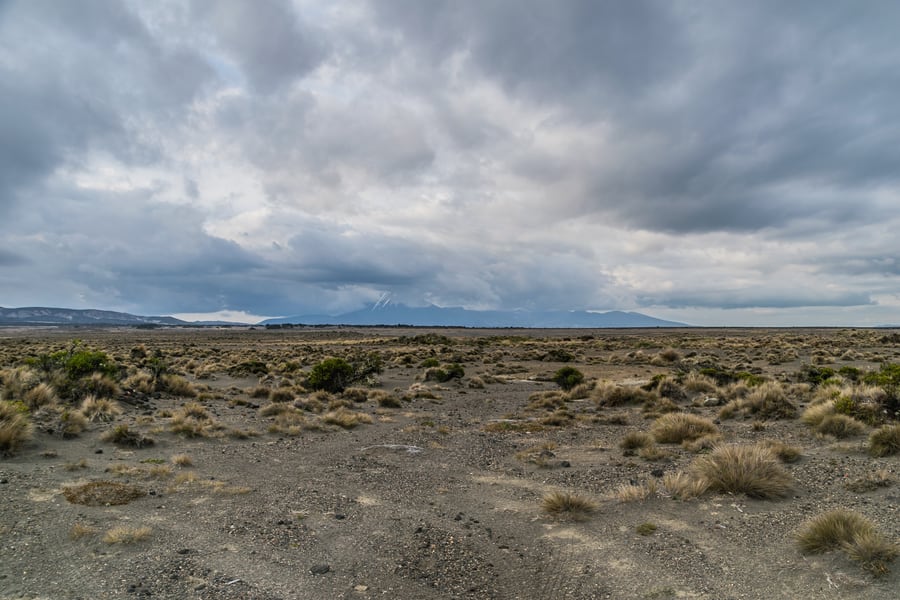
South of Ohakune the country empties into the Rangipō Desert, which is not a desert — it rains here — but whose volcanic soil is too porous to hold anything much, so it is tussock and scoria as far as you can see. The line reaches its high point at Waiouru, 814 metres, the highest place on the New Zealand rail network, and passes Tangiwai, where a lahar off Ruapehu took out a bridge pier minutes before the Wellington–Auckland express reached it on the night of 24 December 1953. One hundred and fifty-one people were killed. It is still the country's worst rail accident, and there is a memorial beside the road.
Down the gorges and along the sea
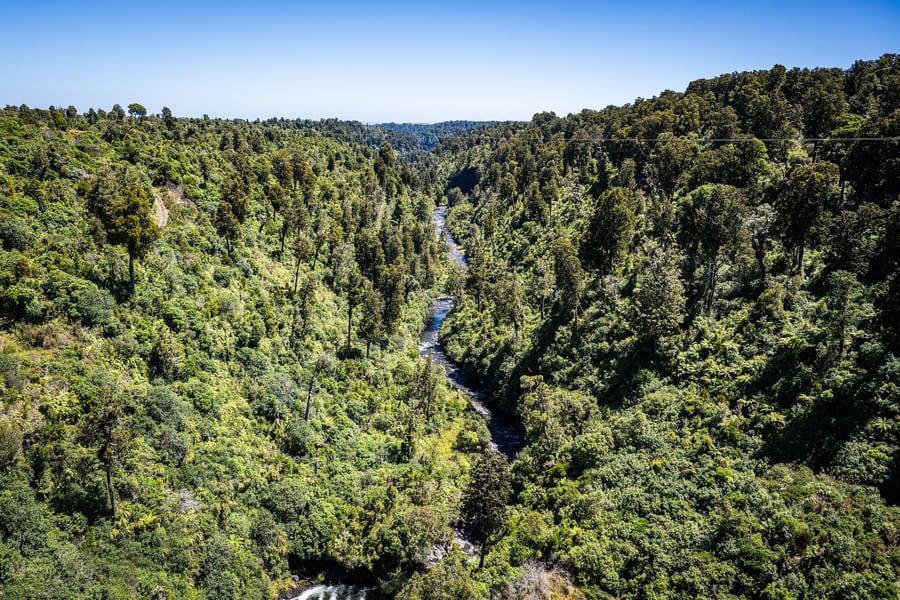
The descent from the plateau follows the Rangitīkei River, which has cut a narrow gorge with white sandstone cliffs and hairpin bends — the valley Peter Jackson used as the Anduin. The railway crosses it and its tributaries on five viaducts in quick succession: the 1902 Makohine, 72 metres tall, the 1904 Toi Toi at 62 metres, and the three concrete spans of the 1981 Mangaweka Deviation, the tallest of them 78 metres.
Palmerston North returns the train to farmland and, briefly, to a busy railway. Then comes the stretch most people do not expect. Between Pukerua Bay and Paekākāriki the line is cut into a cliff face high above the Tasman Sea with Kāpiti Island lying offshore, and on a clear evening the southbound run takes it at sunset. A few minutes later the track threads the edge of Porirua Harbour, past moored yachts, and then runs in through the tunnels to Wellington railway station, opened in June 1937 and a Category 1 historic place.
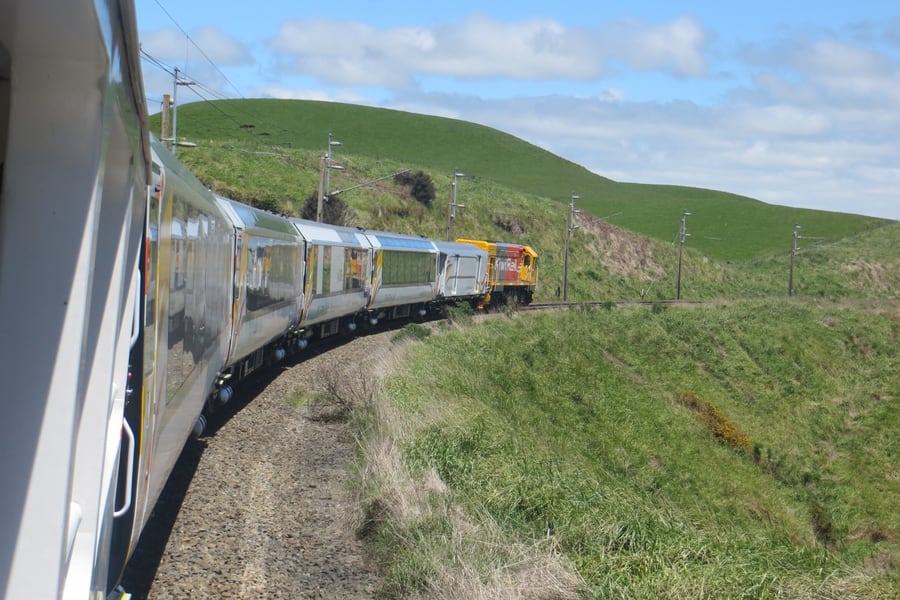
The traction is a DFB-class diesel-electric — the DF class rebuilt with fire suppression, which is what allows a diesel to haul passengers through New Zealand's tunnels. Behind it are AK-class carriages, 17 of which were built at Hillside Workshops in Dunedin from 2010: the first passenger carriages built in New Zealand since 1943, with panoramic windows, skylights, GPS-triggered commentary in five languages, an AKC café car and an AKV open-air van.
Along the route
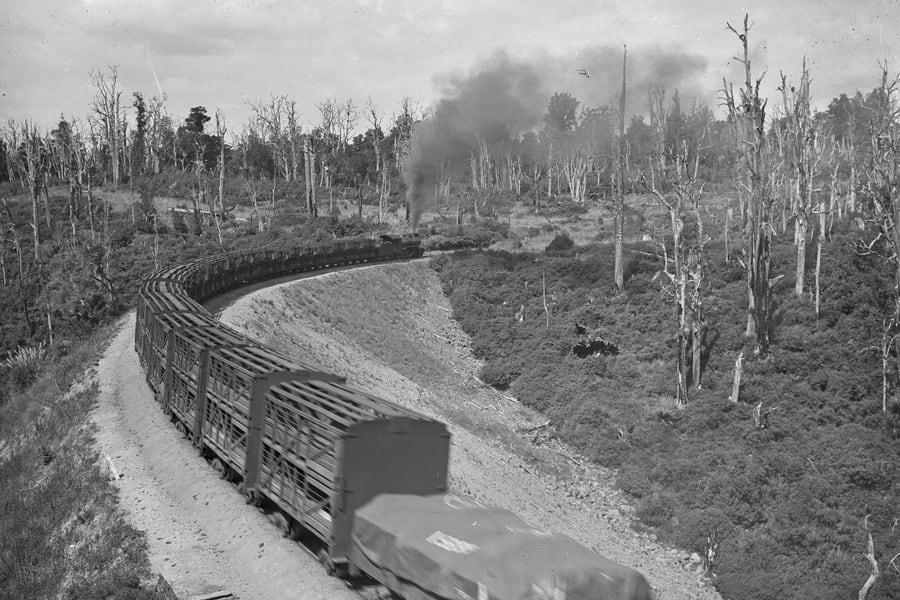 Albert Percy Godber · Godber Collection, Alexander Turnbull Library / Wikimedia Commons · Public domain · cropped
The Raurimu Spiral
A horseshoe curve, two short tunnels and a complete circle, stacked into one hillside so the train gains 139 m at 1 in 52 and crosses 23 metres above the tunnel it just left. Designed in 1898, and there is nowhere you can see the whole of it.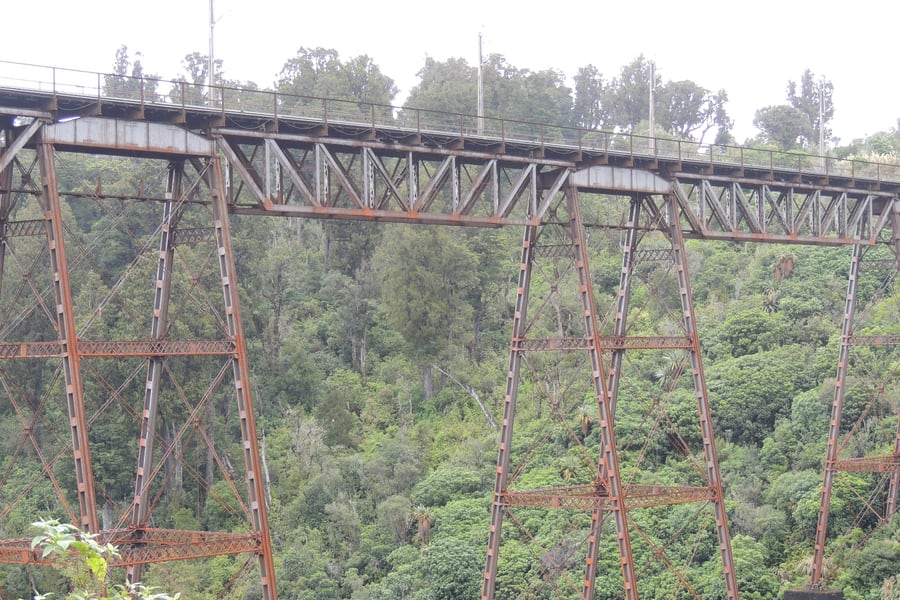 Jennifer Whiting / Wikimedia Commons · CC BY 2.0 · cropped
Viaducts off Ruapehu
The ravines running off the volcano are crossed on spindly steel. Makatote is 79 metres high with a 262-metre span and was the tallest in the country when it opened in 1908; Manganui-o-te-Ao, a few minutes north, was the very last piece of the line.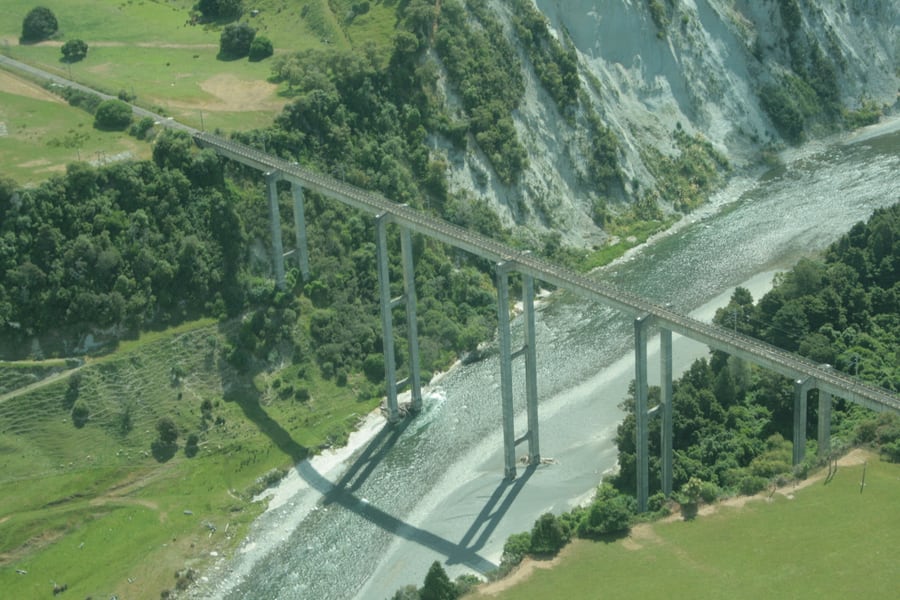 D B W / Wikimedia Commons · CC BY 3.0 · cropped
The Rangitīkei gorges
Five viaducts in quick succession as the line drops off the plateau beside a river that has cut white sandstone into hairpins. The three concrete spans of the 1981 Mangaweka Deviation stand 78, 74 and 75 metres above the water.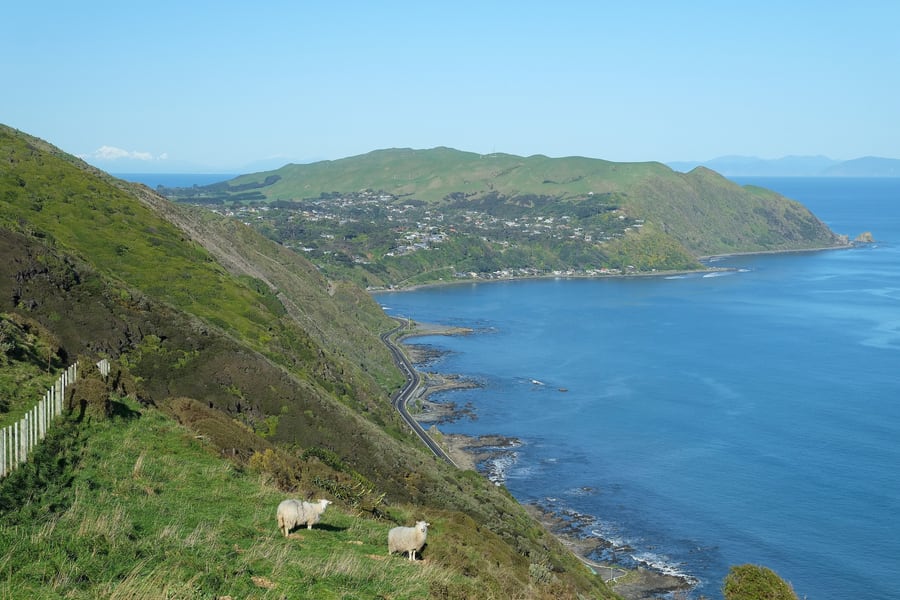 Pseudopanax / Wikimedia Commons · Public domain · cropped
The Kāpiti escarpment
Between Pukerua Bay and Paekākāriki the railway clings to a cliff face high above the Tasman Sea, with Kāpiti Island offshore and the South Island behind it on a clear day. Southbound, the train takes it in the evening light.A bit of history
Culture & experiences along the way
 Johnragla / Wikimedia Commons · CC BY-SA 3.0 · cropped
The open-air car and the Scenic Café
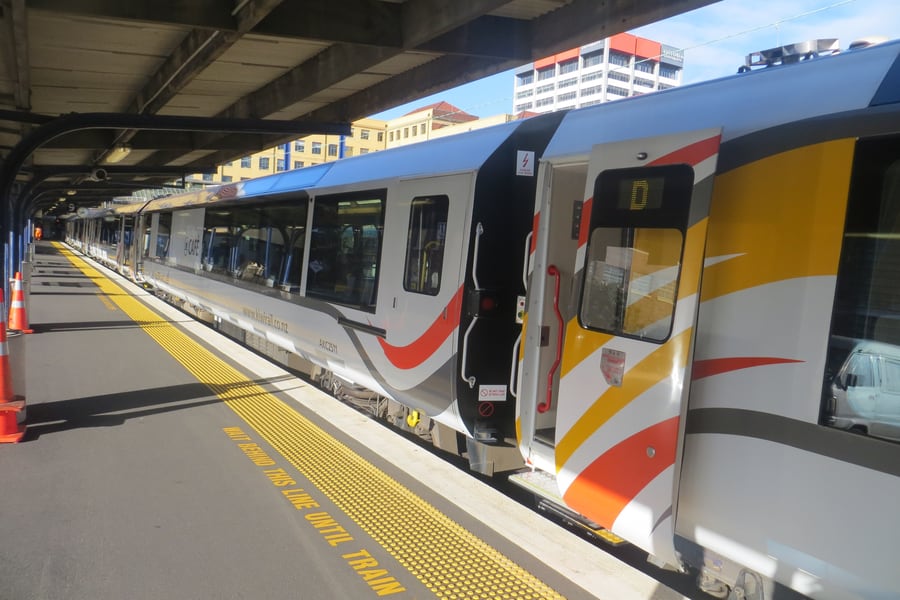
Seventeen AK-class carriages were built at Hillside Workshops in Dunedin from 2010 — the first passenger stock made in New Zealand since 1943. The set has panoramic windows and skylights, a café car, GPS-triggered commentary in five languages, and an unglazed AKV viewing van you stand in with nothing between you and the plateau.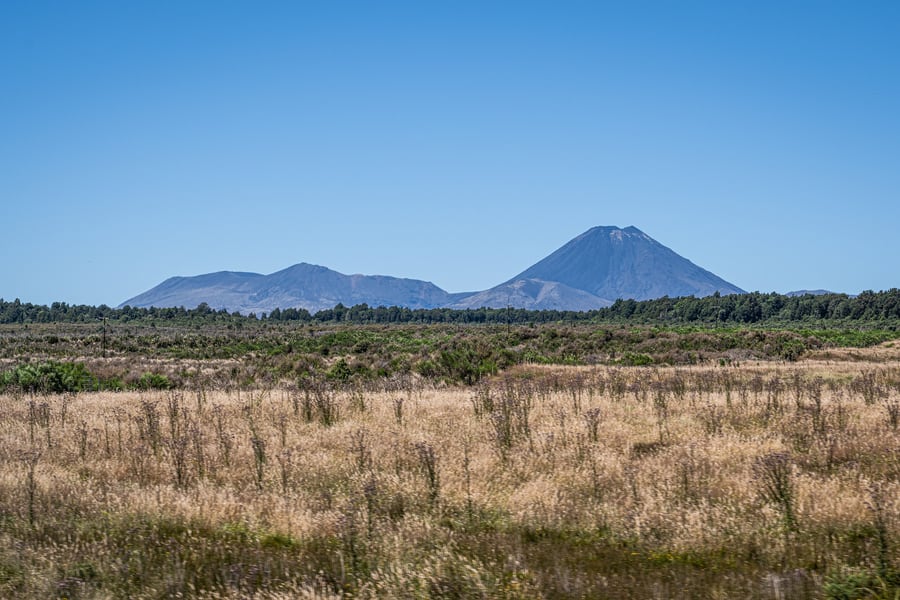 Takeshi Aida / Wikimedia Commons · CC BY-SA 2.0 · cropped
The mountains are ancestors
Ngauruhoe, Tongariro and Ruapehu were gifted to the nation in 1887 by Horonuku Te Heuheu Tūkino IV, making Tongariro New Zealand's first national park and one of the few UNESCO sites listed for culture as well as nature. The summits are tapu, and since 2017 the Department of Conservation has asked visitors not to climb them.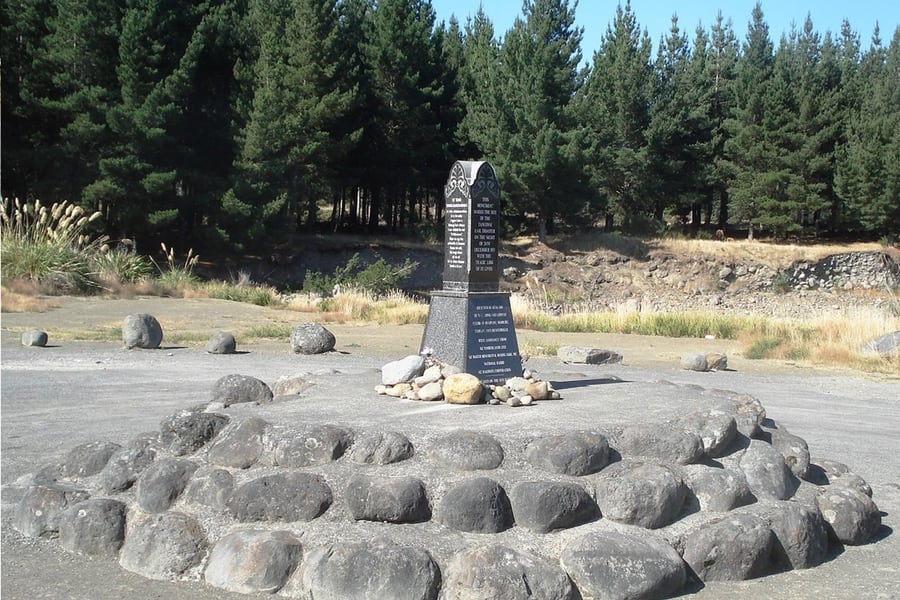 Genet / Wikimedia Commons · CC BY-SA 4.0 · cropped
Tangiwai, 24 December 1953
At 10:21 that night a lahar off Ruapehu's crater lake swept away a pier of the Whangaehu bridge minutes before the Wellington–Auckland express reached it. The locomotive and six carriages went into the river and 151 people were killed. It remains New Zealand's worst rail accident; a memorial stands near the site.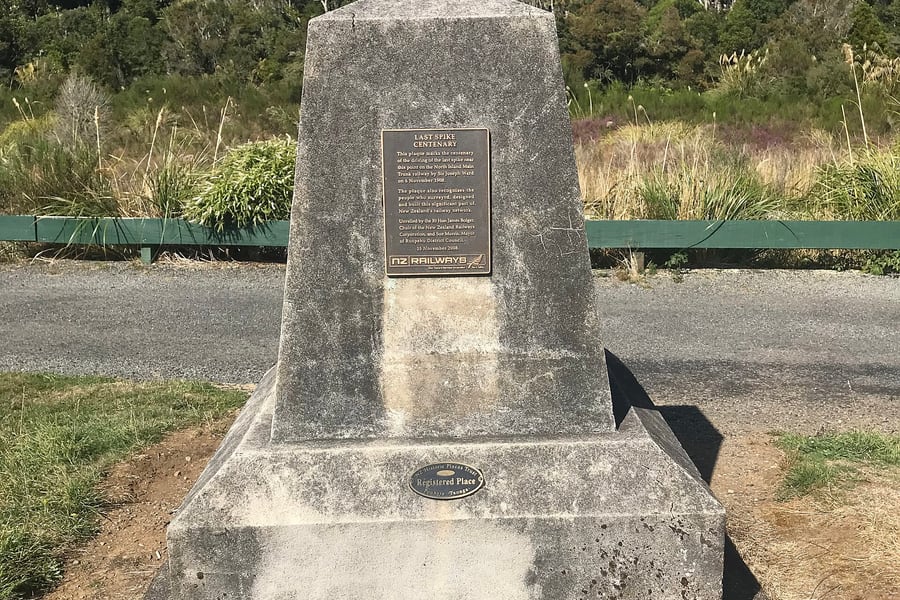 Schwede66 / Wikimedia Commons · CC BY-SA 3.0 · cropped
The last spike
Twenty-three years after the first sod was turned, the two railheads met, and on 6 November 1908 Prime Minister Sir Joseph Ward drove the last spike at Manganui-o-te-Ao. The obelisk that marks the spot still stands on the western bank just north of the viaduct, and the train passes within sight of it.Timetables
One train each way, three days a week, and the two directions run on different days. Southbound from Auckland it is Monday, Thursday and Saturday; northbound from Wellington it is Wednesday, Friday and Sunday. There is no Tuesday service in either direction, and no second departure if you miss it.
| Station | Southbound | Northbound |
|---|---|---|
| Auckland Strand | dep 07:40 | arr 19:00 |
| Papakura | 08:30 | 18:10 |
| Hamilton Frankton | 10:00 | arr 16:25 · dep 16:45 |
| Otorohanga | 10:35 | 15:45 |
| Taumarunui | 12:15 | 14:15 |
| Waimarino National Park | 13:10 | 13:15 |
| Ohakune | 13:40 | 12:45 |
| Palmerston North | 16:20 | 10:00 |
| Paraparaumu | 17:30 | 08:45 |
| Wellington | arr 18:20 | dep 07:55 |
Southbound takes 10h 40m, northbound 11h 05m — the difference is the twenty-minute stand at Hamilton on the way north.
It runs all year, with gaps. Great Journeys New Zealand states that the Northern Explorer does not run between 25 December 2026 and 11 January 2027, and the operator also takes the train off for scheduled track maintenance for a few days at a time during the year. We checked the pattern in the operator's own booking system in September 2026: searching Wellington to Auckland forward from 25 September, the next available dates were 27 and 30 September and 2 October — Friday, Sunday, Wednesday, Friday, exactly as published.
Good to know:
- It is reservation-only in practice. The operator says plainly that its trains are seating only and that it cannot take walk-on passengers once a train is full. You can ask at the check-in desk on the day, but book ahead.
- You need not ride the whole line. Any pair of the ten stations can be booked — Ohakune to Wellington, for instance, is a 4h 40m afternoon run and was NZD 152 one way when we checked.
- Check-in is real. At Auckland Strand the desk opens at 06:45 and closes twenty minutes before departure, and all wheeled bags, suitcases and backpacks must be checked into the van. Times and procedures differ at every station, so read the station page for the one you are leaving from.
- Arrival times move. The operator runs an automated line on 0800 872 467 for the current departure and arrival times, and warns that weather and heat affect running on this route.
- The clocks are a trap. Auckland Strand's own station page advertises a 7:45am departure where the timetable and the booking system both say 07:40. Go by the time on your ticket.
Times and days as of September 2026, taken from Great Journeys New Zealand's published stop times and verified against its live booking system. Confirm before travelling at greatjourneysnz.com (opens in a new tab).
Tickets
Great Journeys New Zealand sells this train direct, in two classes and for the same money in either direction. A Scenic seat, Auckland to Wellington, was NZD 249 one way when we checked the operator's booking system in September 2026; Scenic Plus, which is all-inclusive and adds a seated menu drawn from the regions you cross, was NZD 575. Both include the open-air viewing carriage and the Scenic Café. Wheelchair spaces are sold at the Scenic fare.
Fares are dynamic and three trains a week sell out faster than seven do, so book early. Bicycles travel for NZD 35 each way, a bicycle with a trailer NZD 50, and excess baggage or sporting equipment NZD 35. Café meals can be pre-booked with the seat, from about NZD 19 for breakfast to NZD 35 for a hot main with a drink. Shorter journeys between any two of the ten stations are sold at proportionate fares.
Book your tickets
Scenic — one way
Auckland ⇄ Wellington
A reserved seat in an AK panoramic carriage, with the open-air viewing van and the Scenic Café.
Book Tickets (opens in a new tab, on Great Journeys New Zealand)via Great Journeys New ZealandScenic Plus — one way
The all-inclusive carriage
The same run with a seated seasonal menu drawn from the regions outside the window, and matched New Zealand wines.
Book Tickets (opens in a new tab, on Great Journeys New Zealand)via Great Journeys New ZealandShort hops
Ohakune · Taumarunui · Hamilton
The train calls at ten stations and sells between any pair of them, so a stopover costs little more than riding through.
Book Tickets (opens in a new tab, on Great Journeys New Zealand)via Great Journeys New ZealandRail Passes
No rail pass covers this train, and none is worth hunting for. Interrail and Eurail are European products and do not apply anywhere in New Zealand. KiwiRail has in the past sold a multi-trip Scenic Rail Pass covering its three scenic trains and the Interislander ferry, but no such product appears anywhere on Great Journeys New Zealand's current website — we read its full sitemap, 235 pages, in September 2026 and found none. If a third party offers you one, read what it actually covers before paying.
What the operator sells instead is packages: the Northern Explorer with accommodation at Tongariro or Ohakune, short breaks built around one leg of it, and multi-day guided tours that string all three scenic trains together with the Cook Strait ferry. Those are worth comparing if you intend to ride more than one of the three, because they are priced as a whole. For a single Auckland–Wellington run, or for a stopover at Ohakune on the way, two point-to-point tickets are the straightforward answer — and because any pair of the ten stations can be booked, splitting the journey costs little more than riding it through.
Checked against greatjourneysnz.com in September 2026.
Places to Visit
Ten stops in 681 kilometres, and four of them are doors into places that are hard to reach any other way without a car. Otorohanga is the stop for the Waitomo caves; Taumarunui is where the Whanganui River becomes navigable; Waimarino National Park puts you at the foot of the volcanoes; and Ohakune is the ski town and the trail town on the other side of them.
Because the two directions run on different days, a stopover is unusually easy to plan: get off southbound on a Monday and you can pick the train up again heading north on Wednesday, or south again on Thursday. Everything below is reachable from a station on this railway.
 Michal Klajban / Wikimedia Commons · CC BY-SA 4.0 · cropped
Hamilton Gardens
Not a botanic garden but an argument about what gardens are for: 28 enclosed gardens across 54 hectares on the bank of the Waikato, each one built to the rules of a different civilisation or period — Italian Renaissance, Chinese scholars', Japanese, Indian Char Bagh, and Te Parapara, a pre-colonial Māori productive garden. More than a million people a year come, and in 2014 a global jury named it Garden of the Year at the International Garden Tourism Awards.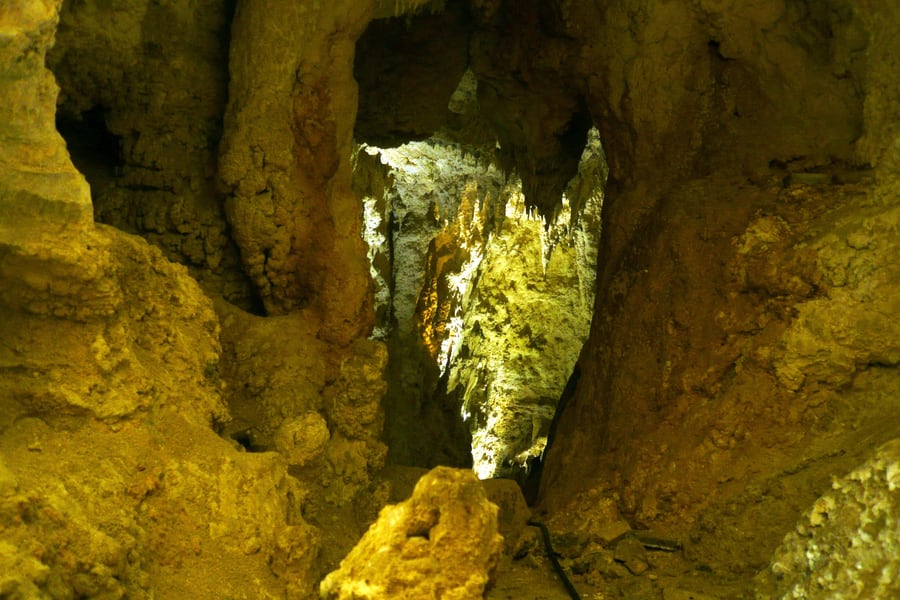 Николай Максимович / Wikimedia Commons · CC BY 3.0 · cropped
The Waitomo Caves
Thirty million years of limestone, and a ceiling of Arachnocampa luminosa — a glowworm found nowhere but New Zealand — reached by boat along an underground stream. Tāne Tinorau and the surveyor Fred Mace poled a raft in by candlelight in December 1887 and found the Glowworm Grotto; the caves were opened to visitors two years later, and returned to Tinorau's descendants in 1989. The railway reaching Ōtorohanga is what made them visitable at all.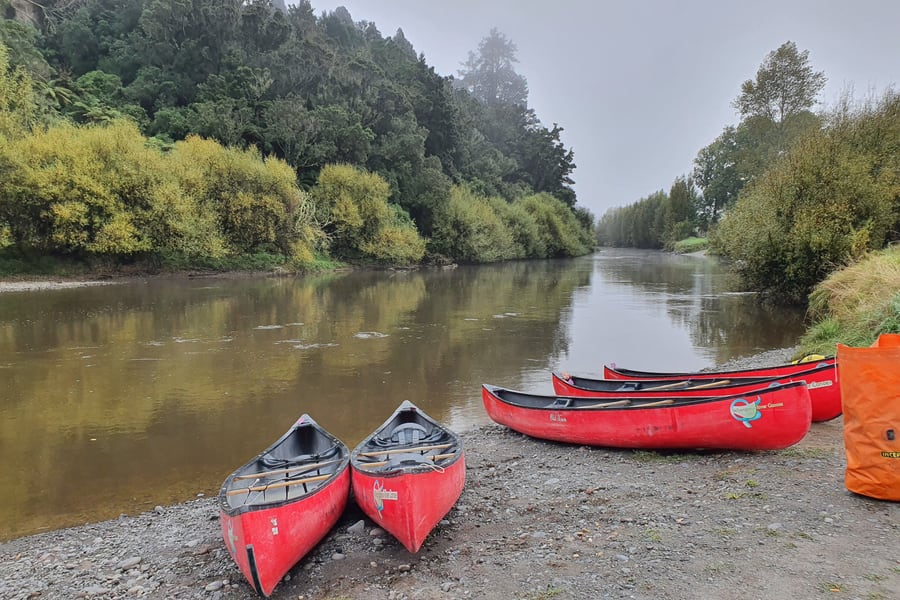 ShakyIsles / Wikimedia Commons · CC BY-SA 4.0 · cropped
The Whanganui River
New Zealand's third-longest river, 290 km from the slopes of Tongariro to the sea, and since March 2017 a legal person in its own right — Te Awa Tupua, with the rights and duties of one, the settlement of the longest-running litigation in the country's history. The Whanganui Journey is the one Great Walk you paddle: 145 km and about five days from Taumarunui down to Pipiriki, through bush country with no road beside it.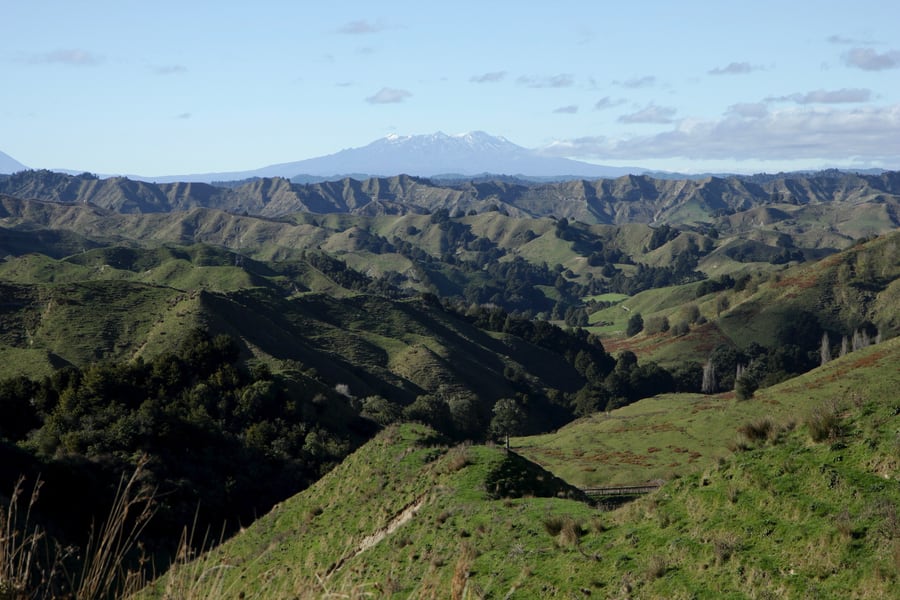 Tom Ackroyd / Wikimedia Commons · CC BY-SA 4.0 · cropped
Tongariro National Park
New Zealand's first national park and the sixth in the world, listed by UNESCO for its culture as well as its landscape. The Tongariro Alpine Crossing — 19.4 km and about seven hours from Mangatepopo to Ketetahi, past steaming vents and the Emerald Lakes — is routinely called the best day walk in the country, and Waimarino National Park is the station nearest its start. In winter the same ground is a ski field.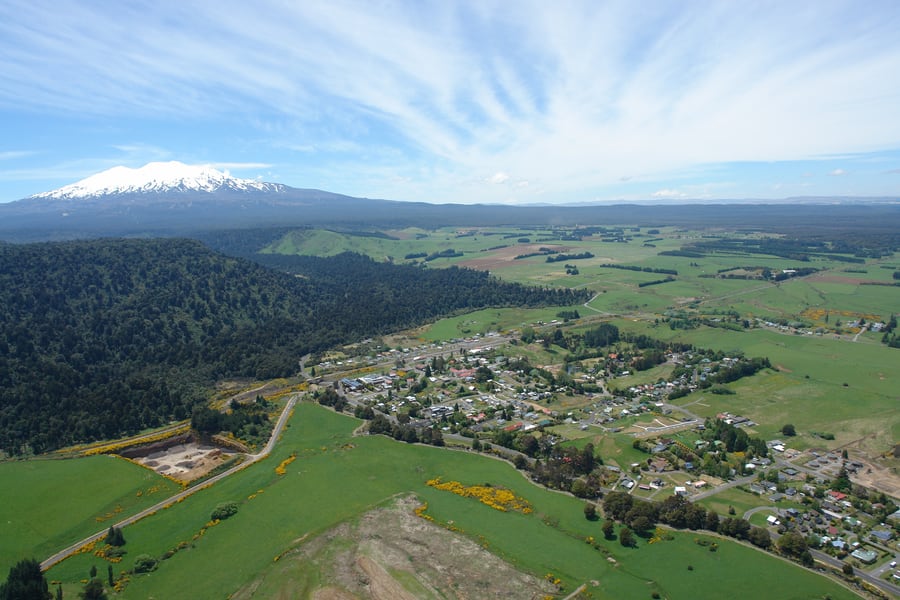 Duane Wilkins / Wikimedia Commons · CC BY 3.0 · cropped
Ohakune
A mountain town under the south-west face of Ruapehu that calls itself the country's carrot capital, with a giant fibreglass carrot on the road in to prove it. In winter it is the base for the Tūroa ski field; in summer, for the Old Coach Road — a cobbled sett-stone road laid in the 1880s so horse-drawn coaches could bridge the gap between the two railheads, now a trail from Horopito past both Hapuawhenua viaducts.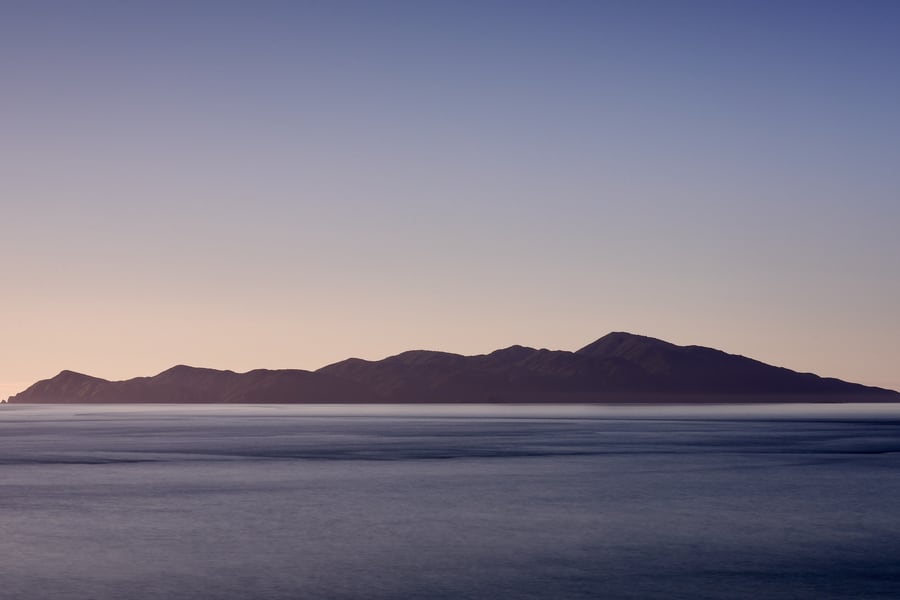 Geoff McKay / Wikimedia Commons · CC BY 2.0 · cropped
Kāpiti Island
A 19.65 km² nature reserve cleared of predators, and one of the few places where kākā, kōkako, takahē and hihi can be seen in the open. Boats run from the Kapiti Boating Club at Paraparaumu Beach and only approved operators may land — private boats cannot — so book before you plan the day. A track climbs to Tūteremoana at 521 m. Ownership returned to Ngāti Toa at the end of 2024.Where to Sleep
The two ends are cities and the middle is a mountain town, which makes the choice simple. In Auckland, remember that the train leaves from The Strand in Parnell rather than from the harbourside Britomart, and that check-in closes twenty minutes before a 07:40 departure — stay somewhere you can reach it early without a fuss. Wellington's station is at the top of the harbour, ten minutes' walk from Parliament and the Terrace, so almost anywhere central works.
In between, Ohakune is the one stop worth building a night around: it sits under Ruapehu, it has the ski fields in winter and the Old Coach Road and the Tongariro Alpine Crossing in summer, and several of its lodges will meet the train.
Where to stay
Hotel DeBrett
Auckland, 2 High Street
Twenty-five rooms in an art deco building off High Street, a short taxi ride from the departure platform at The Strand.
Check Availability (opens in a new tab, on hoteldebrett.com)via hoteldebrett.comPowderhorn Chateau
Ohakune, at the foot of Ruapehu
An alpine-styled lodge with the Powderkeg bar downstairs, and transfers from the railway station arranged on request.
Check Availability (opens in a new tab, on powderhorn.co.nz)via powderhorn.co.nzBolton Hotel
Wellington, 12 Bolton Street
A family-owned independent hotel opened in 2005, a few minutes' walk from Parliament and from the railway station.
Check Availability (opens in a new tab, on boltonhotel.co.nz)via boltonhotel.co.nzQuestions or corrections
Planning this trip and stuck on something, or spotted a time, fare or detail that has changed? Send us a message about Northern Explorer. We read every one, and we update this page when something has changed.