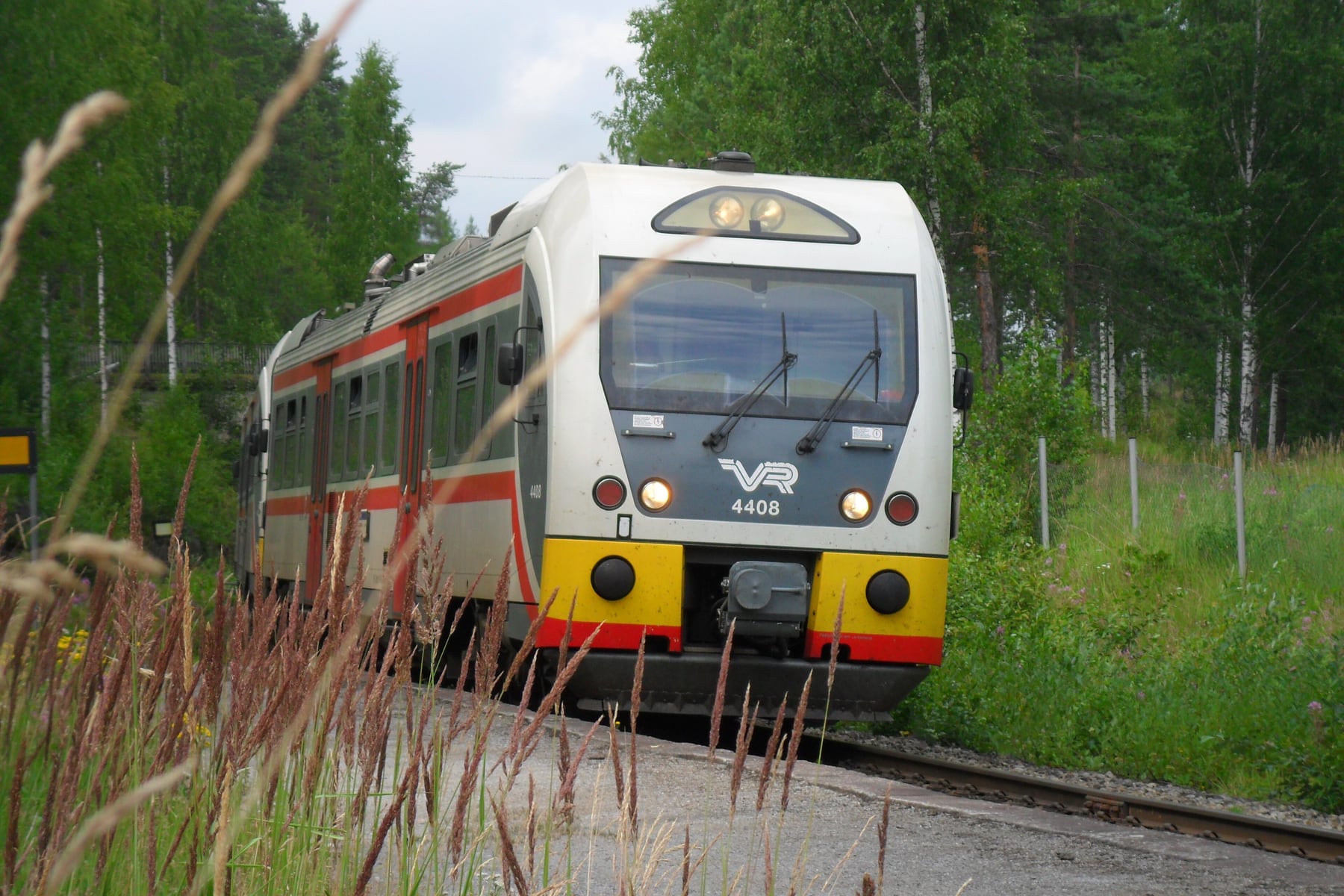
Parikkala to Savonlinna
George Woes JR / Wikimedia Commons · CC BY 3.0 · cropped
- DistanceParikkala–Savonlinna · 58 km
- Duration53 minutes · about 4½ hours from Helsinki, with one change
- Best seasonAll year · summer for the lakes, the steamers and the opera
Introduction
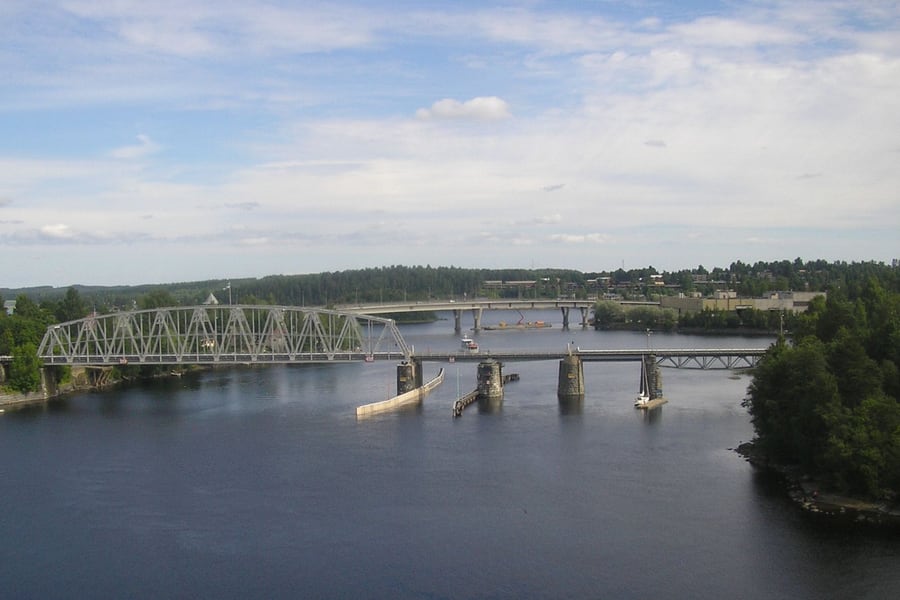
Just before Savonlinna the train crosses Kyrönsalmi, the strait beside the castle of Olavinlinna, on a steel bridge built in 1908. For more than a century it was an opening bridge: the deep-water channel of Lake Saimaa ran through the strait, and the bridge opened for ships about 1,300 times a year. It stopped opening in 2019, when the ships were sent another way, through the strait of Laitaatsalmi west of the town. That move cost the railway its other bridge. The line on to Huutokoski closed in 2015, its bridge across Laitaatsalmi was taken down in 2018, and Savonlinna, built as a station on a line across the lake district, became the end of the track.
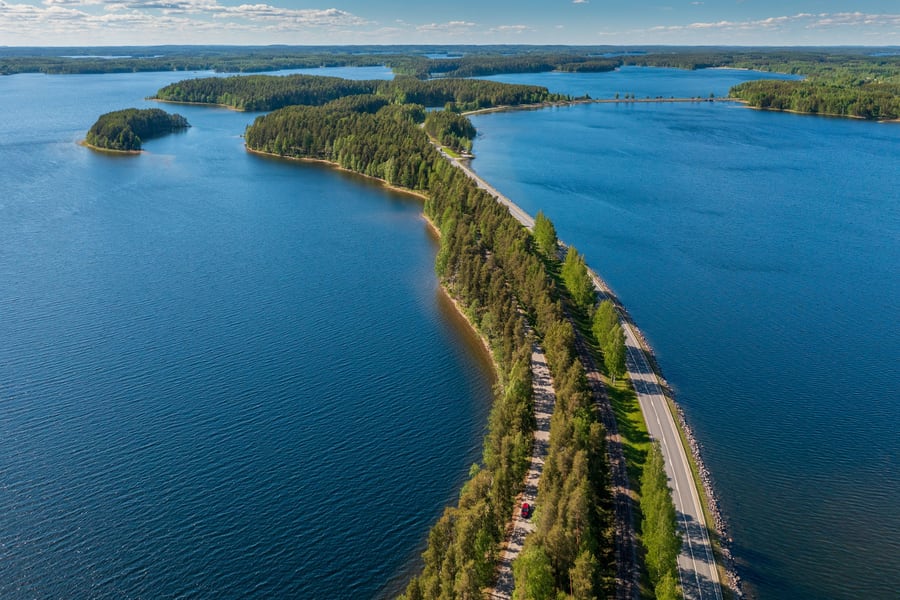
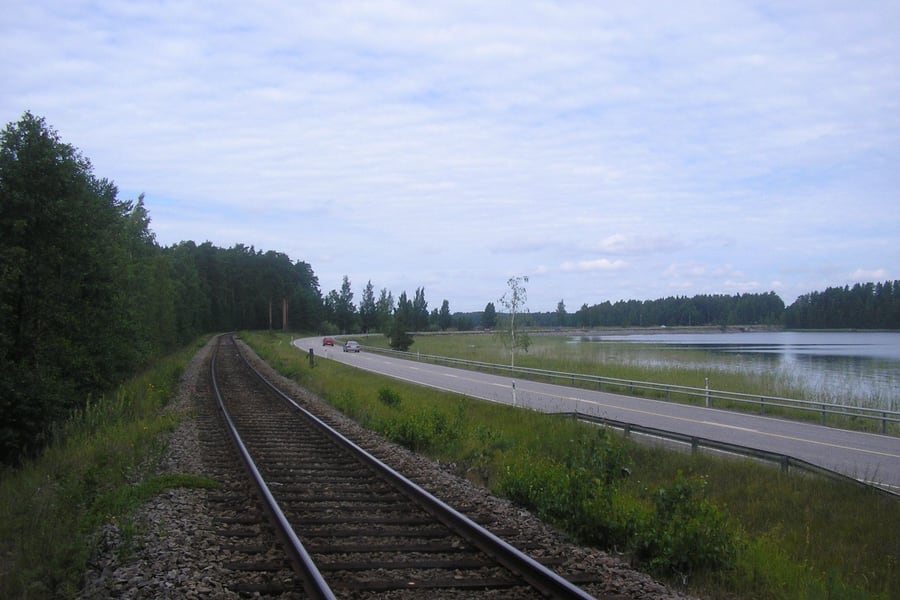
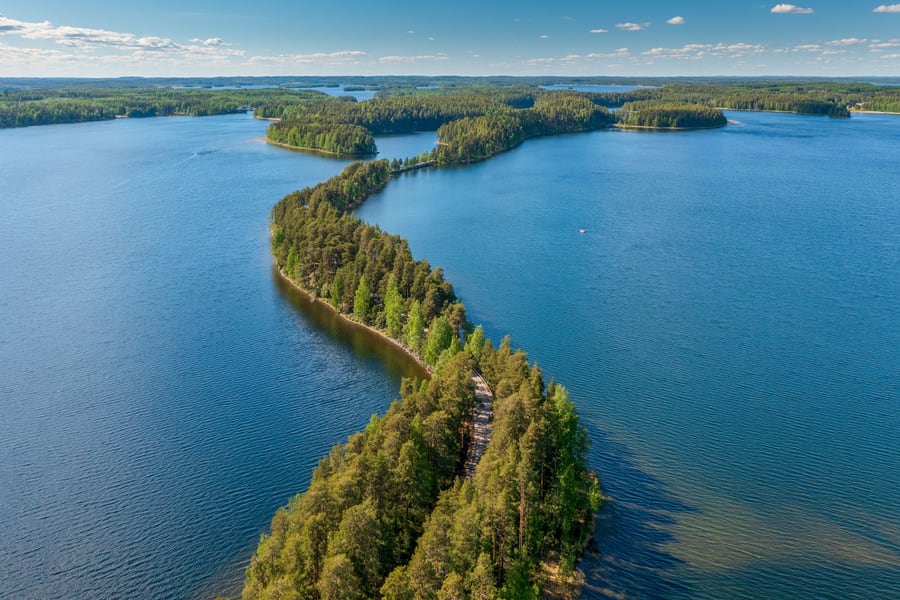
What is left is 58 kilometres from Parikkala, on VR's main line between Helsinki and Joensuu, to Savonlinna, run by single diesel railcars, and for its best stretch it has water on both sides. The line climbs onto Punkaharju, a narrow ridge of glacial gravel with a lake on either side, and follows it past stations designed in 1906–08 by Bruno Granholm, with the old road beside it among the pines.
The railcar takes 53 minutes, six times a day in each direction on weekdays, timed to meet the InterCity and Pendolino trains at Parikkala. From Helsinki the whole trip takes about four and a half hours, and Savonlinna's station is on the lakeshore by the market square, fifteen minutes' walk from the castle.
The Journey
Parikkala is a junction on the Karelian line. The InterCity and Pendolino trains between Helsinki and Joensuu stop here, and the railcar for Savonlinna waits on track 3. The station has sold no tickets since 2005; tickets are sold on vr.fi. The branch heads north-west through farmland and forest to Punkaharju, about 25 kilometres out, a small station of the original line that was called Punkasalmi until 1989.
Along the ridge
Beyond Punkaharju the line runs onto the ridge itself, a band of gravel left by the retreating ice, about seven kilometres long, with the old road running along it beside the track. Pihlajavesi lies on one side and Puruvesi on the other, and the train runs among pines with water on both sides. Travellers have come to see this since the 1840s, when a forester's house on the ridge first took in guests; the railway, opened as far as Punkaharju in November 1906, made it far easier to reach. A second forester lived at the southern end, and part of his job was watching for fires started by the sparks of passing steam engines.
Lusto is the grand station of the line, the original Punkaharju, a national-romantic wooden building of 1908 with a waiting hall and a post office. The Finnish Forest Museum stands beside it. Three minutes later comes Retretti, a halt built in 1987 for the art centre in the caverns of Tuunaansaari. It has no building: the shelter from the rain is a huge concrete sculpture by Olavi Lanu of a seated figure bending forward on its arms.
To Savonlinna
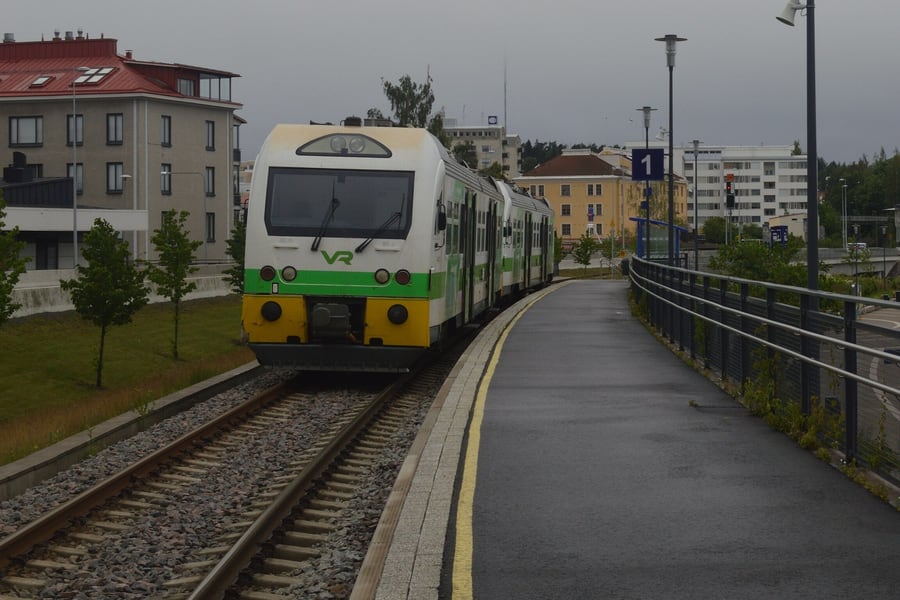
After the ridge the line runs through forest and farms to Kerimäki, opened in 1907 as Silvola and ten kilometres from the village it is named for, and to Pääskylahti, on the edge of Savonlinna, where the railcars are serviced. Then it crosses Kyrönsalmi beside Olavinlinna and stops on the shore of Koululahti bay, by the market square. Savonlinna's station of 1907 lay a kilometre further on and closed in 2011, when the line was moved for a new road; today's terminus, a single platform, opened in June 2012 next to the old market-square stop.
The line that lost both ends
The railway was built as a link across the lake district. It opened from Elisenvaara, on the old Karelian main line, to Savonlinna on 1 February 1908, and on to Pieksämäki in 1914. Elisenvaara was lost in the Second World War, and from 1949 Parikkala, reached by a new link, became the line's eastern end. Passenger trains west of Savonlinna stopped in 1988. The track to Huutokoski was rebuilt for €42 million in 2008, but its Savonlinna end closed in 2015 for the new deep-water channel, and a swing bridge to replace the one at Laitaatsalmi was never funded.
The railcars
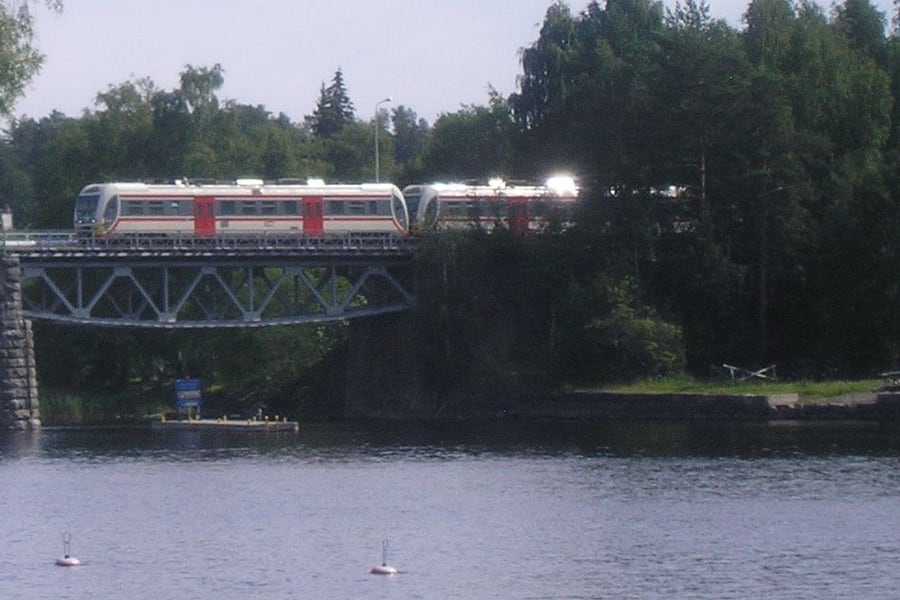
The trains are VR's Dm12 railcars, built by ČKD Vagonka in the Czech Republic and on this line since February 2006. Up to three can run coupled together, each has a wheelchair lift, and most trips run with the driver as the only crew. Finnish enthusiasts call them Lipokas or Demari, the second from the class letters.
Along the route
 Otto Karikoski / Wikimedia Commons · CC BY-SA 4.0 · cropped
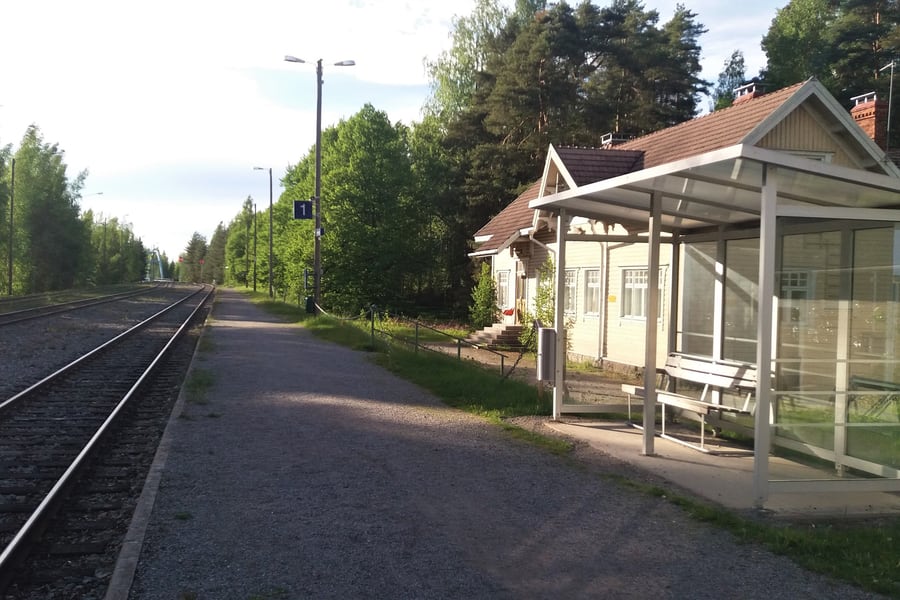
Two stations, one name
Today's Punkaharju station, a wooden building by Granholm in the smallest class, used to be called Punkasalmi, after the village around it. The station first called Punkaharju is the next stop up the line, renamed Lusto for the museum beside it.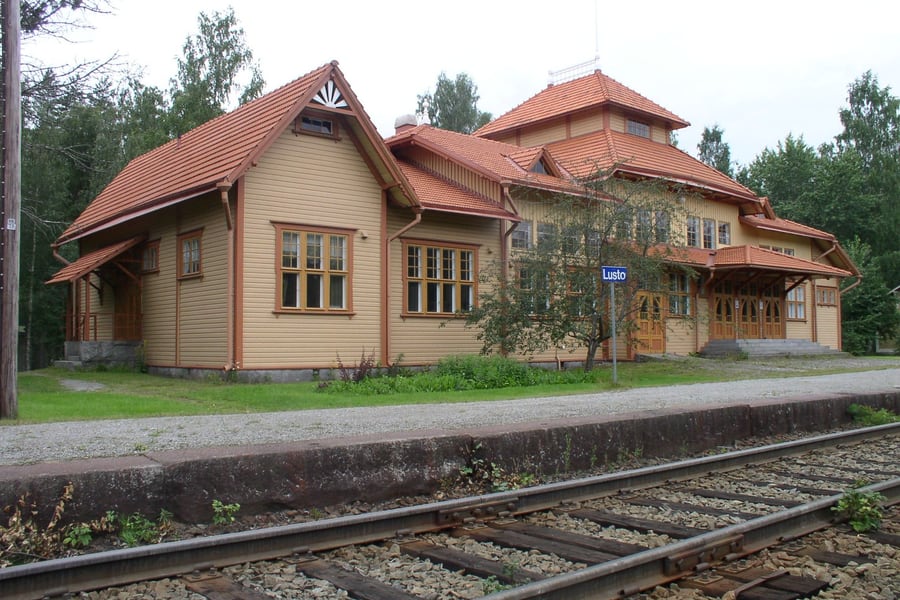 Antti Bilund / Wikimedia Commons · CC BY-SA 3.0 · cropped
Lusto, the grandest halt
The old Punkaharju station of 1908 is a national-romantic wooden building with a grand waiting room and, from the start, a post office: a bigger station than the line needs now. The forest museum is next door.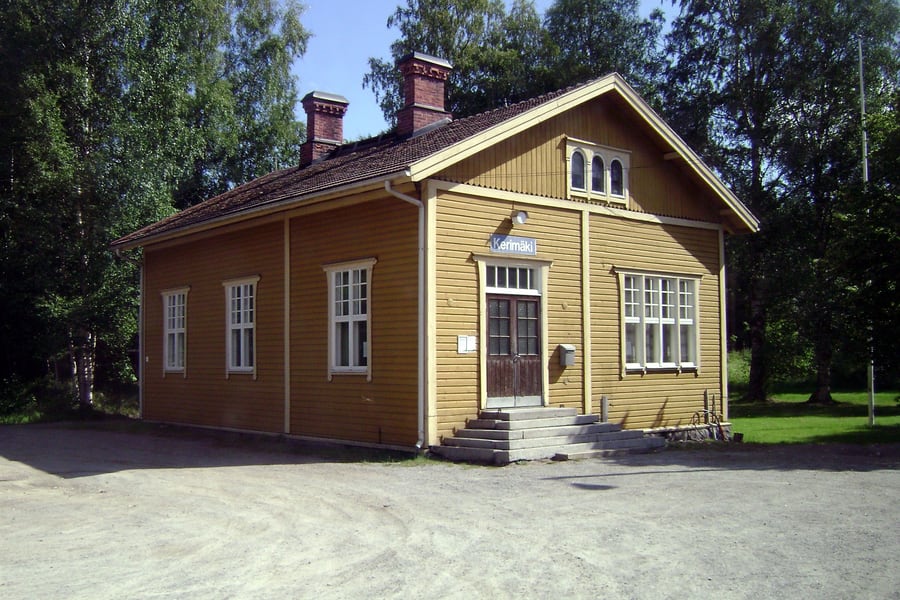 junafani / Wikimedia Commons · CC BY-SA 3.0 · cropped
Kerimäki, ten kilometres off
The station opened in December 1907 as Silvola and took Kerimäki's name only in 1988. The village and its great wooden church are about ten kilometres to the north-east, so the stop is for the country around it.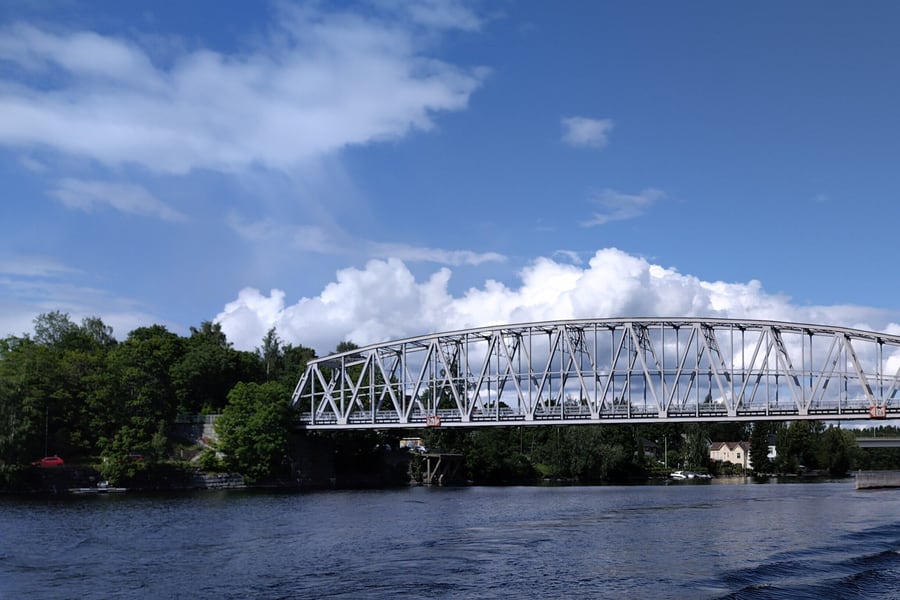 Sinoyuwiki / Wikimedia Commons · CC BY-SA 4.0 · cropped
The bridge by the castle
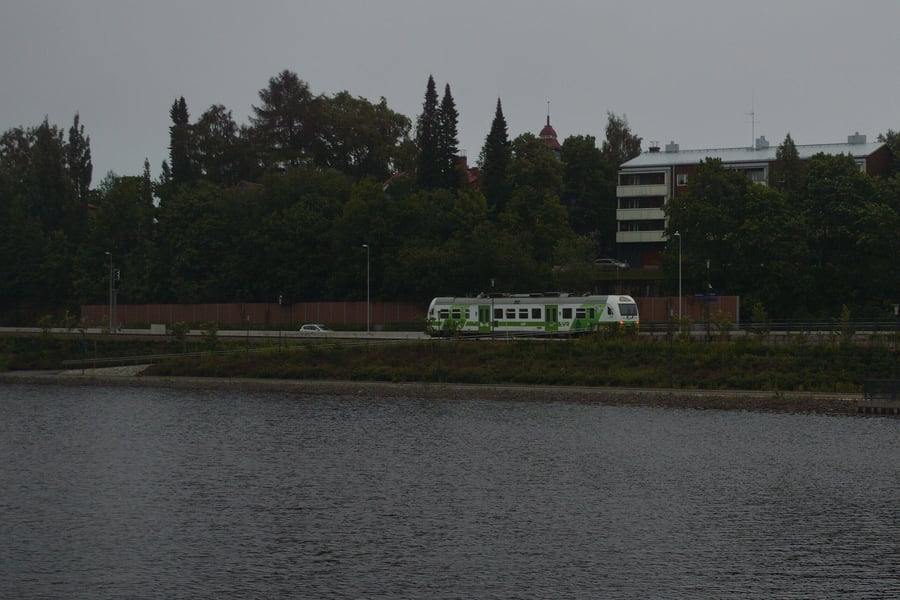
Just before Savonlinna the train crosses Kyrönsalmi on a steel bridge of 1908, a few hundred metres from Olavinlinna. It opened for ships about 1,300 times a year until the deep-water channel moved away in 2019.A bit of history
Culture & experiences along the way
 Koothe / Wikimedia Commons · CC BY-SA 4.0 · cropped
Out on the lake
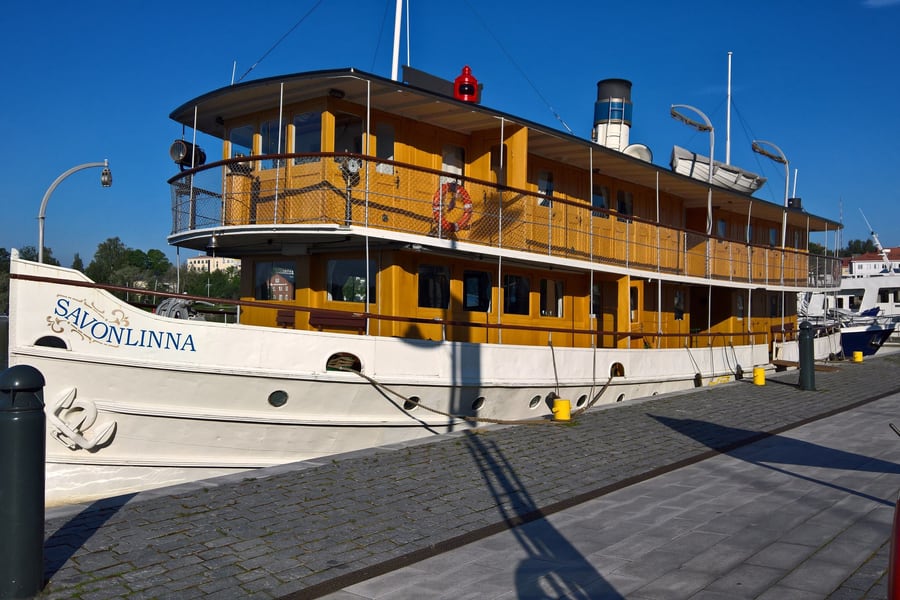
From June to August scenic cruises leave Savonlinna's passenger harbour, beside the market square, as often as every half hour, for an hour or an hour and a half on Saimaa. Longer ones go to Punkaharju, and old steamships like the Savonlinna of 1904 tie up along the quay.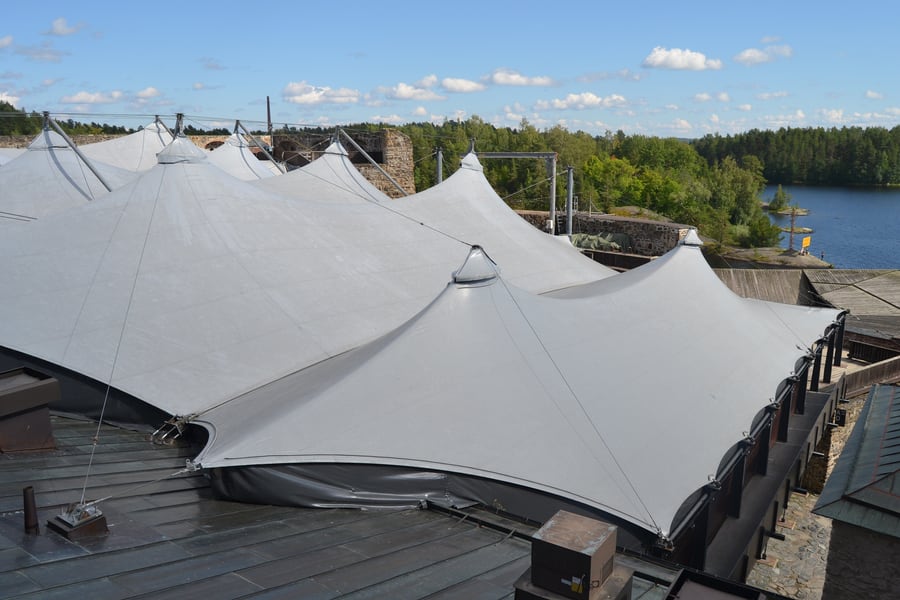 Antti Leppänen / Wikimedia Commons · CC BY 4.0 · cropped
Opera in the castle
Every July the Savonlinna Opera Festival stages its operas inside Olavinlinna, under a white canopy raised over the castle. It was first held in 1912, and in 2027 it turns 115, with four productions between 3 and 31 July.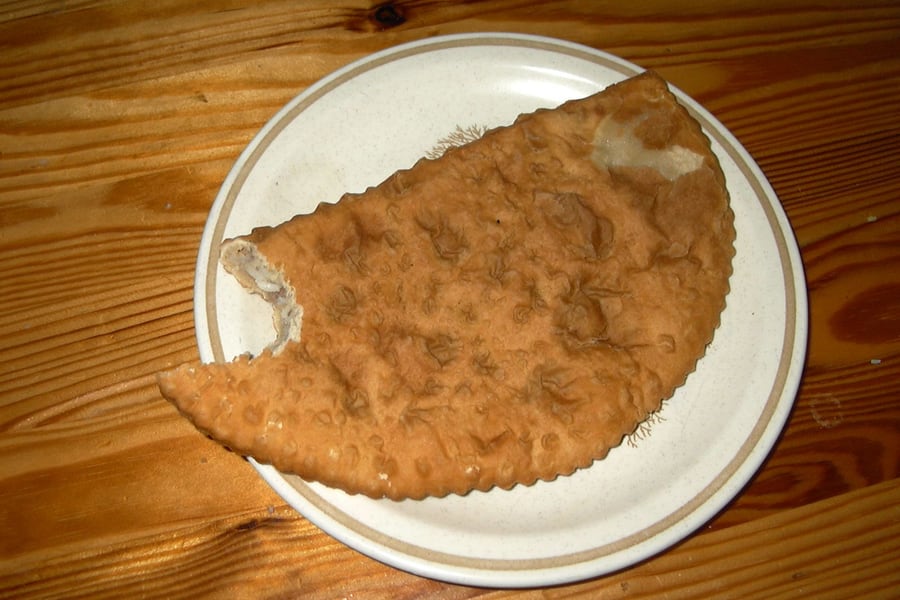 Stonda / Wikimedia Commons · Public domain · cropped
A lörtsy on the market square
Savonlinna's own snack is the lörtsy, a fried half-moon pastry, savoury or sweet. The town's tourist board says to buy it on the market square, a savoury one first and a sweet one after, and eat it looking out over the lake.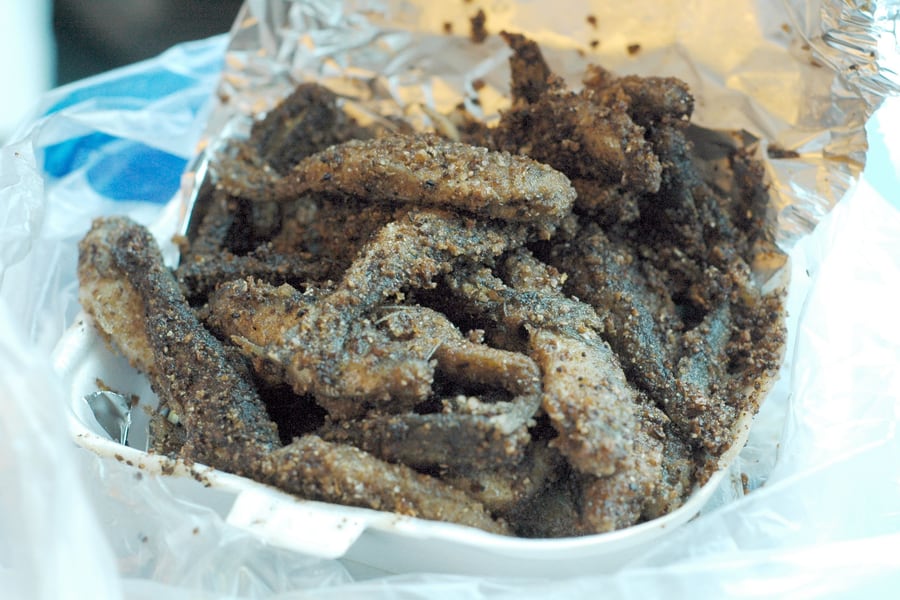 Jpatokal / Wikimedia Commons · CC BY-SA 4.0 · cropped
Fried vendace
Muikku, the small vendace of Saimaa, comes pan-fried, smoked, in soup or baked inside a loaf. Vendace from Lake Puruvesi, one of the two lakes the ridge divides, has had an EU protected name since 2013.Timetables
The railcar runs six times a day in each direction from Monday to Friday, five on Saturdays and Sundays. Each one is timed to connect at Parikkala with the trains between Helsinki and Joensuu. No reservation is needed, and every train stops at every station.
Times below are VR's timetable for November 2026, read in October 2026. Check departures at vr.fi (opens in a new tab).
Parikkala to Savonlinna
| Train | Parikkala | Punkaharju | Lusto | Kerimäki | Savonlinna |
|---|---|---|---|---|---|
| 741 | 07:30 | 07:50 | 07:55 | 08:07 | 08:23 |
| 743 | 10:26 | 10:46 | 10:51 | 11:03 | 11:19 |
| 745 | 13:37 | 13:57 | 14:02 | 14:14 | 14:30 |
| 747 | 16:37 | 16:57 | 17:02 | 17:14 | 17:30 |
| 749 | 19:42 | 20:02 | 20:07 | 20:19 | 20:35 |
| 751 | 22:03 | 22:23 | 22:28 | 22:40 | 22:56 |
Savonlinna to Parikkala
| Train | Savonlinna | Kerimäki | Lusto | Punkaharju | Parikkala |
|---|---|---|---|---|---|
| 740 | 06:19 | 06:31 | 06:43 | 06:49 | 07:12 |
| 742 | 09:19 | 09:31 | 09:43 | 09:49 | 10:12 |
| 744 | 12:30 | 12:42 | 12:54 | 13:00 | 13:23 |
| 746 | 15:30 | 15:42 | 15:54 | 16:00 | 16:23 |
| 748 | 18:35 | 18:47 | 18:59 | 19:05 | 19:28 |
| 750 | 20:56 | 21:08 | 21:20 | 21:26 | 21:49 |
Retretti is three minutes from Lusto and Pääskylahti five from Savonlinna. On Saturdays trains 749 and 750 do not run, and on Sundays the first pair, 740 and 741, do not run.
From Helsinki
The connections at Parikkala are short, six to eleven minutes. On weekdays the 06:54 from Helsinki reaches Savonlinna at 11:19, the 10:14 at 14:30, the 13:14 at 17:30, the 16:14 at 20:35 and the 18:29 at 22:56. Going back, the 06:19 from Savonlinna is in Helsinki at 10:44, the 09:19 at 13:44, the 12:30 at 16:44, the 15:30 at 19:45 and the 18:35 at 22:45. At weekends, check the connection on the day: the 16:14 from Helsinki has no railcar to meet it on Saturdays.
Tickets
VR sells tickets on vr.fi (opens in a new tab) and in its VR Matkalla app, and prices move with demand. In October 2026 a single from Parikkala to Savonlinna cost €12.70 to €14.00, and a through ticket from Helsinki, with the change at Parikkala, from €50.70. Seats are not reserved on the railcar, none of the stations on the branch sells tickets, and VR sells none on board: on a railcar you must have bought your ticket in advance.
For the whole trip, book Helsinki to Savonlinna as one journey: the search returns the InterCity or Pendolino and the railcar together, with the connection built in.
Book your tickets
Parikkala to Savonlinna
VR railcar · 53 minutes
A single on the branch, bought in advance, since the railcar sells no tickets on board.
Book Tickets (opens in a new tab, on vr.fi)via vr.fiHelsinki to Savonlinna
InterCity or Pendolino, then the railcar
One ticket for the whole trip, with the change at Parikkala timed into it.
Book Tickets (opens in a new tab, on vr.fi)via vr.fiRail Passes
Interrail and Eurail passes cover this line. Interrail's list of what the pass covers in Finland includes VR's regional trains, InterCity and Pendolino, with reservations optional on all of them, so a pass holder can ride from Helsinki to Savonlinna without paying anything more.
Whether a pass is worth buying depends on the rest of the trip. With a single from Parikkala costing around €13 and a through ticket from Helsinki from about €50, ordinary tickets are the simpler buy for a return to Savonlinna alone. A pass earns its price when Savonlinna is one stop on a longer journey around Finland.
Pass conditions checked against Interrail's railway-companies page, last updated 21 October 2026. Conditions change with each season, and the pass issuer's page is the one that binds.
Places to Visit
The line has two kinds of stop worth getting off at: the ridge, with its trails and the forest museum, and Savonlinna, a town built around a castle in a lake.
Lusto station is on the ridge, beside the museum. Kerimäki church is about ten kilometres from its station, so it is easier to reach by road from Savonlinna. In Savonlinna the castle and the museum island next to it are a fifteen-minute walk from the station.
 BishkekRocks / Wikimedia Commons · CC BY-SA 3.0 · cropped
The ridge between two lakes
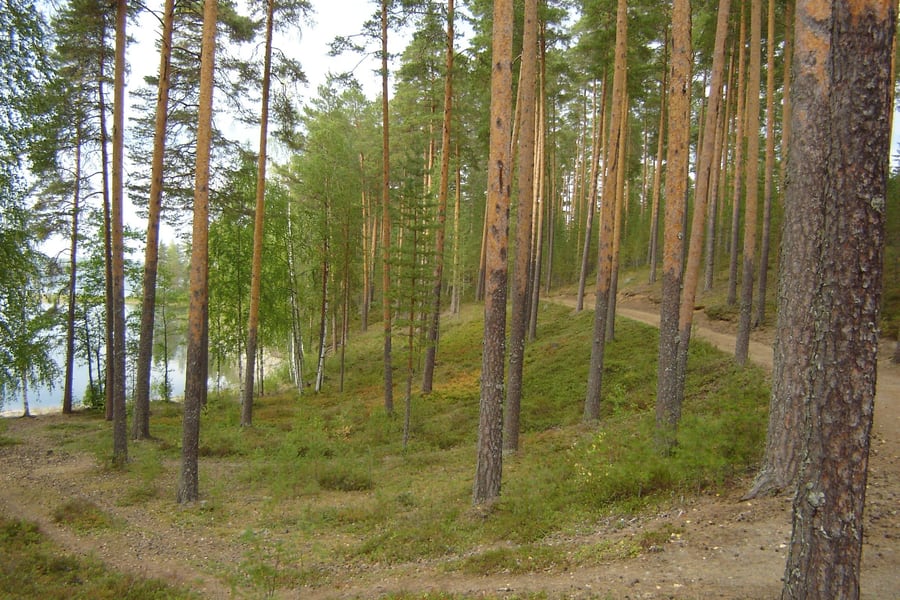
Punkaharju is a glacial ridge about seven kilometres long, with Pihlajavesi on one side and Puruvesi on the other, its highest point 31 metres above the lake. Alexander I ordered its forest spared from felling in 1803, it became a crown park in 1843, and it is now one of Finland's national landscapes and one of the oldest nature reserves in the world, with trails along it and, in winter, a skating route of up to 17 km on the natural ice.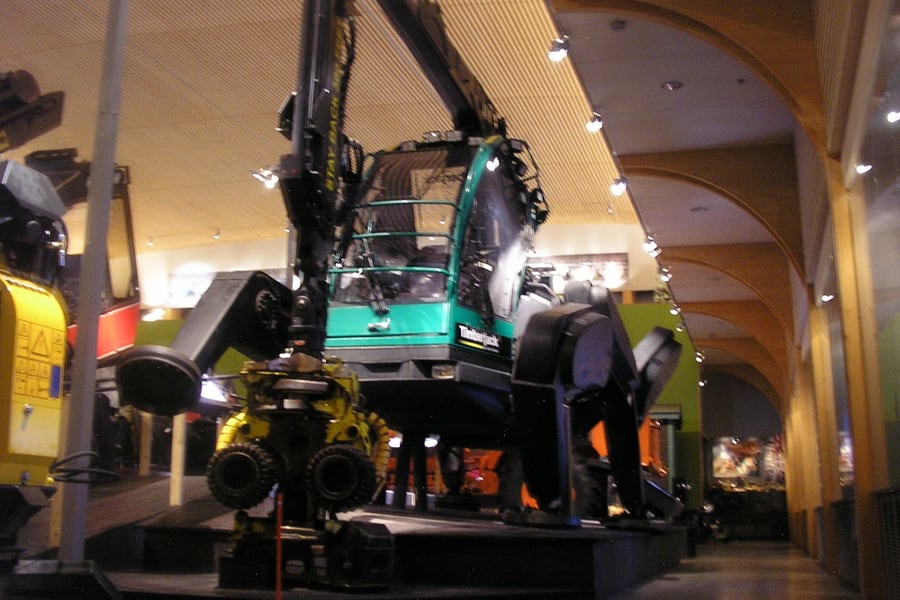 Antti Leppänen / Wikimedia Commons · CC BY-SA 2.0 · cropped
The forest museum
Lusto, the Finnish Forest Museum, opened in 1994 next to the old station, on both the railway and Road 14. It is the national museum of forest culture: how Finns have worked, lived with and made a living from the forest, with a hall of forest machines from the first harvesters to the newest. It is open all year, and adult tickets cost €18.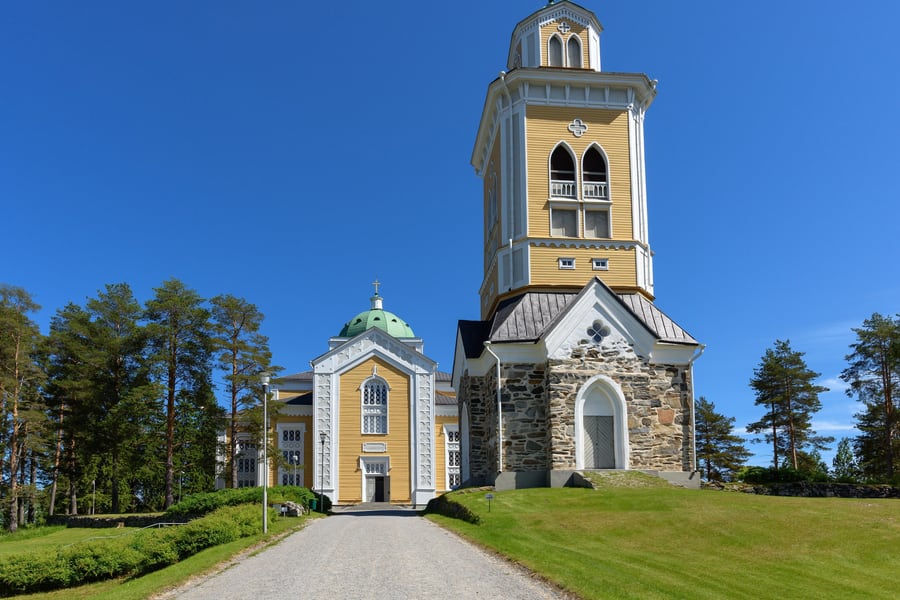 Teuvo Salmenjoki / Wikimedia Commons · CC BY-SA 4.0 · cropped
The largest wooden church
Kerimäki church, finished in 1847, is the largest wooden church in the world: 45 metres long, 42 wide and 27 high, with a dome 37 metres up, 1,670 metres of pews and seats for more than 3,000. The vicar wanted room for half the parish at once. It is closed to visitors throughout 2026 for renovation; in other years it opens in summer.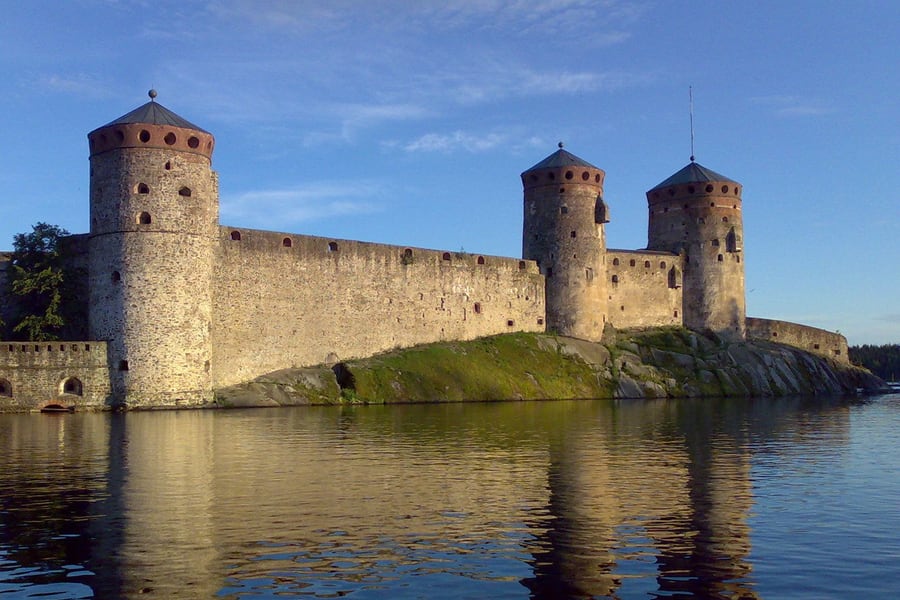 Jaakko H. / Wikimedia Commons · CC BY-SA 3.0 · cropped
The castle in the strait
Olavinlinna was built in the 1470s on a rock island in Kyrönsalmi, to hold the Swedish kingdom's eastern border, and it is one of the best-preserved medieval castles in Finland. The town of Savonlinna grew up around it. Its museum exhibitions cover the castle's history, it is reached by a floating footbridge, and adult tickets cost €15.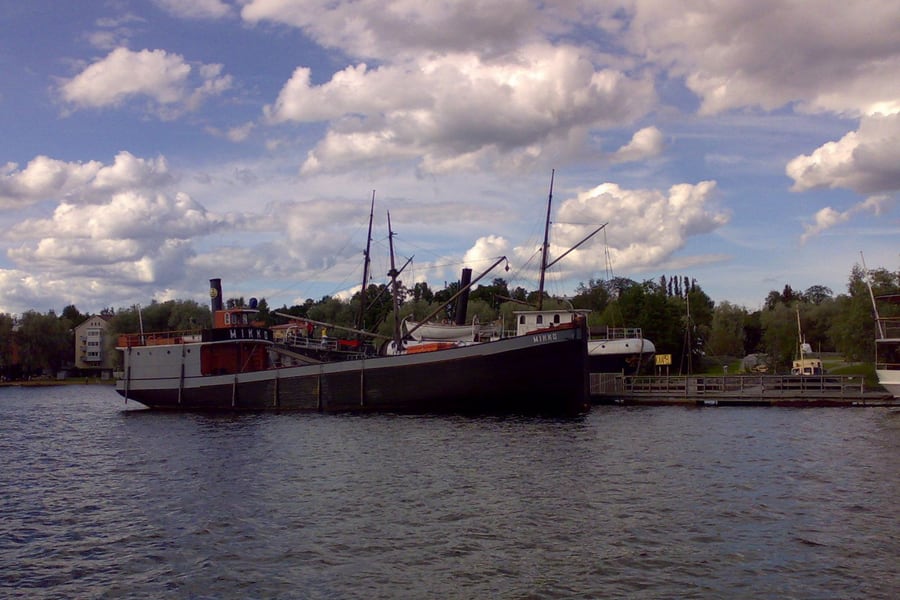 Jaakko H. / Wikimedia Commons · CC BY-SA 3.0 · cropped
The museum island and its steamers
Riihisaari, the Savonlinna Museum, tells the history of the region and of sailing on Saimaa, and was Finland's Museum of the Year in 2023. In summer its steamships are open to visit: the schooner Salama of 1874, which sank in 1898 and was raised, and the Mikko of 1914, the last true wood-framed tar steamer in the world. Adults pay €11, under-18s nothing.Where to Sleep
The railcar takes under an hour, so the line is easy to ride both ways in a day from Savonlinna. To stay on the ridge itself, the old State Hotel at Punkaharju has been taking in travellers since 1845. Savonlinna, at the end of the line, has the most choice.
The places below keep their own websites and take direct bookings.
Where to stay
 Sino Yu / Wikimedia Commons · CC BY-SA 4.0 · cropped
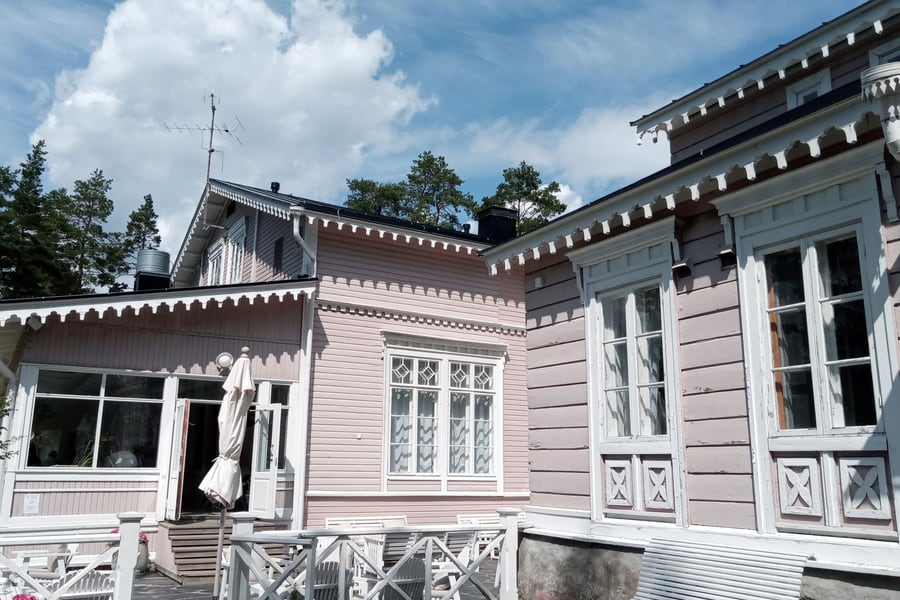
Hotel Punkaharju
On the ridge, since 1845
Begun as a forester's house with three rooms for travellers, it grew into the State Hotel and still stands on the crest of the ridge.
Check Availability (opens in a new tab, on hotelpunkaharju.fi)via hotelpunkaharju.fi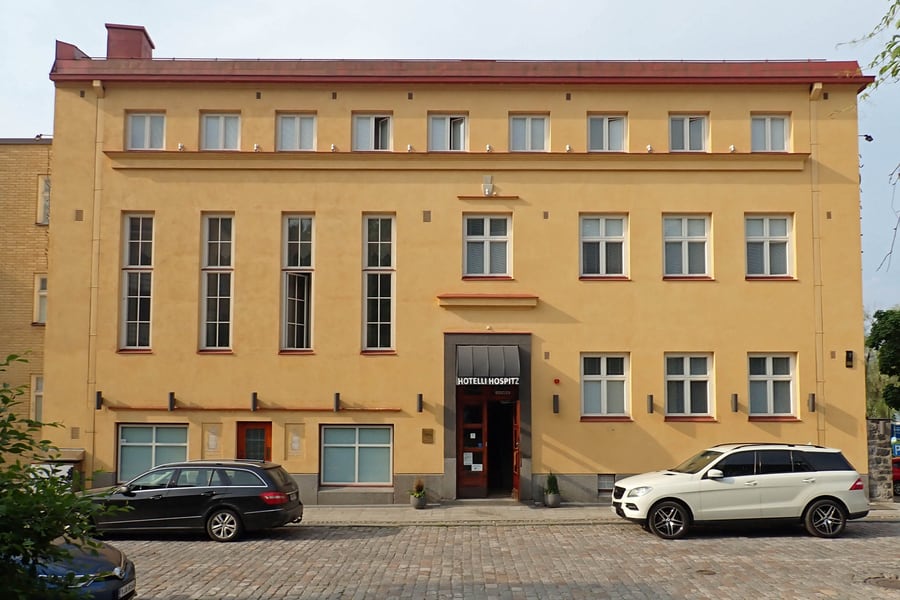 Q0ywo / Wikimedia Commons · CC BY-SA 4.0 · cropped
Hotel Hospitz
By Olavinlinna
A 1933 travellers' home by the architect Wivi Lönn, with 21 rooms a few minutes from the castle.
Check Availability (opens in a new tab, on hospitz.com)via hospitz.comOriginal Sokos Hotel Seurahuone
On the market square
A hotel by the harbour whose sixth-floor terrace, Muikkuterassi, serves fried vendace in summer.
Check Availability (opens in a new tab, on sokoshotels.fi)via sokoshotels.fiQuestions or corrections
Planning this trip and stuck on something, or spotted a time, fare or detail that has changed? Send us a message about Parikkala to Savonlinna. We read every one, and we update this page when something has changed.