The Pelion Railway
Biumbium Bambalo / Wikimedia Commons · CC BY-SA 4.0
- DistanceAno Lechonia–Milies · about 15 km
- DurationAbout 90 minutes each way
- Best seasonWeekends spring–autumn; daily in July–August
Introduction
On the green flank of Mount Pelion, above the Gulf of Volos, runs one of the most charming little railways in Europe. The Greeks call it the "Moutzouris" — "the smudgy one", or "the sooty one" — for the smoke and cinders its old steam engines used to trail through the villages. It is a proper mountain railway in miniature: a 600 mm narrow-gauge line that climbs the wooded slopes on stone viaducts and iron bridges, at a pace so gentle you could almost step off and walk beside it.
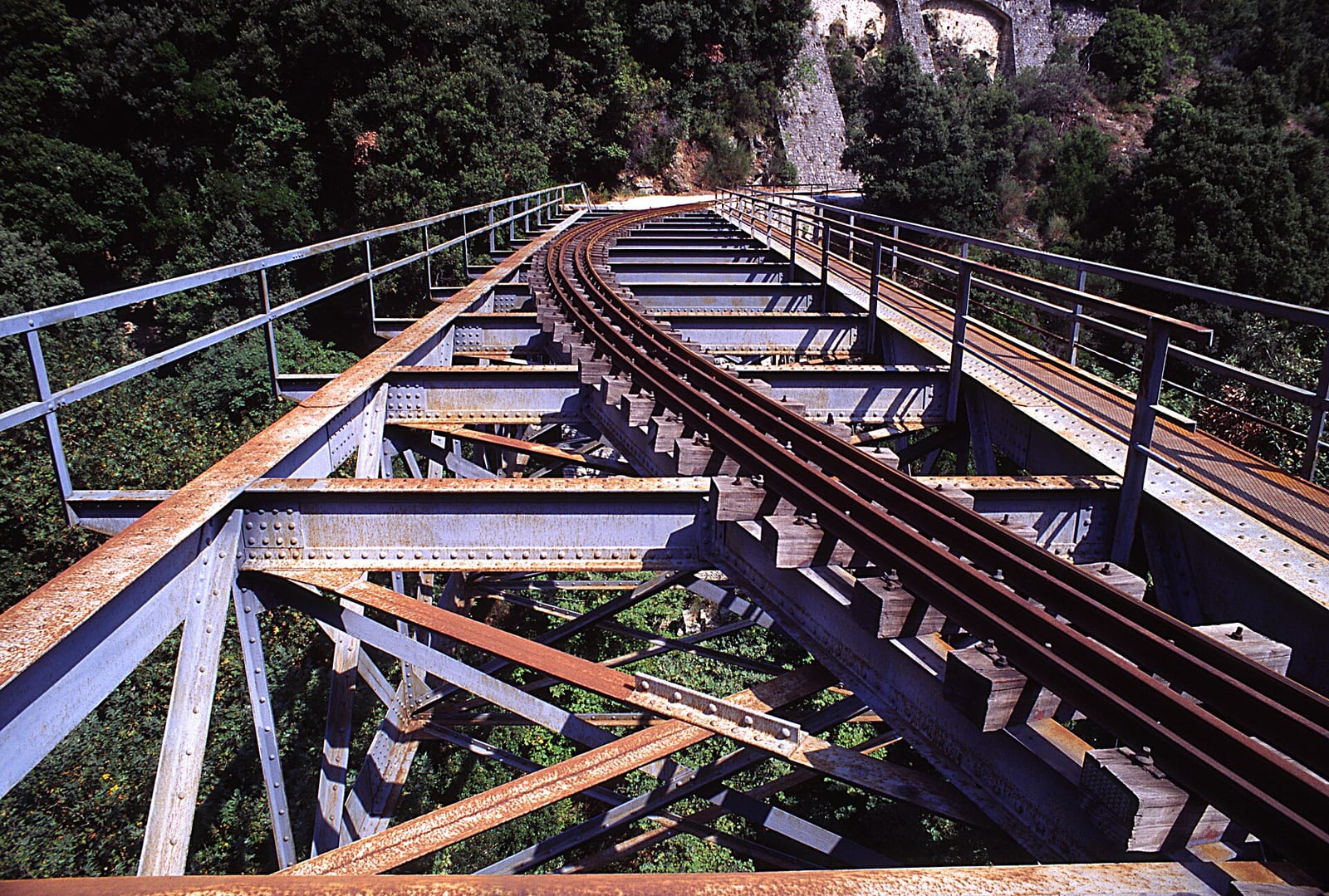
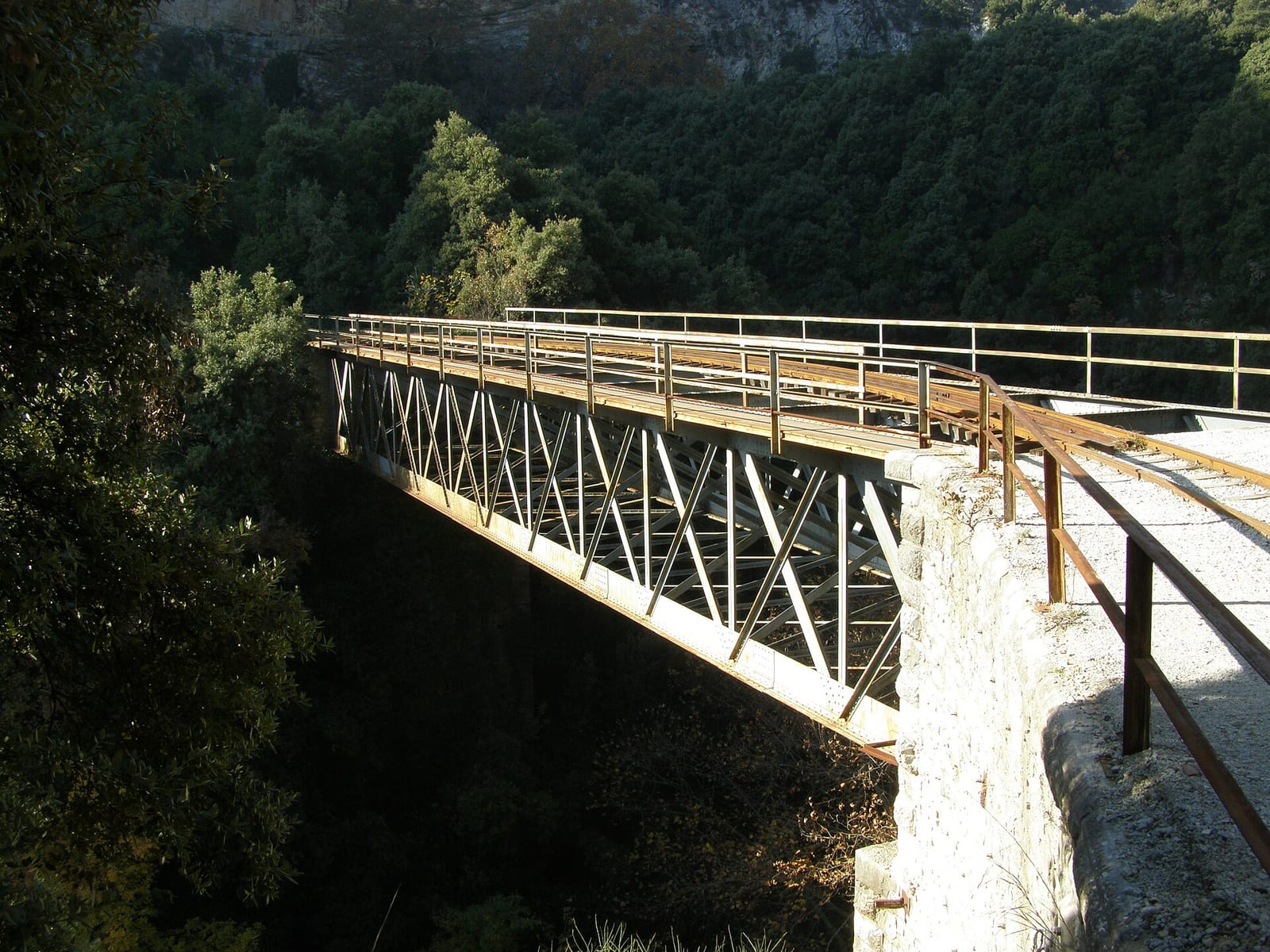
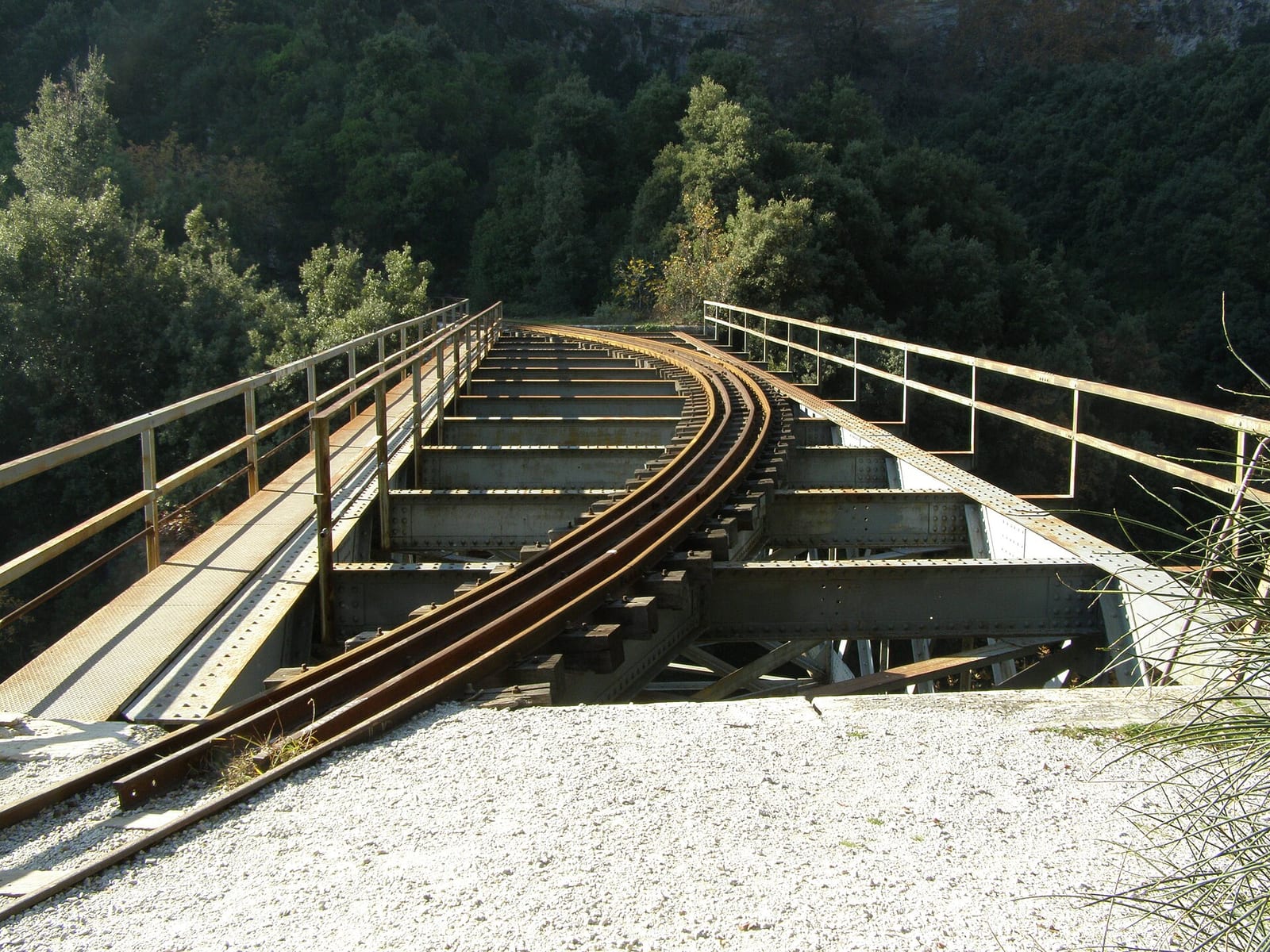
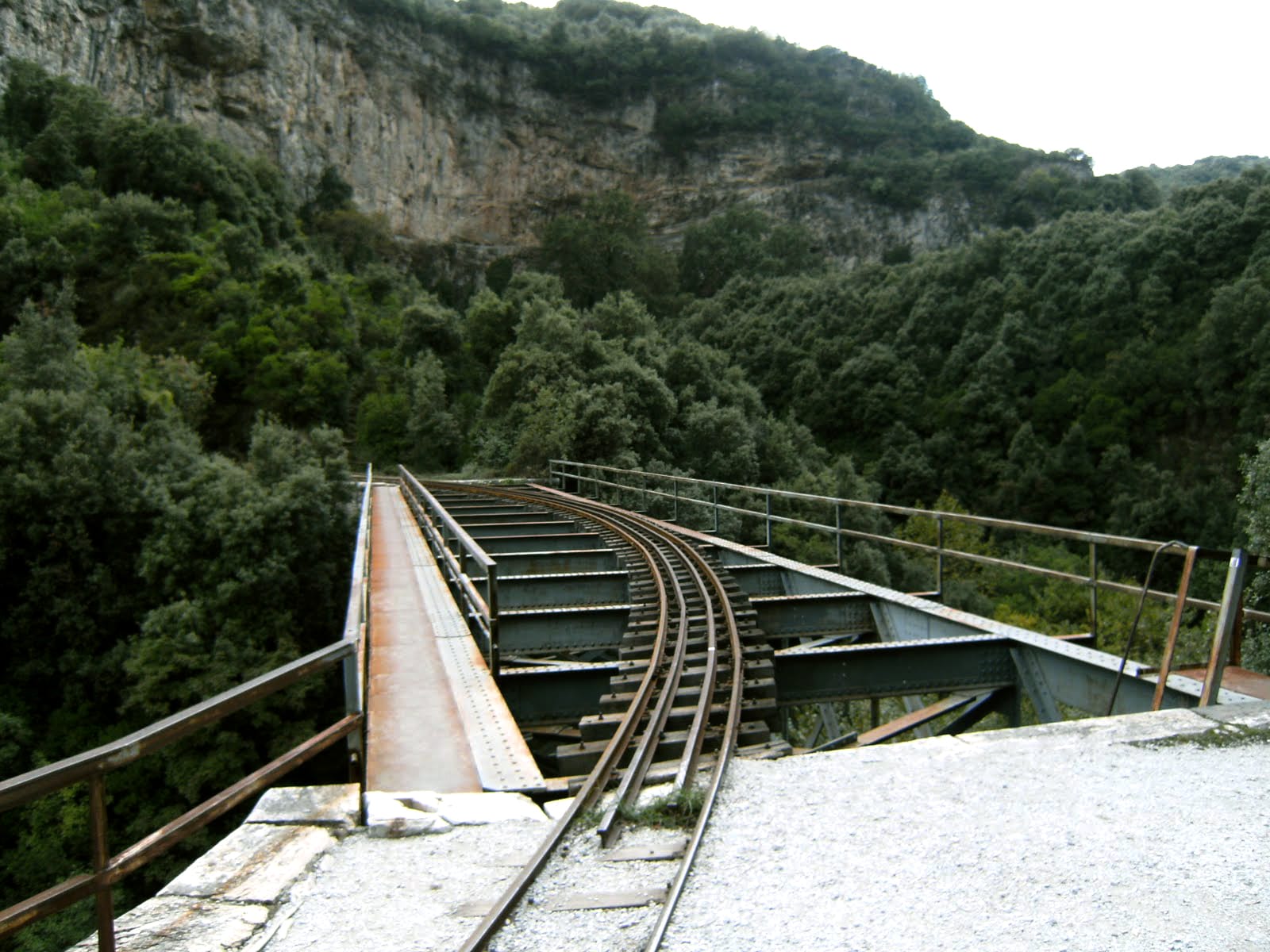
The line was built between 1892 and 1903, engineered by Evaristo de Chirico — an Italian railway engineer whose son, Giorgio de Chirico, grew up to become one of the great painters of the 20th century, and whose dreamlike arcades and long shadows seem to echo the very viaducts his father raised on Pelion. One of those bridges, just short of the top, is the celebrated de Chirico bridge: a straight metal span over a deep ravine that the track crosses on a curve.
Today the little train runs as a heritage railway, up the loveliest, highest stretch of the old line, from Ano Lechonia to the village of Milies. It takes about ninety minutes to cover fifteen kilometres — winding through chestnut woods and olive groves, pausing at Ano Gatzea, and rolling at last into Milies, where a cobbled lane climbs to a village square under the plane trees. It is not a way of getting anywhere quickly. It is a way of savouring a mountain.
The Journey
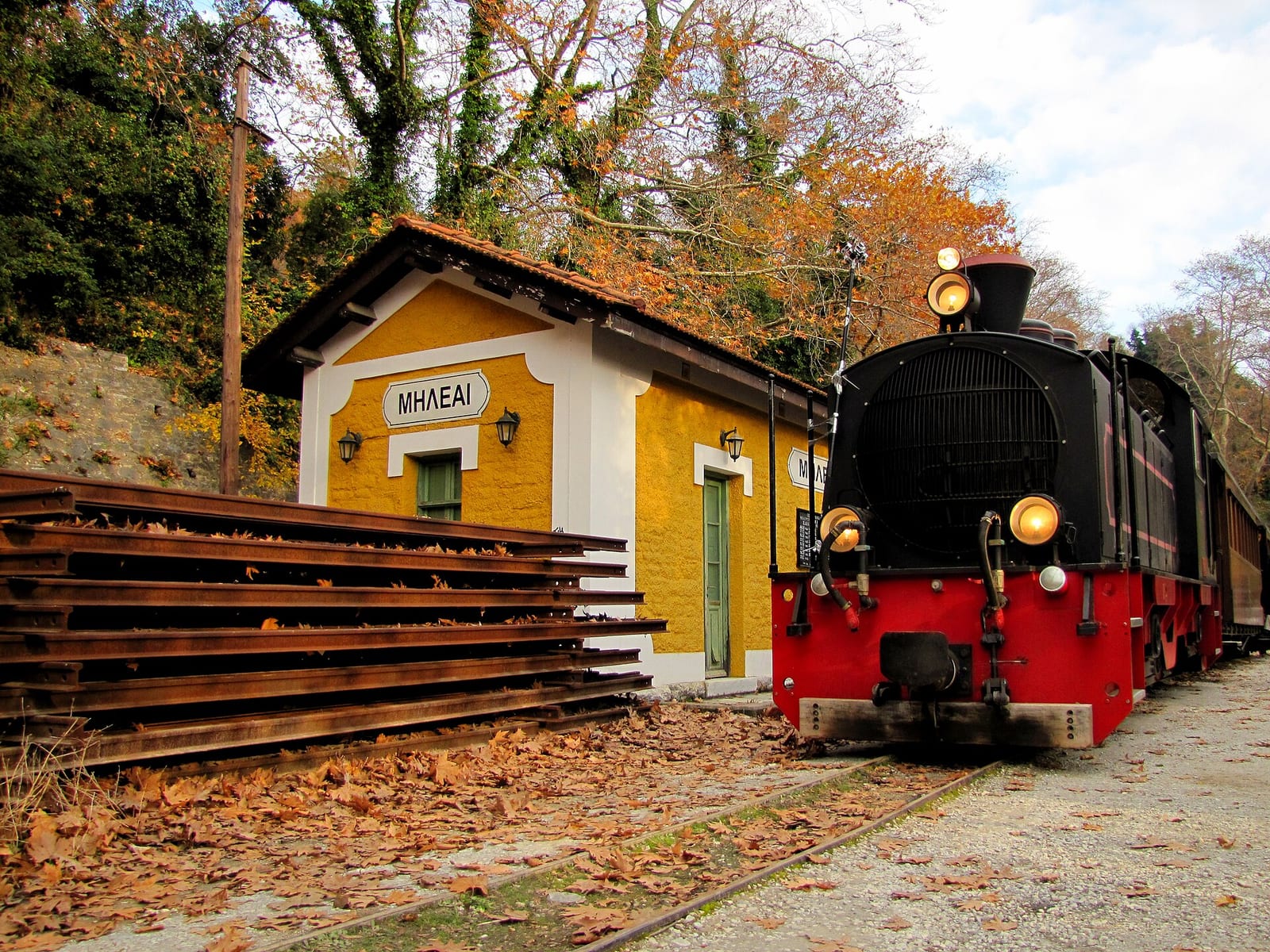
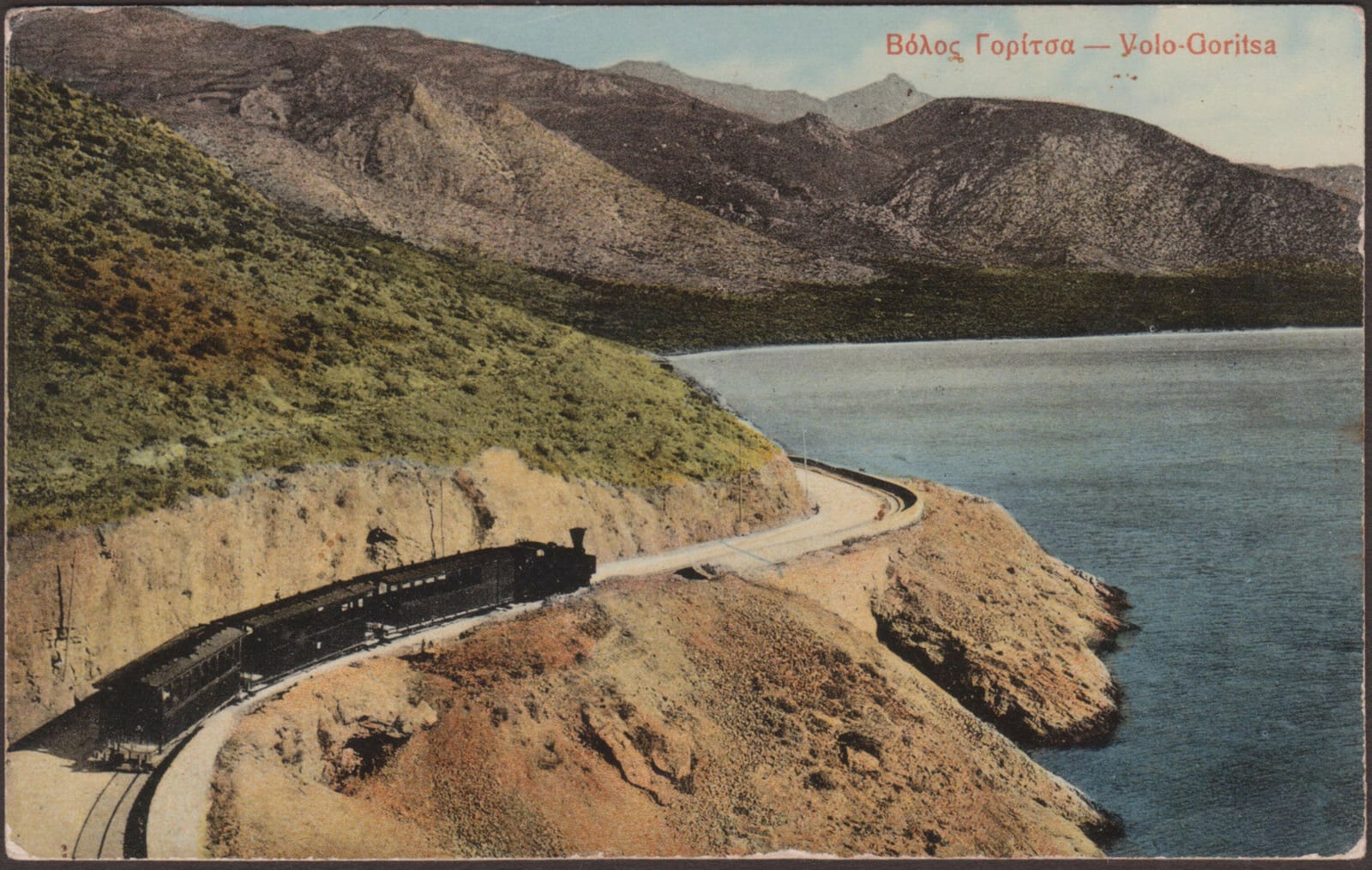
The heritage train starts at Ano Lechonia, a village a little way east of Volos, where the small yellow station and the line's vintage carriages wait among the olive trees. The old railway once ran all the way down to Volos itself, along the shore — you can still find postcards of it steaming past the sea — but the tourist train today runs the upper, prettier section, climbing into the mountain rather than skirting the coast.
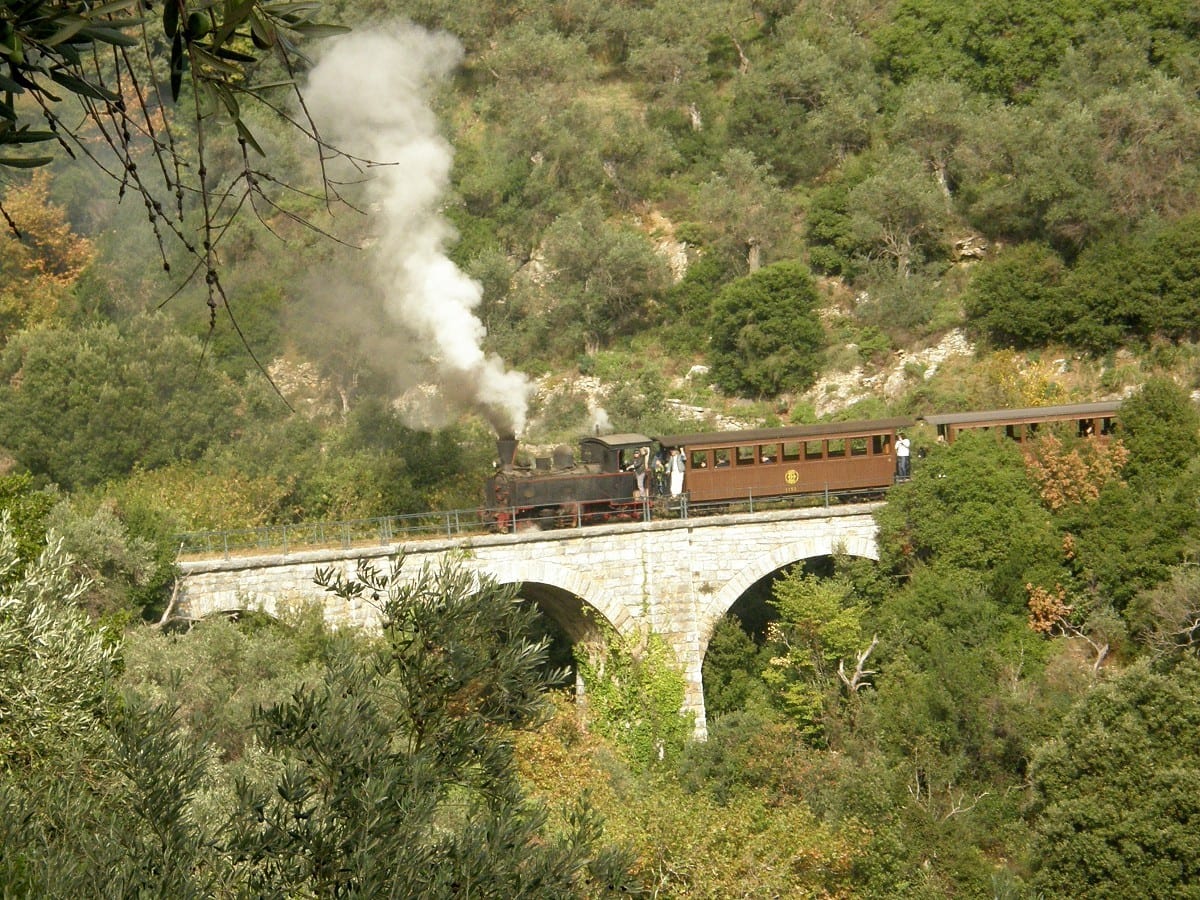
From Ano Lechonia the line begins its patient climb up the western slope of Mount Pelion. This is some of the greenest country in Greece — chestnut and plane woods, terraced olive groves, apple and pear orchards, and streams tumbling down toward the Pagasetic Gulf, which opens out blue below you. The train crosses the ravines that seam the mountain on a succession of beautiful stone viaducts and slender iron bridges, each one a little event, the carriages' open platforms perfect for leaning out to look down.
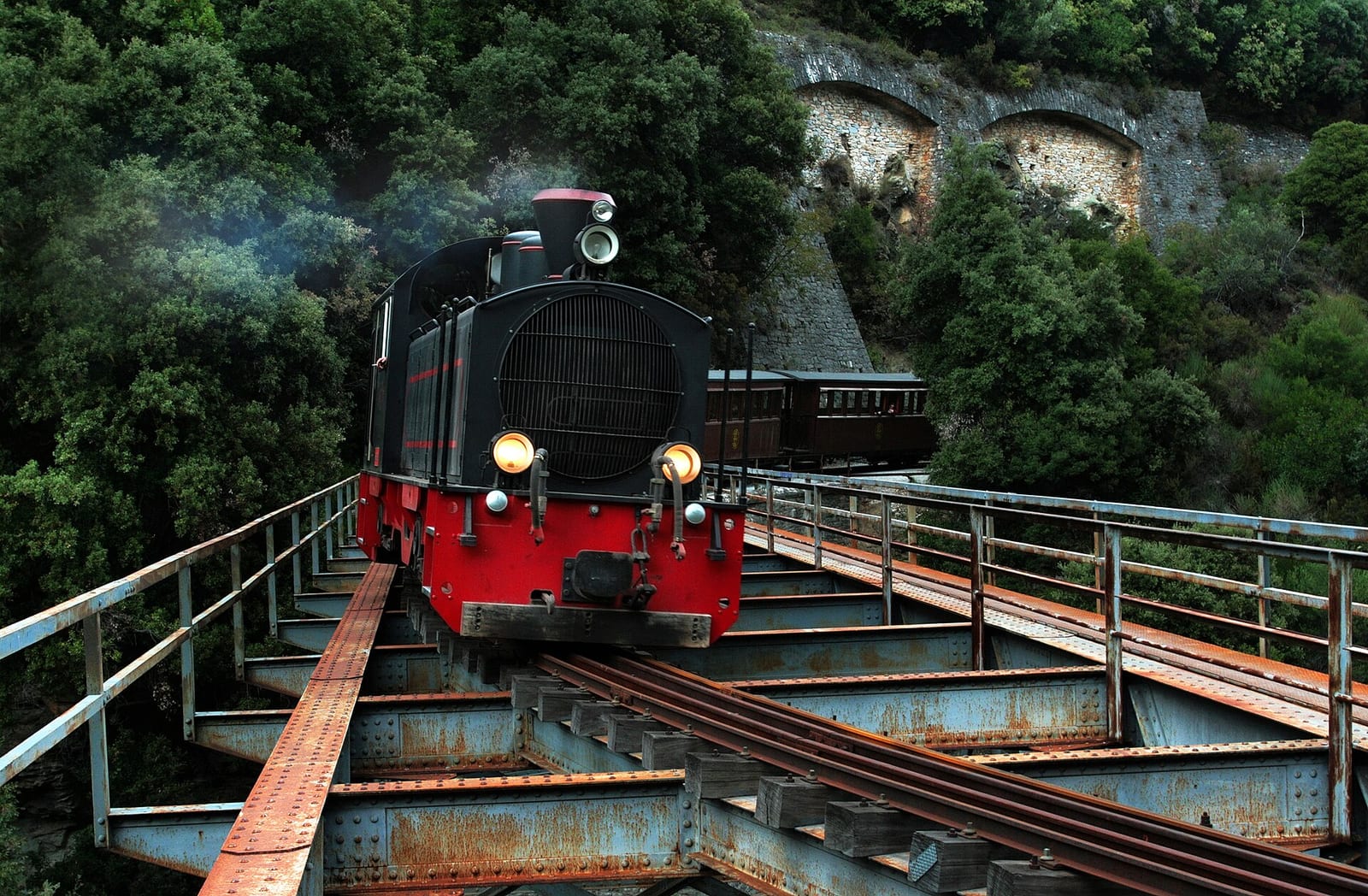
Midway comes the one intermediate stop, Ano Gatzea, where the train pauses for about fifteen minutes — long enough for a coffee and to stretch your legs before the final push. Then, a few hundred metres short of the top, the line reaches its most famous structure: the de Chirico bridge, a straight metal span thrown across a deep gorge, which the track — improbably — crosses on a curve.
A few things worth knowing about the run:
- It is a 600 mm narrow-gauge heritage railway, Ano Lechonia to Milies, about 15 km, in roughly 90 minutes.
- The full historic line, Volos–Milies (28 km), was built 1892–1903; today's tourist train runs only the upper Ano Lechonia–Milies section.
- The regular service is diesel-hauled now (the little Schöma locomotives that replaced steam in 1999), with the vintage steam engines kept for special runs.
- There is one stop, at Ano Gatzea, with a pause of about 15 minutes.
The line ends at Milies, a fine old Pelion village where a cobbled path leads up from the station to a square shaded by plane trees. You have climbed barely fifteen kilometres from the coast, and yet you are in a different world — cool, green and unhurried, high on the mountain of the centaurs.
Along the route
 TheesW / Wikimedia Commons · CC0
Over viaducts and the de Chirico bridge
The line's glory is its engineering: curved stone viaducts over the ravines, and just short of Milies the de Chirico bridge, a straight metal span the track crosses on a curve. It was built under the father of the painter Giorgio de Chirico, whose dreamlike arcades echo these very structures.John Foss (Harfo32) / Wikimedia Commons · CC BY 2.5The train they call "Moutzouris"
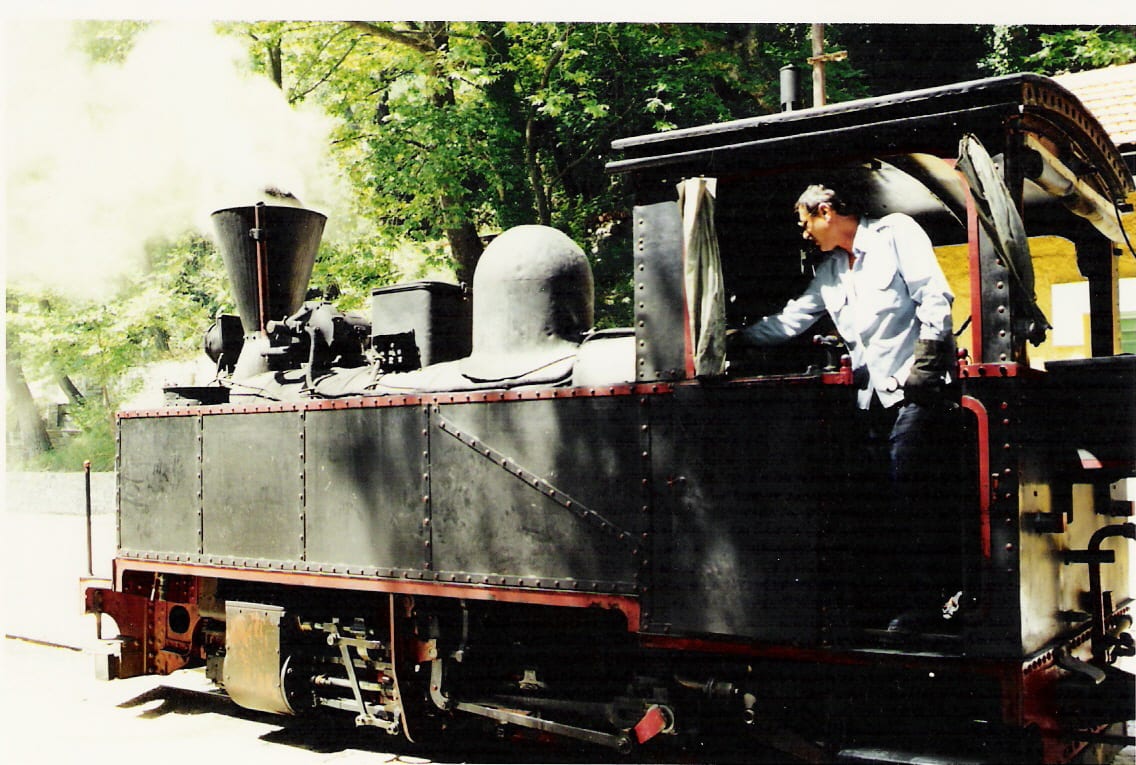
The nickname — the smudgy one — comes from the soot of its old steam engines, little Belgian-built Tubize locomotives that hauled it up the mountain from the 1900s. The regular service is diesel today, but steam still runs on special days.Biumbium Bambalo / Wikimedia Commons · CC BY-SA 4.0Up to Milies
The line ends at Milies, a handsome village of stone houses, plane trees and a famous old library, where a cobbled lane leads up from the little yellow station into the square. Lunch under the trees, then the ride back down through the ravines.A bit of history
Culture & experiences along the way
rob Stoeltje / Wikimedia Commons · CC BY 2.0Aboard the vintage carriages
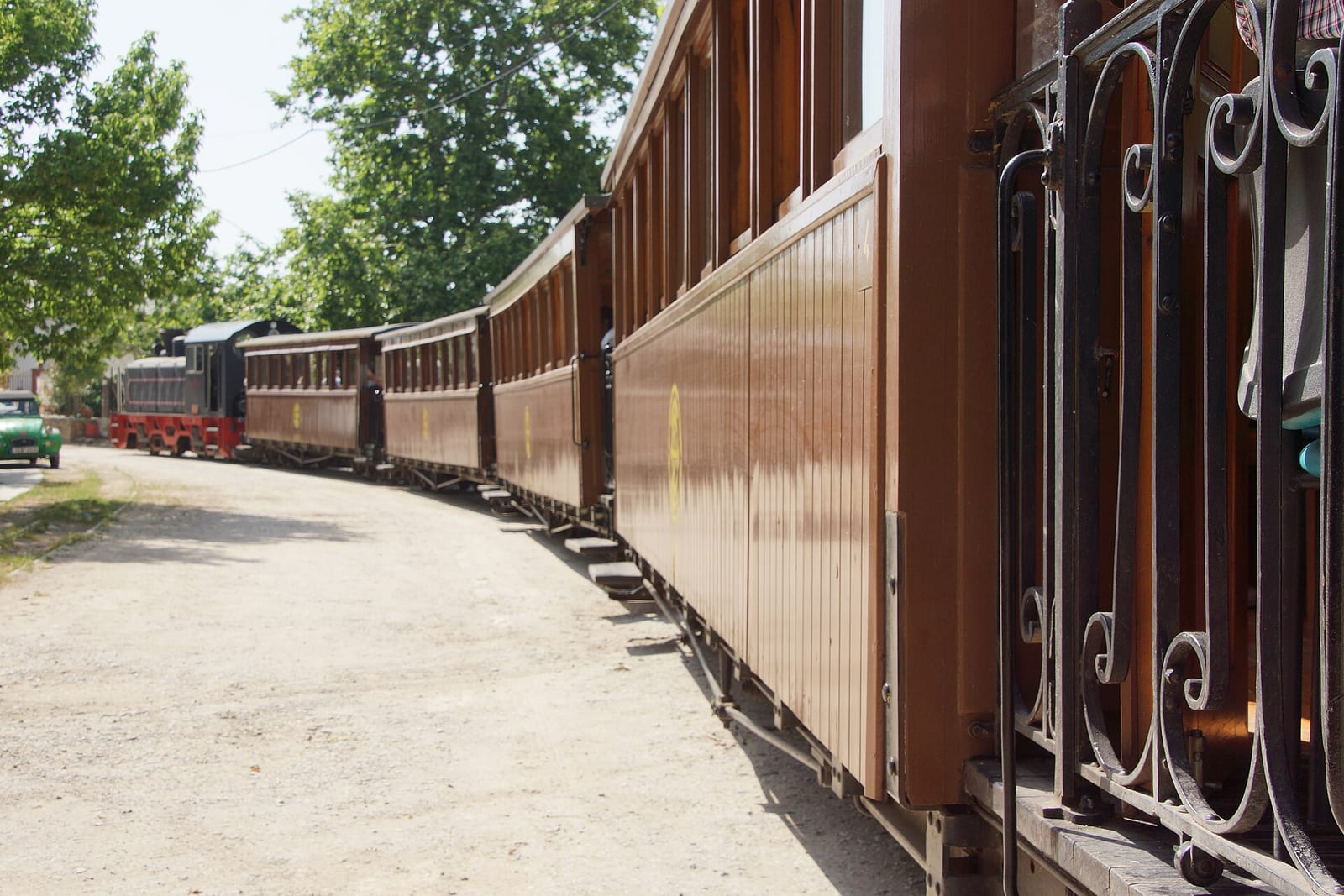
The pleasure is in the slowness. The little wooden-and-iron carriages amble up the mountain at barely walking pace, their open end platforms perfect for leaning out at the viaducts, with a 15-minute pause at Ano Gatzea for a coffee. Ninety minutes to cover fifteen kilometres — and you would not want it any faster.Konstantinos Stampoulis (Geraki) / Wikimedia Commons · CC BY-SA 3.0 grThe green slopes of Pelion
Mount Pelion, the mythical home of the centaurs, is one of the greenest corners of Greece — chestnut and plane woods, olive groves, apple orchards and running water, tumbling down to the Pagasetic Gulf. The railway crosses it all, ravine after ravine, high above the trees, with the blue of the sea always somewhere below.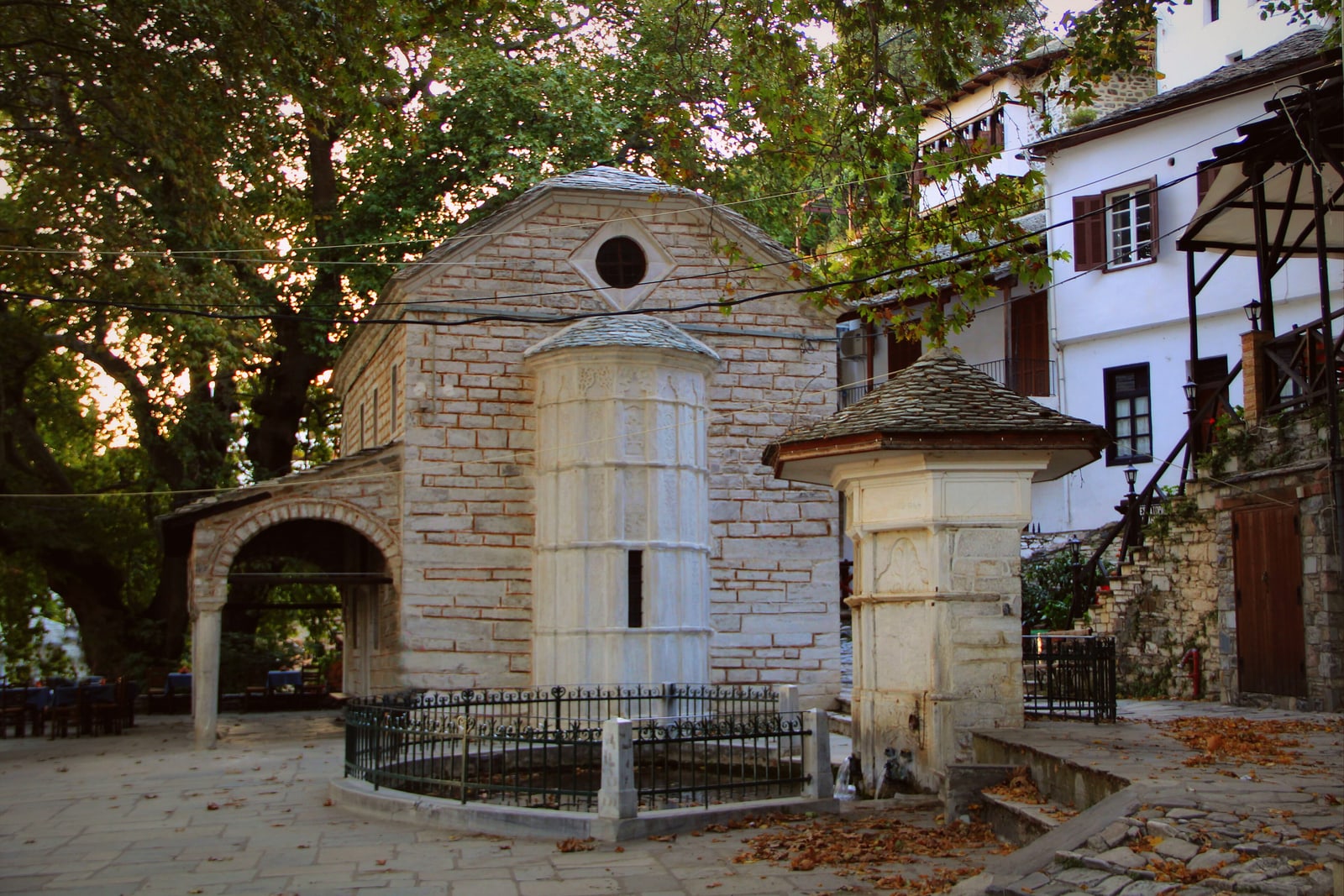 Tevfik Teker / Wikimedia Commons · CC BY 3.0 · cropped
The villages of Pelion
The mountain's stone-built villages are half the reason to come — Makrinitsa, "the balcony of Pelion", spilling down the slope above Volos; Portaria, Vyzitsa and Milies with their mansions, frescoed churches and cobbled squares. The train reaches Milies; the rest are a short, spectacular drive through the woods.Timetables
The Pelion train is a seasonal service, so its running days change through the year. As a rule it runs on weekends and public holidays from spring to autumn (roughly mid-April to the end of October), and daily in July and August — but the season and the exact days are confirmed by the operator each year, so always check before you travel.
On running days there is normally one return trip:
| Direction | Depart | Arrive |
|---|---|---|
| Ano Lechonia → Milies | ~10:00 | ~11:35 |
| Milies → Ano Lechonia | ~15:00 | ~16:30 |
Each way takes about 90 minutes for the 15 km, including the 15-minute pause at Ano Gatzea. That leaves a good few hours in Milies for lunch and a wander before the afternoon train back down.
Good to know:
- It is small and it is popular — book ahead. The train is a couple of vintage carriages, and on summer and holiday weekends it fills; reserve rather than turning up.
- Check the season first. Days of operation change year to year, and the service can pause for maintenance. Confirm the current calendar with the operator before planning a day around it.
- Give Milies its time. The schedule is built around a long midday stop in the village — use it for lunch under the plane trees and the walk up the cobbles.
- Getting to Ano Lechonia. The start is a short drive or local bus east from Volos, which is well connected by mainline train and bus to Athens and Thessaloniki via Larissa.
Times as of the 2026 season and indicative — days and departures change through the year. Confirm the current timetable and running days with the operator — see the Tickets section below.
Tickets
The Pelion train is run by Hellenic Train, and because it is a small, seasonal, much-loved service the things that matter are booking ahead and checking the season. The train is a couple of vintage carriages, and on summer and holiday weekends it sells out, so reserve through the operator rather than relying on turning up at Ano Lechonia. Tickets are normally sold for the round trip, up to Milies in the morning and back in the afternoon, with the long midday stop in the village built in.
Confirm the running days as well as the fare: the service is weekends from spring to autumn and daily in high summer, and the calendar is set each year. If the train is not running on your date, Pelion is still one of the finest corners of Greece to explore — the villages, the beaches on both coasts and the old railway path make an easy substitute.
Book your tickets
Pelion train · Ano Lechonia to Milies
The "Moutzouris" heritage line
The 90-minute climb up Mount Pelion from Ano Lechonia to Milies, with its viaducts, the de Chirico bridge and the pause at Ano Gatzea. Run by Hellenic Train on weekends from spring to autumn and daily in high summer. A small, popular train — book ahead.
Book Tickets (opens in a new tab, on Hellenic Train)via Hellenic TrainTimetable & season · Pelion train
Days of running and departures
The Pelion train runs seasonally, so days and times change through the year — typically one return trip on running days, leaving Ano Lechonia mid-morning and Milies in the afternoon. Confirm the current season and departures with the operator before you travel.
Book Tickets (opens in a new tab, on Hellenic Train)via Hellenic TrainRail Passes
Interrail passes are valid, with a reservation. Interrail's table of railway companies names Hellenic Train's Pelion train among the trains included in Greece, so Ano Lechonia to Milies is covered by an Interrail Greece Pass or a Global Pass. Reservations are mandatory, and summer weekends sell out.
For this journey alone, a pass is not worth buying. A pass pays when the Pelion train is part of a longer trip through Greece.
Checked October 2026 against interrail.com (opens in a new tab) and Interrail's Greece page (opens in a new tab).
Places to Visit
The train is the thread; the pleasure is the mountain it climbs and the coast on either side of it.
Pelion is a long forested ridge dividing the calm Pagasetic Gulf from the open Aegean, and it is really a region of villages rather than a single destination — grey stone and slate, cobbled lanes, plane-shaded squares, spring water running through every one of them. Besides those below, Portaria sits just under Makrinitsa, Pinakates is a quieter neighbour of Vyzitsa, and Tsagarada shelters a plane tree said to be a thousand years old.
The two coasts finish the picture. The gulf side is sheltered and shallow, with calm swimming villages and the tsipouradika of Volos at its head; the Aegean side is wilder, and the beaches below Tsagarada — Fakistra above all — are among the most beautiful in the country, reached by long staircases down through the trees.
In myth this was the home of the centaurs, and Volos was where Jason and the Argonauts set out; the city's archaeological museum is the place to follow that up. The mountain wears all of it lightly, and a few days of driving between villages is the way to see it.
 Nikolaos Vergos / Wikimedia Commons · CC BY-SA 3.0 · cropped
Volos
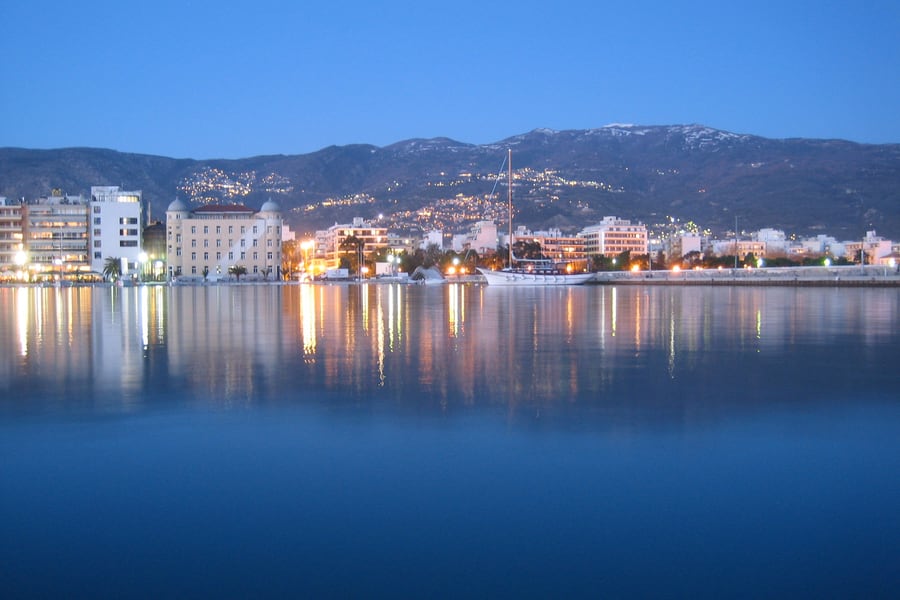
The port city under the mountain, and where nearly everyone starts. Volos is a working harbour rather than a resort, with a long seafront and the tsipouradika it is famous for — order a tsipouro and the mezes arrive with it unbidden, a fresh plate with every round. The mainline trains and the buses come in here; the Pelion train leaves from Ano Lechonia, just along the coast.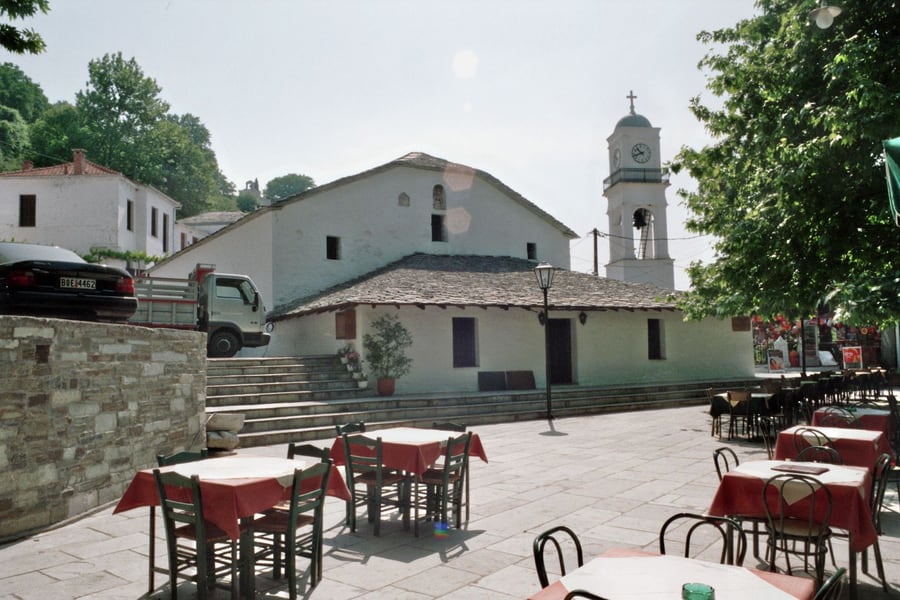 Flashdart2 / Wikimedia Commons · CC BY-SA 2.5 · cropped
Milies
The upper terminus, a stone village at 400 m on the Pelion slope, 28 km from Volos. A path climbs from the platform into cobbled lanes, plane-shaded squares and the church of the Taxiarchs. In 1814 Anthimos Gazis and Grigorios Konstantas founded a school here whose library survives with its rare books, and Gazis raised the flag of the revolution in the village on 7 May 1821.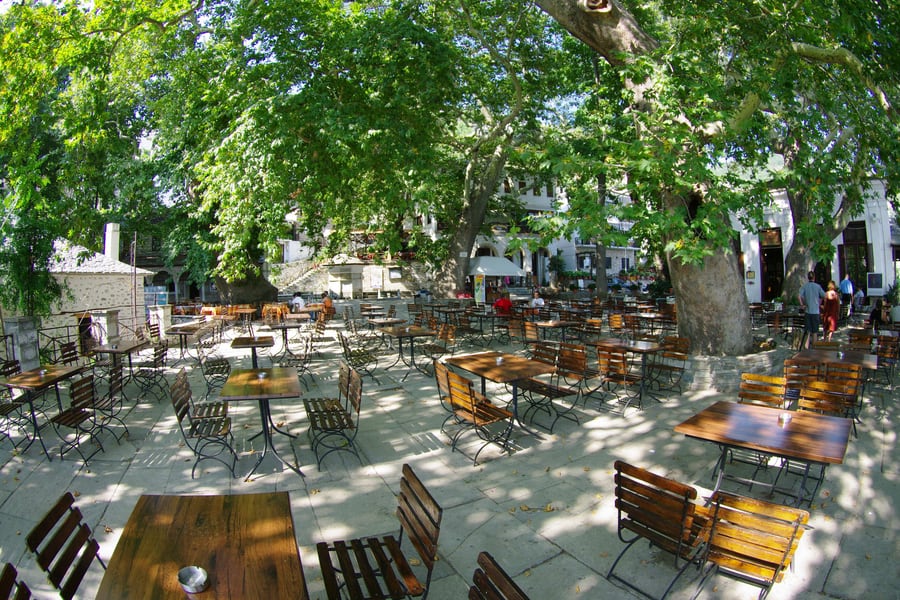 Andreas Routsias / Wikimedia Commons · CC BY-SA 4.0 · cropped
Makrinitsa
Nicknamed the balcony of Pelion for the way it hangs on the slope directly above Volos, looking down the length of the Pagasetic Gulf. A designated traditional settlement of about 700 people, its lanes too steep and narrow for cars, with mansion houses, frescoed churches and a plane-shaded square of cafés built out over the drop. Twenty minutes up from the city.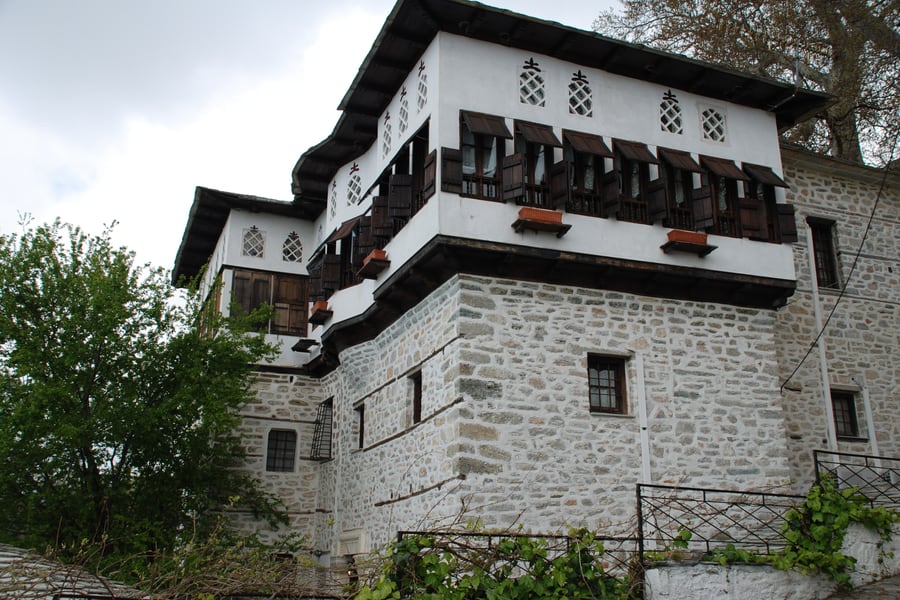 Cosa2244 / Wikimedia Commons · CC BY-SA 4.0 · cropped
Vyzitsa
A quieter jewel 2 km from Milies and 500 m up the mountain, with 255 residents at the last count and protection as a traditional settlement. Vyzitsa is the place to see the Pelion archontiko — the merchant mansion of whitewashed timber and latticed windows set on a heavy stone undercroft — and several have become small guesthouses. Cobbles, slate roofs, no traffic.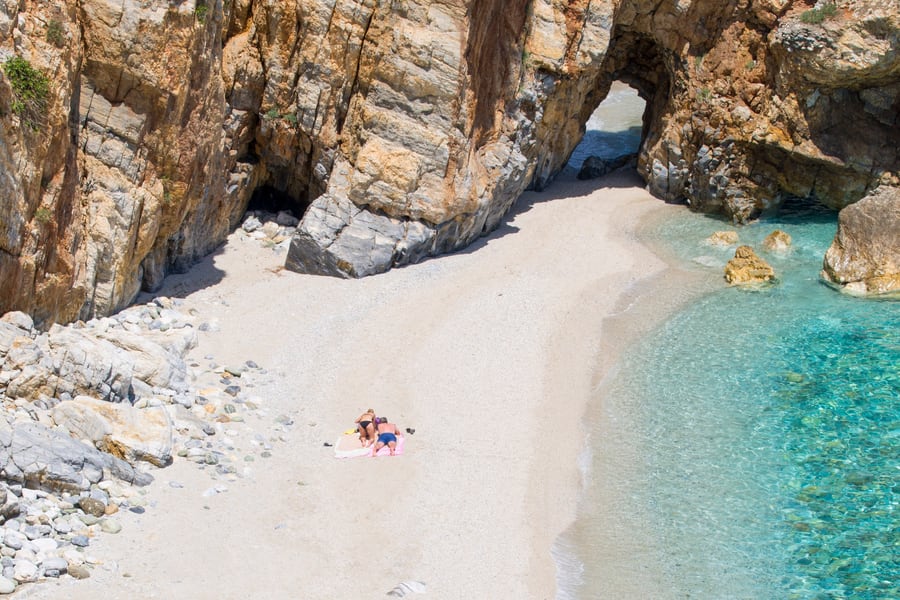 Valadis Kostas Papadopoulos / Wikimedia Commons · CC BY-SA 4.0 · cropped
Mylopotamos
The famous one. On the wilder Aegean flank of the mountain, Mylopotamos is a pair of small white-pebble coves divided by a rock wall with a hole worn clean through it, so you can swim from one beach into the other. The water is startlingly clear and the way down is a long flight of steps from the road above. Go early or late in August.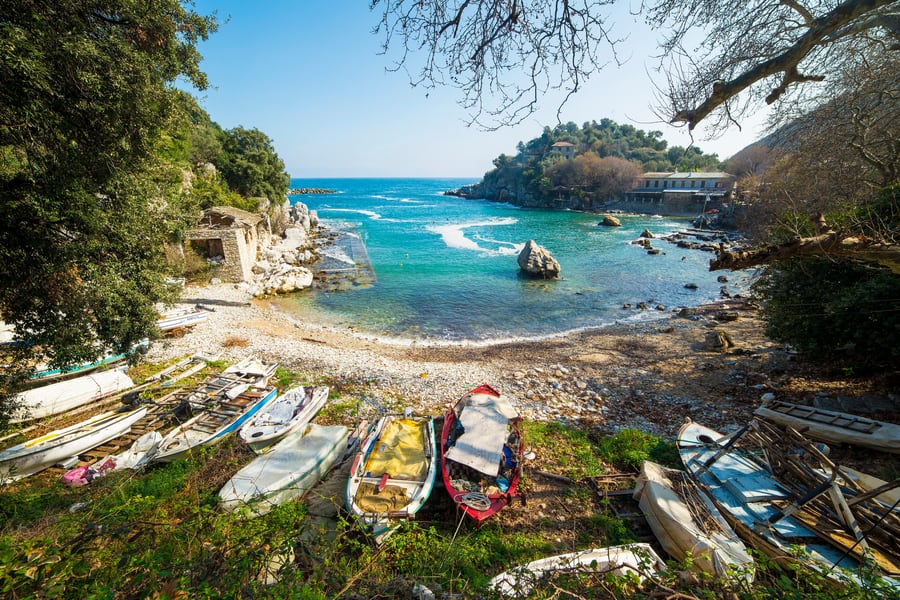 Valadis Kostas Papadopoulos / Wikimedia Commons · CC BY-SA 4.0 · cropped
Damouchari
A tiny stone hamlet on a rocky inlet, with fishing boats pulled up on the shingle and no through road to spoil it. Damouchari stood in for the Greek island in Mamma Mia! and draws visitors on the strength of it, but it has stayed a working cove rather than a resort — a couple of tavernas, a pebble beach, and swimming straight off the rocks into very clear water.Where to Sleep
The Pelion train is a half-day excursion, so most travellers sleep in the region rather than on the line, and Pelion gives you three very different ways to do it.
In the mountain villages, staying in one of the restored stone mansions — the archontika of Makrinitsa, Portaria, Vyzitsa or Milies itself — is the classic Pelion experience: thick walls, carved wooden ceilings, a fireplace, and a balcony over the woods and the gulf. Milies puts you at the top of the line; Makrinitsa and Portaria are the most convenient for Volos and the western slope.
In Volos, at the foot of the mountain, a seafront hotel is the practical choice — handy for the trains and buses, the museums and the tsipouradika, and an easy morning drive to Ano Lechonia to catch the little train. It suits travellers arriving by mainline rail.
On the coast, the swimming villages of both the gulf and the wilder Aegean side have small hotels and rooms for those who want beach and mountain together, and don't mind a drive to reach the railway.
As with all our journeys, we keep this to the shape of the trip rather than specific bookings: a stone mansion in a Pelion village for the atmosphere, or the seafront in Volos for convenience — and the "Moutzouris" as the day's great outing between them.
Questions or corrections
Planning this trip and stuck on something, or spotted a time, fare or detail that has changed? Send us a message about The Pelion Railway. We read every one, and we update this page when something has changed.