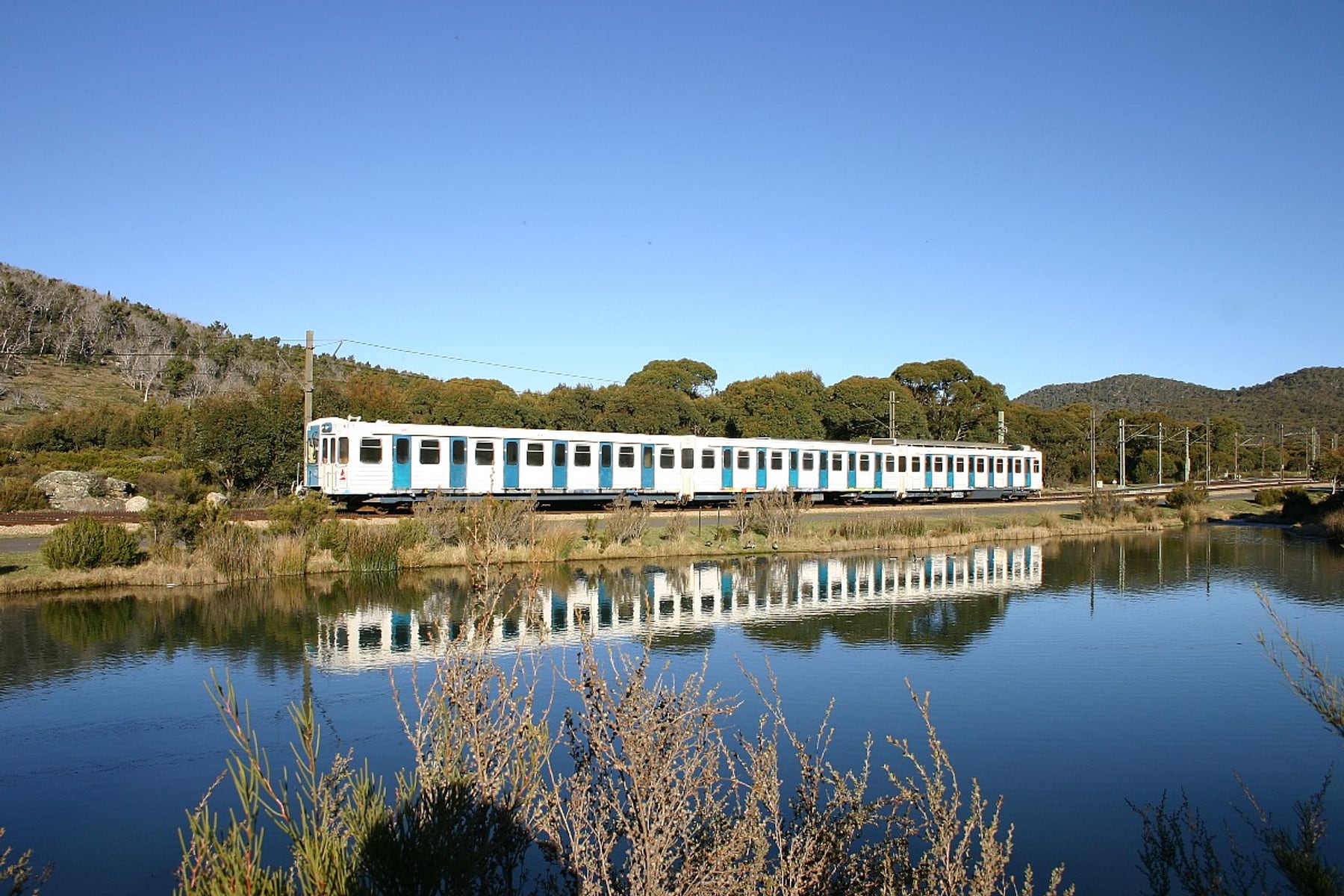
Perisher Skitube
Troy Thomas / Wikimedia Commons · CC BY-SA 3.0 · cropped
- Distance8.5 km, Bullocks Flat to Blue Cow
- Duration10 minutes to Perisher Valley, about 7 more to Blue Cow
- Best seasonWinter only — every day of the ski season, June to early October
Introduction
Until the 1980s there was one way into the Perisher Range in winter: Kosciuszko Road, mostly a single lane, often shut by snow and ice. When the National Parks and Wildlife Service planned a new ski area on Mount Blue Cow, the engineers looked at a funicular, a chairlift and a gondola, and chose instead a Swiss-designed rack railway, built almost entirely underground, where it would not scar the slopes and the weather could not reach it.
Construction began in October 1984. Trains reached Perisher Valley on 26 July 1987 and ran through to Blue Cow from 29 August 1988. The Skitube climbs from Bullocks Flat on the Alpine Way, 1,125 metres up, to Blue Cow at 1,890 metres: 8.5 kilometres, 6.3 of them in tunnel, up to 550 metres below the surface. Perisher calls it Australia's only alpine railway, and more than four million people have ridden it since it opened.
It runs only in winter, every day of the ski season, from six in the morning until late in the evening, and its trains are the reason most visitors to Australia's biggest snow resort never have to drive the mountain road at all.
The Journey
Bullocks Flat to Perisher Valley
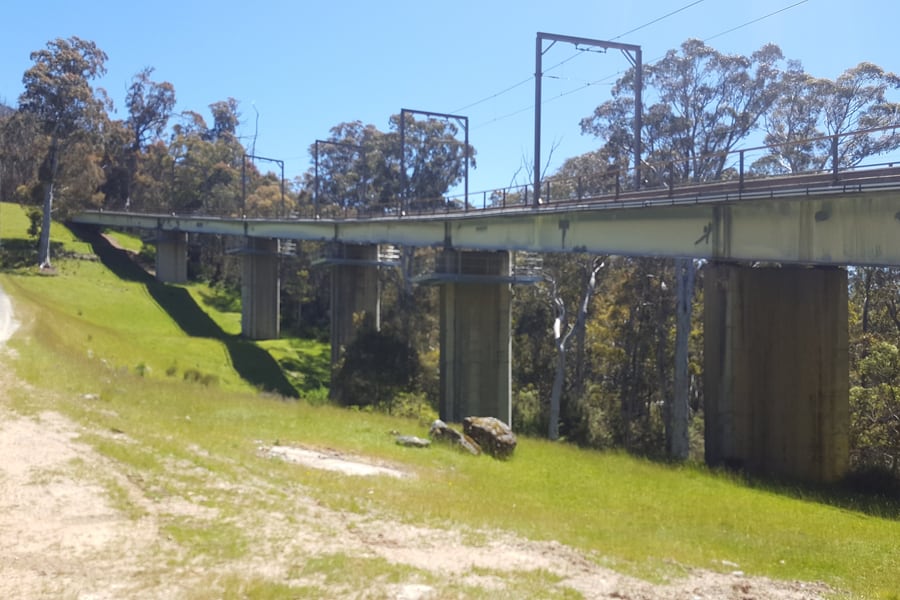
Every train starts at Bullocks Flat, a three-sided terminal on the Alpine Way with free day and overnight parking, a pass office and a hire shop, and no National Park entry fee to pay. For its first 2.6 kilometres the line runs in the open, across a 150-metre curved steel viaduct and through a passing loop, and then it enters the Bilston Tunnel under the Ramshead Range. Inside, the train climbs at 12.5 per cent — one in eight — on the toothed rack between the rails, and about 10 minutes after leaving Bullocks Flat it stops in the underground station at Perisher Valley, 1,720 metres up, for the slopes of Front Valley.
Perisher Valley to Blue Cow
For Blue Cow, change trains at Perisher Valley. The second tunnel, 2.6 kilometres long, was drilled and blasted rather than bored; the line first drops, then climbs gently and finally at 12.5 per cent again to the terminus at 1,890 metres, about seven minutes on. Blue Cow has no road in winter, so the Skitube also carries its supplies and its rubbish, in a small goods wagon.
The trains
The railway has four trains, built in Sydney by Comeng with motor bogies from the Swiss Locomotive and Machine Works (SLM) and electrical equipment from Brown, Boveri. Each motor car has four 301 kW traction motors, which may make them the most powerful rack railcars in the world. They can run at 40 km/h, but are held to 21 km/h coming down. The line is standard gauge, electrified at 1,500 volts DC, on the Lamella rack system developed by Von Roll. Stadler, the Swiss builder, began an upgrade of the line in October 2016.
Along the route
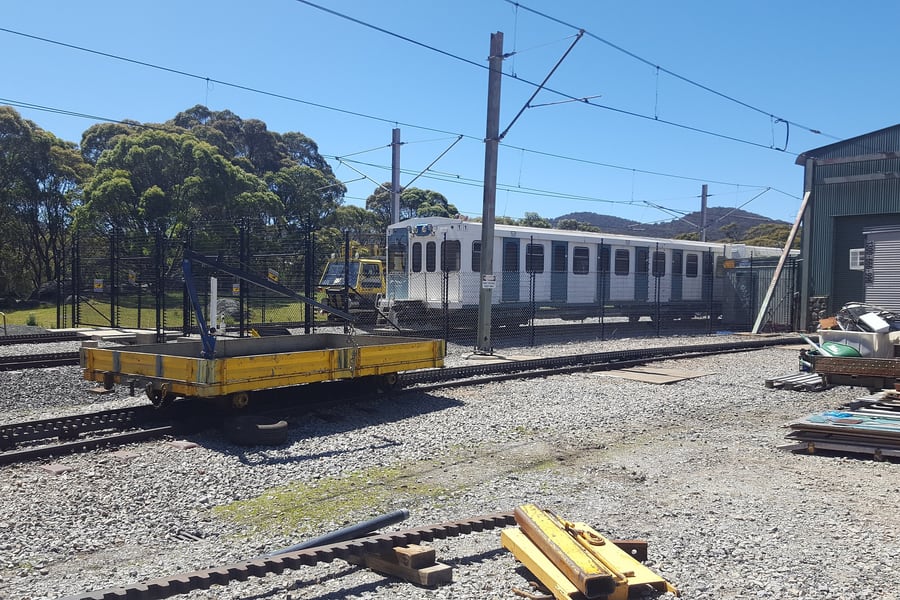
 Harrison.the.chad / Wikimedia Commons · CC BY-SA 4.0 · cropped
The curved viaduct
The Skitube spends only its first 2.6 km in daylight. Out of Bullocks Flat it swings across a curved steel viaduct, 150 metres long, and through a passing loop where up and down trains meet, before the mountain swallows it.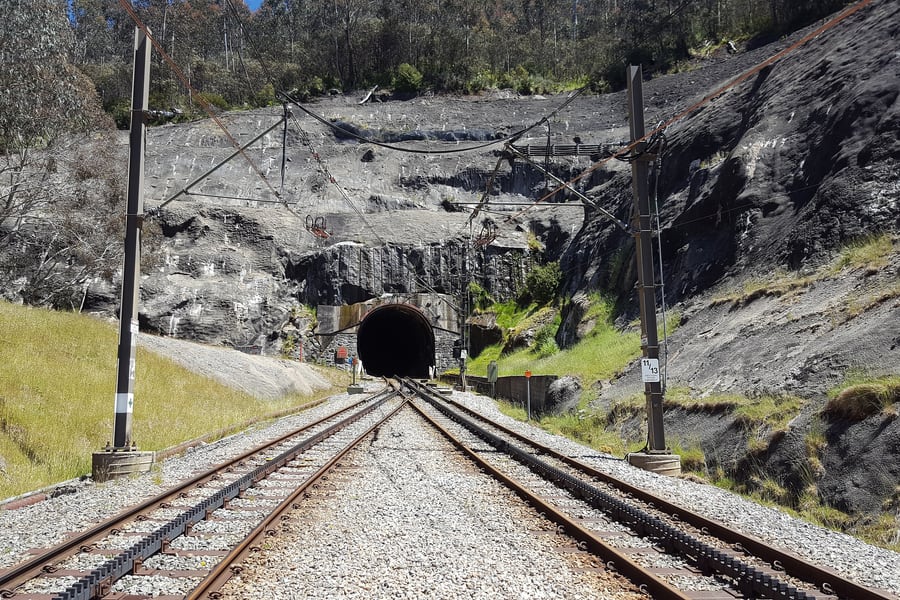 Harrison.the.chad / Wikimedia Commons · CC BY-SA 4.0 · cropped
Bilston Tunnel
Bored with a 5.5-metre tunnel-boring machine, 3.3 km under the Ramshead Range. It shares its name with Ken Bilston, the Canberra engineer who drove the project. Inside, the train climbs at one in eight on the rack to the underground station at Perisher Valley.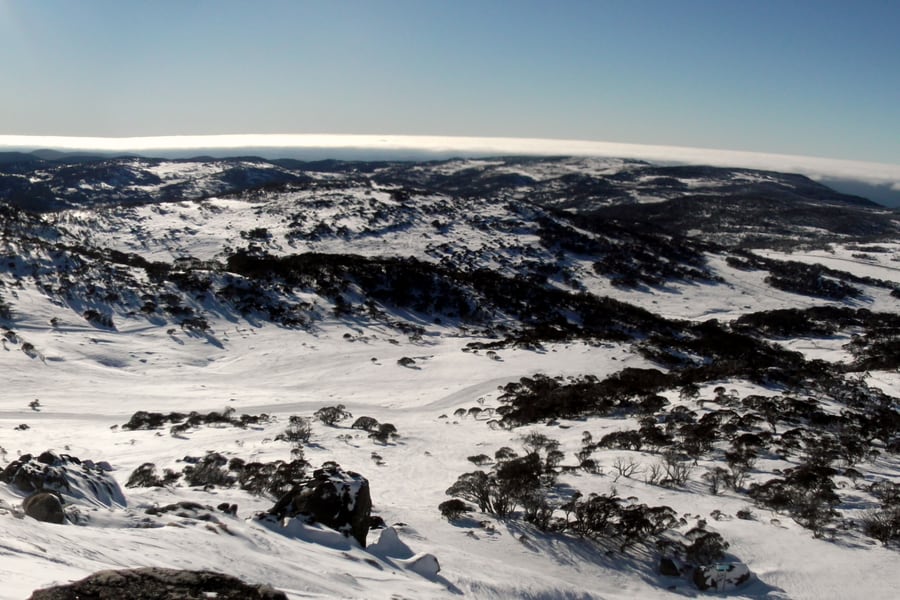 Talvinlee / Wikimedia Commons · CC BY-SA 3.0 · cropped
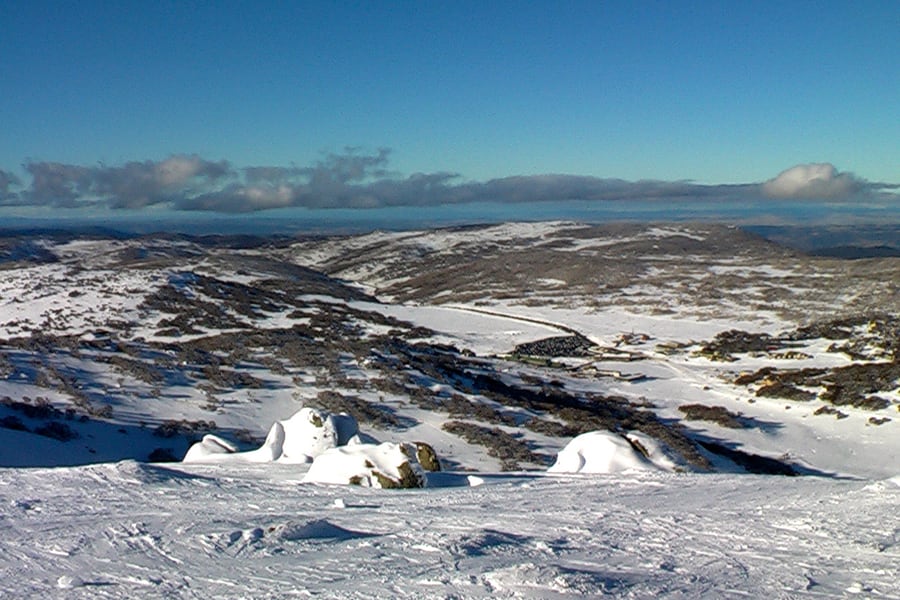
Blue Cow
A second tunnel, 2.6 km and drilled and blasted, runs on from Perisher Valley to the terminal at 1,890 metres. No road reaches Blue Cow in winter, so the train is its only link. The mountain is named after a blue-roan cow that wandered up it every year.A bit of history
Culture & experiences along the way
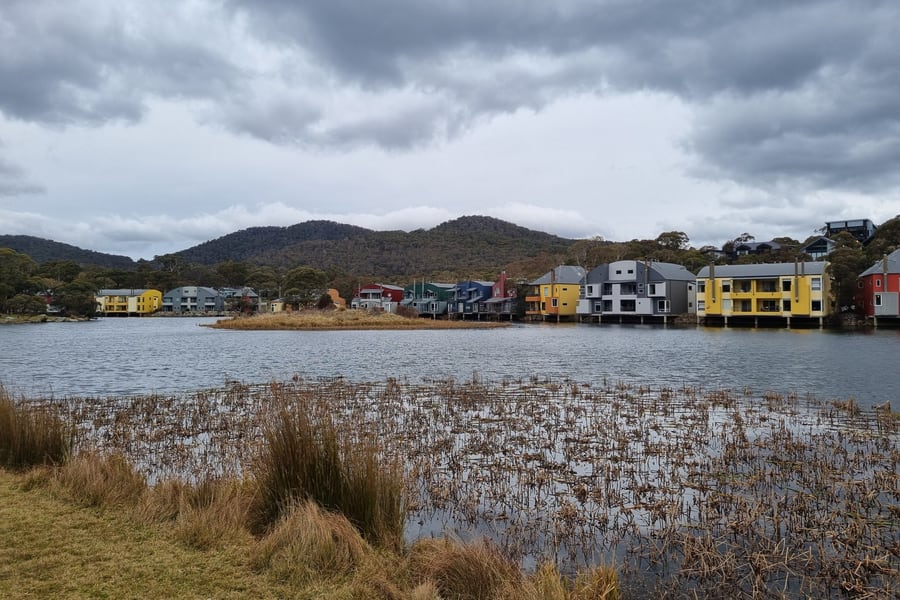
 MD111 / Wikimedia Commons · CC BY-SA 2.0 · cropped
Strzelecki on Lake Jindabyne
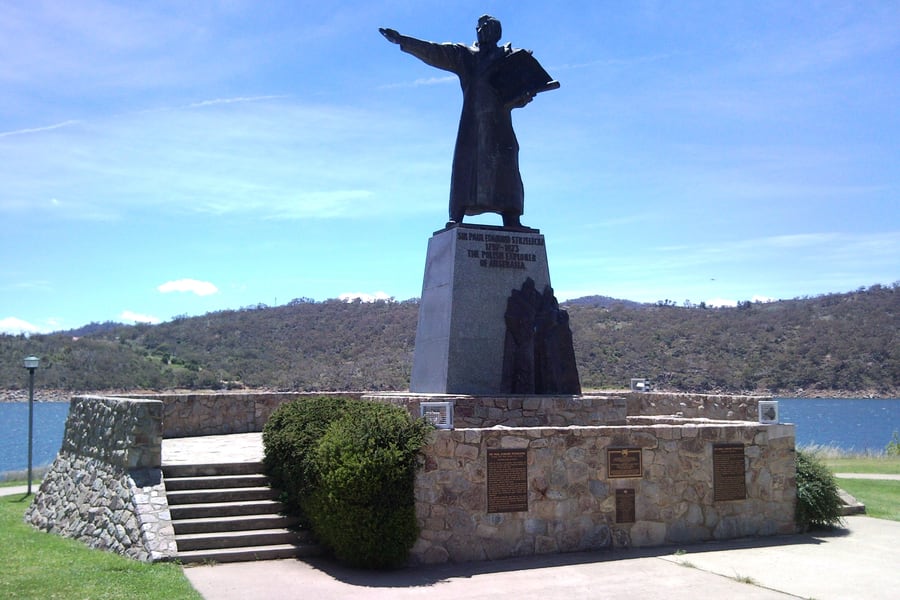
On the shore of Lake Jindabyne stands the Polish explorer Paweł Strzelecki, arm outstretched, on a stone plinth. In 1840 he climbed Australia's highest peak and named it after the Polish patriot Tadeusz Kościuszko — the name the national park around the Skitube still carries.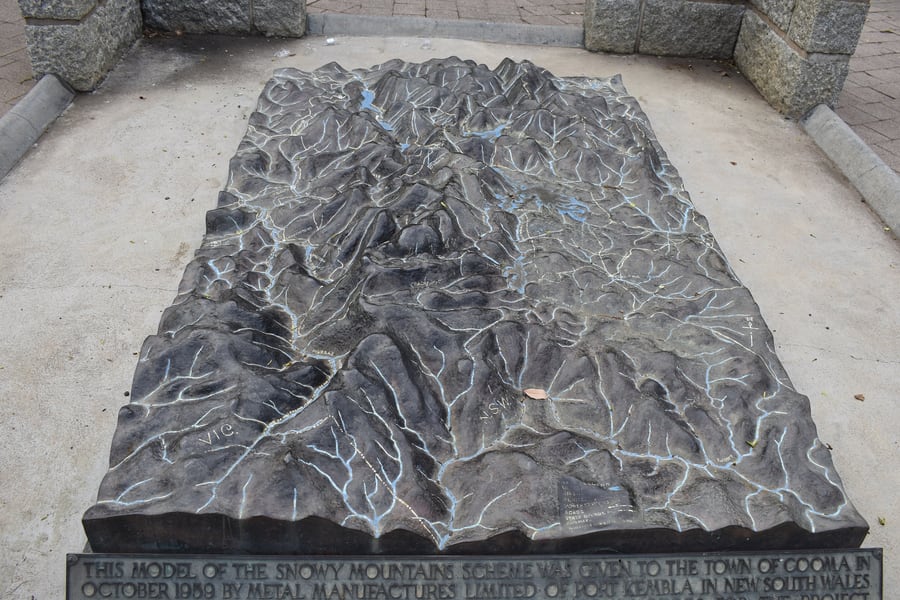 Mattinbgn / Wikimedia Commons · CC BY 3.0 · cropped
The Snowy Scheme in relief
Between 1949 and 1974 the Snowy Mountains Scheme built sixteen major dams, nine power stations and 225 km of tunnels, pipelines and aqueducts through these ranges. A relief model given to Cooma in October 1989 lays the whole system out in the open air; the Scheme joined the National Heritage List in 2016.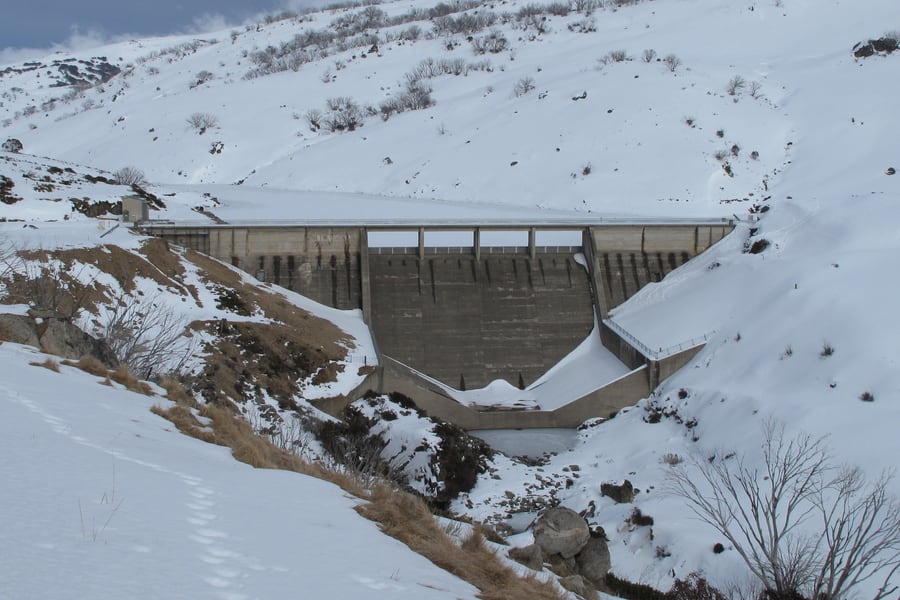 SkildCaddy / Wikimedia Commons · CC0 · cropped
Guthega, where the Scheme began
Five kilometres north-west of Perisher Valley, Guthega Dam was the first of the Scheme's sixteen major dams, finished in 1955; its power station downstream is the highest in Australia. Skiers who come up by train reach Guthega's slopes from Blue Cow.Timetables
The Skitube runs every day of the ski season: from 6 June to 5 October in 2026. It does not run outside the season. The first train leaves Bullocks Flat at 06:00; the last climbs at 22:00 on Tuesdays, Fridays and Saturdays and at 20:00 on other days. Trains leave every 25 to 40 minutes, take 10 minutes to Perisher Valley, and connect there for Blue Cow. Times are local.
| Route | First | Last | Notes |
|---|---|---|---|
| Bullocks Flat → Perisher Valley | 06:00 | 22:00 Tue, Fri, Sat · 20:00 other days | 06:30, 07:05, 07:30, 07:55, then roughly every 25–40 minutes |
| Perisher Valley → Bullocks Flat | 06:45 | 22:32 Tue, Fri, Sat · 20:32 other days | |
| Perisher Valley → Blue Cow | 07:48 | 17:53 | Earlier and later trains are for Perisher staff only |
| Blue Cow → Perisher Valley | 07:35 | 18:01 | Ski or ride from Blue Cow to Guthega only while the lifts are open |
Luggage — large bags for a longer stay, not skis or boards — is restricted on the busiest trains, which are shaded green on the operator's timetable, seven days a week. Bikes, e-scooters and lithium batteries may not be carried.
Getting to Bullocks Flat
Bullocks Flat is on the Alpine Way, about 20 minutes' drive from Jindabyne. In the season the Snowy Mountains Bus Service runs from Jindabyne, and Greyhound and FlixBus run direct coaches from Sydney and Canberra to the Skitube terminal. Two-wheel-drive cars must carry snow chains in the park from June to October.
Times are from Perisher's Skitube timetable for the 2026 season — as of November 2026; the 2027 timetable is not yet published. Check the day on Perisher's Skitube timetable (opens in a new tab) before travelling.
Tickets
Tickets are sold by Perisher, online or at its ticket offices, and loaded on to a reusable Mountain Access Card. The Skitube Return is the ticket for anyone who simply wants to ride: one trip up and one down, not necessarily on the same day, valid any time in the season, with free parking at Bullocks Flat. Skiers can add same-day Skitube travel to a lift ticket, and Epic Australia Pass holders buy a season add-on. Lift tickets already include the Perisher Valley to Blue Cow section.
Children aged 4 and under travel free with a paying adult; collect their ticket at a ticket office. Skitube Return prices for 2027 are not yet published. Fares checked November 2026.
Book your tickets
Harrison.the.chad / Wikimedia Commons · CC BY-SA 4.0 · croppedSkitube Return
Bullocks Flat to Perisher and back, any time in the season
One return trip, not necessarily on the same day, with free parking at Bullocks Flat; 2027 prices are not yet published.
Book Tickets (opens in a new tab, on perisher.com.au)via perisher.com.auHarrison.the.chad / Wikimedia Commons · CC BY-SA 4.0 · croppedEpic Australia 4-Day Pass add-on
Four return trips in the 2027 season
A$119 for an adult or senior and A$79 for a child aged 5 to 17, for holders of the 2027 Epic Australia 4-Day Pass.
Book Tickets (opens in a new tab, on perisher.com.au)via perisher.com.auHarrison.the.chad / Wikimedia Commons · CC BY-SA 4.0 · croppedEpic Australia Pass add-on
Unlimited rides in the 2027 season
A$215 for an adult or senior and A$125 for a child aged 5 to 17, for holders of the 2027 Epic Australia Pass.
Book Tickets (opens in a new tab, on perisher.com.au)via perisher.com.auRail Passes
No rail pass covers the Skitube. It is run by the Perisher ski resort, which sells its own tickets.
Is it worth it? The only "pass" worth knowing is Perisher's own: an Epic Australia Pass holder who rides the Skitube every day should buy the season add-on rather than single returns. Everyone else buys a Skitube Return.
Checked November 2026.
Places to Visit
The Skitube serves Perisher, the largest ski resort in the Southern Hemisphere, made up of Perisher Valley, Smiggin Holes, Blue Cow and Guthega. Around it lie the high country of Kosciuszko National Park and the towns of the Snowy Mountains.
 Coekon / Wikimedia Commons · CC BY-SA 4.0 · cropped
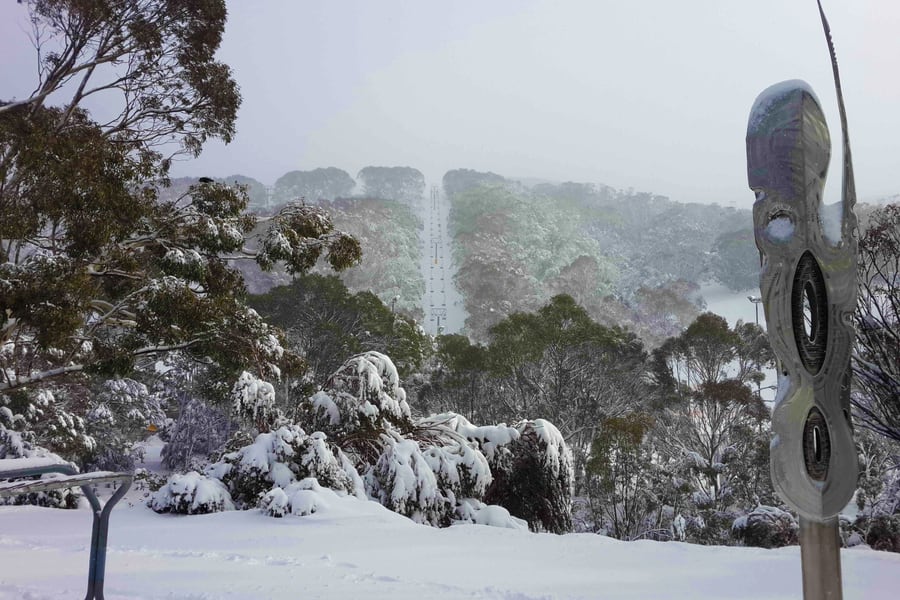
Perisher Valley
The Skitube's middle station opens on to the heart of Australia's largest snow resort, 1,720 metres up, with 45 lifts across four areas, more than 100 km of marked cross-country trails and a toboggan slope. Night skiing runs on Tuesdays and Saturdays, when the last train down leaves at 22:32. Graziers caught by a blizzard here are said to have called it "a perisher".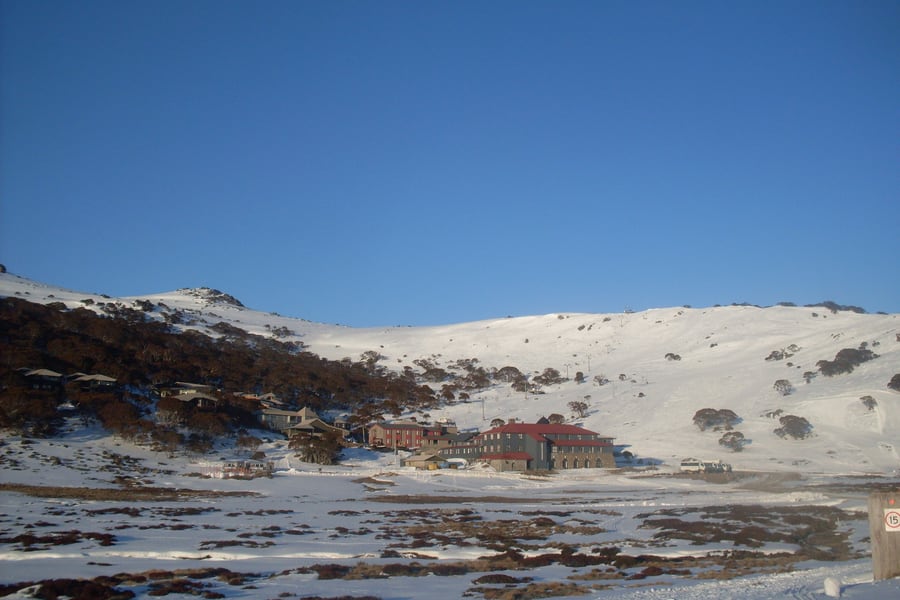 Simon Mansfield / Wikimedia Commons · CC BY-SA 3.0 · cropped
Charlotte Pass
The closest village to Mount Kosciuszko, at 1,760 metres the highest resort base in Australia, and reached in winter only by over-snow transport. It is the coldest place in Australia, with a record of −23 °C. The Chalet opened in 1930, burnt in 1938 and was rebuilt the next summer; the pass is named after Charlotte Adams, the first European woman to climb Kosciuszko, in 1881.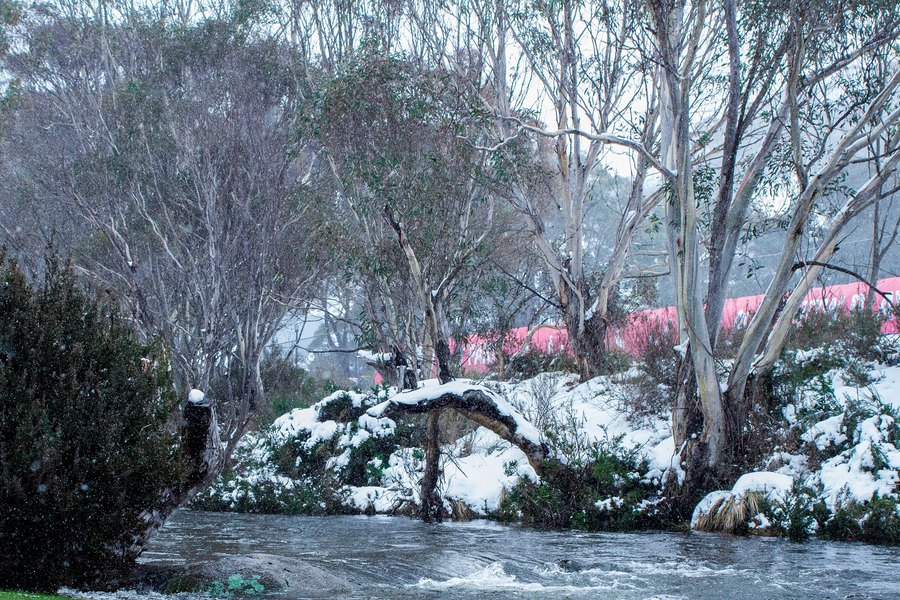 Zain Kamal / Wikimedia Commons · CC BY-SA 4.0 · cropped
Thredbo
Further along the Alpine Way from Bullocks Flat, in the valley of the Thredbo River at the foot of the Ramshead Range. Workers on the Snowy Mountains Scheme founded it on the model of a European ski town, and it has the steepest terrain in mainland Australia and its highest lifted point, 2,037 metres.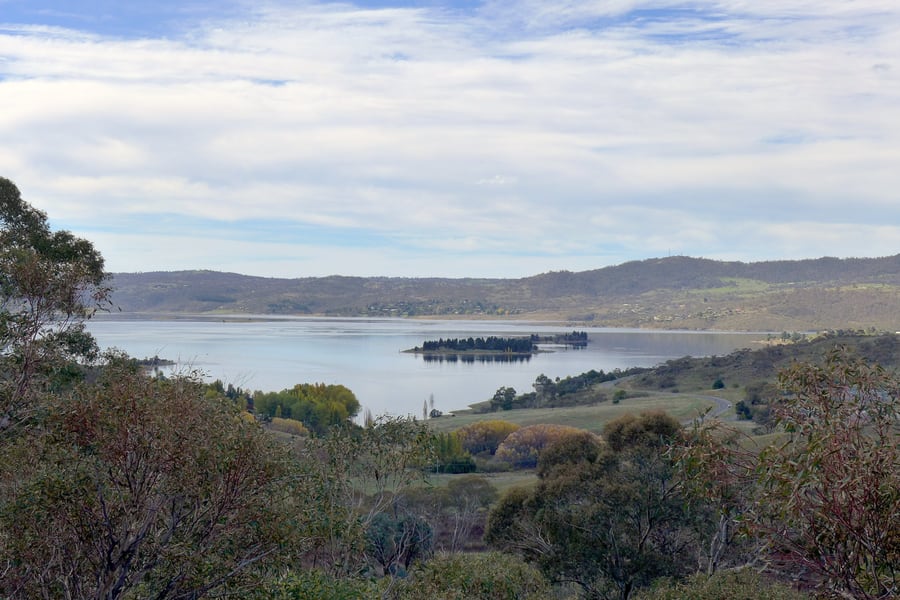 Steve Bennett (stevage) / Wikimedia Commons · CC BY 3.0 · cropped
Jindabyne
A town of about 3,000 people, 918 metres up on the shore of Lake Jindabyne. It stands where it does because the old town lies under the lake: Jindabyne was moved in the 1960s before the Snowy River was dammed, and when the water is low the foundations of the old St Columbkille's church come back into view.Where to Sleep
Stay at the bottom of the line and ride up each morning, or on the snow at Perisher Valley; Jindabyne, 20 minutes' drive from Bullocks Flat, has the widest choice.
Where to stay
Oaks Lake Crackenback Resort
1650 Alpine Way, beside Bullocks Flat
Lakeview apartments and mountain chalets on 150 acres next to the Skitube terminal, with a restaurant, spa and heated pool.
Check Availability (opens in a new tab, on lakecrackenback.com.au)via lakecrackenback.com.auPerisher Valley Hotel
On the snow at Perisher Valley
Perisher's own ski-in, ski-out hotel, 100 metres from the Village 8 Express chairlift.
Check Availability (opens in a new tab, on perisher.com.au)via perisher.com.auThe Station
Near Jindabyne
Perisher's own motel and apartment-style rooms, a few minutes from Jindabyne.
Check Availability (opens in a new tab, on perisher.com.au)via perisher.com.auQuestions or corrections
Planning this trip and stuck on something, or spotted a time, fare or detail that has changed? Send us a message about Perisher Skitube. We read every one, and we update this page when something has changed.