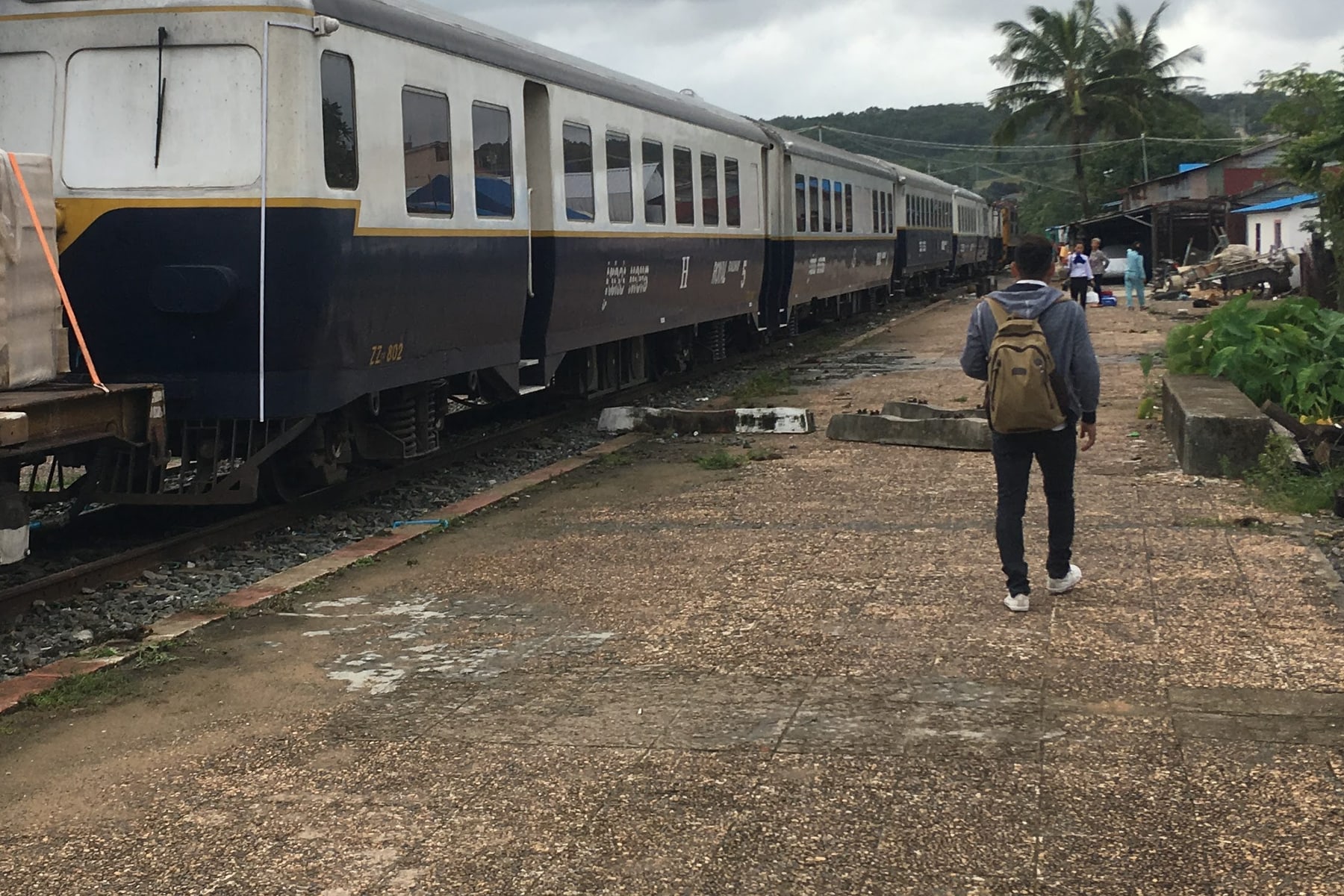
Phnom Penh to Sihanoukville — the Southern Line
Christophe95 / Wikimedia Commons · CC BY-SA 4.0 · 2018 · cropped
- Distance264 km, Phnom Penh to Sihanoukville
- Duration6 hr 36 min, each way
- Best seasonDaily, all year
Introduction
Cambodia has 612 kilometres of metre-gauge railway and, for most of this century, it had no passenger trains at all. The last regular service, between Phnom Penh and Battambang, was suspended entirely in early 2009, and the line south to the coast had been shut to travellers for years before that. Then the track was relaid with Australian and Asian Development Bank money, and on 9 April 2016 the Southern Line reopened to passengers after fourteen years without one.
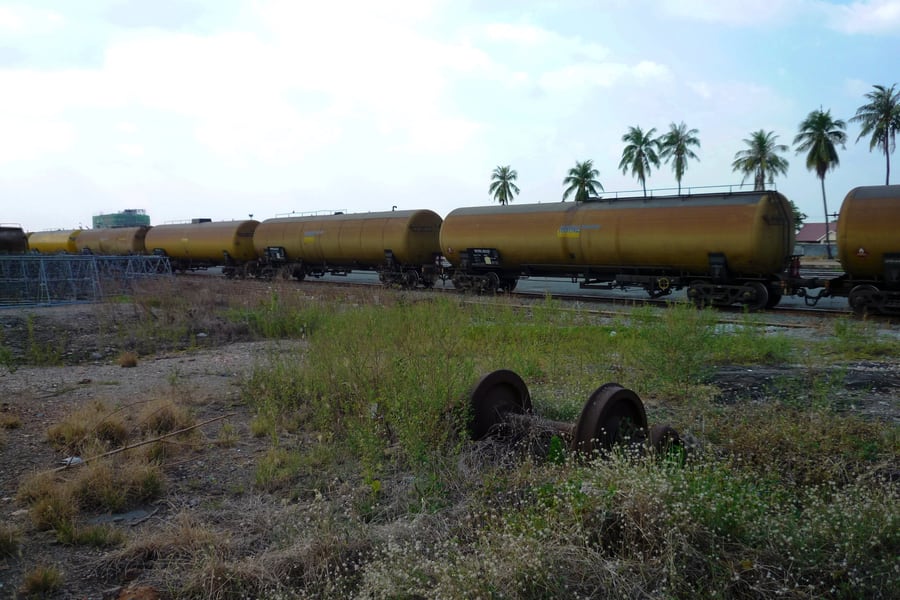
The train that runs on it is 264 kilometres of ordinary, useful railway rather than a heritage excursion. It leaves Phnom Penh at seven in the morning, calls at Takeo, Kep and Kampot, and is on the platform at Sihanoukville at 13:36; the coach that carries you is as likely as not coupled behind a rake of flat wagons, because the line was rebuilt for freight and the passengers came along with it. A one-way ticket the whole way costs twelve US dollars, and the 264 kilometres are booked at six hours thirty-six minutes — an average, stops and all, of a little over forty kilometres an hour.
The middle is the reason to take it. Between Takeo and Veal Renh the line crosses the flooded rice country of the south, runs within sight of the Elephant Mountains, and sets you down at Kampot — a riverside town of French shophouses under the Bokor massif, and the place the pepper is named after. The road does it in half the time and shows you none of that.
The Journey
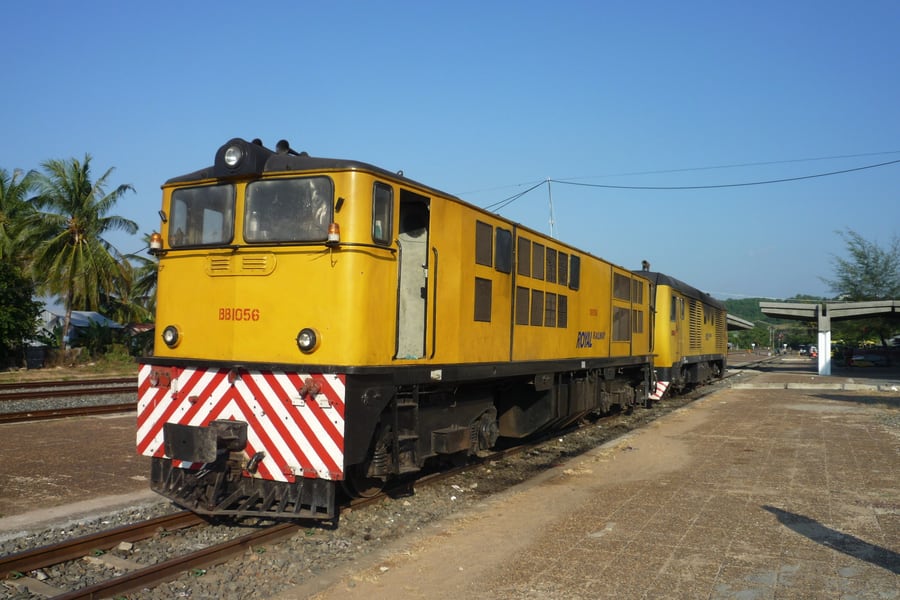
Phnom Penh's station is a reinforced-concrete building of 1932, put up to serve the French line north to Battambang, and it stands at the head of a wide boulevard with the tracks running straight out of it into the city. Trains are called from a board on the platform; passengers are asked to be there half an hour before departure. There is one class on this route, which the booking system calls Normal Class, and the train you board may be two coaches or four, worked by a diesel locomotive and, more often than not, sharing its path with a string of container flats bound for the port.
The first hour is suburban Phnom Penh, then the line straightens out into Takeo province and stays straight for a long time. This is the flooded plain south of the capital: rice in every direction, sugar palms standing singly out of the water. Takeo comes at ten to nine, and the train stands there ten minutes. From there the railway bends south-west towards the sea, and the Elephant Mountains begin to show on the right-hand side — a wall of green that will stay in the window for the rest of the morning.
Kep, Kampot and the river
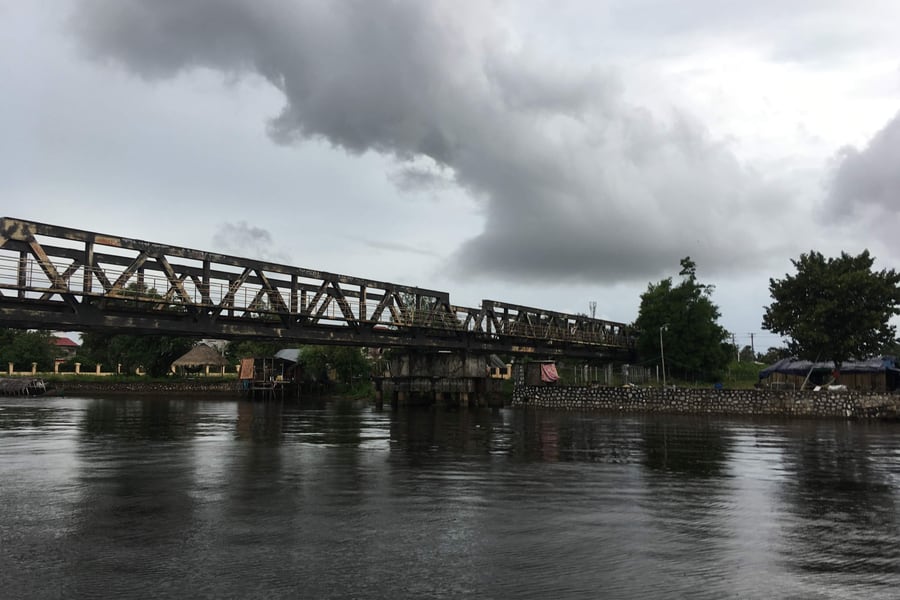
The train reaches Kep at twenty to eleven and Kampot eleven minutes later. It is booked into Kampot at 10:51 and away again at 11:15, so there is a stand of twenty-four minutes here, and this is the stop worth breaking the journey at. The line crosses the Praek Tuek Chhu on a steel truss bridge just short of the station, and from the carriage you get the whole of the town's setting at once: the river, the old road bridge alongside, and the Bokor massif rising behind it. Kampot pepper is grown on plantations in the country around the town, and salt is panned on the flats nearby.
After Kampot the railway runs behind the coast rather than along it — close enough for the light to change, not close enough for the sea. Veal Renh is the last place of any size before the coast, and beyond it the line drops through low hills into Sihanoukville. The train comes to a stand on a long concrete platform, alongside whatever freight is being loaded that afternoon, at 13:36.
What is pulling it
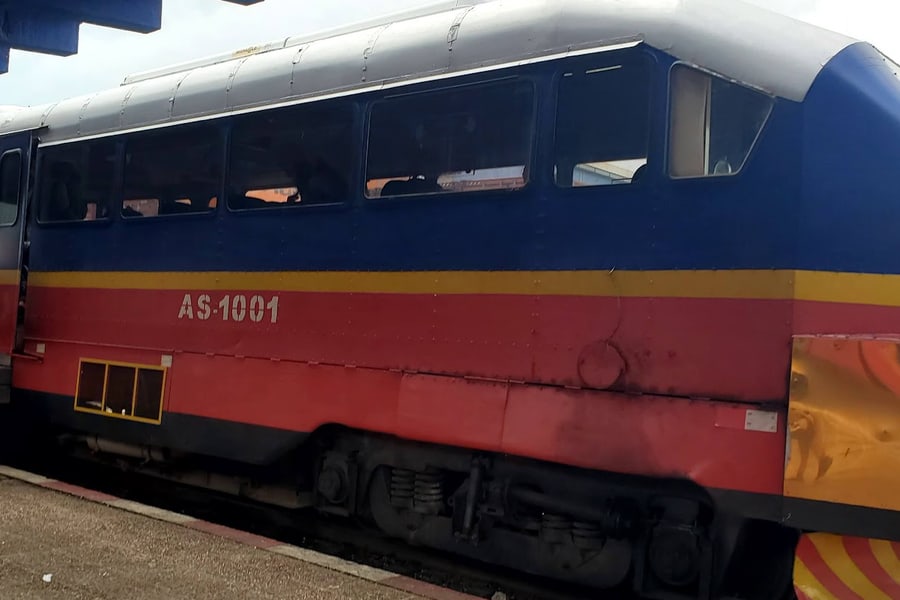
Royal Railway works the line with diesel locomotives, and the booked six hours thirty-six minutes for 264 kilometres puts the average, stops and all, a little over 40 km/h. The heavy work is done by Indian-built YDM-4 metre-gauge diesel-electrics — the class the operator added two more of in November 2024 — and lighter services by the Chinese-built AS1000 railcars, single units in red, yellow and blue that carry their numbers on the bodyside as AS-1001 and upwards.
The newest stock came from Japan. On 12 April 2024 JR Hokkaido announced that it had sold its last eleven KiHa 183 cars to Royal Railway; they left the port of Hakodate on 15 April and were landed at Sihanoukville on 27 April. Refurbished into five two-car sets, with the spare motor car kept back, they entered service on 1 November 2024 on the runs from Phnom Penh to Sihanoukville, Kampot and Kep. They were built between 1979 and 1992 for limited-express work in Hokkaido, where the gauge is 1,067 mm; in Cambodia they run on a thousand.
Along the route
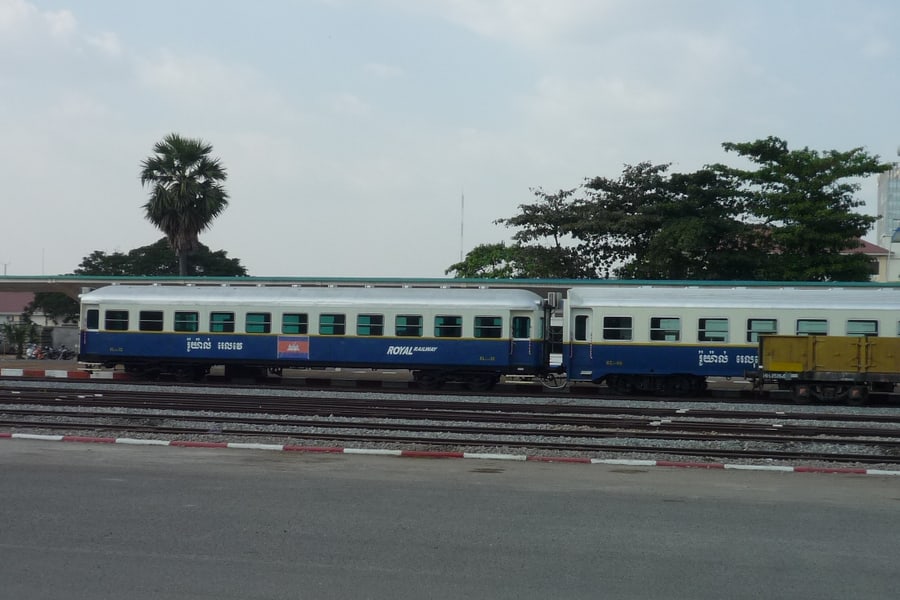
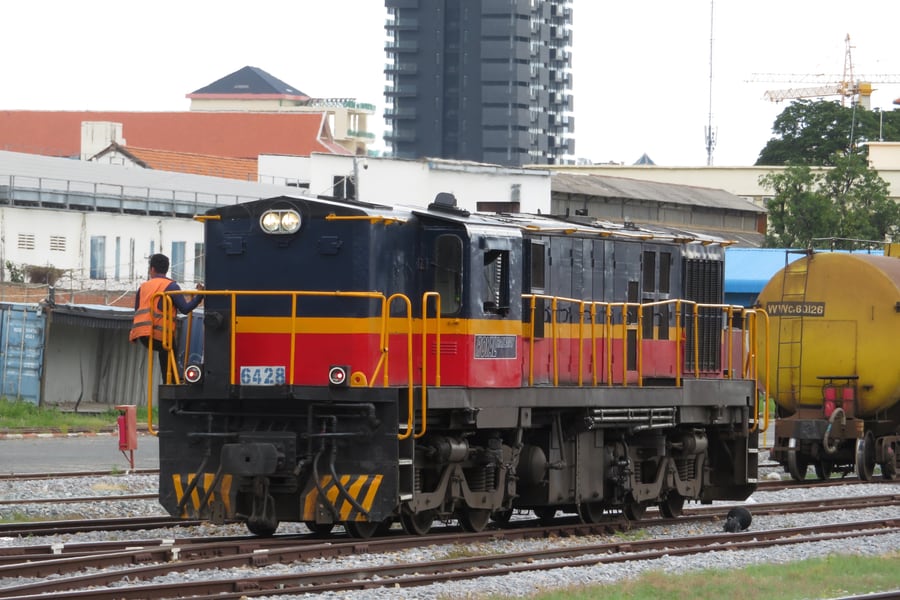 カップメーン / Wikimedia Commons · CC BY-SA 4.0 · 2019 · cropped
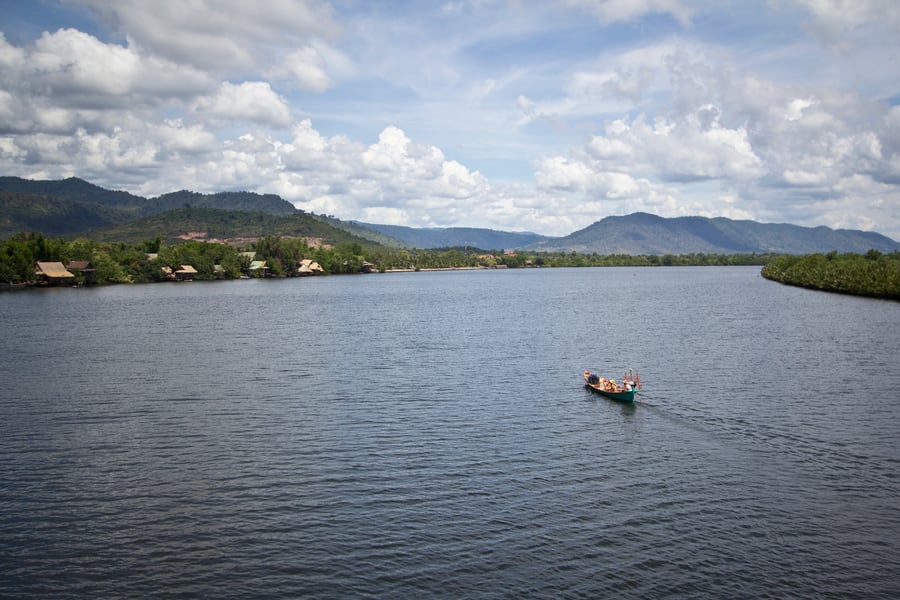
Seven in the morning, Phnom Penh
One departure a day, from a reinforced-concrete station of 1932. Passengers are asked to be on the platform half an hour early.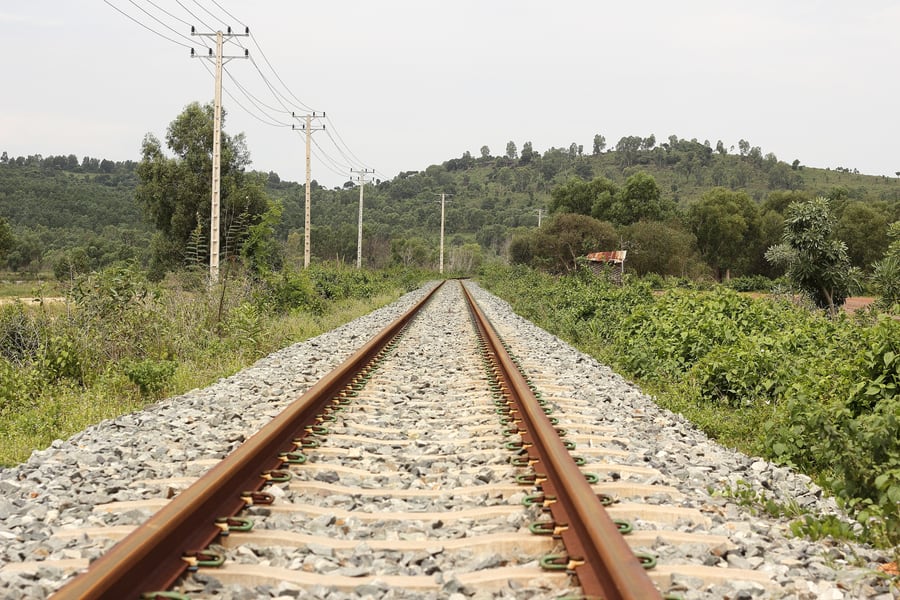 Dmitry Makeev / Wikimedia Commons · CC BY-SA 4.0 · cropped
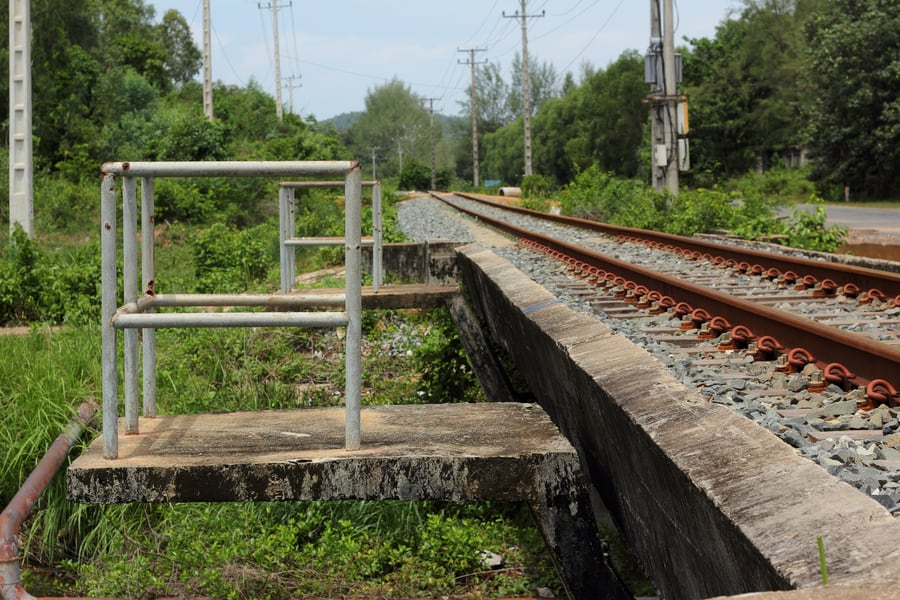
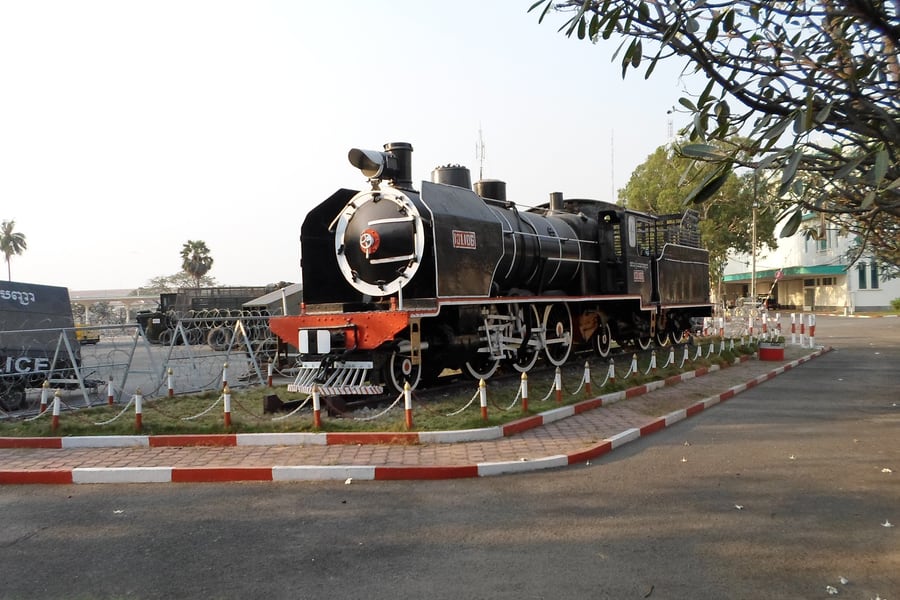
The long run south-west
Takeo at 08:50 and away at nine, then a long run south-west with the Elephant Mountains on the right-hand side of the train for the rest of the morning.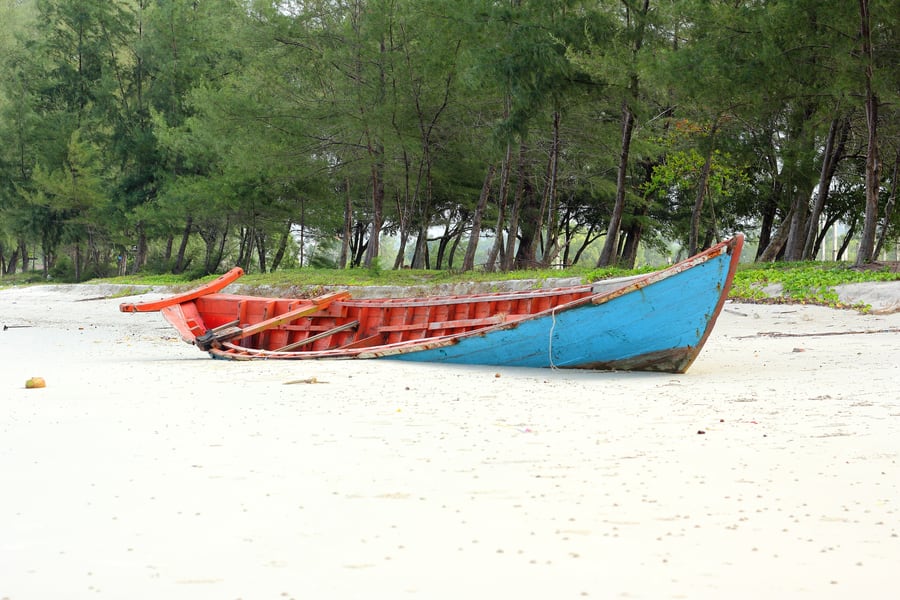 Dmitry Makeev / Wikimedia Commons · CC BY-SA 4.0 · cropped
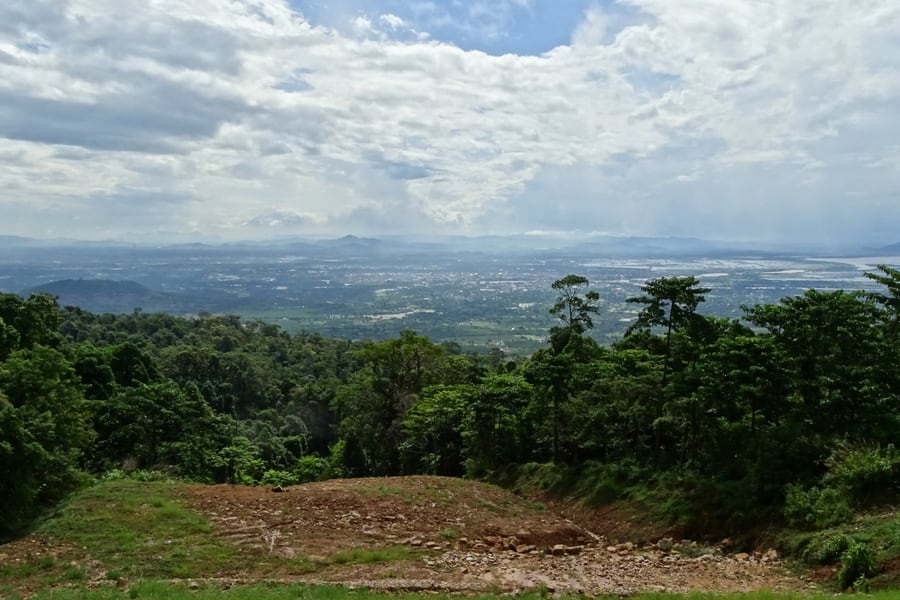
The sea at half past one
Kep at 10:40, Kampot at 10:51, then Veal Renh and down through low hills into Sihanoukville at 13:36, six and a half hours out of the capital.A bit of history
Culture & experiences along the way
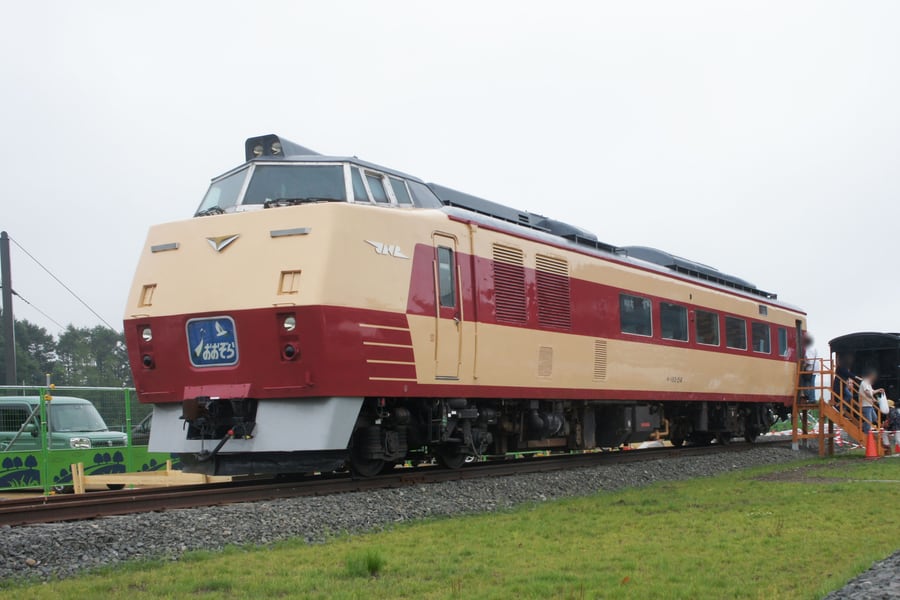 Mister0124 / Wikimedia Commons · CC BY-SA 4.0 · cropped
The railcars that came from Hokkaido
JR Hokkaido announced on 12 April 2024 that it had sold its last eleven KiHa 183 cars to Royal Railway. They sailed from Hakodate three days later, were landed at Sihanoukville on 27 April, and went into service on 1 November as five two-car sets. They were built for limited-express work in Hokkaido between 1979 and 1992.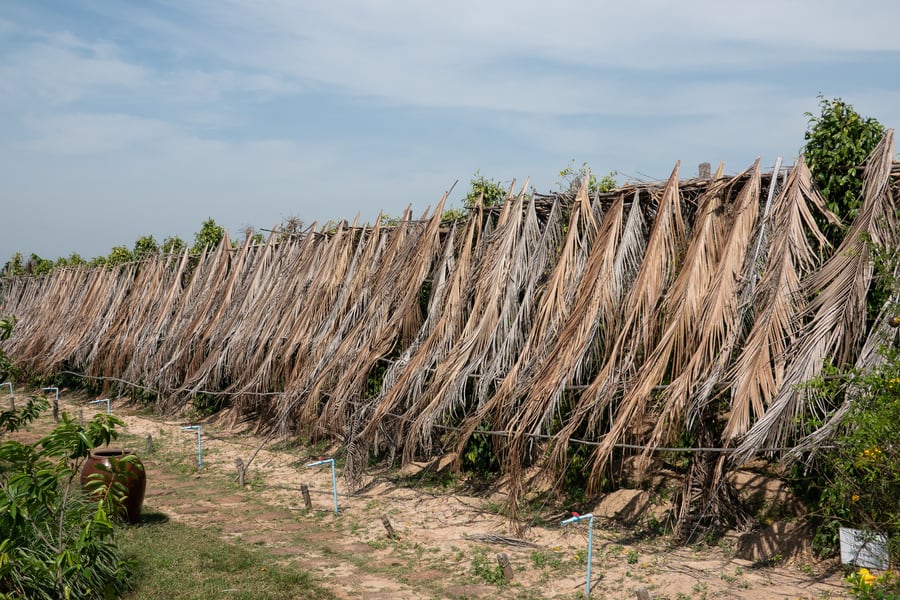 PsamatheM / Wikimedia Commons · CC BY-SA 4.0 · cropped
Getting off at Kampot for the pepper
Kampot pepper is grown on plantations in the country around the town, and the train's twenty-four-minute stand is long enough to see why people break the journey here. The vines are trained up poles under palm-thatch shade and picked by hand; the salt flats are on the other side of town.Timetables
One train runs each way, every day. Southbound it is Train 03, out of Phnom Penh at 07:00 and into Sihanoukville at 13:36; northbound it is Train 02, away from the coast at 14:00 and back in the capital at 20:36. Both are booked at six hours thirty-six minutes. It is a long train — the booking system was still offering close to six hundred seats on it a day ahead — and passengers are asked to be at the station half an hour before departure.
Southbound — Train 03, Phnom Penh to Sihanoukville
| Station | Train 03 |
|---|---|
| Phnom Penh | 07:00 |
| Takeo | 08:50 · departs 09:00 |
| Kep | 10:40 |
| Kampot | 10:51 · departs 11:15 |
| Sihanoukville | 13:36 |
Northbound — Train 02, Sihanoukville to Phnom Penh
| Station | Train 02 |
|---|---|
| Sihanoukville | 14:00 |
| Kampot | 16:12 · departs 16:15 |
| Kep | departs 16:35 |
| Takeo | 18:24 · departs 18:30 |
| Phnom Penh | 20:36 |
⚠️ Royal Railway has two domains and only one of them works. royal-railway.com returns a
Cloudflare 522 — the error a host gives when its origin never answers — and has done for as long as
we have been checking. The live site is royalrailway.com.kh, and the operator's own booking
system is at royalrailway.easybook.com. The times above are that system's, station pair by station
pair, on 31 August 2026.
Trains are on sale about thirty days ahead: on 31 August the last bookable departure was 30 September, and every day inside that window had the 07:00 with seats free.
Times as of August 2026. Book at royalrailway.easybook.com (opens in a new tab), or by telephone on +855 78 888 582, daily 06:00–20:00.
Tickets
There is one class on this route, and the fares are flat and cheap: US$12 from Phnom Penh to Sihanoukville, US$10 to Kampot, US$9 to Kep and US$7 to Takeo. Kampot to Sihanoukville, the short seaward half, is US$7. Fares are quoted and charged in US dollars, the normal way to pay for most things in Cambodia.
Tickets are sold through Royal Railway's own online booking system, which the operator's site links to as Passenger Booking. Its terms are blunt: once booked, a ticket is strictly non-changeable and non-refundable, so buy for the day you mean to travel. There is no advance-purchase discount to chase — the price was the same on every date sampled — and a sold-out date shows no train at all rather than a full one.
Book your tickets
Phnom Penh to Sihanoukville
Normal Class, the whole line
The full 264 kilometres, six hours thirty-six minutes, in the only class the route offers.
Book Tickets (opens in a new tab, on royalrailway.easybook.com)via royalrailway.easybook.comPhnom Penh to Kampot
Normal Class, three hours fifty
The stop most people get off at, reached at ten to eleven in the morning.
Book Tickets (opens in a new tab, on royalrailway.easybook.com)via royalrailway.easybook.comKampot to Sihanoukville
Normal Class, the seaward half
Two hours and twenty minutes from the river town down to the coast, on the same train.
Book Tickets (opens in a new tab, on royalrailway.easybook.com)via royalrailway.easybook.comRail Passes
No rail pass covers Cambodia. Interrail and Eurail are European products and do not extend to Asia, there is no Cambodian national pass, and no ASEAN-wide rail ticket exists for the region. Royal Railway sells single journeys only.
That is not much of a loss. The whole 264 kilometres costs US$12, and breaking the run at Kampot and buying two singles costs US$17 — a pass would have to be very cheap indeed to beat numbers like those. Buy the leg you want, on the day you want it, and treat the price as settled.
Places to Visit
Every stop on this line is worth getting off at, which is unusual — the Southern Line was laid to reach a port, and the towns it passes through happen to be the pleasantest in southern Cambodia. Takeo sits among pre-Angkorian temples an hour and a half out of the capital. Kep and Kampot are twenty minutes apart on the train and completely different from each other: one a seaside town known for its crab, the other a river town of French shophouses under a mountain. Sihanoukville at the end has the beaches.
The one thing the railway does not reach is Angkor. Siem Reap has never been on the network — a narrow-gauge line ran there in the 1890s and is long gone — so a trip that takes in the temples means leaving the train behind at Phnom Penh.
 UM / Wikimedia Commons · CC0 · cropped
The temple at Takeo
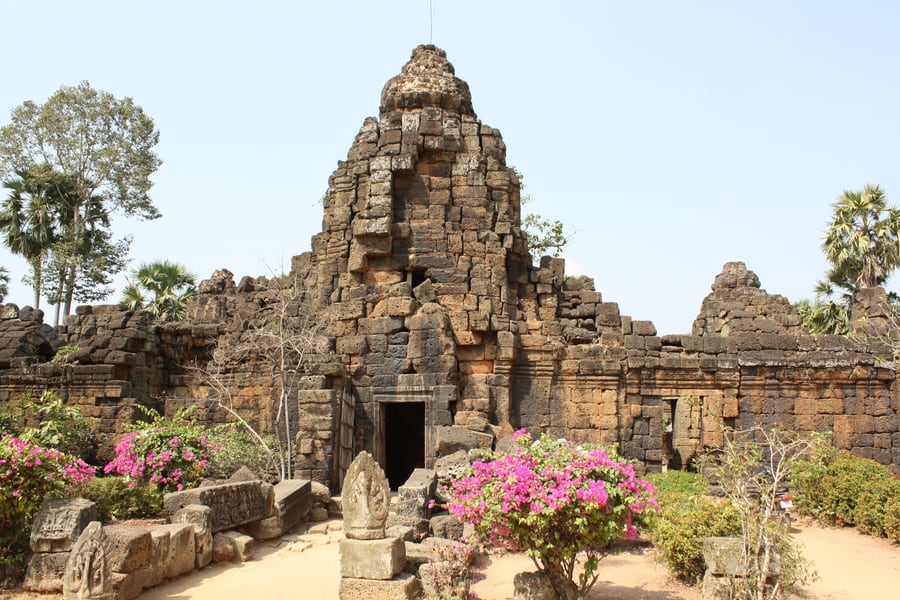
Ta Prohm, ninety minutes down the line from the capital, is a laterite and sandstone temple of the eleventh century — pre-Angkorian work, older than most of what people travel to Siem Reap for, and standing among bougainvillea with almost nobody at it. Takeo province holds several such sites; this is the one nearest the railway.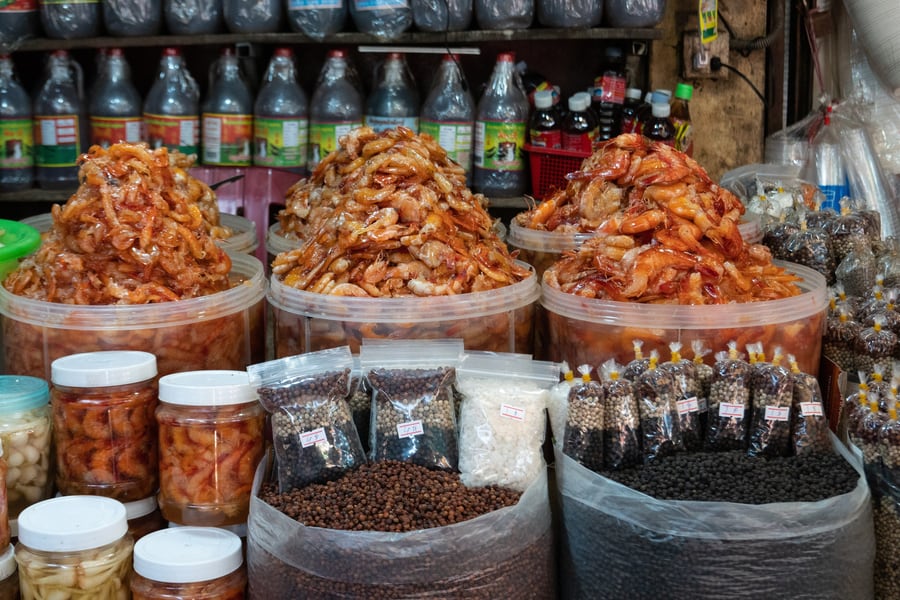 PsamatheM / Wikimedia Commons · CC BY-SA 4.0 · cropped
The crab market at Kep
Kep was the French colonial seaside resort and is now a small town known chiefly for one thing: crab, sold live from baskets kept in the sea and cooked with green Kampot pepper. The market is a row of stalls along the shore, and the peppercorns, dried shrimp and fish sauce sold alongside are the region's whole larder in one place.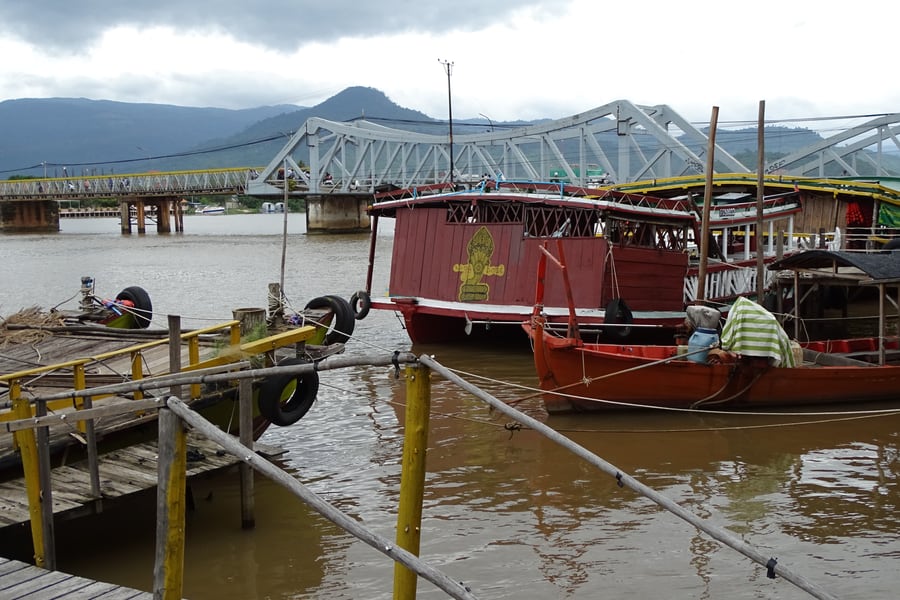 Adam Jones / Wikimedia Commons · CC BY-SA 2.0 · 2019 · cropped
The Kampot riverfront
Kampot sits on the Praek Tuek Chhu a few kilometres above the sea, with a front of French shophouses, an old iron road bridge and the Bokor massif behind it. Boats work off the bank below the bridge. It is a short walk from the station, and the reason to make this a two-day journey rather than a one-day one.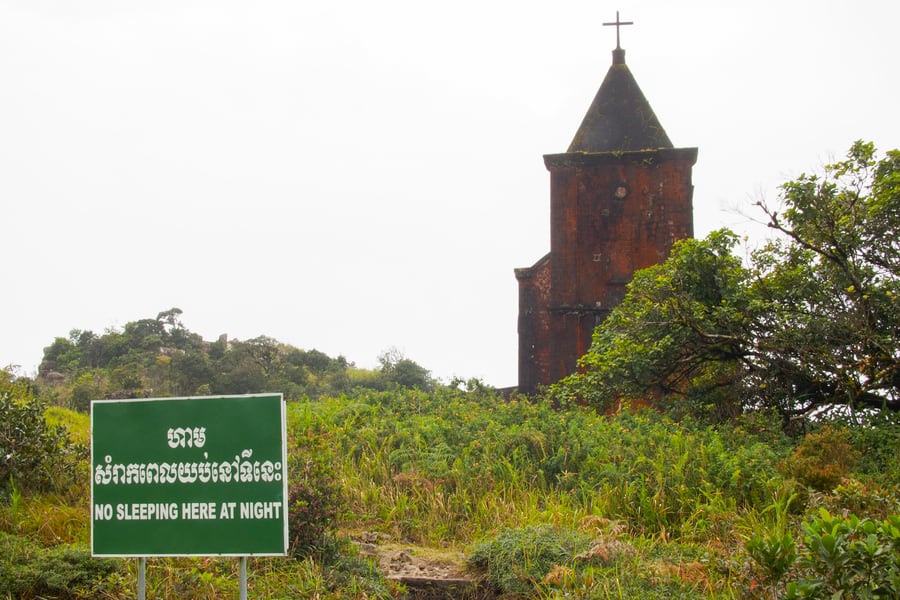 Myrmux / Wikimedia Commons · CC BY-SA 4.0 · cropped
Bokor hill station
The French built a hill station on the Bokor plateau above Kampot in the 1920s, reached by a road cut through the forest, and it was abandoned twice — once to the war and once to the Khmer Rouge. The shell of the Catholic church still stands on the ridge, stained red by the weather, and the plateau looks out over the whole coastal plain.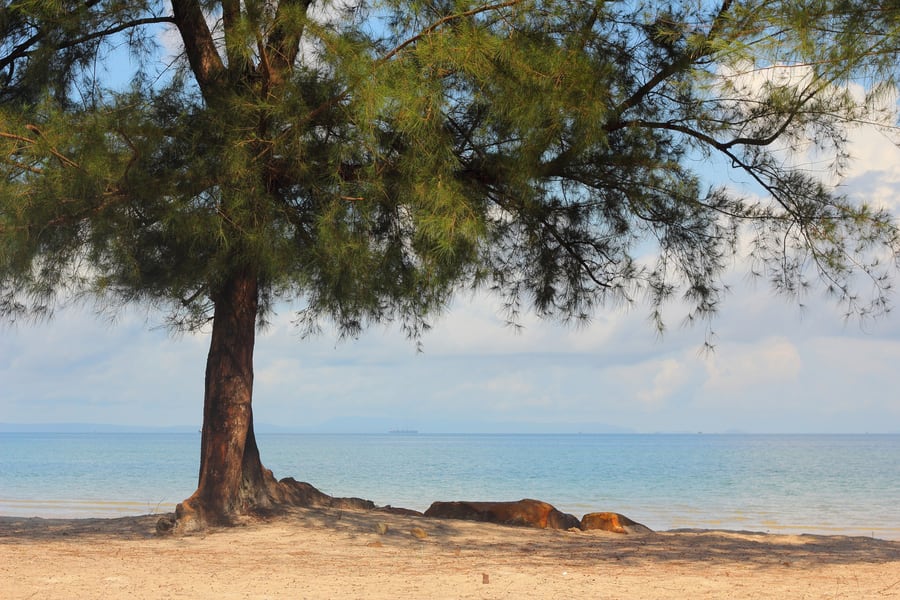 Dmitry Makeev / Wikimedia Commons · CC BY-SA 4.0 · cropped
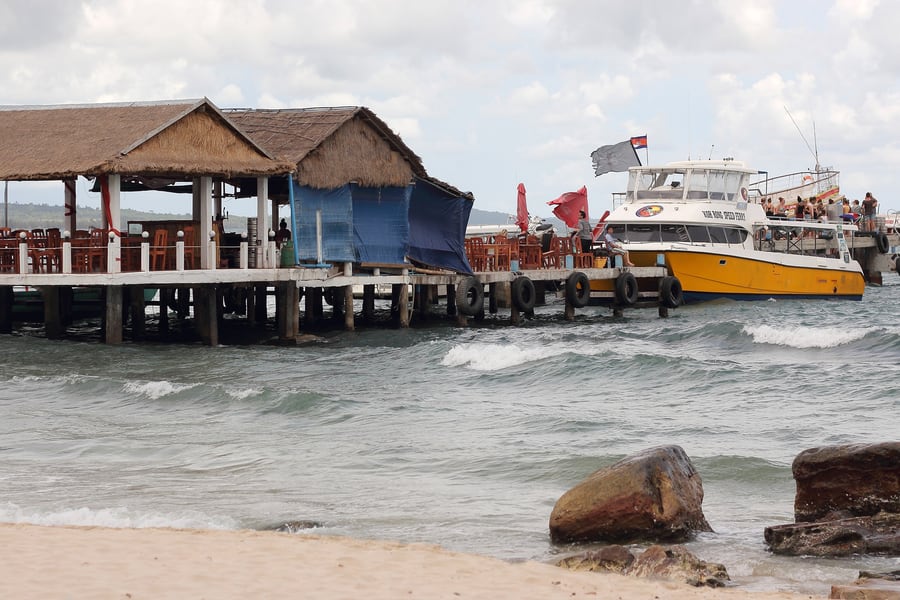
The beaches at Sihanoukville
The town exists because Cambodia wanted a deep-water port that was not Saigon or Bangkok, and the railway was built to serve it; the beaches came afterwards. Prek Treng, north of the centre, is the long quiet one, and Ochheuteal and Otres are where the boats leave for the islands offshore. The station is a short ride inland from all of them.Where to Sleep
The three towns worth stopping in each have somewhere with a history of its own. In Phnom Penh the grand option stands a few minutes from the station; in Kampot the pick is a converted rice barn on the river; and at the end of the line stands a seven-storey hotel of 1964 that gave Independence Beach its name.
Kampot is the one to plan a night around. The train stands there for twenty-four minutes on the way down and calls again at a quarter past four on the way back, so a day and a night in the town fits the timetable exactly, and the pepper plantations and the road up Bokor both start from there.
Where to stay
Raffles Hotel Le Royal
A few minutes from Phnom Penh station
Built in 1929 and reopened under the Raffles name in 1997, on a tree-lined street near Wat Phnom.
Check Availability (opens in a new tab, on raffles.com)via raffles.comRikitikitavi
On the river at Kampot
A rice depot of the 1920s, from the years when Kampot was a port, converted into a small riverside hotel in 2005.
Check Availability (opens in a new tab, on rikitikitavi-kampot.com)via rikitikitavi-kampot.comIndependence Hotel by Dara
On Independence Beach, Sihanoukville
The seven-storey hotel of 1964 by the French architects Leroy and Mondet, with villas and pavilions in its grounds.
Check Availability (opens in a new tab, on darahotels.com)via darahotels.comQuestions or corrections
Planning this trip and stuck on something, or spotted a time, fare or detail that has changed? Send us a message about Phnom Penh to Sihanoukville — the Southern Line. We read every one, and we update this page when something has changed.