Polar Bear Express
Rev40 / Wikimedia Commons · CC BY-SA 3.0 · cropped
- Distance300 km
- Duration5 hours
- Best seasonAll year · 4 a week, 5 in summer
Introduction
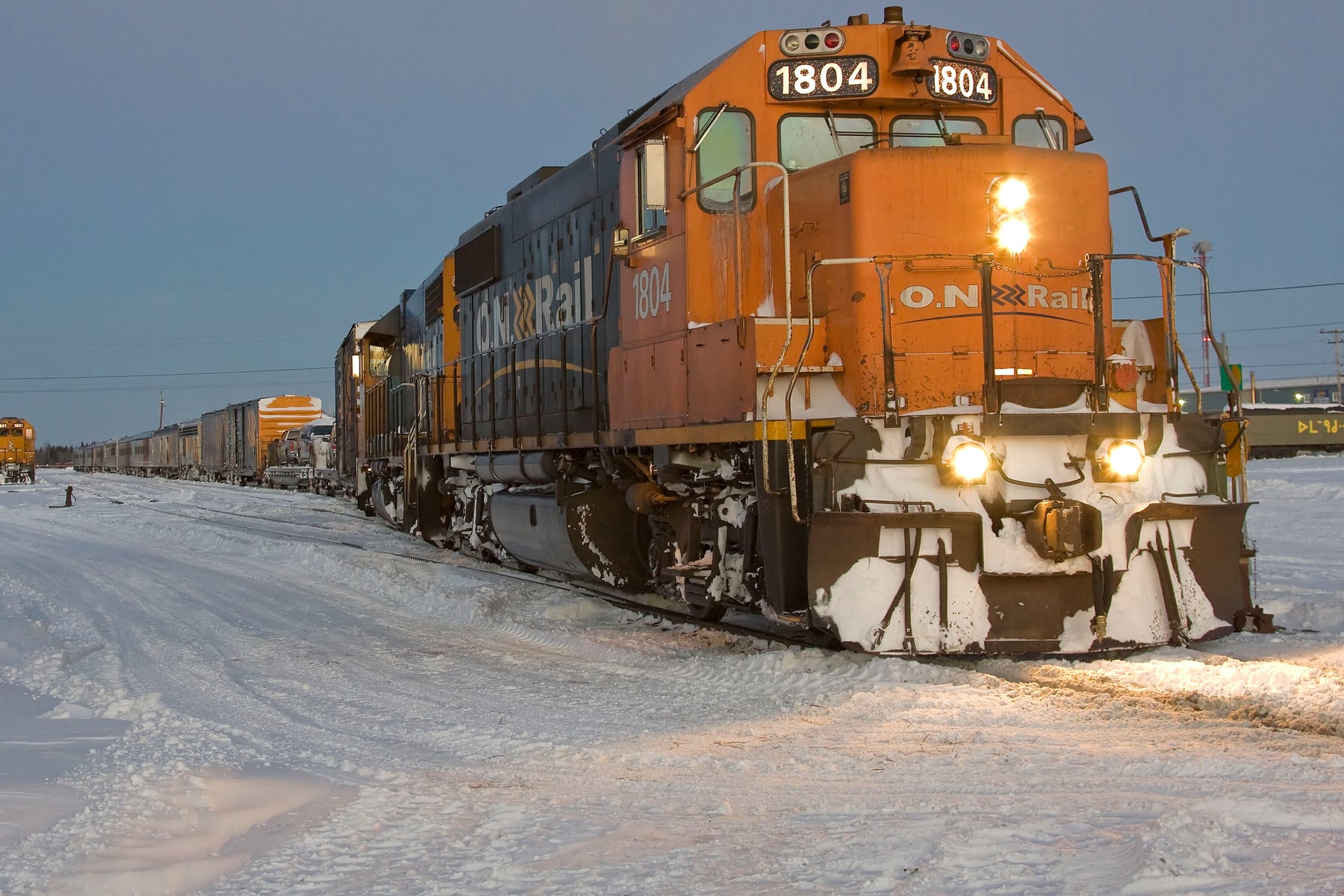
Moosonee has no road. It sits on the west bank of the Moose River nineteen kilometres short of James Bay, and nothing but a railway, an aeroplane and — for a few weeks each winter — an ice road across the frozen rivers connects it to the rest of Ontario. The Polar Bear Express is that railway: 186 miles of the Island Falls Subdivision, 300 kilometres in five hours, Cochrane to tidewater. It is not an excursion. Ontario Northland calls it an essential service used primarily by the residents of Moosonee and Moose Factory, and the clue is in the consist — flat cars with vehicles chained down on them, boxcars for snowmobiles and canoes, and a baggage car in which every passenger may check three bags free, because this is how the groceries come north.
The line exists because a provincial government wanted a port. The Temiskaming and Northern Ontario Railway, created on 17 March 1902, reached Cochrane on 30 November 1908 and began pushing north into the muskeg in February 1922. Track got as far as Island Falls in November 1923, then stopped for four years when a new premier lost interest, and the last spike went in at Moosonee on 15 July 1932. The fur post on the riverbank, Revillon Frères' Moose River Post, took the Cree name môsonihk — at the Moose — and the company that built the line was renamed the Ontario Northland Railway in 1946.
The named train dates from 1964. Polar bears live on the sea ice of Hudson Bay and James Bay, well north of here; you will not see one from the window.
The Journey
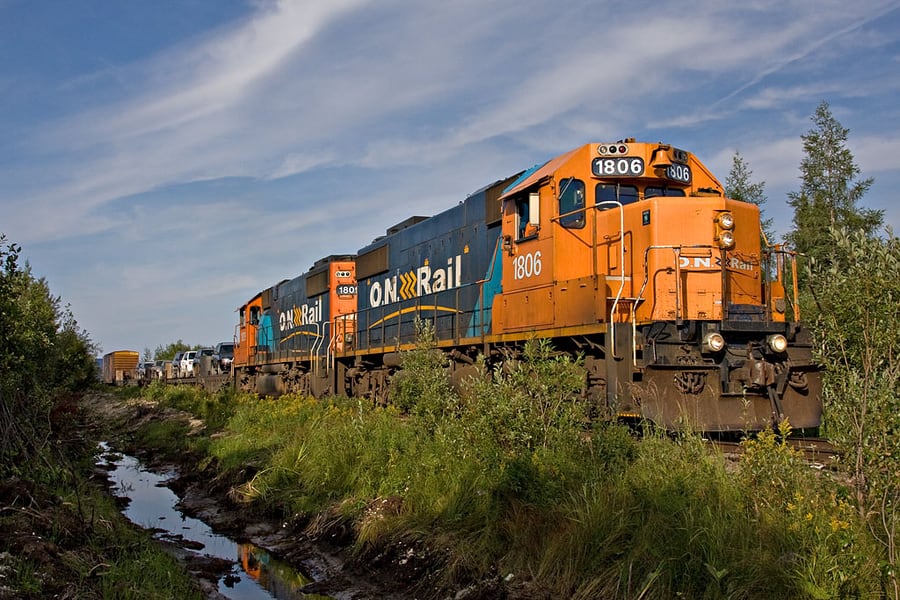
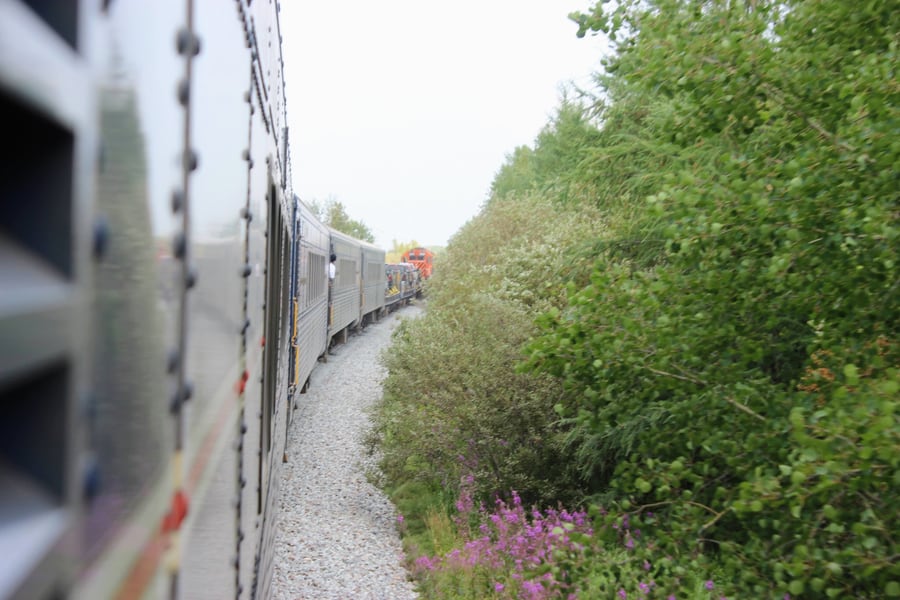
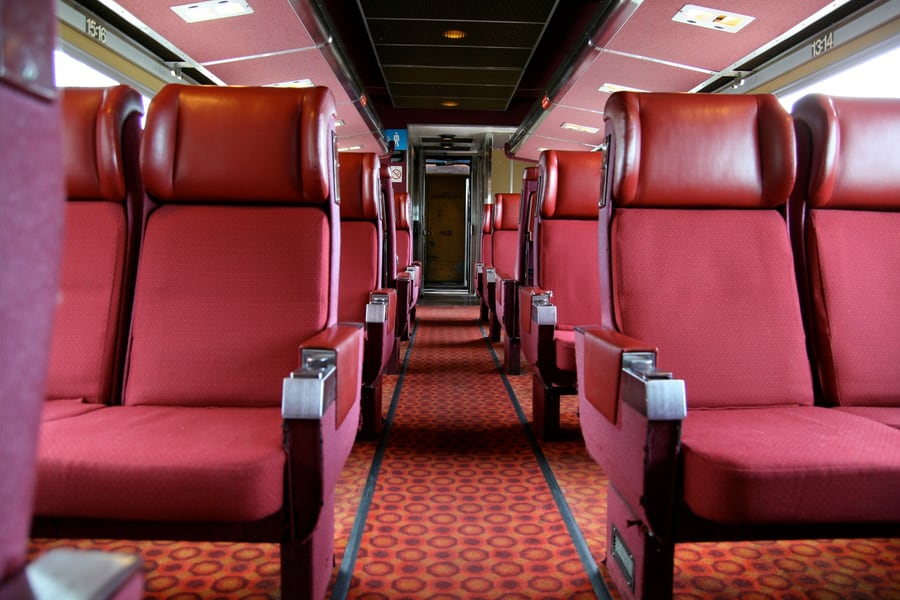
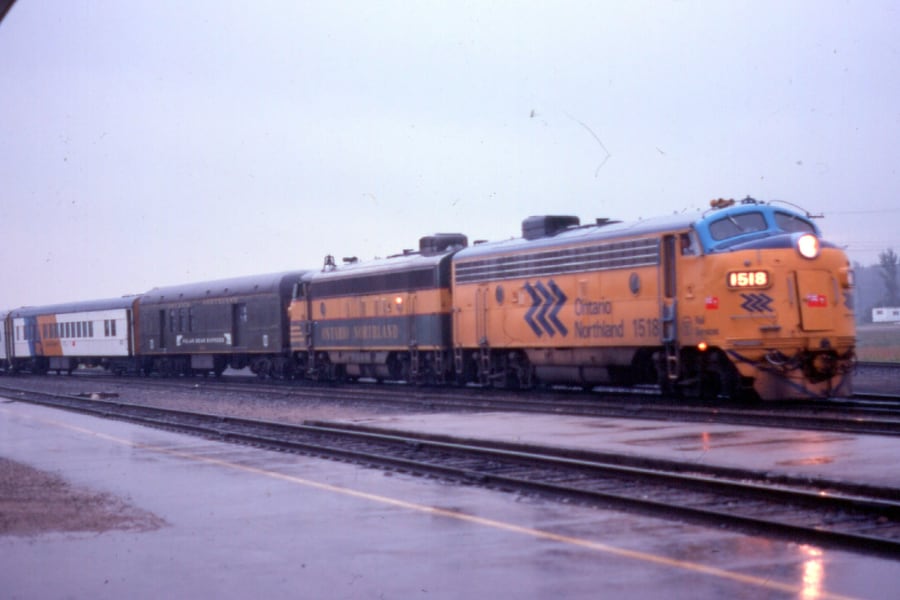
The train leaves Cochrane at nine in the morning and is in Moosonee at two. Two of Ontario Northland's orange GP38-2 diesels take the head end, and what follows them is a working mixed train: coaches with seats grouped in twos and fours, a dining car, a baggage car, boxcars, and the chain cars — flat wagons with tie-downs — carrying the pickups and vans that people in Moosonee and Moose Factory have no other way of getting home. Ontario Northland moves over three thousand vehicles a year this way. Cars are checked in at the Cochrane yard office between six and half past six in the morning, and at the Moosonee yard office between eleven and noon.
The dining car
The operator calls it the most popular attraction on the trainset, and for once the marketing is recognisable. It is a full dining car with bench seating, open for breakfast, lunch and dinner, cooking from scratch on board, with a menu that changes every month and a daily special posted for each departure. On a five-hour run through country with no towns in it, the dining car is where the train becomes a room: people move down to it once the conductor has collected the tickets, and stay. It is also the only place on the train where alcohol may be bought and drunk.
Out of Cochrane and down the Abitibi
The first hour is the Great Clay Belt — flat farmland and cutover forest, with stops at Clute, Gardiner and Wurtele in the first forty minutes. At Island Falls, mile 43, the line meets the Abitibi River and stays with it for the next fifty miles past a chain of hydroelectric dams: Island Falls, then Abitibi Canyon, then Otter Rapids, a four-unit, 182-megawatt station that the railway runs straight past. Ontario's highway network gives up here. Highway 634 comes north from Smooth Rock Falls, through Brownrigg, to Fraserdale and the Abitibi Canyon dam, and that is the end of it: from mile 69 to the sea there is no public road at all, and every stop beyond it is a flag stop that the train makes only if somebody asks.
Into the Hudson Bay Lowlands
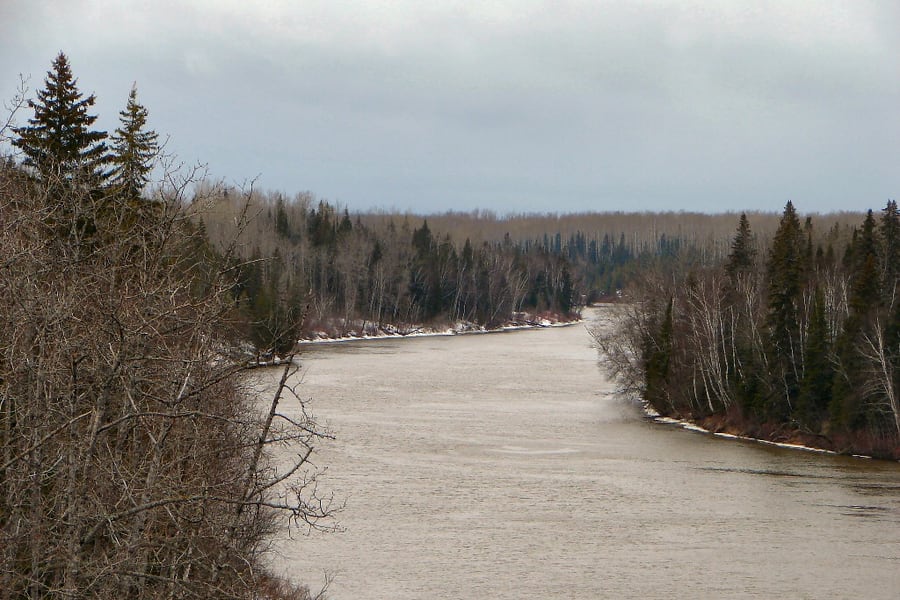
North of Otter Rapids the shield gives out and the train drops into the Hudson Bay Lowlands, the largest wetland on earth — muskeg, black spruce thinning to tamarack, and long straight track laid across ground that never properly freezes solid or properly dries. The stops are names on a timetable rather than places: Coral, Ranoke, Onakawana, Moose River, Renison, Galeton. Moose River, mile 142, is the crossing, and from the bridge the river is already wide and brown and moving north towards the bay.
Moosonee
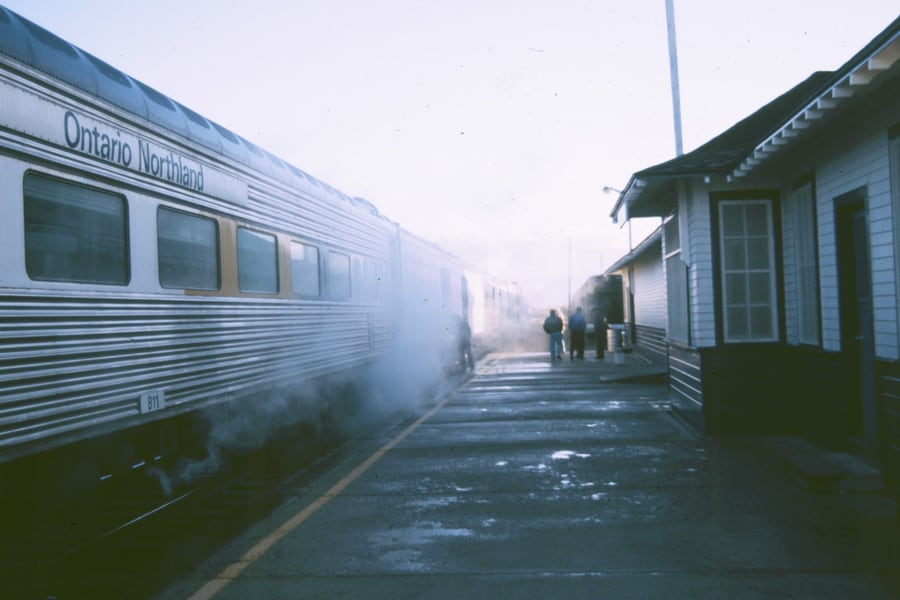
The last twenty minutes run beside the water into a town of about three and a half thousand people, some 85 per cent of them Cree on the town's own figures. The station stands on Arena Road at the northern edge of the townsite; the tracks carry on past it to the airport and to a siding on the riverbank where freight is transferred to barges for the coastal communities further north. Moose Factory, the older settlement, is on an island reached by water taxi in summer and by ice road in winter. The southbound train leaves at five, so a same-day return gives you three hours on the ground — enough to see the waterfront, not enough to cross the river and come back.
Along the route
 sf-dvs / Wikimedia Commons · CC BY 2.0 · cropped
Out of Cochrane at nine
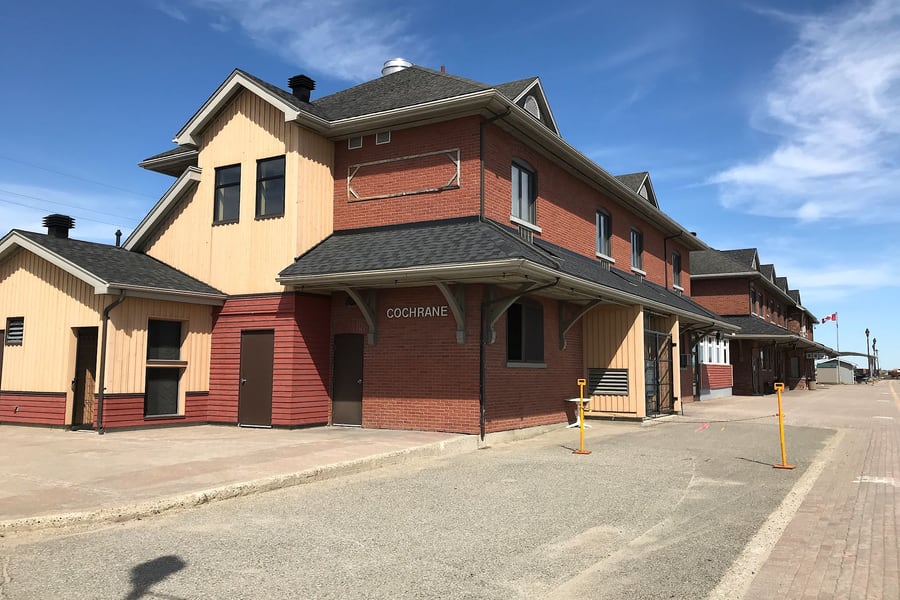
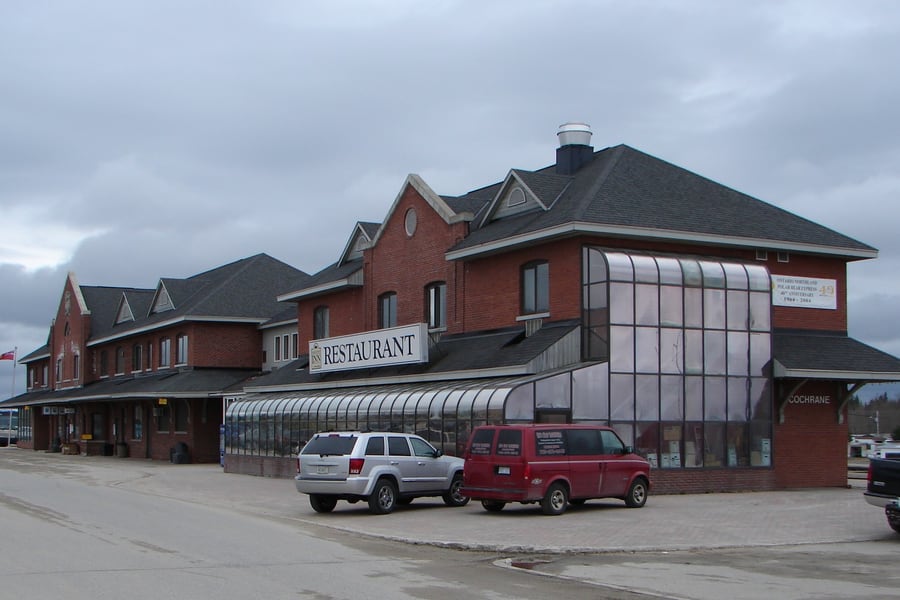
The train leaves from the brick station on Railway Street, where the buses and the yard and the hotel all are, and is out into the Great Clay Belt within minutes. Clute, Gardiner and Wurtele come and go in the first forty minutes.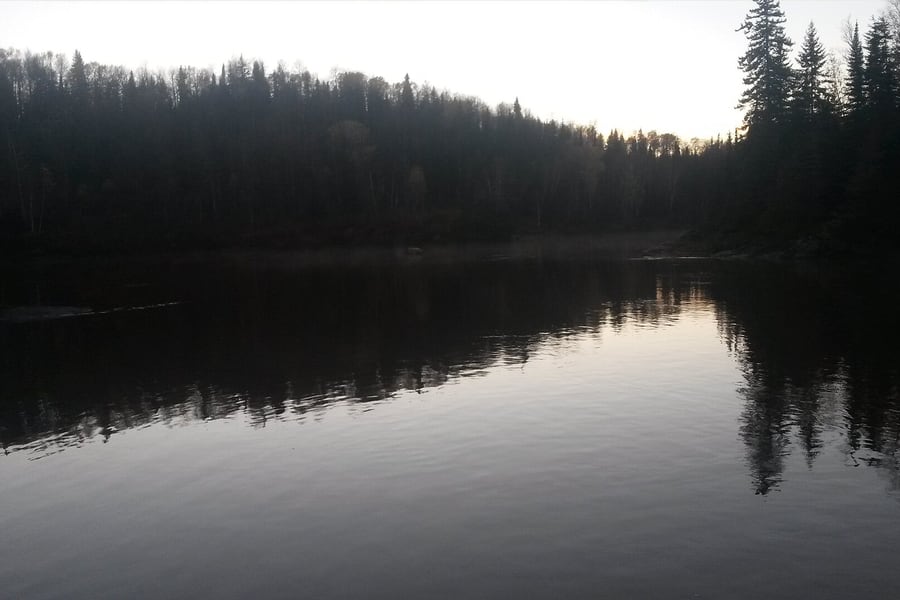 matt m / Wikimedia Commons · CC BY 3.0 · cropped
The Abitibi and its dams
At Island Falls the line meets the Abitibi River and stays with it for fifty miles, past the Island Falls dam, the Abitibi Canyon dam and finally Otter Rapids — a four-unit, 182-megawatt station the train runs straight past.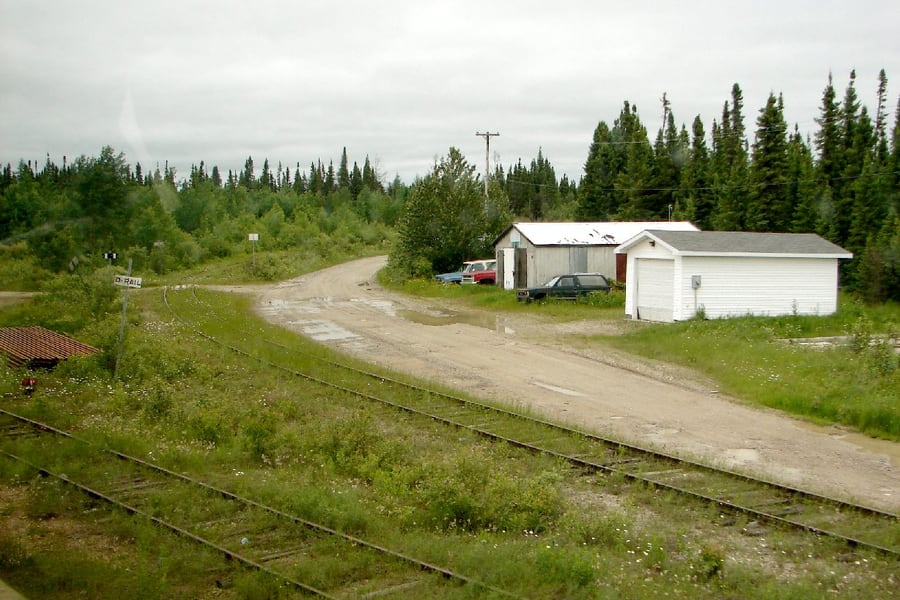 P199 / Wikimedia Commons · public domain · cropped
Fraserdale, where the road stops
Highway 634 comes north from Smooth Rock Falls and ends at the Abitibi Canyon dam beside Fraserdale, mile 69. From here to the sea there is no public road at all, and every remaining stop is a flag stop.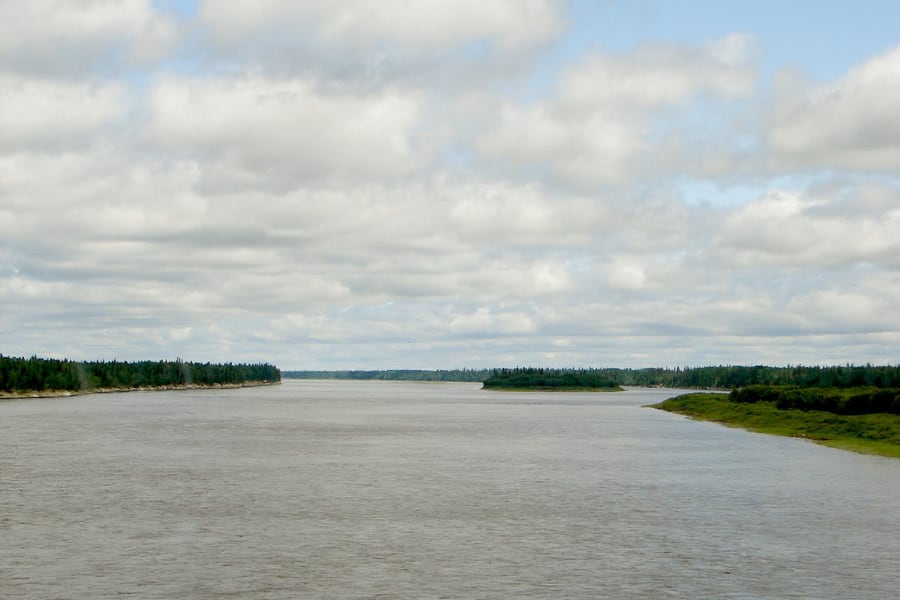 P199 / Wikimedia Commons · CC BY-SA 3.0 · cropped
Across the Moose River
Beyond Onakawana the train crosses the Moose River at mile 142 on a long steel bridge. The river is already wide and brown here, running north through the Hudson Bay Lowlands, and the last forty miles run down beside it into Moosonee.A bit of history
Culture & experiences along the way
 sf-dvs / Wikimedia Commons · CC BY 2.0 · cropped
The bear the train is named after
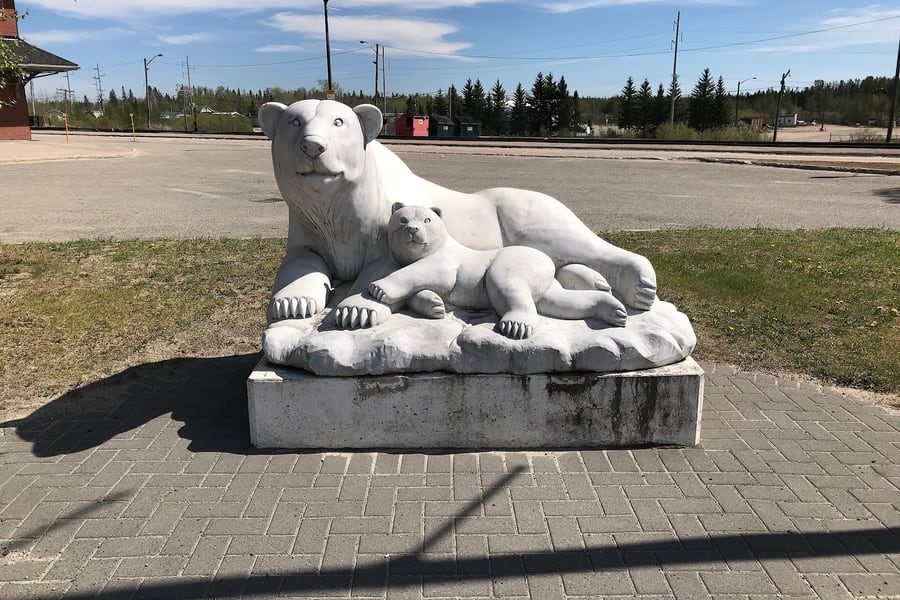
Polar bears live on the sea ice of Hudson Bay and James Bay, well north of Moosonee, and you will not see one from the carriage. You can see two in Cochrane: the Polar Bear Habitat keeps Ganuk and Henry on twenty-four acres and calls itself the only wildlife centre in the world given over solely to their care. The concrete pair outside the station are the town's own.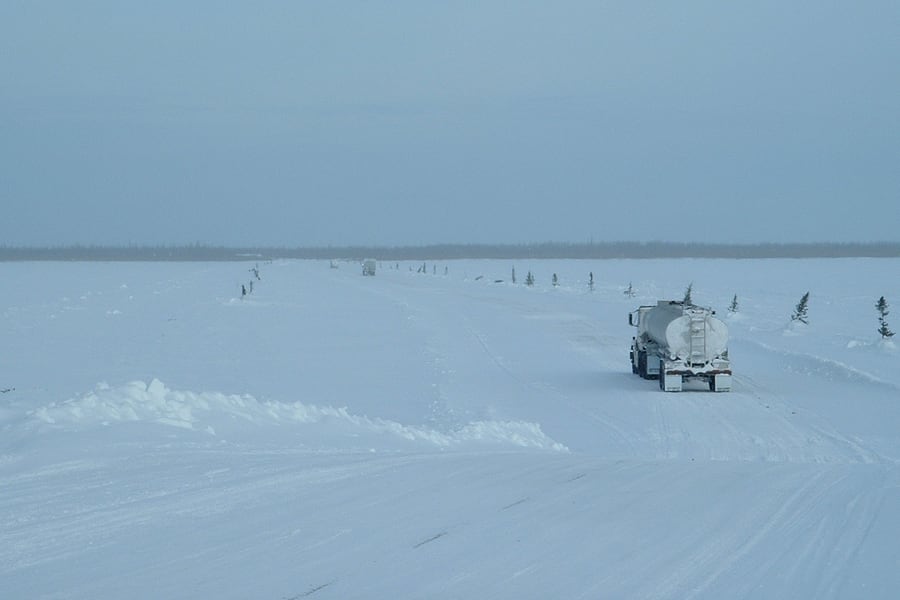 Rev40 / Wikimedia Commons · CC BY-SA 3.0 · cropped
The ice road that meets the train
Each winter four First Nations build a road over the frozen rivers linking Attawapiskat, Fort Albany and Kashechewan to Moosonee, and run it themselves through a company called Kimesskanemenow — Cree for "our road". Its own description of the route ends at the railway: from Moosonee there is a rail link to the provincial highway system at Cochrane.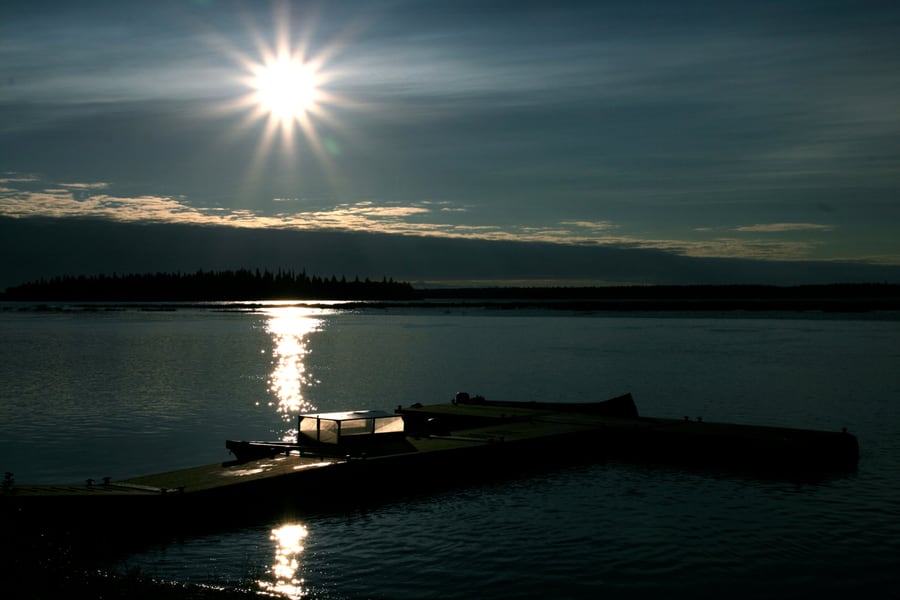 Matt MacGillivray / Wikimedia Commons · CC BY 2.0 · cropped
Crossing to Moose Factory
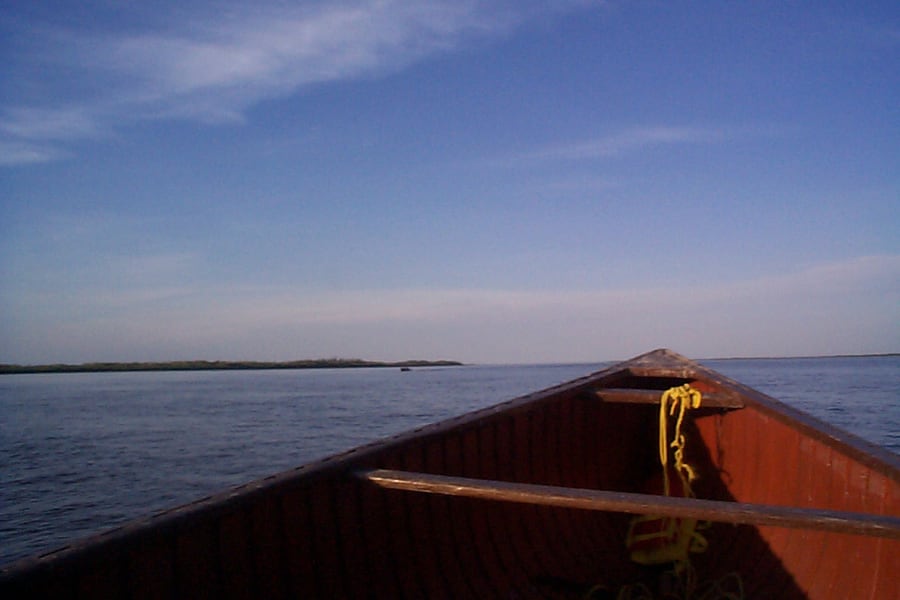
Moose Factory sits on an island in the estuary, and in summer the way across is a water taxi — an outboard-powered freighter canoe from the Moosonee landing, a few minutes over the current. In winter it is an ice road over the same water. In the weeks when the river is freezing or breaking up it is neither.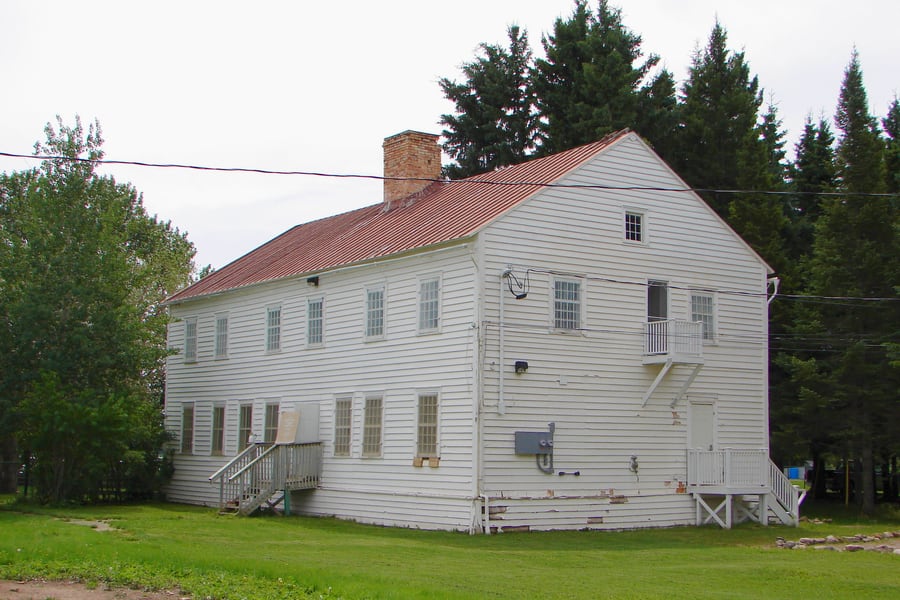 P199 / Wikimedia Commons · CC BY-SA 4.0 · cropped
The oldest English settlement in Ontario
The Hudson's Bay Company built Moose Fort on the island in 1673, the second post it established in North America; the French took it, renamed it and burned it before the Treaty of Utrecht settled the matter. The staff house survives as a museum, and a short walk away stand the old fur press and St Thomas', the Carpenter Gothic church the Company's carpenters began in 1864.Timetables
One train a day in each direction, and it is the same train: 421 north from Cochrane at 09:00, arriving Moosonee at 14:00, and 622 south from Moosonee at 17:00, arriving Cochrane at 22:00. Five hours each way, all year.
The days change with the season. On the summer board, in force 7 June to 24 October 2026, it runs five days a week — Sunday, Monday, Tuesday, Thursday and Friday. From the end of October to June it runs four days a week — Monday, Tuesday, Thursday and Friday. There is no service on Wednesdays or Saturdays in either season, and the booking engine simply returns nothing for those dates.
| Station | Mile | Northbound · 421 | Southbound · 622 |
|---|---|---|---|
| Cochrane | 0 | dep 09:00 | arr 22:00 |
| Clute | 9.8 | 09:15 | 21:45 |
| Gardiner | 18.5 | 09:27 | 21:31 |
| Wurtele | 25.9 | 09:41 | 21:18 |
| Island Falls | 43.1 | 10:05 | 20:55 |
| Brownrigg | 55.6 | 10:26 | 20:33 |
| Fraserdale | 69.2 | 10:45 | 20:15 |
| Otter Rapids | 93.5 | 11:20 | 19:40 |
| Coral | 96.3 | 11:26 | 19:33 |
| Ranoke | 112.1 | 11:52 | 19:07 |
| Onakawana | 126.1 | 12:14 | 18:45 |
| Moose River | 142.0 | 12:40 | 18:19 |
| Renison | 156.0 | 13:04 | 17:55 |
| Galeton | 171.2 | 13:28 | 17:31 |
| Moosonee | 186.2 | arr 14:00 | dep 17:00 |
Good to know:
- Everything between the two termini is a flag stop. The train calls only if somebody asks, and Ontario Northland says plainly that the flag-stop times above are approximations. Contact the operator before you travel if you intend to get off at one.
- Seats are reserved and assigned. You choose yours when you book, and you stay in it until the conductor has collected the tickets; after that the dining car is open.
- Only Cochrane and Moosonee have staffed counters. Both sell tickets and check baggage — all baggage must be checked and tagged at one of the two — and both have Wi-Fi. Moosonee station's opening hours are tied to the train and have been changed repeatedly through 2026; the operator posts them on its service-updates page.
- Getting to Cochrane. Ontario Northland's own motor coaches on routes 301 and 302 link Cochrane with Timmins, Matheson, Kirkland Lake, New Liskeard and North Bay. The Northlander passenger train to Toronto has not run since 28 September 2012; Ontario Northland has three new trainsets in testing and says the service will return, with Cochrane as its northern terminus.
- The auto carrier keeps its own clock. Vehicles are checked in at Cochrane between 06:00 and 06:30 on the day of departure, at the yard office on Boisvert Crescent, and at Moosonee between 11:00 and 12:00 at the yard office on Railway Lane. Reservations are required.
Times as of September 2026, from Ontario Northland's published Polar Bear Express schedule and confirmed against its booking engine. Confirm before travelling at ontarionorthland.ca (opens in a new tab).
Tickets
One class, one fare, and it does not move. Sampling Ontario Northland's booking engine in September 2026, Cochrane to Moosonee came out at CA$51.10 for an adult, one way, on every date tested in both directions — CA$43.44 for a senior, CA$25.55 for a child. Intermediate fares are proportionate: Cochrane to Otter Rapids, two hours twenty up the line, is CA$29.75. Seats are reserved and assigned at booking.
The other fare here is for your car. The auto carrier charges CA$169.95 plus HST for a personal vehicle up to three-quarters of a ton and CA$412.00 plus HST for a commercial one, loading and securing included; reservations are required and cancellations inside twenty-four hours are not refunded. Fares checked September 2026 at tickets.ontarionorthland.ca (opens in a new tab); Canadian dollars, per person, before taxes and fees.
Book your tickets
Cochrane to Moosonee
The whole line, one way
Five hours and 186 miles to tidewater, with a reserved seat and the dining car open once the tickets are collected.
Book Tickets (opens in a new tab, on ontarionorthland.ca)via ontarionorthland.caCochrane to Otter Rapids
Two hours twenty, to the last of the dams
A flag stop at the 182-megawatt generating station on the Abitibi, beyond the end of the highway.
Book Tickets (opens in a new tab, on ontarionorthland.ca)via ontarionorthland.caYour car on the train
Auto carrier, Cochrane to Moosonee
A personal vehicle up to three-quarters of a ton on a chain car, loading and securing included, plus HST.
Book Tickets (opens in a new tab, on ontarionorthland.ca)via ontarionorthland.caRail Passes
No rail pass covers this journey, and none is worth buying for it. Interrail and Eurail do not apply in Canada at all, and this train is not VIA Rail's: it belongs to the Ontario Northland Transportation Commission, an agency of the government of Ontario, which sells its own tickets through its own booking engine and honours nothing else.
VIA's two discount cards are irrelevant here even by accident. The Corridor Discount Card covers Québec City to Windsor and the Southwestern Ontario Discount Card covers Toronto to Windsor, Sarnia or Niagara; neither travel zone comes within seven hundred kilometres of Cochrane. The old Canrailpass, which once covered the whole VIA network, is gone.
What Ontario Northland does offer is a set of concession fares, applied at booking rather than bought in advance: children between two and twelve, seniors, students, military and police personnel, passengers travelling for medical reasons and their attendants. On a flat CA$51.10 adult fare the senior rate is CA$43.44 and the child rate CA$25.55, so the saving is real but modest, and there is nothing to buy up front. Passengers under sixteen travelling without an adult must book by telephone through Passenger Care rather than online.
Fare products and concessions checked September 2026 on ontarionorthland.ca (opens in a new tab).
Places to Visit
There are two towns on this line and about three hundred kilometres of muskeg between them. What lies in the middle is water and power: the Abitibi River and the string of dams the railway was partly built to serve. Below are the places worth stopping for, north from Cochrane — remembering that everything between the termini is a flag stop, and that the train calls only if you have asked it to.
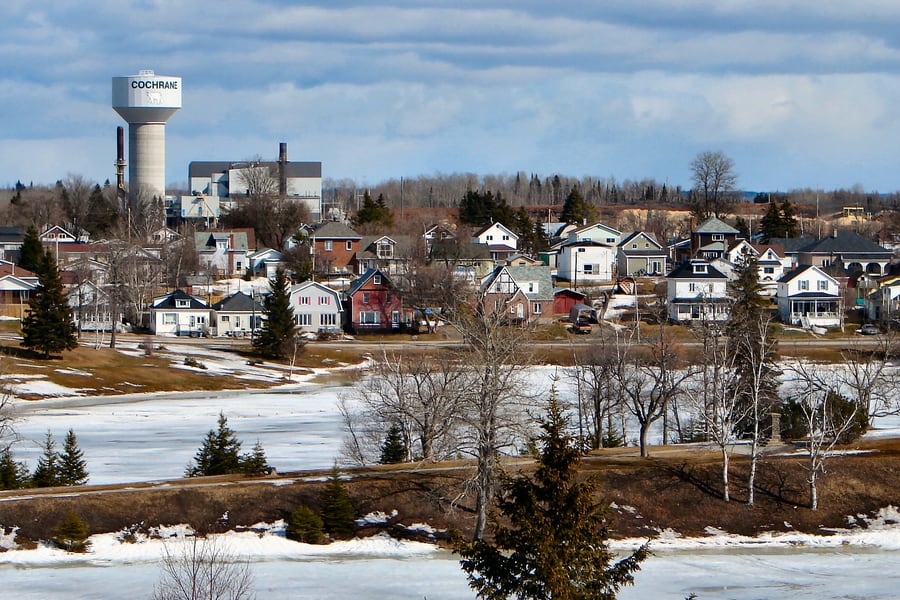 P199 / Wikimedia Commons · CC BY-SA 3.0 · cropped
Cochrane
A town of 5,390 that exists because the Temiskaming and Northern Ontario met the National Transcontinental here in 1908, and the only place on this line you can drive to. The station on Railway Street holds trains, buses, ticket office and hotel in one building. Tim Horton was born at the hospital up the road, and the Polar Bear Habitat on the edge of town — heritage village and snowmobile museum included — is what most visitors come for.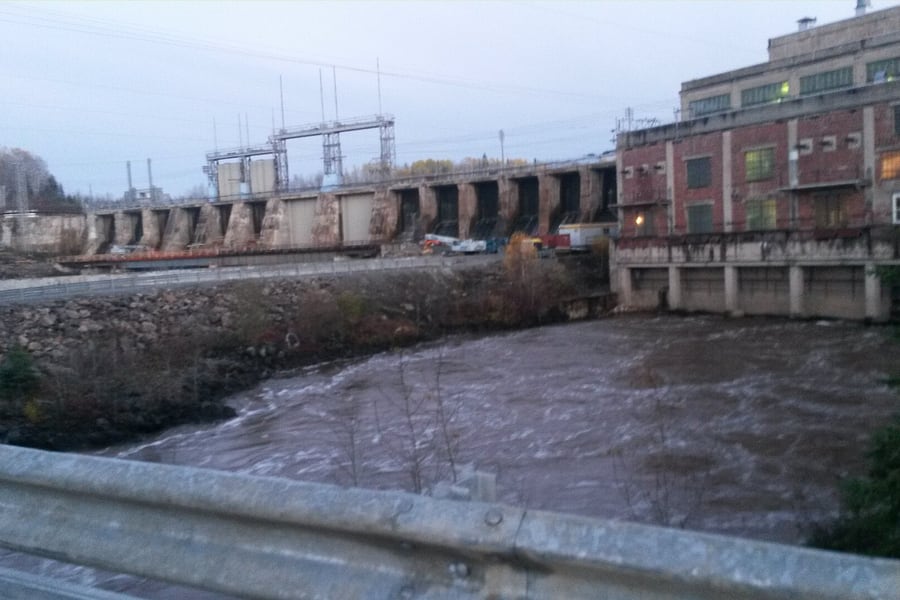 matt m / Wikimedia Commons · CC BY 3.0 · cropped
Island Falls
Mile 43, where the railway first touches the Abitibi River, and the end of the line for four years. Track reached Island Falls Junction on 1 November 1923; a new premier who opposed the James Bay extension then stopped the work, and nothing more was built until 1927. The dam and its generating station are what the stop serves now.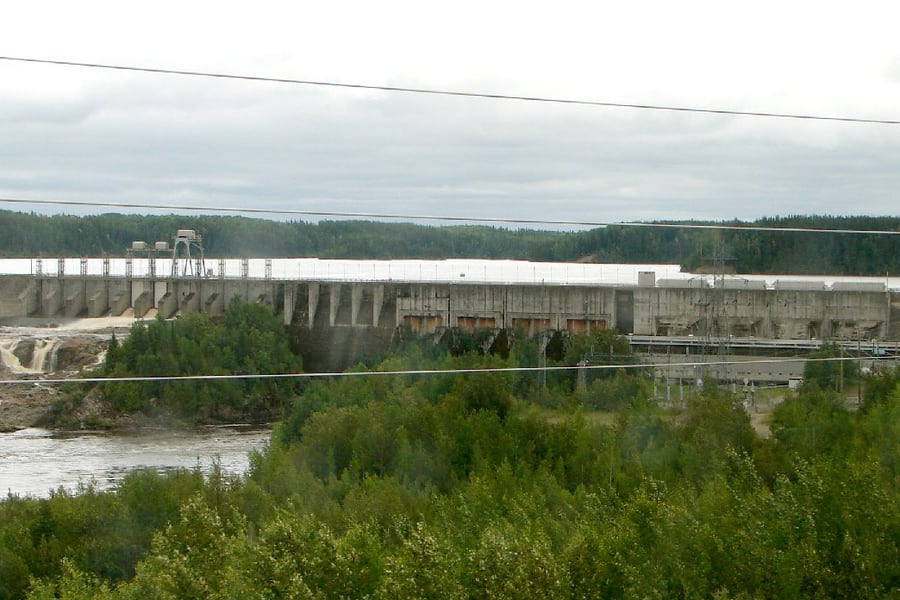 P199 / Wikimedia Commons · CC BY-SA 3.0 · cropped
Otter Rapids
A four-unit, 182-megawatt generating station on the Abitibi belonging to Ontario Power Generation, and a flag stop on the railway that serves it. There is no town, no shop and no road out; the train is how the crews arrive and how canoeists and anglers get to the river. Ask for the stop when you book.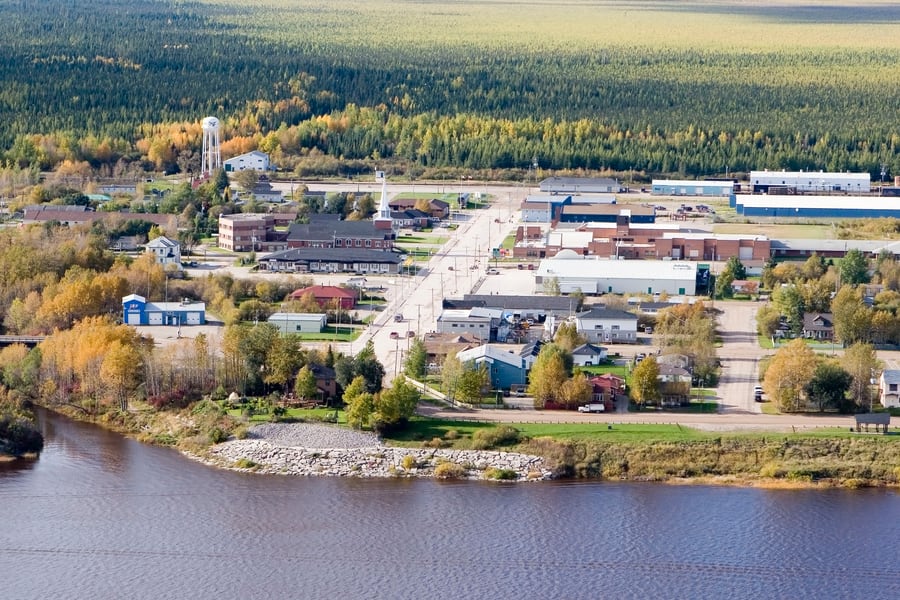 40rev / Wikimedia Commons · CC BY-SA 3.0 · cropped
Moosonee
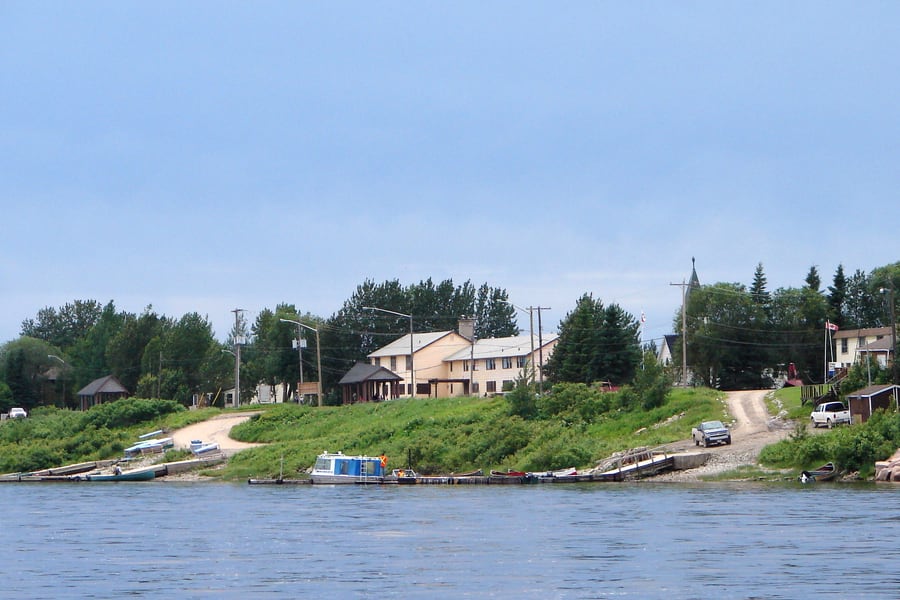
About three and a half thousand people on the west bank of the Moose River, some 85 per cent of them Cree, holding Ontario's only saltwater port. It began in 1903 as Revillon Frères' Moose River Post and has lived on transport since the railway arrived in 1932. Tidewater Provincial Park, five islands in the estuary, is reached by boat from the town landing, and the town points visitors at beluga and seal watching in spring and autumn.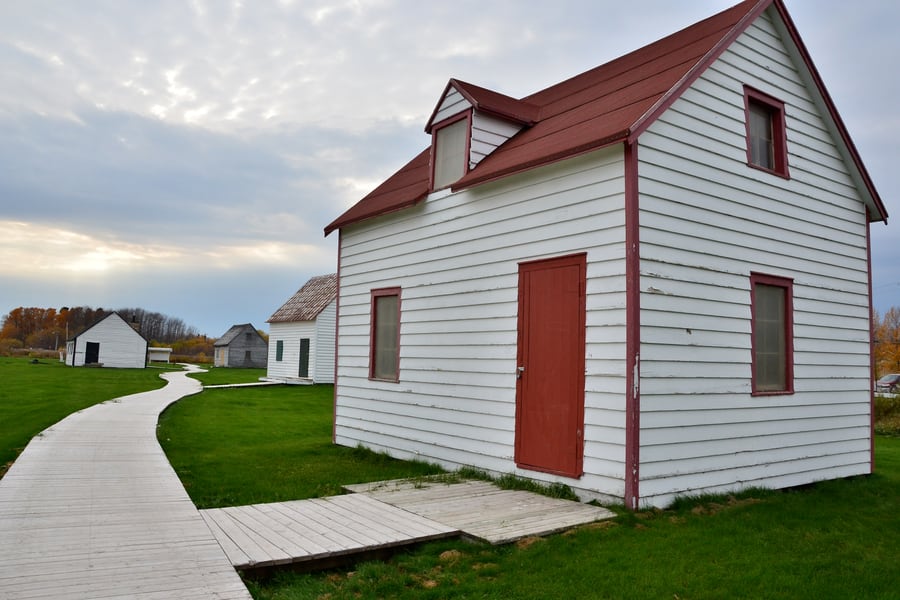 Jessicaplourde / Wikimedia Commons · CC BY-SA 3.0 · cropped
Moose Factory
The older settlement, on an island in the estuary, and the first English-speaking place in what is now Ontario. It is the home of the Moose Cree First Nation, whose reserve covers the northern two thirds of the island, and the Hudson's Bay Company buildings from its three centuries as a fur post still stand among the houses — the staff house, the workers' house above, the fur press and the church.Where to Sleep
Accommodation on this route is Cochrane at one end and Moosonee at the other, with nothing in between. Both towns are small and both fill up when the train is busy, so book before you travel rather than on arrival — particularly in Moosonee, where the alternative to a room is the 17:00 train back south.
Where to stay
 P199 / Wikimedia Commons · CC BY 2.5 · cropped
The Station Inn
Cochrane · upstairs at the station
Ontario Northland's own hotel, on the floor above the ticket hall the train leaves from.
Check Availability (opens in a new tab, on ontarionorthland.ca)via ontarionorthland.caSuper 8 by Wyndham Moosonee
Moosonee · a few minutes from the station
A modern, smoke-free hotel on First Street with breakfast, parking and a twenty-four-hour desk.
Check Availability (opens in a new tab, on wyndhamhotels.com)via wyndhamhotels.comQuestions or corrections
Planning this trip and stuck on something, or spotted a time, fare or detail that has changed? Send us a message about Polar Bear Express. We read every one, and we update this page when something has changed.