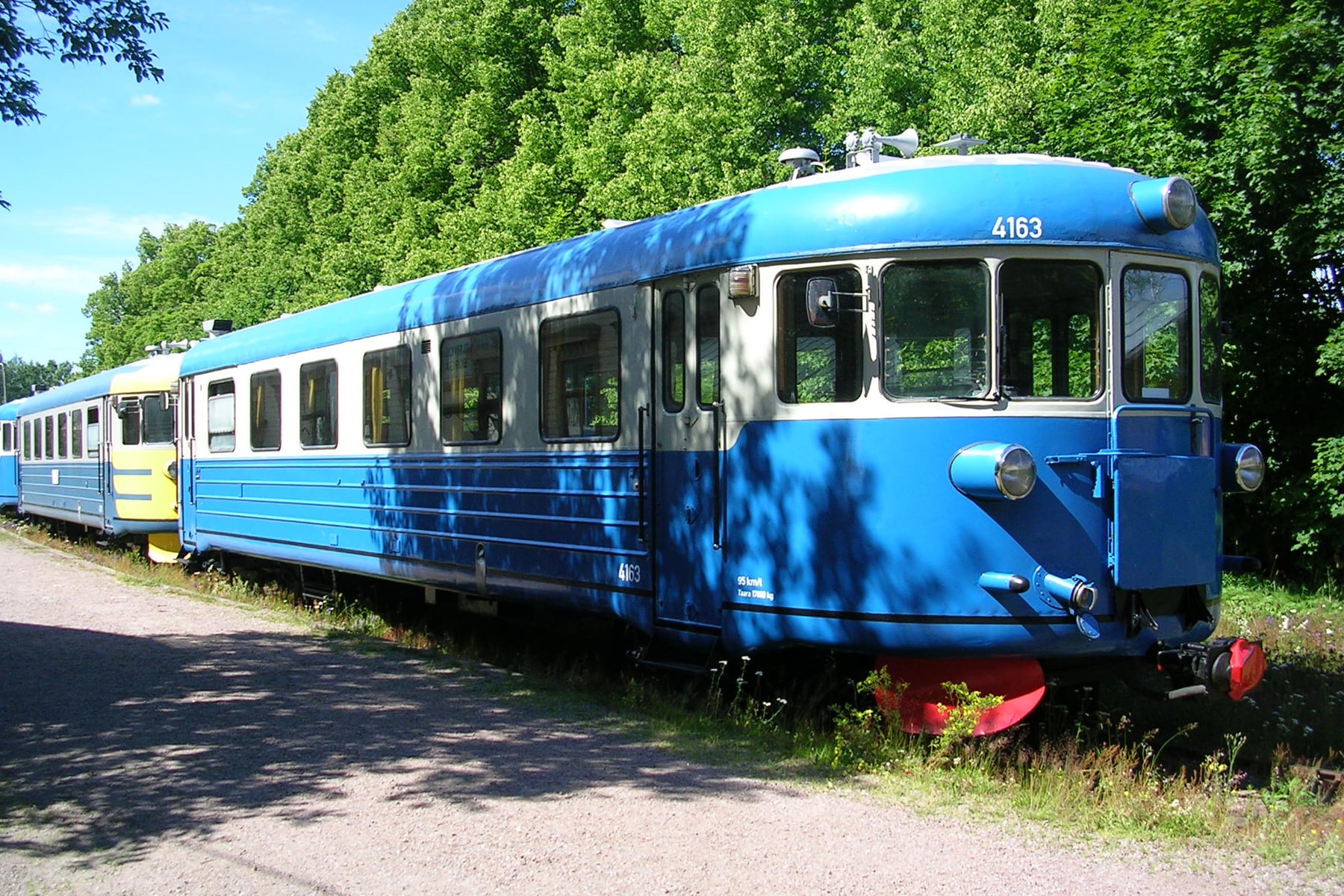
Porvoo Museum Railway
Quutar / Wikimedia Commons · CC BY-SA 4.0 · cropped
- DistanceOlli–Porvoo · 16.5 km of museum line
- DurationAbout 2 hours from Helsinki · 40 minutes from Olli
- Best seasonMay to September, on the operator's running days
Introduction
The last freight train left Porvoo in November 1990, and the line was due to be torn up. Railway enthusiasts kept it by offering to maintain it, and the next summer they were running museum trains from Helsinki. Their association, Porvoo Museum Railway, looked after the 16.5 kilometres from the junction at Olli to Porvoo with its own hands for twenty years, until the state's track agency took the line over in 2013. On 23 October 2024 the trains were banned: the track bed had worn out. A year later, on 6 October 2025, the line became a private railway in the association's care again, and the volunteers reopened it with a train on 1 May 2026.
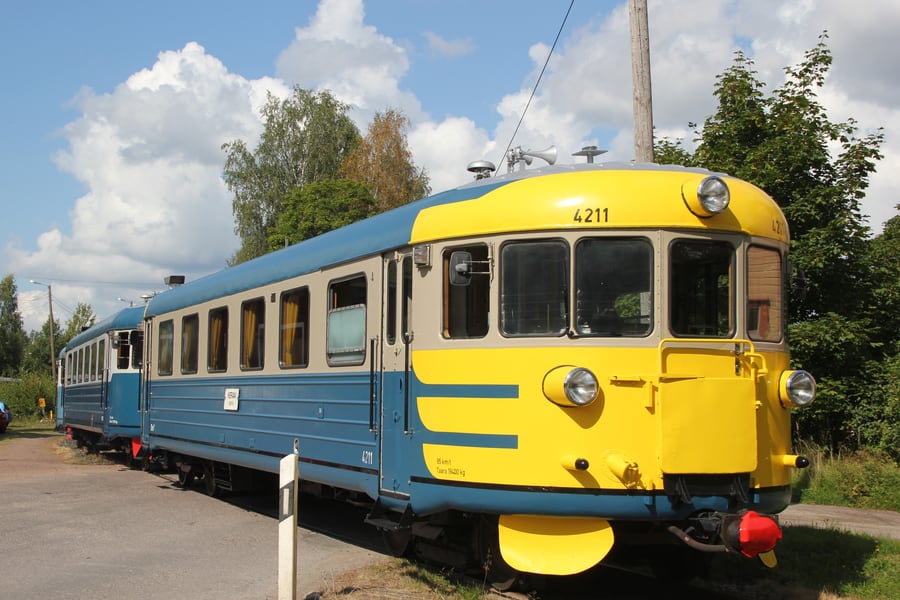
What they run are Lättähattu railbuses, the diesel railcars that carried Finland's local traffic from the 1950s until 1988, in blue and white or in yellow. Some summer days a train runs all the way from Helsinki, about two hours over the main line and then onto the old branch of 1874; on others it shuttles from Porvoo out to Olli and back. Either way the last stretch is the same: fields, forest and two river bridges, on rails rolled between the 1890s and the 1920s, the oldest in Finland still carrying passengers.
The train stops at Porvoo's old station, 500 metres from the old town across the river. There are no seat reservations and no advance tickets: the conductor sells them on board.
The Journey
A through train leaves Helsinki from one of tracks 7 to 12, shown on the boards as MUS and a number in the 1900s, and runs out over the main line with the commuter trains, stopping at Tikkurila and Kerava. At Kerava it turns east onto the Porvoo line, which since 1972 has carried the oil and chemical trains to the Sköldvik refinery. Nikkilä is the last stop on that stretch, at a platform beside the old station. At Olli, 17 kilometres from Kerava, the wires go off towards the refinery and the railbus carries on along the line of 1874.
The museum line
The first stop is Ali-Vekkoski, where the line crosses the Mustijoki on a two-span steel bridge. This is where the railway's last spike was driven on 28 June 1874, and where it caused the most trouble: the timber trestle the builders used to raise an embankment on the clay of the river bank collapsed, and the line had to be moved to firmer ground, with extra curves and two narrow rock cuttings hacked out by hand. The first bridge was wooden. When Runeberg's funeral party crossed it by special train in 1877, behind a state locomotive heavier than the company's own, it creaked alarmingly, and by 1890 passengers had to get out and walk across.
Hinthaara, a station since 1876, has a goods shed, a passing loop and platforms laid in 2002, so that trains from Porvoo can turn back here. Then come Haksi and Kiiala, request stops, and a last kilometre rebuilt in the 1970s to clear the motorway, before the train runs in beside the river at Porvoo.
The oldest rails
Its rails have hardly changed since the 1930s, when the line was relaid with second-hand rails only eight metres long, rolled by different makers between the 1890s and the 1920s, and they are still there, fixed with old-pattern spikes and plates. When the track to Olli was rebuilt for the refinery traffic in the 1970s, the Porvoo end was left as it was. A piece of the English rail of 1874 survives in the track to the turntable at Porvoo.
Bankrupt, auctioned, bought
The railway was built by a private company, backed by the town, because Porvoo feared that the new line from Helsinki to Hämeenlinna would carry its trade away to Helsinki. Johan Ludvig Runeberg was among the fifty leading citizens who petitioned for state aid in 1863, and got none. It opened on 18 November 1874 and went bankrupt in 1878, when its trains stopped altogether; in 1887 it was sold at auction for 400,000 marks. On 22 June 1917 its workers walked out over pay and traffic stopped again, and because Helsinki's food supply depended on the line, the Senate bought it for the state that October. Railcars ran through from Porvoo to Helsinki from 1932. The motorway finished off the passenger trains, which ended in May 1981.
The railbuses
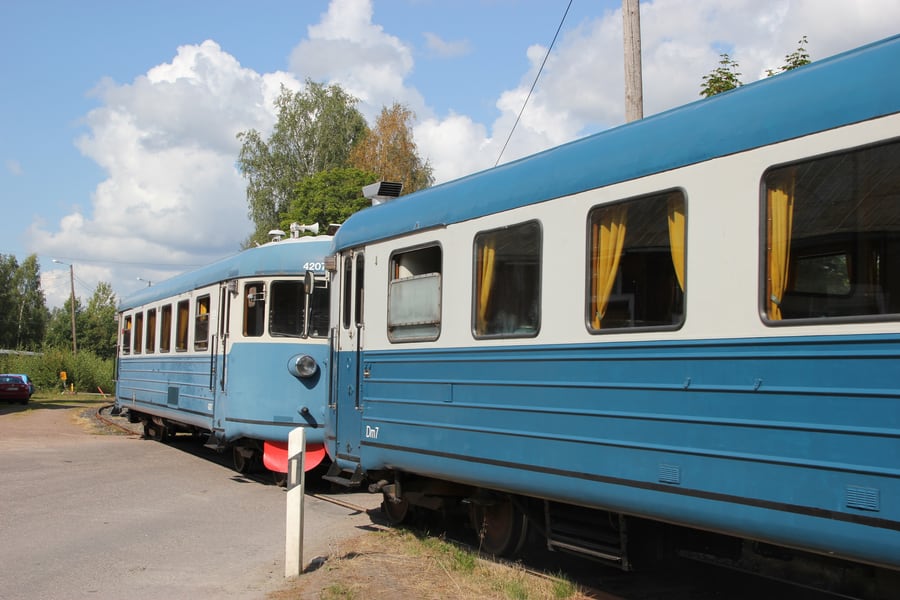
Valmet built the Dm7 railcars from 1955 to 1963 at its aircraft works in Tampere, under licence from a Swedish design, with a straight-eight diesel of 180 horsepower. The association owns three motor cars, 4163, 4207 and 4211, and a trailer, 11592, which still has its original seats and carries bicycles and prams in its luggage compartment. The cars came from VR's depot at Oulu in the early 1990s, and the volunteers maintain them themselves, mostly over the winter in Helsinki. A full train of four cars seats 226.
Along the route
 Pertti Heikkinen / Wikimedia Commons · CC BY-SA 3.0 · cropped
Olli, where the museum begins
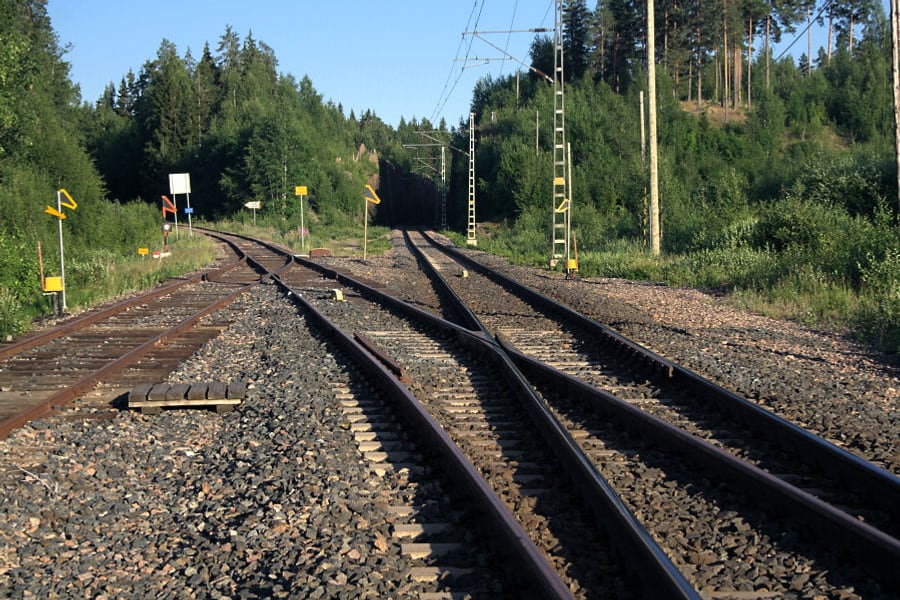
At Olli, 17 km from Kerava, the electrified line to the Sköldvik oil refinery, built in 1972, turns away. The old line carries on to Porvoo without wires. Nobody may board or leave the train here.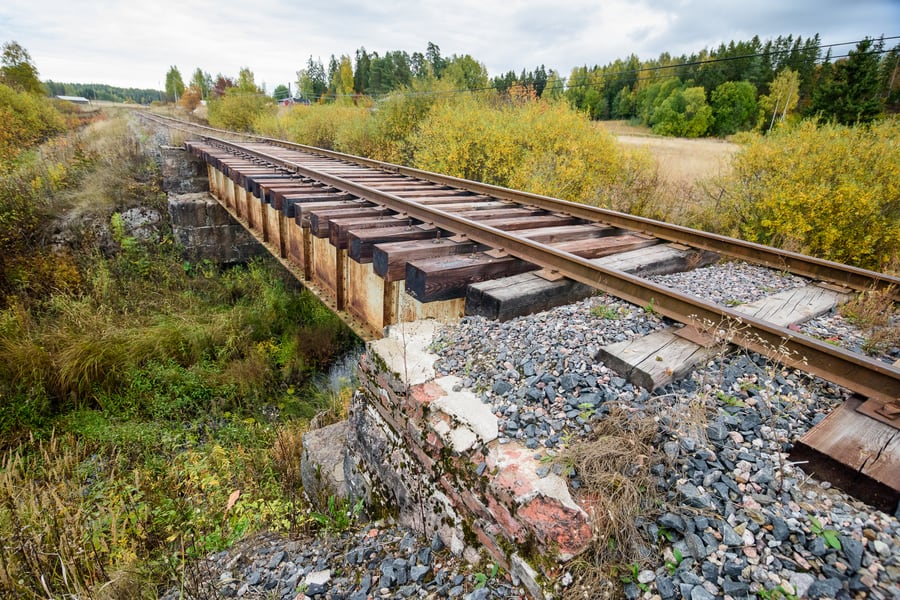 Aki Salento / Wikimedia Commons · CC BY-SA 4.0 · cropped
The Hinthaara bridge
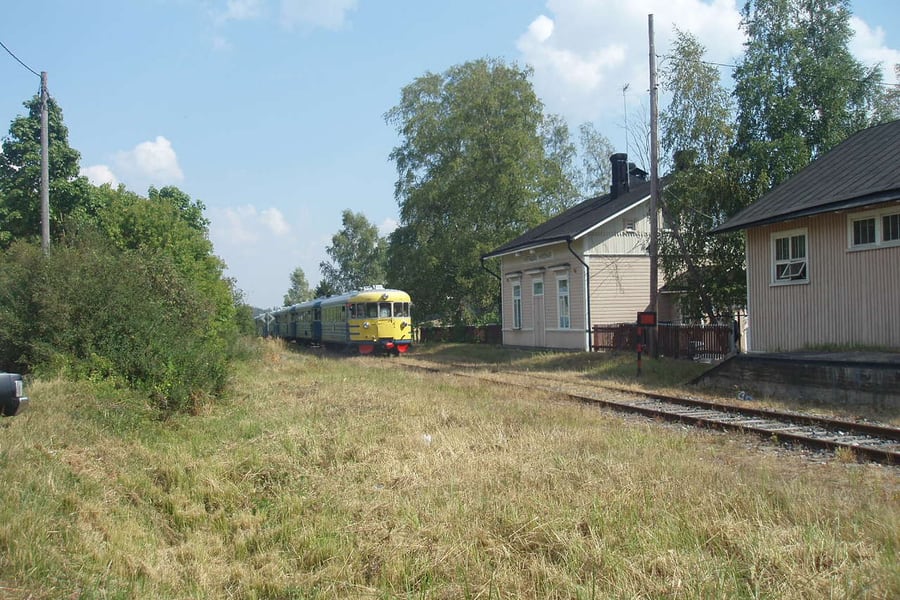
At Hinthaara the line crosses its river on a riveted single-span girder bridge, kept as a museum bridge. The old station, in use from 1876 to 1990, is a private house; trains stop at platforms beside it that the volunteers built in 2002.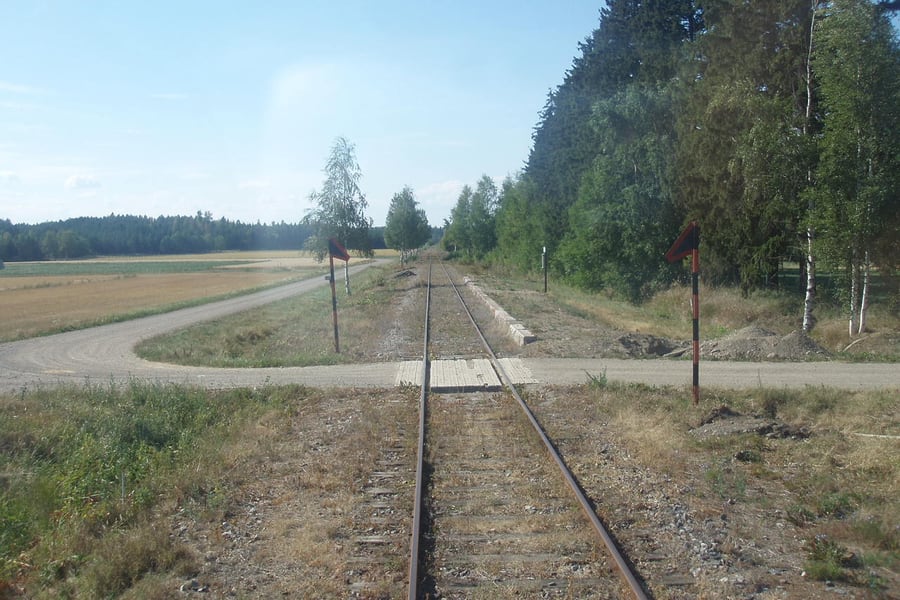 Jyrki Längman / Wikimedia Commons · CC BY 2.5 · cropped
Kiiala, a request stop
Kiiala halt, near Kiiala manor, served the railway from 1874 to 1972, with a siding for wagons bound for the Alko factory. Trains stop on request. Beyond it the track was moved in the 1970s to clear the new motorway.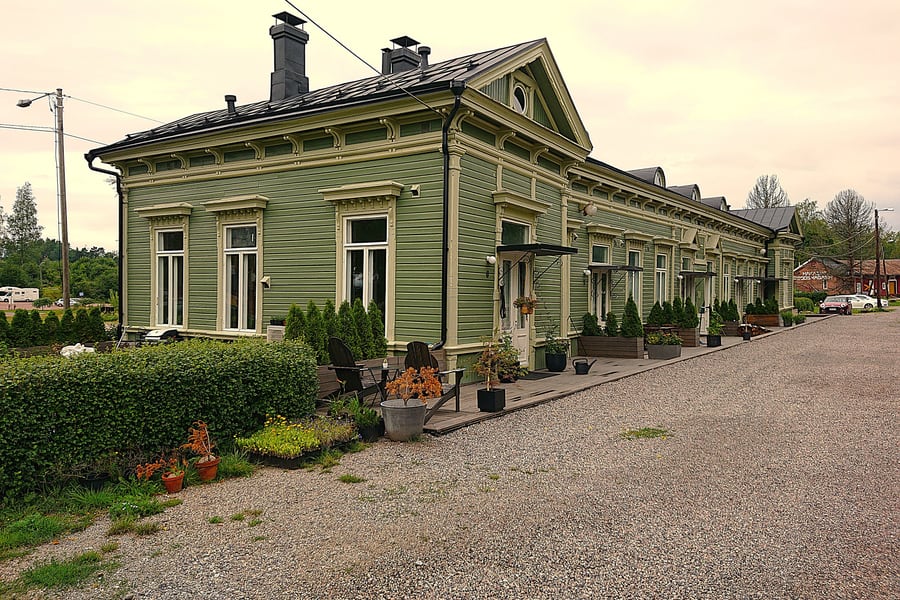 JariJK / Wikimedia Commons · CC BY-SA 4.0 · cropped
The terminus of 1897
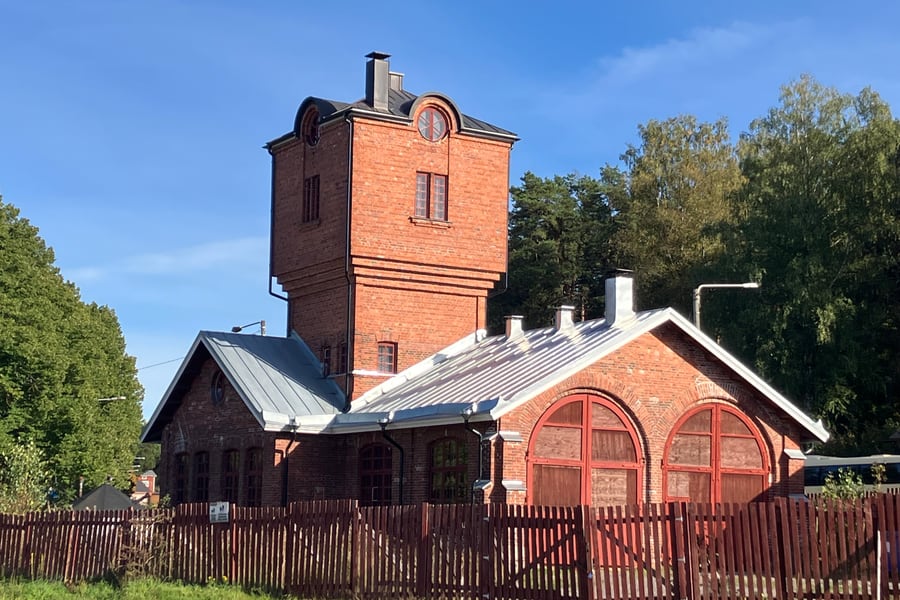
Porvoo station is a neo-Renaissance wooden building of 1897, the third on the site: the first, crooked and half-rotten, came down in 1874. It is private flats now, and Old Porvoo is 500 metres away across the river.A bit of history
Culture & experiences along the way
 Á / Wikimedia Commons · CC BY 3.0 · cropped
Inside the flat hats
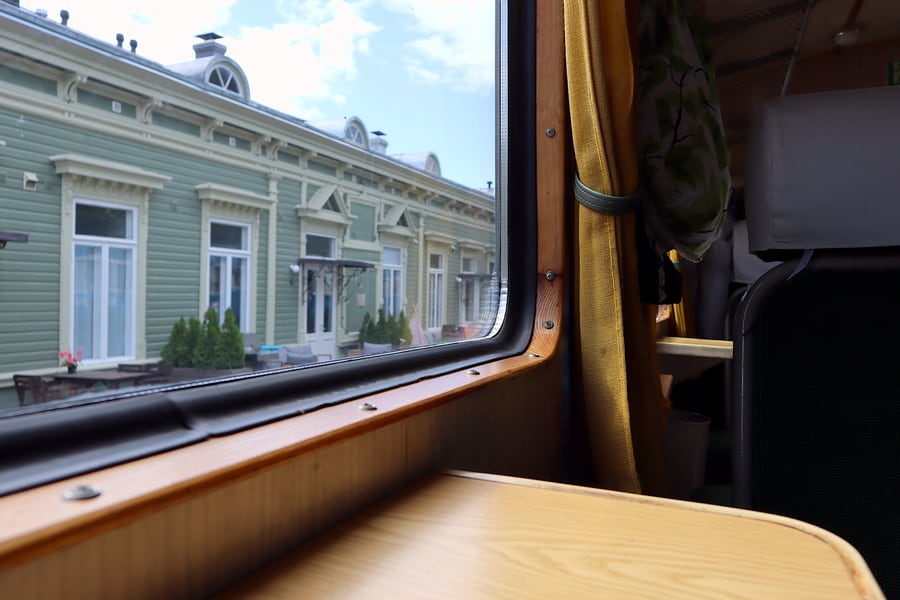
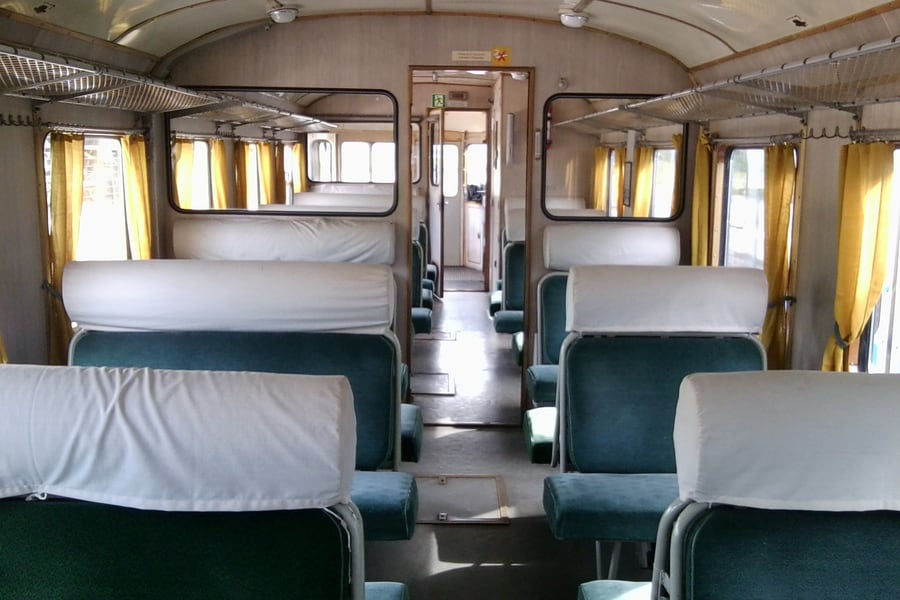
The railbuses are called Lättähattu, after the felt hats with flattened crowns that Helsinki teenagers copied from American films in the 1950s. VR's own naming contest picked Sinikko, and nobody used it. Inside, the windows wind down and the roof hatches open in summer.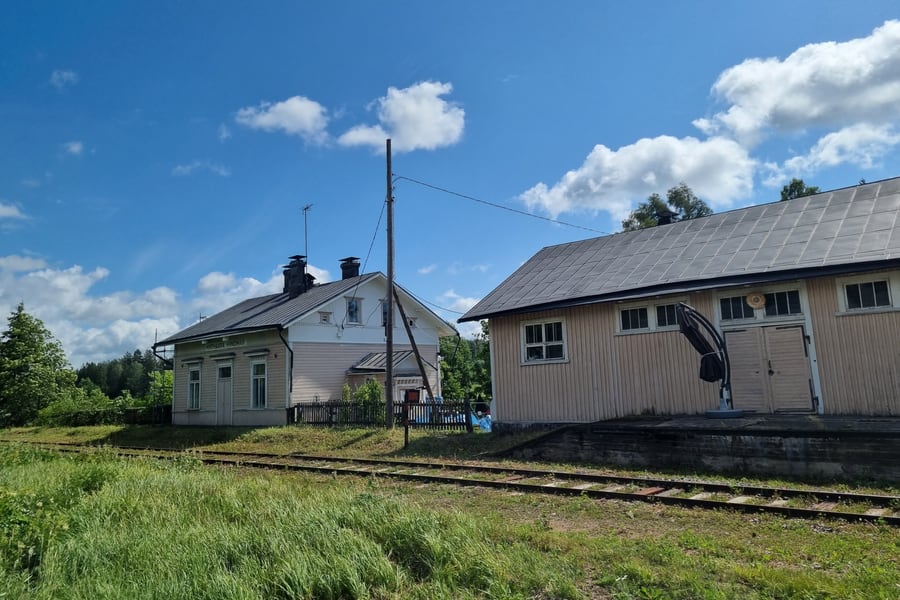 Mikkoau / Wikimedia Commons · CC BY-SA 4.0 · cropped
Coffee at Hinthaara
In summer the old goods shed at Hinthaara station is a café, Ansa & Oiva. On the round trips from Porvoo to Olli the train waits fifteen minutes at Hinthaara on the way out, long enough for a coffee.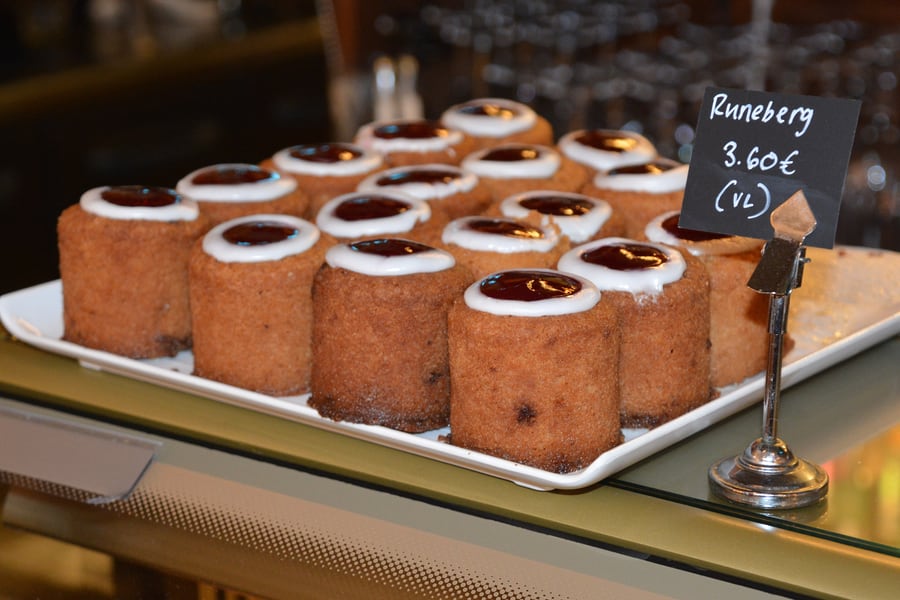 Bengt Oberger / Wikimedia Commons · CC BY-SA 4.0 · cropped
Runeberg's cake
Runeberg's cake is a small cylinder of almond pastry flavoured with arrack or rum, with raspberry jam inside a ring of icing on top. Finland eats it around the poet's birthday on 5 February; in Porvoo, where he lived, the old-town cafés sell it all year.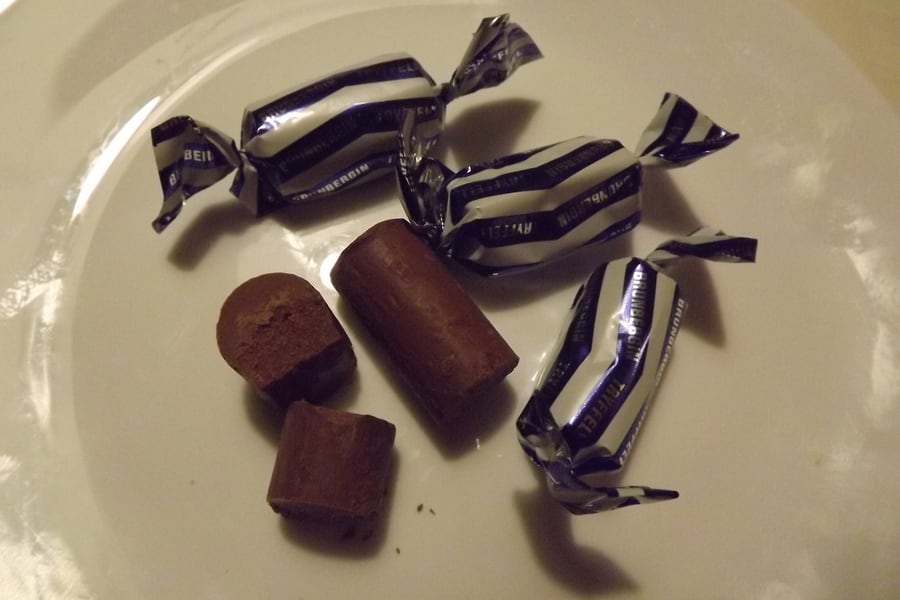 Alpark / Wikimedia Commons · CC BY-SA 3.0 · cropped
Brunberg's sweets
Brunberg has made chocolates and sweets in Porvoo since 1871, known far beyond Finland for its chocolate kisses and truffles. It has two shops with the same goods and prices: one on Välikatu in Old Porvoo, the other at the factory in Tarmola.Timetables
The museum trains run on set dates from May to September, not every day, and each year's dates are published through the spring and summer. There are two kinds of trip: a through train between Helsinki and Porvoo, a few times a season, and a round trip from Porvoo to Olli and back on summer weekends. No reservation is possible or needed. Stops marked x are request stops: tell the crew when you board if you want to get off at one, and be there early to get on, since the train may pass a halt before its listed time. Nobody may board or leave the train at Olli.
Times below are the operator's 2026 timetable as published in June 2026, read in October 2026. The 2027 dates will appear on the Porvoo Museum Railway timetable page (opens in a new tab).
Helsinki and Porvoo — Friday 12 June 2026
| Stop | MUS 1914 | Stop | MUS 1913 | |
|---|---|---|---|---|
| Porvoo | 12:15 | Helsinki | 17:46 | |
| Kiiala | 12:21 x | Pasila | 17:53 | |
| Haksi | 12:27 x | Tikkurila | 18:08 | |
| Hinthaara | 12:40 | Kerava | 18:24 | |
| Ali-Vekkoski | 12:49 | Nikkilä | 18:38 | |
| Nikkilä | 13:20 | Ali-Vekkoski | 19:09 | |
| Kerava | 13:36 | Hinthaara | 19:15 | |
| Tikkurila | 13:51 | Haksi | 19:26 x | |
| Pasila | 14:05 | Kiiala | 19:32 x | |
| Helsinki | 14:12 | Porvoo | 19:38 |
Other through trains in 2026 ran from Porvoo to Helsinki on Sunday 24 May (15:00, in Helsinki at 17:12) and from the Finnish Railway Museum at Hyvinkää and Riihimäki to Porvoo on Wednesday 27 May (Riihimäki 11:40, Porvoo 13:50). There were no Helsinki trains in July, because of track work on the main line; the August and September dates were published later in the summer.
Porvoo to Olli and back
| Porvoo | Hinthaara | Olli | Hinthaara | Porvoo |
|---|---|---|---|---|
| 13:00 | 13:23–13:38 | 13:54–14:00 | 14:15 | 14:38 |
In 2026 this ran on Saturday 13 and Sunday 14 June, Monday 13 July and Sunday 26 July; on Sunday 28 June an hour later, at 14:00, and on Saturday 18 July two hours earlier, at 11:00. On some days an extra evening train ran from Ali-Vekkoski at 17:45 to Porvoo, arriving at 18:14.
Tickets
There are no advance tickets and no seat reservations. The conductor walks through the cars during the trip and sells tickets by card or in cash; MobilePay is not accepted. On the fares valid from 1 June 2026, a single from Helsinki or Tikkurila to Porvoo cost €30 and a return €40, and the round trip from Porvoo to Olli and back €15. Children aged 10 to 17 pay half, under-10s ride free, and groups of ten adults paying together get 10 % off.
Bicycles, scooters and prams travel free in the trailer's luggage compartment, but pets are not allowed on the train. On a hot day there is no air-conditioning, only windows and roof hatches.
Book your tickets
Helsinki to Porvoo
Through train · about 2 hours
A single on the museum train from Helsinki or Tikkurila, bought from the conductor on board.
Book Tickets (opens in a new tab, on porvoonmuseorautatie.fi)via porvoonmuseorautatie.fiPorvoo to Olli and back
Round trip on the museum line · 1 hour 38 minutes
The whole museum line out and back from Porvoo, with the stop at Hinthaara on the way.
Book Tickets (opens in a new tab, on porvoonmuseorautatie.fi)via porvoonmuseorautatie.fiRail Passes
Interrail and Eurail passes do not cover the museum train. Interrail's list of what the pass covers in Finland names only VR and the Helsinki commuter trains of HSL. Porvoo Museum Railway is a volunteer operator outside it, so even the stretch of its through train over VR's main line needs the museum railway's own ticket, bought on board.
A pass is no help for this trip, and not worth buying for it: the round trip from Porvoo costs €15. If you already hold one, VR's commuter trains will take you as far as Kerava, but the museum train is the only train to Porvoo.
Pass conditions checked against Interrail's railway-companies page, last updated 21 October 2026. Conditions change with each season, and the pass issuer's page is the one that binds.
Places to Visit
Everything worth the trip is in Porvoo itself. The station is on the west bank of the river, and the old town with its cathedral and museum is across the bridge, 500 metres away; Runeberg's Home is on Aleksanterinkatu, in the town centre.
 Olga1969 / Wikimedia Commons · CC BY-SA 4.0 · cropped
The red shore houses
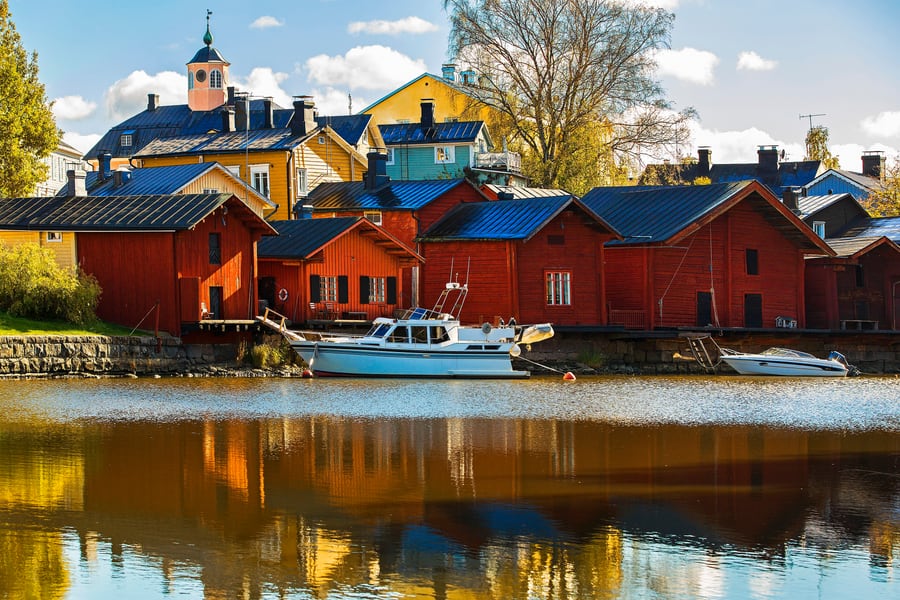
Old Porvoo's red-ochre storehouses along the river are among the most photographed national landscapes in Finland. Most were built in the 1760s as storage for the town's merchants, and in the late 19th century one of them was the customs house. Behind them the old town climbs the hill in cobbled lanes of wooden houses; today the shore houses hold restaurants, shops and rooms to stay in.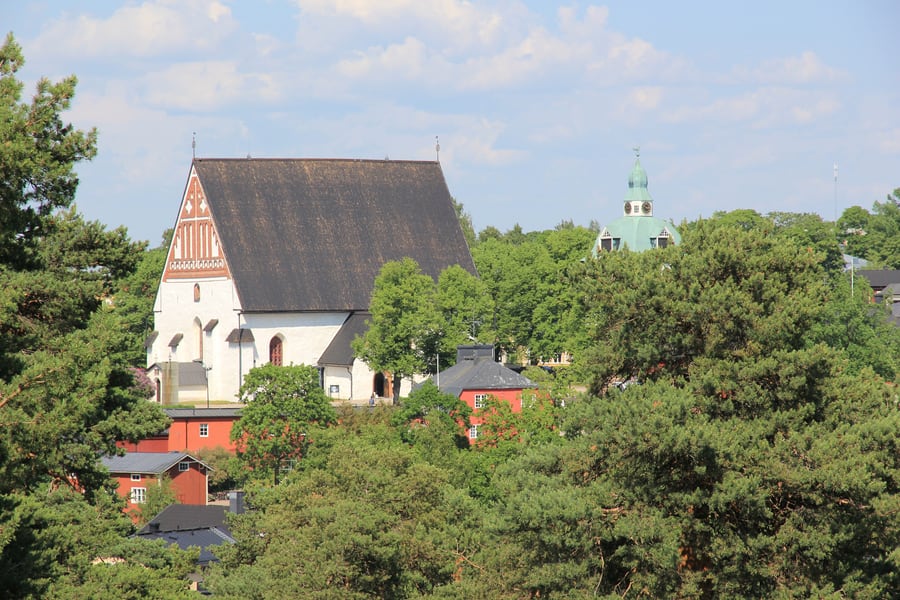 MKFI / Wikimedia Commons · Public domain · cropped
Porvoo Cathedral
Porvoo Cathedral took its present form at the end of the 15th century, and on 28 March 1809 it was where the first Diet of Finland opened, the assembly at which Finland became an autonomous Grand Duchy under the Russian emperor. Fire took its outer roof in May 2006 and it reopened in July 2008. From May to September it is open daily; Sunday afternoons are shorter.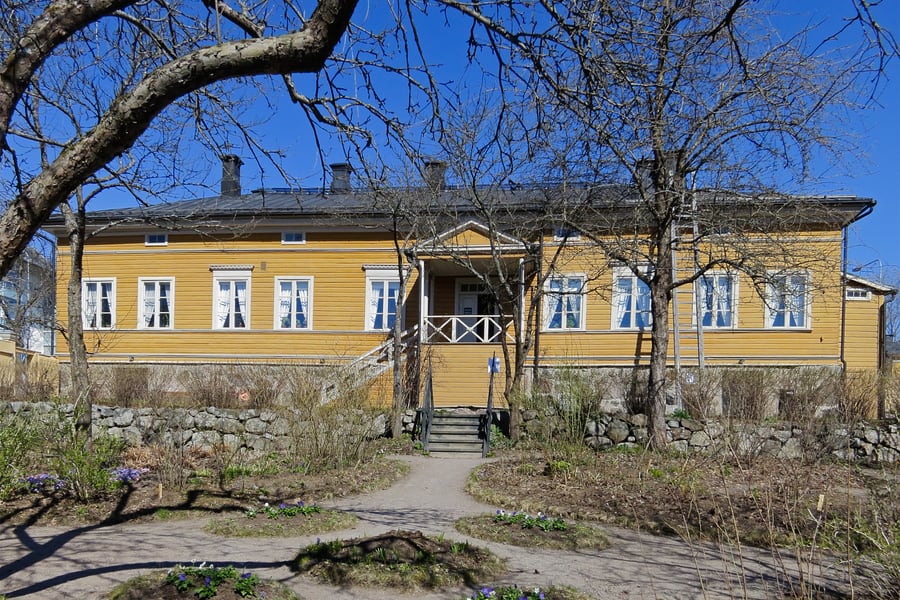 Jussi Helimaki / Wikimedia Commons · CC BY-SA 4.0 · cropped
J. L. Runeberg's Home
The national poet Johan Ludvig Runeberg, who wrote the words of Finland's anthem, lived in Porvoo from 1837 with his wife Fredrika and their sons. Their house is a museum: the paintings, the porcelain in the cupboards, his hunting guns in the fox-skin room, and Fredrika's garden of roses and fruit trees. Adults pay €8, under-18s nothing, and the ticket includes Walter Runeberg's sculpture collection in summer.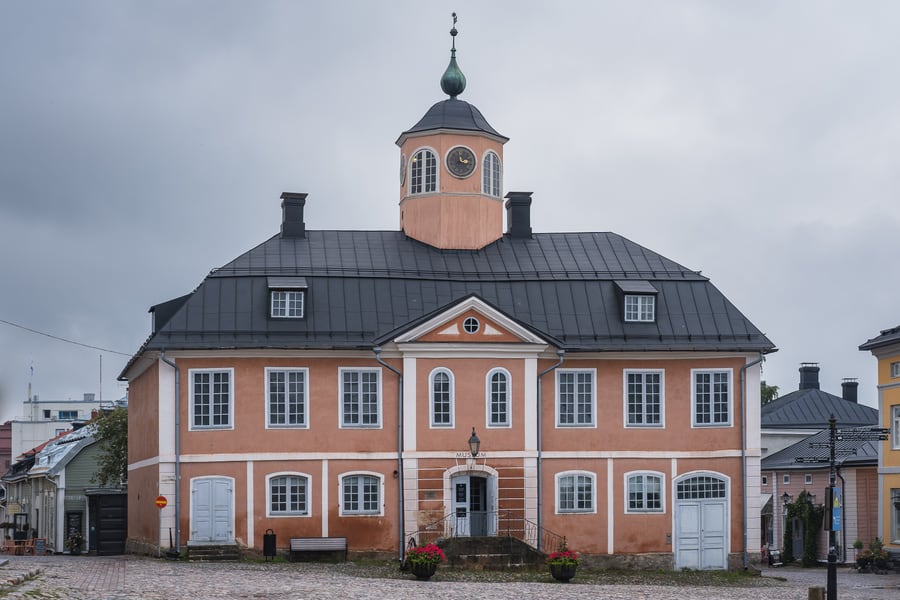 Christian David / Wikimedia Commons · CC BY-SA 4.0 · cropped
The old town hall
Porvoo Museum has been in the old town hall since 1897, the city having handed over a building of 1764 that it had already decided to pull down. It holds the history of Porvoo and eastern Uusimaa and art from Finland's golden age, and next door the Holm House of 1763 shows how a merchant family lived in the late 18th century. Open Wednesday to Sunday, noon to four; adults €12.Where to Sleep
Porvoo is an easy day out from Helsinki, but the museum trains are timed from the Porvoo end: in 2026 the through train of 12 June left Porvoo at midday and came back from Helsinki in the evening, and the round trips to Olli start from Porvoo. A night in the old town makes the timing easy. In summer the m/s J.L. Runeberg sails between Helsinki and Porvoo, which makes a trip out by train and back by boat.
The places below keep their own websites and take direct bookings.
Where to stay
Hotel Onni
Opposite the Cathedral
A small hotel in an 18th-century manor house on Kirkkotori, sharing the building with the restaurant SicaPelle.
Check Availability (opens in a new tab, on onniporvoo.fi)via onniporvoo.fiHotel Pariisin Ville
On Jokikatu, in Old Porvoo
A boutique hotel of ten rooms in a courtyard of 1793, named after the Porvoo-born sculptor Ville Vallgren.
Check Availability (opens in a new tab, on pariisinville.fi)via pariisinville.fiQuestions or corrections
Planning this trip and stuck on something, or spotted a time, fare or detail that has changed? Send us a message about Porvoo Museum Railway. We read every one, and we update this page when something has changed.