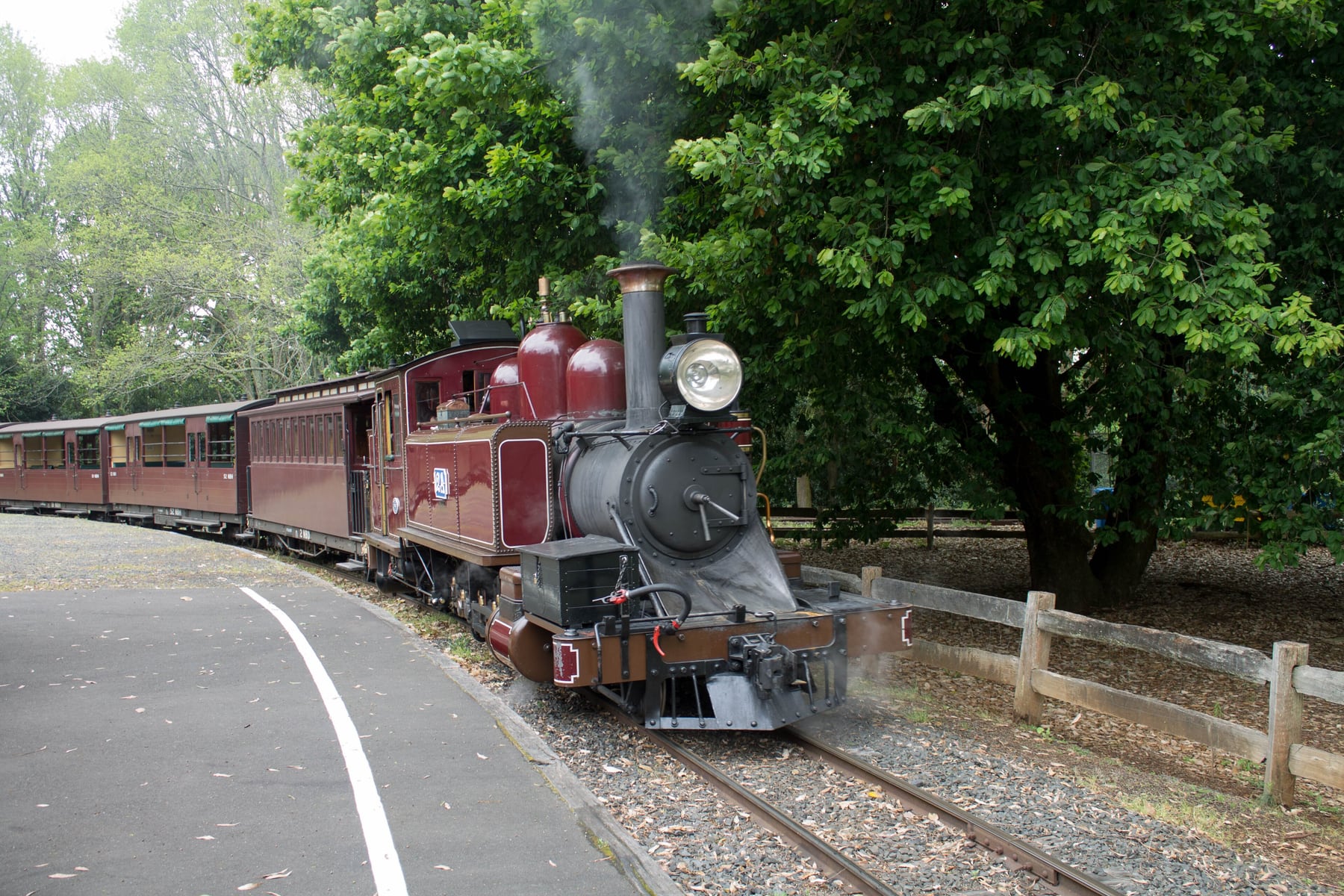
Puffing Billy
Alan Samuel / Wikimedia Commons · CC BY 2.0 · cropped
- Distance24 km, Belgrave to Gembrook
- Duration1 h to Lakeside, 1 h 50 min to Gembrook, each way
- Best seasonYear-round, daily; trains to Gembrook Friday to Sunday
Introduction
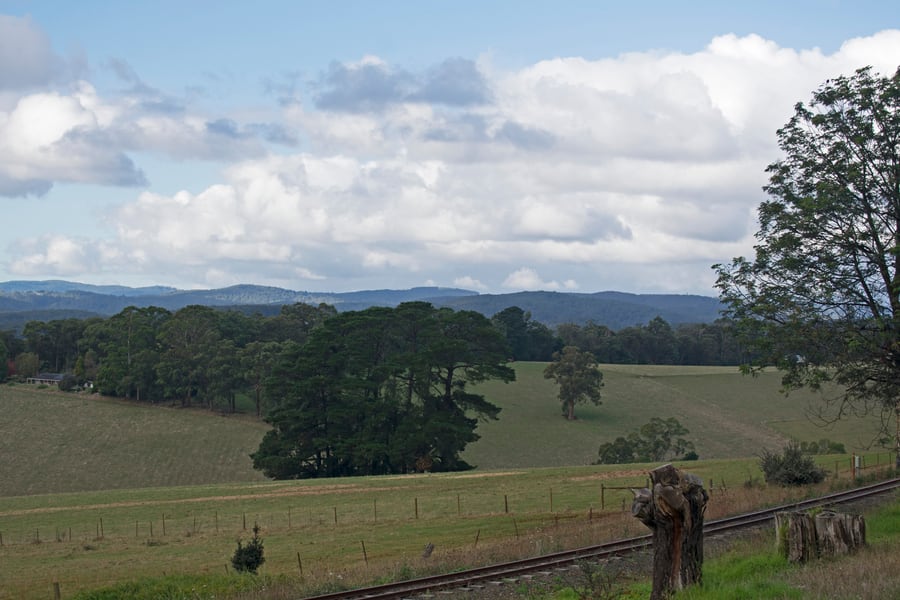
Puffing Billy runs 24 kilometres from Belgrave, 40 kilometres east of Melbourne on its suburban railway, through the forests and farmland of the Dandenong Ranges to Gembrook. It is a steam railway on track only 762 millimetres wide, opened in 1900 to bring the timber, potatoes and fruit trees of the hills down to Melbourne, and almost from the start it carried day-trippers too.
For them the Victorian Railways built open-sided carriages in 1919, and the same carriages are in use today. Passengers sit on the sill of the open side with their legs hanging over the edge, holding the bar, as the train crosses the timber trestle over Monbulk Creek and climbs through tree ferns and Mountain Ash. The railway still allows it, with rules for children, and not after dark.
The line closed after a landslide in 1953. Volunteers of the Puffing Billy Preservation Society, formed in 1955, reopened it a stage at a time — to Menzies Creek in 1962, Emerald in 1965, Lakeside in 1975 and Gembrook in 1998 — and it now runs every day of the year except Christmas Day.
The Journey
Belgrave to Menzies Creek
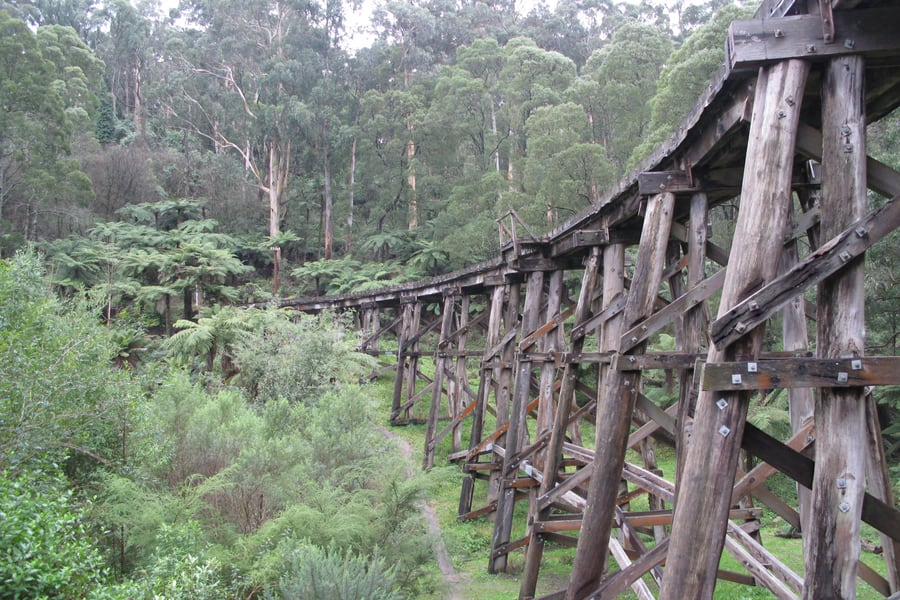
Every train starts at Belgrave, the railway's headquarters, with its running shed and workshop beside the platform. The line sets off along the southern edge of Sherbrooke Forest, cool temperate rainforest under Mountain Ash, and within minutes crosses the Monbulk Creek trestle, 15 timber spans and 12.8 metres high over the creek and the Gembrook road. Just past Selby the old track can still be seen where the landslide of 1953 closed the railway; the line now runs on a deviation built around it. Approaching Menzies Creek, on a clear day, the view to the right reaches Port Phillip Bay and Western Port, with Cardinia Reservoir below. Menzies Creek is where trains in opposite directions usually cross, and it is the home of the railway's museum.
Emerald and Lakeside
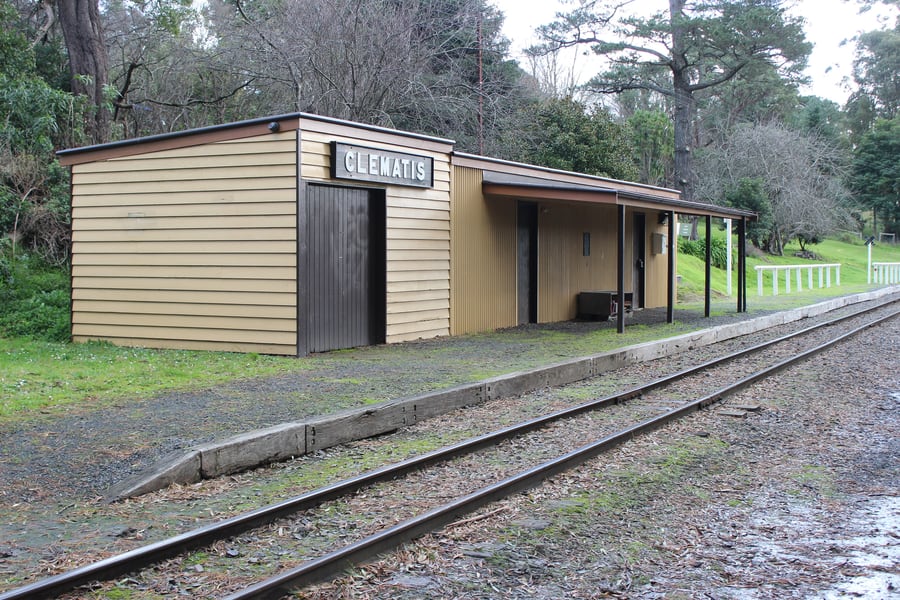
After the farmland of Paradise Valley and the wayside station at Clematis, the line reaches Emerald, at 318.5 metres the highest station on the line and the only one with its original station building intact. Beyond it come Nobelius, named for the nursery whose packing shed still stands beside the track, and Lakeside, in Emerald Lake Park, an hour from Belgrave. Most trains turn here; the locomotive takes water, and the visitor centre has a café, the park has walking tracks and paddle boats on Lake Treganowan. Lakeside was the end of the line for 23 years, from 1975 to 1998.
Lakeside to Gembrook
The last stretch runs along the edge of Wright State Forest and over three timber bridges, the largest 61 metres long and 15 metres high, down to Cockatoo Creek, the lowest point of the line. From there the engine climbs at 1 in 30 for 5.2 kilometres, out of the forest into rolling farmland, to Gembrook, 24 kilometres and an hour and fifty minutes from Belgrave.
The trains
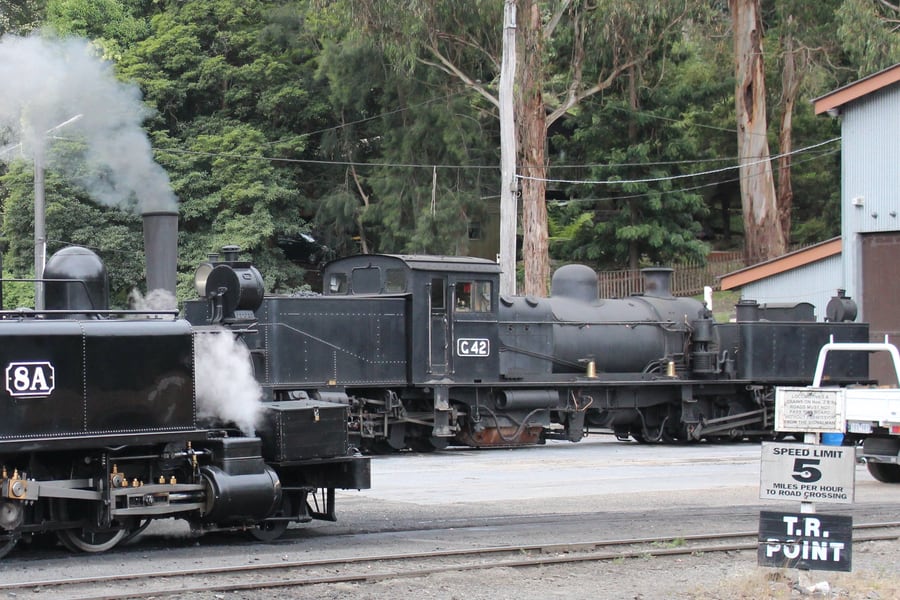
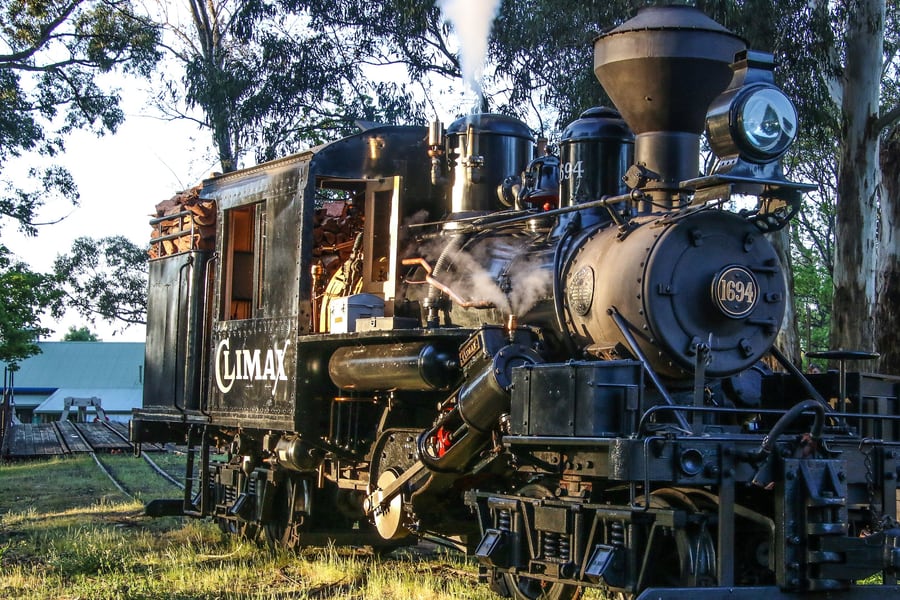
The usual engines are the line's own NA class tank locomotives, a 2-6-2T built for the Victorian narrow gauge from 1898: two by Baldwin in Philadelphia and fifteen at the Victorian Railways' Newport Workshops. Six survive and five are in service — 6A, 7A, 8A, 12A and 14A — each painted in a livery it carried in its working life, from two-tone green to Canadian Pacific red and all-over black. The railway also runs G42, a Beyer Peacock Garratt of 1926 from the Moe–Walhalla line, back in steam since 2004; NG/G16 No. 129, a Garratt built in 1951 for South African Railways and regauged for this line, in service since 2019; and Climax 1694, a geared logging engine of 1928, for special trains. On days of total fire ban a diesel may haul the train instead.
Along the route
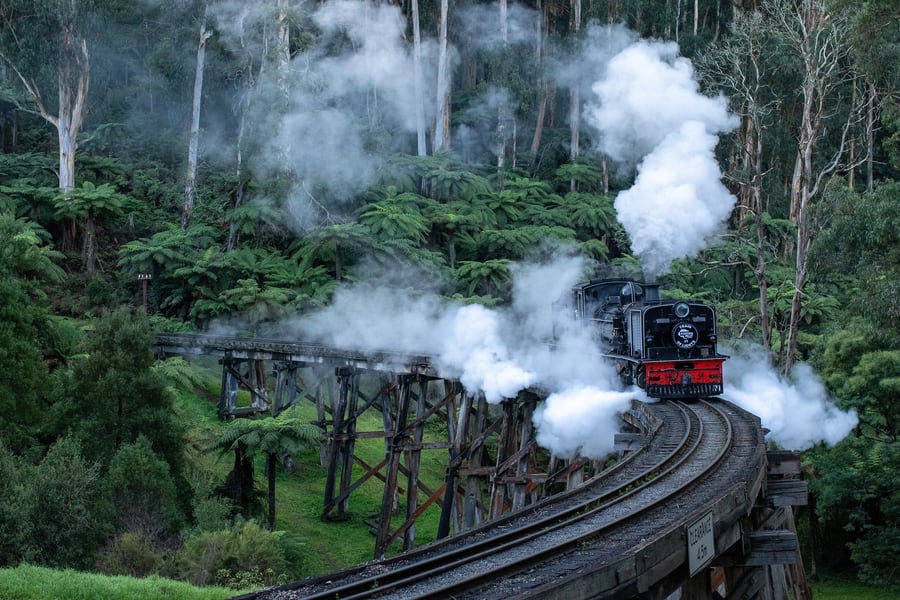
 Nick Carson / Wikimedia Commons · CC BY 3.0 · cropped
The Monbulk Creek trestle
Minutes out of Belgrave the line crosses its best-known landmark: a timber trestle of 15 spans, 91.4 metres long and 12.8 metres high, over Monbulk Creek and the main Gembrook road. It is classified by the National Trust of Victoria.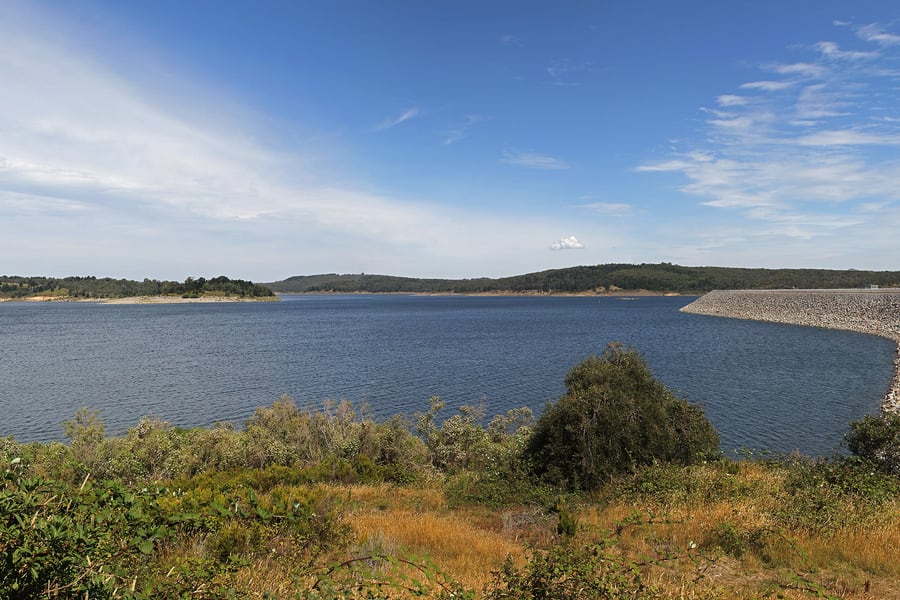 jjron / Wikimedia Commons · GFDL 1.2 · cropped
The view from Menzies Creek
On the approach to Menzies Creek, on a clear day, the view opens to the right over Port Phillip Bay, Arthurs Seat and Western Port. Below the line on the same side lies Cardinia Reservoir, which supplies Melbourne's south-eastern suburbs.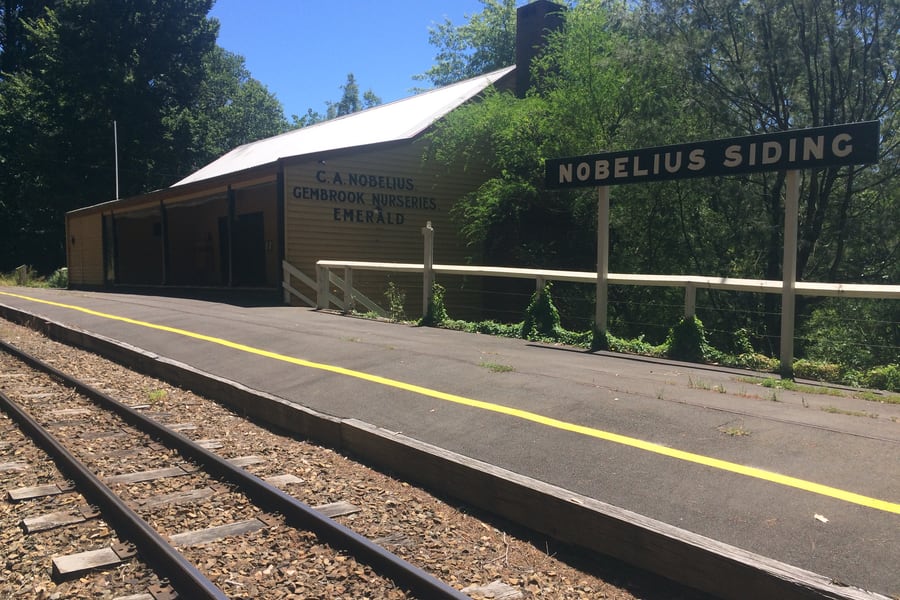 Effluvium1 / Wikimedia Commons · CC BY-SA 4.0 · cropped
Nobelius Siding
The siding and packing shed beside the line served the Nobelius nursery, once a large business, which sent seedlings and plants by rail all over Australia and abroad. The shed is restored and used for events, including the railway's evening murder-mystery dinners.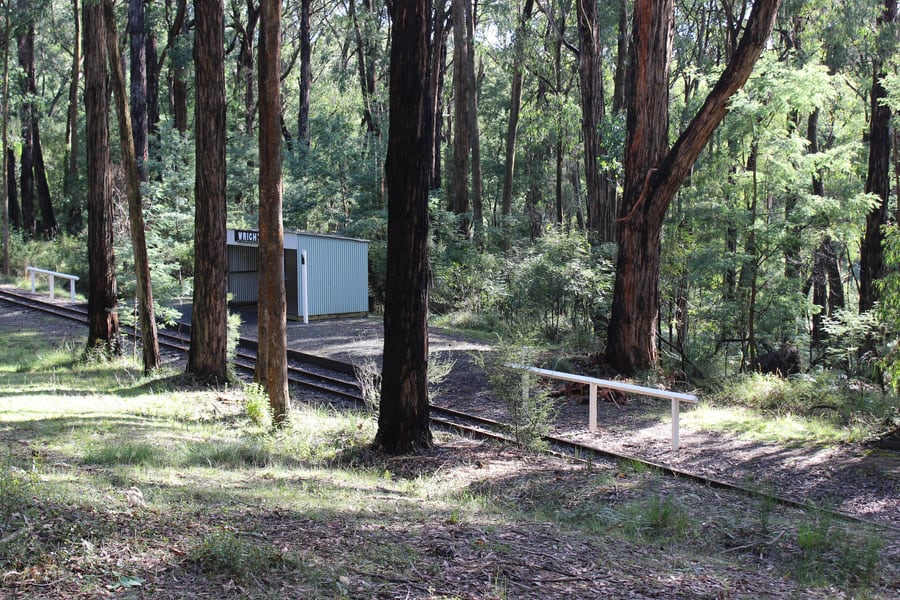 Philip Mallis / Wikimedia Commons · CC BY-SA 2.0 · cropped
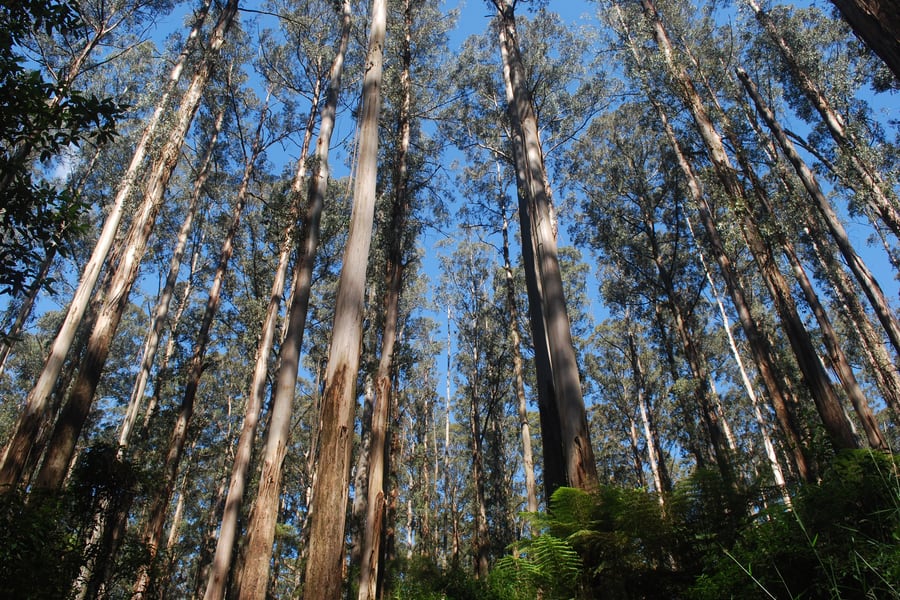
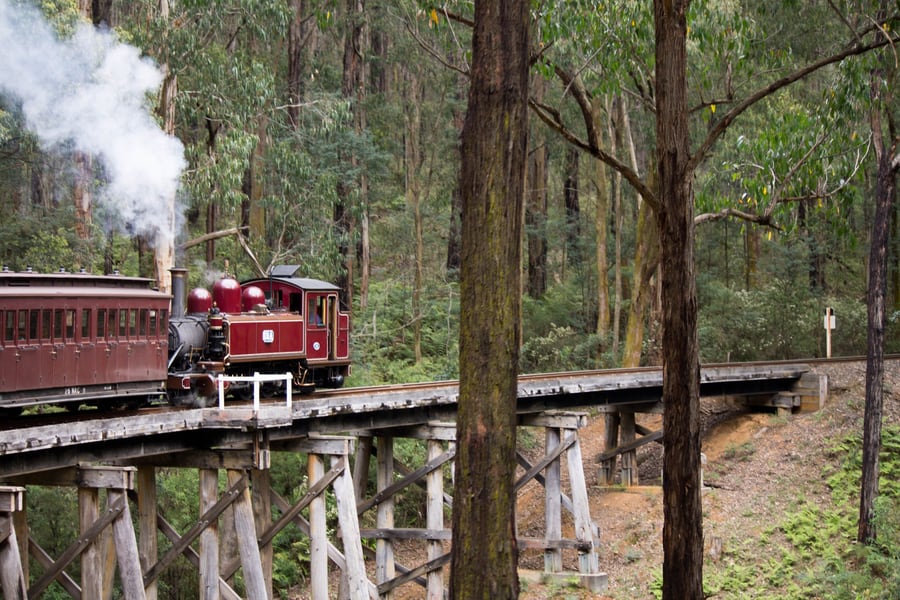
Wright Forest and the climb
Beyond Lakeside the line skirts Wright State Forest and crosses three timber bridges, the largest 61 metres long. From Cockatoo Creek, the lowest point, it climbs at 1 in 30 for 5.2 kilometres towards Gembrook.A bit of history
Culture & experiences along the way
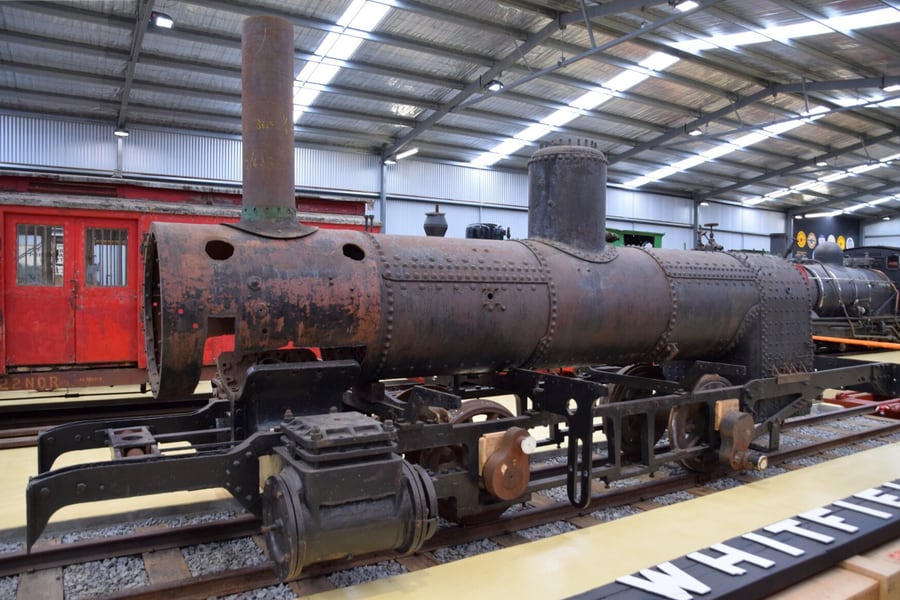 nzsteam / Wikimedia Commons · CC BY 2.0 · cropped
The Menzies Creek Museum
The railway's museum opened at Menzies Creek station in February 2020: 1,160 square metres and more than 80 exhibits, among them steam and diesel locomotives and carriages. Entry is free, with or without a train ticket. Among the engines is 3A of 1900, which helped build the line and awaits restoration.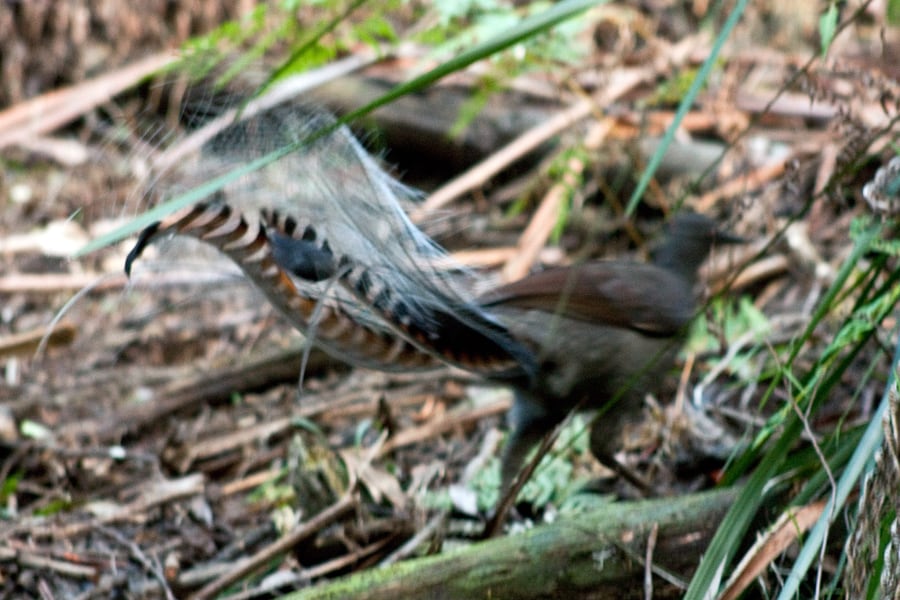 Rexness / Wikimedia Commons · CC BY-SA 2.0 · cropped
The lyrebirds of Sherbrooke
Superb lyrebirds live in Sherbrooke Forest, which the train skirts out of Belgrave, and the males copy other birds, creaking trees and more. A volunteer group formed in 1958 has counted the singing males every winter since 1975, at dawn, when the chorus peaks around 7.30 in the morning.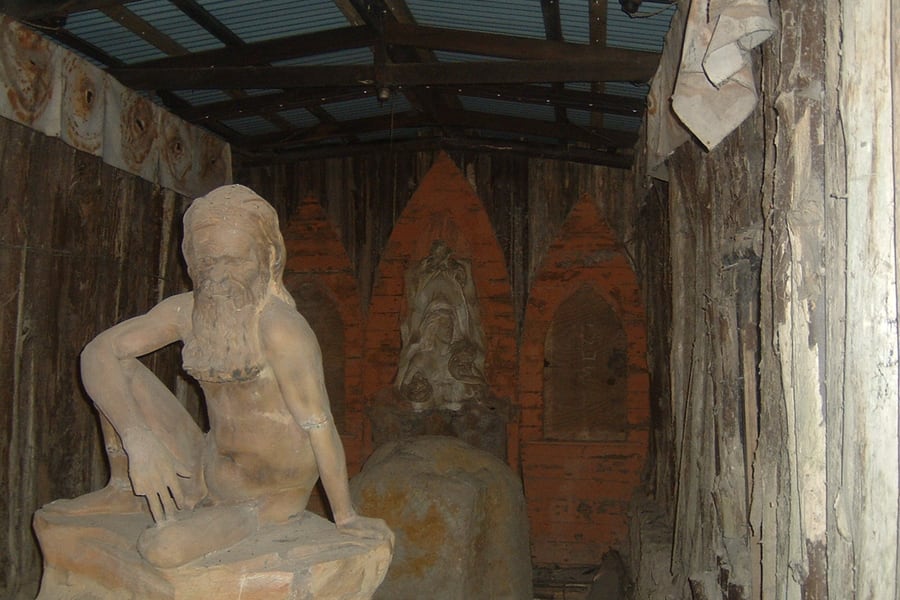 Alex Bakharev / Wikimedia Commons · Public domain · cropped
William Ricketts Sanctuary
The potter William Ricketts (1898–1993) worked from 1934 on clay sculptures set among the ferns at Mount Dandenong, many drawn from his time with Pitjantjatjara and Arrernte people in Central Australia; how he portrayed them is debated today. Parks Victoria runs it, free, daily from 10:00 to 16:00.Timetables
Puffing Billy runs every day except Christmas Day. Every train is a return journey: you travel out and back on a set pair of trains, and the outward train you book fixes your return. Trains run as far as Lakeside every day; the through trains to Gembrook, and the short trips to Menzies Creek, run Friday to Sunday only.
Friday to Sunday, 20 July to 21 December 2026
| Journey | Leaves | Arrives | Return leaves | Back at |
|---|---|---|---|---|
| Belgrave–Lakeside | Belgrave 10:00 | Lakeside 11:00 | Lakeside 12:25 | Belgrave 13:20 |
| Belgrave–Lakeside | Belgrave 11:00 | Lakeside 11:55 | Lakeside 16:00 | Belgrave 16:50 |
| Belgrave–Lakeside | Belgrave 12:30 | Lakeside 13:35 | Lakeside 15:20 | Belgrave 16:10 |
| Belgrave–Lakeside | Belgrave 14:15 | Lakeside 15:10 | Lakeside 16:40 | Belgrave 17:30 |
| Belgrave–Gembrook | Belgrave 11:00 | Gembrook 13:15 | Gembrook 15:05 | Belgrave 16:50 |
| Lakeside–Gembrook | Lakeside 12:35 | Gembrook 13:15 | Gembrook 15:05 | Lakeside 15:40 |
| Belgrave–Menzies Creek | Belgrave 10:00 | Menzies Creek 10:25 | Menzies Creek 11:35 | Belgrave 11:55 |
Monday to Thursday, only Belgrave–Lakeside runs, leaving Belgrave at 10:00, 11:00 and 14:15 and returning from Lakeside at 12:25, 14:15 and 16:15. A few days differ — 20 August, 12–13 September and 29 November are special-event days, and 2–3 November, the Melbourne Cup weekend, runs the Friday-to-Sunday timetable. In the winter school holidays (26 June to 19 July in 2026) only two Belgrave–Lakeside trains ran, at 10:00 and 14:15, every day.
On days of total fire ban a diesel may haul the train in place of steam.
Getting there
Belgrave's Puffing Billy station is a two-minute walk from Belgrave station on Melbourne's Metro Belgrave line — follow the blue line painted on the platform. Bus 693 from Oakleigh also stops there. Lakeside can only be reached by car. Check in at the booking office 60 minutes before departure; check-in closes 30 minutes before, and the train does not wait.
Times are from the railway's published timetable for 16 March to 21 December 2026 — as of October 2026. Check the day on Puffing Billy Railway's fares and timetables page (opens in a new tab) before travelling.
Tickets
Tickets are sold by the railway, online, for a set return journey, and every passenger must book in advance — the railway says trains sell out well ahead. Fares depend on how far you go: an adult pays A$66 to Lakeside and back and A$84.50 for the whole line to Gembrook. Children under four ride on a toddler fare, infants under a year free, and family tickets cover two adults and two children.
Concession fares are for holders of Australian Health Care, Seniors or Pensioner cards and the New Zealand Gold Card only. These fares apply to travel from 1 April 2026 to 31 March 2027.
Book your tickets
Nick Carson / Wikimedia Commons · CC BY 3.0 · croppedBelgrave to Lakeside return
Daily · 1 h each way
Adult A$66, child (4–15) A$33, toddler A$25, family of two adults and two children A$165.
Book Tickets (opens in a new tab, on puffingbillyrailway.org.au)via puffingbillyrailway.org.auYmblanter / Wikimedia Commons · CC BY-SA 4.0 · croppedBelgrave to Gembrook return
Friday to Sunday · 1 h 50 min each way
Adult A$84.50, child A$42, toddler A$32, family of two adults and two children A$212.
Book Tickets (opens in a new tab, on puffingbillyrailway.org.au)via puffingbillyrailway.org.aunzsteam / Wikimedia Commons · CC BY 2.0 · croppedBelgrave to Menzies Creek return
Friday to Sunday · 25 min each way
Adult A$43.50, child A$22, toddler A$16.50, family A$108 — over the trestle and back, with time for the museum.
Book Tickets (opens in a new tab, on puffingbillyrailway.org.au)via puffingbillyrailway.org.auRail Passes
No rail pass covers Puffing Billy. Interrail and Eurail are European schemes, and Australia is not among the 33 countries in Interrail's list of covered railway companies (opens in a new tab). The railway sells its own tickets, one return journey at a time.
Checked October 2026 against Interrail's list of covered railway companies (opens in a new tab).
Places to Visit
Belgrave, Sherbrooke and Olinda are a short drive apart at the Melbourne end of the line; Emerald and Gembrook are on it, and the train stops long enough at Gembrook to see the town.
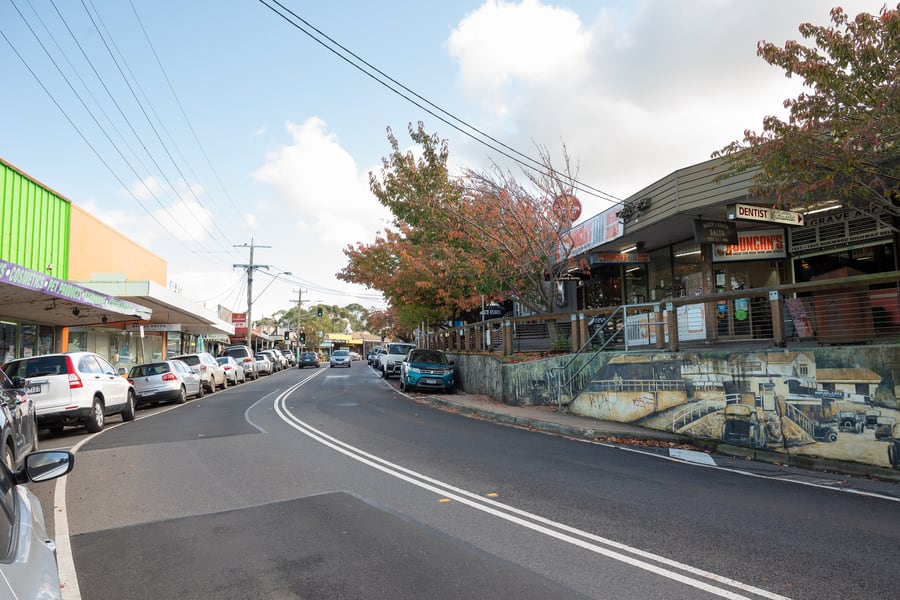 NatoV / Wikimedia Commons · CC BY-SA 4.0 · cropped
Belgrave
A hills town of about 3,900 people, 36 kilometres east of the centre of Melbourne and reached by the suburban Belgrave line. The shops, galleries and cafés are on Main Street, a short walk from the station, and each winter solstice the Belgrave Lantern Parade fills the street with lanterns, drummers and dancers.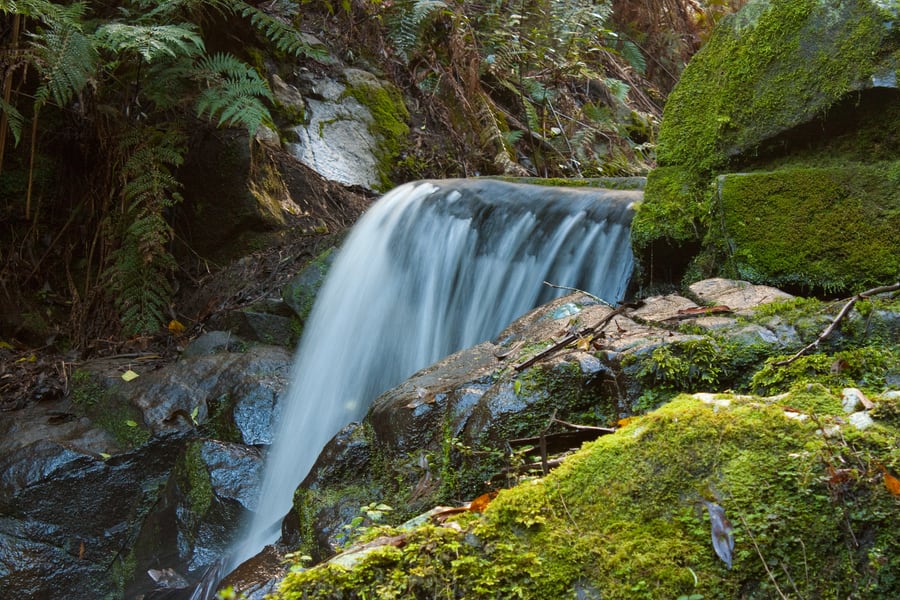 Rexness / Wikimedia Commons · CC BY-SA 2.0 · cropped
Sherbrooke Forest
The cool temperate rainforest the train skirts out of Belgrave is part of Dandenong Ranges National Park, where Mountain Ash, the world's tallest flowering tree, grows over fern gullies that are home to lyrebirds and wallabies. A track from Sherbrooke Picnic Ground leads to Sherbrooke Falls, best after rain.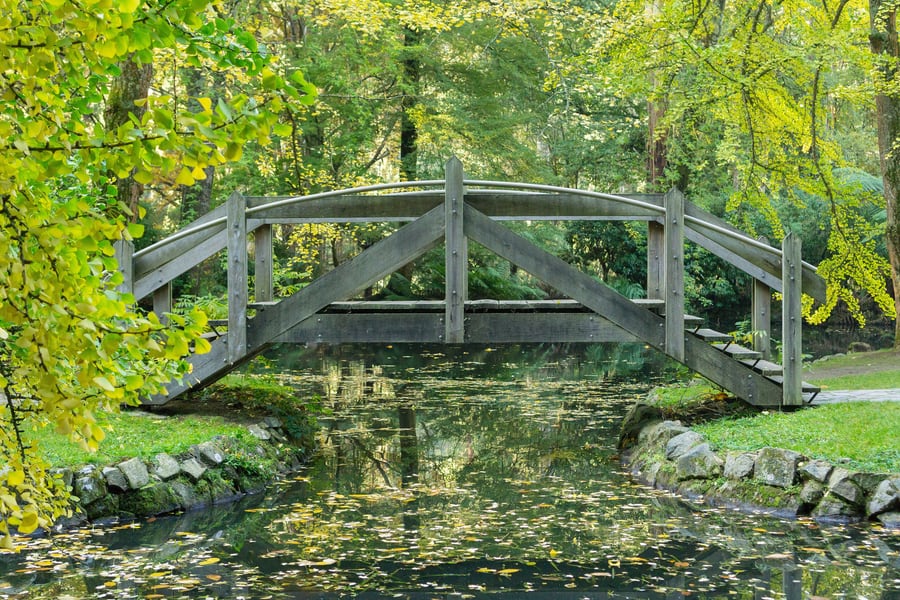 Jami430 / Wikimedia Commons · CC BY-SA 4.0 · cropped
Alfred Nicholas Memorial Gardens
The remnant of a 1930s hill-station garden, given to the state in 1973, with terraces, rock walls, a 13-hectare arboretum under Mountain Ash, a gazebo with a sculpture by Mark Stoner, and a lake with a boathouse at the bottom of the slope. The Art Moderne house it was made for is no longer part of the property. Open in daylight hours.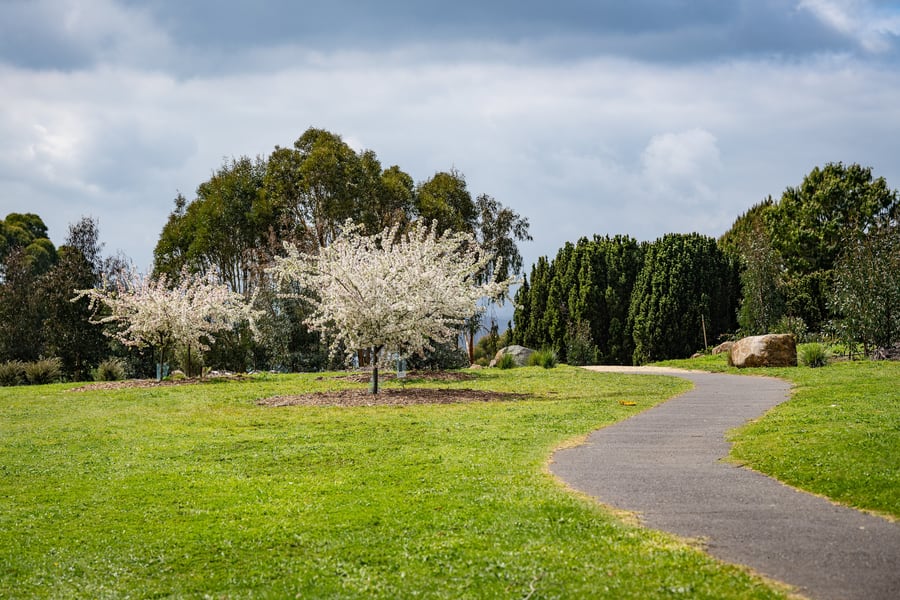 Takeshi Aida / Wikimedia Commons · CC BY-SA 2.0 · cropped
Dandenong Ranges Botanic Garden
Fifty hectares at Olinda, once the National Rhododendron Garden, with views over the Yarra Valley and more than 15,000 rhododendrons, 12,000 azaleas, 3,000 camellias and 250,000 daffodils. It is open every day from 10:00, last entry 16:30, and an open-air people mover runs a 25-minute guided tour of the grounds all year.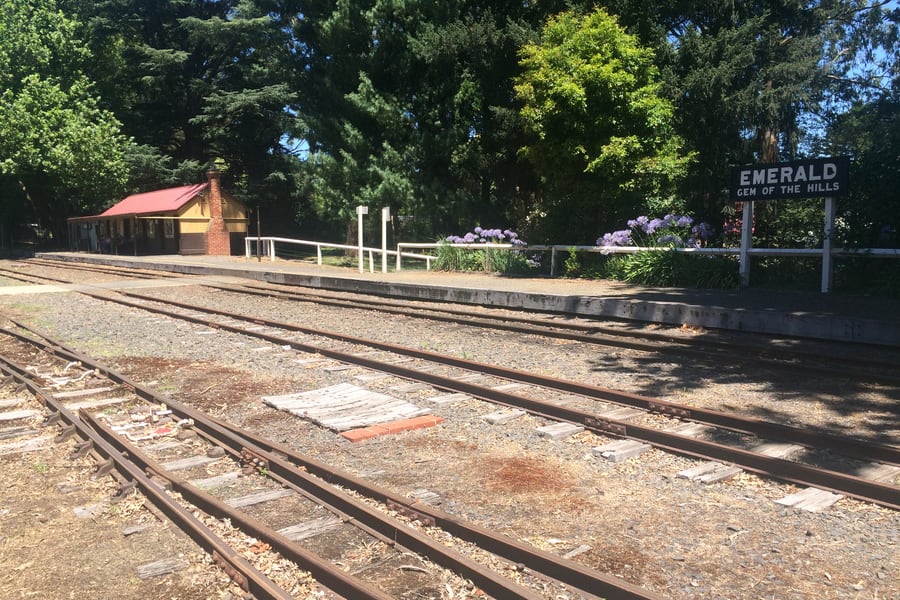 Effluvium1 / Wikimedia Commons · CC BY-SA 4.0 · cropped
Emerald
At 318.5 metres Emerald is the highest station on the line, and its station building is the only original one still standing intact. The town has shops, cafés and bakeries, and the railway's carriage workshop is in the yard. No one is sure whether the name came from the green hills or from emeralds once said to be found in the creeks.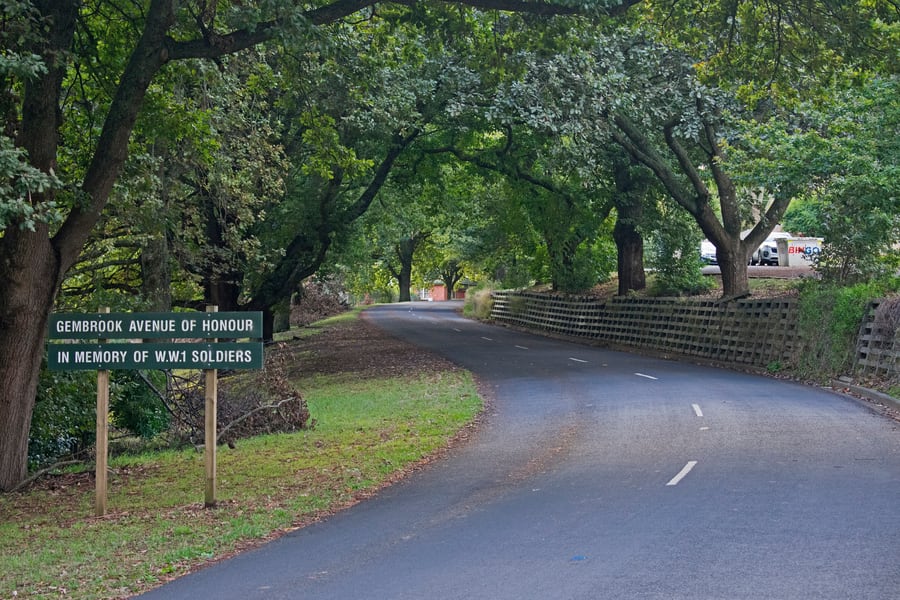 Ymblanter / Wikimedia Commons · CC BY-SA 4.0 · cropped
Gembrook
A town of about 2,600 people, settled in 1873 and named for the small gems found in its creeks. Its timber mills and farms once sent timber, fruit trees and potatoes to Melbourne on this line. Trains wait an hour or more before the return, time for the signposted walks, the Avenue of Honour and, on the fourth Sunday of each month, the market.Where to Sleep
Most visitors come for the day from Melbourne. To stay in the hills, the places below are one on the line at Menzies Creek and one at Gembrook, the far end.
Where to stay
Cloud View Garden
Two retreats at Menzies Creek
Two private retreats with rural views on Selby-Aura Road, in Menzies Creek, the first stop out of Belgrave.
Check Availability (opens in a new tab, on cloudviewgarden.com.au)via cloudviewgarden.com.auGembrook Cottages
Three cottages on Main Street, Gembrook
Three cottages with four-poster beds and fireplaces on Gembrook's Main Street, at the end of the line.
Check Availability (opens in a new tab, on gembrookcottages.com.au)via gembrookcottages.com.auQuestions or corrections
Planning this trip and stuck on something, or spotted a time, fare or detail that has changed? Send us a message about Puffing Billy. We read every one, and we update this page when something has changed.