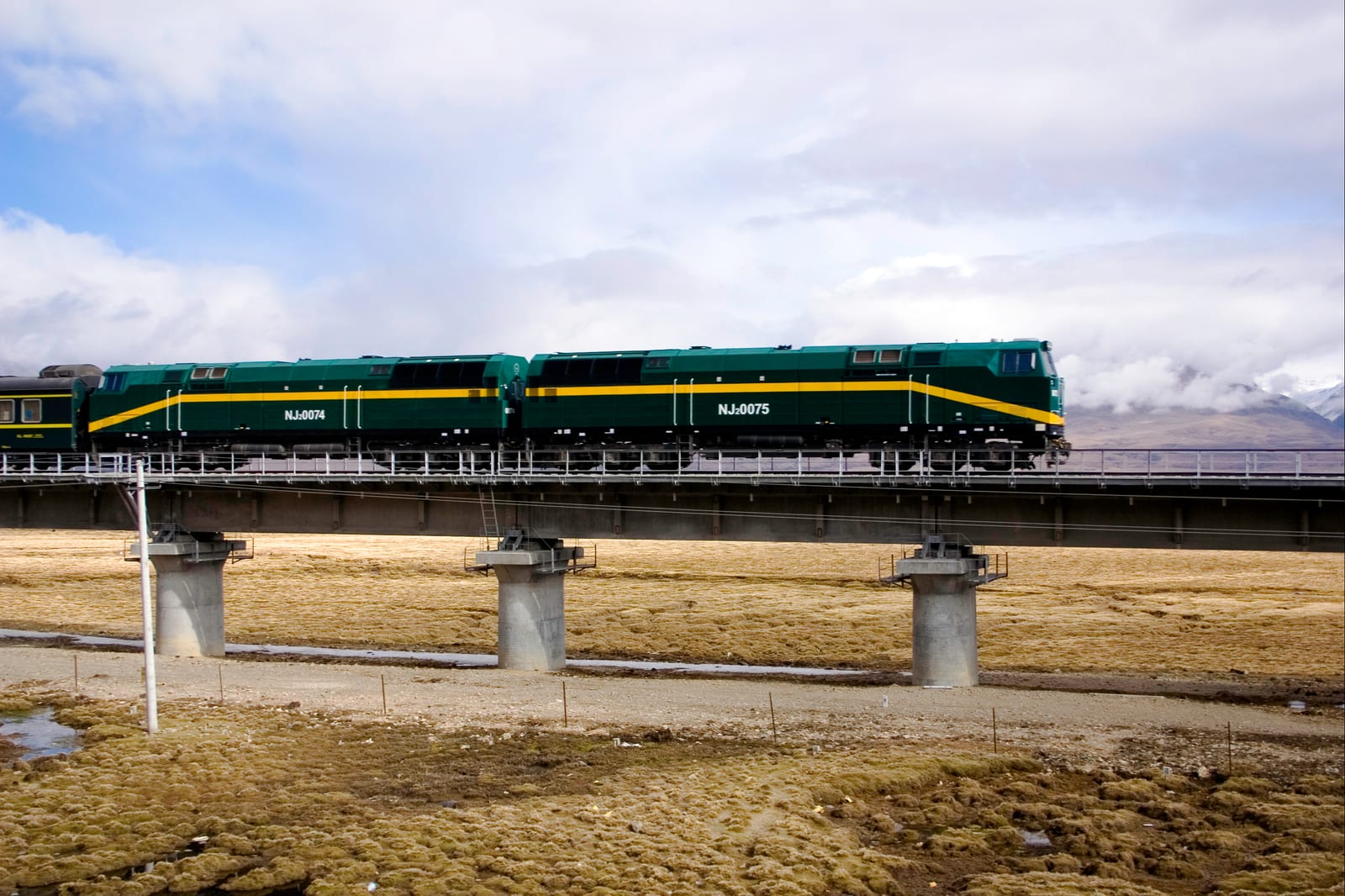
Qinghai–Tibet Railway
Henry Chen / Wikimedia Commons · CC BY-SA 2.0
- Distance1,956 km · Xining–Lhasa
- Duration21h from Xining · ~40h from Beijing
- Best seasonMay–Oct (summer on the plateau)
Introduction
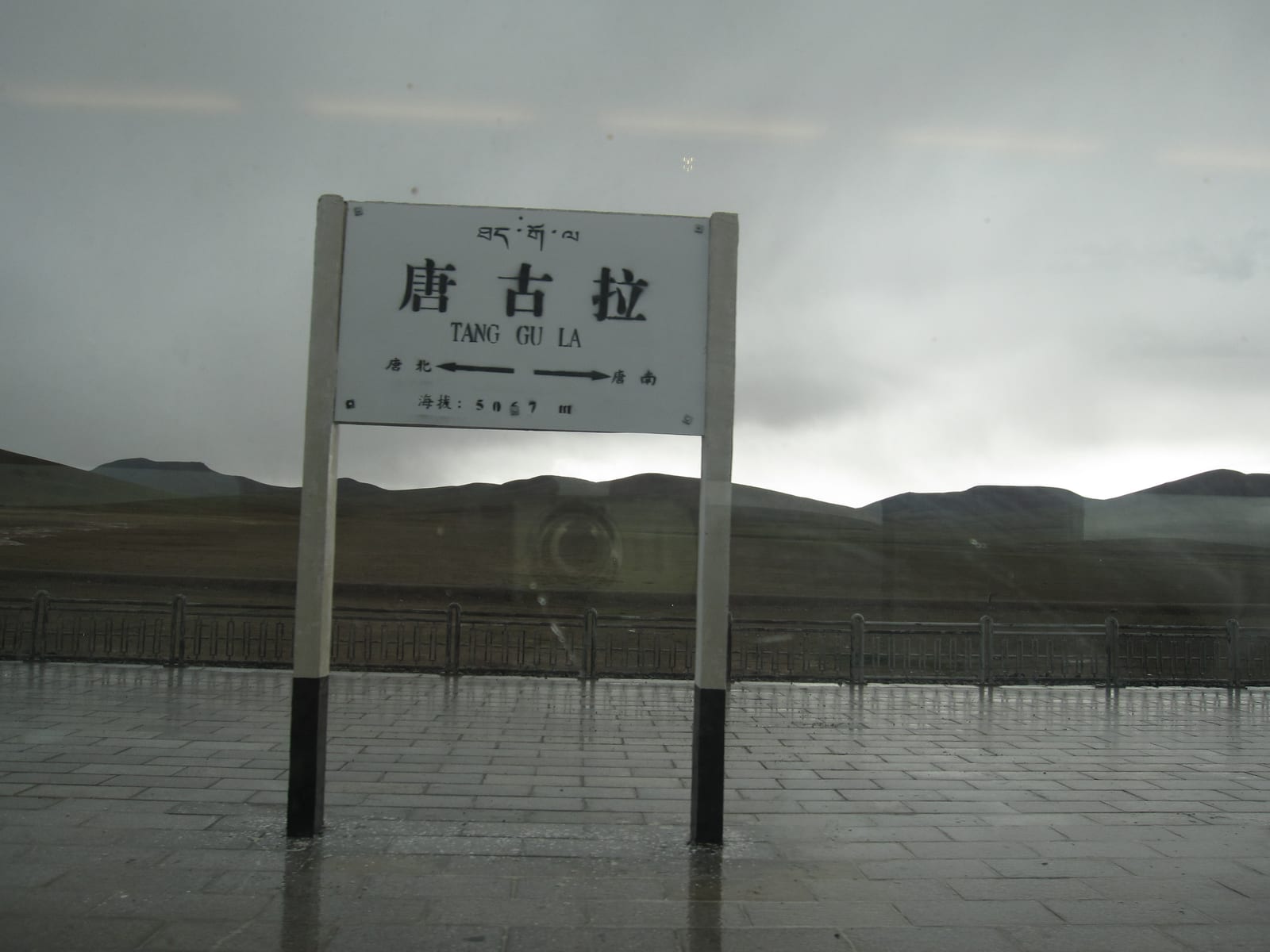
There is a place on this railway — Tanggula Pass — where the track reaches 5,072 metres above the sea. It is the highest point any railway anywhere on earth reaches, and there is nothing else close. A few kilometres on, Tanggula station stands at 5,068 metres, the highest railway station in the world, mostly unstaffed, out on a plain where the air holds about half the oxygen you are used to.
Getting a train up there was supposed to be impossible, and for a hundred years it was.
The Qinghai–Tibet Railway runs 1,956 kilometres from Xining, in China's north-west, to Lhasa, the capital of Tibet. The lower half, Xining to Golmud, opened in 1984. The hard half — Golmud to Lhasa, 1,142 kilometres across the roof of the world — was the part everyone said couldn't be built, and it wasn't, until 2001 to 2005. The whole line opened on 1 July 2006.
What made it impossible was the ground and the air.
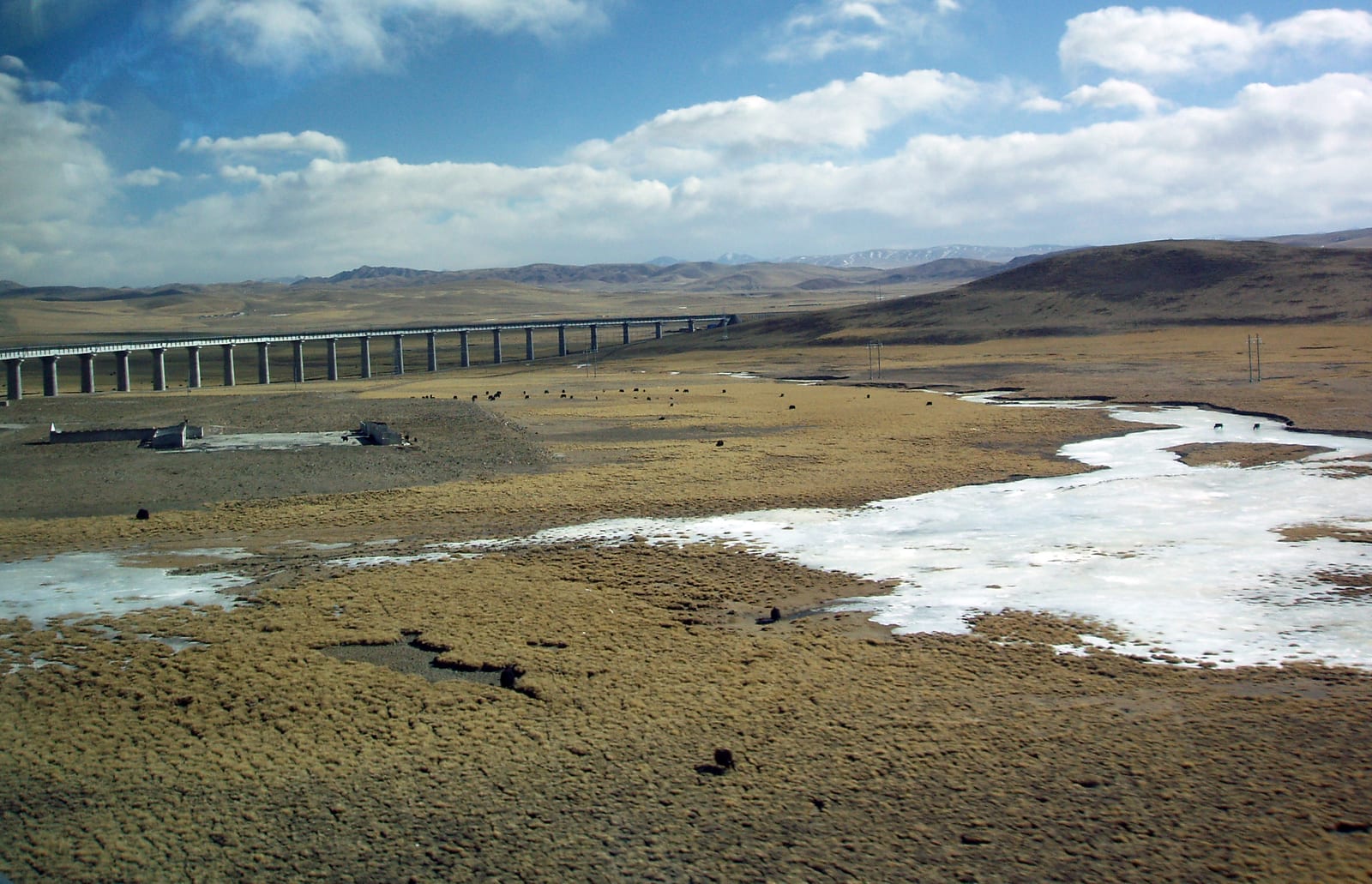
The ground is permafrost: about 550 kilometres of the line sits on soil that freezes solid in winter and thaws to bog in summer, heaving as it goes, which would tear an ordinary railway apart. The answer was to lift much of the track onto viaducts, and to run coolant through the embankments to keep the earth beneath them frozen. You will spend hours crossing marshy plains on bridges that exist purely to avoid touching the ground.
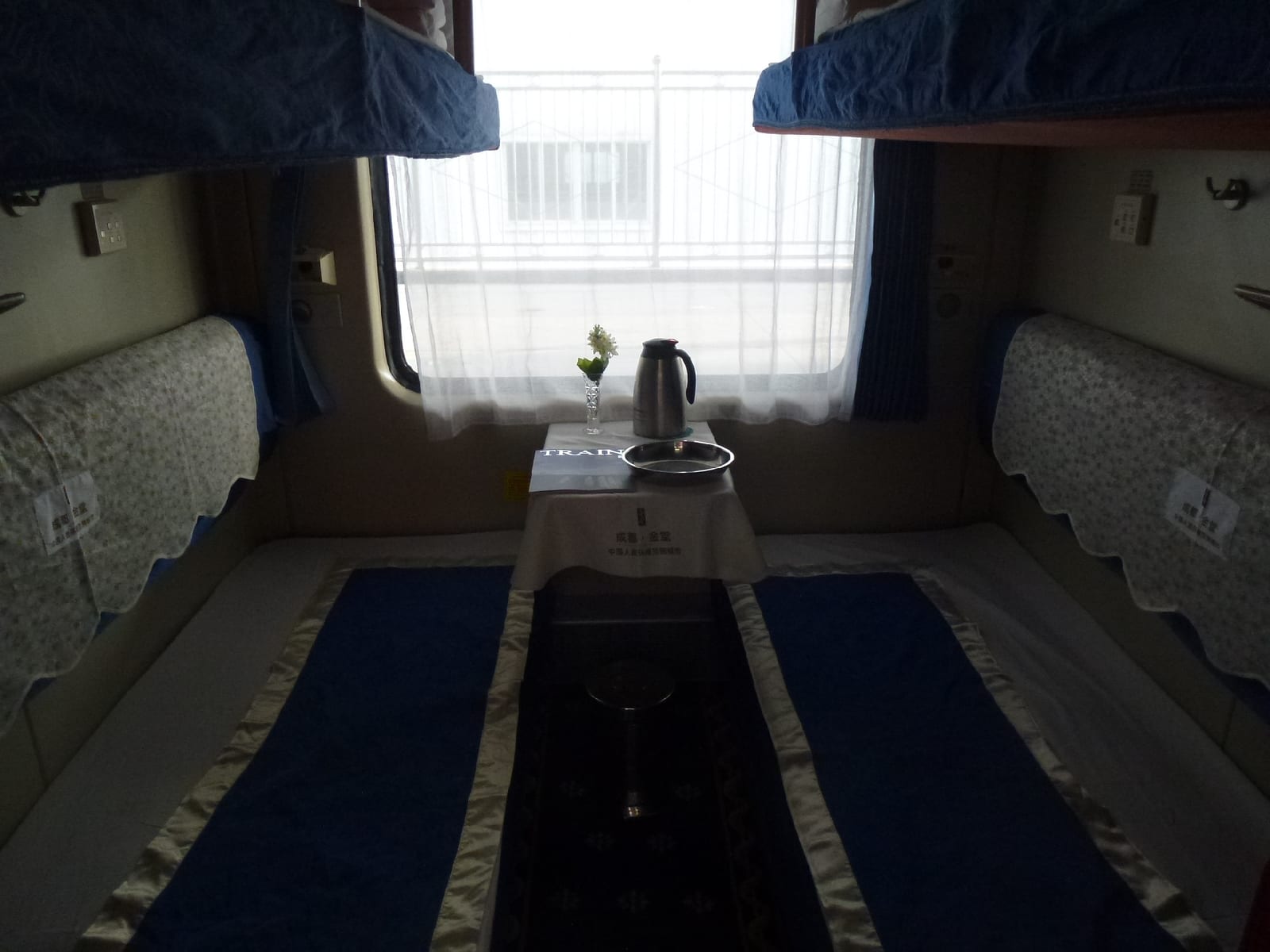
The air, above 4,000 metres — which is more than 960 kilometres of this line — is thin enough to make healthy people seriously ill. So the carriages are sealed and oxygen-enriched, there is a personal oxygen outlet beside every berth, and every train carries a doctor. You cross Tibet, in effect, inside a pressurised tube.
One thing to sort out before anything else: if you are a foreign visitor, you cannot do this trip independently. Travel to Tibet requires a Tibet Travel Permit, which is only issued through a registered travel agency as part of an organised tour, and which you must show to board the train. There is no way around it. Arrange the tour and the permit first; everything else follows.
Do that, and what you get is the greatest high-altitude train journey on the planet — two days climbing onto an immense, empty, luminous plateau of grassland and snow peaks and wild antelope, to a city beneath the Potala Palace that until recently you could only reach by road or air. It is worth every hour, and every breath.
The Journey
Where you start depends on how much of it you want. Trains run to Lhasa from Beijing, Shanghai, Guangzhou, Chengdu, Chongqing, Xi'an, Lanzhou and Xining — and the further away you begin, the longer you spend getting to the interesting part. The Z21 from Beijing takes about forty hours. The train from Xining takes about twenty-one, and Xining is where the Qinghai–Tibet Railway actually begins, so it is the purist's start.
Wherever you board, the journey has two halves, and they are not alike.
The first half, up to Golmud, is the warm-up: Qinghai province, the great inland Qinghai Lake, high desert and salt flats, climbing steadily but not yet alarmingly. You sleep, you eat in the dining car, you watch China thin out. It is pleasant, and it is not why you came.
Then, past Golmud, the train begins the real climb — and the world changes into something most people have never seen.
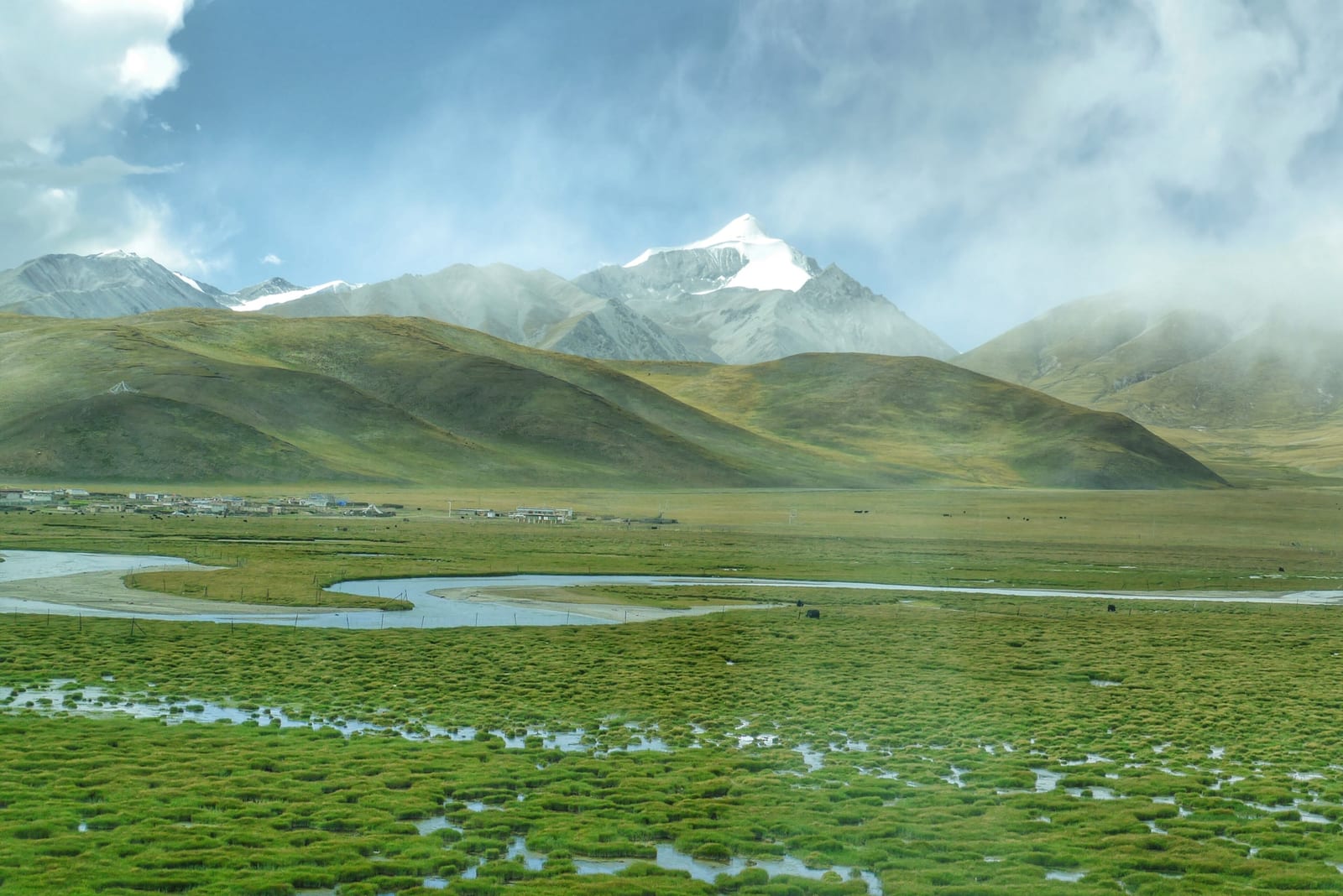
The Tibetan Plateau opens up: an immense, treeless, luminous grassland at four and five thousand metres, ringed by snow mountains, scattered with grazing herds, and — if you are lucky and watching — the Tibetan antelope of the high plains. The scale is the thing. There is simply more space here than seems reasonable, and the light at altitude gives it a hard, clean brilliance that photographs never quite hold.
This is where the engineering becomes visible. For long stretches the train runs on viaducts across marshy plains — the permafrost bridges — and past embankments studded with cooling pipes. It crosses the Fenghuoshan Tunnel, bored at 4,905 metres, the highest rail tunnel in the world. And it climbs, and climbs, to Tanggula Pass at 5,072 metres, where the little station stands almost alone in the emptiness and the whole train is briefly the highest moving thing on any railway on earth.
Somewhere in here you will feel the altitude — a headache, breathlessness, a strange lightness. This is normal and it is why the oxygen is piped into the air and why there's an outlet by your pillow. Use it, drink water, don't over-exert, and tell the doctor if it gets bad.
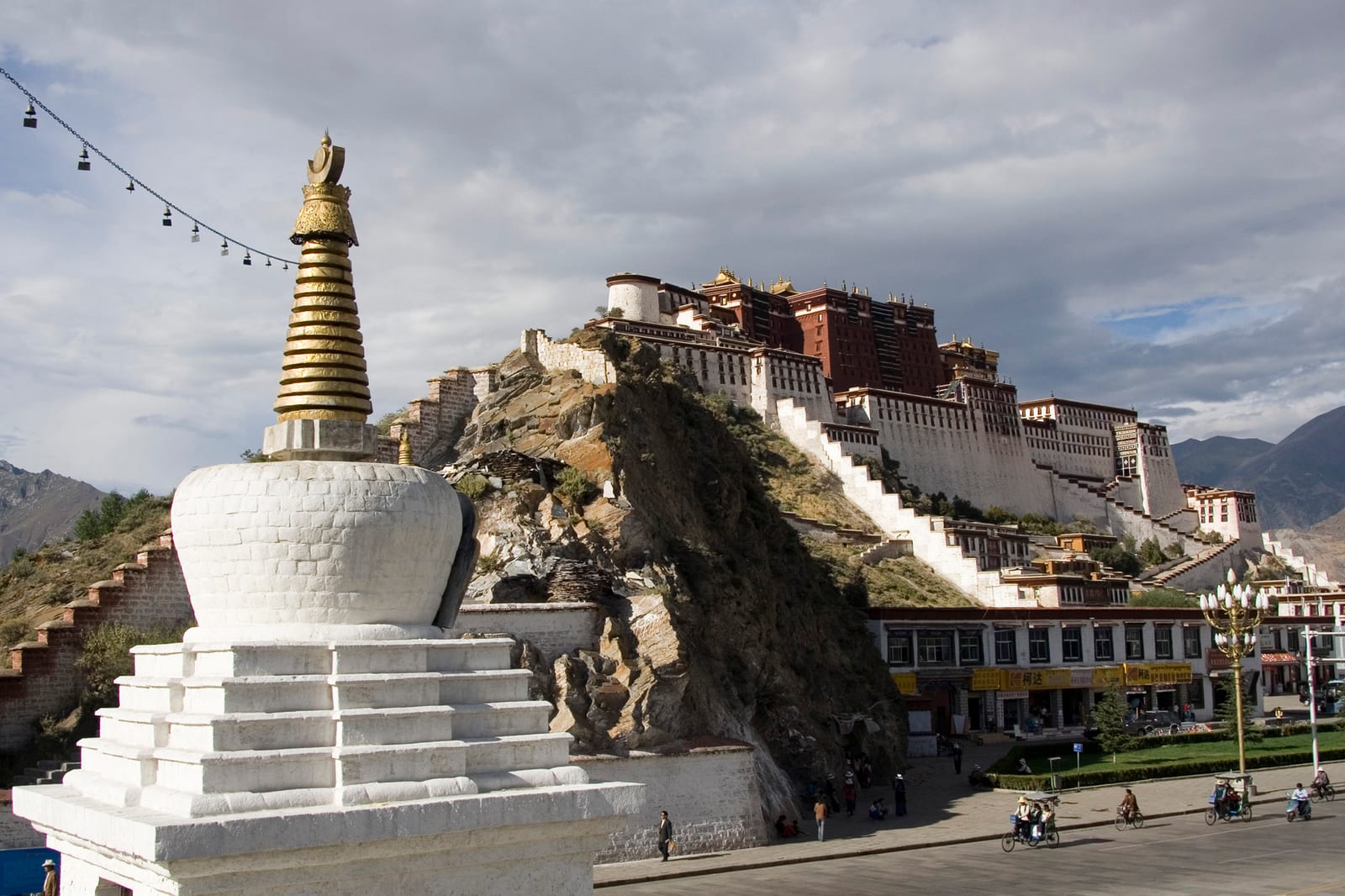
Then the plateau tilts gently down towards Lhasa, at a mere 3,600 metres, and the journey ends beneath the Potala Palace — the vast white-and-red fortress-monastery on its hill, the former residence of the Dalai Lama, and the thing you have seen in photographs your whole life. You step off the train onto the roof of the world, slightly dizzy, and the altitude is the first thing that greets you.
It is a long way to come, in every sense. It is also, quite simply, the highest and one of the most extraordinary train journeys there is.
Along the route
Bernt Rostad / Wikimedia Commons · CC BY 2.0The highest railway on earth
At Tanggula Pass the line reaches 5,072 metres — the highest point of any railway in the world — and Tanggula station, at 5,068 m, is the highest railway station there is. For more than 960 kilometres the train runs above 4,000 metres. Nothing else on rails goes this high.Fanghong / Wikimedia Commons · CC BY 2.5A railway on frozen ground
About 550 kilometres of the line is laid on permafrost — ground that thaws in summer and heaves. The engineers' answer was to lift the track onto viaducts and pump coolant through the embankments to keep the ground beneath it frozen. It should not be possible, and it is.Hiroki Ogawa / Wikimedia Commons · CC BY 3.0Air you can't breathe
At 5,000 metres there is roughly half the oxygen of sea level, and it will make you ill. So the carriages are sealed and oxygen-enriched, with a personal oxygen outlet at every berth, and every train carries a doctor. You are, in effect, in a pressurised tube crossing a place humans are not built for.A bit of history
Culture & experiences along the way
travel oriented / Wikimedia Commons · CC BY-SA 2.0The climb onto the plateau
Past Golmud the train starts to climb, and keeps climbing, until the world outside is treeless, immense and empty — grassland, salt, snow peaks, wild yak and antelope, and a sky that goes on forever. This is the finest high-altitude train ride anywhere.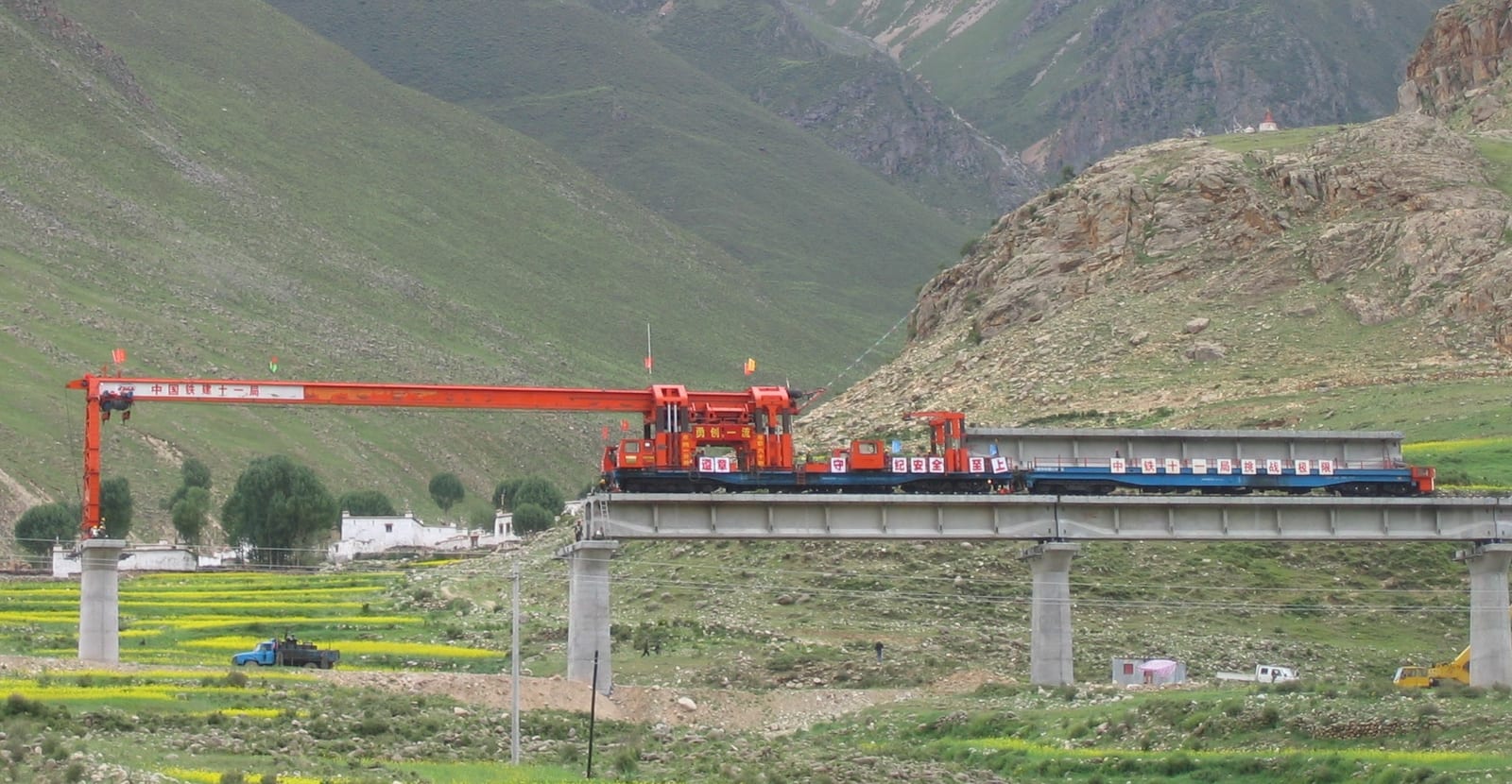 Wikimedia Commons · CC BY-SA 4.0
Built in four years
The hard part — Golmud to Lhasa, 1,142 km across permafrost and 4,000-metre passes — was built between 2001 and 2005 and opened in 2006. A century of surveys had said it couldn't be done. It took four years once they decided it could.Luca Galuzzi / Wikimedia Commons · CC BY-SA 2.5Arriving in Lhasa
The line ends at Lhasa, 3,600 metres up, beneath the Potala Palace. However you come — 21 hours from Xining or 40 from Beijing — you step off onto the roof of the world, and the altitude is the first thing you feel.Timetables
The Qinghai–Tibet Railway is a scheduled service, not a tourist train — but for foreign visitors the schedule is the easy part, because a permit and a tour have to come first (see Tickets).
How it runs:
| From | Train | Duration | Distance |
|---|---|---|---|
| Xining | ~6 overnight Z-trains daily | ~21 hours | 1,956 km (the shortest run) |
| Beijing West | Z21 | ~40 hours | 3,757 km (the flagship) |
| Lanzhou / Xi'an | daily-ish | ~24–34 hours | — |
| Chengdu · Chongqing · Guangzhou · Shanghai | scheduled | ~2 nights | — |
Good to know:
- Xining is the real start. The Qinghai–Tibet line proper is Xining–Lhasa, and from Xining you get the whole spectacular stretch in a single ~21-hour ride without two nights of ordinary Chinese countryside first. Many tours fly you to Xining and take the train from there.
- Book a soft sleeper. Four berths, a lockable door, and far more comfortable for the altitude and the length. Hard sleepers (six open berths) are cheaper and fine, but you'll sleep less.
- The best scenery is the second day, past Golmud. If you can, be awake for the daylight hours on the plateau — that is the entire reason to take the train rather than fly.
- The oxygen is real, use it. The carriages are enriched, and there's an outlet by each berth. Go easy, drink water, and don't treat altitude sickness as weakness — tell the onboard doctor if you feel bad.
- Season matters. May to October is summer on the plateau: green grass, milder days, the best light. Winter is brutally cold at altitude and some tours don't run.
- Trains sell out. Around the Spring Festival and the October Golden Week the whole country is travelling — avoid both, and book well ahead regardless.
- You still need the permit for the train, not just for Tibet — you show it to board.
Frequencies and durations as of 2026; exact departure times change. Confirm with China Railway / your tour operator — see the Tickets section below.
Tickets
For this journey "tickets" means two things, and the order matters: the permit first, the train second. A foreign visitor cannot travel to Tibet independently. You need a Tibet Travel Permit, issued only through a registered travel agency as part of an organised tour, and you must present it to board the train to Lhasa — not merely on arrival. So start there: pick a reputable operator, book the tour, and let them handle the paperwork and the train.
Of the classes, take a soft sleeper: four berths with a lockable door, quieter and more private, and at this altitude and length you will actually sleep. Hard sleeper is cheaper and more sociable; hard seat, for two nights at altitude, is not the experience you are paying for. Book months ahead for summer, avoid Golden Week entirely, and let the operator build acclimatisation into the Lhasa end.
Book your tickets
The train to Lhasa
From Xining, Beijing and beyond
Direct trains run from Xining (~21h, the shortest), Beijing (Z21, ~40h) and several other cities. Book a soft sleeper (4-berth, lockable) for the overnight legs; hard sleepers are cheaper and more crowded. ⚠️ Foreign travellers cannot buy these independently — see below.
Book Tickets (opens in a new tab, on China Railway)via China RailwayTibet Travel Permit + tour
Required for all foreign visitors
You cannot travel to Tibet independently. Foreign visitors must book through a registered agency, which arranges the Tibet Travel Permit you have to show to board the train. This is a legal requirement, not a formality — sort it before anything else.
Book Tickets (opens in a new tab, on Registered Tibet travel agency)via Registered Tibet travel agencyRail Passes
No rail pass covers the Qingzang Railway. Interrail and Eurail are European schemes, and China is not among the 33 countries in Interrail's list of covered railway companies. A foreign visitor also needs a Tibet Travel Permit, issued only through a registered agency as part of an organised tour, so the train ticket is normally booked by the tour operator with the permit.
Checked October 2026 against Interrail's list of railway companies (opens in a new tab).
Places to Visit
The railway is a journey to Lhasa, but the whole route — and both ends of it — reward stopping. Xining is the sensible place to start; Golmud, where the easy half ends and the climb begins, is a junction rather than a destination and is best treated as one.
Build in acclimatisation. The first day or two in Lhasa are for going slowly while your body adjusts to 3,600 metres, and the old town rewards a slow walk anyway. Everything beyond the city — Shigatse, Yamdrok, the Everest road — needs the same Tibet Travel Permit and organised tour as the train itself, so it is normally arranged as a single trip rather than added on later.
 Hiroki Ogawa / Wikimedia Commons · CC BY 3.0 · cropped
Kumbum Monastery
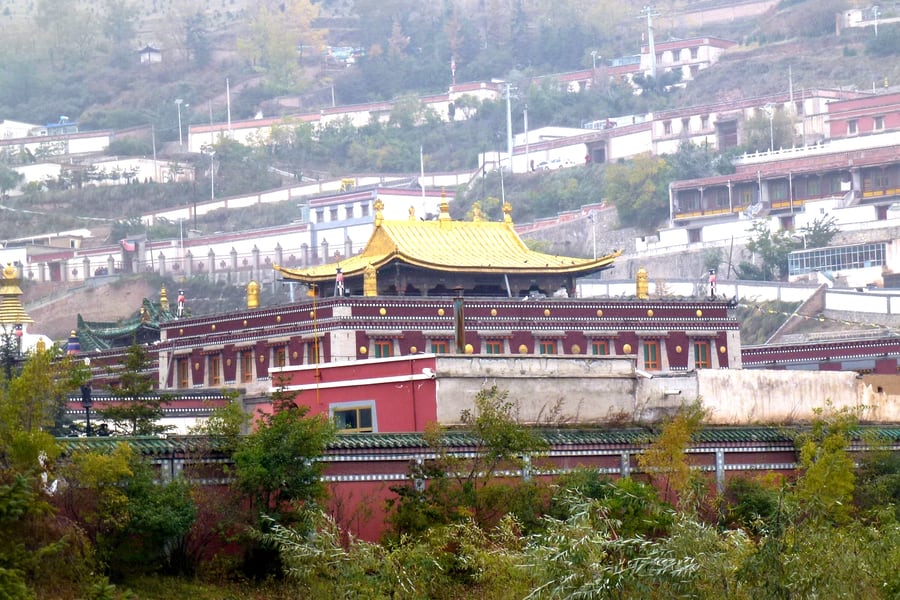
The gentlest possible introduction to what is coming, an hour or so out of Xining. Kumbum was founded in 1583 by the third Dalai Lama on the birthplace of Tsongkhapa, who began the Gelug school here in 1357; the name means "100,000 enlightening bodies of the Buddha", after the images said to have appeared on the leaves of a sandalwood tree on the spot. Golden roofs, whitewashed halls and butter lamps by the thousand.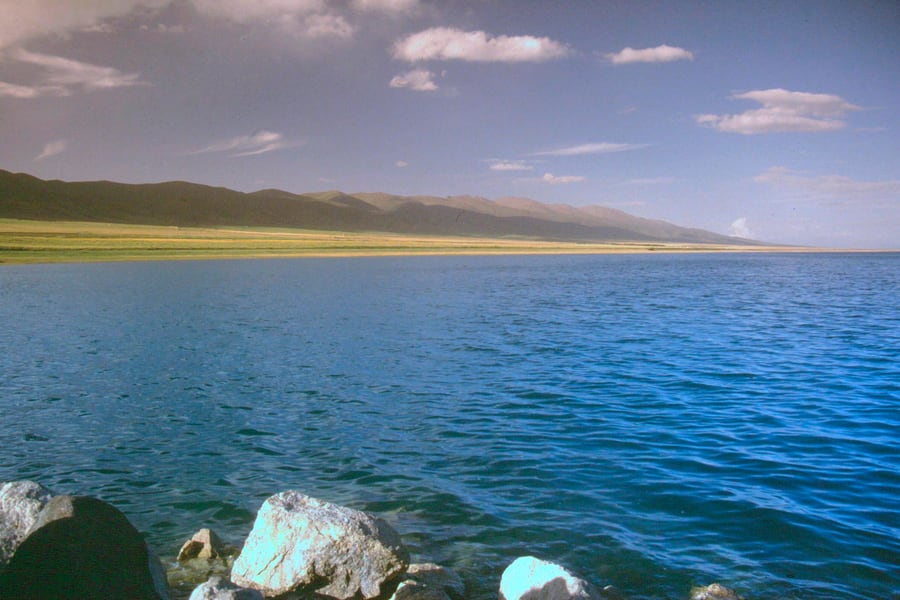 Andreas Gruschke / Wikimedia Commons · CC BY-SA 3.0 · cropped
Qinghai Lake
China's largest lake, and the train skirts it for hours: 4,543 km² at 3,260 m, salty enough at 1.4% to be half as briny as the sea and alkaline enough to sting. Grassland runs down to a shore with no trees on it, and in summer the fields above turn yellow with rape flower. Unusually for a big inland lake, it is not dying — it shrank through most of the twentieth century and has been rising again since 2004.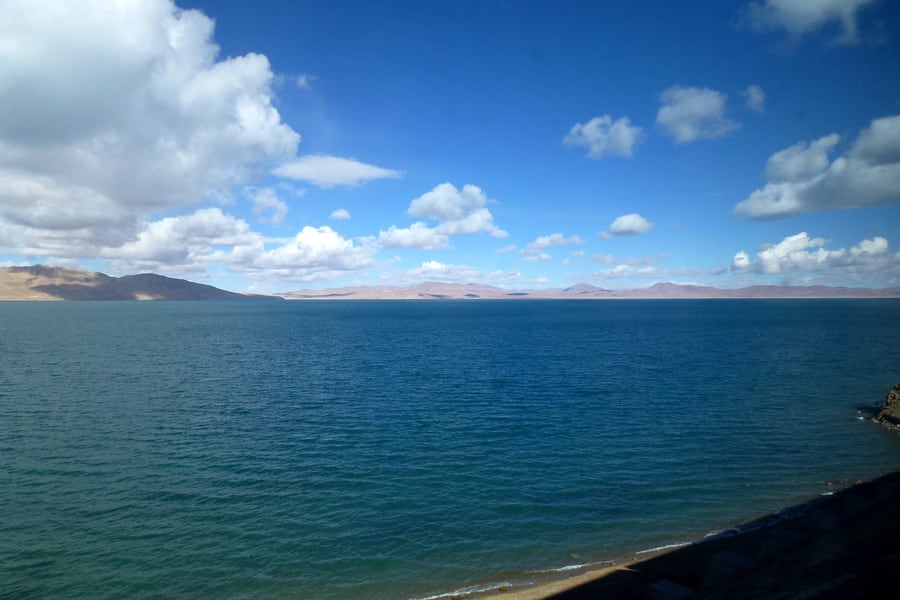 Hiroki Ogawa / Wikimedia Commons · CC BY 3.0 · cropped
Cuona Lake
Not a stop, and you cannot get off — but this is the one the plateau hours are for. Cuona sits at 4,594 m in Amdo county, some 300 km² of fresh water held between the Kunlun and the Nyainqêntanglha, and the track passes within 20 metres of the shore: no other lake anywhere comes this close to a railway. Tibetans treat it as holy, the soul-lake of the Reting incarnation, and pilgrims leave prayer flags along the fence line.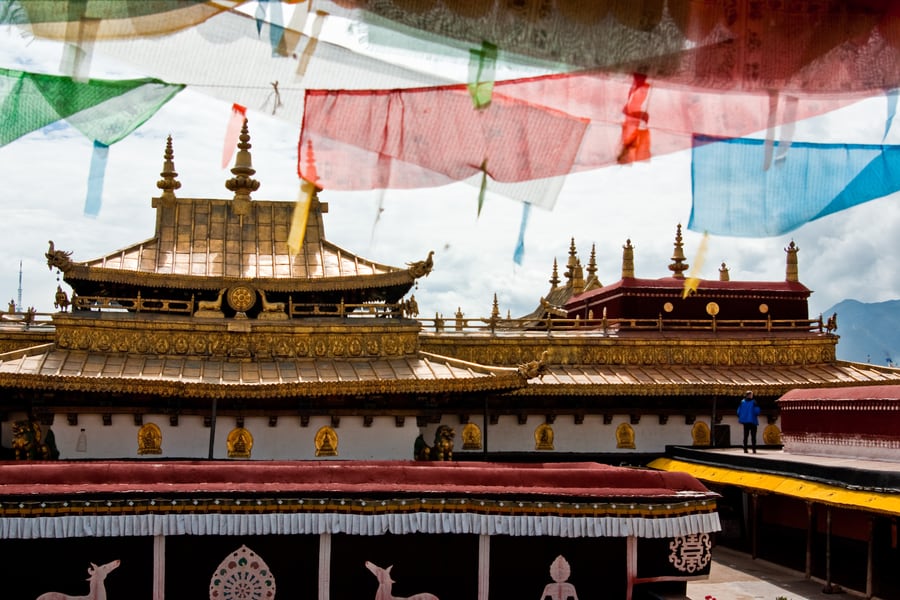 Antoine Taveneaux / Wikimedia Commons · CC BY-SA 3.0 · cropped
The Jokhang
Older than the Potala and, for Tibetans, more important. King Songtsen Gampo built it around 640, and it holds the Jowo Shakyamuni brought to Lhasa by his Tang Chinese queen Wencheng — the most venerated image in the country. UNESCO added it to the Potala listing in 2000. Around it runs the Barkhor, the pilgrim circuit walked clockwise; allow twenty minutes for the loop and rather longer for the shops off it.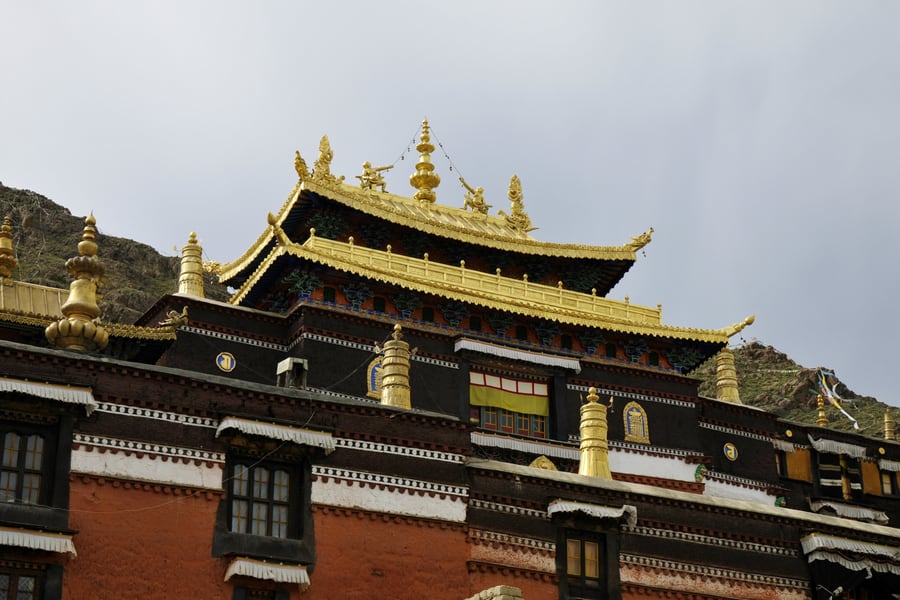 mayanming / Wikimedia Commons · CC BY-SA 3.0 · cropped
Tashilhunpo, Shigatse
Founded in 1447 by Gendun Drup, recognised afterwards as the first Dalai Lama, and ever since the seat of the Panchen Lama. Its Jampa hall holds the largest bronze Maitreya in the world — 26.2 m, dressed in more than 1,400 pearls, diamonds and corals, cast by 110 craftsmen over four years. Two-thirds of the buildings came down in the Cultural Revolution; what you walk through now is substantially rebuilt.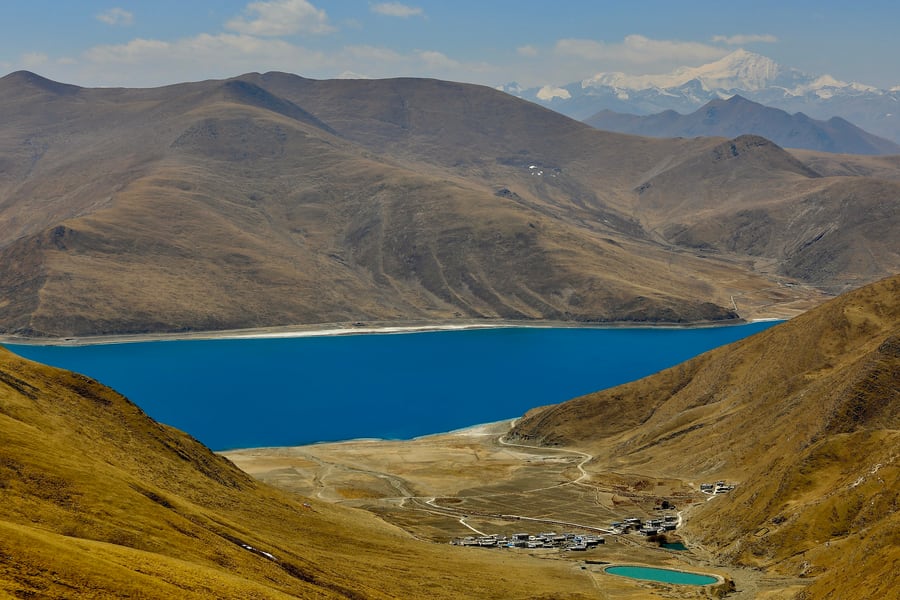 Haogang0325 / Wikimedia Commons · CC BY-SA 4.0 · cropped
Yamdrok Lake
One of Tibet's four Great Wrathful Lakes, where pilgrims come to read the water for omens. It is 72 km long and 638 km² at 4,441 m, fan-shaped and so deeply bayed that the road keeps meeting it again around the next spur. The colour is startling from the pass above. A hydro station at the western end, opened in 1996 and still the largest in Tibet, remains locally contentious.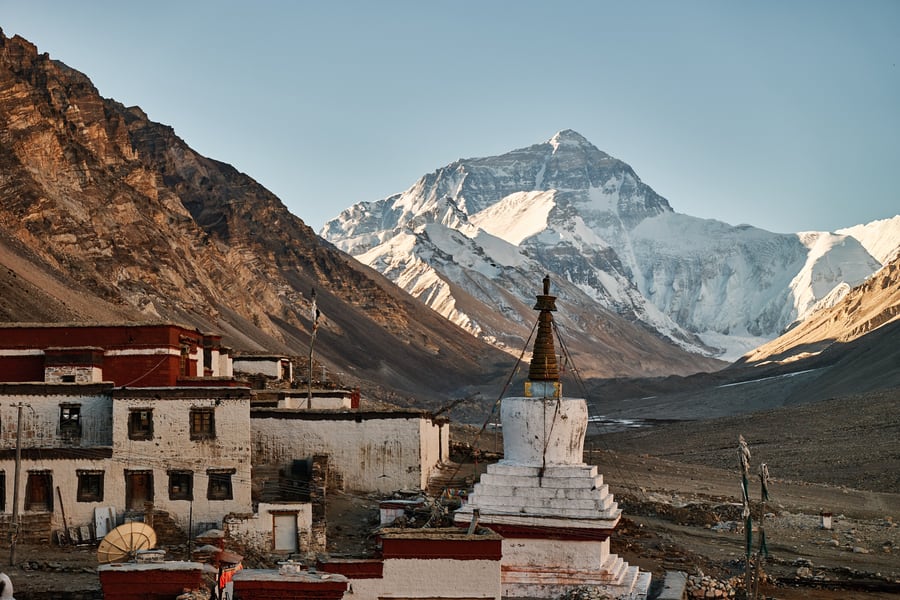 Oldmanisold / Wikimedia Commons · CC BY-SA 4.0 · cropped
Rongbuk and the north face
Worth knowing before you book: the 5,200 m base camp itself has been shut to ordinary tourists since January 2019, on conservation grounds, and for the 2026 season the whole north side is closed to climbers too. Visitors stop at Rongbuk — a monastery founded in 1902 at 4,980 m, ruined in the Cultural Revolution and rebuilt from 1983 — which is no loss at all: Everest fills the head of the valley from its front step.Where to Sleep
For the train itself, your berth is your bed — one or two nights of it, depending where you start. Book a soft sleeper if you can: four berths behind a lockable door, which at altitude and over this distance is worth the extra. A hard sleeper (six open berths) is cheaper and perfectly usable, just noisier and less restful. For a journey to Lhasa, skip the hard-seat option — two nights upright at altitude is misery.
Because foreign visitors travel on an organised tour, the accommodation is usually part of the package, and a good operator plans it around the altitude. A few things worth knowing:
- Lhasa (3,600 m) is where acclimatisation happens. The first night or two should be low-key by design — your body needs to adjust before you do anything strenuous. Hotels across Lhasa now provide oxygen or oxygen-enriched rooms, and it's worth choosing one that does.
- Xining is the practical staging point at the low end. Many tours overnight here before the train, both to catch it and to begin adjusting to altitude — Xining is already at over 2,000 metres.
- Onward towns — Shigatse, Gyantse, and the stops towards Everest — have accommodation ranging from decent hotels to basic guesthouses, all arranged through the tour. The higher you go, the simpler it gets.
Two practical warnings. First, altitude, not comfort, is the thing to plan around: a fancier hotel at 3,600 metres is still at 3,600 metres, so go slowly, drink water, and don't drink alcohol the first night. Second, take the acclimatisation days seriously — people who arrive by train have climbed more gently than those who fly in, but Lhasa is still high, and the plateau beyond it is higher. The trip rewards patience at the start with everything that comes after.
Questions or corrections
Planning this trip and stuck on something, or spotted a time, fare or detail that has changed? Send us a message about Qinghai–Tibet Railway. We read every one, and we update this page when something has changed.