Reunification Express
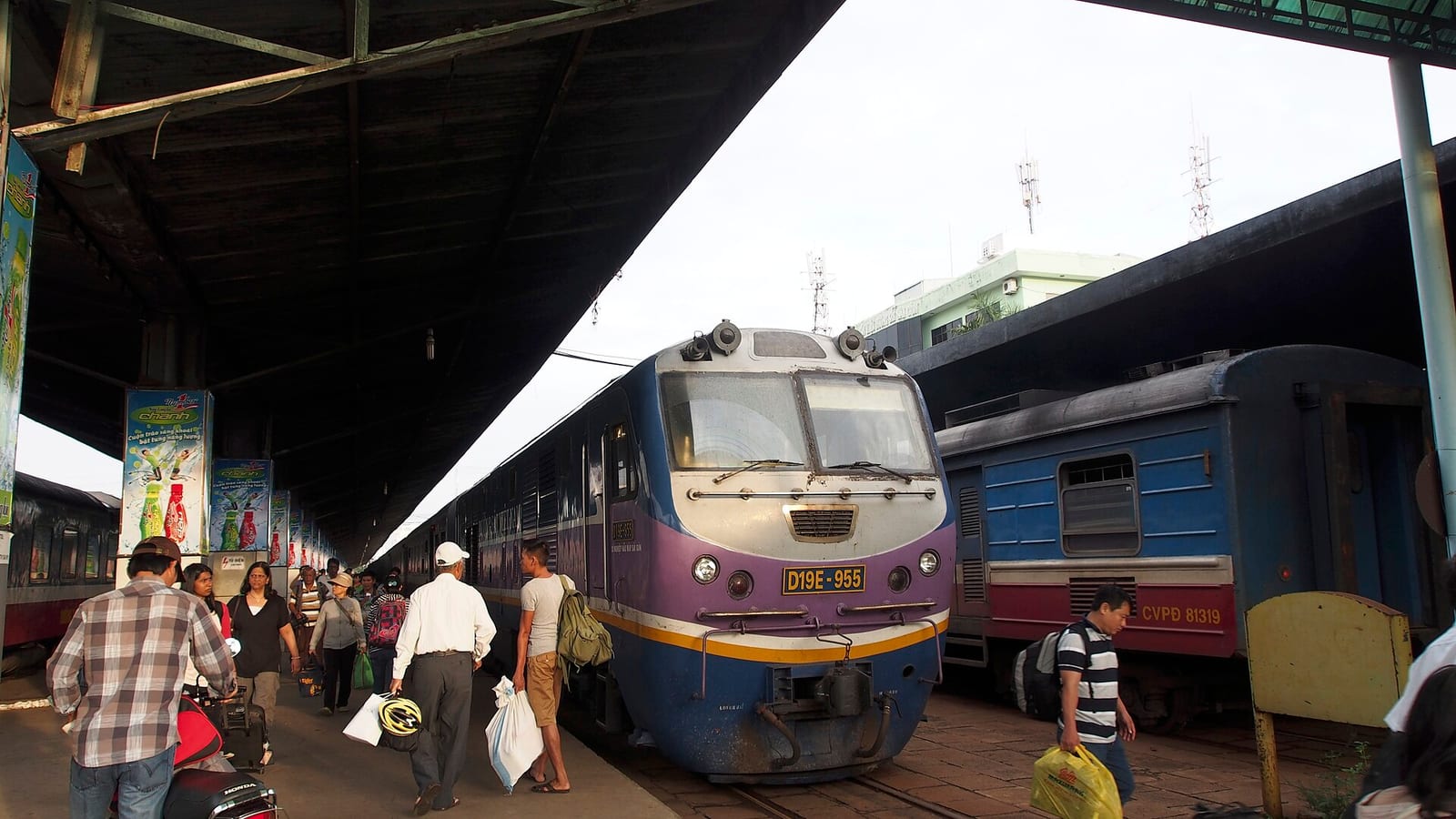
Michael Quick / Wikimedia Commons · CC BY 2.0
- Distance1,726 km (Hanoi–Ho Chi Minh City)
- DurationAbout 30 hours
- Best seasonMar–Apr & Sep–Nov
Introduction
Vietnam is roughly 1,700 kilometres long and, in places, barely fifty wide. It is a country shaped like a railway — and there is a railway shaped like the country. A single metre-gauge line runs from Hanoi to Ho Chi Minh City, 1,726 kilometres and 175 stations, and it takes about thirty hours end to end.
The French built it, slowly and at great cost, between 1899 and 1936; the full Hanoi–Saigon link was formally in operation on 2 October 1936. Then the country tore itself apart, and the line with it — bombed, cut, and for years simply severed in the middle.
Which is where the name comes from. The war-damaged railway was rebuilt after 1975 and the through service returned on 31 December 1976. The Reunification Express is not a marketing flourish. It is a description of what the train does: it puts the country back in one piece, twice a day, in both directions.
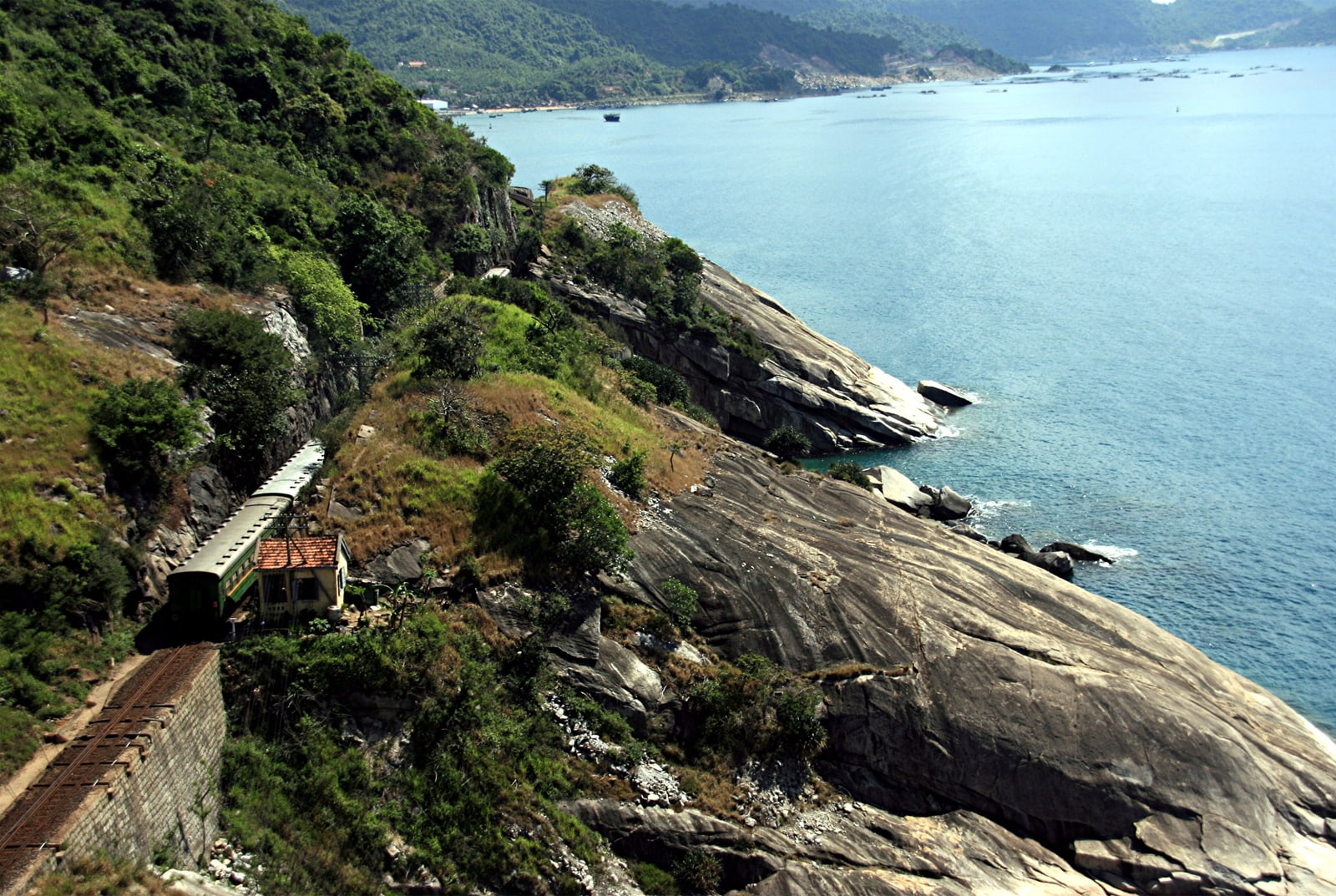
Ride it and Vietnam arrives in order — the deltas and limestone of the north, the long thin waist where the country narrows to almost nothing, the imperial capital at Huế, the beaches of the centre, the sprawl of the Mekong at the far end. And in the middle, the three hours everyone remembers: the Hải Vân Pass, where the track abandons the flat and goes climbing around a headland on a shelf above the South China Sea.
It is not luxurious. It is a real train full of real people, it is very cheap, and the food comes through the window. It is one of the great railway journeys of Asia.
The Journey
The train pulls out of Hanoi in the afternoon or the evening, depending which one you've taken, and the city gives way to the Red River delta almost immediately — paddy fields to the horizon, water buffalo, conical hats bent over the rice, and graves standing in the middle of the fields because the land is too precious to waste on a cemetery.
Through the night it runs south to Vinh and down the narrow waist of the country, where Vietnam pinches to a few dozen kilometres between the Laotian mountains and the sea. This was the most heavily bombed landscape on earth. You wake somewhere near Đồng Hới, and by mid-morning the train is running into Huế — the imperial capital, its citadel and tombs strung along the Perfume River, and the first place most people get off.
Then comes the reason to have taken the train at all.
South of Huế the line reaches the coast at Lăng Cô, a long sandbar between a turquoise lagoon and the open sea, and begins to climb. For the next three hours it works around the Hải Vân Pass — the "Pass of the Ocean Clouds" — on a ledge blasted into the side of a headland, ducking through tunnels, curving out again with nothing between the window and the water but a few metres of scrub and a very long drop. Cars go through a tunnel underneath and miss all of it. On a clear day you can see back along the whole coast; in cloud, which is often, the jungle drips and the sea vanishes and it is somehow better.
The train comes down into Da Nang — beaches, bridges, and the gateway to Hội An — and then runs south through the central coast, a long afternoon of fishing villages, salt pans, dragonfruit farms and startling blue water, to Nha Trang.
The last night takes it inland and south through the dark, and the final morning is the Mekong's edge: flat, hot, dense, endlessly busy. The train arrives at Ho Chi Minh City having crossed a country that is still, in living memory, two.
Almost nobody should do all thirty hours in a single sitting, and the good news is that nobody has to. The line is built for hopping: Hanoi to Huế overnight, the pass to Da Nang in the morning, a few days at Hội An, another sleeper south. Same railway, taken in bites.

Along the route
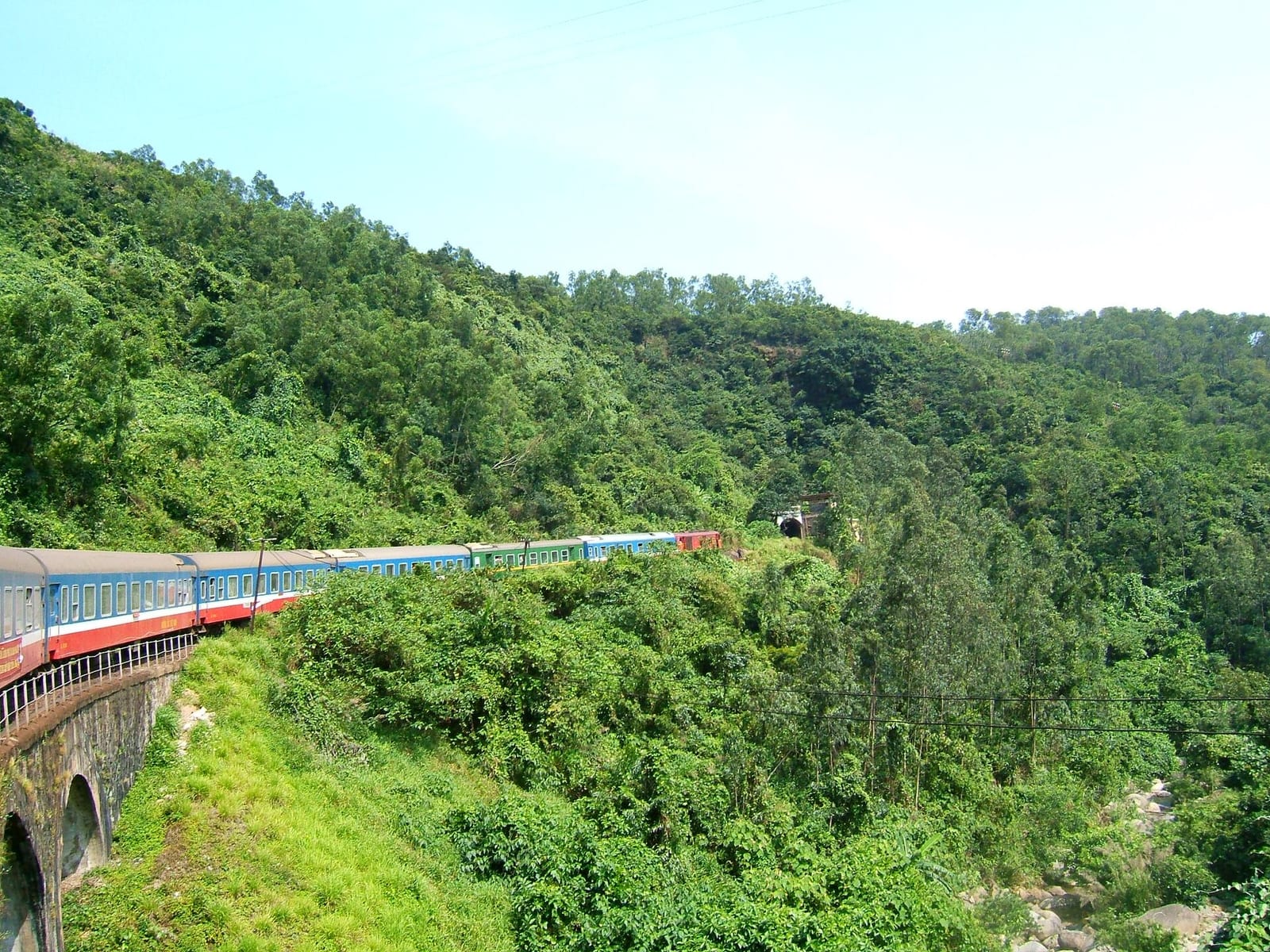
Viethavvh / Wikimedia Commons · Public domainThe Hải Vân Pass
Three hours between Huế and Da Nang, where the railway leaves the flat country and works around a headland on a ledge cut above the sea, in and out of tunnels, with the Lăng Cô lagoon below. It is widely reckoned the finest rail ride in Southeast Asia, and the road can't touch it.Dragfyre / Wikimedia Commons · CC BY-SA 3.0A line put back together
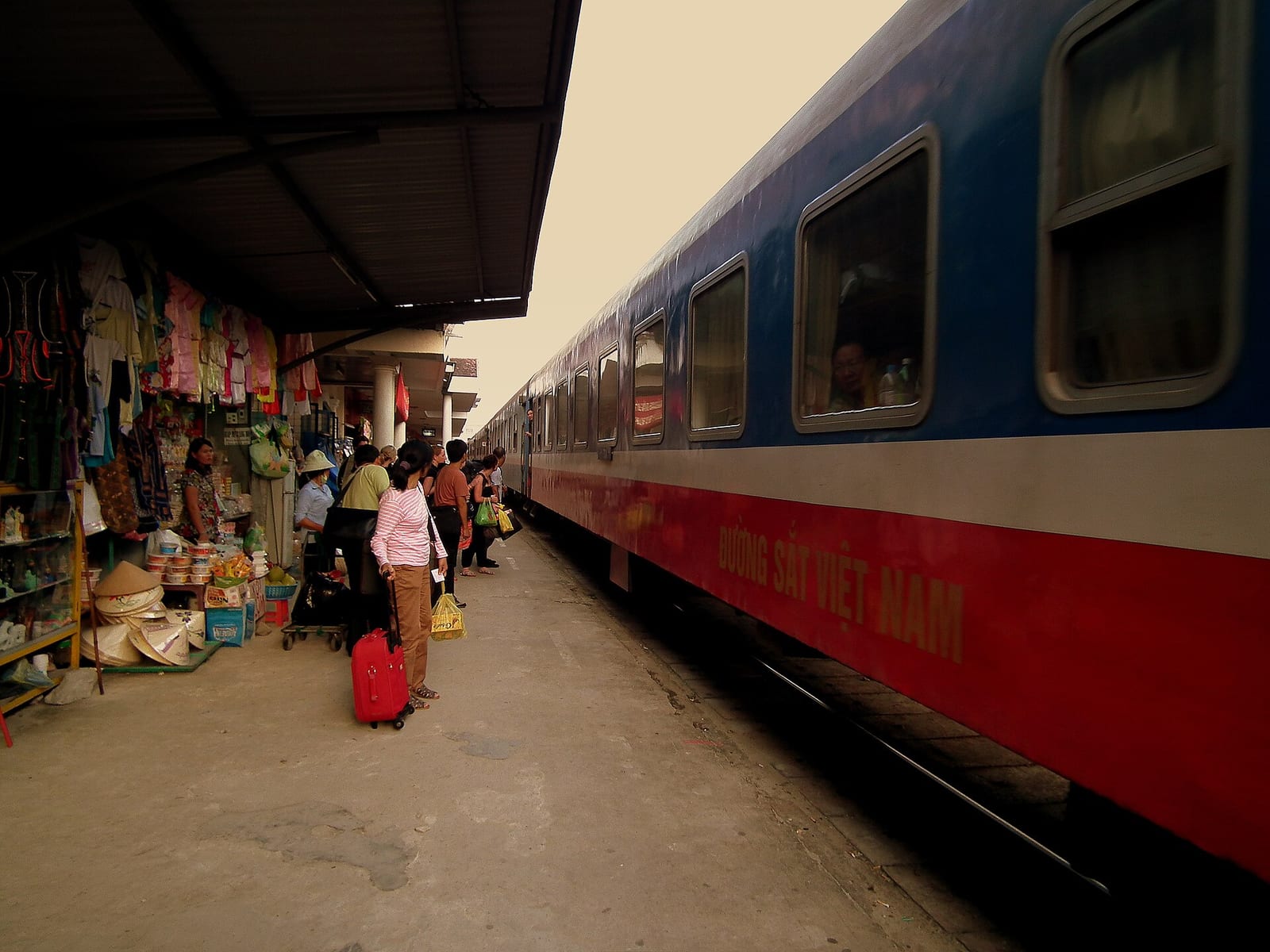
The French finished the Hanoi–Saigon railway on 2 October 1936. War then broke it in half for a generation. It was rebuilt and reopened on 31 December 1976, and the name it carries is the whole point: this train is the country stitched back together.Michael Quick / Wikimedia Commons · CC BY 2.0The whole country, in order
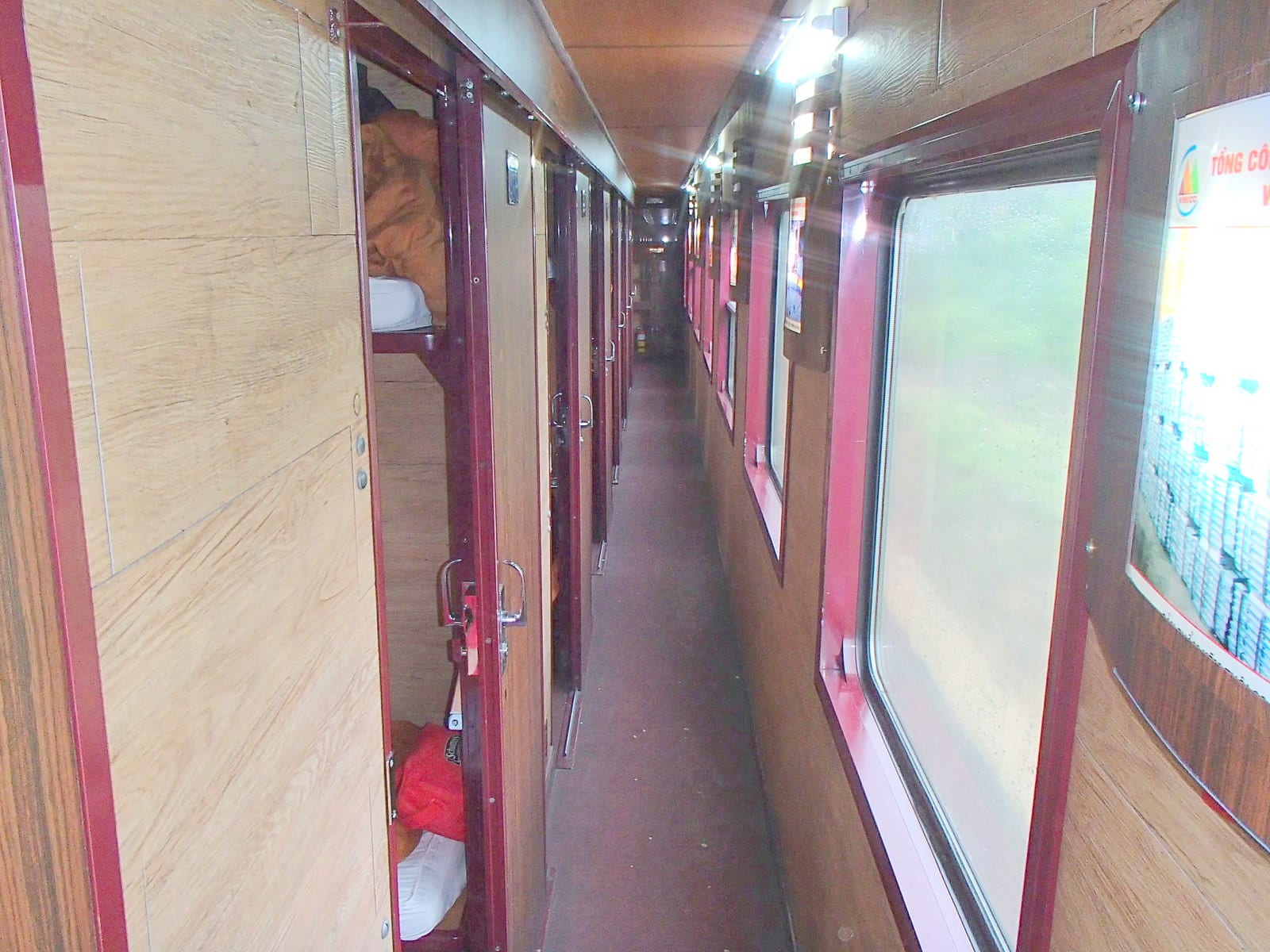
Because Vietnam is long and thin, the line is the country's spine: 1,726 km and 175 stations, from the northern deltas through the imperial capital and the central beaches to the Mekong. Ride it all, or hop down it in stages.A bit of history
Culture & experiences along the way
Peter van der Sluijs / Wikimedia Commons · CC BY-SA 3.0A soft sleeper and thirty hours
Four berths, a flask of hot water, and a very long conversation. Vietnamese trains are sociable in the way planes never are — food gets passed around, and by the second morning you know everyone in the compartment.calflier001 / Wikimedia Commons · CC BY-SA 2.0Eating down the length of Vietnam
The platform is the restaurant. At every stop vendors come along the windows with whatever the region does best — bánh mì in the north, bún bò in Huế, seafood on the central coast, fruit by the bagful in the south.Clay Gilliland / Wikimedia Commons · CC BY-SA 2.0Hop, don't rush
Almost nobody should do all thirty hours in one go. Break it at Huế for the citadel, Da Nang for Hội An, Nha Trang for the beach — the same ticket structure lets you take the country in bites.Timetables
The Reunification Express is not one train but a family of scheduled Vietnam Railways services running the North–South line both ways, several times a day. Southbound trains take odd numbers (SE1, SE3, SE5, SE7), northbound even (SE2, SE4, SE6, SE8).
Real southbound departures from Hanoi (2026 timetable — confirm before travelling):
| Train | Depart Hanoi | Journey time |
|---|---|---|
| SE7 | 06:10 | ~34½ h |
| SE5 | 15:30 | ~34 h |
| SE3 | 19:20 | ~33 h |
| SE1 | 22:00 | ~31½ h (quickest) |
Northbound, SE2/SE4/SE6/SE8 mirror these up the coast from Ho Chi Minh City across a similar spread of morning-to-night departures. All run the full 1,726 km through Vinh, Đồng Hới, Huế, Da Nang, Nha Trang and on to Saigon.
Good to know:
- Do the Hải Vân Pass in daylight. This is the single most important piece of planning: the Huế ⇄ Da Nang leg (~3 hours) over the pass is the scenic climax, and some overnight services cross it in the dark. Pick a train whose timing puts you there by day.
- Sit on the right going south for the sea over the pass — on the left going north.
- The SE trains are the good ones — newer and faster than the older TN locals; book sleepers ahead, and avoid travelling at Tết (Lunar New Year) unless booked far out.
- Typhoon season (roughly September–November) floods the central coast and can close the line through it; build in slack.
Times as of the 2026 Vietnam Railways timetable. Confirm current schedules with the operator — see the Tickets section below.
Tickets
Tickets come from Vietnam Railways, online or at any station, and they are cheap enough that the decision is comfort rather than cost. Hard seat is fine for three hours and punishing for thirty; soft seat is reclining and air-conditioned, and plenty for the daytime legs; hard sleeper is six berths three high, and the top bunk is cheap for a reason; the soft sleeper is four berths with a door that shuts, and is worth it overnight.
Berth position matters. Lower berths cost more and earn it — you get to sit on them during the day, which upper-berth passengers do not. Book months ahead for Tết, or do not travel then at all. Bring đồng in cash for the platform vendors, who are the best part of the catering. And check whether your train does the Hải Vân Pass in daylight before you book anything else: it is the whole reason you are here.
Book your tickets
Hanoi ⇄ Ho Chi Minh City
The full run · soft sleeper
The whole line in one go: about thirty hours, four-berth air-conditioned soft sleepers, and the Hải Vân Pass somewhere in the middle of it. Booked through Vietnam Railways; sleepers sell out on popular dates.
Book Tickets (opens in a new tab, on Vietnam Railways)via Vietnam RailwaysHuế ⇄ Da Nang
The Hải Vân Pass · 3 hours
The best three hours of the line on their own, over the pass and along the coast. Cheap, easy to book and a soft seat is plenty — the single most rewarding short rail journey in Vietnam.
Book Tickets (opens in a new tab, on Vietnam Railways)via Vietnam RailwaysRail Passes
No rail pass covers the Reunification Express. Interrail and Eurail are European schemes, and Vietnam is not among the 33 countries in Interrail's list of covered railway companies. Vietnam Railways sells each journey as a ticket for a named train and berth, online or at the station.
Checked October 2026 against Interrail's list of railway companies (opens in a new tab).
Places to Visit
The line is the itinerary — nearly everything travellers come to Vietnam for sits within a short ride of a station on it.
Three stops that are not below. The Hải Vân Pass, the three hours between Huế and Da Nang, is the finest stretch of the whole railway, but you don't visit it; you ride it, and the carriage window is the only viewpoint that matters. Da Nang itself has the beaches and the Marble Mountains, and is the jumping-off point for Hội An half an hour down the road. And Nha Trang is the central coast's beach city, with the Po Nagar Cham towers on the bluff above the river mouth and islands offshore.
The rest sits in the cards below, north to south. Almost none of it needs a flight, a tour or a car: get off, spend two or three days, and get back on.
 Richard Mortel from Riyadh, Saudi Arabia / Wikimedia Commons · CC BY 2.0 · cropped
Hanoi
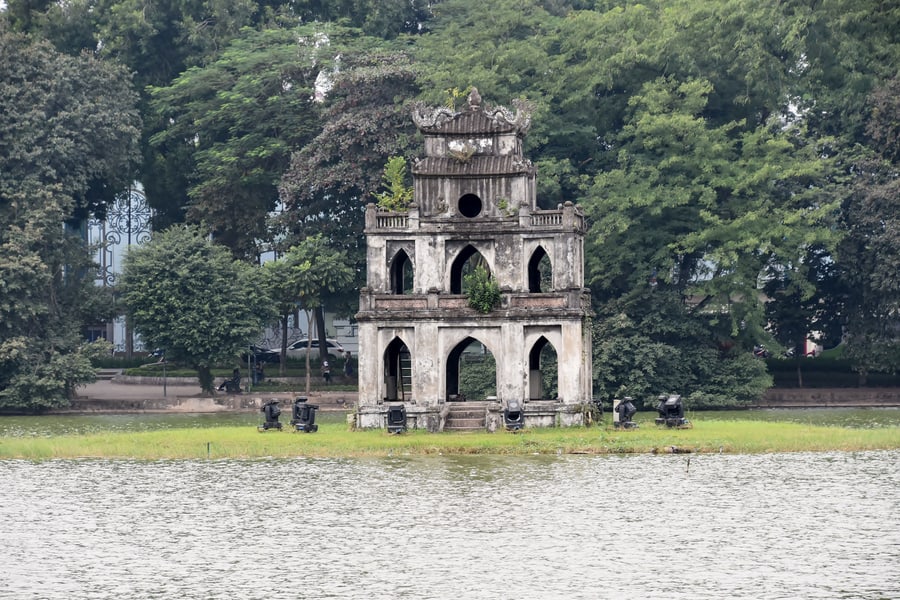
Hoàn Kiếm — the Lake of the Returned Sword — is the still centre of the city, with the Tháp Rùa or Turtle Tower standing on its islet and the red Thê Húc bridge at the northern end. Around it lies the reason to give Hanoi two days rather than one: an Old Quarter of narrow shophouses whose streets are still named for the trades that worked them, thick with motorbikes and pavement kitchens. Hanoi Train Street is nearby.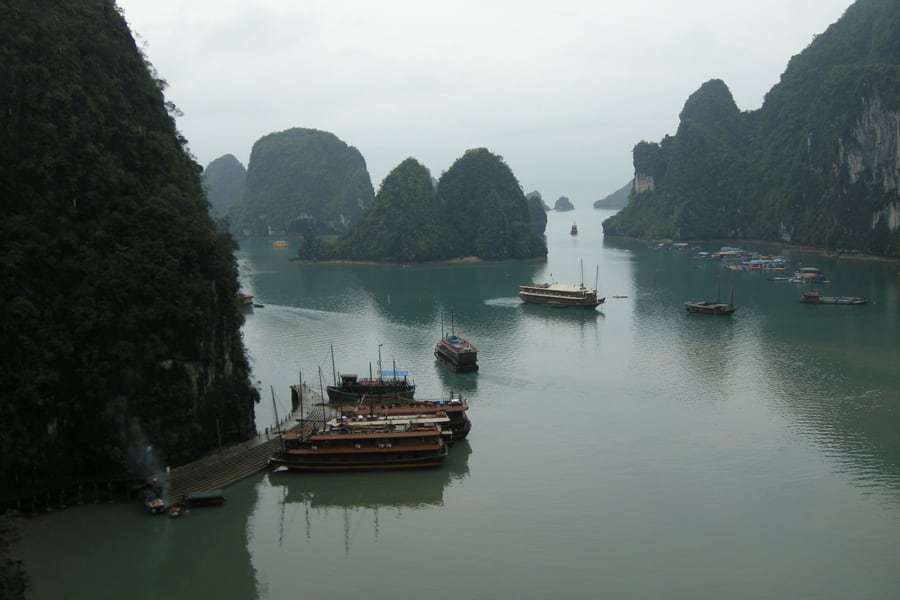 © Vyacheslav Argenberg / http://www.vascoplanet.com/ · CC BY 4.0 · cropped
Hạ Long Bay
Not on the railway, and worth breaking the journey for anyway. Hạ Long — "descending dragon" — covers around 1,553 km² of limestone towers and islets rising sheer out of jade water, and it is the photograph everyone has already seen. Boats run overnight cruises and day trips from the shore. Its quieter neighbours, Bái Tử Long to the north-east and Cát Bà island to the south-west, are the same drowned karst landscape.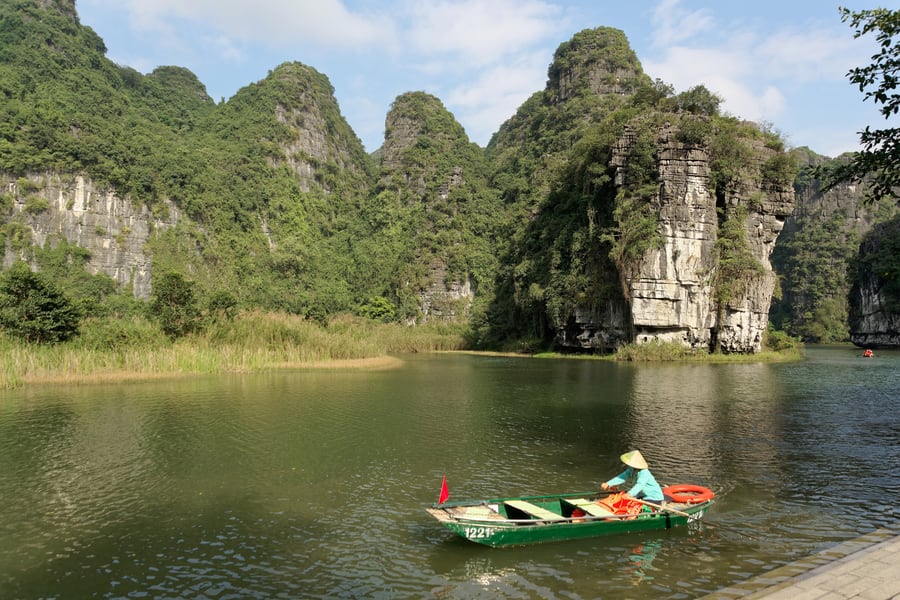 Jakub Hałun / Wikimedia Commons · CC BY 4.0 · cropped
Ninh Bình
An easy stop south of Hanoi and, for many people, the better version of Hạ Long: the same limestone towers, but standing in flooded paddy fields, and reached by a wooden rowing boat rather than a cruise ship. The Tràng An Landscape Complex — Tràng An itself, Tam Cốc–Bích Động and the old capital of Hoa Lư — was inscribed by UNESCO on 23 June 2014 and covers 12,252 hectares. Boats thread the flooded caves.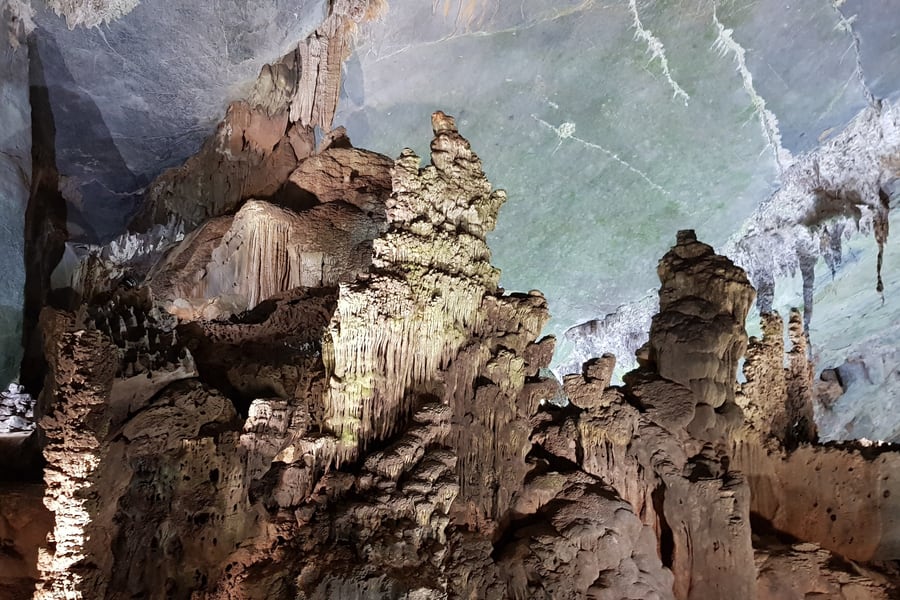 Andre Hospers / Wikimedia Commons · CC BY 4.0 · cropped
Phong Nha
Reached from Đồng Hới, and holding some of the largest caves on earth. Phong Nha–Kẻ Bàng protects one of the world's two biggest karst regions, with around 300 caves and grottoes and a core zone of 858 km²; a 2009 survey put the mapped passage at some 126 km, and much of the massif is still unexplored. Sơn Đoòng is the famous one — large enough to hold its own jungle, its own river and its own weather.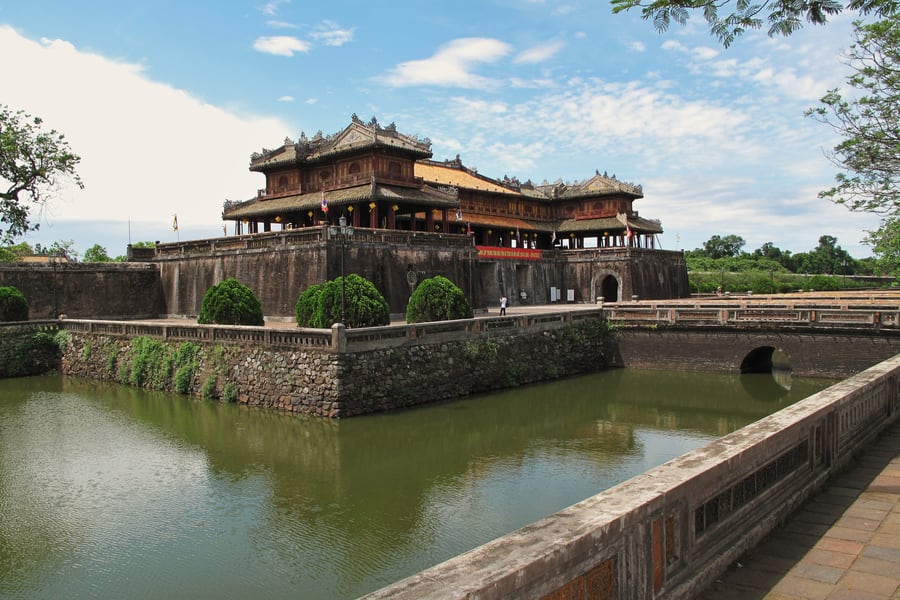 Francisco Anzola / Wikimedia Commons · CC BY 2.0 · cropped
Huế
The Nguyễn emperors ruled from here, and the walled citadel is still the finest thing on the line. The Imperial City was begun in 1804 under Gia Long and enlarged to its present scale in 1833; the Ngọ Môn gate over the moat is the ceremonial way in, with the Forbidden Purple City behind it and the emperors' tombs scattered upriver. It was badly damaged in the wars, inscribed by UNESCO in 1993, and is still being restored.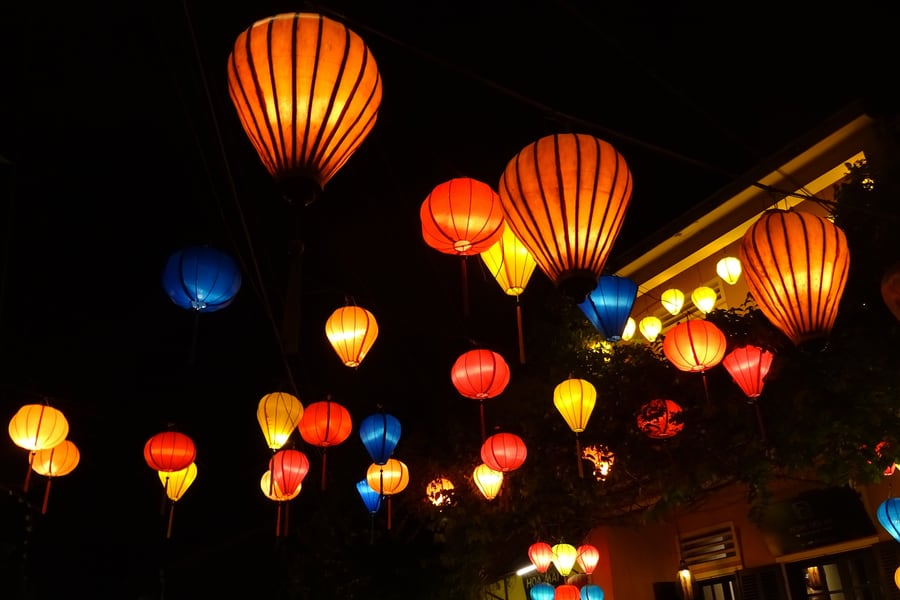 Christophe95 / Wikimedia Commons · CC BY-SA 4.0 · cropped
Hội An
Half an hour from Da Nang and worth two days of anyone's trip. Hội An was a working international port from the 15th to the 19th century, and the old town still holds 1,360 listed monuments, among them 1,068 preserved houses and the covered Japanese Bridge — inscribed by UNESCO on 12 December 1999. Come back after dark, when the silk lanterns go on over the streets and the riverfront and the traffic is banned.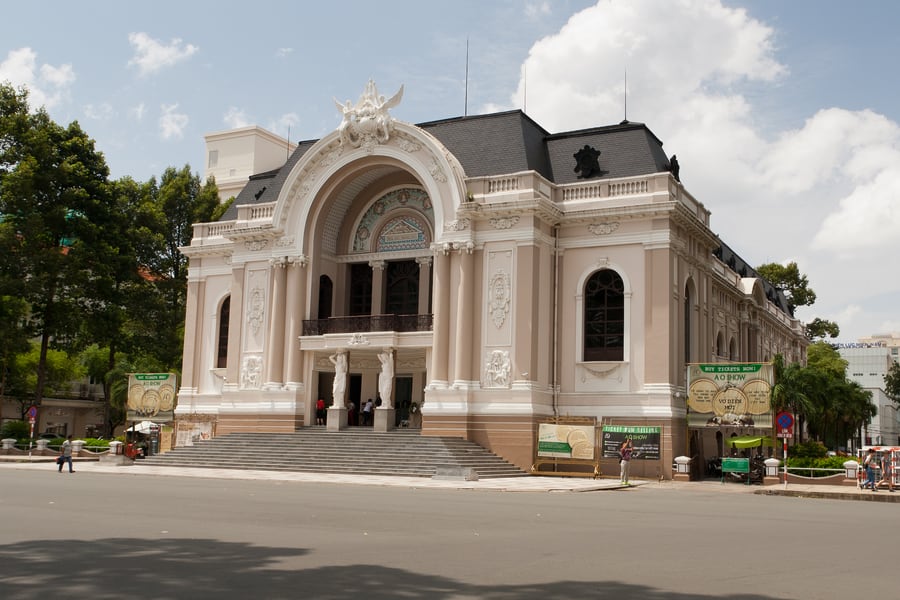 Ekrem Canli / Wikimedia Commons · CC BY-SA 3.0 · cropped
Ho Chi Minh City
Saigon's colonial core is walkable in an afternoon, and the Opera House of 1900 is its centrepiece — a 500-seat Beaux-Arts theatre that served as the chamber of South Vietnam's National Assembly from 1956 to 1967 before going back to being a theatre. The Central Post Office and the cathedral stand a few streets away, the War Remnants Museum is a harder and necessary hour, and the Mekong Delta begins an hour beyond.Where to Sleep
On the train, the decision is the berth — and over thirty hours it matters more than the money saved.
- Soft sleeper — four berths, air-conditioning, a door that closes. The obvious choice overnight, and still inexpensive by any international standard. Ask for a lower berth: uppers are cheaper but you can't sit up on them, and you'll spend the daylight hours perched on someone else's bed or standing in the corridor.
- Hard sleeper — six berths, three tiers. Cheaper, hotter, more sociable, and perfectly survivable.
- Soft seat — fine for the daytime legs, including the pass. Don't try it for a full night.
Off the train, the line hands you the country's best bases:
- Huế — small hotels along the Perfume River, and the citadel on the doorstep. The natural first break coming south.
- Hội An (via Da Nang) — the one place to give more nights than you planned: an old merchant town of lanterns and tailors, with a beach nearby. Da Nang has the station and the high-rises; Hội An has the charm.
- Nha Trang — beach hotels of every grade, and a good place to do nothing for a day.
- Hanoi and Ho Chi Minh City — the bookends, with everything from hostels to grand old colonial piles.
Timing: March–April and September–November are broadly the best, though a country this long never has one good season everywhere at once. Avoid Tết, when every berth in Vietnam is spoken for, and treat the typhoon months on the central coast with respect — the Hải Vân stretch is exactly the part that floods.
Questions or corrections
Planning this trip and stuck on something, or spotted a time, fare or detail that has changed? Send us a message about Reunification Express. We read every one, and we update this page when something has changed.