Rocky Mountaineer
Rocky Mountaineer
- Distance~1,000 km
- Duration2 days
- Best seasonmid-Apr to mid-Oct
Introduction
There is a moment, somewhere east of Kamloops, when the last of the ranchland falls away and the Rockies simply arrive — a wall of rock and snow filling the whole curve of the glass dome above your head. A glass of wine is at your elbow, a Host is midway through a story about the men who blasted this railway through the mountains, and the only thing asked of you is that you keep looking out of the window.
That, in a sentence, is the Rocky Mountaineer. It is not the fastest way across the Canadian Rockies, nor the cheapest — it is simply one of the most beautiful, a two-day glide through canyons, along wild rivers and over the Continental Divide, run entirely in daylight so that not a single view is lost to the dark.
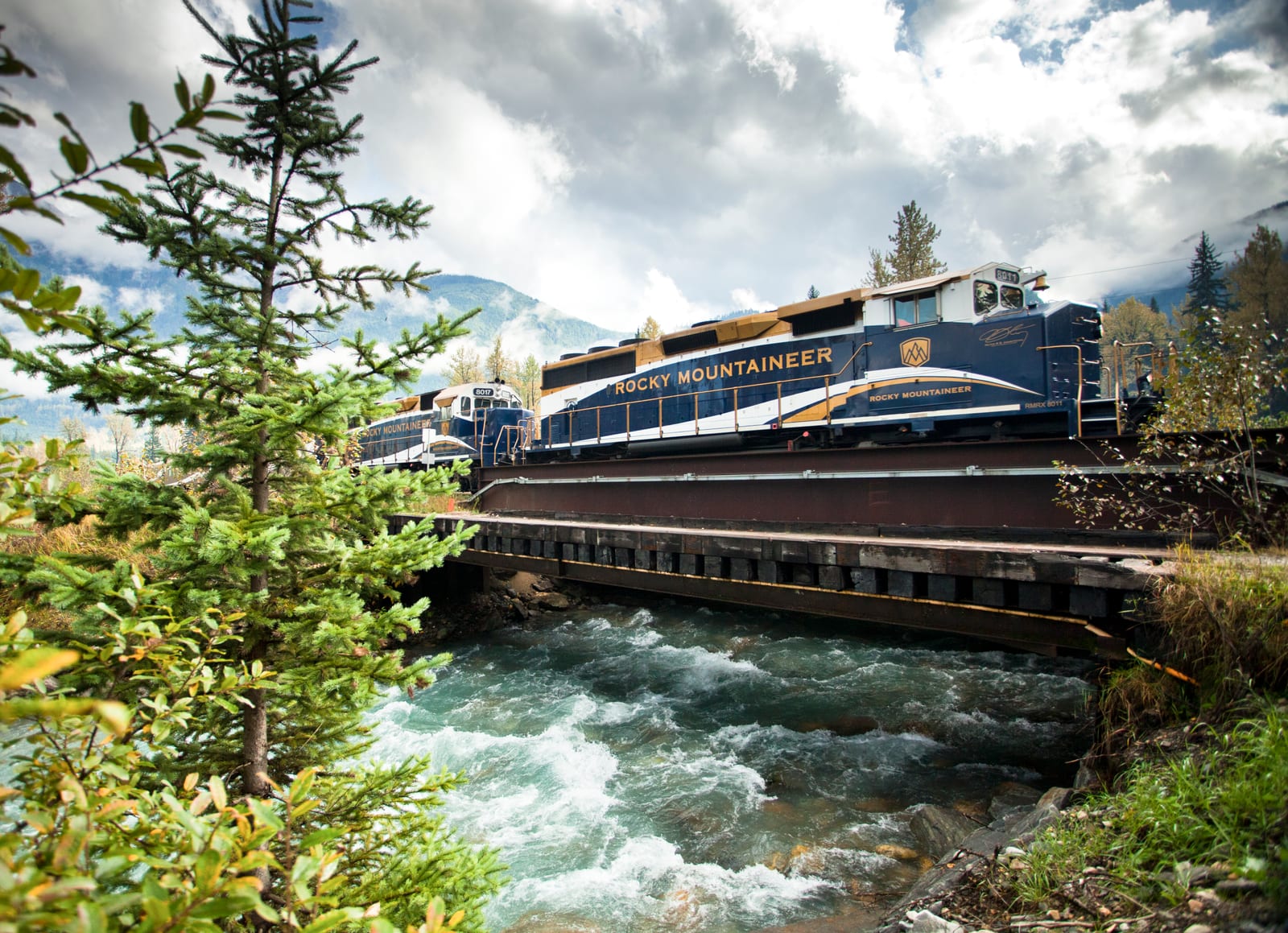
The flagship route, First Passage to the West, follows the historic line that first linked Canada from coast to coast. It runs between Vancouver and the mountain resort towns of Banff and Lake Louise, and it is the only passenger service left on these rails — which means the scenery, the Spiral Tunnels and the summit of Kicking Horse Pass are, for two unhurried days, yours alone.
The Journey
The journey unfolds over two days, with a night in a hotel in between — because the train never runs after dark, you sleep on solid ground and wake to a fresh day of scenery.
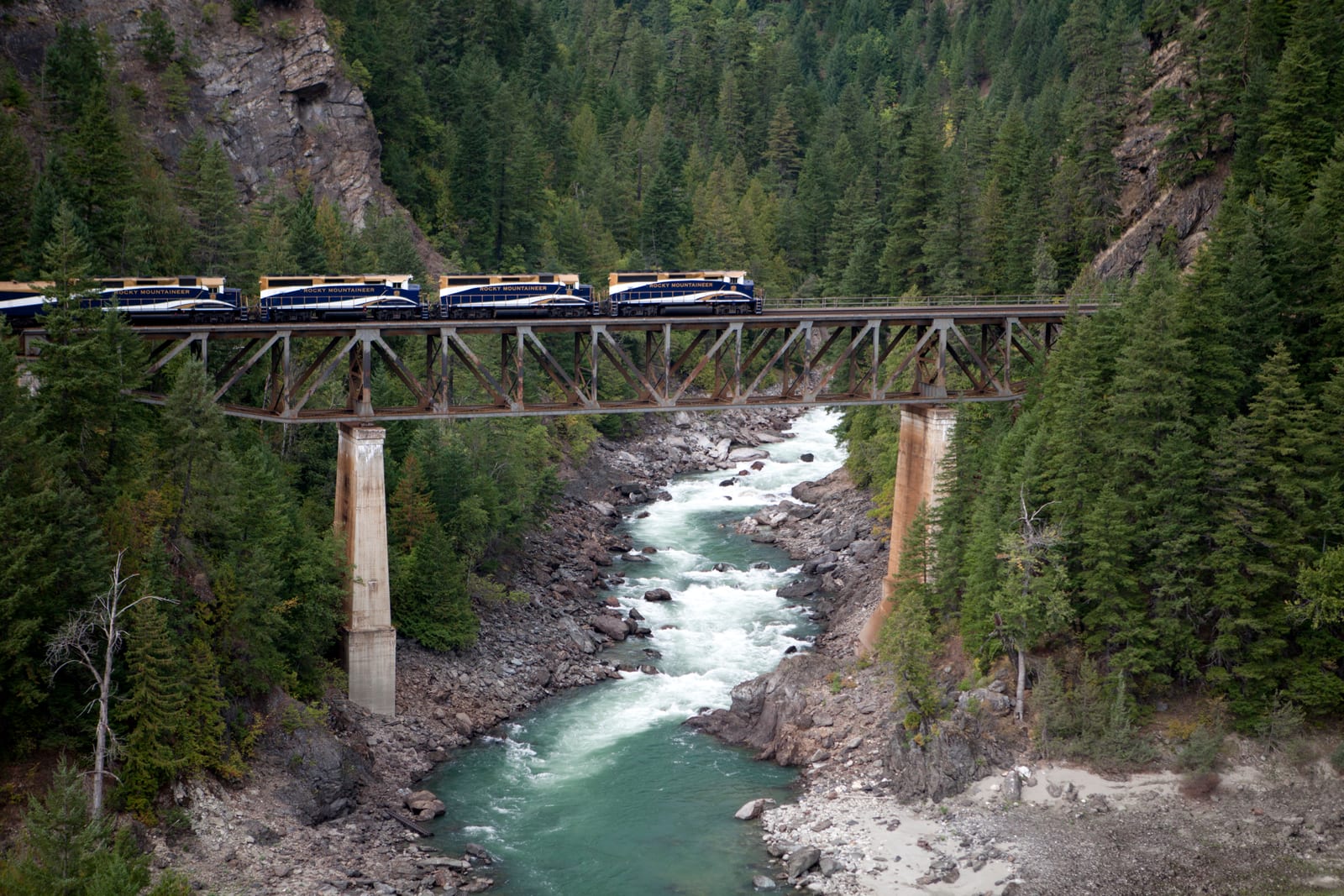
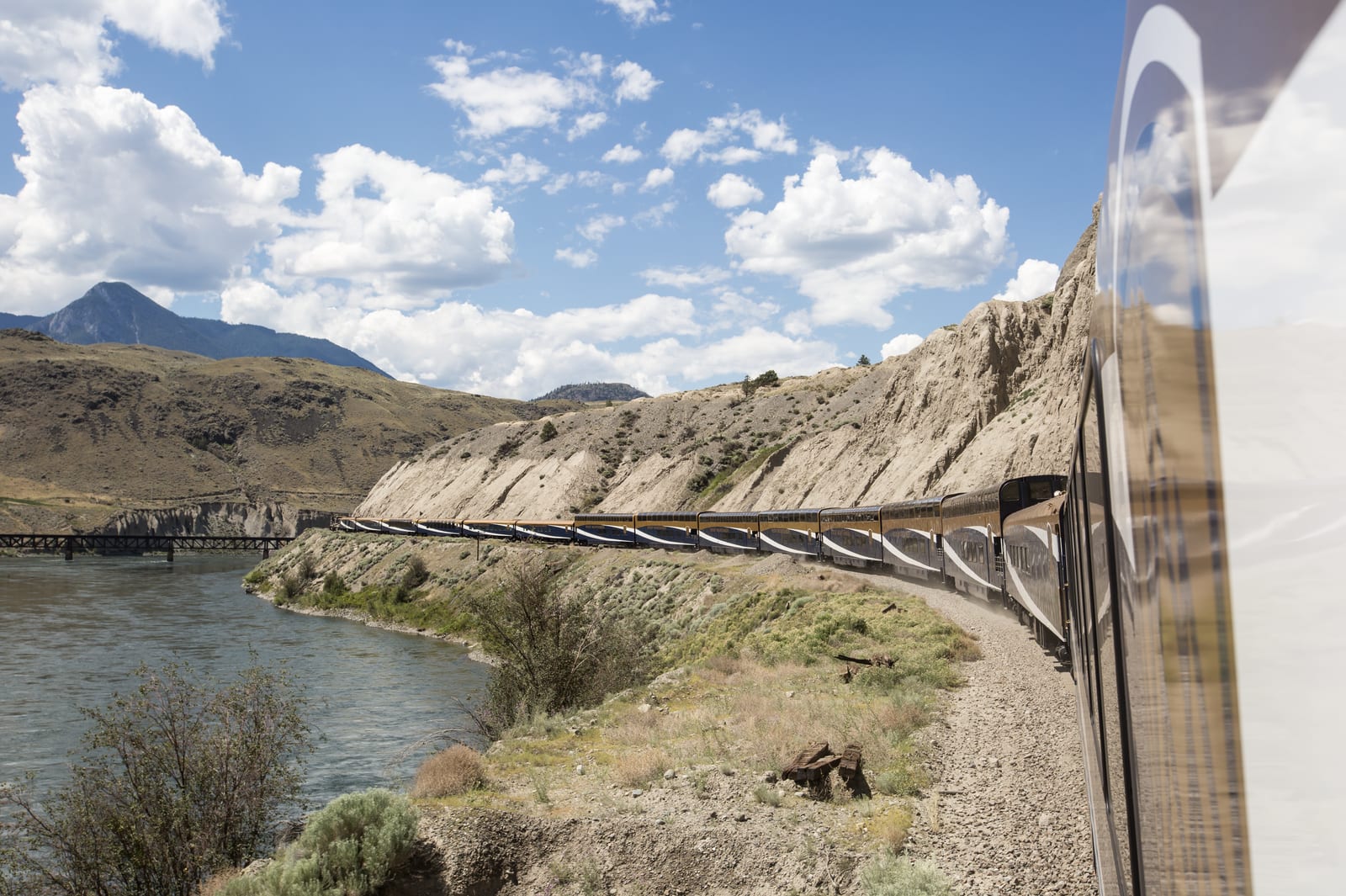
Day one begins at the Rocky Mountaineer's own station in Vancouver. The city's glass towers give way to the fertile Fraser Valley, and then the mood changes: the Coast Mountains close in, the mighty Fraser River appears alongside, and the line threads the walls of the Fraser Canyon. The dramatic climax is Hell's Gate, where the entire river is squeezed through a gap barely 35 metres wide and hurls itself through in white fury far below the track. Breakfast and a three-course lunch are served as the canyon slides past, and by evening the train rolls into Kamloops, a sun-baked town in British Columbia's dry interior, for the overnight stop.
Day two is the mountain day. Leaving Kamloops, the train winds east through the lake country of the Shuswap before beginning the long climb into the Rockies. This is where the railway's engineering genius is on full display: the Spiral Tunnels, a pair of looping bores drilled into the mountainsides in 1909 to soften the punishing gradient of the Big Hill — on a long enough train, you can watch your own locomotive cross the valley below you. The line crests the Continental Divide at Kicking Horse Pass, 1,627 metres up, and coasts down past landmarks like Castle Mountain before arriving in Banff or Lake Louise, deep in the heart of Canada's first national park.
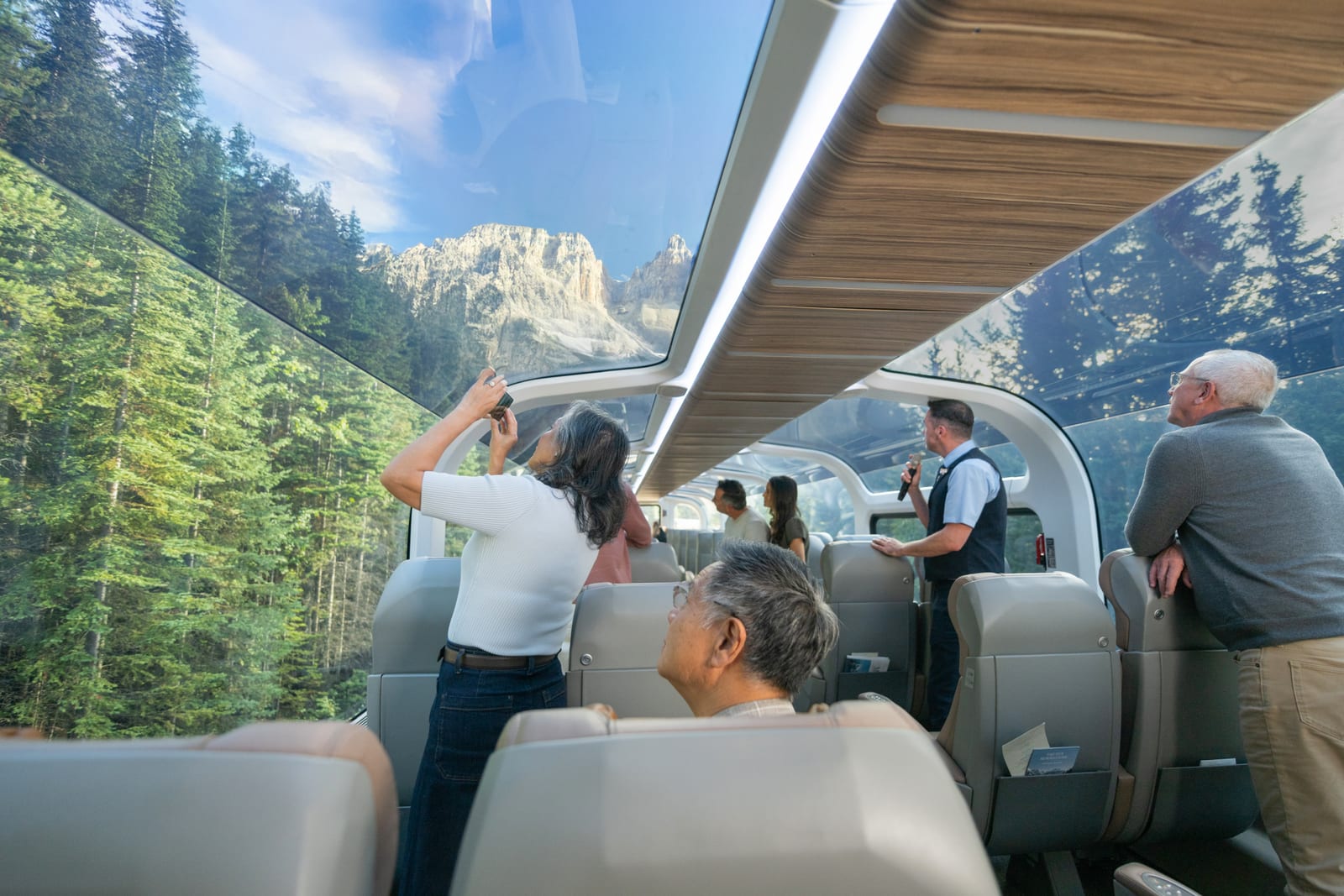
Throughout, the train is built entirely around the view. Every carriage is a custom glass-dome coach, its windows curving up and over so that the peaks are always in frame, with an outdoor viewing area where you can feel the mountain air and hear the river.
Along the route
 Chris Woodrich / Wikimedia Commons · CC BY-SA 4.0
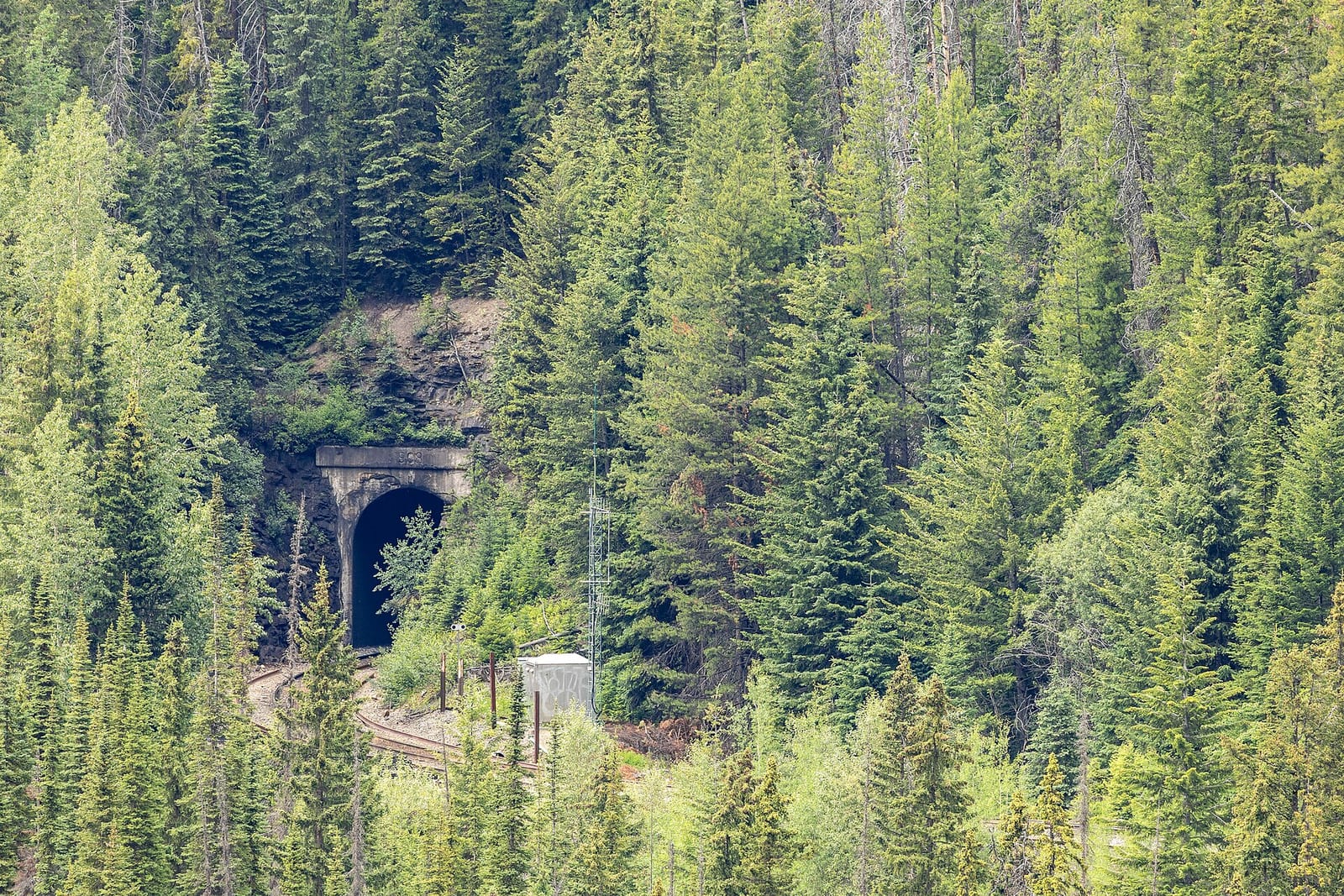
The Spiral Tunnels
To tame the notorious Big Hill, engineers drilled two looping tunnels back into the mountains in 1909. On a long train you can watch your own locomotive emerge from the rock below you — a piece of railway theatre found in only a handful of places on earth.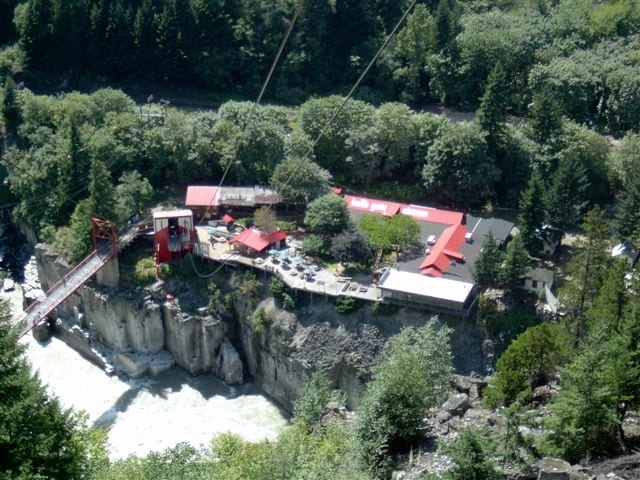 Kamloops / Wikimedia Commons · CC BY-SA 3.0
Hell's Gate
In the Fraser Canyon the river narrows to a 35-metre throat and thunders through in white fury. The train hugs the rock ledges above it — the wildest water of the whole route.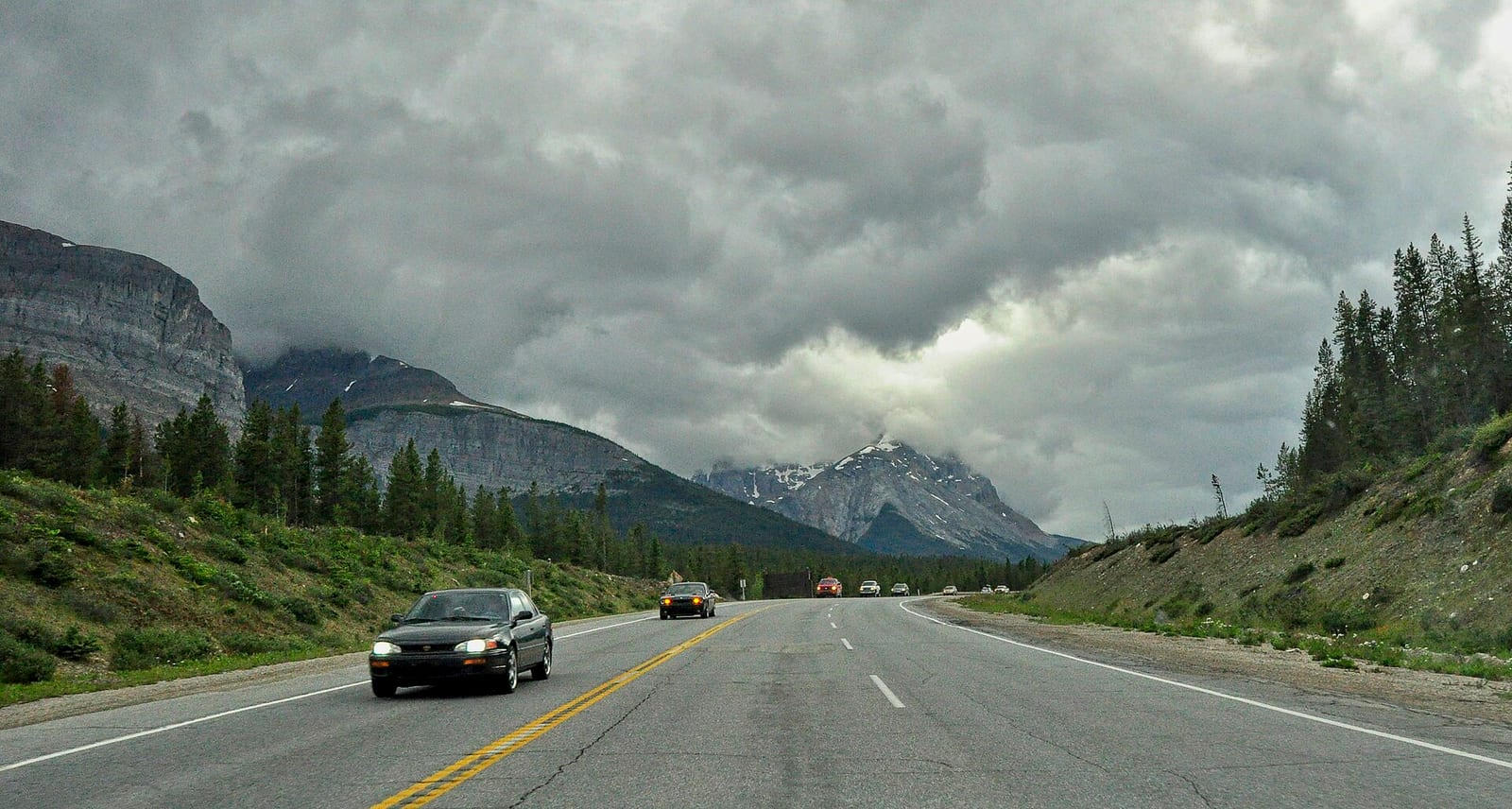 Mykola Swarnyk / Wikimedia Commons · CC BY-SA 3.0
Kicking Horse Pass
On the morning of day two the line climbs to the Continental Divide at 1,627 m — the literal high point of the trip, where rivers begin to run toward the Atlantic rather than the Pacific.A bit of history
Culture & experiences along the way
Rocky MountaineerDome cars & fine dining
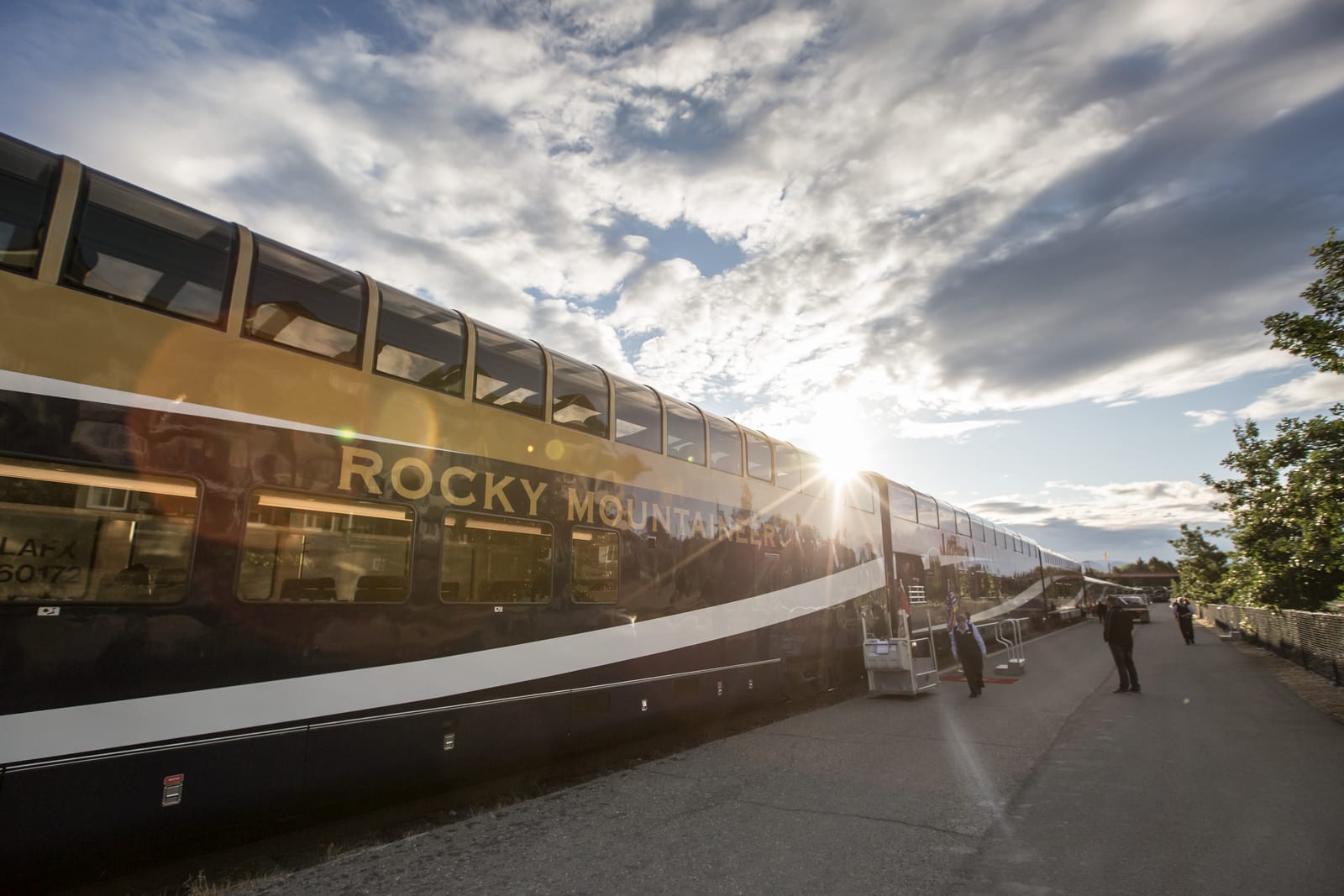
Every coach is a custom glass-dome car with panoramic views and an outdoor viewing area. GoldLeaf adds a bi-level dome with a dedicated dining room below; both classes serve regionally-inspired breakfasts and multi-course lunches at your seat or table.Rocky MountaineerBanff & Lake Louise
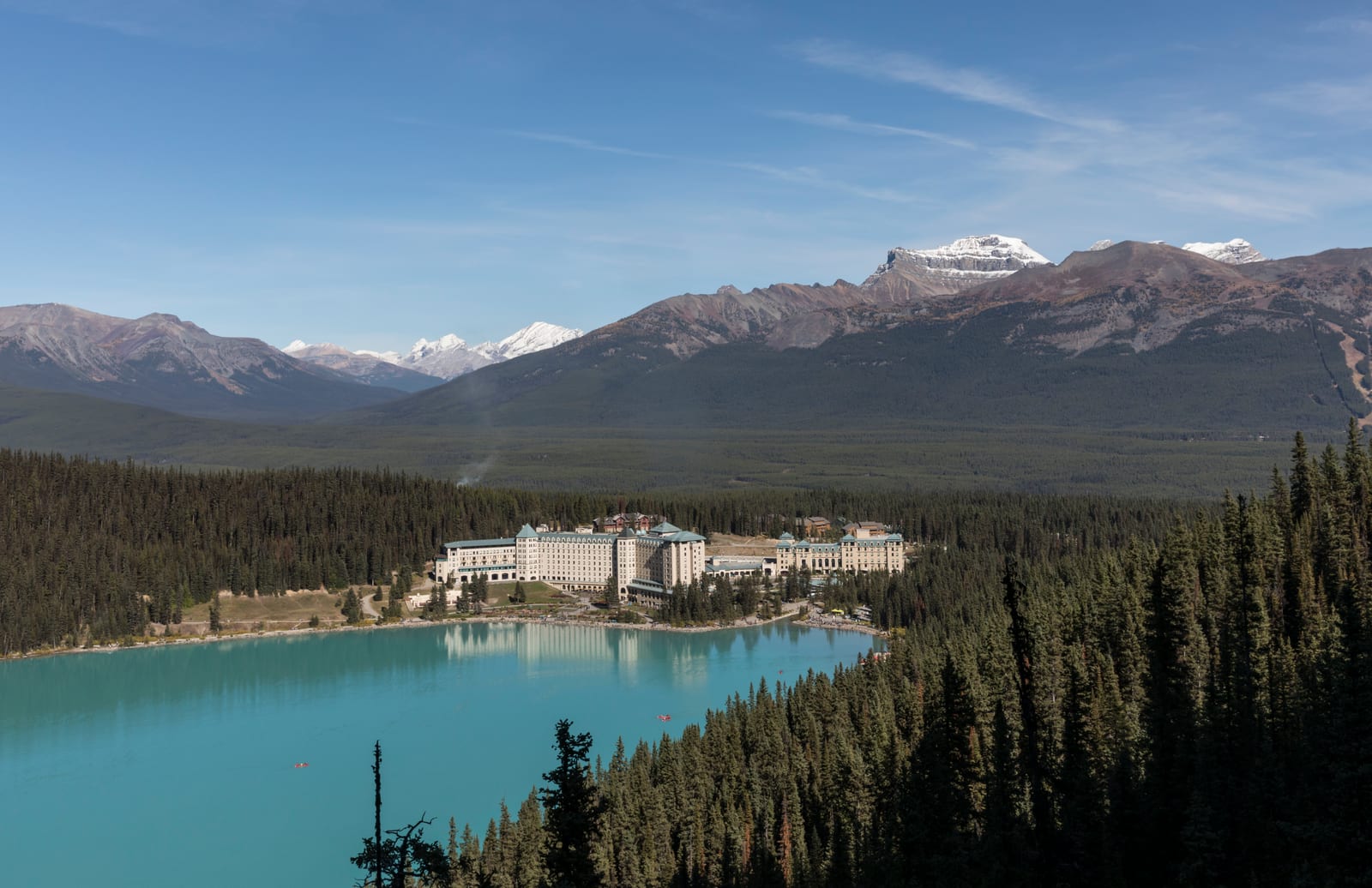
The eastern end of the line drops you into the heart of the Rockies — turquoise lakes, hot springs and the mountain resort towns of Banff and Lake Louise, gateways to Canada's oldest national park.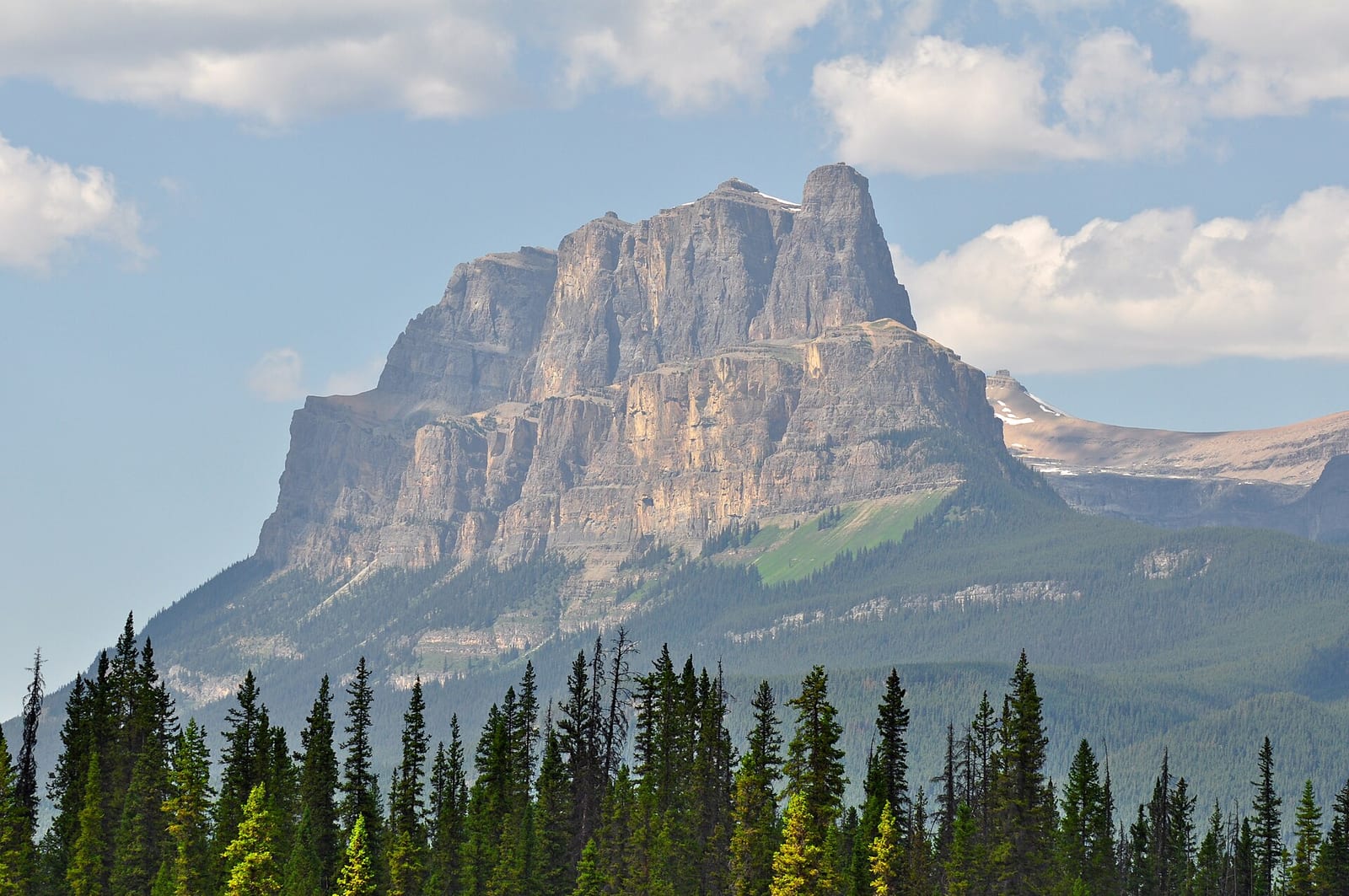 Stuart / Wikimedia Commons · CC BY 2.0
An overnight in Kamloops
Because the train never runs after dark, you break the journey with a night in Kamloops, a sunny ranching town in BC's dry interior — a chance to stretch your legs by the river before the mountains begin in earnest.Timetables
The Rocky Mountaineer runs a seasonal timetable — in 2026, 13 April to 11 October — with departures on set days rather than daily. On First Passage to the West the train leaves Vancouver for Banff/Lake Louise on Mondays and Fridays, and Banff/Lake Louise for Vancouver on Wednesdays and Sundays (twice weekly each way), always with a morning departure. It is sold as a package, not a point-to-point ticket, so confirm exact dates on the operator's site when you book.
The rhythm of First Passage to the West, however, is always the same two-day shape:
| Day | Route | On board |
|---|---|---|
| Day 1 | Vancouver → Kamloops | Morning departure; Fraser Valley, Fraser Canyon & Hell's Gate; breakfast and a three-course lunch; arrive Kamloops in the evening |
| Overnight | Kamloops | Hotel stay (included in the package) |
| Day 2 | Kamloops → Banff / Lake Louise | Shuswap lakes, the climb into the Rockies, Spiral Tunnels and Kicking Horse Pass; breakfast and lunch on board; afternoon arrival in the mountains |
Every package runs in both directions — you can begin in Vancouver and finish in the Rockies, or start in Banff or Lake Louise and travel west to the coast. Longer "Circle" journeys combine First Passage to the West with a second route for a round trip out of Vancouver.
Season and departure days as of 2026 (some dates adjusted around the FIFA World Cup in Vancouver). Confirm current dates with the operator — see the Tickets section below.
Tickets
The Rocky Mountaineer is a premium experience, sold as a package that bundles the rail journey with your Kamloops hotel and, on longer itineraries, nights and activities in Vancouver and the Rockies. Fares are quoted per person and vary by season, direction, length of trip and the market you book from, so rather than quote a figure that may be out of date, we point you straight to the operator for a live price.
There are two classes of service, and the choice between them is really a choice of how much luxury:
- SilverLeaf — a single-level glass-dome coach with over-height windows, an outdoor viewing area, and hot, regionally-inspired meals served at your seat.
- GoldLeaf — a bi-level carriage with a full glass dome on the upper deck, a private outdoor balcony, and a dedicated dining room downstairs where multi-course meals are prepared fresh on board.
Both share the same route and the same views; GoldLeaf simply adds space, a separate dining room and that extra sweep of glass overhead. Because departures sell out months ahead in peak summer, it pays to book early.
Book your tickets
SilverLeaf Service
Single-level glass dome
A single-level glass-dome coach with over-height windows, an outdoor viewing area and hot, regionally-inspired meals served at your seat. The classic Rocky Mountaineer experience.
Book Tickets (opens in a new tab, on Rocky Mountaineer)via Rocky MountaineerGoldLeaf Service
Bi-level dome + dining room
The premium option: a bi-level carriage with a full glass dome upstairs, a private outdoor balcony, and a dedicated dining room downstairs for freshly prepared multi-course meals.
Book Tickets (opens in a new tab, on Rocky Mountaineer)via Rocky MountaineerRail Passes
No rail pass covers the Rocky Mountaineer. It is sold as a package, with the rail journey, hotel nights and, on longer trips, activities together. It is not a VIA Rail train. Interrail and Eurail are European schemes, and Canada is not among the 33 countries in Interrail's list of covered railway companies (opens in a new tab).
Checked October 2026 against Interrail's list of covered railway companies (opens in a new tab).
Places to Visit
The train is only half the trip. Its two ends and its overnight stop each deserve time of their own, and the mountain parks at the eastern end repay far more than the single day you spend crossing them.
Two practical notes before you plan. Moraine Lake has been closed to private vehicles year-round since 2023, so reaching it now means booking a Parks Canada shuttle rather than driving up; and the Yoho Valley road to Takakkaw Falls stays snowbound until roughly mid-June, which puts the falls out of reach at the very start of the Rocky Mountaineer season.
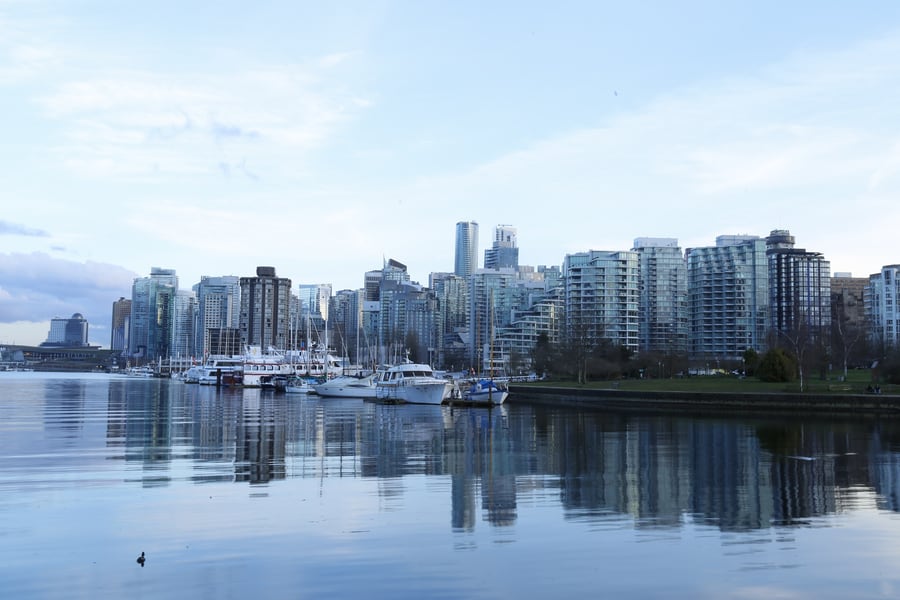 Ueutyi / Wikimedia Commons · CC BY-SA 4.0 · cropped
Vancouver
Give the coast two days before you board. Stanley Park is 405 hectares of rainforest on a peninsula at the city's edge — a fifth larger than New York's Central Park, with around half a million trees, some of them 76 m tall, and an 8.8 km seawall you can walk or cycle right round. It opened in 1888 on ground that six companies had spent two decades logging. From the Coal Harbour side the towers rise straight out of the water.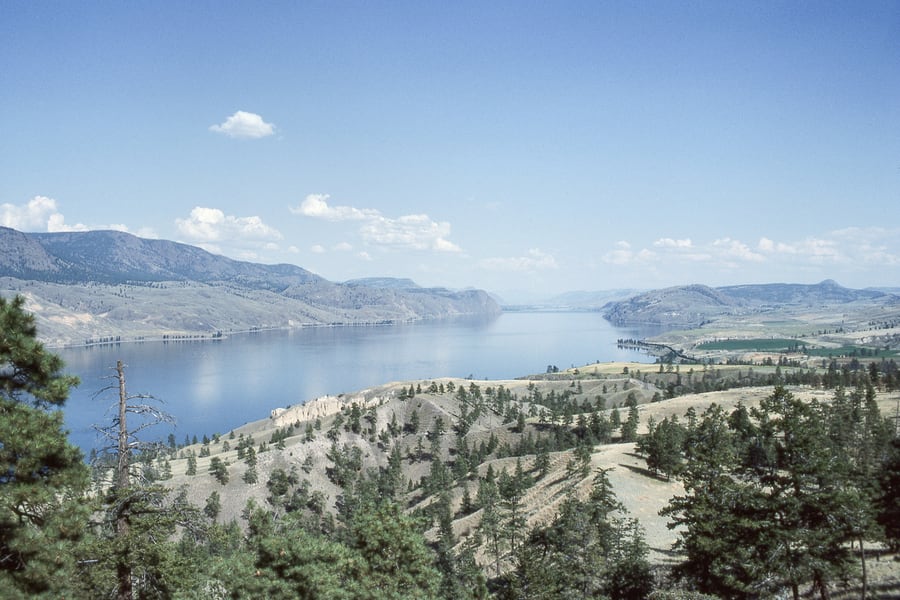 Giorgio Galeotti / Wikimedia Commons · CC BY-SA 4.0 · cropped
Kamloops
The train never runs after dark, so day one ends here. Kamloops sits at 345 m where the North and South Thompson rivers meet — its Secwepemc name, Tk'əmlúps, means "meeting of the waters" — and it is genuinely semi-arid, taking barely 278 mm of precipitation a year. The last stretch in runs the length of Kamloops Lake between bare, sun-scorched hills: not the British Columbia most people picture, and the reason the ranching came.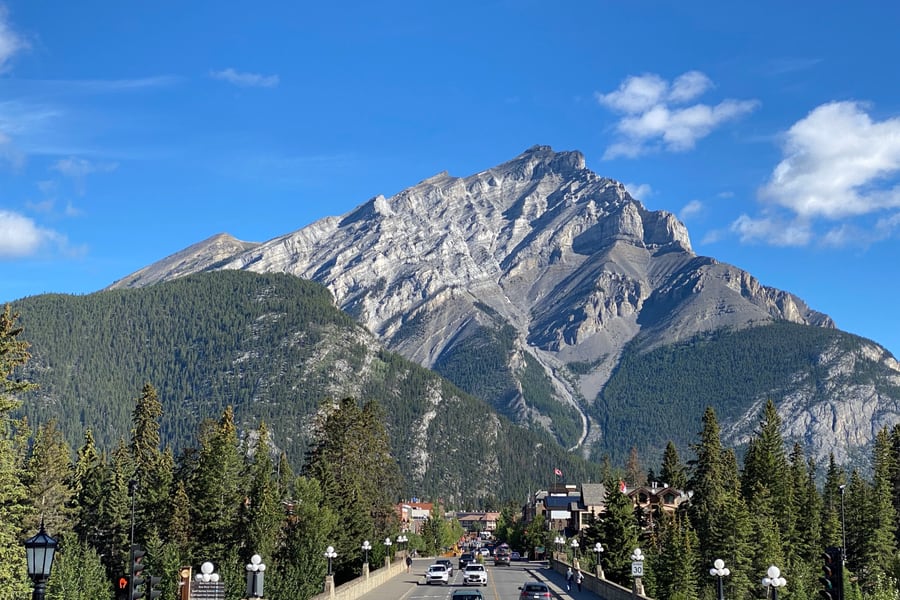 Adam Bishop / Wikimedia Commons · CC BY-SA 4.0 · cropped
Banff
Banff exists because of this railway. In 1883 three CPR workers found hot springs on the flank of Sulphur Mountain; two years later Canada fenced off 26 km² around them, and that reserve grew into the country's first national park. Cascade Mountain, 2,998 m, closes the end of Banff Avenue like a stage set, and the gondola lifts you to a ridge walk at 2,281 m. Elk really do wander the streets — and only people who work here may live here.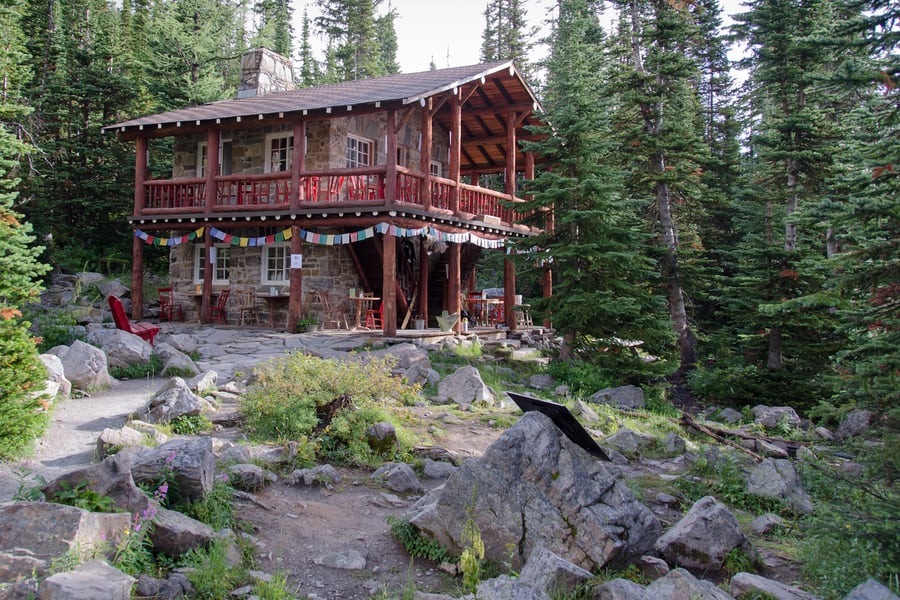 Florian Fuchs / Wikimedia Commons · CC BY 3.0 · cropped
The Plain of Six Glaciers
You will have seen Lake Louise from the train. Walk past it instead: about 5.5 km along the shore and up the moraine brings you to a stone-and-log teahouse the CPR built in 1924, on the suggestion of its Swiss guide Edward Feuz, as a rest stop for climbers bound for the Abbot Pass hut — a hut Parks Canada had to dismantle in 2022 once thawing permafrost undercut it. The teahouse still bakes and brews all summer, with no road in.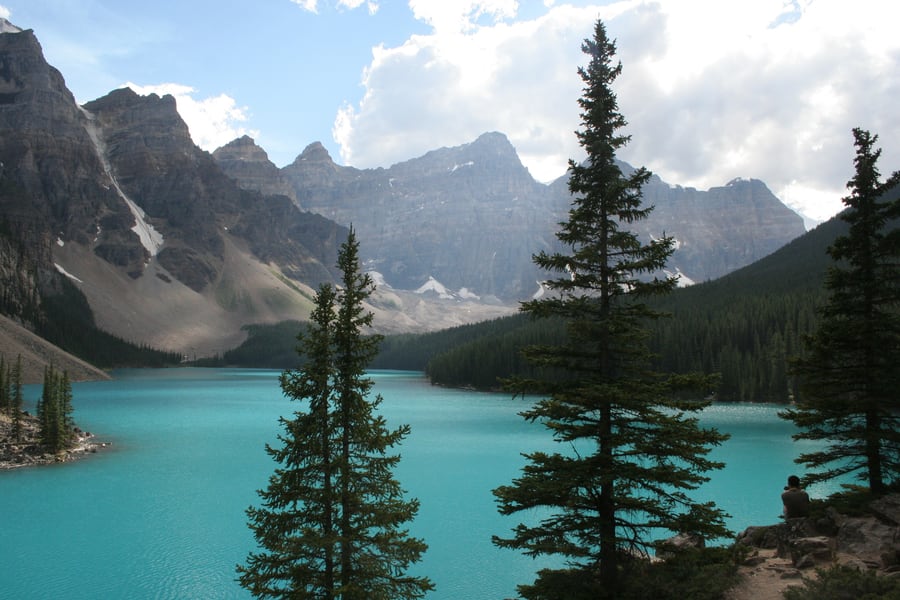 Tony Hisgett / Wikimedia Commons · CC BY 2.0 · cropped
Moraine Lake
The access rule first, because it catches people out: Moraine Lake has been closed to private vehicles year-round since 2023. You arrive by Parks Canada shuttle, by transit or with a commercial operator — or you cycle the 10 km road. Waiting at the top is 50 hectares of meltwater at 1,884 m under the Ten Peaks, the view Canada printed on the back of its 1969 and 1979 twenty-dollar notes. Snow-fed, so the colour is not full until June.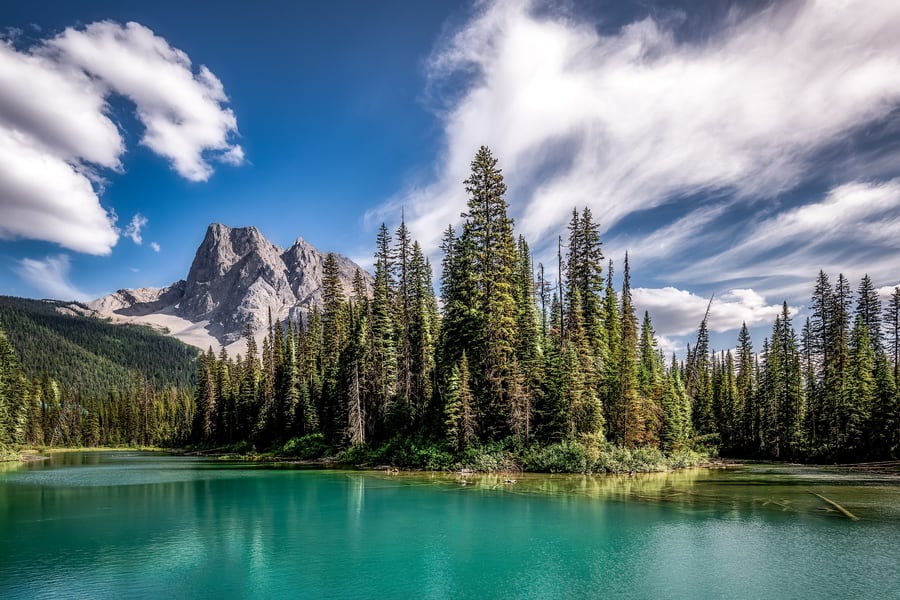 Bernd Thaller / Wikimedia Commons · CC BY 2.0 · cropped
Emerald Lake
Yoho's best-known lake, found by the guide Tom Wilson in 1882 while he was chasing escaped horses. The colour is neither dye nor minerals but rock flour — glacial silt ground so fine it hangs in the water and throws back the green end of the light. The peak behind is Mount Burgess, which gave its name to the Burgess Shale, the 1909 fossil find that rewrote early animal life and helped make these parks World Heritage in 1984.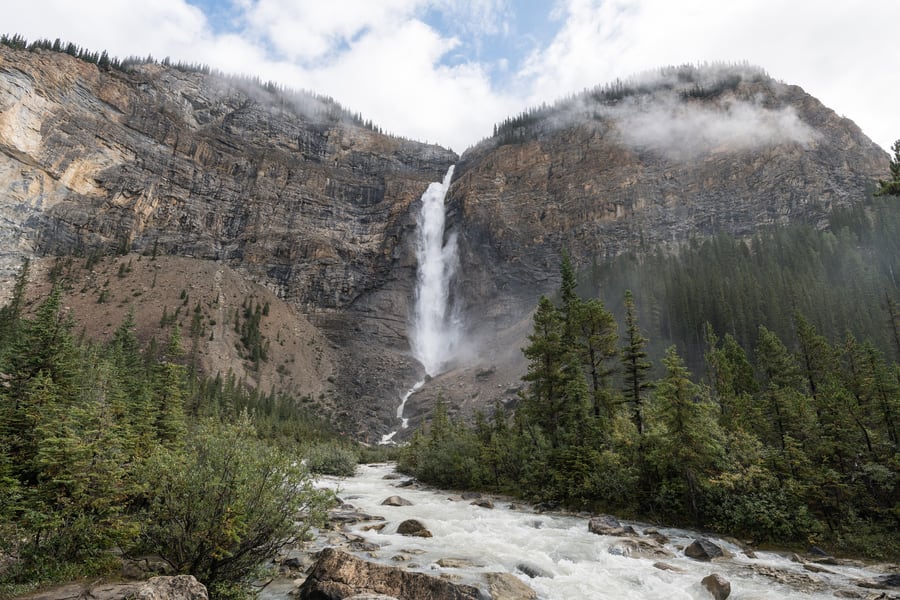 DXR / Wikimedia Commons · CC BY-SA 4.0 · cropped
Takakkaw Falls
Meltwater off the Daly Glacier launches clear of a hanging valley in one long white ribbon: the main plunge was surveyed at 254 m in 1985, with the full drop put anywhere between 302 and 373 m. It is not Canada's second-highest waterfall, whatever you are told — some 55 are taller. It is magnificent, which is what the name means in Cree; the CPR's William Van Horne proposed it and it stuck in 1904. The road in opens about mid-June.Where to Sleep
One night's accommodation — in Kamloops, between the two days of travel — is included in every First Passage to the West package, and the Rocky Mountaineer arranges it for you; there is nothing to book yourself for that stop.
At the ends of the line you are spoilt for choice, from grand railway hotels to simple lodges:
- In the Rockies — the historic Canadian Pacific "castles" are the showpieces: the Fairmont Banff Springs, a baronial pile above the Bow River, and the lakeside Fairmont Château Lake Louise, with the turquoise water on its doorstep. Banff town and Canmore offer plenty of more modest hotels and lodges.
- In Vancouver — everything from the landmark Fairmont Hotel Vancouver downtown to waterfront rooms in Coal Harbour, all within easy reach of the Rocky Mountaineer station.
If you book one of the operator's multi-day packages, these hotel nights can be added on and coordinated with your train dates — the simplest way to keep the whole trip under one booking.
Questions or corrections
Planning this trip and stuck on something, or spotted a time, fare or detail that has changed? Send us a message about Rocky Mountaineer. We read every one, and we update this page when something has changed.