The Røros Line
Apple farmer / Wikimedia Commons · CC BY-SA 4.0
- DistanceHamar–Trondheim S · 427 km
- DurationAbout 6 hours 15 minutes, Hamar to Trondheim
- Best seasonAll year; June to August for the lake steamer and the mine tours, February for the winter market
Introduction
The Røros Line was Norway's first main line, and until 1921 it was the only railway from the south to Trondheim. That year the Dovre Line opened over the mountains, and this became the back road. It still does the work of one: in August 2023, after Storm Hans brought down a bridge on the Dovre Line, the trains from Oslo to Trondheim came this way.
It runs 384 kilometres from Hamar to Støren, up the long forest valley of the Glomma and over to the Gaula, and the town it is named for paid to be on it. The copper works at Røros put large sums into the railway to make sure it came through the mining town rather than over Kvikne, and the town's station, at 628 metres, has been on the line since it opened throughout in 1877. Like most Norwegian railways of its day it was built to the narrow gauge of 1,067 millimetres, and it was widened in stages between 1917 and 1941.
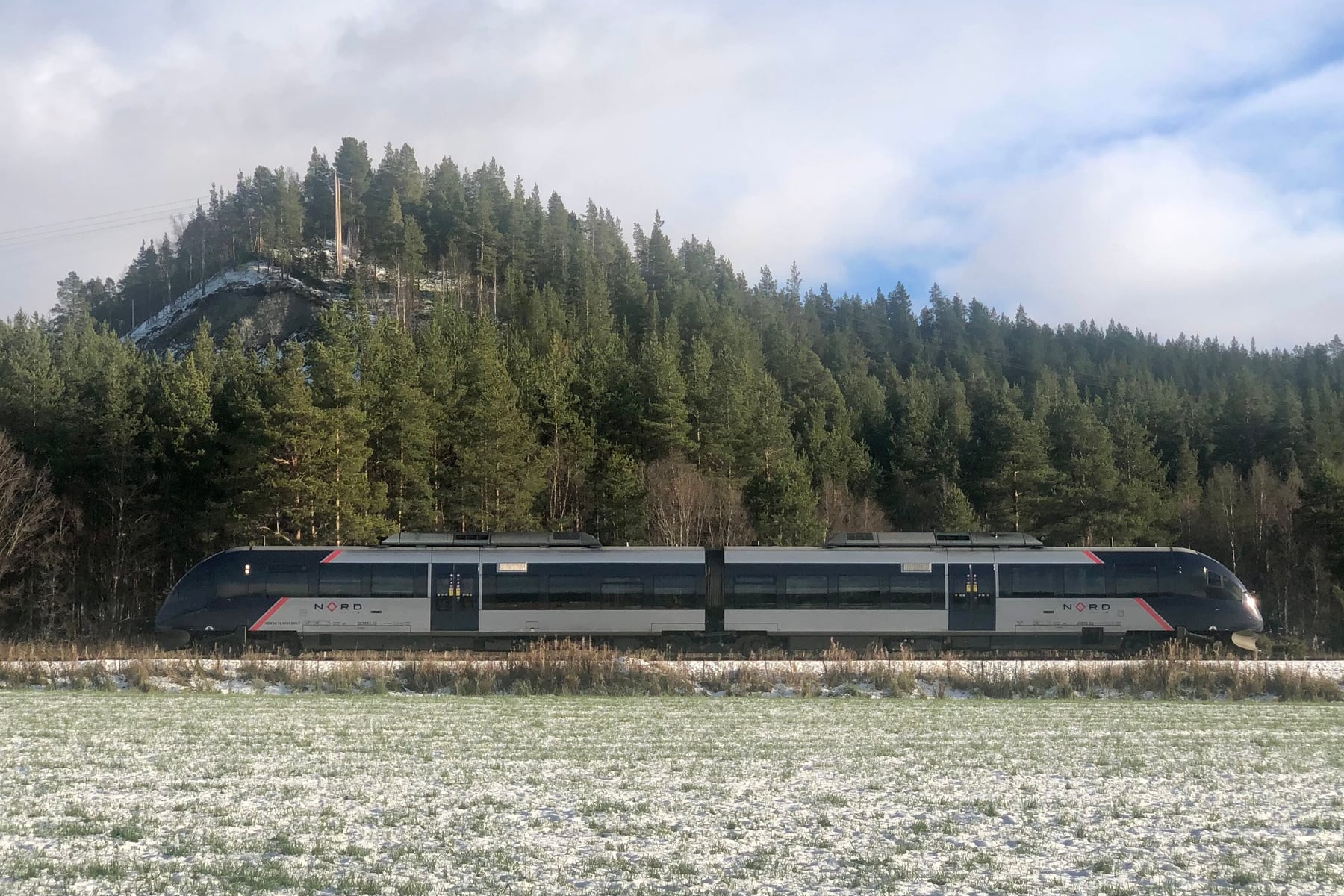
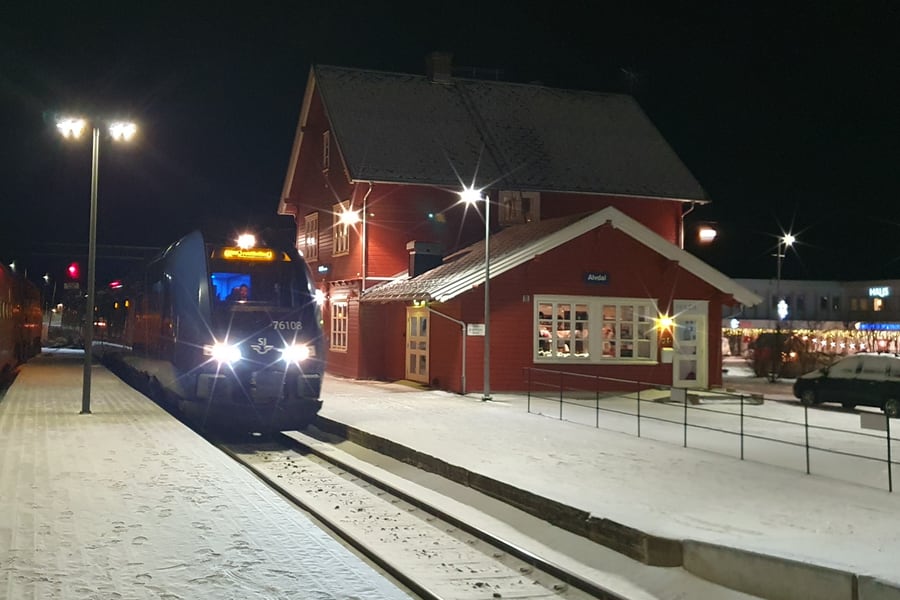
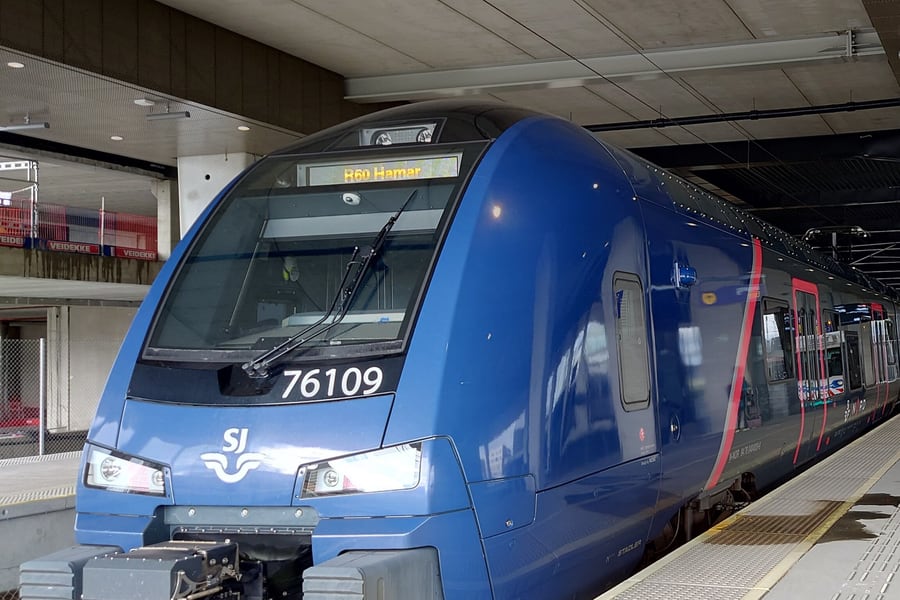
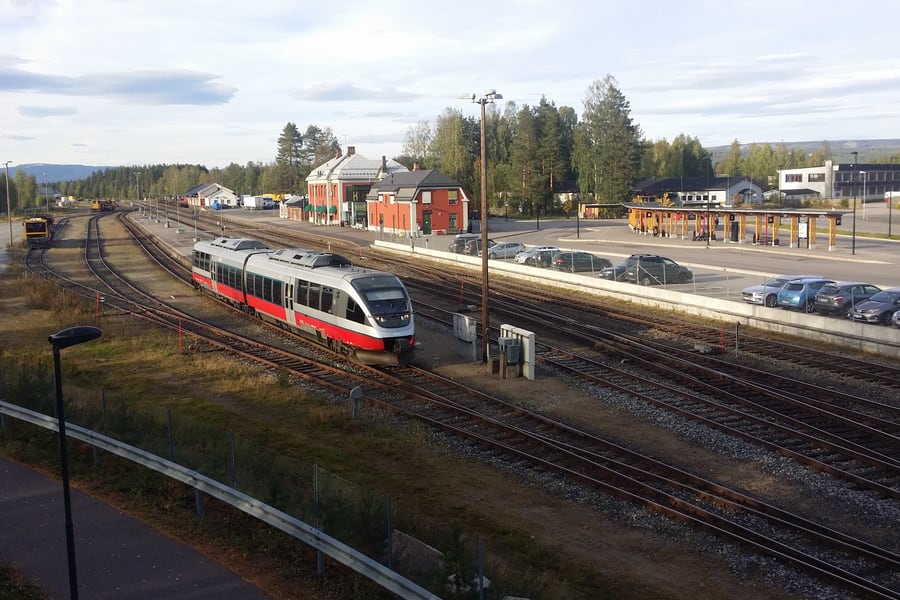
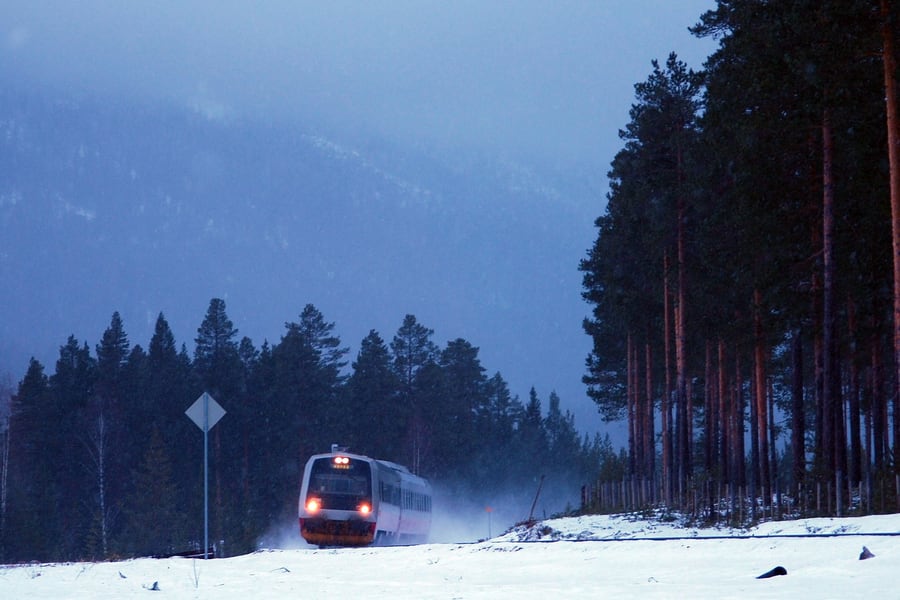
The line has never been electrified. SJ Norge runs it as line R60, mostly between Hamar and Røros, with two trains on most days running through to Trondheim in about six hours and a quarter. The trains are Stadler Type 76 units, which carry their own diesel generators for lines without overhead wires, and older Type 93 diesel units. Every seat is reserved.
The Journey
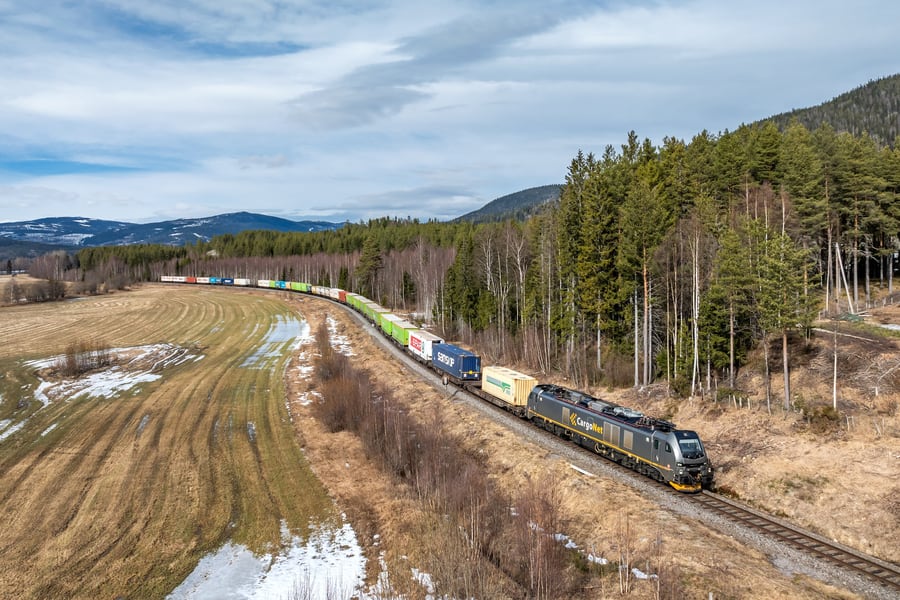
The train leaves Hamar, on the shore of Lake Mjøsa, east through Løten to Elverum, where it meets the Glomma. From here the line follows the river north for some 240 kilometres, through Rena, Koppang and the forests of Østerdalen, past Atna and Alvdal to Tynset and Os, and on to Røros, 628 metres up, where most trains from Hamar end their run after about three and a half hours.
Over the top
North of Røros the line passes Glåmos, where the Glomma flows out of the lake Aursunden, and just beyond it, near Harborg, it reaches its highest point at 670 metres. From there it leaves the Glomma behind.
Down Gauldalen
From the summit the line drops down Gauldalen beside the Gaula, one of Norway's great salmon rivers, through Ålen, Haltdalen and Singsås to Støren, 66 metres above the sea, where it joins the Dovre Line for the last 42 kilometres to Trondheim. The whole line has 223 bridges and only six tunnels, so for most of the way the view is open.
The trains
SJ Norge took the line over on 8 June 2020 and runs it as SJ NORD. Its trains are Type 76 units built by Stadler: electric trains at heart, with a car of four diesel generators so they can work lines like this one, where there are no wires, and Type 93 diesel units. The older Type 92 units, which had worked the line since the 1980s, were retired by August 2025. The trains have Standard seats only, and every seat is reserved.
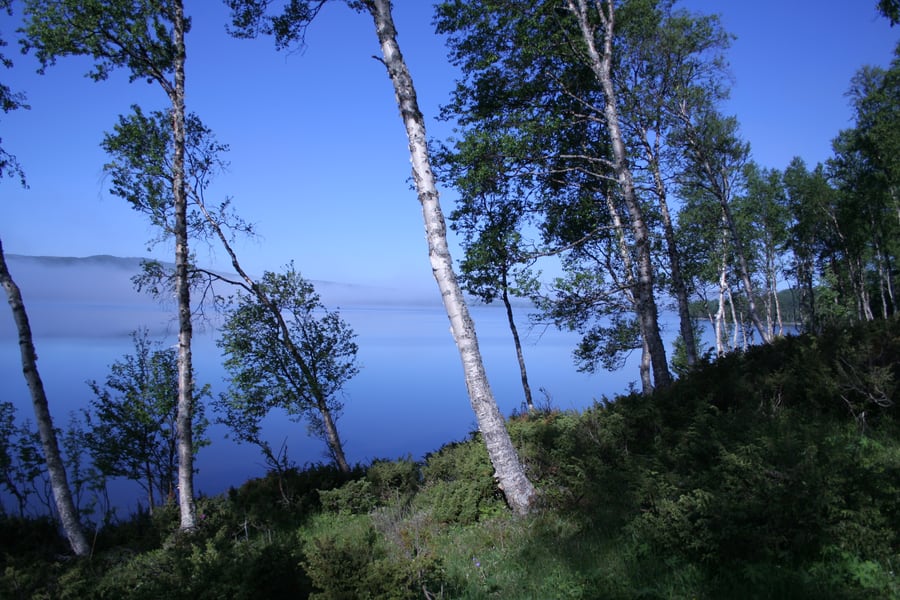
Along the route
 Geir Hval / Wikimedia Commons · CC BY-SA 4.0
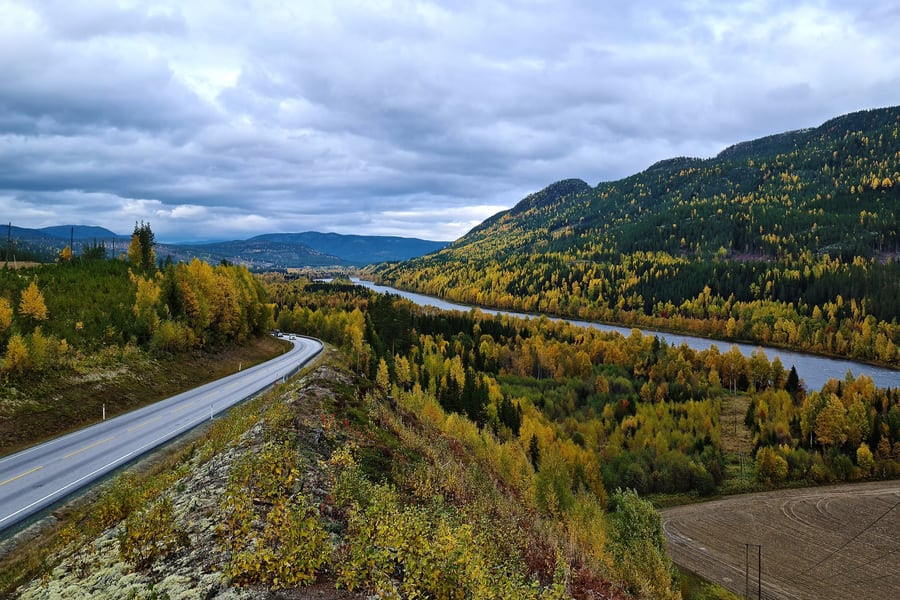
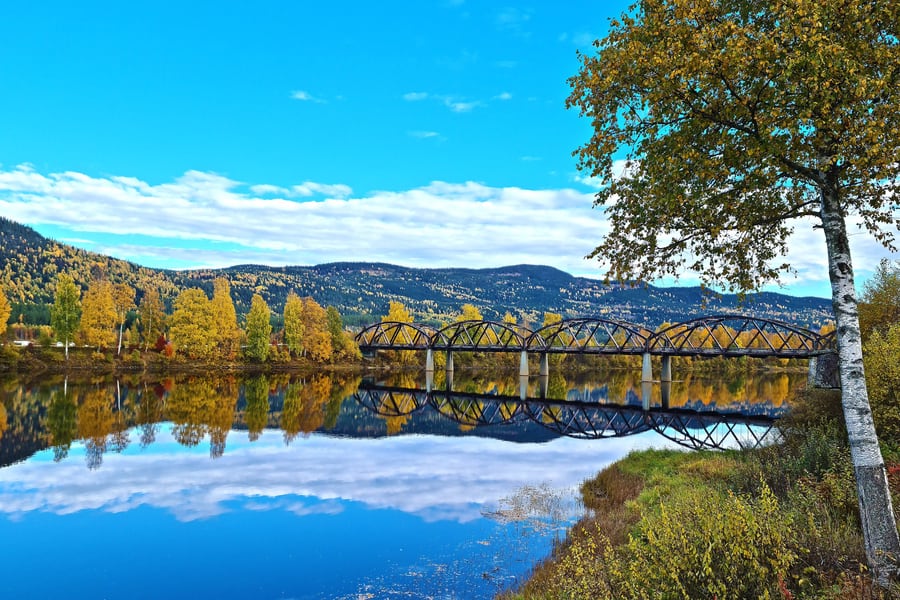
Up the Glomma
From Elverum the line follows the Glomma, Norway's longest river at 620 kilometres, upstream through the forests of Østerdalen for some 240 kilometres to Røros.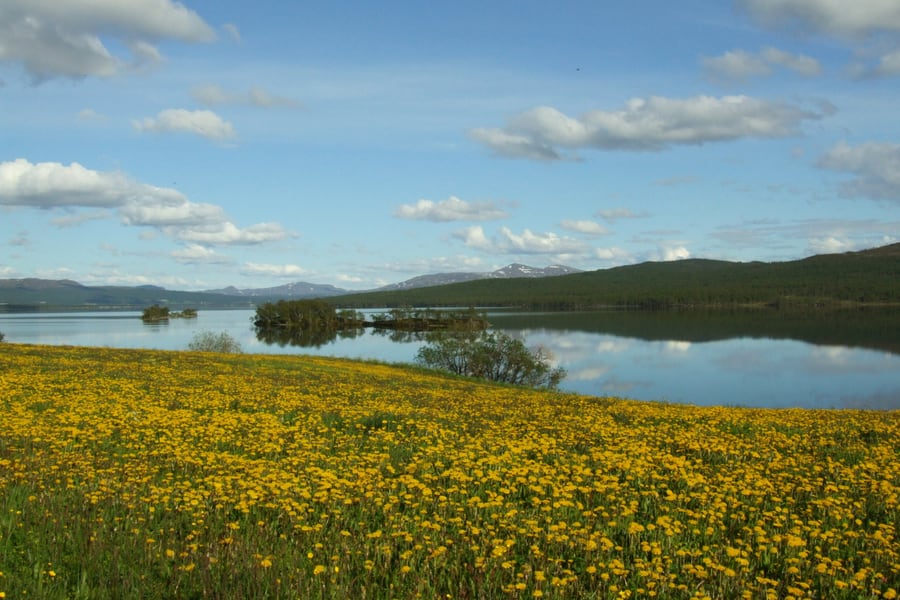 Åke Svensson / Wikimedia Commons · CC BY-SA 3.0
Where the river begins
Beyond Røros the line reaches Glåmos, where the Glomma leaves Aursunden: a lake of 46 square kilometres, 690 metres up, and best known as the source of Norway's longest river.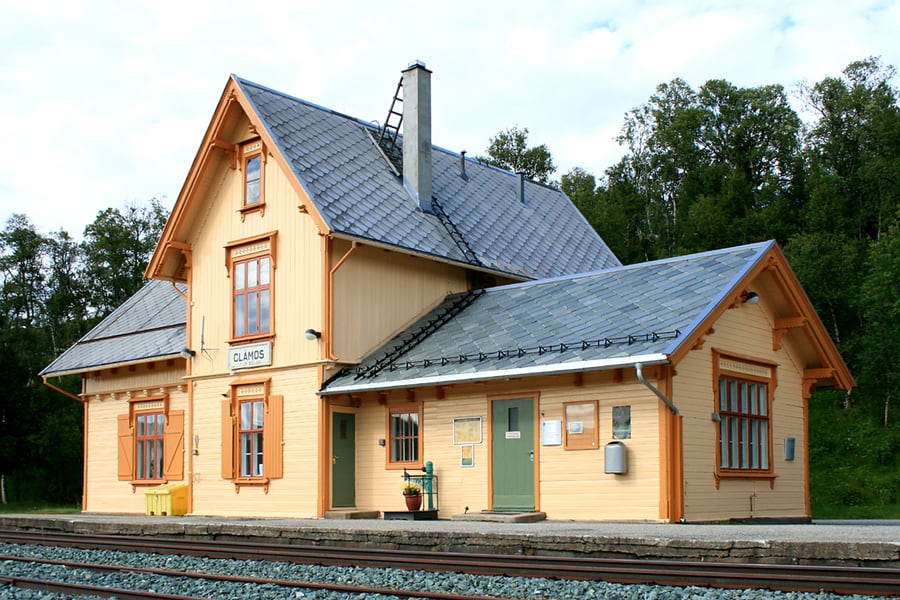 Mahlum / Wikimedia Commons · Public domain
The top of the line
Glåmos station, 638 metres up, is one of the best-preserved from the opening in 1877 and has been protected since 1997. Beyond it, near Harborg, the line peaks at 670 metres.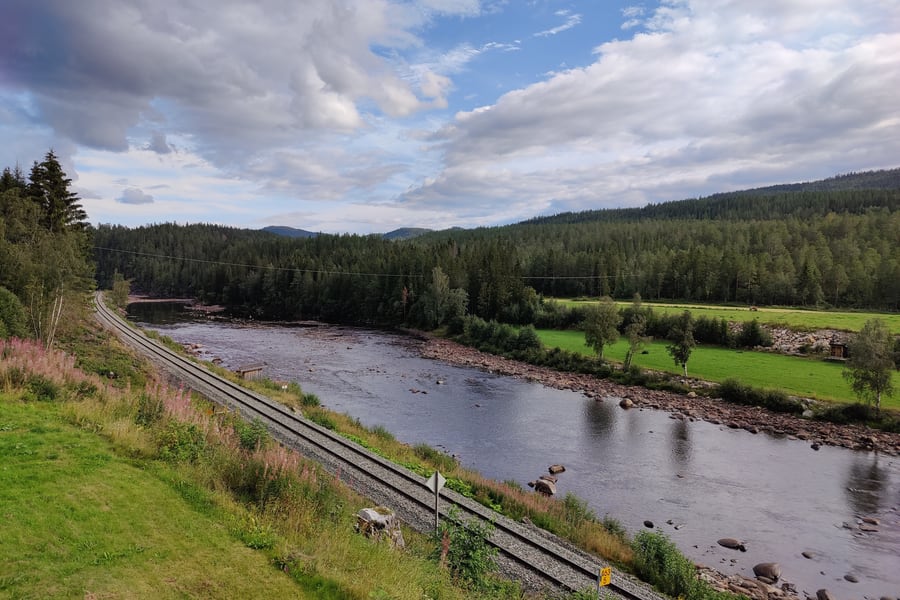 Tommy Gildseth / Wikimedia Commons · CC BY-SA 4.0
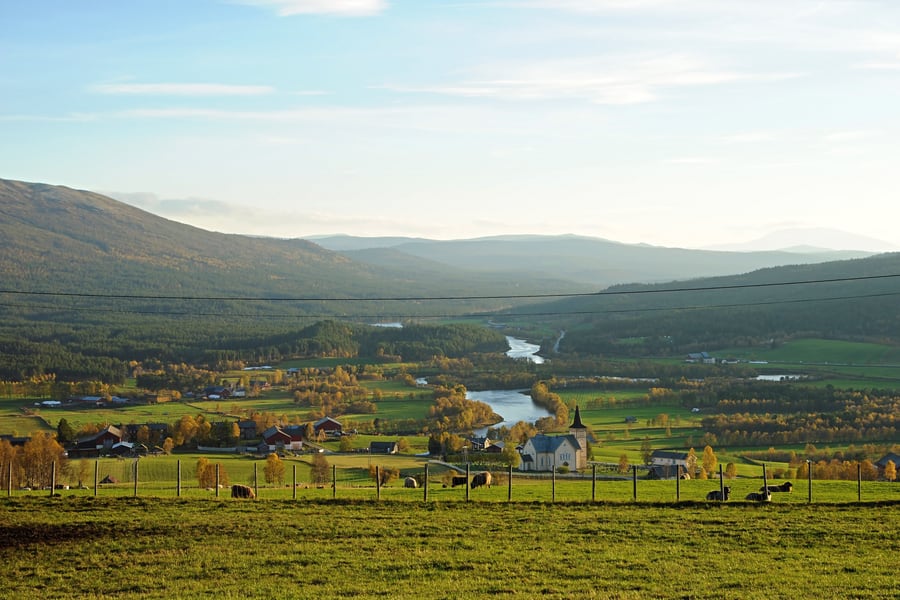
Down Gauldalen
The line then follows the Gaula down to Støren. Salmon run 95 kilometres up the main river; in 2005 it was Norway's best salmon river by catch, and it has been protected from hydropower since 1986.A bit of history
Culture & experiences along the way
 Klevsand / Wikimedia Commons · CC BY-SA 4.0
The steamer that came by train
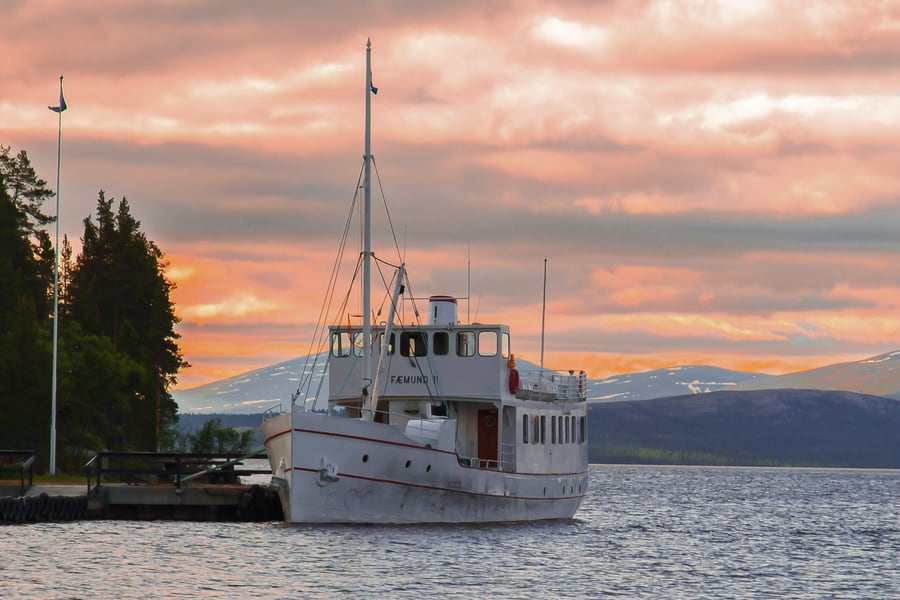
Fæmund II was built in Trondheim and came up this line in pieces; horses hauled them from Røros to Synnervika, where it was riveted together in time for spring 1905. It has sailed Femunden every season since. In 2026 it leaves Synnervika at 09:00, with a bus from Røros station at 08:15.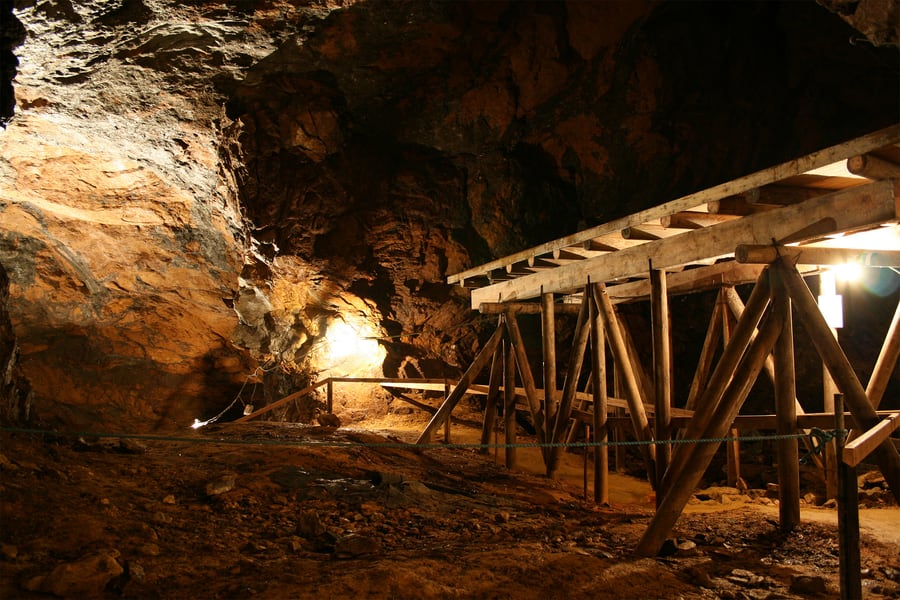 Lars Geithe / Wikimedia Commons · CC BY-SA 4.0
Down the Olav mine
Thirteen kilometres from Røros, an hour's guided walk leads through Nyberget, worked in the 1600s, and Olavsgruva, worked in the 1900s, 50 metres down and 500 metres into the mountain to Bergmannshallen. It is 4 degrees all year. From 1 June to 10 September there are several tours a day.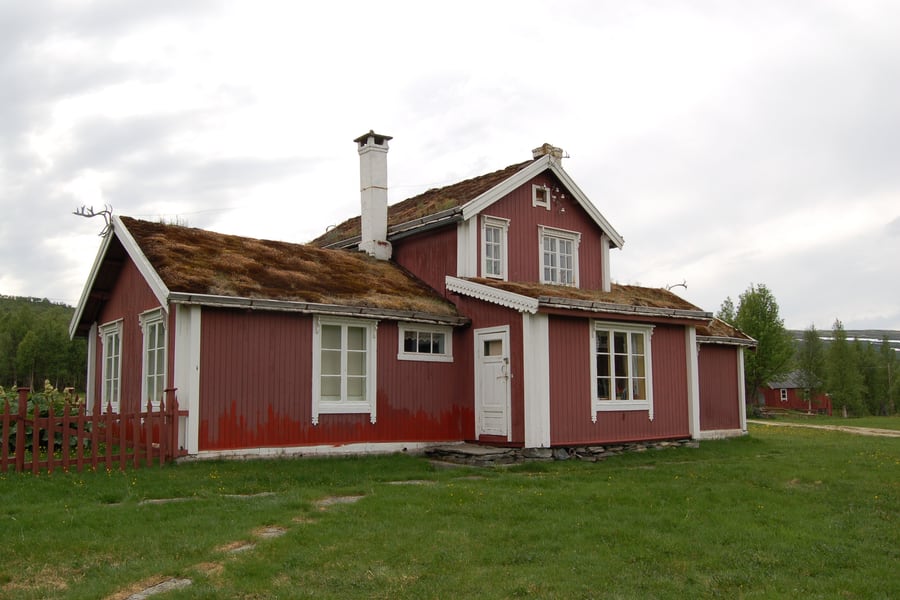 Arnstein Rønning / Wikimedia Commons · CC BY-SA 3.0
The miners' writer
Johan Falkberget started in the Røros copper mines as a boy and became the novelist of the mining town. In 1922 he built Ratvolden, a farm by Ruglsjøen about 20 kilometres north of Røros, and lived there until his death in 1967. The house is open in July and August.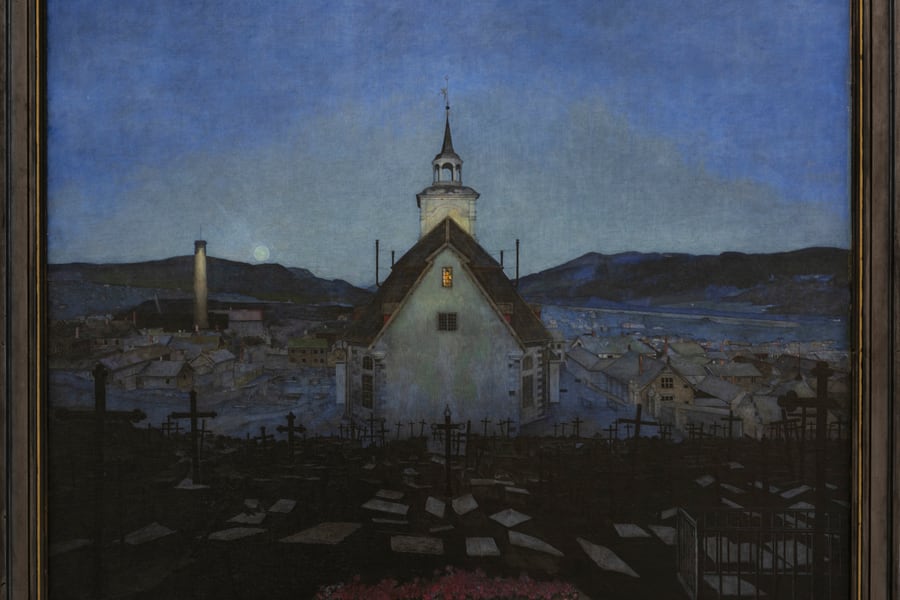 Harald Sohlberg, 1904 / Trondheim Kunstmuseum / Wikimedia Commons · Public domain
Sohlberg's Night
Harald Sohlberg painted Røros again and again. In Night, of 1904, the white church stands against a dark blue sky above the crosses of the churchyard, the mining town beyond it. The painting belongs to Trondheim Kunstmuseum, at the other end of the line.Timetables
SJ NORD runs the Røros Line as line R60. Two trains a day run the whole way between Hamar and Trondheim on most days; the others run Hamar–Røros or Røros–Trondheim. Every seat is reserved.
Hamar to Trondheim
| Train | Runs | Hamar | Elverum | Tynset | Røros | Støren | Trondheim S |
|---|---|---|---|---|---|---|---|
| 2385 | Not Sat | 12:11 | 12:37 | 14:59 | 15:44 | 17:27 | 18:26 |
| 2389 | Daily | 16:08 | 16:36 | 18:59 | 19:45 | 21:26 | 22:26 |
Trondheim to Hamar
| Train | Runs | Trondheim S | Støren | Røros | Tynset | Elverum | Hamar |
|---|---|---|---|---|---|---|---|
| 2382 | Mon–Fri | 05:37 | 06:40 | 08:22 | 09:01 | 11:27 | 11:52 |
| 2386 | Daily | 09:34 | 10:31 | 12:21 | 13:02 | 15:28 | 15:53 |
| 2390 | Sun | 12:51 | 14:04 | 16:23 | 17:02 | 19:28 | 19:53 |
The shorter trains
| Train | Runs | From | Departs | To | Arrives |
|---|---|---|---|---|---|
| 2381 | Mon–Fri | Hamar | 08:11 | Røros | 11:38 |
| 2383 | Mon–Sat | Hamar | 10:11 | Røros | 13:42 |
| 2391 | Not Sat | Hamar | 18:11 | Røros | 21:43 |
| 2393 | Not Sat | Hamar | 20:11 | Røros | 23:37 |
| 2378 | Mon–Fri | Røros | 04:18 | Hamar | 07:43 |
| 2380 | Mon–Sat | Røros | 06:18 | Hamar | 09:45 |
| 2388 | Not Sat | Røros | 14:17 | Hamar | 17:46 |
| 2390 | Mon–Sat | Røros | 16:23 | Hamar | 19:53 |
| 411 | Mon–Fri | Røros | 05:00 | Trondheim S | 07:43 |
| 413 | Sat | Røros | 07:00 | Trondheim S | 09:34 |
| 417 | Sat | Røros | 16:28 | Trondheim S | 18:56 |
| 416 | Mon–Fri | Trondheim S | 16:21 | Røros | 19:02 |
| 418 | Sun | Trondheim S | 20:20 | Røros | 23:05 |
These are the times from 13 December 2026; until then they are the same but for a minute or two here and there, and train 2391 leaves Hamar at 18:15. On Sundays train 2385 leaves Røros at 15:50 and reaches Trondheim at 18:29 (until 13 December, 16:10 and 18:40), and train 2390 leaves Trondheim at 12:51 (until 13 December, 13:29). The trains call at every station on the way, Koppang, Alvdal, Os, Glåmos and Haltdalen among them. For Oslo, change at Hamar to a Dovre Line train.
Times as of October 2026, from Entur's journey planner, checked for weeks in October and November 2026 and January 2027. Check your date on Entur (opens in a new tab) or with SJ Norge (opens in a new tab).
Tickets
Tickets are sold through Entur, Norway's national journey planner, on its website and app; SJ Norge's own pages send you there. Every ticket carries a seat reservation, and the line has one class, Standard. Non-flexible tickets are the cheapest and cannot be changed or refunded; flexible tickets cost more.
Hamar to Trondheim starts at NOK 689 non-flexible and NOK 976 flexible, and Hamar to Røros at NOK 319. Fares checked October 2026.
Book your tickets
Gestumblindi / Wikimedia Commons · CC BY-SA 4.0 · croppedStandard
Hamar to Trondheim, non-flexible
The cheapest ticket, with a reserved seat; it cannot be changed or refunded.
Book Tickets (opens in a new tab, on SJ Norge)via SJ NorgeKolbkorr / Wikimedia Commons · CC BY-SA 4.0Flexible
Hamar to Trondheim, changeable
The same Standard seat on a flexible ticket, for when your plans may change.
Book Tickets (opens in a new tab, on SJ Norge)via SJ NorgeKolbkorr / Wikimedia Commons · CC BY-SA 4.0Hamar to Røros
Six trains on weekdays
The southern half of the line, about three and a half hours from Hamar.
Book Tickets (opens in a new tab, on SJ Norge)via SJ NorgeRail Passes
Interrail and Eurail passes are valid, with a compulsory reservation. Interrail's table of railway companies lists SJ Norge's regional trains in both the Global Pass and the One Country Pass for Norway, with reservation mandatory. Book the seat on Entur as an "Interrail / Eurail seat reservation" traveller: €4.30 for a Standard seat. The trains have Standard seats only, so a first-class pass buys no upgrade here. A pass is valid in Norway only for travellers who are not resident there.
A pass pays for this journey if Norway is part of a longer trip. For Hamar to Trondheim alone, compare a travel day of the pass, plus the reservation, with the fare Entur quotes for your date — from NOK 689 when booked ahead.
Checked October 2026 against Interrail's table of railway companies (opens in a new tab), its reservation fees (opens in a new tab) and SJ Norge's Interrail page (opens in a new tab).
Places to Visit
With six trains a day each way between Hamar and Røros on weekdays, a stop on the southern half costs a few hours. North of Røros there are two or three trains a day, so plan the stop around them. Every train calls at every station below.
 Andrez1 / Wikimedia Commons · CC BY-SA 4.0
Hamar
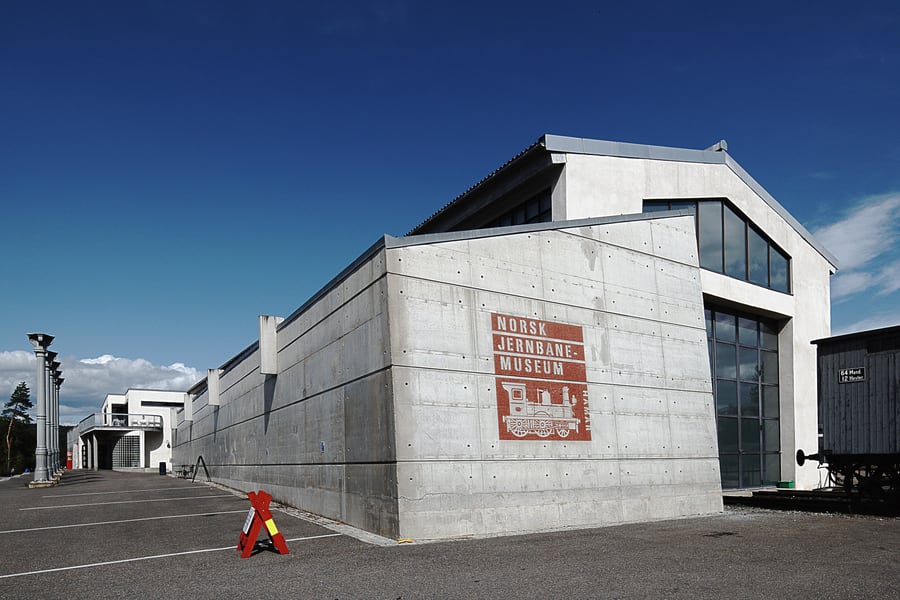
The Norwegian Railway Museum began in 1896 on the second floor of Hamar station, where this line starts, and moved in 1912 to Martodden on the shore of Mjøsa. It keeps several of Norway's oldest station buildings and the locomotives and carriages of the first railway decades, the years in which the Røros Line was built. In summer the narrow-gauge Tertitten runs in the park.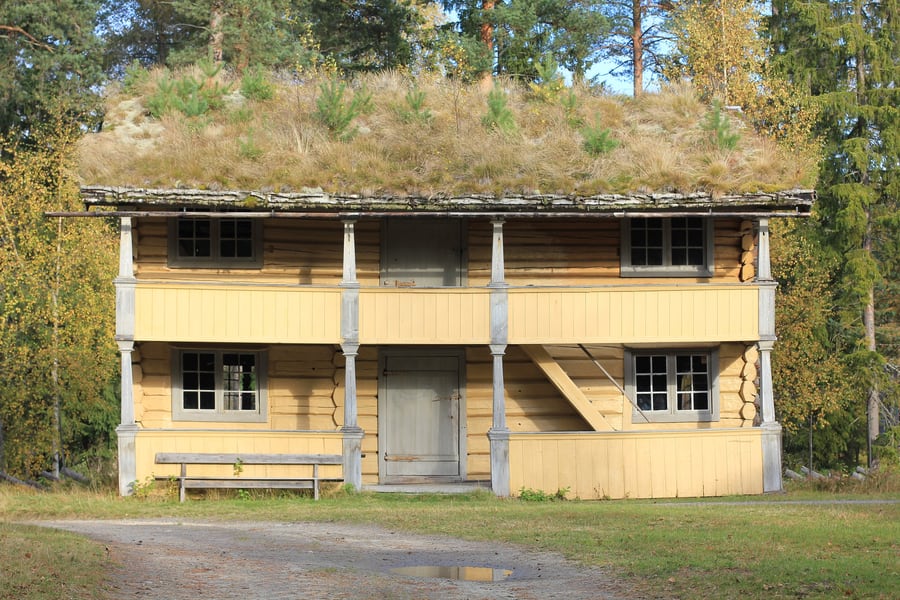 Øyvind Holmstad / Wikimedia Commons · CC BY-SA 3.0
Elverum
Glomdalsmuseet, opened in 1911, has gathered nearly 100 buildings from Østerdalen and Solør into farmyards grouped by municipality: by building stock, the third-largest open-air museum in Norway. It includes the houses of the Forest Finns and South Sami culture, and Latjo drom, an exhibition on the history of the Romani people. The Norwegian Forest Museum is beside it on the Glomma.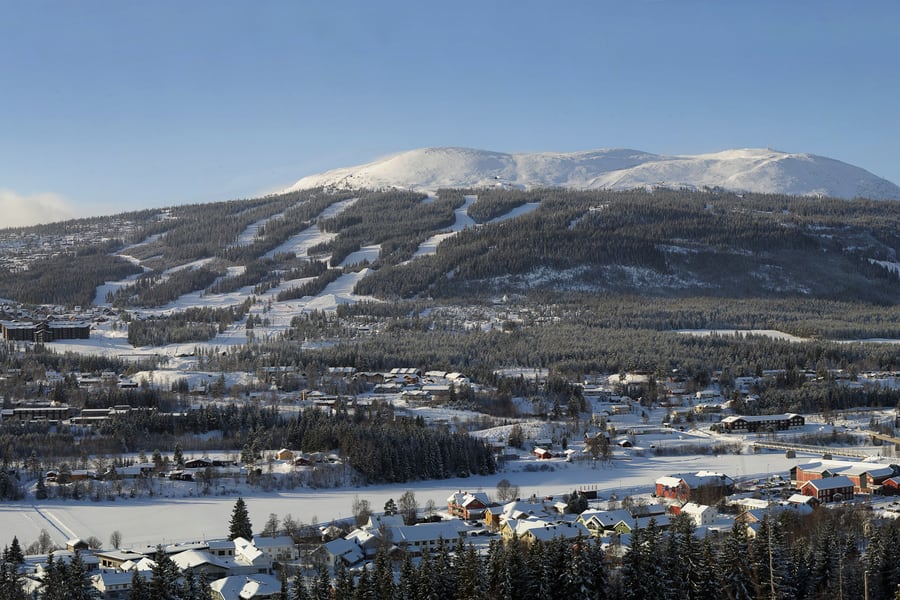 Trysil / Wikimedia Commons · CC BY 2.0
Rena
Rena is SJ's station for Trysil: from here a direct bus runs to the largest winter sports centre in Norway, with 65 prepared slopes on Trysilfjellet.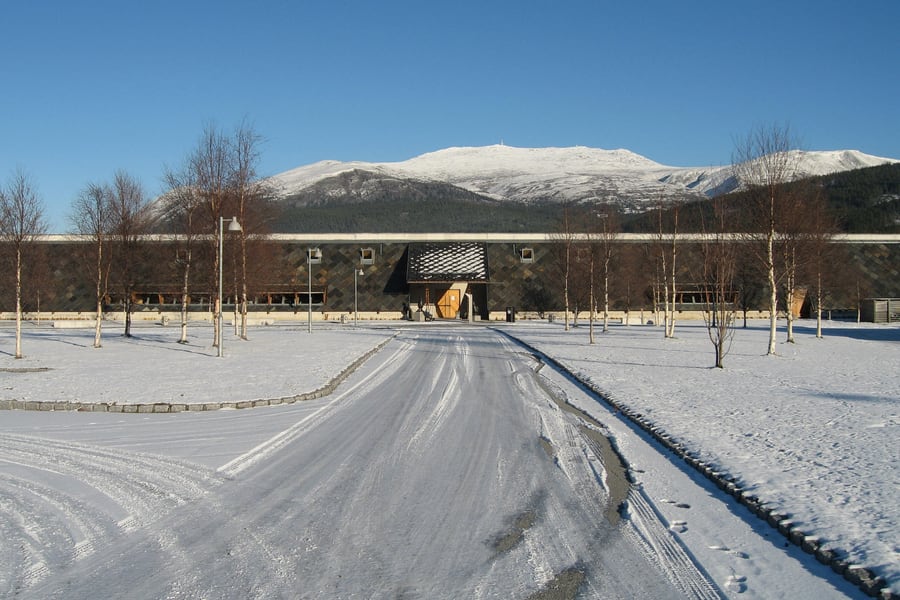 Andewa / Wikimedia Commons · CC BY-SA 3.0
Alvdal
Kjell Aukrust grew up in Alvdal and gave the village 250 of his drawings and paintings in 1988. Huset Aukrust, a long building of slate, pine and stone by Sverre Fehn, opened in 1996 to show them, together with his contraptions: a model of Il Tempo Gigante, the racing car of the film Flåklypa Grand Prix, and Reodor Felgen's workshop with a chocolate machine.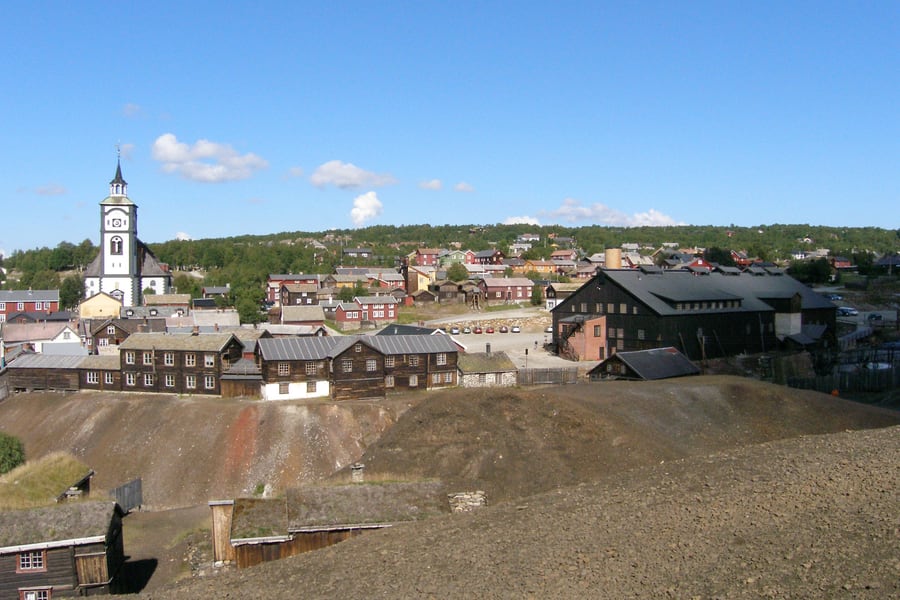 China_Crisis / Wikimedia Commons · CC BY-SA 2.5
Røros
Copper was found here in 1644, and the works ran for 333 years, until 1977. The town around them, burned by the Swedish army in 1678 and 1679, keeps about 80 historic wooden houses on their courtyards, the slag heaps, and a stone church of 1784 for 1,640 people; it has been on the World Heritage list since 1980. The winter market, Rørosmartnan, has been held in February since 1854.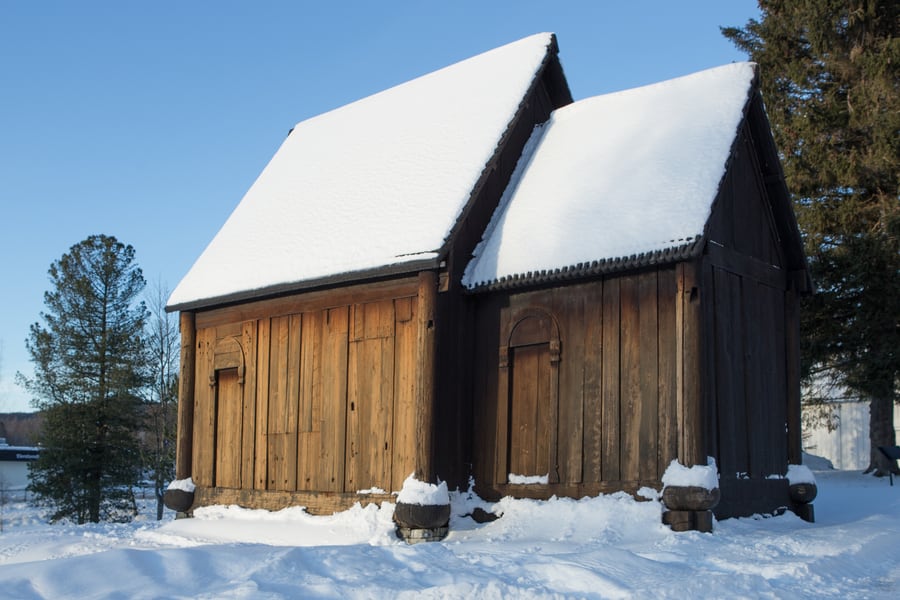 Thomas Bjørkan / Wikimedia Commons · CC BY-SA 4.0
Trondheim
The Haltdalen stave church was probably built in the 1170s in Gauldalen, where the train stops at Haltdalen. It was taken down and moved to Trondheim in the 1880s and has stood at Sverresborg Trøndelag Folk Museum since 1937 — the only stave church of the east Scandinavian single-nave type still standing.Where to Sleep
Røros is the place to break the journey: the trains from Hamar and from Trondheim meet there, and the mining town is worth an evening and a morning of its own. Both hotels below stand in the World Heritage town, and both belong to the same local group, Røroshotellene.
Where to stay
 Lars Geithe / Wikimedia Commons · CC BY-SA 2.0
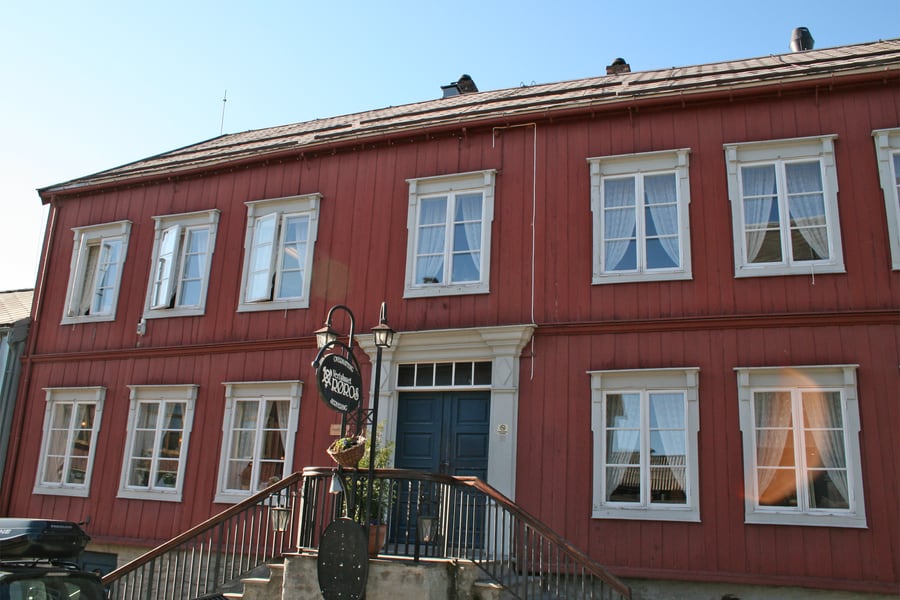
Vertshuset Røros
In Kjerkgata, in the World Heritage town
Rooms in Rammgården, a merchant's yard that goes back to the 1600s, and in the old Krogs wool factory, with a restaurant built on the region's food.
Check Availability (opens in a new tab, on roroshotellene.no)via roroshotellene.noErzscheidergården
Next door to Røros church
A small hotel of 24 rooms in an old timber house, each with its own bathroom, and a homemade breakfast.
Check Availability (opens in a new tab, on roroshotellene.no)via roroshotellene.noQuestions or corrections
Planning this trip and stuck on something, or spotted a time, fare or detail that has changed? Send us a message about The Røros Line. We read every one, and we update this page when something has changed.