Roslagsbanan
Alexcentralena / Wikimedia Commons · CC BY-SA 4.0 · 2025
- Distance41.5 km to Kårsta
- Duration47–53 min
- Best seasonAll year
Introduction
Stockholm's narrowest railway starts beside a metro station in the city and runs out through villa suburbs, past a lake and a racecourse, to fields where cattle graze beside the track. Roslagsbanan is built to 891 mm, three old Swedish feet. It is the last line of that gauge in Sweden still carrying passengers to a timetable, and no other railway in regular service uses it.
It was not meant to last. When the county took it over from the state railway, the line was worn out and the plan was a metro to Täby and buses beyond. Täby and Vallentuna held referendums on 23 March 1980, their residents wanted the railway, and the county rebuilt it instead: new trains from 1988, new signalling, long stretches of double track, and since October 2023 Stadler's X15p, the first new trains on the line in about thirty years.
Three lines share it. This page follows line 27, the longest, 41.5 km to Kårsta.
The Journey
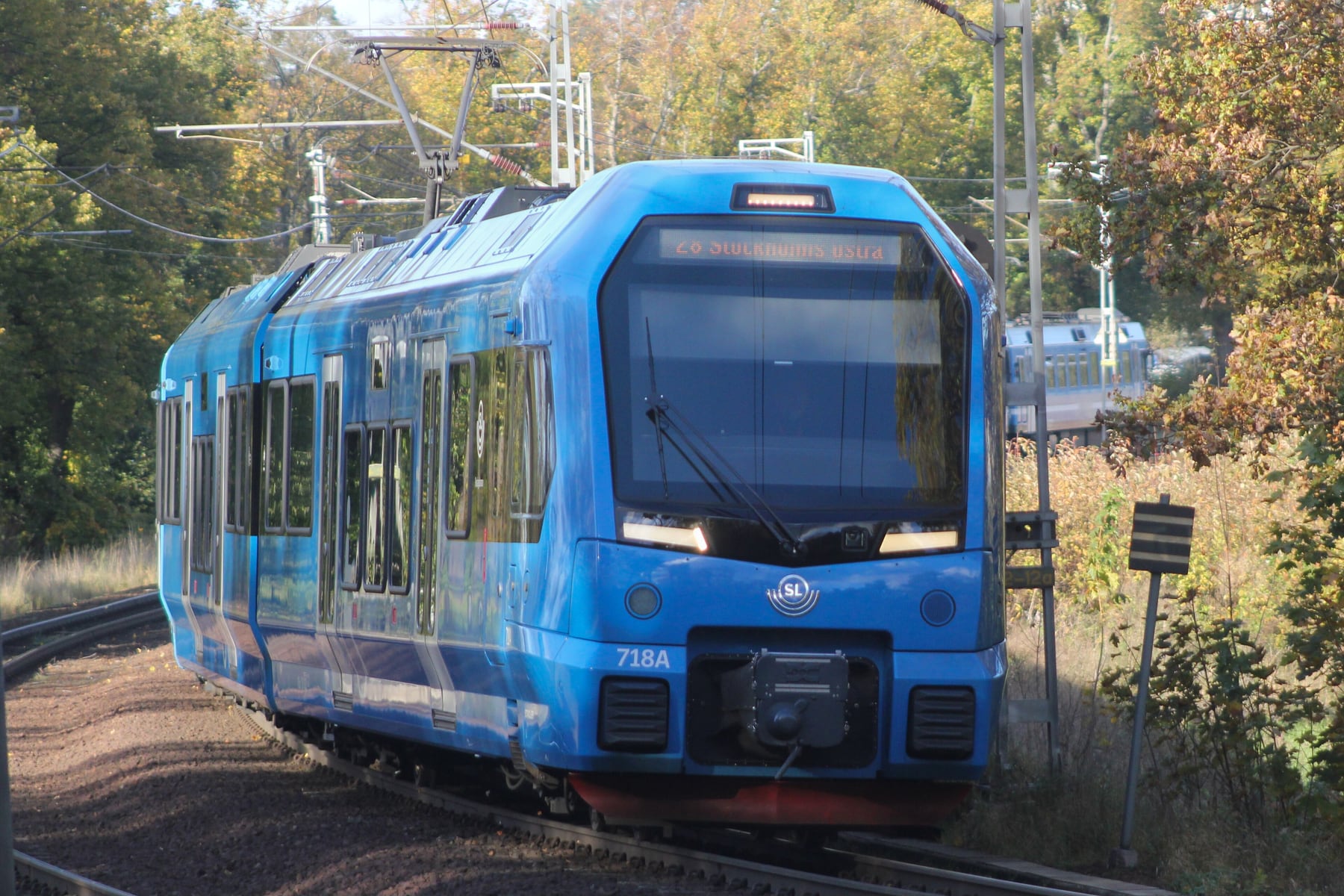
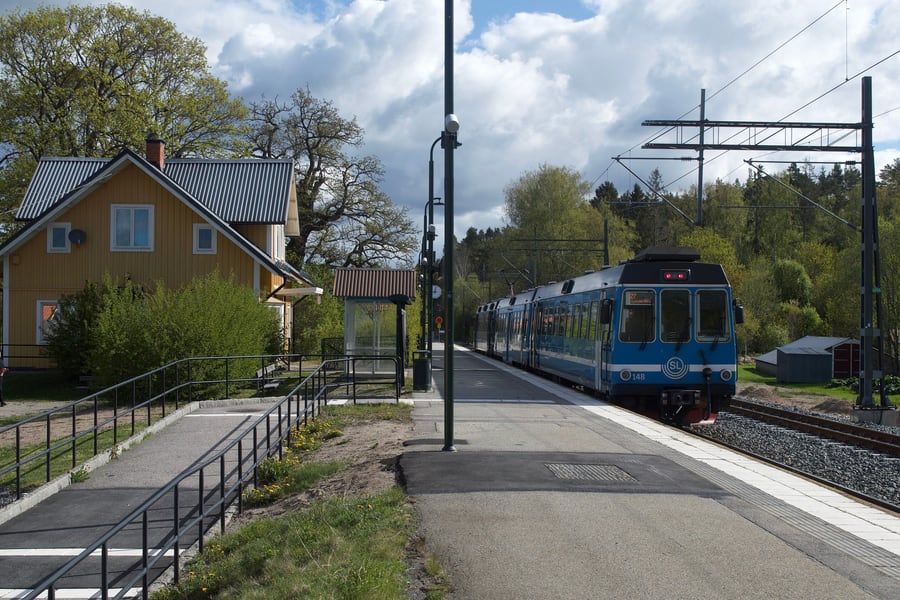
Two kinds of train run the line, and either may turn up. The X10p, built by Hägglunds between 1988 and 1995, is the train the 1980 vote paid for: boxy, blue with a white band, a top speed of 80 km/h, and noisy enough that concrete sound walls now line the track through Djursholm. The X15p from Stadler is a three-car unit 60 metres long, built for 120 km/h and run at 100, with 162 seats and floors level with the platforms. The first carried passengers on the 10:35 from Stockholms östra on 31 October 2023, and SL ordered ten more in August 2025 to replace the X10p, due in service from 2028.
Out of the city
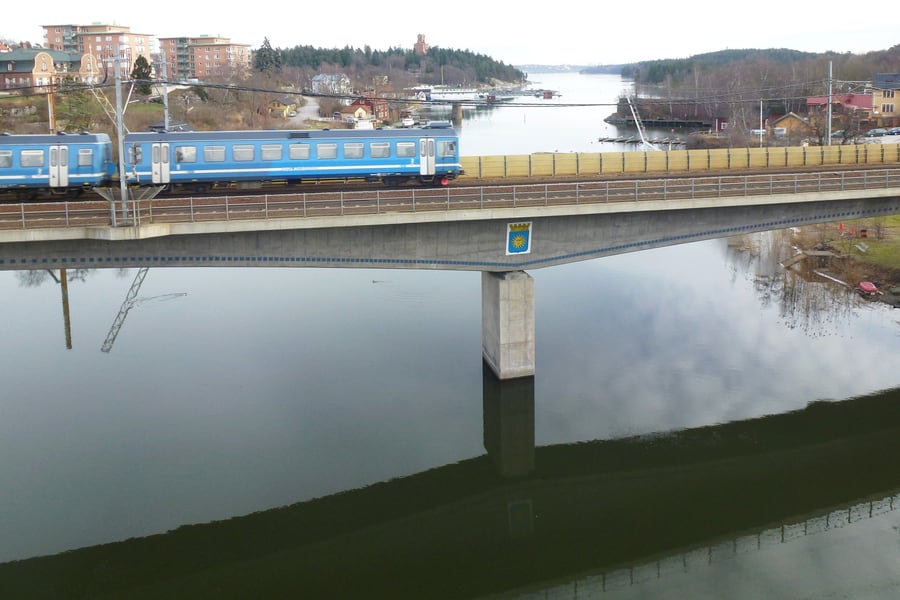
The terminus, Stockholms östra, sits next to the Tekniska högskolan metro station; the line has not run further into the city since 1960. Two minutes out is Universitetet, opened in 2010 inside the Royal National City Park, and then the train crosses the Stocksund on a bridge doubled in 1996–97. At Djursholms Ösby line 29 turns off for Näsbypark; at Roslags Näsby line 28 leaves for Österskär, and line 27 heads north alone.
Double track, then one
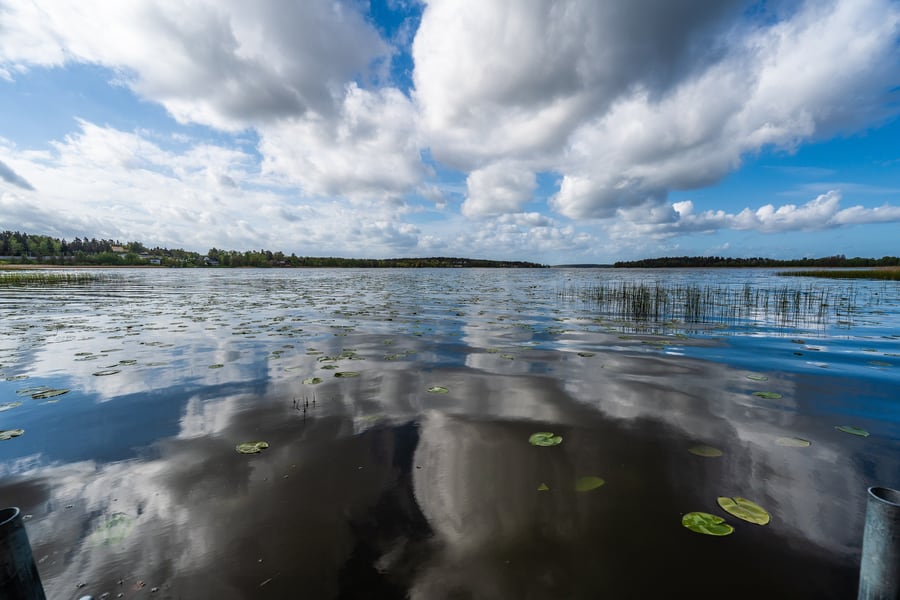
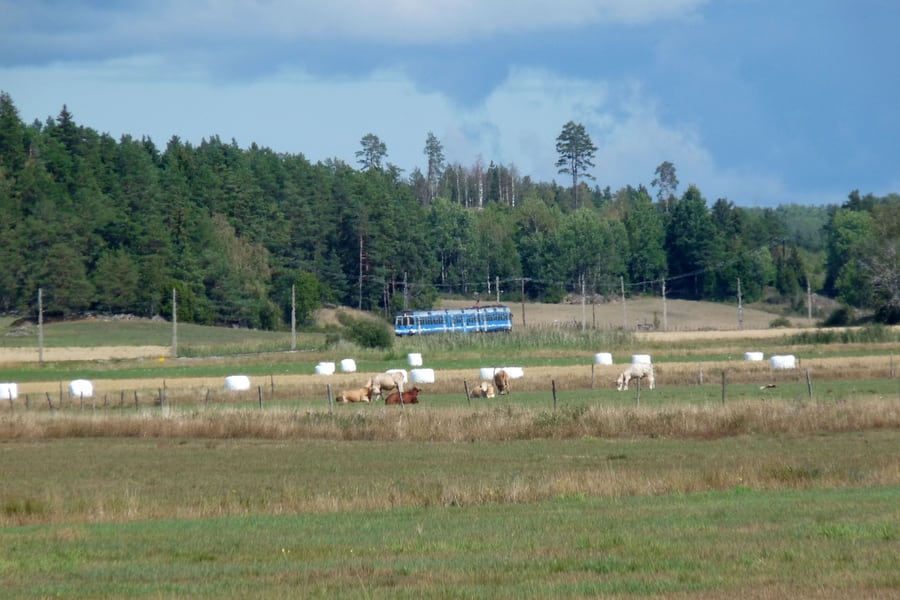
From Roslags Näsby to Vallentuna the Kårsta line has had two tracks since October 2021. It passes Täby kyrkby, with its medieval church and Jarlabanke's causeway, and the long lake at Vallentuna. Beyond Vallentuna it goes back to a single track with passing loops, runs past the depot at Molnby, and the stations turn rural: Lindholmen, Frösunda, Ekskogen.
The end at Kårsta
Kårsta is where the rails stop, 52 minutes from the city on an all-stations train. The line once ran on to Rimbo and, until 1969, beyond it to Norrtälje; Kårsta to Rimbo closed in January 1981 and was lifted the next year. Lindholmen to Kårsta was due to go too, and survived only because the roads were too poor for buses.
What comes next
In 2017 the state, the county and the municipalities agreed to take the line underground from Universitetet to Odenplan and T-Centralen, the hub of the metro. Trains are expected to run there around 2038, and Stockholms östra will then close.
Along the route
 Janders / Wikimedia Commons · Public domain · 2010 · cropped
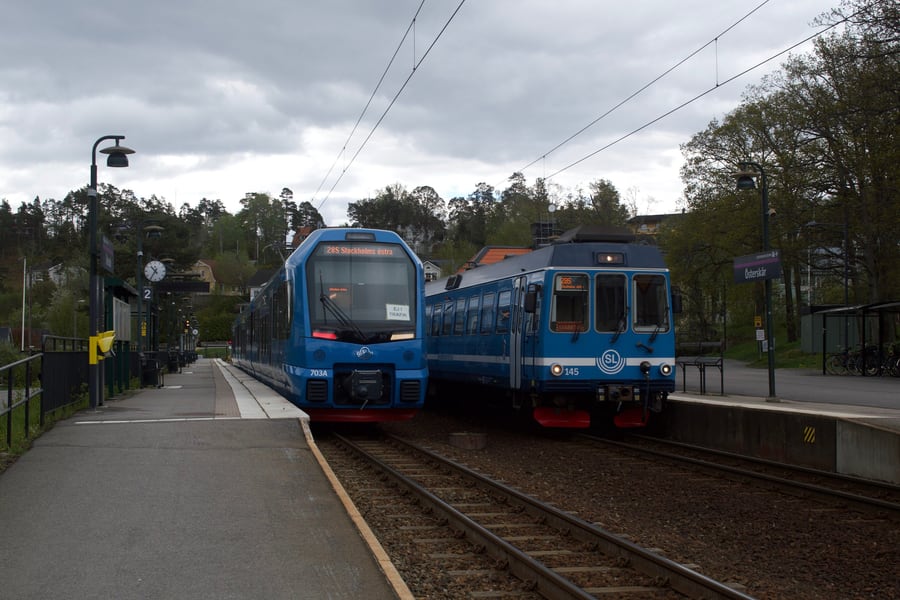
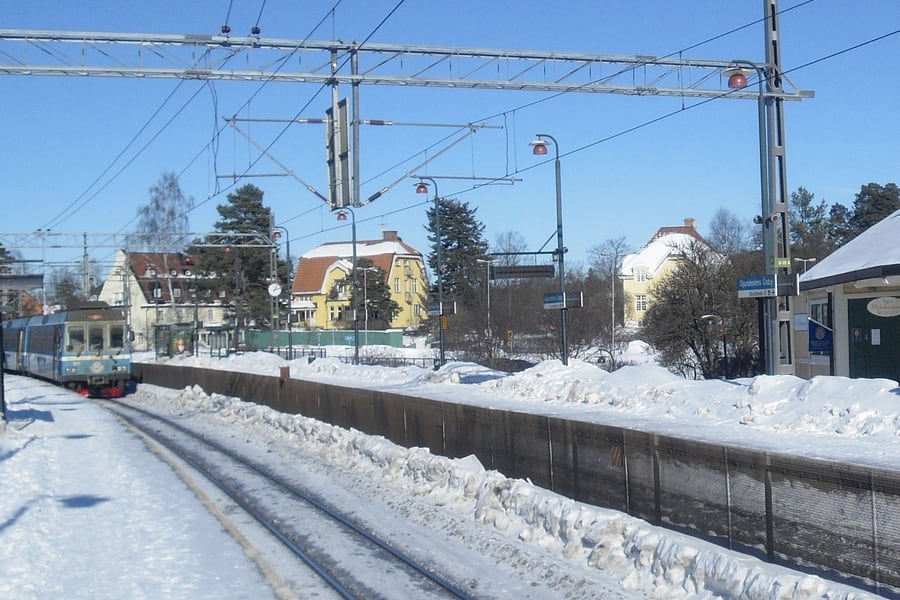
The junction at Djursholms Ösby
Into the 1950s this was one of the busiest stations in Sweden, with a train every three minutes and three branches dividing. Today line 29 leaves here for Näsbypark, and the Kårsta and Österskär trains run on together to Roslags Näsby.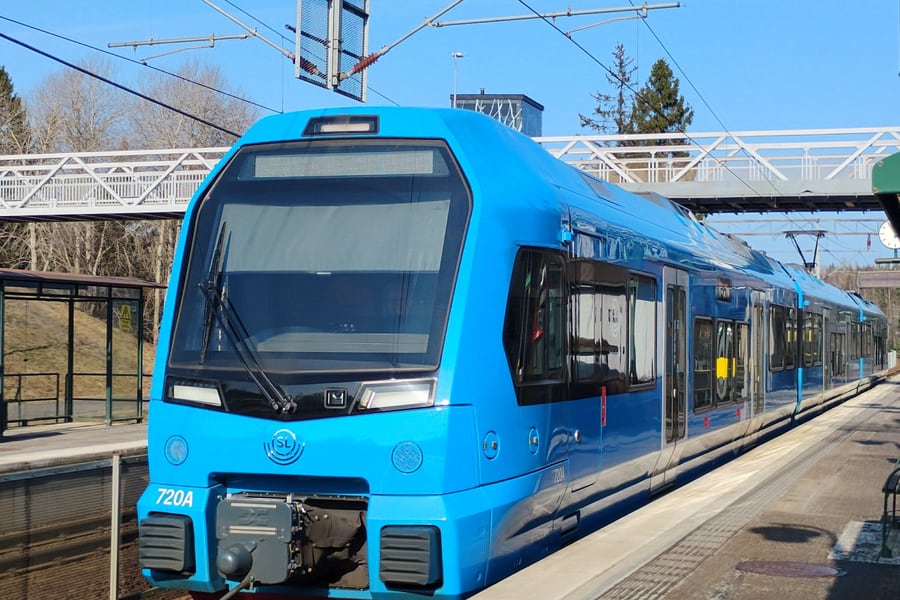 Wafflelover2025 / Wikimedia Commons · CC0 · cropped
Double track to Vallentuna
Since 17 October 2021 the Kårsta line has two tracks all the way from Roslags Näsby to Vallentuna. The last stretch, Täby kyrkby to Kragstalund, was built over two summers with the line closed north of Täby kyrkby.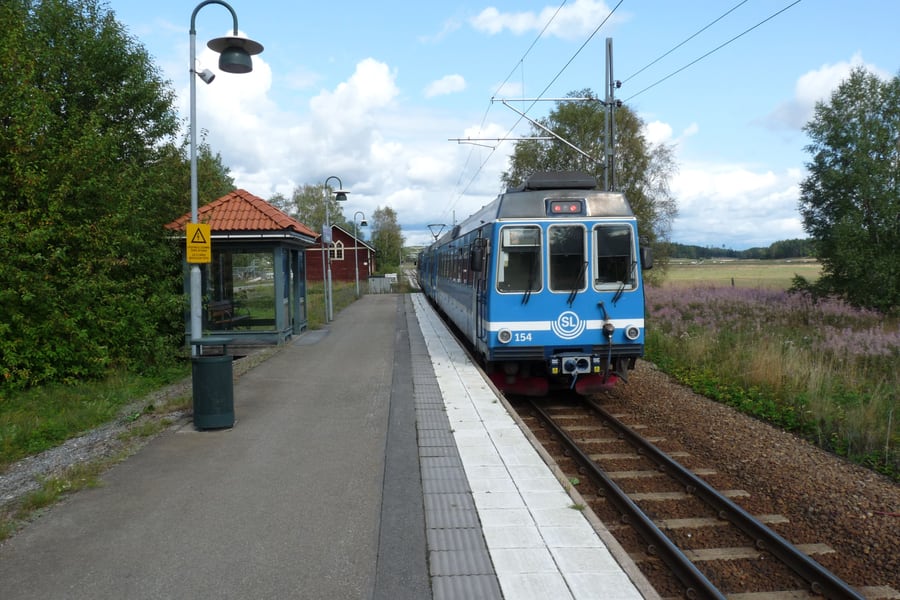 Smiley.toerist / Wikimedia Commons · CC BY-SA 4.0 · 2018 · cropped
One track through the fields
North of Vallentuna the line returns to a single track, with passing loops at Ormsta, Vedalund, Lindholmen and Frösunda, and the suburbs give way to farmland. Lindholmen to Kårsta was meant to close in 1981; it stayed because the roads were too poor for buses.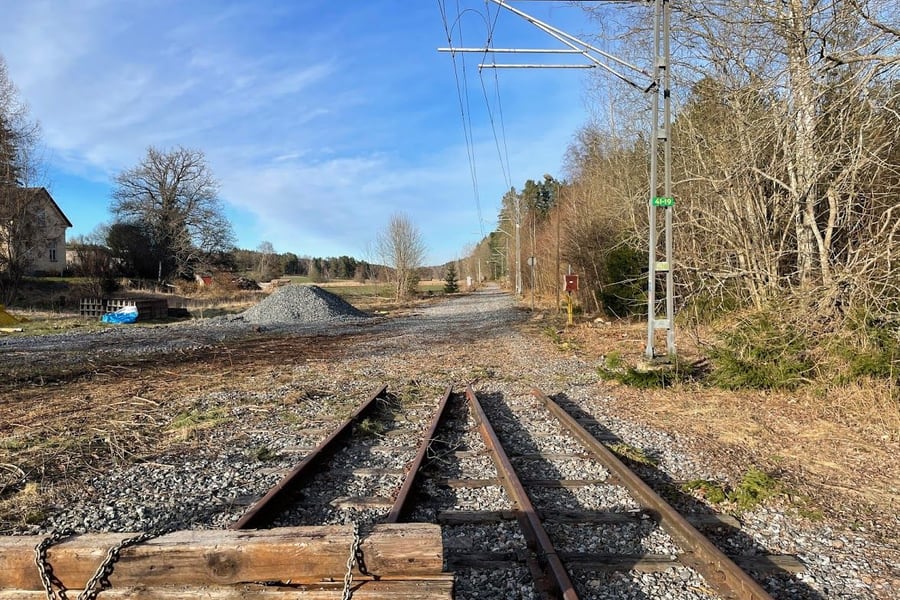 Officialworks / Wikimedia Commons · CC BY-SA 4.0 · 2021 · cropped
The end of the rails
The track stops at Kårsta. It once ran on 14.4 km to Rimbo, where trains ended in January 1981 and the rails were lifted in 1982. Seen here in April 2021, during the works that closed Lindholmen–Kårsta until 12 December that year.A bit of history
Culture & experiences along the way
 Håkan Svensson (Xauxa) / Wikimedia Commons · CC BY 2.5 · 2003 · cropped
Death plays chess
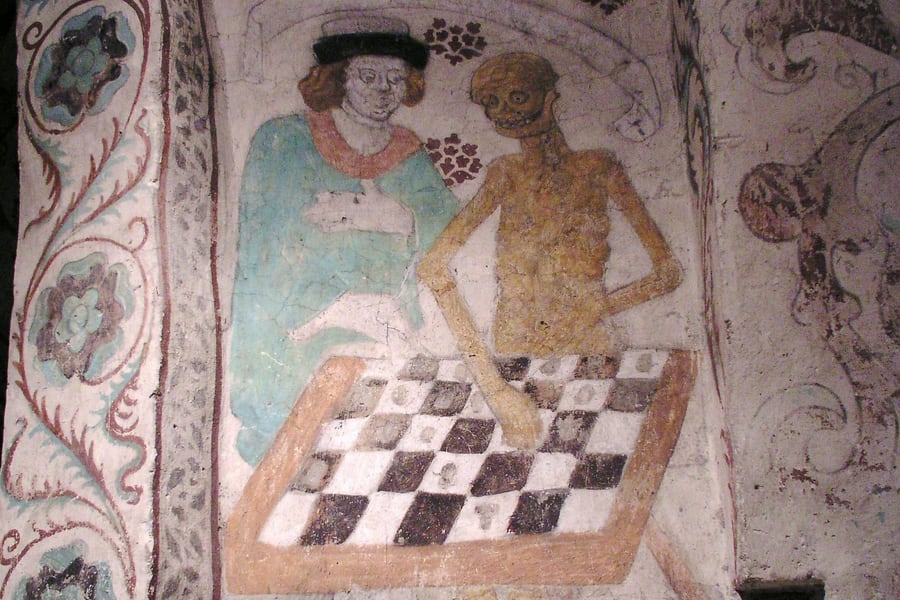
In the 1480s Albertus Pictor's workshop painted the vaults of Täby church, and they were never whitewashed over. In the west vault a man plays chess against Death, the image that gave Ingmar Bergman a scene in The Seventh Seal in 1957. The church stands in Täby kyrkby, on line 27.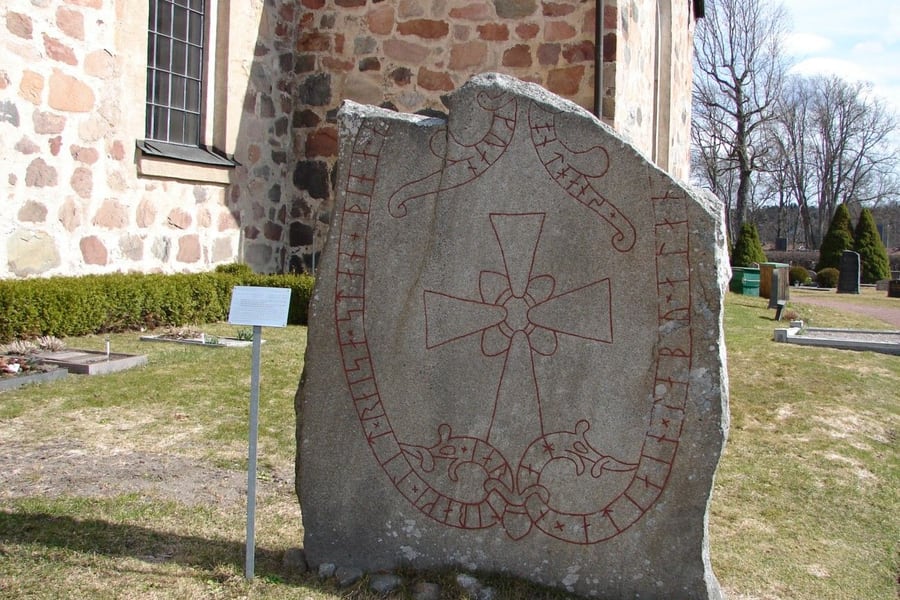 PKron / Wikimedia Commons · CC BY 2.5 · cropped
The stone that claims a hundred
Jarlabanke, an 11th-century chieftain of Täby, raised runestones to himself while he lived. The one beside Vallentuna church adds on its second side that he made this assembly place and alone owned this hundred — the local district. Whether he owned it or ruled it is still argued.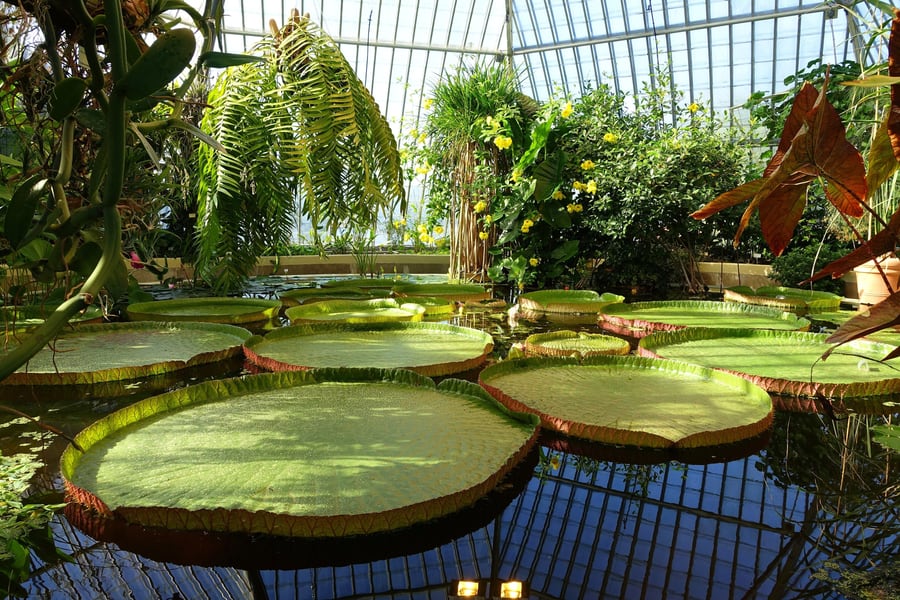 Daderot / Wikimedia Commons · CC0 · 2014 · cropped
Giant water lilies
Next to Universitetet station, Bergianska's Victoria house has kept giant water lilies under its glass dome since 1900. The leaves grow up to 2.5 m across, and each flower opens at dusk for two nights, white on the first and pink on the second. It is open May to September.Timetables
Trains run every day of the year and need no booking. Line 27 leaves Stockholms östra several times an hour, but most trains turn back at Ormsta or Lindholmen; the tables below are a selection of those that run all the way to Kårsta. On weekdays most of them are 27S trains, which skip Djursholms Ösby, Ensta, Visinge and Bällsta and take 47–48 minutes. They run every 40 minutes in the morning and afternoon peaks and hourly in between; from about 20:00, and all day at weekends, a train calls everywhere every hour and takes 52 minutes. On Friday and Saturday nights one more train runs each way, at 01:09. Times are from SL's journey planner for November 2026, read in October 2026.
Stockholms östra to Kårsta
| Days | Train | Stockholms östra | Djursholms Ösby | Täby kyrkby | Vallentuna | Kårsta |
|---|---|---|---|---|---|---|
| Mon–Fri | 27 | 05:21 | 05:29 | 05:43 | 05:51 | 06:14 |
| Mon–Fri | 27S | 07:33 | — | 07:52 | 07:58 | 08:21 |
| Mon–Fri | 27S | 12:13 | — | 12:32 | 12:38 | 13:00 |
| Mon–Fri | 27S | 16:53 | — | 17:12 | 17:18 | 17:41 |
| Mon–Fri | 27 | 20:09 | 20:17 | 20:31 | 20:39 | 21:01 |
| Sat–Sun | 27 | 05:09 | 05:17 | 05:31 | 05:39 | 06:01 |
| Sat–Sun | 27 | 12:09 | 12:17 | 12:31 | 12:39 | 13:01 |
| Daily | 27 | 00:09 | 00:17 | 00:31 | 00:39 | 01:01 |
Kårsta to Stockholms östra
| Days | Train | Kårsta | Vallentuna | Täby kyrkby | Djursholms Ösby | Stockholms östra |
|---|---|---|---|---|---|---|
| Mon–Fri | 27 | 05:07 | 05:29 | 05:36 | 05:50 | 05:59 |
| Mon–Fri | 27S | 07:14 | 07:36 | 07:42 | — | 08:02 |
| Mon–Fri | 27S | 12:14 | 12:36 | 12:42 | — | 13:02 |
| Mon–Fri | 27S | 16:34 | 16:56 | 17:02 | — | 17:22 |
| Mon–Fri | 27 | 20:09 | 20:31 | 20:38 | 20:52 | 21:01 |
| Sat–Sun | 27 | 05:09 | 05:31 | 05:38 | 05:52 | 06:01 |
| Sat–Sun | 27 | 12:09 | 12:31 | 12:38 | 12:52 | 13:01 |
| Daily | 27 | 00:09 | 00:31 | 00:38 | 00:52 | 01:01 |
The first train is at 05:21 (05:07 from Kårsta) on weekdays and 05:09 at weekends; the 00:09 is the last, except on Friday and Saturday nights. Check your date on SL's planner: SL · travel planner (opens in a new tab).
Tickets
Roslagsbanan is part of SL, Stockholm's public transport, and takes the same tickets as the metro and the buses. A single ticket costs 43 SEK and is valid for 75 minutes on every SL service, which covers the run to Kårsta with time to spare; travelcards cost 180 SEK for 24 hours and 360 SEK for 72. Under-20s and over-65s pay a reduced fare, and children under seven travel free with a ticket holder.
There are no ticket barriers on the line, and no cash is taken on board. Buy in the SL app, or tap a contactless bank card or phone on the card reader on the platform before boarding. Checked against SL, October 2026.
Book your tickets
A single ticket
43 SEK · 75 minutes on every SL service
Enough for the whole run to Kårsta, bought in the SL app or by tapping a contactless card.
Book Tickets (opens in a new tab, on sl.se)via sl.seA 24-hour travelcard
180 SEK · unlimited travel in Stockholm County
Out to Kårsta, back by another branch and on into the city, all on one ticket.
Book Tickets (opens in a new tab, on sl.se)via sl.seRail Passes
An Interrail or Eurail pass does not cover Roslagsbanan. Interrail's table of the companies a pass is valid with — checked in October 2026, when it carried a last updated 21 October 2026 stamp — does not list SL, and names "all other regional traffic run by the municipalities" among the trains in Sweden that a pass does not cover.
The pass worth having here is SL's own. A 24-hour travelcard at 180 SEK, or 72 hours at 360 SEK, covers every branch of the line along with the metro, the commuter trains, the buses and the ferries to Djurgården, and costs less than five single tickets.
Conditions read on interrail.com (opens in a new tab) and sl.se (opens in a new tab) in October 2026.
Places to Visit
The times below are taken from the 10:09 from Stockholms östra on a Saturday, which calls at Djursholms Ösby at 10:17, Täby kyrkby at 10:31 and Vallentuna at 10:39, and reaches Kårsta at 11:01.
They come in the order the line meets them: a castle in the villa town of Djursholm, a Viking-age causeway at Täby, a medieval church above a lake at Vallentuna, and at the end of the line a country church a walk from the terminus.
 Udo Schröter / Wikimedia Commons · CC BY-SA 3.0 · 2012 · cropped
Djursholm Castle
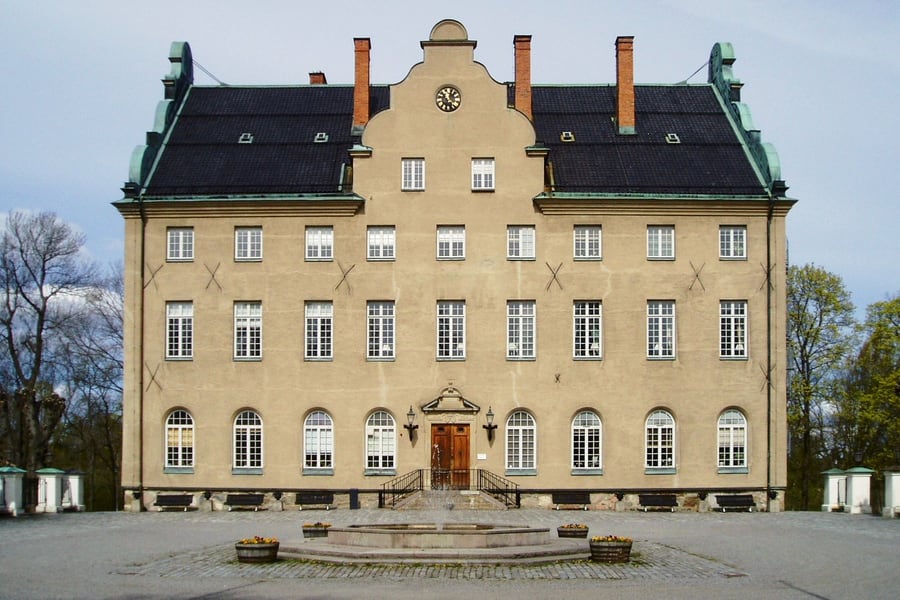
The Banér family held the Djursholm estate from 1508 to 1813, and Svante Banér gave the castle its present form in the 17th century, with parts of the late medieval house inside it. From 1891 to 1910 it housed the Djursholm school, where Elsa Beskow taught art. It is now the town hall of Danderyd.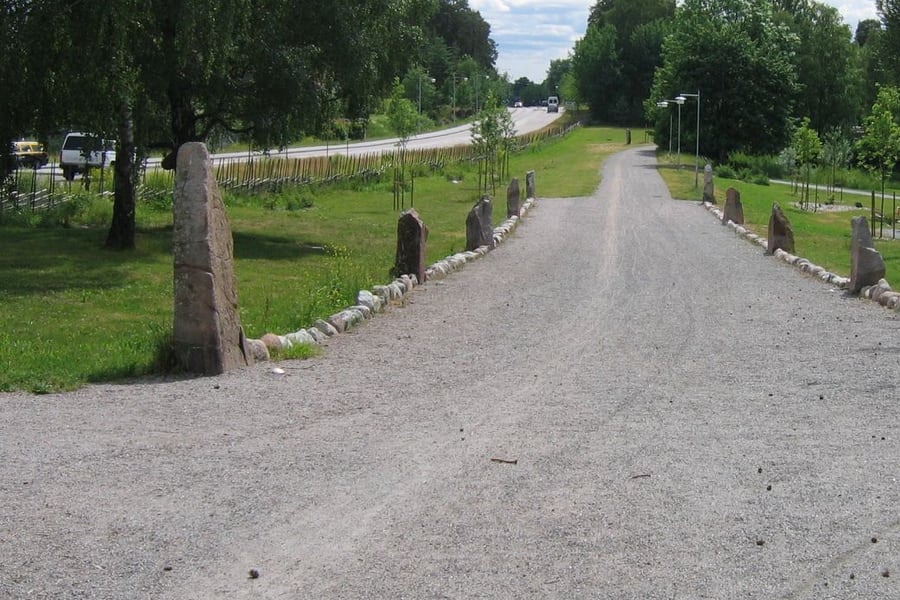 Berig / Wikimedia Commons · CC BY 2.5 · 2007 · cropped
Jarlabanke's bridge
Jarlabanke built this causeway across marshy ground at Täby in the 11th century, lined with raised stones. Two runestones still stand at its northern end, saying that he made the bridge for his soul and alone owned all of Täby. The road from Vallentuna to Stockholm ran over it until the 1960s.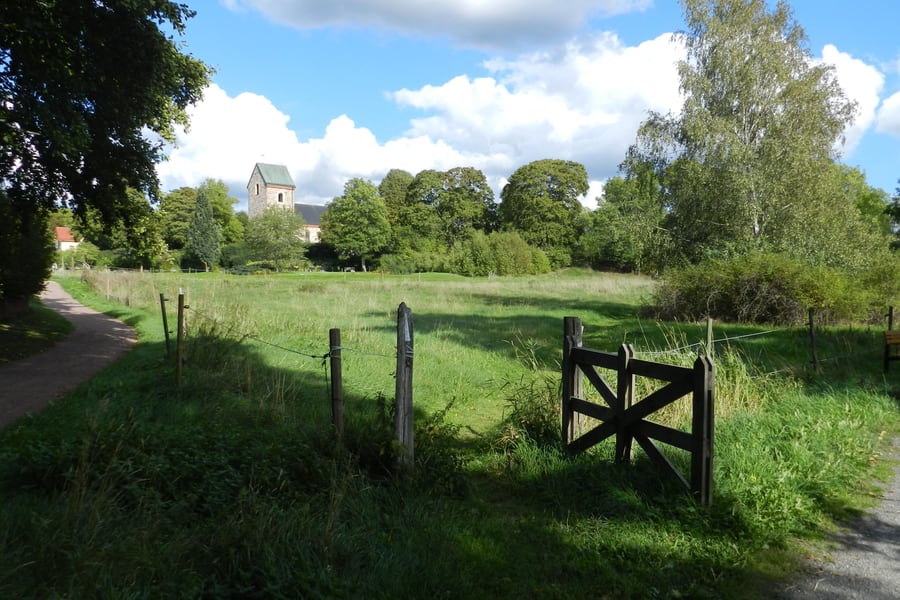 Zquid / Wikimedia Commons · CC BY-SA 4.0 · 2018 · cropped
Vallentuna church
A grey-stone church whose first building dates from the 1190s, on the northern shore of Lake Vallentunasjön. Lightning burned its spire and most of its furnishings in 1856. Between the church and the lake lies the Björkby-Kyrkviken nature reserve, 100 hectares of meadow and farmland protected since 1990.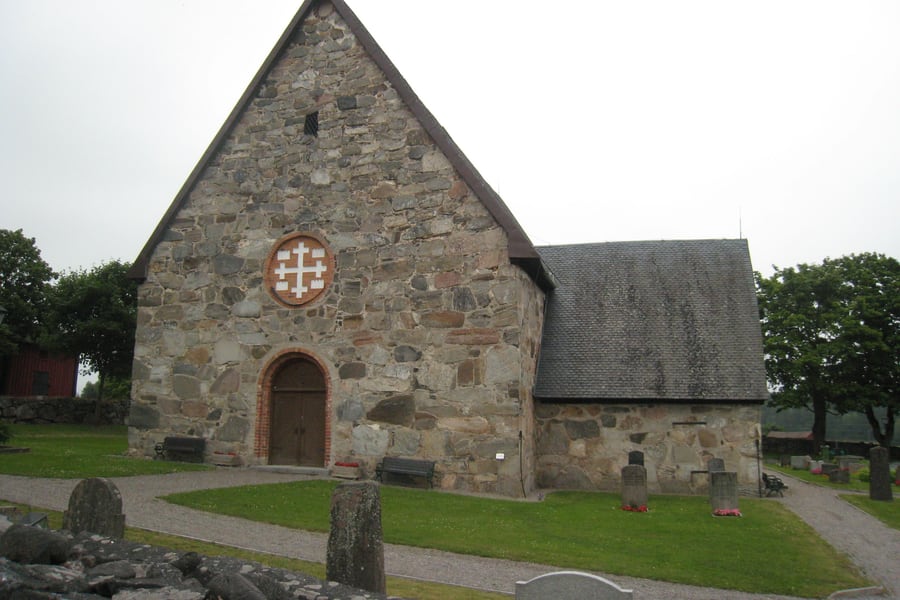 Einarspetz / Wikimedia Commons · CC BY-SA 3.0 · 2009 · cropped
Kårsta church
In the old church village of Kårstaby, about 2.5 km west of the station, the grey-stone church was built at the end of the 15th century and has barely changed outside since its porch was added around 1500. A runestone is set into the west gable, some five metres up.Where to Sleep
The whole of line 27 is an easy day out from Stockholm, so the place to stay is the city end. Both houses below are on the northern edge of the centre, one a short walk from Stockholms östra. Everything described is what the house says about itself on its own site, read in October 2026. No price, grade or star count appears here, because none has been verified.
Where to stay
 AleWi / Wikimedia Commons · CC0 · 2016 · cropped
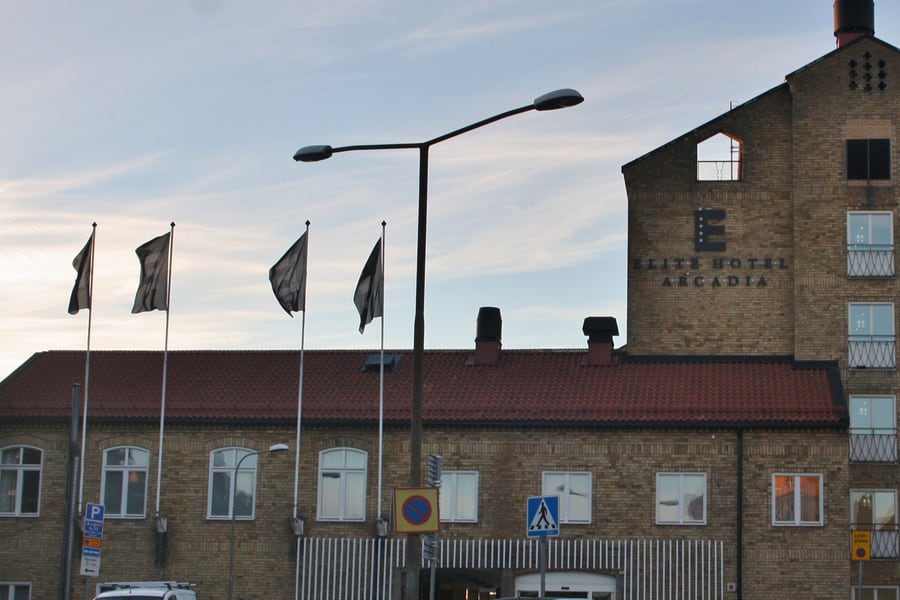
Elite Hotel Arcadia
Körsbärsvägen 1, Stockholm
Ninety rooms and a garden, a hundred metres from the Tekniska högskolan metro beside Stockholms östra.
Check Availability (opens in a new tab, on elite.se)via elite.se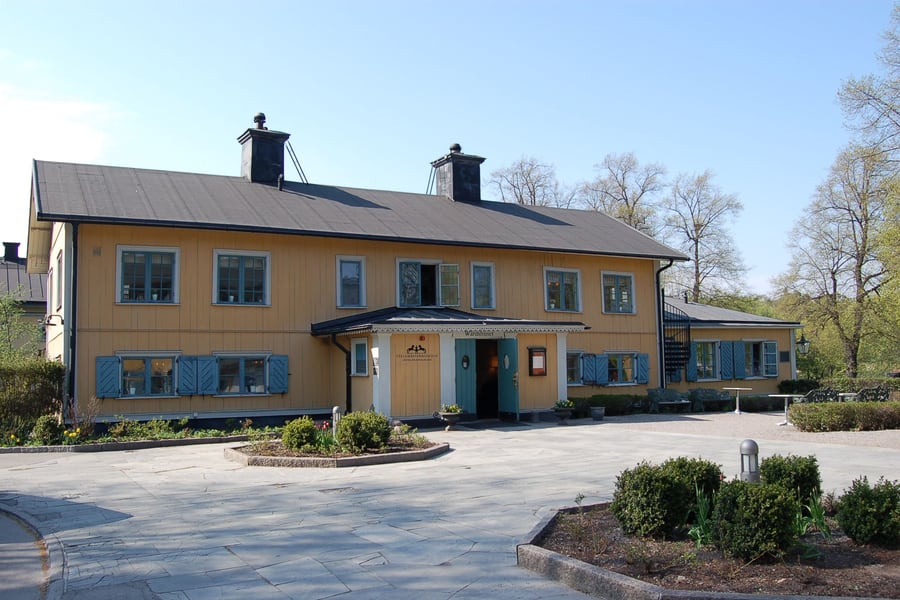 FriskoKry / Wikimedia Commons · CC BY-SA 3.0 · 2006 · cropped
Stallmästaregården
Norrtull, on Brunnsviken
A boutique hotel and inn of 49 rooms, on the shore of Brunnsviken at the edge of the Royal Haga Park.
Check Availability (opens in a new tab, on stallmastaregarden.se)via stallmastaregarden.seQuestions or corrections
Planning this trip and stuck on something, or spotted a time, fare or detail that has changed? Send us a message about Roslagsbanan. We read every one, and we update this page when something has changed.