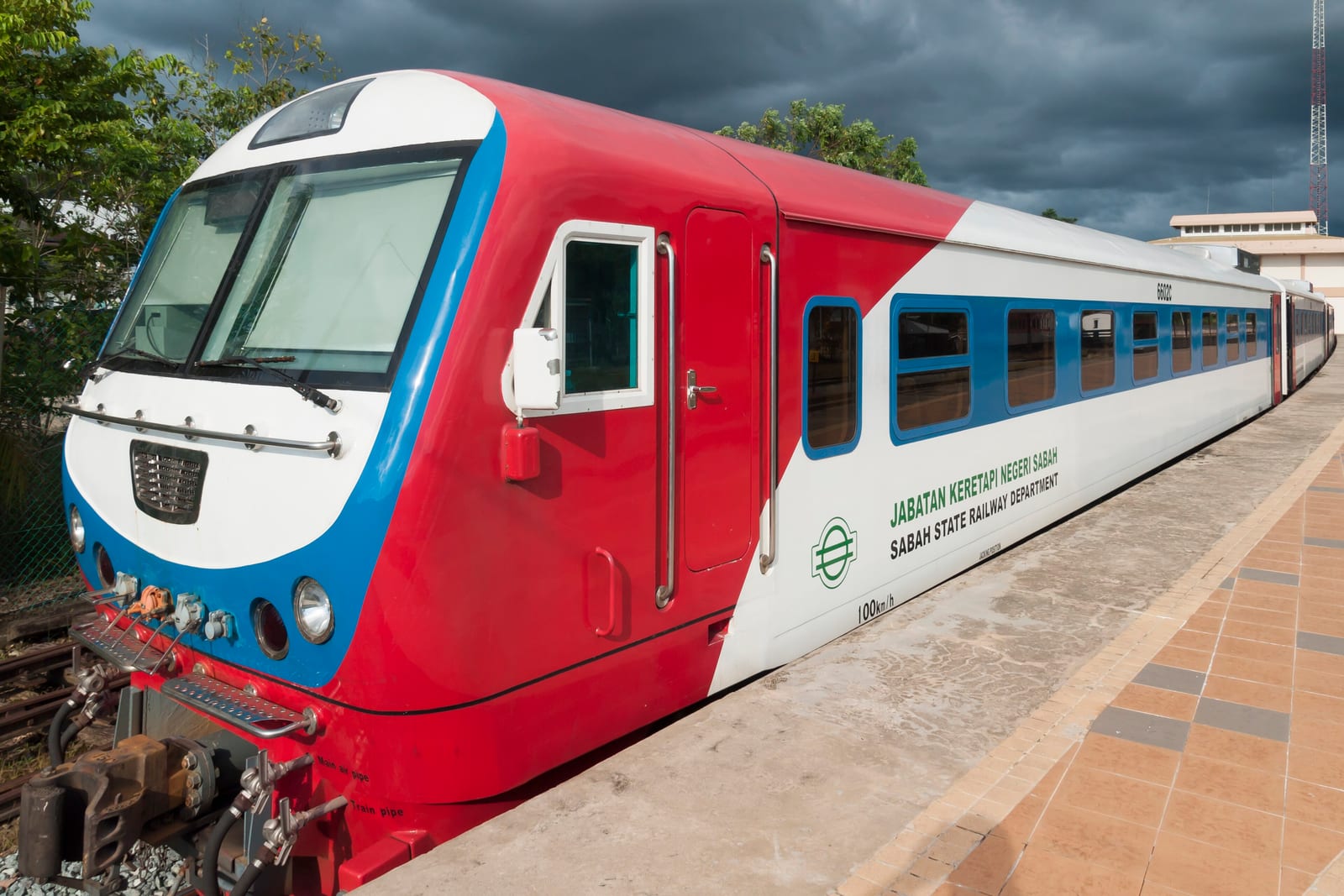
Sabah State Railway
Photo by CEphoto, Uwe Aranas or alternatively © CEphoto, Uwe Aranas / Wikimedia Commons · CC BY-SA 3.0
- Distance134 km · metre gauge
- DurationBeaufort–Tenom in about 2 hours
- Best seasonMar–Sep (drier)
Introduction
Borneo is enormous. Three countries share it, and between them they have managed one railway.
This is it. A hundred and thirty-four kilometres of metre-gauge track from Tanjung Aru, on the coast at Kota Kinabalu, inland to a small town called Tenom. That is the entire rail network of the island — and it exists because in the 1890s somebody needed to get tobacco down to the sea.
Construction began in 1896, under an engineer named Arthur Joseph West, and the line — then called the North Borneo Railway — opened on 3 February 1898. It has been running, more or less, ever since.
Now, the honest part, because this is the thing you are probably here for.
There is a heritage steam train called the North Borneo Railway: a 1954 Vulcan locomotive, built by the Vulcan Foundry of Newton-le-Willows in Lancashire, hauling colonial-livery carriages from Tanjung Aru down the coast to Papar, with a tiffin lunch. It is beautiful and it is all over the internet. We cannot tell you whether it is running. The operator's own web page is dead. One source says the steam tour stopped during Covid and never came back. Agencies are selling 2026 departures. Others say the Vulcan is under maintenance and a diesel is pulling the train instead. We are not going to resolve that from a desk in Europe — contact them before you plan a trip around it, and do not assume steam.
Which is fine, because the steam train isn't the reason to come.
The reason to come is the ordinary train, and specifically the stretch inland from Beaufort to Tenom, where the railway leaves the road behind and follows the Padas river into its gorge. Jungle walls, white water underneath, and no other way through — this is the piece of railway that justifies the whole thing. The train is a battered railcar. The conductor writes your ticket out by hand. It stops where people need it to stop, because for the settlements along the Padas there is no road, and the railway is simply how you get out.
That's the trip. Not a heritage attraction, not a steam engine in a resort livery — a small working train doing a necessary job through some of the most dramatic country in Malaysia, for the price of a sandwich.
Borneo has one railway. Ride the useful bit.
The Journey
The line starts at Tanjung Aru, just south of Kota Kinabalu, and runs down the coast — Putatan, Kinarut, Papar, Kimanis, Bongawan — through a flat green landscape of paddy and palm with the South China Sea somewhere off to the right. It is pleasant enough. It is not why you came.
You came for what happens after Beaufort.
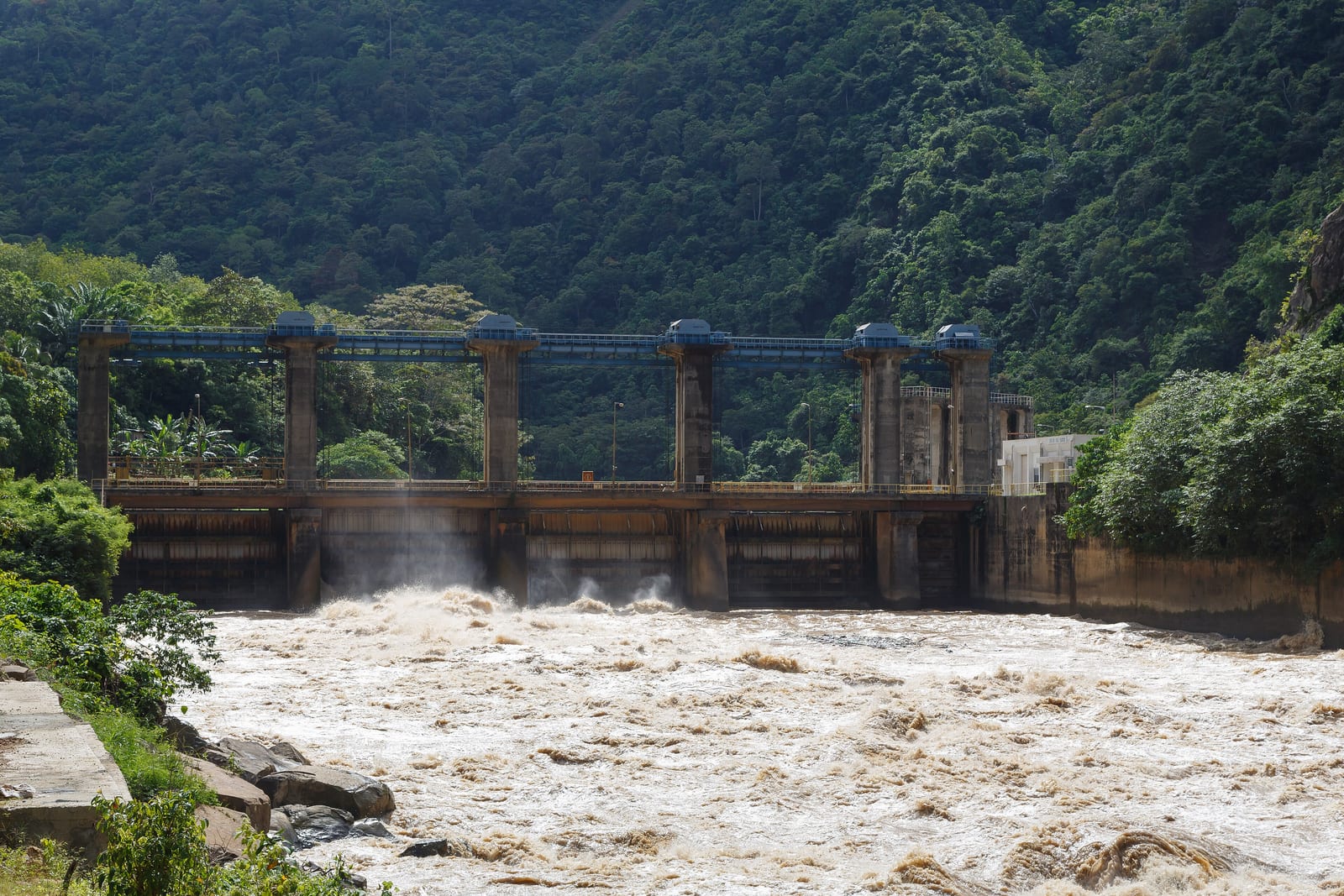
Beaufort is the junction, and it is where the railway stops being ordinary. The line turns inland, the road gives up, and the train follows the Padas river into the Padas Gorge — a deep, narrow, jungle-walled canyon that the water has cut through the interior highlands. There is no road in here. There is the river, and there is the railway, and that is all there has ever been.
The train is a railcar: small, loud, elderly, and completely unbothered. It runs along a ledge above the water with the jungle pressing in on one side and the drop on the other, and below you the Padas is doing what it does — big, brown, and genuinely violent in places. People raft this river. From the train you look straight down onto the rapids they pay to be thrown around in.
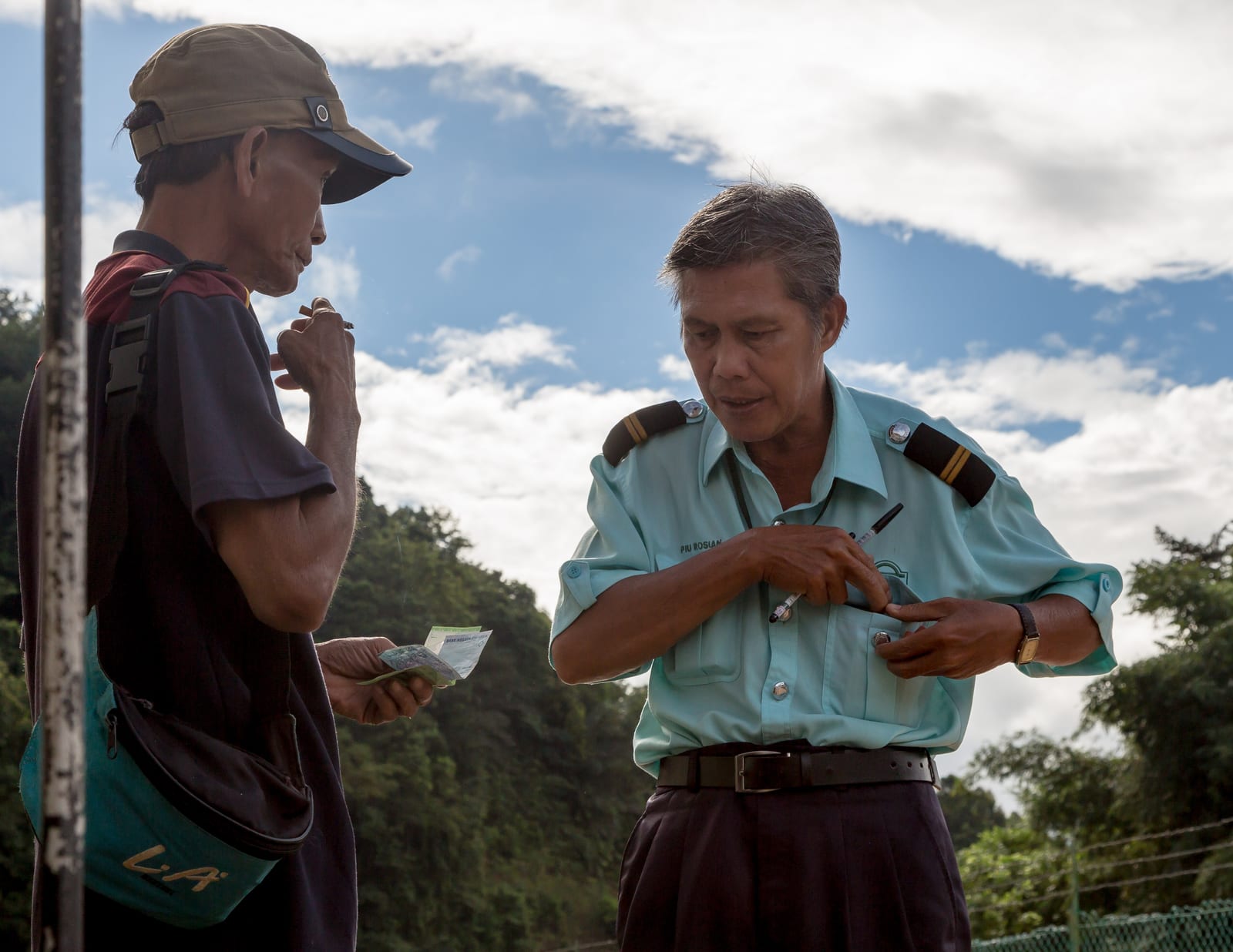
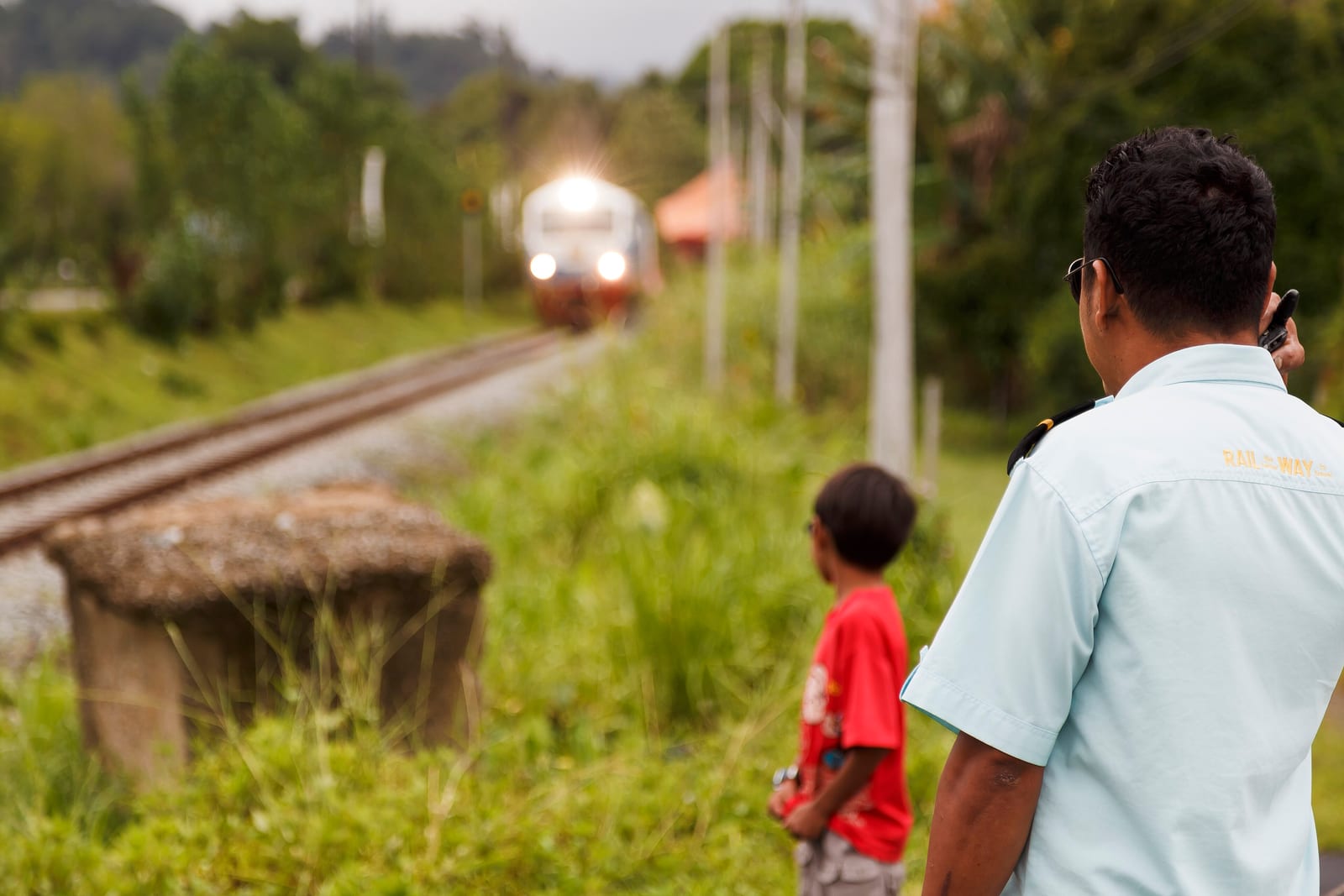
Inside, the railway is doing its actual job. The conductor works down the car with a book and a pen, writing tickets by hand. People get on at halts that are not really stations, carrying shopping and produce and children, and get off again at places that look like nothing and are somebody's home. Nobody is sightseeing except you.
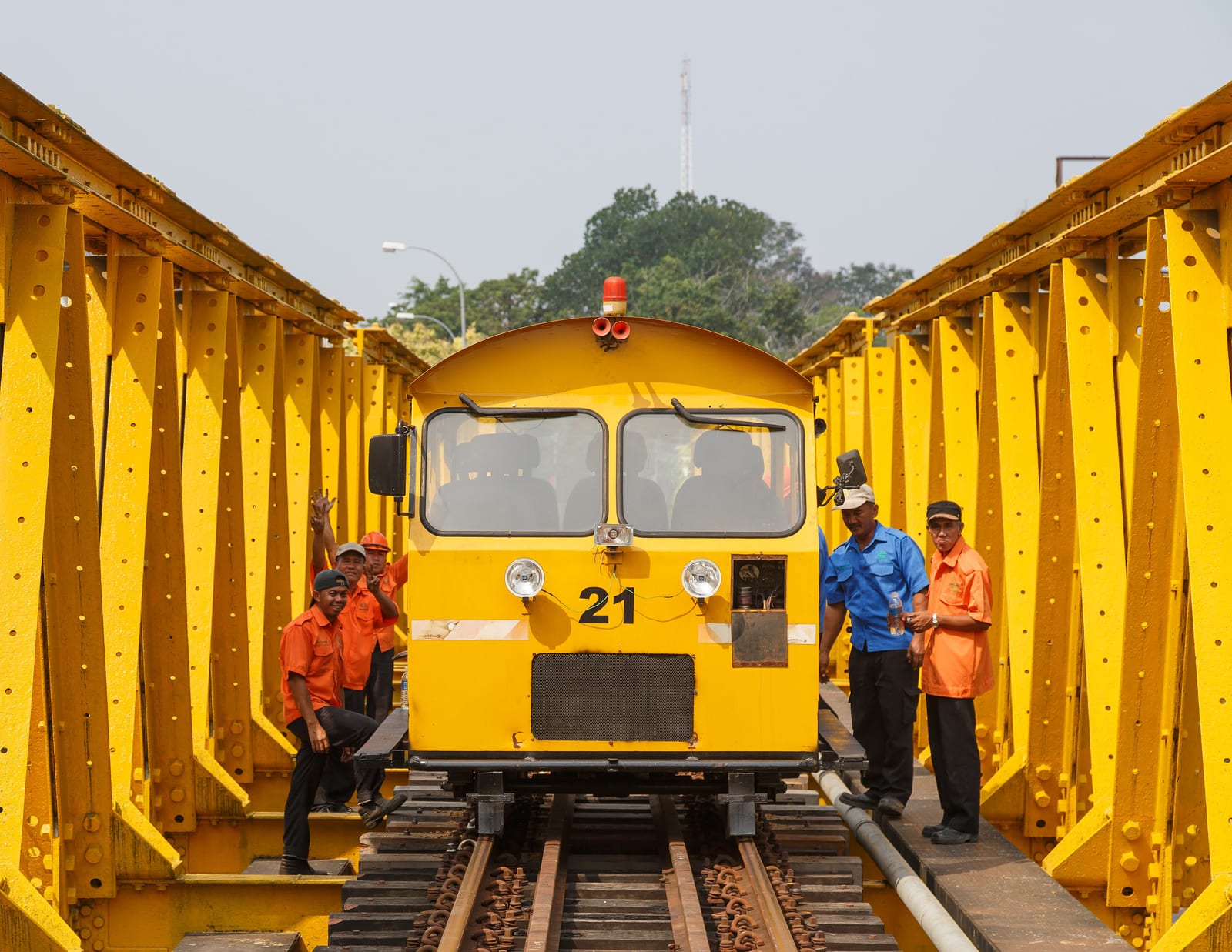
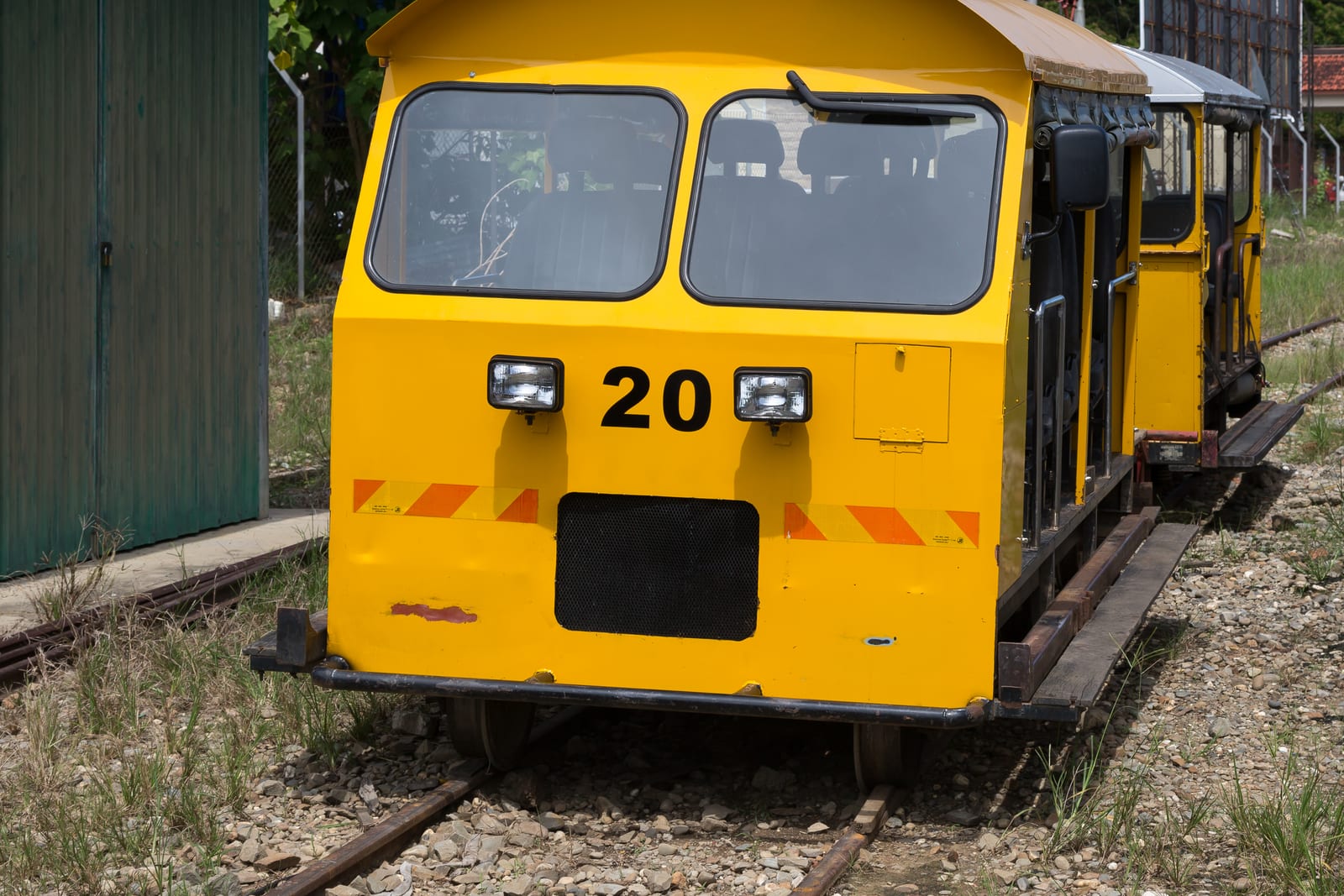
Somewhere along the way you will probably change trains at Halogilat. The track beyond it is in poor enough condition that it needs lighter locomotives and smaller carriages, so the through journey gets handed from one to another. It is an inconvenience that tells you everything about how this railway survives.
And then Tenom: the end of the line, 134 kilometres from the sea, a small town in the interior with a railbus sitting at the platform and not much else going on. There is an agricultural research park nearby, and coffee — Tenom coffee is a real thing, and worth the detour on its own.
The full journey is only a couple of hours from Beaufort. It is not long, it is not luxurious, and there is no dining car. But it is the only railway on Borneo, doing the only thing it can do, through country that would otherwise be unreachable — and there is nothing else quite like it in Malaysia, or anywhere much else.
Along the route
Photo by CEphoto, Uwe Aranas or alternatively © CEphoto, Uwe Aranas / Wikimedia Commons · CC BY-SA 3.0The only railway on Borneo
Borneo is enormous, and shared between three countries. It has one railway, and this is it: 134 kilometres of metre gauge from the coast at Kota Kinabalu to Tenom in the interior. That is the entire rail network of the island.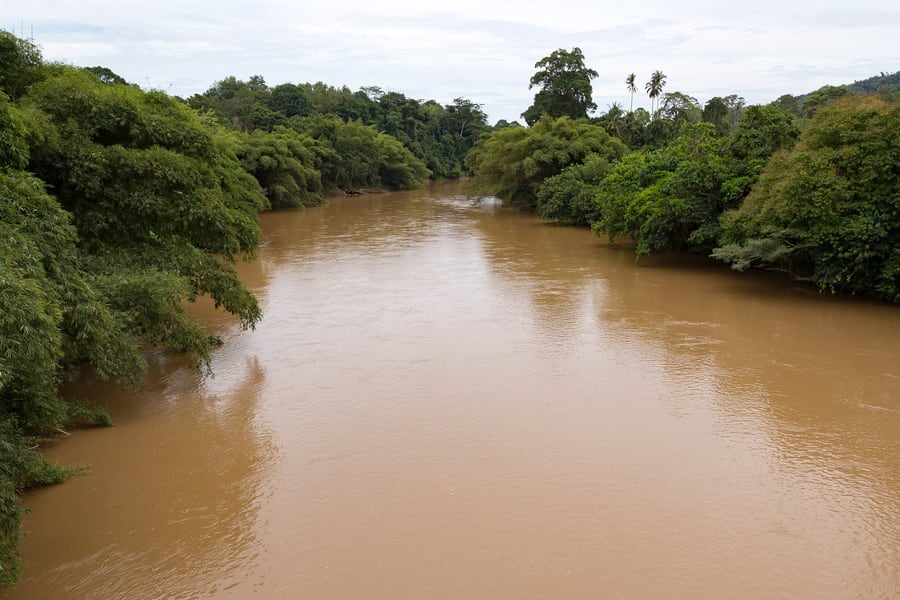 Photo by CEphoto, Uwe Aranas or alternatively © CEphoto, Uwe Aranas / Wikimedia Commons · CC BY-SA 3.0 · cropped
The Padas Gorge
Beyond Beaufort the line leaves the road behind entirely and follows the Padas river into its gorge — jungle walls, white water below, and no other way through. This stretch is why the railway is worth crossing the world for, and it is the reason it still exists.Photo by CEphoto, Uwe Aranas or alternatively © CEphoto, Uwe Aranas / Wikimedia Commons · CC BY-SA 3.0Built for tobacco, in 1898
Construction began in 1896 under the engineer Arthur Joseph West and the line opened on 3 February 1898. It was built for one reason: getting tobacco out of the interior and down to the coast for export.A bit of history
Culture & experiences along the way
Photo by CEphoto, Uwe Aranas or alternatively © CEphoto, Uwe Aranas / Wikimedia Commons · CC BY-SA 3.0A ticket written by hand
There is no app. The conductor comes down the railcar with a book and a pen and writes your ticket out, and the train stops where people need it to stop. This is not a performance of an old railway — it's just how this one works.Photo by CEphoto, Uwe Aranas or alternatively © CEphoto, Uwe Aranas / Wikimedia Commons · CC BY-SA 3.0The train as the road
Through the gorge there is no road at all. The railway is how the settlements along the Padas get out — which means you are not sightseeing, you are riding the local bus with everyone's shopping.Photo by CEphoto, Uwe Aranas or alternatively © CEphoto, Uwe Aranas / Wikimedia Commons · CC BY-SA 3.0Rafting the water you rode past
The Padas is one of Malaysia's serious whitewater rivers, and the rafting runs through the same gorge the train threads. Doing both — the railcar in, the river out — is the way to take this place properly.Timetables
This is an ordinary service railway with a handful of trains a day, not a tourist attraction with a published brochure. Treat the timings below as the shape of the day and confirm locally.
How it runs:
| Detail | What to expect |
|---|---|
| The line | Tanjung Aru (Kota Kinabalu) ⇄ Tenom · 134 km · metre gauge |
| The good bit | Beaufort ⇄ Tenom — the Padas Gorge |
| Frequency | Roughly two trains each way per day on the Tenom–Beaufort leg |
| Rough timings | From Tenom around 07:00 and 13:00; from Beaufort around 07:50 and 13:30 |
| Duration | About two hours, Beaufort to Tenom |
| The catch | You will usually change trains at Halogilat |
Good to know:
- Beaufort to Tenom is the journey. The coastal stretch from Kota Kinabalu is fine but ordinary. If you have one ride in you, make it the gorge.
- The change at Halogilat is normal. Track conditions beyond it need lighter locomotives and smaller carriages, so the service is split. Don't panic when everyone gets off.
- Confirm before you travel. The Sabah State Railway's own site was down for maintenance when we checked, timings shift, and services on this line have a long history of being suspended for track work. Ask at Beaufort or Tenom station the day before.
- Two trains a day means two chances. Miss the afternoon one and you are staying in Tenom. That's not a disaster — but plan it rather than discover it.
- Go in the drier months. Roughly March to September is the better window; heavy rain in the gorge means landslips, and landslips mean no train.
- Sit on the river side out of Beaufort for the drop into the Padas.
- The heritage steam train is a separate thing entirely, on a different part of the line (Tanjung Aru to Papar, Wednesdays and Saturdays), and we can't confirm it's running. See Tickets.
Tickets
There are two entirely different propositions here. The ordinary train from Beaufort to Tenom is the one to ride: bought at the station or from the conductor on the day, for a few ringgit, with no booking system, no class and no fuss. It is a public service, and that is exactly why it is worth riding — and it is the one that goes through the Padas Gorge.
The North Borneo Railway heritage train is a different matter, and we have to be straight: ⚠️ we could not confirm it is currently operating, or running under steam. The operator's own page 404s, one source says the steam tour never restarted after Covid, and others say a diesel is substituting while the Vulcan is maintained. Contact Sutera Harbour directly before building a trip around it, and ask two questions: is it running on your date, and will it be under steam.
Book your tickets
Beaufort – Tenom
The Padas Gorge railcar
The ride that matters, and an ordinary service train — a couple of departures each way per day, through the gorge, for a few ringgit. Buy at the station from the conductor. Note that Tenom–Beaufort passengers generally change at Halogilat, where the track needs lighter stock.
Book Tickets (opens in a new tab, on Sabah State Railway (Jabatan Keretapi Negeri Sabah))via Sabah State Railway (Jabatan Keretapi Negeri Sabah)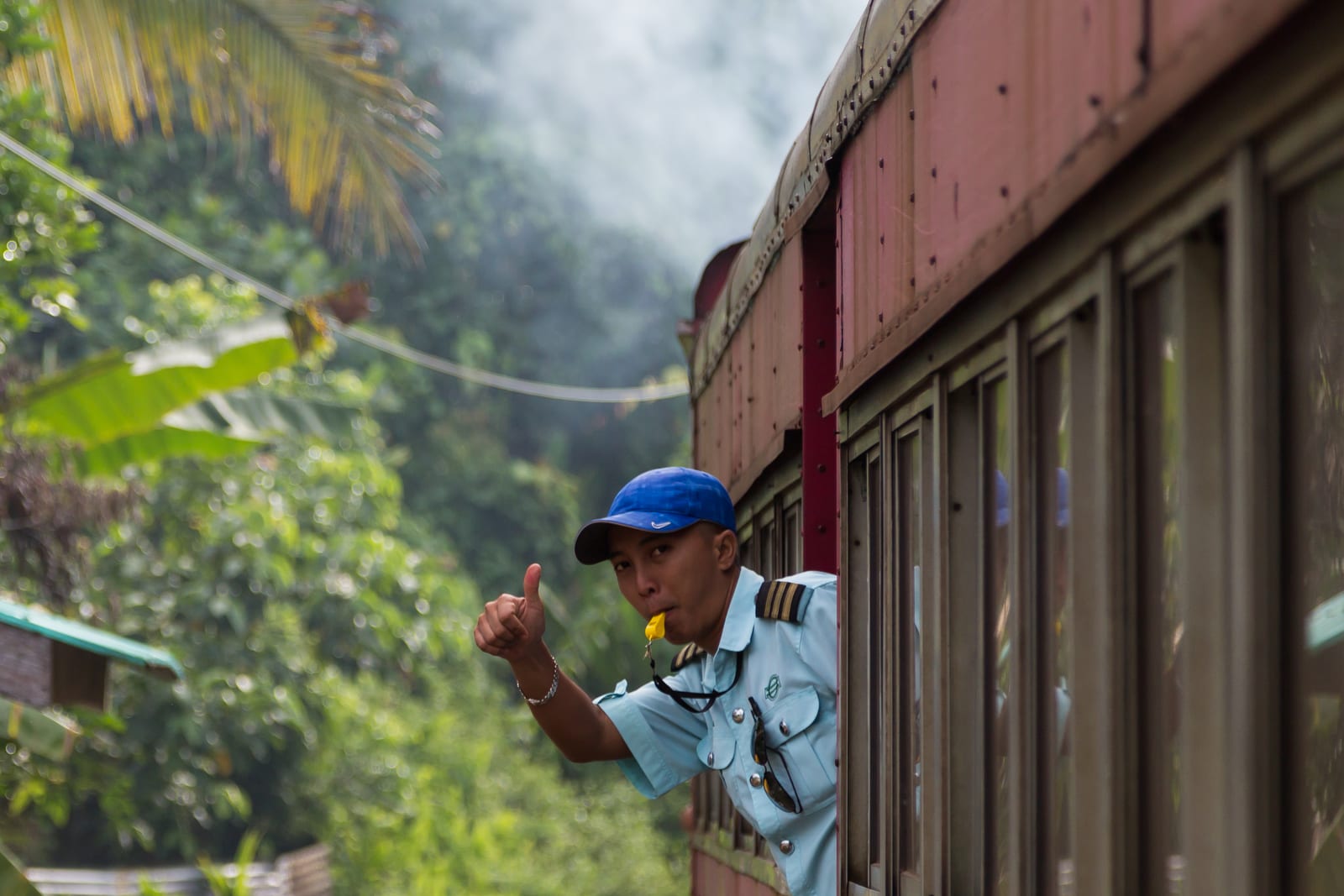
North Borneo Railway
The heritage train — status unconfirmed
The 1954 Vulcan steam tour from Tanjung Aru to Papar, Wednesdays and Saturdays, with a tiffin lunch. ⚠️ We cannot confirm it is running, or running under steam. The operator's own page is dead, one source says it never restarted after Covid, and others say the locomotive is under maintenance with a diesel substituting. Contact them before you plan around it.
Book Tickets (opens in a new tab, on North Borneo Railway (Sutera Harbour))via North Borneo Railway (Sutera Harbour)Rail Passes
No rail pass covers the Sabah State Railway. Interrail and Eurail are European schemes, and Malaysia is not among the 33 countries in Interrail's list of covered railway companies. The ordinary train from Beaufort to Tenom is bought at the station or from the conductor for a few ringgit.
Checked October 2026 against Interrail's list of railway companies (opens in a new tab).
Places to Visit
Sabah is the reason most people come to Borneo, and the railway is a small, excellent part of a much bigger trip. Beaufort, the junction town where the line turns inland, gets no entry of its own — nobody's idea of a destination, but this is where you catch the train that matters.
The rest divides neatly in two. The west coast is the railway's own country: Kota Kinabalu, the Padas Gorge, Tenom and the mountain that stands over all of them. The east — Sepilok, the Kinabatangan, the islands off Semporna — is a separate expedition by road or air, and worth every hour it takes.
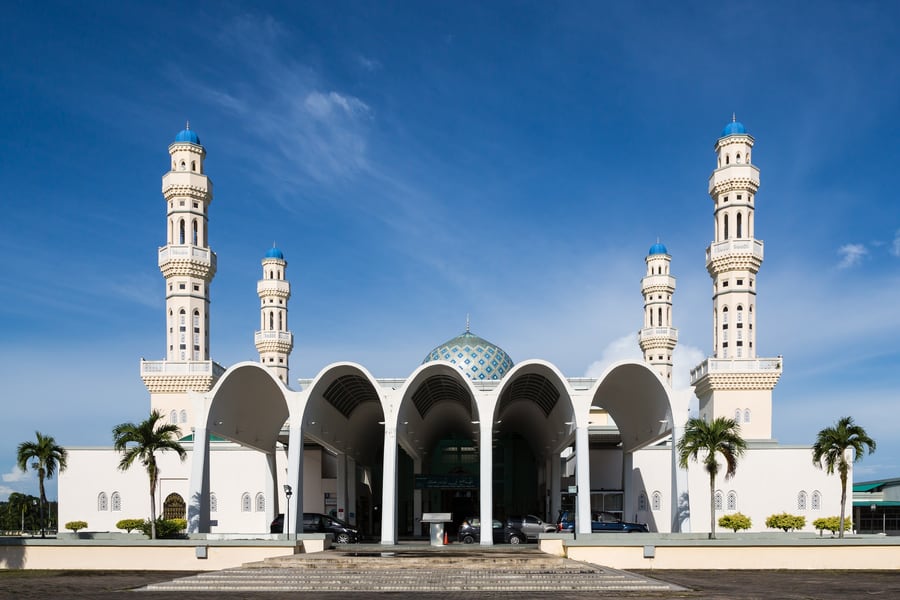 Photo by CEphoto, Uwe Aranas or alternatively © CEphoto, Uwe Aranas / Wikimedia Commons · CC BY-SA 3.0 · cropped
Kota Kinabalu
The line starts at Tanjung Aru, on the edge of a city the war flattened and the peace rebuilt in concrete — but the seafood markets are superb and the sunsets are frankly showing off. The City Mosque on Likas Bay is the set piece: opened on 2 February 2000, modelled on the Nabawi Mosque in Medina, room for 12,000, and ringed by a man-made lagoon that has earned it the name of the floating mosque.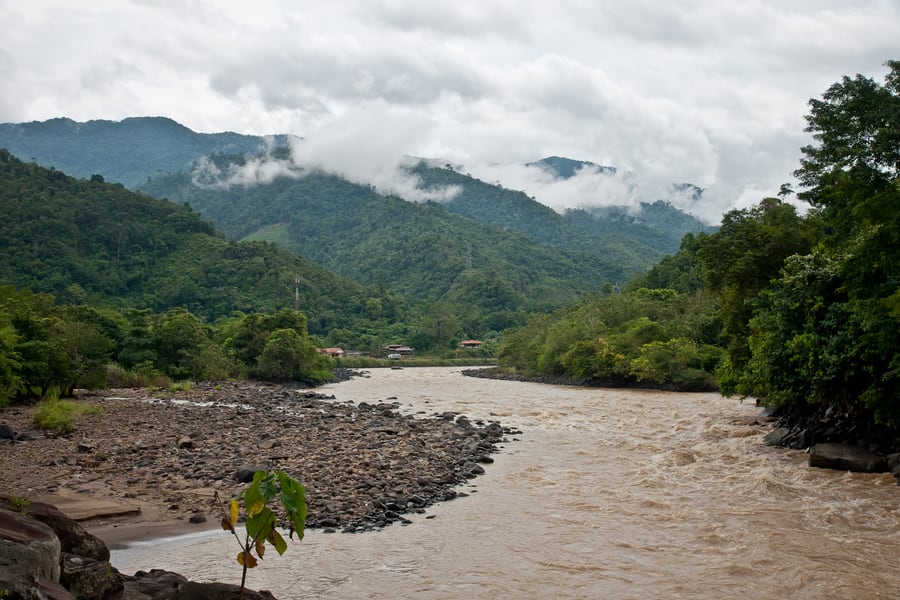 Photo by CEphoto, Uwe Aranas or alternatively © CEphoto, Uwe Aranas / Wikimedia Commons · CC BY-SA 3.0 · cropped
The Padas Gorge
Beyond Beaufort the river runs through a gorge with no road in it, and the railway is not simply the scenic way through — it is the only way. Rafting trips put in at Pangi station and take out at Rayoh, both reached by train and by nothing else: nine kilometres of Grade III–IV water over about three hours, through rapids named Scooby Doo, Cobra and Head Hunter. Ride in, paddle out.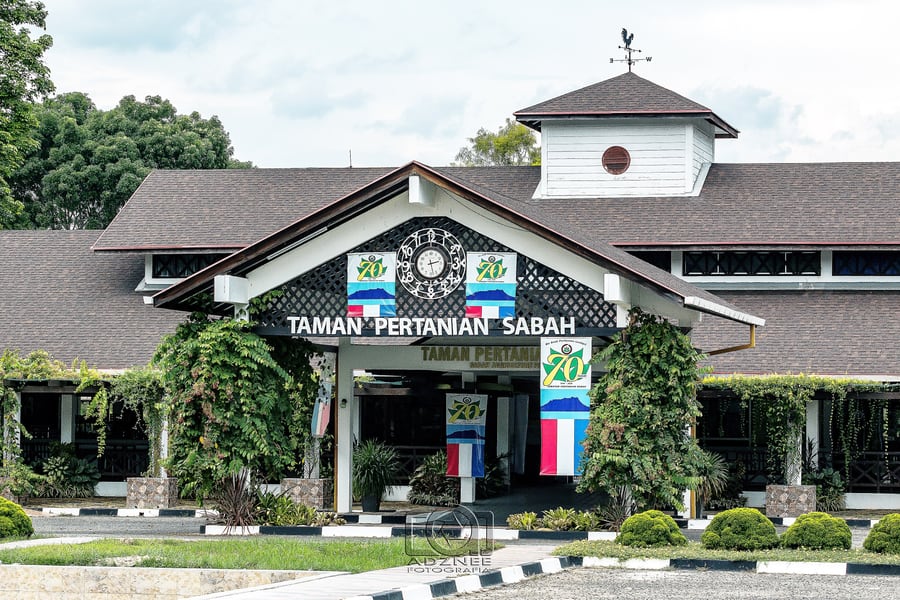 Adznee Abas / Wikimedia Commons · CC BY 2.0 · cropped
Tenom
The end of the line, 134 kilometres from the sea, in a quiet interior town best known for the coffee grown, roasted and drunk around it. Just outside, at Lagud Seberang, is the Sabah Agriculture Park — some 200 hectares run by the state agriculture department, with a living crops museum of over 400 species, twenty-one ornamental gardens, a bee centre and a native orchid collection of around 1,500 plants.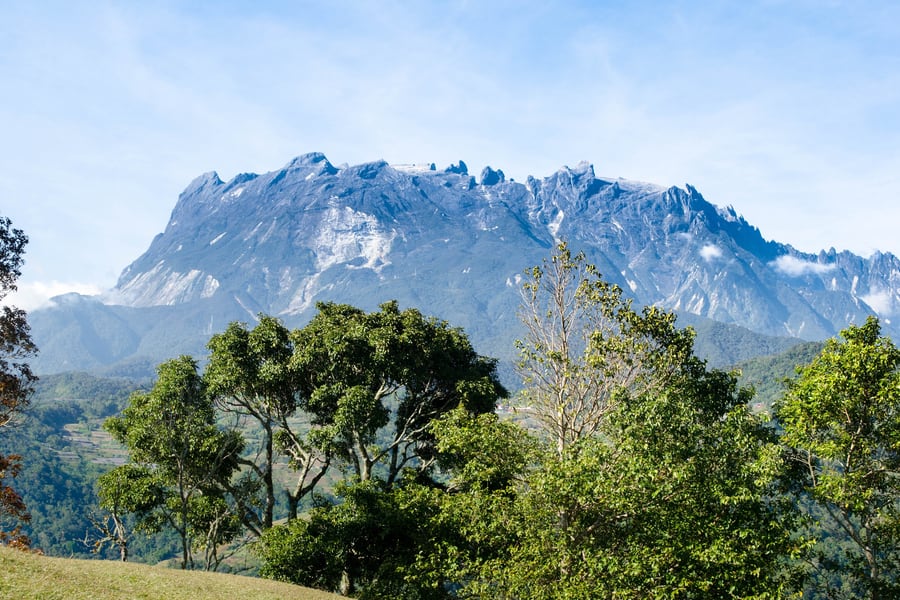 Angah hfz / Wikimedia Commons · CC BY-SA 4.0 · cropped
Mount Kinabalu
Sabah's giant stands 4,095 metres — a figure revised down by six metres when satellites measured it in 1997 — and it dominates the whole west coast. Kinabalu Park dates from 1964 and became a UNESCO World Heritage Site in 2000. Only 130 climbing permits are issued a day, so book months ahead. The earthquake of 5 June 2015 killed eighteen people on the mountain and closed the Mesilau trail for good.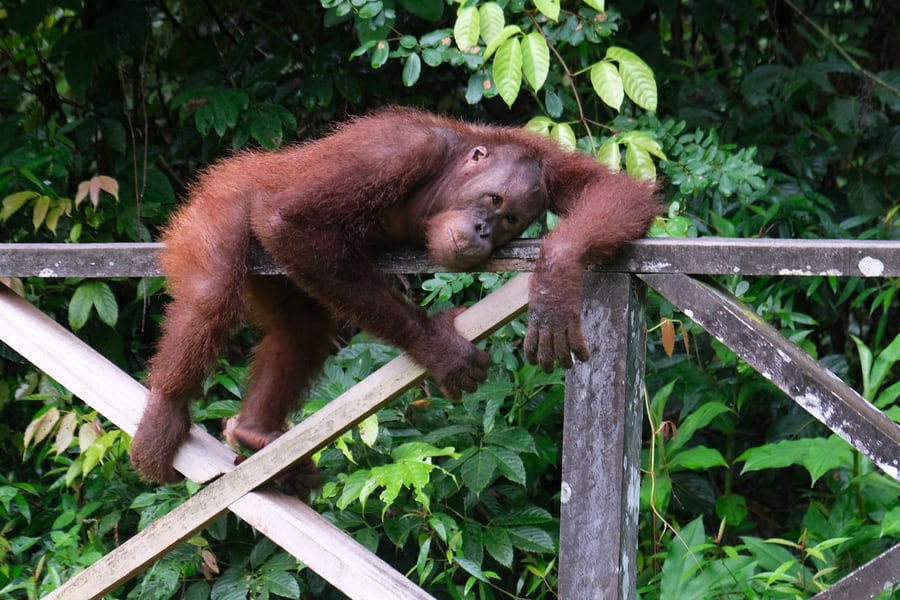 kallerna / Wikimedia Commons · CC BY-SA 4.0 · cropped
Sepilok
Over on the east coast near Sandakan, and the reason a great many people come to Borneo at all. Founded in 1964, Sepilok was the first official orangutan rehabilitation project anywhere, and it sits inside the 4,294-hectare Kabili-Sepilok forest reserve with sixty to eighty orangutans living free in it. The sun bear centre next door deserves the same trip and gets a fraction of the attention.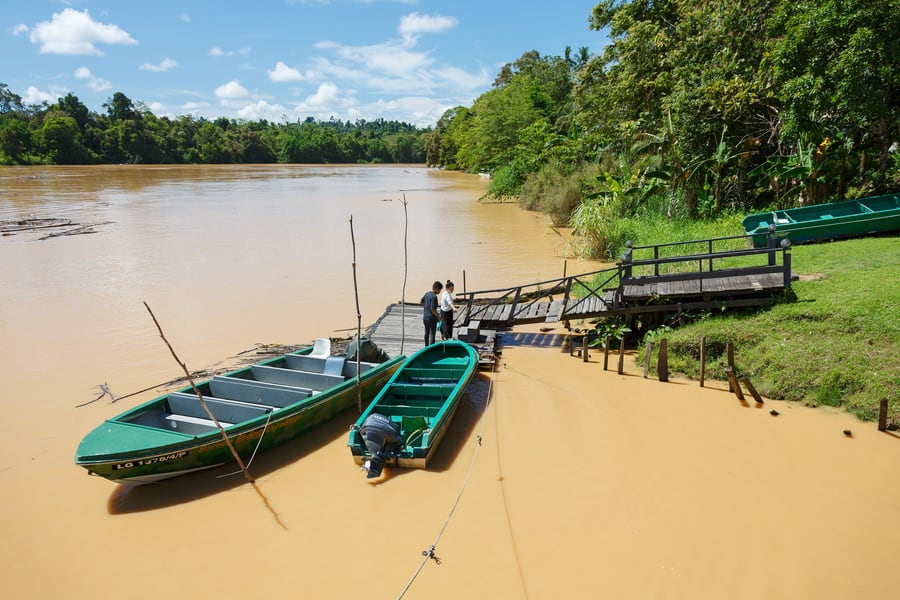 Photo by CEphoto, Uwe Aranas or alternatively © CEphoto, Uwe Aranas / Wikimedia Commons · CC BY-SA 3.0 · cropped
The Kinabatangan
Malaysia's second-longest river runs 560 kilometres off the central highlands, and its lower reaches hold the best wildlife watching in the country — proboscis monkeys, Bornean pygmy elephants, orangutans, hornbills and, if you are very lucky, a clouded leopard, all from a small boat at first light. The Lower Kinabatangan Wildlife Sanctuary was gazetted in 1999; the village of Sukau is the base.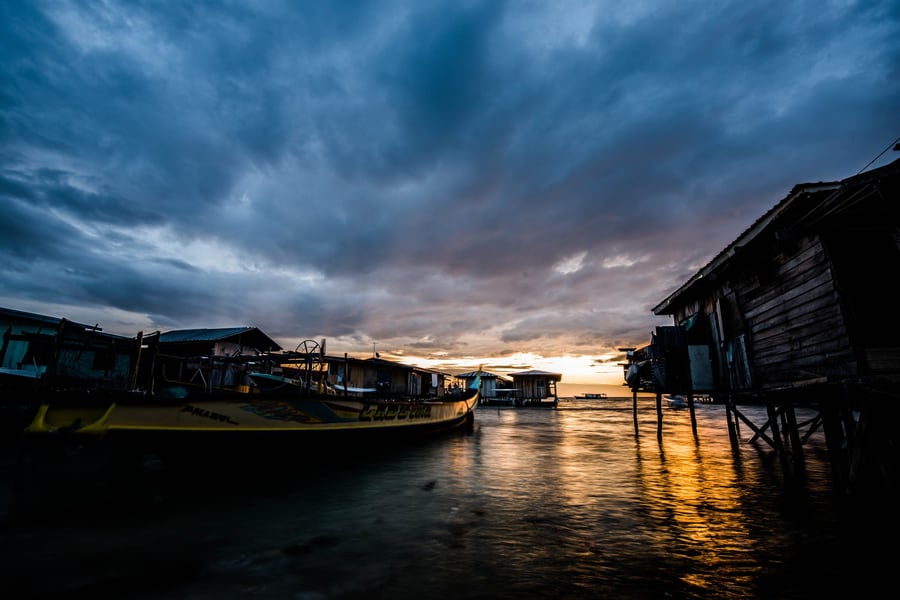 johnjodeery / Wikimedia Commons · CC BY 2.0 · cropped
Mabul and Sipadan
Sipadan is coral grown on a drowned volcanic cone, and it rises 600 metres straight off the seabed — which is why the diving there is what it is. Nobody sleeps on the island: the six resorts on it were removed in 2004, and since 2019 only 176 permits a day are issued. You stay instead on Mabul, twenty minutes away, in a Bajau stilt village that became a dive base in the 1980s.Where to Sleep
Kota Kinabalu is the base for everything, and the coastal end of the line is right there at Tanjung Aru. The city has the full range — big resorts along the water at Tanjung Aru itself, a solid mid-range in the centre, and plenty of cheap, cheerful guesthouses. Prices are reasonable and the seafood is the point.
But the railway that matters starts at Beaufort, and that's the planning problem.
Beaufort is about a couple of hours from Kota Kinabalu by road, and the good train leaves in the morning. You have three options:
- Very early from Kota Kinabalu. Doable with a car or a shared van, and what most people end up doing.
- A night in Beaufort. There are a couple of simple hotels — nothing to write home about, but it puts you on the morning train without a pre-dawn drive. This is the sensible choice if the gorge is the reason you came.
- A night in Tenom. Ride in on the afternoon train, sleep at the far end, come back the next morning. Tenom has a few basic places, decent coffee, and almost no visitors. If you want to do this line properly rather than tick it, this is how.
Two practical notes. First, there is nowhere to stay in the gorge itself — no road, no settlements of any size, nothing. It's the train or the river. Second, if you're combining the railway with rafting the Padas, the operators run out of Beaufort and will usually sort transport from Kota Kinabalu, which quietly solves the early-morning problem for you.
And if you're heading on to Sepilok, the Kinabatangan or Mount Kinabalu afterwards, note that none of them are on the railway. Borneo has one line, it's short, and it goes exactly one place.
Questions or corrections
Planning this trip and stuck on something, or spotted a time, fare or detail that has changed? Send us a message about Sabah State Railway. We read every one, and we update this page when something has changed.