The Serra Verde Express
Cesar I. Martins / Wikimedia Commons · CC BY 2.0
- DistanceCuritiba–Morretes · 70 km
- DurationAbout 3½–4 hours
- Best seasonYear-round · clearest May–August
Introduction
The Serra Verde Express runs one of the most spectacular railways in Brazil — and one that should never have been possible. To reach the coast from the highland city of Curitiba, the line has to fall off the edge of the Serra do Mar, the great forested escarpment that walls the Brazilian plateau from the Atlantic. When it was proposed in the 1870s, European engineers said it could not be done.
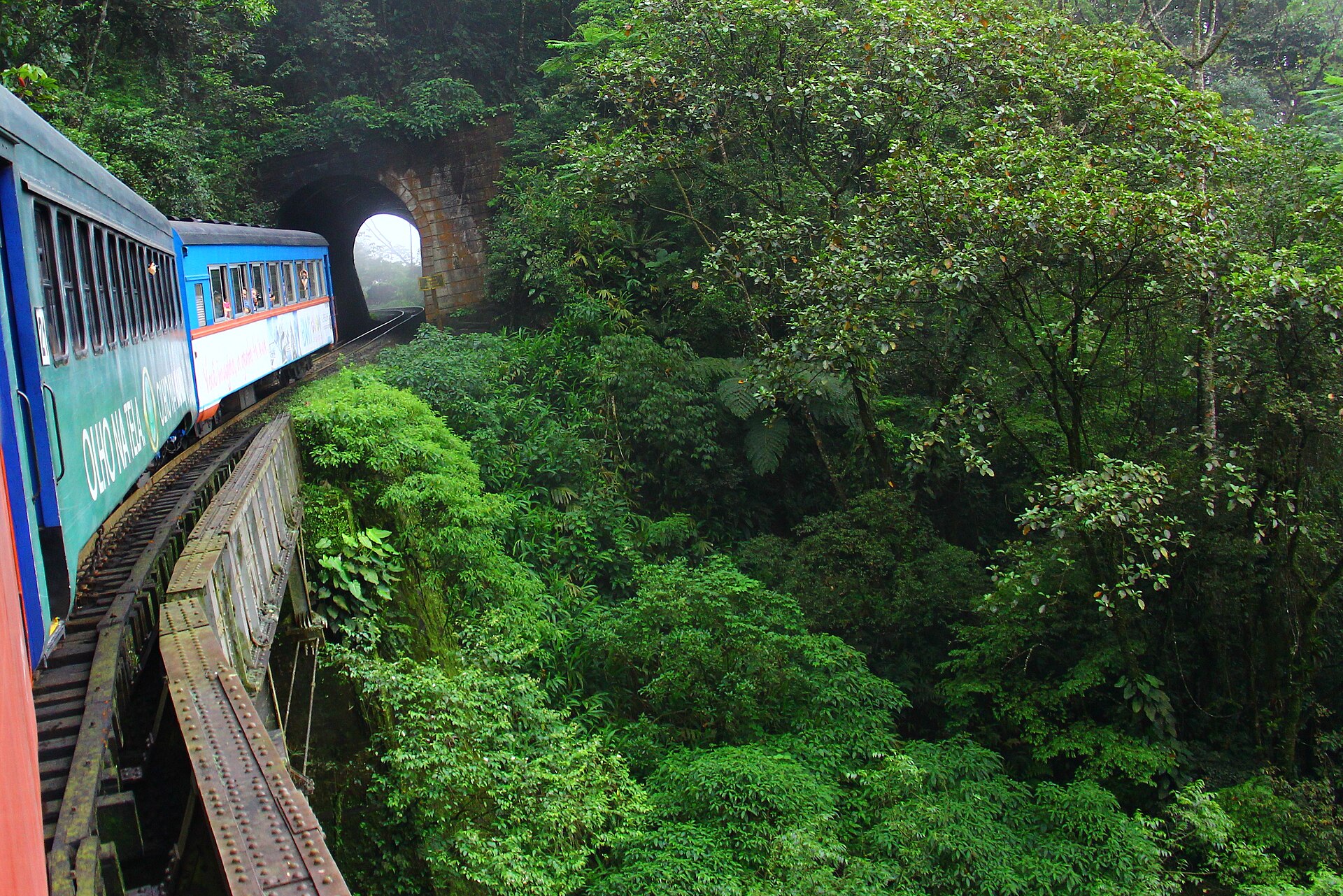
It was done anyway. Begun in 1880 and inaugurated on 2 February 1885, the railway drops through the mountains on 13 hand-cut tunnels and 41 bridges and viaducts, clinging to the cliffs above sheer drops, with the São João viaduct standing 113 metres tall. It was built to carry coffee and grain down to the port of Paranaguá; 140 years later it still runs, now carrying travellers instead.
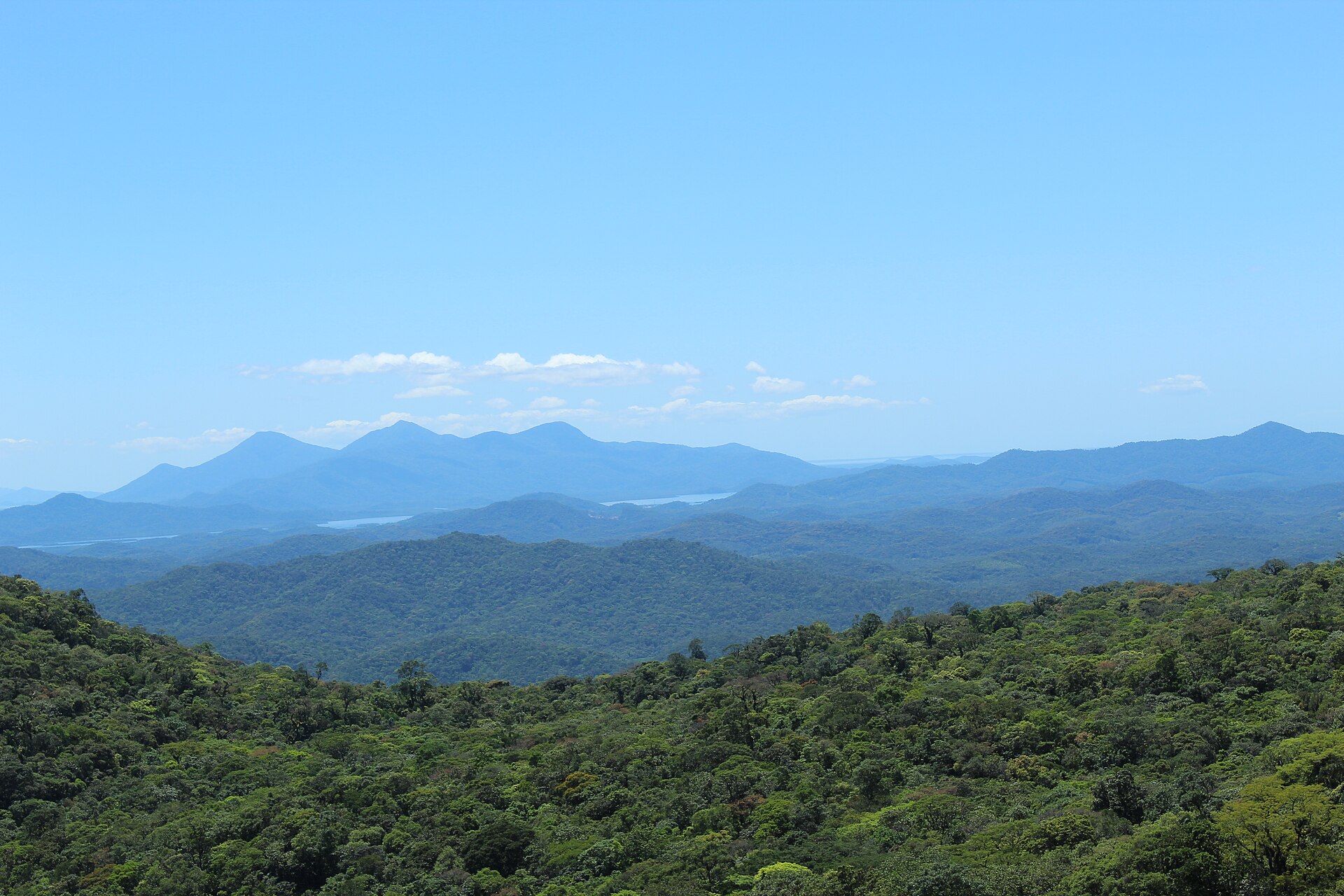
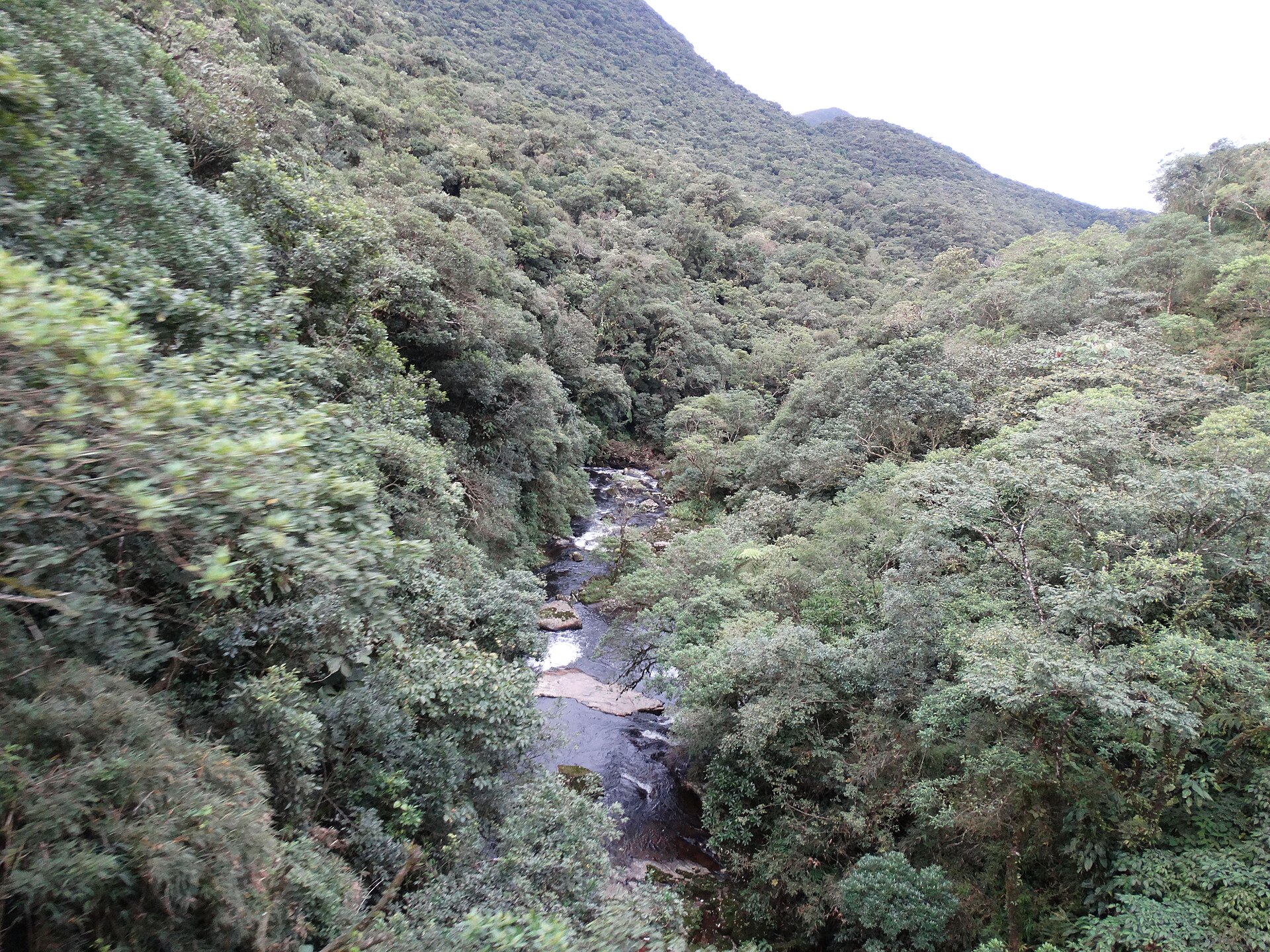
The ride down to the colonial town of Morretes takes about three and a half to four hours, through unbroken Atlantic rainforest — tree ferns, waterfalls, gorges and birdsong, one of the best-preserved stretches of a forest that once covered the whole coast. You can travel in everyday Tourist class, the smarter Boutique service, or the glass-sided Litorina luxury railcar; whichever you choose, the line is the same, and it is unforgettable.
The Journey
The journey begins in Curitiba, the cool, orderly capital of Paraná, on the highland plateau at around 900 metres. The train pulls out through the city's edge and across the farmland of the tableland, and for a while the ride is gentle — and then, quite suddenly, the ground falls away.
This is the Serra do Mar, and the next two hours are the reason to come. The line begins its long descent along the face of the escarpment, and the windows fill with Atlantic rainforest — tree ferns and bromeliads, waterfalls dropping out of the mist, and gorges like the Garganta do Diabo, the "Devil's Throat," opening straight below the carriages. The train crawls across steel trestles and stone viaducts and burrows into tunnels cut by hand in the 1880s, curving so tightly you can see your own locomotive ahead. Near Marumbi, the granite peaks of the state park rise sheer above the forest, and on a clear day you can see all the way down to the coastal plain and the sea.
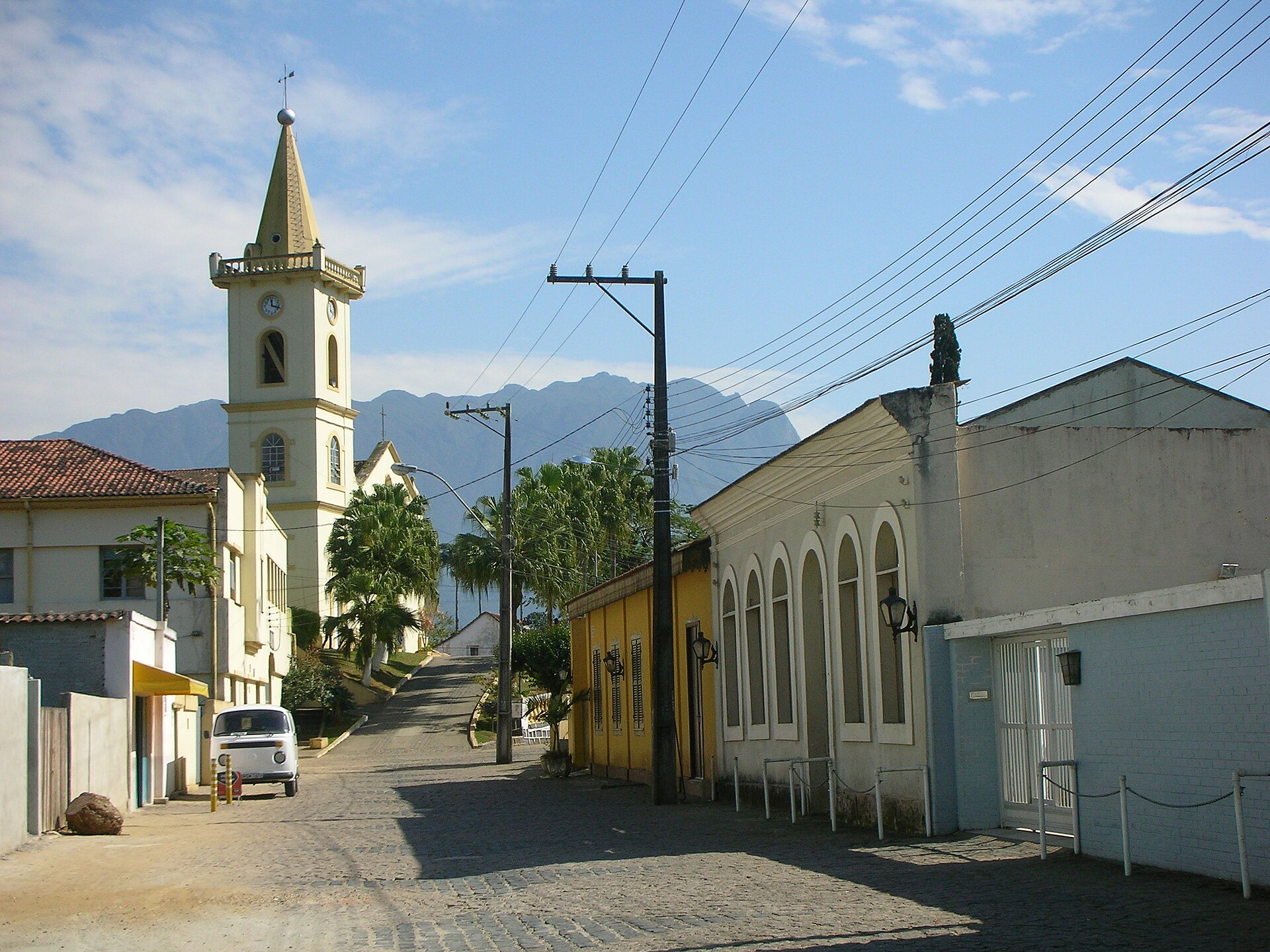
By the time the line reaches the bottom, the air is warmer and heavier, and the train rolls into Morretes, a colonial town of whitewashed churches on the Nhundiaquara river — journey's end, and time for lunch.
A few things worth knowing about the run:
- It follows the 1885 Curitiba–Paranaguá railway down the Serra do Mar; the tourist run is Curitiba–Morretes, about 70 km.
- The descent takes about 3½–4 hours, dropping some 950 metres through 13 tunnels and 41 bridges and viaducts.
- Trains run daily, in Tourist, Boutique and Litorina (luxury railcar) classes.
- Sit on the left leaving Curitiba for the best of the drops and gorges (but the line curves constantly, so the views swap sides).
Because the return train runs only at set times, many travellers ride down by train and come back to Curitiba by road — a shorter afternoon that leaves plenty of time in Morretes.
Along the route
Kel Bis / Wikimedia Commons · CC BY-SA 3.0The line they said couldn't be built
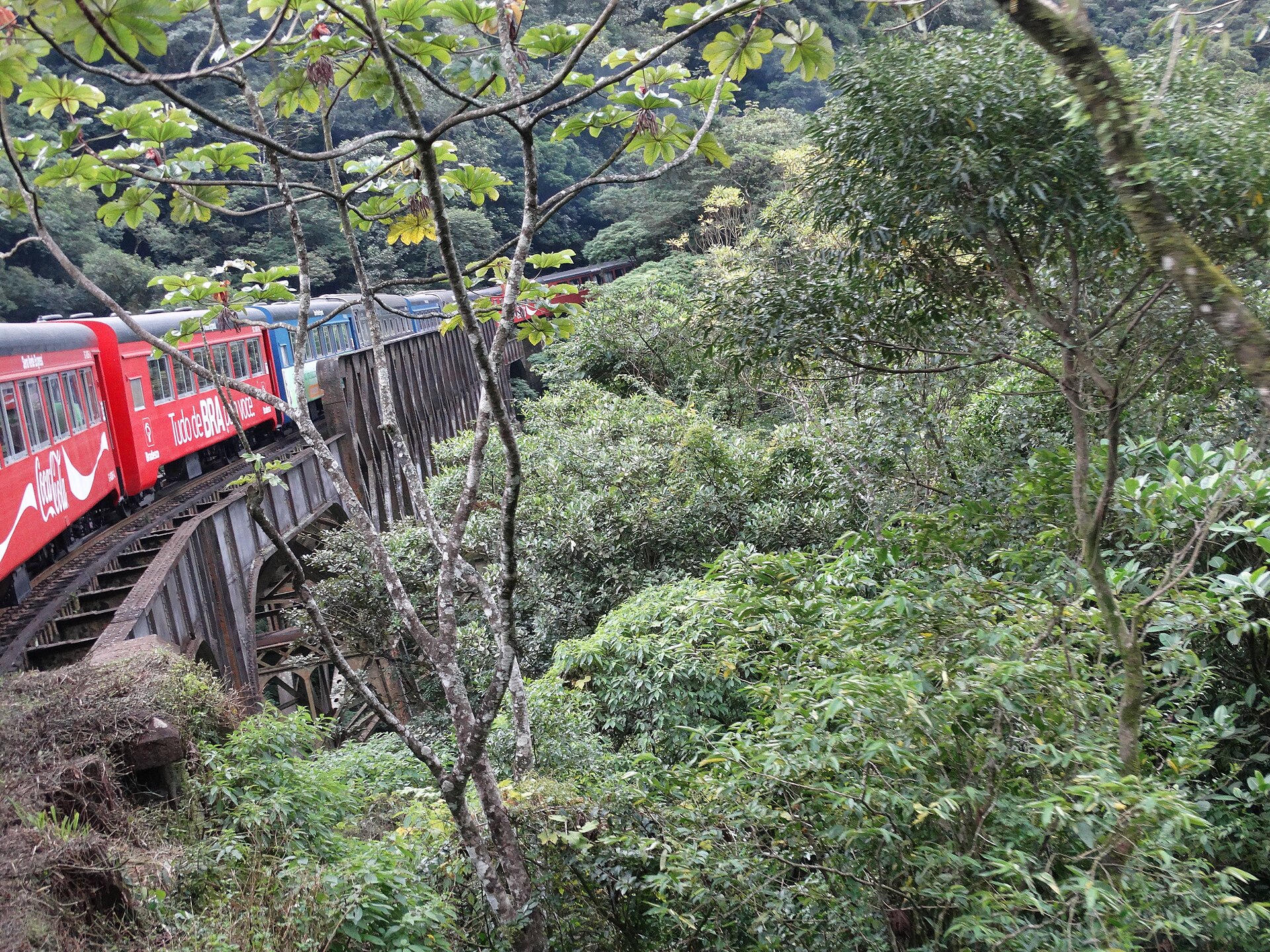
European engineers called it impossible. Opened in 1885, the railway climbs the sheer wall of the Serra do Mar with 13 tunnels cut by hand and 41 bridges and viaducts, clinging to the escarpment above dizzying drops. It is still running, 140 years on.Saturnalia0 / Wikimedia Commons · CC0Through the Atlantic Forest
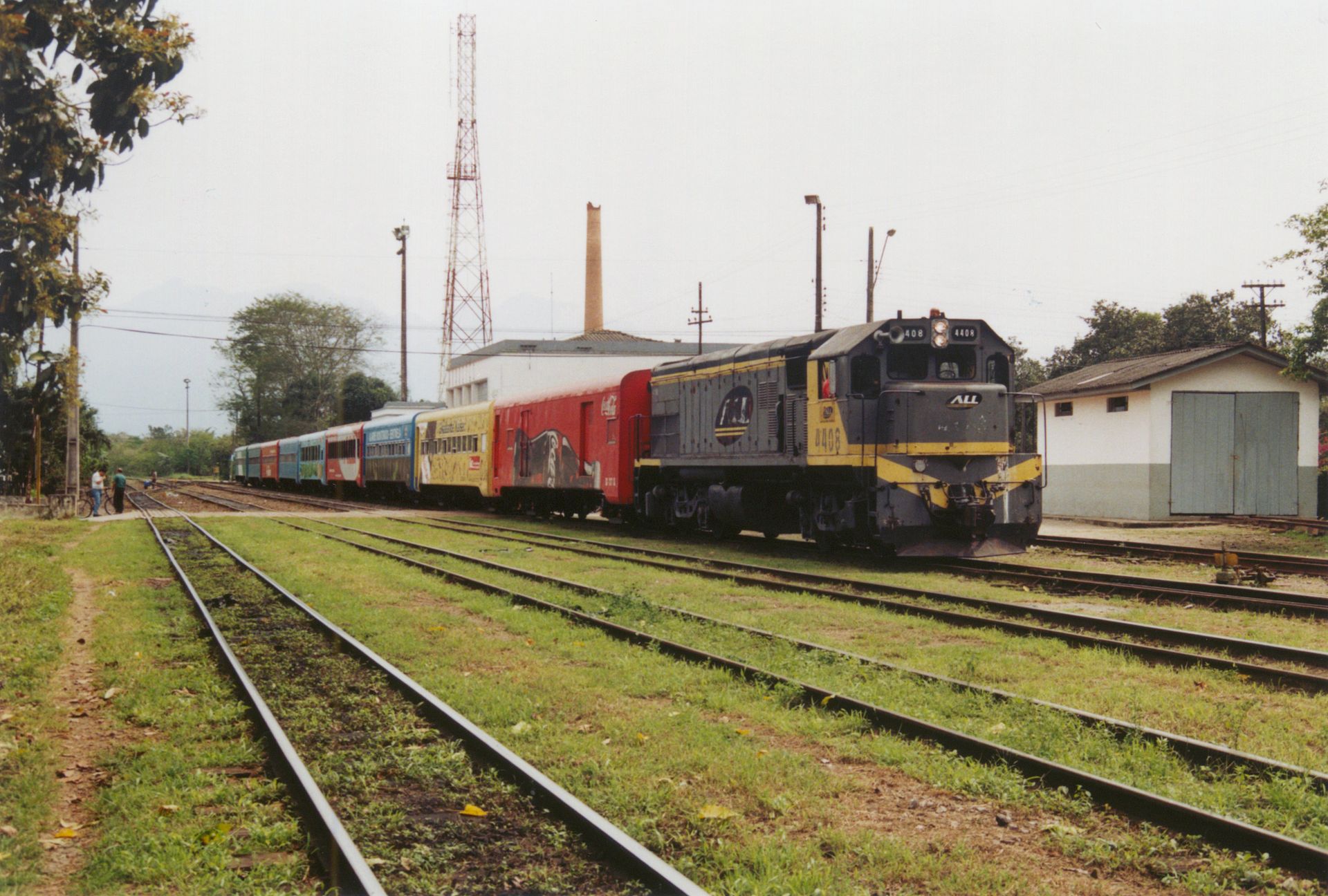
The line falls through one of the best-preserved stretches of Brazil's Mata Atlântica — tree ferns, bromeliads and waterfalls, loud with birds. From the train you look straight down into gorges like the Garganta do Diabo, the Devil's Throat.Saturnalia0 / Wikimedia Commons · CC0Over the Serra do Mar
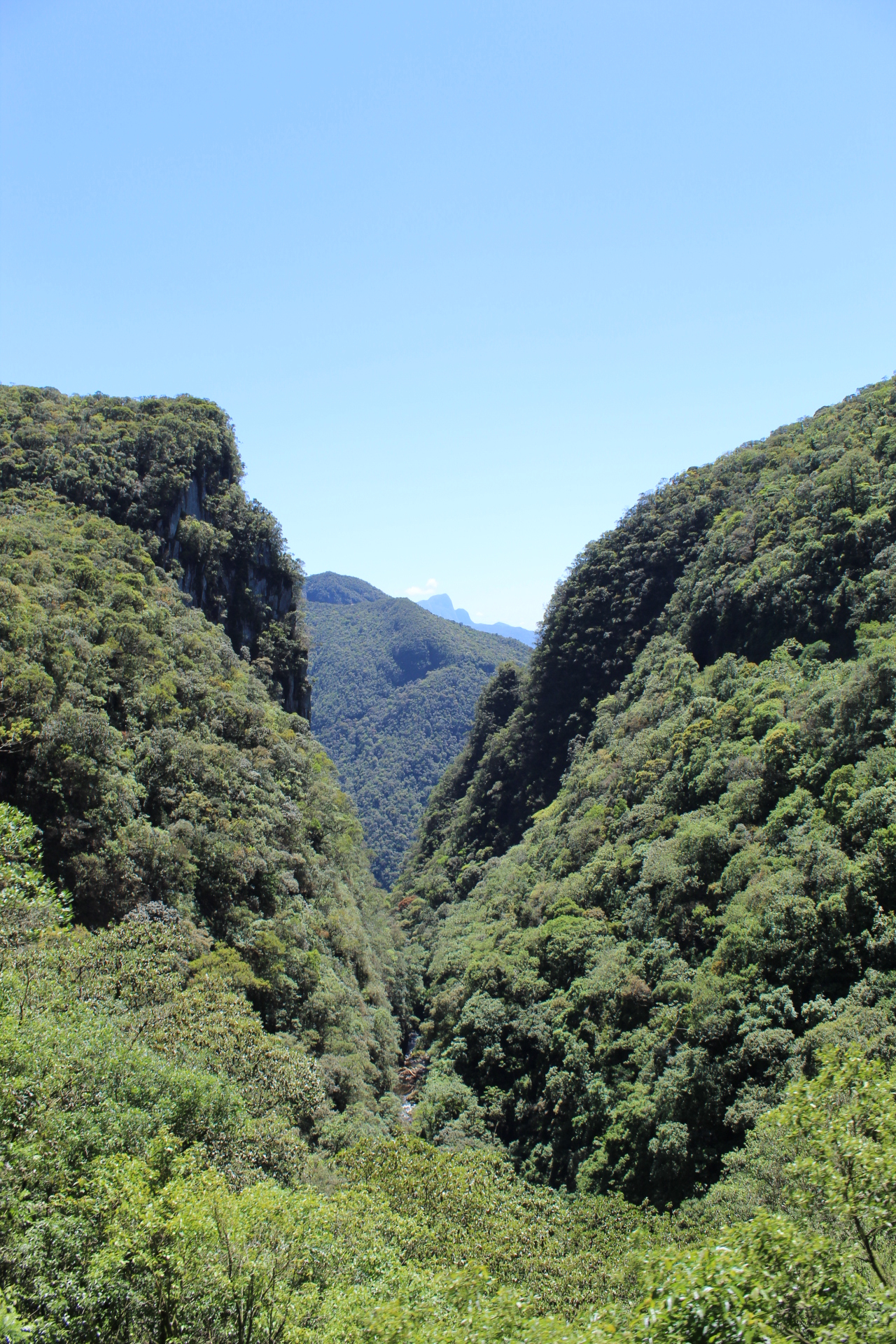
This is the great coastal escarpment of southern Brazil, separating the highland plateau from the Atlantic. The railway was built to carry coffee and grain down to the port of Paranaguá; today it carries travellers down the same 952-metre descent to the sea.A bit of history
Culture & experiences along the way
Viajante / Wikimedia Commons · CC0Tourist, Boutique or Litorina
There are three ways to ride: the everyday Turística class, the smarter Boutique service, and the Litorina — a luxury glass-sided railcar with panoramic windows and onboard service. All run the same magnificent line; you simply choose your comfort. Many travellers ride down by train and return to Curitiba by road.Äppelmos / Wikimedia Commons · CC BY 3.0Morretes and its barreado
The line ends at Morretes, a pretty colonial town of whitewashed houses on the Nhundiaquara river. It is famous for barreado, a beef stew slow-cooked for hours in a sealed clay pot, served with cassava flour and banana — the reward at the bottom of the mountain.DAR7 e Eloy Olindo Setti / Wikimedia Commons · CC BY-SA 4.0Curitiba, the green capital
The journey starts in Curitiba, capital of Paraná and one of the world's models of urban planning — famous for its parks, its pioneering bus network and its botanical garden. It is a cool, orderly, walkable city, and a fine place to spend a day before or after the train.Timetables
The Serra Verde Express runs daily, with one departure down to Morretes each morning and a set return in the afternoon — so this is a train to plan the day around.
Real times (2026 — confirm before travelling):
| Depart | ||
|---|---|---|
| Curitiba → Morretes | 08:30 | arrives Morretes about 12:00 |
| Morretes → Curitiba | 15:00 | (16:00 in peak summer, 27 Dec–1 Mar) |
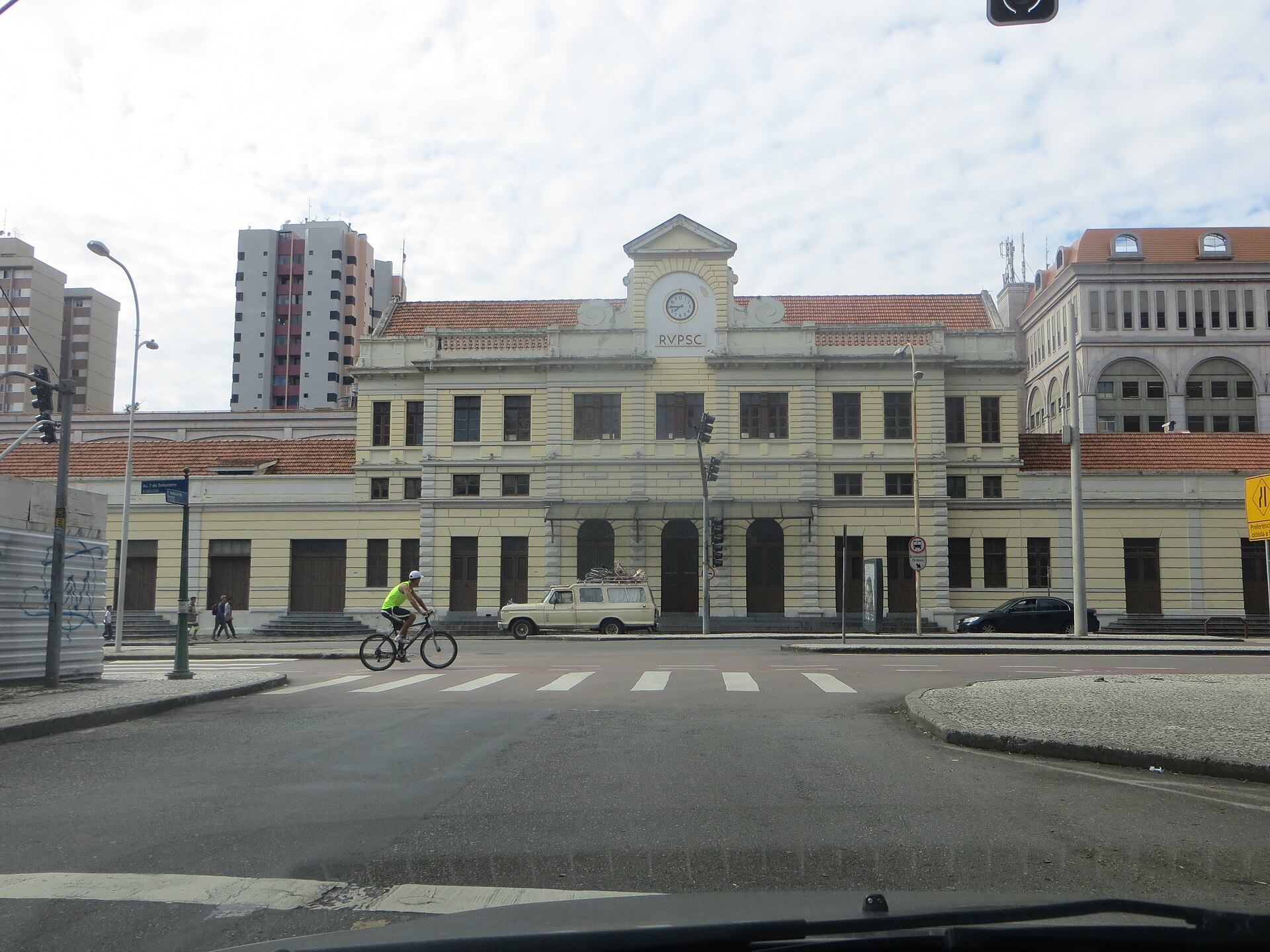
The train leaves from Curitiba's Estação Rodoferroviária. The descent takes about 3½–4 hours; the uphill return is a little quicker.
Good to know:
- Book ahead, especially in the January–February peak and on summer weekends — the Litorina and Boutique classes are limited and sell out.
- Train down, road back is popular. Because there is only one return train, many travellers ride the train down and return to Curitiba by van/coach (sold as a package), which gets you back earlier and leaves more time in Morretes for lunch.
- Weekends add services and the fancier classes; midweek is quieter and cheaper.
- Go on a clear day if you can — cloud and rain (common on this coast) can hide the drops, though the forest is at its most dramatic in the mist.
Times as of the 2026 timetable. Confirm current schedules and classes with the operator — see the Tickets section below.
Tickets
The train is run by Serra Verde Express, Brazil's largest tourist-train operator, and tickets are booked directly:
- Online, at serraverdeexpress.com.br (opens in a new tab), which has an English option and sells seats by class and date.
- At the station, at Curitiba's Estação Rodoferroviária, subject to availability.
- As a package — the operator sells combined train-down / van-back trips, which are the most popular way to do it.
There are three classes, all on the same line:
- Turística (Tourist) — comfortable standard seating; the everyday, best-value way to ride.
- Boutique — a smarter service with more space and extras.
- Litorina — a glass-sided luxury railcar with panoramic windows, air conditioning and onboard service; the premium experience, and worth booking well ahead.
Fares vary by class, day and season (weekends and the summer peak cost more), so we don't quote a figure here — the current prices and the exact timetable are on the operator's site above. Whichever class you choose, reserve early for summer and weekends.
Book your tickets
Serra Verde Express · Curitiba to Morretes
Tourist, Boutique & Litorina classes
The daily tourist train down the Serra do Mar, from Curitiba to Morretes in about 3½–4 hours, in Tourist, Boutique or the luxury Litorina railcar. Booked directly with the operator; train-there / van-back packages are also sold.
Book Tickets (opens in a new tab, on Serra Verde Express)via Serra Verde ExpressTrain down, van back
The most popular package
Because the return train runs only at set times, many travellers ride the train down to Morretes and return to Curitiba by road — a shorter afternoon that leaves time for lunch and the town. Booked as a package with the operator.
Book Tickets (opens in a new tab, on Serra Verde Express)via Serra Verde ExpressRail Passes
No rail pass covers the Serra Verde Express. Interrail and Eurail are European schemes, and Brazil is not among the 33 countries in Interrail's list of covered railway companies. The operator sells seats by class and date, or as a train-and-van package.
Checked October 2026 against Interrail's list of railway companies (opens in a new tab).
Places to Visit
The railway links two very different places, and the mountains between them are a destination in their own right. Curitiba at the top, the Atlantic Forest in the middle, colonial towns and islands at the bottom.
Curitiba is one of the most admired cities in Latin America — a pioneer of urban planning, famous for the bus rapid transit system that other cities copied, and for a run of striking public buildings. Besides the botanical garden and the Niemeyer museum, the wireframe Ópera de Arame, built in a former quarry, is worth the short trip out.
Morretes, at the bottom of the descent, is a colonial gem of whitewashed churches and a river running through the middle, and the home of barreado, the slow-cooked beef stew that is Paraná's signature dish — most people eat it here before catching the bus or train back. For those travelling by car rather than rail, the Estrada da Graciosa, a colonial cobbled road, winds down the mountain alongside the railway.
 Halley Pacheco de Oliveira / Wikimedia Commons · CC BY-SA 3.0 · cropped
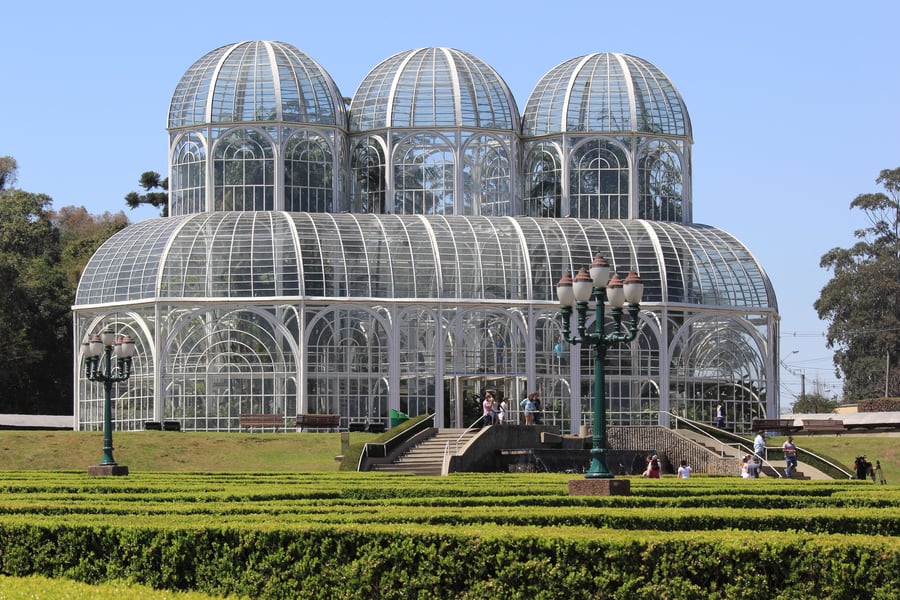
Curitiba's Jardim Botânico
Opened in 1991 and now the image the whole city is known by: a 458 m² Art Nouveau glasshouse of white ribs and glass, modelled on London's Crystal Palace, standing at the head of a French formal parterre of clipped hedges and fountains. The gardens run to 240,000 m² of lawn, lake and woodland. It is twenty minutes from the station and the obvious way to spend a morning before the train leaves.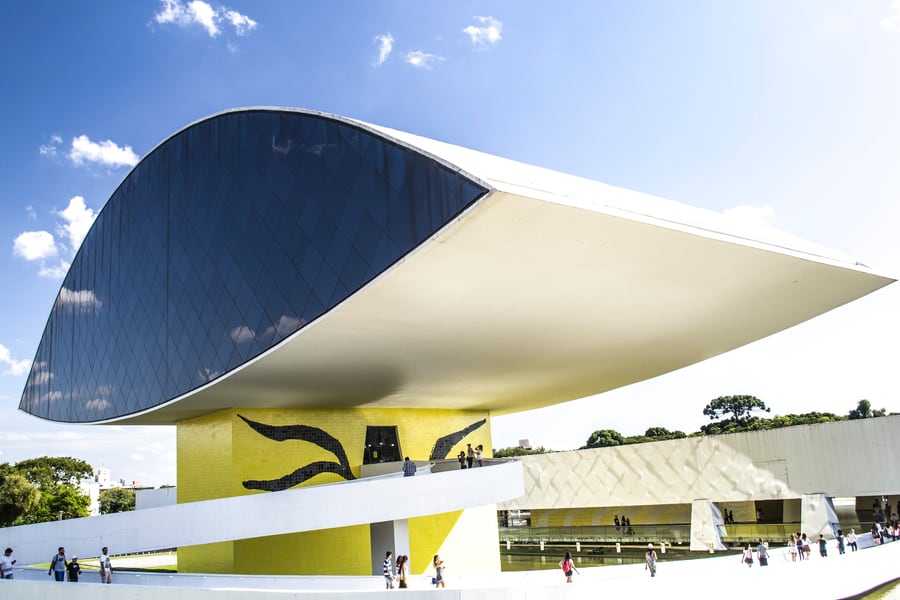 Rodrigo Canisella Fávero / Wikimedia Commons · CC BY 2.0 · cropped
Museu Oscar Niemeyer
Oscar Niemeyer designed the original building in 1967 and then, at ninety-five, added the thing everybody comes for: a 30-metre eye of reinforced concrete on a single yellow stem, floating over a pool and reached by an underground walkway. The museum opened in 2002 and the annexe in 2003. Whatever you think of it as a gallery, it is one of the great late gestures of Brazilian modernism.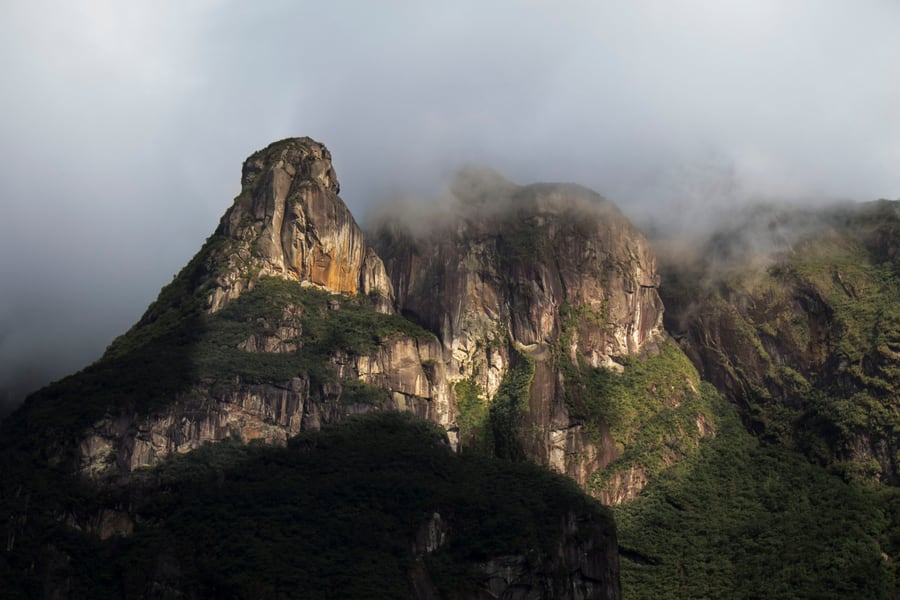 Gustavo Jordaky / Wikimedia Commons · CC BY-SA 3.0 · cropped
Marumbi
The granite massif the railway threads beneath, and a state park in its own right. The highest summit is Olimpo at 1,539 m, one of eight peaks in the Conjunto Marumbi — Boa Vista, Gigante, Ponta do Tigre and the rest. Trains stop at Marumbi station and the old trails start there, climbing through Atlantic Forest into bare rock and, very often, into cloud. Serious walking, and the best reason to break the journey.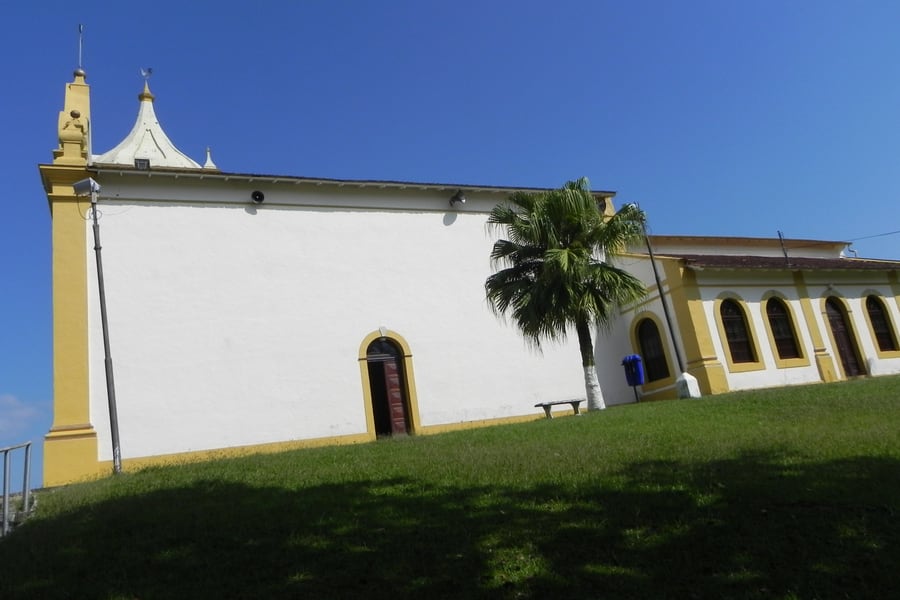 Rio Apa / Wikimedia Commons · CC BY-SA 3.0 · cropped
Antonina
A short hop from Morretes and quieter still — a small colonial port on the Bay of Paranaguá that the twentieth century largely forgot, with a whitewashed parish church on a green rise and a waterfront that looks out over mangrove and water. It has the same slow, warm coastal feel as Morretes without the coachloads, and it is the usual second stop for anyone spending a night down at the bottom of the hill.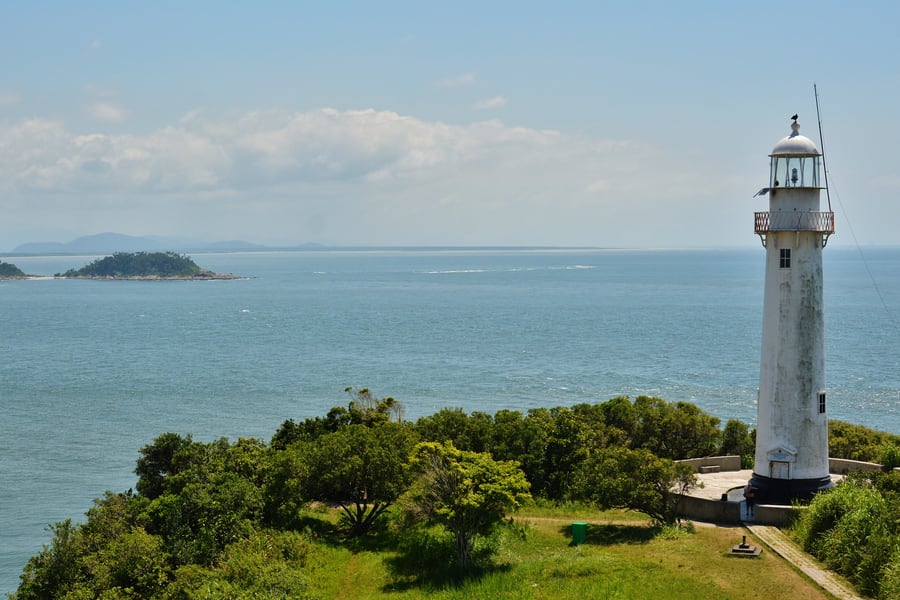 Cyrus Daldin / Wikimedia Commons · CC BY-SA 4.0 · cropped
Ilha do Mel
Twenty-seven square kilometres of beaches, forest and sandy tracks in the Bay of Paranaguá, with no motor vehicles of any kind allowed — you walk, and that is the charm. The Farol das Conchas lighthouse, built in 1872 at the Emperor's order, stands on the headland above the crossing point, and the Fortaleza de Nossa Senhora dos Prazeres of 1769 guards the channel. Ferries run from Paranaguá and Pontal do Sul.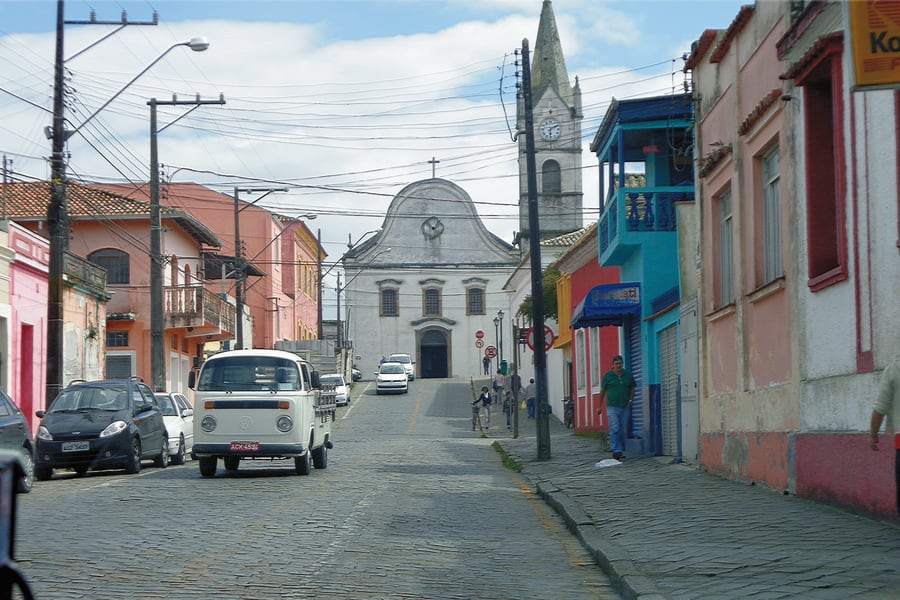 Nivaldo Cit Filho / Wikimedia Commons · CC BY-SA 3.0 · cropped
Paranaguá
Founded by royal charter on 29 July 1648, the first town formally established in Paraná and still its oldest. The historic centre is a run of narrow stone streets and Portuguese-Brazilian façades along the waterfront, in various states of paint and repair. Beyond it works one of Brazil's largest ports, which exports more agricultural cargo than any other in the country. The historic line continues here from Morretes.Where to Sleep
Because the train runs there and back in a day, most people base themselves in Curitiba and treat the railway as a day trip — but Morretes and the coast reward an overnight if you have the time.
In Curitiba, the comfortable choice is a hotel in or near the city centre, within reach of the Rodoferroviária station where the train departs — there is a good range of business and boutique hotels, and the compact centre puts the parks, the museums and the restaurants within easy reach. It is an easy, safe city to walk in the evening.
In Morretes, staying the night lets you linger over a long barreado lunch and enjoy the town once the day-trippers have gone. There are small pousadas (guesthouses) in and around the colonial centre and along the river, simple and characterful, and a night here makes it easy to carry on to Antonina, Paranaguá or the Ilha do Mel the next day.
On the coast, the island of Ilha do Mel has rustic pousadas for those who want beaches and lighthouses and no cars — a lovely two- or three-day add-on, reached by boat from Paranaguá or Pontal do Sul.
As with all our journeys, we keep this to the shape of the trip rather than specific bookings: base in Curitiba for the day-trip, or sleep in Morretes or on the coast to turn the train ride into a longer coastal escape.
Questions or corrections
Planning this trip and stuck on something, or spotted a time, fare or detail that has changed? Send us a message about The Serra Verde Express. We read every one, and we update this page when something has changed.