Setesdalsbanen
Ad Meskens / Wikimedia Commons · CC BY-SA 4.0 · cropped
- DistanceGrovane–Røyknes · 8 km
- Duration26 minutes each way, with about 45 minutes at Røyknes
- Best seasonJune to early September; Saturdays and Wednesday evenings in July
Introduction
The Setesdal Line was built to the narrow gauge of 1,067 millimetres and opened in 1896, running 78 kilometres up the valley of the Otra from Kristiansand to Byglandsfjord. Around 1850, the journey from Hovden at the top of Setesdal down to the city took about two weeks. The railway carried timber, coal for the mills at Vennesla and nickel from Evje, and it ran for sixty-six years.
The last regular train ran on 1 September 1962, and the track was being lifted the next day. Enthusiasts from the Danish Railway Club proposed leaving the first four or five kilometres from Grovane in place. A club was formed in 1963, the first museum train ran in 1964, and that made Setesdalsbanen Norway's first museum railway.
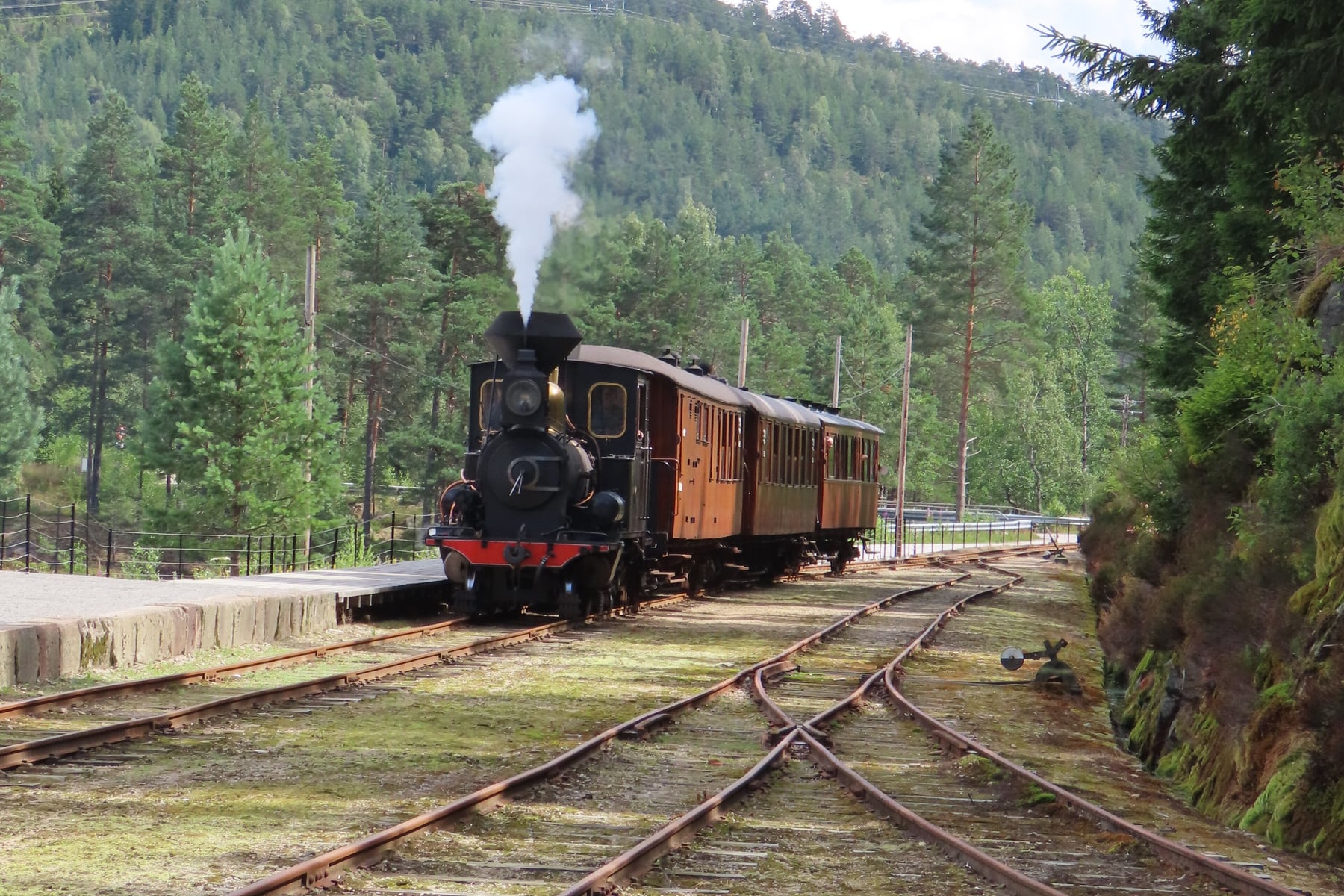
Today the line runs 8 kilometres from Grovane, in Vennesla, to Røyknes. The steam engines were built for its sharp curves; the teak carriages came from narrow-gauge lines all over Norway, and some are still lit by paraffin lamps; and Sulitelma, a red railcar, came south from the Arctic. Vest-Agder-museet runs the railway, and members of Setesdalsbanens Venner, the friends' association, crew the trains as volunteers.
The Journey
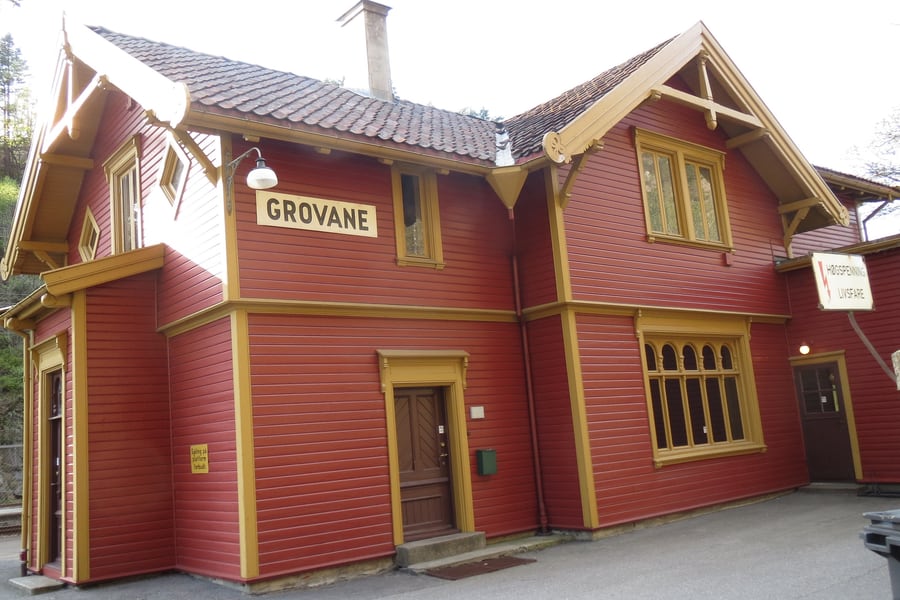
Trains leave from track 3 at Grovane, a timber station of 1895 in the dragon style, with carved gable ornaments. Tracks 1 and 2 belong to the Sørlandsbanen, the main line between Oslo and Stavanger, and before each departure the museum's staff ask the train controller in Kristiansand to close them, so that passengers can walk across to the narrow-gauge train.
Up the Otra
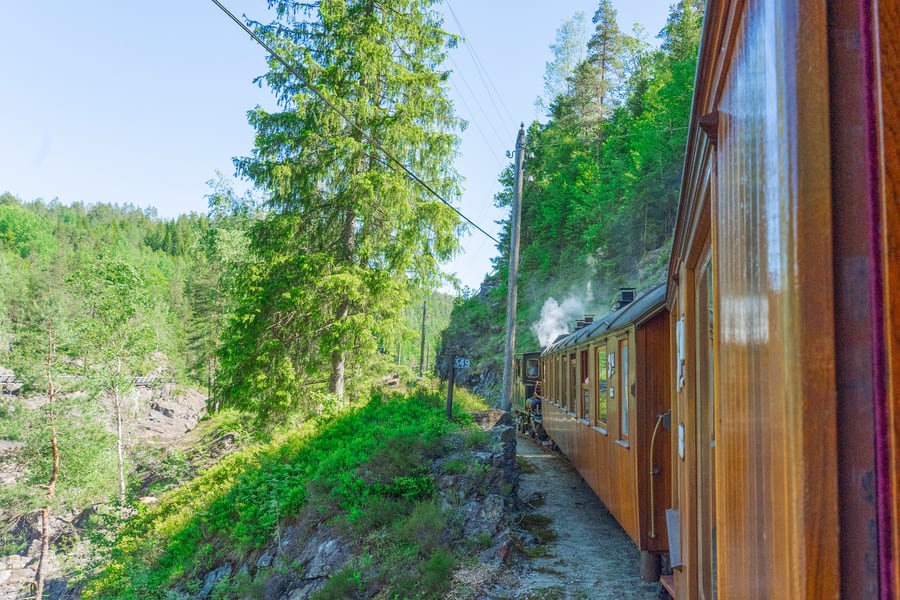
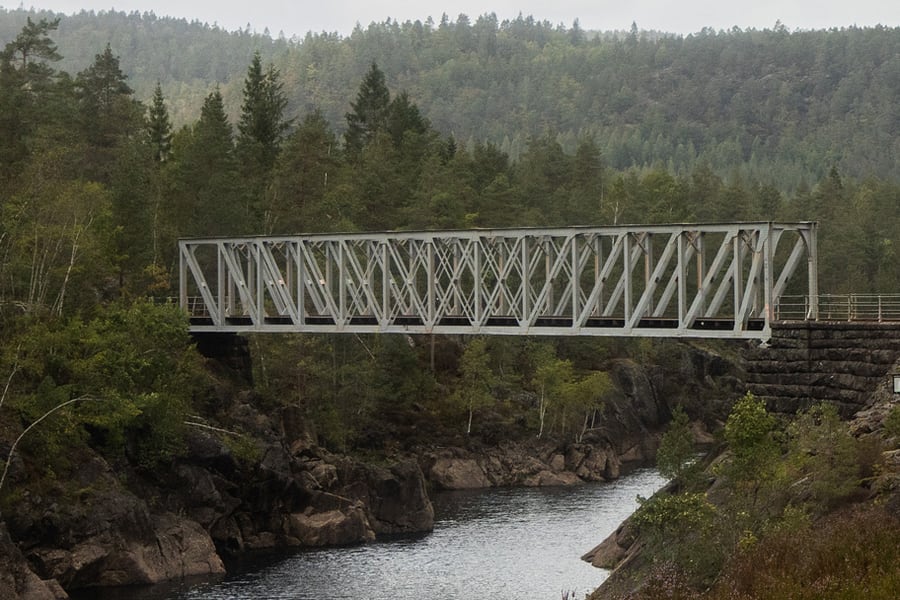
From Grovane the line climbs north beside the Otra, at no more than 30 km/h, on curves as tight as 100 metres and gradients up to 20 in 1,000. It crosses the steel bridge at Paulen, where the line's foreman lived, and passes Kringsjå, where the first power station on the Otra stood from 1900. For most of the way the old Steinsfoss timber flume runs alongside, a wooden channel built in the 1950s to carry logs down to Steinsfoss once the power station there had taken the river's water.
Beyond the Løyning snow shed the train reaches Beihøldalen, a passing loop by the water, and then Røyknes, 26 minutes from Grovane. The station building here came from Svenkerud on the Bergen Line and was put back together piece by piece; the water tower and the privy were rebuilt from drawings, photographs and the memories of people who knew the place. The locomotive takes water, the café opens, and after about 45 minutes the train returns to Grovane.
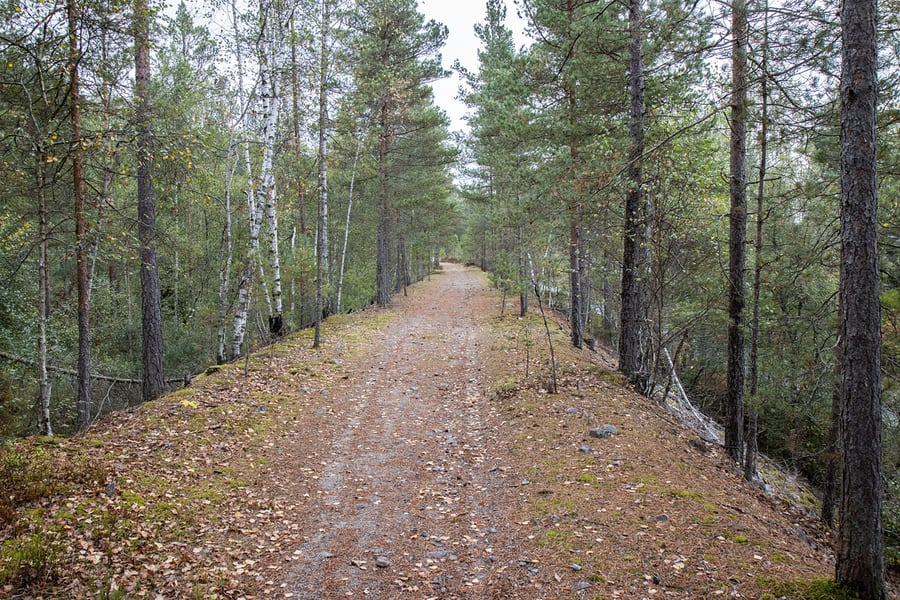
North of Røyknes the rails stop. The trackbed carries on towards Byglandsfjord, about 50 kilometres further up the valley.
The trains
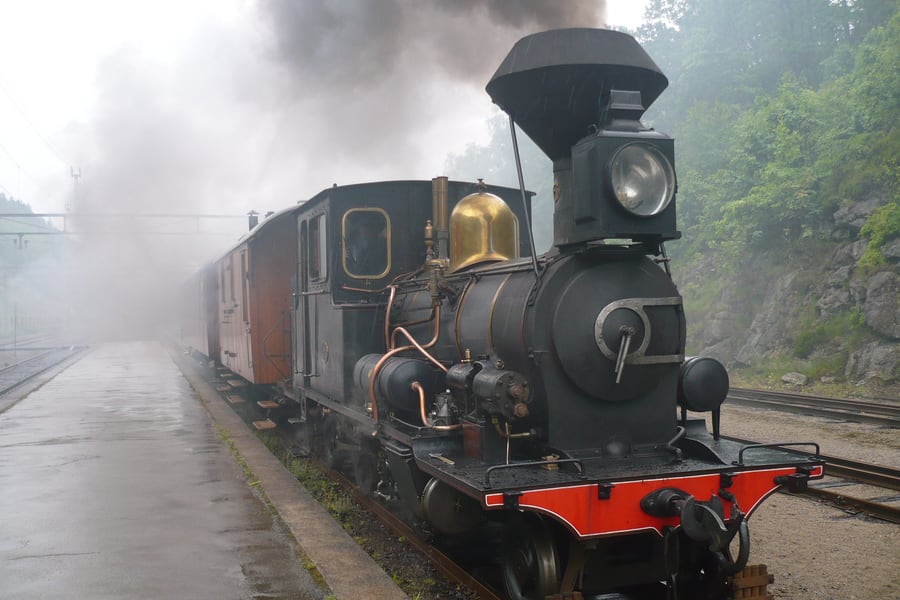
The steam engines are Lok 2, built by Dübs & Co of Glasgow in 1894 and back in service since 2024, and Lok 5 and Lok 6, built by Thunes in 1901 and 1902 and both away for overhaul. The Wednesday evening trains in July are worked by Sulitelma, a diesel railcar of 1957. Behind the engines run teak-panelled carriages from 1893 to 1913, with open end platforms on some.
Along the route
 Carsten R D / Wikimedia Commons · CC BY-SA 3.0
Grovane
Paul Due drew the station in 1895 in the dragon style, told to model it on the valley's storehouses and its people. From 1938 it was where the narrow gauge met the Sørlandsbanen, and every passenger and every load changed trains here.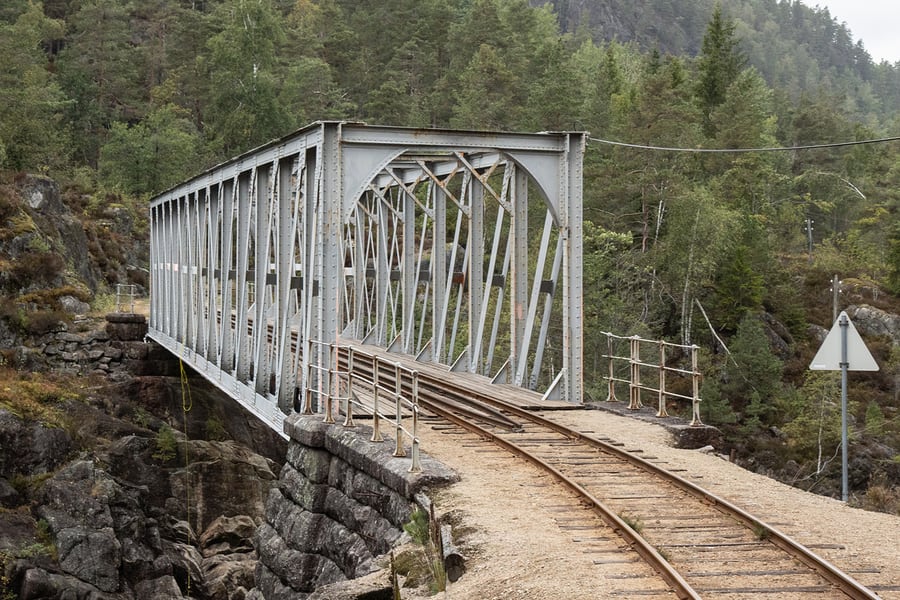 Øyvind Berg / Wikimedia Commons · CC BY-SA 4.0
Paulen
The line runs up the west bank of the Otra because Halvor Kristenson, who owned the farm at Paulen, gave the land free. The railway later regretted the steep, snowy stretch it had bought with it.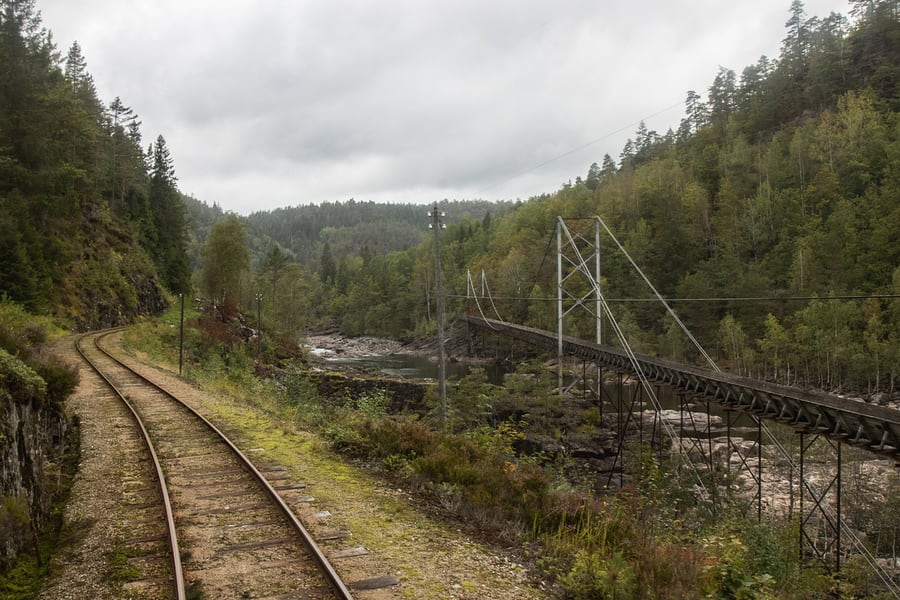 Øyvind Berg / Wikimedia Commons · CC BY-SA 4.0
Kringsjå
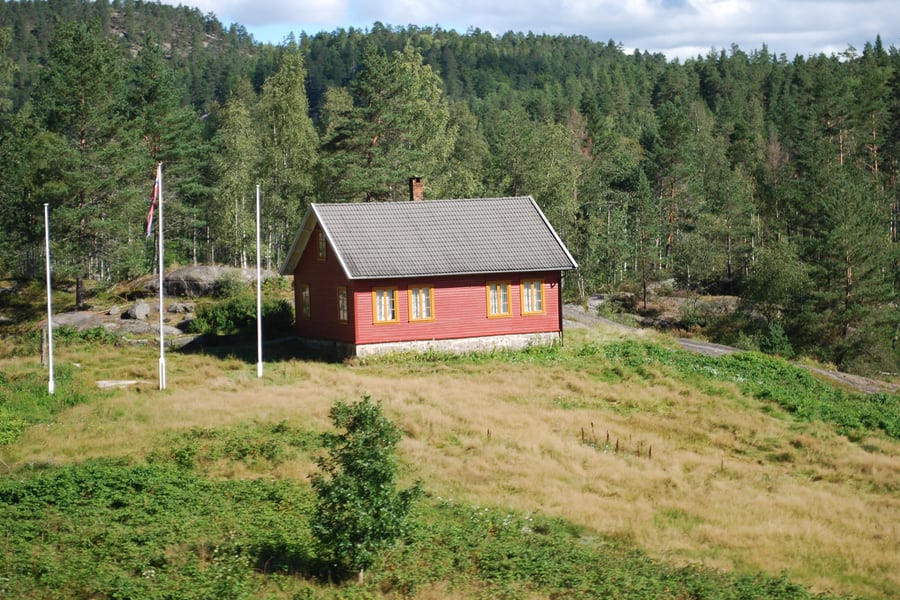
The first power station on the Otra opened here on 21 November 1900 and ran until 1957. Its dam walls still stand by the river, and the old timber flume runs beside the track, crossing the Otra on a suspension bridge.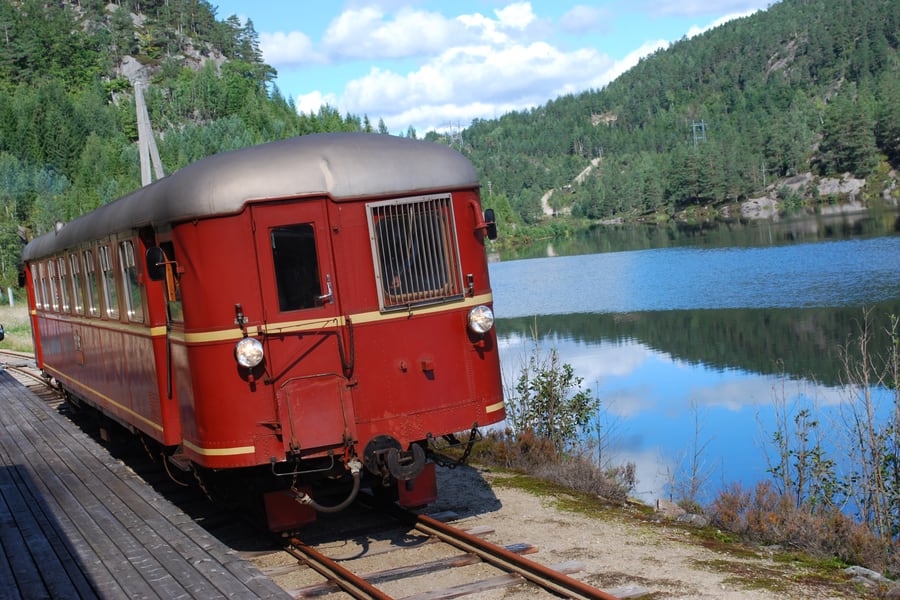 Vest-Agder-museet / Wikimedia Commons · CC BY 2.0
Beihøldalen
Never a station in the working years, Beihøldalen was built in 1996 as the end of the line and was its terminus until 2004. Its passing loop lets two trains run at once. Just before it the train passes the Løyning snow shed, 142 metres long by 1953.A bit of history
Culture & experiences along the way
 Vest-Agder-museet / Wikimedia Commons · CC BY 2.0 · cropped
Engines from Glasgow
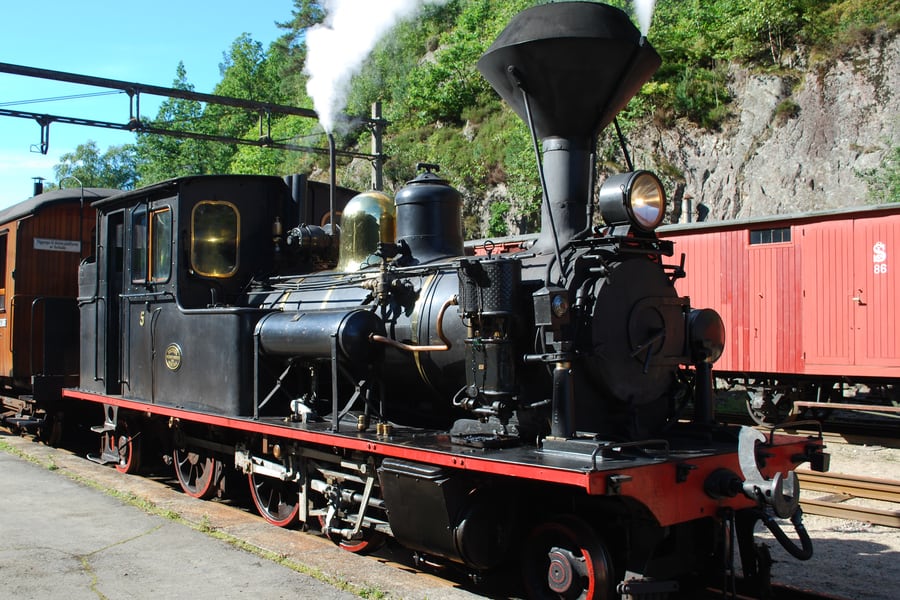
Dübs & Co of Glasgow built the line's first four engines, to a Norwegian design for its sharp curves. Lok 2, of 1894, helped build the railway, last ran in 2002 and returned to steam in 2024. Lok 5, built in Norway by Thunes in 1901, has gone to England for a full overhaul.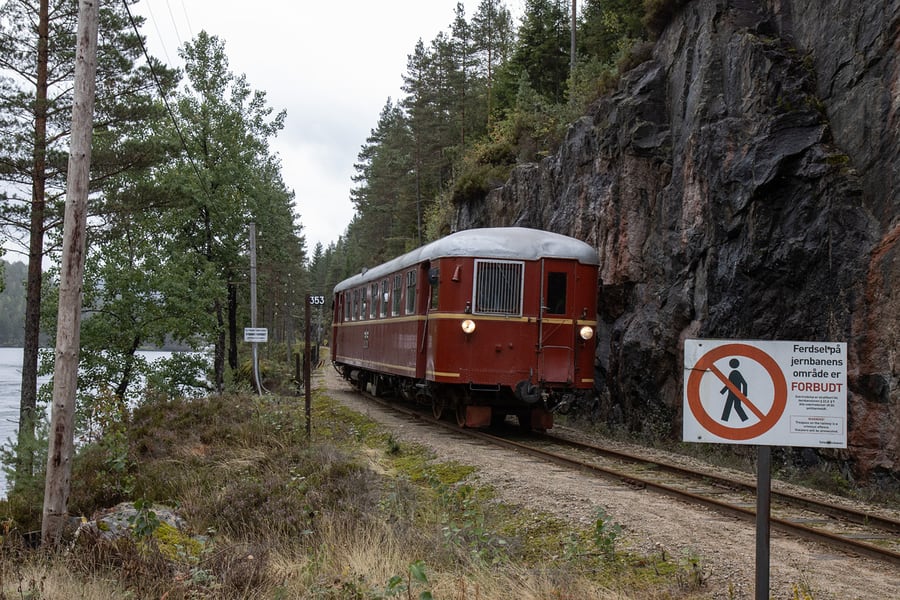 Øyvind Berg / Wikimedia Commons · CC BY-SA 4.0
Sulitelma, from the Arctic
The red railcar was built in 1957 by Strømmens Verksted for the Sulitjelma Line in Nordland, and is the last unit ever built for a Norwegian narrow-gauge railway. When that line closed it came south, arriving at Grovane in November 1972. It works the Wednesday evening trains in July.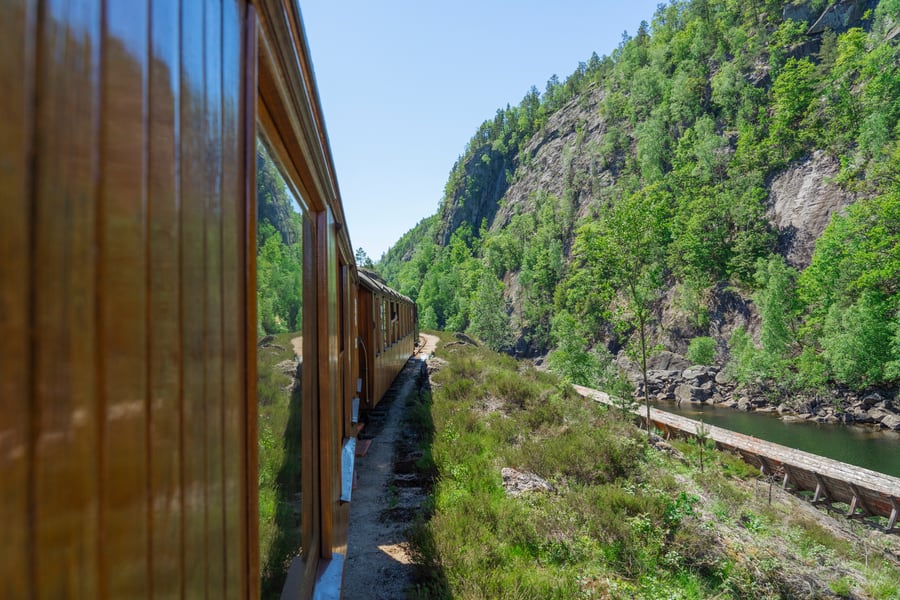 Frida Neverdal / Visit Sørlandet / Vest-Agder-museet · CC BY 2.0
Walk the timber flume
Steinsfoss timber flume was built in the 1950s, when the power station took the river's water and logs could no longer float down. Its four protected kilometres, with suspension bridges and tunnels, follow the track; ask the conductor to let you off at Beihøldalen on the way back and walk.Timetables
Setesdalsbanen runs in summer only. Every train leaves from Grovane, takes about 26 minutes to Røyknes, waits there for about 45 minutes while the café is open, and returns to Grovane.
The 2026 season
| Days | Dates | Departs Grovane | Train |
|---|---|---|---|
| Sundays | 7 June – 6 September | 11:00 and 13:30 | Steam |
| Saturdays | 4 – 25 July | 11:00 and 13:30 | Steam |
| Wednesdays | 8 – 29 July | 18:00 | Railcar Sulitelma |
On the way back the train will stop at Beihøldalen or Paulen if you ask the conductor, so you can walk the timber flume down to Grovane. On a few special days there are extra trains: on the line's own day at Røyknes, Sunday 30 August 2026, trains ran all day on a ticket valid for any of them, and on Sunday 11 October 2026 there was an autumn trip.
The 2027 dates are not yet published. Times as of October 2026, from Setesdalsbanen (opens in a new tab) and Vest-Agder-museet (opens in a new tab).
Getting to Grovane
Bus 30 runs from the centre of Kristiansand to the stop Grovane stasjon, about 100 metres from the station, every hour on Sundays and more often on weekdays; the ride takes about 40 minutes. Some Go-Ahead trains between Oslo and Stavanger stop at Vennesla, a 14-minute bus ride away. There is free parking at Grovane. Bus times from Entur (opens in a new tab), October 2026.
Tickets
Tickets are sold online through Setesdalsbanen's booking page, and the museum advises buying ahead, because trains are often full. A return to Røyknes is NOK 240 for an adult and NOK 120 for a child; a family ticket for two adults and up to three children is NOK 595. A single costs half the return, bicycles travel free, and dogs are welcome on board.
Members of Setesdalsbanens Venner ride free all season, and Vest-Agder-museet's annual pass halves the return fare. Companions of disabled travellers with a companion card travel free. 2026 fares, checked October 2026.
Book your tickets
Øyvind Berg / Wikimedia Commons · CC BY-SA 4.0Adult
Return, Grovane to Røyknes
The return trip with the stop at Røyknes; a single costs half.
Book Tickets (opens in a new tab, on Setesdalsbanen)via SetesdalsbanenFrida Neverdal / Visit Sørlandet / Vest-Agder-museet · CC BY 2.0 · croppedFamily
Two adults and up to three children
The return trip for a family of up to five.
Book Tickets (opens in a new tab, on Setesdalsbanen)via SetesdalsbanenT. Lunde / Vest-Agder-museet / Wikimedia Commons · CC BY 2.0Child
Return, Grovane to Røyknes
Half the adult fare; bicycles travel free.
Book Tickets (opens in a new tab, on Setesdalsbanen)via SetesdalsbanenRail Passes
No rail pass covers Setesdalsbanen. It is a museum railway with its own fares, and it appears nowhere among the Norwegian railway companies whose trains Interrail and Eurail cover. Everyone pays the museum's fare.
A pass can still bring you most of the way. Go-Ahead's regional trains on the Sørlandsbanen from Oslo to Kristiansand are covered by an Interrail Norway Pass or a Global Pass, with a compulsory seat reservation; a few of them stop at Vennesla, a short bus ride from Grovane. For this trip alone a pass is not worth buying — it pays only when southern Norway is one stop on a longer journey.
Checked October 2026 against Interrail's table of railway companies (opens in a new tab).
Places to Visit
The railway is a half-day out from Kristiansand, and these three are the city it started from, the museum that runs it, and the far end of the line it used to be.
 Carsten R D / Wikimedia Commons · CC BY-SA 4.0
Kristiansand
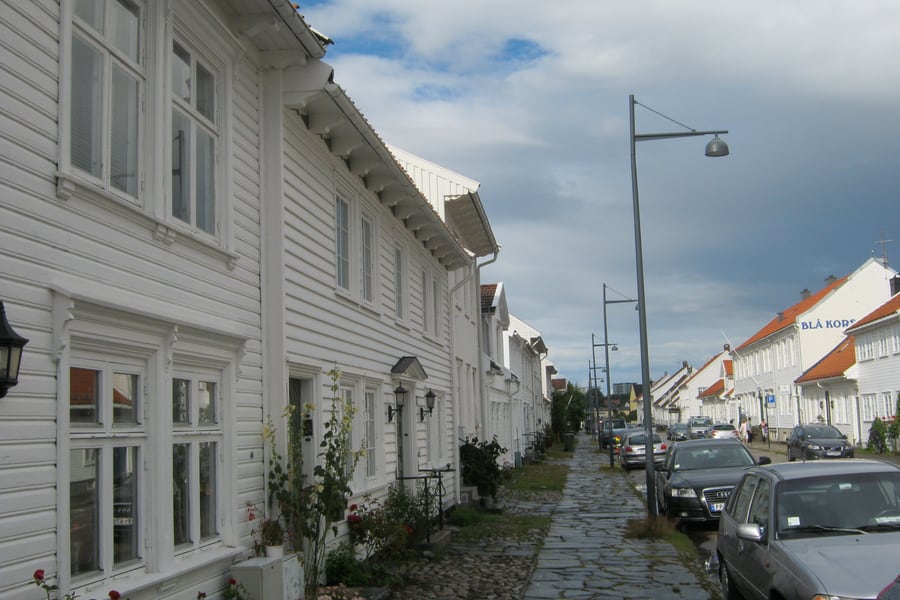
The line once began at Kristiansand, where the Otra meets the sea. On the river's western bank, Posebyen is a quarter of white wooden houses, many of them spared by the city fire of 1892. Bus 30 runs between the city centre and Grovane every hour, in about forty minutes.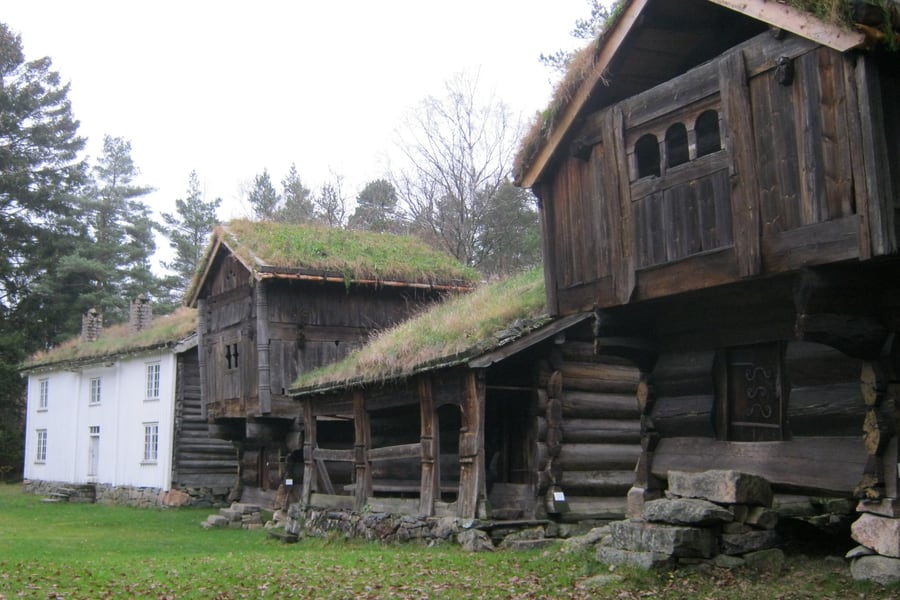 CarstenR / Wikimedia Commons · CC BY-SA 3.0
Kristiansand Museum
Vest-Agder-museet, which runs the railway, also keeps an open-air museum at Kongsgård on the edge of Kristiansand: nearly 40 old houses, among them wooden town houses moved from the old centre and two farmyards. On the Setesdal farmyard stands the museum's oldest building, the Nomeland storehouse of 1585. It opens in school holidays and for events.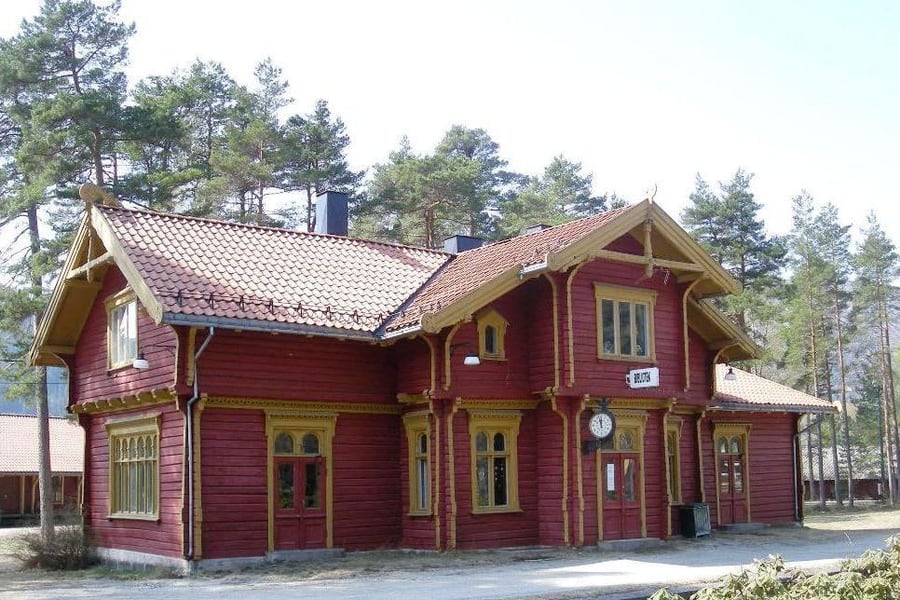 Jan-Tore Egge / Wikimedia Commons · CC BY-SA 3.0
Byglandsfjord
The Setesdal Line ran 78 kilometres to Byglandsfjord, at the foot of the lake. Its station, drawn by Paul Due in 1895 in the same dragon style as Grovane, still stands. When the railway came, the steamboats Bjoren and Dølen moved to the lake to meet it; Bjoren, built in 1867 and wood-fired, still sails there each summer and was protected as a monument in 2026.Where to Sleep
There is little to stay in at Grovane itself, and the trains run only by day. Kristiansand, forty minutes away on bus 30, is the place to sleep; both hotels below are in the city centre, a short walk from the bus.
Where to stay
Hotel Norge
In Kvadraturen, Kristiansand
A city-centre hotel that reopened in 2020 after a full renovation, with its own café and restaurant, Dronningen.
Check Availability (opens in a new tab, on hotel-norge.no)via hotel-norge.noClarion Hotel Ernst
In the centre of Kristiansand
A hotel in a building of 1858, with nearly 200 rooms, a few minutes' walk from the city beach and the Kilden concert hall.
Check Availability (opens in a new tab, on strawberry.no)via strawberry.noQuestions or corrections
Planning this trip and stuck on something, or spotted a time, fare or detail that has changed? Send us a message about Setesdalsbanen. We read every one, and we update this page when something has changed.