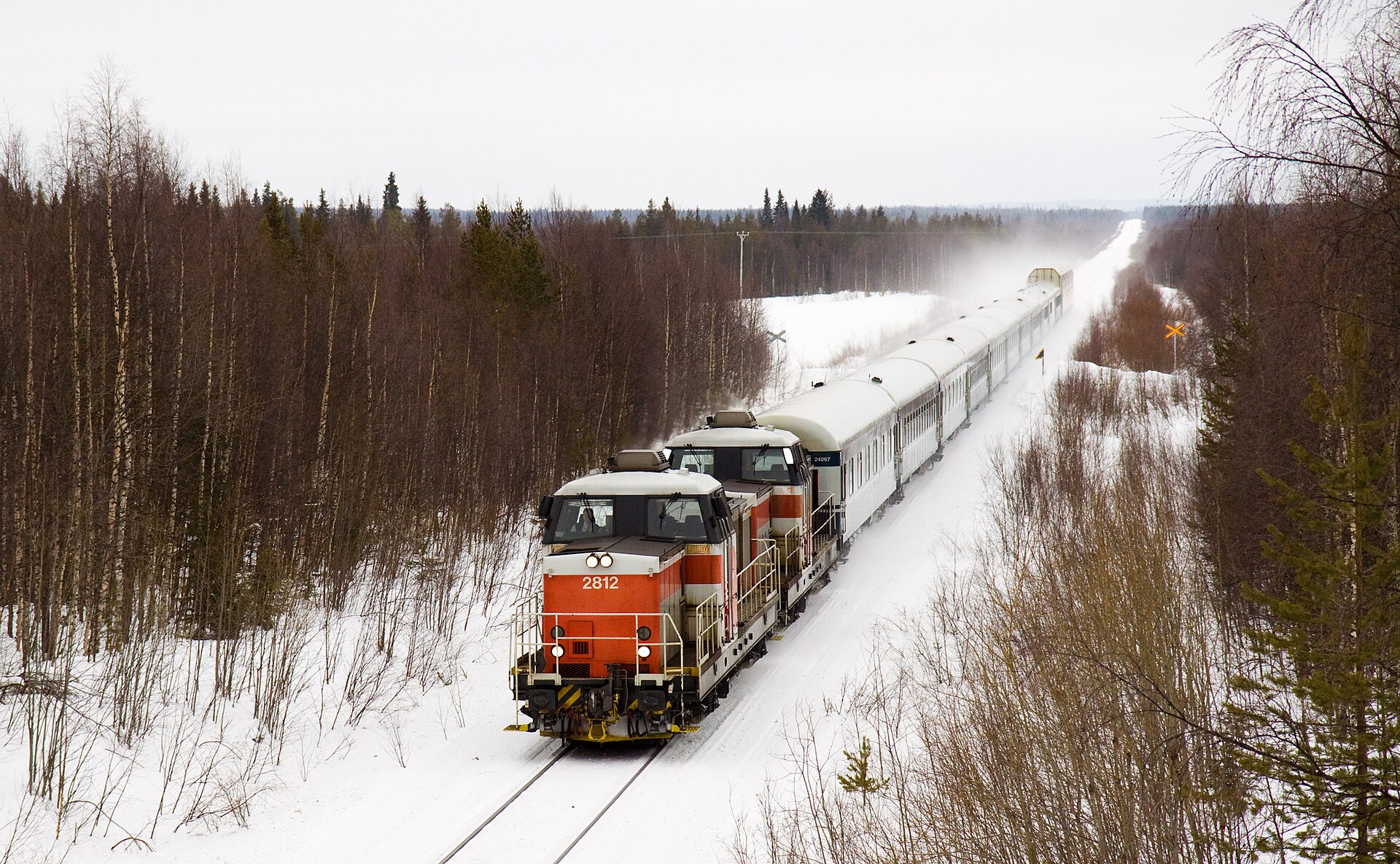
The Ski Train to Lapland
Kabelleger / David Gubler / Wikimedia Commons · CC BY-SA 3.0
- DistanceHelsinki–Kolari · about 1,000 km
- DurationOvernight · about 14 hours
- Best seasonDecember–April (ski season); September (autumn "ruska")
Introduction
Every winter, Finns do something wonderfully sensible: instead of driving two days north or flying, they take the night train to the snow. The overnight sleeper from Helsinki to Kolari — the northernmost railway station in the country — carries skiers the length of Finland while they sleep, and sets them down in the morning at the foot of the Lapland fells, ready for the slopes by lunchtime.
Kolari is the railhead for Finland's finest fell country. Just beyond it rises Ylläs, the biggest ski area in the land — seven rounded Arctic fells above the village of Äkäslompolo, with the longest downhill runs and a vast web of cross-country trails through the forest. An hour further by connecting bus is Levi, Finland's largest and liveliest resort, with its gondola, floodlit pistes and a World Cup slalom hill.
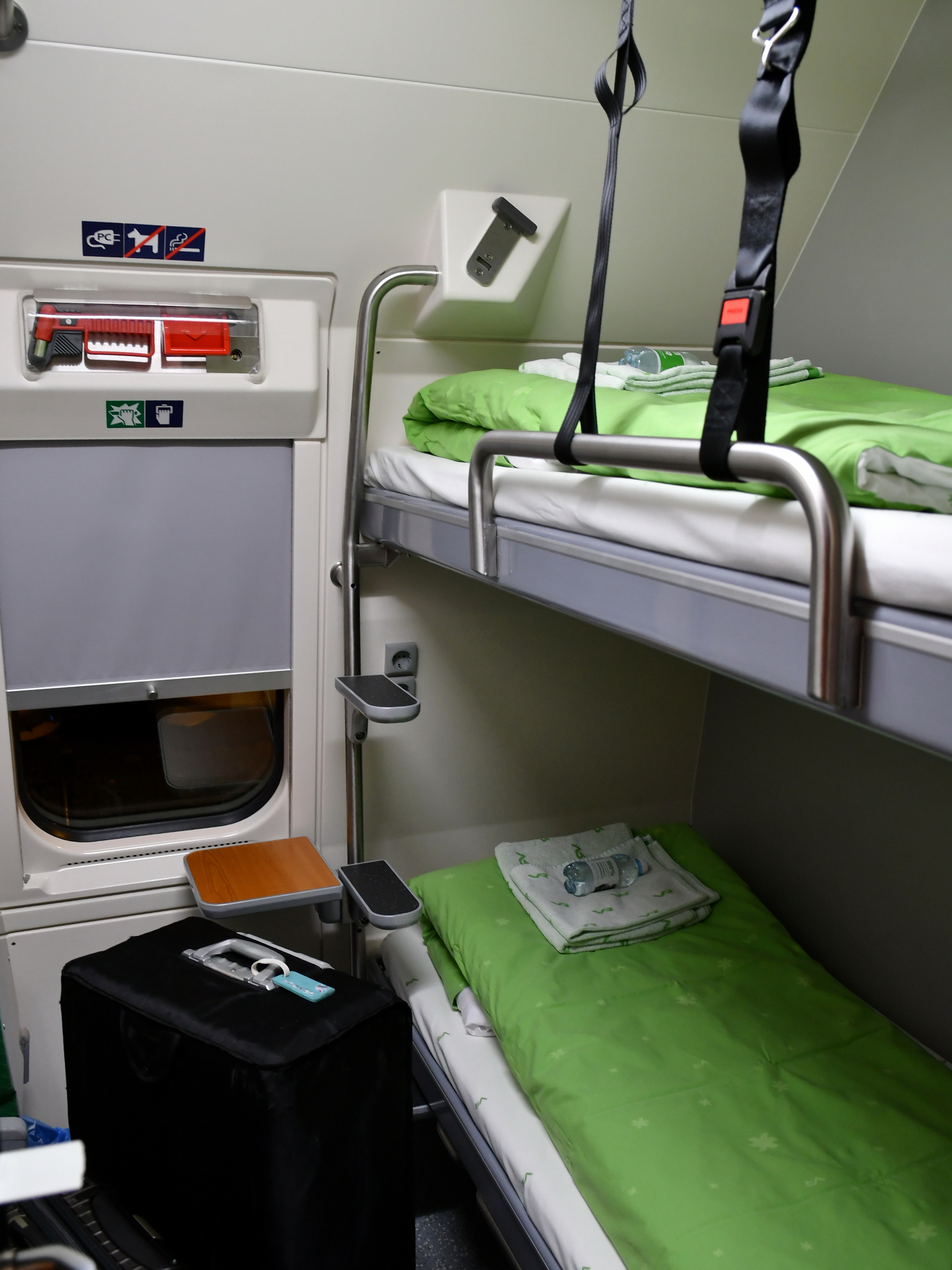
The train is the same comfortable double-decker sleeper that runs to Rovaniemi — a proper cabin with berths, the upper-deck rooms with their own shower — and it will carry your skis, and even your car, north overnight. You wake to a white world of low light and open fells, where the days are short and floodlit in December, long and dazzling in March, and the northern lights are a regular companion on the last lift of the day. It is the most civilised way imaginable to go skiing.
The Journey
The trip begins at Helsinki Central in the evening — often on a Friday, with the platform full of ski bags and families heading north for the weekend. You settle into your cabin, the skis go in the racks (and cars onto the carrier wagons), and the train pulls out into the dark of a southern Finnish winter.
Through the night the sleeper runs the whole length of the country: past Tampere, up the Gulf of Bothnia through Oulu, and on toward the border town of Tornio, where the line turns north into Lapland proper. You sleep through most of it, and wake to a transformed landscape — snow to the horizon, stunted birch, the low blue Arctic light — as the train works its way up to Kolari, the end of the line and the northernmost station in Finland, by late morning.
From Kolari a connecting bus meets the train for the short run to Äkäslompolo and Ylläs, or the hour or so to Levi — and you are on the slopes the same day, having spent no daylight travelling at all.
A few things worth knowing about the run:
- It is a VR double-decker night train, Helsinki to Kolari, about 1,000 km, roughly 14 hours overnight.
- Kolari is the railhead for Ylläs and Levi; a bus meets the train for the resorts (about 1 h 15 to Levi).
- The train carries skis, bikes and cars, and you sleep in a cabin as on the Santa Claus Express.
- ⚠️ Track works in 2026: major engineering on the northern lines is expected to change night-train schedules in May–June 2026 — check the current routing and times with VR before you book.
Come for the ski season (roughly December to April), or in late September for the ruska, when the Lapland tundra blazes red and gold — either way, the train is the best seat in the house on the way up.
Along the route
Ximonic (Simo Räsänen) / Wikimedia Commons · CC BY-SA 4.0The night train to the fells
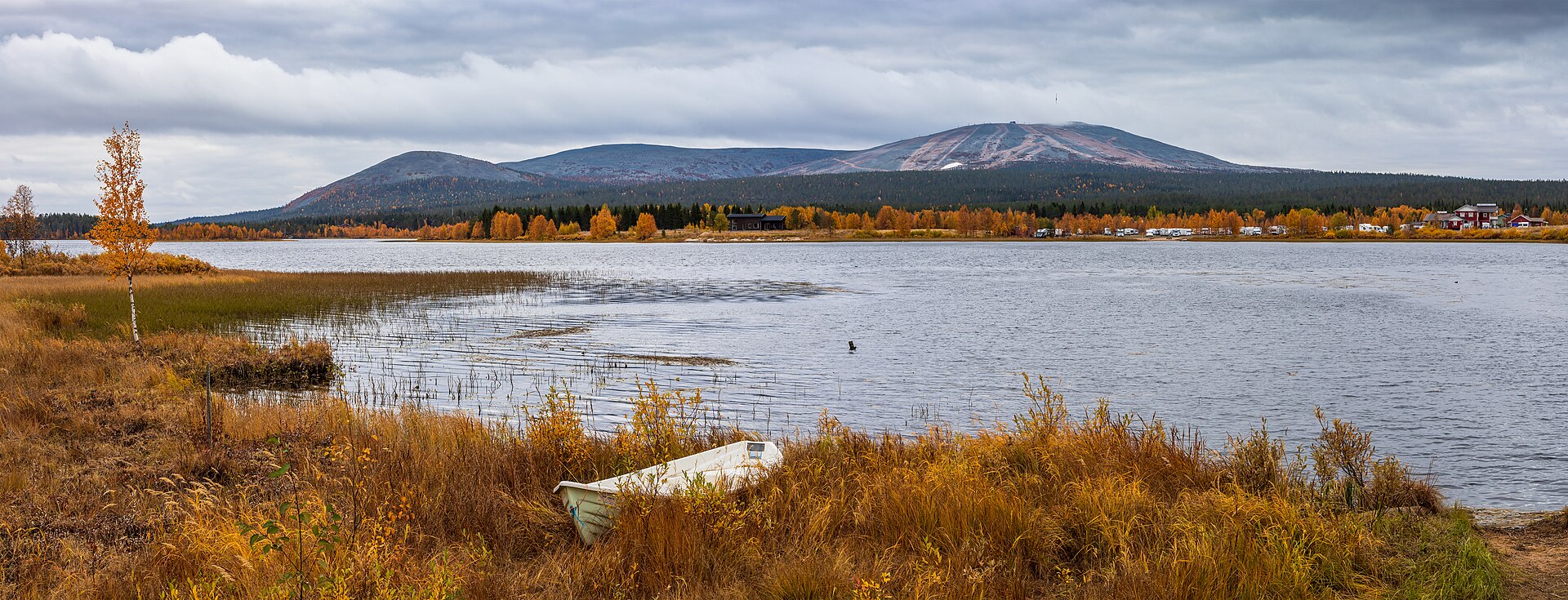
It is the classic Finnish ski trip: board the sleeper in Helsinki on a Friday evening, wake among the snowy fells, and be on the slopes by lunchtime — no two-day drive, no flight. The train runs the length of the country in the night to Kolari, the northernmost railhead.Ximonic (Simo Räsänen) / Wikimedia Commons · CC BY-SA 3.0Ylläs and its seven fells
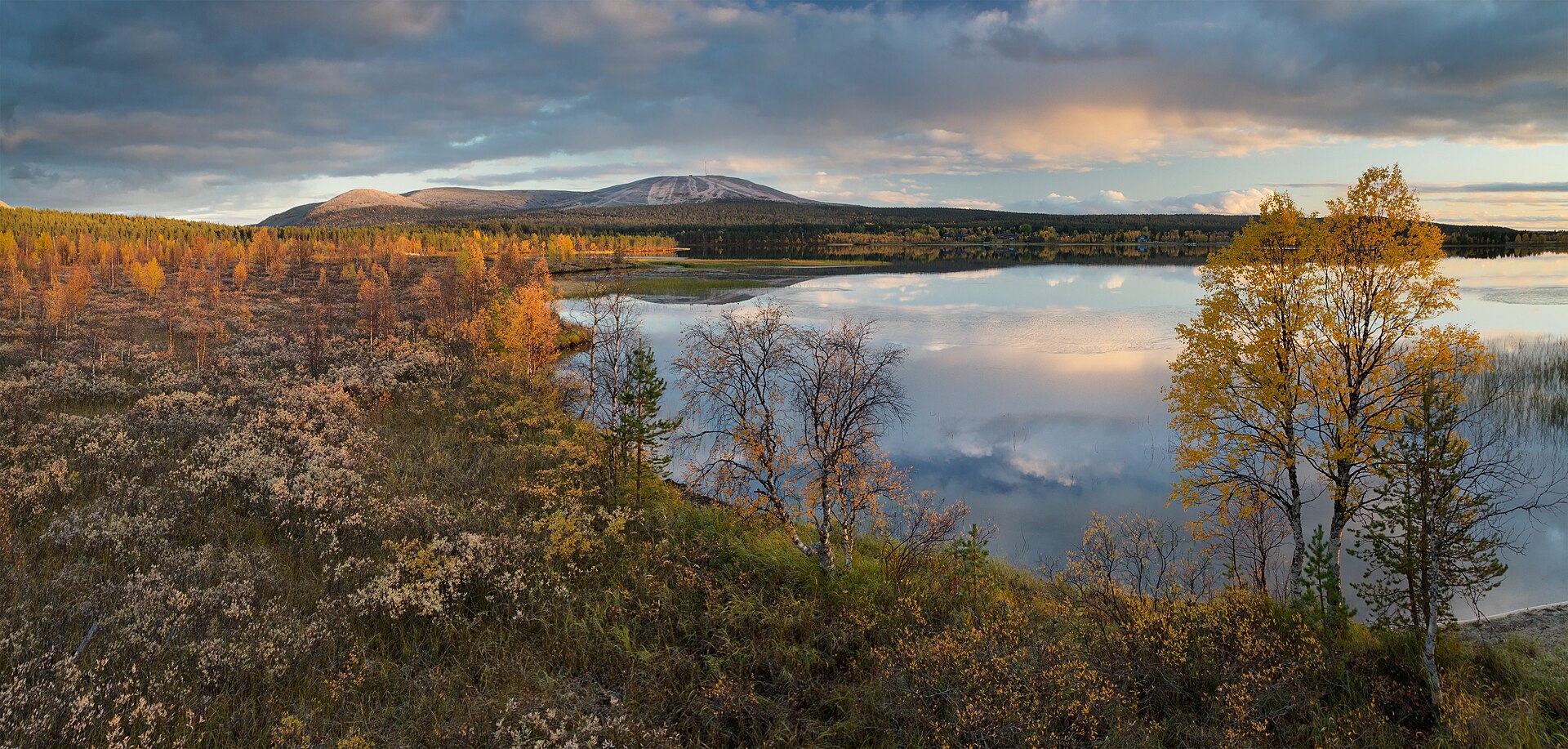
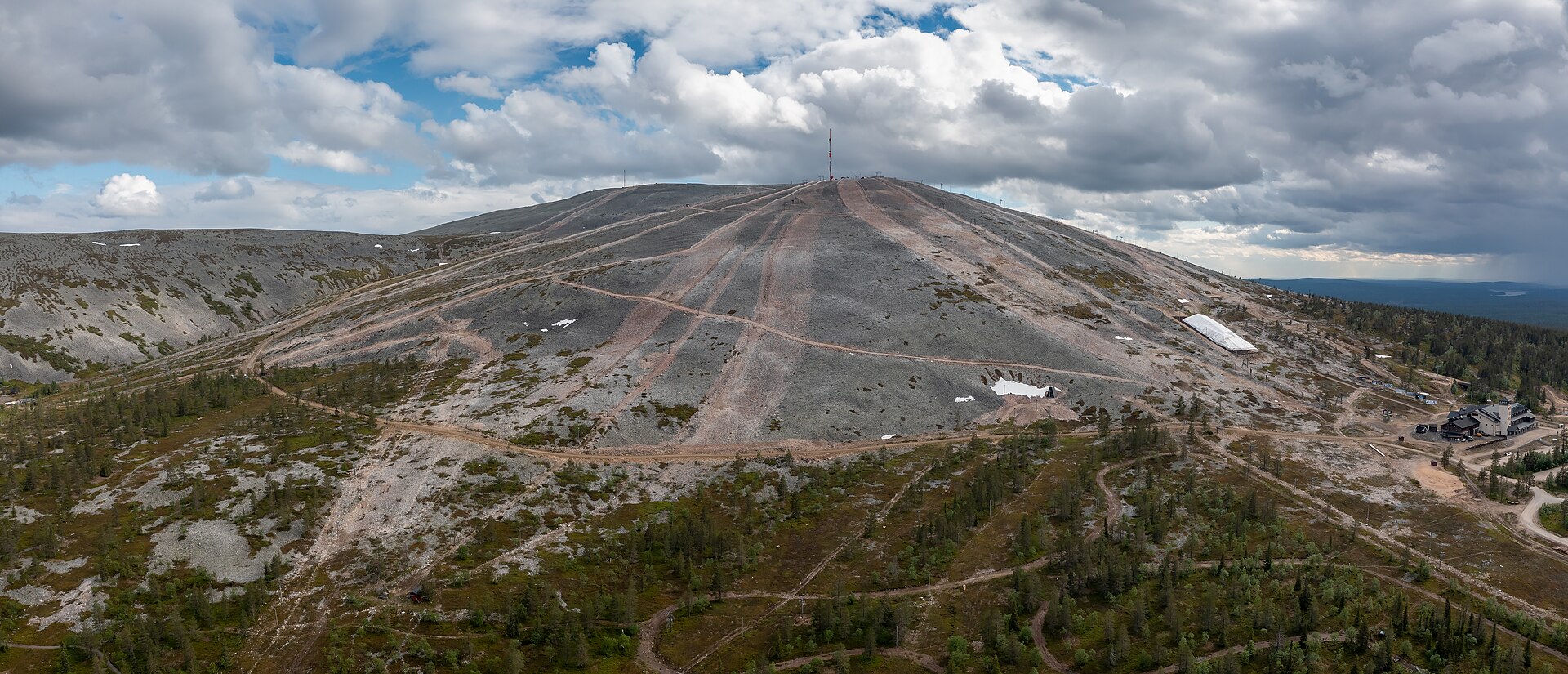
Just beyond Kolari rises Ylläs, the biggest ski area in Finland — a chain of seven rounded Arctic fells with the longest slopes in the country and a huge network of cross-country trails through the forest.DanielMichaelPerry / Wikimedia Commons · CC0Levi, Finland's busiest resort
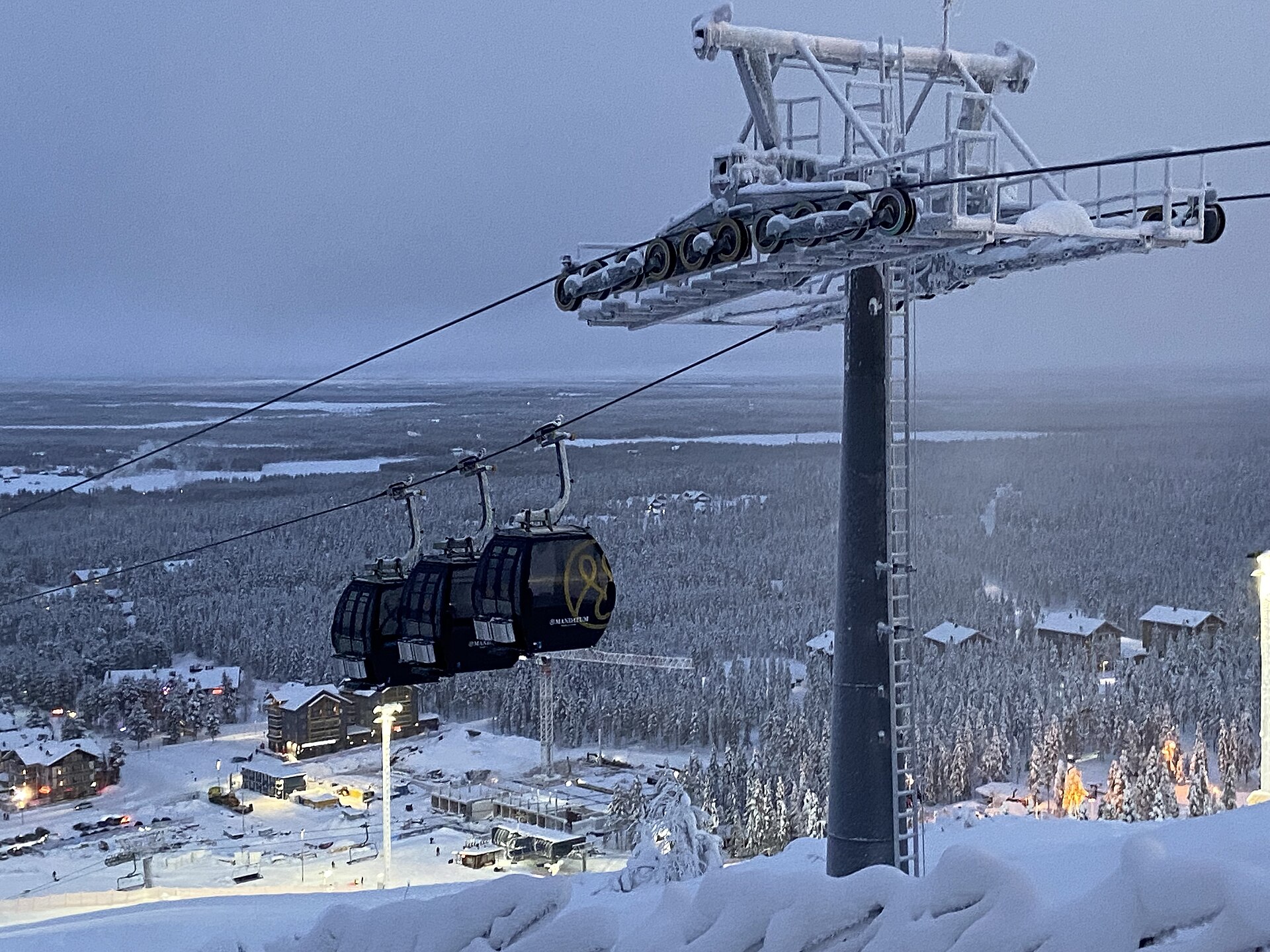
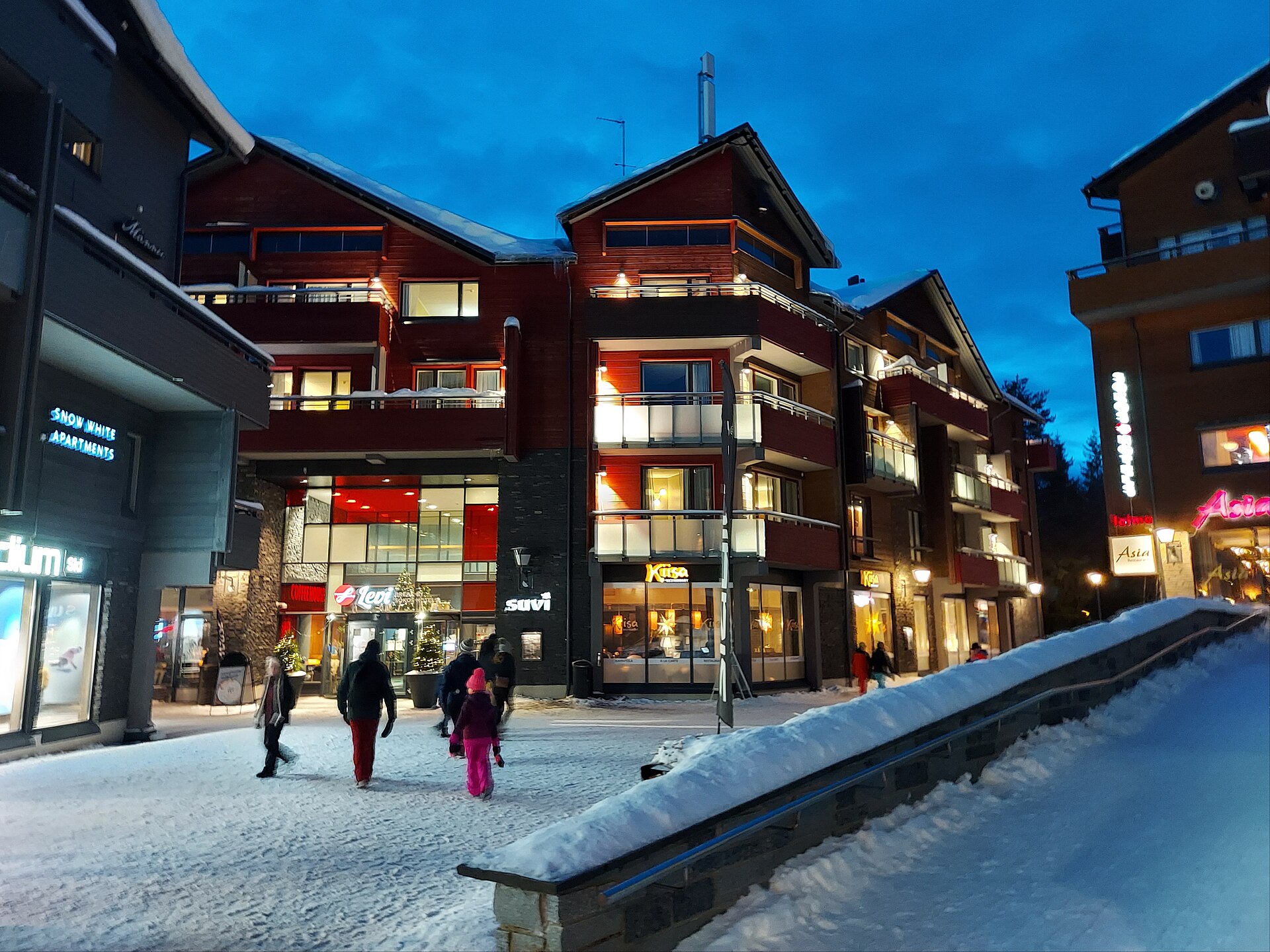
An hour's bus ride from Kolari station is Levi, Finland's largest and liveliest ski resort — a proper resort village with a gondola, floodlit pistes and a World Cup slalom hill, all under the winter dark and, often, the northern lights.A bit of history
Culture & experiences along the way
Tyg728 / Wikimedia Commons · CC BY-SA 4.0Sleep on the way to the snow
You travel in the same double-deck sleeping cars as the Santa Claus Express — a proper cabin with berths, the upper-deck ones with a private shower — so the journey costs you no holiday time at all. Load your skis (and even your car) aboard, sleep, and wake in Lapland.Arkke / Wikimedia Commons · CC BY 4.0Skiing under the aurora
Lapland skiing is its own thing: short, dark December days lit by floodlights, the long bright light of March, endless cross-country trails, and the chance of the northern lights overhead as you ride the last lift. The resorts around Ylläs and Levi run from November well into spring.Nicolas Buffler / Wikimedia Commons · CC BY-SA 2.0Reindeer country
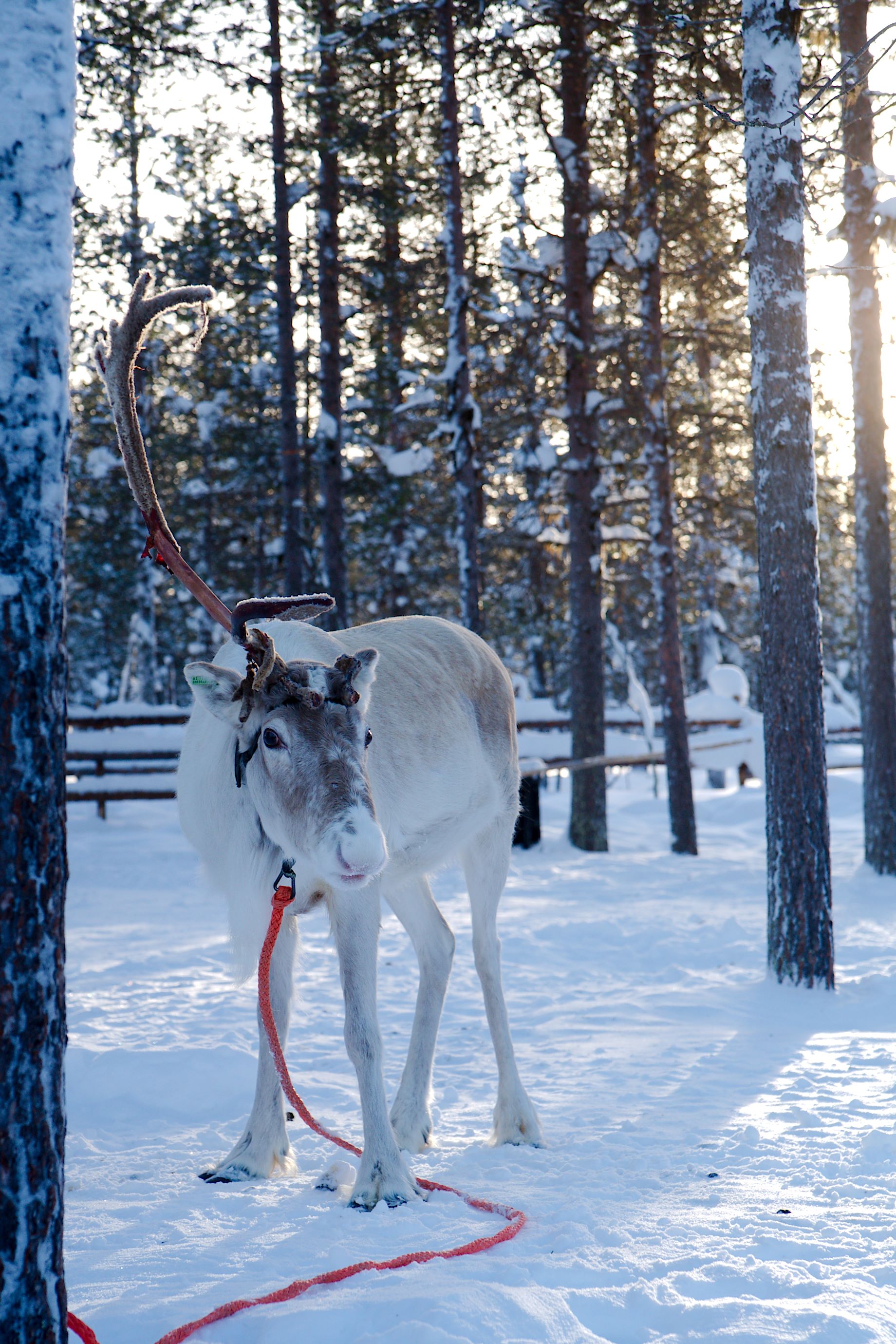
These fells are Sámi land and reindeer country, and the herds are never far — you will see them from the pistes and the trails. Beyond the skiing there are husky and reindeer safaris, snowshoeing, and in autumn the flaming colours of the ruska, when the tundra turns red and gold.Timetables
The train to Kolari is an overnight service, running nightly through the ski season (and year-round, less often) — north in the evening, south the following night.
Real times (2026 — confirm before travelling):
| Direction | Depart | Arrive |
|---|---|---|
| Helsinki → Kolari (train P269) | ~20:24 | ~10:55 (next day) |
| Kolari → Helsinki | evening | ~morning |
The run is about 1,000 km and takes roughly 14 hours, calling at Riihimäki, Tampere, Oulu and Tornio. At Kolari — Finland's northernmost station — a connecting bus meets the train for Äkäslompolo/Ylläs and for Levi (about 1 h 15). In the busiest ski weeks, up to two night trains a night run to Kolari (and three more to Rovaniemi).
Good to know:
- ⚠️ 2026 track works. Major engineering on the northern network is expected to alter night-train schedules in May–June 2026 — always check the current routing and times with VR, and don't assume the standard timetable in that window.
- Book far ahead. The ski-season sleepers — especially the upper-deck cabins with a shower — sell out weeks in advance for Christmas, the February–March school holidays and Easter.
- Bring your kit. Skis and bikes travel with you; the car-carrier takes cars and motorcycles.
- Return timing. Plan the southbound night train so you get a full last day on the slopes before boarding.
Times as of the 2026 timetable. Confirm current schedules with the operator — see the Tickets section below.
Tickets
The train is run by VR, the Finnish state railway, and it is booked exactly like the other Lapland night trains:
- Online, at vr.fi (opens in a new tab), with a full English site; you pick your cabin and date and get an e-ticket.
- At the station, at Helsinki Central and the main stops.
The accommodation is the same double-deck sleeper fleet as the Santa Claus Express:
- Lower-deck cabin — two berths and a washbasin.
- Upper-deck cabin — two berths with a private shower and WC; the most comfortable, and the first to sell out.
- Three-berth compartment — the older-style cabin, good value for families.
- Seats — the cheapest option, but a berth is worth it on a 14-hour night.
Add the car-carrier if you want your car in Lapland without the drive, and note that skis and bikes travel with you.
Two practical points: book early — ski-season sleepers vanish weeks ahead — and, because of the 2026 track works (see Timetables), confirm the current routing before you pay, as the schedule may change in May–June 2026. Fares vary with demand and season, so check current prices on VR's site above.
Book your tickets
Night train · Helsinki to Kolari
Sleeper cabins for the fells
The overnight double-decker to Kolari, Finland's northernmost station, for the Ylläs and Levi ski areas — about 14 hours from Helsinki, in a lower- or upper-deck cabin (or a seat). Booked with VR; a bus meets the train for Levi and Äkäslompolo.
Book Tickets (opens in a new tab, on VR)via VRSkis, bikes and the car
Kit and car transport
VR's Lapland night trains carry skis and bikes, and cars and motorcycles on the car-carrier wagons — so you can bring your own gear (or your car) north overnight instead of driving two days. Added to your VR booking.
Book Tickets (opens in a new tab, on VR)via VRRail Passes
Interrail passes are valid, but a cabin costs extra. Interrail's table of railway companies lists VR's night trains as included in Finland, so the train is covered by a one-country Interrail Finland Pass, the Interrail Nordic Pass or a Global Pass. Reservations for beds and cabins are compulsory, and Interrail strongly recommends reserving a seat. VR sells cabins whole, not by the bed, and charges pass holders 50% of a full fare:
| Reservation with a pass | Fee |
|---|---|
| Seat | €5 – €32.70 |
| Double sleeper cabin | €39 – €150 |
| Deluxe double cabin with private bathroom | €39 – €160 |
Prices vary by route and date, rising by up to 20% in high season. Booking early saves money on the reservation as well as the cabin.
A pass pays when the night train is part of a longer trip. With a cabin reservation at half the full fare, a pass saves only half the price of the ride itself.
Checked October 2026 against interrail.com (opens in a new tab) and Interrail's Santa Claus Express page (opens in a new tab) and night-train reservation fees (opens in a new tab).
Places to Visit
This journey is really about the fell country at the top of the line — some of the finest winter terrain in Europe, and lovely in summer and autumn too.
Ylläs, just beyond Kolari, is the biggest ski area in Lapland after Levi, and the one with the most terrain: a chain of seven fells (tunturi) rising above the forest, with 61 slopes, 330 km of cross-country trails — the largest such network in the country — and two low-key resort villages — Äkäslompolo on the north side and Ylläsjärvi on the south. It is prized for its quiet, its long season and its cross-country skiing; the whole area sits inside Pallas–Yllästunturi National Park, Finland's most popular.
Levi, about an hour by bus from Kolari, is the opposite in mood — Finland's biggest and busiest resort, a full ski village with a gondola, floodlit pistes, a hotel-lined centre, an annual Alpine Ski World Cup slalom, and the liveliest après-ski in the country. Its neighbour Sirkka and the surrounding fells are among the best places anywhere to watch the aurora.
Beyond the slopes, this is deep Lapland — Sámi land and reindeer country. There are husky and reindeer safaris, snowmobiling, snowshoeing and ice-fishing in winter; in summer the midnight sun and superb fell hiking; and in late September the ruska, when the tundra turns to fire. The Pallas fells to the north, with their famous clean air and long trails, are an easy add-on for walkers.
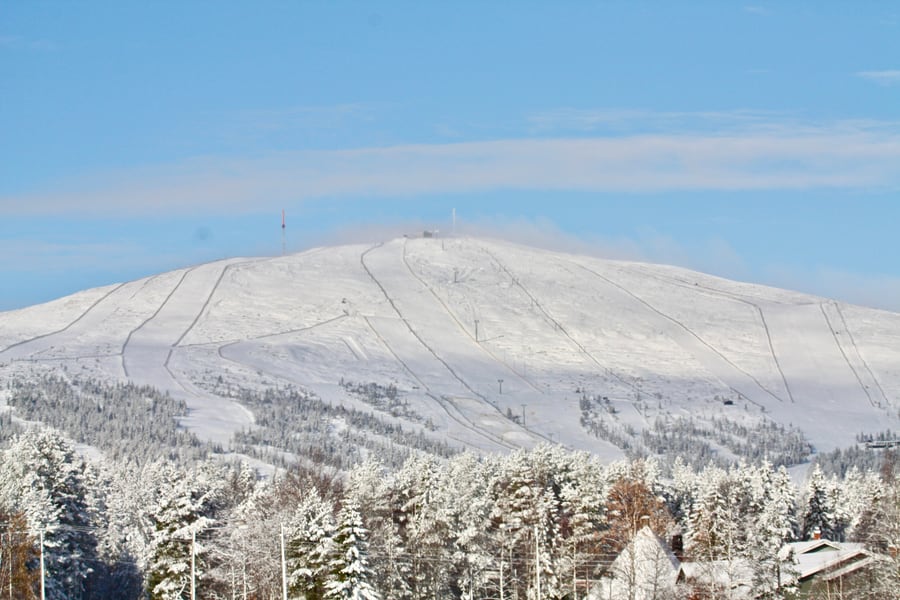 Yllasjarvi / Wikimedia Commons · CC BY-SA 4.0 · cropped
Yllästunturi
A 719-metre fell, the highest in Finland with lifts on it, standing over two villages that sit on opposite sides — Äkäslompolo to the north, Ylläsjärvi to the south, eleven kilometres apart by the road round the base. Between them they run 61 slopes and 29 lifts, the longest run three kilometres. Kolari station is 37 km away, which is what makes the whole thing reachable by sleeper.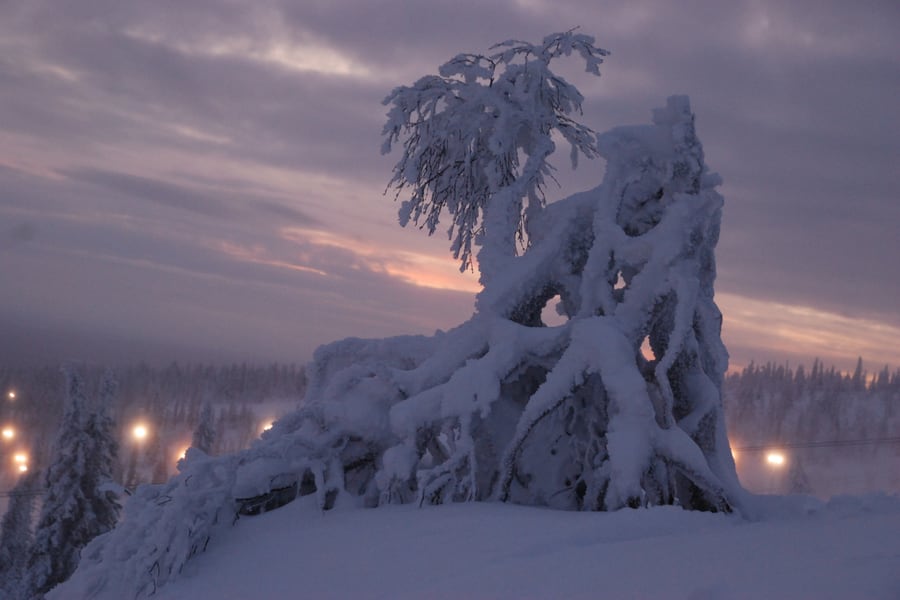 Tatiana Bashinskaya / Wikimedia Commons · CC BY 3.0 · cropped
Tykky
The Finnish word for crown snow-load — the rime that builds up when supercooled fog freezes onto the windward side of a branch, usually between −2 and −8°C with a light wind behind it. Medium-height fells get the worst of it, because they reach cloud base and catch the wind. A single northern spruce can end up carrying three or four tonnes of the stuff, bent into shapes that stop looking like trees at all.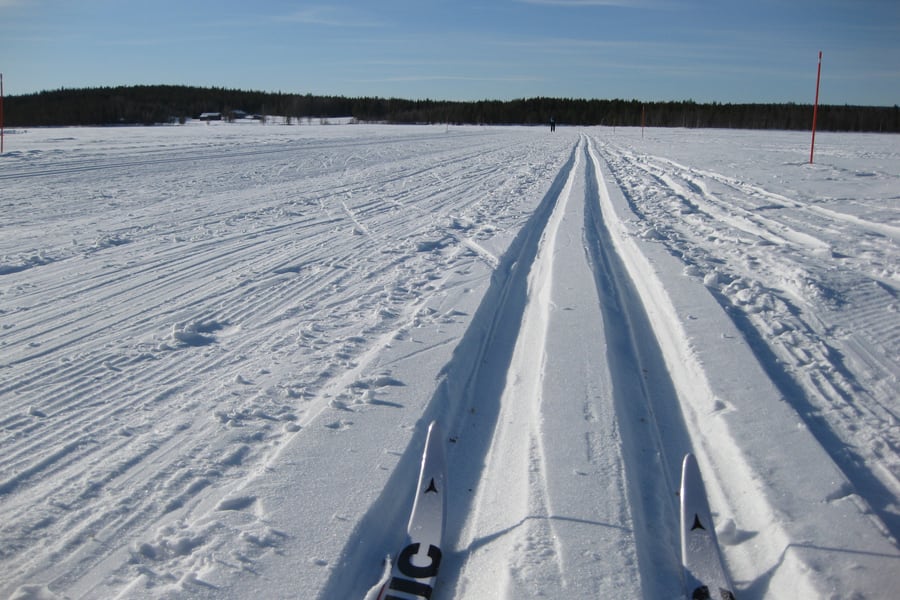 ThomasG / Wikimedia Commons · CC BY-SA 3.0 · cropped
The cross-country network
This is what Ylläs is really for: 330 kilometres of prepared track threading between the fells and through the forest, 38 km of it floodlit for the months when the daylight barely arrives. The terrain is gentler and quieter than the downhill side, the season runs long, and you can ski village to village. Much of it lies inside the national park boundary.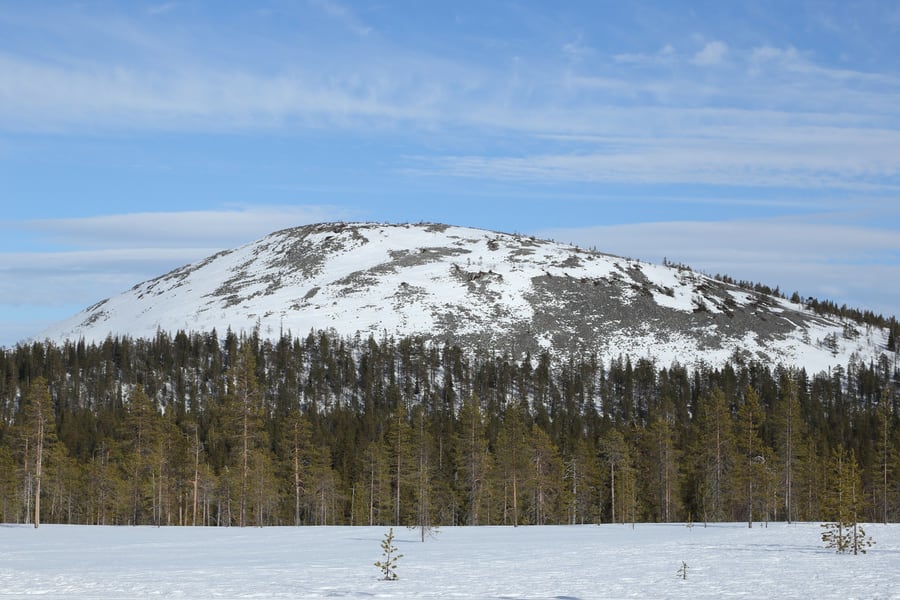 Estormiz / Wikimedia Commons · CC0 · cropped
The chain of fells
Ylläs is not one hill but the high point of a group — Kesänki, Kuertunturi, Kukastunturi, Lainiotunturi, Pyhätunturi and Aakenustunturi ranged around it above the treeline. They are the southern end of a fell chain that runs roughly 100 kilometres north through the park, rounded and bare on top from ice and weather, with taiga forest filling every gap between them.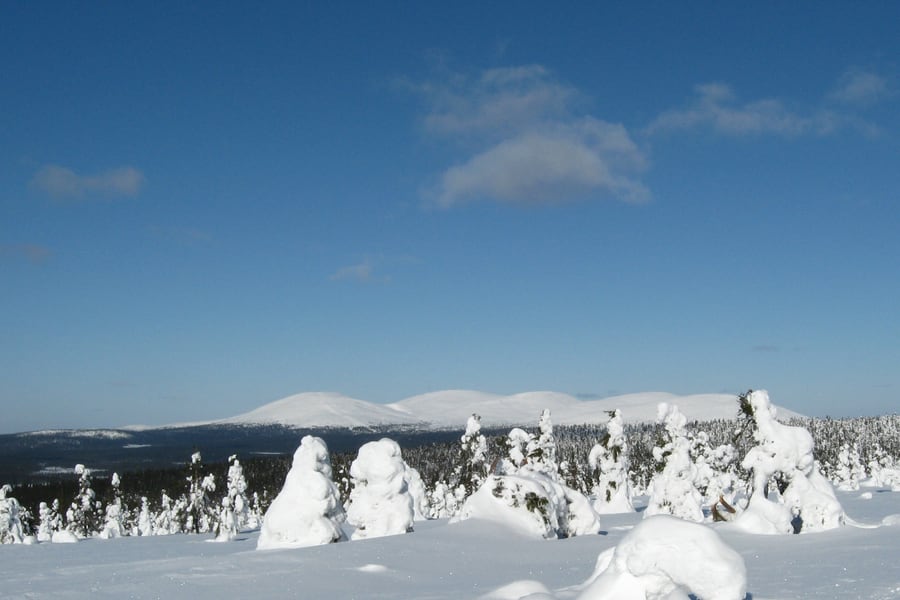 Htm / Wikimedia Commons · CC BY-SA 3.0 · cropped
The Pallas fells
The far end of Pallas–Yllästunturi, Finland's third-largest national park at 1,020 km² and its most visited — about 599,000 visits in 2024. The Pallastunturi skyline is one of the country's designated national landscapes. The air is the other draw, and it is not a marketing line: the WHO rates the readings at the Sammaltunturi station among the cleanest measured anywhere, under 4 µg/m³ of fine particles.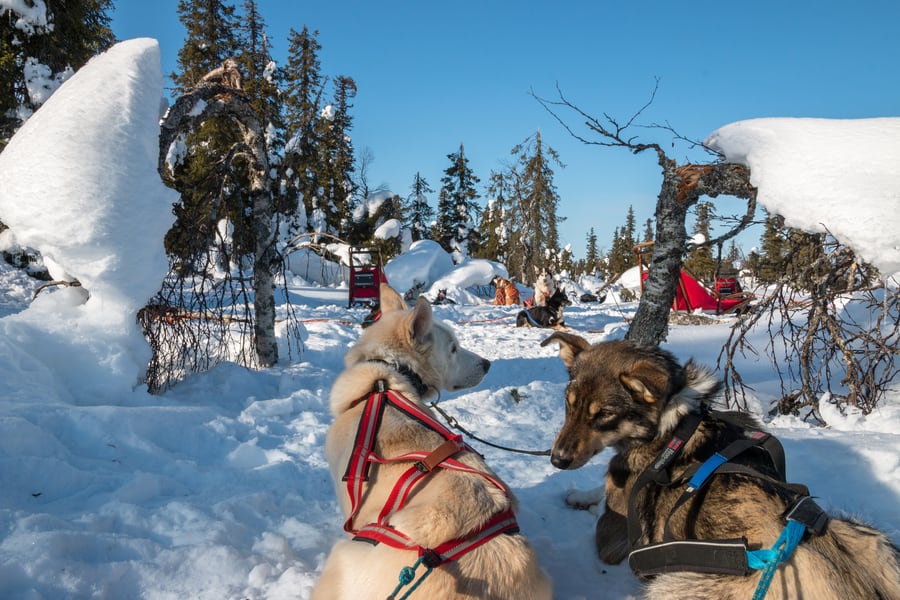 Markus Trienke / Wikimedia Commons · CC BY-SA 2.0 · cropped
Husky safaris
The classic Lapland day out, and it works because the terrain does — long flat runs of frozen bog and forest track between the fells, hard-packed from December to April. Teams run anything from an hour's taster to overnighting at a wilderness hut. The dogs are noisy and impatient at the start line and completely silent once moving, which is the part nobody warns you about.Where to Sleep
One night of this trip is spent on the train, in a sleeper cabin rolling north — so the choice is really where to stay once you reach the fells.
At Ylläs, the two villages have different characters. Äkäslompolo, on the north side, is the prettier and quieter, strung along its lake beneath the fells, with cabins, small hotels and ski-in lodges; Ylläsjärvi, on the south side, is a little more developed. Both are built for cross-country and family skiing, and a self-catering log cabin — sauna included, as always in Finland — is the classic way to stay.
At Levi, the resort village itself is the base: a compact centre of hotels, apartments and chalets around the gondola and the pistes, with restaurants, spas and nightlife on the doorstep. It is the easy, everything-in-one-place choice, and the busiest — book well ahead for the peak weeks.
For the aurora, the area is full of glass-roofed igloos and aurora cabins, where you can watch the northern lights from your bed away from the village lights — a memorable splurge on a clear winter night.
As with all our journeys, we keep this to the shape of the trip rather than specific bookings: choose the quiet cross-country charm of Äkäslompolo, the full-resort convenience of Levi, or a glass igloo under the Lapland sky — and let the night train carry you and your skis there while you sleep.
Questions or corrections
Planning this trip and stuck on something, or spotted a time, fare or detail that has changed? Send us a message about The Ski Train to Lapland. We read every one, and we update this page when something has changed.