The Snaefell Mountain Railway
Andrew Wilkinson / Flickr · CC BY-SA 2.0
- Distance4½ miles (7 km) · 3 ft 6 in gauge
- Duration30 minutes each way
- Best seasonLate March to 1 November · every day from late April to late September
Introduction
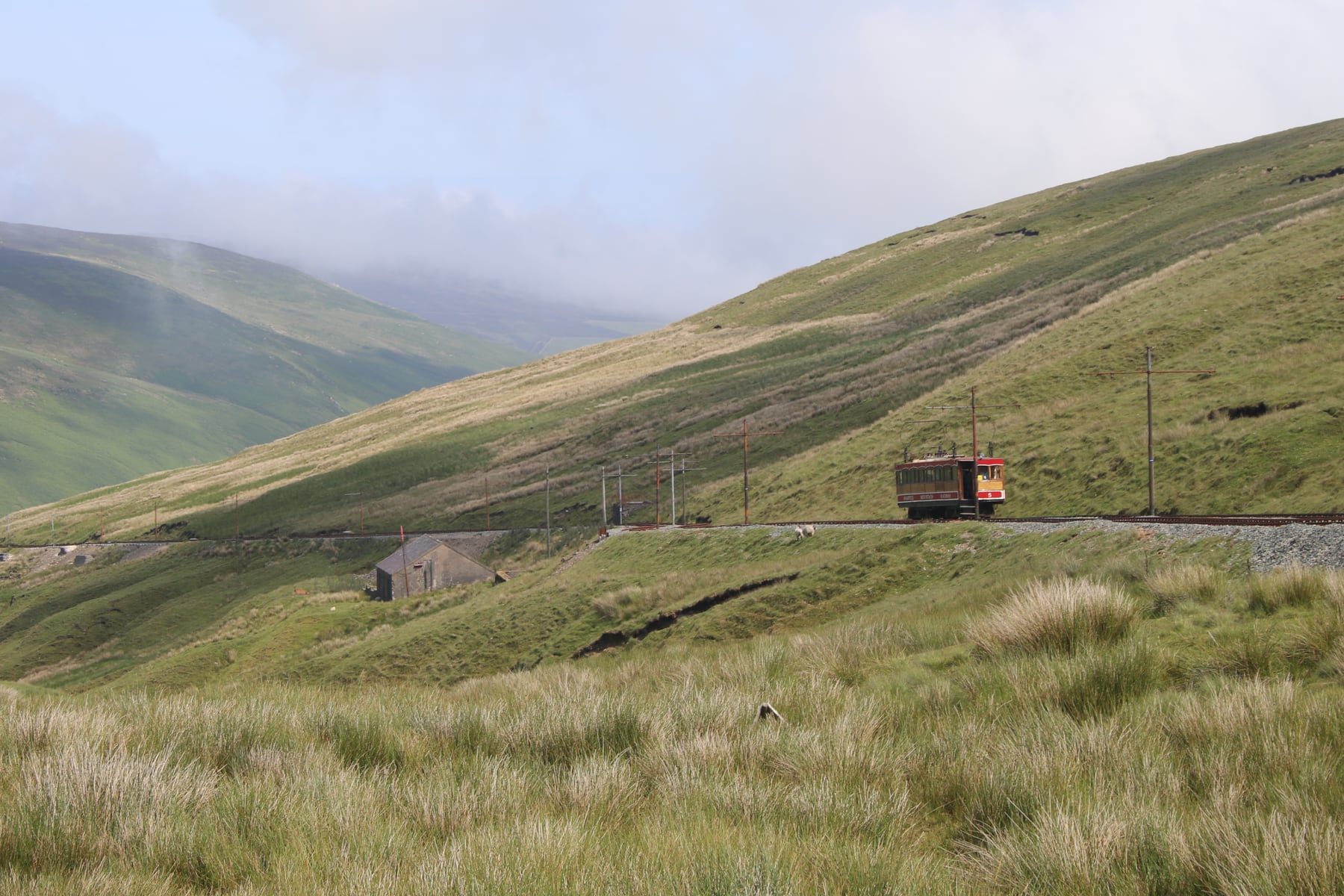
The Snaefell Mountain Railway climbs 4½ miles from the village of Laxey, on the east coast of the Isle of Man, to the top of Snaefell, at 2,036 feet the island's highest point. It opened on 20 August 1895 and was electric from the first day, with overhead wires and current picked up by bow collectors on the roofs of the cars. The trip takes half an hour each way.
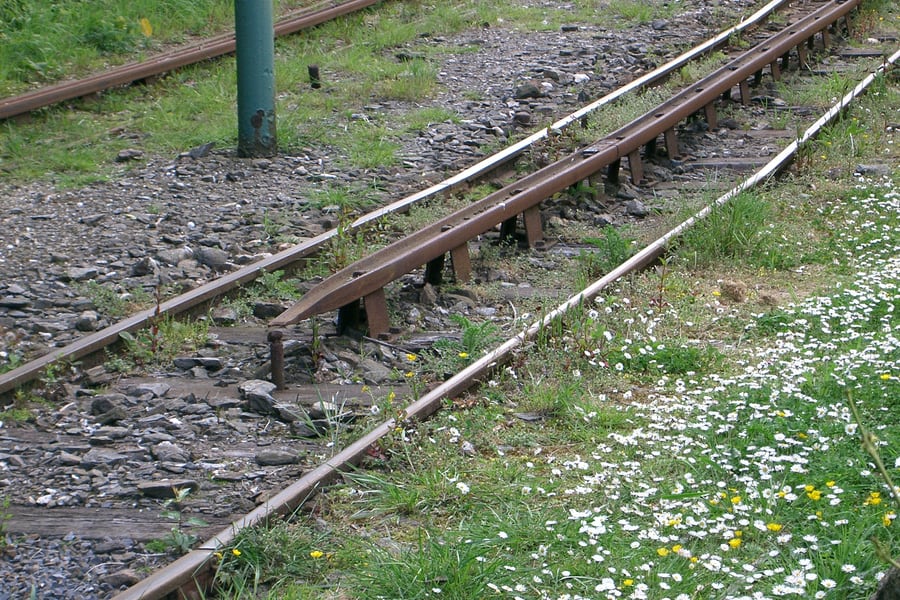
The cars are as old as the line. Five of the six wooden-bodied cars that G. F. Milnes & Co. built for the opening are still in service. They climb the mountain on the grip of their wheels alone, and a raised centre rail of the Fell type gives them something to brake on during the descent.
The line starts at Laxey station, where it meets the Manx Electric Railway from Douglas and Ramsey, and its only stop on the way is the Bungalow, where it crosses the TT course. At the top, the summit café looks out over the Irish Sea. The Isle of Man is a self-governing Crown Dependency, not part of the United Kingdom, and ferries sail to Douglas from Heysham and Liverpool. The railway runs from late March to the beginning of November.
The Journey
The cars leave from Laxey station on New Road, in the village centre. The Manx Electric Railway calls at the same station on its way between Douglas and Ramsey, so the two connect here. The two railways share the station but not the track: the coast line is 3 ft gauge, and the mountain line was built to 3 ft 6 in to leave room for its centre rail.
Leaving Laxey, the car passes the spur to its depot and starts climbing the side of the valley. The Laxey Wheel comes into view below, then the village drops away and the line comes out onto open moorland, with the sea behind. Halfway up it reaches the Bungalow, the only intermediate stop, where it crosses the A18 Mountain Road. This is the highest stretch of the course of the TT races, and in race periods the cars stop on either side of the road while passengers cross by a footbridge.
Above the Bungalow the line winds round the mountain towards the summit, and the view changes from the east coast to the Sulby valley and the flat country of the north. The cars stop at Summit station, beside the Summit Hotel café, a short walk below the top. There is no road to the summit, and the first car each morning pushes a wagon of supplies up ahead of it.
The cars
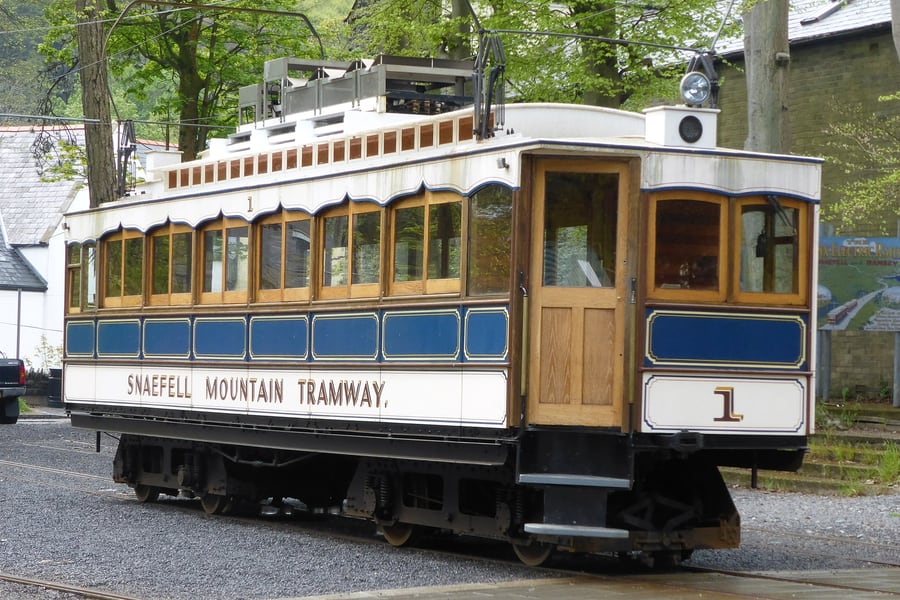
The railway's five passenger cars, numbered 1, 2, 4, 5 and 6, were built in 1895 by G. F. Milnes & Co. Car 5 was burnt out in 1970 and given a new body in 1971, and car 3 was destroyed in 2016 when it ran away from the summit without passengers. In the late 1970s the cars were given new bogies, with motors and electrical equipment taken from withdrawn trams of the city of Aachen. In winter the overhead wire is taken down from the exposed top section to save it from ice.
Along the route
 Robert Eva / Geograph · CC BY-SA 2.0
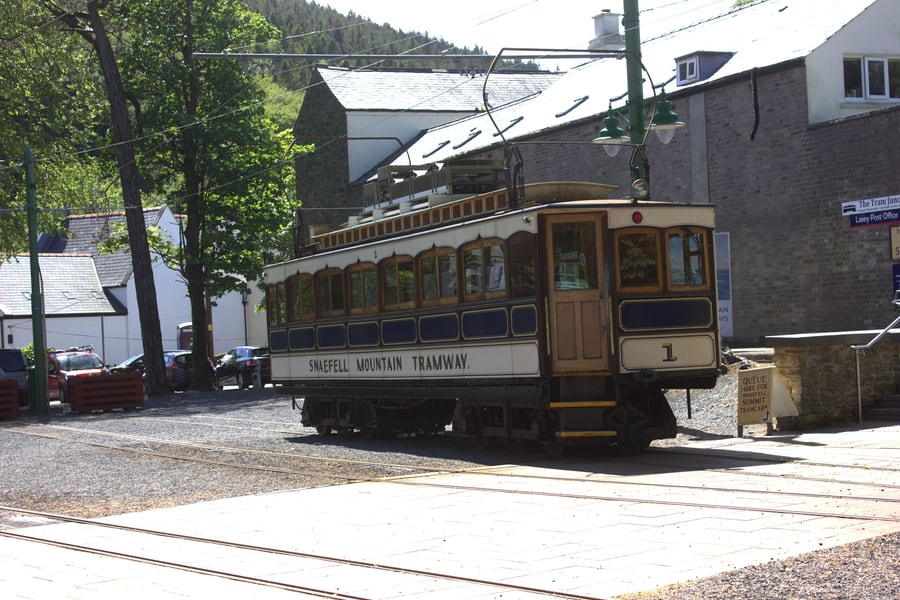
Laxey station
The cars leave from the same station as the Manx Electric Railway, on separate track: the mountain line is 3 ft 6 in gauge to make room for its centre rail, the coast line 3 ft, so neither can run on the other.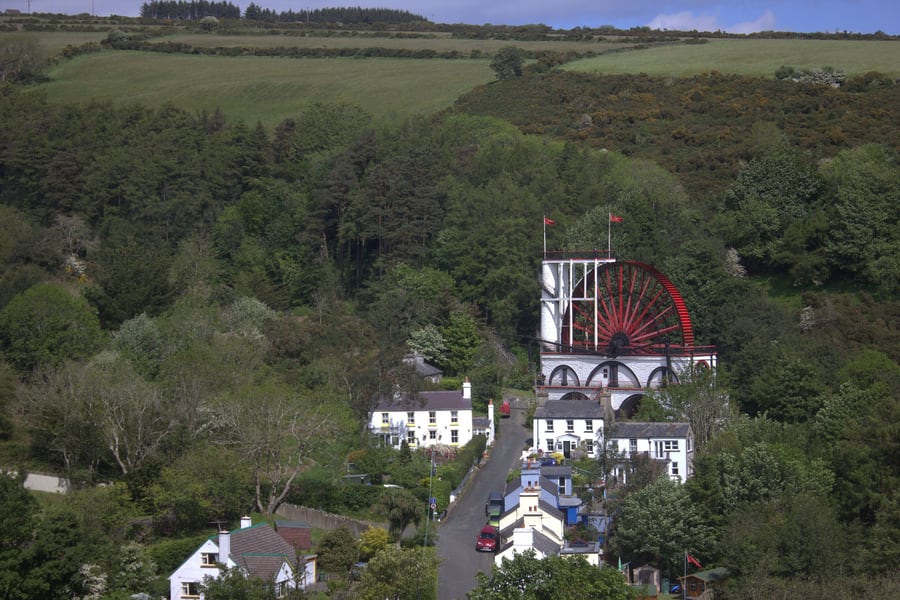 Robert Eva / Geograph · CC BY-SA 2.0
Above the Laxey Wheel
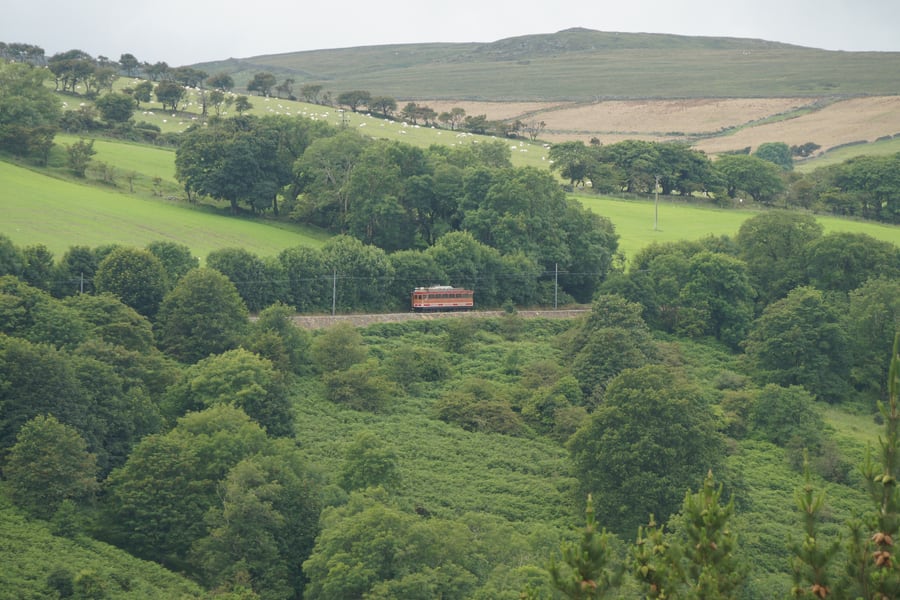
Climbing out of the village, the line runs high along the side of the valley. Below, the red Laxey Wheel stands over the rooftops, built in 1854 to pump water out of the lead mines.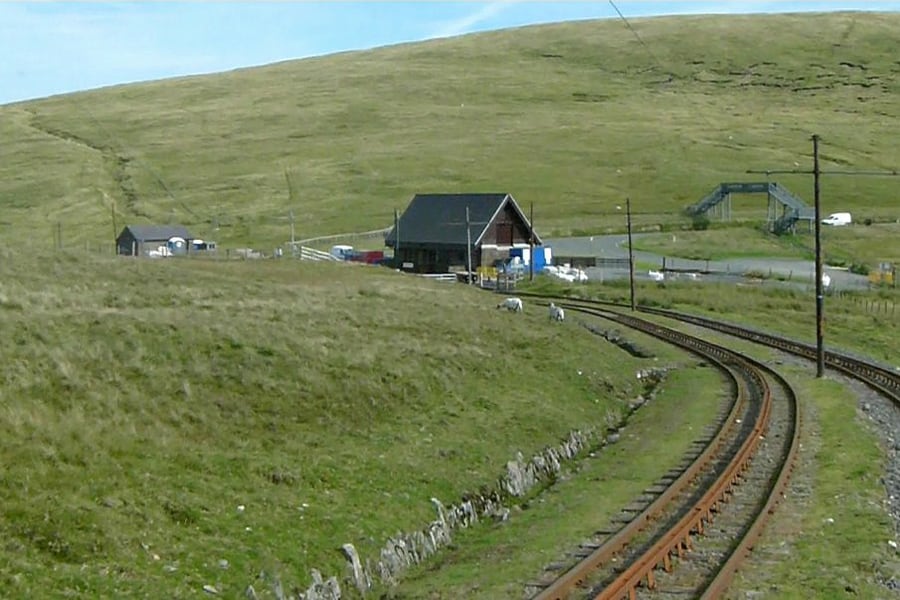 Alan Murray-Rust / Geograph · CC BY-SA 2.0
The Bungalow
Halfway up, the only stop on the way is the Bungalow, where the line crosses the Mountain Road. Walkers can get off here and climb to the summit on a rough path, about 45 minutes on foot.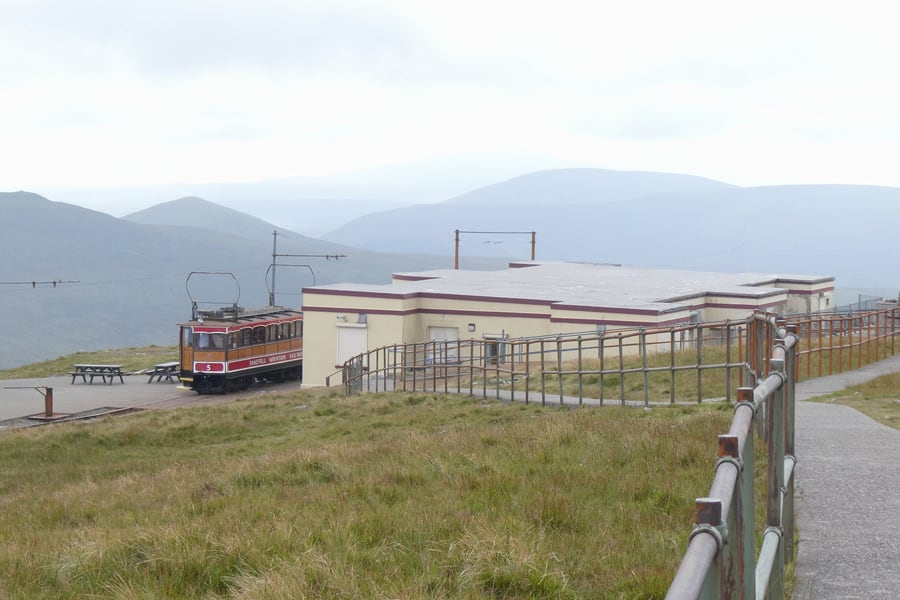 Gareth James / Geograph · CC BY-SA 2.0
Round the mountain
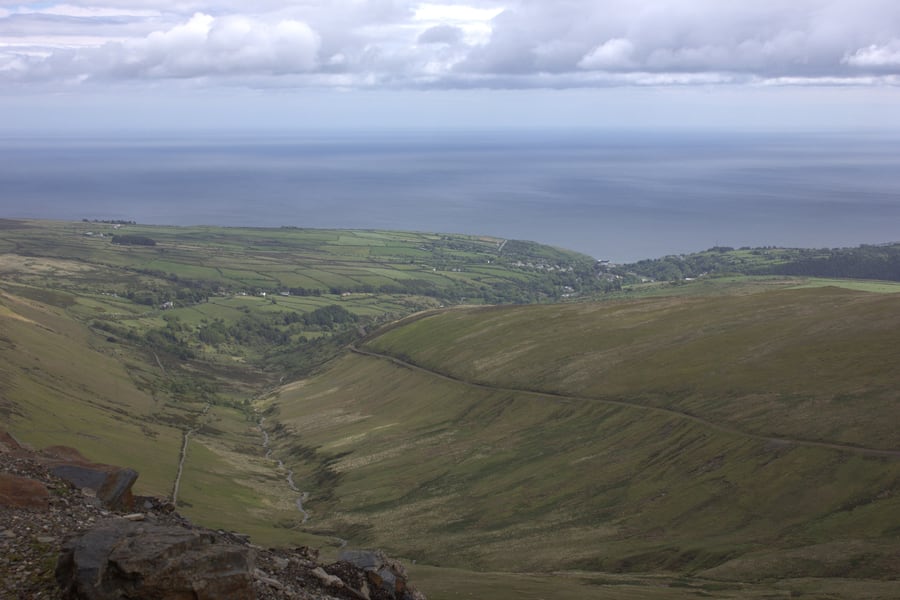
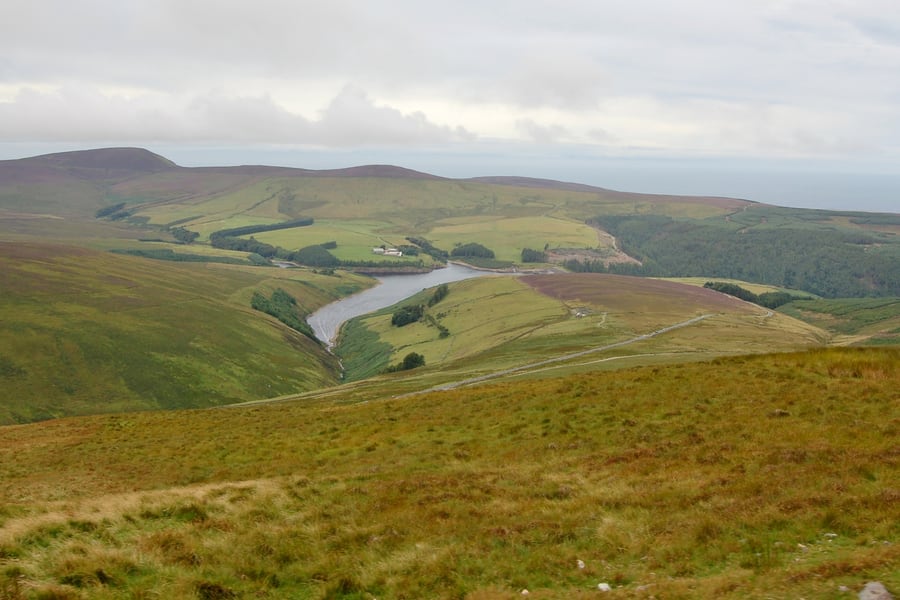
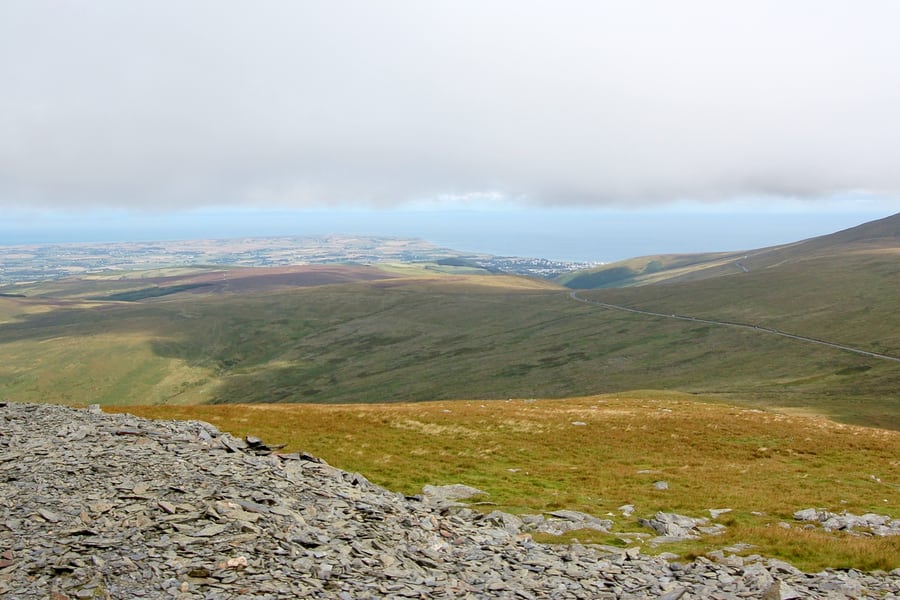
Above the Bungalow the line curls round Snaefell, with long views over the Sulby valley and the northern plains. The cars stop beside the Summit Hotel, a café today, 2,036 feet above the sea.A bit of history
Culture & experiences along the way
 Spsmiler / Wikimedia Commons · CC0
The rail in the middle
Look down between the running rails for a third, raised rail. It is a Fell rail, named after the engineer whose system used a centre rail to haul trains up steep grades. Here the cars climb on ordinary adhesion and grip the centre rail only to brake on the way down.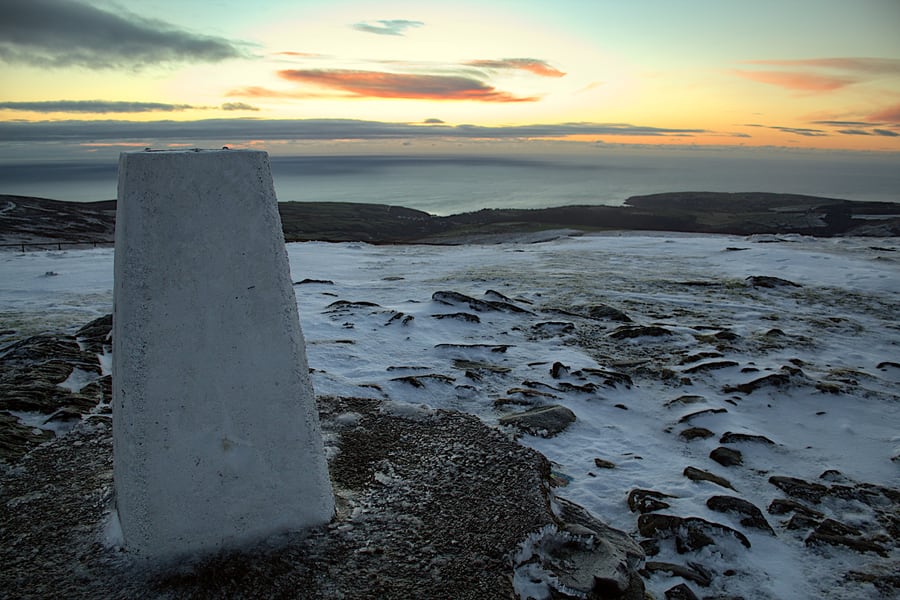 Frank Schuengel / Wikimedia Commons · CC BY-SA 4.0
The Seven Kingdoms
The island's saying is that on a clear day the summit shows seven kingdoms: Mann, England, Scotland, Wales, Ireland, Heaven and Neptune's sea. A plaque at the top gives the distances: 31 miles to the Mull of Galloway, 66 to the Mountains of Mourne.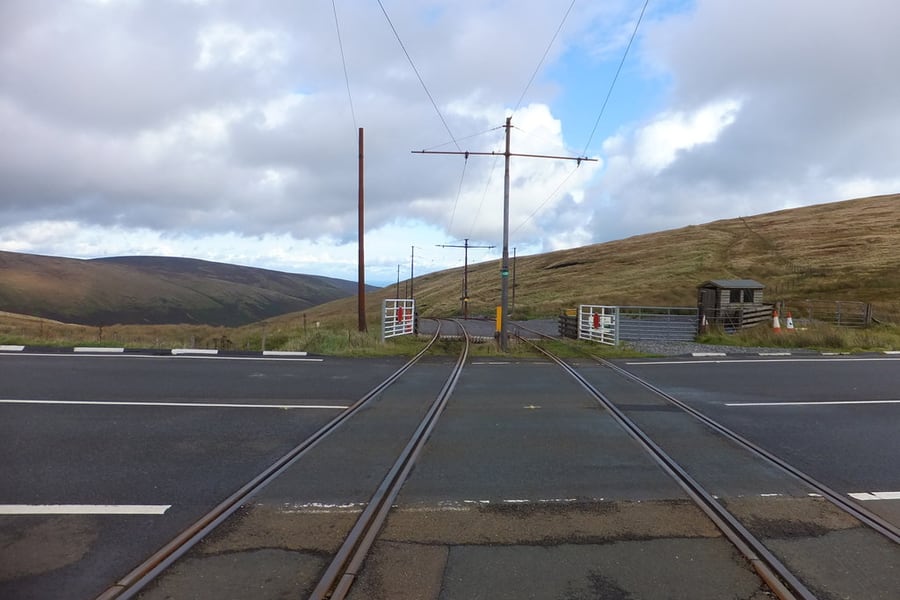 Richard Hoare / Geograph · CC BY-SA 2.0
Race days at the Bungalow
The Mountain Road at the Bungalow is part of the course of the TT races and the Manx Grand Prix. While the roads are closed, the cars stop on either side and passengers cross on a footbridge. In TT fortnight, cars also run as required after the timetable ends, for evening practice and racing.Timetables
The 2026 season ran from 28 March to 1 November. The cars ran every day from 28 April to 20 September; before and after that they ran most days, with a few Mondays off in spring and September, and no service on Mondays or Fridays in October. The 2027 dates have not been published yet, and the times below are the 2026 timetable.
On most days the railway works Timetables C and D, a car every half hour, 30 minutes each way:
| Laxey → Summit | Summit → Laxey | |
|---|---|---|
| First | 10:15, at the top 10:45 | 11:00, at Laxey 11:30 |
| Then | every 30 minutes, at :15 and :45 | 11:20, then every 30 minutes, at :20 and :50 |
| Last | 15:45, at the top 16:15 | 16:30, at Laxey 17:00 |
Good to know:
- Quieter days. At the start and end of the season Timetable B runs seven cars, leaving Laxey at 10:15, 11:15, 12:15, 13:15, 14:15, 15:00 and 15:45, and the summit at 11:10, 12:10, 13:10, 14:10, 15:10, 15:55 and 16:30.
- TT fortnight. From 25 May to 6 June Timetable F starts earlier, with the first car up at 09:45. After 15:45, cars run as required for the evening practice and racing.
- Connections. The Manx Electric Railway from Douglas and Ramsey is timed to meet the mountain cars at Laxey. On busy days you may have to queue at Laxey for a car up.
Times as of November 2026, from the operator's 2026 timetable. Check your date on iombusandrail.im (opens in a new tab), where each day is marked with its timetable letter.
Tickets
Tickets are bought on the day at Laxey station; there is no pre-booking except for groups of twenty or more. A return from Laxey to the summit costs £16 and a single £8.50; to the Bungalow and back is £13. A through return from Douglas or Ramsey to the summit, including the Manx Electric Railway, is £18. Children aged 5 to 15 pay half, and under-5s travel free with a paying adult.
A Go Explore card covers the mountain line, the Manx Electric and every scheduled bus and train on the island for 1, 3, 5 or 7 days, from £22 for a day. Fares checked November 2026 on iombusandrail.im (opens in a new tab); pounds sterling, one adult.
Book your tickets
Laxey to the summit, return
Adult · bought on the day at Laxey
Up and back from Laxey, paid for at the station on the day you travel.
Book Tickets (opens in a new tab, on iombusandrail.im)via iombusandrail.imGo Explore
Unlimited bus and rail · 1, 3, 5 or 7 days
A pass for every scheduled bus and train on the island, the mountain line and the Manx Electric included.
Book Tickets (opens in a new tab, on iombusandrail.im)via iombusandrail.imRail Passes
No international rail pass is valid on the Snaefell Mountain Railway. Interrail's table of railway companies lists no Isle of Man operator, and BritRail's conditions exclude heritage and tourist railways, and ships, so the ferry is not covered either.
The island has its own pass instead. Go Explore covers every scheduled bus and train on the island, this railway and the Manx Electric included, for 1, 3, 5 or 7 consecutive days. An Interrail or BritRail pass can still get you to Heysham or Liverpool for the boat.
For this journey, buy the island's own ticket. A one-day Go Explore costs more than a Laxey return on its own, so it pays only if you also ride the Manx Electric or the buses that day.
Checked November 2026 against interrail.eu (opens in a new tab), britrail.com (opens in a new tab) and iombusandrail.im (opens in a new tab).
Places to Visit
Laxey is worth more than the change of trains. The wheel, the mine railway and the woollen mill are all within walking distance of the station, a path leads down the glen to the harbour, and at the other end of the line the summit is a short climb from the café.
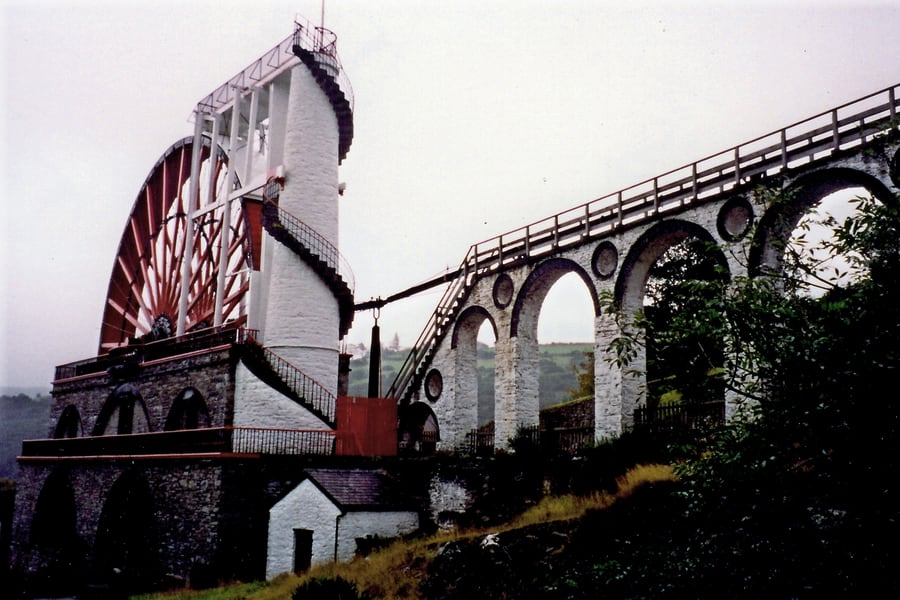 Joseph Mischyshyn / Geograph · CC BY-SA 2.0
The Laxey Wheel
Built in 1854 to pump water from the Great Laxey Mine and named Lady Isabella after the wife of the island's governor, the wheel is 72 feet 6 inches across and still turns about three times a minute. It is the largest original working waterwheel to survive anywhere. Manx National Heritage looks after it, and it appears on the island's £20 note.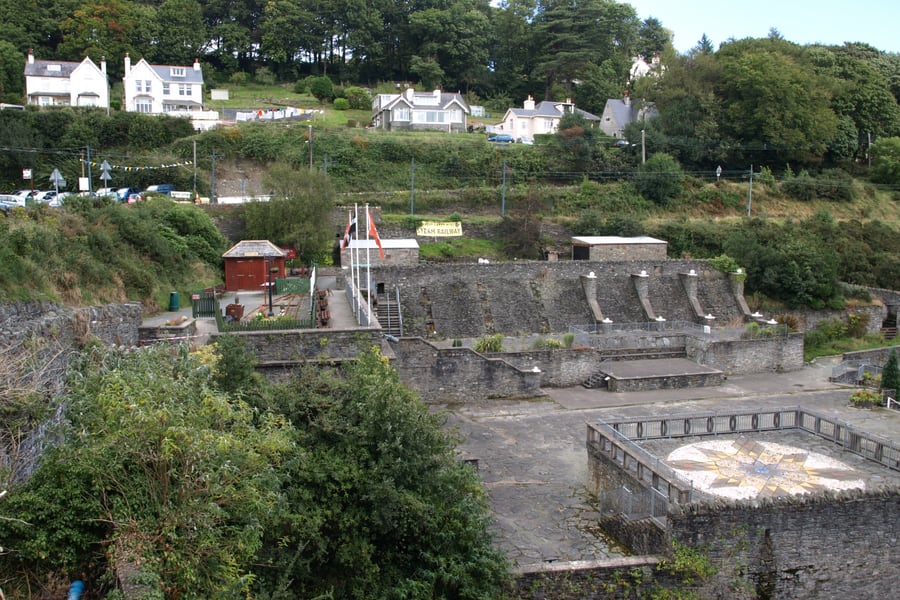 Andrew Abbott / Geograph · CC BY-SA 2.0
The Great Laxey Mine Railway
A railway of 19-inch gauge carried ore out of the mine from 1823, pushed by hand, then pulled by ponies, then by two tiny steam engines, Ant and Bee, from 1877. Everything above ground was scrapped in 1935. Volunteers reopened it in 2004, and replicas of Ant and Bee now run from Valley Gardens through a tunnel to the mine yard.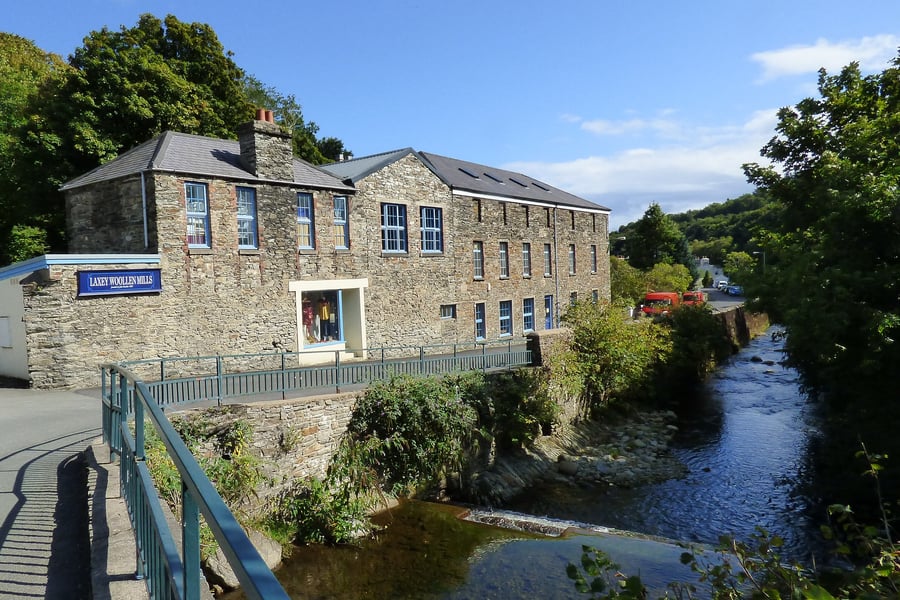 Dr Neil Clifton / Geograph · CC BY-SA 2.0 · cropped
Laxey Woollen Mills
In 1881 Egbert Rydings, a silk weaver from Lancashire, turned a corn mill on the Laxey River into a woollen mill, with the backing of his friend John Ruskin and money from Ruskin's Guild of St George. The mill still weaves cloth today, including Manx tartan and cloth woven from the wool of the island's Loaghtan sheep.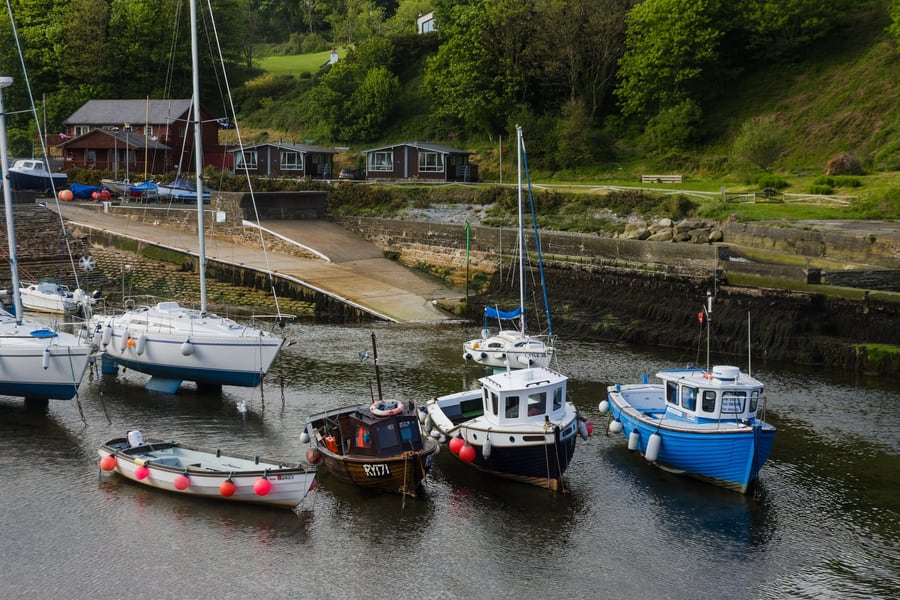 Alexey Komarov / Wikimedia Commons · CC BY-SA 4.0
Laxey harbour and beach
A path follows the Laxey River down the wooded glen to the sea at Old Laxey. The small harbour at the river mouth was built in the 1850s for the mines and now shelters leisure craft and inshore fishing boats; the beach and promenade run beside it, on a bay that is a protected marine nature reserve.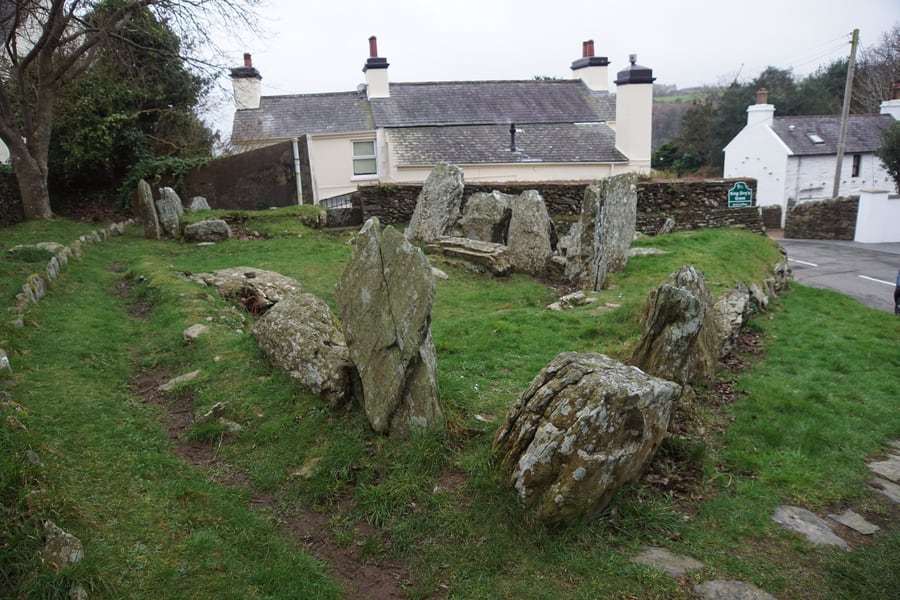 Otter / Wikimedia Commons · CC BY-SA 4.0
King Orry's Grave
The largest megalithic tomb on the island stands beside a road in the north of the village, partly in a cottage garden: chambers of local stone built some four to five thousand years ago. The name is far younger, borrowed from the 11th-century king Godred Crovan, who is given several graves around the island.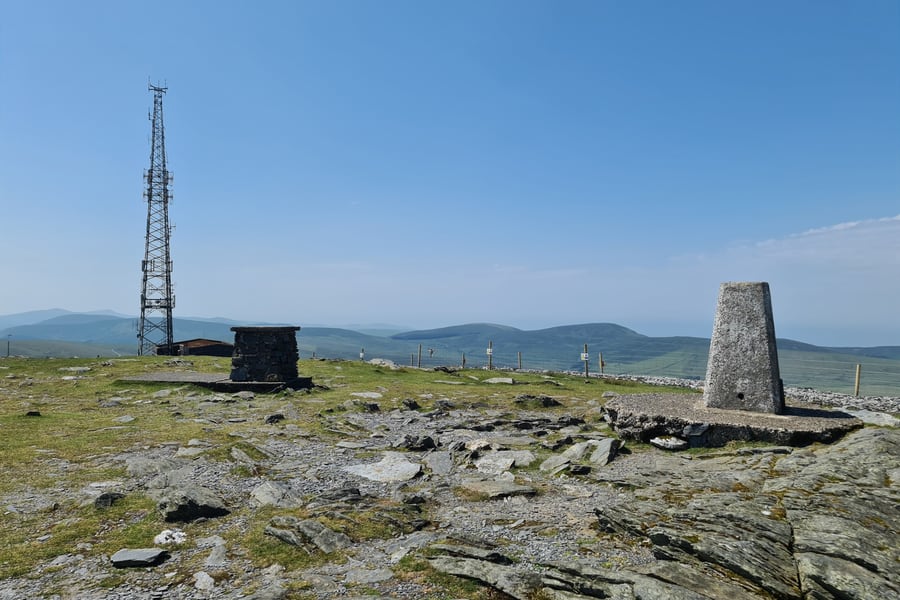 Chris Morgan / Geograph · CC BY-SA 2.0
The top of Snaefell
From the station it is a short walk up to the true summit, marked by a concrete pillar beside the aerial masts. Snaefell is the island's only peak above 2,000 feet, and its name comes from the Old Norse for "snow mountain". Walkers who want to go down on foot can follow the path to the Bungalow.Where to Sleep
Douglas has the most hotels and the ferry terminal, and the Manx Electric Railway runs from there to Laxey for the mountain cars. Laxey itself makes a quieter base, with a few inns and holiday lets.
Where to stay
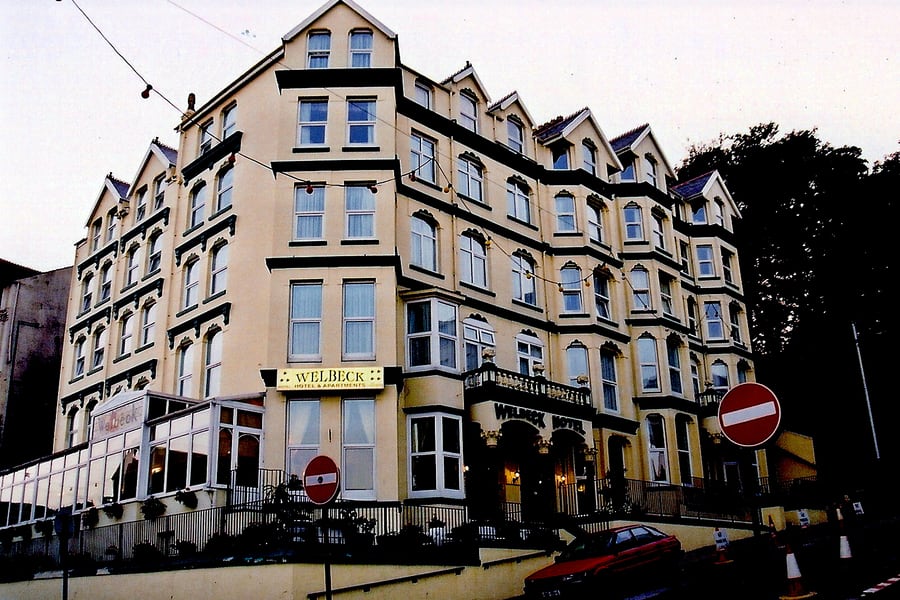 Joseph Mischyshyn / Geograph · CC BY-SA 2.0 · cropped
The Welbeck Hotel
Douglas · just off Central Promenade
A hotel with rooms and holiday apartments on Mona Drive, just off the seafront in Douglas, where the Manx Electric Railway sets off for Laxey.
Check Availability (opens in a new tab, on welbeckhotel.com)via welbeckhotel.comQuestions or corrections
Planning this trip and stuck on something, or spotted a time, fare or detail that has changed? Send us a message about The Snaefell Mountain Railway. We read every one, and we update this page when something has changed.