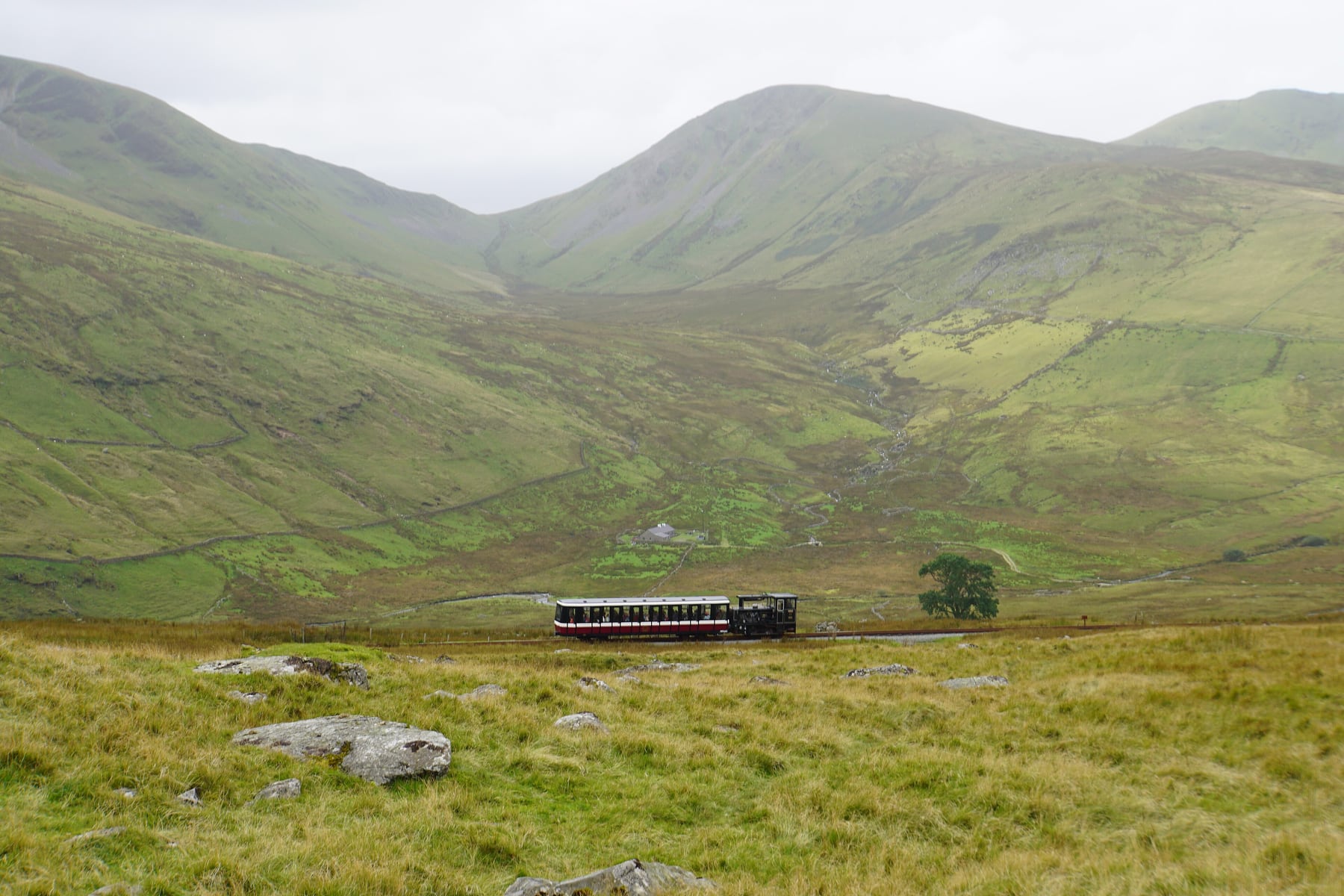
The Snowdon Mountain Railway
Bill Boaden / Wikimedia Commons · CC BY-SA 2.0
- Distance4.7 miles (7.5 km) · climbing about 950 m
- DurationAbout 1 hour each way · 2½ hours return with 30 minutes at the summit
- Best seasonMay to October to the summit · late March and April to Clogwyn only
Introduction
The Snowdon Mountain Railway climbs 4.7 miles from the village of Llanberis to the summit of Yr Wyddfa, Snowdon, at 1,085 metres the highest mountain in Wales. It is the only public rack railway in the United Kingdom: a toothed rack laid between the rails lets the trains climb gradients as steep as 1 in 5.5, at an average speed of about 5 mph. The journey takes an hour each way, with half an hour at the top.
The line was built in fourteen months by 150 men and opened at Easter 1896, with track and engines designed in Switzerland, where mountain railways were already an old idea. Its opening day ended in an accident, and it did not reopen until April 1897. It has run every season since, although the summit itself was closed for military use from 1942 until the end of the Second World War.
Each train is a single carriage pushed up the mountain by its locomotive. Most are Traditional Diesel trains; on weekdays from late spring to autumn the Heritage Steam Experience uses the railway's Swiss steam engines and two carriages rebuilt to their 1896 design. At the top is Hafod Eryri, the highest visitor centre in the UK, and on a clear day the view reaches Ireland. The mountain decides how far the train goes: in high wind it may turn back at Rocky Valley, and in early spring it stops at Clogwyn, three-quarters of the way up.
The Journey
The trains leave from Llanberis station, at 108 metres beside the main road through the village. Its gift shop is in the original booking hall of 1896, and a short film about the railway's history plays before boarding. The engine shed and workshops sit at the end of the platforms.
Llanberis to Halfway
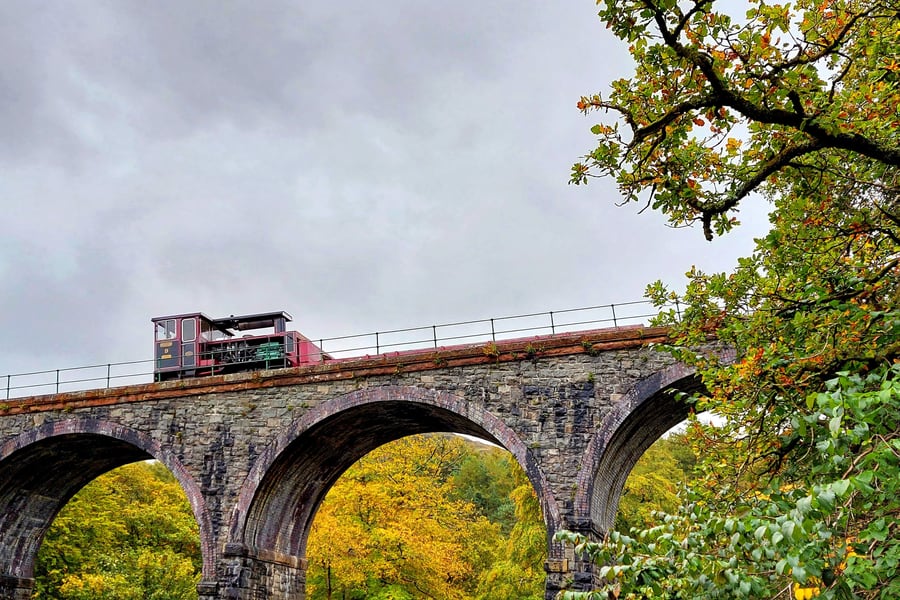
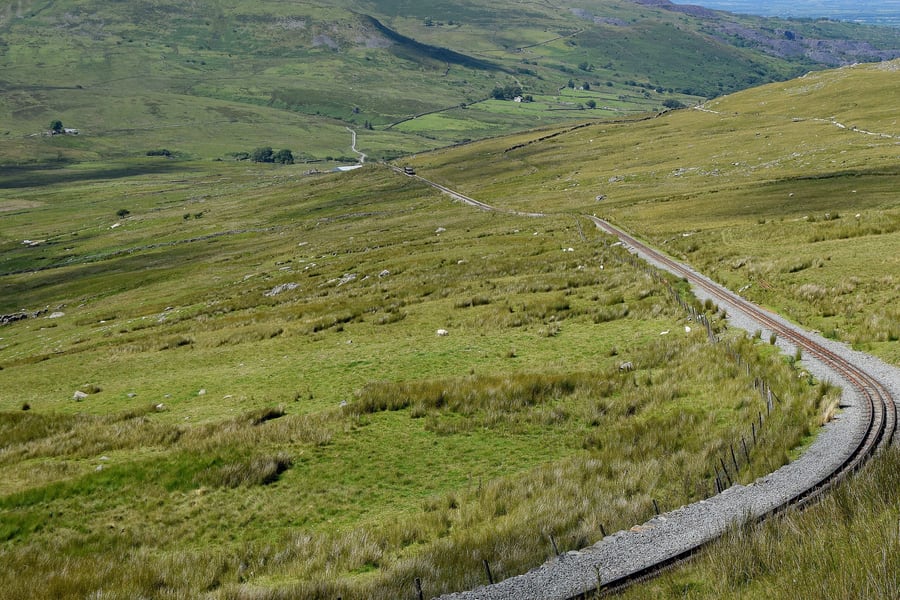
Within minutes the line crosses two viaducts over the Afon Hwch, the first above the Ceunant Mawr waterfall, and passes the old Waterfall Halt. It then climbs out of the trees into an open valley, where the first passing loop, Hebron, takes its name from a ruined chapel of 1833. The railway is single track with three loops spaced evenly up the mountain, about fifteen minutes apart, where trains going up and coming down pass each other. At Halfway, 500 metres up, steam engines stop to refill their water tanks; walkers on the Llanberis Path come into view alongside.
Halfway to the summit
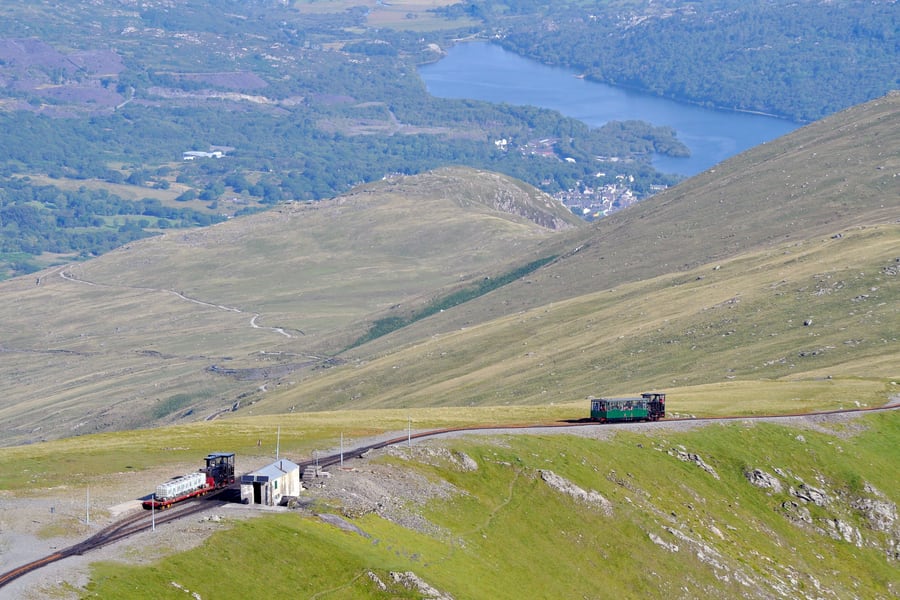
Above Halfway the train runs along the sheer edge of Rocky Valley, with cars on the Llanberis Pass far below on one side and the Llŷn Peninsula on the other. Clogwyn station, at 779 metres, stands on an exposed ridge looking across to the cliffs of Clogwyn Du'r Arddu; the wind is measured here to decide whether trains can go on. The final stretch follows the ridge to Summit station at 1,065 metres, a few minutes' walk below the cairn.
The trains
The line is built to 800 mm gauge on Roman Abt's rack system of 1885, with a double rack offset by one tooth and gripper rails that hold every vehicle onto the track. The steam engines were all built by the Swiss Locomotive and Machine Works of Winterthur, five in 1895–96 and three more in 1922–23; three are still in service, and No. 5 Moel Siabod returned in 2017 after almost twenty years out of use. Since 2022 they have burned a smokeless manufactured coal. The four Hunslet diesels, Ninian, Yeti, Peris and George, arrived between 1986 and 1992 and work the everyday service with four modern carriages introduced in 2013. Whatever the motive power, the locomotive always sits at the downhill end: it pushes its carriage up and holds it back on the way down.
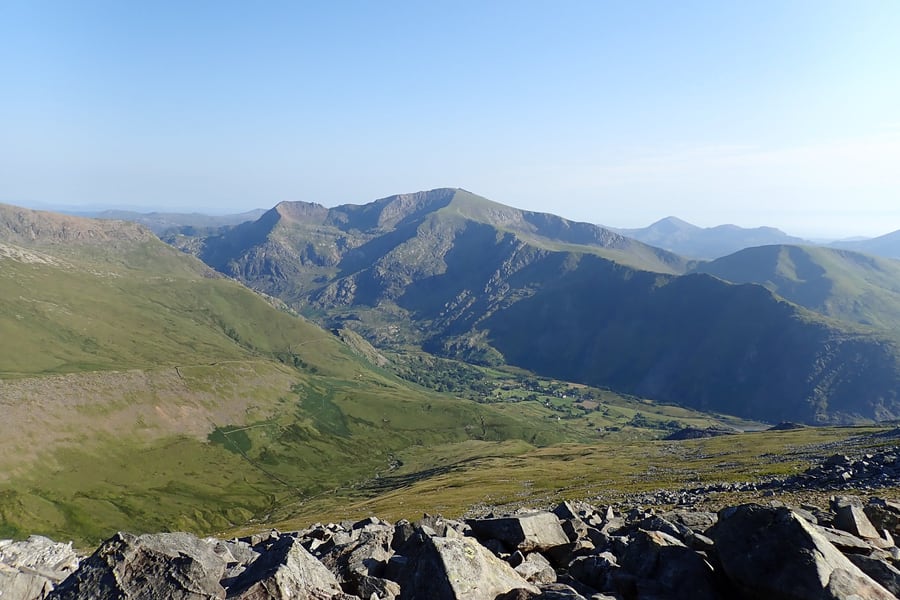
Along the route
 Gareth Ffridd / Wikimedia Commons · CC BY-SA 4.0
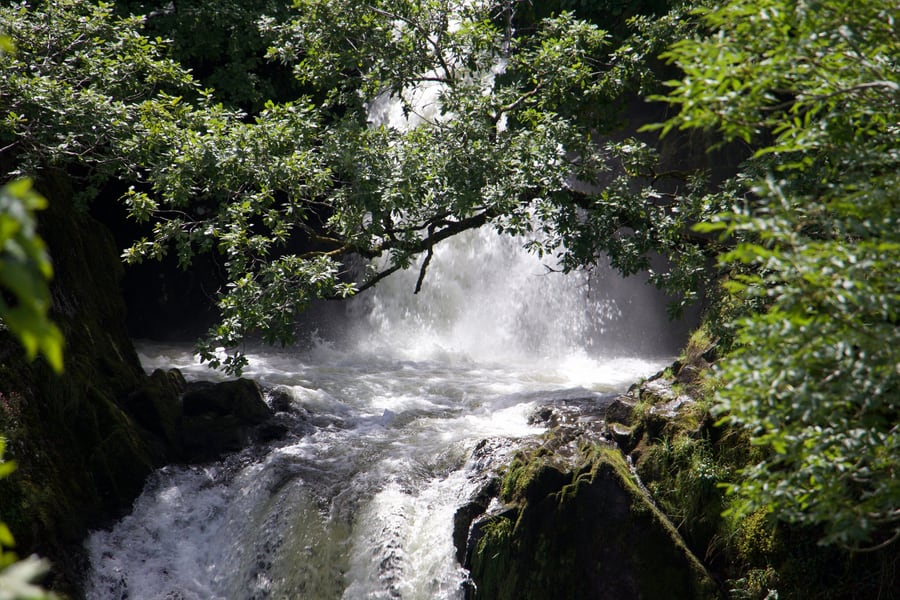
Ceunant Mawr
Soon after leaving Llanberis the train crosses the first of two viaducts over the Afon Hwch. Below it, the Ceunant Mawr waterfall drops into a wooded gorge.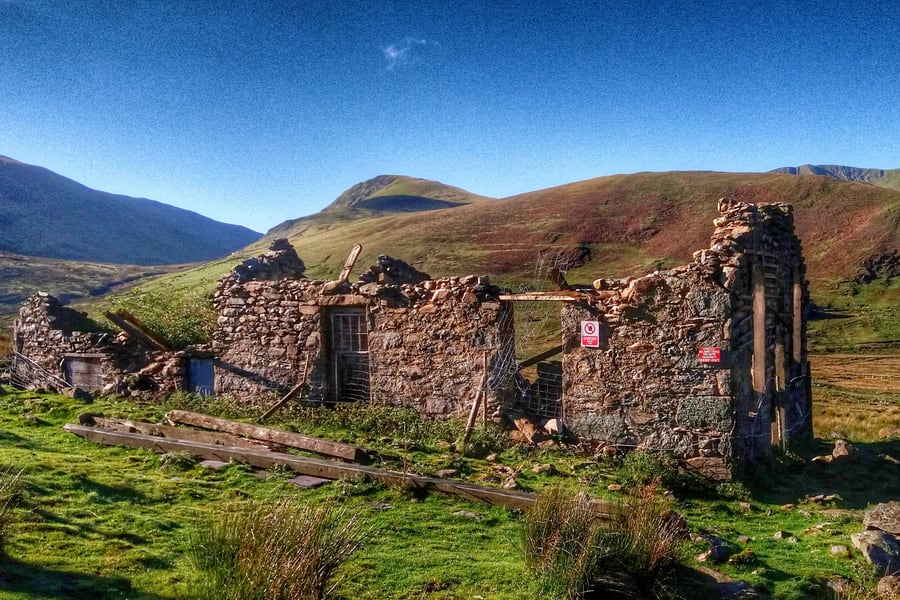 Hefin Owen / Wikimedia Commons · CC BY-SA 2.0
Hebron
The first passing loop is named after Hebron Chapel, built in 1833 by the poor families of the valley. It was still habitable in 1966, when it sold for £450; it is a ruin now.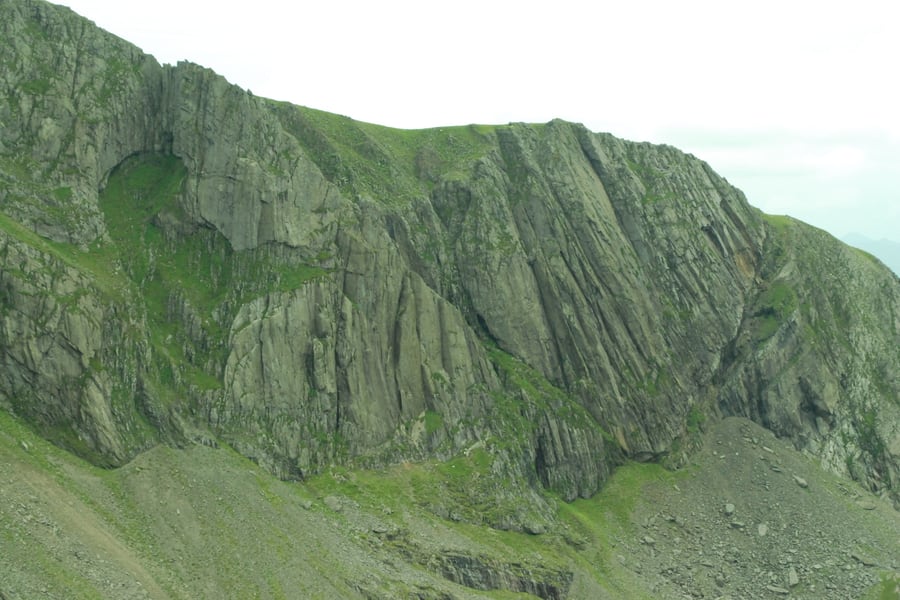 William M. Connolley / Wikimedia Commons · public domain
Clogwyn Du'r Arddu
Above Halfway the line runs along the edge of Rocky Valley. From Clogwyn station you look across to the black cliffs of Clogwyn Du'r Arddu, among the most famous rock climbs in Britain.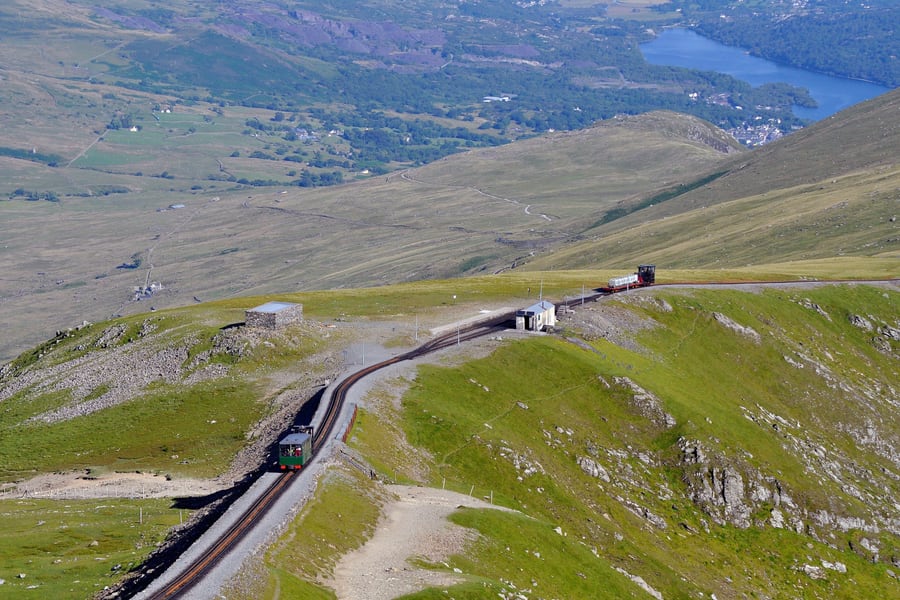 ohefin / Wikimedia Commons · CC BY-SA 2.0
Clogwyn station
The last passing loop, three-quarters of the way up, sits on an exposed ridge. The wind is measured here, and in early spring, or when the summit is shut, the trains go no higher.A bit of history
Culture & experiences along the way
 A.M. Hurrell / Wikimedia Commons · CC BY 2.5 · cropped
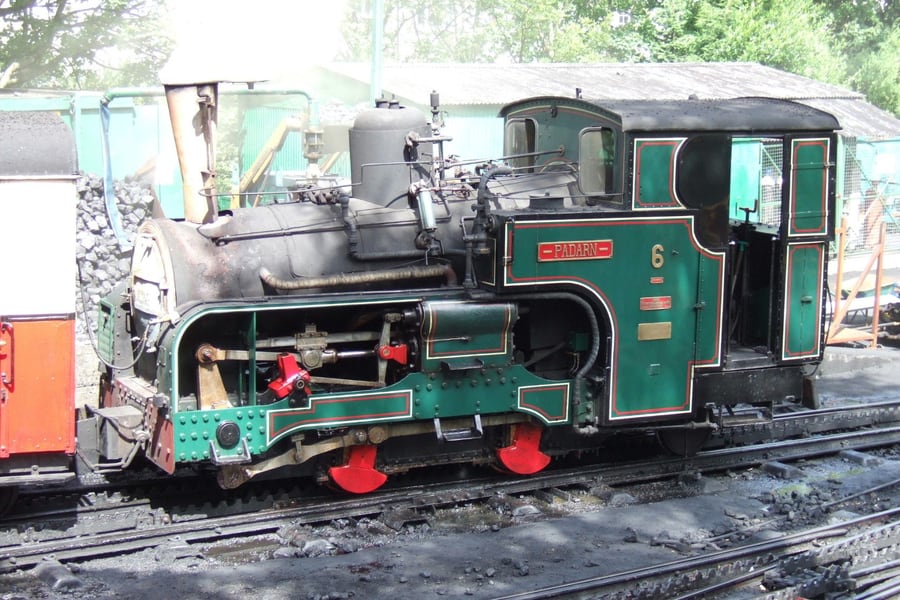
Swiss steam, built for the slope
Every steam engine on the line came from the Swiss Locomotive and Machine Works in Winterthur, from 1895 on. Their boilers are tilted so the tubes and firebox stay covered with water on the gradient, and each engine always climbs chimney first, pushing a carriage that is not even coupled to it.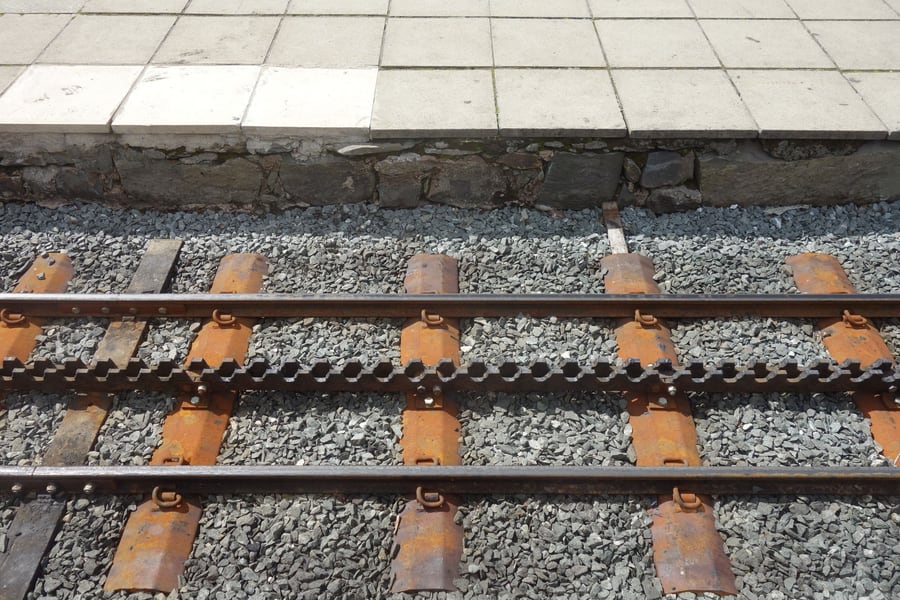 H. Sellmoene / Wikimedia Commons · CC BY 3.0
The rack between the rails
Watch the track: between the rails runs a double toothed rack on Roman Abt's system, the two halves offset by one tooth so a pinion is always fully engaged. Steel grippers either side stop a train lifting out of it, a feature found on no other Abt railway.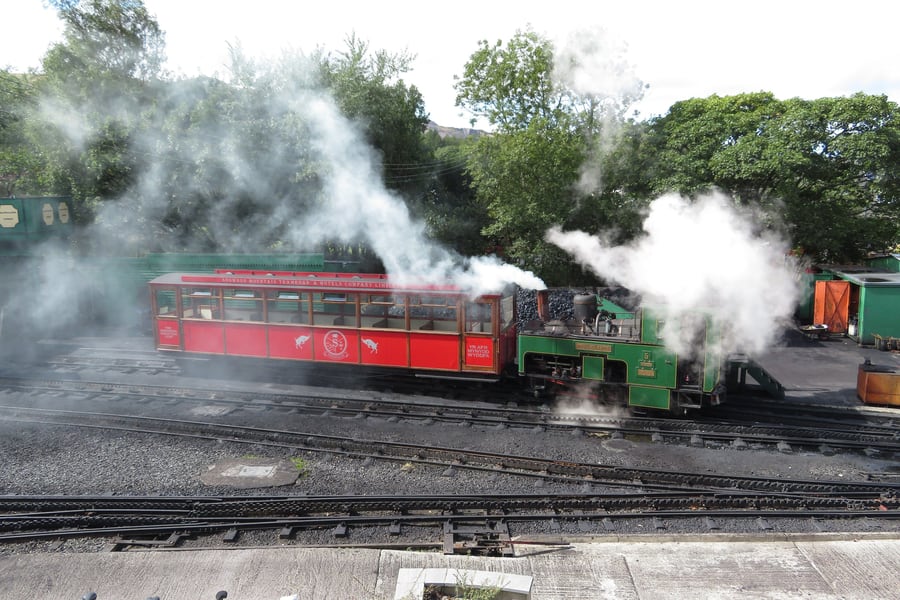 Gareth James / Wikimedia Commons · CC BY-SA 2.0
The Lily and the Mountain Goat
The steam trains push one of two heritage carriages, the Snowdon Lily and the Snowdon Mountain Goat. Each is a reconstruction of an 1896 observation carriage, built on an original frame and bogies, with 34 seats and a central aisle.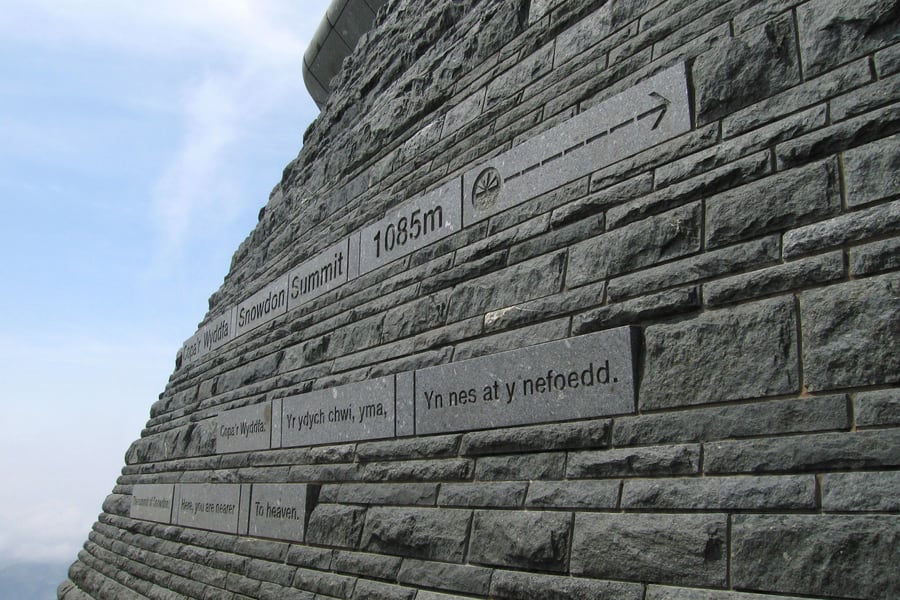 Dave Croker / Wikimedia Commons · CC BY-SA 2.0
Nearer to heaven
The summit visitor centre, Hafod Eryri, opened in 2009. Carved into its wall is a couplet by the Welsh National Poet Gwyn Thomas: Copa'r Wyddfa: yr ydych chwi, yma, yn nes at y nefoedd, "the summit of Snowdon: you are, here, nearer to heaven". It has a café and a summit post box.Timetables
Trains run from late March to the beginning of November, to Clogwyn in March and April and to the summit from May, weather permitting. There is no printed timetable: the first train leaves Llanberis at 09:00 and the rest follow at half-hourly intervals through the day, as many as demand needs, with the last departures in the early afternoon. Every ticket is for a named departure, so book your train and arrive an hour before it.
October 2026. Essential works mean most trains run only to Clogwyn this month:
| Dates | Traditional Diesel | Heritage Steam (weekdays) |
|---|---|---|
| 5–16 October | To Clogwyn, from 09:00 or 10:00 until about 14:00 | To Clogwyn, 09:30 and 13:00 |
| 17–25 October | To the summit, typically 09:00, 10:00, 11:30, 12:00, 12:30 and 14:00 | To the summit 19–23 October, 09:30 and 13:00 |
| 26 October – 1 November | To Clogwyn, from 09:00 until about 14:00 | To Clogwyn until 30 October, 09:30 and 13:00 |
Good to know:
- How long. The summit trip is about 1 hour up, 30 minutes at the top and 1 hour down. A Clogwyn trip is about 45 minutes each way with 30 minutes at the station.
- Same train back. Return tickets bring you down on the train you went up with. A ticket bought for the summit between 17 and 25 October that only reaches Clogwyn because of the works is refunded £9.
- Weather. In high wind a train may turn back at Rocky Valley or be cancelled; if it is cancelled, you can rebook or take a full refund. Visibility at the top is never guaranteed.
- The last train of 2026 is the diesel of 1 November; steam ends on 30 October.
Times as of October 2026, from the operator's live booking calendar. Check your date on snowdonrailway.co.uk (opens in a new tab).
Tickets
Tickets are sold by the railway itself, online or at the Llanberis ticket office from 08:15, and each one is for a named departure with the same train back. A return to the summit on the Traditional Diesel Service costs £45 off-peak and £48 at peak times; on the Heritage Steam Experience it is £62 and £72. A diesel return to Clogwyn is £36. Children aged 3 to 15 pay less, and a child of 2 or under rides free on an adult's lap.
Singles are sold up only: a ticket down cannot be booked and is sold at the summit if there is room. Online booking adds £4 per booking. Trains sell out in school holidays and fine weather, so book ahead. Fares checked October 2026 on snowdonrailway.co.uk (opens in a new tab); pounds sterling, one adult.
Book your tickets
Traditional Diesel Service to the summit
Return · 30 minutes at the top
The everyday train, a Hunslet diesel and a modern carriage, with a set train back down.
Book Tickets (opens in a new tab, on snowdonrailway.co.uk)via snowdonrailway.co.ukHeritage Steam Experience to the summit
Return · weekdays · souvenir guide included
A Swiss steam engine and one of the two reconstructed 1896 carriages, on weekdays only.
Book Tickets (opens in a new tab, on snowdonrailway.co.uk)via snowdonrailway.co.ukTraditional Diesel Service to Clogwyn
Return · three-quarters of the way up
The shorter trip, sold in early spring and whenever the summit is closed.
Book Tickets (opens in a new tab, on snowdonrailway.co.uk)via snowdonrailway.co.ukRail Passes
No rail pass is valid on the Snowdon Mountain Railway. Interrail's table of railway companies for Great Britain does not list it, and BritRail's conditions exclude privately owned, steam, heritage and tourist railways. You buy the railway's own ticket.
A pass can still bring you close. The nearest main-line station is Bangor, about ten miles away on the North Wales Coast line, served by Transport for Wales, which both passes include. Local buses stop at Llanberis; the railway points travellers to Traveline for times.
For this journey alone, a pass is not worth buying. It pays only if Snowdon is one stop on a longer rail trip round Wales or Britain.
Checked October 2026 against interrail.com (opens in a new tab) and britrail.com (opens in a new tab).
Places to Visit
Llanberis is the base for the railway, and everything below is in or near the village: the lake at its edge, the castle above it, the old quarry across the water, and the pass that leads into the mountains behind.
 I Love Colour / Wikimedia Commons · CC BY-SA 2.0 · cropped
Llyn Padarn
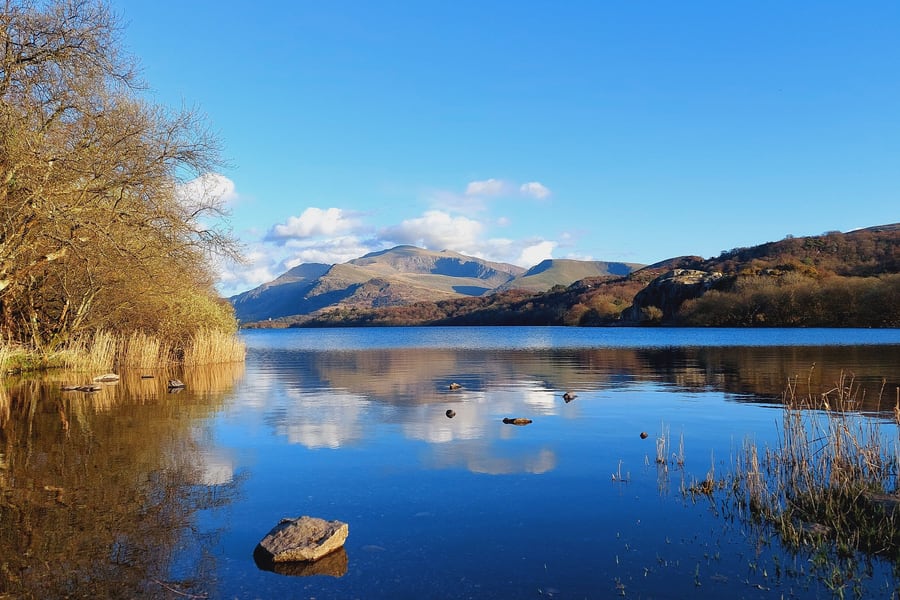
Llanberis lies along the shore of Llyn Padarn, a lake about two miles long left behind by the glaciers and one of the largest natural lakes in Wales. Padarn Country Park covers its northern shore, including Coed Allt Wen, an ancient wood of sessile oak. Kayaking, rowing and sailing are allowed on the lake; powered boats need permission.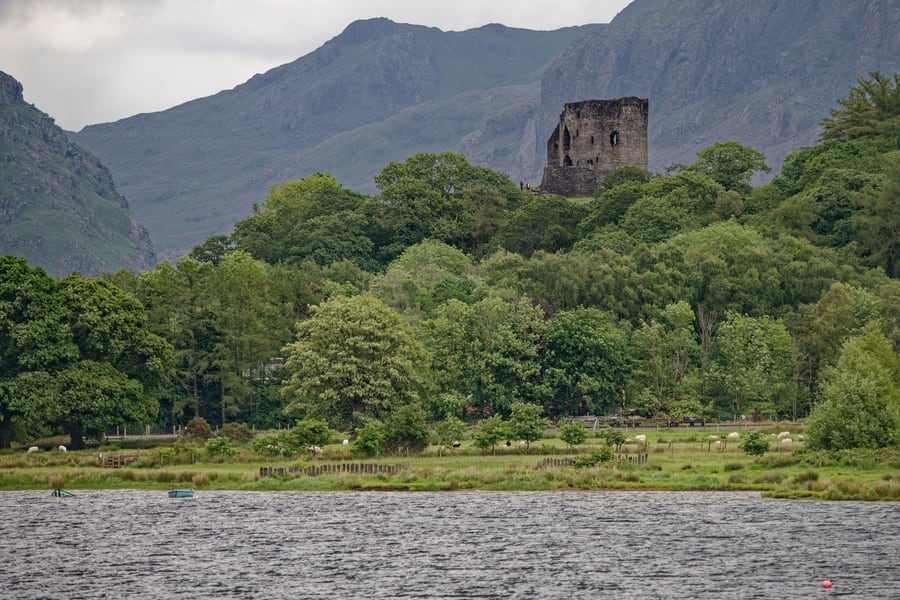 Tilman2007 / Wikimedia Commons · CC BY-SA 4.0
Dolbadarn Castle
Llywelyn the Great, prince of Gwynedd, most likely built this castle in the late 12th or early 13th century to guard the route inland from Caernarfon. Its round tower, 50 feet high, still stands on a rock above the lakes. Edward I took the castle in 1284. Cadw looks after it; entry is free and it is open all year in daylight.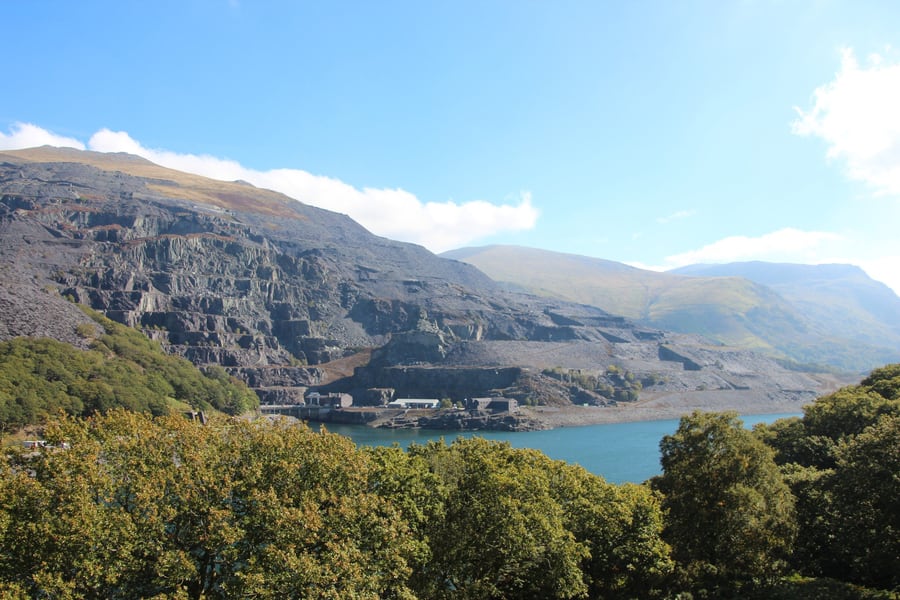 Takver / Wikimedia Commons · CC BY-SA 2.0
Dinorwig quarry
The terraces cut into the mountain across Llyn Padarn are the old Dinorwic slate quarry. At the start of the 20th century it was the second-largest slate quarry in the world, with two main sections of 20 galleries each over 700 acres. It closed in 1969. The National Slate Museum in its old workshops is closed for redevelopment until 2027.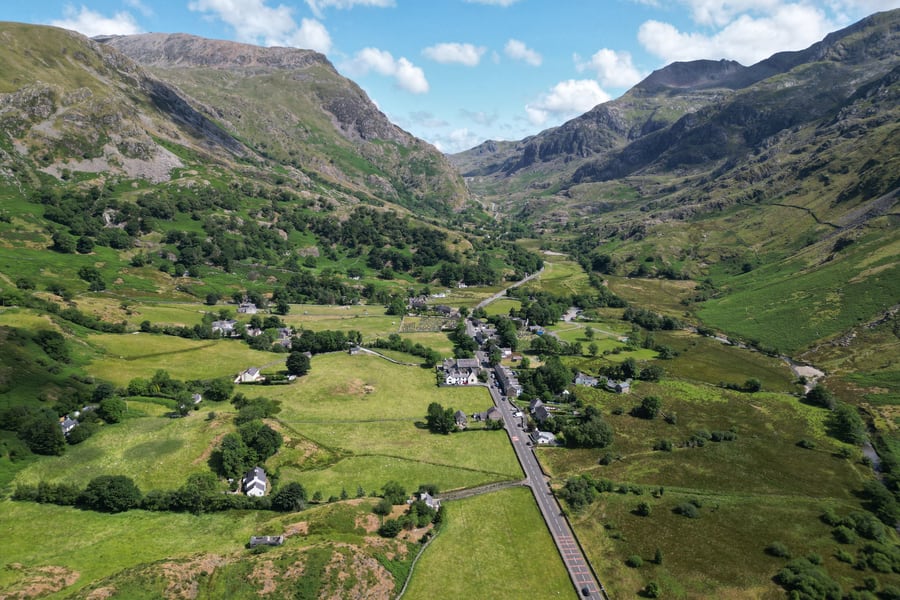 Llywelyn2000 / Wikimedia Commons · CC BY-SA 4.0
The Llanberis Pass
Beyond Llanberis the A4086 climbs through the Llanberis Pass to Pen-y-Pass, between the Glyderau and the Snowdon massif, with the small village of Nant Peris at the foot. From Pen-y-Pass the Pyg Track, one of the main paths to the summit, sets off up the mountain. The Sherpa'r Wyddfa bus runs around the base of the mountain and stops a two-minute walk from the railway station.Where to Sleep
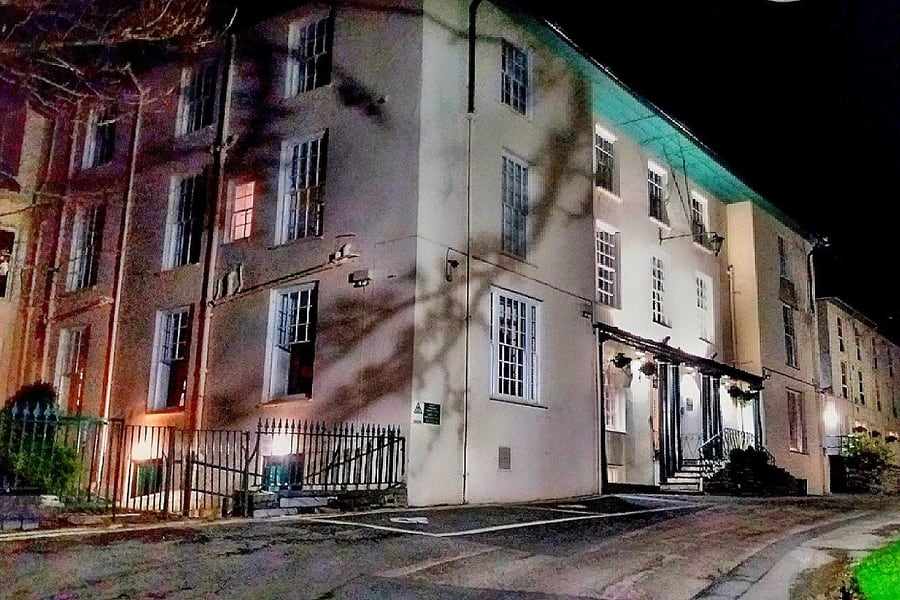
Llanberis is the place to stay, close enough to walk to your train. The Royal Victoria stands across the road from the station; the railway's founding company owned it until 1924. Over the Llanberis Pass, the Pen-y-Gwryd is a mountaineers' inn at the foot of Snowdon.
Where to stay
 Hefin Owen / Wikimedia Commons · CC BY-SA 2.0 · cropped
The Royal Victoria Hotel
Llanberis · opposite the station
A hotel with 104 en-suite rooms in 30 acres of gardens and woodland between Llyn Padarn and Llyn Peris, across the road from the railway.
Check Availability (opens in a new tab, on theroyalvictoria.co.uk)via theroyalvictoria.co.uk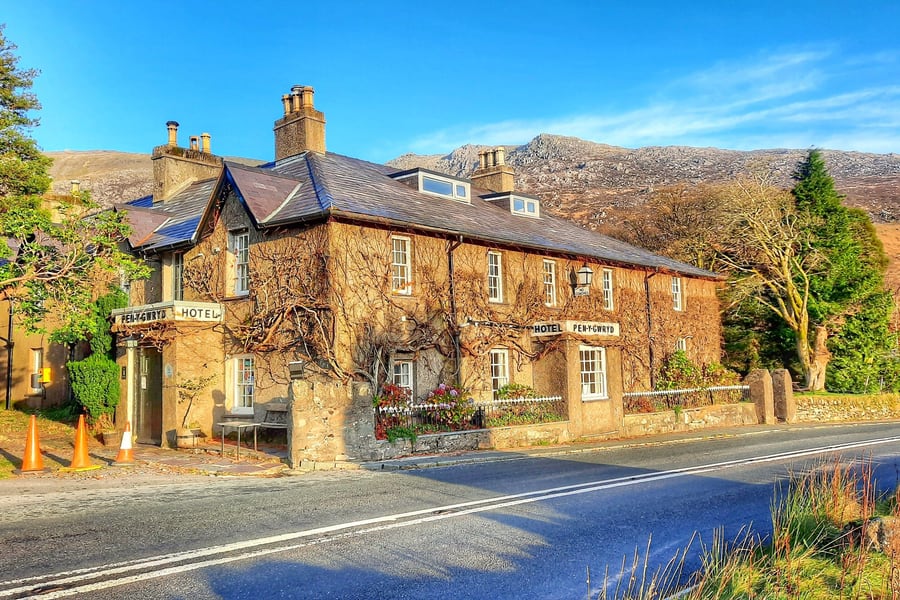 Hefin Owen / Wikimedia Commons · CC BY-SA 2.0 · cropped
Pen-y-Gwryd Hotel
Nant Gwynant · above the Llanberis Pass
The mountaineers' inn where the team that first climbed Everest in 1953 trained; in 2026 it opens Tuesday to Saturday.
Check Availability (opens in a new tab, on pyg.co.uk)via pyg.co.ukQuestions or corrections
Planning this trip and stuck on something, or spotted a time, fare or detail that has changed? Send us a message about The Snowdon Mountain Railway. We read every one, and we update this page when something has changed.