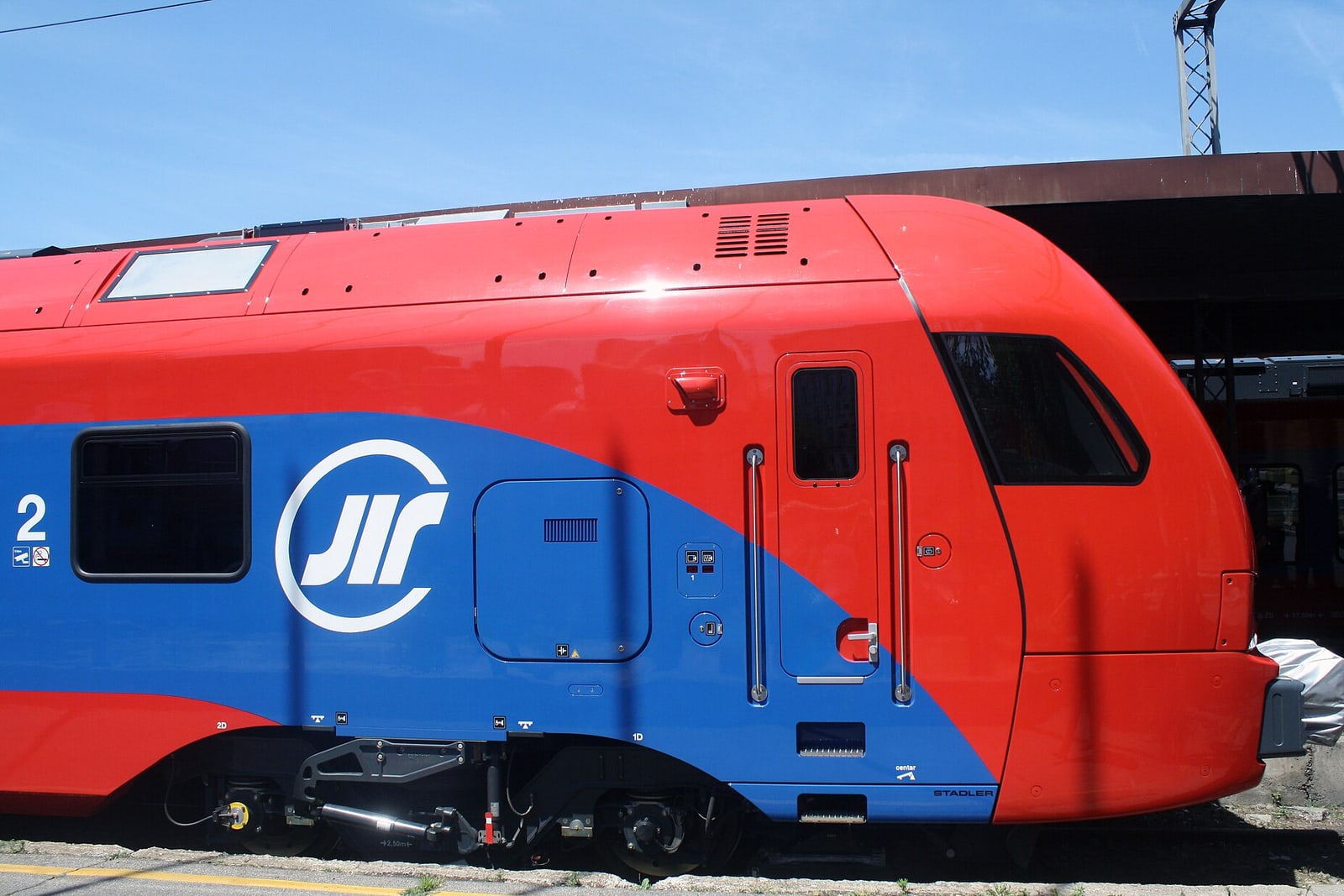
The Soko — Belgrade to Novi Sad by High-Speed Train
Srđan Popović / Wikimedia Commons · CC BY-SA 4.0
- DistanceBelgrade–Subotica · the Serbian half of the Belgrade–Budapest corridor
- Duration1 h 19 min end to end · 32 min to Petrovaradin, for Novi Sad
- Best seasonAny — a year-round express; Novi Sad shines late spring to early autumn
Introduction
Not every great railway journey is a slow ramble through the mountains. Some are about the thrill of the new — and in Serbia that thrill has a name: the Soko, the "Falcon", the country's first true high-speed train.
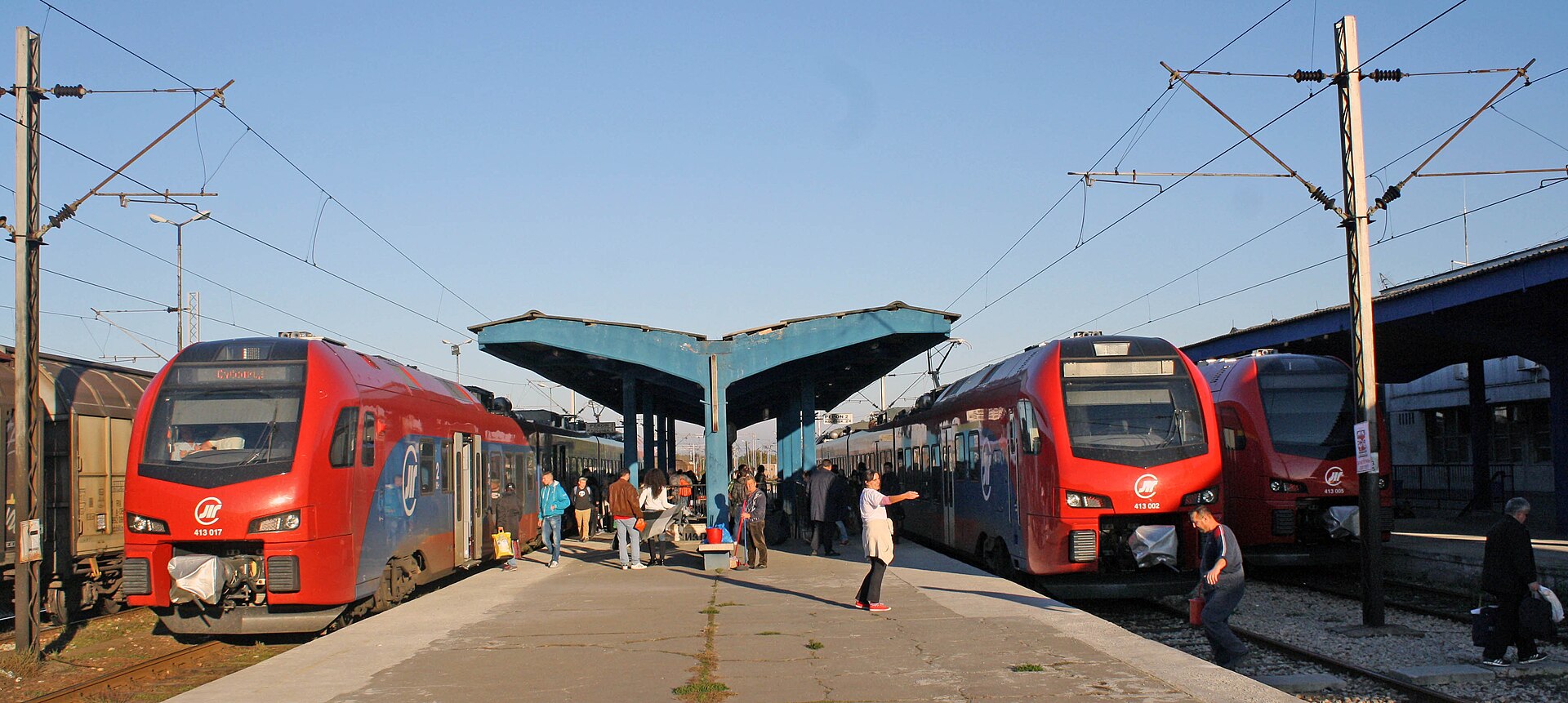
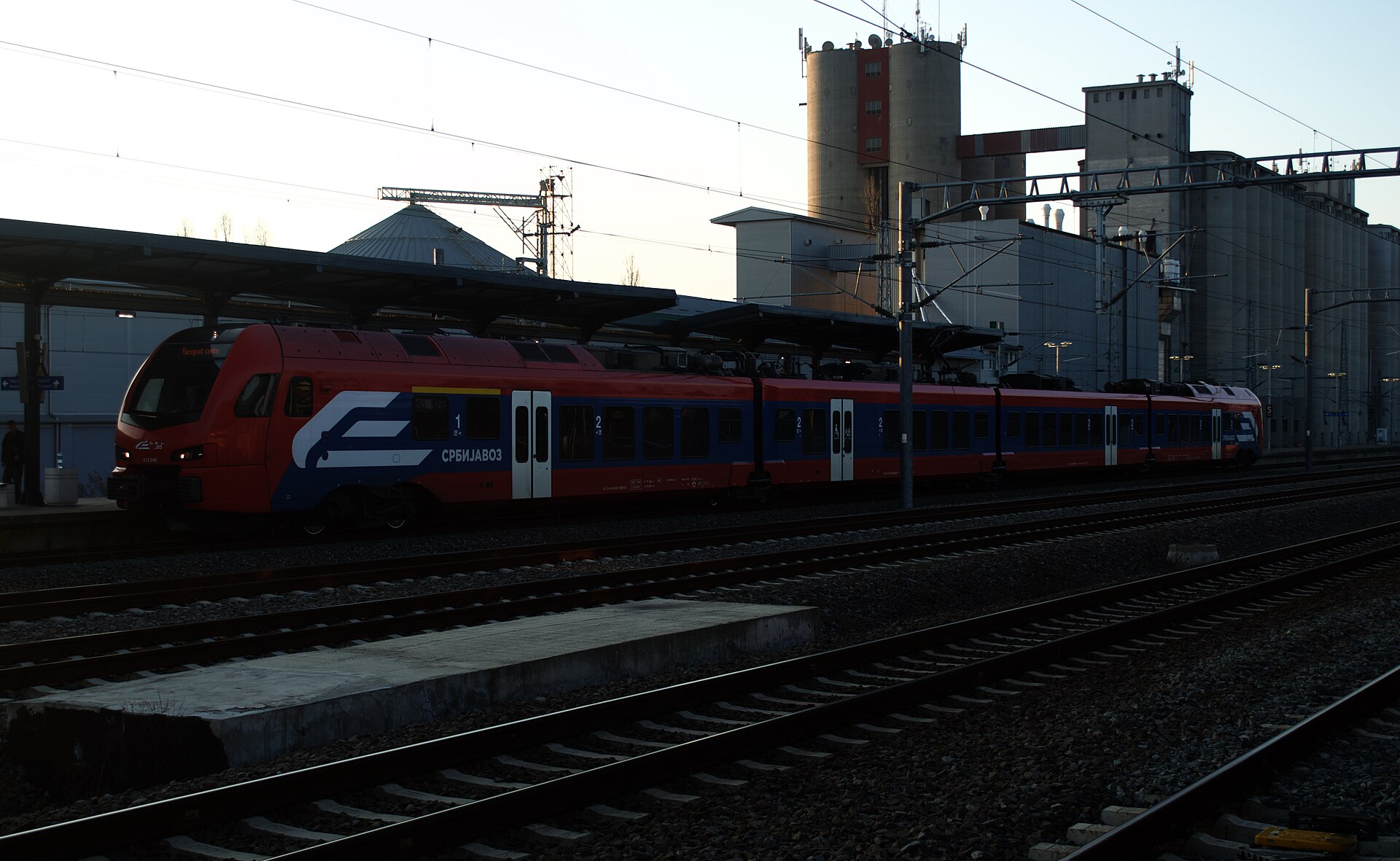
For decades the trip from Belgrade to Novi Sad, Serbia's second city, was a slow, clattering affair of anything up to two hours on tired old track. Then, in March 2022, a gleaming new line opened — the first stretch of the Belgrade–Budapest high-speed corridor — and everything changed. Sleek Swiss-built Stadler trains now skim the Vojvodina plain at up to 200 km/h, reaching Novi Sad in a little over half an hour. On 8 October 2025 the line opened all the way to Subotica on the Hungarian border, so the Soko is no longer a shuttle between two cities: it is a 9-departures-a-day express the length of the Vojvodina, Belgrade to Subotica in 1 hour 19 minutes.
One thing to know before you go, because it changes how you arrive. Novi Sad's main station is closed. On 1 November 2024 its concrete canopy collapsed onto the pavement below, killing 16 people; the building has been shut since, and the cause was still under investigation as of April 2026. Trains now call at Petrovaradin, across the Danube beneath the fortress, and the city centre is a short bus or taxi ride from there. The railway works; the station does not, and this page tells you what that means in practice.
The Journey
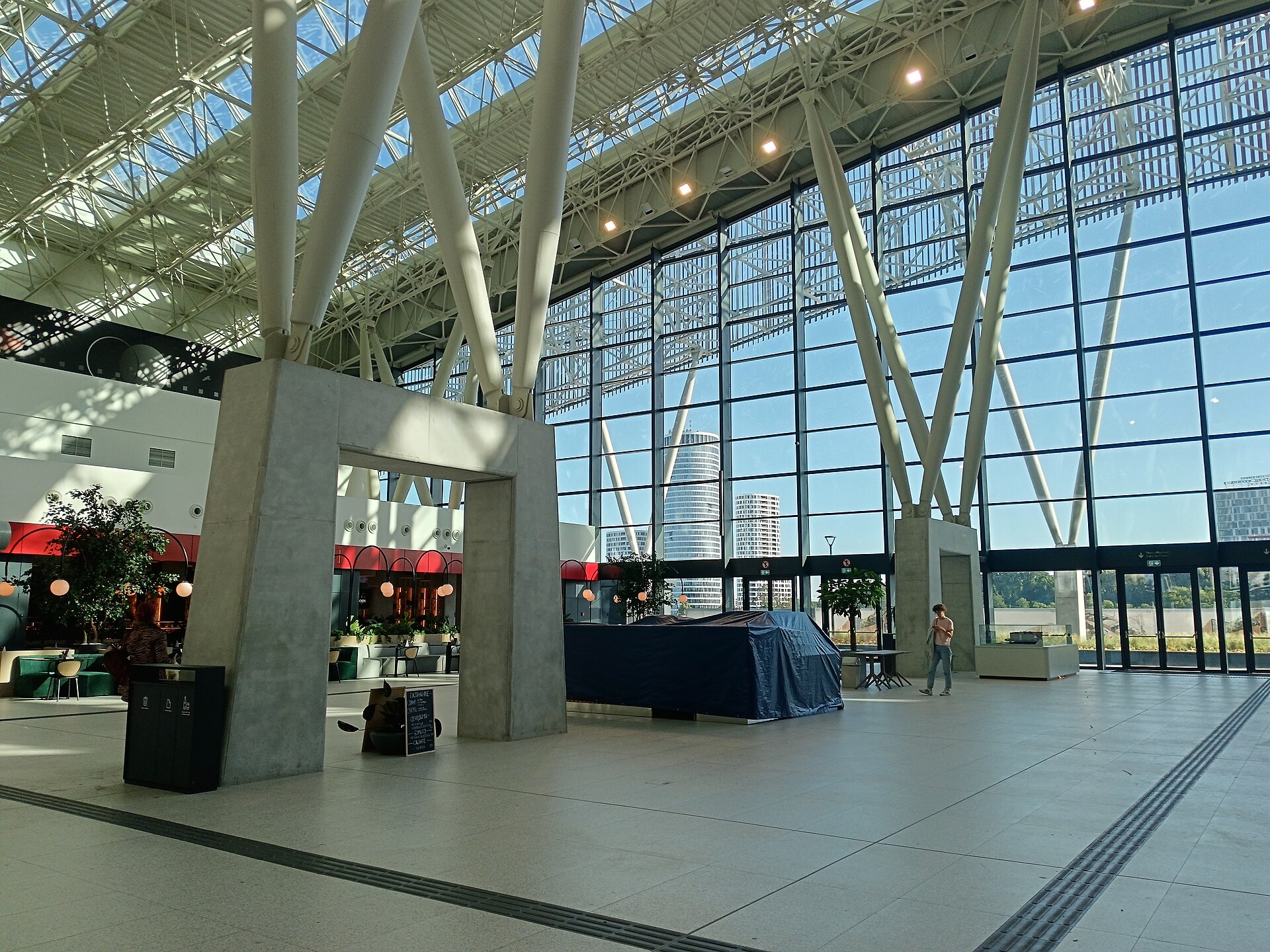
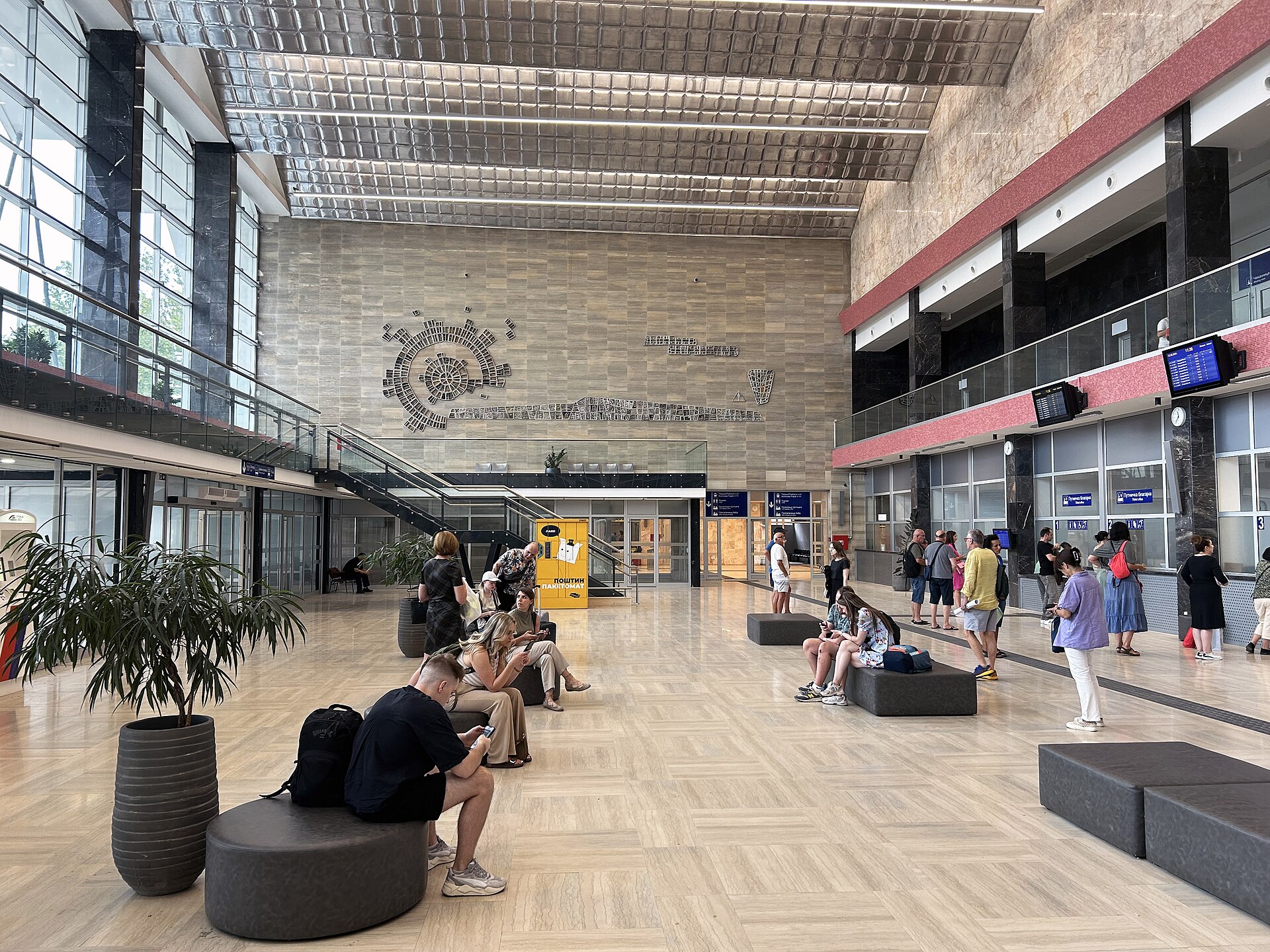
The journey begins under the great glass roof of Belgrade Centre, still known to locals as Prokop — the capital's big modern station, cut into a hillside south of the old centre. It feels a world away from the crumbling grand terminus that used to serve the city; here the platforms are long and clean, the departure boards bright, and the Soko waits nose-first, low and sharp in its red-white-and-blue livery.
Pull away and the train slips quickly out of the city, pauses at Novi Beograd three minutes later, and runs out onto the open Vojvodina plain — the flat, immensely fertile farmland that is Serbia's breadbasket. There is no drama of gorge or mountain here; the pleasure is of a different kind. The ride is uncannily smooth and quiet, the fields of maize and sunflower streaming past the big windows, and a glance at the speed display — often nudging 200 km/h — is the only reminder of just how fast you are going.
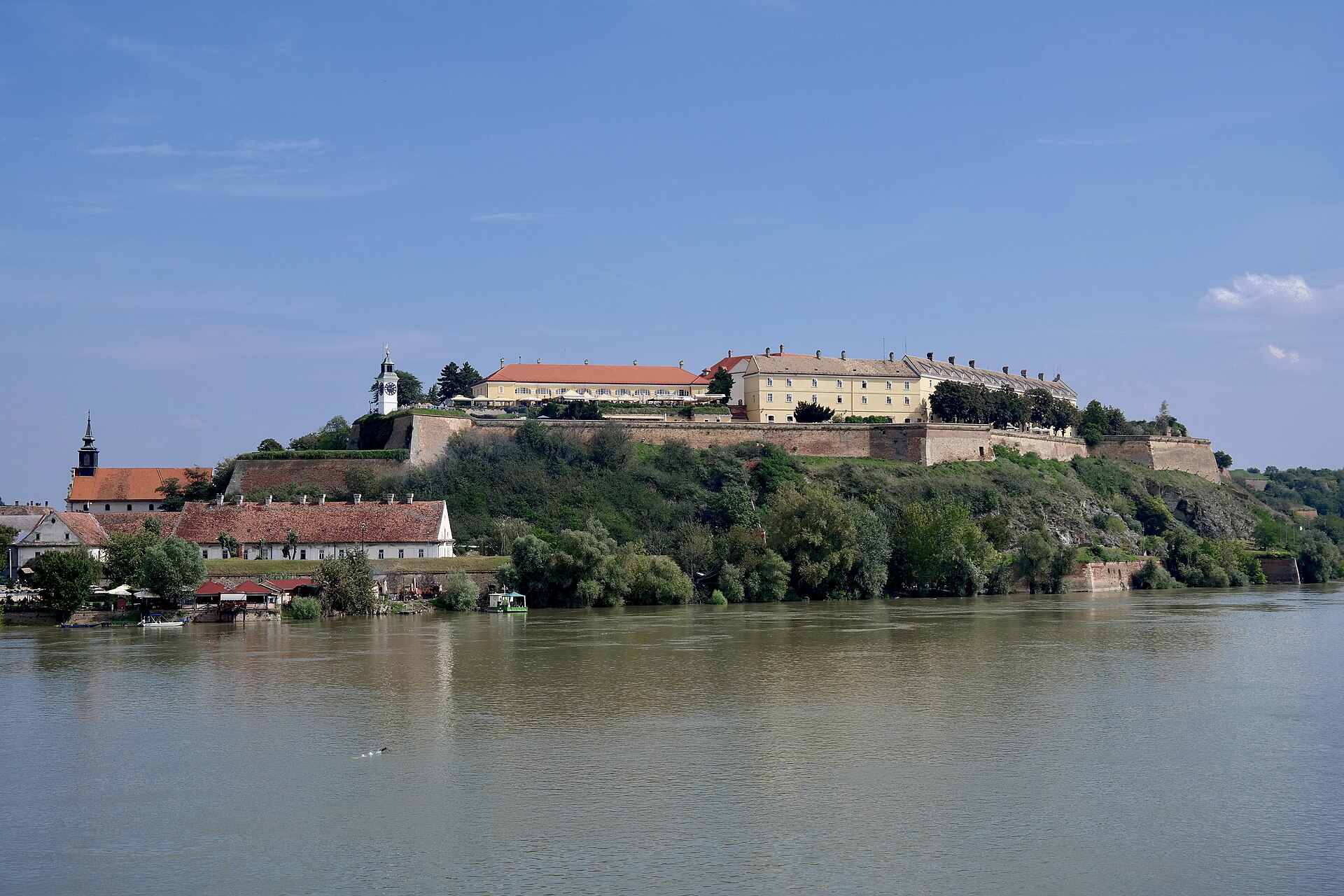
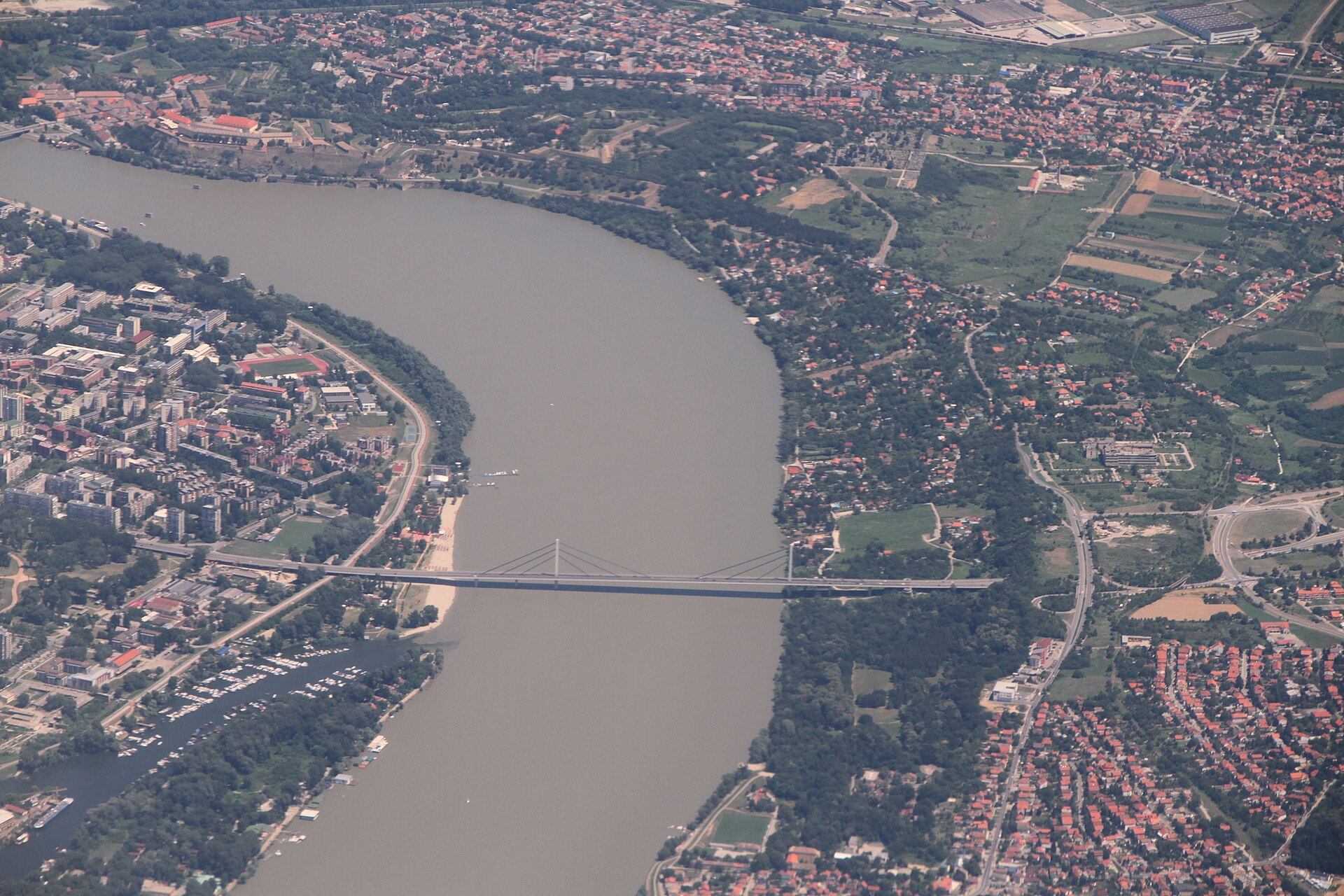
Barely time to settle before the pace eases for Petrovaradin, 32 minutes after leaving Belgrade. This is the stop for Novi Sad, and it is a good deal more interesting than a substitute stop has any right to be: the platforms sit directly beneath the ramparts of Petrovaradin Fortress, the great Habsburg stronghold above the Danube, with the river and the city on the far bank. The main Novi Sad station north of the water has been closed since the 2024 canopy collapse, so every train stops here instead; buses and taxis run across the bridge into the centre.
On to Subotica
Most travellers get off at Petrovaradin and spend the day. But the Soko no longer stops there. It runs on north across the plain — Vrbas Nova, Bačka Topola — and reaches Subotica, the dreamlike Art-Nouveau town on the Hungarian border, 1 hour 19 minutes after leaving Belgrade. That through service opened in October 2025 and it changes what this train is for: a whole province at high speed, and a border town that is now closer to Belgrade than many Belgrade suburbs are. Whether you get off at the Danube or ride to the frontier, the Soko is a small, satisfying glimpse of the future of travel in the Balkans.
Along the route
Srđan Popović / Wikimedia Commons · CC BY-SA 4.0Half an hour to the Danube
Not long ago the trundle from Belgrade to Novi Sad took the best part of two hours. Today the Soko — Falcon — reaches the Danube at Petrovaradin in 32 minutes, gliding across the Vojvodina plain at up to 200 km/h.Srđan Popović / Wikimedia Commons · CC BY-SA 4.0Serbia's first high-speed line
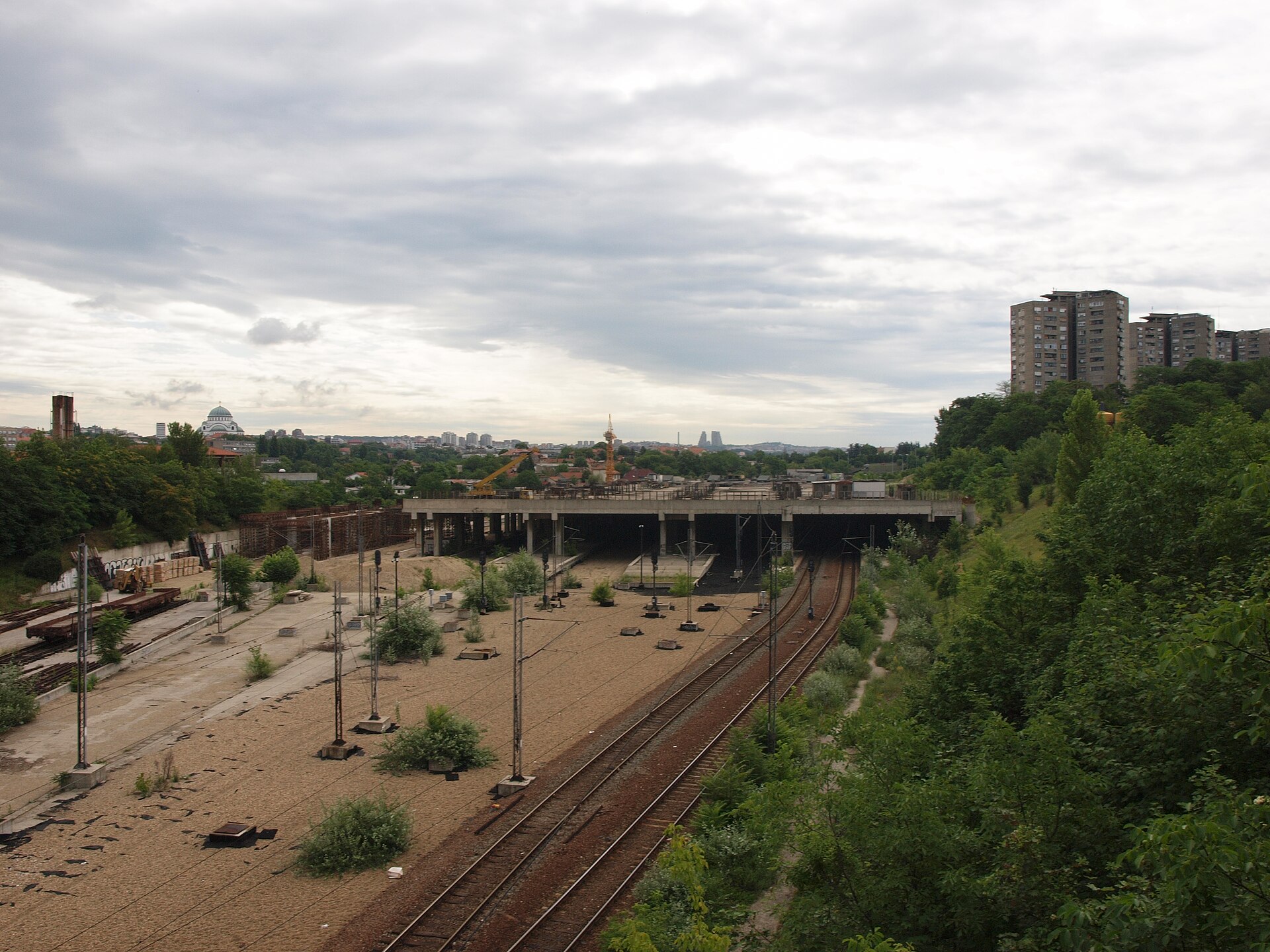
Opened in March 2022, this is the first stretch of the new Belgrade–Budapest corridor and Serbia's first true fast railway. Since October 2025 the fast trains have run the whole way north to Subotica on the Hungarian border.Choinowski / Wikimedia Commons · CC BY-SA 4.0Novi Sad and Petrovaradin
The reward is Novi Sad, Serbia's relaxed and handsome second city on the Danube — all café-lined squares and Habsburg façades — crowned by the Petrovaradin Fortress on its bluff across the river, which each July erupts into the EXIT festival.A bit of history
Culture & experiences along the way
Phil Richards / Wikimedia Commons · CC BY-SA 2.0Riding the Soko
The trains are bright, quiet and airy, with big windows, air-conditioning, power sockets and a smooth ride you can barely feel. There's little time for a snooze on a run this quick, so grab a window seat and watch the flat, fertile Vojvodina — Serbia's breadbasket — slide past at speed. Doors, displays and announcements are modern and easy to follow.Bjoertvedt / Wikimedia Commons · CC BY-SA 3.0A day trip from Belgrade
The Soko turns Novi Sad into the perfect day out: leave Belgrade after breakfast, spend the day on the squares and the fortress, and be back for dinner in the capital. Trains are frequent and fares are very low, so there's no need to commit to a fixed return — just turn up and go.Nikolina Šepić / Wikimedia Commons · CC BY-SA 4.0On toward Budapest
Novi Sad is only the start. The high-speed corridor is being carried north through the Art-Nouveau town of Subotica toward the Hungarian border and, ultimately, Budapest — so the same fast line that whisks you to the Danube is steadily becoming an international express route across the plain of Central Europe.Timetables
The Soko runs nine times a day in each direction, every two hours from early morning to late evening, right through from Belgrade Centre to Subotica. The stop for Novi Sad is Petrovaradin, 32 minutes out of Belgrade.
Full Soko departures, as of the August 2026 timetable:
| Belgrade Centre | Petrovaradin | Subotica |
|---|---|---|
| 06:00 | 06:32 | 07:19 |
| 08:00 | 08:32 | 09:19 |
| 10:00 | 10:32 | 11:19 |
| 12:00 | 12:32 | 13:19 |
| 14:00 | 14:32 | 15:19 |
| 16:00 | 16:32 | 17:19 |
| 18:00 | 18:32 | 19:19 |
| 20:00 | 20:32 | 21:19 |
| 22:00 | 22:32 | 23:19 |
| Subotica | Petrovaradin | Belgrade Centre |
|---|---|---|
| 06:00 | 06:45 | 07:19 |
| 08:00 | 08:45 | 09:19 |
| 10:00 | 10:45 | 11:19 |
| 12:00 | 12:45 | 13:19 |
| 14:00 | 14:45 | 15:19 |
| 16:00 | 16:45 | 17:19 |
| 18:00 | 18:45 | 19:19 |
| 20:00 | 20:45 | 21:19 |
| 22:00 | 22:45 | 23:19 |
Good to know:
- Fast and slow share the line. The Soko takes 1 h 19 min end to end. Four slower services each way — the 600-series — take 1 h 40 min and stop more often, leaving Belgrade at 07:00, 11:00, 15:00 and 19:00, and Subotica at 05:00, 09:00, 13:00 and 17:00. Both are shown on the operator's timetable, and the two-hourly clockface pattern makes the fast ones easy to pick out.
- The intermediate stops are few. A Soko calls only at Novi Beograd, Petrovaradin, Vrbas Nova and Bačka Topola between the two ends.
- Novi Sad's main station is closed after the November 2024 canopy collapse, so Petrovaradin is the stop for the city — see the Tickets section for how to cover the last couple of kilometres.
- Turn up and go. With fast and slow trains combined there is a departure most hours from early morning until late evening, so a day trip needs no tight planning.
Times taken from Srbija Voz's own timetable for Tuesday 25 August 2026 and correct as of August 2026. Serbian schedules are revised more often than in Western Europe.
Tickets
The Soko is run by Srbija Voz, and it is one of the great travel bargains of Europe: a high-speed ride across the plain for the price of a coffee and a cake. Fares are a few hundred dinars, and even the fast inter-city trains cost only a little more than the slow ones. Buy from the machines or counters at Belgrade Centre, online, or through the app — and because the trains are frequent and cheap there is no need to book far ahead. Seats are not usually reserved, so board and sit where you like.
One thing to allow for: the train sets you down at Petrovaradin, on the south bank, because Novi Sad's main station remains closed. The city centre is across the Danube from there — a short hop by bus or taxi, and a pleasant walk in good weather if you are travelling light.
Book your tickets
Belgrade → Subotica · Soko
32 minutes to Petrovaradin, for Novi Sad
The fast "Soko" service from Belgrade Centre across the Vojvodina to Subotica, at up to 200 km/h. Run by Srbija Voz; nine departures a day each way, two-hourly from 06:00 to 22:00, plus four slower services. Fares are very cheap — buy at the station machines and counters, or online.
Book Tickets (opens in a new tab, on Srbija Voz (Serbia Train))via Srbija Voz (Serbia Train)Timetable & booking · Srbija Voz
Departures and the wider corridor
Live schedules and fares for the Belgrade–Novi Sad–Subotica line from Serbia's national passenger operator. Check which departures are the fast Soko trains rather than the slower regional services, and how far north the high-speed corridor currently runs.
Book Tickets (opens in a new tab, on Srbija Voz (Serbia Train))via Srbija Voz (Serbia Train)Rail Passes
Interrail passes are valid, with a reservation. Interrail's table of railway companies lists Srbija Voz's SOKO InterCity as included in Serbia, so the run to Novi Sad is covered by an Interrail Serbia Pass or a Global Pass. Reservations on the SOKO are compulsory and cost about €1.
For this journey alone, a pass is not worth buying. The fare is a few hundred dinars.
Checked October 2026 against interrail.com (opens in a new tab) and Interrail's Serbia page (opens in a new tab).
Places to Visit
This short line links two of Serbia's most enjoyable cities, with a scattering of Vojvodina's gentle charms in between.
Belgrade, at the southern end, is a big, boisterous, endlessly sociable capital where the Sava meets the Danube beneath the old Kalemegdan fortress. Wander the bohemian Skadarlija quarter, the buzzing café streets of Dorćol and Savamala, and the riverside — the city's famous nightlife spills onto floating clubs on the water. Give it a couple of days before or after your trip north.
Novi Sad, at the other end, is Belgrade's relaxed and elegant counterpoint: pastel Habsburg façades, the pretty pedestrian heart around Trg Slobode, and the huge Petrovaradin Fortress across the Danube, whose ramparts and tunnels host the enormous EXIT festival each July. It is a walkable, café-loving city, and a European Capital of Culture in recent memory.
Around Novi Sad, the wooded hills of Fruška Gora shelter a string of old Orthodox monasteries and some of Serbia's best vineyards, easily reached for a day. And every Soko now runs on to Subotica near the Hungarian border, a jewel of Art Nouveau architecture — its synagogue and city hall among the finest in the region — set beside the lakeside resort of Palić. At 1 hour 19 minutes from Belgrade it is a comfortable day out in its own right.
 George Groutas / Wikimedia Commons · CC BY 2.0 · cropped
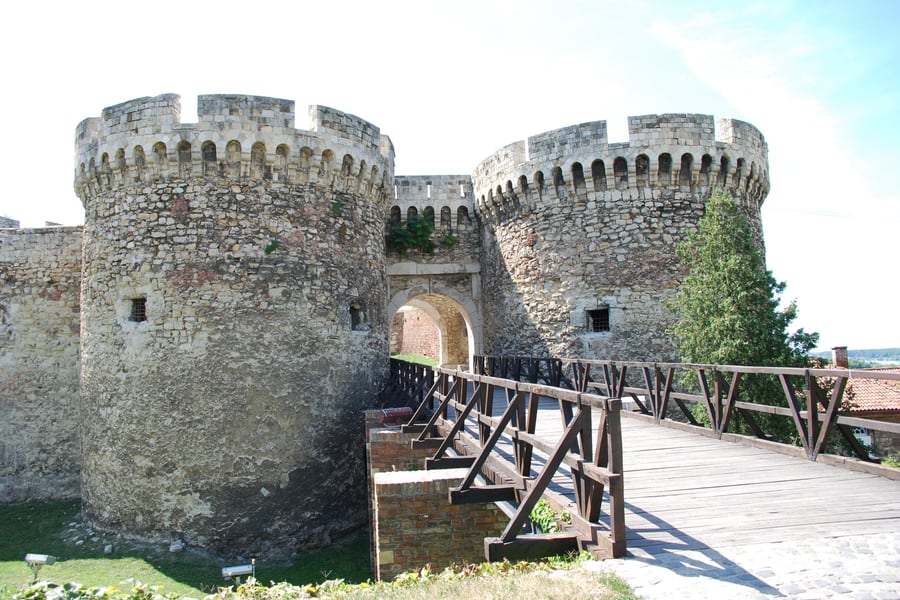
The Zindan Gate
Twin barbican towers thrown up by the Hungarian garrison between 1440 and 1456, after a failed Ottoman siege showed that the gates were the weak point. Their cellars later served as prisons, which is what zindan means in Turkish. The fortress behind has been fought over through nine major sieges and stands on a 125-metre ridge where the Sava meets the Danube; Kalemegdan is simply Turkish for "fortress field".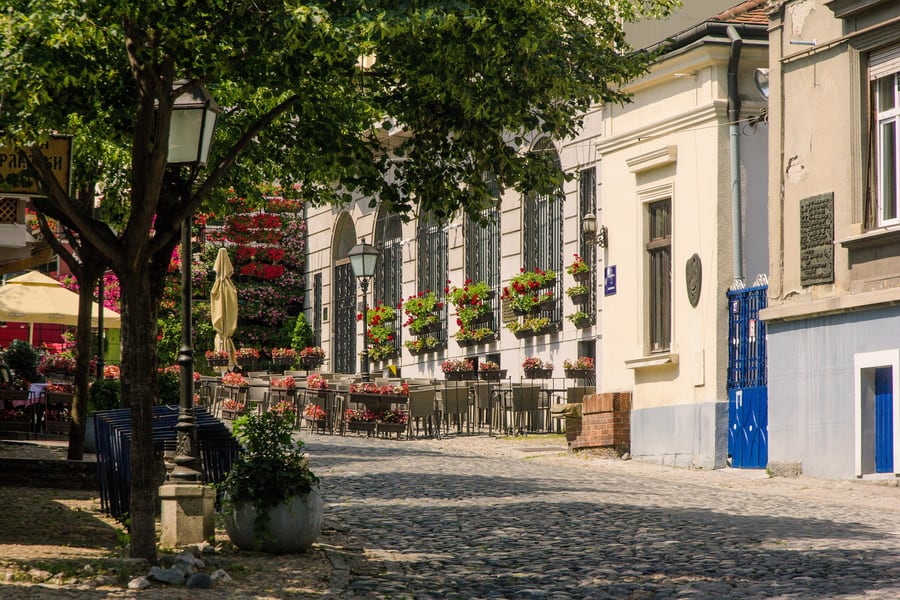 Alexey Komarov / Wikimedia Commons · CC BY 3.0 · cropped
Skadarlija
The bohemian quarter is less than 400 metres of rough cobble, and it became what it is by accident: when the Dardaneli inn was demolished in 1901, the writers and actors who drank there decamped up here, and by about 1910 Skadarlija was the centre of the city's bohemian life. Tri šešira — "Three Hats" — has been serving since 1864. The comparison with Montmartre is official; the two quarters formally twinned in 1977.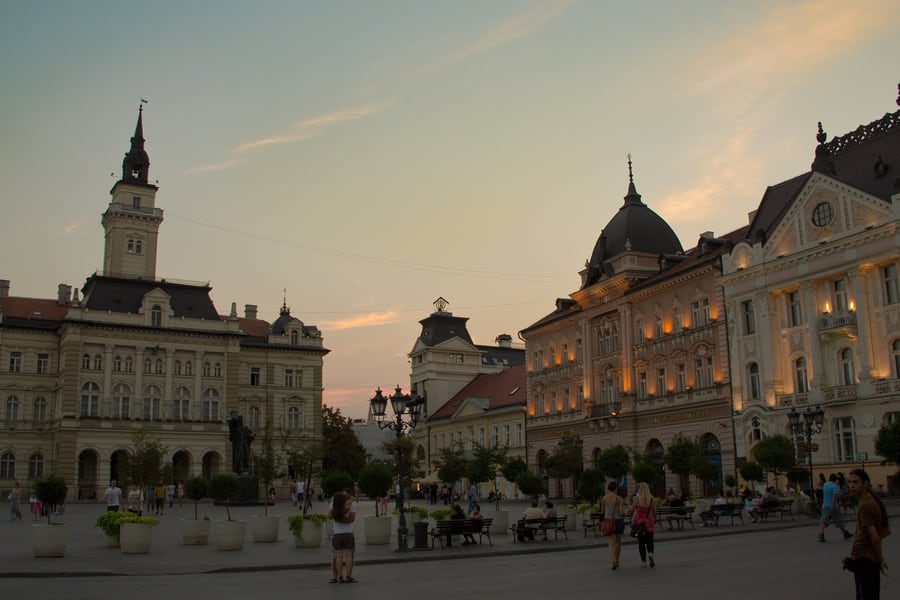 Dragan Maksimovic / Wikimedia Commons · CC BY-SA 3.0 · cropped
Trg Slobode
Novi Sad's drawing room — café terraces on three sides, the city hall on one, and the Name of Mary Church closing the square with a 72-metre spire finished in October 1894. The Hungarian architect György Molnár drew it for nothing in 1892; it is the largest church in the city, and its roof burned in 1904 and was rebuilt on donations from the congregation. Sit out here at dusk. Everyone else does.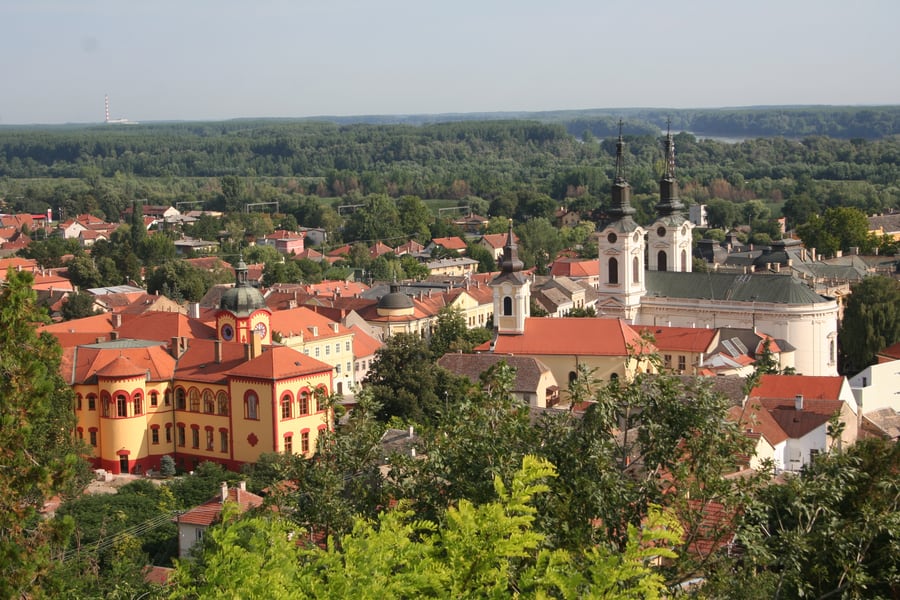 Ванилица / Wikimedia Commons · CC BY-SA 4.0 · cropped
Sremski Karlovci
A baroque town on the Danube that was once the capital of Serbian life under the Habsburgs — the Patriarch still carries the title Metropolitan of Karlovci. The Treaty of Karlowitz was negotiated here in 1698–99, at what is said to be the first round table used in international diplomacy, and the first Serbian grammar school opened in August 1791. The vineyards start immediately above the rooftops.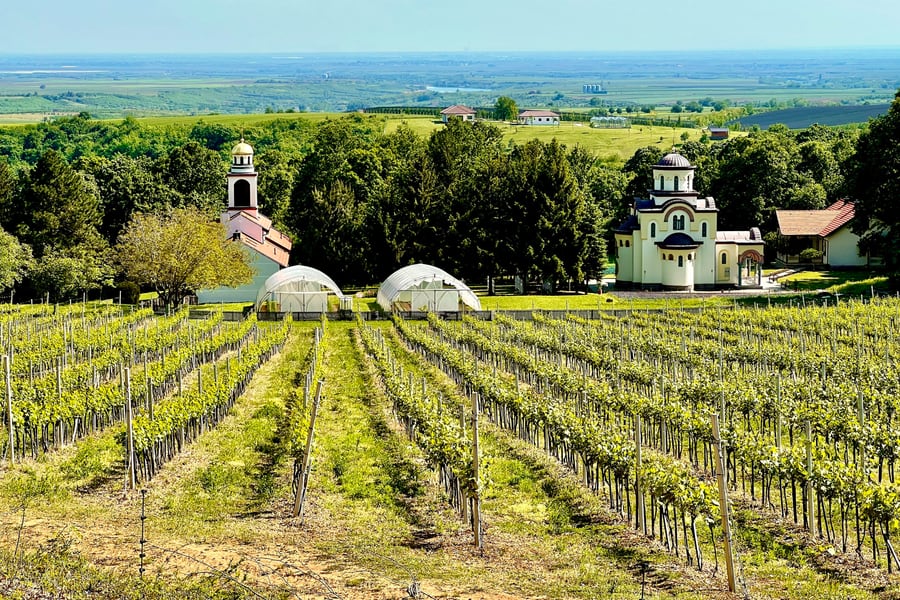 Lukder / Wikimedia Commons · CC BY-SA 4.0 · cropped
Fruška Gora
Sixteen monasteries survive in these wooded hills, the remnant of a far larger community that made Fruška Gora the spiritual heartland of the Serbs under Habsburg rule. Grgeteg, seen here across its own vines, is held by tradition to have been founded in 1471; it stood deserted before the Great Migration of 1690, was renewed in 1708, and its baroque church went up around 1770. The wine below is among Serbia's best.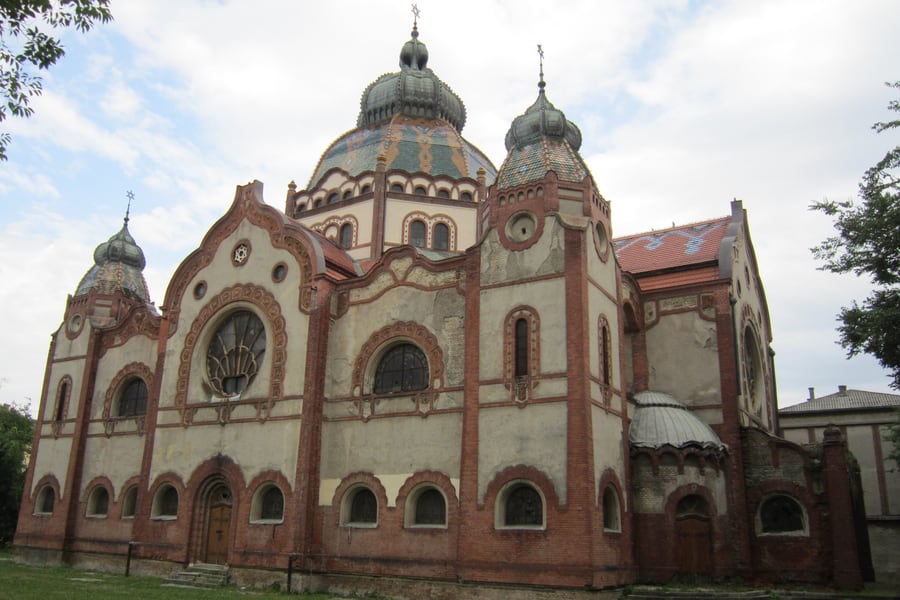 Dickelbers / Wikimedia Commons · CC BY-SA 3.0 · cropped
Subotica Synagogue
Subotica is a Hungarian Art Nouveau town, and this is its masterpiece: built 1901–03 by Marcell Komor and Dezső Jakab for a Jewish community of some three thousand, when Subotica was the third city of the Kingdom of Hungary. It is reckoned the only surviving Hungarian Art Nouveau synagogue in the world, and reopened in 2018 after a long restoration. The city hall, by the same pair, is round the corner.Where to Sleep
Because the Soko makes Novi Sad an easy day trip, many travellers simply base themselves in one city and ride to the other — but both are rewarding places to stay.
In Belgrade, the choice is huge, from international hotels to stylish design places and countless apartments. For atmosphere, stay in the walkable centre around Knez Mihailova and Kalemegdan, or in the lively Dorćol and Savamala districts near the rivers; the nightlife is legendary, so pick your street to match the sleep you want. Belgrade Centre station is a short taxi or transit ride from the middle of town.
In Novi Sad, the loveliest base is the compact old town around Trg Slobode and Zmaj Jovina, where boutique hotels and guesthouses put the squares, cafés and riverfront on your doorstep; there are also good options up at Petrovaradin below the fortress, with fine views back over the Danube — and, while the main station is closed, that is the side of the river the train actually leaves you on. Book well ahead if your visit coincides with the EXIT festival in July, when the whole city fills.
Serbian accommodation is generally friendly and good value, and both cities are well supplied at every price. With trains so frequent and cheap, you can happily sleep in one city and dine in the other.
Questions or corrections
Planning this trip and stuck on something, or spotted a time, fare or detail that has changed? Send us a message about The Soko — Belgrade to Novi Sad by High-Speed Train. We read every one, and we update this page when something has changed.