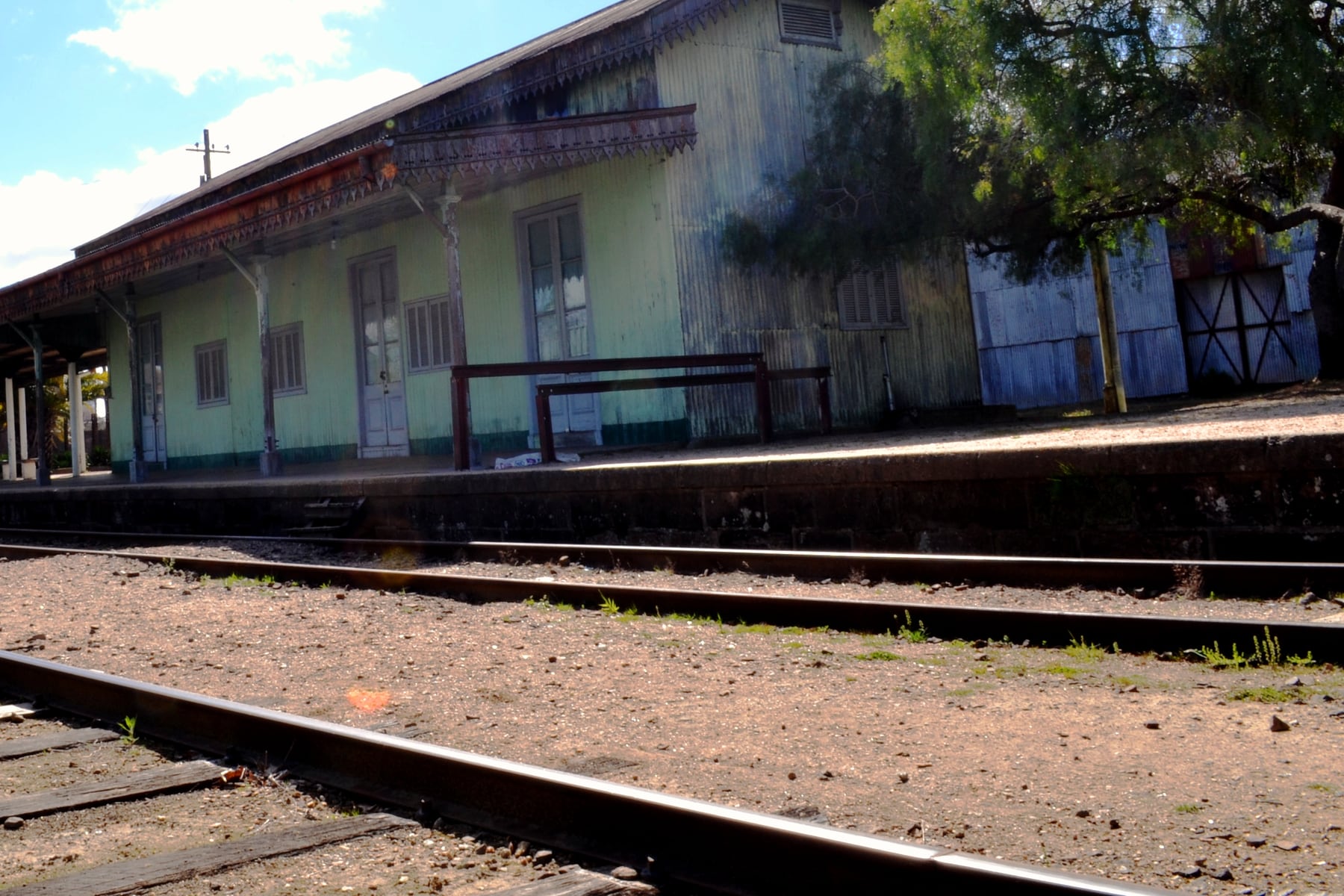
Tacuarembó to Rivera — the whole of Uruguay's passenger railway
Lucho Leivas / Wikimedia Commons · CC BY-SA 3.0 · 2013 · cropped
- DistanceAbout 118 km, Tacuarembó to Rivera
- Duration2 hr 10 min each way
- Best seasonMondays and Fridays all year, except non-working holidays
Introduction
Uruguay dismantled its passenger railway at the end of 1987, and what is left of it today is this: one train, on one line, on Mondays and Fridays, in the far north of the country. It runs the 118 kilometres from Tacuarembó to Rivera on the Brazilian frontier, and it is the only scheduled passenger service the state operator AFE runs anywhere. The suburban trains out of Montevideo, which survived the closure and were still running in 2019, were suspended on 14 June 2019 so that the main line could be rebuilt for freight, and they have not come back. This one did: passenger trains returned to Tacuarembó and Rivera on 19 December 2018, thirty-five years after the last one, on 310 kilometres of relaid track.
The ride takes two hours and ten minutes each way, out at 07:00 and back at 16:15, and the full fare is 200 Uruguayan pesos — less than the coach. It is worked by second-hand Swedish railcars, Fiat-designed Y1s withdrawn in Sweden and shipped to Montevideo in two batches, with grilles bolted over the windscreens and air-conditioning added. Between the two towns the line calls at six halts with names like Bañado de Rocha and Paso Ataques, runs through a short tunnel and across open cattle country, and ends in a city whose main streets are the international boundary: step off the far pavement in Rivera and you are in Brazil.
The Journey
Tacuarembó station stands at kilometre 445 of the line from Montevideo, on the edge of a town of sixty thousand that thinks of itself as the most gaucho place in Uruguay. The train is two or three railcars coupled together, painted grey and yellow, and it leaves at seven in the morning. The guards start collecting fares as soon as it is moving.
The first nineteen kilometres are the flat run out to Bañado de Rocha, reached at 7:20, over the Arroyo Tacuarembó Chico on the way. Just beyond the halt the line runs through a short tunnel, and then it is the long pull up through Paso del Cerro at 7:40 and Laureles at 7:56. This is the emptiest part of the journey. The country is grass to the horizon in every direction, fenced into paddocks, with eucalyptus windbreaks and the occasional low ridge of the northern cuchillas showing above them. Cattle stand against the fences and sometimes on the wrong side of them, and hitting stock is a routine hazard here — the railway's position is that keeping the fences up is the landowner's job.
Tranqueras and the last hour
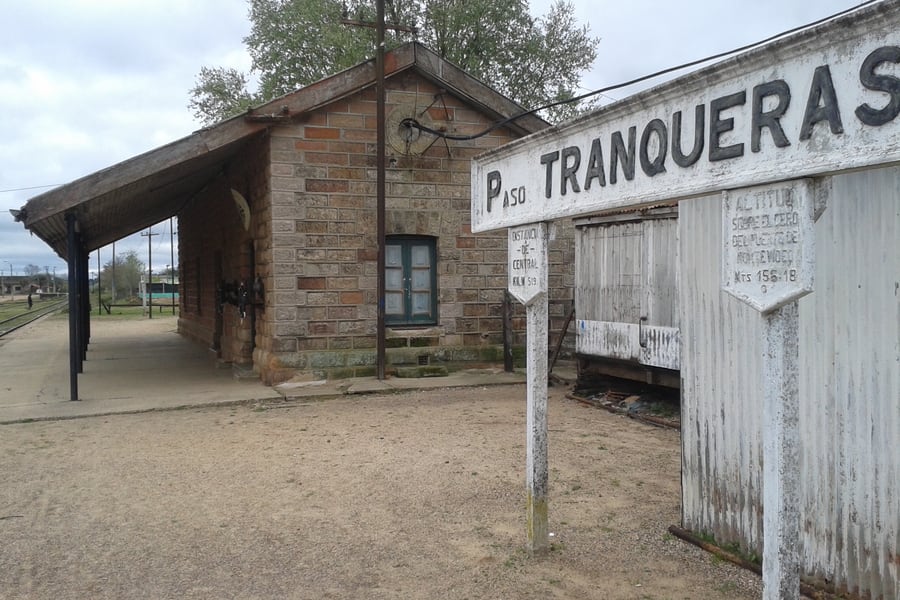
At 8:16 the train calls at Brigadas Civiles, and at 8:24 at Paso Tranqueras, the busiest of the intermediate stops and the only one that serves a real town. Tranqueras has eight thousand people, a stone station building with a painted board giving its height and its distance from Montevideo, and a valley behind it — the Valle del Lunarejo, protected since 2009 — that is the reason most visitors get off here.
Beyond Tranqueras the ground rises towards the frontier ridge. Paso Ataques, at 8:40, is the last stop, a scatter of houses in pine and native quebrada woodland. Half an hour later the line runs into the outskirts of Rivera, past the yard, and stops at kilometre 563.107 — the end of Uruguay's trunk railway.
What most of the passengers do next is shop. Rivera's free shops are on Avenida Sarandí a few blocks from the station, and the fare is cheap enough that the day trip pays for itself; AFE allows each passenger 25 kilos of hand luggage, which is a rule written for exactly this. The train back leaves at 16:15 and is in Tacuarembó at 18:25.
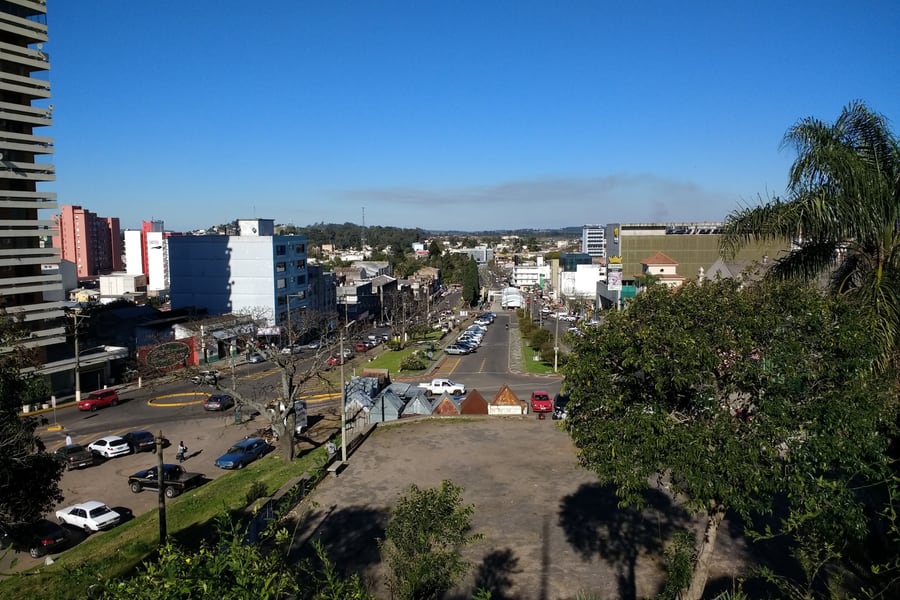
Along the route
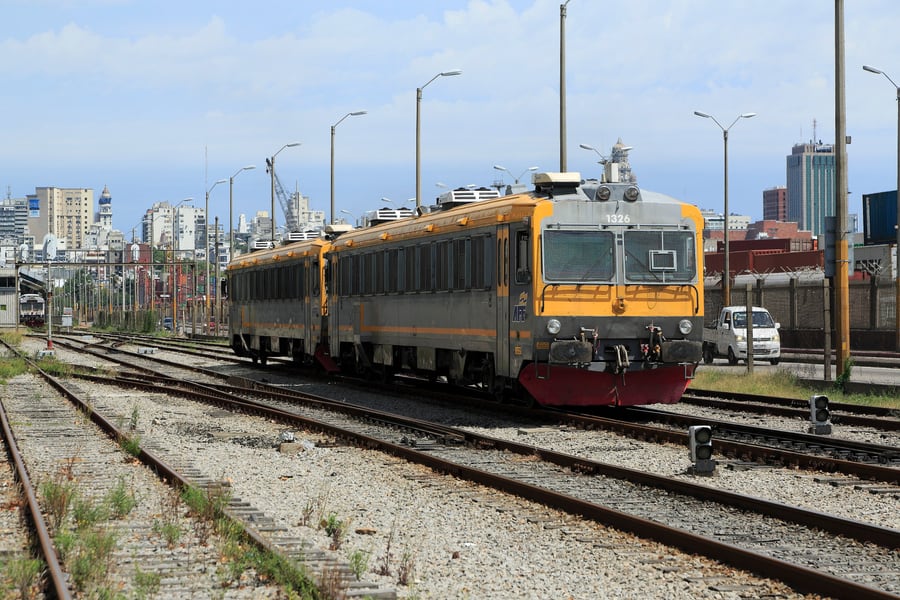
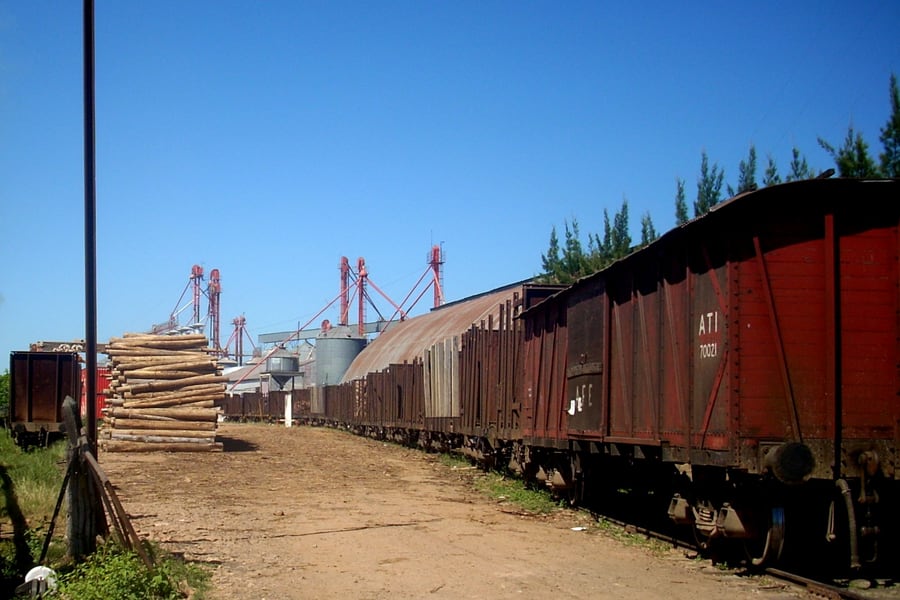
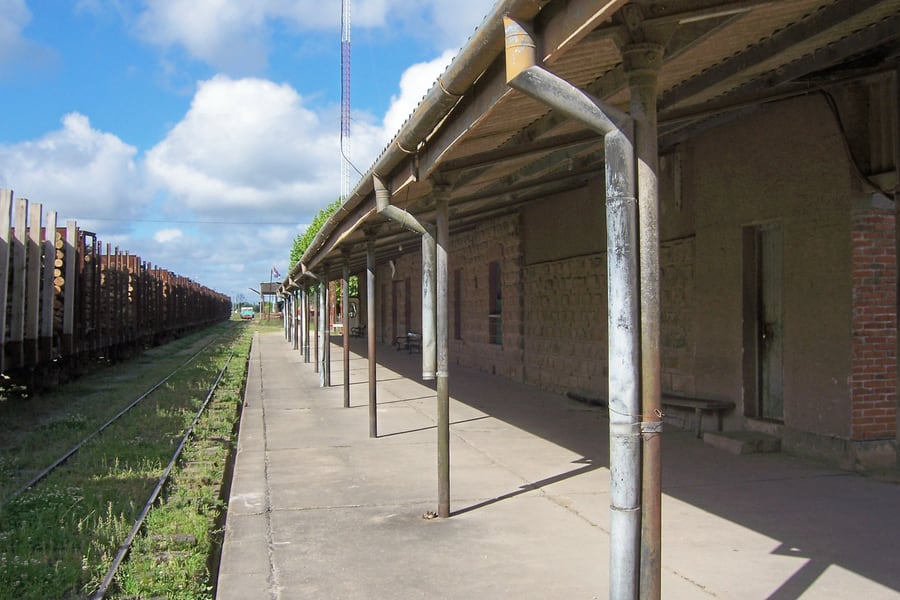 Tano4595 / Wikimedia Commons · CC BY-SA 3.0 · 2005 · cropped
Out of Tacuarembó at seven
One departure a day, Mondays and Fridays, from a station 445 kilometres up the line from Montevideo. The first stop, Bañado de Rocha, is nineteen kilometres on.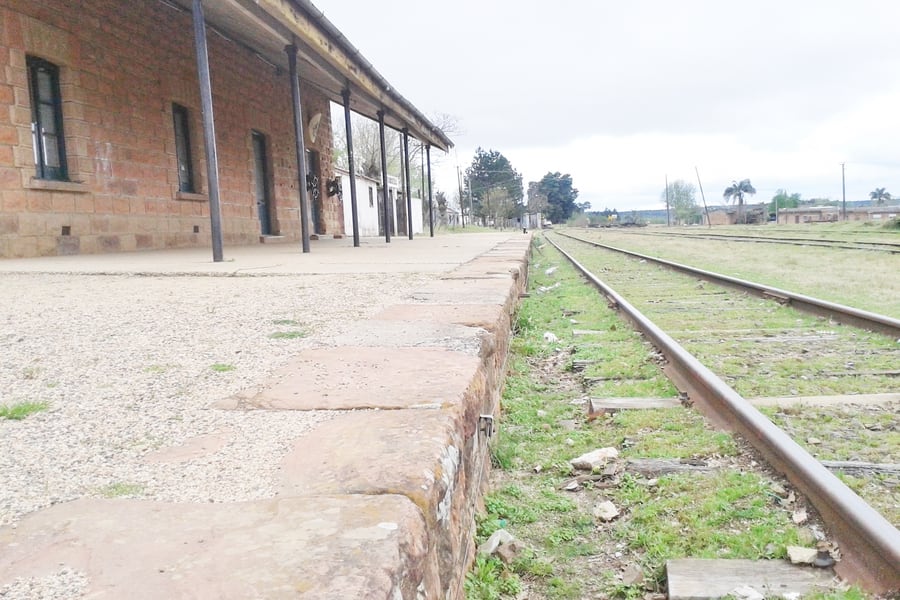 Alejandro Gil Álvarez / Wikimedia Commons · CC BY-SA 3.0 · 2013 · cropped
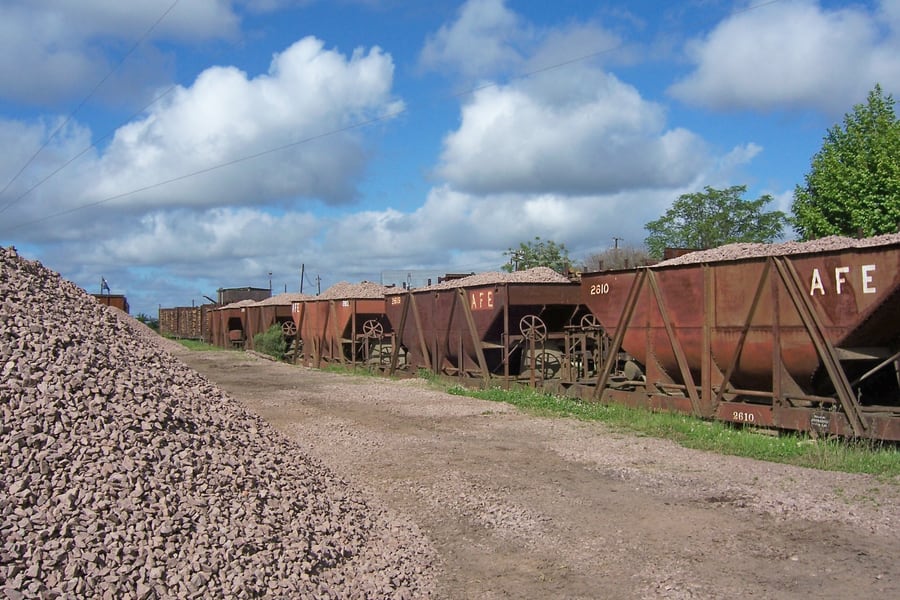
Through the hills to Tranqueras
A short tunnel beyond Bañado de Rocha, then Paso del Cerro, Laureles and the Brigadas Civiles halt, and at 8:25 the town of Tranqueras, eight thousand people.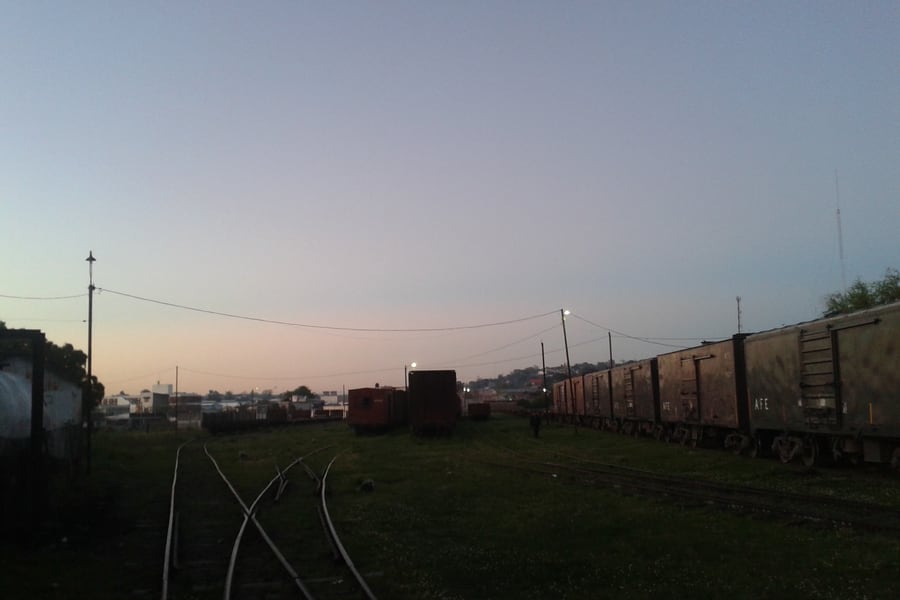 Alejandro Gil Álvarez / Wikimedia Commons · CC BY-SA 3.0 · 2013 · cropped
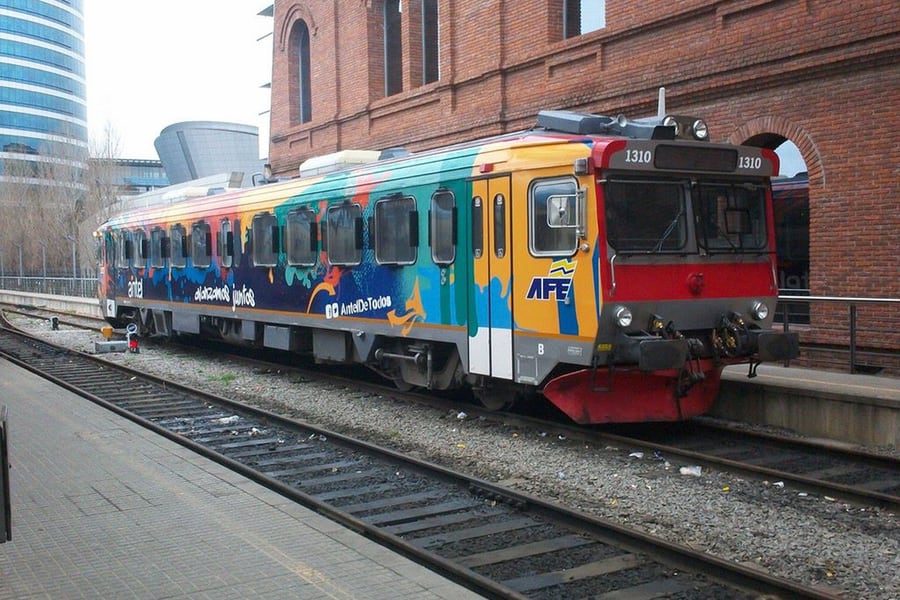
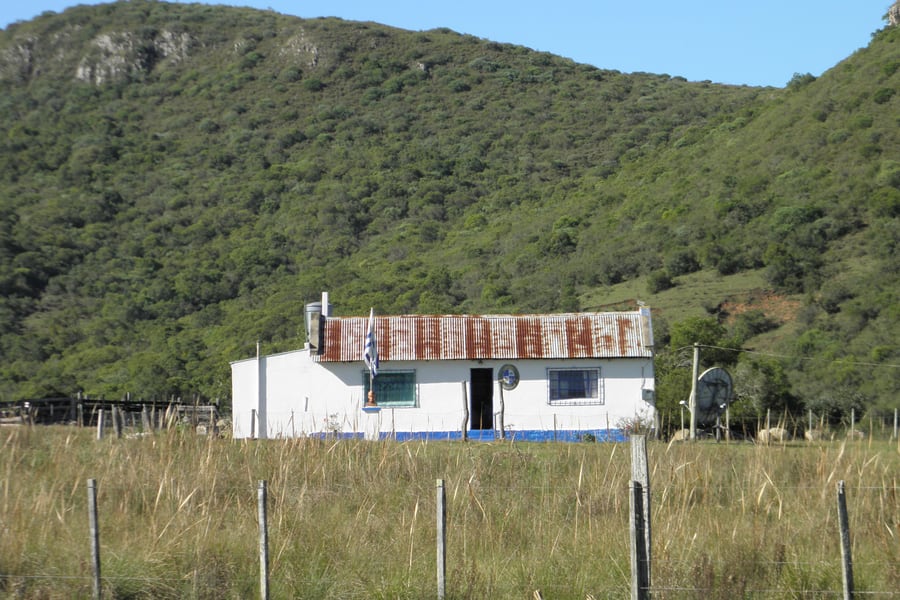
Into Rivera at ten past nine
The last stop before the frontier is Paso Ataques. Rivera's station stands at km 563.107, the end of Uruguay's trunk line and a few streets from Brazil.A bit of history
Culture & experiences along the way
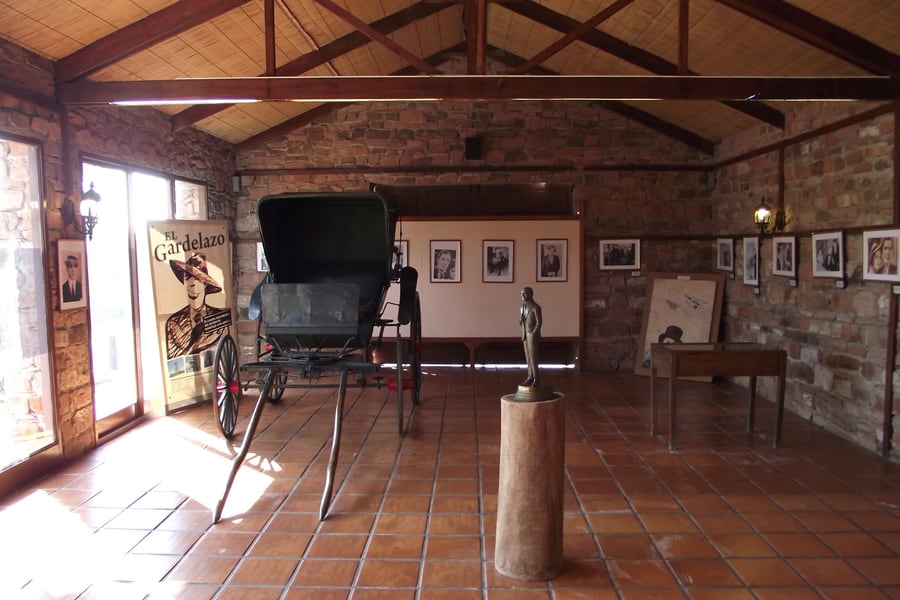 Scheridon / Wikimedia Commons · CC BY-SA 4.0 · cropped
The Gardel that Tacuarembó claims
France says Toulouse and Argentina says Buenos Aires, but Tacuarembó has always insisted that Carlos Gardel — the voice of tango — was born in the hills at Valle Edén and taken north as a child. The department keeps a museum out there to make the case, and argues it with complete seriousness.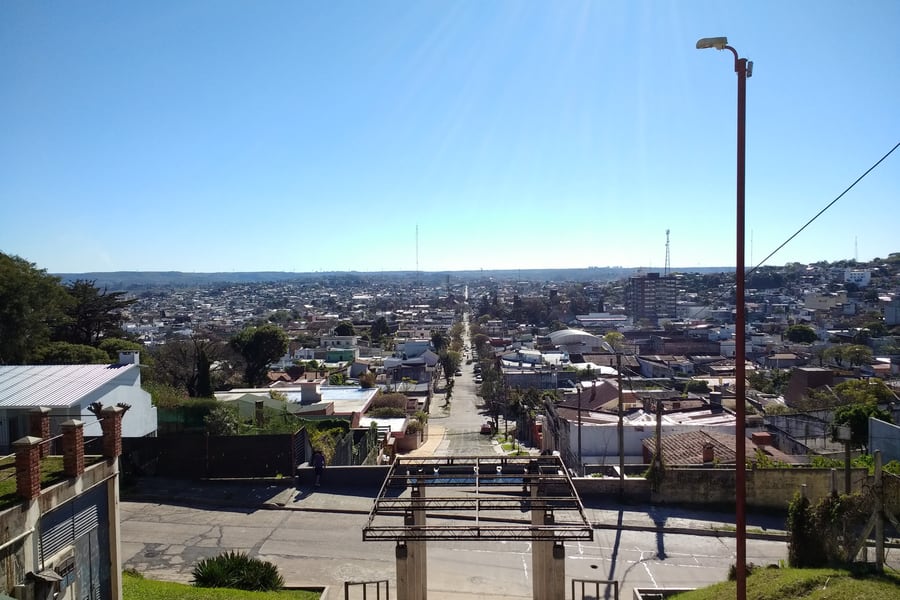 Mx. Granger / Wikimedia Commons · CC0 · 2017 · cropped
A border you can walk across without noticing
Rivera and Santana do Livramento are one built-up area of about 170,000 people divided by an imaginary line down the middle of streets and avenues, marked only by stone posts. There is no barrier and no checkpoint between them. The Plaza Internacional, opened in 1943 as a monument to peace, sits astride the line with a flag from each country on it.Timetables
One train runs each way, on Mondays and Fridays only, excluding non-working public holidays. The times below are AFE's own board, in force since 7 April 2025 and quoted back by the operator in its service notice of 28 August 2026.
Tacuarembó to Rivera
| Station | Arrives | Departs |
|---|---|---|
| Tacuarembó | — | 07:00 |
| Bañado de Rocha | 07:20 | 07:21 |
| Paso del Cerro | 07:40 | 07:41 |
| Laureles | 07:56 | 07:57 |
| Brigadas Civiles | 08:16 | 08:17 |
| Paso Tranqueras | 08:24 | 08:25 |
| Paso Ataques | 08:40 | 08:41 |
| Rivera | 09:10 | — |
Rivera to Tacuarembó
| Station | Arrives | Departs |
|---|---|---|
| Rivera | — | 16:15 |
| Paso Ataques | 16:44 | 16:45 |
| Paso Tranqueras | — | 17:01 |
| Brigadas Civiles | 17:08 | 17:09 |
| Laureles | 17:28 | 17:29 |
| Paso del Cerro | 17:44 | 17:45 |
| Bañado de Rocha | — | 18:06 |
| Tacuarembó | 18:25 | — |
Both runs take 2 hours 10 minutes. AFE's board also lists a string of numbered paradas by
kilometre post between the named stations, marked C — the train calls at those only if someone
wants to get on or off.
Before you go
⚠️ This service is stopped and restarted more often than most. Winter rain washed out the track between Tacuarembó and Rivera in August 2026; AFE ran a contingency shuttle as far as Tranqueras while the Intendencia de Rivera helped repair it, and the full run resumed on Friday 4 September 2026. Individual departures have also been cancelled at short notice and replaced with special Saturday workings. Check with the operator before you travel, at afe.com.uy (opens in a new tab), and read its news page (opens in a new tab), which is where any change is announced.
As of September 2026.
Tickets
There is no online sale and no reservation. AFE publishes a single fare table for the line and the guards collect the money on board once the train is under way — one class, walk on, pay, sit down. The fares have been unchanged since March 2022.
The table is charged by section, with a floor of $55 for anything up to 35 kilometres, which is why the nineteen-kilometre hop out to Bañado de Rocha and the thirty-four-kilometre run to Paso del Cerro cost the same. From Tacuarembó it is $90 to Laureles, $120 to Brigadas Civiles or Paso Tranqueras, and $200 for the whole 118 kilometres to Rivera. Prices are in Uruguayan pesos. The full fare undercut the interdepartmental coach when the service came back in 2018, and that is much of the appeal.
Book your tickets
Single, Tacuarembó to Rivera
The whole 118 kilometres
AFE's published fare for the full run, unchanged since March 2022.
Book Tickets (opens in a new tab, on afe.com.uy)via afe.com.uySingle, Tacuarembó to Tranqueras
An hour and a half, for the shorter ride
Tranqueras is the largest town between the two ends and the natural half-way break.
Book Tickets (opens in a new tab, on afe.com.uy)via afe.com.uyThe minimum fare
Any journey up to 35 kilometres
The floor of the fare table, and what a hop between two neighbouring halts costs.
Book Tickets (opens in a new tab, on afe.com.uy)via afe.com.uyRail Passes
No rail pass covers this journey, and none is sold that could. Interrail and Eurail are European products; there is no South American equivalent with any Uruguayan participation, and AFE offers no period ticket, rover or tourist card of its own. The fare table on the operator's page is the whole commercial offer for the line.
That is not the disappointment it sounds like. A single from end to end is 200 Uruguayan pesos and the shortest section is 55 — a rail pass would have nothing to save. Buy the ticket on the train.
Checked against AFE's own fare and timetable page, September 2026.
Places to Visit
The line gives you two towns, a village and a protected valley. Tacuarembó is the gaucho capital of Uruguay and holds the country's biggest folk festival every March; Tranqueras, an hour and a half up the line, is the way into the Valle del Lunarejo; and Rivera is half of a city, the other half of which is in Brazil.
Everything below is reachable on foot or by a short taxi ride from a station on this journey.
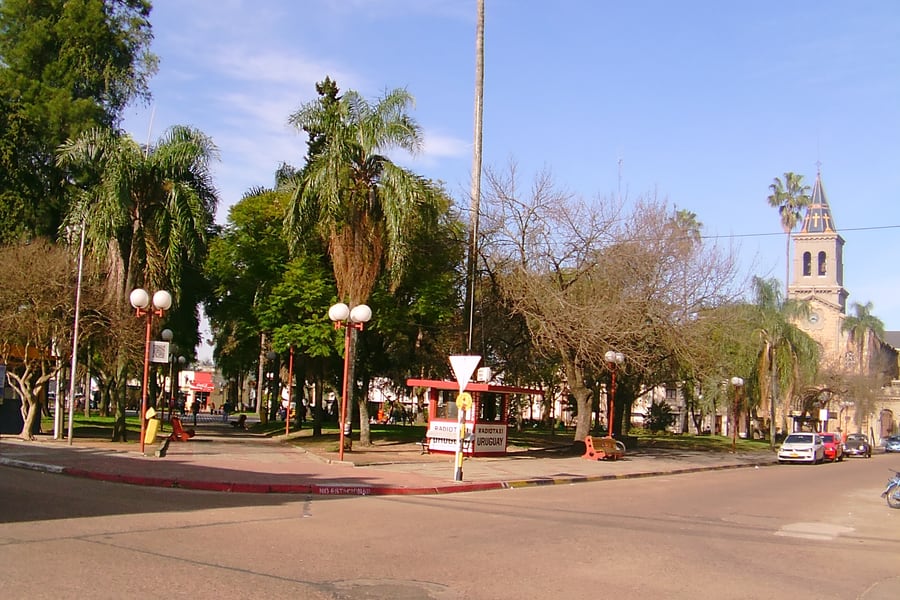 Carohv91 / Wikimedia Commons · CC BY-SA 4.0 · 2014 · cropped
Tacuarembó and the Patria Gaucha
The departure town is the capital of a cattle department of 60,586 people, laid out around the Plaza 19 de Abril with its church on one corner. For five days every March the Fiesta de la Patria Gaucha takes over the Laguna de las Lavanderas on the edge of town — the country's largest folk gathering, built around the gaucho and staged as a reconstruction of period camp life. The rest of the year the Museo del Indio y del Gaucho keeps the subject in the centre.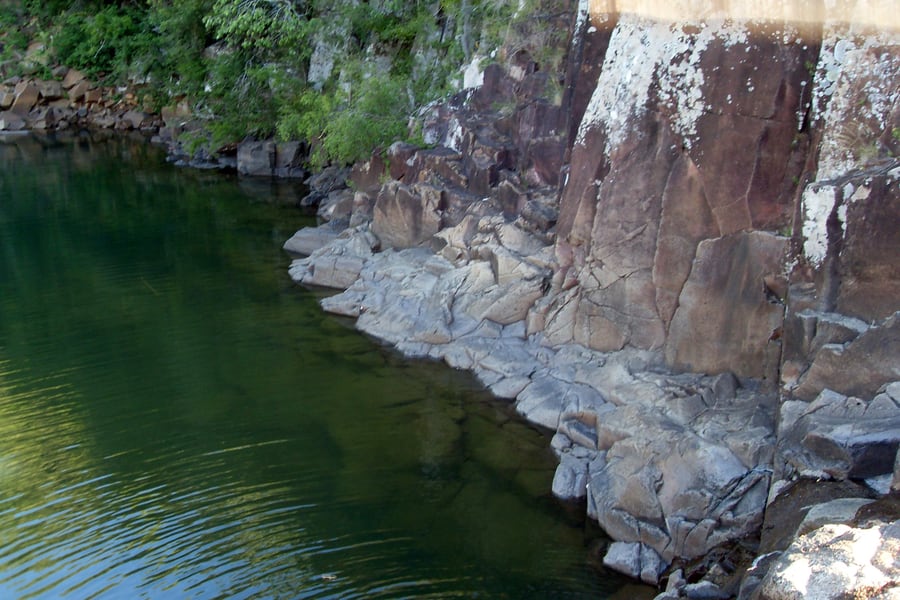 Miriam Edith Leal / Wikimedia Commons · CC BY-SA 3.0 · 2009 · cropped
Valle del Lunarejo, from Tranqueras
North-west of Tranqueras the ground breaks up into a valley of streams, waterfalls and hills above 350 metres, wooded where the water runs and grassland everywhere else. It has been a protected landscape in Uruguay's national system since 2009, and in a country people describe as flat it is the surprise. Tranqueras, an hour and twenty-five minutes out of Tacuarembó, is the stop to get off at.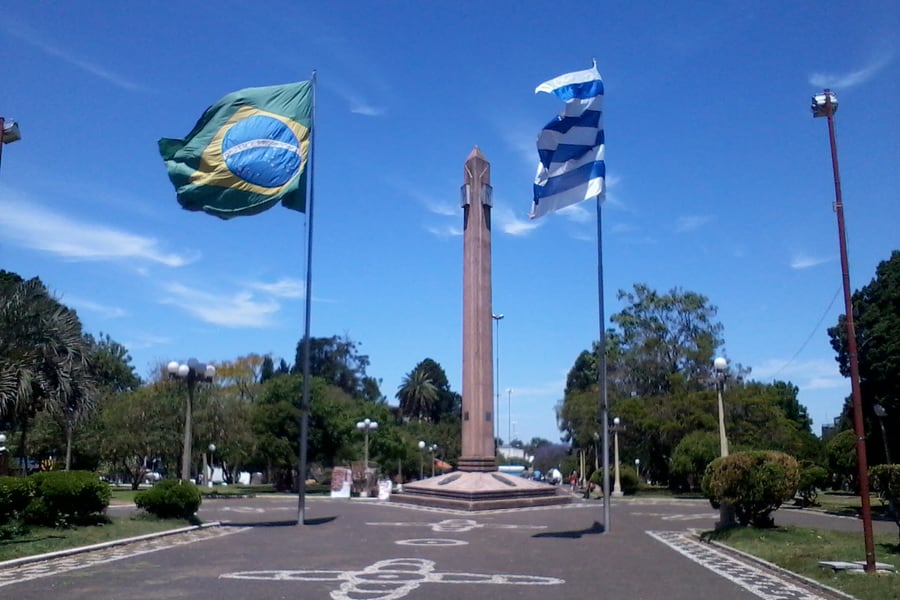 Odacir Blanco / Wikimedia Commons · CC0 · 2011 · cropped
The Plaza Internacional at Rivera
Opened on 26 February 1943, in the middle of a world war, as a monument to peace between nations — an obelisk, a fountain and two flagpoles on a plaza that lies in both countries at once. The dedication plaque is cast in Spanish and Portuguese side by side. Walk north off it and you are in Santana do Livramento; the free shops that draw half the train's passengers are on Avenida Sarandí, a few blocks away.Where to Sleep
The timetable makes this a day out and nothing else: away at 07:00, back at 18:25, with seven hours in Rivera in between. Nobody needs a bed to ride the line. What you may want a bed for is the morning before and the evening after, because the train runs on two days a week and getting to either end from anywhere else in Uruguay is a long drive up Route 5.
Tacuarembó's hotels are in the grid around the Plaza 19 de Abril, in the centre of town. Rivera's are strung along the streets behind Avenida Sarandí, close to the frontier and the free shops — and if you stay the night there, the second half of the city, and a second currency, is a walk away.
Where to stay
Tacuarembó Hotel
On 18 de Julio, in the centre of Tacuarembó
A central hotel a short walk from the plaza, with breakfast, a pool and garage parking.
Check Availability (opens in a new tab, on tacuarembohotel.com.uy)via tacuarembohotel.com.uyHotel Rivera Casino Resort
On Avenida 33 Orientales, Rivera
Sixty-six rooms with a gaming room, a spa and two pools, ten minutes from the frontier.
Check Availability (opens in a new tab, on riveracasinoresort.com)via riveracasinoresort.comQuestions or corrections
Planning this trip and stuck on something, or spotted a time, fare or detail that has changed? Send us a message about Tacuarembó to Rivera — the whole of Uruguay's passenger railway. We read every one, and we update this page when something has changed.