Taieri Gorge Railway
Mike Goren / Wikimedia Commons · CC BY 2.0 · cropped
- Distance~60 km each way
- Duration~4h 45m return
- Best seasonYear-round
Introduction
In April 2020 the company that runs this railway announced it was mothballing the line. The cruise ships had stopped, four fifths of its passengers were international, and fifty-one jobs went. The locomotives were shut in the shed, the track was left to the weather, and the obituaries were written. Five years on, the Taieri Gorge train leaves Dunedin five mornings a week and the carriages are full.
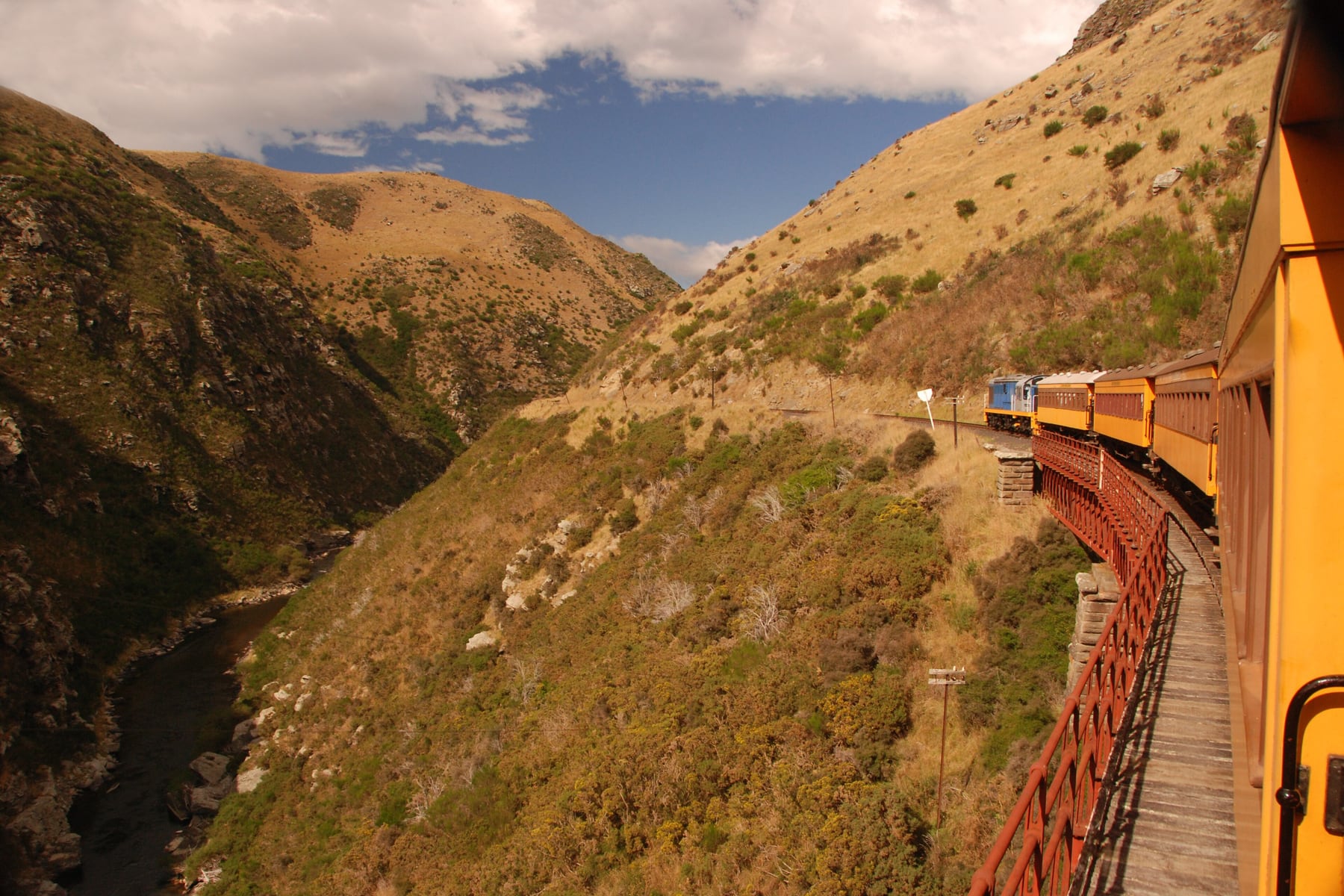
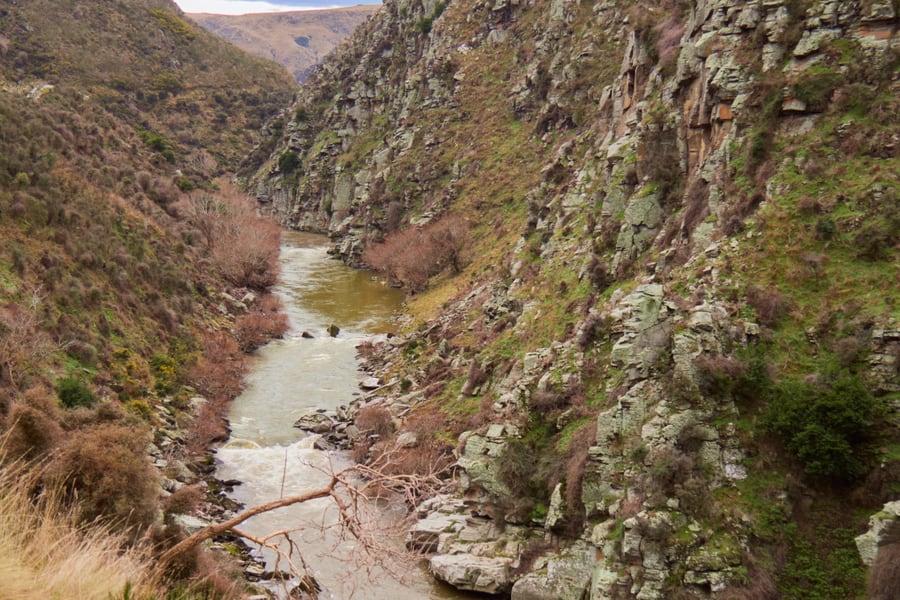
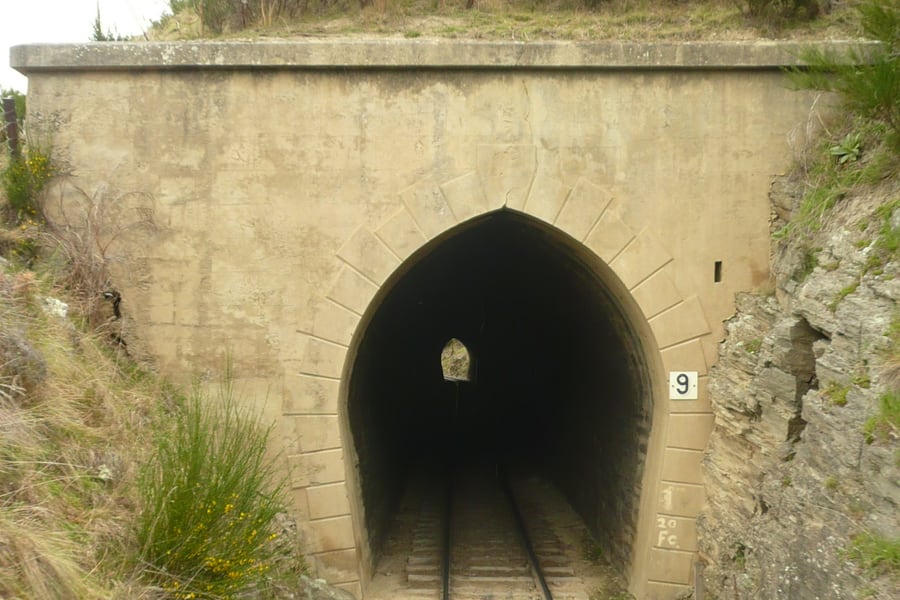
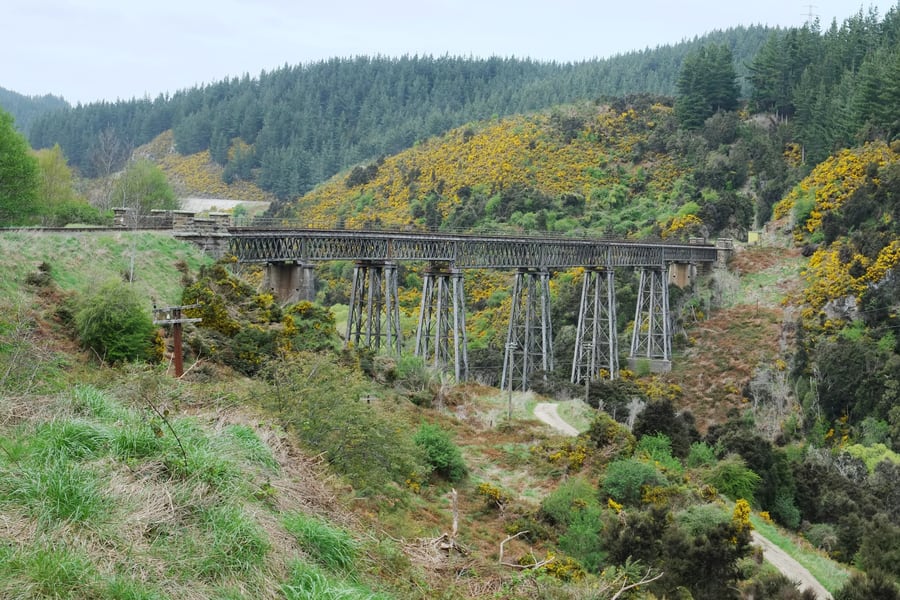
What it goes to see is a piece of Victorian engineering that ought to be better known. Beyond the suburbs the line turns off the coastal main line, climbs at 1 in 50 through the 437-metre Salisbury Tunnel, and crosses Mullocky Gully on the Wingatui Viaduct — 197 metres of riveted lattice standing 47 metres above the creek on seven stone and concrete piers, which the operator calls the tallest wrought-iron structure in Australasia. Then it drops into the Taieri Gorge itself and stays there for twenty-five kilometres: ten tunnels, a dozen viaducts, cliffs of schist, a brown river a long way down and gorse blazing yellow on every slope in spring. There is no road beside it. This is country you cannot reach any other way.
The train runs to Pukerangi, sixty-odd kilometres out, where the gorge opens onto the tussock plateau of the Strath Taieri and the wind arrives from Central Otago. It waits half an hour and comes back. On the way there is a stop at Deep Stream, weather permitting, where everyone gets off and walks the viaduct while the empty train is brought across to meet them. The carriages are New Zealand Railways stock from the 1910s to the 1930s, hauled by a DJ-class diesel built by Mitsubishi in 1968 — a locomotive with three bogies and a ten-tonne axle load, ordered precisely because branch lines like this one could not carry anything heavier.
The Journey
The train leaves Dunedin Railway Station at 9.30 in the morning and spends its first twenty minutes on KiwiRail metals, running south across the Taieri Plain past the racecourse to Wingatui, where the 1914 station building and its signal box still stand and have been restored. Wingatui is the junction. The Otago Central line turns inland here, and four kilometres on, at a concrete peg beside the track, the national network ends and the operator's own railway begins.
What follows immediately is the hardest climbing on the trip. The line swings round a horseshoe curve at the foot of the Salisbury bank and starts up at 1 in 50, gaining height against the side of the hill until it reaches the summit of the climb at about 145 metres and disappears into the Salisbury Tunnel — at 437 metres the longest of the ten. A second, shorter tunnel follows, and then the train comes out onto the Wingatui Viaduct, high enough over Mullocky Gully that the creek is barely a glint and the eight spans read as a single thin line of ironwork.
Into the gorge
Past the viaduct the route joins the Taieri Gorge proper and stays in it for twenty-five kilometres, crossing sixteen significant bridges and threading ten tunnels on a shelf cut into schist. Where the rock would not allow a straight span the builders curved the viaduct instead: Christmas Creek and Flat Stream are both bent to the line, which is a strange thing to stand on and a stranger thing to photograph. The river below is the Taieri, New Zealand's fourth-longest, and for most of this stretch it is the only other thing moving.
Hindon, roughly halfway, is still a crossing loop, a shed and a nameboard. Just before it the railway shares a single-lane bridge with Hindon Road — road deck and rails on the same structure, a level crossing stretched over a river. Beyond Hindon comes Deep Stream, where the train stops and the passengers get off to walk out onto the viaduct on a boarded footway while the empty carriages are run across towards them. It is the picture everyone comes home with, and it is weather-dependent: on a bad day the train keeps going.
Out at Pukerangi
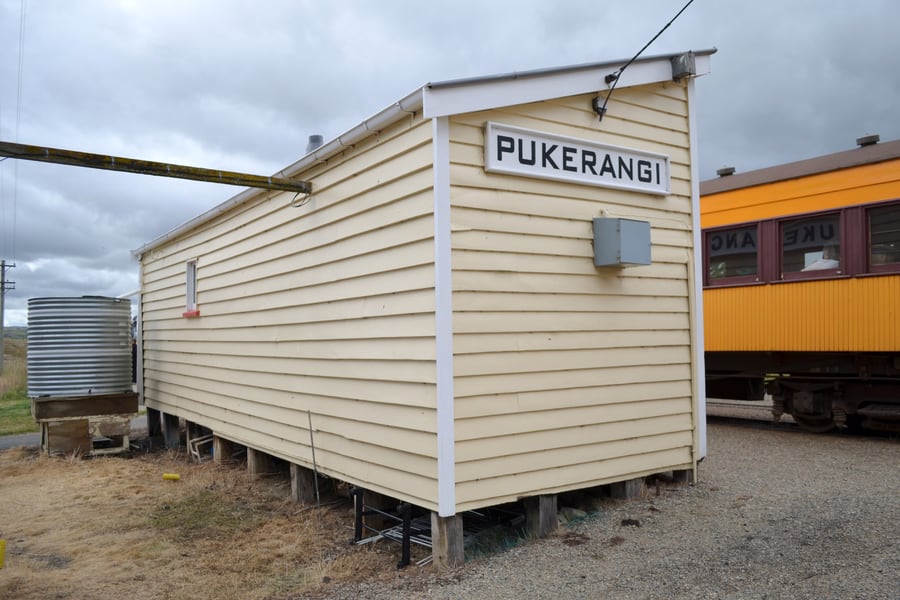
The last section climbs steadily away from the water through The Notches, a run of short bridges and cuttings blasted through a series of rock ribs where there was no room for anything else. Then the walls fall away, the gorse gives out, and the train runs into open tussock country at Pukerangi — 254 metres up, a wooden shelter, a passing loop, a bare hill and nothing else. It is the end of the passenger railway: the rails go on to Middlemarch, but no train has carried anyone past this point since January 2020. The locomotive runs round to the other end, there is half an hour to stretch in the wind, and at noon it starts back down. Coming home the light is behind you and the gorge looks like a different place; the same viaducts read as drops rather than as bridges. You are back at the station in Dunedin at quarter past two.
Along the route
 Pseudopanax / Wikimedia Commons · Public domain · cropped
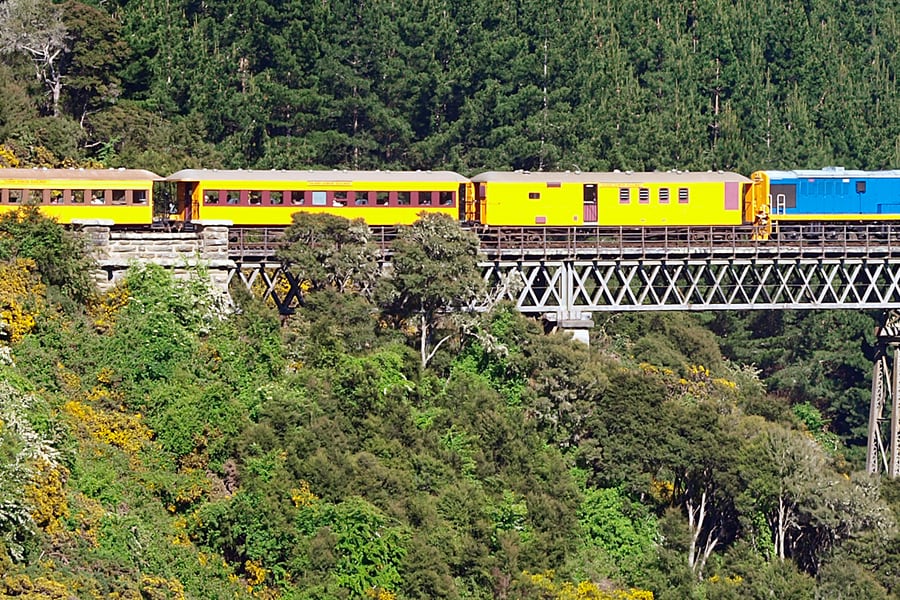
Salisbury bank and the Wingatui Viaduct
The train climbs a horseshoe curve at 1 in 50, tops out around 145 m in the 437-metre Salisbury Tunnel — the longest on the line — and comes straight out onto 197 metres of riveted lattice standing 47 metres over Mullocky Gully on seven piers.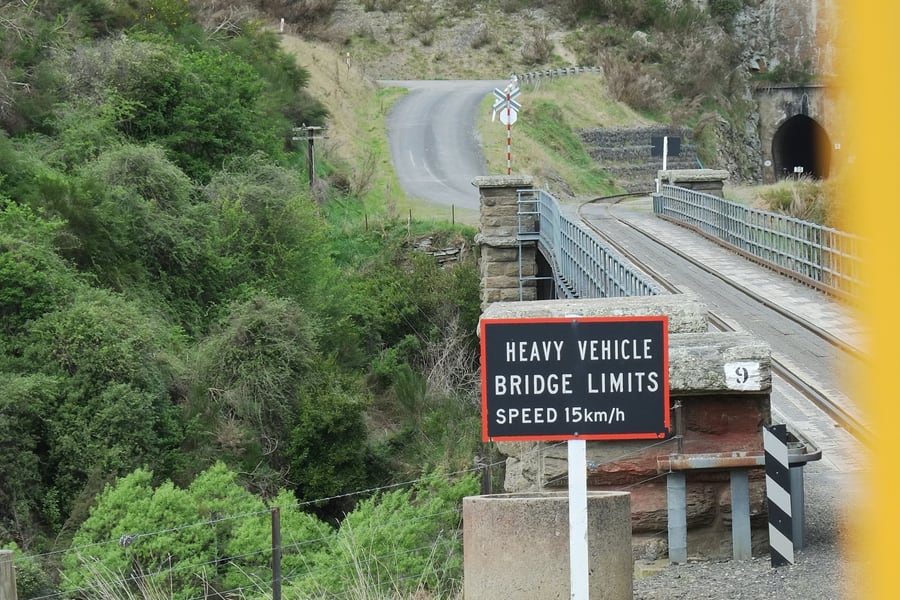 Pseudopanax / Wikimedia Commons · Public domain · cropped
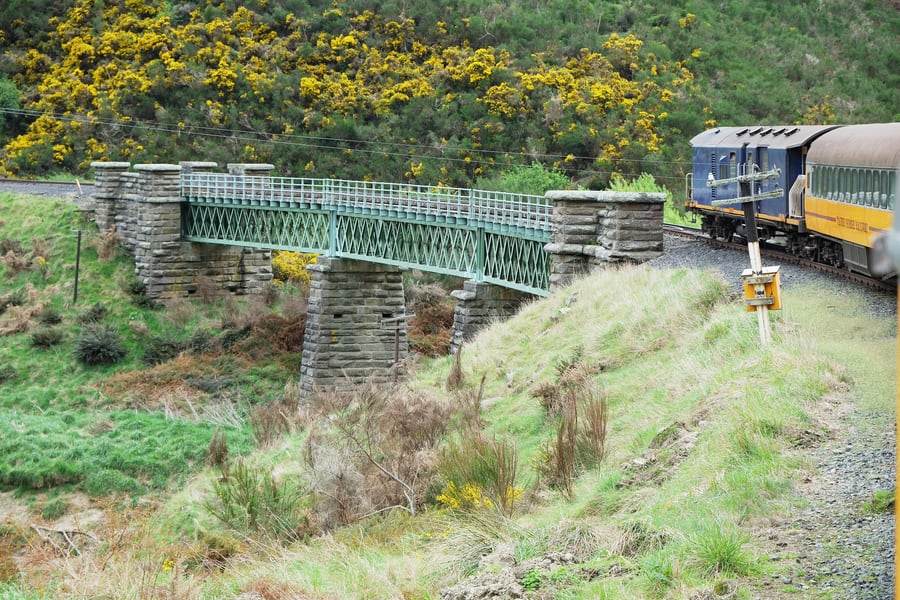
Hindon, and a bridge shared with a road
Halfway, and still a crossing loop. Just short of the station the railway runs onto a single-lane bridge it shares with Hindon Road — rails and road deck on one structure, a level crossing stretched out over the Taieri.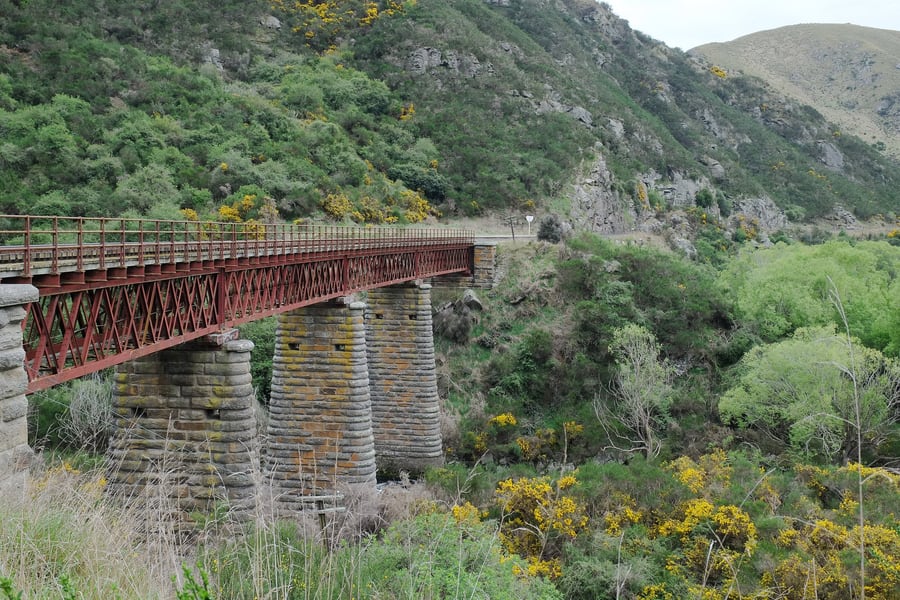 Pseudopanax / Wikimedia Commons · Public domain · cropped
Deep Stream, where you get off
The train stops and empties. Passengers walk out along the boarded footway on the Deep Stream viaduct while the empty carriages are run across towards them — the one photograph everybody comes home with. Weather permitting.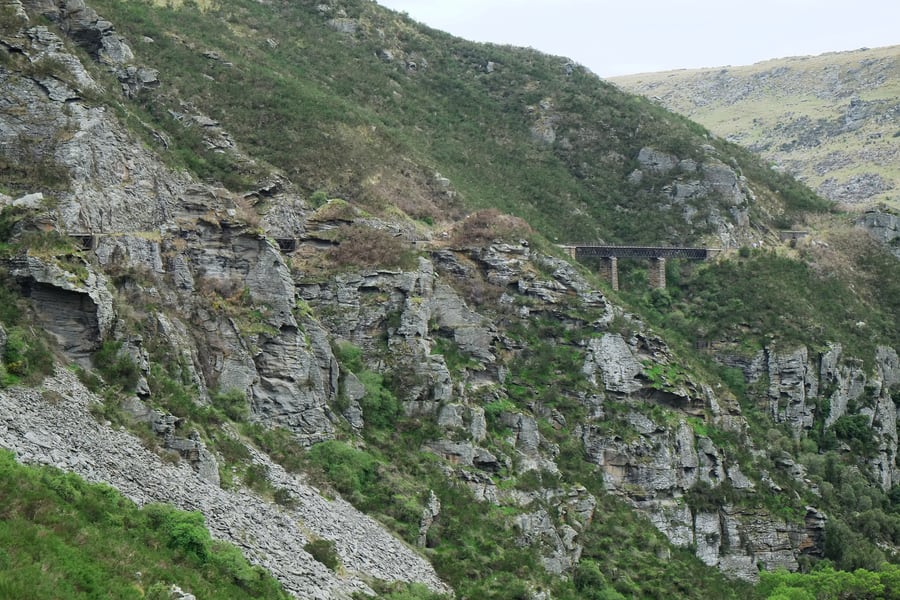 Pseudopanax / Wikimedia Commons · Public domain · cropped
The Notches
The last climb out of the gorge runs through a series of rock ribs where there was no room to go round: three short bridges and a run of cuttings blasted straight through the schist, one after another, with the river dropping away below.A bit of history
Culture & experiences along the way
 Lynxano / Wikimedia Commons · CC BY 4.0 · cropped
Gingerbread George's booking hall
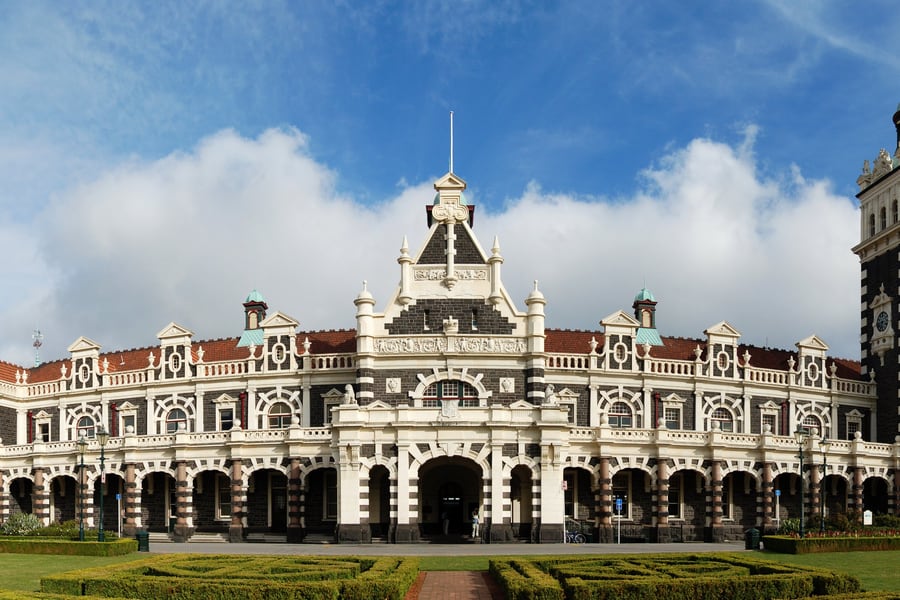
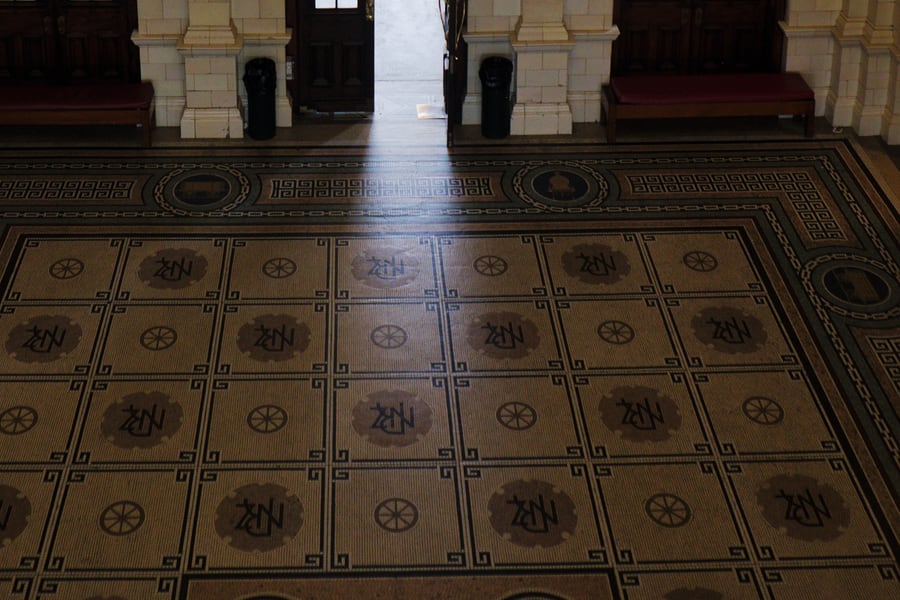
The station you leave from opened on 12 November 1906, cost £40,000 and is reputed to be the most photographed building in New Zealand. Its architect, George Troup, drew it in Flemish Renaissance and was nicknamed Gingerbread George for it. The booking-hall floor is a mosaic of nearly 750,000 Minton tiles laid as a locomotive, wheels and the NZR monogram.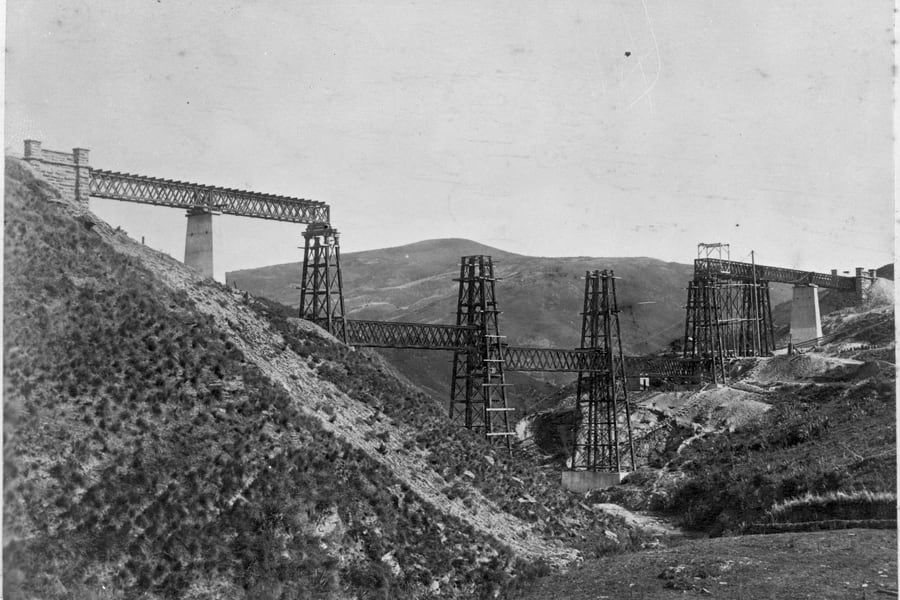 Albert Percy Godber · Godber Collection, Alexander Turnbull Library / Wikimedia Commons · Public domain · cropped
Forty-four years to Cromwell
The push for a railway into the interior came out of the 1860s Otago gold rush, and it then took until 11 July 1921 to reach Cromwell — 236 kilometres begun in 1877, with the viaducts and tunnels of the gorge alone consuming the first dozen years. By the time the rails arrived the goldfields had long since emptied.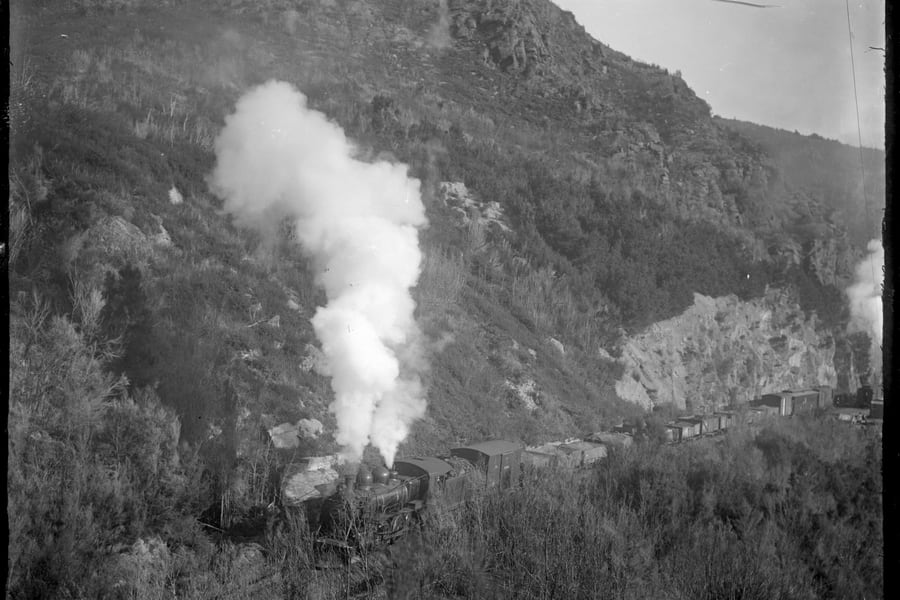 Albert Percy Godber · Godber Collection, Alexander Turnbull Library / Wikimedia Commons · Public domain · cropped
What the line was really for
Not tourists: wool, stock, fruit, coal and dredging gear, and at the end the concrete and steel for the Clyde Dam. That traffic is the only reason this branch outlived almost every other in the South Island — and when the dam was finished, New Zealand Railways closed the line within months.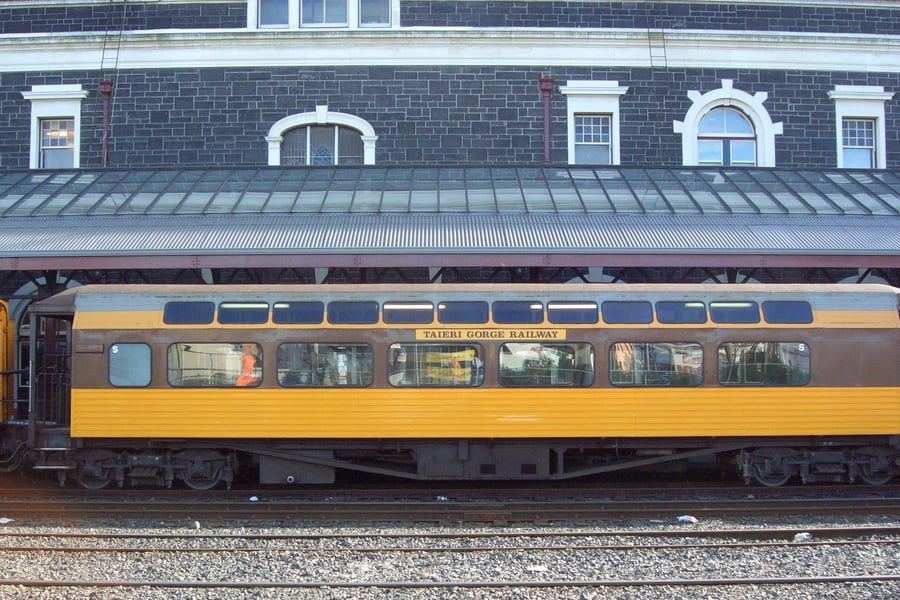 Nankai / Wikimedia Commons · CC BY-SA 3.0 · cropped
A storyteller and a café called Precinct
There is no recorded commentary. A guide talks the length of the gorge — the people, the gold, the engineering — and the café car is run by Precinct, a Dunedin kitchen, which makes the seasonal, locally sourced food sold on board. No wi-fi, barely any signal, and a toilet in every carriage.Timetables
One train a day, five days a week, all year round. It leaves Dunedin at 9.30am on Thursdays, Fridays, Saturdays, Sundays and Mondays, and does not run on Tuesdays or Wednesdays. There is no second departure and no evening service.
| Outward | Return | |
|---|---|---|
| Dunedin | dep 09:30 | arr 14:15 |
| Wingatui | pick-up on request | — |
| Deep Stream | photo stop · weather permitting | — |
| Pukerangi | arr 11:35 | dep 12:00 |
The full return trip is 4h 45m; the operator rounds it to five hours. Each single leg is about two hours and five minutes.
Good to know:
- Check-in opens 60 minutes before departure and closes 15 minutes before it. Seating is allocated and printed on your ticket, and you collect your confirmed seat at the ticket desk in the station foyer before boarding. Arriving half an hour early is the operator's own advice.
- You can board at Wingatui instead of Dunedin. If you choose that, wait on the platform for the time shown on your ticket rather than at the main station.
- Tuesday and Wednesday are blank, not seasonal. We swept the operator's booking system a day at a time from 8 September through to mid-October 2026: every Thursday to Monday had a 09:30 departure, both midweek days had nothing, and one extra Wednesday appeared in early October. Special services — the Taieri Gorge Stargazer, which is taking waitlist registrations for 2027, and cruise-ship excursions — are sold separately and do not follow this pattern.
- The trains run in all weather, and the operator says so plainly; only the Deep Stream stop-over depends on conditions. Carriages are heated and air-conditioned, every one has a toilet, and there is no wi-fi and patchy mobile coverage in the gorge.
- One-way is a real option. The 09:30 out and the 12:00 back are sold separately, so you can ride in, meet a shuttle or a bike tour at Pukerangi and carry on to Middlemarch, Clyde or Queenstown — or do the reverse and rejoin the train at Pukerangi at noon after cycling the Otago Central Rail Trail. Check-in at Pukerangi is with the guard between 11.35 and 11.55am.
Times and running days as of September 2026, taken from Dunedin Railway Station's own published schedule and verified departure by departure in its live booking system. Confirm before travelling at dunedinrailways.co.nz (opens in a new tab).
Tickets
Dunedin Railway Station sells this train direct, online or across the counter in the station foyer, and there is one class of travel. A return adult fare was NZD 169 and a child NZD 59 when we checked the operator's booking system in September 2026; a single leg, either direction, was NZD 129 and NZD 49. Infants under three travel free on an adult booking.
Bicycles are carried, but only ten per train, so book the bike when you book the seat. Otago residents pay a lower locals' rate and show proof of address at check-in. Refunds run on a sliding scale — full at 21 days, half at seven, an exchange at 48 hours — and none at all on charters.
Book your tickets
Return to Pukerangi
The full five-hour trip
Out through the gorge, half an hour at Pukerangi and back down in the afternoon light.
Book Tickets (opens in a new tab, on Dunedin Railway Station)via Dunedin Railway StationOne way
Dunedin → Pukerangi, or back
Two hours in one direction, sold separately so the train can be one leg of a longer trip inland.
Book Tickets (opens in a new tab, on Dunedin Railway Station)via Dunedin Railway StationFamily return
Two adults and two children
Sold as one fare rather than four, with a five-person version for larger families.
Book Tickets (opens in a new tab, on Dunedin Railway Station)via Dunedin Railway StationRail Passes
No rail pass covers this train, and none is worth chasing. Interrail and Eurail are European products with no validity anywhere in New Zealand. KiwiRail's Great Journeys brand has in the past sold a multi-trip Scenic Rail Pass for its own three scenic trains and the Interislander ferry, but that pass has never applied here: the Taieri Gorge is run by a different operator on a different railway — a Dunedin City Council company that owns its own line from North Taieri to Middlemarch — and its tickets are sold only through its own booking system.
There are two ways to pay less. Otago residents get a locals' rate on every standard journey, including this one, if they live in Dunedin City, Waitaki, Clutha, Central Otago or Queenstown-Lakes and can show an address at check-in. Everyone else should look at the one-way fare and what it connects to: the operator sells the leg to Pukerangi alongside a small-group minivan run through Central Otago to Queenstown, and bike-tour operators based in Middlemarch will shuttle riders to and from the Pukerangi stop for the Otago Central Rail Trail. Treated as a through journey inland rather than as a day excursion, the single ticket is the one that earns its money.
Checked against dunedinrailways.co.nz in September 2026.
Places to Visit
The Taieri Gorge is a day trip, which means Dunedin is where you actually stay — and Dunedin is a small city with an unusually large collection of things worth a morning. It was founded in 1848 by Free Church of Scotland settlers who named it after Edinburgh, then made rich by the Otago gold rush of the 1860s, and the money went into stone: a university, a castle, a station and a museum that all outsize the population that paid for them. The Otago Peninsula runs twenty kilometres north-east from the city centre and carries wildlife you would normally have to reach by boat.
Inland, the far end of the line opens onto the Strath Taieri and the Maniototo, which is dry, treeless, bright country of a kind that exists nowhere else in New Zealand — and is now crossed by a cycle trail laid on the rails this train once ran on.
 Alan & Flora Botting / Wikimedia Commons · CC BY-SA 2.0 · cropped
Toitū Otago Settlers Museum
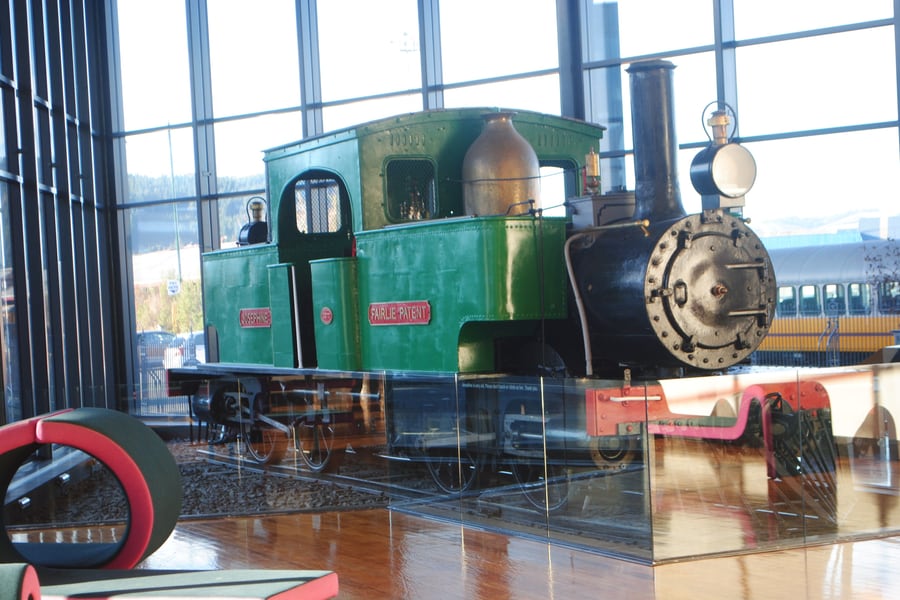
New Zealand's oldest history museum, free to enter, and two minutes' walk from the departure platform. Its centrepiece is Josephine — a double-Fairlie locomotive assembled on the wharf at Port Chalmers in 1872 for the country's first 3 ft 6 in railway, and later put to work building the very line this train runs on. Sold for scrap in 1917 and rescued in 1926, she is believed to be the first locomotive anyone in New Zealand thought to preserve.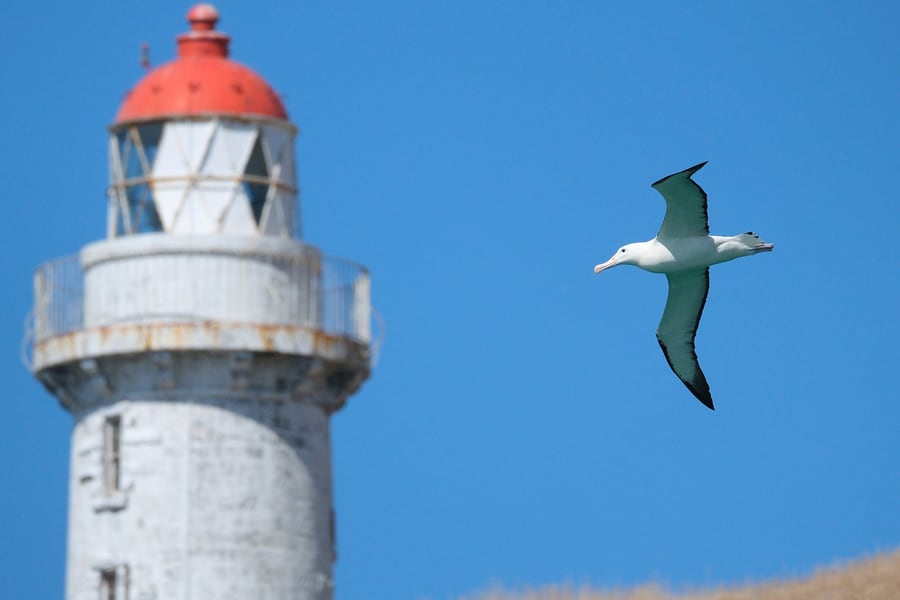 Pseudopanax / Wikimedia Commons · Public domain · cropped
Taiaroa Head
The only mainland breeding colony of any albatross in the world sits on a headland at the mouth of Otago Harbour, where over a hundred northern royal albatrosses nest under the 1864 lighthouse. The first egg was found in 1919; the first chick fledged in 1938. The Department of Conservation manages the reserve and the Otago Peninsula Trust runs the tours — you cannot simply walk in. Little penguins come ashore at Pilots Beach below.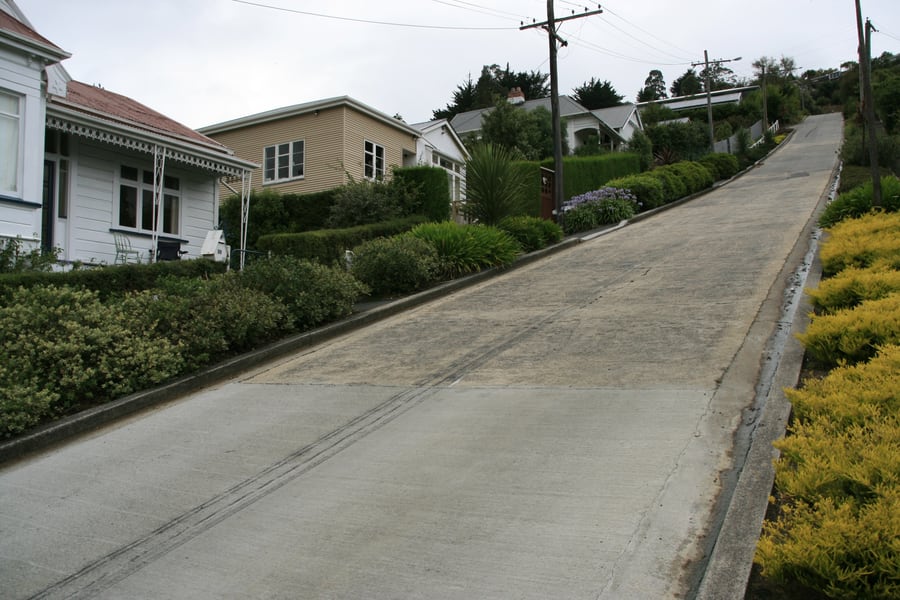 Mark Oliver Dittrich / Wikimedia Commons · Public domain · cropped
Baldwin Street
Guinness World Records calls it the steepest street in the world, which it defines precisely: no street anywhere gains more height in ten horizontal metres along its centreline. It is a perfectly ordinary suburban road with houses and hedges on both sides, which is what makes standing at the bottom of it so strange — and it is only 3.5 km from the middle of Dunedin, in the suburb of North East Valley.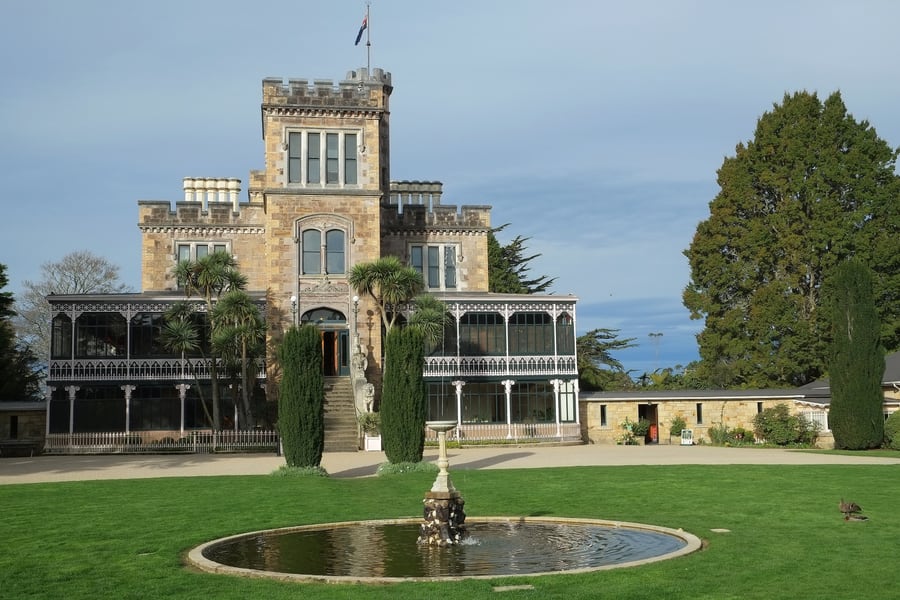 Pseudopanax / Wikimedia Commons · Public domain · cropped
Larnach Castle
Marketed as New Zealand's only castle, and closer to the truth a very rich man's house: the merchant and politician William Larnach began building it on the peninsula ridge in 1871 out of Italian marble, Marseilles cobbles, Glasgow brick, Oamaru stone, Catlins timber and kauri, and died by suicide in Parliament Buildings in October 1898. The Barker family bought the derelict house in 1967 and have been restoring it and retrieving its original furniture ever since. Cat Burston / Wikimedia Commons · CC BY 2.0 · cropped
The Otago Central Rail Trail
When the rails came up beyond Middlemarch in 1991 the formation was handed to the Department of Conservation, and what it became was the first rail trail in New Zealand and the model for every one since: 150 kilometres of easy gradients, viaducts and tunnels from Middlemarch to Clyde, through the Maniototo and the Ida Valley. Riders take three to five days. The train will carry your bike as far as Pukerangi.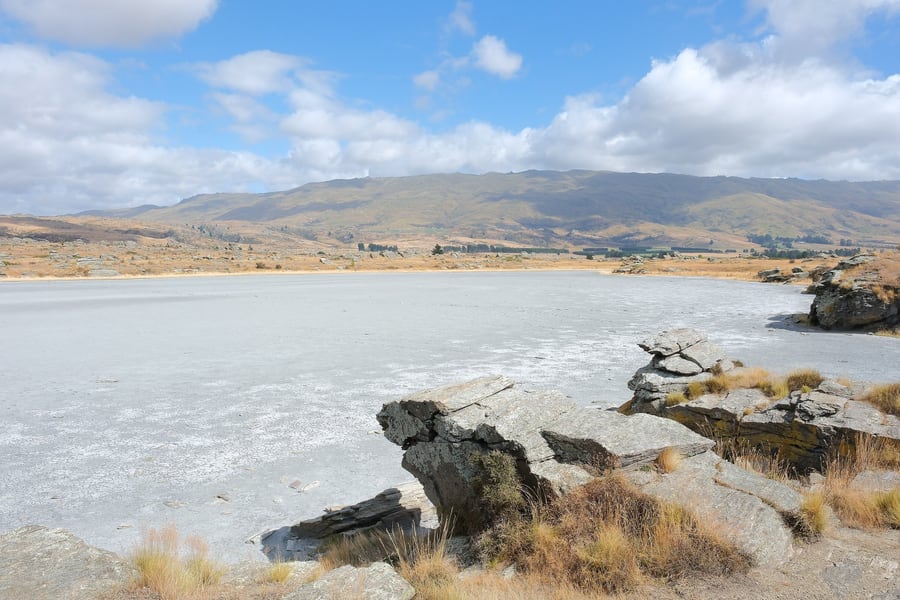 Pseudopanax / Wikimedia Commons · Public domain · cropped
Sutton Salt Lake
New Zealand's only inland salt lake, a two-hectare hollow among weathered schist tors ten kilometres west of Sutton. Nothing feeds it but rain and nothing drains it, so the salt that blows in off a coast fifty kilometres away has been concentrating for twenty thousand years of filling and drying. In a dry summer the lake vanishes and the bed cracks white. A loop track runs round it from the road.Where to Sleep
The train starts and finishes at the same platform, so a bed in central Dunedin covers both ends of the day — and check-in opens an hour before a 9.30am departure, which is an argument for staying within walking distance of Anzac Avenue rather than out on the peninsula. Parking around the station is pay-and-display and free on Sundays.
If you are riding one way and carrying on inland, the useful bed is at the other end: Pukerangi has nothing at all, and the settlement that serves it is Middlemarch, nineteen kilometres further on at the start of the Otago Central Rail Trail, reached by shuttle or by bike.
Where to stay
Distinction Dunedin Hotel
6 Liverpool Street, in the Warehouse Precinct
One hundred and twenty-seven rooms and suites inside the 1937 former Chief Post Office, whose strongroom vaults are now private dining rooms.
Check Availability (opens in a new tab, on distinctionhotelsdunedin.co.nz)via distinctionhotelsdunedin.co.nzBluestone on George
571 George Street, Dunedin
A privately owned boutique house of studio apartments, each with its own balcony or patio looking over the city towards the peninsula.
Check Availability (opens in a new tab, on bluestonedunedin.co.nz)via bluestonedunedin.co.nzMiddlemarch Motels & Holiday Park
Middlemarch, at the start of the Rail Trail
Motel units, cabins and camping two hundred metres from the head of the Otago Central Rail Trail, for riders coming off the one-way train.
Check Availability (opens in a new tab, on middlemarchholidaypark.co.nz)via middlemarchholidaypark.co.nzQuestions or corrections
Planning this trip and stuck on something, or spotted a time, fare or detail that has changed? Send us a message about Taieri Gorge Railway. We read every one, and we update this page when something has changed.