The Tamar Valley Line
Kicior99 / Wikimedia Commons · CC BY 3.0
- Distance14 miles (23 km) · single track
- DurationAbout 45 minutes each way
- Best seasonAll year, seven days a week
Introduction
The Tamar Valley Line runs 14 miles from Plymouth to Gunnislake, on a single track that follows the River Tamar north out of the city, across the estuary of the Tavy and up the valley that divides Devon from Cornwall. Great Western Railway's two-car diesel trains take about 45 minutes and run roughly every two hours, seven days a week.
Most of the line was built as something grander. Its southern half opened in 1890 on the main line that gave the London and South Western Railway its own way into Plymouth, and the stretch to Gunnislake was added in 1908 as a branch to the mining country. When the main line closed in 1968 the branch survived, because the roads around the valley were so poor, and trains still stop at the old junction of Bere Alston while the driver changes ends.
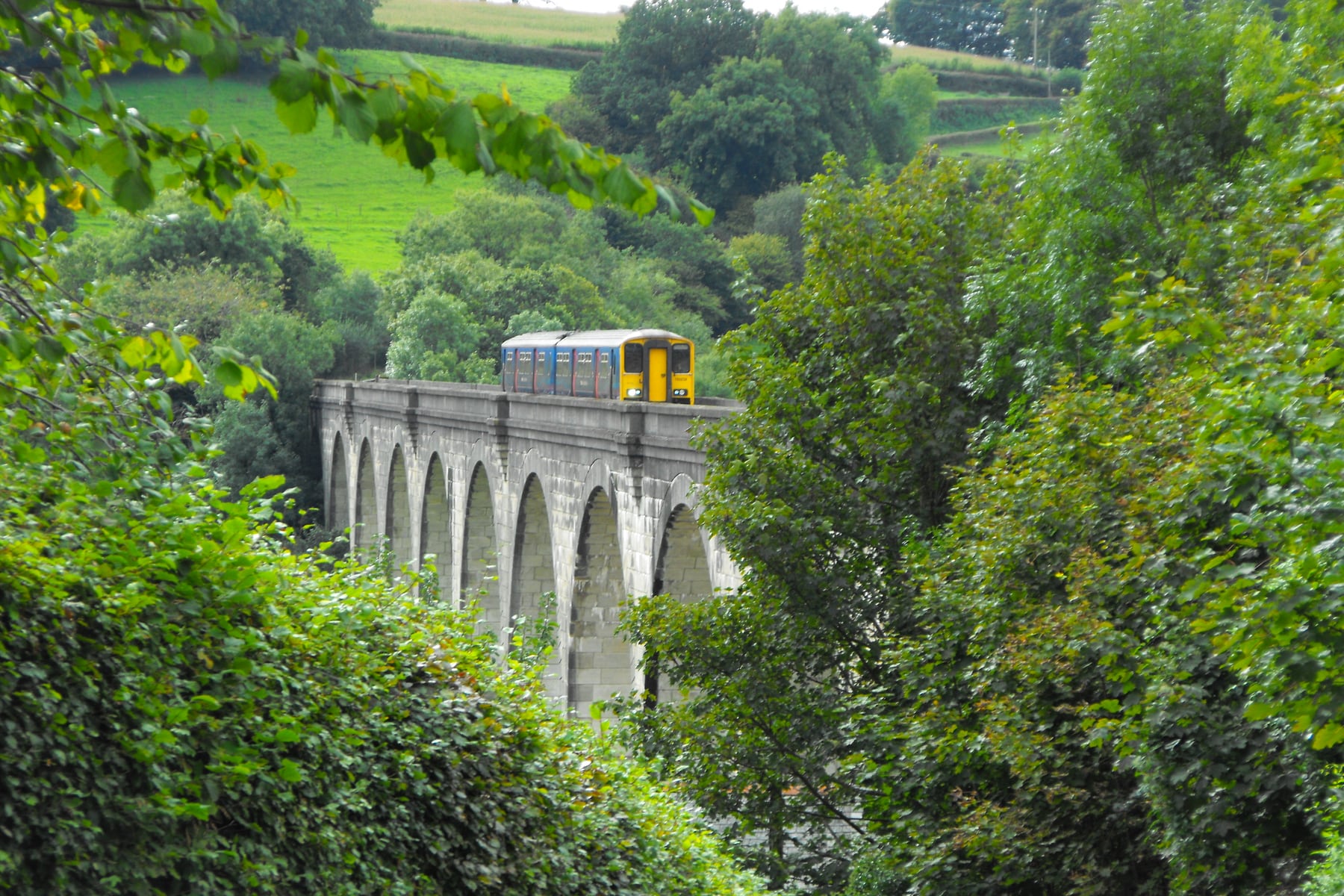
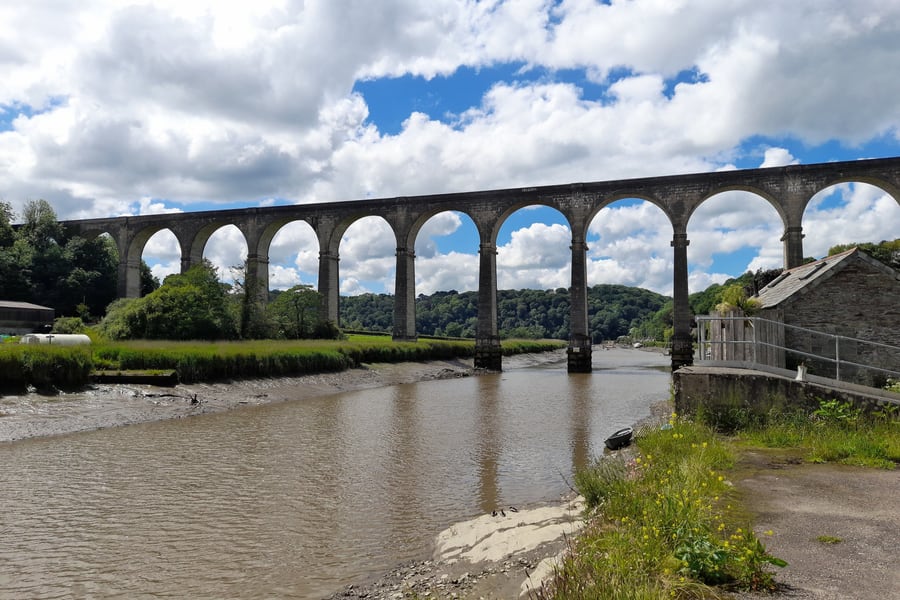
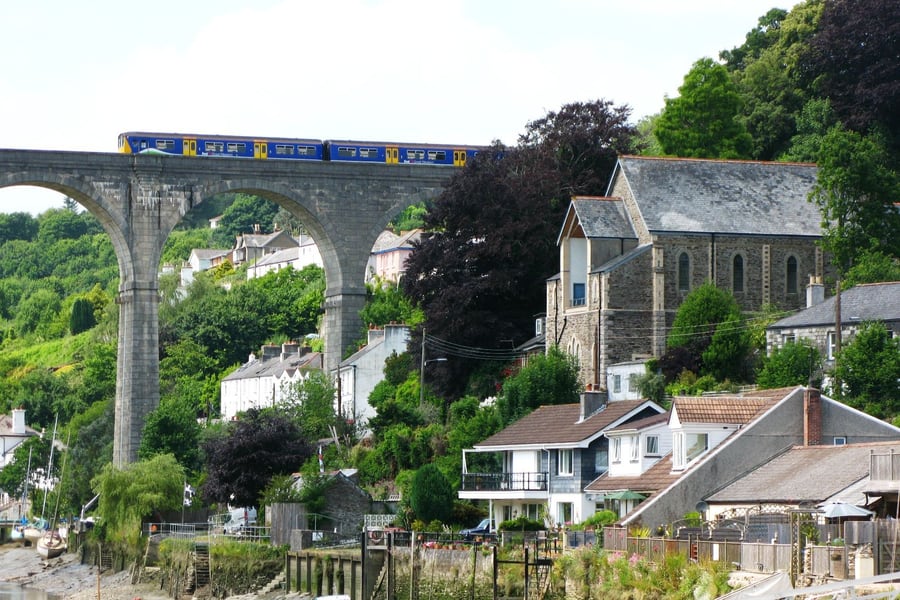
The reason to ride it is the last few miles. From Bere Alston the line swings down to the Tamar and crosses into Cornwall on Calstock Viaduct, twelve arches of concrete blocks 120 feet above the river, with the village of Calstock and its quays directly below.
The Journey
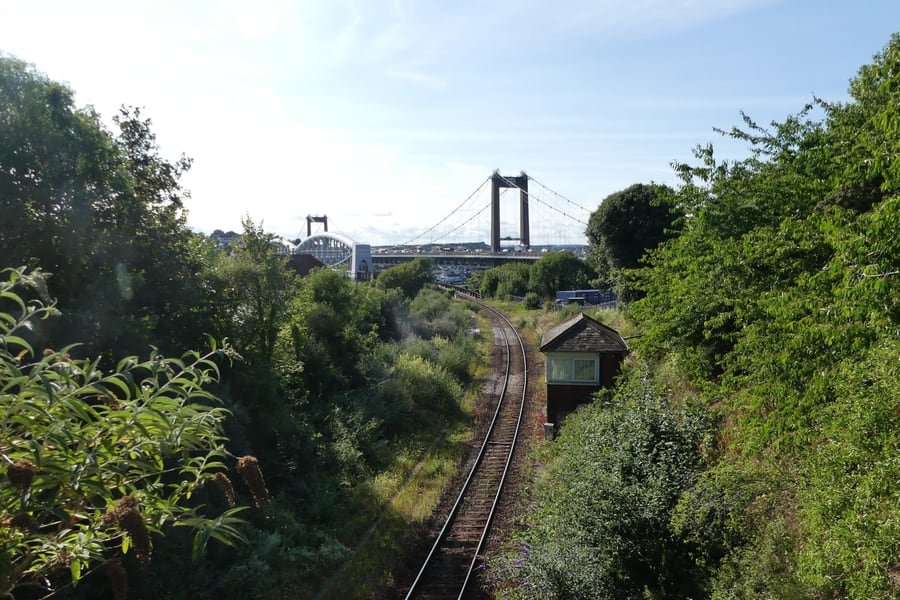
Trains for Gunnislake leave from Plymouth station and run west through the city's suburbs, calling at Devonport, Dockyard and Keyham. At St Budeaux the single line passes beneath the Royal Albert Bridge and the Tamar road bridge and heads north up the Devon side of the Tamar.
Past the edge of the city the line crosses the mouth of the River Tavy on a long iron bridge and reaches Bere Ferrers, a village on the peninsula between the two rivers. At Bere Alston the train reverses: the line ahead to Tavistock and Okehampton has been gone since 1968, so the driver walks to the other end and takes the branch back down towards the Tamar.
The descent ends on Calstock Viaduct. For a few seconds the train is high above the tidal river, with Calstock's cottages and quays below on the Cornish side and the woods of Cotehele downstream. It calls at Calstock, at the end of the viaduct, then runs the last three miles through old mining country to Gunnislake, the terminus since 1966.
The trains
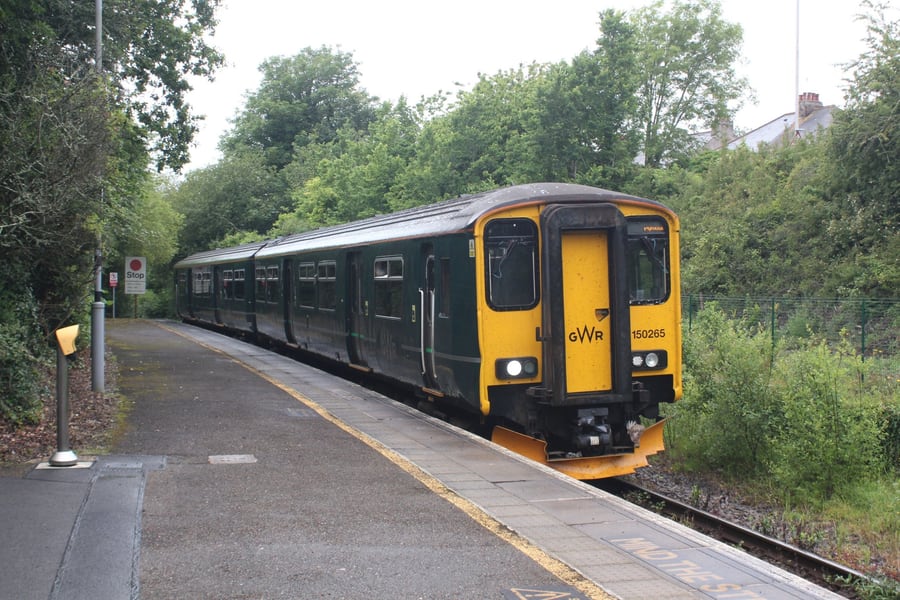
The line is worked by Class 150 diesel units, built by British Rail Engineering at York between 1984 and 1987 and known as Sprinters. GWR runs them as two-car trains on its Devon branch lines and on the Tamar Valley Line, which is single track throughout with only one train allowed on the branch at a time.
Along the route
 Ruth Sharville / Geograph · CC BY-SA 2.0
Under the Tamar bridges
Past Keyham the single line runs north to St Budeaux and passes beneath Brunel's Royal Albert Bridge and the Tamar road bridge beside it. At St Budeaux Victoria Road the driver collects the train staff that allows one train at a time onto the branch.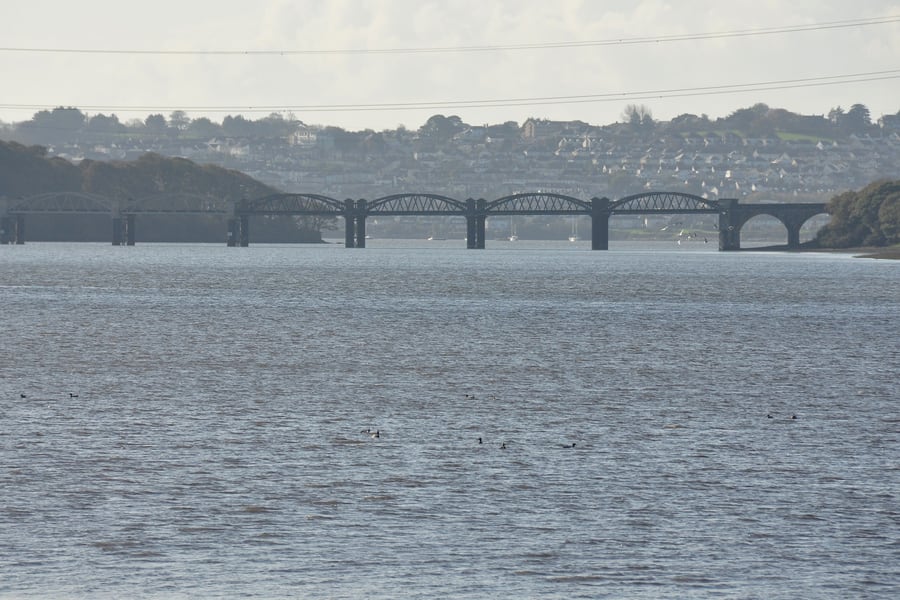 Nilfanion / Wikimedia Commons · CC BY-SA 3.0
Over the Tavy
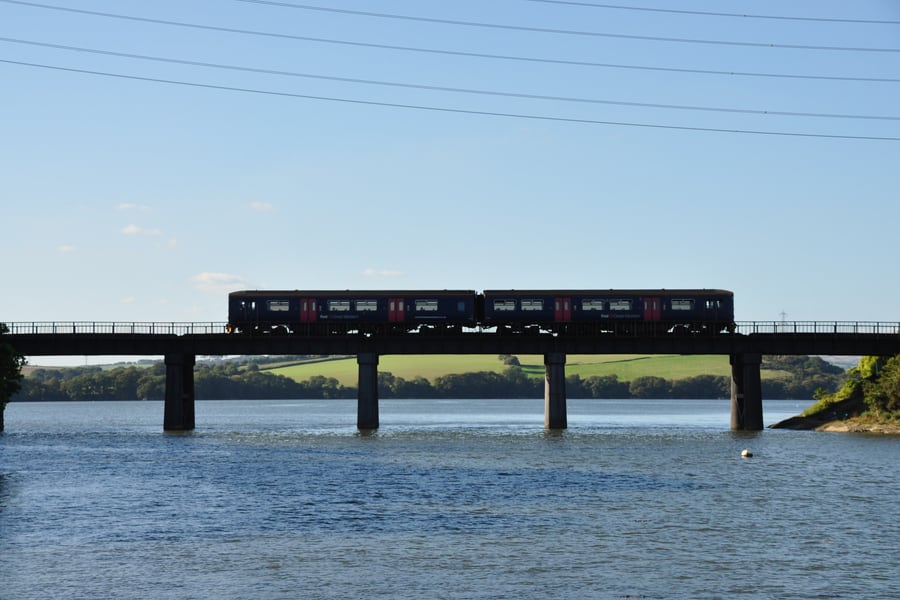
Before Bere Ferrers the line crosses the mouth of the River Tavy on a 453-metre bridge of iron bowstring girders, built for the main line in 1890, with open estuary water on either side.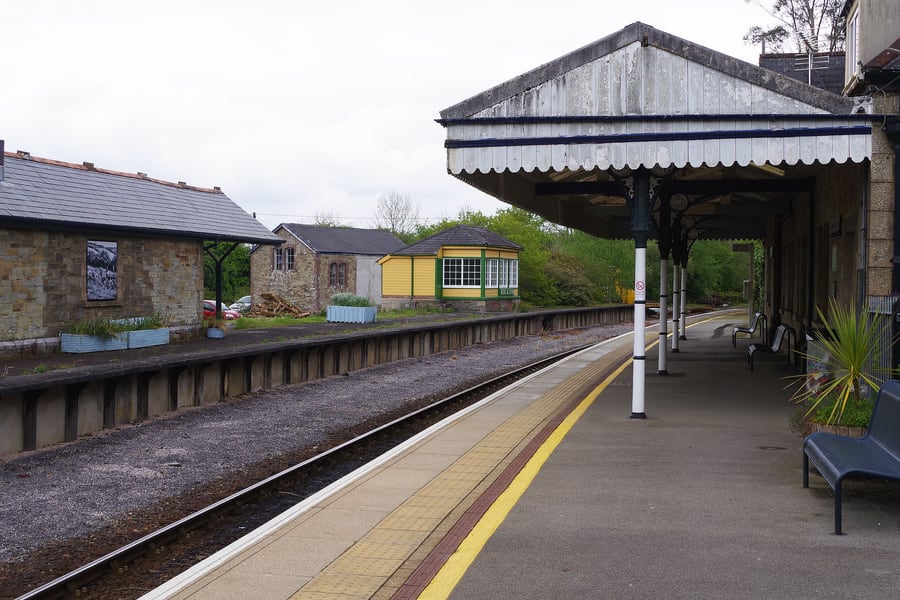 Stephen McKay / Geograph · CC BY-SA 2.0
Reversing at Bere Alston
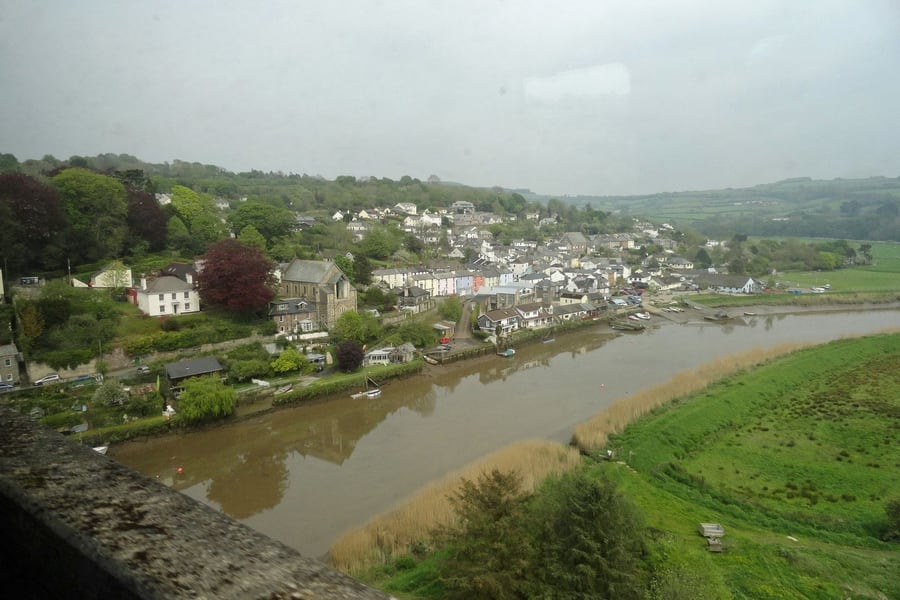
Bere Alston was a junction on the old main line to London Waterloo. That line north to Okehampton closed in 1968, so the train now stops here and the driver changes ends before setting off on the branch to Calstock.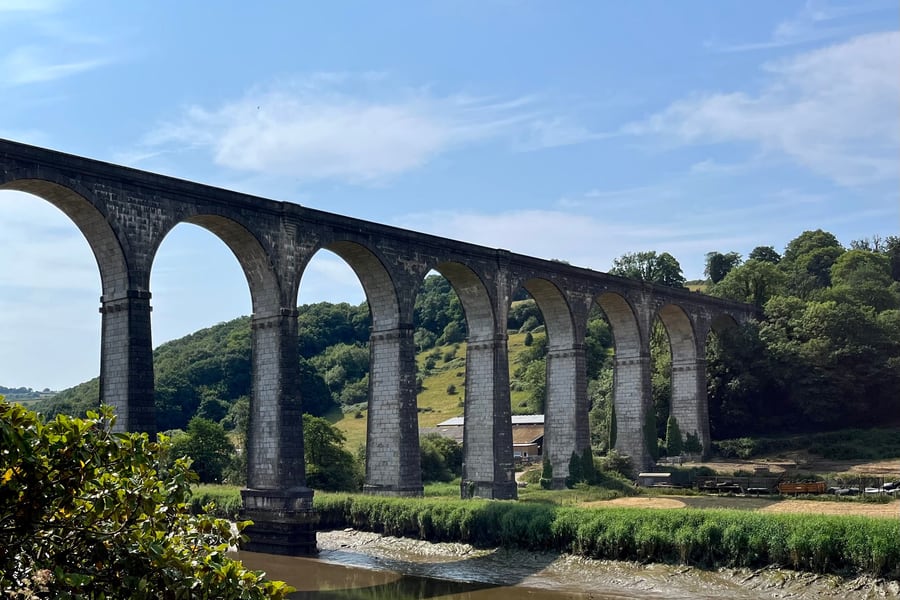 Jimtwister / Wikimedia Commons · CC BY-SA 4.0
Calstock Viaduct
The train crosses into Cornwall 120 feet above the river on twelve arches, built between 1904 and 1907 from 11,148 concrete blocks cast on the Devon bank. Calstock station is at the Cornish end of the viaduct.A bit of history
Culture & experiences along the way
 William Davies / Wikimedia Commons · CC0
The Tamar Belle
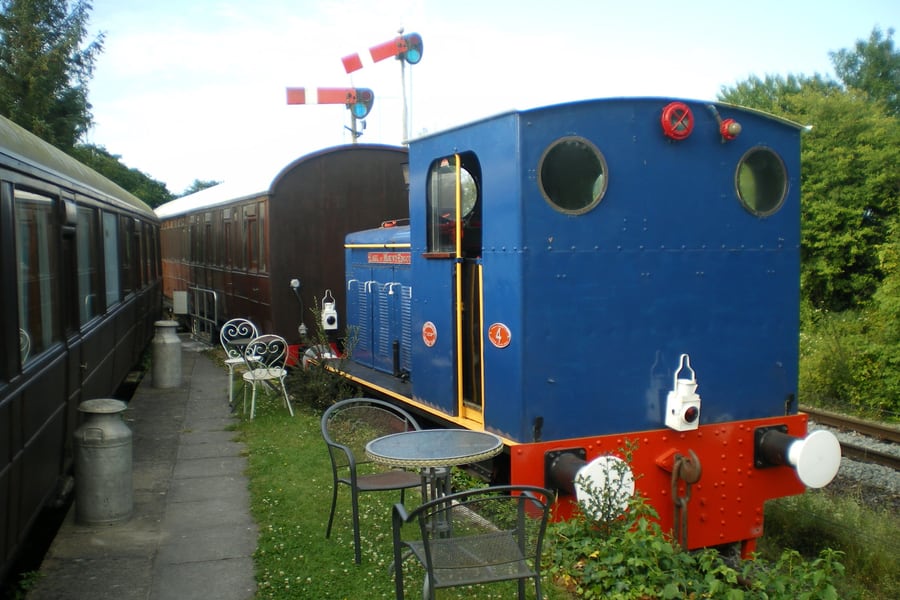
In the sidings at Bere Ferrers station, the Tamar Belle keeps a heritage centre with a signal box rescued complete, a dining car of 1958 and teak sleeping carriages from the 1930s that you can stay in. Cream teas are served on most days; telephone before you go.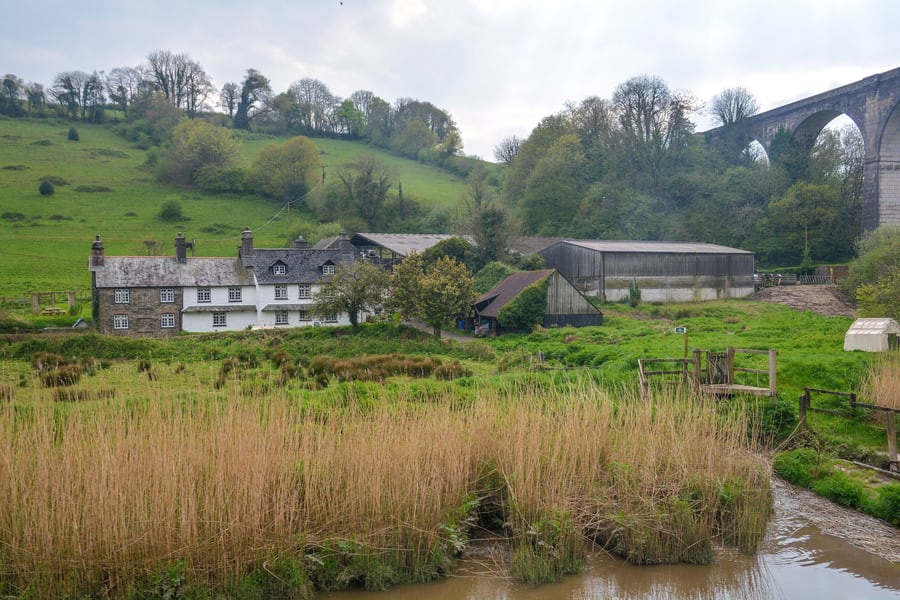 Lewis Clarke / Geograph · CC BY-SA 2.0
The Calstock ferry
A small solar-powered ferry works from the village pontoon across to Ferry Farm on the Devon bank and down the river to Cotehele Quay. It runs on call for about three hours either side of high tide, so check the times before relying on it to get back.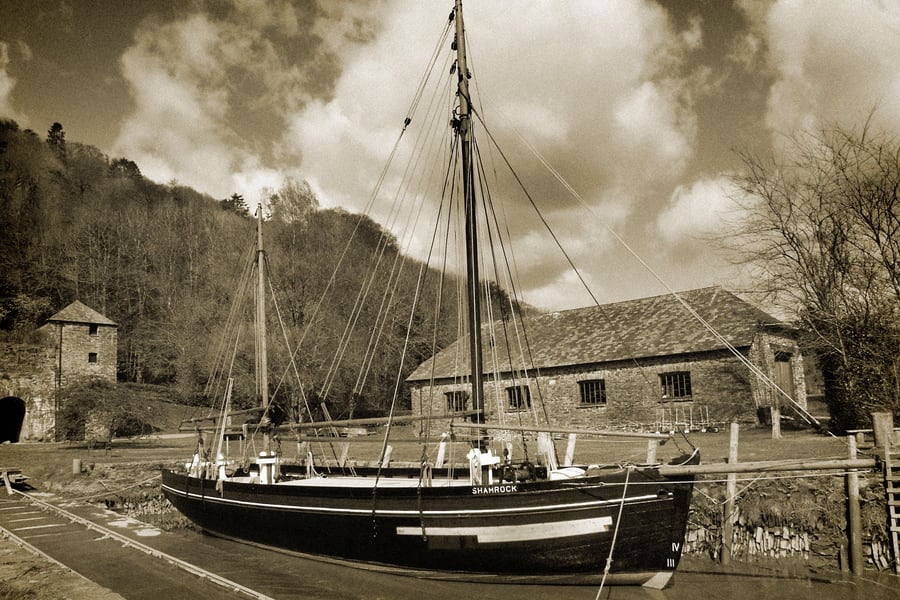 Roger Lombard / Geograph · CC BY-SA 2.0
The Shamrock
At Cotehele Quay, downstream from Calstock, the National Trust keeps the Shamrock, a Tamar sailing barge built in 1899, from the years when the river, not the railway, carried the valley's trade. She lies at the quay beside its old lime kilns.Timetables
Trains run every day of the year except 25 and 26 December, about every two hours: nine each way on weekdays, eight on Saturdays and five on Sundays. The journey takes 42 to 47 minutes.
| Plymouth → Gunnislake | Gunnislake → Plymouth | |
|---|---|---|
| Monday–Friday | 04:55, 06:31, 08:28, 10:28, 12:28, 14:28, 16:40, 18:38, 21:30 | 05:40, 07:25, 09:19, 11:19, 13:19, 15:19, 17:32, 19:32, 22:24 |
| Saturday | 06:27, 08:22, 10:24, 12:25, 14:24, 16:45, 18:30, 21:28 | 07:16, 09:14, 11:14, 13:14, 15:14, 17:34, 19:28, 22:20 |
| Sunday | 09:03, 11:10, 13:20, 15:20, 17:44 | 10:11, 12:10, 14:11, 16:11, 18:35 |
Good to know:
- Calstock is about half an hour from Plymouth and thirteen minutes short of Gunnislake, so a day out can take in both.
- Every station except Plymouth is unstaffed. Where there is no ticket machine, you buy from the conductor on the train.
- A few extra trains run only to St Budeaux Ferry Road, on the main line, and do not go up the valley. The times above are the Gunnislake trains.
Times as of November 2026, from GWR's timetable D5, valid 13 December 2026 to 15 May 2027. Engineering work can change weekend trains: check your date on gwr.com (opens in a new tab).
Tickets
The line is part of the National Rail network, so tickets are ordinary GWR fares, in Standard class only. Sampling the National Rail journey planner for one adult from Plymouth to Gunnislake on Tuesday 17 November 2026, the lowest single was £8.20 and the lowest return £8.30. Children aged 5 to 15 pay half, and under-5s travel free. Buy online, at Plymouth station, or from the conductor at the unstaffed stations.
For a day spent getting on and off, the Devon Day Ranger costs £17, or £8.50 for a child, and covers the Tamar Valley Line as well as the Devon branches. Fares checked November 2026 on the National Rail journey planner (opens in a new tab) and Great Scenic Railways (opens in a new tab); pounds sterling.
Book your tickets
Single
Adult · Plymouth to Gunnislake · Standard
One way on any train, bought online, at Plymouth or from the conductor at the unstaffed stations.
Book Tickets (opens in a new tab, on gwr.com)via gwr.comReturn
Adult · Plymouth to Gunnislake and back
Out and back on the same day, for barely more than the single.
Book Tickets (opens in a new tab, on gwr.com)via gwr.comRail Passes
Interrail passes are valid. Interrail's table of railway companies for Great Britain lists Great Western Railway as included, so the line is covered by a one-country Interrail Great Britain Pass or a Global Pass. GWR takes seat reservations only on its Intercity Express trains, so on this line you simply board.
Visitors who do not live in the UK can also buy a BritRail pass, valid on National Rail services; the regional South West & South Wales Pass covers most of GWR's main and branch lines in the region.
For this journey alone, a pass is not worth buying. A return from Plymouth to Gunnislake sampled at £8.30. A pass pays only when the valley is one day of a longer trip around Britain.
Checked November 2026 against interrail.com (opens in a new tab) and britrail.com (opens in a new tab).
Places to Visit
Plymouth's waterfront, the Hoe and the Barbican, is about fifteen minutes' walk from the station, so it fills the time before or after the train. Up the valley, Calstock is the stop to get off at: the village is a short walk downhill from the platform, and Cotehele is a walk along the river from there.
 Mick Lobb / Geograph · CC BY-SA 2.0
The Barbican
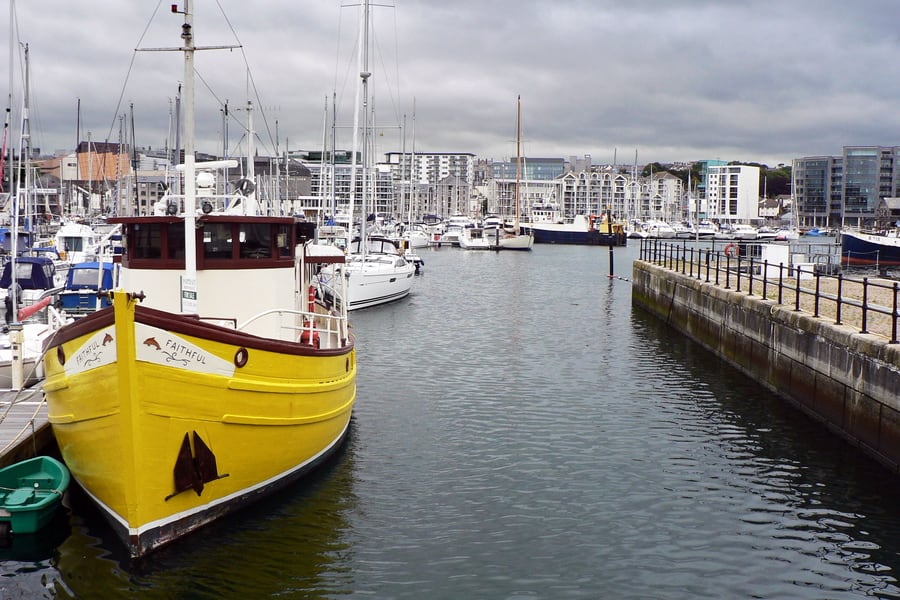
Plymouth's old harbour quarter, around Sutton Harbour, escaped most of the Blitz. It has the largest concentration of cobbled streets in Britain and a hundred listed buildings. The Mayflower Steps mark the place the Pilgrims sailed from in 1620, and Plymouth Gin has been distilled on Southside Street since 1793.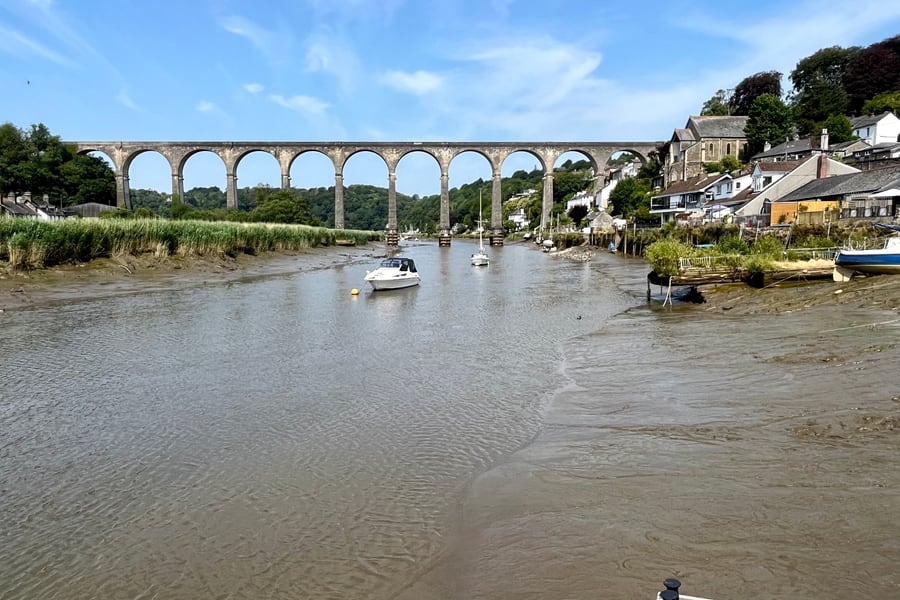 Jimtwister / Wikimedia Commons · CC BY-SA 4.0
Calstock
The village climbs the Cornish bank below the viaduct. It was a busy river port, shipping copper, tin and arsenic from the mines around it, and Queen Victoria and Prince Albert came by steamer in 1846. The trade died away after the railway arrived, and the quays, lime kilns and boatyards now face a quiet river.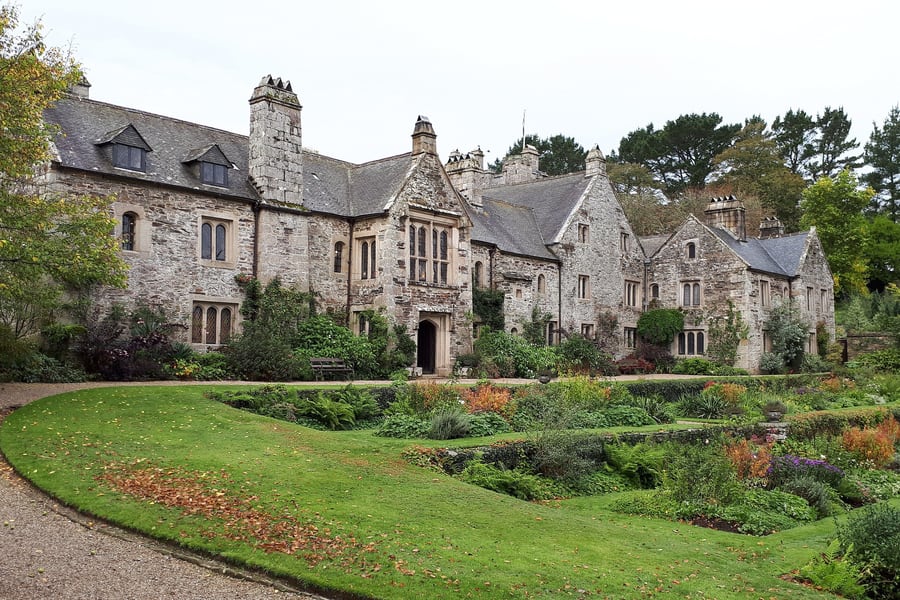 Geertivp / Wikimedia Commons · CC BY-SA 4.0
Cotehele
The Edgcumbe family's granite manor above the Tamar was rebuilt after 1485 and has changed little since. Its rooms keep tapestries and what is said to be the oldest unaltered domestic clock in England, and each winter a long flower garland is hung in the great hall. It is about 1½ miles from Calstock along the river and up through the woods.Where to Sleep
Plymouth is the place to stay, with hotels around the Hoe and the city centre and the main line to London and Cornwall at the station. For a night by the line itself, the Tamar Belle at Bere Ferrers station lets out its 1930s sleeping carriages.
Where to stay
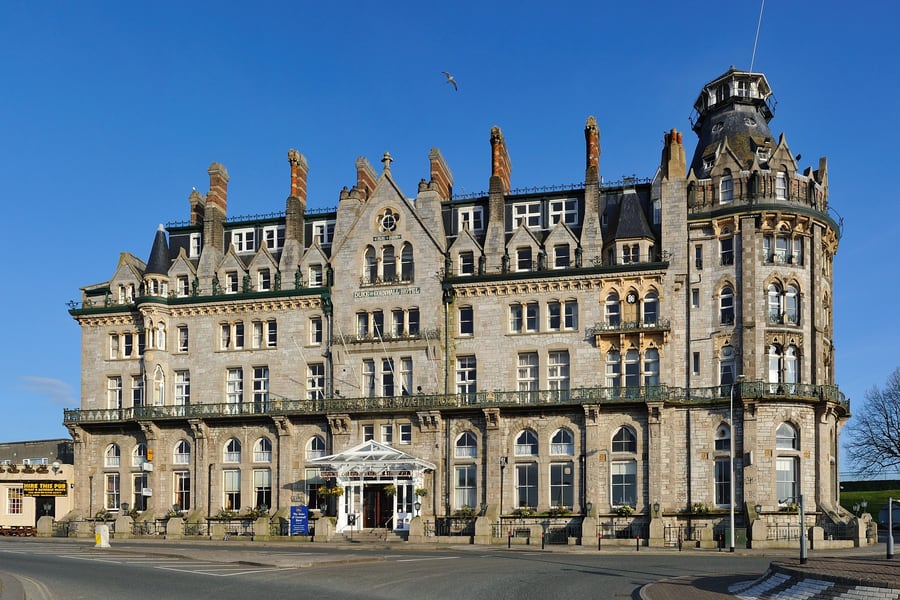 Smalljim / Wikimedia Commons · CC BY-SA 3.0 · cropped
The Duke of Cornwall Hotel
Plymouth · near the Hoe
A Victorian Gothic hotel of 1865 with 72 bedrooms, a walk from the Hoe and the city centre.
Check Availability (opens in a new tab, on thedukeofcornwall.co.uk)via thedukeofcornwall.co.ukQuestions or corrections
Planning this trip and stuck on something, or spotted a time, fare or detail that has changed? Send us a message about The Tamar Valley Line. We read every one, and we update this page when something has changed.