Tbilisi to Zugdidi — the day train to Samegrelo
Nikolai Bulykin / Wikimedia Commons · CC BY-SA 4.0 · 2024 · cropped
- DistanceAbout 315 km, Tbilisi to Zugdidi
- Duration5 hr 21 min, with twelve stops
- Best seasonAll year, once a day each way
Introduction
Georgia's main line has two kinds of train. The double-deck expresses to Batumi call three times in 343 kilometres and leave everything else to the slower trains — and only one of those a day goes to Zugdidi. Train 870 leaves Tbilisi at 08:15 and calls at twelve stations on its way to Zugdidi: the market towns of Kartli, the gorge below the Surami pass, the junction at Samtredia, and then a run north-west across Samegrelo that no express covers at all.
It takes five hours and twenty-one minutes, and second class costs 17 lari for the whole of it. What it ends at is a town of about 43,000 people that was the capital of the princes of Mingrelia until 1867, with their neo-Gothic palace and botanical garden at its centre, the Caucasus standing behind it, and the road to Svaneti starting at its edge. The railway once went further. The line along the coast to Sukhumi and on into Russia turned off at Ingiri, fifteen minutes short of Zugdidi, and it has been cut at the Enguri since the war of 1992–93. Zugdidi is where the line now stops, and for anyone bound for the mountains it is where the next stage starts.
The Journey
Train 870 leaves Tbilisi Central at 08:15, ten minutes after the 08:05 express to Batumi, and for the first three hours it runs over the same rails. The difference is all in the stops. The express sweeps through Shida Kartli without a call; the 870 is at Gori at 09:04 and Khashuri at 09:33.
West of Khashuri the main line climbs into the Likhi range, the ridge that divides the dry east of Georgia from the wet, green west, and crosses it at the Surami pass. On the far side it drops into the gorge, and here the 870 makes the call no express makes: Kharagauli, at 10:18. Zestaponi follows at 10:38, Rioni at 11:03, and at 11:22 the train reaches Kutaisi International Airport — the one station it shares with the expresses, which cover the same distance from Tbilisi in two hours thirty-five against the 870's three hours seven, and charge more than twice the fare for it.
Samtredia and the turn north
At Samtredia, 244 kilometres out, the main line divides. The Batumi trains bear south-west for the coast of Guria and Adjara; the 870 stands for three minutes in a station surrounded by freight yards and then takes the other line, north-west into Samegrelo. From here on it is the only passenger train there is. Abasha comes at 11:55 and Senaki at 12:12, the stop for the ruins of Nokalakevi, fifteen kilometres up the road.
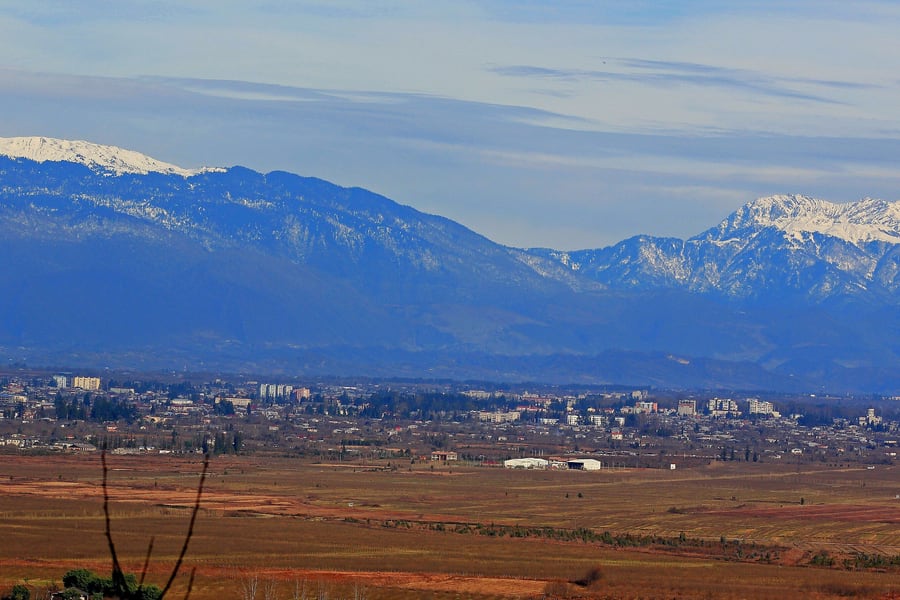
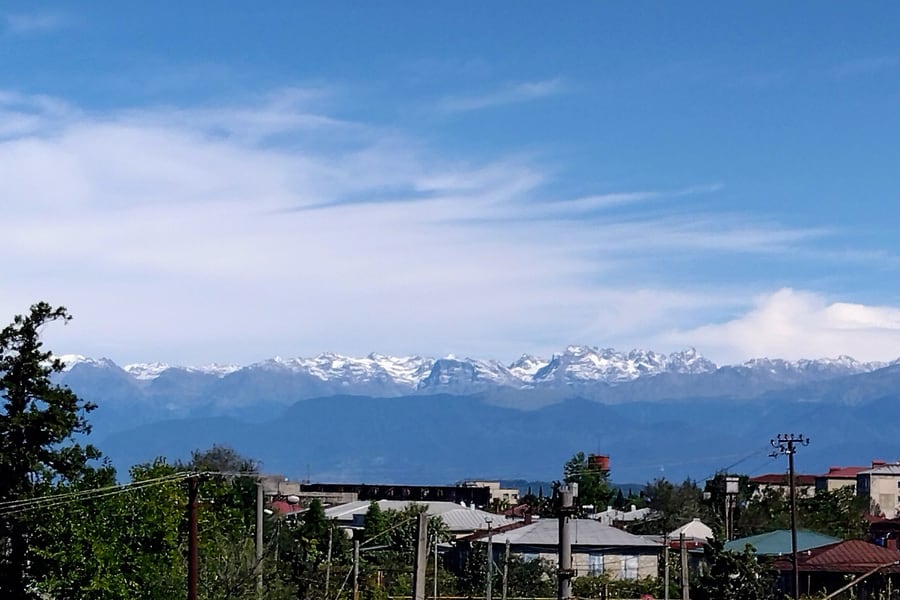
Past Senaki the line crosses a flat, wet, green country with the hills of Samegrelo on the right, and on a clear day the Greater Caucasus stands along the northern horizon. Khobi is at 12:35 and Kheta at 12:47, and then comes a gap of over half an hour to Ingiri.
The line that used to go on
Ingiri, at 13:21, is the old junction. The railway through here was part of the Black Sea line to Sukhumi and on into Russia, complete by 1949, and the trains for the coast once crossed the Enguri beyond it. The rail bridge was blown up on 14 August 1992, and the track between the river and Achigvara was later taken up. The 870 goes on instead along the line to Zugdidi, opened in 1940 with the coastal railway and electrified in 1954, and arrives fifteen minutes later at 13:36.
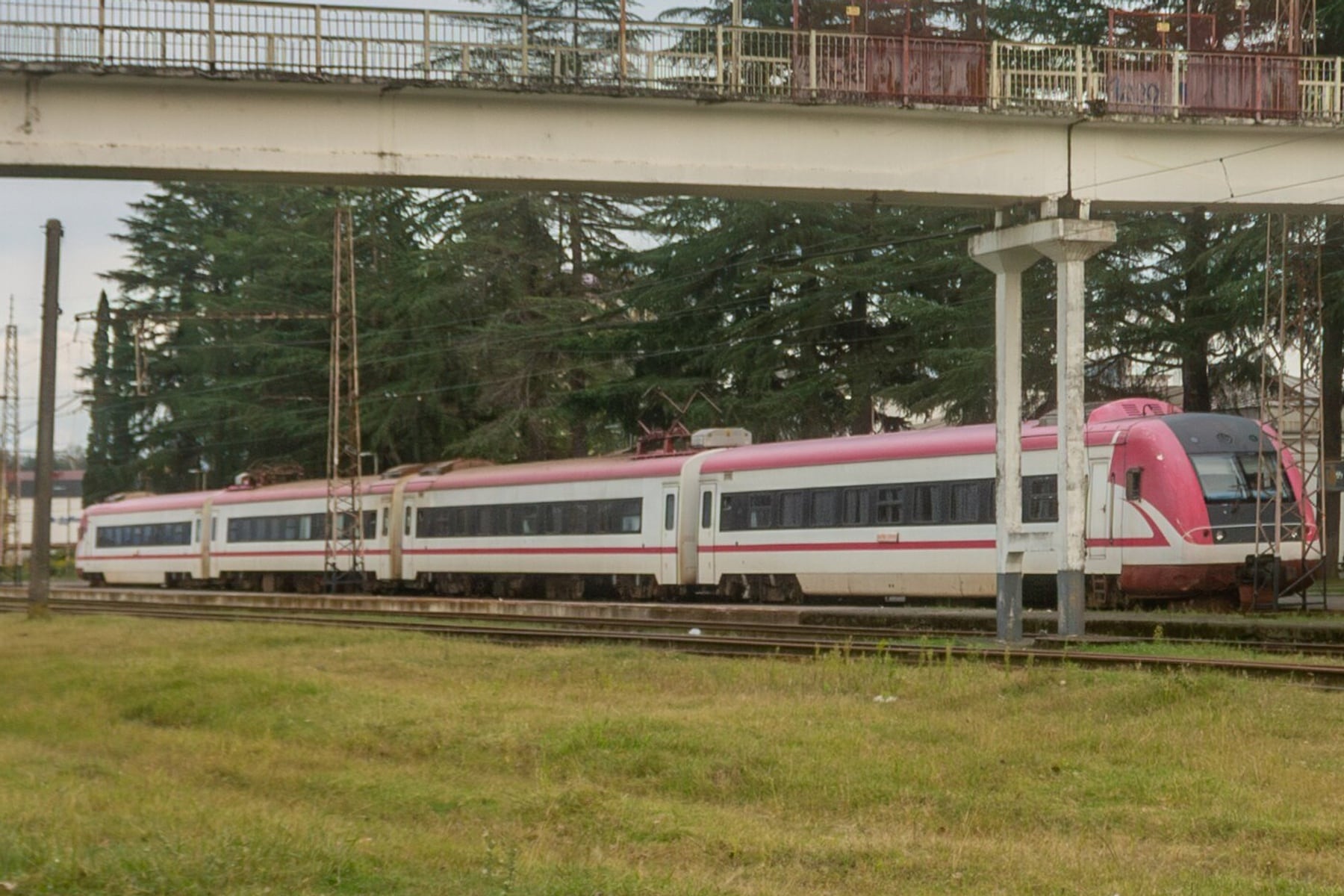
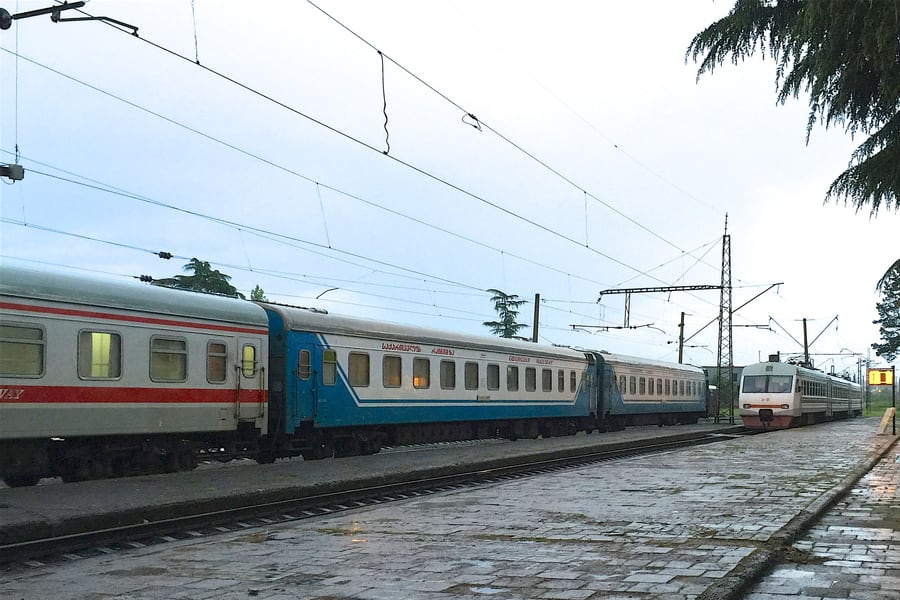
Zugdidi station sits on the right bank of the Chkhoushi under tall cedars. The 869 leaves it again at 18:00 — four and a half hours in town for anyone not staying — and reaches Tbilisi at 23:27. The ticket system calls the train simply a single-decker. The one photographed waiting at Zugdidi in October 2024, an hour before that evening departure, was one of Georgian Railway's VMK units: white and red, four cars, electric, and built in China by CSR.
Along the route
 Tiia Monto / Wikimedia Commons · CC BY-SA 3.0 · cropped
Gori, the first call
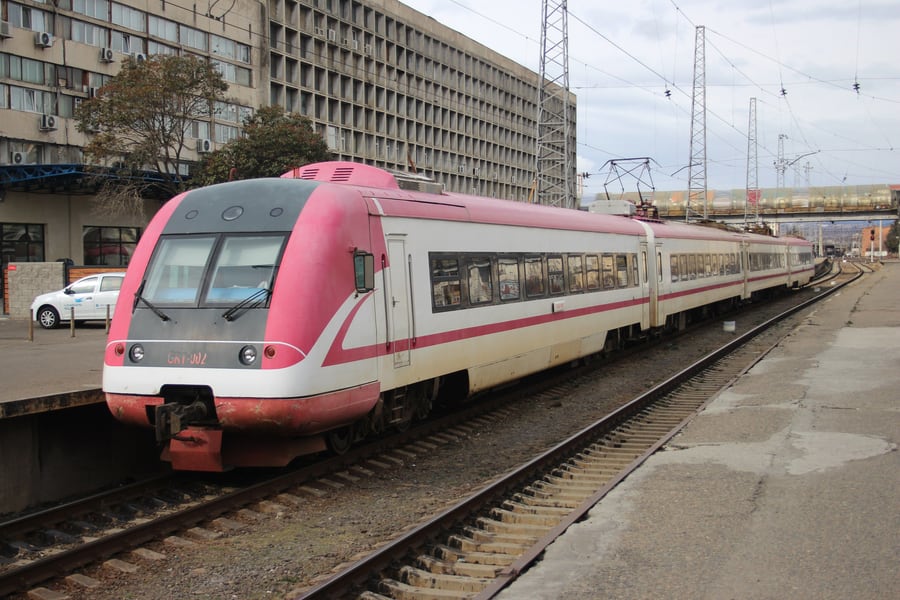
Forty-nine minutes out, the train makes the first of the stops the Batumi expresses pass. Gori is the way to Uplistsikhe, the town cut into the rock ten kilometres east, and the first of twelve calls before Zugdidi.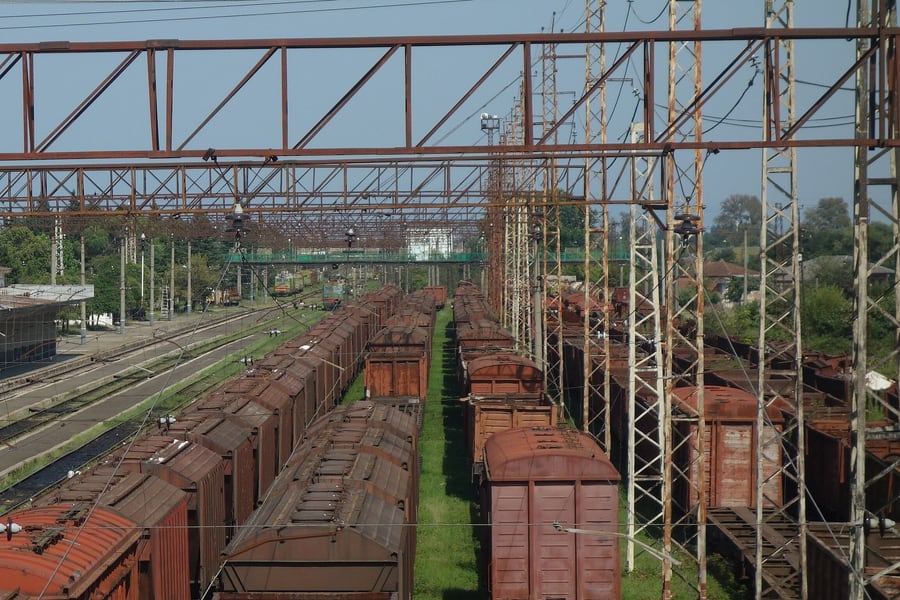 Daniel-tbs / Wikimedia Commons · CC BY-SA 4.0 · cropped
Samtredia, where the lines part
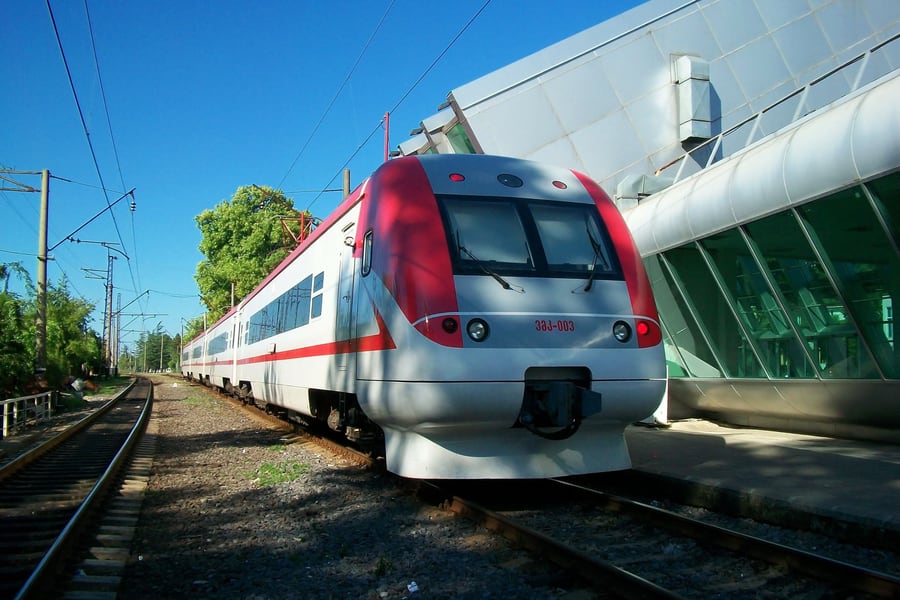
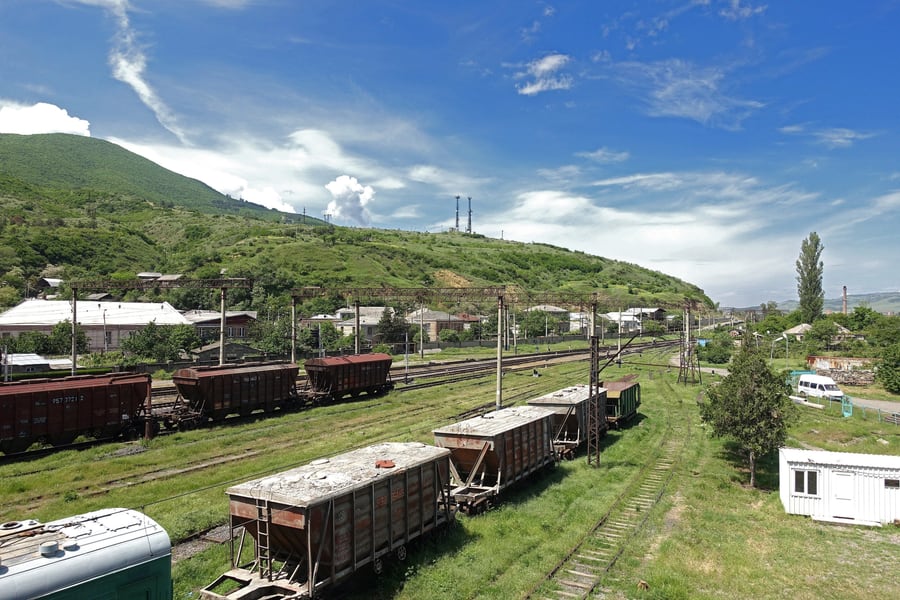
At 244 km the main line divides: south-west for Batumi, north-west for Senaki and the coast. The train stands three minutes in a yard of freight wagons, then takes the Zugdidi road.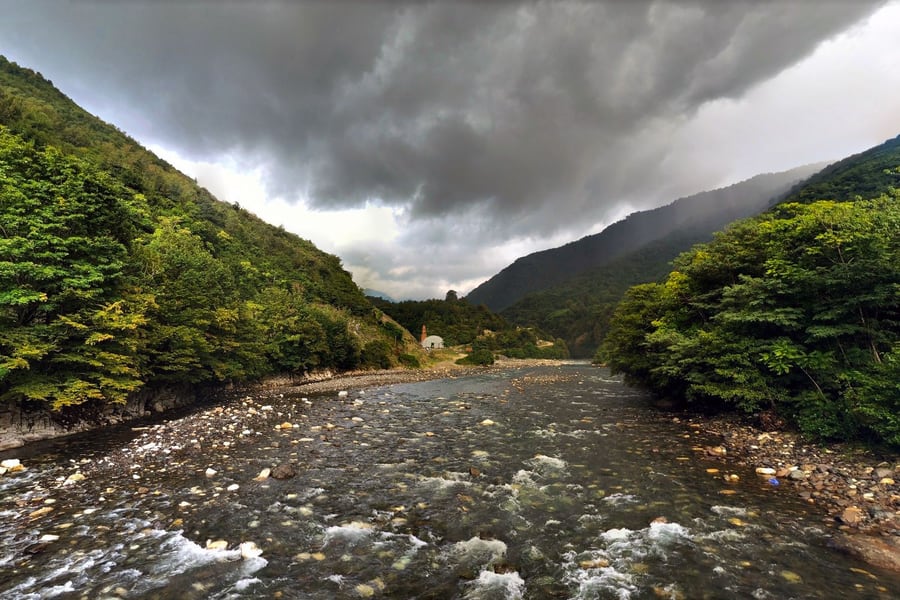 Jelger Groeneveld / Wikimedia Commons · CC BY 2.0 · cropped
Across the Khobi
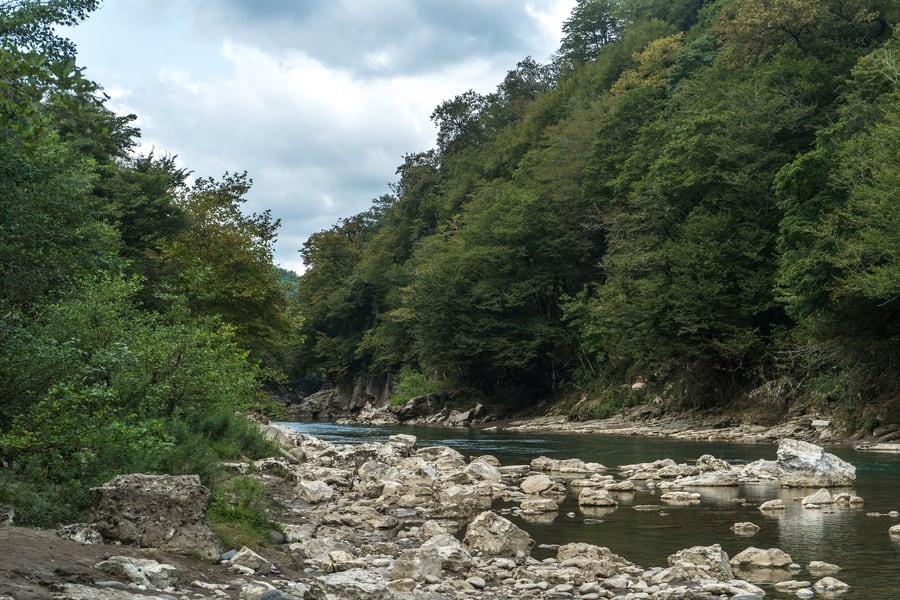
Beyond Senaki the line runs north-west across Samegrelo, over the rivers that come down from the hills on the right. Khobi, at 12:35, and Kheta twelve minutes later are the last calls before Ingiri.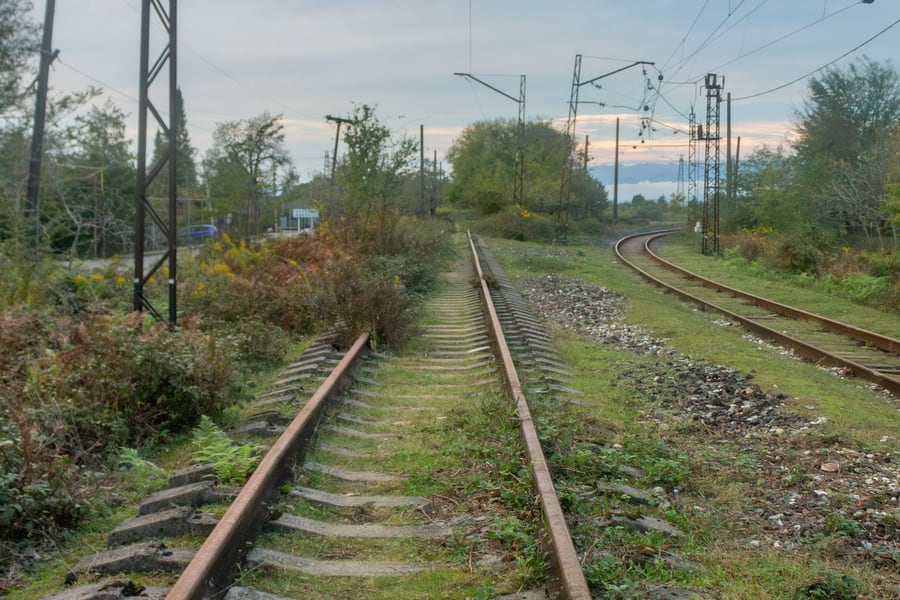 Nikolai Bulykin / Wikimedia Commons · CC BY-SA 4.0 · 2024 · cropped
Ingiri, the old junction
Ingiri was a junction: trains once ran on from here across the Enguri and along the coast to Ochamchire. The rail bridge was blown up in August 1992 and that line has been closed since. Zugdidi is fifteen minutes on.A bit of history
Culture & experiences along the way
 Jonathan Cardy / Wikimedia Commons · CC BY-SA 3.0 · cropped
Sulguni, the cheese of Samegrelo
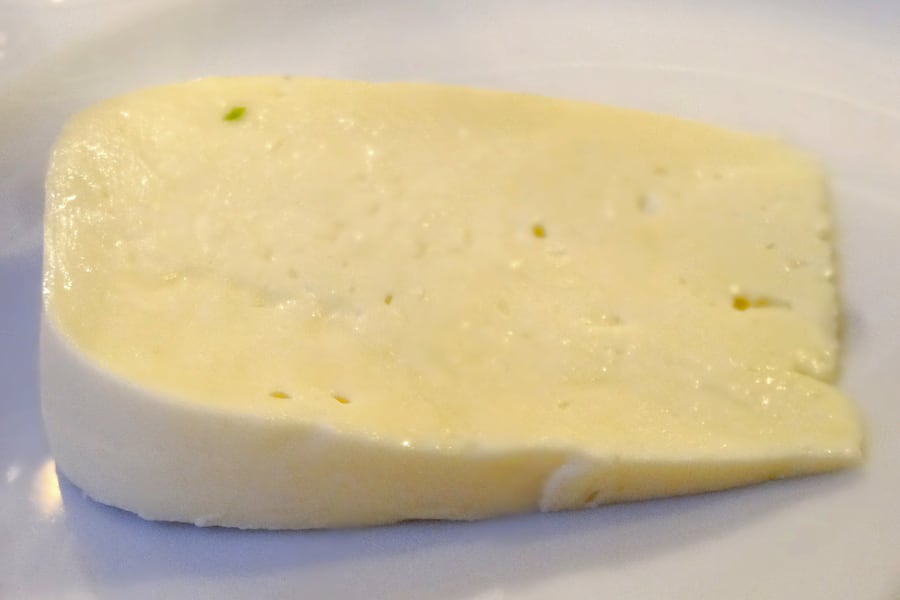
Georgia's best-known cheese comes from the country this train ends in. Sulguni is a brined cheese, sour and mildly salty, with an elastic texture from the kneading that makes it; in Mingrelian it is selegini. It has been a protected geographical indication since January 2012.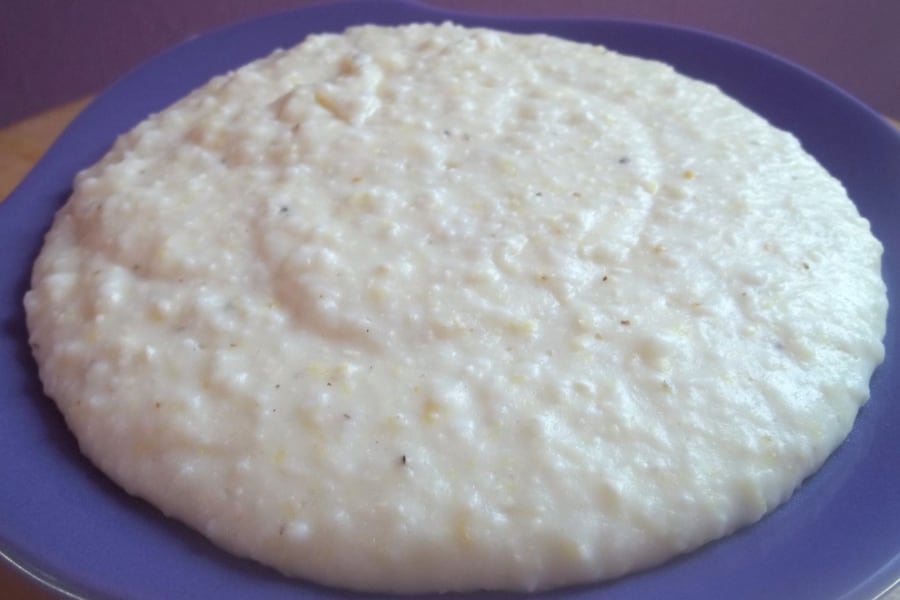 Georgian Recipes / Wikimedia Commons · CC BY 3.0 · cropped
Elarji
The dish Samegrelo makes for guests: sulguni kneaded into ghomi, a thick cornmeal porridge, until the whole mass stretches. It began as shepherds' food in the hills, where cheese was made on the spot and a hot, heavy meal was the point, and it is still what a Mingrelian table puts out on a feast day.Timetables
One train a day runs each way between Tbilisi and Zugdidi, every day of the week. Times below are as of November 2026, taken from the operator's selling system through its ticketing partner tkt.ge (opens in a new tab); every seat is reserved, and the selling window opens about 20 days ahead.
Tbilisi to Zugdidi — train 870
| Station | Time |
|---|---|
| Tbilisi | 08:15 |
| Gori | 09:04 |
| Khashuri | 09:33 |
| Kharagauli | 10:18 |
| Zestaponi | 10:38 |
| Rioni | 11:03 |
| Kutaisi International Airport | 11:22 |
| Samtredia | 11:34 / 11:37 |
| Abasha | 11:55 |
| Senaki | 12:12 |
| Khobi | 12:35 |
| Kheta | 12:47 |
| Ingiri | 13:21 |
| Zugdidi | 13:36 |
Zugdidi to Tbilisi — train 869
| Station | Time |
|---|---|
| Zugdidi | 18:00 |
| Samtredia | 20:00 |
| Tbilisi | 23:27 |
The westbound train takes 5 h 21 and the eastbound 5 h 27. The 870 and 869 are the only passenger trains at Zugdidi; from Samtredia onwards there is no other service to choose. Mtskheta, Kaspi and the smaller halts east of the pass are served by a separate local, not by this train.
Tickets
Every seat is reserved, so a ticket is for a named train, and with one train a day that is the choice made for you. Tickets are sold online through tkt.ge and at station ticket offices, from about 20 days before departure, and a passport or ID card has to be shown to board. Children from 5 to 10 pay half fare, and a child under five needs a ticket only for a seat of their own.
Returns are allowed until an hour before departure. More than 15 hours out, Georgian Railway keeps a 2.50-lari commission plus the service fees; between 4 and 15 hours it also keeps 15 per cent of the fare, and inside 4 hours, 30 per cent. Fares below are as sold in November 2026, for the whole run; Tbilisi to Gori is 13 lari in second class.
Book your tickets
Second class
Tbilisi to Zugdidi, reserved seat
The standard fare for the whole run, on the one train a day.
Book Tickets (opens in a new tab, on tkt.ge)via tkt.geFirst class
Tbilisi to Zugdidi, reserved seat
Twelve lari more than second class, for the whole run.
Book Tickets (opens in a new tab, on tkt.ge)via tkt.geBusiness
Tbilisi to Zugdidi, reserved seat
A handful of seats on each train, sold the same way as the rest.
Book Tickets (opens in a new tab, on tkt.ge)via tkt.geRail Passes
No rail pass covers Georgia — checked in November 2026.
On this train it would not matter if one did. The whole run from Tbilisi to Zugdidi costs 17 lari in second class and 29 in first, and with a single train a day there is nothing a pass could make more flexible.
Places to Visit
With twelve calls on the way, this is the train for stopping off. Gori is the start for Uplistsikhe, Senaki for Nokalakevi, and Zugdidi itself has a palace, a garden and the road into the mountains. With one train a day, a stop means a night: the next 870 is twenty-four hours behind.
 EvgenyGenkin / Wikimedia Commons · CC BY-SA 3.0 · cropped
Uplistsikhe, from Gori
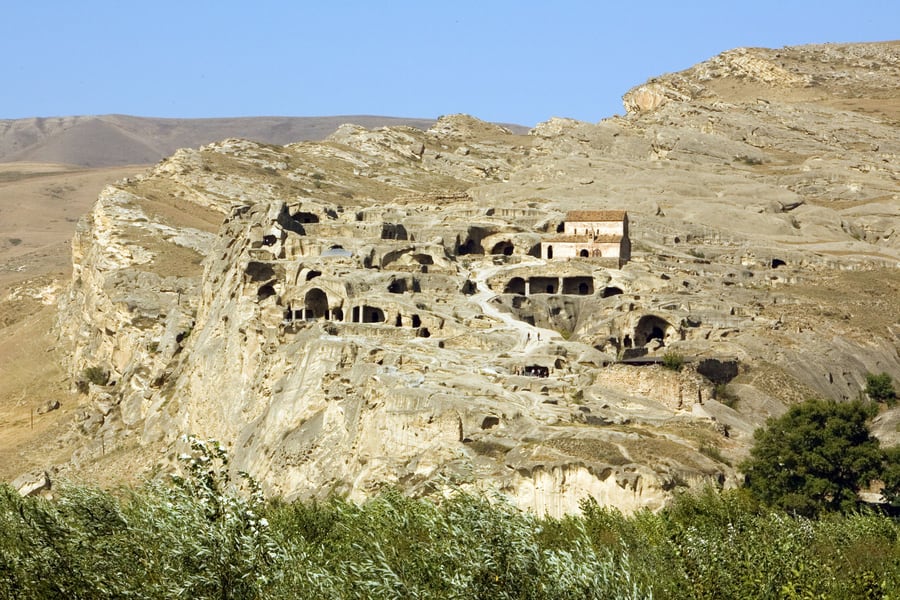
Ten kilometres east of Gori, on a high rock bank above the Mtkvari, is a town cut out of the stone. People were here by the end of the second millennium BC; the oldest surviving halls date from the first centuries AD, and a basilica was added in the sixth. It covers about eight hectares of streets, stairs and chambers, and was all but abandoned after the Mongol raids of the fourteenth century.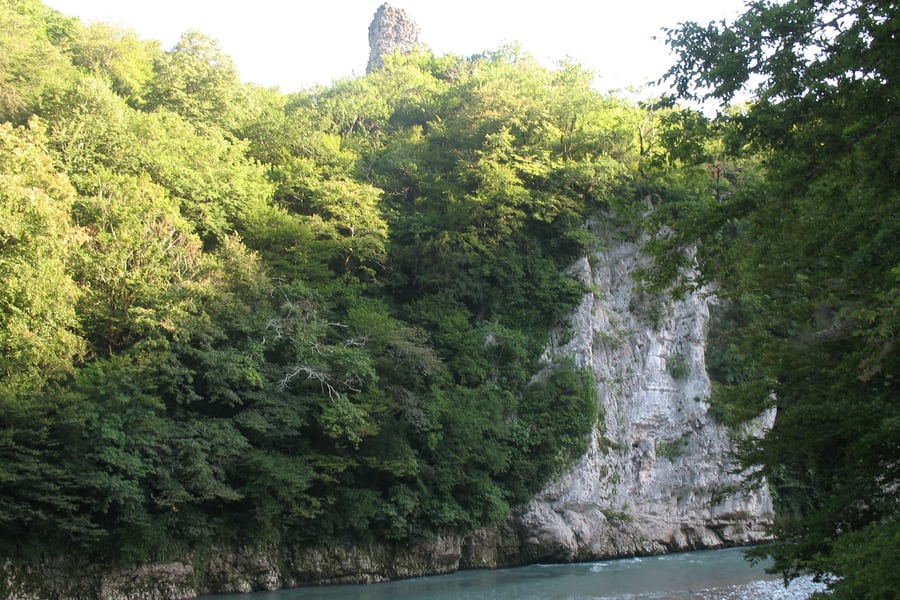 G.N. / Wikimedia Commons · CC BY-SA 3.0 · cropped
Nokalakevi, from Senaki
Fifteen kilometres from Senaki on the Martvili road, in a loop of the Tekhuri gorge, lie the walls of Archaeopolis — a fortress the Byzantines held against Persia in the wars of the sixth century. The site covers about twenty hectares, with a citadel on the cliff above, and a Swiss traveller of the 1830s believed it was Aia, the city of the Golden Fleece.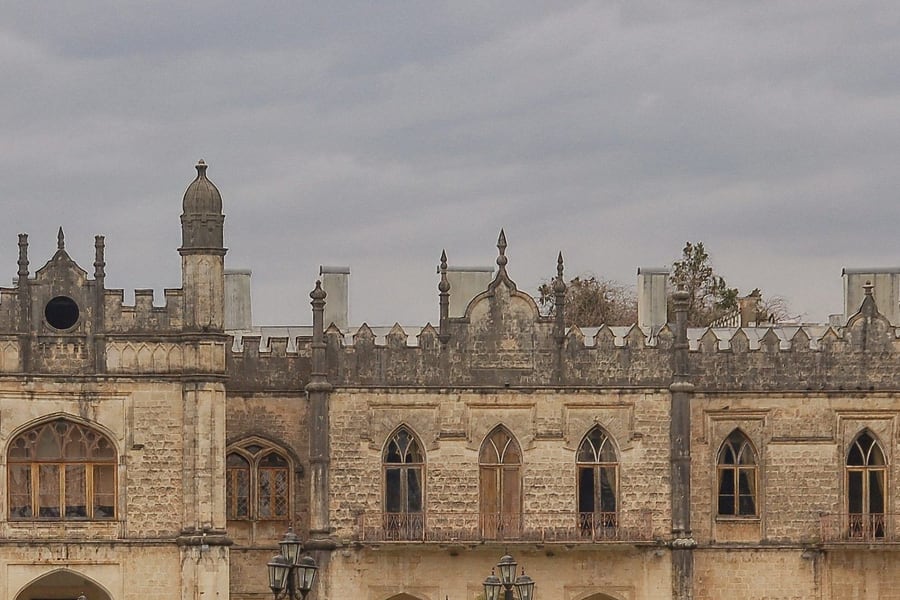 Matthias Bethke / Wikimedia Commons · CC BY-SA 4.0 · 2010 · cropped
The Dadiani Palace, Zugdidi
Zugdidi was the capital of the princes of Mingrelia until 1867, and their palace is its centrepiece: neo-Gothic, by the English architect Edwin Race, with Georgian and Tudor touches. It has been a museum since 1921, and holds manuscripts of the thirteenth and fourteenth centuries and relics of Napoleon that came with Achille Murat, who married a Dadiani daughter.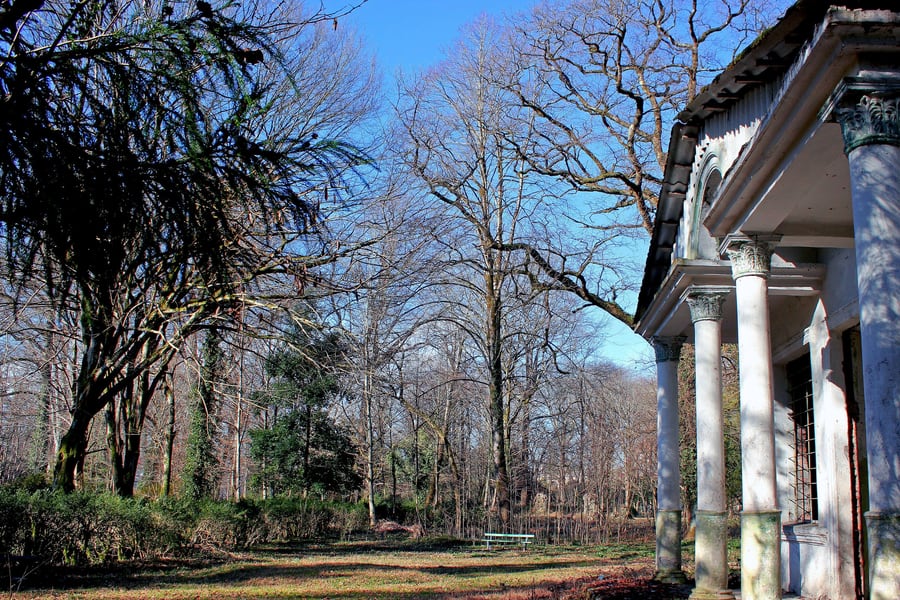 Abkhazian1 / Wikimedia Commons · CC BY-SA 2.0 · cropped
The botanical garden
Prince David Dadiani fenced off the forest around his palace in 1840 and began a garden, and his wife Ekaterine filled it with native and exotic plants. It is now a branch of Tbilisi's Central Botanical Garden, covering 26 hectares beside the palace, with trees brought from East Asia, India, the Mediterranean and the Americas.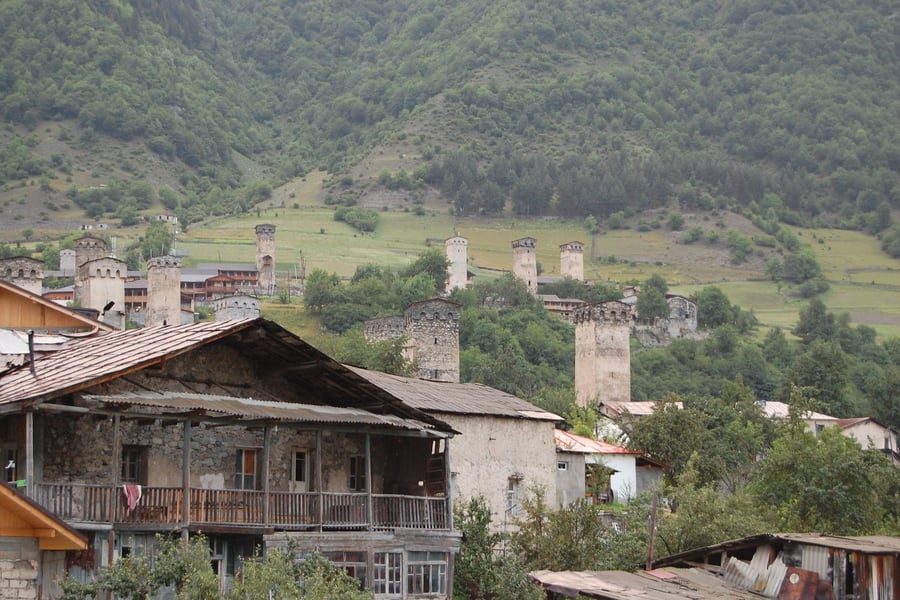 Andrzej Wójtowicz / Wikimedia Commons · CC BY-SA 2.0 · cropped
Mestia and Upper Svaneti
Zugdidi is the gateway to Upper Svaneti. Mestia is 128 kilometres north-east, at 1,500 metres in the Caucasus: a small town of stone defensive towers whose medieval monuments are on UNESCO's list. It is the start of the four-day walk to Ushguli, and Svaneti also holds Shkhara, at 5,201 metres the highest mountain in Georgia.Where to Sleep
The train reaches Zugdidi at 13:36, early enough to see the palace and the garden the same afternoon and sleep in town before going on to Svaneti. At the other end, the 08:15 departure makes a night near Tbilisi Central the easy choice.
Questions or corrections
Planning this trip and stuck on something, or spotted a time, fare or detail that has changed? Send us a message about Tbilisi to Zugdidi — the day train to Samegrelo. We read every one, and we update this page when something has changed.