Tema to Adomi
Efo Komla / Wikimedia Commons · CC BY-SA 4.0 · 2023 · cropped
- Distance97.7 km Tema Harbour to Mpakadan; passenger trains run as far as Adomi
- Duration45 min Tema Harbour to Afienya, then 1 h 15 min on to Adomi
- Best seasonNovember to February · the dry months between Accra's two rainfall peaks
Introduction
Ghana's railways were laid to bring gold, manganese, bauxite and cocoa down out of the southern forest, and by the 1990s most of that network had stopped moving. The Tema–Mpakadan line is the answer to it: 97.7 kilometres of new standard gauge, built between 2018 and 2024 by Afcons Infrastructure on a US$447 million credit from India's Export–Import Bank, running inland from the container quays at Tema to a railhead on Lake Volta. It was designed for freight — containers moving between the port and the barges that work the lake northwards — and it is the first finished piece of a corridor intended one day to reach Ouagadougou. The passenger service is the part of it a traveller can use, and it took two false starts before it carried anyone.
President Akufo-Addo opened the line on 22 November 2024, and then it stood still for the better part of a year while scrap thieves stripped fittings off the track. Trains finally began running commercially on 1 October 2025. What you can ride today is really two journeys joined at Afienya: a short commuter run out of Tema Harbour through Ashaiman, and a longer one north across the Accra plains to Adomi, on the far bank of the Volta, over a 300-metre bridge built for the railway between Senchi and Old Akrade. Nobody pretends it is a luxury train. It is a brand-new railway across a dry plain to the edge of the largest man-made lake on earth, and the fare from Tema is fifteen cedis.
The Journey
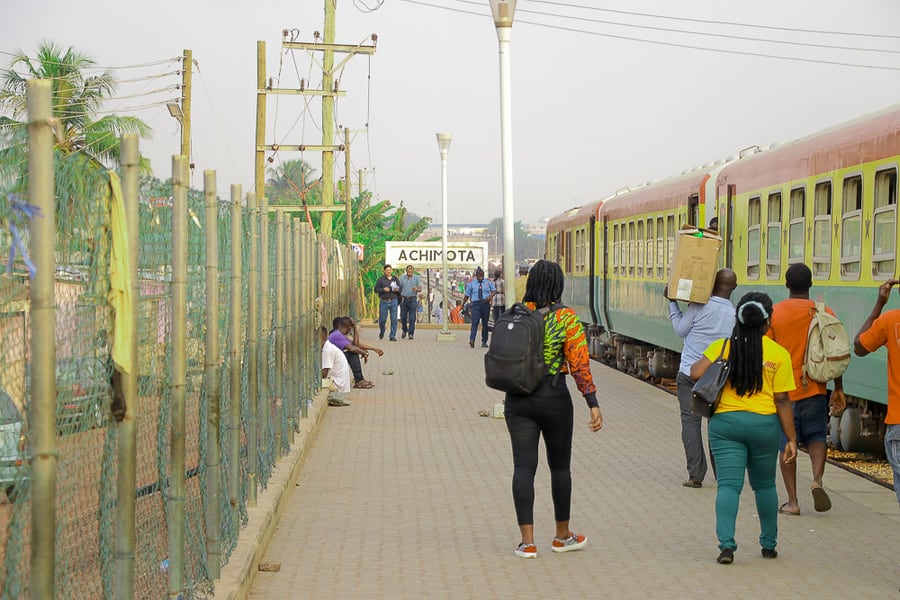
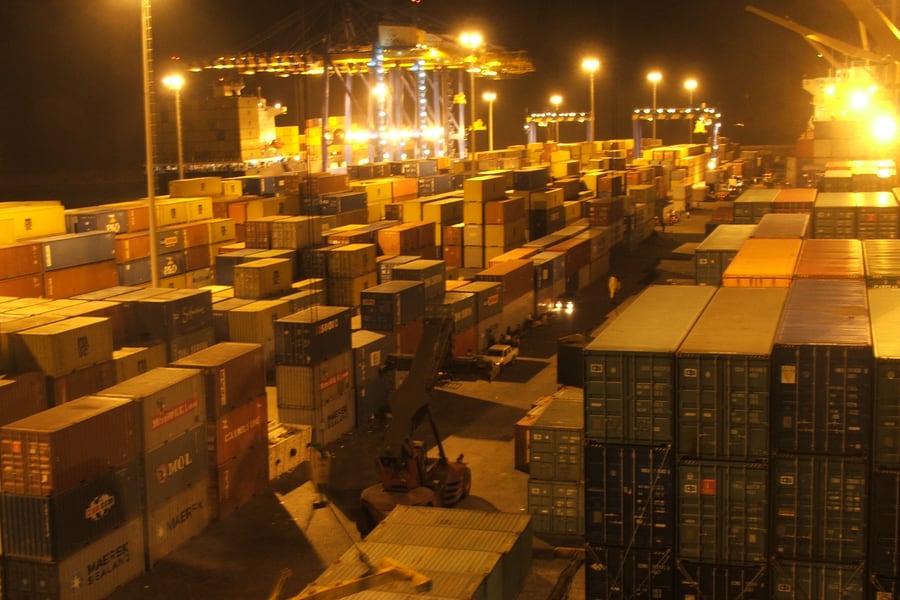
Tema Harbour station stands beside the container terminal, and the railway's reason for existing is visible from the platform. Tema is Ghana's cargo port, built from nothing in the 1950s on what had been a fishing village, and everything that comes ashore there currently leaves by road. The railhead alongside the quays is meant to change that; the passenger station is a modest building at the end of it, and the first train of the day leaves at six.
The first quarter of an hour is townscape. Tema Industrial Area, then Ashaiman — a dense, fast-grown town of markets and workshops north of the port, and the reason a commuter service exists on this line at all. Then the buildings thin out and the train runs onto open ground.
Across the Accra plains
Afienya, forty-five minutes out, is where the journey divides. It is the interchange: the commuter trains from Tema turn round here, and the longer working up to the Volta starts from the same platform. A 900-metre road-over-bridge, commissioned in December 2022, carries the highway across the railway just outside the station.
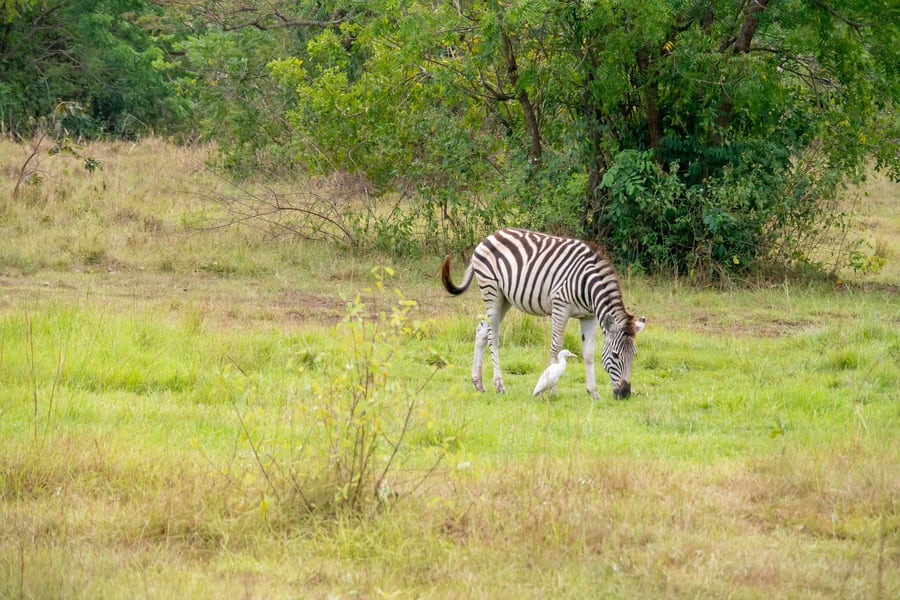
North of Afienya the line crosses the Accra plains — the eastern coastal belt of Ghana, which is warm and comparatively dry, an odd gap of savanna in a country better known for rainforest. Inselbergs stand out of the grass. Shai Hills is the stop for the 51-square-kilometre resource reserve of the same name, where zebra, ostrich, kob and baboon live on the flat below a line of rocky hills that the Shai people farmed until the British ejected them in 1892. Doryumu Junction follows — Doryumu is the reserve's own town — and then Akuse Halt.
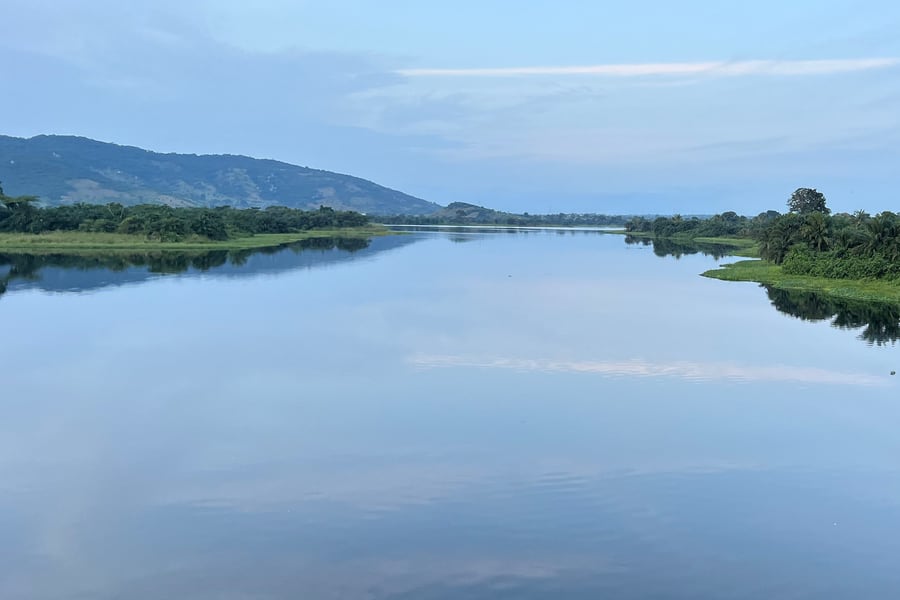
Kpong is the first sight of water. The Volta here is wide, slow and green, held back by the Kpong Dam, a second barrage built downstream of Akosombo between 1977 and 1982, and the town's landing is busy with the canoes that work the river. From Kpong the line runs north along the west bank.
The Volta crossing
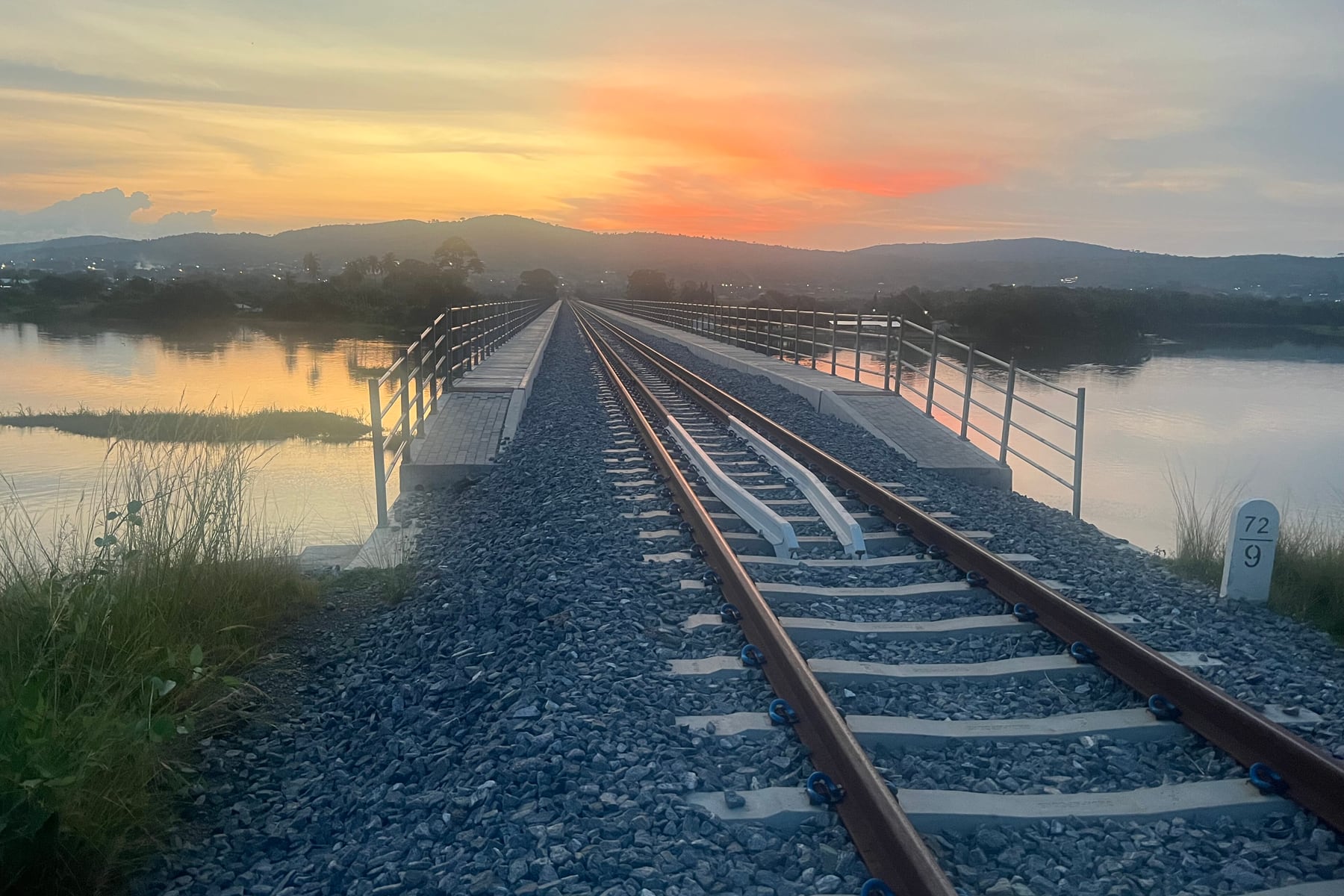
At Senchi Halt the track runs out onto the bridge. Three hundred metres of it, five steel girder spans of sixty metres each, carrying a single line from Senchi across to Old Akrade — the longest railway bridge in Ghana and the only one of its kind in West Africa. The post beside the rails reads 72/9: a shade under seventy-three kilometres from the harbour. Three and a half kilometres upstream stands the Adomi Bridge, the latticed steel arch Kwame Nkrumah opened in 1957 and the first permanent crossing the Volta ever had; beyond it, out of sight round the bend, the Akosombo dam and the head of Lake Volta.
Adomi station, on the far bank, is where passengers get off. The rails carry on for another twenty-odd kilometres to the railhead at Mpakadan, beside the inland harbour at Akosombo, but that end is a freight transfer point and no timetabled train takes passengers to it.
The trains
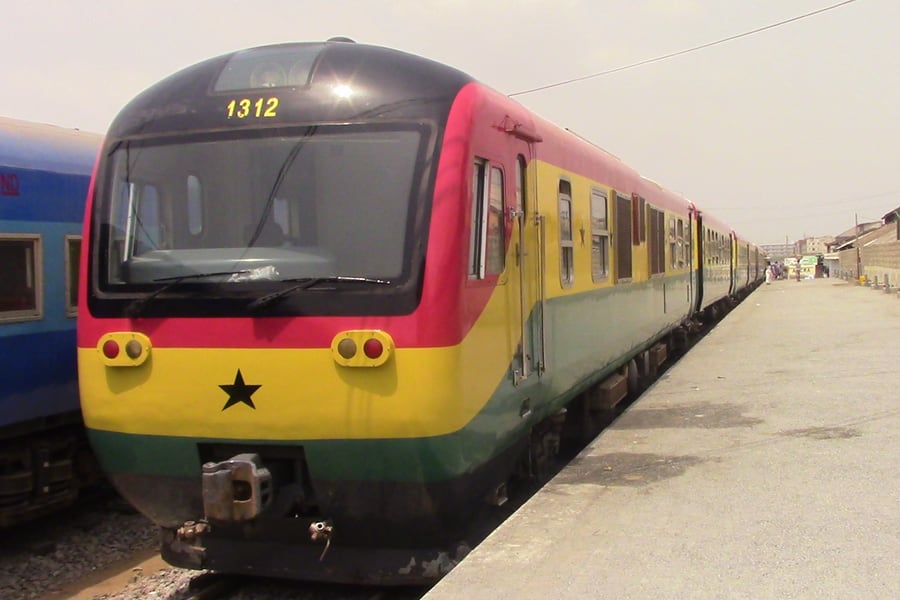
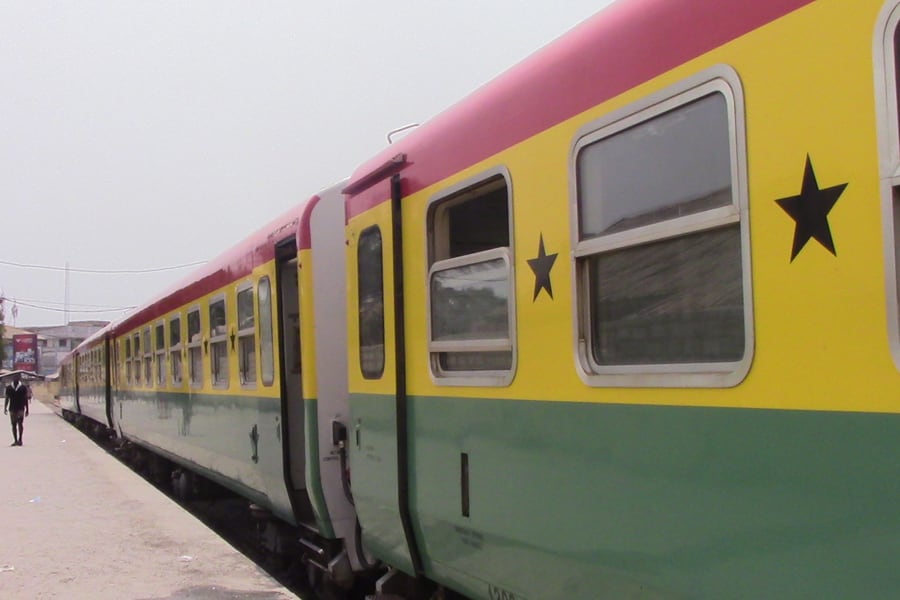
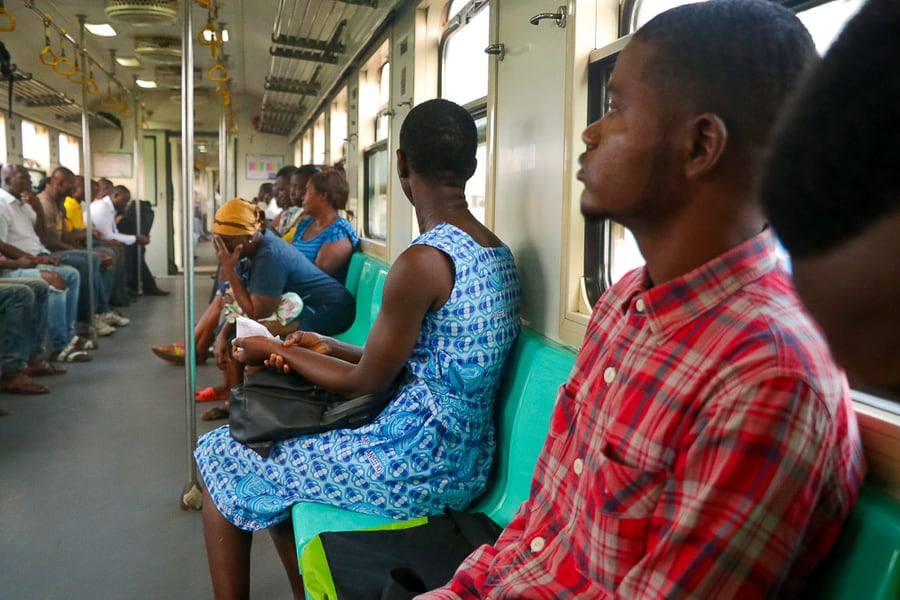
Two diesel multiple units work the whole line. They were ordered from Pesa of Bydgoszcz at InnoTrans in September 2022, under a framework for twelve sets of which ten remain an option, and they are close relatives of the RegioFox units Pesa builds for Czech Railways — the first was finished in January 2024 and shown at Bydgoszcz Główna that February. They are air-conditioned, they carry two classes, and between them they seat 255.
What holds the service back is not the trains but the signalling, which has never worked. The railway authority's chief executive said in April 2026 that the line is running below capacity as a result, restricted to a single train movement at a time despite rising demand. An agreement with Siemens Mobility was signed in November 2025 to fit ETCS Level 1, and the European Commission approved a €20 million grant towards it in March 2026. Until that work is done, the timetable is what two units and one clear line can manage between them.
Along the route
 SteKrueBe / Wikimedia Commons · CC BY-SA 3.0 · 2008 · cropped
Tema Harbour
The line begins at the container quays it was built for. Tema was a fishing village until the 1950s and is now Ghana's largest port — and the Greenwich Meridian runs through the city, which puts the first kilometre of this railway within a whisker of zero degrees.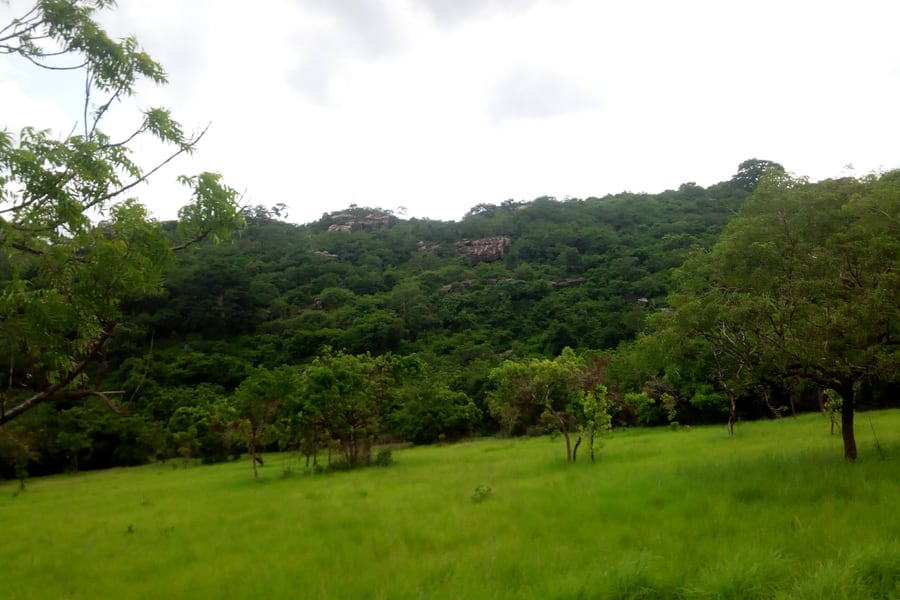 OkuJet / Wikimedia Commons · CC BY-SA 4.0 · 2019 · cropped
The Shai plain
North of Afienya the train runs out into savanna — the dry eastern coastal belt, an anomaly in a country of rainforest. Rocky inselbergs stand out of the grass, and the 51 square kilometres of the Shai Hills reserve lie against the line's east side.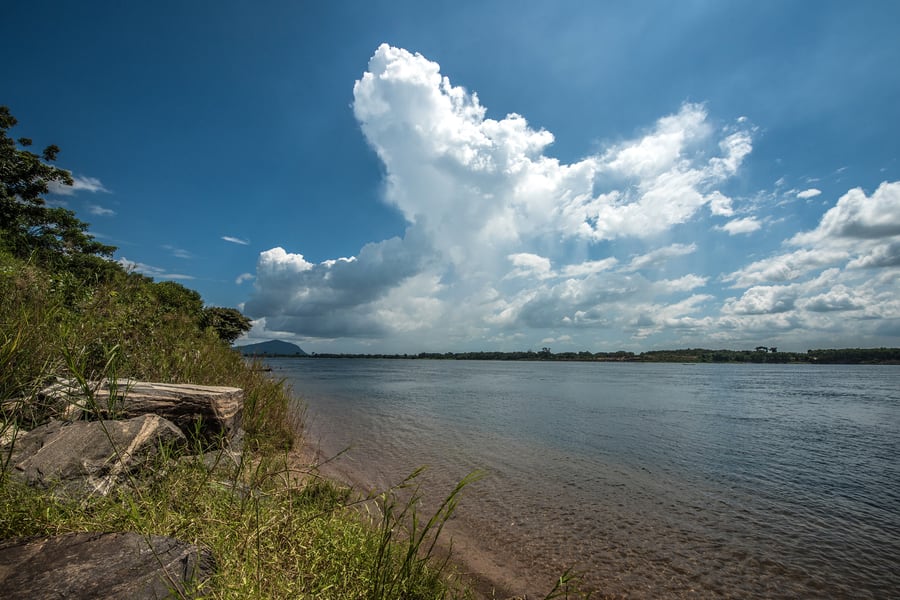 Kradolferp / Wikimedia Commons · CC BY-SA 4.0 · 2018 · cropped
Kpong, and the water
The first sight of the Volta comes at Kpong, where the river is held back by the dam built downstream of Akosombo between 1977 and 1982. Canoes work off the landing, and from here the railway follows the west bank north to the crossing.A bit of history
Culture & experiences along the way
 Flixtey / Wikimedia Commons · CC BY-SA 4.0 · 2014 · cropped
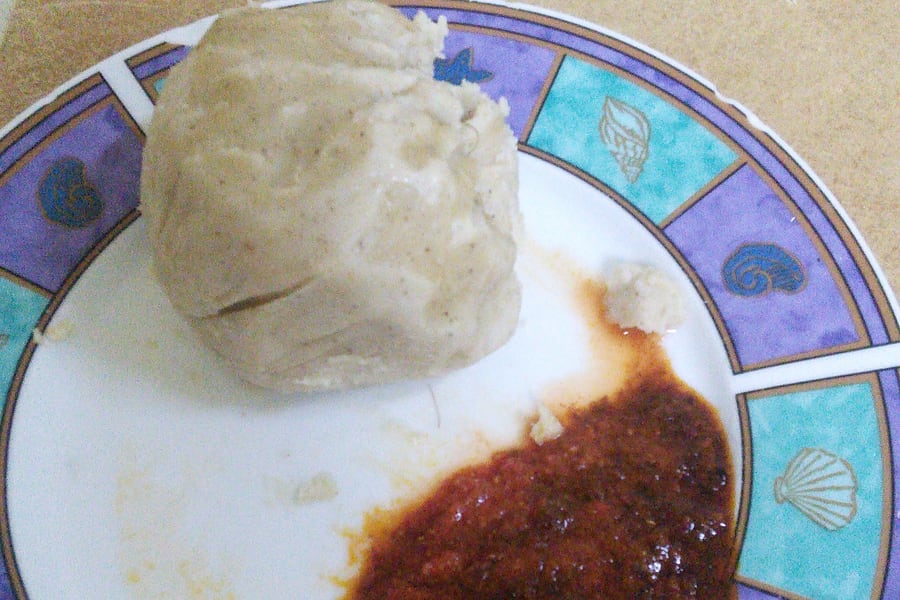
Kenkey, and the shito that goes with it
Fermented maize dough, wrapped and steamed into a dense white ball, eaten with the fingers and dipped in shito — a near-black chilli paste of dried fish, prawn and ginger. Kenkey is the staple of the Ga coast that Tema sits on, sold from every corner of the harbour town, and the fish beside it will have come off the beach that morning.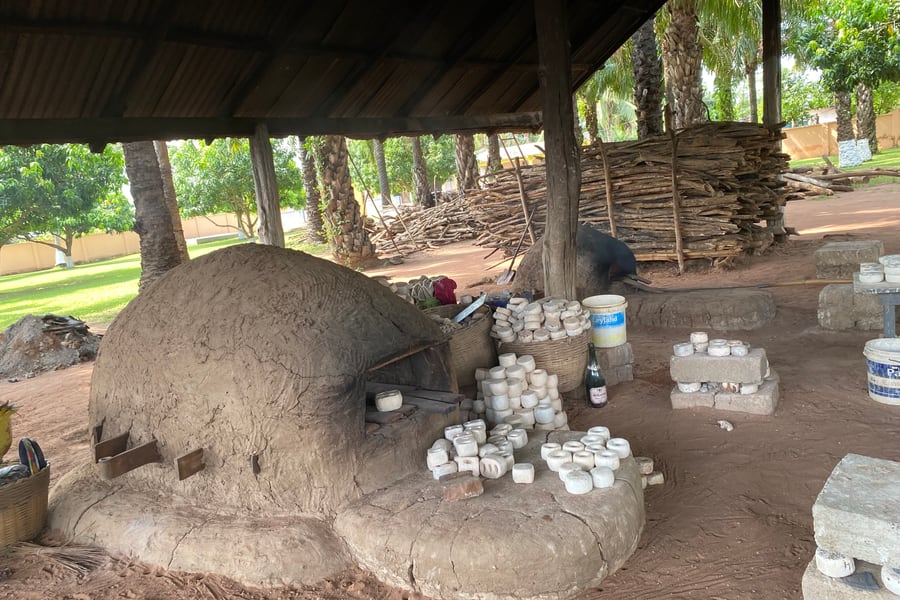 Warmglow / Wikimedia Commons · CC BY-SA 4.0 · 2025 · cropped
Krobo beads, made from bottles
Beyond Kpong the country is Krobo, and the craft is glass. Bottles are crushed to powder, coloured, packed into clay moulds pierced with a cassava stalk and fired in a domed clay kiln until they fuse. The strands come out of the kiln rough and are ground smooth on stone. Every market between Kpong and Somanya sells them.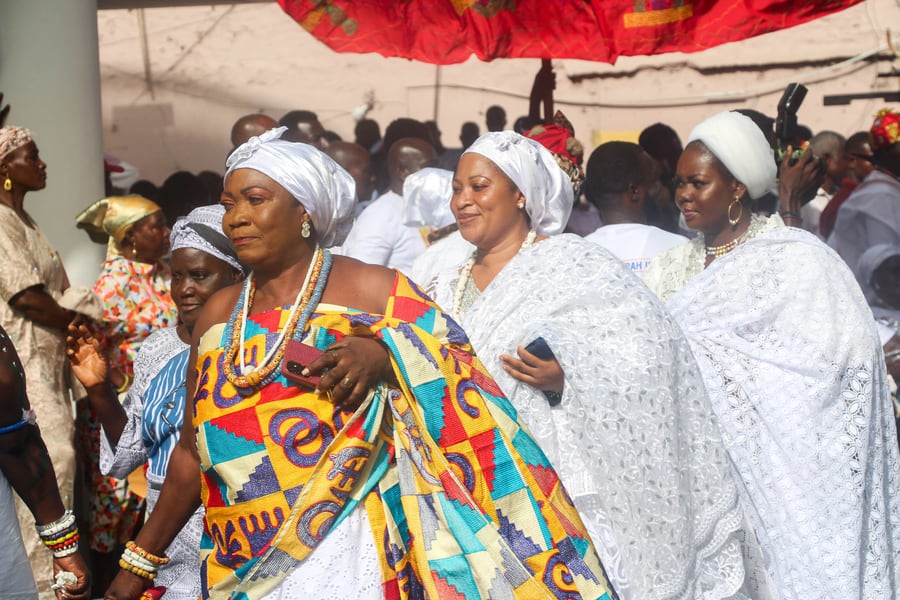 Nandi D / Wikimedia Commons · CC BY-SA 4.0 · 2024 · cropped
Homowo, hooting at hunger
The Ga festival that runs from the planting in May to the harvest custom in late August, and its name means to hoot at hunger — a remembrance of a famine survived generations ago. Sprinkled maize meal, drumming, twin ceremonies and processions in white and kente fill Accra and Tema for a fortnight.Timetables
The service runs daily, and it is worked as two separate shuttles that meet at Afienya. There is no single through train from Tema Harbour to Adomi: you ride in from the port, wait at Afienya, and take the northbound working on from there. The times below are the ones the Ghana Railway Development Authority publishes on its own services page.
Tema Harbour to Afienya, calling at Tema Industrial Area and Ashaiman:
| Depart Tema Harbour | 06:00 | 07:00 | 15:45 | 17:30 |
|---|---|---|---|---|
| Arrive Afienya | 06:45 | 07:45 | 15:55 | 18:00 |
Afienya to Tema Harbour, the same three stops in reverse:
| Depart Afienya | 07:00 | 08:00 | 16:20 | 18:15 | 18:30 |
|---|---|---|---|---|---|
| Arrive Tema Harbour | 07:45 | 08:15 | 16:50 | 18:30 | 19:10 |
The 18:30 is billed as the Adomi mop-up — the last train of the day, held to pick up passengers coming down off the northbound working.
Afienya to Adomi, calling at Shai Hills, Doryumu Junction, Akuse Halt, Kpong and Senchi Halt:
| Depart Afienya | 06:30 | 15:00 |
|---|---|---|
| Arrive Adomi | 07:45 | 17:00 |
| Depart Adomi | 08:00 | 17:15 |
|---|---|---|
| Arrive Afienya | 09:30 | 18:45 |
Two things to plan around. Neither northbound working connects out of Tema: the 06:00 reaches Afienya a quarter of an hour after the 06:30 has left for the Volta, and the 15:45 arrives after the 15:00 has gone. As published, the trains up to the Volta are timed for people who are already at Afienya, so a Tema passenger heading for Adomi is staying the night at one end or the other. And the arrival times are not all internally consistent — the two afternoon runs from Tema are timetabled at ten and thirty minutes for a trip the morning trains take forty-five over. Treat the departures as firm, the arrivals as approximate, and confirm both at the station.
As of September 2026. Live times: Ghana Railway Development Authority (opens in a new tab).
Tickets
The authority's site publishes fares but does not sell tickets, so this is a buy-at-the-station journey. Two fares appear on the current table — GH¢15 adult and GH¢7 child between Tema Harbour and Afienya, and GH¢10 adult and GH¢5 child between Afienya and Doryumu Junction — alongside a stored-value travel card at GH¢10 for adults and GH¢5 for children aged five to thirteen.
At the launch in October 2025 the authority quoted GH¢40 for the whole run from Tema through to Adomi, made up of the Tema–Afienya fare plus GH¢25 beyond it. That through fare is not on the published table today, so ask at the window for anything past Doryumu. Either way the sums are small: this is a working commuter railway, priced against the trotro rather than against a tour.
Fares as of September 2026, in Ghanaian cedis.
Book your tickets
Tema Harbour to Afienya
Adult 15 cedis · child 7
The commuter fare over the southern half of the line, four trains a day each way.
Book Tickets (opens in a new tab, on grda.gov.gh)via grda.gov.ghAfienya to Doryumu Junction
Adult 10 cedis · child 5
The published fare on the northbound working; ask at the window for anything beyond it.
Book Tickets (opens in a new tab, on grda.gov.gh)via grda.gov.ghTravel card
Adult 10 cedis · child 5, ages five to thirteen
The authority's stored-value card, which buys access to the trains rather than a journey.
Book Tickets (opens in a new tab, on grda.gov.gh)via grda.gov.ghRail Passes
No rail pass covers this journey. Ghana belongs to no pass scheme — it does not appear among the railway companies the Interrail and Eurail passes are valid on, and there is no African or Ghanaian equivalent sold to visitors. Nor is there a national multi-journey ticket: the only stored-value product on the line is the authority's own travel card, at GH¢10 for adults and GH¢5 for children aged five to thirteen, and it buys access rather than journeys.
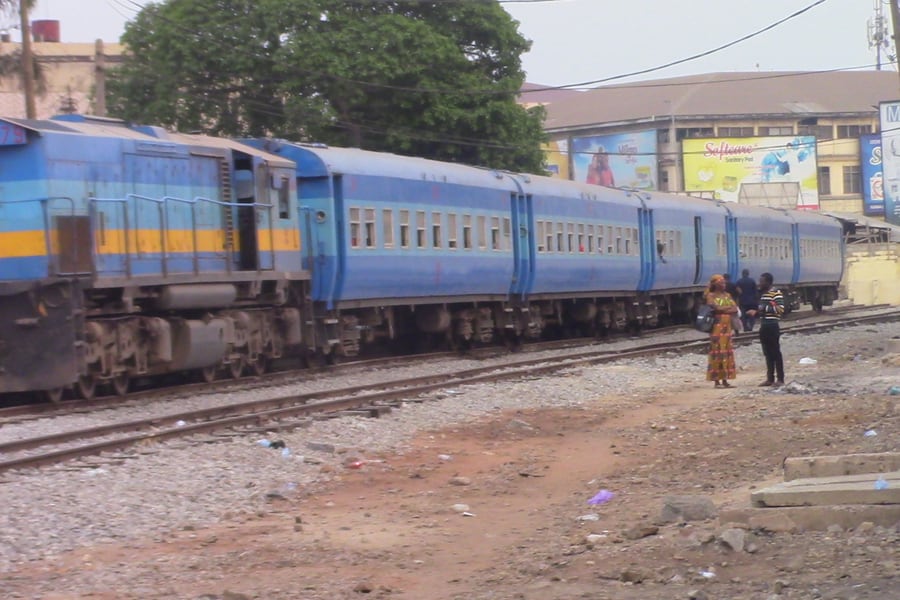
There is nothing to regret in that. A pass earns its keep where point-to-point fares are high, and here the whole line costs less than a cup of coffee at the airport. The other passenger services in the country — the Accra–Tema shuttle and the Sekondi–Takoradi shuttles on the old Cape-gauge network, run by Ghana Railway Company Limited — are cheaper again, at GH¢5 to GH¢7, and are also bought at the station on the day.
Pass conditions checked against interrail.com in September 2026.
Places to Visit
This is a commuter line through country most visitors pass over on the Accra–Akosombo road, and almost everything worth stopping for is within a few minutes of a platform.
Two of the five are at the Tema end, where the meridian crosses the coast: the fishing harbour that was there before the port was, and the lagoon behind the beach that is one of Ghana's Ramsar wetlands. The middle of the line has the Shai Hills, the only proper wildlife reserve within an hour of Accra, and the train stops at its gate. Beyond Kpong the country belongs to the Krobo, whose recycled-glass beads are sold by the strand in the markets at Agomanya and Somanya. And at the far end the Volta itself is the attraction — wide, green and hemmed in by forested hills, with boats working off the bank at Atimpoku.
 Angela L. Rak / Wikimedia Commons · CC BY-SA 4.0 · 2017 · cropped
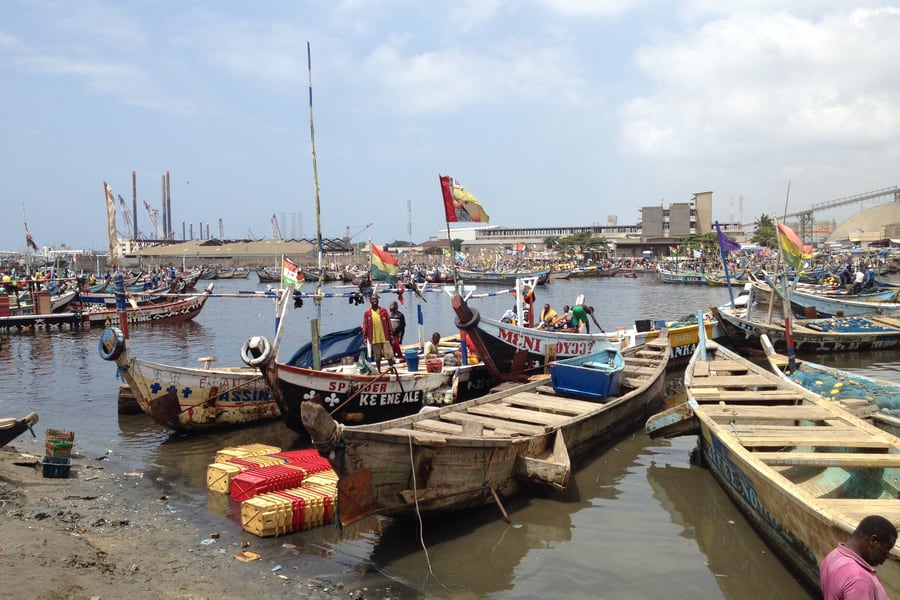
Tema fishing harbour
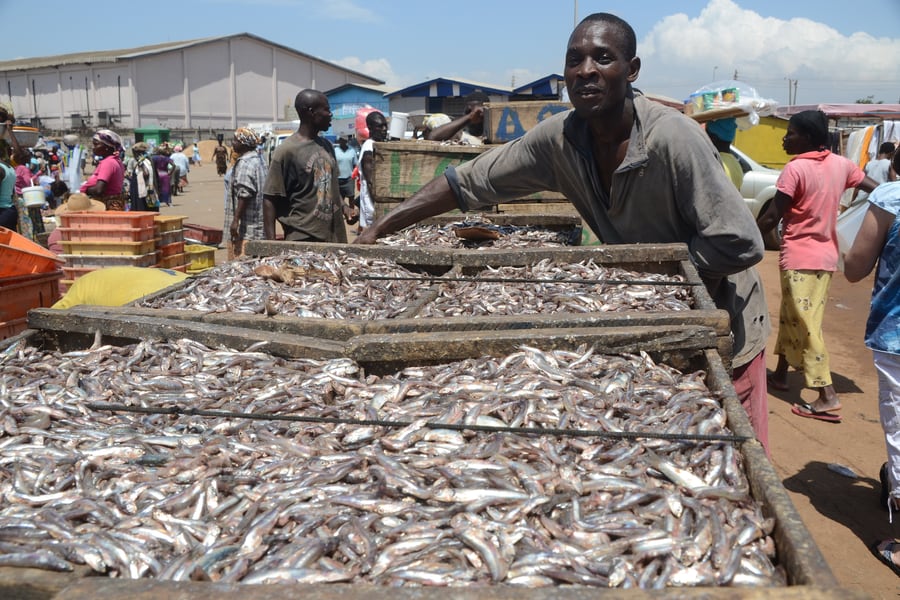
The canoe basin sits beside the container terminal and is the older of the two by centuries. Painted wooden boats come in on the morning tide with anchovy and herring; the catch is smoked and dried in trays along the shore and sold in the market behind. It is a ten-minute walk from the harbour station and the best half hour you will spend in Tema.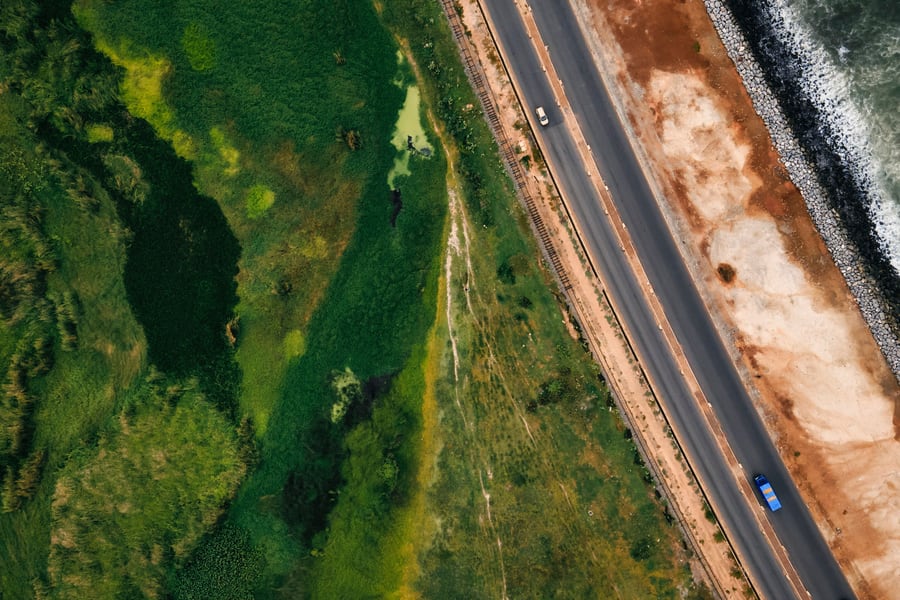 Agyemang Duah / Wikimedia Commons · CC BY-SA 4.0 · 2023 · cropped
The Sakumono lagoon
Between Tema and Accra the coast road runs on a strip of sand with the sea on one side and a shallow brackish lagoon on the other. Sakumono is a Ramsar wetland, and in the dry months the mudflats fill with waders — sandpipers, terns, herons — feeding within sight of the traffic. Go at first light, before the heat.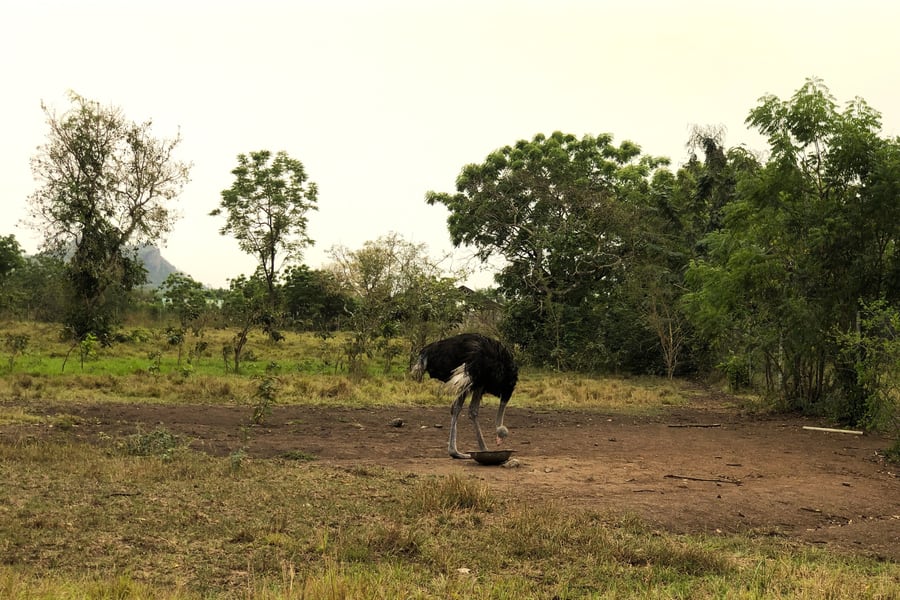 Celestinesucess / Wikimedia Commons · CC BY-SA 4.0 · 2023 · cropped
Shai Hills Resource Reserve
Fifty-one square kilometres of savanna and rocky hills, gazetted in 1962 and extended in 1973, holding zebra, ostrich, kob, green monkey, baboon and python, and listed by BirdLife as an Important Bird Area. The Shai people farmed these hills until the British ejected them in 1892 and their sites are still there among the rocks. The train stops at the gate.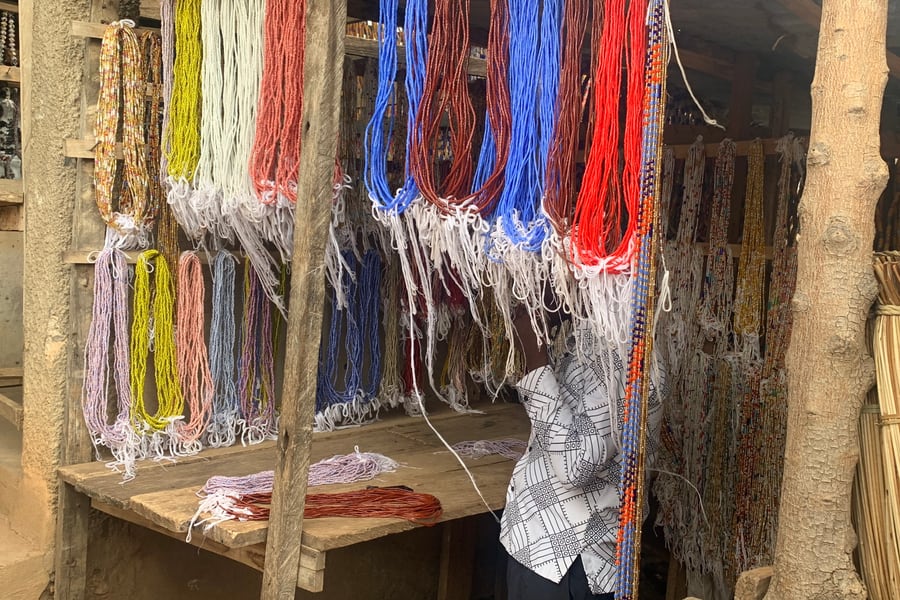 MohammedT10 / Wikimedia Commons · CC BY-SA 4.0 · 2025 · cropped
The bead markets at Agomanya
A short ride east of Kpong, in the Krobo towns of Agomanya and Somanya, the markets sell recycled-glass beads by the strand — waist beads, trade beads, old Venetian patterns and new ones fired that week in clay kilns a few streets away. Prices are by weight and by pattern, and the stalls run the length of the market shed.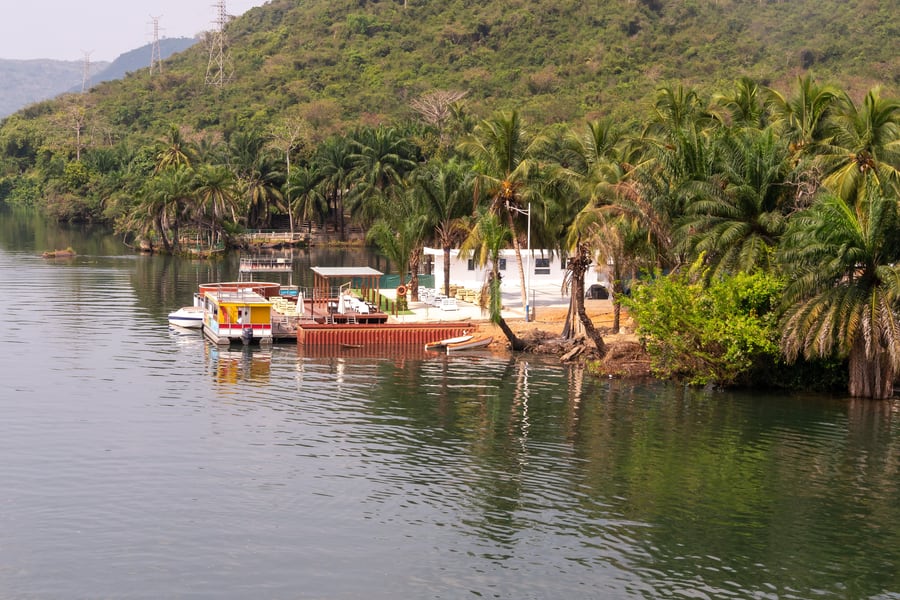 Matti Blume / Wikimedia Commons · CC BY-SA 4.0 · 2023 · cropped
The Volta at Atimpoku
The far end of the line is a river town on a green, slow-moving stretch of the Volta with forested hills behind it. Boats work off the bank, the roadside stalls sell abolo and fried shrimp, and the water you are looking at is the tail of Lake Volta — 8,502 square kilometres of it, the largest artificial lake on earth by surface area.Where to Sleep
Because no published pairing gets a Tema passenger to Adomi and back in a day, this is a line that asks you to sleep at one end of it. Tema is the practical choice if you are working around a flight into Accra — the city is twenty-five kilometres east of the capital and its hotels sit in the numbered communities within a short ride of the harbour station.
The other choice is the Volta itself, where the resorts are strung along the west bank between Senchi and Atimpoku, within sight of the water the railway crosses — a short taxi ride from Adomi station and a considerably better evening than a night beside a container terminal.
Where to stay
Royal Nick Hotel
Obetsebi Lamptey Street, Community 6, Tema
In the numbered communities behind the port, a short ride from the harbour station.
Check Availability (opens in a new tab, on royalnickhotel.com)via royalnickhotel.comThe Royal Senchi
Senchi Ferry Road, on the Volta
More than eighty rooms on thirty-five acres of riverbank, a mile from where the railway crosses.
Check Availability (opens in a new tab, on theroyalsenchi.com)via theroyalsenchi.comQuestions or corrections
Planning this trip and stuck on something, or spotted a time, fare or detail that has changed? Send us a message about Tema to Adomi. We read every one, and we update this page when something has changed.