Tertitten
Espen Franck-Nielsen / Wikimedia Commons · CC BY-SA 4.0
- DistanceSørumsand–Fossum · 3.6 km
- Duration15 minutes each way; about an hour there and back
- Best seasonSummer Sundays from mid-June to mid-September, and the Christmas trains
Introduction
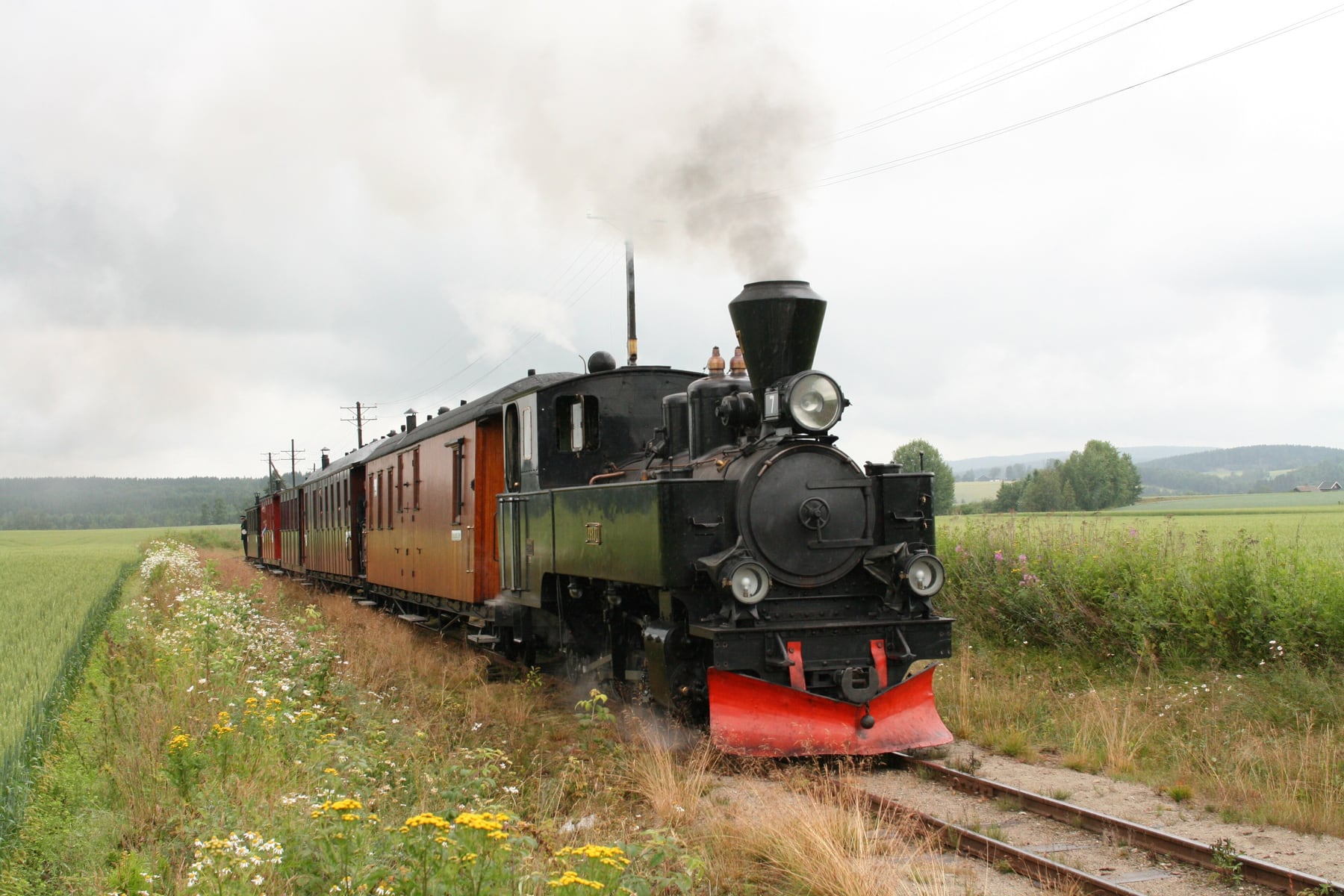
The last steam engine ever delivered to a Norwegian railway still works for a living, on a line 3.6 kilometres long. Prydz, built by Henschel in 1950, is one of three engines that take Tertitten's trains from Sørumsand up to Fossum, on the only line in Norway where trains still run on 750 mm track.
The Urskog–Høland Line opened in 1896 to carry timber and farm produce out of the forests of Aurskog and Høland, and was built the cheapest way there was: as a tertiary railway, on track not much more than half the width of the main line's. Its 57 kilometres ran from Sørumsand to Skulerud, where the logs went on by canal to Halden. The state took it over in 1945, and the last regular train ran on 1 July 1960.
Volunteers set to work to save it the next year, and the first veteran train ran in 1966. Today the line is a department of MiA – Museene i Akershus, which looks after the track, the buildings and the stock, while the volunteers of Urskog-Hølandsbanen Driftsgruppe drive, fire and guard the trains. The whole site is protected, and the ride is short: fifteen minutes each way, half an hour from Oslo.
The Journey
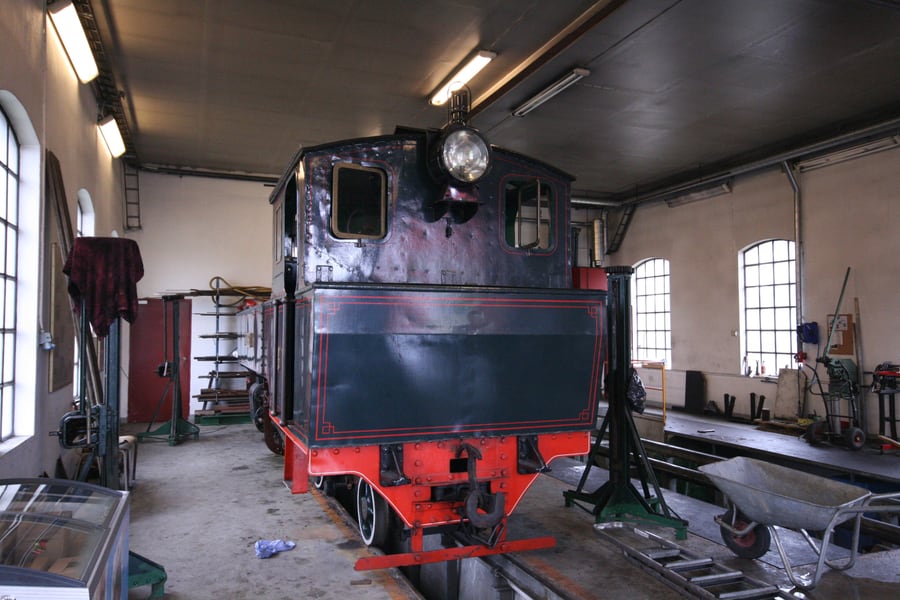
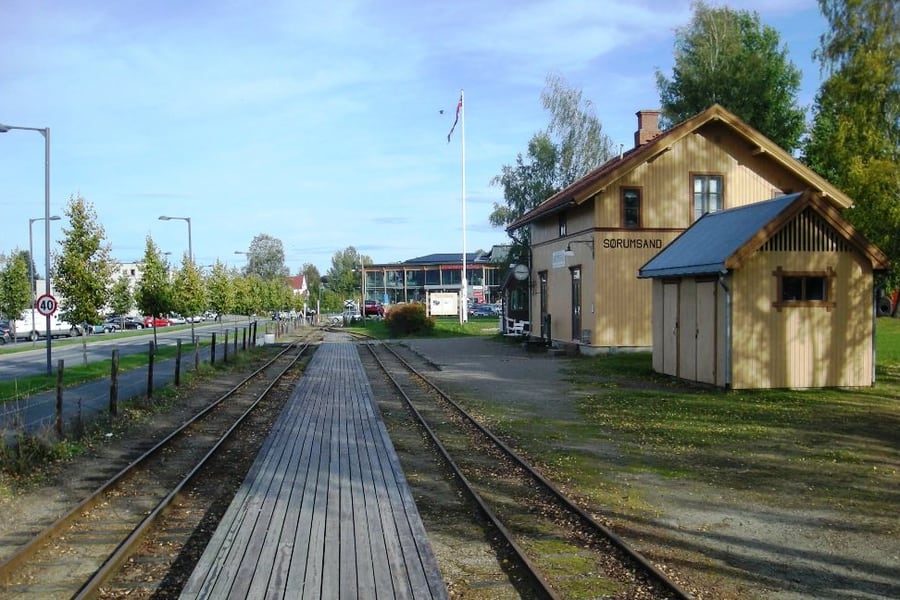
The trains start from Tertitten's own station at Sørumsand, a few minutes' walk from the main-line station, opposite the Fokus shopping centre. Nothing here survived the closure: the volunteers laid the track back into the town in 1987 and finished the station two years later, as a copy of Bjørkelangen's of 1896, and the workshop followed in 1992. The transfer crane of 1919 is the real thing, still in working order: it swung wooden containers between main-line wagons and the narrow gauge, the first container crane in Norway.
Out to Fossum
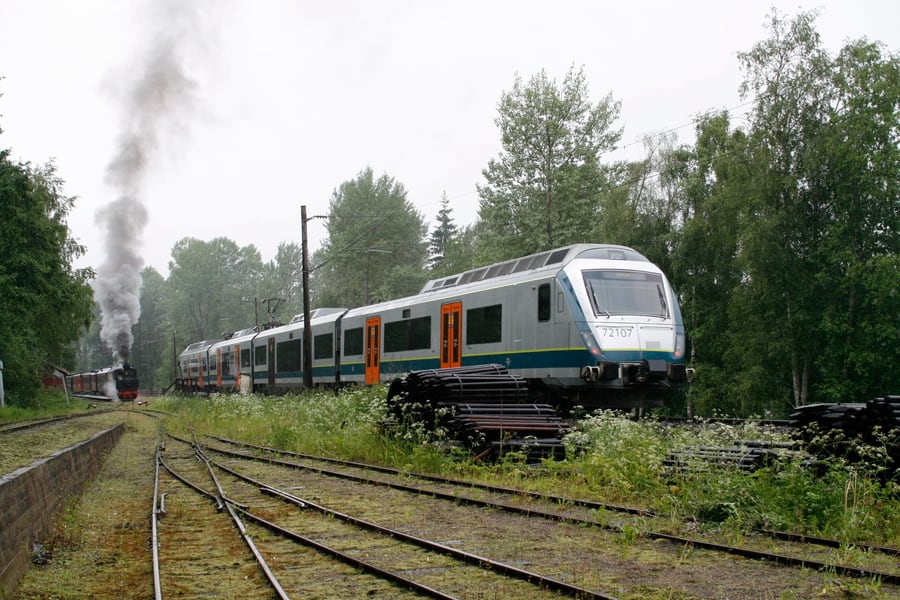
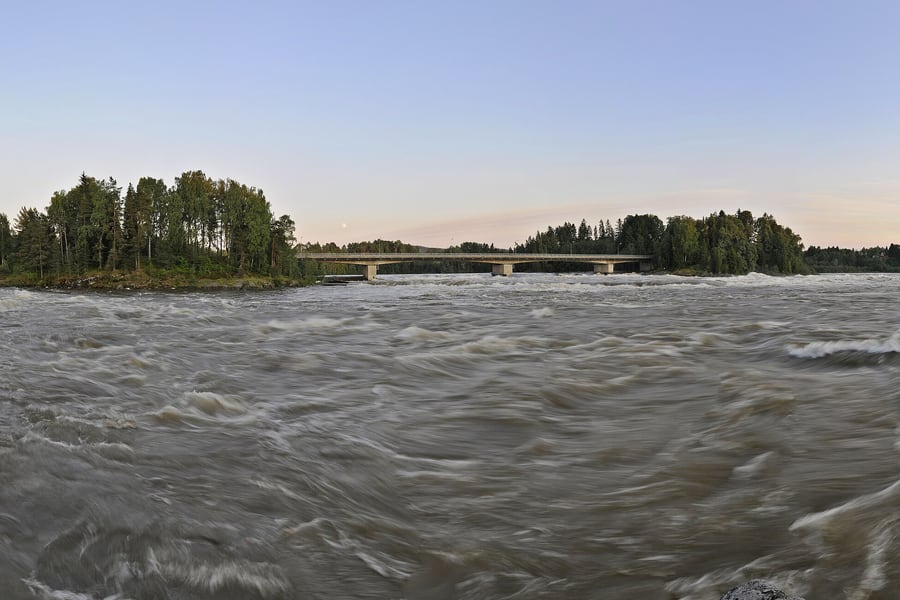
The train leaves past the shed and runs east beside the Glomma to Bingsfoss. This is where the line began in 1896, by the Bingsfossen falls, until it was extended into Sørumsand in 1903, and where the museum railway began again in 1961. From here the line leaves the river and climbs through woods and fields to Fossum, the end of the line, a quarter of an hour from Sørumsand.
At Fossum the train waits 25 minutes. The little station building of 1896 came from Mork, further up the old line, and the white village hall beside it has toilets. Then the train goes back down to Sørumsand.
The trains
Three steam engines take turns: No. 4 Setskogen, built by Hartmann in 1909, No. 6 Høland, a Hartmann of 1925, and No. 7 Prydz, built by Henschel in 1950 to the same design and the only working steam engine in Norway with a copper firebox. The carriages are the line's own, in two classes: third class has 120 places on wooden benches in open compartments, with the biggest windows, and second class has 21 upholstered seats. Staff work the line with the flags, hand signals and uniforms of the years before 1960, and the volunteers are in the workshop at Sørumsand every Wednesday evening and every other Saturday morning, where visitors are welcome to look in.

Along the route
 Jan-Tore Egge / Wikimedia Commons · CC BY-SA 3.0 · cropped
Sørumsand
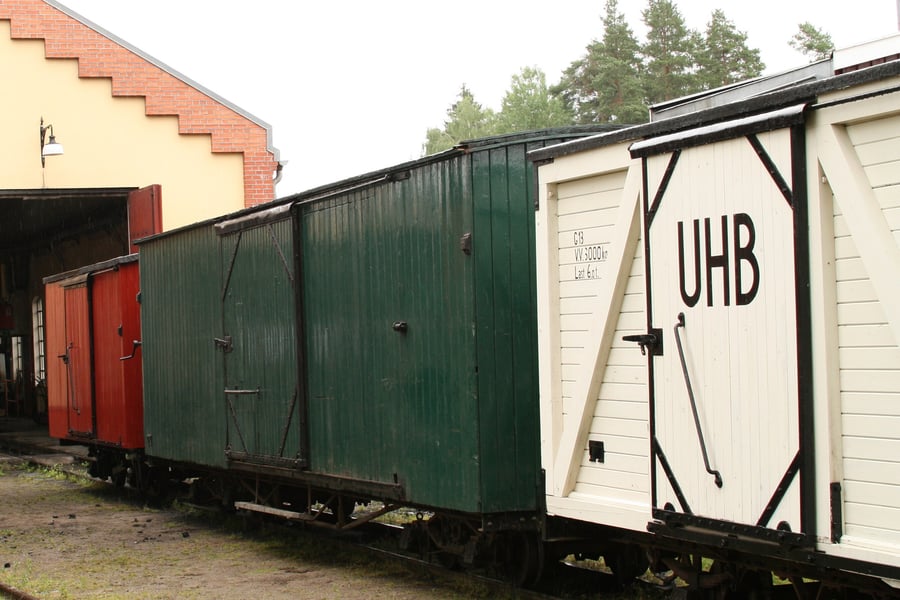
The museum station was built by volunteers in 1987–89 as a copy of Bjørkelangen station of 1896, with a shed and workshop modelled on Bjørkelangen's. Beside it stands the transfer crane of 1919, Norway's first container crane, which lifted wooden boxes between broad and narrow gauge.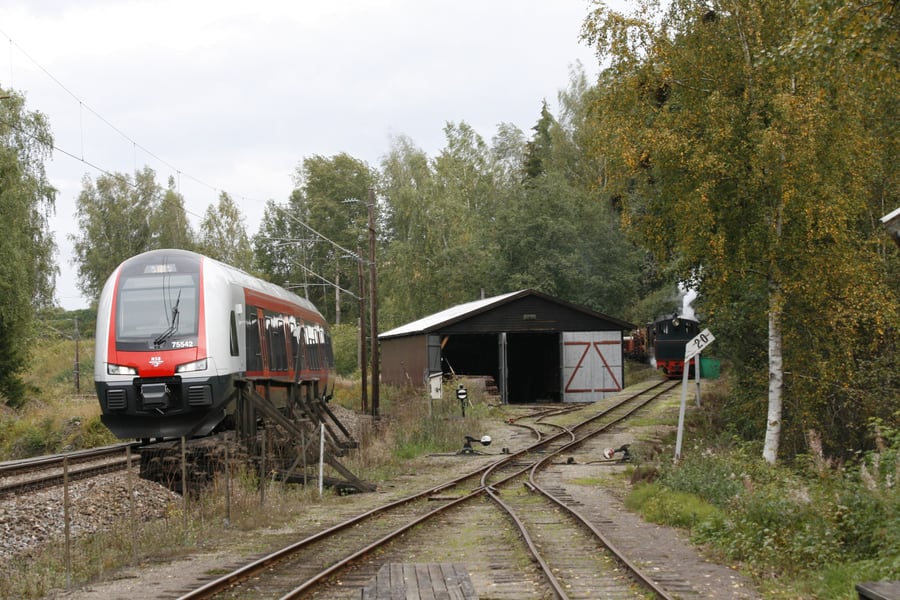 Espen Franck-Nielsen / Wikimedia Commons · CC BY-SA 4.0
Bingsfoss
By the falls on the Glomma, 2.4 km east of Sørumsand, the line began in 1896, until the extension of 1903. The museum railway started here in 1961, and its first station building, brought from Finstadbru, went up in 1975–76.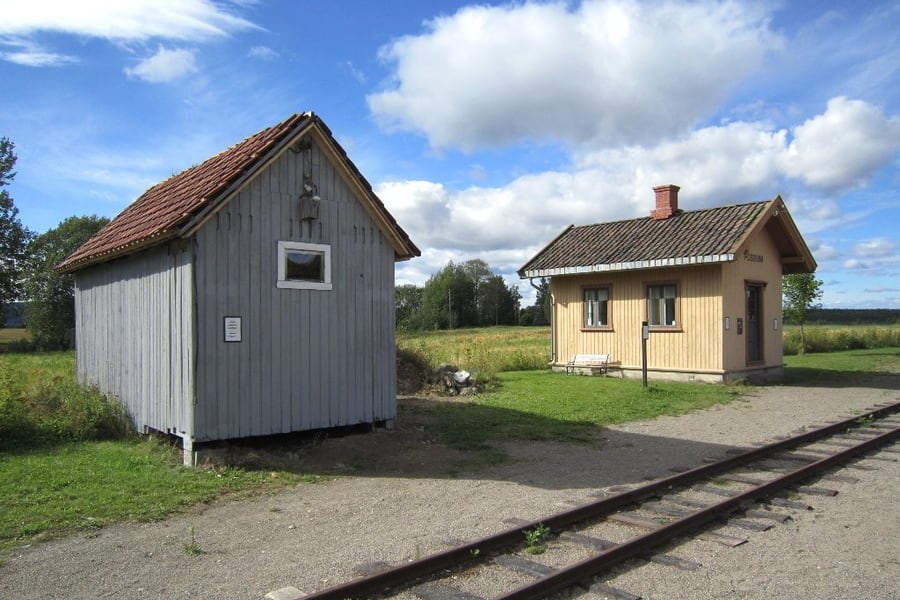 Jan-Tore Egge / Wikimedia Commons · CC BY-SA 3.0 · cropped
Fossum
The end of the line today, and only a halt in the old days. Its station building of 1896 and its privy were moved here from Mork, further up the line. The train waits 25 minutes, long enough for the kiosk run by the local school band.A bit of history
Culture & experiences along the way
 Kjetil Fjellheim / Wikimedia Commons · CC BY 2.0
Why "Tertitten"
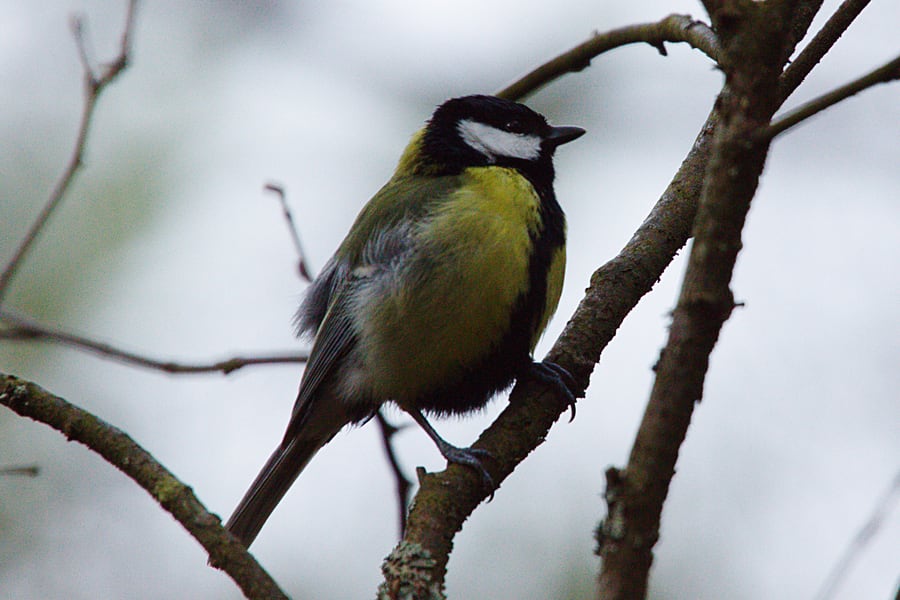
The line was built as cheaply as possible, as a tertiary railway, and the nickname plays on that word and on "tertitt", the local dialect word for the great tit. NSB renamed the line Aurskog-Hølandbanen in 1947; the museum keeps the old private company's name, and everyone still says Tertitten.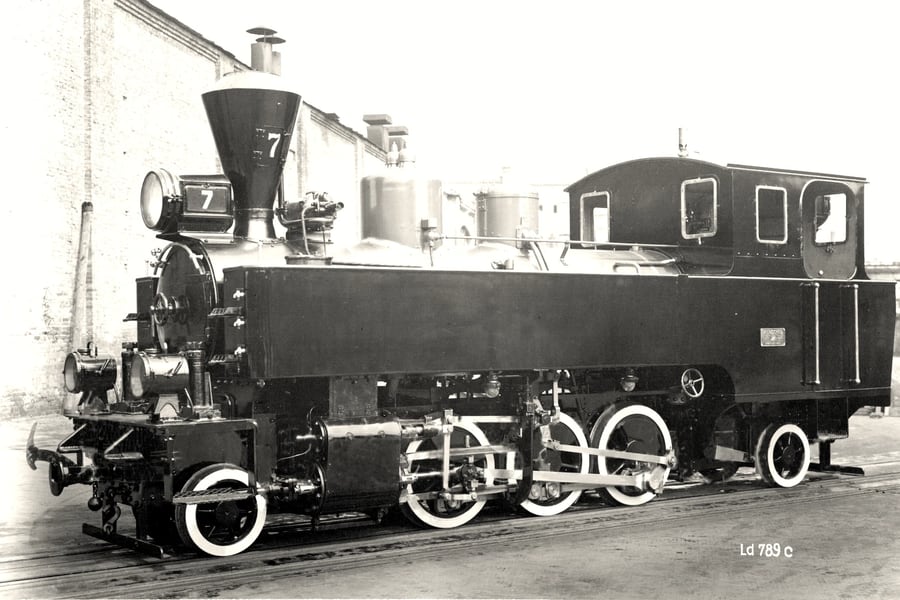 Henschel works photograph, 1950 / Wikimedia Commons · Public domain · cropped
Prydz, the last of the line
When NSB needed a new engine in 1950, the Hartmann works that built Nos. 5 and 6 no longer existed, so Henschel built No. 7 to the same design. Named after the line's long-serving manager Eigil Prydz, it was the last steam engine delivered to any Norwegian railway.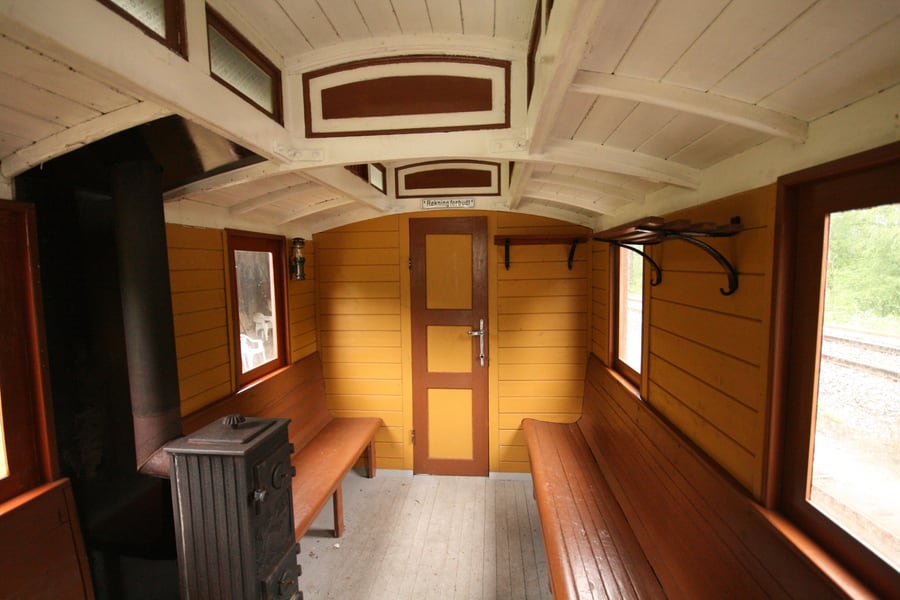 Espen Franck-Nielsen / Wikimedia Commons · CC BY-SA 4.0
Steam at Christmas
On the Sundays of Advent and at New Year the carriages are warmed by wood stoves, with rugs and paraffin lamps. At Fossum everyone gets hot gløgg and gingerbread, and there is time for a sleigh ride with bells before the train goes back; both are included in the ticket.Timetables
Tertitten runs on Sundays in summer and at Christmas. Every trip is a round trip from Sørumsand, and seats are booked in advance on the museum's site; with a booking your seat on the train you chose is guaranteed.
Summer Sundays, 14 June – 13 September 2026
Four departures from Sørumsand, each about an hour there and back: fifteen minutes to Fossum, 25 minutes there, and fifteen minutes back.
| Leaves Sørumsand | Back at Sørumsand |
|---|---|
| 11:00 | 12:00 |
| 12:15 | 13:15 |
| 13:30 | 14:30 |
| 14:45 | 15:45 |
Christmas trains, 2026
On the Sundays of Advent (29 November, 6, 13 and 20 December), on 27 December and on New Year's Eve, steam trains run several times a day, and each round trip takes about 75 minutes. On 29 November they leave Sørumsand at 10:45, 12:15, 13:45 and 15:15. On 13 December the line also has a Christmas market at Sørumsand station.
The 2027 summer season is not yet published. Times as of October 2026, from Tertitten (opens in a new tab).
Getting there
Sørumsand is on the Kongsvinger Line. On a Sunday the Vy local train R14 leaves Oslo S every hour at four minutes past and reaches Sørumsand 25 minutes later; trains back leave Sørumsand at half past the hour. From the main-line station it is a few minutes' walk. Connections from Entur (opens in a new tab), for a Sunday in November 2026; check the summer timetable before you go.
Tickets
Tickets are sold in advance on Tertitten's own pages, for a chosen date and departure. A return in third class is NOK 220 for an adult and NOK 135 for a child of 3 to 16 or a senior; in second class it is NOK 360 and NOK 250. Children under three, holders of a companion card and members of Tertitten's friends' association travel free, but still need to book a ticket.
The Christmas trains cost the same in third class, with the gløgg, the gingerbread and the sleigh ride at Fossum included. Pushchairs ride in the guard's van, five to a train, and dogs are allowed in the carriages. 2026 fares, checked October 2026.
Book your tickets
Espen Franck-Nielsen / Wikimedia Commons · CC BY-SA 4.0 · croppedThird class
Sørumsand to Fossum and back
Wooden benches and the biggest windows, in open compartments with 120 seats.
Book Tickets (opens in a new tab, on Tertitten)via TertittenJan-Tore Egge / Wikimedia Commons · CC BY-SA 3.0 · croppedSecond class
Sørumsand to Fossum and back
Upholstered plush and leather seats, once the class for the well-off, with only 21 places.
Book Tickets (opens in a new tab, on Tertitten)via TertittenEspen Franck-Nielsen / Wikimedia Commons · CC BY-SA 4.0Christmas train
Advent Sundays and New Year's Eve
The round trip with gløgg, gingerbread and a sleigh ride at Fossum, in about 75 minutes.
Book Tickets (opens in a new tab, on Tertitten)via TertittenRail Passes
No rail pass covers the Tertitten. It is a museum railway with its own fares, and it is not among the Norwegian railway companies whose trains Interrail and Eurail cover. Everyone pays the museum's fare.
A pass can bring you to the start. Vy's local trains from Oslo to Sørumsand are covered by an Interrail Norway Pass or a Global Pass, with no reservation needed. For this trip alone a pass is not worth buying — it pays only when Sørumsand is one stop on a longer journey through Norway.
Checked October 2026 against Interrail's table of railway companies (opens in a new tab).
Places to Visit
The Tertitten was a timber railway, and the river it ran beside carried the timber on. These four follow the logs: down the Glomma to the booms at Fetsund, and out along the old line to the canal.
 Anders Fagerjord / Wikimedia Commons · CC BY-SA 2.0
Fetsund Lenser
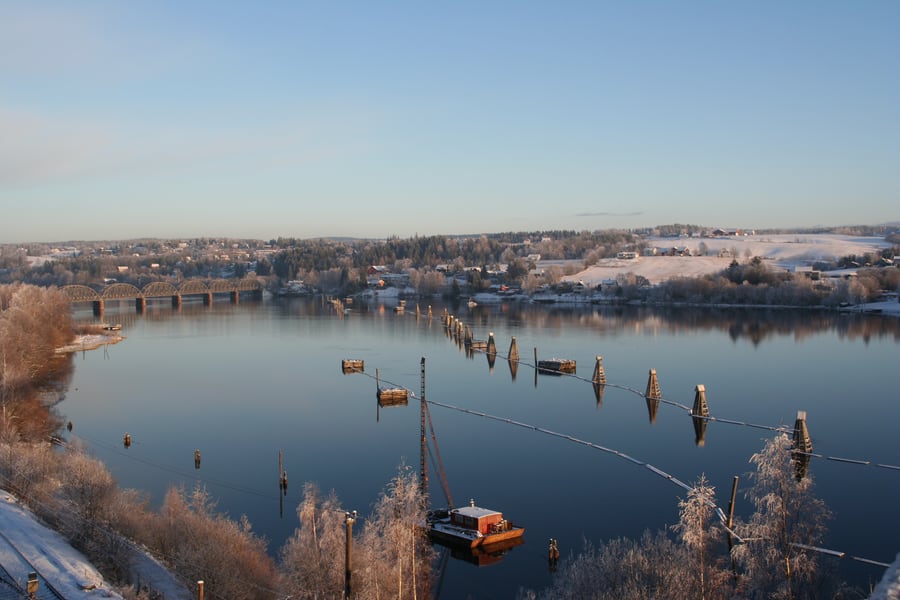
Where the Glomma runs into Øyeren, timber floated down the river was sorted into booms from 1861 until floating ended in 1985. Before 1861 the bundling was done at Bingen, by Sørumsand. Protected since 1987 and now part of MiA, it is Norway's only surviving log-floating installation, a museum and the visitor centre for the Nordre Øyeren wetland.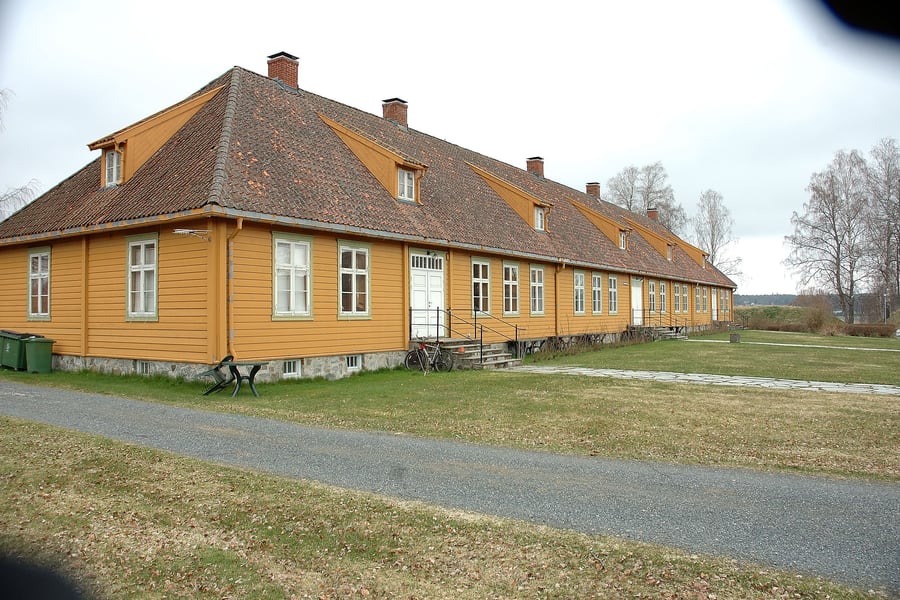 Paal Sørensen / Wikimedia Commons · CC BY-SA 3.0 · cropped
Blaker skanse
A fort built in 1682 to guard the Glomma against Swedish attack, rebuilt as a closed star fort in the 1750s and taken by Swedish troops for two days in April 1808. The artillery building of 1740–50 is one of Norway's largest protected timber buildings, and the fort is now a venue for concerts and markets. Flums / Wikimedia Commons · CC BY-SA 4.0 · cropped
Nordre Øyeren
The Glomma, the Leira and the Nitelva build the largest inland delta in the Nordic countries here, a nature reserve since 1975 and a Ramsar site since 1985. Around 260 bird species have been recorded, and in spring and autumn it is Norway's most important inland resting place for waterbirds on migration.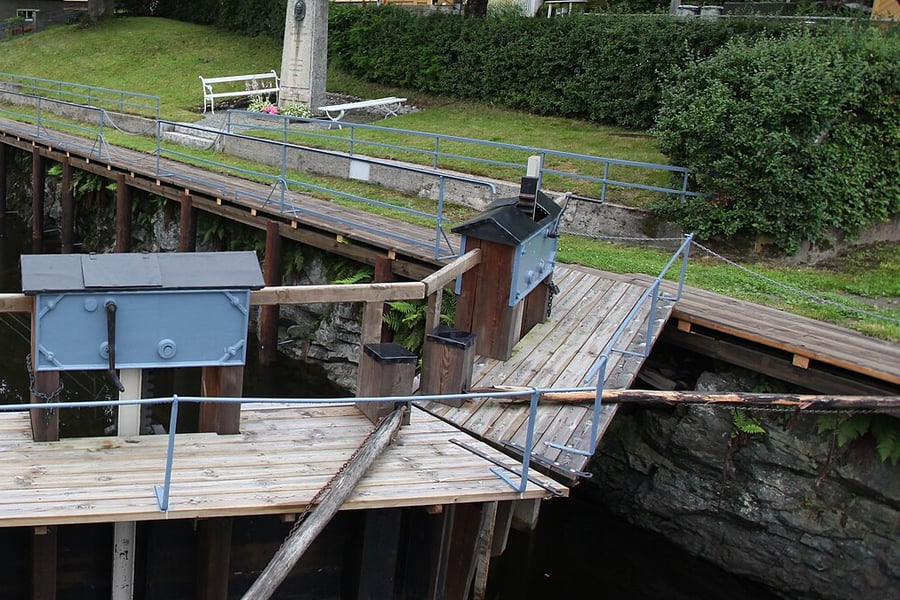 Trond Strandsberg / Wikimedia Commons · CC BY-SA 3.0 · cropped
Haldenkanalen at Ørje
The canal was built to carry timber from Skulerud, the old far end of the Tertitten, down to Tistedalen. At Ørje its locks of 1857–60 lift boats 10 metres and are still worked by hand, as they were when they opened, with the canal museum beside them. After the war the round trip by train, steamer and Tertitten was a favourite day out from Oslo.Where to Sleep
The trains run only by day and Sørumsand is half an hour from Oslo, so most visitors come out from the city and go back the same afternoon. To stay nearer, Lillestrøm is on the same line, between Oslo and Sørumsand.
Where to stay
Thon Hotel Arena
In Lillestrøm, on the line to Sørumsand
A modern conference hotel in Lillestrøm, 12 minutes by train from both Oslo S and Oslo Airport.
Check Availability (opens in a new tab, on thonhotels.no)via thonhotels.noQuestions or corrections
Planning this trip and stuck on something, or spotted a time, fare or detail that has changed? Send us a message about Tertitten. We read every one, and we update this page when something has changed.