The Canadian
Sancho McCann / Wikimedia Commons · CC BY 2.0 · cropped
- Distance4,406 km
- Duration4 nights
- Best seasonAll year · 2 departures a week
Introduction
The Canadian is the scheduled train across Canada: 4,406 km from Toronto to Vancouver, four nights on board, two departures a week in each direction. It is not a tour and not a cruise on rails. It is the public service that Canadian National's freight railway lets through twice a week, carrying people who are going somewhere as well as people who came for the view, and it runs in January as readily as in July.
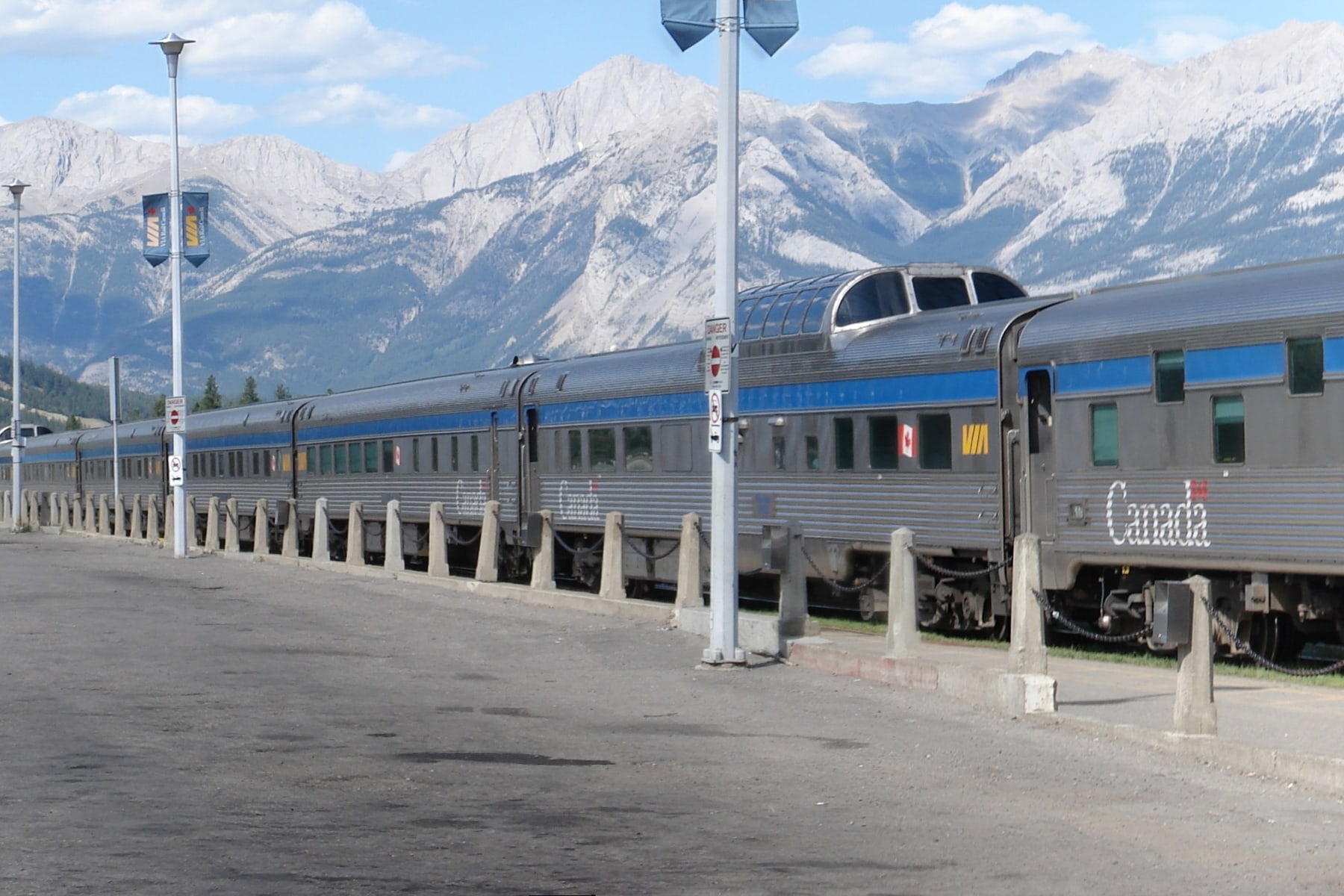
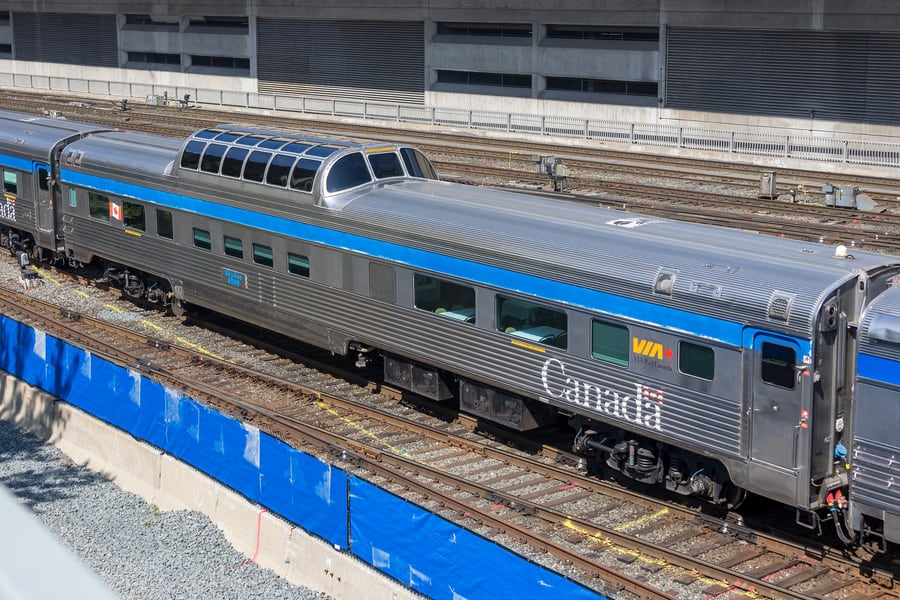
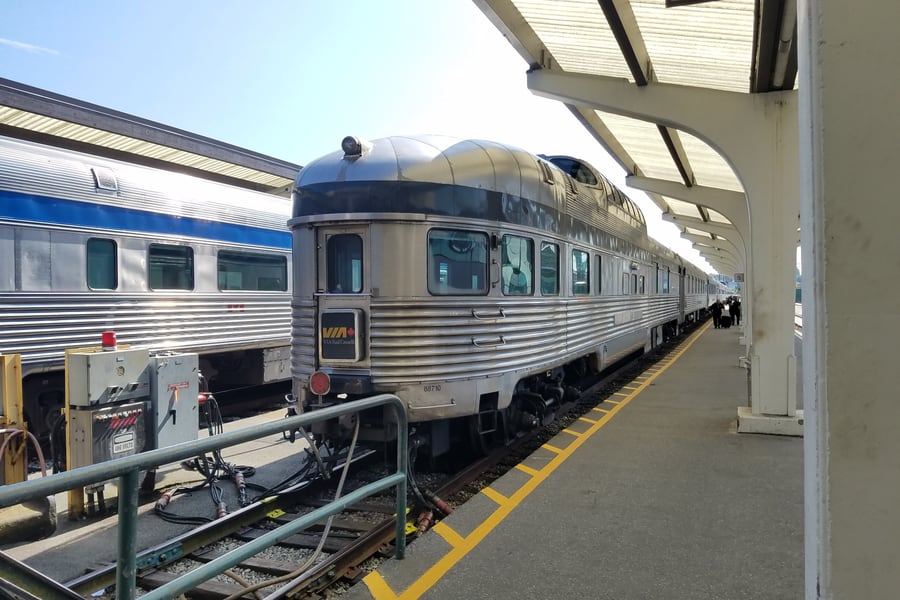
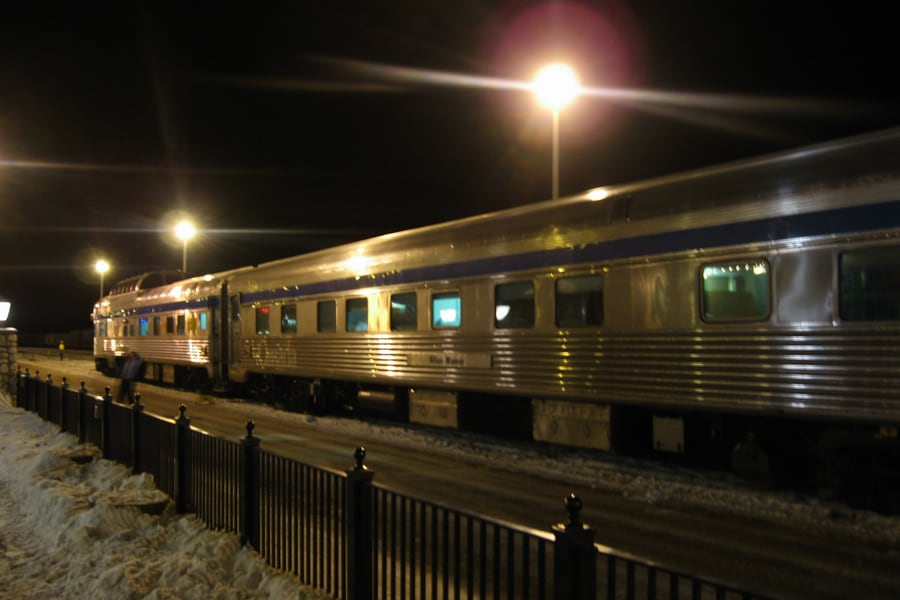
Most of the train was built in 1954 and 1955 by the Budd Company for Canadian Pacific, and it is still the fleet in daily use: fluted stainless steel, the mid-train Skyline dome cars, the sleepers named for Canadian manors and châteaux, and a blunt-ended Park car with a dome and a lounge that always brings up the rear. Canadian Pacific launched The Canadian on 24 April 1955; VIA Rail, the federal Crown corporation created in 1977, took the train and its name over in 1978 and has run it ever since.
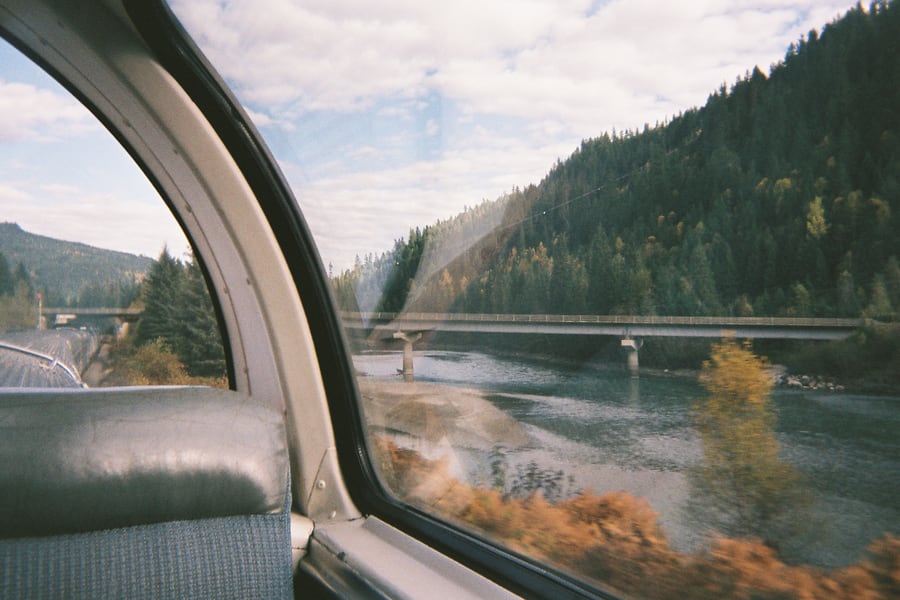
What that gets you is four days of a country changing outside the window rather than four viewpoints strung together — the granite and lakes of the Canadian Shield through northern Ontario, a full day and night of prairie, then Jasper, the Yellowhead Pass and the long descent of the North Thompson to the Pacific. You sleep through some of it, which is the point.
The Journey
Train 1 leaves Toronto Union Station at 09:55 and is still going four nights later. The city thins out through Parry Sound, and by late afternoon at Sudbury Junction the train is on the Canadian Shield — exposed bedrock, black spruce, and a chain of lakes that goes on for the whole of the next day. These are railway towns turned timber towns: Capreol, Gogama, Hornepayne, Longlac, Armstrong, with the pulp and plywood mills standing beside the track. Somewhere in there the train crosses into Central time and, at Sioux Lookout, into the fishing and canoe country of the English River and Lac Seul.
Winnipeg arrives on the evening of day two and is the one proper stop: two hours in a 1911 station while the train is serviced, long enough to walk out into the city. Past it the forest stops as if cut with a knife and the prairie begins. Day three is Manitoba and Saskatchewan — Watrous and the mineral springs of Little Manitou Lake, whose salt makes the water more buoyant than the Dead Sea; Saskatoon in the late morning; Biggar and Unity, where salt is mined 1,127 metres underground. At Wainwright the pumpjacks start, and shortly after, at mile 149, the train crosses the Battle River on a steel trestle 61 m high and 884 m long. Edmonton comes at the end of the evening, and the train sits there for three hours in the dark.
The mountains
You wake up in the Rockies. Jasper is reached at 06:30 on day four and held until 09:30 — the longest stop of the trip, and enough time for breakfast in town. West of it the line climbs to the Yellowhead Pass, 1,131 m, which is the Alberta–British Columbia border, the Mountain–Pacific time boundary, and one of the lowest crossings of the entire North American Continental Divide. It is also where Mount Robson appears: at 3,954 m, the highest peak in the Canadian Rockies, standing more or less alone above the trees.
Then the descent. The line follows the North Thompson River south all afternoon through steep forested canyon; at mile 113, Pyramid Creek Falls shows for a few seconds on the east side, and there is no road to it — the train window is one of the only ways to see it. By Kamloops North, reached in the early evening, the forest has given out entirely and the train is in semi-desert: bare hills, sagebrush, and beyond Ashcroft the eroded rock pinnacles called hoodoos. The last night is spent running down the Fraser through Hope and Chilliwack, and the train reaches Vancouver's Pacific Central Station at 08:00 on day five.
The train itself
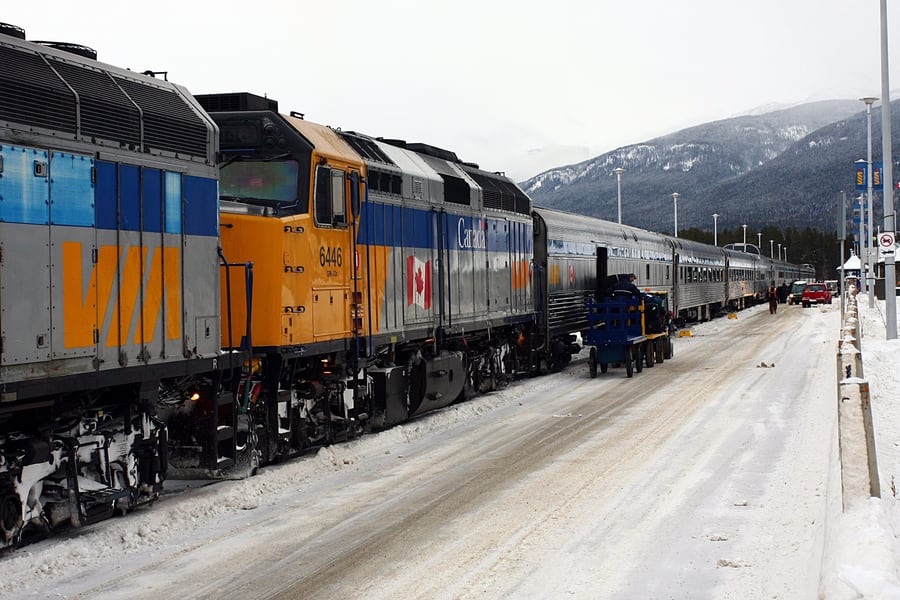
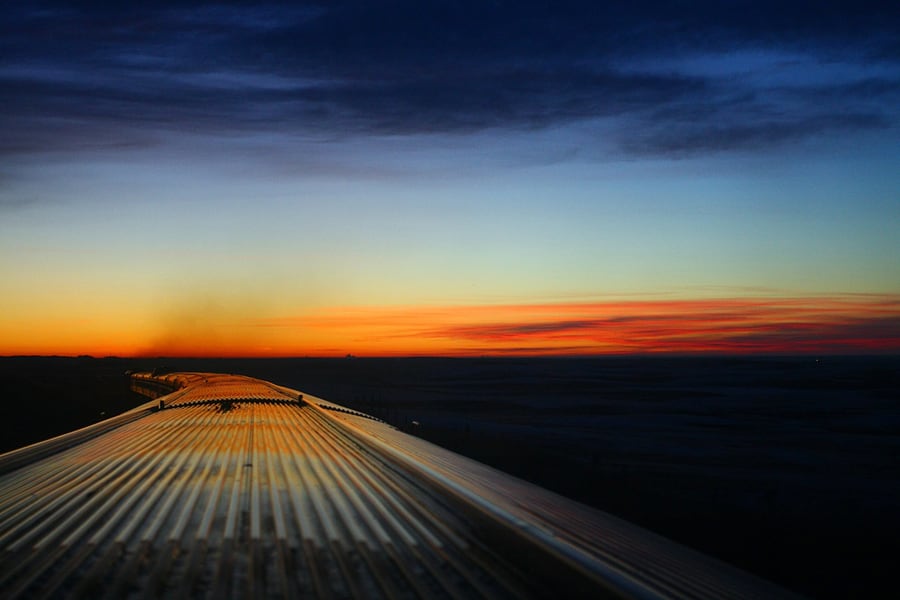
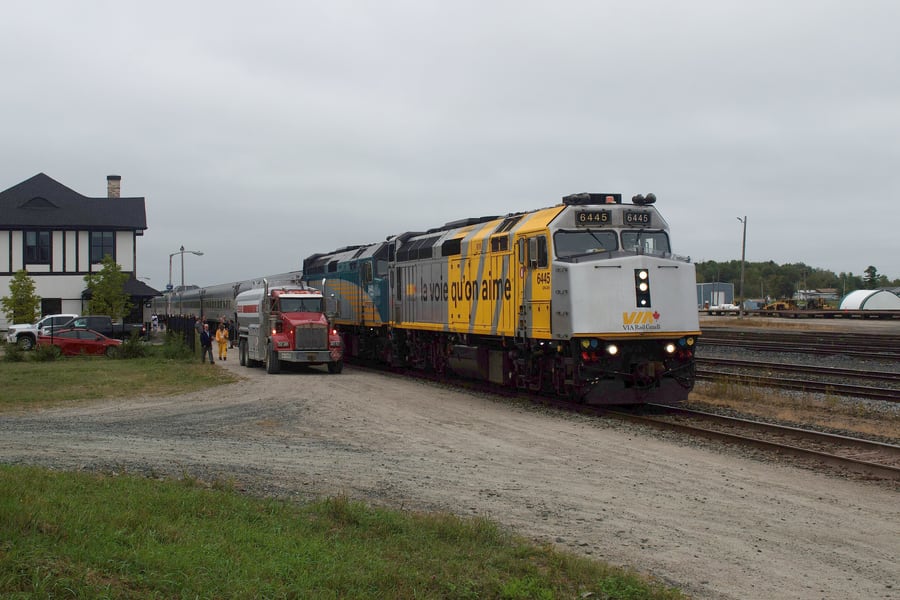
Nothing on board is new. The Manor and Château sleeping cars, the Skyline dome cars, the dining car and the Park car were all built by the Budd Company and AMF between July 1954 and April 1955, bought by VIA from CP and CN in 1978, and refurbished rather than replaced; VIA still runs 40 Manors, 29 Châteaux, 16 Skylines, 13 diners and 14 Park cars. Each Park car is named after a Canadian park and carries a 24-seat dome, a bar and a rear observation lounge — they are always at the back of The Canadian. At the front are diesels of two classes: F40PH-2s built by General Motors between 1987 and 1989, and 4,250 hp P42DCs built by GE in 2001.
The one modern car is the Panorama, a full-length glass "Ultra Dome" built by Colorado Railcar in 2000 with windows six feet wide, of which VIA owns three; Prestige passengers have reserved seats in it. There is no Wi-Fi on board — only at the Toronto, Winnipeg, Edmonton, Jasper and Vancouver stations. Four days with no signal is either the drawback or the reason to go.
Along the route
 P199 / Wikimedia Commons · CC BY-SA 3.0 · cropped
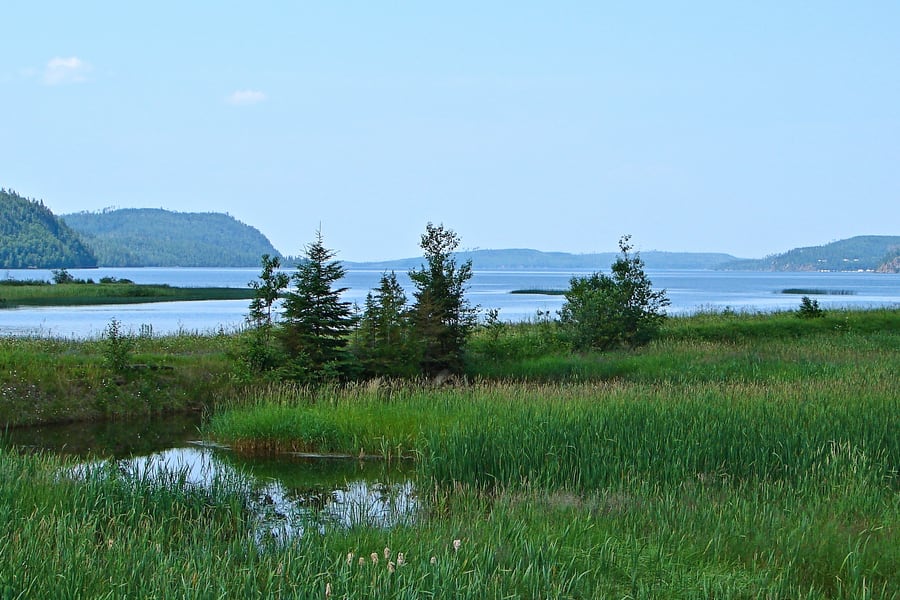
The Canadian Shield
A full day and night of exposed granite, black spruce and water, from Sudbury Junction to the Manitoba border. Lake Nipigon and Long Lake are the biggest of hundreds; the towns between them exist because the railway does.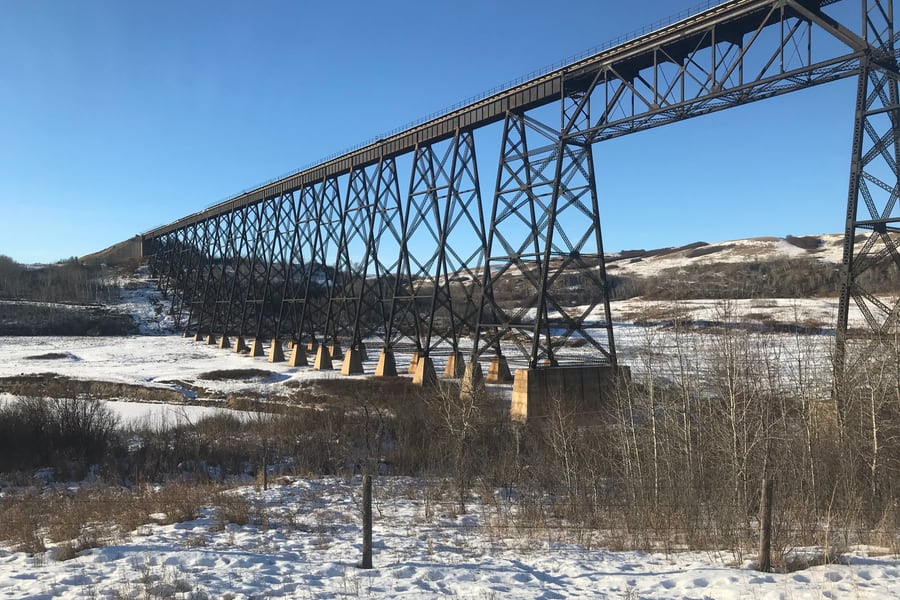 Jason Woodhead / Wikimedia Commons · CC BY 2.0 · cropped
The Battle River trestle
At mile 149 in Alberta the train crosses the Battle River valley on a steel trestle 61 metres high and 884 metres long. It takes well under a minute and it is the single most dramatic piece of engineering on the route.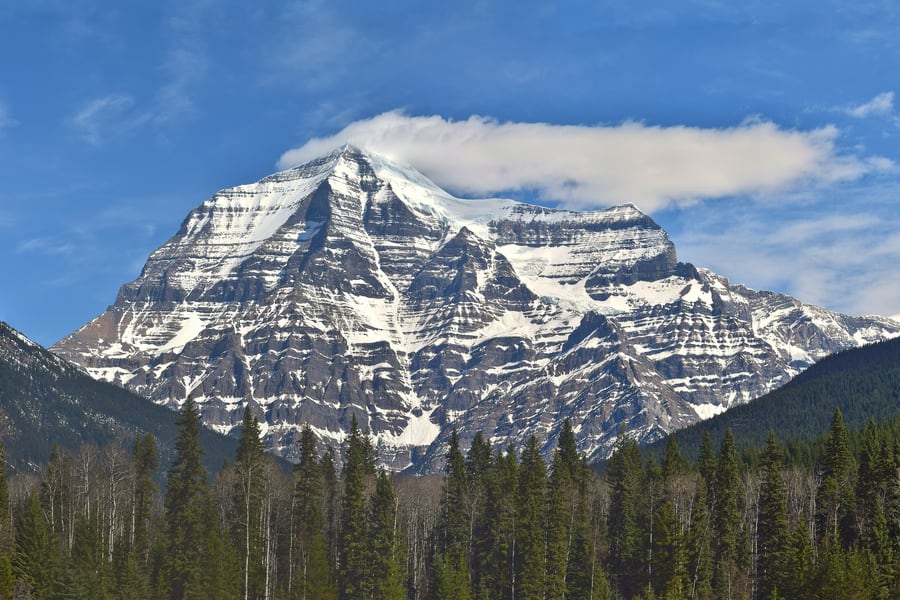 The Cosmonaut / Wikimedia Commons · CC BY-SA 2.5 CA · cropped
Yellowhead Pass & Mount Robson
The line crosses the Continental Divide at 1,131 m — one of its lowest points anywhere in North America — and shortly after, Mount Robson, 3,954 m, the highest peak in the Canadian Rockies, stands clear above the trees.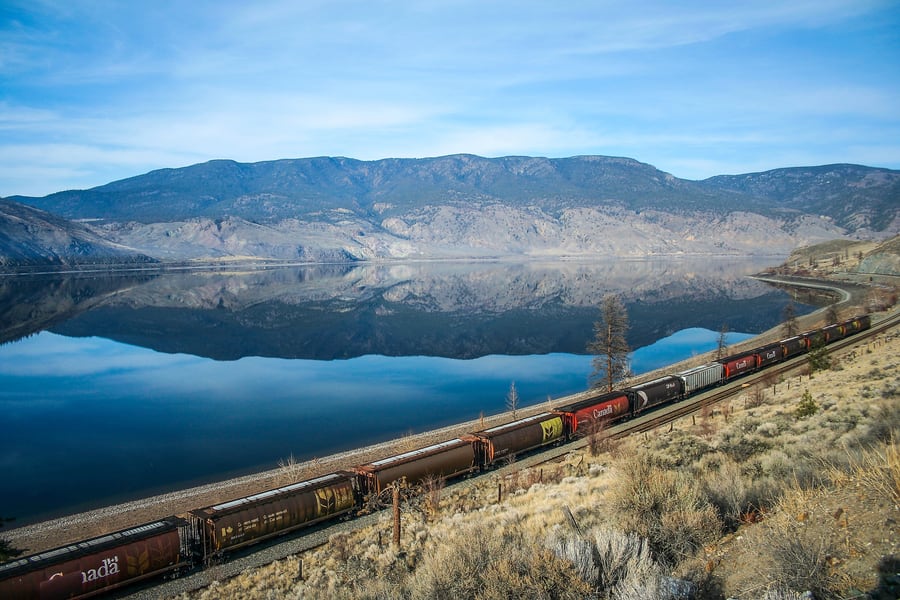 Murray Foubister / Wikimedia Commons · CC BY-SA 2.0 · cropped
The dry interior
Past Kamloops the forest simply stops. The train runs along Kamloops Lake and out through sagebrush, cacti and the eroded rock pinnacles at Ashcroft — semi-desert, three hours from the Pacific rainforest.A bit of history
Culture & experiences along the way
 James Trosh / Wikimedia Commons · CC BY 2.0 · cropped
Sleeping in a named car
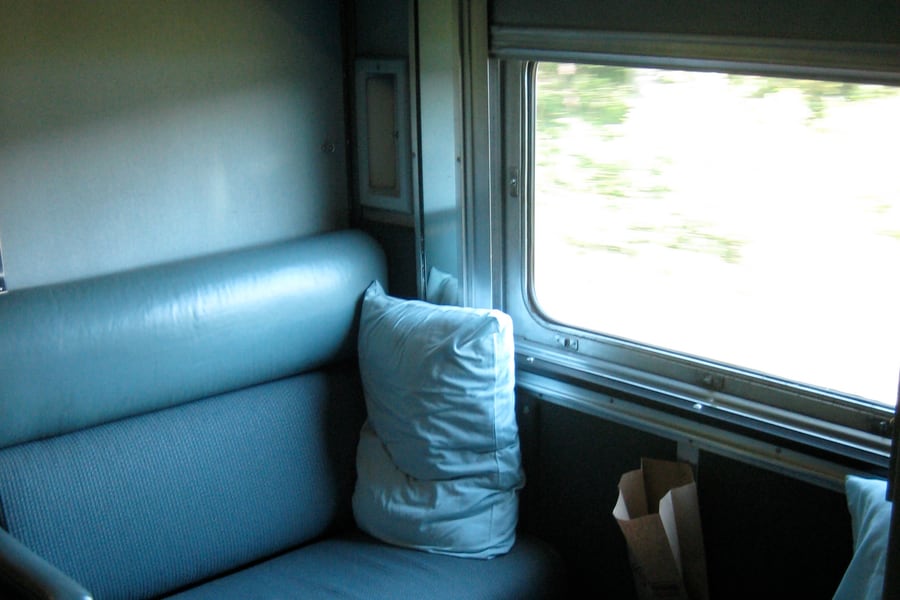
Sleeper Plus is a curtained berth or a cabin for one, two or three, in cars built in 1954–55 and refurbished since. Every sleeper carries a name rather than only a number — forty Manors and twenty-nine Châteaux, from Allan Manor to Château Frontenac — and the name is stencilled on the flank beside your window.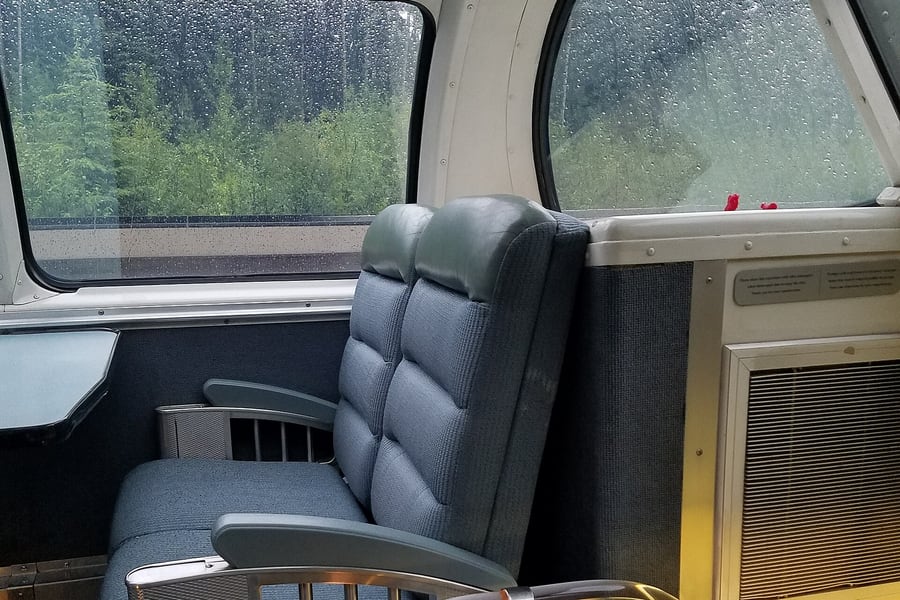 Cjstepney / Wikimedia Commons · CC BY-SA 4.0 · cropped
The domes
Every class can use a Skyline car: a raised glass observation deck over a café and lounge, twenty-four seats, first come first served. The dome in the rear Park car is reserved for Prestige at all times, and so are seats in the full-length Panorama dome, built in 2000 with windows six feet wide.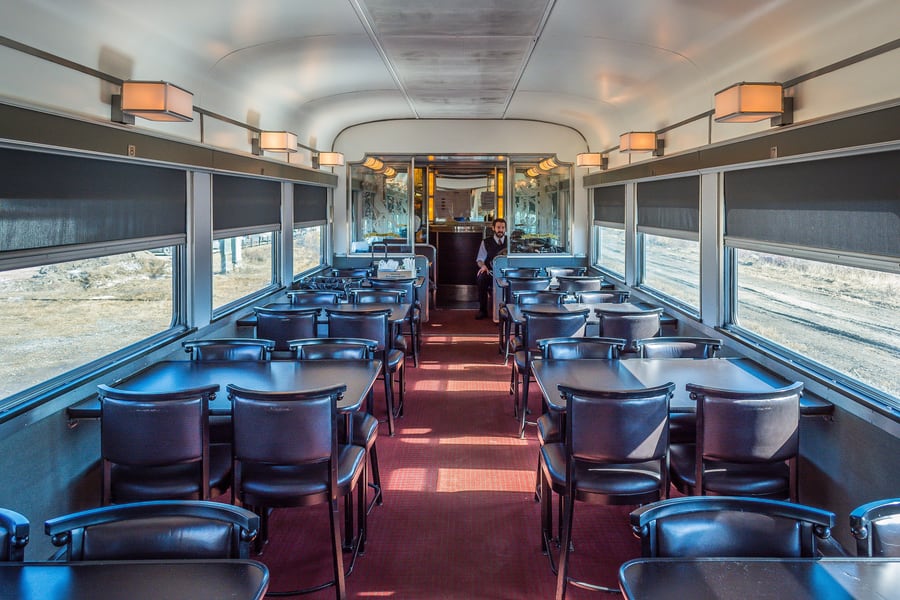 Lee Coursey / Wikimedia Commons · CC BY 2.0 · cropped
Dinner in a 1955 diner
Thirteen dining cars survive from the original Budd order, forty-eight seats and a galley apiece, and meals are cooked on board and served at a laid table. Sleeper Plus and Prestige passengers eat here — lunch and dinner by reservation. Economy passengers buy from the Skyline take-out counter instead.Timetables
The Canadian runs twice a week in each direction, all year. Westbound it is train 1, leaving Toronto on Wednesdays and Sundays; eastbound it is train 2, leaving Vancouver on Mondays and Fridays. There is no third departure in summer: VIA's published timetables for both the March–October and the November–March seasons carry the same two days a week.
Westbound takes 4 days 1 hour 5 minutes; eastbound, helped by the time zones, is about 3 days 20 hours. All times below are local, and the day is counted from departure.
| Station | Westbound · train 1 | Eastbound · train 2 |
|---|---|---|
| Toronto Union | dep 09:55 · day 1 | arr 14:29 · day 5 |
| Sudbury Junction | 16:57 · day 1 | 04:49 · day 5 |
| Hornepayne | 02:29 / 03:09 · day 2 | 17:44 / 18:39 · day 4 |
| Sioux Lookout | 11:25 / 11:55 · day 2 | 06:01 / 06:51 · day 4 |
| Winnipeg | 19:30 / 21:30 · day 2 | 22:00 / 23:30 · day 3 |
| Melville | 04:54 / 05:04 · day 3 | 12:47 / 12:57 · day 3 |
| Saskatoon | 09:50 / 10:50 · day 3 | 05:57 / 06:57 · day 3 |
| Edmonton | 20:50 / 23:59 · day 3 | 18:50 / 19:50 · day 2 |
| Jasper | 06:30 / 09:30 · day 4 | 11:00 / 12:30 · day 2 |
| Kamloops North | 18:28 / 19:03 · day 4 | 00:17 / 00:52 · day 2 |
| Vancouver Pacific Central | arr 08:00 · day 5 | dep 15:00 · day 1 |
Good to know:
- The long stops are Winnipeg (2 h), Edmonton (3 h) and Jasper (3 h) westbound — long enough to leave the station and walk into town.
- Saskatchewan keeps one clock all year, so in the winter timetable its calls — Melville, Watrous, Saskatoon, Biggar, Unity — read an hour later than the times above. Nothing else changes.
- Many intermediate stops are request stops: VIA asks for a reservation at least 40 minutes before the train leaves the last station where a passenger list is issued.
- The train shares a freight main line, so delays of several hours are ordinary and are not a fault. Build a spare night into any onward connection.
Times as of September 2026, from VIA Rail's published schedules for the seasons running to March 2027. Confirm before travelling on viarail.ca (opens in a new tab).
Tickets
Every seat and berth on The Canadian is reserved, and fares move with demand rather than sitting on a published table — the same four nights cost what the calendar says they cost. Sampling VIA's booking engine in September 2026 for one adult, Toronto to Vancouver, gave Economy from CA$514 in January and CA$869 on a Sunday in late September; Sleeper Plus was already sold out on both autumn dates checked. Book early, and book direct.
The three classes are genuinely different journeys. Economy is a reclining seat with the Skyline dome and its take-out counter; Sleeper Plus adds a berth or cabin, the dining car and the showers; Prestige adds a cabin with its own shower, all meals and drinks, a concierge and the Park car dome. Fares checked September 2026 at reservia.viarail.ca (opens in a new tab); rounded, per person, before taxes and fuel surcharge.
Book your tickets
Economy class
Reclining seat · four nights
A reclining seat with a footrest and a power outlet, free access to the Skyline dome, and meals bought from its take-out counter.
Book Tickets (opens in a new tab, on VIA Rail Canada)via VIA Rail CanadaSleeper Plus · berth
Curtained bed · all meals
Two facing seats by day that convert to an upper and a lower bed behind heavy curtains, with meals in the dining car and washrooms and showers in the same car.
Book Tickets (opens in a new tab, on VIA Rail Canada)via VIA Rail CanadaSleeper Plus · cabin
Private room for one to three
A private cabin with a fold-down bed, a washbasin and a door that shuts, plus everything the berth fare includes.
Book Tickets (opens in a new tab, on VIA Rail Canada)via VIA Rail CanadaPrestige class
Cabin with private shower
A cabin half again the size of the Sleeper Plus double, with its own washroom and shower, all meals and drinks, a concierge and the reserved dome in the Park car.
Book Tickets (opens in a new tab, on VIA Rail Canada)via VIA Rail CanadaRail Passes
No rail pass covers this train. Interrail and Eurail are European products and do not apply anywhere in Canada, and VIA Rail no longer sells a national pass: the Canrailpass is gone, and viarail.ca's old /canrailpass address now redirects to a page of discount cards. That page is blunt about what replaced it — the two cards on sale in September 2026 are the Corridor Discount Card (CA$79, 16 one-way trips, Québec City to Windsor) and the Southwestern Ontario Discount Card (CA$69, 16 trips, Toronto to Windsor, Sarnia or Niagara). Both are Economy-class corridor products, both exclude Fridays and Sundays, and both state that the discount does not apply to Sleeper Plus fares.
So the honest answer is to buy a ticket. What does exist on the long-distance network is a set of conditional discounts rather than passes — reductions for seniors, youth, students, Canadian military, Indigenous travellers, CAA and Hostelling International members, and free travel for infants — each with its own eligibility and ID check. If one of those applies to you it is worth more than any pass would have been, because the base fare on a four-night journey is large enough for a percentage to matter.
Checked September 2026 against viarail.ca/canrailpass (opens in a new tab) and viarail.ca/en/offers/deals-discounts (opens in a new tab).
Places to Visit
The long stops are real stops: Winnipeg gets two hours, Edmonton three, Jasper three — enough to leave the station and walk into town while the train is serviced. Anything more than that means breaking the journey properly, booking the run as two tickets rather than one, and since departures come only twice a week, a break is a stay of two, four or five nights rather than an afternoon.
These are the places worth planning that stay around, west from Toronto.
 Dillan Payne / Wikimedia Commons · CC BY-SA 4.0 · cropped
Toronto
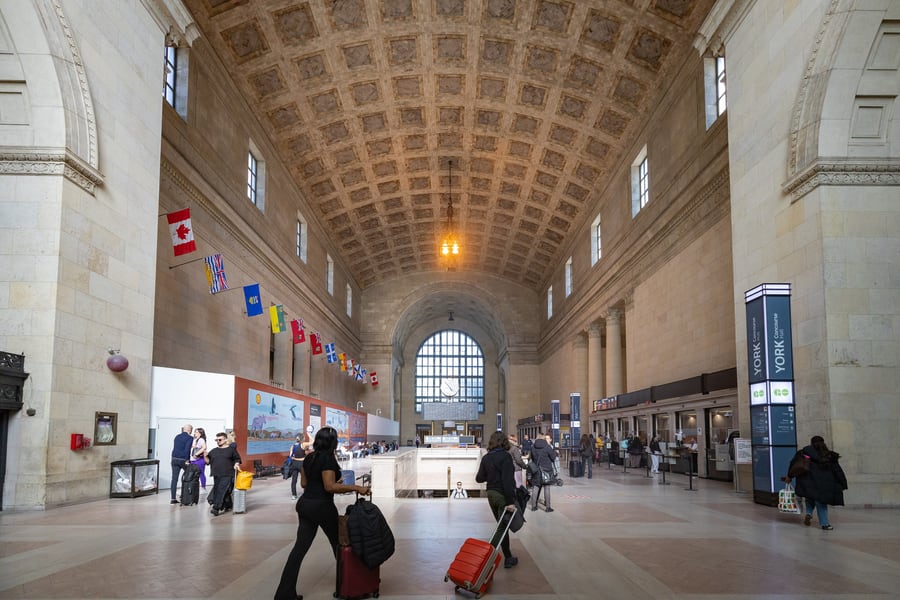
The train leaves from Union Station, and the station is worth arriving early for. The Great Hall is 76 m long and 27 m high, faced in Zumbro stone over a herringbone floor of Tennessee marble, with the names of Canadian destinations from the east coast to Vancouver carved below the cornice. The Prince of Wales opened it on 6 August 1927; it is now the busiest transport structure of any kind in Canada, air travel included.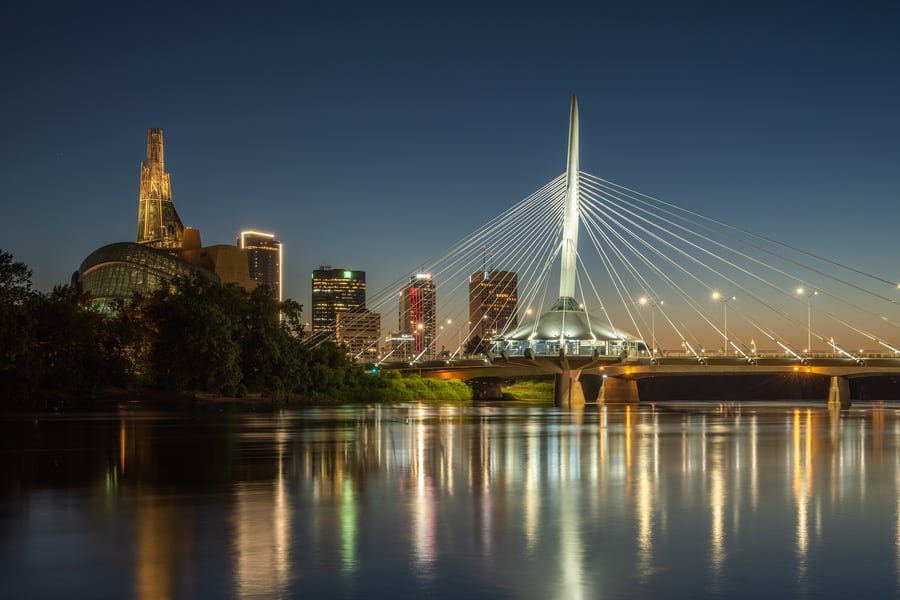 Ethan Sahagun / Wikimedia Commons · CC BY 4.0 · cropped
Winnipeg
Manitoba's capital grew where the Red and Assiniboine rivers meet — the junction that made it the hub of the fur trade. The confluence is The Forks, a National Historic Site since 1974 and now a market and park drawing over four million visitors a year. Crossing to it is the Esplanade Riel, a 250 m cable-stayed footbridge of 2003; beside it stands the Canadian Museum for Human Rights, Antoine Predock's 2014 building and Canada's first national museum outside the capital region.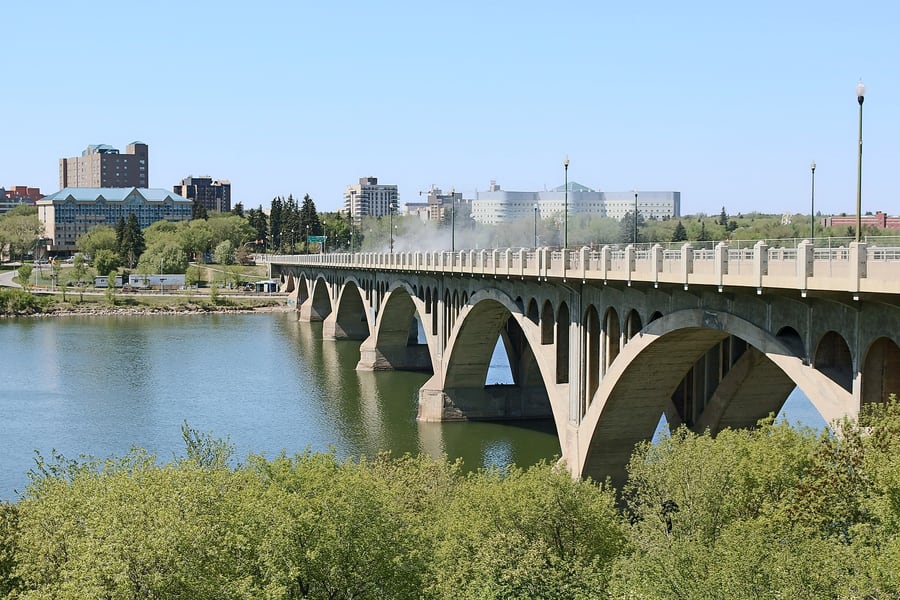 Robert Linsdell / Wikimedia Commons · CC BY 2.0 · cropped
Saskatoon
The South Saskatchewan River cuts the city in two and there are nine river crossings inside it, which is why Saskatoon calls itself the City of Bridges. The handsomest is the University Bridge, an open-spandrel concrete arch 335 m long opened on 15 November 1916 and the longest of its kind in Canada when it was built. The riverbank on both sides is continuous parkland, and the train calls in the middle of the morning going west.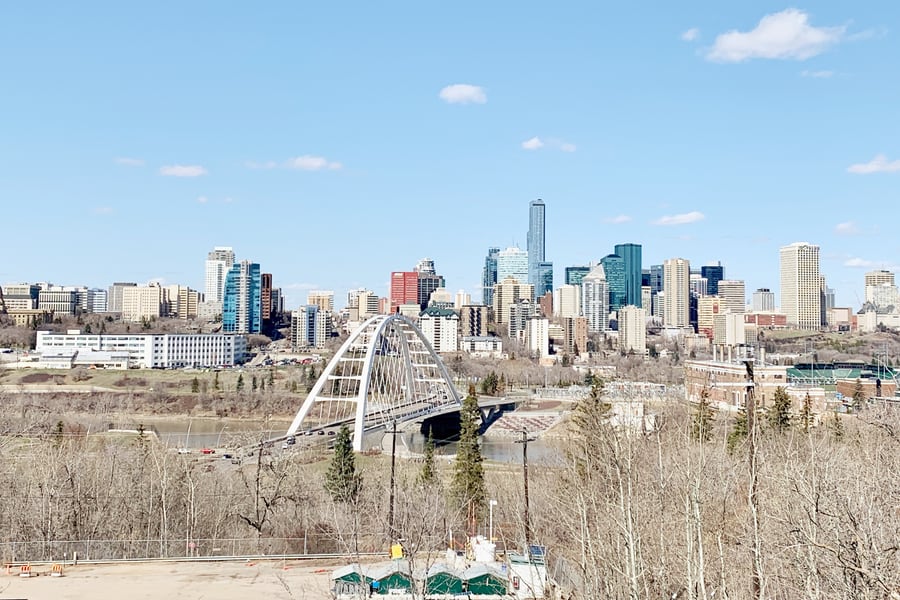 TagaSanPedroAko / Wikimedia Commons · CC BY-SA 4.0 · cropped
Edmonton
Alberta's capital sits on the North Saskatchewan River, and the valley it has cut is kept as parkland — over 7,300 hectares running some 88 km from Devon to Fort Saskatchewan, the largest contiguous urban parkland in Canada. VIA's own route notes call the city stretch a 27 km greenbelt of parks and paths. The landmark is the white Walterdale Bridge, a through arch 230 m long with arches 56 m tall, opened in September 2017.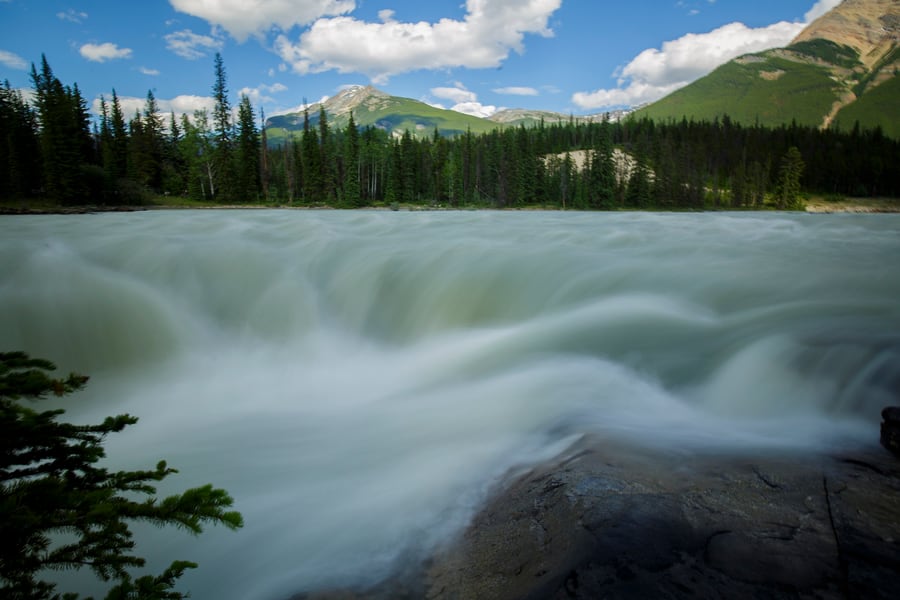 Thomas Fuhrmann / Wikimedia Commons · CC BY-SA 4.0 · cropped
Jasper
The train holds here for three hours westbound, and this is where most people who stop get off. Be prepared for what you will see: a wildfire started by lightning on 22 July 2024 burned 32,722 hectares and destroyed or damaged 255 Parks Canada structures — a fifth of everything the park owned — before it was brought under control that September. The park is open and the town is rebuilding. Athabasca Falls, 30 km south, still pours through its limestone gorge.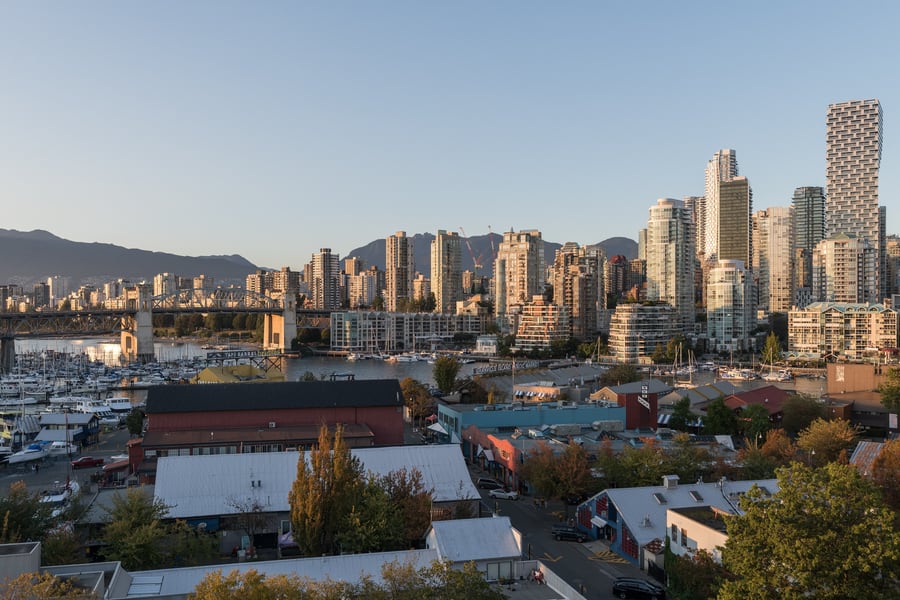 DXR / Wikimedia Commons · CC BY-SA 4.0 · cropped
Vancouver
The train ends at Pacific Central Station on Station Street, a Beaux-Arts hall by Pratt and Ross dedicated on 2 November 1919. Across False Creek is Granville Island — despite the name a peninsula, dredged out of the creek from 1915 as 14 hectares of corrugated-tin factories, and converted in 1979 when the governments turned a 50,000 sq ft shed into the Public Market. The view back from it takes in the downtown skyline with the North Shore mountains behind.Where to Sleep
Most of the stops on this route still have the hotel the railway built. Canada's railway companies put up châteauesque piles beside their stations across the country in the first decades of the twentieth century, and the survivors are the obvious places to stay at either end of the trip and at the two natural break points in the middle — Winnipeg, where the train pauses longest, and Jasper, where most people who break the journey do it.
They are not the only choice in any of these cities and they are not cheap. Two of the four are a short walk from the platform, which after four nights on a train counts for a good deal.
Where to stay
 DXR / Wikimedia Commons · CC BY-SA 4.0 · cropped
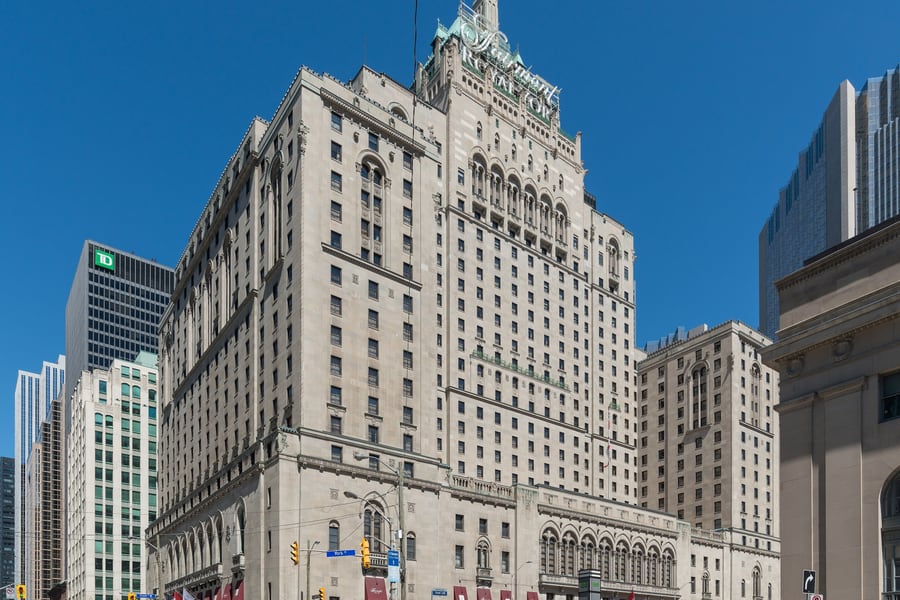
Fairmont Royal York
Across the road from Union Station
Canadian Pacific's châteauesque hotel of 1929, at 100 Front Street West, directly across the road from Union Station.
Check Availability (opens in a new tab, on fairmont.com)via fairmont.com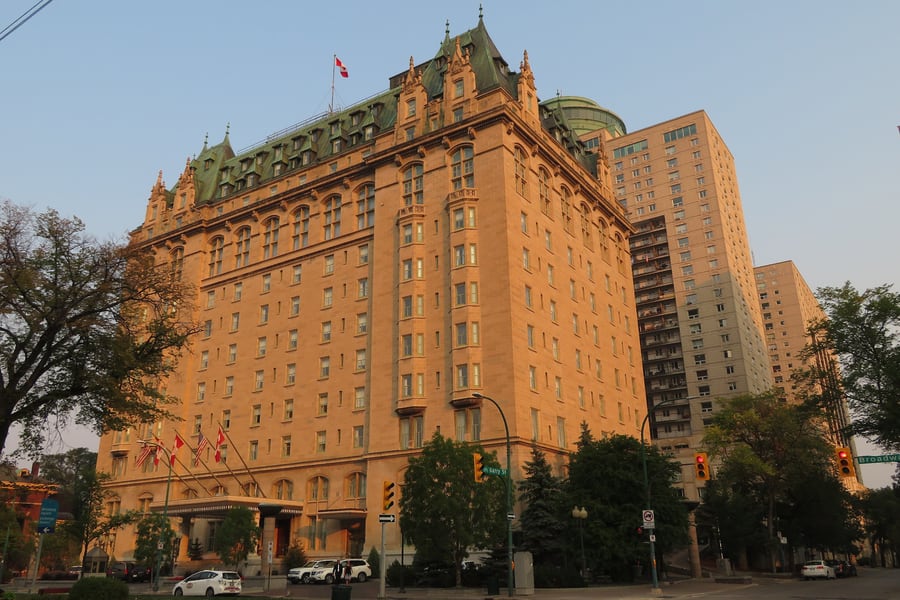 Ken Lund / Wikimedia Commons · CC BY-SA 2.0 · cropped
The Fort Garry Hotel
Winnipeg · a century-old landmark
The Grand Trunk Pacific's 1913 hotel, a National Historic Site, at 222 Broadway — the street the station stands on.
Check Availability (opens in a new tab, on fortgarryhotel.com)via fortgarryhotel.com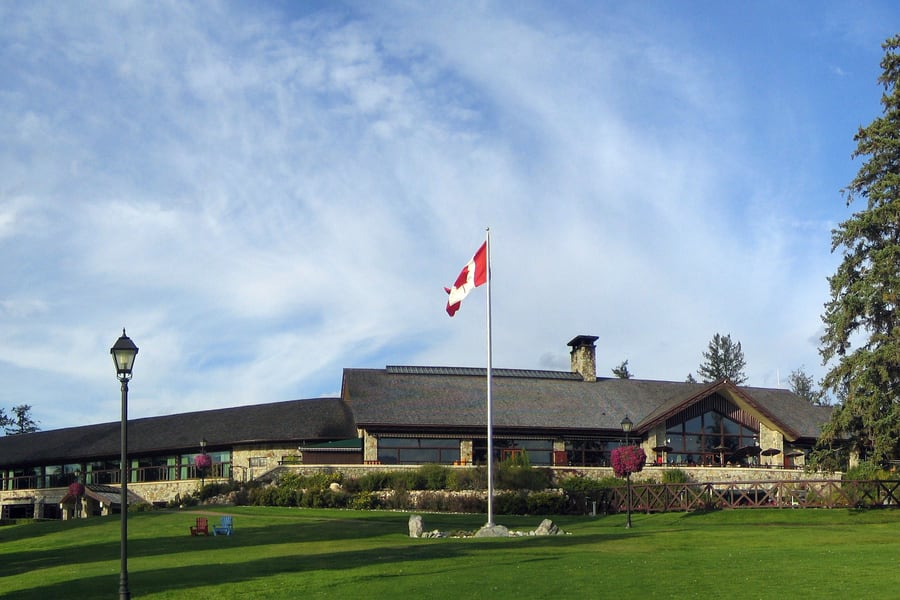 Eric Titcombe / Wikimedia Commons · CC BY 2.0 · cropped
Fairmont Jasper Park Lodge
Cabins on Lac Beauvert
A 700-acre resort of chalet rooms and cabins on Lac Beauvert, at 1 Old Lodge Road outside the Jasper townsite.
Check Availability (opens in a new tab, on fairmont.com)via fairmont.com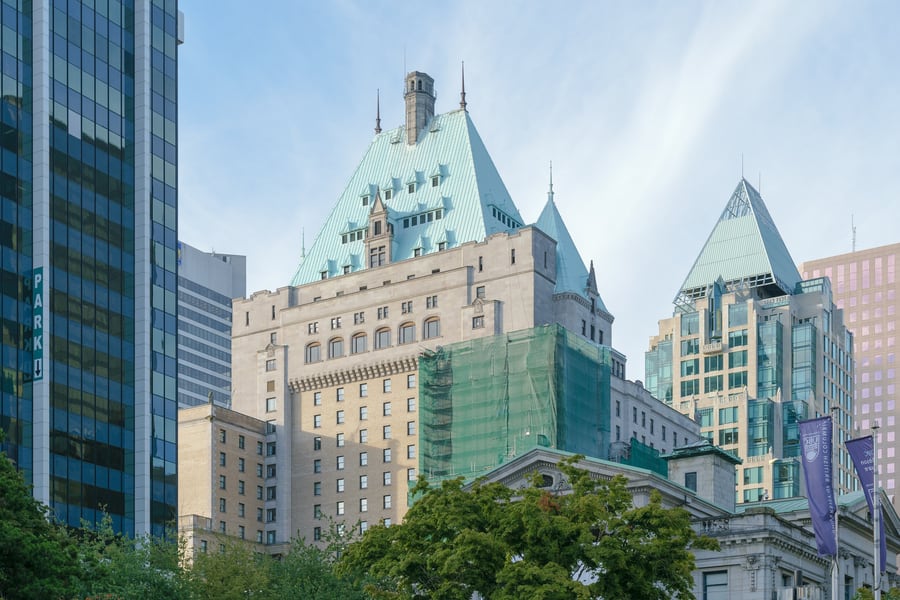 Xicotencatl / Wikimedia Commons · CC BY-SA 4.0 · cropped
Fairmont Hotel Vancouver
Downtown, under the green copper roof
The hotel Fairmont calls its castle in the city, opened in 1939 at 900 West Georgia Street.
Check Availability (opens in a new tab, on fairmont.com)via fairmont.comQuestions or corrections
Planning this trip and stuck on something, or spotted a time, fare or detail that has changed? Send us a message about The Canadian. We read every one, and we update this page when something has changed.